5
IV
April 2017
Technology (IJRASET)
Realtime Security System
Abhishek Madankar1, Apurv Sarve2, Niraj Zade3 1,2,3
Department of Electronics & Telecommunication, YCCE Nagpur
Abstract: Security is a major concern even after rapid development in electronic surveillance and emergency response systems. A major part of the concern comes from the owner(s) being kept informed about the security status in real time. Another problem which causes delay in law enforcement after a breach occurs is presentation of reliable proof of breach. The proposed system could solve these problems by providing real time alerts to the owner using the internet, and to solve the identification problem through the use of computer vision to build up and log a comprehensive face database based on access and breaches into the property.
Keywords : Security, Real Time Computer Vision, Open CV
I. INTRODUCTION
With the advent of new equipment, the house breaching capabilities of intruders have vastly increased. As a countermeasure, passive security systems have been implemented by home owners and corporate offices. While these systems provide adequate security, they fail to differentiate between potential intruders and permitted individuals. Commercial systems lack in reporting the activity of area under surveillance in real time to the user, when the user is remotely located away from the property.
The aim is to design an automated security system which leverages the combined capabilities of available security modules and computer vision libraries. The privacy and the security have become the cornerstone of peaceful life in urban areas, which still needs a greater level of development and tighter integration of available modules. The status of the security system will be reflected in email being sent to the property owner and other concerning individuals. A Raspberry Pi will be used for handling image processing and password authentication part of the security system. An ATmega 328 microcontroller is responsible for Radio-frequency identity card (RFID) authentication and controlling the state of ambient lights. The system will get information about human presence from passive infra-red (PIR) module. A comprehensive storage structure has been implemented to store entry logs. An automatic presence detection system comprised of passive infra-red sensor and one or more camera modules has been implemented. The processing circuits have switching devices for handshaking with each other through general purpose input output pins. A display monitor displays data about the overall system status.
II. BACKGROUND
A. Need of the System
In the real estate sector, security plays a pivotal role in determining value of property as well as level of safety available to the user. The security solutions available involve continuous storing of large amounts of data, most of which is never required. Also, most of the solutions available in the domestic market lack decision making skills when the prime owner is away. This presents a need for a smarter system that can think and make decisions by itself and store and provide filtered and corrected data regarding the property to the owners and concerned security services like guards, police etc operating in the region. This requires tight integration and well defined interlinking of physical identity checking devices and proper image processing on the incoming camera feed, which is found to be lacking in available systems and has been implemented in the project. As a solution to the mentioned problems a new system has been devised and implemented.
B. Field of Invention
Technology (IJRASET)
III. PROPOSED SYSTEM
The hardware design is made using four main modules along with some allied circuitry. The main modules are: 1) Image processor and microcontroller 2) Radio frequency identity card reader and checker 3) Password entry membrane keyboard module 4) Image capturing device. The image processor handles the image capturing devices and the microcontroller handles the rest of the hardware consisting of authentication devices.
A. Functional Units
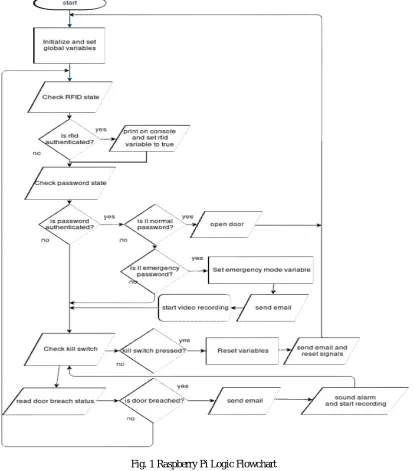
[image:3.612.110.524.238.709.2]Raspberry Pi model 3BThe raspberry pi is the heart of proposed embedded system. It performs image processing over the Open CV computing platform. Microprocessors are used in autonomous devises so they can perform complex processing tasks in short amount of time. The ATmega 328 is the second most important processing device of the proposed system. Micro controllers are used in automatically controlled products and devices such as automobile engines control systems, medical devices, office machines, power tools etc.
Fig. 1 Raspberry Pi Logic Flowchart
Technology (IJRASET)
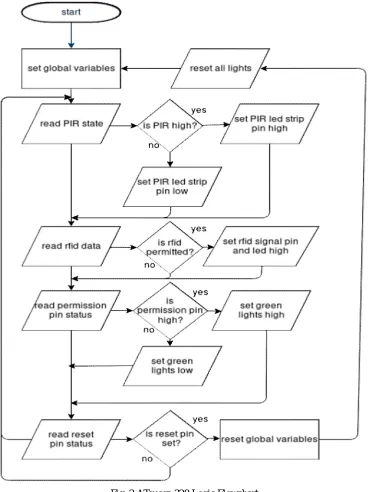
[image:4.612.122.497.187.679.2]make it economical to digitally control even with more devices and processors. A buck converter (step-down converter) is a DC to DC power converter which steps down voltage (while stepping up current) from its input (supply) to The output (load). It’s a class of Switch mode power supply (SMPS) contain at least two semiconductors (a diode and a transistor although modern buck converters frequently replace the diode with a second transistor used or synchronous rectification) and at least one energy storage element, capacitor, inductor, or the two in combination. To reduce voltage ripple, filters made of capacitors (sometimes in combination with inductors) are normally added to such a converter's output (load-side filter) and input (supply-side filter). Switching converters (like buck converters) are characterized by the greater power efficiency as DC-to-DC converters than linear regulators, which are simpler circuits that lower voltages by dissipating power as heat, but do not step up output current. It can be made very much efficient
Fig. 2 ATmega 328 Logic Flowchart
Technology (IJRASET)
IV. WORKING METHODOLOGY
The higher level processor(in case of proposed system, raspberry pi) is responsible for video and image acquisition and its processing. The same microprocessor or other supplementary microcontroller can be used for authentication purposes through the use of security based modules like radio frequency tag readers fingerprint scanners etc as required. Breach is detected using intrusion detection modules like reed switch, passive infrared sensor etc. In case of breach, the microprocessor system is to be used to acquire and transmit images for alert purposes to the property owners or the law enforcement services operating in the area. The internet based alert trough emails solves the problem of lack of a timely alerting system to send warnings and alerts to concerned authorities. The open computer vision library is used to detect and crop faces into a local face database, which can later be used for identification purposes. The major problem solved by this methodology is the remote identification of intruder in the property without the actual need of visiting and physically obtaining a copy of stored media. Also, the visual data, being pre-processed and the same coming with accurate timestamps, can be directly used as proof of intrusion as later required without any need of further data filtering.
V. RESULT
The average face detection response time on the Raspberry Pi Model 3B using a single core was found to be average around 3.5 seconds at a resolution of 1920x1080. The video capture frame rates achieved were 40 frames per second with a single camera and 21 frames per second for 2 cameras recording simultaneously. The performance can be further enhanced by using more cores available on the Raspberry Pi Model 3B through parallel processing. Results can also be enhanced by working completely on gray scale, in which case, frame rates of over 65 frames per second for single recording camera and over 35 fps for two cameras recording simultaneously were achieved. The system can be used to monitor and prevent intrusion and breaches into buildings if the incoming individual does not fulfil predefined criteria.
VI. CONCLUSION
This paper presented a solution for autonomous home security using computer vision, radio frequency identity cards, keyboard based password entry panel and passive infra-red sensors. The radio frequency card identification and ambient lighting state processing was done on the ATmega 328 and image processing, password authentication and email alert system was processed on Raspberry Pi Model 3B.
REFERENCES
[1] Jignesh B Jadav, Dr.K.H.Wandra, Mr.Rohit Dabhi, “Innovative Automobile Security System Using Various Security Modules”, International Journal on Recent and Innovation Trends in Computing and Communication Volume: 3 Issue: 2 ISSN: 2321-8169 583 – 586.
[2] P.Vigneswari, V.Indhu, R.R.Narmatha, A.Sathinisha and J.M.Subashini, “Automated Security System using Surveillance” International Journal of Current Engineering and Technology, E-ISSN 2277 – 4106, P-ISSN 2347 – 5161.
[3] K.S.Shilpashree, Lokesha.H, Hadimani Shivkumar, “Implementation of Image Processing on Raspberry Pi” International Journal of Advanced Research in Computer and Communication Engineering Vol. 4, Issue 5, May 2015, ISSN (Online) 2278-1021 ISSN (Print) 2319-5940.
[4] Vedang Ratan Vatsa, Gopal Singh, “Raspberry Pi based Implementation of Internet of Things using Mobile Messaging Application - ‘Telegram’ ”, International Journal of Computer Applications (0975 – 8887) Volume 145 – No.14, July 2016.
[5] Paul Viola, Michael J. Jones, “Robust Real-Time Face Detection”, International Journal of Computer Vision 57(2), 137–154, 2004
[6] Dr. Khanna SamratVivekanand Omprakash, “Wireless home security system with mobile”, International Journal of Advanced Engineering Technology E-ISSN 0976-3945.