Enhancement in Semantic Web using Web Service
Meenakshi Sharma
Assistant Professor CS Department HCTM, Kaithal
Vikas Goyal
M.Tech Research Scholar HCTM, Kaithal
ABSTRACT
The Semantic Web is a mesh of data connected up in such a way as to be effortlessly apply method on an international scale .It has being an efficient way of comprising data on World Wide Web, or as a globally linked databases.The significance of Semantic web is to comprise the data at alone location. This can be done likely with the World Wide Web service methods,which allows the functionality of various web sites into alone which is called web services.This paper shows the implementation minutia of web services.It also display that how the semantic web can be applied using World wide web services.The conceive of these web services is based on genuine servers which contains World Wide Web information.
Keywords
Semantic Web, Web Services, WWW, W3C, RDF, HTTP, HTML, URL, DAML.
1.
INTRODUCTION
The Semantic world wide web was considered up by Tim Berners-Lee, inventor of the WWW, URIs, HTTP, and HTML. There is a dedicated team of persons at the World wide web consortium (W3C) employed to improve, continue and standardize the scheme, and numerous languages, publications, tools and so on that have already been evolved. Semantic Web technologies are still very much in their infancies, and whereas the future of the project in general seems to be brilliant, there seems to be little agreement about the expected main heading and characteristics of the early Semantic Web.These are that what's the rationale for such a system Data that is usually hidden away in HTML files is often useful in some contexts, but not in other ones. The problem with the majority of facts and figures on the world wide web is that in this pattern at the instant it is tough to use on a large scale, because there is no international scheme for announcing facts and figures in such a way as it can be easily processed by any person. For example, just believe of data about local sports events, weather data, plane times, foremost League Baseball statistics, and TV tour guides all of this data is offered by many sites, but all in HTML. The problem with that is that, is some contexts, it is difficult to use this facts and figures in the ways that one might desire to do so the Semantic web can be seen as a gigantic technology answer but it is more than that and will find that as it becomes easier to release facts and figures in a to blame form, so more people will desire to release facts and figures.There will be a knock-on or domino effect may find that a large number of Semantic Web applications can be used for different jobs increasing the modularity of submissions on the Web [9].It can be said that the Semantic Web is a Web of facts and figures. There is a lot of data used every day, and it is not a part of the www. For demonstration, bank declarations on the web, and images, and appointments in a calendar. But cannot glimpse the photos in a calendar, because don't have a world wide web of facts and figures. Because data is controlled by submissions, and each application keeps it to itself. The vision of the Semantic Web
s to continue values of the World Wide Web from articles to facts and figures [1],[4],[7].
[image:1.595.317.547.305.558.2]Facts and figures should be accessed utilizing the general World Wide Web architecture utilizing URI-s, facts and figures.It should be associated to one another just as articles are currently. Semantic web is furthermore used for common structure that allows facts and figures to be distributed and reused across submissions and community boundaries, processed mechanically by devices as well as manually, encompassing disclosing likely new relationships amidst parts of data [9],[8] .
Figure 1: Semantic Web Stack[24].
2.
BUILDING BLOCKS OF SEMANTIC
WEB
In order to accomplish the goals described overhead, the most significant is to be able to characterize and recount the relatives amidst data on the World Wide Web. This is not unlike the usage of hyperlinks on the present Web that connects the present sheet with another one. The hyperlinks characterizes a connection between the present page and the target. One major difference is that, on the Semantic Web, such connections can be established between any two assets, there is no notation of “current” sheet. Another major distinction is that the relationship itself is named, while the connection utilized by a human on the customary World Wide Web is not. Their function is deduced by the human book readers. The delineation of those relations permits for a better and self-acting interchange of facts and figures. RDF, which is one of the fundamental construction blocks of the Semantic
APPLICATION
TRUST
PROOF/VERIFY TRUST
UNIFLYING LOGIC
QUERYING ONTOLOGIES RULES
TAXONOMIES
DATA INTERCHANGE
XML SYNTAX
IDENTIFIER UNICODE
C
R
Y
P
T
O
G
R
A
P
H
International Journal of Computer Applications (0975 – 8887) Volume 79 – No 16, October 2013 Web, gives a prescribed way for that interchange of facts and
figures [4],[7].
3.
TYPE OF SEMANTIC WEB
3.1
Static Semantics
A semantic snare is a snare work of concepts connected by relatives. The World Wide Web is, of course, a mesh of pages, each containing text, pictures, other newspapers kinds, and connections to other World Wide Web sheets. Though the World Wide Web has far less structure than usual AI semantic snares, the World Wide Web sheets that constitute the nodes of the Web's mesh often represent concepts and the connections between them comprise relations between those concepts. For demonstration, the home sheet is the Web's representation, in a sense. The connections premier off to dwelling page - to the publication registered-mail address that educate, represents the relation e.g .the articles that have released. The only difficulty is that these relations are conveyed in human-understandable natural language and human-understandable images. Short of full natural dialect comprehending, it is difficult for a computer program to mechanically extract those notions and relations in alignment to do query responding. The Semantic Web action comprises of the articles in the publication, and in Web measures initiatives such as RDF, DAML, is an try to insert widespread formal dialects for expressing notions and relatives in a machine readable way. To leverage living world wide web devices and emulate the world wide web's social success, such efforts strive embed the descriptive information o sheets alike to the way text, pictures & conventional media are currently recounted utilizing HTML and XML [2],[3],[6].
3.2
Dynamic Semantics
In addition to the static semantics of Web pages, links, and Web markup, there is also what is called dynamic semantics. Dynamic semantics has following features:
• Is represented procedurally. It can be computed by programs running on the client or server side, based on immediate interactive user input. This computation can depend on the immediate context – including time, personal information about the user.
• Changes relatively rapidly. A single user click can cause the semantics to be generated or to change, or it can be changed by the actions of programs continuously in real-time. As the web matures, there are manyways in which static semantics are being augmented and supplanted by dynamic semantics. As a simple example, some URLs are not addresses of static pages stored on Web servers, but rather act as directives to the server to initiate some computations. CGI scripts are an example of this. The question-mark in the URL is a signal for the server to retrieve some named program and execute it, possibly with arguments. An Active Server Page queries a database and constructs a page on the fly. Even search engine results pages, and customized ads based on cookies are examples of dynamically created Web pages. Streaming audio, video and other media also make the Web more dynamic [2],[3],[6],[17].
Web services allow a range of new functionality to be added to web pages because the pages can request a function to be run on the server and then changes based on the results. Web services are helpful in communication between applications. When a client communicates with the server using Web Services, the communication is language independent. This means that a Client can be written in any programming
language and communicate with the server without knowing what knowing in which language the server web services were implemented in.
3.3
Web services
Web services are a relatively new technology that allows a client to communicate with a server by sending messages using the HTTP protocol. In a web service, the server invokes a function based on the message sent from the client and then sends a response back to the client. Web services allow a range of new functionality to be added to web pages because the page can request a function to be run on the server and then change based on the results. Another way of using web services are helpful in communication between applications. When a client communicates with the server using Web Services, the communication is language independent. This means that a request can be written in any programming language and communicate with the server without knowing in which language the servers web services are implemented in.There are a number of potential uses for web services because they are versatile and implementation independent. Any two applications can communicate together through a web service regardless of how they are implemented.
International Journal of Computer Applications (0975 – 8887) Volume 79 – No 16, October 2013
DISCOVERY AGENCIES
DESCRIPTION
WIRE
Figure: 2 Web Services Architecture DISCOVERY
PUBLICATION
INSPECTION
BUSINESS LEVEL AGREEMENT
SERVICE LEVEL AGREEMENT
COMPOSITION
ORCHESTRATION
PRESENTATION
POLICY
IMPLENETATION
INTERFACE DESCRIPTION
XML SCHEMA
EXTENSION
PACKAGES
TRANSPORT
Q
O
S
S
E
C
U
R
I
T
Y
E
C
U
R
I
T
Y
International Journal of Computer Applications (0975 – 8887) Volume 79 – No 16, October 2013
[image:4.595.67.394.66.728.2]4.
IMPLEMENTION SCREEN SHOTS
OF WEB SERVICES
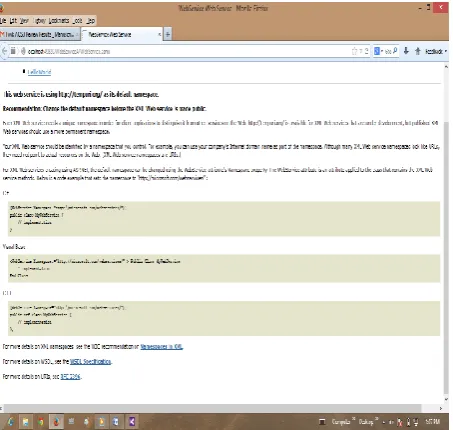
[image:4.595.55.283.68.489.2]Figure 3: Web Service A
Figure 4: Running Web services A
Figure 5: Coding View
[image:4.595.317.544.71.286.2]Figure 6: Coding View of Implemented web services.
Fig 7:Using Web Services
[image:4.595.326.533.303.740.2]5. CONCLUSION
This study illustrates the notion of semantic World Wide Web by implemented the World Wide Web services. World Wide Web services make the semantic World Wide Web more significant and powerful. It is fast growing technology, especially in the e-commerce area. Web services have a lot to offer when it arrives to creating web-based applications for selling things over the internet. They are a good way for applications to broadcast with each other over the internet. This allows the applications applied in distinct areas to help seamlessly in a bigger system. This makes web services a good option for the Mimesis task. A game motor on a user’s computer desires to demand a design from a centrally established Advisable Planner to decide what activities the engine will take. These two schemes are in writing in distinct languages and should broadcast over the internet. The World Wide Web service provides the connection link between the game motor and the Advisable Planner. Web Service acts as a circulated middleware to facilitate the interoperability of the entire scheme with the support of distributed technologies. This study proposes a scheme of base platform to coordinate the various services coming from heterogeneous environment. Resource administration devices are utilized to support the deployment and administration of web services and grids are utilized in circulated entire mesh. The architecture of heterogeneous schemes are based on the Web Services is put forward, through the module of virtual data warehousing, recognizing facts and figures mapping and interoperability. The implementation of architecture is limited to the merchandise facts and figures of heterogeneous schemes. Study display this approach is a feasible approach to support a distributing and interoperability for multi-source facts and figures circulated in heterogeneous stages.By applying the world wide web services semantic world wide web becomes more powerful and meaningful for the users so that they can all the applicable data by one click from a specific point and share the available resources on world wide world web and internet. World Wide Web allows the identical mix and agree approach of the real world service.
6.FUTURE ENCHANTMENTS
Although some of the major differences that should be kept in mind while matching the supreme user of a real world service say a human being with that of the user of the world wide web services say a computer. Delight note is that the supreme end i.e client may still be the human being even in web services but it is another computer that aggregates the services before presenting to the end user of the world wide web services.The lowermost denominator, the human being, ultimately bounds a genuine world service. With all the technologies and tools, still the human being has restricted mental space, time and power to do things locally.
7.REFERENCES
[1] ALEXANDER MAEDCHE[2002];” Clustering ontology-based metadata in the semantic web”; 6th European Conference on Principles of Data Mining and Knowledge Discovery, page 348-360. London, UK, Springer-Verlag .
[2] ANDRZEJ USZOK[2004];”Policy and Contract Management for Semantic Web Services”; Lecture Notes in Computer Science Volume 2995, 2004, page 16-26.
[3] BOANERGES ALEMAN-MEZA [2006];” Semantic Analytics on Social Networks: Experiences in Addressing the Problem of Conflict of Interest
Detection” May 23–26, 2006, Edinburgh, Scotland. ACM 1-59593-323-9/06/0005.
[4] CLAUS PAHL [2009];” Applications of Semantic Web Technology to Support Learning Content Development” Interdisciplinary Journal of E-Learning and Learning Objects, Volume 5, 2009.
[5] D. FENSEL[2005];” Semantic Web Application Areas”; Proceedings of the 14th international conference on World Wide Web Pages 623-632.
[6] DANIEL SCHWABE ;”Design and implementation of semantic web applications” Proceedings of the WWW2004 Workshop on Application Design, Development and Implementation Issues in the Semantic Web, New York, NY, USA, CEUR Workshop Proceedings 105, CEUR-WS.org, May 2004, ISSN: 1613-0073.
[7] DEJING DOU[2006];” Integrating Databases into the Semantic Web through an Ontology-based Framework”; Proceedings of the 22nd International Conference on Data Engineering Workshops (ICDEW'06) 0-7695-2571-7/06 © 2006 IEEE.
[8] DIMITRIOS-EMMANUEL SPANOS[2012];” Bringing relational databases into the semantic web: a survey”; Bringing relational databases into the Semantic Web: A survey. Semantic Web 3(2): 169-209 (2012).
[9] DEJING DOU[2006];” Towards Populating and Querying the Semantic Web” Proceedings of the ISWC2006 Workshop on Scalable Semantic Web Knowledge Base Systems.
[10]DEJING DOU [2010];” onto grate: towards automatic integration for relational databases and the semantic web through an ontology-based framework”; international journal of semantic computing vol. 4, no. 1 (2010) 123– 151.
[11] DEMETRIOS G SAMPSON[2004];”Ontologies and the Semantic Web for E-learning”; Sampson, D. G., Lytras, M. D., Wagner, G., & Diaz, P. (2004). Ontologies and the Semantic Web for E-learning. Educational Technology & Society, 7 (4), 26-28.
[12] FRANCESCO OSBORNE[2012];” Mining Semantic Relations between Research Areas” The Semantic Web – ISWC 2012, Lecture Notes in Computer Science Volume 7649, 2012, pp 410-426.
[13] GERMAN HURTADO MART[2006];” Semantic Web Mining State of the art and future directions” WI 06 the 2006 IEEE/WIC/ACM International Conference on Web Intelligence,Elseiver B.V.,Amsterdam,Netherland.
[14] JAMES HENDLER[2008];” Metcalfe's Law, Web 2.0, and the Semantic Web” Web Semantics: Science, Services and Agents on the World Wide Web Volume 6 Issue 1, February, 2008 Pages 14-20 .
[15] JANE GREENBERG[2007];”Advancing the Semantic Web via Library Functions”; Knitting the Semantic Web/Cataloging & Classification Quarterly Volume 43(3-4) Pre-print.
International Journal of Computer Applications (0975 – 8887) Volume 79 – No 16, October 2013 Dublin Core and Metadata for e-Communities 2002:
45-52.
[17] JENNIFER GOLBECK[2005];” Semantic Web Research Trends and Directions” PReMI'05 Proceedings of the First international conference on Pattern Recognition and Machine Intelligence Pages 160-169 Springer-Verlag Berlin, Heidelberg ©2005.
[18] JUSTIN R. ERENKRANTZ[2004];” Web Services: SOAP, UDDI, and Semantic Web” Institute for Software Research, University of California, Irvine, Technical Report UCI-ISR-04-3, May 2004
[19] LI DING [2006];” Characterizing the semantic web on the web”; the 5th international semantic web conference, 5-9 november2006, Athens GA, USA.
[20] MARJOLEIN VAN;” semantic web techniques for multiple views on heterogeneous collections: a case study" Proceedings of the 10th European Conference on Research and Advanced Technology for Digital Libraries ECDL 2006, Lecture Notes in Computer Science, vol. 4172, page 426-437. Alicante, Spain, (September 2006).
[21] MARCO BRAMBILLA[2000];” Model-Driven Design and Development of Semantic Web Service Applications”; ACM Journal Name, Vol. 8, No. 1, Month 2007, Pages 1-29.
[22] MATTHEW RICHARDSON[2003]; ” Trust Management for the Semantic Web” The Semantic Web - ISWC 2003, volume 2870 of Lecture Notes in Computer Science, Springer Berlin / Heidelberg, (2003).
[23] NOOR FADZLINA[2010];”Mining semantic relations between research areas”
[24] P.A. BONATTI[2006];” Semantic Web Policies - A Discussion of Requirements and Research Issues” The
Semantic Web: Research and Applications Lecture Notes in Computer Science Volume 4011, 2006, pp 712-724.
[25] R. SCHMALTZ[2005];” on the suitability of semantic web approaches for corporate knowledge management” OTM'05 Proceedings of the 2005 OTM Confederated international conference on the Move to Meaningful Internet Systems Pages 886-895 Springer-Verlag Berlin, Heidelberg ©2005.
[26] SHAHIN MOHAMMADI[2013] “Systematic Identification of TOR Downstream Effectors Using Random-Walks on the Yeast Interactome” http: //compbio.soihub.org/projects/torc1.
[27] THOMAS EITER[2008];” rules and ontologies for the semantic web”; Published in Book Reasoning Web Pages 1-53 Springer-Verlag Berlin, Heidelberg ©2008.
[28] TIM BERNERS-LEE[2006];” tabulator: exploring and analyzing linked data on the semantic web” In Proceedings of the 3rd International Semantic Web User Interaction Workshop volume 64.
[29] TIM FININ[2005];” Social networking on the semantic web”; The Learning Organization. vol. 5 (12), 2005. [30] YORK SURE;” the software technology semantic web
for research communities” Progress in Artificial Intelligence Lecture Notes in Computer Science Volume 3808, 2005, pp 218-231 Springer @2005.
![Figure 1: Semantic Web Stack[24].](https://thumb-us.123doks.com/thumbv2/123dok_us/8064992.777578/1.595.317.547.305.558/figure-semantic-web-stack.webp)