© 2016, IRJET | Impact Factor value: 4.45 | ISO 9001:2008 Certified Journal | Page 103
“PLC Based Object Sorting Automation”
Prof. Nilima Bargal
1, Aditya Deshpande
2, Rucha Kulkarni
3, Rucha Moghe
41
Assistant Professor, Department of Electronics and Telecommunication, Marathwada Institute of Technology,
Aurangabad
2
Student, Department of Electronics and Telecommunication, Marathwada Institute of Technology, Aurangabad
3
Student, Department of Electronics and Telecommunication, Marathwada Institute of Technology, Aurangabad
4
Student, Department of Electronics and Telecommunication, Marathwada Institute of Technology, Aurangabad
---***---Abstract -
In today’s world of technology and due to speedrunning industries, the production rate has increased tremendously. Generally, manufacturing industries keep manufacturing same models with little variation in height, colour, weight, shape. And here sorting plays an important role. In such cases industries can’t bare human errors for sorting these products. Thus it become necessary to develop Low Cost Automation (LCA) for sorting these products in accurate manner. Industrial automation mainly focuses on developing automations having low cost, low maintenance, long durability and to make systems user friendly as possible. Finally, here we have developed a LCA system for sorting the light weight objects on the basis of height variation using DC geared motors which is controlled by Programmable Logic Controller (PLC) and the conveyor in the system passes the object in front of sensors and thus sorting logic is decided.
Key Words: Automation, Programmable Logic Controller, Low Cost Automation, Manufacturing, Sorting
1.INTRODUCTION
The development of manufacturing industries is dependent upon research in manufacturing process and innovation in new products. The countries that have higher manufacturing rate are known to be developed whereas those with little manufacturing are considered underdeveloped
During processing, the raw material gets transformed into product. Once this product gets processed it earns a value for sale. Therefore, manufacturing is ‘adding value’ to the material. The value that is earned by the product should have more cost allowing the organization to make money out of it[1]. Generally, manufacturing industries keep manufacturing same models with little variation in height, color, weight, shape and thus sorting plays an important role here. In old days it was possible to implement manual labor for sorting similar objects. But nowadays due to increased production and for minimizing the labor
expenditure for such unskilled task, industries can’t afford human errors for sorting these products. This forced industry to tend towards atomizing the sorting process. As economy has always been a considerable factor in developing industry, thus it become necessary to develop Low Cost Automation (LCA) for sorting these products in accurate manner. In automation industry, continuous innovation, finding effective ways to enhance productivity and cut-cost out of operations is the key to success. Burgeoning demand of the automation systems necessitates strategic re-evaluation in the value chain and improving market awareness. Industrial automation mainly focuses on developing automations having low cost, low maintenance, long durability and to make systems user friendly as possible.
© 2016, IRJET | Impact Factor value: 4.45 | ISO 9001:2008 Certified Journal | Page 104
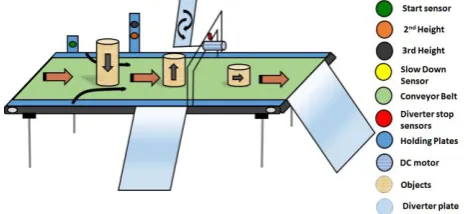
plate holds the start sensor whose function is to start theconveyor for predefined time, only if the object is present. This will save the energy by turning off the conveyor motor if the object is not present. The nearby mounted 2nd holding plate holds 2 sensors which are arranged to measure object’s height, this 2nd holding plate’s complete assembly is known as Height measuring station. This plate has a slot in which we can adjust the height of sensors as per our requirement, this makes the system differ from Special purpose machine (SPM). 3rd plate holds the sensor, which signals the VFD to slow down the conveyor belt, so that the diverter can push the object accurately.
2. LITERATURE SURVEY
Industrial automation and robotics play important role in growth of industry. The main criteria in industry are quality and flexibility of the product. In 80’s robot were used to perform tasks like machine tending, material transfer, painting, welding which does not require high accuracy[3].
Considering greater role of robots it was predicted in 90’s that industrial robots will become increasingly vital in applications which require high precision and accuracy. Autonomous robots with sensors are used for accuracy and precision in product which gradually improves the growth of industry. To achieve this precision, robots are programmed for a single task taking sensory information.
Real time and highly accurate characteristics of small objects in a fast flowing stream would open new directions for industrial sorting processes. Recent advances in electronics and printed circuit board technology open new perspectives for industrial application in this field.
2.1Existing System:
In currently existing systems, use of different technology is made according to budget and scope of industry. It includes robotics systems, microcontroller based system, sensor based system and pneumatic based system, etc.
2.1.1Robotics Systems
The robotic arm is controlled using servo motors whose degree of rotation is controlled by the on timer of the pulse rail appearing at its control inputs. According to the structure of robotic arm various degree of rotation for the servomotor are assigned to carry out the operations. The arm of robot is realized using aluminum brackets. Four types of brackets are arranged for this purpose[3]. The
robotic arms are too costly and complex due to the complexity and the fabrication process.
Two types of the brackets are for holding the servo motors and two types for the extensions and interconnections of the robotic arm. The IR sensor identifies the box and it sends the data to a microcontroller which controls the arm motion according to the height of box. The motion of the servo motor is controlled in a manner so that each box is dropped into a respective boxes place in a predetermined position. The time taken by the robotic arm for a single motion is set to approximately 0.5 seconds. Eight steps of motion of robotic arm are required for a box to be picked up and to be dropped in the correct basket. That includes motion of arm from the default position, picking a box, motion to the correct basket, dropping the box to the basket and return to the default position. The number of steps taken by the arm to pick the box and drop the box counts to seven steps and from there to back to default position needed one step.
Approximately time needed for the microcontroller to identify height of the box is around one second. Therefore the total time needed for picking and dropping the box including identifying the height is around five seconds. Four motors are used in the robotic arm. One to control the rotational motion of the base, one to control the angle at the elbow, one to control the wrist movement and last one to control the gripper, that is to hold and drop the ball. The initial position of the robotic arm when power is applied and the robot is ready for operation. A lever mechanism is used for opening and closing the gripper. So a single motor is enough for the gripper control. Fingers come closer to pick and hold the box and move apart when it drops the box. Two positions are designed for the fingers by using a single servo motor. One in close position and the other in open position. Two motions are permitted for the motor at wrist and elbow that is to move up and down.
2.1.2.
Sensor Based System
© 2016, IRJET | Impact Factor value: 4.45 | ISO 9001:2008 Certified Journal | Page 105
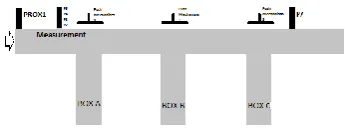
was counted as count. Sensor based system sense coming [image:3.595.334.507.162.232.2]object and count it. But the drawback of the system is that it can only senses the object it cannot calculate the weight of object. So it is not having the provision of sorting carton as per required weight.
Fig -1:Sensor Based System
Sensor-Based Sorting is addressing new developments and applications in the field of automatic sensor separation techniques for primary and secondary raw materials.
2.1.3
Microcontroller Based System
[image:3.595.38.292.175.255.2]The microcontroller based systems are having kind of artificial efficiency as microcontroller can be programmed as per the system requirement. The microcontroller is programmed to count the carton
Fig -2: Microcontroller Based System
passing from conveyer and also to measure weight of carton box. As this system has its drawback on microcontroller measuring weight with advance measuring weight demands. There are many such systems are available which use online check-weightier to calculate the weight of object. If we use microcontroller then cost price of the system get increased. The major drawback of using microcontroller is that its hardware requirements will also go on increasing as it does not contain inbuilt timer, counter[4]. All this drawback of existing system is overcome in PLC based object sorting automation which sort object according to the height.
2.1.4
Pneumatic Powered System
A belt conveyor is used to feed the boxes. It is driven by means of a motor. Capacitive sensors are fixed at required heights to sort the respective boxes. Three double acting
cylinders are used to sort the boxes when actuated by the sensors. A 5/2 solenoid operated spring return direction control valve and 5/2 solenoid operated direction control valves are used. The setup consists of
Fig -3: Model Of Pnematic Based System
a belt conveyor moving at an optimum speed. This belt conveyor is loaded with boxes of three different heights. There are three different sensors at suitable heights to sense the boxes. The highest length box will be sensed by the 3 sensors.The smaller of the two boxes will be sensed by only first sensor and will be sorted at third station. It is very typical and traditional method to make use of pneumatic pressure pump for pushing or sorting the objects[4]. But the major drawback in using all these old methods is the setup cost and their maintenance. Using pneumatic pressure pump requires a heavy setup which includes air compressor, control valves, air filter, pressure regulator, lubricator, direction control valve, flow control valves and all linking assembly (pipes and joints).
3.
SYSTEM MODELLING
In our project we have two conveyors which are pre-feed conveyor and main conveyor. The function of pre-conveyor is just to feed with different height boxes to
mainconveyor randomly. The main conveyor belt will take the boxes in front of height measuring station. The main conveyor design is important key factor here. Main conveyor is energized by 3 phase AC induction motor controlled by Variable Frequency Drive interfaced with PLC.
[image:3.595.47.278.422.491.2]© 2016, IRJET | Impact Factor value: 4.45 | ISO 9001:2008 Certified Journal | Page 106
has a slot in which we can adjust the height of sensors asper our requirement, this makes the system differ from Special Purpose Machine (SPM).
The push assembly consists of DC geared motor energized by manipulated power supply. The offset shaft of dc geared motor is extended with metal plate which is a diverter. The diverter helps to push the object onto rail. The programming of anticlockwise or clockwise movements of motor enables diverter to move along with it.
When the start sensor will sense the object it will signal VFD through PLC to start main conveyor for specific time period. Objects will have to pass from guider strips, which will align objects before passing it from the front of Height measuring station. Basically, guider strips are used to align objects in the centre of conveyor belt, so that objects will not stuck at any other part of the system.
Once the objects on the conveyor passes through the guider, it has to pass from front of Height measuring station. Now the logic programmed in PLC is such that, if the shortest object is detected by the start sensor, it willjust start the conveyor for fixed time and thus the short object will pass from below the DC geared motor and no
push action will be taken and small object will fall in the middle bin. When the medium height object is passed from
[image:4.595.322.545.230.406.2]front of height measuring station it will activate 1st optical Fig -4: Model Of The Project
sensor mounted on second holding plate, thus this will signal the PLC to rotate DC motor in clock-wise direction, when the object will be in correct position on conveyor. This will push or sort the object on left side of the conveyor. Similarly, whenever tall object is detected, both the sensors mounted on second holding plate will get activated and this will signal the PLC to rotate DC motor in Anti-clockwise direction, when the object will be in correct position on conveyor. This will push the tall objects on the right side of the conveyor.
[image:4.595.44.277.462.569.2]The diverter plate is connected to the DC motor shaft using coupling, which actually pushes the object. Now it can be the possibility that after pushing object the diverter plate may stop in between conveyor path and boxes can stuck to it, disturbing the alignment of boxes? To avoid this, we have mounted one separate proximity sensors just adjacent to the DC motor (shown in figure with red color). Which will not allow diverter to stop in between box path, once the push action is done.
Fig -5: Flow Diagram
3.1.
Description Of Flow Chart :
1. The objects are feed to main conveyor by the pre-conveyor system, the start sensor will start the pre-conveyor for the predefined time.
2. While passing from the guider strips, the objects will reach in front of height measuring station, where its height will be measured by using photo-electric sensors arrangement.
3. If the object is of medium height, the conveyor will slowdown and actuates DC motor in clockwise direction to sort object into medium height boxes bin.
4. If the object is of tall height, the conveyor will slowdown and signals the PLC to actuate DC motor in anti-clockwise direction to sort object into tall-height boxes bin.
© 2016, IRJET | Impact Factor value: 4.45 | ISO 9001:2008 Certified Journal | Page 107
3.2. Components Of The System Photo-electric sensor: The system consists of total 4 proximity optical sensors or photo-electric sensors, used to detect the presence of objectand height of boxes. IRD 183 diffuse type photo electric sensor is used in our project.
Variable frequency drive: A Variable Frequency Drive (VFD) is a type of motor controller that drives an electric motor by varying the frequency and voltage supplied to the electric motor.
Phase AC induction motor: To energise assembly of conveyor belt three phase induction motor is used. These motor is used in convention with VFD, which is able to control the speed according to requirement.
Conveyor belt: There are 2 conveyor belt used in this system one is pre-feed conveyor and second is main conveyor. A conveyor system is a common piece of mechanical arrangement that moves materials from one location to another.
DC geared motor: Geared DC motor plays very important role that it helps to push box. The clockwise and anticlockwise direction of diverter is carried out by this motor. The shaft of this motor is extended by a metal strip which willpush the objects.
Object Guider: Guider is a mechanical assembly that will prevent the misalignment of boxes. Guider will force boxes to be at the centre of conveyor. The box sensed by start sensor has to pass through the diverter. Misalignment of the boxes will cause boxes fall out of conveyor or problem can occur while pushing them. The continuous flow of boxes can be easily arranged using guider.
Programmable Logic Controller: A programmable logic controller (PLC) is essentially a user friendly micro-processor based microcomputer, consisting of hardware and software, designed to control the operation of Industrial equipment and processes. An important advantage of the PLC is that it can be easily programmed and reprogrammed. Some leading PLC manufacturers are ABB, Allen Bradley, Honeywell, Siemens, GE Fanuc, Mitsubishi, Modicon, Omron etc. To program PLC we are using CODESYS (Controller Development System) which is a development
environment for programming controller applications according to the international industrial standard IEC 61131-3[5]. CODESYS licenses are free of charge and can be installed legally without copy protection on further workstations. We are available with the 250 different microcontroller and microprocessor from 50 semiconductor vendors in the market still we are using PLC because of following advantages.
Small physical size
Less maintenance
Online programming possible
Extension of I/O ports is possible
High speed of operation
Compatible with computer communication
LPC device
Cost effective for controlling complex systems
4.
PERFORMANCE ANAYLYSIS
Performance analysis includes the performance of the device with various inputs and by using different topologies applying to the device. Mitsubishi 1000 Nexgenie PLC require CoDeSys software for coding purpose. The PLC and computer is connected by a RS232 cable. The programming of the PLC can be perform in 3 different languages. Out of which ladder diagram is preferable as it provides easy electrical circuit representation and after development of the ladder logic it can be converted to secured code such as STL[5].
4.1.
Interfacing Used In Project
In our project we have made use of various components such as PLC, VFD, DC geared motor, AC 3ɸ induction motor, sensors, etc. along with various power supplies like single phase AC, three phase AC, 5V and 24V DC. Each of these component required their own regulated power supply for proper functioning which can only be achieved using proper interfacing or simply we can use readymade 230 VAC input to 5 VDC output with 2A.Following are the interfacing used in our project: -
AC mains to PLC: -
© 2016, IRJET | Impact Factor value: 4.45 | ISO 9001:2008 Certified Journal | Page 108
supply is 230V AC and as an output it provides 24VDC.
DC geared motor to PLC: -
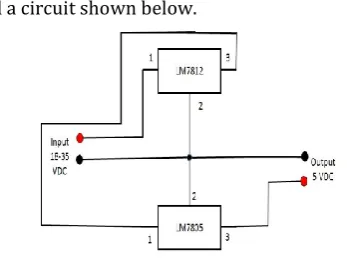
[image:6.595.73.247.210.346.2]DC geared motor used in project works on 5V DC having RPM 60. As the output of PLC is 24V and Output of regulated power supply is also 24V which is not applicable for running DC motor. Here we have used a circuit shown below.
Fig -6: 24VDC to 5VDC Voltage Regulator
In this circuit, 7812 and 7805 regulator IC are used. The available DC voltage is 24V as output of regulated power supply but required voltage to run the DC motor properly is 5V. IC 7805 can provide 5V DC output but its input voltage is 18 VDC. So to get output in the range of 12-18 V, we have used IC 7812 whose input range is 12-18-35 VDC and output is 12 VDC. Output of IC 7812 is provided to IC 7805, to get approximate 5 VDC.
VFD to PLC: -VFD used in this project works on 3ɸ power supply, output of VFD is also 3ɸ but the output signal frequency is 22Hz. VFD is specially used to control input frequency and speed of AC induction motor. It is directly signaled through PLC using relay module.
5.
CONCLUSION
In this project report, we have tried to create a setup that will decrease human effort and succeeded to an extent by using the low cost automation system (LAC) to avoid risk, improve accuracy, increase speed of production and reduce the cycle time. Limitations will be there due to the practical difficulties in programming of the project according the availability of the materials and components. This setup can be further improved to a sorting system that sorts the items based on the other physical consideration. This can be achieved using the various sensors. In industry it can be used for sorting of
various objects, tools, with high degree of accuracy and quality with an automation.
REFERENCES
[1] Manjunatha “Postal Automation System for Mail
Sorting” International Journal of Emerging Technology and Advanced Engineering (ISSN 2250-2459) Volume 5, Issue 3, March 2015)
[2] Albert T. Jones , Charles R. McLean ,”A proposed
hierarchical control model for automated manufacturing systems”, National Bureau of Standards, Gaithersburg, Maryland, USA
[3] Y V Aruna, Beena S “Automatic convey or System with
In–Process Sorting Mechanism using PLC and HMI System”, Int. Journal of Engineering Research and Applications ISSN: 2248-9622, Vol. 5, Issue 11, (Part - 3) November 2015, pp.37-42
[4] Saurin Sheth,Rahul Kher, Rushabh Shah, Parth Dudhat,
Pratyush Jani “Automatic Sorting System Using Machine vision”, DOI: 10.13140/2.1.1432.1448 Conference: Multi Disciplinary International Symposium on Control, Automation & Robotics, At DDIT, Nadiad, Volume: 1
[5] D. A. Wahab, A. Hussain, E. Scavino, M.M. Mustafa and