© 2015, IRJET ISO 9001:2008 Certified Journal
Page 245
Palmprint recognition by using enhanced completed local binary
pattern (CLBP) for personal recognition
Dr. K.N. Prakash
1, M. Satya sri lakshmi
21
Professor, Department of Electronics & Communication Engg., Lakireddy Balireddy College of Engg., Andhra Pradesh,
India
2
P.G. Student, Department of Electronics & Communication Engg., Lakireddy Balireddy College of Engg., Andhra
Pradesh, India
--- ***
---Abstract
-
Palmprint based personal recognition is one of the best and new technology in recent society. Before palmprints many other biometrics is used for person recognition like finger prints, identity cards, secret codes etc: but now a day’s these all are taking more time. Biometrics plays an important role in computer vision and image processing as one of the biometric is palmprint. Palmprint is more advantageous compared to finger print, because palmprint contain more distinctive information than finger prints. In addition, palmprints can be extracted from low resolution images. In consideration of these advantages, palmprints have been extensively used in automated personal recognition field in recent years.There are several techniques for palmprint recognition approaches one of the coding –based method is local binary pattern for extracting the shift and gray scale invariant features for palmprint identification, but this method does not give complete features about whatever given in the database. The drawback of local binary pattern is lost of information, so this drawback overcome by introducing the new method is called completed local binary pattern. It contains small feature size and high recognition accuracy, and completed local binary pattern operator features to extract more distinctive information for palmprint identification.
Key words:
Palmprint identification, Complex directional filter bank, Completed Local binary pattern.I. INTRODUCTION
Now a day’s biometrics plays an important role in authentication and security purpose. One important advantage of using palmprints is their ease of use that’s why all the authentication and security environments encouraging the using of biometric verification systems and is reliable to use. Nevertheless fingerprint recognition has gained more acceptances in a variety of application areas due to the convenience it offers to the end user. Likewise, human palm is both convenient to extract, and it embodies many distinctive features.
The main motivation in this study is to exploit the numerous advantages offered by palmprint. First and most important advantages of the palmprint are that its features can be extracted without too much computational effort; consequently palmprint acquisition does not require sophisticated equipment. It is seldom that one leaves his/her complete palmprint somewhere unintentionally.
Palmprint contains a sophisticated and distinctive pattern that inherits adequate traits to substantiate a person’s identity. palmprint is alleged to have the potential to attain the authentication accuracy equivalent to fingerprints.
Principal lines and texture are the most prominent traits found in a palmprint Fig. 1[2] observed. Consequently these traits are easily observable even in low resolution images.
© 2015, IRJET ISO 9001:2008 Certified Journal
Page 246
disappears means loss of information, so this drawbackcan be overcome by introduce new methodology that is completed local binary pattern.
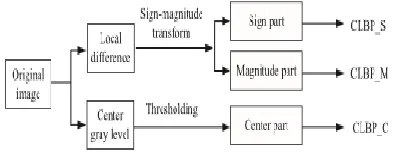
In this paper, a new local feature extractor proposed that is complete local binary pattern (CLBP). In CLBP, a local region is represented by its center pixel and a local difference sign-magnitude transform (LDSMT). The center pixel is simply coded by a binary code after global thresholding, and the binary map is named as CLBP-Center (CLBP-C). The LDSMT decomposes the image local structure into two complementary components: the difference signs and magnitudes. Then two operators, CLBP-Sign (CLBP-S) and CLBP-Magnitude (CLBP-M), are proposed to code them. All the three code maps CLBP-C, CLBP-S, CLBP-M, are in binary format so that they can be readily combined to form the final CLBP histogram. The CLBP could achieve much better rotation invariant texture classification results than conventional LBP based schemes. Several observations can be made for CLBP. First, LBP is a special case of CLBP by using only CLBP-S. Second, we will show that the sign component preserves more image local structural information than the magnitude component. This explains why the simple LBP (i.e. CLBP-S) operator works much better than the CLBP-M for texture classification. Third, the CLBP-S, CLBP-M and CLBP-C code maps have the same format so that they can be readily fused, and the texture classification accuracy can be significantly improved after fusion.
Accordingly, in this paper, the recently proposed shiftable complex directional filter bank (CDFB) transform is investigated to capture the energy shiftable multiresolution and multidirectional information of the palmprint image. “Shiftabe”, namely translation invariance, was firstly defined by Simoncelli. Compared with Gabor filtering, the CDFB transform maintains a much lower redundant ratio and computational complexity. By concatenating all the histogram sequences, we get a shiftable and gray scale invariant local feature space. Finally, a linear discriminant analysis (LDA) classifier is learned in the statistical local feature space for palmprint identification.
Fig: 1 palmprint feature definitions with principal lines and wrinkles
The reminder of this paper is structured as follows; we present the brief introduction about local binary pattern descriptors in section 2, containing three subsections. 2.1, 2.2 introduction of local binary pattern operator and its derivation and feature extraction, complex directional filter bank transform in section 2.3, proposed feature extraction method in section 3, section 3.1 contains performance evaluation and experimental results. Section 4 concludes the paper, respectively.
2. Rotation Invariant Local Binary Pattern
Descriptors
The proposed rotation invariant local binary pattern histogram Fourier features are based on uniform local binary pattern histograms. First, the LBP methodology is briefly reviewed and the LBP-HF features are then introduced.
2.1The Local Binary Pattern Operator
The local binary pattern operator is a powerful means of texture description. The original version of the operator labels the image pixels by thresholding the3x3-neighborhood of each pixel with the center value and summing the threshold values weighted by powers of two. The operator can also be extended to use neighborhoods of different sizes (See Fig.2). To do this, a circular neighborhood denoted by (P, R) is defined. Here P
© 2015, IRJET ISO 9001:2008 Certified Journal
Page 247
Fig: 2 the circular (8, 1), (16, 2) and (8, 2) neighborhoods. The pixel values are bilinearly interpolated whenever the
sampling point is not in the center of a pixel.
2.1.1 Derivation of the Generic LBP Operator:
LBP using 8 pixels in a pixel block, this generic formulation of the operator puts no limitations to the size of the neighborhood or to the number of sampling points. The derivation of the generic LBP presented below follows,
Consider a monochrome image and let denote the gray level of an arbitrary pixel
.
Moreover, let denote the gray value of sampling point in an evenly spaced circular neighborhood of P sampling points and radius R around point :
, (1)
= , (2)
(3)
Assuming that the local texture of the image is characterized by the joint distribution of gray
values of pixels:
(4)
Without loss of information, the center pixel value can be subtracted from the neighborhood:
. (5)
In the next step the joint distribution is approximated by assuming the center pixel to be statistically independent of the differences, which allows for factorization of the distribution:
, (6)
(7)
, (8)
2.2. Palmprint Feature Extraction by Texture
Analysis
This section defines our palmprint feature extraction method, which includes filtering and matching. The motivation for using a Gabor filter in our palmprint research is first discussed.
2. 2.1 Gabor Function
Gabor filter, Gabor filter bank, Gabor transform and Gabor wavelet are widely applied to image processing, computer vision and pattern recognition. This function can provide accurate time-frequency location governed by the “Uncertainty Principle’. A circular 2-D Gabor filter in the spatial domain has the following general form.
, (9)
Where i= √-1; u is the frequency of the sinusoidal wave; q controls the orientation of the function and s is the standard deviation of the Gaussian envelope.
2.2.2 Filtering and Feature Extraction
© 2015, IRJET ISO 9001:2008 Certified Journal
Page 248
in palmprint authentication but accurately extracting themis still a difficult task. This motivates us to apply texture analysis to palmprint authentication. In order to provide more robustness to brightness, the Gabor filter is turned to zero DC (direct current) with the application of the following formula:
(10)
Where (2n+1)2 is the size of the filter. In fact, the imaginary part of the Gabor filter automatically has zero DC because of odd symmetry.
Fig:3 the different sets of different palms with same principal lines
2.2.3 Palmprint Matching
In order to describe clearly the matching process, each feature vector is considered as two 2-D feature matrices, real and imaginary. Palmprint matching is based a normalize Hamming distance. Let P and Q be two palmprint feature matrices. The normalized hamming distance can be defined as
(11)
where PR (QR) and PI (QI) are the real part and the imaginary part of P (Q), respectively; the Boolean operator, “”, is equal to zero if and only if the two bits, PR(I)(i,j) and
QR(I)(i,j) are equal and the size of the feature matrices is
NN. It is noted that Do is between 1 and 0. The hamming distance for perfect matching is zero. In order to provide translation invariance matching, Eq. (12) can be improved as:
H(s). (12)
The hamming distance,
can support translation matching; nevertheless, because of unstable preprocessing, it is not a rotational invariant matching. Therefore, in enrollment mode, the coordinate system is rotated by a few degrees and then the sub-images are extracted for feature extraction. Finally, combining the effect of preprocessing and rotated features, Eq. (12) can provide both approximately rotational and translation invariance matching.2.3 The complex directional filter bank
(CDFB) transform
The (energy) shiftable complex directional filter bank (CDFB) [11] is a recently proposed multiresolution decomposition method, which is carried out by a pyramidal dual-tree directional filter bank (PDTDFB) Fig 4.The dual-tree DFB leads to the energy shift-invariance or “shiftability” of the CDFB transform. As can be seen, the block P is the so called PDTDFB, which consists of a Laplacian pyramid and a pair of directional filter banks (DFBs), designated as primal and dual DFBs.
The Laplacian pyramid provides multiresolution image decomposition, where the signal is divided into two pairs. This high frequency component is then decomposed by a dual-tree of DFBs to produce the real and imaginary parts of the 2n complex directional subbands. The non-aliasing property achieved by the dual- tree DFB leads to the energy shift-invariance or “shiftability” of the CDFB transform.
© 2015, IRJET ISO 9001:2008 Certified Journal
Page 249
For evaluating the performances of the considered
multiscale and multidirectional transforms, five images of each palm collected in the first session are randomly chosen to construct the training set, and all the samples in the second session (in total 3863 samples) are used for testing. Table 1 shows the overall performances over ten run executions. As can be seen, the average recognition accuracies of the original intensity based and the Enhanced based methods are compared and the previous one is less recognition accuracy and enhanced one have high identification accuracy and it takes less identification time because their extracted features are shift invariant.
3. The completed local binary pattern (CLBP)
[image:5.612.62.259.362.440.2]The Fig 5. shows the completed local binary pattern. It gives the complete information about the given image means both sign and magnitude and there is no loss of information this is the best method compared to local binary pattern.
Fig: 5 the completed local binary pattern (CLBP)
Central pixel and its P circularly evenly spaced neighbours p=0, 1,…,P-1. The difference between
as = - . The local difference vector [ ] characterizes the image local structure at because the central gray value is removed, to illumination changes and they are more efficient than the original image in pattern recognition, can be decomposed into two components.
(13)
Where
is the sign of and isthe magnitude of . The local difference perfect reconstructed from its sign and magnitude components only. By using sign- magnitude components reconstruct
the original image without loss of information. So the proposed completed local binary pattern gives efficient patterns of an image.
3.1 Performance evaluation
The performance evaluation can be observed for 10 running executions and the average performance is high for proposed method i.e. enhanced completed local binary pattern gives high accuracy and execution time is less.
Methods Identification
Accuracy
Identification Time
CLBP-S-M 93.46 14.89
CLBP-M 91.99 18.91
CLBP-S 91.73 19.72
Enhanced CLBP-S
[image:5.612.402.500.445.542.2]99.34 9.55
TABLE: 1 the average performance evaluation of proposed method
3.2. Experimental Results:
Fig 7(a) original palmprint image
Fig 7 (b) The local binary pattern of an original image
© 2015, IRJET ISO 9001:2008 Certified Journal
Page 250
Fig 7 (c) Gabor featuresfor different illuminationcondition.(i)For high resolution condition
Fig 7 (c) (j) for low resolution conditions.
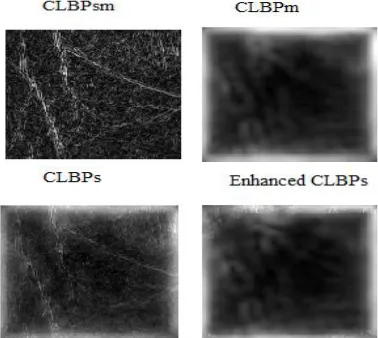
Fig 7(d) the completed local binary pattern images
4. Conclusion
This paper presents a novel feature extraction method for palmprint identification in automated personal recognition by applying a completed local binary pattern.
It gives the complete information about the image the drawback of local binary pattern is it lost some information so that can be overcome by using the completed local binary pattern it gives the high identification accuracy at the same time the identification time is also less without loss of information.
5. References
1. Meiru Mu, Qiuqi Raun, Song Guo, Shift and gray scale invariant features for palmprint identification using complex directional wavelet and local binary pattern, Neurocomputing 74 (2011) pp.3351-3360
2.David ZHANG, Senior Member, Wai-Kin Kong, Jane You and Michael wong, Online palmprint identification IEEE Transactions on Pattern Analysis and Machine Intelligence, vol 25, No 9, september 2003.
3. Ahonen, T., Pietikäinen, M.: Soft histograms for local binary patterns. In: Proc. Finnish Signal3.T. Chang and C. C. J. Kuo, Texture analysis and classification with tree structured wavelet transform, IEEE Trans. Image. Process.
2(4) (1993) 42–44. Processing Symposium, pp. 4 (2007).
4. J. Han, K.K. Ma, Rotation-invariant Gabor features for texture image retrieval, Image Vision Comput. 25 (2007) pp.1474-1481.
5. S.Arivazhagan, L.Ganesan, S.P.Priyal, Texture classification using Gabor wavelets based rotation invariant features, Pattern Recogn. Lett. 27 (2006) pp.1976-1982.
6.W.C. Zhang, S.G. Shan, W. Guo, H.M. Zhang, Local Gabor binary pattern histogram sequence (LGBPHS): a novel non-statistical model for face representation and recognition, in: Proceedings of the IEEE International conference on computer vision, 2005, pp. 786-791.
7. X.Y. Tan, B. Trigg’s, enhanced local texture feature sets for face recognition under difficult lighting conditions, IEEE Trans. Image processing. 19 (2010) pp. 1635-1650.
9. S.Liao, M.W.K. Law, A.C.S Chung, Dominant local binary pattern for texture classification, IEEE Trans. Image Process. 18 (2009) pp. 1107-1118.
[image:6.612.79.247.102.240.2] [image:6.612.66.255.471.640.2]© 2015, IRJET ISO 9001:2008 Certified Journal
Page 251
11. A. Kong, W. Zhang, Competitive coding scheme forpalmprint verification in: Proceedings of the 17th
International Conference on Pattern Recognition (ICPR’04), 2004, pp. 520-523.
12. A. Kong, D. Zhang, M. Kamel, Palmprint identification using feature-level fusion, Pattern Recogn. 39 (2006) pp. 478-487.
13. W. Jia, D.S. Huang, D. Zhang, Palmprint verification based on principal lines, Pattern Recogn. 41 (2008) pp. 1316-1328.
14. W. Li, D. Zhang, Z. Xu, “Palmprint identification by Fourier transform”, International Journal of Pattern Recognition and Artificial Intelligence, vol. 16, no. 4, pp.417-432, 2002.
15. W.K. Kong and D. Zhang, “Palmprint texture analysis based on low- resolution images for personal authentication”, in Proceedings of 16th International
Conference on Pattern Recognition. Vol. 3, pp. 807-810, 2002.
16. J. Chen and Y. S. Moon, “Using SIFT features in palmprint authentication”, International Journal of Engineering Research & Technology (IJERT) ISSN: pp. 2278-0181, vol. 2 Issue 9, September-2013.
17. Zhehua Guo, Lei Zhang and David Zhang, A completed modeling of local binary pattern operator for texture classification, IEEE Transactions on Image Processing, vol. 19, pp.6, June 2010.
BIOGRAPHIES
Dr. K.N Prakash is a professor in Department of Electronics & Communication Engineering since 2009 at Lakireddy Balireddy College of Engineering, Mylavaram, Krishna District, Andhra Pradesh. His research area is signal and image processing. He is a life member IETE, Indian Science Congress, and ISTE.
M.Satyasrilakshmi is a M.Tech (Systems & Signal Processing) Student in Department of Electronics & Communication Engineering at Lakireddy Balireddy College of Engineering, Mylavaram, Krishna District, Andhra Pradesh.