© 2016, IRJET | Impact Factor value: 4.45 | ISO 9001:2008 Certified Journal | Page 850
Application of finite element analysis to optimizing dental implant
Sushant Mahajan
1, Prof. Raosaheb Patil
21
P.G. Student, Department of Mechanical, Jawaharlal Nehru Engineering College, Aurangabad
2
Associate Professor, Department of Mechanical, Jawaharlal Nehru Engineering College, Aurangabad
---***---Abstract -
The FEM is mathematicalapproximation to solve partial differential equation (PDE) and integral calculations that are formulated to define physics of complex structure, permitting the numerical analysis of complex structures created on their material properties. The use of finite element ranging from biomedical engineering. Biomechanics is essential to any dental implant design. Subsequent functional load stress and strains are created inside the biological structures. Strengths at any points in the creation are critical and govern failure of the prostheses, remolding of bone and type of tooth association.
In our study Finite element analysis were executed to find out the optimum thread shape by associating stress induced in cortical and cancellous bone. We have taken two different thread shape implant namely 1. Implant- X1: Tapered cylindrical implant with alternate thread angle [30°, 60°, 30°, and 60°] & 2. Implant- X2: Tapered cylindrical implant with alternate thread angle & height [30° & 0.5mm, 60°& 0.3mm, 30°& 0.5mm, 60°& 0.3mm]. To examine effect of stress induced in bone we carried out structural static analysis of Implant, cortical and cancellous bone assembly generated in 3-D modelling application. After generating 3-D model same model is imported CAE application namely ANSYS for Static structural analysis.
After comparing results of both implants we found that stresses induced in bone of Implant A is less as compared to Implant B. From this study we may conclude that it is first time we are using taper implant design to investigate the stress distribution inside the bone and it is observed that due to the tapered implant design and combination of thread shape stresses decreases in depth as where thread taper angle increases. As thread taper angle increases stress induced in bone is reduced.
Key Words: load, stress distribution, Static Structural
Analysis, Thread shape of implant, dental implant, threads design, ANSYS.
1. INTRODUCTION
Thread shape & geometry is an important intention in biomechanical optimization of dental implants. Threads are used to maximize preliminary contact, improve initial steadiness, enlarge implant outside area and favour dissipation of interfacial stress. It is required to evaluate the thread design of dental implant to improve further clinical success.
Many different methods have been used to study the stress/strains in bone and dental implants. Photoelasticity provides high qualitative information pertaining to the overall position of stresses but only partial quantitative information. Strain-gauge measurements give accurate data concerning strains only at the specific location of the gauge. Finite element analysis (FEA) is able to provide complete quantitative data at any location within mathematical model. Thus FEA has become an important analytical tool in the evaluation of implant systems in dentistry.
Fig -1: Similarities of real Model with CAD Model of Dental Implant
2. ACCURACY OF FINITE ELEMENT MODELS
[image:1.595.308.562.480.594.2]© 2016, IRJET | Impact Factor value: 4.45 | ISO 9001:2008 Certified Journal | Page 851 result. For our study we will allow 20% of results varying
from experimental & simulation values. FEA is very good tool to forecast the behaviour of one model with relative to another model. In FEA there is good flexibility of changing geometry, material properties & loading conditions.
Many CAE software’s are used like STRAND 7, Nastran (MSC software partners solutions Marburg, Germany), Patran (MSC software corporation, USA), ANSYS. In our study we have used ANSYS.
3. ANSYS BENEFITS
3.1 Unequalled Depth
The ANSYS promise is to provide unequalled technical depth in any simulation domain. Whether it’s structural analysis, fluids, thermal, electromagnetic, meshing, or process & data management we have the level of functionality suitable for your requirements. Through both significant R&D investment and key acquisitions, the richness of our technical subscription has flourished. We offer consistent technology solutions, scalable from the casual user to the experienced analyst, and continuous in their connectivity. In addition, we have world class expertise for all of these domains, available to help you implement your ANSYS technology positively.
3.2 Unparalleled Breadth
Unlike other engineering simulation businesses, who may possess competence in one, or maybe two, fields, ANSYS can provide this productivity of functionality across a broad range of disciplines, whether it is explicit, structural, fluids, thermal, or electromagnetics. All of these areas are supported by a complete set of analysis types and wrapped by a unified set of meshing tools. Together, these domains form the cornerstones of the ANSYS portfolio for Simulation Driven Product Progress, and constitute a complete portfolio of unparalleled breadth in the business.
3.3 Comprehensive Multiphysics
A strong foundation for multiphysics sets ANSYS apart from other engineering simulation establishments. Our technical depth and breadth, in combination with the scalability of our product portfolio, allows us to actually couple multiple physics in a single simulation. Technical depth in all fields is vital to understand the complex interactions of different physics. The collection breadth eliminates the need for clunky interfaces between disparate applications. The ANSYS capability in multiphysics is exclusive in the industry; flexible, robust and architected in ANSYS Workbench to
enable you to solve the most multifaceted coupled physics analyses in a unified environment.
3.4 Engineered Scalability
Scalability is a critical contemplation when considering software for both current and long term purposes. At ANSYS engineered scalability means flexibility you essential has been designed for your particular needs. ANSYS provides you with the ability to apply the technology at a level that is appropriate for the size of the problem, perform it on a full range of computing resources, based on what’s appropriate and obtainable, and finally the ability to deploy the technology within your company’s user community. The result is efficient usage and optimum return on your asset, whether you have a single user or an enterprise-wide commitment to Simulation Driven Product Development. As your requirements grow and the level of sophistication and maturity evolves, the technology from ANSYS also will scale up accordingly.
3.5 Adaptive Architecture
Adaptive software architectures are compulsory for today’s world of engineering design and development where a multiplicity of different CAD, PLM, in-house codes and other point solutions typically comprise the overall design and development process. A software environment is needed which anticipates these needs and gives you the tools and system services for customization as well as interoperability with additional players. Such adaptability is a mandatory necessity and characteristic of the ANSYS simulation architecture, enabling your organization to apply the software in a manner which fits with your philosophy, environment and procedures. ANSYS Workbench can be the backbone of your simulation strategy, or peer-to-peer with other software environments, or ANSYS technology can be a plug-in to your CAE supplier of choice. The ANSYS commitment to Simulation Driven Product Development is the similar in any case.
4. COEFFICIENT FRICTION
It is dimensionless scalar number & depends on martial used
© 2016, IRJET | Impact Factor value: 4.45 | ISO 9001:2008 Certified Journal | Page 852 For analysis we used frictional contacts between surfaces to
surface. Frictional contact is nonlinear behavior for this contact we used contact 174 & target 170 elements in ANSYS. Model was modeled by using nonlinear frictional contact because to get initial stability for the immediate loading this contact also allowed minor displacement among implant & bone.
5. STUDY CRITERIA
Our main goal is to study the bone stress by varying implant design. So for easier comparison we keep simplify geometry on inner and outer bone. Modeling a complete mandible is quite problematic so we use selected segment of mandible which is much easier.
We select a segment from mandible bone. Bone geometry was shortened and simulated as rectangle, or brick consist of two layers of bone. The inner bone represents the spongy bone (size= 15 X 20 X 15 mm) which fills inner space of outer bone of thicknesses of 2mm which denotes a cortical bone.
Fig -2: FEA Mesh model of teeth & mandible
6. BEST MESH SIZE AND FINENESS FOR A MESH
REFINEMENT (CONVERGENCE) STUDY
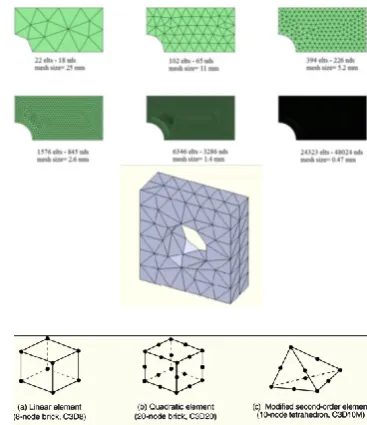
The Finite Element Method (FEM) to compute single- and multiphysics simulations. Whenever we use the finite element method, it is significant to remember that the accuracy of our solution is linked to the mesh size. As mesh size decreases towards zero (leading to a model of infinite size), we move toward the particular solution for the equations we are solving. However, since we are restricted by finite computational resources and time, we will have to rely on an approximation of the real solution. The goal of simulation, therefore, is to minimize the difference (“error”) between the exact and the approximated solution, and to ensure that the error is below some acknowledged tolerance level that will vary from project to project based on our design and analysis goals.
Fig -3: Example of a 3-D non-matching mesh. Top portion discretized with tetrahedral, lower portion with brick.
We will need to track a characteristic output constraint from our simulation as we vary the mesh size and determine at which mesh size the parameter has “converged” on the correct value. Note that “converged” is used in quotation marks because the convergence criteria will depend on our design and analysis goals.
In general, convergence is a coming together of two or more dissimilar entities or phenomena. Convergence is increasingly prevalent in the CAE world; in this context the term denotes to the combination of two or more different simulations in single loading conditions by varying element size.
Fig -4: Similar object with different mesh size
7. BOUNDARY CONDITIONS
[image:3.595.333.560.55.217.2] [image:3.595.102.222.379.450.2] [image:3.595.338.522.451.664.2]© 2016, IRJET | Impact Factor value: 4.45 | ISO 9001:2008 Certified Journal | Page 853 easily change in force, magnitude & directions. We can
consider infinite deviations but to limit our study we go only below boundary conditions.
1. Base of FEA model is fixed
Fig -5: Boundary conditions applied on Implant assembly
2. Sides of FEA model is frictionless supports
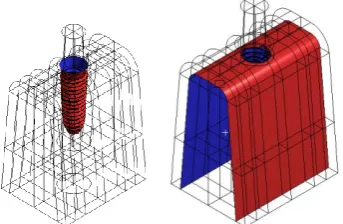
Implant and the bones are linked to each other by Frictional contacts with coefficient of friction 0.3 as shown below. Then inner bone & outer bone in connected by each other by bonded contacts as shown below. Contacted surface is exposed in red & blue color.
Fig -6: Frictional & Bonded contacts created in Implant assembly
3. Loading was applied on the top of abatement on horizontal surface of implant assembly
Model were constraint in all directions on the mesial & distal bones since this study was aimed to investigating bone effects to loads inside the physiological limits rather than to overloads. There are four different loading conditions are used
A. Total assembly is fixed at bottom and Axial downward (Compresive-100 N)[5] is applied on implant as shown in below figure
Fig -7: Vertical loading situations applied on Implant assembly
B. Angular force of 100N from buccal (cheek) to lingual (tongue) [5] side as shown below
Fig -8: Angular forces applied on Implant assembly
C. Axial upward (Tension- 50N).
Fig -9: Axial upward load applied on Implant assembly
[image:4.595.287.548.48.584.2]D. Bending (20 N cheek to tongue).
Fig -10: Bending load applied on Implant assembly
[image:4.595.98.214.171.281.2] [image:4.595.348.518.290.398.2] [image:4.595.76.248.414.526.2] [image:4.595.319.528.431.551.2] [image:4.595.318.525.586.704.2]© 2016, IRJET | Impact Factor value: 4.45 | ISO 9001:2008 Certified Journal | Page 854 After relating all boundary condition & material properties
FEA model is solved with the help of ANSYS 13.0. We get the results of FEA analysis after achievement of solving procedure in ANSYS are as follows
[image:5.595.47.534.43.816.2]1. Compression of 100N a.Equivalent Stress [Mpa]
Fig -11: Equivalent (Von-Mises) Stress of Assembly
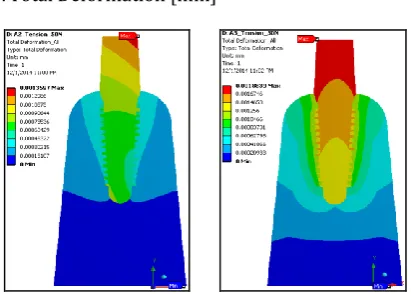
[image:5.595.46.277.159.330.2]b.Total Deformation [mm]
Fig -12: Total deformation of Assembly
2. Compression of 100N at 15° from cheek to tongue a.Equivalent Stress [Mpa]
Fig -13: Equivalent (Von-Mises) Stress
b.Total Deformation [mm]
Fig -14: Total deformation of Assembly
3. Tension of 50N
a.Equivalent Stress [Mpa]
Fig -15: Equivalent (Von-Mises) Stress
b.Total Deformation [mm]
Fig -16: Total deformation of Assembly
4. Bending of 20N
[image:5.595.324.534.260.436.2] [image:5.595.331.537.476.623.2]© 2016, IRJET | Impact Factor value: 4.45 | ISO 9001:2008 Certified Journal | Page 855
Fig -17: Equivalent (Von-Mises) Stress
[image:6.595.322.567.290.414.2]b.Total Deformation [mm]
Fig -18: Total deformation of Assembly
Table -1: comparison of Equivalent (Von-Mises) Stress
Implant Compression 100N
15 Degree
100 N
Tension 50 N
Bending 20 N
Implant
A 24.152 77.212 63.089 8872
Implant
B 28.557 60.067 36.887 8258.4
Table -1: comparison of Total Deformation
Implant Compression 100N
15 Degree
100 N
Tension 50 N
Bending 20 N
Implant
A 0.0014 0.01035 0.0013 0.0177
Implant
B 0.003 0.01476 0.0018 0.0209
9.
VALIDATION
After getting the FEA result, we represented all results in graphical form as shown below
0 20 40 60 80 100
Compression 100N (Mpa)
15 Degree (Mpa)
Tension 50 N (Mpa)
Bending 20 N (100Mpa) Implant A Implant B
Chart -1: Comparison of Equivalent tresses
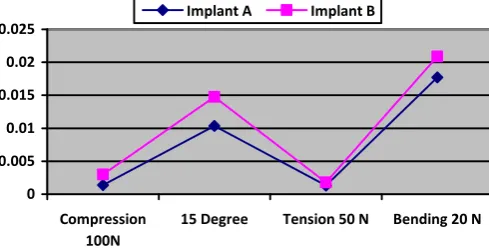
0 0.005 0.01 0.015 0.02 0.025
Compression 100N
15 Degree Tension 50 N Bending 20 N Implant A Implant B
Chart -2: Comparison of Total deformation in µmm.
After associating the result in terms of stress & deformation we found that Implant B is optimum than Implant A.
CONCLUSION
The purpose of this study was to find the pure effect upon the variations of the thread shapes. For this motive it was assumed that all the parameters of the models were identical except the thread shape. This makes it possible to make a assessment between threads of different shape. After comparing results of both implant we found that Implant B: Tapered cylindrical implant with constant thread angle [60°] found optimum.
It has been stated that even loads below the ultimate bone stress can cause bone failure, as in the case of fatigue failures, in which the micro damage of bone can no longer be repaired. The gathered micro damage might result in bone resorption.
ACKNOWLEDGEMENT
© 2016, IRJET | Impact Factor value: 4.45 | ISO 9001:2008 Certified Journal | Page 856 which is direct result of suggestion & direction from Prof.
R.B. Patil, Department of Mechanical Engineering .It is my proud privilege to express my sincere thanks for encouragement and motivation provided by Prof. Dr. M. S. Kadam, (HOD Mechanical Department), and Dr. S. D. Deshmukh (Principal, JNEC).
My sincere thanks to all my friends who have helped me directly or indirectly in the course of successful completion of this paper.
REFERENCES
[1] Y. Akagawa, Y. Sato*, E. R. Teixeira, N. Shindoi & M.
Wadamoto (2003); "A mimic osseointegrated implant model for Three-dimensional finite element analysis" Journal of oral rehabilitation 2003 30; 41-45
[2] Gefen; "Optimizing the biomechanical compatibility of
orthopedic screws for bone fracture fixation" Medical Engineering and Physics 24:337–47
[3] Ming-Lun Hsu and Chih-Ling Chang; " Application of
finite element analysis in dentistry" J Prosthet Dent. 2001 Jun;85(6):585-98
[4] Heng-Li Huang, Jui-Ting Hsu, Lih-Jyh Fuh, Ming-Gene Tu,
Ching-Chang Ko , en-Wen Shen; “Bone stress and interfacial sliding analysis of implant designs on an immediately loaded maxillary implant: A non-linear finite element study” J Dent. 2008 Jun; 36(6):409-17. doi: 10.1016/j.jdent.2008.02.015. Epub 2008 Apr
[5] Yingying Sun, Liang Kong, Baolin Liu , Li Song, Shuicheng
Yang, Taofeng Wei; "Comparative study of single-thread, double-thread, and triple-thread dental implant: a three-dimensional finite element analysis" World Journal of Modelling and Simulation Vol. 3 (2007) No. 4, pp. 310 - 314
[6] M Karl, W Winter, AJ Dickinson, MG Wichmann, SM
Heckmann; "Different bone loading patterns due to fixation of three-unit and five-unit implant prostheses" Aust Dent J. 2007 Mar;52(1):47-54
[7] Liang Kong, Baolin Liu, Dehua Li, Yingliang Song, Aijun