© 2016, IRJET ISO 9001:2008 Certified Journal Page 820
“Electronic Shopping Using Barcode Scanner”
Megha R. Mane
1, Nilam G. Amane
2,Sunita D. Patil
3, Archana L.Lakesar
4123Student BE (E&TC), ADCET (Ashta), Shivaji University, MH, India.
4Assistant Professor(E&TC),ADCET (Ashta), Shivaji University, MH, India.
---***---ABSTRACT- The advent of wireless technology along
with other communication techniques has helped in making electronic commerce very popular. A modern forward looking product is the one that aids the comfort, convenience and efficiency in everyday life. In this paper, we discuss an innovative concept of ‘ELECTRONIC SHOPPING’.The key idea here is to assist a person in everyday shopping in terms of reduced time spent while purchasing a product. The main goal is to provide a technology oriented, low-cost, easily scalable, and rugged system for aiding shopping in person.
Electronic Shopping is equipped with Barcode
Scanner for product identification and a consistent Wi-Fi connection with the shop’s server. Besides, it also has an LCD display that informs customers about product prices, discounts, offers and the total bill. The barcode reader identifies the product and updates the bill. When the customer is done with shopping, he can just press the End shopping button and the details are sent to the shop’s server and the customer has to pay just the amount and leave.
These units are integrated into a smart enclosed system and are tested to satisfy the functionality. The customers will be able to scan the items themselves and the LCD screen on the shopping trolly will keep updating the total. This will turn out to be very beneficial for the retail stores as more people will enjoy the shopping experience and come more often to shop.
Keywords- Embedded c programming, Barcode
reader, LCD Display ,keil µvision, workstation.
1.Introduction
The electronic shopping system intends to assist shopping in person that will minimize the time spent in shopping as well as intended to aid the store management with real-time updates on the inventory. The emergence of new technologies, such as barcode scanner and wireless networks, makes the shopping processes faster, transparent and efficient. Our aim is to develop the shopping system which can be used in shopping malls to solve the problem mentioned above.
The Shopping system is equipped with barcode
scanner for product identification and a consistent Wi-Fi connection with the shop’s server. Besides, it also has an LCD display that informs customers about product prices, discounts, offers and the total bill. As soon as the object is purcased, the barcode reader identifies the product and updates the bill. When the customer is done with shopping, he can just press the ‘End shopping’ button and the details are sent to the shop’s server and the customer has to pay just the
amount and leave. Theshopping system will change the
way people shop as radically as ATM’s changed banking. The proposed system is easy to use and does not need any special training. In this system there is inbuilt automatic billing system makes shopping a breeze and has other positive spin-offs such as freeing staff from repetitive checkout scanning, reducing total number of staffs required and increasing operational efficiency of the system.
© 2016, IRJET ISO 9001:2008 Certified Journal Page 821 excellent way to help customers reduce the time spent
in shopping by displaying the list of products, their cost, the best deals/rates on the products and automatic billing. The system helps the store management with an automatic update of the inventory on every purchase of an item shopping system (proposed system) has the potential to make shopping more pleasurable and efficient for the shopper and the inventory control easier for the store management. The shopping system (proposed system) has the potential to make shopping more pleasurable and efficient for the shopper and the inventory control easier for the store management
2. significance & scope of the project
An innovative product with societal acceptance is the one that aids the comfort, convenience and efficiency in everyday life. Purchasing and shopping at big malls is becoming daily activity in metro cities. We can see big rush at these malls on holidays and weekends. People purchase different items. After completion of purchases, one needs to go to billing counter for payments. At billing counter the cashier prepare the bill using bar code reader which is very time consuming process and results in long queue at billing counter. In this paper, we discuss a product “The Shopping System” being developed to assist a person in everyday shopping in terms of reduced time spent while purchasing. The main objective of proposed scalable, and rugged system for assisting shopping in person.
3. software & hardware requirements
Software Requirments
3.1. KeilμVision
The Keil Development Tools are designed for the professional software developer, however programmers of all levels can use them to get the most out of the embedded microcontroller architectures that
are supported. Tools developed by Keil endorse the most popular microcontrollers and are distributed in several packages and configurations, dependent on the architecture.
4. System Structure
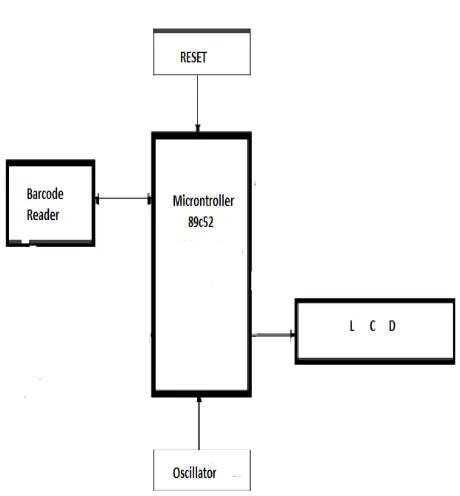
[image:2.595.305.535.212.460.2]4.1 basic block diagram
Fig. 1. Basic block diagram
The above figure shows the block diagram of the shopping system.
Every product has an barcode which contains a Unique ID. These ID’s are fed in the database assigned to the corresponding products. If there needs to be a purchase done, then that product can be dropped in the trolley where the barcode reader reads the tag.
© 2016, IRJET ISO 9001:2008 Certified Journal Page 822 database. These steps are repeated until the end of
shopping button is pressed. Once the “Complete” button is pressed there is an option provided to end the shopping with the same products or to delete some of the products from the system. This goes by the customer choice. At the end of shopping, the customer can straight away pay the bill and leave. Inventory status of the products is also updated at the end of shopping.
4.2 Algorithm
Steps:
© 2016, IRJET ISO 9001:2008 Certified Journal Page 823 2) Every product has an barcode which contains
unique id. This Id’s are fed in the database assigned to the corresponding products.
3) When the shopper purcase any product then the barcode reader reads the tag. The information of the product is extracted and displayed on the LCD screen. At the same time billing information is also updated.
4) These steps are repeated until the end of shopping button is pressed. Once the “End Shopping” button is pressed the total bill is display on LCD.
5) There is also a option provided to delete some of the products from the cart and the bill will be updated accordingly, This goes by the customer choice.
6) At the end of shopping, the customer can straight away pay the bill and leave.
7) Inventory status of the products is also updated at the end of shopping.
5. Related Work
While doing survey we found that most of the people prefer to leave the shopping mall instead of waiting in long queues to buy a few products. People find it difficult to locate the product they wanted to buy, after selecting product they need to stand in a long queue for billing and payment. To try to solve the problems previously identified, recent years have seen the appearance of several technological solutions for hypermarket assistance. All such solutions share the same objectives: save consumer’s time and money, help the retailers to win loyal clients.To solve the problems related to shopping, with high reliability and safety we made the Shopping System.
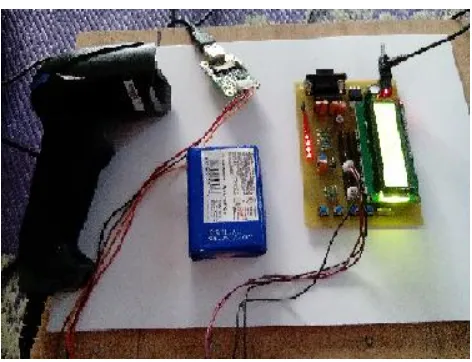
[image:4.595.304.533.121.256.2]6. Results
[image:4.595.305.539.299.457.2]Fig 6.1- Display of product name and cost
Fig 6.2- Totalcircuit and products.
[image:4.595.303.539.495.676.2]© 2016, IRJET ISO 9001:2008 Certified Journal Page 824 7. Conclusion
The intended objectives were successfully achieved in the prototype model developed. The developed product is easy to use, low-cost and does not need any special training. This project report reviews and exploits the existing developments and Different types of Barcode scanner technologies which are used for product identification, billing, etc. We have also learned the architecture of the system that can be used in the shopping systems for intelligent and easy shopping in the malls to save time, energy and money of the consumers. Present trends point towards the fast growth of Barcode scanner in the next decade. There are a few challenges that can be resolved to make proposed system more robust. This issue will have to be resolved specifically with respect to billing to promote consumer confidence. Further, a more sophisticated microcontroller, larger display system, GPS to track the product, internet facility inside the scanner to browse the offers, deals and facility of payment within the trolley by using scanner can be used to make trolley more advance provide better consumer experience.
8. Acknowledgement
We must mention several individuals and organizations that were of enormous help in the
development of this work. Miss. Lakesar A. L. is our
project guide encouraged we to carry this work. Her continuous invaluable knowledgably guidance throughout the course of this study throughout the
course of this study helped me to complete the work up to this stage and hope will continue in further research.
9.References
1. International Journal of Engineering Science and Innovative Technology (IJESIT) Volume 2, Issue 4, July 2013
2.D.V.S Chandra Babu, “wireless intelligent billing trolley for supermarket”, International Journal of Advanced Research in Technology, vol.3, issue 1, Aug. 2012.
3. International journal of innovative research in electrical, electronics, instrumentation and control engineering