TECHNOLOGY TEaCHErs
Jamil Abd Baser
1& Yahya Buntat
2 1Faculty of Technical Education Universiti Tun Hussein Onn, Malaysia[email protected] 2Faculty of Education Universiti Teknologi Malaysia
aBsTraCT
The purpose of this research is to gain information of Engineering Technology teacher’s readiness in informal learning and focus in organizational structure. Organization development (OD) is a planned, organization-wide effort to increase an organization‘s effectiveness and viability. Warren Bennis has referred to OD as a response to change, a complex educational strategy intended to change the beliefs, attitudes, values, and structure of organization so that they can better adapt to new technologies, marketing and challenges, and the dizzying rate of change itself. OD is neither „anything done to better an organization“ nor is it „the training function of the organization“; it is a particular kind of change process designed to bring about a particular kind of end result. OD can involve interventions in the organization‘s „processes,“ using behavioural science knowledge as well as organizational reflection, system improvement, planning, and self-analysis. Informal learning can be defined as a particular way of learning which arises from the activities and interests of individuals and groups. After having identified and selected interests expressed by learners, informal learning activities such as discussion, talks or presentation, information, advice and guidance are carried out in a flexible and informal way, in informal community locations. The objectives of this research is to develop the informal learning model based on the issued occurs and help the teachers to understand the state of readiness in teaching the Engineering Technology subject based on knowledge and skills management. This research contains method of informal learning, the perceived factors that influence engagement in informal learning in the workplace, personal characteristic of the teachers and the organization’s learning culture. The research took samples of the Engineering Technology teachers from academic schools in Malaysia. The instrument that will be used in this research is questionnaire and the data obtained were analyses using a programmed called Statistical Packages for Social Science (SPSS 16 for Windows). The data will be collected and analyse by using the min score and percentage. At is expected that the aforesaid research would contribute positively to the national education system abreastly enhance the quality and credibility of the teaching profession.
Keywords: Engineering Technology Teacher; Informal Learning; Workplace; Personal Characteristic; Skills Management
1.0 INTrODUCTION
Learning is a process that occurs throughout life (Tylor, 2006; Mohd Azhar, Paimah and Mohd Nasir, 2004; Illeris, 2003; Evans, 2003; Dominice, 2000; Livingstone, 2000.2001; Mazanah and Carter, 2000; Merriam and Caffarella, 1999; gun and Brocket, 1997; Ibrahim, 1992) to obtain the knowledge and skills. Teaching and learning process is an important element in ensuring the students whether they can follow the content of subjects presented. In the field of engineering technology sophistication that have made continuous innovation, methods of teaching and learning for students that should be on track with the current changes in technology. Knowledge and skills are important in determining the success of an individual. Thus, learning is implicit in human life. In addition, learning is a process that occurs throughout the human life to obtain the knowledge, understanding and skills (Mohd Azhar, Paimah, Mohamad Fauzi & Mohd Nasir 2004; Mazanah & Carter, 2000).
learning, the readiness in learning, experience, humour in learning, motivation, learning objectives and the organization of learning (Rivera & Paradise, 2006; Mc Stravick, 2007). As mentioned, learning is divided into three such as formal learning, informal and non-formal. This study will focused on informal learning which is absorbed in the learning process through the environment through observation, conversation and experience. Informal learning is a continuous learning process and occurs throughout life.
Informal learning happens all the time without a specific time and place which is. it does not specify the subject or materials to be mastered in which to complete the understanding of informal learning. This learning interpreted to refer the formal education and non-formal for this informal method, there are relationship between formal and non formal (Caffarella, 2005; Merriam & Baumgartner 2007). Experience is one of the factor that improves the informal learning of individuals and it depends on how the findings of the information and skills enhancement obtained (The Institute for Research on Learning, 2000, Menlo Park). Individual needs to learn on how to build an informal learning because it can be strengthened with a discussion of an indirect, experiment, errors made during the process of learning and training and it is done on an ongoing basis with the help of mentors who are also have expertise in specific areas.
Smith (1999) also explained that the main focus of interest has been based on informal learning as a way to generate a positive attitude education, especially for people who have not allowed the modernization of current education or who have negative experiences in school. Informal learning is said to be very popular because of its progress of learning in connection with the acceptance of the relevant to teachers who adopt this kind of method.
1.1 Problem statement
Scenarios and issues that occur among educators in the country of Peru that prioritized as the quality of teachers’ working environment will depend on how they deal with the level of professionalism or how they faced the issues related to the teaching profession. There are several problems faced by educators, especially technical teachers such as Engineering Technology subjects, where he covers the skills, experience, practice management and the teachers themselves who work in technical fields that they pursue (M. Shuib and Ahmad.J, 2001). Therefore, how teachers facing and address the issues that have arise to teach a subject outside the field of engineering in schools? In addition, teachers involved in this field should have a situation in which they have to deal with neglected children and parents, community, senior party, government and other organizations, but the issue is exists and it will affect the teaching and learning and working environment that can cause the quality of a good teacher. Accordingly, teachers must equip themselves with all the areas that are not difficult to teach in future. In an effort to address the problem of learning in informal education in Engineering Technology, teachers have to deal with its schedule of their classes. Time constraints issues to study or acquire knowledge by itself are also a problem for them. Researchers think that there are problems in teaching and learning among teachers. Thus, this study will examine the informal learning that is suitable for Engineering Technology teachers, by developing informal learning model to help them equip themselves with knowledge, experience and personality to the subjects of Engineering Technology as a lesson.
1.2 Purpose of the study
1. To determine whether there were significant differences between the factors length of service with the learning culture in the organization of teachers.
3. To determine whether there were significant differences between the organization and support teachers’ participation in informal learning.
4. To develop a model of informal learning for teachers of Engineering Technology.
1.3 research Questions
1. Are there significant differences between the factors length of service with the learning culture in the organization of teachers?
2. Are there significant differences between the learning culture in the organization of teachers’ work with informal learning?
3. Is there a significant relationship between organizational support to the teachers’ participation in informal learning?
4. What forms of informal learning model that is suitable for teachers of Engineering Technology?
2.0 LITEraTUrE rEVIEW
2.1 The involvement of informal learning
Learning in the workplace involves both situations to conduct the structured and unstructured activities in the learning process, which is able to generate a new idea in producing quality teachers to work more effectively and efficiently (Billet, 2002). Informal learning in the work environment is one aspect of developing teachers’ knowledge on what to do with a sense of responsibility towards their work, as well as to change their professional development in terms of knowledge and skills (Cofer, 2000; Lohman, 2000). Peter Senge (1990, m/s.3), which was recognized in introducing the concept of organizational learning in the fifth discipline that characterizes the learning process in the organization occurs when there is an individual who like to continue their efforts to expand knowledge, and those who want to learn by using study group method.
2.2 Informal Learning Culture
In general, organizational learning culture refers to the collective view of life or the ‘collective mental programming “that grew in an organizational learning (learning organization) in a group of students. In addition, Marquardt & Reynolds (1994:31) asserts that the culture of learning is a cultural organization that focuses on learning, leading and taking action against risk, and the culture in which all individuals should be responsible for their own teaching and learning from other parties. In addition, cultural diversity is a way of life or style of the various communities and nations. This includes various aspects of culture such as history, literature, politics, music, painting, architecture, philosophy, ideas, habits and beliefs of generations down from generation to other generation. Culture can also give the experience to the social interaction of individuals and the community around it. Culture is the symbol of the success of a society or nation. Furthermore, Lundberg (1996:500) describe the organizational culture of learning as follows: -
examining. A culture that would have valued learning learns how to learn, that is the organization and its members would have learned that surfacing and examining leads to learning. “
Based on the meaning and definition as described above, can be expressed that the organizational learning culture in connection with the expected response in the form of organizational policy or confidence, and values or attitudes, and symbols that includes skills management system. Assumption of this learning culture is needed to guarantee integration and show the ability of the organization when interacting within the work culture. Perspective of organizational culture and organizational climate perspective (Organizational environment or ‘Organizational climate’) are closely related to each other. However, there are differences in methodology (and epistemological) between these two perspectives in the organizational climate is more focused on the ability to understand the characteristics and organization-specific circumstances, taking into account the dimensions and principles of universal, while the cultural perspective is having the same factor in the interpretation of the understanding of members of the organization. The effectiveness of learning depends on the climate or environment that is comfortable in any situation or place and the atmosphere is relaxed and comfortable, suitable for teaching and learning. Halpin and Croft (1963), a pioneer in climate research study says that the environment where the school climate reflects the personality of the individual self and how the teacher is trying to achieve the organizational climate of the school. Next, Howard (1974) defines climate as a social learning and school culture affect the behaviour of people in it. Abdul Rahman Al-Nahlawi (1995) also states that effective learning culture capable of creating integration and harmony among students of different socio-economic status which is school is also able to reduce the differences among them. The school also established cooperation with the families of students and creates friendly relations between schools and families for a better education for the students.
2.3 Working Organization
An organization is a social system that has a number of interrelated subsystems, such as administrative subsystem, a subsystem of economic or technical, human and social subsystem and subsystem information. In every organization, there are a leader (chief) and those who lead (the workers). The number of people who lead are different from an organization into an organization depends on the size of the organization. The role of leaders is to ensure that all subsystems, the subsystems in an organization running smoothly to achieve the objectives of the organization. Thus, leaders should perform the role as innovator and producer of the implementing integrators. To be able to exercise leadership roles with effective way, leaders must have some skills including techniques skills, working skills, human skills and conceptual skills communication. The concept of organizational leadership concept is the midst of the system and consolidation of resources, fight, commitment, direction, and etc., in a joint action towards a double benefit (Azahari, 1998). There are three important processes drive yourself to achieve excellence in organization, which influence, communication, and development goals. Process affects or influences the source of the theory. In the study of management, of the power produced by the French and Raven (1960) that affect the leadership has been widely accepted as the basis of power. General power includes personal characteristics and features of the underlying ability of leaders influence others.
2.4 Commitment in Organization
their respective organizations (Mowday Porter, 2004:27). The organization is also working to translate the organization’s commitment to establish the relative strengths of the individual in identifying the involvement of teachers in the organization. It can be divided into three areas namely:
-i. Acceptance of values and goals of the organization.
ii. Willingness to work in earnest on behalf of the organization.
iii. The desire to maintain membership in the organization (which became part of the organization).
In an effort to realize the aspiration of Malaysia becoming a developed nation by the twenty-first century, Ibrahim Ahmad Bajunid (2000) and Abdul Shukor Abdullah (2004) found that the Ministry of Education has set that Iradat Development of the education system is to disclose quality education systems of the world and make Malaysia a center educational excellence. Accordingly, the main focus of the education system is implement strategic efforts that can enhance the capabilities and the ability of the system to a high level of quality and excellence that root system is strong enough to face the challenges of the 21st century.
2.5 factors that influence the working culture
Teachers have an important role in determining the quantity of and the quality of learning undertaken. Therefore, teachers must thinking and planning in order to improve level of knowledge and skills. This demands changes in the organization of self-learning, the use of a structured method of learning, teaching and learning strategy also involves the attitudes and characteristics of teachers in managing the process of learning and teaching. Apart from the teachers’ role as manager teaching-learning process, acting as facilitators. An effective method to produce learning or teaching is good and could increase the ability to acquire knowledge away (Mohd. Uzer Usman, 2000). According to The American Herritage Dictionary, culture is a pattern of behaviour that exist in social, religious art, the constitution, and all the work and the human mind from a group of people in an organization. Work culture action to change attitudes and behaviour so that they can increase productivity to cope with various challenges in the future. Benefit from the positive work culture can enhance the spirit of cooperation and openness between the properties of each other to develop better communication and increase the productivity of teachers.
2.6 Organization Model
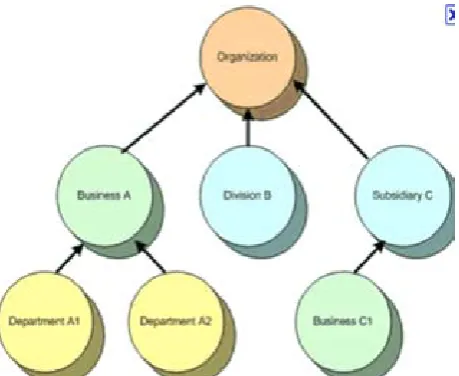
Organization as an open system based on the views expressed by the developing modern organizational theory since the 1950s. In this theory, organizations tend to be viewed as follows: (i) the organization is an open system, (ii) the organizational transformations of the input that produces a specific output, input from the environment, while output will be given to environmental organizations, (iii) the in the organization are important elements that are interconnected with one another, and (iv) the organization has a specific scope and objectives which distinguishes the organization from its environment. The view of the organization made by the theory of the modern organization, especially to give insight to the management to look at the organization as a whole or as part of the external environment (Reksohadiprodjo and Handoko, 2004).
They need opportunities to develop, have a good decision making in their carrier, master, and reflect on new approaches to working with people and pupil” (Corcoran, 1995).
figure 2.1: Decision Making in Organization
The rational planning model is the process of realizing a problem, establishing and evaluating planning criteria, creating alternatives, implementing alternatives, and monitoring progress of the alternatives. It is used in designing neighbourhoods, cities, and regions. The rational planning model is central in the development of modern urban planning and transportation planning. The very similar rational decision-making model, as it is called in organizational behaviour is a process for making logically sound decisions. This multi-step model and aims to be logical and follow the orderly path from problem identification through solution.
figure 2.2: Organization Models (steps to achieve quality on working environment)
[image:6.595.185.415.434.622.2]2.7 Informal Learning Model
The importance of informal learning in the context of professional work more clearly and easily interpreted results from a study conducted in the early 1990s (McNally et al., 1994, 1997). Based on the research, interview individuals and small groups also were conducted on 40 respondents from the secondary level teachers in the research study about their experiences while teaching at the school. The study conducted showed that the colleagues can have a positive impact on learning and effective teaching for their support and encouragement from colleagues can help teachers to solve the problem by carrying out the discussion if there was a problem arises. Therefore, the method of this discussion, informal learning occurs because the process is not included in the study known as structured or formal learning. At present, interest in the informal learning in tandem with the increase of technology to create and provide a place for learning (Sefton-Green, 2206).
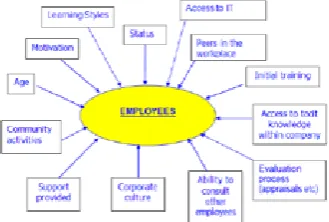
[image:7.595.216.381.335.476.2]There are models that have been developed by researchers from the United Kingdom in the study of models for the recognition of informal learning in the workplace, written in the article (Project UK/04/B/F/PP-162_151) as shown in Figure 2.1. The results of the study, the article explains that there are four critical factors involved in the development of informal learning model of social content, the support of surrounding communities, the opportunity to improve the quality and circumstances involved in the daily work.
figure 2.3: Critical factors involved in informal learning. (Quoted from the ‘Model for the recognition
of informal learning in the workplace’)
Based on the results of the study, a conceptual framework associated with the employee to begin informal learning has been developed as shown in Figure 2.2 below. The results of the model has been developed, there are fourteen items that must be followed in the process of informal learning in which all items can develop skills and generate new skills to improve job satisfaction among workers in the work environment. According to the study, ‘employee’ is meant the workers were from the upper to the lower level. This means that support from colleagues and employers is affecting the individual informal learning.
[image:7.595.215.380.639.750.2]Teacher education should not end immediately because it only takes the prospective of the teachers to complete the training in colleges, universities or related institutions of teacher education. Trained teachers who successfully completed the training successfully, should not be considered a learning process and the preparation of teachers has been perfect. Pre-service teacher education is a process beginning with the provision of knowledge and skills in the teaching profession is a prerequisite. Teacher education is a starting point in the career of a teacher (Tennant, 1999; Lave & Wenger, 1991; Reber, 1993). The beginning of a new teacher to step foot into an actual teaching service world travel professional (professional journey) long and filled with a variety of routes as well as mine and enjoy the excitement promised by the professionalism of the profession. The success and sustainability of a teacher in his career, among others, depends on the willingness of teachers to continuously improve themselves and professionalism through various activities and programs of education whether formal, informal or non-formal. Teachers are confronted with a variety of changes whether in or outside the profession. Among the internal demand is the readiness of teachers to try various techniques, methods and approaches are effective teaching and learning to change the terminology, the content of the curriculum and the use of new technology (Muhammad Sani Ibrahim & Zuraidah A. Majid, 2002).
Schulte, (1999a) view that effective learning can be achieved if the teacher evaluate the critical thinking and creativity in every lesson they taught and be able to generate a new idea to improve the standard of education of our nation. History has not been cheating people and history has proven that this is the teacher who will play an important role in determining the fall of a nation. Community can assume that the teacher can be an idol and expert in all things. If the teacher first had to deal with the blatant colonialism, now translated into territory that others were more challenging because it involves the provinces of thought, culture and identity to be encountered in a professional and creative (Glymor, 1991; Kelly, 1996: Martin & Osherson, 1998; Jain et al. 1999).
In addition, quality teachers are those who have a high level of readiness to increase and enhance their knowledge as the study conducted by Badrul Hisham (1998) in his research about the readiness of teachers in the teaching and learning of mathematics in computer aided secondary schools have a large number mathematics teacher less exposed to the use of computers, but their positive attitude and willing to commit more to improve their skills make them engaged in informal learning by using computers in their daily task. This study shows the willingness of teachers still have not achieved what it hoped to develop the scientific community because of lack of understanding and skills to implement these lessons. Similarly to the study was made by Moses (1999) and Norizan (2002), which as a whole, most teachers are not prepared to use computers due to the same factors.
Therefore, the success and excellence in education lies in the effectiveness of the entire system, values, beliefs, climate, the spirit and culture of the practice and on display at all times by all students, teachers, employees are not teachers and administrators and managers of a school curriculum . The tremendous impact and influence on the progress and excellence of these are not the teachers themselves. Phillip Van Hooser (1998) found that there are three important elements in determining success. Three elements are closely related to each other and it is known as the “Triangle of Success” (which includes knowledge, skills and attitudes). So, professional teachers must always display the characteristics of strength and knowledge-behaviour comport with the principles enshrined in the work ethic and demands a clear understanding and depth, passion and commitment to the completion of high school tasks at all times and hours.
3.0 rEsEarCH METHODOLOGY
because the samples will be used in the study consisted of teachers of technical subjects are taught engineering technology. And the preparations have to be distributing copies of the questionnaire and analyze the data. Information on these variables are collected in a natural state at the time of the incident. The use of questionnaires is a way to save you time to collect data in the short term. The data collected and the results of this study will provide information to achieve the objectives set in which the method is selected based on the appropriateness of a study made more practical and realistic to get good feedback from the respondents.
3.1 research sample
Population involved in the study will be conducted this year teachers who teach engineering technology at several schools Daily, Islamic schools and boarding schools in Malaysia. In determine the sample size, the researchers decide on the Table 3.1 the sample size for various populations that are derived from the sample size determination of the Tax Research Activities by the RV Stuff Krejecie and D.W. Morgan, Johnson (2004). The study sample is selected using this method is based on population size have been identified by researchers. The population in this study consisted of 300 teachers in schools participating in the on table of the proposal that was presented by RV Krejecie and D.W. Mogan, the sample sizes involved are those of the overall total of 169 teachers who teach engineering technology needed to ensure the success of this research.
3.2 research Instrument
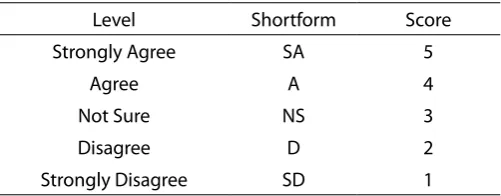
Researchers used questionnaires to obtain data for this study. The study conducted by researchers will use questionnaires where it is the easiest method to obtain information. In addition to the questionnaires are usually used to measure the attitudes of a response either through regular, free (open), a checklist or scale. In this study, the questionnaire scale with five points selected provided to respondents to choose the most appropriate answer to the self-selection. Some of the items selected by using the simplified Likert scale to five Likert scale of 5-Strongly agree 4-Agree, 3-Not Sure, second-and first-Disagree Strongly disagree. Questions of this type is more uniform and can be administered, analyzed and interpreted more quickly and effectively. Uniform response in terms of format used to enable data processing is done. Table 3.1 below shows the five-point scale to be used in this study:
-Table 3.1: Likert Scale
Level Shortform Score
Strongly Agree SA 5
Agree A 4
Not Sure NS 3
Disagree D 2
Strongly Disagree SD 1
3.3 research analysis
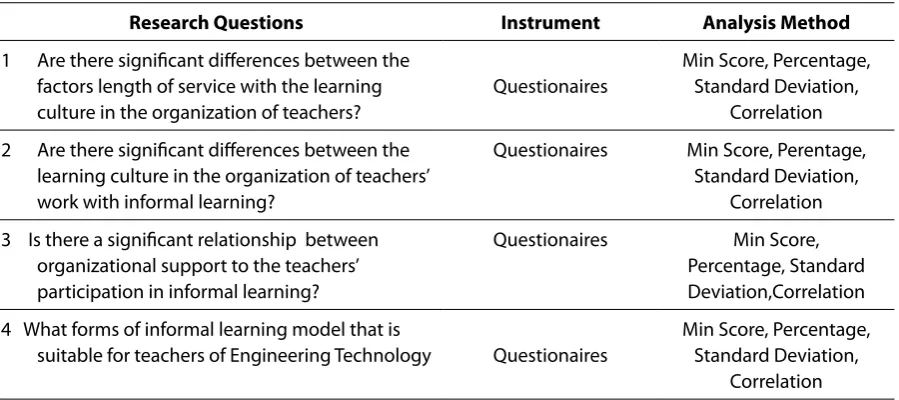
[image:9.595.173.424.548.646.2]be used to describe the pattern of the sample, such as frequency, percentage, standard deviation, correlation and average values (M. Najib, 1999). It involves the entire questionnaire was answered by engineering technology teachers. In this study, the data obtained from respondents in answer to questions the questionnaire will be processed and formulated to answer research questions by using the method above. The findings from this data will be written in the description.
Table 3.2: Types of data and instruments used in this study
research Questions Instrument analysis Method
Are there significant differences between the 1
factors length of service with the learning culture in the organization of teachers?
Questionaires
Min Score, Percentage, Standard Deviation,
Correlation Are there significant differences between the
2
learning culture in the organization of teachers’ work with informal learning?
Questionaires Min Score, Perentage, Standard Deviation,
Correlation 3 Is there a significant relationship between
organizational support to the teachers’ participation in informal learning?
Questionaires Min Score, Percentage, Standard Deviation,Correlation 4 What forms of informal learning model that is
suitable for teachers of Engineering Technology Questionaires
Min Score, Percentage, Standard Deviation,
Correlation
4.0 sUMMarY
Informal learning experiences have risen to the forefront of education as being beneficial to teacher and students learning. However, it is not clear in what ways such experiences may be beneficial to teachers. One of the reasons that informal learning represents about 70 percent of all learning need can often arise quickly and unexpectedly. The fast pace of organizational operations means that a quick and effective response required. So, this research will study the informal learning in engineering technology teachers by taking into account of the learning methods, working environment, demographic factors, factor that influence teaching and learning, learning culture, personality characteristic and relations between informal with the involvements of informal learning teachers.
rEfErENCEs
Cross, J. (2010 , February 3). Informal Learning: An Interview With Jay Cross. Cross, J (2003, May 8). Informal Learning the other 80%. Internet Time Group, Draft.
Cross, J. (2006) Informal Learning: Rediscovering the Natural Pathways That Inspire Innovation and Performance. San Francisco: Jossey-Bass
Conner, Marcia L.( 1997-2009) Informal Learning achieved in July 21, 2010 from http://www.marciaconner.com/ intros/informal.html
Conner, M.L. (2002). Informal Learning. Ageless Learner, achieved in July 14, 2010. http://agelesslearner.com/ backg/informal.html
Eraut, M. (1994) Developing Professional Knowledge and Competence, London: Falmer Press
Eraut, M. (2000) Non-formal learning, implicit learning and tacit knowledge in professional work in F. Coffield The Necessity of Informal Learning, Bristol: The Policy Press
Jeffs, T. and Smith, M. (1990) (eds.) Using Informal Education, Buckingham: Open University Press.
Knowles M. (1970). Formal andInformal learningInformal Adult Education: A Guide for Administrators, Leaders, and Teachers.
McGivney, V.(2002). Informal Learning in the community. A trigger for change and development. Lancester:NIACE.
Marsick, V. J., & Watkins, K. E. (2001). Informal and Incidental Learning. New Directions for Adult and Continuing Education 89, 25-34.
Marcia L. Conner and James G. Clawson (Cambridge, 2004). Creating a Learning Culture: Strategy, Practice, and Technology.
Merriam, S., Caffarella, R., & Baumgartner, L. (2007). Learning in Adulthood: A Comprehensive Guide (3rd ed.) New York: Wiley
Mazanah Muhamad & Carter, G.L (2000). Prinsip Pembelajaran Orang Dewasa. Kuala Lumpur: Utusan Publication & Distribution Sdn Bhd.
Portal Komuniti Teknikal Perak ( 2007, Jun 13). Bidang Teknik Vokasional JPN Perak achieved in July from 26, 2010, dari http://tkej.gtechprk.net
Robert L. Russell (2000). Informal Learning in Context The informal learning review. Schulte (2008). In Studies in History and Philosophy of Modern Physics, Vol 39:2, pp 288-314.
Smith, M. K. (1994) Local Education. Community, conversation, action, Buckingham: Open University Press. Smith, M. K. (1999). ‘Learning theory’, the encyclopedia of informal education, achieved in July 24, 2010, dari www.
infed.org/biblio/b-learn.htm
Tennant, M. (1997) Psychology and Adult Learning 2e, London: Routledge.