Master Thesis
(January 2009)
“The ingredients for a committed workforce”
Jasper Christiaan Drenth
Biesbosch 311
8032 VH Zwolle
Phone: 06 - 24 22 69 07
Mail:
Student number s0153494
Master Business Administration, Human Resource Management
University of Twente, the Netherlands
Supervisors:
Dr. M.J. van Riemsdijk & Dr. P.A.T.M. Geurts
Faculty Management & Governance
Department of Operations, Organizations & Human Resources
Initiator:
Cehave Landbouwbelang Cooperative
Contents
ACKNOWLEDGMENTS ... 5
SUMMARY ... 6
1. Introduction ... 8
1.1 Cehave landbouwbelang and Cehave Pasze ... 8
1.2 Background ... 9
1.3 Problem definition ... 10
1.4 Central questions ... 10
1.5 Relevance of the study ... 10
1.6 Organization of the study ... 11
2. Theoretical framework ... 12
2.1 Commitment ... 12
2.2. Antecedents of commitment ... 17
2.2.1 Personal and work related characteristics ... 17
2.2.2 Work Experiences ... 18
2.2.3 Job Satisfaction ... 19
2.3 Outcomes of commitment ... 23
2.3.1 Turnover intention ... 23
2.3.2 Organizational citizenship behaviour ... 23
2.3.3 Job performance ... 24
2.4 Conceptual model ... 25
2.5 Research questions ... 26
3. Methodology ... 27
3.1 Research sample ... 27
3.2 Research design and instruments ... 27
3.2.1 Personal characteristics ... 28
3.2.2 Work experiences ... 28
3.2.3 Normative and affective commitment to the work, co-workers, and organization . 30
3.2.4 Turnover intention ... 30
3.2.5 Organizational citizenship behavior ... 30
3.3 Data collection and analysis ... 30
3.4 Procedure ... 31
4. Results ... 32
4.1 Response ... 32
4.2 Construct reliability ... 33
4.3 Results on antecedents, commitment and outcome variables ... 34
4.4 Testing the conceptual model ... 38
4.4.1 Effects of commitment ... 41
5. Conclusions and recommendations ... 44
5.1 Conclusions ... 44
5.2 Recommendations ... 45
5.3 Limitations and directions for future research ... 47
References ... 49
Appendix 1 Questionnaire ... 53
Appendix 2 Overview Scales, References and Reliability ... 57
ACKNOWLEDGMENTS
This thesis marks the end of my study in Business Administration at the Faculty of Management & Governance of the University of Twente. In this thesis I report about the study on employee commitment which I executed on behalf of Cehave Pasze Poland.
The creation of this thesis has been a long and challenging process, which would not have been possible without the help and support of some people. Therefore, I would like to thank Theo Vervoort, the HR director of Cehave Landbouwbelang and initiator of this research, for the opportunity he gave me to execute this research within the organization at Cehave Pasze.
Secondly, I would like to thank my supervisors from the University of Twente, dr. Maarten van Riemsdijk and dr. Nicole Torka for their support during this project. I would like to thank dr. Peter Geurts for guiding me through the statistical analysis that were performed and his input to create the final model. Finally, my acknowledgment goes to my fellow student Mirjam van Delden for sharing thoughts and cooperating during parts of this research and her critical view on my master thesis.
Zwolle, January 2009
SUMMARY
This master thesis focuses on Cehave Pasze in Poland, which is a division of the cooperation Cehave Landbouwbelang. In Poland, Cehave Pasze produces animal feed and concentrates for broilers, pigs and cattle. It has a workforce of 155 employees, with plants in Szamotuly, Topola Wielka and Margonin.
Cehave Pasze wants to be number one in their business, which is only possible when having enough and the right people to get the job done. To retain and especially to attract new people Cehave Pasze must take care to keep their employees satisfied with their jobs and committed to the organization. Besides, a strategic goal of Cehave Pasze is to be a people focused organization. In order to get insight into the reasons why the current employees have a long tenure and to discover which factors contribute to the employees commitment, Cehave Pasze needs a valid and reliable instrument to assess these issues and to evaluate their Human Resource policies and practices.
Commitment is a relatively stable attitude over time when compared to job satisfaction and commitment can be seen as a very relevant management construct because it can lead to competitive advantage and financial success.
Organizational Commitment is an attachment or bound that is a personal voluntary decision based on calculated rationality, affective tendency and moral judgement, which leads to a higher or lower degree of identification with, and involvement in, a particular organization; and that is observable in the free effort extended in accomplishing organizational goals.
According to Meyer and Allen (1991) commitment exists of three components reflecting (a) a desire (affective commitment), (b) a need (continuance commitment), and (c) an obligation (normative component) to maintain employment in an organization. This study focuses on normative and affective commitment towards the organization, co-workers and towards the work.
For this study a company-specific questionnaire was developed in order to measure the levels of commitment of the employees of Cehave Pasze. All 151 employees were asked to fill in and return the questionnaire. Members of the management team were excluded. Overall the response rate was very good (87%).
The levels of affective commitment are satisfactory, except for the level of affective commitment to the company (0.57), which was a little below the satisfactory level. However, overall the employees are reasonably committed. The employees of Cehave Pasze are most committed toward their work, their co-workers, and somewhat less toward Cehave Pasze. Remarkably, the levels of normative commitment are higher than the level of affective commitment. These results deviate from the pattern which normally shows that employees are more affectively than normatively committed. Apparently the employees of Cehave Pasze have a strong work ethos or moral.
and the balance between work and private life. Improvements in the levels of comfort factors also may be worth pursuing for reasons of good entrepreneurship.
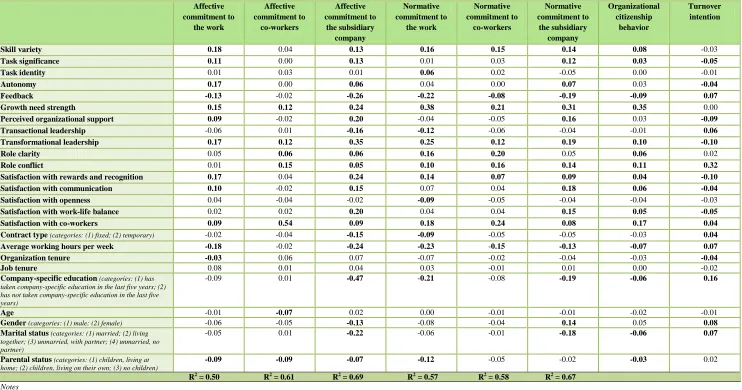
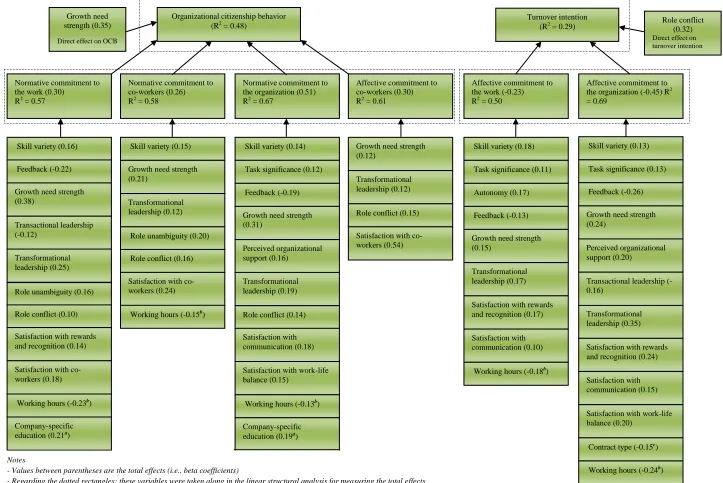
The employees of Cehave Pasze are reasonably to strongly satisfied with the competence factors, except for the feedback they receive. The level of feedback ranges between insufficiently and sufficiently. The level of feedback has a negative effect on affective commitment to the work and the subsidiary company, and on normative commitment to the work- co-workers, and the subsidiary company. Apparently the feedback that the employees receive is assessed negatively. Feedback needs serious attention.
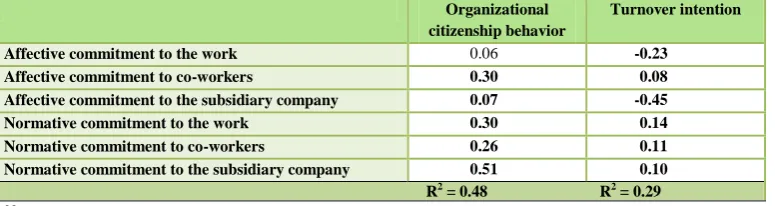
The behaviour of Cehave Pasze‟s employees that reaches beyond what is rewarded based on the contract, supervision or job requirements, is sufficient to good. Both the level of commitment and the employees‟ need for personal growth and development have influenced the level of organizational citizenship behaviour. Next to that, the intention of the employees to leave Cehave Pasze is reasonably low and thus satisfactory. The level of turnover intention is positively influenced by both the level of commitment and the relative absence of role conflict.
Cehave Pasze is recommended to examine more in depth the impact of company specific education, since the current research results show that employees who attended company specific education in the last five years are more affectively committed to the organization than employees who did not. Better insights in the company specific education can improve the utilization of company specific education which can lead to an increase in affective commitment.
It is very important to communicate the main findings of this research and the following actions to the employees. In this way support for any intervention plans will be more supported by the employees. It is also important to make constant references to this research while communicating, for example; implementation of new strategies to create better work-life balance possibilities, since this was a point of recommendation point in the current research.
1. Introduction
In this introductory chapter a brief summary of Cehave Landbouwbelang and Cehave Pasze will be presented in chapter 1.1. Second, the background of the study and its relevance will be given. Third, the problem definition will be given in chapter 1.3. Fourth, the central questions are stated in chapter 1.4. Fifth, the relevance of the study is explained in chapter 1.5. Finally in chapter 1.6 a short summary of the structure of the study will be presented.
1.1 Cehave landbouwbelang and Cehave Pasze
Cehave Landbouwbelang is a cooperative with approximately 6,000 Dutch members. A cooperative means that all members are also owner. At Cehave the production and marketing of animal feed and animal feed ingredients is the core business. With production plants in the Netherlands, Belgium, Poland, Germany, Hungary and China, and export premixes, nutritional specialties and concentrates throughout the world, Cehave Landbouwbelang achieves a turnover of almost EUR 1 billion per annum. Their focus is on innovation in animal feed and profitable growth.
The development of knowledge plays an important role in this respect. Based on years of experience, a practically oriented approach and consistent investments in research and development (R&D), Cehave has secured a leading position with respect to knowledge creation. This position serves as an important basis for the business and as motivation to create better products, to develop more efficient production processes and to provide more focussed advice to livestock farmers. The subjects for which Cehave Landbouwbelang's 'knowledge basis' is explicitly evident are animal health, innovation, agrotechnical expertise, the knowledge and experience of its business consultants, its production process ingenuity and its patents for products and processes (corporate website Cehave march 2008).
This master thesis focuses on Cehave Pasze in Poland, which is a division of the cooperation Cehave Landbouwbelang. In Poland, Cehave Pasze produces animal feed and concentrates for broilers, pigs and cattle. It has a workforce of 155 employees, with plants in Szamotuly,Topola Wielka and Margonin. The study is initiated by the director HRM of Cehave Landbouwbelang. The management of Cehave wants to have an instrument that reveals which factors make the work attractive and what keeps employees committed to Cehave. This instrument will give insight in their current situation. With these insights Cehave can evaluate their current and future HRM policies in order to retain and attract employees.
1.2 Background
Over the last 50 years there has been enormous economic and social progress in Europe and – although there are large regional and social differences – Europeans are living longer than ever before: on average eight to nine years more than in 1960. This coincides with other demographic developments: fewer children are being born, which will mean fewer people paying into state pension and healthcare systems, and a smaller pool of potential careers (The European Foundation for the Improvement of Living and Working Conditions, Eurofound 2008). The ageing of the workforce in Poland also has an increasing effect on labour costs (Johnson and Zimmerman, 1993). Policymakers are beginning to reflect on the role of older people in society as both providers and consumers. If current levels of productivity and pensions are to be maintained, more people will have to work longer. Business is increasingly taking a different approach towards older people, whether as potential customers with considerable spending power or as a valuable resource in the workplace in terms of skills and knowledge. Early retirement was frequently used as a tool for restructuring, particularly in sectors that were struggling to remain profitable in the face of international competition, but also in the public sector. However, in recent years, some countries have moved to raise the retirement age (for example, in Germany toward 67 years) or sought to encourage workers to stay in their jobs longer. This promotion of employment opportunities for an ageing workforce requires rethinking at company, national and EU level. In particular, it means introducing policies that maintain and promote the health of all employees, develop and update the skills of workers through training, and provide suitable working conditions, including measures to reconcile work with family and care responsibilities (The European Foundation for the Improvement of Living and Working Conditions, Eurofound 2008).
According to the Economic Survey of Poland 2008, during the past two years Poland has recorded its best economic performance since the late 1990s, with growth exceeding 6%. “After nearly a decade of relative stagnation, employment has finally begun to contribute markedly to gains in living standards, rising by some 3% per year. Meanwhile, labour supply has shrunk, despite a still expanding working age population. This further decline in labour force participation rates, especially low levels for older workers and the least skilled, is of great concern”. The result has been a spectacular decline in the unemployment rate, from nearly 18% in 2005 to 8.5% in the fourth quarter of 2007. At the same time, productivity gains have slowed from the growth rates recorded in the early 2000‟s. This decline in unemployment means also a tighter labour market. However, in Poland 41.5% of the people aged 50 to 64 were professionally active in 2006, making Poland's employment rate for this group one of the lowest in the European Union. According to an Ipsos Poland survey done for the Academy for the Development of Philanthropy high unemployment in the 1990's and the beginning of the 2000's decade forced a large number of older people to exit the workforce in order to accommodate the younger generation, a trend that was further increased by high labour costs.
employment structures and work arrangements, most notable a growth in self-employment, casual/temporary and part-time work and a corresponding decline in the proportion of the workforce holding permanent full-time jobs. There also have been changes to the timing of work, with a growth in shift work and night work. Second, there have been sectoral shifts in employment, most notably a market movement of employment away from manufacturing, mining and construction and towards service industries like hospitality/ tourism, finance and information services” (p.1). Third, there have been important changes to workforce demographics: which are the ageing workforce (as already mentioned), increase in female participation rates and changes to the youth labour market.
Organizations pay more and more attention to employee commitment and job satisfaction to increase retention and performance (Steers, 1977). Furthermore, organizational commitment is often linked with forms of work and nonwork behaviour, like turnover intention (Allen & Meyer, 1996). This is especially important to overcome the problem of an ageing workforce, a shrinking labour supply, the changes in employment structures and the sectoral shifts in employment. Cehave Pasze has to deal with these kinds of issues and therefore it is important to be attractive for new employees and to have a solid and satisfied workforce, where employees want to stay.
1.3 Problem definition
Cehave Pasze wants to be number 1 in their business, which is only possible when having enough and the right people to get the job done. To retain and especially to attract new people and overcome the other trends mentioned in chapter 1.2, Cehave Pasze must strive for keeping their employees satisfied with their jobs and committed to the organization. Besides, a strategic goal of Cehave Pasze is to be a people focused organization. To get an understanding why the current employees have a long tenure and to discover which factors contribute to commitment, Cehave Pasze needs a valid and reliable instrument to assess these issues and to evaluate their Human Resource policies and practices.
1.4 Central questions
The purposes of this research can be achieved by means of answering the following central questions:
1. With which reliable and valid instruments can the commitment of the employees of Cehave Pasze be measured?
2. To what extent, and to which foci, are the employees of Cehave Pasze committed?
1.5 Relevance of the study
1.6 Organization of the study
2. Theoretical framework
In this chapter a theoretical background will be presented. In chapter 2.1 the construct commitment will be elaborated. The chapters 2.2 and 2.3 will give the relevant antecedents and outcomes of commitment for this study. Based on the previous chapters a conceptual model will be presented in chapter 2.4. At the end in chapter 2.5 research questions will be formulated with respect to proposed relationships between the variables of interest.
2.1 Commitment
In this study commitment is used as an explanatory concept. Therefore the conceptualization of commitment will be viewed in a way that we can distinguish it from related constructs, like motives and attitudes. Commitment is more than a state of mind that exits when an individual experiences a positive exchange relationship with some entity; it contributes to our understanding of organizational behaviour (Meyer and Herscovitch 2001). Research towards commitment is seen useful for a number of reasons. Bateman and Strasser (1984) summed up that it consistently has been shown to be related to: “(a), employee behaviours, like searching a job elsewhere, absenteeism, turnover and a little extent to performance (Abelson and Sheridan, 1981; Angle and Perry, 1981; Bluedorn, 1982; Farrell and Rusbult, 1981; Marsh and Mannari, 1977; Morris and Sherman, 1981; Porter et al, 1976; Porter et al 1974; Steers, 1977). (b), attitudinal, affective, and cognitive constructs such as job involvement, and job tension (Hall & Schneider, 1972; Hrebiniak & Alutto, 1972; Porter et al., 1974; Stevens, Beyer, & Trice, 1978; Stone & Porter, 1976); (c) job tenure (Angle & Perry, 1981; Hall & Schneider, 1972; Hrebiniak & Alutto, 1972; Koch & Steers, 1978; Sheldon, 1971; Steers, 1977)” (p. 95-96).
According to Mowday (1998) there appears to be evidence linking specific human resource management systems with overall organization performance and with affective commitment at the level of the individual employees. The linkage between human resource management strategies and individual-level employee commitment is also demonstrated by Tsui, Pearce, Porter, Tripoli (1997). They found that organizational investment in employees (i.e. company specific education) was associated with higher levels of employee affective commitment, as well as higher levels of citizenship behaviour, greater intention to stay with the organization, and lower absenteeism.
Within commitment theories a distinction can be made between attitudinal and behavioural approaches. Mowday et al (1982) offered the following descriptions of the two approaches: “Attitudinal commitment focuses on the process by which people come to think about their relationship with the organization. In many ways it can be thought of as a mind set in which individuals consider the extent to which their own values and goals are congruent with those of the organization. People could be attached to organizations, unions or jobs, as attitudinal commitment (Meyer and Allen, 1997, p.9). Behavioural commitment, on the other hand, relates to the process by which individuals become locked into a certain organization and how they deal with this problem (p.26)” or to some course of action, like remaining a member, goals or policies (Meyer and Allen, 1997, p.9).
Meyer and Herscovitch (2001) reviewed several definitions of commitment. For example, one of the first authors who gave a definition of commitment in general was Becker (1960) who stated: “Commitment comes into being when a person, by making a side bet, links extraneous interests with a consistent line of activity” (p.32). Meyer and Herscovitch (2001) argued that all of the definitions of commitment in general make reference to the fact that commitment is a “stabilizing or obliging force, that gives direction to behaviour (e.g. restricts freedom, binds the person to a course of action) (p.301)”. Other expressions defining this concept in the literature are: psychological state (Allen and Meyer, 1990, p.14), psychological attachment (O‟Reilly and Chatman 1986, p.493) or „psychological bond‟ (Matthieu and Zajac, 1990, p.171).
A review of the workplace commitment literature, as well as a consideration of the everyday use of the term, suggests that individuals can commit to both entities (as attitudinal) and behaviours (as behavioural commitment). An example is given by Meyer and Herscovitch (2001); “We read and speak about commitment to organizations, occupations, and unions (i.e. entities), as well as of commitment to work toward the attainment of goals and the implementation of policies (behaviours). In some cases, commitment is conceptualized as including both an entity and a course of action. Meyer and colleagues ( Meyer & Allen, 1984, 1991; Meyer et al., 1993), for example, defined commitment in such a way that it implies a course of action (i.e. continuing membership) of relevance to an entity (i.e., organization or occupation)”(p.309)
Hackman and Oldham (1975) “a job high in motivating potential will not affect all individuals in the same way. In particular, people who strongly value and desire personal feelings of accomplishment and growth should respond very positively to a job which is high on the core dimensions: individuals who do not value personal growth and accomplishment may find such a job anxiety arousing and may be uncomfortably “stretched” by it” (p.160).
Conclusively, commitment includes both behavioural and attitudinal aspects, but emphasizing the course of action, and then describing the final objective or objectives (Meyer and Herscovitsch, 2001). This study will also include the “human will” and therefore will use the definition from González et al (2008) for organizational commitment:
“Organizational commitment is an attachment or bound that is a personal voluntary decision based on calculated rationality, affective tendency and moral judgement, which leads to a higher or lower degree of identification with, and involvement in, a particular organization; and that is observable in the free effort extended in accomplishing organizational goals” (p.412).
It is now well recognized and widely accepted that commitment itself is a multidimensional construct (e.g. Meyer and Herscovitsch, 2001). Identifying the different types of commitment suggests alternative management strategies leading to desired behaviours in the workplace (Mowday, 1998). One of the most widely accepted conceptualization of commitment that has a good linkage with the definition of González et al (2008) is that of Allen & Meyer (1990, 1996; Meyer, Stanley, Herscovitch & Topolnytsky, 2002; Meyer & Allen, 1991). They actually integrated existing conceptualizations of commitment into a three-component model.
Meyer and Allen (1984) initially proposed that a distinction can be made between affective commitment, denoting an emotional attachment to, identification with, and involvement in the organization and continuance commitment, denoting the perceived costs associated with leaving the organization. Allen and Meyer (1991) later suggested a third distinguishable component of commitment, normative commitment, which reflects a perceived obligation to remain in the organization.
of affective commitment and as part of a feedback chain in which positive work behaviours (for which the employee accepts responsibility) increase behavioural commitment and consequently, affective commitment.
Meyer, Stanley, Herscovitch, & Topolnytsky (2002) conducted a meta analysis to assess (a) relations among affective, continuance, and normative commitment to the organization and (b) relations between the three forms of commitment and variables identified as their antecedents, correlates, and consequences in Meyer and Allen‟s (1991) Three-Component Model. All three forms of commitment “related negatively to withdrawal cognition and turnover, and affective commitment had the strongest and most favourable correlations with organization-relevant (attendance, performance, and organizational citizenship behaviour) and employee-relevant (stress and work–family conflict) outcomes. Normative commitment was also associated with desirable outcomes, albeit not as strongly. Continuance commitment was unrelated or related negatively, to these outcomes”. (p.20)
According to González et al (2008) there are problems derived from the overlap of the affective and normative dimensions. “In fact when reviewing the literature, high statistical correlations and lack of discriminating validity have been found between affective and normative commitments. That means that it is not clear yet how the two dimensions are conceptually separable, and also, that a considerable conceptual redundancy exists”. (p.413). They propose that affective organizational commitment is related to emotions or affective tendencies (desires and impulses), while the normative organizational commitment corresponds to rational tendencies. “In line with the literature, this work maintains that both spheres are present in every human action, and can be distinguished but not separated (p.412)”.
More recently, Solinger, Van Olffen and Roe (2008) offer a conceptual critique of the three-component model and especially on the instruments. They argue that the three component model is inconsistent. Solinger et al. (2008) and others, found that affective and normative commitment are strongly correlated (e.g., an average correlation of .63; Meyer et al., 2002); with the note that affective commitment is the most reliable and strongly validated base of organizational commitment (e.g. Allen and Meyer, 1996; Meyer et al, 2002). Affective commitment has also been found to correlate with the widest range of behavioral criterion variables (Meyer and Herscovitch, 2001). In contrast with affective and normative commitment, continuance commitment seems to have a negative or no relationship with desired employee behaviour. Besides, the construct of continuance commitment is not clear: for example, is it a one-dimensional construct (Ko et al, 1997) or a two-dimensional construct, with a lack of alternatives and high personal sacrifice (McGee and Ford, 1987)? Alternatives are partly controlled by the labour market and not that controllable by the organization. For these reasons continuance commitment will be excluded from the current study.
Although, organizational commitment is the main focus of many studies, commitment can take various forms or foci, including commitment to organizations (e.g. Mathieu and Zajac, 1990; Meyer and Allen, 1991; Mowdey et al, 1982), “unions (e.g. Barling, Fullager, and Kelloway, 1992; Gordon et all, 1980), occupations and professions (e.g. Blau, 1985; Meyer, Allen and Smith, 1993), teams and leaders (e.g. Becker, 1992; Hunt and Morgan, 1994), goals (e.g. Campion and Lord, 1982; Locke, Latham and Erez, 1988), and personal careers (e.g. Hall, 1996). Answers to questions about how these commitments develop, and how they influence work behaviour, organizational effectiveness, and employee well-being vary somewhat across the different frameworks” (Meyer and Herscovitch, 2001, p.300).
Analysis (Benkhoff 1996) showed that high standards and the disposition to work hard, seem to be stable personal characteristics which are suitable as selection criteria. Colleagues appear to be a factor contributing to extra effort. Employees seem to be sensitive to the standards set by their work group. While they may become immune to superiors demanding as much effort as possible, their colleagues set the benchmark that determines employees‟ status within the group and their self-esteem. If this relation between employee and colleagues is good, it can be said that employees get committed to their colleagues.
According to Torka (2003) employees are likely to be more strongly committed to less abstract foci such as the work and the co-workers than toward the organization. Torka (2003) stated that “commitment towards the department and the organization is less important than commitment towards a more tangible objects” (p.184) For these reasons it seems reasonable not only to include organizational commitment in this study, but also other foci of commitment, like commitment towards co-workers and the work itself. It seems evident to distinguish between these foci of commitment in the current study, since the units of analysis of Torka‟s study have a great resemblance with the large group of operational employees of Cehave Pasze (i.e., a lot of them are blue-collar workers which are semi- or unskilled). Because it is unknown to which foci the employees in this study are committed and to practical reasons, a choice is made to distinguish the previous three foci that are involved in working in an organization. This study will distinguish three foci of commitment; the work, co-workers, and the organization.
2.2. Antecedents of commitment
In Becker‟s (1960) 'side-bet' theory the author mentioned the potential effects of occupation on organizational commitment by arguing that:
'for a complete understanding of a person's commitment we need ... an analysis of the system of values or, perhaps better, valuables with which bets can be made in the world he lives in... In short, to understand commitment fully, we must discover the systems of values within which the mechanisms and processes described earlier operate' (p.39).
Becker later argued that occupational groups are subcultures with value systems of their own. Based on this study, Cohen (1992) concluded that it can be expected that antecedents of commitment would affect commitment differently across occupational groups, because each occupational group has its own value system. Therefore with including or excluding antecedents of commitment it is important to take into consideration that the variable can have different influences on commitment across occupational groups. Categories of the antecedents of organizational commitment will be used following Meyer et al‟s (2002) meta-analysis which is partially based on the meta-analysis of Mathieu and Zajac (1990). The following variables are antecedents of affective and/or normative commitment which seems to have the best fit with the occupational group of this research, namely mainly blue-collar workers: personal and work related characteristics, work experiences, job satisfaction, socialization experiences and organizational investments. The socialization experiences and organizational investments were distinguished by Meyer et al. (2002) as antecedents of normative commitment. An important remark on these two variables was given by the authors: “None of the antecedents of normative commitment (…) received sufficient investigation to warrant inclusion in our meta-analyses. One reason for this might be that the hypothesized antecedents of normative commitment (i.e., socialization and organizational investments) are difficult to measure. Both socialization experiences and organizational investments are likely to be idiosyncratic and difficult to capture using standard research instruments” (p. 42-43).
Therefore, socialization experiences and organizational investments will not be included in this current study as antecedents of normative commitment. This study will include personal and work related characteristics, work experiences and job satisfaction as antecedents for affective and normative commitment.
2.2.1 Personal and work related characteristics
The meta-analysis of Meyer et al (2002) identified demographic variables and individual differences as two separate sets of variables. For practical reasons these two sets are merged and labelled as the personal and work related characteristics. Age, gender, education, organization tenure, position tenure, and job are identified as the variables.
organizational commitment of employees in low status occupations (e.g. blue collar) is affected by their fewer employment opportunities, high costs of leaving the organization and desire for stability in employment” (p. 543). Which is interesting while the population of this study mainly consist of low or (un)skilled blue collar workers. For example, Cohen (1992) found a negative relationship between education and organizational commitment, especially for blue collar workers. That is, less educated blue collar employees are more committed than more educated blue collar employees. “The relationship between education and organizational commitment is meaningless for white collar employees (r = -0.03)” (p.546). Therefore several personal and work related characteristics will be included to make (statistical) comparisons possible.
2.2.2 Work Experiences
Allen and Meyer (1990) grouped work experience variables contributing to affective commitment into two groups, “those that satisfy employees‟ needs to feel comfortable in their relationship with the organization and those to feel competent in the work-role” (p.8-9). In their study these groups of variables are labelled as the comfort and competence variables. Comfort variables are, according to Allen and Meyer (1990) best served by “organizational dependability, management receptiveness, equity, peer cohesion, role clarity and goal clarity.... competence variables would be enhanced most by job challenge, goal difficulty, personal importance, feedback and participation” (p.9).
The comfort and competence variables of Allen and Meyer (1990) have strong similarities with Herzberg‟s Motivator-Hygiene Theory (1966) which will be mentioned later on in the chapter about job satisfaction. The motivators relate to job content (work itself) and include achievement, recognition, work itself, responsibility and advancement. The hygiene factors relate to job context (work environment) and involve, for example, company policy and administration, supervision, salary, interpersonal relations, and working conditions. The hygiene factors can be seen as the comfort variables and the motivators as the competence variables.
Some comfort variables can be found in the meta-analysis of Meyer et al (2002). The variables organizational support, leadership, role ambiguity, and especially role conflict correlate strongly with affective commitment, but also correlate with normative commitment. Role ambiguity and role conflict did correlate negatively (-.47 and -.33) with affective and normative commitment.
Organizational Support
Leadership
A distinction can be made between transformational and transactional leadership. Den Hartog, Van Muijen and Koopman (1997) stated that “transformational leaders broaden and elevate the interests of followers, generate awareness and acceptance among followers of the purposes and mission of the group and motivate followers to go beyond their self-interests for the good of the group” (p.20). Transactional leadership in contrast means that leaders motivate their employees as expected and no more. According to Meyer et al. (2002) there is a positive relation between transformational leadership and affective and normative commitment, while there is a negative relation between transactional leadership and these two types of commitment. However, Den Hartog et al. (1997) cited Bass (1985) who argues” “that transformational leadership builds on transactional leadership...”(p.21) Therefore both forms of leadership will be included in this study.
Role ambiguity
Role ambiguity concerns ambiguity about role expectations. De Jong & Janssen (2005) argued that high role ambiguity causes uncertainty about job demands and control. Meyer et al. (2002) reported negative correlations (-0.39) between role ambiguity and affective and normative commitment.
Role conflict
Role conflict has to do with requirements of the role of an employee and is “defined in terms of the dimensions of congruency-incongruency or compatibility … where congruency or compatibility is judged relative to a set of standards or conditions which impinge upon role performance” (Rizzo, House & Lirtzman p.155, 1970). The meta-analysis of Meyer et al. (2002) reported negative relationships between role conflict and affective commitment (-0.30) and normative commitment (-0.24).
2.2.3 Job Satisfaction
People bring mental and physical abilities and time to their jobs. Many people try to make a difference in their lives and in the lives of others through working. A pay check is not the only reason for wanting a job. Jobs can be used to achieve personal goals. “When a job meets or exceeds an individual‟s expectation, the individual often experiences positive emotions. These positive emotions represent job satisfaction. Job satisfaction in turn is also a major contributor to life satisfaction (Smith, 1992).
According to Green (2000), a universal definition of job satisfaction is not a difficult one; it is an impossible one. Many researchers define job satisfaction, but they vary. Hoppock, Locke and Vroom are the most commonly referred researchers for a definition of job satisfaction.
work roles which they are presently occupying” (p. 99). Even though the definitions vary, a commonality among them seems to be that job satisfaction is a job-related emotional reaction.
Relationship between commitment and job satisfaction.
Over the last two decades much research has been done by researchers towards variables that appear to contribute to either job satisfaction or organizational commitment. These variables are presented by Glisson and Durick (1988) into roughly three groups: (1) variables that describe characteristics of the job tasks performed by the workers; (2) variables that describe characteristics of the organizations in which the tasks are performed; and (3) variables that describe characteristics of the workers who perform the tasks.
According to Huang and Hsiao (2007) results show that job characteristics are the most important determinant of commitment and satisfaction. “This implies that managers can implement job redesign to improve employees‟ loyalty, identification and commitment. This involves the level of skill variety, task identity, task significance, autonomy, and feedback of the job. Results show that the better a firm‟s working conditions and organizational climate are, the higher satisfaction and commitment level its employees may hold” (p.1271-1272). Besides the strategy of job redesign, changing management style is a useful strategy for management to promote employees satisfaction and commitment (Huang and Hsiao 2007, p.1274). Although the social context of the previous study was Asian, the authors claim that the effects of personal factors on satisfaction and commitment in both societies are consistent with Western society.
Job satisfaction and organizational commitment are closely related, but still can be recognized as two separated constructs (Porter, Steers and Boulian 1974).
Bateman and Strasser (1984) found commitment to be a precursor of satisfaction. In contrast with Bateman and Strasser (1984) and Porter, Steers and Boulian (1973), Curry, Wakefield, Price and Mueller (1986) and Currivan (1999) found no relation between satisfaction and commitment. More recently, Huang and Hsiao (2007) findings show that the reciprocal relation between commitment and job satisfaction fits the data best. According to analysis of Currivan (1999) the dominant view in the literature assumes job satisfaction causes commitment, an example of this assumption is supported by Wallace (1995).
Conclusively, there are four causal orders between job satisfaction and commitment; (1) job satisfaction precedes commitment, (2) commitment precedes job satisfaction, (3) job satisfaction and commitment have a reciprocal relationship and (4) job satisfaction and commitment have no significant relationship.
Global and facet job satisfaction
Curry et al. (1986) stated that “job satisfaction has been treated as both a global concept referring to overall satisfaction and as a facet specific concept referring to various aspects of work, such as pay, supervision, or workload (Cook, Hepworth, Wall & Warr, 1981)” (p.848).
Thus, job satisfaction can be assessed using single-item, general, or facet-specific measures. The choice for which measure will be used depends on the purpose of the evaluation of job satisfaction. Kalleberg (1974) criticized single-items measures based on the measures‟ “assumption that job satisfaction is unidimensional, when in fact it appears to be multidimensional. Evidence points toward an overestimation of job satisfaction when the construct is measured using a single-item measure”(in Green, 2000, p.10). The measure of overall satisfaction can be useful if you want to know an overall rate of the job satisfaction. However, what to improve to get higher job satisfaction if you only measured with a single item of overall job satisfaction?
In contrast, facet-specific job satisfaction measurement is a study of job satisfaction that is conducted to identify areas of dissatisfaction to improve upon them. Numerous standardized reliable and valid instruments are available for this type of approach (Green, 2000). Although, Bateman and Strasser (1984) conclude in their research that overall job satisfaction is predicting the variance in organizational commitment best, facet job satisfaction is more useful in this study. Facets can be seen as affective evaluations of individual job facets and in comparison with global job satisfaction it gives more specific factors of the work that employees are satisfied or dissatisfied with and to what extent (Rice, Gentile and McFarlin, 1991). This kind of information can be more valuable than only one overall rate of global satisfaction, because it can provide useful steering information. Therefore this study will include the facet approach of job satisfaction, since it gives more focussed insights in the construct commitment and therefore more valuable measures for any managerial intervention.
Kinnie, Hutchinson, Purcell, Rayton and Swart (2005) identified some facets of job satisfaction related to the employee groups they examined. Kinnie, Hutchinson, Purcell, Rayton & Swart (2005) researched the relationship between employees‟ satisfaction with HR practices and commitment for three employee groups: professionals, line managers, and workers. They argued that this relationship varies for the different groups. The employee group workers are comparable with the majority of employees involved in this study. Kinnie et al (2005) identified the following facets as antecedents for commitment: rewards and recognition, communication, openness and work-life balance. They explained these results as follows:
The HR practices with which workers and other employees are satisfied can be considered as facets of job satisfaction. Based on the results of the study of Kinnie et al. (2005) it appears to be relevant to include rewards and recognition, communication, openness, and work-life balance as comfort factors in the current study. Furthermore, satisfaction with co-workers is an important facet with respect to commitment to co-workers.
Hackman and Oldham (1975) developed the Job Characteristics Model, which is partially an extension of Herzberg‟s Motivator-Hygiene Theory (1966). This theory focuses attention upon the work itself as a principal source of job satisfaction. According to Herzberg the concept of job satisfaction has two dimensions, namely intrinsic and extrinsic factors. Intrinsic factors are also known as motivators or satisfiers, and extrinsic factors as hygiene, dissatifiers, or maintenance factors. The motivators relate to job content (work itself) and include achievement, recognition, work itself, responsibility and advancement. The hygiene factor relates to job context (work environment) and involves, for example, company policy and administration, supervision, salary, interpersonal relations, and working conditions. Hygienes are associated with job dissatisfaction when absent but not with satisfaction when present.
The model of Hackman and Oldham (1975, 1976) presents the dimensions that predict the satisfaction with the design of the job (like the motivators), the so called core job dimensions. These dimensions can be considered competence factors. According to the authors three psychological states (e.g. experienced meaningfulness of the work) were influenced by the dimensions. However, later research of James and Jones (1980) proved that these “states” did not have a mediating role between the core job dimensions and the outcomes of job satisfaction. However, the core job dimensions did influence job satisfaction, therefore the states will be excluded and the core job dimensions will be included in this study.
The core job dimensions are (With an explanation of Hackman and Oldham, 1976):
Skill variety: “the degree to which the job requires a variety of different activities in carrying out the work, which involves the use of a number of different skills and talents of the person” (p. 257); Task identity: “the degree to which the job requires completion of a "whole" and identifiable piece of work; that is, doing a job from beginning to end with a visible outcome” (p. 257);
Task significance: “the degree to which the job has a substantial impact on the lives or work of other people, whether in the immediate organization or in the external environment” (p. 257); Autonomy: “the degree to which the job provides substantial freedom, independence, and discretion to the individual in scheduling the work and in determining the procedures to be used in carrying it out” (p. 258);
Feedback: “the degree to which carrying out the work activities required by the job results in the individual obtaining direct and clear information about the effectiveness of his or her performance” (p. 258).
work to get a more satisfied workforce they have to acknowledge the individual differences. According to Hackman and Oldham (1975) “a job high in motivating potential will not affect all individuals in the same way. In particular, people who strongly value and desire personal feelings of accomplishment and growth should respond very positively to a job which is high on the core dimensions: individuals who do not value personal growth and accomplishment may find such a job anxiety arousing and may be uncomfortably “stretched” by it” (p.160). Therefore, individual “growth need strength” is included as a moderator within the core job dimensions in the causal model. Although Oldham et al. (1976) did identify a second moderator, satisfaction with the work context; this will not be included as a new variable. Satisfaction with the work context is explained by Oldham et al. (1976) as the “degree to which the immediate work environment is satisfying to employees” (p.396). This degree will be addressed by the work experiences in chapter 2.2.2. and thus can be seen as the hygiene factors of Herzberg‟s theory and the comfort factors mentioned by Allen and Meyer (1990).
2.3 Outcomes of commitment
Meyer et al. (2002) identified several outcomes of affective and normative commitment. These are: withdrawal cognition, turnover intention, turnover, on-the-job behaviour (i.e., absenteeism, organizational citizenship behaviour, and job performance), and employee health and well-being. However, the variable employee health and well-being, will be excluded because there was no strong evidence available for this variable. The outcomes of commitment that are proposed by several authors can be described as behavioural. In this chapter the variables which are included will be discussed.
2.3.1 Turnover intention
In the literature different variables have been examined as potential antecedents of commitment, but what they all have in common is the link with turnover intention; the intention to leave the organization is the lowest among employees who are strongly committed to the organization (Allen and Meyer, 1990; Mathieu and Zajac, 1990; Meyer and Allen, 1991; Meyer et al, 2002). Findings of the meta-analysis of Meyer et al (2002) showed that affective commitment, followed by normative commitment were strongest negatively related to turnover. Moreover, turnover intention was stronger than the actual turnover. Again the strongest correlations were obtained for affective commitment (-.56), followed by normative (.-33) commitment. However, the company that initiated this study, Cehave Landbouwbelang, does not experience problems with retaining its current employees. Concern is, however, attracting new employees in the future and retaining them. Thus, it will be important in the future to know if and why employees have the intention to leave the organization. Therefore it is important to include turnover intention in the measurement instrument.
2.3.2 Organizational citizenship behaviour
directly or explicitly recognized by the formal reward system, and in the aggregate promotes the efficient and effective functioning of the organization” (p.4).
Smith, Organ, and Near (1983) see OCB as an individual‟s extra personal behaviour, for example, being cooperative, helpful, and other instances of extra-role behaviour. It is a behaviour performed in helping a specific co-worker, a customer or a supervisor, not normally expected of the employee since it is not part of the employment contract. Examples are, sitting in for a sick co-worker, or assisting supervisors and others.
The practical importance of OCB is that it improves organizational efficiency and effectiveness by contributing to resource transformations, innovativeness and adaptability (Organ, 1988 in Williams and Anderson, 1991).
In the meta-analysis of Meyer et al (2002) OCB correlated positively with affective (.32) and normative (.24) commitment. However, there were differences between the ratings of self-rating and ratings performed by supervisors.
2.3.3 Job performance
Job performance can normally be seen as an outcome of commitment. Job Performance is included in the model but not in the measurement instrument because the real performance data can be collected from performance results of the company and linked to commitment after this study.
Summarizing.
To make (statistical) comparisons possible, this study includes several personal and work related characteristics. Comfort factors are the first set of antecedents that will be used to asses affective and normative commitment. The comfort factors are: organizational support, transformational and transactional leadership, role ambiguity, role conflict, satisfaction with: rewards and recognition, communication, co-workers, openness and work-life balance.
The second set of antecedent variables are the so called competence factors. These competence factors, the core job dimensions of Hackman and Oldham (1975), include: skill variety, task identity, task significance, feedback, autonomy and the moderator growth need strength.
2.4 Conceptual model
Organizational
citizenship behavior
Performance
Competence factors
Growth need strength (+) Feedback (+)
Autonomy (+) Task identity (+) Task significance (+) Skill variety (+)
Affective commitment
To the work
To co-workers
To the organization
Normative commitment
To the work
To the co-workers
To the organization
Personal and work
Turnover intention
Comfort factors
Satisfaction with work-life balance(+) Satisfaction with communication (+)
Satisfaction with openness (+) Transformational leadership (+)
Satisfaction with co-workers (+)
Satisfaction with rewards and recognition (+)
Transactional leadership (-) Perceived organizational support (+)
Role clarity (+)
Role conflict (-)
(+)
(-)
(+)
(+)
(-)
[image:25.842.76.751.68.539.2]2.5 Research questions
Based on the practical and theoretical background of this study research questions can be formulated.
- What is the level of commitment of the employees of Cehave Landbouwbelang‟s Polish
businesses?
- What causes the level of commitment of the employees of Cehave Landbouwbelang‟s Polish
businesses?
- What effects does this level of commitment of the employees of Cehave Landbouwbelang‟s Polish
businesses have for OCB, turnover intention, and performance?
3. Methodology
This chapter includes information about the methodology of the study. Chapter 3.1 describes the research sample. In chapter 3.2 the research design and instruments will be presented. The way the data is collected and which analyses are used, will be presented in chapter 3.4. The procedure of the research will be addressed in chapter 3.5.
3.1 Research sample
Cehave Pasze has production plants at three locations. The research population consists of 151 employees (management excluded). With 47 employees in Topola Wielka, 55 employees in Szamotuły, 47 employees in Margonin and 2 guards. Most of the employees are blue-collar workers that work in production, maintenance, storage and transport. Cehave Pasze has supporting staff departments like human resources, finance & administration, quality & nutrition and the sales department.
In this study the decision has been made to exclude the management team because the research instrument was not fully applicable for this group. For example, the management team could experience difficulties with questions about leadership. By excluding the four management members, the research population consists of 151 employees.
At the same time that this study was conducted, simultaneously a study took place in the Dutch setting. The Dutch and Polish datasets will be bundled for analysis this makes comparison also easier. Results of internal consistency, factor analysis and LISREL are also measured with input from the Dutch setting.
3.2 Research design and instruments
The nature of the current study is inductive and exploratory and the research method was mostly survey research. Data survey research is described by Rea and Parker (1997) as “….the concept of considering information derived from a smaller number of people to be an accurate representation of a significantly larger number of people” (p.1). Given the descriptive nature of this study, the nature of the constructs, the available quantitative instruments for measuring constructs and the advantage of such a study; that it can be conducted in a relatively short time period, survey research appeared the most appropriate research design. Some limitations of this type of study method are also recognized, including a questionnaires‟ cross-sectional nature, which means that the study is “based on observations representing a single point in time” (Babbie, 2007, p. 102), and the superficial nature of the responses received (Kerlinger, 1986). Besides survey research, also a small test was done with few low skilled workers of Cehave Landbouwbelang Netherlands to test the understandability of the questionnaire. Observational evidence is often useful in providing additional information about the topic being studied (Yin, 1994).
applied research. In this study the proposed relationships between the constructs derived from the literature are taken for granted.
This questionnaire exists of several subscales, each representing a variable that was investigated. For this research existing scales will be used that have been reported to be reliable in earlier scientific research.
By using mainly short scales with suitable cronbach‟s alfa‟s, the length of the questionnaire is kept as short as possible. Furthermore, some scales are slightly adjusted without changing the content. Those items that were originally formulated in English or Dutch were translated into Polish for this current research. The translation is done by a professional translation office in the Netherlands. This translated version was checked by a Polish PhD student of the University of Twente and this version was finally examined by a Polish Human Resource employee of Cehave. All these controls were carried out in order to create a questionnaire that was translated well and to reduce the possibility that the content of the questionnaire was changed.
Items of the same scale were bundled before proceeding to the next subscale, instead of randomization of items from different scales. A 5-point Likert scale was used for the range of answer possibilities. (For example: 1= strongly disagree to 5= strongly agree).
The scales will be addressed in the following subsections. The items for each scale are included in appendix 1. For a complete overview of the scales with the amount of questions, their reference and the internal consistency coefficients (Cronbach alfa) see appendix 2.
3.2.1 Personal characteristics
Items are included in the questionnaire with respect to demographic data. These items are concentrated on the following variables: organization, location, function, contract type, working hours, organization tenure, job tenure, education (i.e., formal and company-specific), age, gender, marital status, and family status.
3.2.2 Work experiences
3.2.2.1 Satisfaction with core job dimensions
Skill variety, task significance, and task identity will be measured with subscales from the Work Design Questionnaire (WDQ) from Morgeson & Humphrey (2006). This research reported Cronbach alpha‟s above .85 with each subscale four items. For examples of questions see appendix 1.
The variable autonomy will be measured with three items of a scale from Janssen, Schoonebeek & Van Looy (1997). The scale for feedback was adapted from the research of Emans, Turusbekova, Broekhuis & Molleman (2004).
3.2.2.2 Growth need strength
Growth need strength, as reported to influence satisfaction with the core job dimensions, was measured by means of a Dutch translation of a 6-item scale from the Job Diagnostic Survey of Hackman & Oldham (1980). This Dutch translation is adapted from the research of Houkes, Janssen, De Jonge & Bakker (2003).
3.2.2.3 Organizational support
Perceived organizational support will be measured with a scale composed by Moideenkutty et al. (1998), based on the short version of a scale developed by Eisenberger, Huntington, Hutchison & Sowa (1986). The scale contains three items.
3.2.2.4 Leadership style
Transactional and transformational leadership will be measured with a scale developed by Den Hartog, Van Muijen & Koopman (1994) and which was adjusted by Janssen (2002). Transactional and transformational leadership will be measured with five and twelve items, respectively.
3.2.2.5 Role clarity
A scale from De Jong & Janssen (2005) will be used to measure role clarity. This scale is adapted from González-Roma & Lloret (1998) and it consists of six Dutch items.
3.2.2.6 Role conflict
Role conflict can be measured with a scale from the research of González-Roma & Lloret (1998), adapted from Rizzo et al. (1970). This scale has eight items.
3.2.2.7 Satisfaction with rewards and recognition, communication, openness, work-life balance,
and co-workers
Satisfaction with co-workers will be measured with the subscale „satisfaction with co-workers‟, adapted from the 1967, long-form, version of the Minnesota Satisfaction Questionnaire of Weiss, Dawis, England & Lofquist (1967). It contains five items and it has been reported that the median Hoyt reliability coefficient was .85 (with the highest reporting .93 and the lowest .66).
3.2.3 Normative and affective commitment to the work, co-workers, and organization
For this study normative and affective commitment towards the work, co-workers, and the organization will be measured with six scales from the study of Torka (2003). These scales have a satisfactory internal consistency reliability for all of the six scales. All scales contain three to eight items which needed to be translated into English and subsequently into Polish. Torka‟s (2003) scales are based on the scales of Allen & Meyer (1990) but slightly adjusted in order to improve upon the critiques she had on their scales.
3.2.4 Turnover intention
Turnover intention will be measured with a scale of Sanders & Roefs (2002) which they adapted from McGee & Ford (1987). Their scale consists of four items.
3.2.5 Organizational citizenship behavior
Organizational citizenship behavior will also be measured with a scale from Sanders & Roefs (2002). The scale has eight items.
3.3 Data collection and analysis
The data was gathered by collecting the questionnaires. The questionnaires could be returned by the employees by means of a return envelop which could be returned in a box at the plants.
3.4 Procedure
After the translation into Polish, the questionnaire was sent to the director of Cehave Poland. He was responsible for the distribution of the questionnaires at the three sites. Besides the distribution, he was also the contact person for all communication regarding the research.
In order to inform the employees and their supervisors about the research an informational letter was sent to inform about the research and its goals. Before conducting the research an additional letter was sent to all supervisors with more in-depth information about the research and what their role had to be in this research (e.g. stimulating to fill in the questionnaires).
To stimulate the workers to fill in the questionnaire and maintain attention for the research, posters were used on all sites with an informational text about the importance of the research.
4. Results
This chapter will discuss the results of the study. In chapter 4.1 the responses will be addressed. The reliability of the constructs will be elaborated in chapter 4.2. Results on antecedents, commitment and outcome variables are presented in chapter 4.3. In chapter 4.4 the conceptual model will be tested, followed by a final model in chapter 4.5.
4.1 Response
The research that was conducted in Poland has a population of 151 employees (management members excluded) at three sites: Szamotuly, Topola Wielka and Margonin. Of the 151 employees 132 (87%) employees returned the questionnaire. 13 respondents had not filled in the location where they are operational. At site level, Szamotuly has a remarkable response: all 55 employees (100%) returned their questionnaire, 33 employees (70%) at Topola Wielka and 31 employees (66%) at Margonin. All returned questionnaires were usable, although some were not completely filled in.
The final sample consists of 70% male, 20% female and for 11% the gender was unknown.
The largest group of the sample is between 26 and 35 years old, with a sample average of 38 years. Of the 151 employees 83% had a permanent contract, 4% a temporary contract and for 13% the type of contract is unknown.
The educational level shows a remarkable result: 26.5% has an educational level of Wysze Magisterskie (Master level). This was not expected in an organization with mainly blue collar workers. After searching for an explanation for this result the company came up with a possible explanation; a lot of people in Poland work below their education level and another explanation might be the question to what extent the master level in Poland is the same as a master degree in the Netherlands. Besides the master degree, Szkola Zawodowa (35.6%) which is comparable with VMBO and Technikum (17.4%) which is comparable with VWO Technical, are the largest groups. In the past 5 years 41% of the employees attended company specific education.
4.2 Construct reliability
[image:33.595.66.567.264.567.2]The questionnaire that was used in this research contained several scales which have been proved to be reliable in earlier publications. To determine the reliability of the scales for internal consistency, Cronbach‟s alpha‟s were measured. A Cronbach‟s alpha of 0.70 or higher is seen as satisfactory. Exploratory factor analysis is also used to determine whether items can be removed to make the scale more homogeneous and to increase the Cronbach‟s alpha. The eigenvalue is used to determine the homogeneity of a scale, by analyzing if the first component is equal or greater than 1.
Table 1 reports Cronbach‟s alpha‟s and eigenvalues of the first component. These results are based on the data of the Polish sample (N=131), as well as on the Dutch sample (N=689).
Table 1. Cronbach’s Alpha and eigenvalue of the first component
Variable Number of items Cronbach’s Alpha
(α)
Eigenvalue 1st component (λ1)
Skill variety 4 0.85 2.87
Task significance 4 0.86 2.85
Task identity 4 0.86 2.86
Autonomy 3 0.85 2.30
Feedback 5 0.86 3.20
Growth need strength 6 0.87 3.68
Perceived organizational support 3 0.84 2.27
Transactional leadership 5 0.81 2.85 b
Transformational leadership 12 0.96 8.22
Role clarity 6 0.78 3.02
Role conflict 8 0.85 3.87 b
Satisfaction with rewards and recognition 4 0.80 2.52
Satisfaction with communication 3 0.76 2.02
Satisfaction with openness 1 x a x a
Satisfaction with work-life balance 1 x a x a
Satisfaction with co-workers 5 0.89 3.47
Affective commitment to the work 4 0.75 2.48
Affective commitment to co-workers 8 0.83 3.90 b
Affective commitment to the company 6 0.87 3.84
Normative commitment to the work 7 0.90 4.42
Normative commitment to co-workers 3 0.84 2.27
Normative commitment to the company 8 0.89 4.61
Organizational citizenship behavior 8 0.83 3.72
Turnover intention 4 c 0.76 2.41
Notes
a No value because the concept is measured with one item
b The factor analysis identified two sub dimensions within the scale; however, the scale as such is robust enough to consider it as one scale
(i.e., Cronbach alpha’s are satisfactory and the eigenvalue of the second component only slightly exceeds one)
Rotated Component Matrix with extraction method Varimax has been used in order to test for dimensionality and potential data reduction.
The instrument for the measurement of role conflict consisted of 8 items. A factor analysis revealed a two-factor solution. A split can be made for the source of role conflict, namely between items related to individual entities, like the person or the work itself, and group entities, like other workgroups or departments. The latter is more environment related than the former source, which is maybe more out of control of the respondent. However, this scale can be seen as homogeneous.
The variables communication and openness consisted of 3 and 1 items, respectively. A factor analysis revealed that both variables can be seen together as one-factor solution. Looking at the instrument for openness, the item has strong similarities with communication. In logical human sense it can be said that communication is a condition for openness. So these two variables could be combined to one variable.
The instrument for the measurement of affective commitment to the organization, to co-workers and to the work consisted of 6 items, 8 items and 4 items, respectively. Factor analysis for affective commitment to the organization and to the job revealed a clear factor solution for each variable. In contrast, affective commitment to coworkers revealed a two-factor solution. After examining the items for this variable, it can be concluded that the first factor items are private related and the second factor is work related. So no actions or changes are needed.
In case of item reduction the following items for affe