Abstract— Free vibration of laminated antisymmetric angle-ply annular circular plates are studied with inclusion of first order shear deformation theory using a spline function approximation by applying a point collocation method. The equations of motion of the plates are derived using first order shear deformation theory. The vibration of two- and four- layered plates are analysed, made up of two types of materials and two types of boundary conditions. A generalized eigenvalue problem is obtained and solved numerically for obtaining the required eigenfrequency parameters and associate eigenvectors are spline coefficients. The stability of the annular circular plate is analyzed with respect to the radii ratio, circumferential node number, different materials, number of laminates, ply orientations under different boundary conditions for two and four layered plates.
Index Terms— angle-ply, free vibration, shear deformation, splines
I. INTRODUCTION
Composite structural elements play a significant role in several fields including aerotechnology, automobiles and ship building because of their more desirable temperature resistant, low cost, light weight, damping and shock absorbing characteristics than those of homogeneous ones. In composite plates the influence of shear deformation becomes more significant as the plate thickness increases and hence theories incorporating this aspect are highly desired, along with suitable numerical techniques. Unlike the isotropic materials, the properties of composite materials can be tailored to have very high strength and yet be very light. An adjustment in the natural frequency of any composite structure can be made by using the different materials, ply angles, changing the thickness and adjusting the boundary conditions. So far some significant theories and methods of analysis have been developed and applied for stress and vibration studies of composite elements.
The classical laminate theory which is based on Kirchhoff and Love, neglects shear deformation. First order shear deformation theory (FSDT) was developed as an extension of the theory of Mindlin for laminated isotropic plates in which transverse shear and rotary inertia effects are Manuscript received March 06, 2013; revised March 12, 2013. This work was supported by UTM-MOHE Research fund under the Vote No. 0714J, Research Management Centre (RMC), Universiti Teknologi Malaysia, Johor Bahru, Johr, Malayisa.
K.K.Viswanathan, (corresponding author, phone: +60-7-5534268; fax: +60-7-5566162; e-mail: [email protected]).
Saira Javed (e-mail: [email protected]). Zainal Abdul Aziz (e-mail: [email protected]).
UTM-Centre for Industrial and Applied Mathematics, Department of Mathematical Sciences, Faculty of Science, Universiti Teknologi Malaysia, 81310 Johor Bahru, Johor, Malaysia.
included. This theory is called YNS theory and this has been generalized to laminated anisotropic plates by [1]. A closed form solution [2] and FEM solution [3] was used to analyze the free vibration of simply supported rectangular plates of anti-symmetric angle-ply laminates. Recently [4] analyzed annular Mindlin plate using the singular convolution method without including the shear deformation theory.
In this paper a semi-numerical technique of applying the point-collocation method with spline function approximation is used for analyzing the free vibration of anti-symmetric angle-ply plates under shear deformation theory. This theory is dependent on a choice of shear correction factors and number of procedures were developed to find the values of shear correction factors [5]-[8]. In the study of [9] a meshless method of discretization is used in the third order theory of Reddy on composite laminated plate, along with the multiquadric radial function method which allows an accurate prediction of field variables. A layerwise theory of composite and sandwich laminated plates using polyharmonic splines is analysed [10].
This paper deals with the free vibration of antisymmetric angle-ply laminated composite annular circular plates including shear deformation usingthe method of collocation with splines. Same, as well as different types of materials used in different layers. The problem is formulated using YNS theory from which, a system of coupled differential equations are obtained for a set of assumed displacement and rotational functions which are functions of a space co-ordinate. A spline technique is used, preferring over a number of other methods available for such problems, like those of Galerkin, Runge-Kutta, Frobenius, Chebyshev, Differential quadrature and Rayleigh-Ritz methods. The choice of the spline method is due to the possibility that a chain of lower order approximations, as used here, which can yield greater accuracy than a global high order approximation [11]. The spline collocation method was tested successfully over a two point boundary value problem with a cubic spline [11] and also recently spline approximation was applied successfully by [12] –[14].
In this work three displacement functions and two rotational functions are approximated by splines, which are cubic, in a system of coupled equations. The convergence characteristics are brought out. These splines are simple and clear for analytical process and have significant computational advantage. Assuming the solution in a separable form , a system of coupled differential equations in displacement and rotational functions, is obtained and these functions are approximated by Bickley-type splines of order three. Collocation with these splines yield a set of field equations which, along with the equations of boundary
Free Vibration Of Antisymmetric Angle-Ply
Laminated Annular Circular Plate
conditions, reduce to a system of homogeneous simultaneous algebraic equations on the assumed spline coefficients. The resulting generalized eigenvalue problem is solved for a frequency parameter, using eigensolution techniques, to obtain as many frequencies as required, starting from the least. From the eigenvectors the spline coefficients are computed from which the mode shapes and shear rotations can be constructed.
Parametric studies are made considering the variation of frequency parameters with respect to the radii ratio, circumferential node number, different sequence and number of lay-ups. The effect of two and four layers using two different materials and boundary conditions on the frequency parameter are analysed. Significant mode shapes are obtained. Numerical results are presented in terms of graphs and tables and discussed.
II. FORMULATION OF THE PROBLEM
Consider a composite laminated annular circular plate with an arbitrary number of layers, which are perfectly bonded together. Consider ra =a is the inner radius and
b
r =b is the outer radius of the annular circular plate and
ℓ=b-a be the width of the annular circular plate. The curvilinear coordinate system ( ,r θ, )z is fixed at its reference surface, which is taken to be its middle surface.
According to [15], the displacement components are assumed to be
0
( , , , )
( , , )
r( , , )
u r
θ
z t
=
u r
θ
t
+
z
ψ
r
θ
t
0
( , , , )
( , , )
( , , )
v r
θ
z t
=
v r
θ
t
+
z
ψ
θr
θ
t
(1) 0( , , , )
( , , )
w r
θ
z t
=
w r
θ
t
where u v w, , are the displacement components in the
,
r
θ
andz
directions respectively, u0,v0 andw
0are the in-plane displacements of the middle in-plane andψ
randψ
θare the shear rotations of any point on the middle surface of the plate.The equation of stress-resultants and displacements are in the form.
26
11 12 16 11 12 16
12 22 12 22 26
16 26 66 16 26 66
11 12 16 11 12 16
12 22 26 12 22 26
16 26 66 16 26 66
r r
r r
r r
r r
A
A
A
B
B
B
N
A
A
A
B
B
B
N
N
A
A
A
B
B
B
M
B
B
B
D
D
D
M
B
B
B
D
D
D
M
B
B
B
D
D
D
θ θ θ θ θ θ θ θ
ε
ε
γ
κ
κ
κ
=
44 45 45 55 z r rzA
A
Q
K
A
A
Q
θ
γ
θγ
=
(2) where0 0 0
0 0 0
1
1
,
1
1
1
,
,
1
,
,
1
r r r r rrz r z
r r
r
r r
u
v
u
z
z
r
r
r
r
r
r
u
v
v
z
r
r
r
r
r
r
w
w
r
r
r
r
r
r
r
θ θ θ θ θ θ θ θ θ θ θ θ
ψ
ψ
ψ
ε
ε
θ
θ
ψ
ψ
ψ
γ
θ
θ
γ
ψ
γ
ψ
θ
ψ
ψ
ψ
κ
κ
θ
θ
ψ
ψ
ψ
κ
θ
∂
∂
∂
∂
=
+
=
+
+
+
∂
∂
∂
∂
∂
∂
∂
∂
=
+
+
+
+
−
∂
∂
∂
∂
∂
∂
=
+
=
+
∂
∂
∂
∂
=
=
+
∂
∂
∂
∂
=
+
−
∂
∂
and( ) ( ) 2 2
1 1
1
(
),
(
),
2
k k
ij ij k k ij ij k k
k k
A
=
∑
Q
z
−
z
−B
=
∑
Q
z
−
z
−) ( 3 1 1 3 3 ) ( − −
=
∑
k kk k ij
ij Q z z
D (
i
,
j
=
1, 2, 6 )) ( 1 ) ( − −
=
∑
k kk ij
ij K Q z z
A (
i
,
j
=
4, 5) (3)whereK is the shear correction coefficient and zk−1 and zk are the boundaries of the
k
-th layer andQ
ij( )k are defined in [12] . The value of K for a general laminate depends on lamina properties and lamination scheme and may be calculated by various static and dynamic methods [5]. The coefficientsA
16,A
26,A
45,B
11,B
12,B
22,B
66,16
D
andD
26 are identically zero for antisymmetric angle-ply laminates [16].The governing equations of motion in
u
,v
,w
, ψr and θψ are obtained.
The displacement components u0, v0,
w
and shear rotations ψr and ψθ are assumed in the form0
( , , )
( )
n i t
u r
θ
t
=
U r e
θe
ω0
( , , )
( )
n i t
v r
θ
t
=
V r e
θe
ω( , , )
( )
n i tw r
θ
t
=
W r e
θe
ω (4)( , , )
r
t
( )
r e
nθe
i tωθ θ
ψ
θ
= Ψ
,( , , )
( )
n i tr
r
t
rr e
e
θ ω
ψ
θ
= Ψ
where
r
andθ
are polar coordinates describes the radial and circumferential direction, ω is the angular frequency of vibration, t is the time andn
is the circumferential nodenumber. Substituting (4) into the governing equations of motion. The equations are obtained in terms of displacement functions and rotational functions.
Introducing the non-dimensional parameters as:
,
r a
R
a
r
b
l
−
=
≤ ≤
andR
∈
[0,1]
111
I
l
A
a
b
β
=
,a
h
r
γ
=
, kh
kh
δ
=
(5)Here hk is the thickness of the
k
-th layer,h
is the total thickness of the plate, ra is the radius of inner circular plate and A11 is a standard extensional rigidity co-efficient. The new set of differential equations is obtained by substituting the non-dimensional co-efficients and the equations consists of the second order derivatives in( ) , ( ) , ( ) , r( ) , ( )
U R V R W R Ψ R Ψθ R .
III. PMETHOD OF SOLUTION
The displacement and rotational functions are approximated as
2 1
* 3
0 0
2 1
* 3
0 0
2 1
* 3
0 0
2 1
* 3
0 0
2 1
* 3
0 0
( ) ( ) ( )
( ) ( ) ( )
( ) ( ) ( )
( ) ( ) ( )
( ) ( ) ( )
N i
i j j j
i j
N i
i j j j
i j
N i
i j j j
i j
N i
r i j j j
i j
N i
i j j j
i j
U R a R b R R H R R
V R c R d R R H R R
W R e R f R R H R R
R g R p R R H R R
R l R q R R H R R θ
−
= =
−
= =
−
= =
−
= =
−
= =
= + − −
= + − −
= + − −
Ψ = + − −
Ψ = + − −
∑
∑
∑
∑
∑
∑
∑
∑
∑
∑
(6)
in which
H R R
(
−
j)
is the Heaviside function and ia ,ci,ei,gi,li,
b
j,d
j,f
j,p
j andq
j are unknown coefficients (i.e., spline coefficients).These functions have very attractive characteristics compared to many others from the point of convergence, accuracy and elegance of usage analytically and efficiency for computational work.
Let us assume that the interval R
ε
[ 0 , 1 ] is divided intoN
equal sub-intervals. The knots are at; 0 ,1,....,
s
s
R R s N
N
= = = . Imposing the condition that the final differential equations satisfies (6) at each R=Rs, we have the system of (5N+5) homogeneous equations with
) 15 5
( N+ spline coefficients.
The two types of boundary conditions are considered (1) ( C - C ): Clamped clamped
(2) ( S - S ): Simply supported
Each of these cases gives 10 more equations, thus making a total of (5N+15) equations, in the same number of unknowns. The resulting field and boundary condition equations may be written in the form
[
M]
{ }
q = λ2[ ]
P{ }
q (7) where[ ]
M and[ ]
P are square matrices,{ }
q is acolumn matrix. This is treated as a generalized eigenvalue problem in the eigen parameter
λ
and the eigenvector{ }
q whose elements are the spline coefficients.IV. RESULTS AND DISCUSSION
In this work free vibration of antisymmetric angle-ply annular circular plates of variable thickness under shear deformation theory is studied. The spline method is used to approximate the displacement functions for analyzing the vibration behavior of the layered circular plates with different boundary conditions and different types of materials. The convergence and comparative study have been done to check the validity of spline function. Numerical computations were carried out for studying the results of convergence. The convergence study of the frequency parameter is carried out to fix the value of N (the number of knots) with respect to the thickness to radius ratio, radii ratio, number of layers and circumferential node number. The program performed for N=2 onwards and finally it is fixed as N=14 would be enough to achieve percentage of the next value of N is 0.35%.
Table I depicts the variation of frequency parameter
( 1, 2, 3)
m m
λ = with reference to the circumferential node number
n
for 2 and 4 layered antisymmetric angle-ply plates made of Kevlar-49/epoxy (KGE) and Graphite Epoxy (AS4/3501-6) (AGE) materials with a clamped-clamped (C-C) boundary conditions arranging the layers in the order of0 30 /- 0
30 (KGE/KGE) and300/-300/300/-30 0 (KGE/AGE/AGE/KGE). The value of frequency parameter is higher for 4 layered as compared to 2 layered plates. In the case of two layered plates the value of frequencyparemeter λm(m=1, 2, 3) decreases with
TABLEI
VARIATION OF FREQUENCY PARAMETER ( 1, 2,3)
m m
λ = WITH n
UNDERC-CBOUNDARYCONDITIONS
0 0
30 / 30
−
KGE/KGE0 0 0 0
30 / 30 / 30 / 30
−
−
KGE/AGE/AGE/KGEn
1
λ
λ
2λ
3λ
1λ
2λ
31 0.21746 0.576408 1.077354 0.26977 0.689585 1.246933
2 0.210654 0.568357 1.069747 0.262512 0.068057 1.238558
3 0.199002 0.554733 1.05955 0.250266 0.665304 1.224478
4 0.181856 0.535185 1.038802 0.23275 0.643386 1.204502
5 0.157666 0.509096 1.015023 0.209391 0.61415 1.178352
6 0.121575 0.47519 0.985173 0.178911 0.576486 1.145653 7 0.028287 0.429255 0.938123 0.147571 0.52824 1.105899
8 0.242279 0.320388 0.90784 0.117512 0.47825 1.065899
increasing the circumferential node number
n
. Only theλ1and λ2have zigzag condition for
n
=8 and 9. This may be due to the node number and material oder. In case of four layered plates as the circumferential node numbern
increases the value of the frequency parameter decreases for 1
λ ,λ2 and λ3.
Table II depicts the variation of frequency parameter ( 1, 2, 3)
m m
λ = with reference to the circumferential node number
n
for two- and four-layered antisymmetric angle-ply plates made of Kevlar-49/epoxy (KGE) and Graphite Epoxy (AS4/3501-6) (AGE) materials under simply-supported (S-S) boundary conditions arranging layers in the order of 0 030 / 30− (KGE/KGE) and 0 0 0 0
30 / 30 / 30 / 30− −
(KGE/AGE/AGE/KGE). The value of frequency parameter is higher for four-layered as compared to two-layered plates except for
n
=1.As the circumferential node numbern
increases for two- and four-layered plate the value of the frequency parameter
λ
1varies randomly.For two- layered plate the value of frequency parameter decreases for λ2up to
n
=6 and starts increasing forn
>6 In the case of four-layered plate the value of the frequency parameter decreases for λ2up ton
=
7
then it starts increasing forn
>7. As the circumferential node numbern
increases for two- and four-layered plate the value of frequency parameter decrease for λ3.
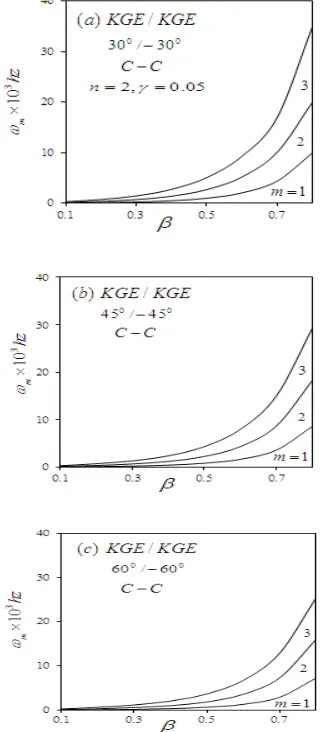
Figure 1 depicts the variation of angular frequency m
ω with respect to radii ratio β by fixing the circumferential node number
n
=2 and ratios of thicknessto radius of the inner circle γ=0.05 for two-layered antisymmetric angle-ply plates under C-C boundary conditions. The plies are oriented for Fig. 1 (a), (b) and (c) as 0
30/-30 0 45 /- 0
45 and 0
60 /- 0
60 respectively and arranged materials in the order of KGE-KGE in all cases. It is seen in Fig. 1 (a) that as the radii ratio β increases there is a slight increase in angular frequency up to β< 0.5 but there is a significant increase in angular frequency forβ≥ 0.5. The angular ωm is higher for higher modes. The same trend can be seen in Fig. 1 (b) and (c).
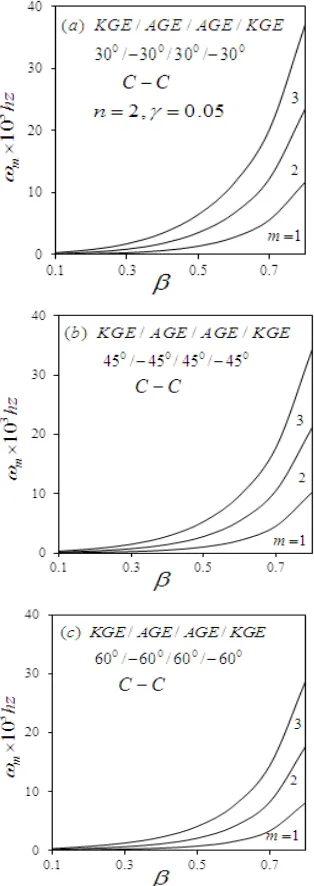
Figure 2 depicts the variation of angular frequency m
ω
with respect to radii ratioβ by fixing the circumferential node numbern
=2 and ratios of thickness to radius of the inner circle γ =0.05 for four-layered antisymmetric angle-ply plates under C-C boundary conditions. The plies are oriented for Fig. 2 (a), (b), (c) as0 0 0 0
30 / 30 / 30 / 30− − , 0
45 /- 0
45 / 0
45 /- 0
45 and 0 60 /- 0
60 / 0 60 /- 0
60 respectively in the order of materials KGE/AGE/AGE/KGE. It is seen in Fig. 2 (a) that as the radii ratio β increases there is a slight increase in angular TABLEII
VARIATION OF FREQUENCY PARAMETER ( 1, 2,3)
m m
λ = WITH n
UNDERS-S-BOUNDARYCONDITIONS
30 / 300 − 0 KGE/KGE
0 0 0 0
30 / 30 / 30 / 30− − KGE/AGE/AGE/KGE
n
1
λ
2
λ
3
λ
λ
1
2
λ
λ
3 1 0.15288 0.357923 0.905084 0.141874 0.492137 1.050642 0.065779 0.335471 0.859984 0.106979 0.476782 1.037467
3 0.061698 0.303261 0.825659 0.070009 0.449997 1.015701
4 0.011714 0.25438 0.788791 0.064529 0.410025 0.980985
5 0.072015 0.183504 0.741186 0.125138 0.352578 0.94361
6 0.054362 0.115487 0.685125 0.174141 0.268357 0.89079
7 0.09475 0.205712 0.615027 0.231094 0.127951 0.823825
8 0.106427 0.28824 0.525976 0.151555 0.324356 0.739627
9 0.101456 0.361542 0.408694 0.202906 0.438821 0.632355
[image:4.612.344.505.198.564.2]frequency ωm up to β<0.5 and there is a significant increase in angular frequency ωm for β≥ 0.5,0.7,0.8. The angular ωm is higher for higher modes. The same trend can be seen in Figs. 2 (b) and (c).
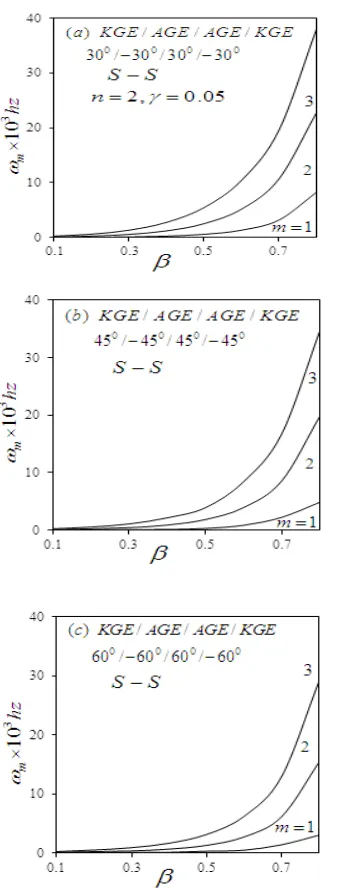
Figure 3 depicts the variation of angular frequency
ω
m with respect to radii ratioβ by fixing the circumferential node numbern
=2 and ratios of thickness to radius of the inner circle γ =0.05 for two-layered antisymmetric angle-ply plates under S-S boundary conditions. The plies are oriented for Fig. 3 (a), (b) and (c) as 0 030 / 30− (KGE/KGE), 0 0
45 / 45− (KGE/KGE) and 0
60 / 0
60
− (KGE/KGE)
respectively. It is seen in Fig. 3 (a) that as the radii ratio β increases there is a slight increase in angular frequency up to
β<0.5 but there is a significant increase in angular
frequency for β≥ 0.5,0.7,0.8.. The angular ωm is higher for higher modes. The same trend can be seen in Fig. 3 (b) and (c).
Figure 4 depicts the variation of angular frequency ωm with respect to radii ratio β by fixing the circumferential
Figure 4 depicts the variation of angular frequency ωm with respect to radii ratio β by fixing the circumferential node number
n
=2 and ratios of thickness to radius of the inner circle γ=0.05 for four-layered antisymmetric angle-ply plates under S-S boundary conditions. The plies are oriented for Fig. 4(a), (b), (c) as 030 /- 0
30 / 0
30 /- 0
30 ( 0
45 /-Fig. 2 ((a)-(c)). Effect of radii ratio on the angular
frequency of four-layered plate under C-C boundary conditions with n=2
Fig. 3 ((a)-(c)). Effect of radii ratio on the angular frequency of two-layered plate under S-S boundary conditions with
[image:5.612.321.535.95.596.2] [image:5.612.101.258.260.703.2]0
45 /- 0
45 0
45 and 0 60 /- 0
60 / 0 60 /- 0
60 in the order of KGE/ AGE/AGE/KGE respectively. It is seen in Fig. 4 (a) that as the radii ratio β increases there is a slight increase in angular frequency up to β=0.5 but there is a significant increase in angular frequency forβ =0.6, 0.7 , 0.8. The same trend can be seen in Fig. 4 (b) and (c).
V. CONCLUSION
Free vibration of antisymmetric angle-ply laminated annular circular plates is studied using spline function approximation under shear deformation theory. The inclusion of shear deformation theory significantly lowers the values of the frequency parameters when we compared to the values predicted by the classical plate theory. The results presented in this paper may be fruitful for designers to choose the materials, ply-angle and circumferential node
number for making the circular plate structures according to their needs in designing appropriately.
ACKNOWLEDGMENT
The author thankfully acknowledges the financial support from the UTM - MOHE Research Grant Vote Nos. 05J17 and 07J49, Research Management Centre(RMC), Universiti Teknologi Malaysia, Malaysia for completion of this research work and presenting in WCE 20013 conference, London, UK.
REFERENCES
[1] P. C. Yang, C. H. Nooris, and Y. Stavsky, “Elastic wave
propogation in heterogeneous plate”, International Journal of Solids and Structures, vol. 2, pp. 665-684, 1966.
[2] C. W. Bert and T. L. C. Chen, “Effect of shear deformation on vibration of antisymmetric angle-ply laminated rectangular plates”, International Journal of Solids and Structures, vol. 14, pp. 465-473, 1978.
[3] J. N. Reddy, “Free vibration of antisymmetric angle-ply laminated plates including transverse shear deformation by the finite element method”, J. Sound and Vibration, vol. 66, pp. 565-576, 1978. [4] O. Civalek and M. Gürses, “Free Vibration Of Annular Mindlin
PlatesWith Free Inner Edge Via Discrete Singular Convolution Method”, The Arabian Journal for Science and Engineering, vol. 34, pp. 81-90, 2009.
[5] J. M. Whitney, “Shear correction factors for orthotropic laminates under static loads”, Journal of Applied Mechanics, vol. 40, p. 302, 1973.
[6] A. J. M. Ferreira and J. T. Barbosa, “Buckling behaviour of composite shells”, Composite Structures, vol. 50, pp. 93-98, 2000. [7] P. F. Pai, “A new look at the shear correction factors and warping functions of anisotropic laminates”, International Journal of Solids and Structures, vol. 32, pp. 2295-2313, 1995.
[8] Y. Qi and J. N. F. Knight, “A refined first-order shear deformation theory and its justification by plane-strain bending problem of laminated plates”, International Journal of Solids and Structures, vol. 33, pp. 49-64, 1996.
[9] A. J. M. Ferreira, C. M. C. Roque, and P. A. L. S. Martins, “Analysis of composite plates using higher-order shear deformation theory and a finite point formulation based on the multiauadric radial basis function method”, Composites Part B: Engineering, vol. 34, pp. 627-636, 2003.
[10] A. J. M. Ferreira, “Polyharmonic (thin-plate) splines in the analysis of composite plates”, International Journal of Solids and Structures, vol. 46, pp. 1549-1569, 2004.
[11] W. G. Bickley, “Piecewise cubic interpolation and two-point boundary problems”, Computer J., vol. 11, pp. 206-208, 1968. [12] K. K. Viswanathan, K. S. Kim and J. H. Lee, “Asymmetric free
vibrations of laminated annular cross-ply circular plates including the effects of shear deformation and rotary inertia: spline method”, Forsch Ingenieurwes, vol. 73, pp. 205-217, 2009.
[13] K. K. Viswanathan, Kyung Su Kim, Kyung Ho Lee and Jang Hyun Lee, “Free vibration of layered circular cylindrical shell of variable thickness using spline function approximation”, Mathematical Problems in Engineering, vol. 2010, pp. 1-14, 2010.
[14] K. K. Viswanathan, Saira Javed and Zainal Abdul Aziz , “Free vibration of symmetric angle-ply lsyered conical shell frusta of variable thickness under shear deformation theory”, Structural Engineering and Mechanics, vol. 45, pp. 259-275, 2013.
[15] M. H. Toorani and A. A. Lakis, “General equations of anisotropic plates and shells including transverse shear deformations, rotary
inertia and initial curvature effects”, Journal of Sound and Vibration, vol. 237, pp. 561-615, 2000.
[16] J. N. Reddy, Mechanics of laminated composite plates. New york: CRC Press, 1997.
[image:6.612.86.258.146.591.2]