CORRELATION OF PSYCHOLOGICAL CO MORBIDITIES AND FUNCTIONAL CAPACITY IN
COMMUNITY DWELLING ELDERLY
1
Hetal M
1Assistant professor and Guide, Physiotherapy School and Centre, Topiwala National Medical College, Mumbai 2Master in Cardiovascular and Respiratory Physiotherapy, Physiotherapy School and Centre, Topiwala National
ARTICLE INFO ABSTRACT
Background:
more young health, cognitive daily living esteem, Important also affecting health problems whether functional
Objectives:
1.To find Generalized 2.To find 3.To find
Secondary
psychological were assessed After the Generalised normality spearmen’s groups. 9(15%) highest co morbidity found to capacity functional participants and 61.1% with depression to psychological belonged care of or meets any psychological hypertension no symptoms later, but
Copyright © 2019Hetal Mistry and Karishma Gavli. This unrestricted use, distribution, and reproduction in any medium,
INTRODUCTION
Every person in every country of the world opportunity to live a long and healthy environments in which we live can favour health
ISSN: 0975-833X
Article History:
Received 20th January, 2019
Received in revised form 16th February, 2019
Accepted 19th March, 2019 Published online 30th April, 2019
Citation: Hetal M. Mistry and Karishma D. Gavli
elderly”, International Journal of Current Research, 11,
Key Words:
Depression, Anxiety, Functional Capacity, Geriatric, Community Dwelling Elderly.
*Corresponding author: Karishma D Gavli
RESEARCH ARTICLE
CORRELATION OF PSYCHOLOGICAL CO MORBIDITIES AND FUNCTIONAL CAPACITY IN
COMMUNITY DWELLING ELDERLY
Hetal M. Mistry
and
2,*Karishma D. Gavli
Physiotherapy School and Centre, Topiwala National Medical College, Mumbai Master in Cardiovascular and Respiratory Physiotherapy, Physiotherapy School and Centre, Topiwala National
Medical College, Mumbai, India
ABSTRACT
Background: Old age is increasing; more population in future would be young population may in future have more old population. With aging,
cerebral pathology, changes in cardiopulmonary and autonomous cognitive ability of an individual, which causes changes to occur all over the
living , hampering their daily functions, self-care activities, getting dependent esteem, staying more indoors away from society, recumbent to one position, Important work. All this leads to development of psychological co-morbidity
affecting their functional capacity. As above 60 is rising rapidly and problems due to aging with changes in the body, mind and thought whether presence of one affects the other. Is there a relation between presence functional capacity in elderly?
Objectives: Primary Objectives:
find out presence of depression and anxiety in elderly by using Generalized anxiety disorder 7 scale (GAD-7).
find out functional capacity by using Six Minute Walk Distance Test. find out correlation of depression and anxiety on functional capacity
Secondary Objectives: Comparison of functional capacity on depression, psychological co-morbidity. Methodology: Study design was observational,
assessed in the study. The participants included had MMSE score above the consent and MMSE score, the participants were given the Generalised Anxiety Disorder-7 scale and later their 6 minute walk distance normality using the Shapiro-wilk test. As the data did not pass normality, spearmen’s correlation test and coefficient of variance was used to compare groups. Results: The participants were distributed in group as follows Depressed 9(15%) and no psychological comorbidity 37(61.1 %). The functional capacity
in anxious (mean 84.9) and least to be in the mixed group (mean 69.7). morbidity among genders was found to be in females 12(52%). The
to be more in males (83.1%). There is a very weak correlation (r capacity and is statistically not significant (p=0.16). There is a very weak functional capacity and is not statistically significant (p=0.27). Discussion
participants there were 30 males and 30 females of which 13% had depression, 61.1% had no psychological comorbidity. So there was a very weak negative
depression and anxiety which was not statistically significant. Among psychological comorbidity than male. And males had more functional capacity belonged to good financial status, had retired from work and were involved
one’s health. They had access to regular medication and health check meets and did not stay much indoors. They were joyful and satisfied with
psychological comorbidity and preserved their functional capacity. hypertension and diabetes mellitus, they took care for it and are not obsessed
symptoms of depression. They might have got depression and/or anxiety but at present they are not showing any symptoms.
This is an open access article distributed under the Creative Commons medium, provided the original work is properly cited.
world should have the healthy life. Yet, the health or be harmful
to it. Environments are highly influential exposure to health risks for example our access to quality health opportunities that ageing brings. ageing ?.
International Journal of Current Research Vol. 11, Issue, 04, pp.3027-3033, April, 2019
DOI: https://doi.org/10.24941/ijcr.34017.04.2019
Mistry and Karishma D. Gavli. 2019. “Correlation of psychological co morbidities and functional capacity in community dwelling 11, (04), 3027-3033.
Available online at http://www.journalcra.com
CORRELATION OF PSYCHOLOGICAL CO MORBIDITIES AND FUNCTIONAL CAPACITY IN
Physiotherapy School and Centre, Topiwala National Medical College, Mumbai Master in Cardiovascular and Respiratory Physiotherapy, Physiotherapy School and Centre, Topiwala National
be in old age. India being the one having aging, there occurs deterioration of physical autonomous nervous system. It also affects the the body. Thus, affecting their activity of dependent on others, lowering their self-position, and lots of overthinking and forgetting morbidity as in depression and/or anxiety and and elderly population is facing majority of thought process. So there arises a urge to find presence of psychological co morbidity and
Geriatric depression scale (GDS) and
Test.
depression, anxiety, mixed group and no observational, correlational study, 60 participants above 24 and meeting the inclusion criteria. scales Geriatric Depression Scale and distance test was taken. Data was test for normality, the correlation was done using compare the functional capacity between the Depressed 8(13%), anxious 6(10%), mixed capacity among groups were found to be 69.7). The predominance in psychological functional capacity among genders was (r = -0.18) between GDS and Functional correlation (r= -0.14) between GAD and
Discussion and Conclusion: In the study of 60 depression, 10 % had anxiety, 13% had mixed negative correlation of functional capacity Among gender female had more predominance capacity than females. As the participants involved in activity and were interested in taking check-ups, and involved in social gatherings with their lives. And so they did not present capacity. Though they had comorbidity like obsessed and dealing the situation, so showing anxiety in some earlier stage or might develop
Commons Attribution License, which permits
influential on our behaviour, our example air pollution, violence, health and social care and the brings. Now let’s see what’s healthy INTERNATIONAL JOURNAL
OF CURRENT RESEARCH
It is about creating the environment and opportunities that enable people to be and do what they value throughout their lives. WHO defines healthy ageing “As the process of developing and maintaining the Functional ability that enables wellbeing in older age”. Functional ability is about having the capabilities that enable all people to be and do what they have reason to value.
This includes:
Meet their basic needs;
To learn, grow and make decisions; To be mobile;
To build and maintain relationships; and To contribute to society.
Healthy ageing is the focus of WHO’s work on ageing between 2015-2030. Healthy ageing replaces the World Health Organization’s previous Active Ageing: a policy framework developed in 2002 (Yvonne Van Mourik, 2014).(WHO| What is healthy aging?)
Aging: Population aging is a worldwide phenomenon,
characterized by higher rate of growth among the elderly population (aged ≥60years) relative to other age groups1. During aging one has to deal with not only physical aging but also mental and social well-being. It is a bit more complicated to understand than just the issue of chronological age. As people age, greater variability occurs between individuals, making predictions about any one individual more difficult. The trends of some changes are probably not linear but curvilinear, with changes accelerating after the age of 65. Thus, many of the physiological studies that have been done with 60 years old may not apply to individuals who are 80, 90 or 100 years old (Donna frownfelter). The Indian elderly population is currently the second largest in the world (Grover, 2015). As over past few years India has witnessed a decrease in mortality rate and improvement in life expectancy amongst older people4. In India the proportion of elderly population has risen from 5.6% in 1961 to 8.5% in 2011 and it was said that it will further rise upto 9% in 2016 (Grover, 2015). Projections are being made that India will house 300 million elderly by 2050 and elderly will form 19% of total population.
The elderly population has risen so the urge arises to evaluate the different diseases emerging and preventing or curing them inorder to help elderly population live their life with ease6. In the process of aging, the cardiopulmonary and autonomic nervous system functions become dynamic and they undergo changes with age (Donna frownfelter). With the deterioration of physical health and cerebral pathology, the overall prevalence of mental and behavioral disorder tends to increase (Grover, 2015). Self- care activity and walking short distance becomes a great task thus reducing functional capacity to perform work. These disabilities hamper the independence and quality of life of older people. They tend to impose burden on family, care givers and are associated with significantly decreased life expectancy. Disability arises with presence of psychological comorbidities due to illness, loneliness, lack of family support, restricted personal autonomy, and financial dependency (Grover, 2015). Anxiety and depression are the two of the most prevalent mental health condition in adults and both have negative impact on health and quality of life (Marlen Knutli, 2014). Various social, environmental, and personal influences gives rise to high psychiatric morbidity among older
population but the exact cause is not clear due to few studies being available to highlight this issue4. A long standing community based study of a population aged over 50 in southern India found a remarkably high prevalence (35.0%) of psychiatric morbidity with depression being most common disorder (23.0%) (Rinku Sharma, 2012). Multiple studies have demonstrated that elders with depressive symptoms are more likely to become disabled (Kenneth, 2010).
.
Depression: In older adults, depression may manifest more subtly as they tend to be less likely to admit feelings of sadness or grief and medical illness which are more common in this population also contributes or causes the depression7. It occurs more often in women than men. Some differences in the manner in which the depressed mood manifests has been found based on sex and age. It is third leading cause of burden of disease and is important public health issue since it is associated with suffering for the individual, disability, increased mortality and poorer outcomes from physical illness. Losing a loved one, fired from job, going through a divorce, these feelings are normal reactions to life’s stressors. Most people feel low and sad at times. However, in the case of depression as a psychiatric disorder, the manifestation of the low mood are much more severe and they tend to persist7. Features of depression being lowered mood, feelings of guilt, poor motivation and low self-esteem. In a review of world literature, Baruna et al. (2011) evaluated the median prevalence of depression in elderly population of India and compared the same with rest of the world. The median prevalence rate of depression among elderly was reported to be 18.2% which was significantly higher than the rest of the world (5.4%) (Grover, 2015). For determining the depression we are going to use the Geriatric Depression Scale,it is the most common instrument used to evaluate the depression. It was first created by Yesavage et al., has been tested and used extensively with older population. The GDS Long form is a brief, 30 item questionnaire in which participants are asked to respond by answering yes or no in reference to how they felt over the past week. A short from GDS consisting of 15 questions was developed in 1986 (Sherry, 2012). It has been used in healthy older adults population with special emphasis on target population such as the medically ill and mild to moderate cognitively impaired older adults. It has also been used in community, acute and long term care settings. It consists of questions which determines your states of depression which about your happiness, satisfaction with life, feeling sad and others (Geriatric Depression Scale (http://www.stanford.edu/~yesavage/GDS.html))9. The GDS was found to have a 92% sensitivity and a 89% specificity when evaluated against diagnostic criteria. The validity and reliability of the tool have been supported through both clinical practice and research (Sherry, 2012).The Original scale is in public domain due to it being partly the result of Federal Support. The scale is present in number of different languages (http://www.stanford.edu/~yesavage/GDS.html).
Anxiety: The term “Anxiety disorder” refers to specific psychiatric disorders that involve extreme fear or worry and includes generalized anxiety disorder, panic disorder and panic attacks separation anxiety and specific phobias. Features of anxiety are as follows feeling of fear, worrying, and worst case scenario-thinking., somatic symptoms of anxiety are nervousness, tremor, sweating, tachycardia, dizziness and tachypnea among others (Marlen Knutli, 2014).
Depression and anxiety disorders are different, but people with depression often experience symptoms similar to those of an anxiety disorder, such as nervousness, irritability and problems sleeping and concentrating. But each disorder has its own causes and its own emotional and behavioural symptoms. Many people who develop depression have a history of an anxiety disorder earlier in life. There is no evidence that one disorder causes the other, but there is clear evidence that many people suffer from both disorders. We are going to use is the Generalized Anxiety Disorder-7 Scale (GAD-7), it’s a 7 item scale with the highest correlation with the total 13 item scale score (r = 0.75-0.85). the internal consistency of the GAD-7 was excellent (cronbach α = .92). Test-retest reliability was also good (interclass correlation = 0.83). Comparison of scores derived from the self – report scales with those derived from the MHP-Administered versions of the same scale yielded similar results (interclass correlation = 0.83), indicating good procedural validity. The scale is available in numerous languages and is free to access on phqscreener site (Robert et
al., 2012). The presence of depression and/or anxiety disorders
relates with the emotional and physical effects of breathing (Mark, 2005). Dyspnea refers as the sensation of difficulty in breathing. It is difficult to quantitate as is subjective and at times is normal (i.e at high altitudes, and during or following vigorous exercise) (Donna frownfelter). It is common among lung and heart disease and is triggered at times of anxiety due to autonomous response of breathing being constantly changing with emotions such as happiness, fear, and anxiety (Marlen Knutli, 2014). Light et al showed a correlation (r=0.81) between anxiety and depression symptomology in COPD, using the Strate- Trait Anxiety Inventory and Beck Depression Inventory (BDI) in 77 pulmonary clinic patients. Another study by Simon et al explained that depression had multiple unexplained respiratory symptoms.
Functional capacity: Aging itself leads to a gradual,
progressive decline in functional capacity. It is defined as the ability to perform survival related activity in an autonomous and independent manner. Elderly people with normal cognitive functioning have, as a main characteristic, the maintenance of autonomy and independence. These two variables can change during the aging process and are very often related to cognitive decline and depressive symptoms, especially in populations with lower levels of education (Christina Martins Borges Lima, 2017). Cognitive decline affects functional capacity and the proper performance of everyday activities (Christina Martins Borges Lima, 2017). As Functional capacity can also be affected with the presence of depression and anxiety. It is found that psychological distress produces restricted activity of daily living and that when associated with dyspnea it affects the level of physical activity (Pia-Diaz, 2007). Physical activity decreases with age, so does energy and efficiency to work. As degenerative changes start to occur within the body the rate with which work was performed earlier gets reduced. Due to which people get confined to a place doing very few activities or only self-care activity and no exercise. Thus, decreasing their physical capacitance to perform work leading to inability to perform activities of daily living and causing depression. To measure the amount of activity performed and the energy utilization, oxygen intake, we are going to assess functional capacity of the individuals by using Six Minute Walk Distance Test. The assessment of functional capacity reflects the ability to perform activities of daily living that require sustained aerobic metabolism.
The integrated efforts and health of the pulmonary, cardiovascular, and skeletal muscle systems dictate an individual’s functional capacity (Ross Arena et al., 2007; Jerome L. Fleg, 2000; Ross Arena,2007; Jerome, 2000; Roberta Souza Freitas et al., 2012).A fundamental requirement for many of the activities of daily living is the ability to perform predominantly aerobic, i.e., oxygen-using, work. Such activities require the integrated efforts of the heart, lungs, and circulation to deliver oxygen to the metabolically active muscle mass. Thus, the assessment of functional or aerobic exercise time or peak oxygen consumption provides important diagnostic and prognostic information in a wide variety of clinical settings (Ross Arena et al., 2007; Jerome L. Fleg, 2000; Ross Arena, 2007; Jerome, 2000; Roberta Souza Freitas, 2012). The functional capacity will be measured by using Six Minute Walk Distance Test. Now the Six Minute Walk Distance Test will give the entire picture of the functioning of heart and lungs, and it is sub maximal test and is cost effective, simple, easy to perform, safe and applicable to everyday activity. With Six Minute Walk Distance Test the rate of perceived exertion is also noted. It is for measuring the intensity of physical activity. It relies on the physical sensations a participant experiences during the activity as increase in heart rate, increase in respiration, increased breathing. Participant may become breathless indicating a heart or lung anomaly. In a study by Burns et.al they had found that in depression breathlessness occurs at rest, this is because of difficult in inspiration, a feeling of heaviness or pressure in chest (Ramanathan Palaniappan Ramanathan and Baskaran Chandrasekaran, 2014). Six Minute Walk Distance Test can also be used as treatment measure or for recognizing the exercise limitation of subjects. It is widely used for pulmonary and cardiac rehabilitation, for treatment intervention and to assess the response for various pharmacological therapies. The distance covered during the time period also can be a powerful prognostic indicator (Ramanathan Palaniappan Ramanathan and Baskaran Chandrasekaran, 2014).
standard medical treatment due to nature of their mental health problems and may experience a greater loss of function than necessary. This effect may then reinforce the negative thoughts related to their own prognosis, triggering a vicious psycho-somatic cycle. In contrast, patients who are not having any psychological co-morbidity and already suffering from severe disease might be able to use their treatment resources effectively. This in turn might result in better or stable prognosis (Viola Vaccarino, 2001; Catherine Laurin, 2011; Mia Conaradsson, 2013; Astrid Fidika, 2014). As there is presence of any psychological co-morbidity he/she won’t perform tasks efficiently or vice versa. So there arises a urge to find whether there is any relation between the psychological comorbidity and functional capacity, study to see whether they both are affecting each other.
Need for study: Old age is increasing; more population in future would be in old age. India being the one having more young population may in future have more old population. With aging, there occurs deterioration of physical health, cerebral pathology, changes in cardiopulmonary and autonomous nervous system. It also affects the cognitive ability of an individual, which causes changes to occur all over the body. Thus, affecting their activity of daily living , hampering their daily functions, self-care activities, getting dependent on others , lowering their self-esteem, staying more indoors away from society, recumbent to one position, and lots of over thinking and forgetting Important work. All this leads to development of psychological co-morbidity as in depression and/or anxiety and also affecting their functional capacity. As above 60 is rising rapidly and elderly population is facing majority of health problems due to aging with changes in the body, mind and thought process. (Sinhgad-e-journal).So there arises a urge to find whether presence of one affects the other. Is there a relation between presence of psychological co morbidity and functional capacity in elderly?
Aim: To find out correlation of psychological co-morbidities and functional capacity in community dwelling elderly.
Objectives
Primary Objectives
To find out presence of depression and anxiety in elderly by using Geriatric depression scale (GDS) and Generalized anxiety disorder 7 scale (GAD-7).
To find out functional capacity by using Six Minute Walk Distance Test.
To find out correlation of depression and anxiety on functional capacity
Secondary Objectives
Comparison of functional capacity on depression, anxiety, mixed group and no psychological co-morbidity.
MATERIALS AND METHODOLOGY
Study design:
Research Design: Observational, Correlational
Sample Population: Young old elderly (65-74years)
Sample Size: The sample size was calculated using National Sample Size calculator (www.nss.gov.au) where, the population size taken was 130 (number of patients coming to Geriatric OPD in last 6 months), Confidence interval as 0.1 (which came to 0.098) Standard error as 0.05 (α error =0.05). The sample size came out to be 57 which was rounded of to 60.
Type of Sampling: Convenient sampling
Source of Sampling: Community
Place of study: Physiotherapy OPD of tertiary health care hospital
Duration of study: 6 months. (January 2018- June 2018)
Inclusion Criteria
Subjects of age group 65-74 years (young old according to WHO)
Subjects who are active and are ambulatory. Subjects who are willing to participate.
Subjects whose Mini Mental score is more than 24.
Exclusion Criteria
Subjects having psychiatric disorder other than depression and anxiety.
Subjects having recent history of any major lower limb surgery/ fracture.
Subjects having any major cardiac, neurological or musculoskeletal problems.
Subjects having any major systemic problems.
MATERIALS
Measuring tape Stop watch
Cones
Sphygmomanometer
Weighing machine Table stool
Scales
Outcome Measures
Geriatric Depression Scale (http://www.stanford.edu /~yesavage/GDS.html)
Generalized Anxiety disorder 7 Scale
(http://www.phqscreeners.com/select-screener/41) Mini Mental State Examination (The Hartford
Institute of Geriatric Nursing, division of Nursing, New York University)
Borg scale
Six Minute Walk Distance Test (6MWD) (ATS.ORG)
METHODOLOGY
Study design was observational, correlational study, 60 participants were assessed in the study.
Tables and graphs
Graph 1. Inference: There was equal distribution of male and female participants
Graph 2. Inference: Above graph depicts the distribution of population among groups
Graph 3. Inference: Above graph depicts the functional capacity among groups. And functional capacity is more in patients having
anxiety and least in mixed condition
Graph 1. Inference: There was equal distribution of male and
2. Inference: Above graph depicts the distribution of
Graph 3. Inference: Above graph depicts the functional capacity among groups. And functional capacity is more in patients having
anxiety and least in mixed condition
Graph 4. Inference: the above graph shows that female have high predominance to psychological comorbidity than males
Graph 5. Inference: The above graph shows that male had a (83.1%) higher functional capacity than females (71.5%)
RESULTS
The participants were distributed Depressed 8(13%), anxious no psychological comorbidity depression in elderly with The functional capacity among
highest in anxious (mean mixed group (mean 69.7)
The predominance in psychological genders was found to be in
The functional capacity among more in males (83.1%)
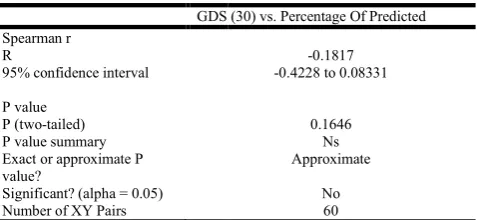
There is a very weak correlation and Functional capacity and (p=0.16)
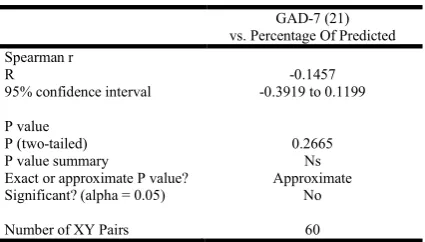
[image:5.595.316.555.682.792.2] There is a very weak correlation and functional capacity significant(p=0.27)
Table 1. Correlation between gds and functional capacity
GDS (30) vs. Percentage Of Predicted
Spearman r R
95% confidence interval
P value P (two-tailed) P value summary Exact or approximate P value?
Significant? (alpha = 0.05) Number of XY Pairs
Graph 4. Inference: the above graph shows that female have high predominance to psychological comorbidity than males
Graph 5. Inference: The above graph shows that male had a (83.1%) higher functional capacity than females (71.5%)
distributed in group as follows anxious 6(10%), mixed 9(15%) and comorbidity 37(61.1 %) study about no
with reason).
among groups were found to be (mean 84.9) and least to be in the
psychological co morbidity among in females 12(52%)
among genders was found to be
correlation (r = -0.18)between GDS and is statistically not significant
correlation (r= -0.14) between GAD capacity and is not statistically
Correlation between gds and functional capacity
GDS (30) vs. Percentage Of Predicted
-0.1817 -0.4228 to 0.08331
0.1646
Ns Approximate
Table 2. Correlation of gad-7 and functional capacity
GAD-7 (21)
vs. Percentage Of Predicted
Spearman r
R -0.1457
95% confidence interval -0.3919 to 0.1199
P value
P (two-tailed) 0.2665
P value summary Ns
Exact or approximate P value? Approximate
Significant? (alpha = 0.05) No
Number of XY Pairs 60
DISCUSSION AND CONCLUSION
In the study of 60 participants there were 30 male and 30 females of which 13% had depression, 10 % had anxiety, 13% had mixed and 61.1% had no psychological comorbidity. As majority population fall into no psychological comorbidity group it was found that there was a very weak negative correlation of functional capacity with Depression and Anxiety which was not statistically significant. The participants belonged to good financial status, had retired from work and were involved in activity and were interested in taking care of one’s health. They had access to regular medication and health check-ups, and involved in social gatherings or meets and did not stay much indoors. They were joyful and satisfied with their lives. And so they did not present any psychological comorbidity and preserved their functional capacity. Though they had comorbidity like hypertension and diabetes mellitus, they took care for it and are not obsessed and dealing the situation, so showing no symptoms of depression. They might have got depression and/or anxiety in some earlier stage or might develop later, but at present they are not showing any symptoms.
Symptoms of Depression might also be due to medications side effect, or might be caused by co-occurring illness. It is sometimes dismissed as normal part of aging, causing needless suffering for the family and for the individual. The study by V K Usha and K. Lalitha showed that QOL was poorer among senior citizens in rural areas than the senior citizens in the urban areas. In India, the population of senior citizens is greater in rural areas where the health care facilities are minimal. The urban citizens had secondary level of education and rural primary, the urban citizens were retired from work but the rural one’s were still earning. Awareness about primary prevention of illness and the need for regular health check-up among senior citizens of rural areas were less, while in urban areas they sought medical help from private hospitals and they consulted the physician only when illness arises. Among gender female had more predominance to psychological comorbidity than male. A possible explanation of female predominance is the different nature of aging process among women and how they perceive the differences27. Studies also suggest that women experience depression up to twice as often as men. And males had more functional capacity than females. In the study by Ramanathan Palaniappan Ramanathan and Baskaran Chandrasekaran found that gender differences in 6MWD is due to the greater absolute muscle strength, muscle mass and height of men compared to women. They had also found that height influences 6MWD as there was correlation between the two, and it can be attributed to greater stride length of taller individuals. And in this study it was also found that all the participants had good cognitive level which again
did not lead to developing psychological comorbidity among them. It was explained in a study by Francine Golghetto CasemiroI Isabela Azevedo Rodrigues (Mark E.kunik, 2005) et al that cognitive damage is characteristic of depression and depressed individual tend to exhibit worse psychosocial functioning. When combined with old age, the fear that something awful might happen, health issues, financial problems and the fear of abandonment, it can lead to anguish, anxiety and concern for the elderly individual which consequently worsen their situation (Francine Golghetto Casemiro, 2016). Also, there is one such study on community dwelling elderly in Tamil Nadu found that age, female, cognitive impairment and disability status were not significantly associated with geriatric depression.
Limitations
Sample size is too small to generalize to large population.
Other factors like income, marital status, literacy rate, socio economic dependency should have been involved. Then the psychological comorbidity taken was for past
2 weeks, so anything involving more than 2 weeks or overall year
Clinical Implication
Psychological status should also be considered in management for patients conditions as presence of psychological-comorbidities, might not give positive improvement in them.
Participants having higher BMI, hypertension and diabetes mellitus must be given proper education and encouraged to exercise and relaxation to improve their health status and functional capacity.
Future scope
The study was single centric, it can be done multi centric to find geographical variation causing difference in psychological comorbidities and functional capacity in community dwelling elderly.
REFRENCES
Arethuza SassI, Angela Andréa França GravenaII ;Calĺope PilgerIII;
Depression in elderly enrolled in a control programme for
hypertension and diabetes mellitus; Acta paul enferm. Vol 25no.1
2012
Astrid Fidika, marion Herele and Lutz Goldbeck; Symptoms of depression impact the course of lung function in adolescents and adults with cystic fibrosis. Child and Adolescent Psychiatry,
University Ulm Medical Centre, Steinhoevelstr. BMC Pubmed,
2014;14:205 1, 89075
ATS Statement: Guidelines for the Six-Minute Walk Test This Official Statement Of The American Thoracic Society Was Approved By The Ats Board Of Directors March 2002
Aydanur Ekci, Omer Oguzturk, Mehmat Ekci, Ercan Kurtipek, 2005. Effect of psychological status on respiratory system; Cilt 16: say 3:107-110
Bernd Lo¨we, MD, PhD, Oliver Decker, PhD, Stefanie Mu¨ller, MS, Elmar Bra¨hler, PhD, Dieter Schellberg, PhD, Wolfgang Herzog,
MD, and et al., 2008. Validation and Standardization of the
Generalized Anxiety Disorder Screener (GAD-7) in the General Population Med Care 2008;46: 266 –274
Catherine Laurin*,Gregory Moullec*,Simon L.Bacon,Kim L.Lavoie; Impact of Anxiety and Depression on Chronic Obstructive
Pulmonary Disease Exacerbation .DOI: http://dx.doi.org/10.1164/rccm.201105-0939PP Received: May 30, 2011 Accepted: December 26, 2011
Christina Martins Borges Lima; Heloisa Veiga Dias Alves; Dement. 2017. Performance on cognitive tests, instrumental activities of daily living and depressive symptoms of a community-based sample of elderly adults in Rio de Janeiro, Brazil; Neuropsychol.vol.11 no.1 sao paula Jan. Mar.
Depression is not a normal part of growing older; Division of population Health, National Center for Chronic Disease
Prevention and Health Promotion ; 31st January 2017
Depression│Anxiety and Depression Association of America. Sources
World health organisation; https:// adaa.org
Donna frownfelter; Elizabeth Dean, Principles and practice of
cardiopulmonary physical therapy; chp 36; pg 669;3rd edition
Donna frownfelter; Elizabeth Dean; Principles and practice of
cardiopulmonary physical therapy;chp7; pg 128;3rd edition
Francine Golghetto CasemiroI Isabela Azevedo RodriguesII Juliane
Cristine de Sousa AlvesIII ; Impact of cognitive stimulation on
depression, anxiety, cognition and functional capacity among adults and elderly participants of an open university for senior citizens.; Rev. bras. Geriatr. Gerontol. Vol. 19 no.4 Rio de Janerio July/August. 2016
Functional capacity, occupational therapists role in functional capacity evaluation, The American Occupational Therapy association,Inc(AOTA).
Ganguli, M., Ratcliff, G., Chandra, V., Sharma, S., Gilby, J., Pandav, R., ... Dekosky, S. 1995. A Hindi version of the MMSE: The development of a cognitive screening instrument for a largely
illiterate rural elderly population in India. International Journal of
Geriatric Psychiatry, 10(5), 367-377. DOI:
10.1002/gps.930100505
Geriatric Depression Scale (http://www. stanford. edu/~
yesavage/GDS.html)
Grover S., Malhotra N. 2015. Depression in elderly : A review of
Indian research. J Geriatr Ment Health., 2:4-15
Jerome L. Fleg, MD; Ileana L. Pin˜a, MD; Gary J. Balady, MD; Bernard R. Chaitman, MD; Barbara Fletcher, MN; Carl Lavie, MD;; Assessment of Functional Capacity in Clinical and Research Applications :An Advisory From the Committee on Exercise, Rehabilitation, and Prevention, Council on Clinical Cardiology, American Heart Association
Jerome L.Fleg,MD; Ileana L. Pin~a, MD; Gary j.Balady,MD et al;
Assessment of Functional Capacity in Clinical and Research Applications :An Advisory From the Committee on Exercise, Rehabilitation, and Prevention, Council on Clinical Cardiology, American Heart Association ;Circulation. 2000;102:1591-1597. Joanna Norton , Marie-Laure Ancelin, Rob Stewart, Claudine Berr,
Karen Ritchie et al. Anxiety symptoms and disorder predict
activity limitations in the elderly. Journal of Affective Disorders,
Elsevier, 2012, 141 (2-3), pp.276-85.
<10.1016/j.jad.2012.04.002>.<inserm-00716006>
Kenneth E. Depressive symptoms in middle age and the development of later life functional limitaions: the long term impact of
depressive symptoms. , National Institute of mental
health(NIMH).
Lenore Kurlowiez, PhD, RN, CS and Meredith Wallace, PhD, RN, MSN; The Mini Mental State Examination(MMSE) ; The Hartford Institute of Geriatric Nursing, Division of Nursing, New York University; issue number 3, January 1999
Leonard N. Matheson, PhD; The Functional Capacity Evaluation Washington University School of Medicine, St. Louis
M Buvneshkumar, KR John, M Logaraj.A study on prevalence of depression and associated risk factors among elderly in a rural block of Tamil Nadu. 2018;62(2):89-94
Mark E. Kunik, MD, MPH, Kent Roundy, MD. Connie Veazey, PhD, 2005. Surprisingly High Prevalence of Anxiety and Depression in Chronic Breathing Disorders* .chest. 127;1205-1211 DOI 10.1378/chest.127.4.1205.
Marlen Knutli. 2014. Anxiety and depression symptoms in relation to lung function and Chronic Obstructive Pulmonary Disease (COPD) in 9000 adults. The HUNT 2 (1995-97) population study. Institute for samfunnsmedisin Trondheim.
Mary Ganguli, Sanjay Dube, Janet M. Johnston, Rajesh Pandav, Vijay Chandra, Hiroko H. Dodge. Depressive symptoms, cognitive impairment and functional impairment in a rural elderly population in India: a Hindi version of the geriatric depression scale (GDS-H) , 15 October 1999 Full publication history DOI:
10.
1002/(SICI)1099-1166(199910)14:10<807::AID-GPS31>3.0.CO;2
Mia Conaradsson, Hakan Littbrand, Gustav Bostrom; Is change in functional capacity or dependency in activities of daily living associated with a change in mental health among older people living in residential care facilities? Clin Interv Aging, 2013; 8: 1562-1568
Pia-DiazH, Montes de Oca M, Lopez Jm, Celli Br; Pulmonary rehabilitation improves Deression , anxiety, dyspnoea and health stautus in patients with COPD. AM j Med rehabil 2007;86:30-36
Ramanathan Palaniappan Ramanathan and Baskaran
Chandrasekaran;Reference equations for 6min walk test in healthy Indian subjects (2580 years). Department of Pulmonary Medicine, Peelamedu Samanaidu Govindarajulu hospitals, Peelamedu, Coimbatore, Tamil Naidu, India. Lung India. 2014 JanMar; 31(1): 35–38. PMCID: PMC3960806
Rinku Sharma, Rahul Sharma, 2012. Depression Among the Elderly Population in a Rural Community: A Study of its Prevalence and Correlates. Indian Medical Gazette.
Robert L., Spitzer, MD; Kurt Kroenke, MD; Janet B. W. Williams, DSW; Bernd Lo¨we, MD, PhD. A Brief Measure for Assessing Generalized Anxiety Disorder The GAD-7 (screener of GAD-7 http://www.phqscreeners.com/select-screener/41)
Roberta Souza Freitas, Marcos Henrique Fernandes, Raildo da Silva Coqueiro, Wanderly Matos Reis Junior, Saulo Vasconcelos Rocha, Thais Alves Brito; Functional capacity and associated factors in the elderly: a population study.
Ross Arena, PhD, Chair ;Jonathan Myers , PhD; Mark A, Williama, PhD et al; Assessment of Functional Capacity in Clinical and Research Settings :A Scientific Statement From the American Heart Association Committee on Exercise, Rehabilitation, and Prevention of the Council on Clinical Cardiology and the Council on Cardiovascular Nursing. Circulation. 2007;116:329-343 Ross Arena, PhD, Chair; Jonathan Myers, PhD; Mark A. Williams,
PhD; Martha Gulati, MD; Paul Kligfield, MD, FAHA; Gary J. Balady, MD; Assessment of Functional Capacity in Clinical and Research Settings :A Scientific Statement From the American Heart Association Committee on Exercise, Rehabilitation, and Prevention of the Council on Clinical Cardiology and the Council on Cardiovascular Nursing.
Sherry A. Greenberg, PhD(c), MSN, GNP-BC. 2012. The Geriatric Depression Scale (GDS), Hartford Institute for Geriatric Nursing, NYU College of Nursing Issue Number 4, Revised.
Usha1, V K., Lalitha2; K. 2016. Quality of life of Senior citizens: A
Rural-Urban comparison; Indian J Soc Psychiatry, 32:158-63. Viola Vaccarino, MD PhD; Stanislav VD Kasl,PhD; Jerome
Abramson, PhD; Harlan M Krumholz,MD; Depressive symptoms and risk of functional decline and death in patients with heart failure. J Am Coll Cardiol. 2001;38(1):199205.
Yvonne Van Mourik, Frans H. Rutten, Karel. G M. Moons, Loes. C.M. Bertens, 2014. Prevalence and Underlying Causes of Dyspnoea in Older People: A Systematic Review DisclosuresAge Ageing. 2014;43(3):319-326.