As follows from the available statistical data (Czech Statistical Bureau 2006), in 2005 199 262 re- ported accidents occurred on the roads of the Czech Republic. Nearly a half of all accidents are accompa-nied by oil leaks. Accidental oil spills are primarily handled by The Fire Brigade of the Czech Republic (HZS). HZS uses loose and textile sorbents when dealing with oil spills. Those sorbents are designed so as to be able to remove maximum amount of oil pollutant from the contaminated surface (Orlíková & Márton 1999). Despite all that, a layer of oil remains on the surface, significantly decreasing the traffic safety on the contaminated section of the roadway. Environmental contamination with the residual contaminant as a result of rainfall is also a significant threat. The leaking oil substance has a complex negative influence on the surrounding environment. This concerns especially the toxic influence, changes in agronomical characteristics of the soil, as well as the risk of underground wa-ter pollution. The scale and intensity of soil, plant, and underground water contamination, or even equipment damage, is dependent on the amount
and viscosity of the leaking material, on the perme-ability of the ground and bedrock retention capacity (Anonymous 1972).
The leaks of oil substances in the transport also belong to significant sources of contamination. This is due to the equipment disorders, motor vehicle accidents or stationary pipeline transport systems. It is estimated that 10–15% of all road cargo traf-fic consist of dangerous materials (König 2000). In 2005, HZS dealt with 6 240 cases of dangerous substances leaks. 4 974 of whom were oil substances leaks, which means nearly 80% (Czech Statistical Bureau 2006). As we infer from the data, the risk arising from the oil substances transport is substan-tial and so is the necessity of using quality means of decontamination in the case of an accident.
The quality of the decontamination process is important because the transported material has other specific physical characteristics. This is the case especially with oil-like materials with a high viscosity (the degree of inner friction in the liquid) the higher the viscosity, the higher the resistance to the liquid flow (Kudrna et al. 1989), which makes
A new method of cleaning solid surfaces contaminated
with oils
V. Řezníček
1, V. Dvořák
2, K. Kykalová
2, J. Severa
2, J. Mareček
1, J. Fryč
11
Department of Agricultural, Faculty of Agronomy, Mendel University of Agriculture
and Forestry in Brno, Brno, Czech Republic
2
Decomkov, Ltd., branch Hradec Králové, Hradec Králové, Czech Republic
Abstract: The aim of the work was to find an alternative way of cleaning roads and other kinds of solid surfaces con-taminated as a result of accidents. The method is designed to dissolve oil leaks coming from motor vehicles, but it is also suitable for removing other liquids with similar physical and chemical characteristics, for example plant and paraffinic oils. The principle of this method is to emulsify the contaminant with the reagent foam. The foam is applied on the contaminated surface and it reacts with the contaminant, given rise to an emulsion. The process is supported by the mechanical movement of brushes, which mix the foam with the contaminant. The movement increases the sorption capacity of the foam and its stability. After the surface decontamination, the residual emulsion is removed, together with the foam, with a combined wet suction cleaner equipped with an emulsion defoamer. The aggregate emulsion is disposed of in special establishments, especially in dangerous waste incinerators.
Keywords: decontamination; oil pollution; foam; surfactant
the decontamination significantly more difficult. Such liquids have only a limited tendency to soak into solid materials, e.g. loose and textile sorbents. This significantly limits the possibility of using tra-ditional sorbents for oil contaminants removing. It is therefore necessary to apply such methods, which can ensure the cleaning of surfaces contaminated even with high viscosity materials.
At present, such sorbents are used by HZS units for removing oil substances. Usually, the products called Eco Dry (produced by Reo Amos) or Absodan DN1 (produced by Happy End) are used. VAPEX was widely used in the past, now it is applied mainly by the volunteer firefighters. Textile sorbents are used on a smaller scale. Both sorbents are permanently placed in firefighters’ vehicles. After the decontami-nation process, the sorbent is collected in plastic bags, transported to local HZS premises, and stored in special containers. The contaminated sorbent is consequently disposed of in the dangerous waste incinerators. The use of the proper decontaminant as well as the speedy intervention are critical for the decontamination quality. The work effectiveness is also important (i.e. the firefighters’ professionalism and their erudition) (Bártlová & Pešák 2003).
Besides the regularly reported cases, there are many unreported cases of oil leaks, especially in garages, industrial premises, or in agricultural com-panies. Mostly only minor leaks are involved, but massive drains of oil substances also occur. It is nec-essary to deal with these accidents, not only because of the possible risk of environmental contamination, but also for the user-safety of the area itself.
Following the foregoing studies and practical experience, we studied the possibility of using the foam generated from the reagent water solution as a decontaminant. The aim of the work was to prepare a decontaminant based on a mixture of surfactants and auxiliary substances, which would degrease the polluted surface. By combining the reagent with the oil substance and, at the same time, structuring the forming emulsion into foam, a good quality de-greasing is ensured as well as the prevention of any leakage to the environment.
The surfactants are surface-active substances, i.e. chemical compounds primarily adsorbed on the interface of phases (dissolved or dispersed). Many physical and chemical characteristics are thus de-termined, which is important from the practical point of view (ČSN 68 1140 1994). The surfactants are composed of hydrophile (ability to react with water or to dissolve in it) and hydrophobic (in-ability to react with water or to dissolve in it) parts. The surfactants have three types of effect: soaking
and saturation of the surface, emulsification (soft dispersion of mutually indissolvable liquids), and suspension or diffusion (soft dispersion of solid particles into the liquid). These surface-active sub-stances are the main part of detergents. Detergence is the ability to transport impurities from a solid surface to the solution itself (Lorenz 2003). The surfactants are divided into two groups according to their ionicity: ionic and inionic. The surfactants used for detergents production are almost always mixtures of many organic and inorganic compounds (Šmidrkal 1999).
Emulsion is a dispersive system consisting of two parts, one of them being evenly dissolved in the other. The dispersive agent is usually a liquid, but it can be a gas or a mixture of gasses (Stehlík et al. 1968).
The main advantage of the technology which we suggest is maximum degreasing of the contaminated surface and preventing the contamination coming from spreading. A low agent consumption (thanks to a large volume of air in the foam) belongs to the general advantages of cleaning with foam decon-taminants, similarly as the visually distinct difference between the uncontaminated and contaminated sur-faces (Lorenz & Kozerich 2003) and the relatively easier work for intervening units. Because foam may be easily removed by a combined suction cleaner af-ter emulsification is finished, practically no residual emulsion remains on the surface. We therefore speak of nearly perfect decontamination. The emulsion is disposed of in qualified establishments – deemulsi-fying stations or dangerous waste incinerators.
MAteriAl AnD MethoDS
hypothesis
In the first part of the project, the processes of sur-face decontamination and decontamination itself are defined. On a selected model surface, we observed how promptly our model oil substance would soak into the surface pores as well as how firm the struc-ture would be. We also examined the possibility of the oil substance extraction from the surface and the optimal time of decontamination. For objective evaluation, it was necessary to compare the foam decontamination with the contemporary methods using solid sorbents.
criteria. Surfactants and detergents (mixtures of surfactants) with suitable characteristics were used as the main components of the agent.
Materials
The decontamination technology is designed mainly for solving vehicle oil leaks. Mostly auto-mobile petrols are involved here (mixtures of liquid hydrocarbons or oxide compounds with distilling boundary from 30°C to 215°C), serving as motor fuel (Šebor et al. 1995), diesel oil (liquid mixture of hydrocarbons boiling between 170–360°C), serving as motor fuels (Stehlík et al. 1976), and greasing oils – liquids that lower friction and divert heat. Pure mineral oils are made of crude oil and are composed of a mixture of, for example, paraffinic or aromatic hydrocarbons (Stehlík et al. 1972). These substances are generally called oil substances.
Surfactants and their mixtures are tested in labora-tories on a model surface. The rheological character-istics chosen are determined with several surfactants or detergents – such as foam multiplicity, half-life, emulsification and decontamination abilities.
According to the test results and emulsification tests, such reagent compounds are chosen that en-sure a successful and quality decontamination.
testing surface decontamination
A ceramic tile sized 50 × 50 mm was used for the model surface. The porous, rough, unglazed surface supplemented commonly used materials – concrete tiles, asphalt, and concrete – used for road and park-ing surfaces.
We applied the model oil substance (new engine oil M6AD, PARAMO) to the model tile surface in the area of 40 × 40 mm and let it soak into the sur-face for 5 min. We generated foam out of 60 ml of 10% solution of the reagents selected. We applied the volume of 60 ml onto the contaminated surface with a syringe. We placed a mechanical barrier to
the sides of the tile to prevent the foam from flow-ing away, and we decontaminated the surface with a rotating brush (2.5 s–1).
We allowed 60 seconds for the decontamination process. Consequently, we removed the foam, dried the surface (105°C, 4 h) and determined the differ-ence between the weights of the examined surface before and after decontamination, taking into ac-count the weight of the applied oil. The test should characterize the process of contamination and decontamination. Based on this test, the duration of the cleaning process can be determined and the quality of the decontamination with sorbent and that with surfactant foam can be compared.
testing emulsification of oil substance
There is a minimum difference between the decon-tamination efficiency using foam or reagent solution. Liquid lamellae surrounding the gas phase (so called “bubbles”) are an area with a significantly higher concentration of surfactants (Šilha 1999). In this sense, the emulsification quality virtually equals the decontamination quality. An intensively emulsified reagent solution will form optimally decontaminat-ing foam.
[image:3.595.65.531.658.755.2]A glass slate sized 30 × 30 mm was used as the model surface. We applied the contaminant onto one half of the slate (in this case we used the bicycle greasing oil produced by Druchema). The motor oil used in our foregoing test was disengaged from the tile surface, but the thick oil grease remained. The contaminated surface was dipped into a beaker (150 ml) containing 100 ml of the reagent which was shaken in IKA shaking apparatus at 120 move-ments per min in the following periods of time. First, 10% concentration was used as recommended by all the producers. The reagents with the best emulsify-ing characteristics were further tested at 5% con-centration. For the solutions of 10% concentration, 10-min shaking period was determined, for those of 5% concentration, 20-min period was applied.
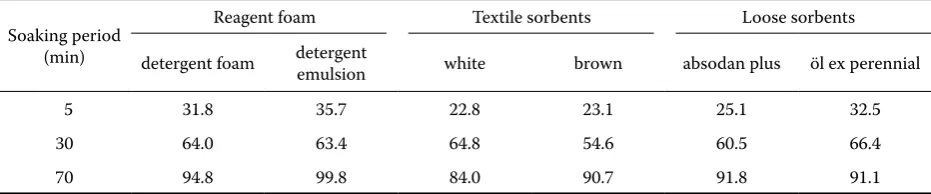
Table 1. Comparing different possibilities of decontaminating a model surface – the amount of residual oil after decontamination (weight %)
Soaking period (min)
Reagent foam Textile sorbents Loose sorbents
detergent foam detergent emulsion white brown absodan plus öl ex perennial
5 31.8 35.7 22.8 23.1 25.1 32.5
30 64.0 63.4 64.8 54.6 60.5 66.4
After the respective period, the tile was removed from the solution and dried in a drying room at 80°C temperature for a period of 30 min. The degree of decontamination could be determined from the difference between the weights of the contaminant before and after decontamination.
rheological characteristics of surfactants (detergents) – evaluation
Foam multiplicity is defined as the ratio of the foam volume to its weight. From that data, the amount of reagent necessary for the required foam formation is determined. Foam formed from 10% solution of a chosen surfactant or detergent is put in a container with a precisely defined volume and weighed.
Foam half-life may be characterised as the time in which one half of the original foam volume is redissolved into the reagent solution. A rheological funnel with a defined volume is filled with foam and weighed. The foam dissolution interval is measured and the volume of the resulting solution is evaluated. By comparing the weight of the original foam in the funnel with the amount of the solution, the half-life is determined.
Practical verification of model tests
After choosing suitable elements in the testing environment, we verified our knowledge in real environment, on real surfaces. A concrete tile and road asphalt were used as practical testing surfaces. 150 mm thick glass bars were placed around the test-ing area to prevent the contaminant and foam from flowing away. Five ml of the contaminant (M6AD) were applied and spread to the inner sides of the
glass bars. The time of exposition was 10 min. We then cleaned the surface with foam generated from 60 ml of the reagent selected. The duration of the decontamination process was 90 s. After the test, the emulsion and the foam were removed with a suction cleaner after which the presence of a yellow film was observed on the surface. This film is typical for imperfectly cleaned surfaces. With the help of glass bars, even the possibility of cleaning thicker layers of oil was examined (10, 20, and 30 mm).
The practical decontamination test took place in HZS premises of South Moravian and Královéhra-decký regions. The tests were aimed at verifying the laboratory results. Our top priority was the quality of decontamination of the mostly used communications and surfaces. The terms for all tests were chosen so as to include all seasons – spring, summer, autumn, winter. Special attention was paid to the winter testing because the colder are the surface and the surround-ing air, the higher is the viscosity of the oil substance and the more difficult the decontamination.
[image:4.595.72.529.577.638.2]The testing procedure was as follows: the contami-nant was applied and spread onto a marked concrete or asphalt surface sized 2 × 1 m. Usually, new engine oil was used. During the process, 7 chosen model contaminants were tested. The reagent foam was applied in 30 mm thickness on the contaminant with a foam generator PZ 9 (produced by EST+, Ltd., Ledeč nad Sázavou). The exposition time was 180 s. Emulsification was intensified with brushes used to mix the foam with the oil substance. The resulting foam was removed by WAP suction cleaner designed for wet suction cleaning. The presence or absence of residual contaminant was determined by a mere touch or detection papers designed for the identifi-cation of oil substances.
Table 2. The amount of residual oil on the contaminated model surface after repeated decontamination (compared after the first and second decontamination) (weight %)
Surfactant decontaminationSingle foam decontaminationDouble foam
Detergent foam 34.3 38.7
Detergent emulgate 35.7 36.4
Table 3. Removal of engine oil from model surface after 60 s of decontamination with varying amounts of foam (weight %)
Surfactant Amount of foam (ml)
20 40 60 80
Detergent emulsion No. 1 38.0 38.9 34.3 41.8
[image:4.595.68.535.686.756.2]reSultS
After cleaning the surface with ordinary loose and textile sorbents, approximately 23–32% of oil remained on the surface after 5 min of the clean-ing process. In the case of cleanclean-ing with foam the amount of the residual oil was higher (32–36%). This percentage remained the same even after extending the soaking period: 70 min (84–92% of residual oil on the surface when using sorbents as opposed to 95–99% of residual oil after using reagent foam).
From the obtained data presented in Table 2 it fol-lows that a repeated decontamination process has no influence on its quality. Increasing the amount of foam used for decontamination has no influence either (Table 3).
On the contrary, it was shown that the size of the decontaminated spot, model surface, and test conditions (static or dynamic – with the mechanical application of the brush) played a significant role.
Based on this experience, the following parametres were defined as relevant for the effectiveness and quality of decontamination:
– Type of surface – suction or impermeable – Area of the blot
– Type of reagent
– Intensification of the emulsifying process – me-chanical application of a brush
Laboratory testings confirmed that different de-grees of quality can be reached in respect to decon-tamination when using detergents or surfactants.
results analysis
[image:5.595.304.531.351.523.2]The model surface decontamination proved a sig-nificant influence of the surface type on its quality. When the oil substance transforms into emulsion, its physical and chemical characteristics change, and its mobility dramatically increases (as a result of the decrease of viscosity of the original oil substance).
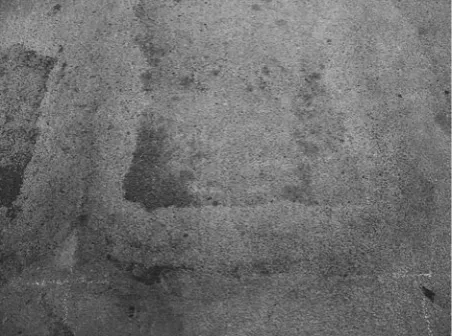
Figure 1. Unsuccessful decontamination
[image:5.595.63.291.352.523.2] [image:5.595.64.291.568.737.2]Figure 4. Decontaminated concrete surface Figure 3. Foam suction
[image:5.595.305.534.569.737.2]If the surface is porous, the contaminant soaks into it. The more mobile is the contaminant, the faster it permeates the object. Therefore, the contaminant cannot be removed from the object by ordinary de-contamination techniques. These conclusions have been confirmed by the results acquired during the decontamination process by sorbents and foam as well as by those acquired during repeated decon-tamination of the model surface.
The area of the contaminated surface was signifi-cant for the quality of decontamination. Because the decontamination technologies work mainly with the mobile part of the contaminant, it is important for the contaminant to cover the smallest area possible. Thus, the soaking of the pollutant into the surface will be slowed down and a major part of the pollutant will be in its mobile phase, which is easily accessible for decontamination.
A positive influence of the mechanical intensifica-tion by brushes was proved. The mechanical brush movement helps to remove the emulsified parts of the oil substance into the foam and, at the same time, it facilitates the inflow of the reagent to lower layers of the contaminant. The aspect of the mechanical intensification was even more significant when a foamer was applied (52% of residual oil on the
surface in the static foam application compared to 34% of residual oil with the brush application) than in the case of emulsification (36:34% of residual oil on model surface) (Figure 5).
The emulsification test of a model contaminant on a glass cutout helped us to choose the optimal effec-tive compound of the decontaminant reagent.
On the basis of the results obtained and tests, carried out, an agent DEKOROL was made by our cooperative company MPD + Rakovnik. The ef-ficiency of this agent was proven during practical tests. Its decontamination capability was tested on real surface – a concrete tile. The decontamination surface did not contain any visual traces of yellow film – residual emulsion of engine oil or reagent.
We compared the decontamination with loose and textile sorbents and reagent foam on rough and smooth surfaces of concrete tiles. The surface was first contaminated with 10 ml of new engine oil and then decontaminated. The decontamination quality was visually similar in all cases. When we used loose sorbents on both types of surfaces, its residue was perceptible. The foam decontamination was fast, especially with the smooth surface. Foam stability of the reagent 10% solution was good, no disintegration occurred during decontamination. The concrete tile was rough, but not porous. The advantage of using foam as opposed to loose sorbents was very visible here. The sorbent grains either did not advance down the pores or got stuck in them, so after the decon-tamination its residues were visible on the surface. On the other hand, active reagent components emul-sified the pollutant even in the surface pores and, consequently, all emulsion was sucked away together with the foam residues. Due to that, the surface was visually cleaner without any detectable traces of the oil substance or decontamination material.
[image:6.595.65.291.53.227.2]After verifying the effectiveness of the method on real surfaces, a series of practical tests were con-duced. The aim was to test and verify the possibility of using this new decontamination technology in different climatic conditions. For these purposes we chose concrete and asphalt surfaces in HZS premises in Královéhradecký Region and South Moravian Region. Altogether, four terrain practices Figure 5. Equipment used for decontamination (from the left)
– ordinary cleaning equipment, foam generator PZ 9, pres-sure bottle with compressed air, wet suction cleaner WAP
Table 4. Comparison of the amounts of residual oil after decontamination with or without mechanical spreading of oil on the surface (weight %)
Surfactant Oil applied Oil applied and spread
Detergent emulsion 27.3 34. 3
[image:6.595.64.530.705.756.2]were conducted and one concluding presentation of the project results was given. This took place at the State Training of Chemical Squad Members HZS ČR in Herlíkovice.
Conducted terrain practices (date, temperature, surface, HZS):
October 10, 2006, 6.1–9.5°C, asphalt, Hradec Králové February 2, 2007, –0.7–2.5°C, asphalt, Hradec Králové May 4, 2007, 28–30°C, concrete, JMK Brno
October 11, 2007, 10–13°C, asphalt, Hradec Králové November 6, 2007 final presentation of the method
to the members of Chemical Services HZS ČR – Ministry of Interior premises in Herlíkovice. The following contaminants were tested regard-ing their ability and quality of their removal from the surface.
Oil substances used: – new engine oil M6AD – used engine oil – Natural 96 petrol – diesel oil
– organically produced oil – kerosene
– rape-seed oil – paraffinic oil
The degree of the surface decontamination was evaluated during the tests after removing the emulsion. The surface was not greasy after de-contaminating all the above mentioned oils. No residual reagents were visible in the surface pores and the surface itself was dry. When we compared the use of dry or wet surfaces, the decontamina-tion of the wet surface was faster. This is due to the hydrophobic character of the oil substance and its lower density as compared to water. The oil substance did not soak into the pores because they were filled with water, and was therefore more easily decontaminated. When the surface was dry and the decontaminants viscous, it was useful to repeat the cleaning process.
The machine equipment is also important when removing emulsions from the surface. There is a large offer of suction cleaners on the market. When a good suction cleaner is used, the cleaned surface can be virtually dry after the process. To prevent
the residual reagents from foaming in the suction cleaner, a solution of silicon defoamer (Lukosan P – Lučební závody, Ltd., Kolín) was added into the machine.
ConCluSion
We were successful in proposing and verifying a new method of decontaminating solid surfaces, such as asphalt and concrete, from oil substances. In the years 2006–2007 we invented a reagent whose decontamination capabilities were verified in practi-cal conditions.
The principle of the proposed method is to emulsify the contaminant with a reagent and to fix subsequently the emulsion into foam. The foam is then removed from the surface with a suction cleaner, and the emulsion can be disposed of in accordance with the valid ordinances as waste – oiled waters. In the process of practical tests and presentations, the effectivity of the reagent and the working process of decontamination was proved.
When a solid surface is contaminated with an oil substance, first the mobile part of the pollutant can be removed. This part can be easily confined into sorbents and emulsified with the reagent foam. On the contrary, the contaminant which is already sorbed in the surface cannot be removed with sor-bents. In the case of using our method, even the contaminant contained in the surface pores can be removed. This is due to the foam ability to pene-trate into the pores and to its emulsifying effect. Therefore, it is possible to reach a visually better quality of cleaning. These results ensure a safer and more fluent traffic flow on the decontaminated surface of a roadway.
The visual effect is important especially in the areas of pedestrian zones and more frequented road sections, where even the aesthetical point of view of decontamination plays a role.
The agent DEKOROL was developed on the basis of the results obtained. This agent makes possible an efficient decontamination of oil contaminated surfaces.
Table 5. Comparison of the surfactant foam decontamination effectiveness in static and dynamic conditions (amount of residual oil on the surface) (weight %)
Surfactant Application without mixing process Application with mixing process
Detergent emulsion 35.5 34.3
[image:7.595.64.529.85.136.2]references
Anonymous (1972): Oils spills – Collection of texts about oil accidents and theirs solutions. Ministry of Interior CSR, Prague. (in Czech)
Bártlová I., Pešák M. (2003): Analysis of danger and pre-vention of spills in industry I., SPBI, Prague. (in Czech) Czech Statistical Bureau (2006): Statistical yearbook of the
Czech Republic. Sciencia Ltd. (in Czech)
ČSN 68 1140 (1994): Methods of tenzids and detergents checking. General regulations. (in Czech)
König J. (2000): Accumulation of transportion of dangerous staff. Road Skyline, 61: 249. (in Czech)
Kudrna K. et al. (1989): Educational Dictionary of Agri-culture. Part XII. State Agricultural Publishing. Prague. (in Czech)
Lorenz L. (2003): Cleaning and disinfection. Meat, 14: 37–39. (in Czech)
Lorenz L., Kozerich L. (2003): Sanitation and low-preasure foam device. Meat, 14: 28–30. (in Czech)
Orlíková K., Márton J. (1999): Sorbents using in fire service. Ministry of Interior CR, Prague. Supplement of Journal Fire. (in Czech)
Šebor G., Kozák P., Pospíšil M., Blažek J. (1995): Proper-ties of petrols and their impact to environment. Chemical note, 89: 233–244. (in Czech)
Šilha J. (1999): Cleaning with foam and gel – modern tech-nologies of surface sanitation by food processing. Meat,
10: 8–11. (in Czech)
Stehlík V. et al. (1968): Educational Dictionary of Agri-culture, Part II. State Agricultural Publishing. Prague. (in Czech)
Stehlík V. et al. (1972): Educational Dictionary of Agri-culture. Part V. State Agricultural Publishing. Prague. (in Czech)
Stehlík V. et al. (1976): Educational Dictionary of Agri-culture. Part VI. State agricultural publishing. Prague. (in Czech)
Šmidrkal J. (1999): Present tenzids and detergents. Chemical note, 93: 421–427. (in Czech)
Received for publication March 3, 2009 Accepted after corrections May 13, 2009
Corresponding author:
prof. Ing. Jan Mareček, DrSc., Mendelova zemědělská a lesnická univerzita v Brně, Agronomická fakulta, Ústav zemědělské, potravinářské a environmentalní techniky, Zemědělská 1, 613 00 Brno, Czech Republic tel.: + 420 545 132 306, e-mail: [email protected]
Abstrakt
ŘezníčekV., Dvořák V., Kykalová K., Severa J., Mareček J., Fryč J. (2009): Nová metoda dekontaminace pevných povrchů znečištěných pohonnými hmotami a oleji. Res. Agr. Eng., 55: 141–148.
Cílem práce bylo nalezení alternativního způsobu dekontaminace povrchu vozovky či jiné pevné plochy znečištěné kontaminantem v důsledku havárie. Vyvinutá metoda je určena zejména pro řešení úniků provozních a pohonných hmot motorových vozidel, ale je vhodná i pro sanaci jiných kapalných látek s podobnými fyzikálními a chemickými vlastnostmi, jakými jsou např. rostlinné a parafinové oleje. Principem metody je emulgace kontaminující látky pomo-cí pěny činidla. Pěna po nanesení na znečištěný povrch reaguje s ropnou látkou za vzniku emulze. Tento proces je podpořen mechanickým pohybem kartáče, který pěnu s kontaminantem promísí. Mechanický pohyb kartáče navíc zvyšuje sorpční schopnost pěny i její stabilitu. Po dekontaminaci plochy je vzniklý emulgát i zbývající pěna z povr-chu odstraněna kombinovaným vysavačem pro mokré vysávání, v jehož předloze je obsažen emulzní odpěňovač. Shromážděný emulgát je likvidován v příslušných zařízeních, zejména ve spalovnách nebezpečného odpadu.