Application of TETRAD in Information System Theory Development: Case-study based approach
Application of TETRAD in Information
Systems Theory Development
using Knowledge Sharing Literature:
Case-study based approach
Master Thesis
Irmasari Hafidz
Application of TETRAD in Information System Theory Development: Case-study based approach
General Information
Project Title Application of TETRAD in Information Systems Theory Development using Knowledge Sharing
Literature: Case-study based approach
Place and Date Enschede, August 2011
Author
Name Irmasari Hafidz
Email Address [email protected]
Student number s0206547
Department/Faculty Master Business Information and Technology/
School of Management and Governance
University Supervisors
Chairman/1st Supervisor Prof. Dr. Roland Müller
Email [email protected]
Department/Faculty Visiting Professor at Change Management/ School
of Management and Governance – University of
Twente
2nd Supervisor Dr. Mannes Poel
Email [email protected]
Department/Faculty Human Media Interaction/
Faculty of Electrical Engineering, Mathematics and
Application of TETRAD in Information System Theory Development: Case-study based approach
Abstract
The discovery of causal relationships from empirical data is an important
problem in theory development. We investigate the use of TETRAD IV to help
researcher in a theory development phase. We applied TETRAD IV, a heuristic
search software that used for discovering causal effect relationship between
variables based on a specific model. To performed our task, we defined two case
studies. First, we re-analyse an existing model or theory using original
correlation matrix data from a paper in Knowledge Sharing field. Second, we
validated the existing model by conducting a survey using data from 90
respondents (Bachelor, master, PhD candidate) in the University of Twente
academic setting, which pointed out Blackboard as the primary online learning
tools to support teaching as well as sharing the knowledge. The results give us
suprising remarks. From the first case study, TETRAD IV discovered spurious
relationship in the model, which are there is no causal effect between its
variables. Furthermore, using our own data, we found the same results of causal
linkage as we have in the first case study. These results give the idea of what truly
occurs given the real data. Thus, it is critical to explore the relationships among
the variables in the model using exploratory research tools, as TETRAD IV, to aid
and guide the researcher in theory development phase.
Application of TETRAD in Information System Theory Development: Case-study based approach
Acknowledgements
There are many people I owe thanks to for helping to bring this research to completion. First of all, thank to God, Allah SWT, Alhamdulillah I’ve finally made this happen. Second, I’d like to give my deep gratitude for DIKTI – Direktorat Jendral Pendidikan Tinggi Indonesia who give the support and scholarship for 2 years master study and the University of Twente for the additional financial support for two months. Then there are my two supervisors: Prof. Dr. Roland Müller and Dr. Mannes Poel, for their support and never ending motivation to finish this research. I owe them a lot for their advice on many levels. I am grateful for having both of them as my supervisors. I would like to thank for the help of Mannes, who’ve made me as the “daughter” in HMI Lab. I thankful for Roland’s time, even in the weekend, who still wants to discuss with me about the thesis. “Keep smiling” as Mannes said and “Don’t’ forget to write” as Roland said. In the HMI Lab, there are new friends who’ve been dear to me, Thijs, Jesper, Ivo, Roan, Niek, Mario, Tiago, Bert, Roald and two new persons Keijl and Remco. Thank you for having me as the girliest friend in the room. It was such a great time with you in floor 2nd - room2054, Zilverling. Thank you for the person who’ve helped me through the days: Hendri Hondorp, Charlotte Bijron and Alice Vissers.
I would like to give the thank for people from Institut Teknologi Sepuluh Nopember (ITS), Prof. Arief Djunaidy, Prof. Ketut Buda Artana, Ir. Khakim Gozali and Ir. Achmad Holil who give me this opportunity for being a member in Department of Sistem Informasi, ITS - Surabaya.
I’d like to thank Lelyana Midora and Remco van Merm for their help in motivating, caring for me through the days finishing this research. I owe them many thanks and deep appreciation. I’d like to thank my Indonesian friend Emma, Fitrika, Donna, Carina, Adisti, and Hera for their continous love and friendship.
But perhaps even most important: I’d like to thank my family back home in Indonesia for their love and continuing support. Ayah dan Ibu for their continuity of pray and enormous couragemement, my late sister Ira and my brother Irul and my only one Kakak Rani. Finally, Thank you Abang, a million times for being the best companion even in the most difficult times.
Enschede, 31 August 2011
Application of TETRAD in Information System Theory Development: Case-study based approach
Table of Contents
General Information ... 1
Abstract ... 2
Acknowledgements ... 3
Table of Contents ... 4
List of Tables ... 7
List of Figures ... 8
Abbreviation ... 9
Chapter 1 Introduction ... 10
1.1 Research Motivation ... 10
1.1.1 Why Causality? ... 10
1.1.2 Limitation of Experimentation ... 11
1.1.3 Causality in Semi-Automatic Theory Building ... 12
1.2 Research Questions ... 15
1.3 Research Plan ... 16
1.4 Thesis Structure ... 18
Chapter 2 Literature Review ... 19
2.1 Literature Review Schema ... 19
2.2 Concept Matrix ... 21
2.3 TETRAD: An Aid for Theory Development ... 30
Chapter 3 TETRAD Software ... 36
3.1 Causal Models ... 36
3.1.1 Interpreting Causal Forms ... 36
3.2 A Temporal Relationships ... 37
3.1.3 Direct and Indirect Graph Representation ... 37
3.2 TETRAD Software... 40
3.2.1 TETRAD Development ... 40
3.2.2 Purify ... 44
3.2.3 MIMBuild ... 44
Chapter 4: Approach and Methodology ... 46
4.1 Paper Selection ... 46
4.2 Experimental Research ... 47
Application of TETRAD in Information System Theory Development: Case-study based approach
4.2.2 Case Study: Blackboard – University of Twente ... 49
Chapter 5: Case Studies ... 52
5.1 CASE STUDY 1: Online Knowledge Sharing Model ... 52
5.1.1 Subjects ... 52
5.1.2 Measures ... 53
5.1.3 Latent Structural Model ... 56
5.1.4 Data ... 58
5.1.5 OKSM: A Measurement Model using TETRAD IV ... 58
5.1.6 OKSM: A Structural Model ... 62
5.1.7 OKSM using TETRAD: An Analysis ... 64
5.2 CASE STUDY 2: Blackboard, Hafidz - 2011 ... 66
5.2.1 Blackboard: Survey Research ... 66
5.2.2 Measures ... 66
5.2.3 Survey and Data Collection ... 68
5.2.4 Structural Model ... 70
5.2.5 Data Preparation ... 70
5.2.6 Data Analysis ... 71
5.2.7 Measurement Model using PURIFY... 75
5.2.8 Measurement Model using MIMBuild ... 81
5.2.9 OKSM using TETRAD: An Analysis ... 85
Chapter 6: Discussions and Conclusions ... 86
6.1 Conclusions ... 86
6.1.1 Related with the use of TETRAD ... 86
6.1.2 Related to the chosen case study in Knowledge Sharing ... 87
6.2 Discussions ... 89
Reference ... 90
Appendices ... 94
Appendix A1. Top 25 Journal in Information Systems field ... 95
Appendix A2. Im and Wang (2007) on Technology Acceptance Model using TETRAD96 Appendix A3. Im and Wang (2007) on Trust and IT-Enabled Mechanism using TETRAD ... 97
Appendix A4. Countries Studied by Bessler and Loper (2001) ... 98
Appendix A5. Findings derived from Search Algorithm in TETRAD (Mazanec, 2007) 99 Appendix A6. Type of Impure (Spirtes, 2000) p.309 ... 100
Appendix B1. Paper Form ... 102
Application of TETRAD in Information System Theory Development: Case-study based approach
Appendix B3. 80 Respondent Data, Blackboard Case Study, Hafidz 2011 ... 107
Appendix C1. Correlation Matrix Inter-Item Level from Combined Dataset (n=80), Blackboard Case Study, Hafidz 2011 ... 111
Appendix C2. Correlation Matrix Inter-Item Level from Online Dataset (n=51), Blackboard Case Study, Hafidz 2011 ... 112
Appendix C3. Correlation Matrix Inter-Item Level from Paper Dataset (n=29), Blackboard Case Study, Hafidz 2011 ... 113
Appendix D1. Histogram for Inter- Item Level for Combined Dataset (n=80), Blackboard Case Study, Hafidz - 2011 ... 114
Appendix D2. Correlation Matrix, Simulate Tabular from Correlation Matrix in TETRAD IV, Blackboard Survey, Hafidz - 2011 ... 122
Appendix D3. Simulate Tabular for Correlation Matrix Inter-Item Level for Combined Dataset (Ma and Yuen 2011) ... 124
Appendix D4. Case Study 1: TETRAD IV Result from PURIFY ... 128
Appendix D5. Case Study 2: TETRAD IV Result from MIMBuild ... 130
Appendix D6. Case Study 2: TETRAD IV Result from PURIFY ... 137
Appendix D7. Case Study 2: TETRAD IV Result from MIMBuild ... 139
Appendix D8. Case Study 1: CFA using LISREL 8.8 (The chosen model, Input from MIMBuild using alpha = 0.05) ... 146
Path Diagram for case Study 1 resulted form LISREL 8.8, Input from MIMBuild alpha = 0.05 ... 150
Appendix D9. Case Study 2: CFA using LISREL 8.8 (The chosen model, Input from MIMBuild using alpha =0 .20) ... 151
Application of TETRAD in Information System Theory Development: Case-study based approach
List of Tables
Table 1. TETRAD used in causation ... 22
Table 2. TETRAD used in causation related to Information Systems discipline ... 24
Table 3. TETRAD used in causation related to non - Information Systems discipline ... 28
Table 4. On SEM applications: Confirmatory and Exploratory phase... 32
Table 5. TETRAD version (Scheines, Spirtes et al. 2010) ... 43
Table 6. Demographics and Characteristics of the Subjects, reported by Ma and Yuen (2011) ... 53
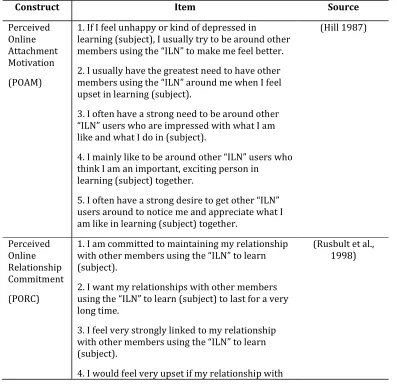
Table 7. Contructs Definition from Ma and Yuen (2011) ... 55
Table 8. List of Items Pruned from Ma and Yuen’s (2011) correlation matrix data, OKSM model, using PURIFY from TETRAD IV ... 60
Table 9. Fit Indices Measurement Model ... 61
Table 10. Fit Indices Structural Model, Ma and Yuen’s (2011) correlation matrix data, OKSM model, using MIMBuild from TETRAD ... 62
Table 11. Structural Path Comparison Based on Ma and Yuen’s (2011) Framework ... 63
Table 12. Contructs Definition adopted from Ma and Yuen (2011) ... 66
Table 13. Demographics and Characteristics of the Subjects ... 69
Table 14. Likert-scales ... 72
Table 15. Descriptive Analysis of the Instrument (Mean and Mode) of three datasets for Blackboard Survey ... 72
Table 16. Cronbach alpha three datasets for Blackboard Survey ... 75
Table 17. List of Items Pruned, Blackboard Survey (n=80), Hafidz – 2011 ... 79
Table 18. Fit Indices of Measurement Models ... 80
Table 19. Fit Indices Structural Model - Blackboard Survey (n=80), Hafidz – 2011 ... 83
Application of TETRAD in Information System Theory Development: Case-study based approach
List of Figures
Figure 1. Research Framework... 17
Figure 2. Directed Graph and Undirected Graph ... 39
Figure 3. A causal graph ... 39
Figure 4. X as a common cause of Y and Z ... 40
Figure 5. An example of measurement model ... 42
Figure 6. Ma and Yuen’s (2011) model for OKSM ... 57
Figure 7. Initial Measurement Model on OKSM (Ma and Yuen 2011) ... 59
Figure 8. PURIFY and MIMBuild in TETRAD IV for Ma and Yuen’s correlation matrix data (2011) ... 59
Figure 9. TETRAD’s Structural Model on OKSM, Ma and Yuen’s (2011) data (alpha = 0.05) ... 63
Figure 10. Latent Structural Model adopted from Ma and Yuen (2011)... 70
Figure 11. Example of the question and Likert scale for Blackboard survey ... 71
Figure 12. Pure Measurement Model using PURIFY ... 76
Figure 13. Initial Measurement Model (General Graph) adopted from Ma and Yuen (2011) ... 78
Figure 14. PURIFY for Blackboard data survey (alpha = 0.20) ... 81
Figure 15. Structural Model using MIMBuild ... 82
Application of TETRAD in Information System Theory Development: Case-study based approach
Abbreviation
DAG Directed Acyclic Graph
IT Information Technology
IS Information Systems
SEM Structural Equation Modelling
MIS Management of Information System
OKSM Online Knowledge Sharing Model
OKSB Online Knowledge Sharing Behavior
POAM Perceieved Online Attachment Motivation PORC Perceieved Online Relatiinship Commitment
TAM Technology Acceptance Model
Application of TETRAD in Information System Theory Development: Case-study based approach
Chapter 1 Introduction
This chapter presents the motivation, objectives, approaches, and structure of
this research. The first section gives the motivation of the research and then
continues with the objectives and the research questions. The following section
describes approaches and the steps to achieve research objectives. Finally, the
last section outlines the structure of the thesis.
1.1
Research Motivation
This section presents the motivation for the thesis, developed from the concept of
causality from previous studies, limitation of experimental data and the need to
search for plausible alternative models derived from data, especially in the
Information Systems field.
1.1.1 Why Causality?
Scientists always try to conduct their research intelligibly; thus, the results and
the knowledge findings from their work can be well explained to their audience.
It is commonplace that facts and findings in our everyday lives are formulated in
a cause and effect relationship. As stated in the book “Causality and Explanation”
by Salmon (1998):
“Causal concepts are universal: in every branch of theoretical science –
physical, biological, behavioral, and social; in the practical disciplines –
architecture, ecology, engineering, law, and medicine; in everyday life –
making decisions regarding ourselves, our loved ones, other living persons
and members of future generations”.
Statistical tools are often used to address causality and its questions for
Application of TETRAD in Information System Theory Development: Case-study based approach
that a statistical approach helps researchers to collect, organize, summarize,
present and analyze data. The final aim is to achieve valid conclusions and show
reasonable decisions based on a certain analysis. Spirtes, et al. (2000), examined
issues where the statistical approach is indeed promising; except for the standard
warnings that “correlation is not causation”. As cited in Liu (2009), Simon (1954)
also proposed the idea about finding spurious link between two variables in a
theory based on their correlation:
“To test whether a correlation between two variables is genuine or spurious,
additional variables and equations must be introduced, and sufficient
assumptions must be made to identify parameters of this wider system. If the
two original variables are causally related in the wider system, the
correlation is genuine.”
Healey (2009) defined the term “Causation” as the relationship between
variables in the research affecting the other variables being studied. Therefore,
causation becomes a key concern of the scientific enterprise. Furthermore,
Healey stated that practically every social science concept will discuss and debate
that some variables will cause or affect the other variables. Moreover, the major
goal of social research is to learn about the strength and direction of these causal
relationships. The questions that arise are: “How can we know such causal claims
are true? How can we judge the credibility of arguments that one variable causes
another?” (Healey 2009).
1.1.2 Limitation of Experimentation
As cited in Glymour, et al. (1987) it is common that scientists, from field physics
to sociology, have an aim to “increase the understanding by providing explanations
of the phenomena that concern us”. By this definition, Glymour et al. (1987)
believe that the ideal form of such explanations is about “why things happen as
they do; by appealing to the causal relations among the events, and by articulating
generalizations about causal relationships.” When claiming causality for our
Application of TETRAD in Information System Theory Development: Case-study based approach
phenomena. Non-experimental study is needed because there are many
independent variables that cannot be controlled for some reasons (Johnson
2007); and the limitations both are practical and ethical (Glymour, Scheines et al.
1987). For practical reasons, Glymour et al. (1987) give an example that it is
impossible for us to conduct a complete experiment with the economies for all
nations. On the ethical side, Johnson (2007) illustrate the following situation:
“Randomly assign 500 newborns to experimental and control groups (250 in
each group)c, where the experimental group newborns must smoke
cigarettes and the controls do not smoke.”
It is imaginably unethical that we urge people to smoke (even voluntarily) to be
part of such an experiment. Further, Johnson (2007) defines non-experimental
research:
“Non-experimental research is research that lacks manipulation of the
independent variable by the researcher; therefore, the researcher studies
what naturally occurs or has already occurred; and the researcher studies
how variables are related.”
1.1.3 Causality in Semi-Automatic Theory Building
In the field of Information Systems (IS) research, Management Information
Research (MIS) shares the challenges and problems of social sciences (Lee, Barua
et al. 1997). Further, Lee et al. (1997) stated that MIS as the business discipline
should emerge and evolve with regard to assisting managers to enhance and to
improve the business processes and competitiveness through the utilization of
information technology (IT). It is immensely crucial task for IT managers in
understanding how IT can impact the organization performance. The key is to
have the studies and research related to theory-based causal relationships
Application of TETRAD in Information System Theory Development: Case-study based approach
According to Im and Wang (2007), as a social science discipline, Information
Systems field uses two phases of research in developing theoretical models:
exploratory and confirmatory research. Exploratory research is used:
(i) When facts, ideas, hypotheses or patterns are observed to make a
theoretical case and,
(ii)When the prior knowledge about such phenomena is absent.
On the other hand, confirmatory research emphasizes on testing theoretical
models developed through various rigorous processes of theory development
(Im and Wang 2007). Lee et al. (1997) argued that researchers in the IS field have
endeavored to reach maturity at the theoretical level, as well as methodological
rigor. Lee et al. (1997) stated two related issues that have been pointed out in the
empirical Management Information System (MIS) research, namely:
• the lack of theories, and • methodological weaknesses.
These issues lead IS researchers to expose the need for building richer causal
models and replacing the existing belief which is excessively dedicated to “what
causes what” rather than “when” or “why” the causal relationship and causal
discovery in the IS model has happened (Lee, Barua et al. 1997). Furthermore,
Lee et al. (1997) argued that the need for richer causal models in the IS field is
intended:
• “To increase the flexibility of model representation;
• To integrate the isolated worlds of pure latent variables and pure manifested variables1; and
• To provide a tighter linkage between the exploratory and confirmatory research phases.”
1 Pure latent variables can be associated with the term dependent or and endogenous variables;
Application of TETRAD in Information System Theory Development: Case-study based approach
According to Im and Wang (2007), there are two fundamental processes in social
science research: theory development and theory testing. For this matter IS
researchers use statistical methods to help them in the process. The iterative
stages in theory development are important especially in exploratory research
and in the earlier stage of confirmatory research (Im and Wang 2007).
A group of researchers from Carnegie Mellon developed a program named
TETRAD (Glymour, Scheines et al. 1988) that applies search techniques to help
discover causal models from data. Exemplary, researchers (Lee, Barua et al. 1997;
Im and Wang 2007; Liu 2009) mostly use TETRAD in the exploratory phase, to
help them find a class of plausible models from a theory and not merely a single
correct model2. Among its many algorithms (Glymour 2010), TETRAD provides
two algorithms, so-called PURIFY and MIMBUILD, in order to help researchers
discover a pure measurement model at item level and to discover a causal effect
model between latent variables, respectively. These features can help
researchers to find a whole set of relationships between the constructs/ variables
within the model and provoke researchers to think outside their given model or
theory3. Among others, Liu (2009) and Im and Wang (2007) give examples in
explaining and performing the advantages of TETRAD, particularly in theory
development of Information Systems (IS).
Related to this thesis, the idea of causation is proposed; to learn how we could
gain more knowledge from data, and to learn about causal-effect phenomena
behind variables through several parameters. In advantage, the artificial
intelligence from the search algorithm can be used to observe the connectivity
behind the variables from the data and to examine the causal–effect relationship
between them. The connection between variables can improve our ability to
investigate what are the hidden and uncovered relationships between the
constructs or variables that build our theory or model. Following the work from
2
We use the terms model and theory interchangeably.
3 We adopt the wok of Liu (2009) and Im and Wang (2007) as the base of the approach
Application of TETRAD in Information System Theory Development: Case-study based approach
Im and Wang (2007) and Liu (2009), the aim of this research is to use the same
approach of TETRAD for theory development.
To obtain this goal, we conduct experiments in two case studies. First we will
apply TETRAD on a model called Online Knowledge Sharing Model from a chosen
paper published in the Knowledge Sharing field. The paper is from Ma and Yuen
(2011) entitled “Understanding Online Knowledge Sharing: An interpersonal
relationship perspective”. Second we try to validate the model by conducting an
experimental research – by doing survey in the University of Twente
environment using “Blackboard” as the tool for online learning that supports
academic teaching and online learning. The details about the two case studies are
presented in Chapter 5.
1.2 Research Questions
The main goal of our research in this paper is to re-analyse and validate a model
using software called TETRAD, applied to the chosen proposed problem in the
Knowledge Sharing field. To be able to achieve this goal, we formulate a
knowledge problem as the main research question stated:
Can causal mining with TETRAD help in theory development in the Information
System area, e.g: Knowledge Sharing?
The main research question is then divided into several components, so that it
can help the author answer the question more easily. The sub questions are:
Q1: Related to the use of TETRAD
Q1.1 Which TETRAD algorithms can be used for the case studies?
Q1.2 What are the possibilities and limitations of TETRAD application in both
Application of TETRAD in Information System Theory Development: Case-study based approach Q2: Related to the chosen case study in Knowledge Sharing
Q2.1 Can TETRAD help in the exploratory phase to search for the pure model
and search for the causal relationship from theory in Ma and Yuen’s
Online Knowledge Sharing Model?
Q2.2 What does TETRAD indicate in Ma and Yuen’s Online Knowledge Sharing
Model using the original data? (first case study)
Q2.3 What does TETRAD indicate in Ma and Yuen’s Online Knowledge Sharing
Model using “Blackboard” data survey? (second case study)
Q2.4 What are the lessons learned from TETRAD findings in both case studies?
1.3 Research Plan
This research emerges with the relevant and previous studies that have a link to
our topic. We conducted a literature review on the causality and causal inference
that relates to the use of TETRAD. Furthermore, we used the work of Im and
Wang (2007) and Liu (2009) as references. Their research focused on TETRAD
application as an approach of theory development in the IS field. TETRAD was
used to assist them discovering causal relationships, especially when earlier
knowledge of the fundamental theory bases are unknown (Im and Wang 2007)
and to validate a theory both in isolation and in a larger nomological network
(Liu 2009).
We conducted two experiments in this thesis. First, the case study is chosen from
a paper that was published in the Knowledge Sharing field. The proposed model
is going to be improved using TETRAD. We attempted to investigate the use of
TETRAD and to test it by comparing the existing output with our test’s result. The
idea of understanding the relationships between constructs is to assure the
importance of the exploratory research since the model or theory is still
premature and the preliminary knowledge is lacking, particularly in the early
phase of theory development. We used a paper from Elsevier, The Journal of
Computers and Education. The paper is from Ma and Yuen (2011) titled
Application of TETRAD in Information System Theory Development: Case-study based approach
perspective”. We compare the findings from Ma and Yuen (2011) and our
findings using TETRAD, to determine the usefulness of TETRAD for detecting
potential theoretical relationships between the constructs, especially when
underlying theory bases are still weak (Im and Wang 2007).
Second, we designed a case study for our own research. We used the constructs,
hypotheses and structural model that are proposed in Ma and Yuen’s (2011)
paper. Ma and Yuen’s paper proposed a model called OKSM: Online Knowledge
Sharing Model. Adaptations were made for the second case study: we replaced
Ma and Yuen’s online learning tool called Interactive Learning Network or ILN
with “Blackboard”, as the online knowledge sharing in the University of Twente
environment. The respondents for the survey are students from the University of
Twente, including students from the newest faculty, ITC4 (UTwente 2010).
Details about both case studies and results are explained on Chapter 4 and 5
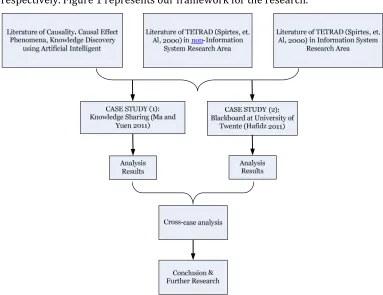
[image:19.595.155.538.363.658.2]respectively. Figure 1 represents our framework for the research.
Application of TETRAD in Information System Theory Development: Case-study based approach
1.4 Thesis Structure
This thesis is structured in the following chapters:
1. Chapter 1 describes the motivation and aim, the research questions, and
research framework.
2. Chapter 2 presents related research on causality that used
TETRAD(Scheines, Spirtes et al. 2010) for causal mining and knowledge
discovery.
3. Chapter 3 describes development and history behind Causal Model, the
explanation of TETRAD (Scheines, Spirtes et al. 2010) software, and
algorithms that are used in this thesis with an example.
4. Chapter 4 describes the research methodology.
5. Chapter 5 presents results and analysis for the two case studies.
6. Finally, Chapter 6 draws conclusions and discussions of TETRAD
(Scheines, Spirtes et al. 2010) application in case studies conducted in
previous chapter.
4
Application of TETRAD in Information System Theory Development: Case-study based approach
Chapter 2 Literature Review
This chapter provides the theoretical foundations of the major concepts that are
relevant for this research. The author discusses the following related work: (1)
Research using TETRAD in the area of causality or causation and (2) Research
using TETRAD especially in theory development in the IS field. The discussions
are shaped in a concept matrix that is available in Section 2.2. Instead of giving an
in-depth analysis, this chapter just aims to allow the reader to become familiar
with the concepts.
2.1 Literature Review Schema
The review of relevant literature is an important feature of any academic project.
Literature Review is one of the mandatory steps to initiate the research, which
provides the foundation for the research and which is critical to strengthening
Information System as a field of study (Webster and Watson, 2002). For this
thesis, two scientific journal search engines are used, as well as manual book
resources; the search engines used are Scopus and Google Scholar. We searched
for the relevant previous studies and adopted the methods proposed by Wesbter
and Watson (2002), as follows:
1. Keyword Research
For the first method, the author uses the most important or influential
papers on the topic, and the most influential contributions are possibly to be
issued in the leading journals (Webster and Watson 2002). Therefore, it is
necessary to start reviewing the article based on its quality rather than
quantity. To achieve this goal, we use the work from Peffers and Ya (2003)
Application of TETRAD in Information System Theory Development: Case-study based approach
list in Information System journals. The journals that were reviewed by
(Peffers and Ya 2003) are listed in Appendix A.
In addition, we used the following keywords related to our topic:
“information system”, “theory development”, “causality”, “causation”, “causal
discovery” and “TETRAD”.
For Knowledge Sharing case studies, we used the following additional
keywords: “knowledge sharing”, “knowledge management”, “individual
intention” and “behavior”. Furthermore, the author put two limitations to the
research; first the study must consider knowledge sharing using a
knowledge management system and focus on the individual intention and
behavior towards knowledge sharing or knowledge management systems.
Second, related to the requirement of the input for TETRAD, the original
theory or framework must provide the correlation matrix at their item level5.
2. Backward Research
According to Webster and Watson (2002), it is advisable to review citations
from the identified articles that have deeper knowledge and understanding
about the topic. The author determined the most important prior work by
reviewing the references listed in the articles used.
3. Forward Research
Using the citation index of Scopus, we identified other relevant works that
cite the most influential papers for our thesis topic. While performing these
5 There are two conditions expressed by Im and Wang (2007) about the data used in their work;
Application of TETRAD in Information System Theory Development: Case-study based approach
steps, evaluating the papers based on the abstracts and its keywords listed,
only included studies with regard to:
• TETRAD used in theory development in the Information Systems research area,
• TETRAD used in Causality, causation or causal discovery from data.
2.2 Concept Matrix
In this section, we present three tables. We present the concept matrix about the
scholarly article found in the field of causality and causation that explicitly relate6
and usethe idea of causal modelling with TETRAD program (Glymour, Scheines
et al. 1988):
• Table 1 shows the global findings of the different studies on the use of TETRAD that is related to causation and causality. We divide the findings
in two categories: first, the example of articles that are related to
Information Systems and its theory development; and second, the
example of articles which used TETRAD in terms of finding causal
relationships from data, in other disciplines, e.g : economy and tourism.
• Table 2 presents the details of studies that use TETRAD related to Information Systems and its theory development (from the first
category).
• Table 3 presents the details of studies that use TETRAD in non Information Systems area.
6
Application of TETRAD in Information System Theory Development: Case-study based approach Table 1. TETRAD used in causation
A R E A Author Software Research Method #Cited
Journal Name Field Keywords
Type Function GS Scopus
In fo rm a ti o n S y st e m r e la te d f ie ld (Lee, Barua et al. 1997)
- - Literature Study 27 72 MIS Quarterly:
Management Information systems (MISQ) Research & Dev. Management MIS research methodology, causality, exogeneity, endogeneity, manipulative account, LISREL, TETRAD (Im and Wang 2007) TETRAD III MIM Build Purify Empirical research Data:
Correlation data at item level from 2 published paper, they are
(Gefen, Karahanna et al. 2003) and (Pavlou and Gefen 2004)
- (*)7 Communications of
the Association for Information Systems (CAIS) Theory Dev., Information Systems TETRAD, Theory Development
(Liu 2009) TETRAD III
MIM Build Purify
Experimental research
Respondent: 90 medical school students from an online medical system
1 1 International Journal of
Intelligent Systems
Electronic Commerce
E-commerce applications, Ease of use, Technology acceptance model, User acceptance
7
Application of TETRAD in Information System Theory Development: Case-study based approach C a u sa li ty ( g e n e ra l) u si n g T E T A R D (Haughton, Kamis et al. 2006) TETRAD III, IV PC Algorithm Empirical research Data:
from Vietnam Living Standard Surveys (VLSS); (n=4272 households) interviewed both in 1992 and 1998
4 2 American
Statistician Statistical techniques, Directed Acyclic Graphs (DAG) Bayesian networks, Causality, Data Mining, Indirect effects
(Bessler and Loper 2001) TETRAD II PC Algorithm Empirical Research Data: Cross section
observational data from total 79 countries [The IDRB – World Bank]8
16 8 Manchester School, with 2001
theme: Growth and Business Cycles in Theory and Practice9 Economic Development Directed Acyclic Graph, Growth Domestic Product (GDP) (Mazanec 2007)
TETRAD Search Build
Empirical Research
Data:
Austrian National Guest Survey, data sample of foreign visitors to Austria during the winter season in 1997-1998, excluding city travelers (n=2900)
2 - Asia Pacific Journal of Tourism Research Tourism, Behaviour Research Tourist behaviour research, causal inference
8 Bessler & Loper used data from 79 countries, world taken from World Tables - The International bank for Reconstruction and Development (IDRB) World Bank, Philadelphia
Application of TETRAD in Information System Theory Development: Case-study based approach Table 2. TETRAD used in causation related to Information Systems discipline
Article Objective Operationalization Measurement
instruments & model
Constructs Findings from TETRAD & Temporal
structure
Lee, Barua et.al (1997)
Propose the use of TETRAD in the
Management of IS field:
- as a non-parametric tool at exploratory phase for its ability to accomodate a wide variety of causal models (p.109);
- as an alternative tool to parametric approaches such as exploratory analysis (p.111)
TETRADs’ two Key elements in empirical approach:
1. Developing richer models allows researcher to add new variables, and not suffering too much beliefs assuming that the variables to be exogenous or endogenous.
2. Using the algorithm to operationally and analyze such model allows researcher to represent a model and perform exploratory analysis without setting restrictive
Not applicable Not applicable Findings
Advantages about TETRAD:
•Non-parametric analysisno statistical parameters estimation for TETRADs’ hypothesized causal model.
•Flexible representationTETRAD permits the linkage between latent and measured variables in any direction.
•Linking two research phasesas a tool helping researcher to represent the theory or framework based on observational data in the preliminary research phase (or exploratory).
Temporal structure
Not reported.
Im & Wang (2007)
Study two papers published earlier in IS field, in an e-commerce context using TETRAD. They are:
TETRAD III
•Purify: to establish measurement models
Measurement Models:
- Used Purify: to generate pure
(Gefen, Karahanna et al. 2003) list constructs:
1. CB: Calculative Based 2. IB: Institution Based
Findings from TETRAD
(Gefen, Karahanna et al. 2003):
• 15 paths being compared between original model from Gefen et al. (2003)
9 The Manchester School is a journal publishing distinguished papers covering issues in the economics field. Every year, they have different issues with special theme; in 2001
Application of TETRAD in Information System Theory Development: Case-study based approach 1. (Gefen, Karahanna et
al. 2003): Trust and TAM in online shopping: An integrated model proposed to include Trust in order to extending TAM, which is in the context, belongs to exploratory phase.
2. (Pavlou and Gefen 2004): Building effective online marketplaces with institution-based trust proposed the idea that perceived effectiveness of three IT-enabled
institutional mechanisms (feedback
mechanism, 3rd party
escrow services and credit card
guarantees) will generate buyer trust in online auction
•MIMBuild or Build: to discover structural models
sub-models from the original paper. - Varied the
significance level: 0.05, 0.10, 0.20, 0.30 - Result from
purify then used in LISREL: for confirmatory factor analyses based on the sub-models
Measurement instruments:
(Gefen,
Karahanna et al. 2003) 8 unmeasured latent variables and 34 measured latent variables (at item level) Structural Assurances 3. SN: Institution Based
Situational Normality 4. KB: Knowledge Based
Familiarity 5.Trust
6. EOU: Perceived Ease of Use
7. PU: Perceived Usefulness 8. IU: Intended Use
and TETRAD model from Im & Wang (2007) 6 paths are the same and 9 paths differ from the original model10 • IB change from exogenous variable
into endogenous variable, which later connected with 5 other subsequent variables, including: Trust, IU, PU, EOU, and KB
• KB change the direct impact from antecedent of EOU and Trust into antecedent of EOU and IB
• EOU change from direct cause
(antecedent) of PU into direct effect of PU
• Trust change from direct cause of PU into not related at all with PU
• Trust change from direct cause of IU into bi-directional relationship between both11
Temporal structure
Not reported.
(Pavlou and Gefen 2004) list constructs:
1. FB: Perceived effectiveness of feedback mechanism 2. ES: Perceived
effectiveness of escrow
Findings from TETRAD
(Pavlou and Gefen 2004):
- 16 paths being compared between original model from Pavlou et al. (2004) and TETRAD model from Im & Wang
10 The different paths are either: 1) a new path discovered or 2) a different direction from the original theory.
11 The bi-directional relationship shows that there may be other latent common causes between Trust and SN (Situational Normality) and Trust and IU (Intended Use). Further
Application of TETRAD in Information System Theory Development: Case-study based approach
sellers. (Pavlou and
Gefen 2004) 7 unmeasured latent variables and 24 measured latent variables (at item level) services 3. CR: Perceived
effectiveness of credit card guarantees 4. HT: Trust in
Intermediary 5. ST: Trust in
Community of Sellers 6. RK: Perceived risk
from the Community of sellers
7. TR: Transaction Intentions
(2007) 3 paths are the same and 13 paths differ from the original model - The revised model from Pavlou et al.
(2004) found that RK or “perceived risk from the community of sellers” is not associated (insignificant) with the four institutional structures (three IT enabled institutional mechanism and Trust in intermediary); which is the same result from TETRAD’s model on the same data.12
- Two variables (CR and HT) among the four institutional structures mechanism change from exogenous into
endogeneous variables.
- HT or “Trust in intermediary” become as important as ST or “Trust in the
Community of Sellers” with the respect of the number of connections related to other contructs.
- The insignificant path resulted from Pavlou et al. 2004 in the relation from CR and ST also detected with TETRAD by Im and Wang (2007).
Temporal structure
Not reported.
12 As cited in Im & Wang (2007), the model had been revised for parsimony (Pavlou and Gefen (2004) p.49) and Pavlou et al. did not give any details to support the revised
Application of TETRAD in Information System Theory Development: Case-study based approach Liu (2009) - To systematically infer
which correlation in previous TAM theory is genuine and which is spurious.
- Attempt to find genuine causal structure that best explains the data (p.1231)
TETRAD III; which use the function:
• Purify: for finding unidimensioneal (or pure) measurement model; to obtain a pure measurement model, in which each scale item measures the construct that it intents to measure (p.1236)
• MIM Build: to discover causal models among latent variables. Each of which is measured by multiple indicators (p.1238)
Measurement Models:
- Used Purify: to generate pure sub-models from the original paper. - Varied the
significance level: 0.05, 0.10, 0.20, 0.30 - Result from
Purify then used in MIMBuild: for confirmatory factor analyses based on the sub-models Measurement instruments: 4 unmeasured latent variables and 21 measured latent variables (at item level)
The 21 scale items measured using a 7-point
1. PSP: Perceived System Performance
2. PEU:Perceived Ease of Use
3. PU: Perceived Usefulness 4. BI: Behavioral
Intention
Findings from TETRAD
• TAM model from previous study was validated when tested in isolation but failed within the larger nomological network.
• There are three relationships found by TETRAD and rejected 2 of 3
hypotheses made by TAM based on vanishing tetrads.
• Found two spurious (not genuine/ insignificant) associations in the model; they are 1) between PEU and BI or and 2) between PEU and PU – which the regression analysis failed to detect.
• Confirming the significance of PSP in predicting PEU and BI.
Temporal structure
Application of TETRAD in Information System Theory Development: Case-study based approach likert scale ranging from “strongly disagree” to “strongly agree”
Table 3. TETRAD used in causation related to non - Information Systems discipline
Article Objective Operationalization Measurement
instruments & model
Constructs Findings from TETRAD
& Temporal Structure Bessler & Loper (2001) Economic development: evidence from directed acyclic graphs
Apply DAG (Directed Acyclic Graph) for construction and interpretation of models GDP growth from countries, based on cross-section data over the last 30 years (1971-1990) (p.462).
TETRAD II, which used the function:
PC Algorithm
Measurement Models:
- PC Algorithm to study the causal inference based on categorical data Measurement instruments: 4 unmeasured latent variables and 21 measured latent variables (at item level)
1. GRGDP: growth in GDP
2. IGDP: Initial GDP 3. GS: Government
Savings
4. IQI: Institutional Quality Index 5. NREX: National
Resource Exports 6. TCD: Tropical
Climate Dummy 7. OPEN: Openness
to Trade
8. LIFE: Natural Life Expectancy 9. APGR:
Agricultural Product Growth
Findings from TETRAD
1. The country consist of 79 dataset may not react the same as 59 economically less developed dataset in GDP Growth.
2. Agricultural Productivity (APGR) does not have any relationships with any other variables in 79 country dataset (all data combined), while in 59 country dataset (alpha = 0.20), the variable Openness to Trade is a mediate variable between Agricultural Productivity (APGR) and Growth in GDP (GRGDP) (p.470).
3. In 59 country dataset, TETRAD shows that Agriculture Productivity (AGPR) is not a cause of Growth in GDP (GRGDP), which was “consistent with a current thought which running through the agricultural economies literature” (p.474).
Temporal structure
Application of TETRAD in Information System Theory Development: Case-study based approach Mazanec (2007) New Frontiers in Tourist Behavior Research: Steps toward Causal Inference from Non-experimental Data
Apply Inferred Causation Theory with TETRAD software; to search causal inferences from non-experimental data, especially to find the causal relationships in Tourist Bahavior
Research using data from Austrian National Guest Survey, with the main object of study: foreign visitors to Austria during the winter season in 1997-1998.
TETRAD, which used the function:
Search and Build
Measurement Models:
- Search: Used Search algorithm to help detect
relationships at measurement model, in order to improve the goodness of fit.13
- Build: Used Build algorithm to discover causal – effect pattern
Measurement instruments:
5 latent variables and 9 measured variables (based on Figure 1, Mazanec (2007), page 229)
1. Compositional Perceived Quality 2. Destination
Loyalty 3. Satisfaction 4. Value for Money 5. Intention to
Repeat Visit
Findings:
1. Word of Mouth (WoM), a measured variable in Satisfaction, has a link with Intention to Repeat Visit14
Temporal structure
Not reported
13 According to Mazanec (2007), the search procedure looks for vanishing tetrads to make inferences on initial and new potential relationships in the graph. The explanation
about vanishing tetrads can be seen in Spirtes et al (2000).
14
Application of TETRAD in Information System Theory Development: Case-study based approach
2.3 TETRAD: An Aid for Theory Development
In the previous section (Chapter 2.2), we provide studies which explained and
demonstrated the use of TETRAD in theory development, whether the studies
belong to Information System field or other disciplines.
Table 1 describes the global explanation about the use of TETRAD to search for
causation or search for causal effect between variables in the theory or certain
model. From six studies explained, three studies are related to Information
System area and three remaining studies are from other background disciplines,
for example Statistics (Haughton, Kamis et al. 2006), Economic Development
(Bessler and Loper 2001) and Tourism (Mazanec 2007). Five from six studies
perform an empirical research which each alone has various background data.
For example data in a university setting (medical student) – data used by Liu
(2009); cross section data about countries from the World Bank – data used by
Bessler and Loper (2001); until data about foreign visitor to Austria for holiday
purpose from Austrian National Guest Survey – data used by Mazanec (2007).
The results imply that TETRAD is a global heuristic search algorithm and capable
for helping researchers find causal effect relationships and knowledge discovery
based on data, with disregards to its background knowledge. From the findings in
Table 1, three out of five literature papers use TETRAD III (Haughton, Kamis et al.
2006; Im and Wang 2007; Liu 2009), and one uses TETRAD II (Bessler and Loper
2001), the rest is a Literature Review research which did not impose on a certain
TETRAD version (Lee, Barua et al. 1997), while one study did not state clearly
which TETRAD version the researcher used (Mazanec 2007). From the
Information Systems area, two out of three studies use the Purify and MIMBuild
algorithm from TETRAD III, whereas in non-Information Systems research area,
the papers use PC Algorithm from TETRAD III (Bessler and Loper 2001;
Application of TETRAD in Information System Theory Development: Case-study based approach
Table 2 provide the detail research from three studies related to Information
Systems field. According to Lee et al. (1997), the linkage research phase between
exploratory and confirmatory phase is important to researchers, as in very early
stages of the research, the phenomenon of interest is not well recognized. The
need to build richer models in the early stage of a scientific study could help
researchers to find alternatives of plausible and richer models, which best suit
the data. It is a matter of fact that TETRAD is not yet popular in Information
Systems researchers, especially to be used in theory development and theory
building (Lee, Barua et al. 1997).
According to Im and Wang, Information Systems as a social research uses two
types of research methods to develop their theoretical models; they are
exploratory research and confirmatory research. Raykov and Marcoulides (2006)
explain that structural equation modelling (SEM) is used as a common model to
represent knowledge about phenomena that are being studied in particular
substantive domains. Structural Equation Modelling (SEM) allows both
confirmatory and exploratory research to be used in theory development and
theory building. After a theory has been developed about some phenomena, the
theory can be tested against empirical data. Henceforth, this process is often
called the confirmatory level of SEM applications (Raykov and Marcoulides 2006).
Based on Raykov (2006), when SEM models used for theory development, the
process often involves repeated applications of SEM on the same data set, in
order to explore potential relationships between latent variables of interest.
Contrary with confirmatory level of SEM applications, in theory development
assumes that there is no prior theory exists in fundamental form of the
phenomena interest. Because the method contributes both to clarification and
development theories, it is commonly referred as exploratory level of SEM
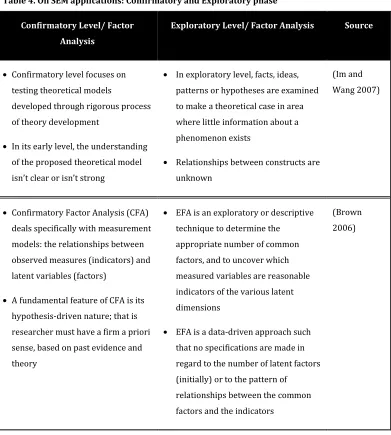
applications. Some definitions for exploratory and confirmatory analyses are
Application of TETRAD in Information System Theory Development: Case-study based approach
Table 4. On SEM applications: Confirmatory and Exploratory phase
Confirmatory Level/ Factor
Analysis
Exploratory Level/ Factor Analysis Source
• Confirmatory level focuses on testing theoretical models
developed through rigorous process
of theory development
• In its early level, the understanding of the proposed theoretical model
isn’t clear or isn’t strong
• In exploratory level, facts, ideas, patterns or hypotheses are examined
to make a theoretical case in area
where little information about a
phenomenon exists
• Relationships between constructs are unknown
(Im and
Wang 2007)
• Confirmatory Factor Analysis (CFA) deals specifically with measurement
models: the relationships between
observed measures (indicators) and
latent variables (factors)
• A fundamental feature of CFA is its hypothesis-driven nature; that is
researcher must have a firm a priori
sense, based on past evidence and
theory
• EFA is an exploratory or descriptive technique to determine the
appropriate number of common
factors, and to uncover which
measured variables are reasonable
indicators of the various latent
dimensions
• EFA is a data-driven approach such that no specifications are made in
regard to the number of latent factors
(initially) or to the pattern of
relationships between the common
factors and the indicators
(Brown
2006)
Im and Wang (2007) argued that it is important for researcher to conduct
iterative practices and processes in the stage of theory development, between
exploratory and confirmatory level, in order to achieve their final theoretical
model. As cited in Im and Wang (2007), Technology Acceptance Model or TAM
(Davis, Bagozzi et al. 1989) is one of the example of the iterative development in
IS field. TAM evolved from a theory called Theory of Reasoned Action (Fishbein
and Ajzen 1975). This theory has been changed in its development process. In the
revised version of TAM called TAM2, Davis et al. (Venkatesh and Davis 2000) had
Application of TETRAD in Information System Theory Development: Case-study based approach
individuals made decisions about technology acceptance in their everyday-work
manner. It is shown that even a strong theory such as TAM going through on a
trial and error test within its development process (Im and Wang 2007).
Im and Wang (2007) perform important findings in their studies whether
TETRAD discover different exogenous and endogenous variables from TAM15
(Gefen, Karahanna et al. 2003) and TETRAD successfully detected the important
theoretical relationship from Pavlou and Gefen’s (2004) perceived effectiveness
of IT and three institutional enabled mechanism16. Im and Wang (2007) notice an
important finding, that they found the insignificant link between the constructs in
the model without having any prior background knowledge and information. As
Im and Wang (2007) did, Liu (2009) stated that TAM was validated when tested
in isolation but failed in a different nomological network.
Table 3 provides the research details and important findings about the use of
TETRAD in non Information Systems research areas. Bessler and Loper (2001)
study a cross-section of 79 world economies and a subset of 59 less developed
economies to determine which variables affect growth gross of domestic product
(Growth in GDP). An important finding from Bessler and Loper’s (2001) paper, is
that that in 59 economically less developed countries17, the variable Agricultural
Productivity (AGPR) is shown as did not a direct cause to variable Growth in GDP
(GRGDP). Bessler and Loper (2001) explained that their findings from TETRAD
confirm the current thought on agricultural economies literature. The second
paper explained in Table 3 is from Mazanec (2007), who studied about the
application of TETRAD in tourism and leisure study. This study searches the
factors that influence tourists to repeat the visitation of holiday destinations.
Mazanec (2007) detected one spurious link from measurement variables into
latent variable (p.231), that is one link from measurement item
15
The graphical illustration from TETRAD findings on TAM from Im and Wang (2007) research is available at Appendix A2.
16 The graphical illustration from TETRAD findings on IT and three institutional-enabled
mechanism from Im and Wang (2007) research is available at Appendix A3
17
Application of TETRAD in Information System Theory Development: Case-study based approach
mouth”18 (WoM) with another latent variable “intention to repeat visit”. Mazanec
(2007) distinguished that this finding is an exemplary contribution to
researchers and could help them reflects on the model they’ve build as well as
contribute to structure the theory development.
18 According to Sprtes et. al (2000), there are four types of impurely measured variables. In the
case study of Mazanec (2007), the measured variables “word of mouth” is regarded as a
latent-measured impure. The illustration of “word of mouth” as a latent latent-measured impure is available
Application of TETRAD in Information System Theory Development: Case-study based approach
Chapter 3 TETRAD Software
This chapter contains concepts behind TETRAD and the explanation of two
algorithms mainly used in this research: PURIFY and MIMBuild
3.1 Causal Models
As explained by Pearl (2000), there are two fundamental questions related to
causality:
• First, “What empirical evidence is required for legitimate inference of cause-effect relationships?”
• Second, “Given that we are willing to accept causal information about phenomenon, what inference can we draw from such information and
how?”
It is claimed by Pearl (2000) that these two questions, can only get poor answers
since (i) there are no clear semantics for causal claims and (ii) there are no
effective mathematical tools for illustrating causal questions or extracting causal
answers.
3.1.1 Interpreting Causal Forms
As stated by Christensen et al. (2010), the basic foundation for causal-effect
forms as well as quantitative research is a variable. A variable is defined as a
characteristic or phenomenon that can vary across or within organisms,
situations, or environments; that leads to different values or categories. Of many
quantitative research and scientific projects, the causal model is a common goal
for the kind of research (Christensen, Johnson et al. 2010). According to
Christensen, Johnson et al. (2010), causation is seen more complicated; it is often
that people realize implicitly the manipulation behind the causality. In this
Application of TETRAD in Information System Theory Development: Case-study based approach
causality, or we could say, equate the causation with manipulation. The
manipulation goes here; if we manipulate or do some act, we will expect to have
something to happen. If something truly happens, then the act of manipulation is
what we called cause and what happens is called effect. Then, the following
questions arise: What if we have a set of variables observed in a particular range
of time? Can we also have the causal-effect model from raw data without
manipulation being made? Should all forms of cause-effect models be
manipulated first, so we could have the cause-effect model derived from our
(raw) data?
3.1.2 A Temporal Relationships
For example, parents perform action of giving a reward or money when their
child gets the good grade at school. If the child has good grades, he/she receives a
reward, which could be in the form of money. It is being assumed that when the
money is being given, it causes the child to get good grades. In fact it does not
(truly) happen, except in a few cases. In this case, a temporal relationship is
sometimes established in a causal model. The temporal relationship of a reward
and the good grades provides us the intuitive meaning of a cause effect
relationship. In this context, something that is presumably causes changes in
another variable is called an independent variable (i.e: reward or money), and
one is presumably influenced, effected by one or more variables is a dependent
variable (i.e: good grades). Normally, temporal precedence is being assumed to
be important regarding causation, it is certainly the most important initial – that
people will distinguish causality from other associations (Pearl 2000). As cited in
Pearl (2000) most theories of causation (Reichenbach 1956; Good 1961; Suppes
1970; Shoham 1988) arouse an explicit requirement that a cause will precede its
effect in time.
3.1.3 Direct and Indirect Graph Representation
Readers also understood causation as a relation between particular events:
something happens and causes something else to happen; and a cause can be
Application of TETRAD in Information System Theory Development: Case-study based approach
indirect (Spirtes, Glymour et al. 2000). Causal relations are commonly
represented as variables and a directed edge goes from vertex X to vertex Y
(XY) (Glymour and Scheines 1986). From that relationship, X can be regard as
independent given the state of Y, or Y is dependent on X. In other words Y is the
dependent variables (or endogenous variable) and X is the independent variables
(or exogenous variable). According to Spirtes et al. (2000), p.42, there are three
types of causation from two events19, i.e. X and Y:
(i) Transitive; is X is a cause of Y and Y is a cause of Z, the X is also the cause of Z,
(ii)Irreflexive; an event X cannot cause itself, and
(iii)Antysymmetric; if X is a cause of Y then Y is not a cause of X.
Furthermore, Spirtes et al. (2000) also describe the explanation about a direct
cause. For example, V is a set of events including C and A. C is called a direct cause
of A relative to V, just in case C is a member of some set C included in V\{A}, such that:
(i) The events in C are causes of A,
(ii)The events in C, were they to occur, would cause A no matter whether the
events in V\({A}⋃C) were or were not to occur,
(iii) No proper subset of C satisfies (i) and (ii).
Define a graph G is a set vertices V and edges E. We can say a graph is an
undirected graph if it contains only undirected edges, whereas a graph is a
directed graph if it contains only directed edges. Figure 2 presents the illustration
for directed and undirected graphs.
19 Spirtes et al (2000) p.43, regard events as variables, such that some events of kind X (X
Application of TETRAD in Information System Theory Development: Case-study based approach
[image:41.595.182.470.83.214.2](a) (b)
Figure 2. Directed Graph and Undirected Graph
A path that contains no vertex more than once is acyclic; otherwise is cyclic. From
Figure 2 the path shown is acyclic, since there is no cyclic path as in XY; and
X Z. If the direction in Z to X is reverse as in ZX; then we considered the
graph is a cyclic graph since it has the cyclic path as: XYZX.
According to Spirtes et al. (2000), p.30, A directed acyclic graph is a directed
graph that contains no directed acyclic paths. A causal structure for a population
is an ordered pair <V,E> where V is a set of variables and E is a set of ordered pairs of V, where <X,Y> is in E and only X is a direct cause of Y relative to V. Firthermore, Spirtes et al. (2000) defined a causal graph as a directed acyclic
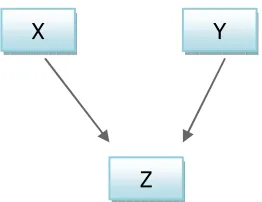
graph that represents a causal structure. Figure 3 is represents a causal graph
from variable X, Y and Z.
Figure 3. A causal graph
Suppose that, we call a graph with P, P is a causal graph and there is a vertex X in
P and a directed path from X to Z (XY) that does not contain Z, and a directed
X Y
Z
X Y
Z
X Y
[image:41.595.255.386.511.612.2]Application of TETRAD in Information System Theory Development: Case-study based approach
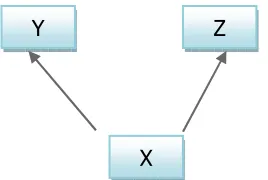
path from X to Z (XZ) that does not contain Y, we can say that X is a common
[image:42.595.161.295.132.222.2]cause from Y and Z. Figure 4 illustrate the definition of X as a common cause.
Figure 4. X as a common cause of Y and Z
3.2 TETRAD Software
3.2.1 TETRAD Development
TETRAD is a computer program developed by philosophy researchers from the
Department of Philosophy, Carnegie Mellon University in the 1980s. Clark
Glymour, Richard Scheines and Peter Spirtes develop the program and its search
algorithm over several years with the support from NASA20 and the Office of
Naval Research. TETRAD is one of the software packages that estimates directed
acyclic graphs (DAG) from data (Haughton, Kamis et al. 2006). The software is
downloadable and accessible for everyone who wants to use it. The users also
reserve the right to alter the program at any time without notification (Glymour
2004). Until now, the software has been developed from TETRAD II, TETRAD III
until the latest version of TETRAD IV21. We would like to refer the reader to read
the website of the project for d