MODE CONVERSION OF PLASMA WAVES
Anna Maria Woods
A Thesis Submitted for the Degree of PhD
at the
University of St Andrews
1987
Full metadata for this item is available in
St Andrews Research Repository
at:
http://research-repository.st-andrews.ac.uk/
Please use this identifier to cite or link to this item:
http://hdl.handle.net/10023/13965
e
M O D E
C O N V E R S I O N
O F
P L A S M A
W A V E S
ANNA MARIA WOODS
ProQuest Number: 10171005
All rights reserved
INFORMATION TO ALL USERS
The quality of this reproduction is dependent upon the quality of the copy submitted.
In the unlikely event that the author did not send a com plete manuscript
and there are missing pages, these will be noted. Also, if material had to be removed,
a note will indicate the deletion.
uest
ProQuest 10171005
Published by ProQuest LLO (2017). Copyright of the Dissertation is held by the Author.
All rights reserved.
This work is protected against unauthorized copying under Title 17, United States C ode
Microform Edition © ProQuest LLO.
ProQuest LLO.
789 East Eisenhower Parkway
P.Q. Box 1346
MODE CONVERSION OF PLASMA WAVES
A b s t r a c t
L in e a r mode c o n v e rs io n p ro c e s se s a re much s tu d ie d i n plasma p h y s ic s because th e y d e te rm in e th e e f f i c i e n c y o f any r a d io fre q u e n c y h e a tin g scheme. Mode c o u p lin g model e q u a tio n s , e x tr a c te d w it h
v a r y in g degrees o f r i g o u r from th e M a x w e ll- lin e a r is e d k i n e t i c e q u a tio n s , a re u s u a lly f o u r t h o r h ig h e r o r d e r O .D .E 's . These are s o lv e d by c o m p lic a te d methods to o b t a in tr a n s m is s io n , c o n v e r s io n , r e f l e c t i o n and a b s o r p tio n c o e f f i c i e n t s . R e c e n tly , Fuchs e t a l and C a irn s and Lashm ore-D avies (C .L - D .) h a v e p o s t u la te d second o rd e r O .D .E 's to d e s c r ib e p a ir w is e c o u p lin g e v e n ts . The second o rd e r t h e o r ie s have re pro duce d r e s u l t s p r e v i o u s l y o b ta in e d by much more s o p h is t ic a t e d tr e a tm e n ts .
In t h i s t h e s i s , we f i r s t l y examine th e h y b r id resonances i n a c o ld plasma and show t h a t th e y have a mode c o n v e rs io n i n t e r p r e t a t i o n i n th e fram ework o f th e C .L -D . m odel. The Budden t u n n e l l i n g
c o e f f i c i e n t s a re re c o v e re d f o r t h i s case.
N e x t, mode c o n v e rs io n between th e f a s t and slow e le c tr o m a g n e tic waves i n th e lo w e r h y b r id fre q u e n c y range i s c o n s id e re d . T h is
phenomenon d e te rm in e s th e a c c e s s i b i l i t y o f th e lo w e r h y b r id resonance t o th e slo w wave, and i s a ls o o f t h e o r e t i c a l i n t e r e s t because th e mode c o u p lin g d i f f e r s i n c e r t a i n a s p e c ts from cases p r e v io u s ly in v e s t i g a t e d by C .L-D . A second o r d e r a p p ro x im a tio n t o th e
o b ta in e d i n v a r io u s cases.
F i n a l l y , we p r o v id e j u s t i f i c a t i o n f o r th e use o f W eber's e q u a tio n . The e x a c t f o u r t h o r d e r system o f O .D .E 's f o r th e problem i s s e t down, and a l i n e a r t r a n s f o r m a t i o n , w hich i s an e x te n s io n o f t h a t g iv e n by H eading, r e v e a ls th e second o rd e r n a tu r e o f th e c o u p lin g p ro c e s s .
ACKNOWLEDGEMENTS
I w ould l i k e t o th a n k my s u p e r v is o r , Dr A la n C a irn s o f th e A p p lie d M athem atics D e p a rtm e n t, f o r h i s h e lp and encouragement th ro u g h o u t t h i s w ork.
I would a ls o l i k e to th a n k Dr C N Lashm ore-D avies o f Culham L a b o r a to r y f o r m o n ito r in g t h i s p r o j e c t .
I w is h t o th a n k M iss S h ie la W ils o n f o r t y p in g t h i s t h e s is so e x p e r t l y .
CERTIFICATE
POSTGRADUATE CAREER
DECLARATION
CONTENTS
Page
Ch. 1 INTRODUCTION 1
1.1 Radio Frequency H e a tin g i n Tokamak Plasmas 1
1 .2 L in e a r Mode C o n v e rs io n 8
1 .3 F u l l Wave C a lc u la t io n s 12
1 .4 Second Order T h e o rie s 15
1 .5 O u t lin e o f th e T h e s is 20
Ch. 2 THE HYBRID RESONANCES IN A COLD PLASMA 22
2.1 The C .L-D . mode c o n v e r s io n model 22
A p p l i c a t i o n s : 26
2 .2 The upper h y b r id resonance 26
2 .3 The tw o - io n h y b r id resonance 29
Ch. 3 MODE CONVERSION BETWEEN FAST AND SLOW LOWER 35 HYBRID WAVES
3.1 A c c e s s i b i l i t y o f slo w waves t o th e lo w e r h y b r id 35 resonance
3 .2 D is p e r s io n c u rv e s i n th e w -k , p la n e 39
3 .3 C o n s tr u c tio n o f model Weber e q u a tio n 40
3 .4 The r e s u l t f o r a plasma w i t h a l i n e a r d e n s it y p r o f i l e 47 3 .5 I n c l u s i o n o f a m a g n e tic f i e l d g r a d ie n t i n the 49
c a l c u l a t i o n
Ch. 4 DERIVATION OF SECOND ORDER THEORY FROM EXACT FOURTH 56 ORDER EQUATIONS
4.1 The c o ld -p la s m a wave e q u a tio n 56
4 .2 H e a d in g 's tr a n s f o r m a t io n 58
4 .3 A p p l i c a t i o n and e x te n s io n o f H e a d in g 's t r a n s f o r m a t io n 65
4 .4 C o n s e rv a tio n o f e nergy 68
4 .5 P r o p e r t ie s o f th e tr a n s fo rm e d system 72 4 .6 A p pro xim ate e x p re s s io n s f o r th e e le c tr o m a g n e tic f i e l d s 78
Ch. 5 SOME NUMERICAL COMPARISONS 81
5.1 T ra n s m is s io n c o e f f i c i e n t s 81
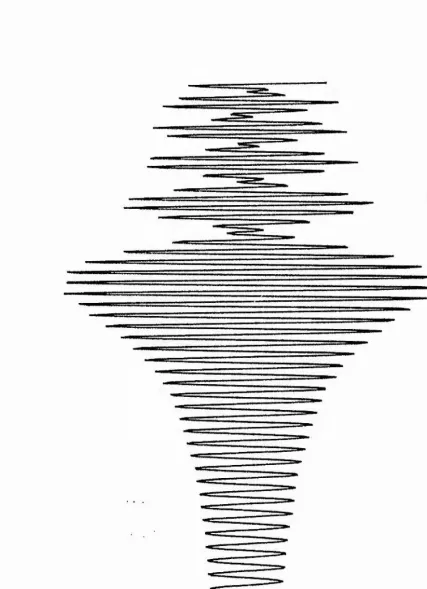
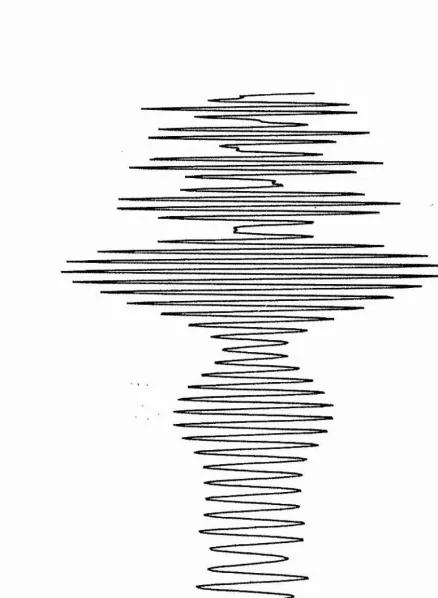
5 .2 E l e c t r i c f i e l d v a r i a t i o n i n th e mode c o u p lin g r e g io n 84
CONCLUSIONS 90
APPENDIX 93
- 1
-CHAPTER 1 INTRODUCTION
1.1 R adio Frequency h e a tin g i n tokamak plasmas
A tokamak i s a t o r o i d a l d e v ic e f o r th e p r o d u c t io n , c o n fin e m e n t and h e a tin g o f plasm a. The m a g n e tic f i e l d r e q u ir e d f o r s t a b le
c o n fin e m e n t has two com ponents; a t o r o i d a l f i e l d , w hich i s p ro v id e d by e x t e r n a l c o i l s , and a much weaker p o l o i d a l f i e l d , w hich i s
g e n e ra te d by a t o r o i d a l e l e c t r i c a l c u r r e n t flo w in g i n th e plasm a. T h is c u r r e n t i s induced by th e a c t io n o f a tr a n s fo r m e r and h e a ts th e plasma by ohmic d i s s i p a t i o n . On th e JET tokamak, 3MA c u r r e n t p u ls e s l a s t i n g s e v e r a l seconds have produced e le c t r o n te m p e ra tu re s o f 1-3 keV ( B ic k e r t o n , 1 9 8 4 ). However, ohmic h e a tin g i s le s s e f f i c i e n t a t h ig h te m p e ra tu re s due to th e T ^ dependence o f the plasma r e s i s t i v i t y and th e f a c t t h a t th e c u r r e n t i n a g iv e n d e v ic e i s l i m i t e d by g ro s s s t a b i l i t y c o n s id e r a t io n s . S ince th e th r e s h o ld te m p e ra tu re above w h ich f u s io n r e a c t io n s can s e l f - h e a t a d e u te riu m - t r i t i u m plasma i s > 10 keV, some form o f a u x i l i a r y h e a tin g i s n e c e s s a ry .
- 2
-low lo s s tr a n s m is s io n l i n e and an e f f i c i e n t antenna w hich c o u p le s th e e le c tr o m a g n e tic energy to th e plasm a. A f u r t h e r advantage o f such schemes i s t h a t th e l o c a t i o n o f th e a b s o r p tio n zone i s e x t e r n a l l y c o n t r o l l a b l e .
The f l e x i b i l i t y o f R .F . h e a t in g l i e s i n th e v a r i e t y o f wave modes w hich can e x i s t i n a h o t , m a gne tised plasm a. Waves w it h phase
v e l o c i t i e s w e ll above p a r t i c l e th e rm a l v e l o c i t i e s are a d e q u a te ly d e s c r ib e d by th e c o ld plasma a p p r o x im a tio n (Boyd and Sanderson, 1969; C a ir n s , 1985) i n w hich th e plasma p re s s u re i s ze ro and l i n e a r i s e d
f l u i d e q u a tio n s are co u p le d t o M a x w e ll's e q u a tio n s v ia th e L o re n tz f o r c e . However, f o r c e r t a i n v a lu e s o f plasma pa ra m e te rs th e r e f r a c t i v e in d e x o f one o f th e two fu n d a m e n ta l e le c tr o m a g n e tic modes becomes i n f i n i t e . In th e v i c i n i t y o f th e s e c o ld plasma re son ance s, th e wave phase v e l o c i t y drops to th e rm a l l e v e l s and s tr o n g i n t e r a c t i o n between wave and p a r t i c l e s can o c c u r . A f u l l e r k i n e t i c d e s c r i p t i o n in v o k in g
th e V la s o v -M a x w e ll e q u a tio n s ( S t i x , 1962; Clemmow and D o u g h e rty , 1969) r e s o lv e s th e r e f r a c t i v e in d e x i n f i n i t i e s i n t o s h o r t w ave len g th
p r o p a g a tin g modes and a ls o r e v e a ls a p l e t h o r a o f new waves w hich p ro p a g a te c lo s e to th e io n and e l e c t r o n c y c l o t r o n fre q u e n c ie s (SÎ. 1 , e) and t h e i r h arm o n ic s . M oreover, th e k i n e t i c th e o r y p r e d i c t s c o l l i s i o n - le s s damping o f waves as a d i r e c t r e s u l t o f t h e i r i n t e r a c t i o n w it h th e p a r t i c l e s . T h is damping i s governed by th e resonance c o n d it io n
Ü) - k „ v „ ^ - nf2^ = 0 ; n = 0 , 1 , 2 , . . . ( 1 . 1 )
3
-s tre a m in g v e l o c i t y and c y c l o t r o n fre q u e n c y r e -s p e c t i v e l y , o f p a r t i c l e s p e c ie s s . In ( 1 . 1 ) , n = 0 c o rre s p o n d s to Landau damping (Chen, 1984) w hich i s im p o r ta n t f o r waves w it h n onzero E„ p ro p a g a tin g o b l i q u e l y to th e m a g n e tic f i e l d . Energy i s t r a n s f e r r e d to th e p a r a l l e l degrees o f freedom by th e E„ o f th e wave. On th e o th e r hand, n / 0 c o rre s p o n d s to c y c l o t r o n damping ( S t i x 1 9 62 ). In t h i s case, th e l e f t o r r i g h t c i r c u l a r l y p o la r is e d e l e c t r i c f i e l d component o f th e wave r e s o n a n tly d r iv e s th e p e r p e n d ic u la r m o tio n o f th e p a r t i c l e s th e re b y in c r e a s in g t h e i r p e r p e n d ic u la r e n e rg y . The phenomena o f Landau and c y c lo t r o n damping u n d e rp in any R .F. h e a tin g scheme s in c e th e y p r o v id e th e mechanisms by w hich en ergy can be absorbed from an i n c i d e n t waves.
The fo u r p r i n c i p l e R .F. h e a tin g schemes a r e , i n o rd e r o f
in c r e a s in g fre q u e n c y , A lfv e n wave h e a tin g , th e io n c y c l o t r o n fre q u e n c y ra n g e , (IC R F ), lo w e r h y b r id resonance h e a t in g (LHRH) and e l e c t r o n
c y c l o t r o n resonance h e a tin g (ECRH). A lf v e n wave h e a tin g , a t fre q u e n c ie s o f a few MHz, in v o lv e s two main mechanisms. The f i r s t i s e x c i t a t i o n o f a l o c a l i s e d A lfv e n wave a t a p o i n t where th e l o c a l A lfv e n v e l o c i t y v^ i s r e l a t e d to th e fre q u e n c y and p a r a l l e l ( t o th e m a g n e tic f i e l d ) wavenumber o f th e i n c i d e n t wave by w = k „ v ^ . The group v e l o c i t y o f th e A lf v e n wave i s a lo n g th e f i e l d so en ergy cannot p ro p a g a te away a c ro s s th e f i e l d l i n e s . The r e s u l t i s t h a t th e wave i s r e s o n a n tly e x c it e d and energy i s fe d i n t o th e plasma by i t s damping. A t somewhat lo w e r fr e q u e n c ie s i t i s p o s s ib le to e x c i t e s o - c a l l e d " g l o b a l modes" w h ich a re eigenmodes o f th e t o r o i d a l system . A re v ie w o f th e th e o ry
has r e c e n t l y been g iv e n by A p p e rt e t a l (1986) and o f e x p e r im e n ta l r e s u l t s by Behn e t a l (1 9 8 4 ).
-4
-c ir-c u m fe r e n -c e o f th e t o r u s . The f a s t m agnetosonic wave, w hich i s used to t r a n s p o r t energy to th e a b s o r p t io n r e g io n , i s evanesce nt a t the plasma edge. C o nse qu en tly th e antenna needs to be a few c e n tim e tr e s
from th e c u t o f f d e n s it y f o r e f f i c i e n t c o u p lin g . In a s in g l e s p e c ie s plasm a, th e f a s t wave i s s t r o n g l y absorbed a t th e h o t plasma second harm onic (co « resonance by io n c y c l o t r o n damping. However, i f two io n s p e c ie s (1 and 2 , w i t h a re p r e s e n t, the n a c o ld plasma resonance a ls o o c c u rs a t th e tw o - io n h y b r id fre q u e n c y g iv e n by w?. = (o)^ + 0)^ ) , where 0 . > w .. > ^ 3. On th e
^ 1 1 Pi ' Pz 2 Pi P2 11
h ig h f i e l d s id e o f t h i s resona nce , th e f a s t wave co n n e cts sm o o th ly o n to th e q u a s i - e l e c t r o s t a t i c io n B e r n s te in wave (Swanson, 197 6). A f r a c t i o n o f th e i n c i d e n t f a s t wave energy i s tra n s fo rm e d to slow waves by mode c o n v e r s io n . T h is p ro c e s s i s in h e r e n t to a l l R .F. schemes and w i l l be d is c u s s e d i n d e t a i l l a t e r . I f w . . i s w e ll11
s e p a ra te d from fHi, th en th e B e r n s t e in waves can heat th e e le c t r o n s by Landau damping; b u t i f th e l i g h t e r s p e c ie s 1 i s p re s e n t i n s m a ll c o n c e n t r a t io n , ~ ^ and th e B e r n s te in waves c o u p le d i r e c t l y to th e m i n o r i t y io n s v i a c y c l o t r o n dam ping. Second harm onic and m i n o r i t y s p e c ie s h e a tin g have a c h ie v e d s i g n i f i c a n t io n te m p e ra tu re s on PLT
(Hosea e t a l , 1982) and TFR (E q u ip e TER, 1 9 82 ). R e c e n tly , th e
p o s s i o i l i t y o f h e a tin g a t th e t h i r d io n c y c l o t r o n harm onic (o) = 3 0 t) o f d e u re riu m has re c e iv e d some t h e o r e t i c a l a t t e n t i o n (Swanson, 1985a). T h is resonance i s s t i l l s t r o n g l y a b s o rb in g and th e plasma c o re i s a c c e s s ib le . A ls o , th e h ig h e r wave fr e q u e n c ie s in v o lv e d make wave g u id e la u n c h in g an a t t r a c t i v e f e a t u r e o f t h i s scheme.
means o f w a veguid es. A n o th e r advantage o f th e scheme i s t h a t e f f i c i e n t , megawatt power sou rc e s are a lr e a d y a v a i l a b l e f o r th ese f r e q u e n c ie s , so , u n l i k e ECRH, l i t t l e e x t r a so u rce develop m ent i s r e q u ir e d . The slo w wave, w h ich in th e c o ld plasma a p p r o x im a tio n has a resonance a t th e lo w e r h y b r id fre q u e n c y w, = lo . / ( 1 + , i s used f o r
^ ^ ' LH p i pe e ’
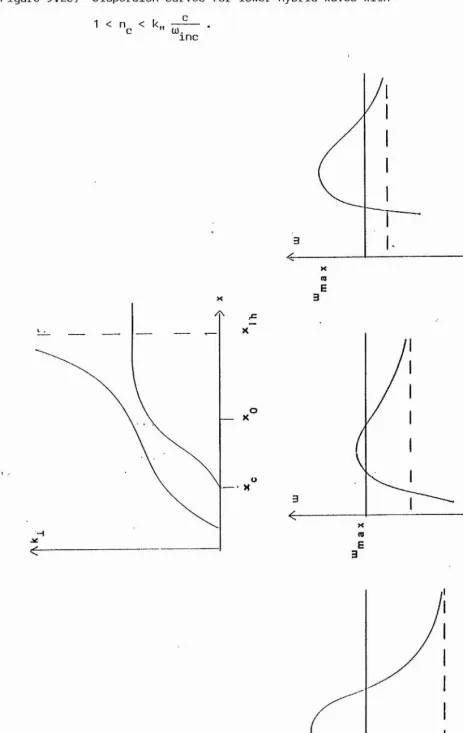
h e a tin g . P ro p a g a tio n to w ard s th e c e n t r e o f th e plasma i s o n ly p o s s ib le f o r waves w it h n „ (= I<„c/(jo) > 1. These waves a re th e n e van esce n t a t th e plasma edge, b u t i n p r a c t i c e th e w id th o f th e
e van esce n t la y e r « c /w so t h a t c o u p lin g i s e f f i c i e n t . In f a c t , th e r e w i l l be a second re g io n o f evanescence between th e plasma edge and th e resonance u n le s s th e waves a re lau n ch e d w it h n,? > 1 + (o)^ / O f ) " pe e r e s ’, where re s i n d i c a t e s q u a n t i t i e s t o be e v a lu a te d a t th e resonance.
A c c e s s i b i l i t y o f slo w waves to th e LHR l a y e r i s d is c u s s e d i n d e t a i l i n C h a p te r 3. A " g r i l l " a n te n n a , w h ich c o n s is t s o f an a r r a y o f w aveguides w it h a d e f i n i t e phase r e l a t i o n between a d ja c e n t e le m e n ts , e x c it e s th e r e q u ir e d n„ s p e c tru m . The c o ld plasma slow wave i s mode c o n v e rte d i n th e v i c i n i t y o f th e LHR la y e r to an io n B e r n s te in wave ( S t i x , 1 9 6 5 ), w hich i s th en s t r o n g l y a bsorbed as i t c ro s s e s h ig h io n c y c l o t r o n h a rm o n ic s . A l t e r n a t i v e l y , n„ can be chosen so t h a t th e slo w wave Landau damps on th e e le c t r o n s b e fo r e th e mode c o n v e rs io n la y e r i s reached ( B r a m b illa , 1 9 7 8 ). LHRH has a c h ie v e d s i g n i f i c a n t te m p e ra tu re s on, f o r exam ple, PLT (S te v e n s e t a l , 1982) and ALCATOR C ( P o rk o la b e t a l , 19 84).
ECRH (M anheim er, 1979; B o r n a t i c i , 1983) i s th e s im p le s t o f th e R .F. h e a t in g methods and w i l l use waves in th e fre q u e n c y range
- 6
-developm ent o f s u i t a b l e h ig h -p o w e r m icrow ave source s ( g y r o t r o n s ) . However, g y r o tr o n s in th e lo w e r h a l f o f th e fre q u e n c y range are now becoming a v a i l a b l e ( J o r y , 1 9 8 4 ). In c o n t r a s t to ICRH and LHRH th e r e i s no evanesce nt re g io n between th e vacuum and th e a b s o r p tio n zone. As a r e s u l t , power can be fe d i n by a s m a ll a p e r tu r e waveguide w hich i s r e t r a c t e d from th e plasm a. A t th ese h ig h fr e q u e n c ie s , o n ly
e le c t r o n s a re heated d i r e c t l y . The e le c t r o n s w i l l th en h e a t th e io n s by c o l l i s i o n s . Both o f th e c o ld plasma waves p e n e tr a te to re a s o n a b le plasma d e n s i t i e s and so can be used f o r h e a t in g , f o r p ro p a g a tio n
p e r p e n d ic u la r to th e e q u i l i b r i u m m a g n e tic f i e l d (B p ), th e e x t r a o r d in a r y (X) mode i s e l l i p t i c a l l y p o la r is e d w i t h E^Bp and th e o r d in a r y (0 )
mode i s l i n e a r l y p o la r is e d w it h E „B p . D e n s ity l i m i t a t i o n s on
p r o p a g a tio n , and t h e r e f o r e h e a tin g , a re imposed by th e e x is te n c e o f c u t o f f s a t 0)^ = (jO^ f o r th e 0 mode, end pe pe = a)(o) ± e) f o r th e X mode, The X mode has a c o ld plasma resonance a t th e upper h y b r id fre q u e n c y ^UH ~ ( w f g + ^ ^ ) ^ , whereas th e 0 mode, b e in g ind e p e n d e n t o f Bp, does n o t possess such a re sona nce . However, b o th waves a re found t o have h o t plasma resonances a t O) = n ^ ^ , (n = 1 , 2 , . . . ) . As u s u a l, these resonances have a mode c o n v e rs io n i n t e r p r e t a t i o n ( C a ir n s and Lashmore- D a v ie s , 1982, 1 983). In th e v i c i n i t y o f th e upper h y b r id o r second harm on ic resonance th e X mode i s c o n v e rte d t o a B e r n s te in wave w hich w i l l be c y c l o t r o n damped f o r n onzero k „ , w h ile th e fu ndam en tal
- 7
-a bs o p r tio n o f e le c t r o n c y c l o t r o n waves may be p r o fo u n d ly a f f e c t e d , even i n low te m p e ra tu re plasm as, by th e v e lo c ity - d e p e n d e n t
r e l a t i v i s t i c c o r r e c t i o n t o th e e l e c t r o n mass ( S h k a r o fs k y , 1966 a ,b ; F id o n e e t a l , 1978, 1 9 82). T h is makes th e resonance c o n d i t i o n ( 1 . 1 ) v e lo c ity - d e p e n d e n t even f o r e x a c t ly p e r p e n d ic u la r p r o p a g a tio n ,
r e s u l t i n g i n wave damping where none e x is t e d b e f o r e . The main s c e n a r io s f o r h e a tin g use th e X mode a t o) « 2T^^ o r th e 0 mode a t Ü) « b o th waves b e in g laun ch e d from th e o u ts id e o f th e t o r u s . L ik e ICRH, ECRH has th e c o n s id e r a b le advantage t h a t th e a b s o r p tio n r e g io n i s c o n t r o l l e d by m a tch in g th e wave fre q u e n c y to th e g y r o - fre q u e n c y . The e x p e rim e n ta l programme on T-10 ( P a r a i l and A lik a e v , 1984) uses a bank o f 4 -6 g y r o tr o n s a t 84 GHz w it h a t o t a l power o u tp u t o f up to 1 MW. X mode (w ~ 2 ^ ^ ) and 0 mode (w « f2^) h e a tin g have r a is e d e le c t r o n te m p e ra tu re s by 0 .5 - 2 keV.
R .F. waves have one f u r t h e r , v e ry i n t e r e s t i n g a p p l i c a t i o n : th e y can g e n e ra te c o n tin u o u s t o r o i d a l e l e c t r i c c u r r e n t s w hich w i l l s u s t a in th e p o l o i d a l m a g n e tic f i e l d r e q u ir e d f o r tokamak s t a b i l i t y . T h is o f f e r s th e p o s s i b i l i t y o f s t e a d y - s t a t e tokamak o p e r a t io n
-8
-to p r e f e r e n t i a l l y h e a t e le c t r o n s t r a v e l l i n g i n one d i r e c t i o n , -to th e r i g h t , s a y. The r ig h t - m o v in g e l e c t r o n s , b e in g h o t t e r , c o l l i d e le s s f r e q u e n t l y w it h th e io n s th a n do t h e i r l e f t - m o v i n g c o u n te r p a r ts . T h is r e s u l t s i n a n e t m o tio n o f e le c t r o n s t o th e r i g h t , and io n s to th e l e f t , i . e . a c u r r e n t . T h is mechanism a p p lie s t o e l e c t r o n c y c l o t r o n waves, w hich g iv e energy t o th e p e r p e n d ic u la r , r a t h e r th a n th e p a r a l l e l , m o tio n o f th e e l e c t r o n . E le c t r o n c y c l o t r o n waves have d r iv e n c u r r e n t s o f about 20 mA p er W att on th e T05CA (R obinson e t a l , 1982) e x p e rim e n t a t Culham L a b o r a to r y .
1 .2 L in e a r Mode C o n v e rs io n
In wave p ro p a g a tio n s t u d i e s , th e s im p le s t exa m inable case i s t h a t o f th e i n f i n i t e homogeneous medium. We lo o k f o r s m a ll a m p litu d e p la n e wave s o l u t i o n s o f th e form A^ exp ( i k . x - ic o t) , where A^ i s a
c o n s ta n t v e c t o r , and F o u r ie r a n a ly s e th e l i n e a r i s e d g o v e rn in g e q u a tio n s t o o b t a in a d is p e r s io n r e l a t i o n , D (w ,k ) = 0, w hich d e te rm in e s th e
a llo w e d modes o f th e system . These waves p ro p a g a te in d e p e n d e n tly th ro u g h o u t space. Suppose now t h a t th e medium i s s p a t i a l l y v a r y in g on a le n g th s c a le much g r e a t e r th a n th e w a v e le n g th . I n t u i t i v e l y we e x p e c t th e s o l u t i o n s i n a s lo w ly v a r y in g medium to behave l o c a l l y l i k e th e p la n e waves o f th e homogeneous ca se . For waves o f a g iv e n fre q u e n c y , th e wavenumber w i l l e v o lv e i n space so as t o s a t i s f y a t each p o i n t th e d is p e r s io n r e l a t i o n
D ( ( A } p , k ; x ) = 0, ( 1 . 2 )
Forms th e b a s is o f th e g e o m e tr ic a l o p t i c s , o r WKBJ, a p p ro x im a tio n , w hich can be a p p lie d to th e M a x w e ll- lin e a r is e d k i n e t i c e q u a tio n s i n th e s tu d y o f e le c tr o m a g n e tic wave p r o p a g a tio n i n n o n u n ifo rm plasmas ( B e r n s te in and F r ie d la n d , 1 9 8 3 ). However, f o r s i m p l i c i t y and i n o rd e r to a p p r e c ia te th e l i m i t a t i o n s o f th e a p p r o x im a tio n , we c o n s id e r a o n e -d im e n s io n a l wave e q u a tio n
9"u 1 9"u 9x= - c = ( x ) 9t= '
where th e wave speed c i s a llo w e d t o v a ry i n space. We f a c t o r o u t th e tim e dependence by w r i t i n g u ( x , t ) = c p (x )e x p (iw t) and o b t a in an O .D .E .,
^ + k^(x)cp = 0; k = — . ( 1 .3 )
dx c
The s o l u t i o n s o f ( 1 . 3 ) f o r c o n s ta n t k s u g g e s t t r i a l s o l u t i o n s o f th e form Ap exp ± i k ( x ' ) d x ' , w h ic h , when s u b s t i t u t e d i n t o
t J q
J
( 1 . 3 ) le a v e s a rem a in d e r term ± i d k / d x Ap. The guess i s th e n a re a s o n a b le one p ro v id e d |d k /d x | « k ' , i . e . i f 1/ k |d ( & n c ) /d x | « 1 , w hich re c o v e rs our o r i g i n a l assu m p tio n t h a t the f r a c t i o n a l change i n th e pa ra m e te r c o v e r a l o c a l w a v e le n g th i s much le s s th a n u n i t y .
A b e t t e r a p p ro x im a tio n to th e s o l u t i o n s o f ( 1 . 3 ) a llo w s an a m p litu d e as w e ll as a phase v a r i a t i o n . Taking
(p = A (x ) exp ± i f k ( x ' )d x '
I *^0
J
i n ( 1 . 3 ) we o b t a in th e e x a c t r e l a t i o n
2kA' + k 'A + iA " = 0. ( 1 . 4 )
- 10
-WKBJ a p pro x im a te s o lu t i o n s
X
(p^ |k I exp ± i r k ( x ' ) d x '
^0 ( 1 . 5 )
The f r a c t i o n a l e r r o r in v o lv e d i n t h i s p ro c e d u re i s then o f o rd e r k ' / k ^ = 1 / k d (& n A )/d x , where we have dropped a k " te rm . C le a r ly th e s o l u t i o n s ( 1 . 5 ) f a i l c o m p le te ly a t a ' t u r n i n g p o i n t ' where k = G . In th e ne ig h b o u rh o o d o f a c u t o f f , th e w a v e le n g th becomes la r g e compared w it h th e s c a le le n g th o f th e n o n u n i f o r m i t i e s so t h a t th e o r i g i n a l a s s u m p tio n u n d e r ly in g th e method i s v i o l a t e d . The o th e r c irc u m s ta n c e i n w hich th e WKBJ a p p ro x im a tio n b re a k s down i s when th e l o c a l wave le n g t h i s exceeded by i t s own g r a d ie n t s c a le l e n g t h . I f | k ' / k ' | > 1, th e n th e a m p litu d e A v a r ie s r a p i d l y i n d i c a t i n g t h a t th e n e g le c t o f A" compared w it h th e o th e r term s i n ( 1 . 4 ) i s no lo n g e r v a l i d . T h is happens near a wave resonance as k -+ oo. Such b e h a v io u r can a ls o o c c u r a t f i n i t e k , i n re g io n s where k ' becomes la r g e . These are p r e c i s e l y th e r e g io n s where th e mapping k ( x ) , as d e te rm in e d by ( 1 . 2 ) , has a branch p o i n t so t h a t , t y p i c a l l y , two o f th e r o o ts o f th e
d is p e r s io n r e l a t i o n a re a lm o s t c o i n c i d e n t . O u ts id e o f such re g io n s th e two modes p ro p a g a te in d e p e n d e n tly and a re d e s c rib e d by th e WKBJ a p p r o x im a tio n . I n s id e , how ever, th e two modes have alm o s t i d e n t i c a l c h a r a c t e r i s t i c s r e s u l t i n g i n a 'mode c o n v e r s io n ' p ro c e ss i n w hich energy i n c i d e n t i n one mode emerges from th e re g io n p a r t i t i o n e d between th e two modes. T h is p r o c e s s , w hich has no analog y i n homogeneous m edia, i s b e in g e x t e n s i v e l y i n v e s t i g a t e d i n many areas o f p h y s ic s , i n c l u d i n g plasma p h y s ic s ( Zheleznyakov e t a l , 1983).
•11
th ro u g h a t u r n i n g p o i n t . The reason f o r t h i s i s t h a t th e y are le a d in g term s i n a s y m p to tic , n o t c o n v e rg e n t, e x p a n s io n s . W hile (p^ and cp a re th e le a d in g term s o f some p a i r o f s o l u t i o n s o f ( 1 . 3 ) s u f f i c i e n t l y f a r on e i t h e r s id e o f a t u r n i n g p o i n t , cp^, s a y , a lo n e does n o t c o n s t i t u t e th e le a d in g term o f a c o n tin u o u s s o l u t i o n o f
- 12.
1.3 Fu l l Wave C a lc u la t io n s
As we have seen, l i n e a r mode c o n v e rs io n i s o f p a r t i c u l a r
re le v a n c e t o R .F. h e a tin g s in c e th e e f f i c i e n c y o f any h e a tin g scheme i s d e te rm in e d by th e f r a c t i o n o f i n c i d e n t e le c tr o m a g n e tic energy t h a t can be c o n v e rte d t o a plasma wave w hich i n t u r n i s s u s c e p t ib le to a c o l l i s i o n l e s s damping p ro c e s s . To d a te , many a tte m p ts a t
e x t r a c t i n g mode c o u p lin g e q u a tio n s from th e V la s o v -M a x w e ll e q u a tio n s have ta ke n as t h e i r s t a r t i n g p o i n t th e s o l u t i o n s f o r th e homogeneous plasm a. The method c o n s is t s f i r s t l y o f a p p ro x im a tin g th e l o c a l
d is p e r s io n r e l a t i o n by a p o ly n o m ia l i n k ^ , u s u a lly a q u a d r a t ic , where k i s th e wavenumber i n th e d i r e c t i o n o f th e in h o m o g e n e ity . T h is i s
th e n a s s o c ia te d w it h a d i f f e r e n t i a l e q u a tio n v ia th e i d e n t i f i c a t i o n k -+ - i d / d x . I f th e s p a t i a l v a r i a t i o n o f plasma p aram ete rs i s l i n e a r i n X , th e n th e r e s u l t i n g f o u r t h o r h ig h e r o rd e r d i f f e r e n t i a l e q u a tio n has c o e f f i c i e n t s w hich a re l i n e a r i n x. Such e q u a tio n s a re amenable
t o tr e a tm e n t by L a p la c e tr a n s fo r m th e o r y (S m ith , 1966), le a d in g to a f i r s t o rd e r e q u a tio n f o r th e tr a n s fo r m o f th e dependent v a r i a b l e . T h is i s e a s i l y i n t e g r a t e d to o b t a in th e g e n e ra l s o l u t i o n o f the
■13
-te c h n iq u e to t y p i c a l f o u r t h o r d e r mode c o n v e rs io n e q u a tio n s i s d e s c rib e d i n d e t a i l by S t i x and Swanson (1 9 8 3 ), The method was s u c c e s s f u lly
used f i r s t by S t i x (1965) to s tu d y mode c o n v e rs io n between th e c o ld plasma e le c tr o m a g n e tic wave and a warm io n o r e le c t r o n plasma wave
i n th e v i c i n i t y o f th e lo w e r o r upper h y b r id re so n a n t la y e r r e s p e c t i v e l y . S ince th e n , th e approach has been adopted by s e v e r a l a u th o rs i n c l u d i n g F id o n e and P a r is (1974) who examined lo w e r h y b r id wave c o n v e rs io n f o r a p a r a b o lic d e n s ity p r o f i l e . Swanson (1976) i n v e s t ig a t e d mode
c o u p lin g between th e f a s t m ag netoso nic wave p ro p a g a tin g p e r p e n d ic u la r ly to th e m a g n e tic f i e l d ( k „ = 0) and th e io n B e r n s te in wave near the
t w o - io n h y b r id re sonance . Ngan and Swanson (1977) c o n s id e re d mode c o u p lin g between th e f a s t wave and th e io n B e r n s te in wave a t th e second io n c y c l o t r o n harm onic (w = 2 0 b ), a g a in f o r th e case o f p e r p e n d ic u la r p r o p a g a tio n . Gambier and S c h m itt (1983) p re s e n te d an a lg o r it h m f o r c a l c u l a t i n g th e c o n n e c tio n fo rm u la e between th e s e ts o f p ro p a g a tin g f a s t and s lo w wave s o l u t i o n s o f a g e n e ra l n th o rd e r homogeneous O.D.E. whose c o e f f i c i e n t s a re l i n e a r i n x .
A v a r i a n t o f th e i n t e g r a l tr a n s fo r m method was developed by Swanson (1978, 1980) i n o r d e r t o s tu d y th e e f f e c t s o f l o c a l i s e d
- 14
-15-1 .4 Second O rder T h e o rie s
The method o f a s s o c ia t in g an O.D .E. w it h th e u n ifo rm warm plasma d i s p e r s io n r e l a t i o n by t a k in g a F o u r ie r tr a n s fo r m i n the d i r e c t i o n o f v a r i a t i o n has i t s l i m i t a t i o n s . The f i r s t i s a te c h n ic a l one i n t h a t s o l v i n g f o u r t h o r h ig h e r o r d e r model e q u a tio n s i s , as we have seen, a c o m p lic a te d t a s k . Much more s e r io u s i s th e f a c t t h a t such e q u a tio n s are a lw ays ambiguous s in c e t h e r e i s no a p r i o r i p r e s c r i p t i o n to
d e te rm in e w h ether term s such as f ( x ) k i n th e d is p e r s io n r e l a t i o n w i l l c o rre s p o n d t o - i d / d x (fcp), - i f dcp/dx o r some l i n e a r c o m b in a tio n o f b o th . The most severe r e s t r i c t i o n t o th e te c h n iq u e i s t h a t th e V la s o v -M a x w e ll e q u a tio n s c o n s t i t u t e a s e t o f i n t e g r o - d i f f e r e n t i a l e q u a tio n s and th e u n ifo r m d is p e r s io n r e l a t i o n c o n ta in s th e tra n s c e n d e n ta l plasma d is p e r s io n f u n c t i o n w hich has k „ as one o f i t s
argum ents. C o n s e q u e n tly , i n cases where th e v a r i a t i o n i s a lo n g th e m a g n e tic f i e l d d i r e c t i o n we are n o t even a b le to a p p ro x im a te the d is p e r s io n r e l a t i o n by a p o ly n o m ia l i n k „ , l e t a lo n e make th e t r a n s l a t i o n to a d i f f e r e n t i a l e q u a tio n fo rm .
R e c e n tly , t h e r e have been a tte m p ts t o s i m p l i f y and g e n e r a lis e th e th e o r y o f l i n e a r mode c o n v e r s io n . These have a r is e n from th e s u g g e s tio n t h a t s in c e , d e s p ite th e m u l t i t u d e and c o m p le x ity o f
•16-bra n ch and s a d d le p o in t s o f th e complex mapping o f th e s p a t i a l
v a r i a b l e x = R e(z) o n to th e complex wavenumber p la n e k , as d e te rm in e d by th e d is p e r s io n r e l a t i o n
D ( k , z ; w ) = 0. ( 1 . 6 )
In a d d i t i o n to th e branches k = f ( z ) o f ( 1 . 6 ) , im p o r ta n t c o n to u rs i n th e k p la n e a re those on w hich th e f u n c t i o n 9D/9k v a n is h e s . The mapping
D, = k ok = 0 k = k (z ) c ( 1 . 7 )
d e fin e s c o n to u rs on w hich th e wave group v e l o c i t y must v a n is h s in c e
9w 9D/9k
9k " " 9D/9Ü) '
The b ran ch p o i n t s , z ^ , o f th e mapping k = f ( z ) a re th ose f o r w hich d f / d z d iv e r g e s , and th e y a re by d e f i n i t i o n , th e o n ly ones w hich map o n to a s i n g l e p o in t k^ i n th e k p la n e , where k^ i s th e s a d d le p o in t o f th e in v e r s e mapping z = f ~ ^ ( k ) . The bra nch and s a d d le p o i n t s , Zy and k ^ , o f ( 1 .6 ) a re a ls o s o l u t i o n s o f ( 1 . 7 ) s in c e
dk 9D/9z
dz " 9D/9k '
and th e y are t h e r e f o r e th e p o i n t s a t w hich th e branches w i l l c o u p le . A ls o , th e p o in t s ( z ^ , k ^ ) a re th e o n ly common p o in t s o f th e branches k = f ( z ) w it h th e c o n to u rs k ^ ( z ) , and so th e k ^ ( z ) can be taken as bra n ch c u t s . The d is p e r s io n r e l a t i o n i s th en expanded around k = k ^ ^ z ) to second o r d e r i n k y i e l d i n g th e embedded d is p e r s io n r e l a t i o n
-17-I n o r d e r to o b t a in tr a n s m is s io n and c o n v e rs io n c o e f f i c i e n t s , a second o r d e r O.D.E. i s a t t r i b u t e d to ( 1 . 8 ) . T h is can be done unam biguously by r e q u i r i n g t h a t th e t u r n i n g p o i n t s o f th e e q u a tio n c o in c id e w it h th e bra n ch p o in t s o f th e d is p e r s io n r e l a t i o n ( 1 . 8 ) .
The O .D.E. must then be o f th e form
^ + Q(z)Y = 0 ( 1 . 9 )
dz^
where th e c o u p lin g p o t e n t i a l Q i s
2D(k ) ° = ■ ‘■ W
Q v a n is h e s when z = z. s in c e k (z. ) = k , and th e b ranch and s a d d leb c b s p o in t s s a t i s f y th e d is p e r s io n r e l a t i o n . M ore over, th e wave a m p litu d e
I
i I k ^ d z
0 = Y exp
s a t i s f i e s th e e q u a tio n
= 0.
Hence ( 1 . 9 ) i s th e r e q u ir e d r e p r e s e n t a t io n . The tr a n s m is s io n
c o e f f i c i e n t s f o r any g iv e n Q w i l l a ls o depend on th e boundary c o n d it io n f o r th e t r a n s m it t e d wave (Fuchs e t a l , 1 9 8 5 ). T h is method c la im s f o r i t s advantages t h a t i t i s n e i t h e r r e s t r i c t e d to d is p e r s io n r e l a t i o n s w h ich a re p o ly n o m ia ls i n th e wavenumber k , n o r t o plasma g r a d ie n t s w h ich a re l i n e a r in th e s p a t i a l v a r i a b l e x .
•18-(u) - üjj ) (o) - 0)^) = n ( 1 . 1 0)
where ^ ( k , x ) are smooth d i f f e r e n t i a b l e f u n c t io n s o f k and x , and n i s a s m a ll p o s i t i v e q u a n t i t y . I t i s i n s t r u c t i v e here to r e f e r fo rw a rd to F ig . 2.1 i n S e c tio n 2.1 w hich shows the t y p i c a l shape o f th e model w -k d is p e r s io n c u rv e s g iv e n by ( 1 . 1 0 ) . A t p o in t s A o r B on th e d ia g ra m , th e two u n cou p led modes w ^ and w 3, w hich a re
re p re s e n te d by th e d o tt e d l i n e s , c r o s s . The presence o f th e s m a ll p a ra m e te r q le a d s to th e c h a r a c t e r i s t i c shape o f th e d is p e r s io n c u rv e s i n th e neighb ourhood o f a mode c r o s s in g p o i n t A as shown. I f a wave a t f i x e d fre q u e n c y p ro p a g a te s th ro u g h the inhomogeneous plasm a, th e n c o u p lin g ta k e s p la c e i n th e v i c i n i t y o f a p o i n t x^ a t w hich th e wavenumbers I<j(cOq,x) and k 2(u)^,x) o f th e uncoupled modes have a common v a lu e k ^ . The d is p e r s io n r e l a t i o n ( 1 .1 0 ) i s then expanded about th e p o i n t (k g ,X g ) w r i t i n g
k = k g + 6 , X = X g + C .
We have, to f i r s t o r d e r i n th e T a y lo r e x p a n s io n ,
o)j = W Q +a6 + b S , = W g + fô + g ^
where a, b , f and g a re th e a p p r o p r ia t e p a r t i a l d e r i v a t i v e s o f w^ and Wg e v a lu a te d a t th e p o i n t ( k q , X o ) . Then around x ^ , k i s g iv e n as a f u n c t i o n o f p o s i t i o n by
(ak - akjj + bÇ) ( f k - fk o + gÇ) = ( 1 . 11)
where q = q (k ,x ).
0 0 ' 0
-19-t h a -19-t we a re d e a lin g w i-19-t h -19-two modes w hich d e -c o u p le as ->■ 0 i n ( 1 . 11) s u g g e s ts in t r o d u c in g two wave a m p litu d e s (p ^ and cpj in s te a d o f j u s t one. C o u p lin g between th e two waves cp j and i s then d e s c r ib e d i n a sym m e tric way by th e p a i r o f f i r s t o rd e r O .D .E 's
clcPx = iXcpj
l ü f - 5) 9 , = i X ? ,
>
(
1.
12)
where À = ( q ^ / a f ) ? .
F o r th e case where b o th waves have p o s i t i v e group v e l o c i t i e s , i . e . a , f > 0 , i t i s seen from ( 1 . 1 2 ) t h a t
^ ( i 9 , f + k a f ) = 0. ( 1 . 1 3 )
The case where one wave i s backward p r o p a g a tin g i s a ls o tr e a t e d by C .L -D . (1 9 8 3 ). Thus, i f th e wave a m p litu d e s a re re g a rd e d as
b e in g n o rm a lis e d i n such a way t h a t |cp^i^, i = 1 , 2 , a re th e energy f l u x e s , we have energy c o n s e r v a t io n . E q u a tio n s ( 1 .1 2 ) a re then combined t o form W eber's e q u a tio n from whose a s y m p to tic s o l u t i o n s we o b t a in th e tr a n s m is s io n c o e f f i c i e n t T. T h is g iv e s th e f r a c t i o n o f i n c i d e n t energy w hich i s t r a n s m i t t e d on th e same mode as
2 0
-i
t r e l a t i o n s w hich are p o ly n o m ia ls i n k , and l i n e a r v a r i a t i o n s i n plasma 4s p a ra m e te rs . Both th e C .L -D . and Fuchs e t a l approaches have been
shown t o re p ro d u c e r e s u l t s o b ta in e d by s o p h is t ic a t e d m a th e m a tic a l tr e a tm e n ts o f h ig h e r o r d e r d i f f e r e n t i a l e q u a tio n s . The r e l a t i v e m e r it s o f th e two methods a re assessed i n a j o i n t s tu d y (Lashm ore- D a v ie s , C a irn s and Fuchs, 1985) o f a mode c o n v e rs io n between th e
f a s t and slo w ion- c y c l o t r o n waves i n a plasma w it h a l o n g i t u d i n a l l y inhomogeneous e q u i l i b r i u m m a g n e tic f i e l d .
So f a r , second o rd e r t h e o r ie s a re a b le t o e x t r a c t i n a s im p le way th e same a s y m p to tic c o n n e c tio n fo rm u la e w hich have p r e v io u s ly been d e r iv e d from h ig h e r o r d e r O .D .E 's . However, s in c e th e s t a r t i n g p o i n t f o r th ese t h e o r ie s i s a reduced d is p e r s io n r e l a t i o n , i t i s n o t c l e a r w he the r and how th e a m p litu d e s a p p e a rin g i n th e second o rd e r e q u a tio n s a re r e l a t e d to th e p h y s ic a l e l e c t r i c f i e l d a m p litu d e s i n th e mode c o n v e rs io n r e g io n . In t h i s t h e s i s , we examine a mode c o n v e rs io n between th e two c o ld plasma e le c tr o m a g n e tic waves f o r w hich th e e x a c t g o v e rn in g e q u a tio n i s a f o u r t h o r d e r O.D.E. I t w i l l be shown f o r t h i s pro blem t h a t th e f i e l d a m p litu d e s i n th e mode c o n v e r s io n can be o b ta in e d from th e s o l u t i o n s o f a second o rd e r e q u a tio n , th u s p r o v id in g an e x te n s io n t o th e p r e v io u s t h e o r y .
1 .5 O u t lin e o f th e T he sis
F i r s t l y , i n C hap ter 2, we examine th e c o ld plasma h y b r id
- 2 1
is concerned w it h a mode c o n v e rs io n between th e f a s t and slo w c o ld plasma waves i n th e lo w e r h y b r id fre q u e n c y ran ge. In C h ap ter 3 we show t h a t t h i s phenomenon d e te rm in e s th e a c c e s s i b i l i t y o f th e
slo w wave t o th e lo w e r h y b r id re sona nce . A second o rd e r a p p ro x im a tio n to th e d is p e r s io n r e l a t i o n i n th e c o u p lin g r e g io n i s a s s o c ia te d w it h a second o rd e r O .D .E ., W eber's e q u a tio n , from w hich tr a n s m is s io n and c o n v e rs io n c o e f f i c i e n t s a re th e n o b ta in e d i n v a r io u s cases.
The e f f e c t o f i n c l u d i n g a m a g n e tic f i e l d g r a d ie n t i n th e c a l c u l a t i o n i s a ls o c o n s id e re d .
N e x t, i n C hapter 4 , we w r i t e down th e e x a c t f o u r t h o rd e r system o f O .D .E 's f o r th e p ro b le m , and use a l i n e a r t r a n s f o r m a t io n , w hich i s an e x te n s io n o f t h a t g iv e n by Heading (1 9 6 1 ), to e x t r a c t a second o rd e r O .D .E. d e s c r ib in g th e c o u p lin g p ro c e s s . A pp roxim a te
e x p re s s io n s f o r the e le c tr o m a g n e tic f i e l d s a re then g iv e n , v ia o ur t r a n s f o r m a t io n , i n term s o f a m p litu d e s a s s o c ia te d w it h th e second o r d e r e q u a tio n .
2 2
-CHAPTER 2
THE HYBRID RESONANCES IN A COLD PLASMA
2.1 The C .L-D . mode c o n v e rs io n model
In t h i s c h a p te r , th e mode c o u p lin g th e o ry o f C a irn s and
Lashm ore-D avies (1983) i s used to examine th e tr a n s m is s io n p r o p e r t ie s o f c u t o f f- r e s o n a n c e d o u b le ts . These e x i s t i n la y e r s o f plasma where th e i n c i d e n t wave fre q u e n c y to becomes e q u a l to one o f th e h y b r id fr e q u e n c ie s , to^, d e fin e d by s e t t i n g Gj e qu al t o z e r o . For c e r t a i n v a lu e s o f plasma p a ra m e te rs , th e c u t o f f and resonance p o in t s may be c l o s e l y spaced i n w hich case s i g n i f i c a n t t r a n s f e r o f wave energy th ro u g h th e evanescent la y e r i s e x p e c te d .
C o n sid e r two in d e p e n d e n tly p ro p a g a tin g d is tu r b a n c e s d e s c rib e d by
d<Pj
H- i a (x)cp. r 0 ; j = 1,2 ( 2.1 )
gj
dx jwhere v ^ j i s th e group v e l o c i t y o f mode (p^ and f u n c t io n s a u (x ) a re d e te rm in e d by plasma in h o m o g e n e ity . C .L -D . have used th e model e q u a tio n s
= i( n ) " c p 2
^92 ^ + ia2(x)cp2 = i ( n ) > i
(
2.
2)
-23-(v k + a , ( x ) ) ( v k + a z i x ) ) = n ( 2 . 3 )
9 i 92
where th e l e f t hand b r a c k e ts r e f e r t o th e d is p e r s io n o f th e two in d e p e n d e n t p ro p a g a to rs ( 2 . 1 ) . Note t h a t C . L - D , 's a n a ly s is o f ( 2 . 2 ) p e r t a i n s to f u n c t io n s a . ( x ) w hich a re l i n e a r i n x . In p r a c t i c e , th e C .L -D . method c o n s is t s f i r s t l y o f i d e n t i f y i n g th e a s y m p to tic
d is p e r s io n o f th e two p r o p a g a tin g modes. One must the n f a c t o r the d is p e r s io n r e l a t i o n ( u s u a l l y a b i q u a d r a t i c i n k ) i n th e form ( 2 . 3 ) to e x t r a c t the a p p r o p r ia t e c o e f f i c i e n t s . However, i f mode 1 , say, i s a s y m p t o t i c a l l y re s o n a n t, th e n th e ta s k o f f a c t o r i s a t i o n i s p a r t i c u l a r l y s im p le because i n t h i s case ( 2 . 3 ) becomes
3 j( x ) ( V g 2 k + 3 2(x) ) = n ( 2 . 4 )
where a , ( x ) i s y ie ld e d d i r e c t l y from th e re so n a n t term s o f the o r i g i n a l d is p e r s io n r e l a t i o n .
We w i l l c o n s id e r a geom etry i n w hich th e m a g n e tic f i e l d s tr e n g t h and ( o r ) d e n s it y v a ry i n a d i r e c t i o n p e r p e n d ic u la r to th e f i e l d so t h a t n „ , th e p a r a l l e l r e f r a c t i v e in d e x a lo n g th e f i e l d d i r e c t i o n , i s c o n s e rv e d , w h ile th e e v o l u t i o n o f th e p e r p e n d ic u la r wavenumbers i s g iv e n by th e r o o ts o f th e c o ld plasma d is p e r s io n r e l a t i o n
E ,n ^ - [ ( e , + £3 ) ( £ i - nf,) - e iJ n J + e a ( ( e i - n,^)^ - e i ) = 0 .
(2.5)
-24-w hich -24-we a p p ly to th e s e re s o n a n t mode problem s i s f i r s t l y to e x t r a c t
from ( 2 . 5 ) th e re s o n a n t s o l u t i o n and n o te t h a t i t i s o f th e form
,
(
2.
6)
I 0)' Ü) - w;h
We then w r i t e t h i s as
(o)^ - üj^)k^c^/ü)^ = A n
-where th e l e f t hand br a c k e t r e p r e s e n ts th e re so n a n t ( i . e . non
p r o p a g a tin g ) mode, and expand about the resonance to f i r s t o rd e r
in X w it h
c o ^ - 0)^ = Ax, A z Ag + A^x
so t h a t
A , . ( 2 . 7 )
The "mode c o n v e r s io n " p o in t a t w hich th e two uncoupled s o l u t i o n s
i d e n t i f i e d w it h the l e f t hand br a c k e ts c ro s s i s g iv e n by
( k f , x ) = (k% ,0 ) ; kg =
Co n c e n tra tin g on th e wave w it h p o s i t i v e k , , we may w r i t e ( 2 . 7 ) in
th e v i c i n i t y o f th e c r o s s o v e r p o i n t as
= 2 0 X • ( 2 .B)
C le a r ly ( 2 . 8 ) i s a s p e c ia l case o f th e g e n e ra l form d e s c ribe d i n
C hap ter 1, and so we can use C .L - D 's r e s u l t to obta in th e f r a c t i o n
o f i n c i d e n t energy t r a n s m it t e d th ro u g h th e evanescent r e g io n between
-25-I f th e wave i s i n c i d e n t from th e t r a n s m is s io n s id e o f th e c u t - o f f ,
th e r e w i l l a ls o be r e f l e c t i o n . C .L -D . have g iv e n a s im p le
j u s t i f i c a t i o n , based on c a u s a l i t y , f o r t r e a t i n g mode c o n v e rs io n
w hich o c c u rs between bra nches a t a nonzero k, s e p a r a t e ly from th e
r e f l e c t i o n w hich may s ubs e q u e n tly o c c u r a t a n e ig hbo u rin g c u t o f f .
The argum ent says t h a t a m o d e -c o n v e rte d wave cannot be r e f l e c t e d
u n t i l i t has f i r s t been e x c it e d by th e in c i d e n t wave. T h is a llo w s
us t o tr a c e the i n c i d e n t wave e nergy th ro u g h a l l th e a c c e s s ib le
bran ch es i n th e f o l l o w i n g manner. C o n s id e r F ig . 2.1 w hich shows
t y p i c a l d is p e r s io n c u rv e s f o r a wave re s o n a n t a t (jl) = Energy i n c i d e n t from th e r e g io n > 1 w i l l f i r s t l y e n c o u n te r th e
c o u p lin g r e g io n A where a f r a c t i o n T i s t r a n s m it t e d on th e p r o p a g a tin g
bra n c h , w h ile th e re m a in d e r 1-T p ro ceed s t o th e c u t o f f C and i s
r e f l e c t e d t h e r e . A l l o f th e r e f l e c t e d energy then proceeds to th e
n e x t c o u p lin g re g io n B where a f u r t h e r f r a c t i o n T i s t r a n s m it t e d
o n to th e re s o n a n t bra n c h , so t h a t th e m o de-conve rte d energy i s
T ( 1 - T ) , w h ile th e f r a c t i o n o f e nergy c o n v e rte d to the backward
p ro p a g a tin g c o u n te r p a r t o f th e i n c i d e n t wave i s ( 1 - T ) ^ . Thus the
r e f l e c t i o n c o e f f i c i e n t i n t h i s case i s g iv e n by
R = ( 1 - T ) : ( 2 .1 0 )
and th e f r a c t i o n o f energy fe d to th e p a r t i c l e s in th e form o f
e l e c t r o s t a t i c o s c i l l a t i o n s a t fre q u e n c y w = i s
( 1 - T )
1 _
T ( 1 - T )
k
F ig u r e 2.1 T y p ic a l d is p e r s io n c u rv e s For a wave w hich i s re s o n a n t
-26.
C l e a r l y A can never exceed 25%.
On th e o th e r hand, th e c u t o f f C i s n o t a c c e s s ib le to wave
energy in c i d e n t from th e r e g io n w/to^ < 1 , so f o r t h i s case we have
R = 0 and A = 1-T . ( 2 .1 2 )
Note here t h a t a b s o r p tio n can be t o t a l . F i n a l l y we remark t h a t ( 2 .9 ) and th e argum ents le a d in g t o ( 2 . 10 ) , ( 2 . 11) and ( 2 . 1 2 ) p r e d i c t th e same tr a n s m is s io n and r e f l e c t i o n c o e f f i c i e n t s as w ould be o b ta in e d by t r e a t i n g th e t u n n e l l i n g prob lem i n th e u s u a l way w it h Sudden's e q u a tio n (see Budden, 1961, p . 4 7 6 ).
A p p l i c a t i o n s :
2 .2 The upper h y b r id resonance
We c o n s id e r an e q u i l i b r i u m i n w hich th e d e n s it y i s u n ifo rm and where th e e x t e r n a l m a g n e tic f i e l d i s g iv e n by
B = B Î, B = B „ f l + i l .
In th e s im p le case o f p e r p e n d ic u la r p r o p a g a tio n , th e d is p e r s io n r e l a t i o n f o r th e X-mode i s
2 (w^ - )
P
where th e e le c t r o n c y c l o t r o n fre q u e n c y , v a r ie s as
Q = ^ n l l + -Sl w it h 0)^ = (jo^ + .
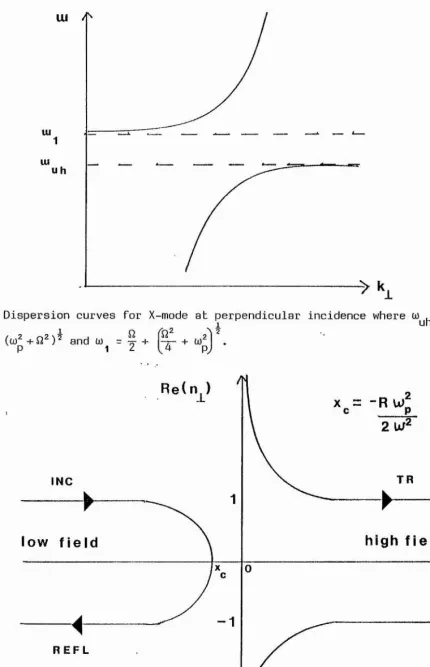
Figure 2.2
ui
lU
u h
D is p e r s io n c u rv e s f o r X-mode a t p e r p e n d ic u la r in c id e n c e where o) ,
1 un
(w^ + and 0)^ r ^ .
'l - 2
-R w!
2 W
TR INC
high f ie ld
low fie ld
- 1
R EFL
M e
Real p a r t o f p e r p e n d ic u la r r e f r a c t i v e in d e x as a f u n c t io n o f d is ta n c e
from th e resonance. Wave en erg y i n c i d e n t from th e low f i e l d s id e i s
[image:41.613.55.486.52.719.2]-27-can be s i g n i f i c a n t tr a n s m is s io n th ro u g h th e evanescent l a y e r .
F o llo w in g th e method o f S e c tio n 2 . 1 , we w r i t e ( 4 .1 3 ) as
) (k^ - w ^ /c ^ ) = Ç- (w^ - cjo^)
P - c p
t t
re s o n a n t s o l u t i o n vacuum s o l u t i o n
In th e v i c i n i t y o f th e mode c o n v e r s io n p o i n t ( k , , x ) = ( w / c , 0 ) t h i s
becomes
X ( k , - w / c ) = / 4c P
and so , from ( 2 . 8 ) and ( 2 . 9 ) , th e t r a n s m is s io n c o e f f i c i e n t a t
p e r p e n d ic u la r in c id e n c e i s g iv e n by
T = exp '' ïïRcü^ P ^
I 2c (w 2 + 0§)2
(2.14)
I n t r o d u c in g a nonzero n „ m e re ly c o m p lic a te s th e d is p e r s io n r e l a t i o n
w hich i s s t i l l o f th e g e n e ra l form ( 2 . 6 ) . The re s o n a n t s o l u t i o n o f
( 2 . 5 ) i s g iv e n by
c ' _ C + D
- w" - p
where
C = ( ( e , + Eg ) ( E , - n f , ) - e | ) ...-..
D = [ (( £ i - Eg )(e^ - nf,) - g| ) ^ + 4EgE2n%]? ^
and
(0^ E' = 1 - ’ ^2 = - , E3 = 1 - jjÇ- .
-28-As u s u a l, we w r i t e ^ (1 + 2 x /R ) i n ( 2 . 1 5 ) , expand ing C, D and
0)2 - (jq2 - 0 ( x ) . T h is g iv e s P
2 V Z, .2
_ & P
2 üP*
( 1 + nf, ) + 2 ( 1 - nf, ) 1 + ojH R
1 + n ^ ) 4- 2 ^ ( T : W
end 0)2 - 0)2 -
P - 20; R ( 2 . 1 6 )
S ubs t i t u t i o n o f ( 2 .1 6 ) i n t o ( 2 .1 5 ) f i n a l l y y i e l d s th e s ta n d a rd
d is p e r s io n r e l a t i o n in th e v i c i n i t y o f th e c o n v e rs io n p o i n t ( k ^ jO ) ,
x ( k j ^ - k p ) = R (1 + n f,)
where
The c o rre s p o n d in g tr a n s m is s io n c o e f f i c i e n t i s then
T = exp ttRcjj^ ( 1 + nf, )^2k , c ( 2 .1 7 )
w it h kp as above. The be h a v io u r o f ( 2 .1 7 ) i s i l l u s t r a t e d i n F ig . 2 .3
where th e numbers l abe l l i n g th e c u rv e s a re v a lu e s o f Rw^/Cwc), th e
t r a n s m is s io n c o e f f i c i e n t depending o n ly on t h i s c o mb in atio n o f
p a ra m e te rs i f « 1, U n le ss t h i s c o n d i t i o n i s s a t i s f i e d , T i s
e s s e n t i a l l y ze ro f o r re a s o n ab le v a lu e s o f th e s c a le le n g t h R.
From th e argum ents d is c u s s e d e a r l i e r , i t can be shown th a t f o r
R lu
ui c
0-5
0 * 4
0 5
1 00
0
n
II-29-c o e f f i -29-c i e n t g iv e n by R = ( 1 - T ) ^ , w h ile f o r in c id e n c e from th e h ig h
f i e l d s id e th e r e i s no r e f l e c t i o n . P re v io u s a u th o rs t o t r e a t th e
upper h ybr id resonance have ta k e n a d i f f e r e n t e q u i l ibr i u m i n w hich
th e d e n s it y v a r ie s and th e m a g n e tic f i e l d i s u n ifo r m . W hite and
Chen (1974) have d is c u s s e d th e problem i n th e c o n te x t o f Sudden's
e q u a tio n w h ile Kuehl e t a l . (K u e h l, 1967; Kuehl e t a l . , 1970;
S h o u c ri and K u e h l, 1981) matched a s y m p to tic s o l u t i o n s o f a f o u r t h
o r d e r e q u a tio n i n c l u d i n g th e rm a l e f f e c t s o n to s m a ll argument
a p p ro x im a tio n s to th e s o l u t i o n s o f S udden's e q u a tio n . A ls o , Tang
(1970) t r e a t e d th e c o n to u r i n t e g r a l r e p r e s e n t a t io n o f th e s o l u t i o n s
o f a f o u r t h o r d e r O.D.E. by th e method o f s te e p e s t d e sce n ts t o obt a in
c o n n e c tio n fo rm u la e .
2 .3 The tw o - io n h ybr id resonance
A re s o n a n t fre q u e n c y i n th e io n c y c l o t r o n range i s th e i o n -
io n (Buchsbaum) resonance w h ich o n ly o c c u rs when two o r more io n
s p e c ie s o f d i f f e r i n g charge t o mass r a t i o s a re p r e s e n t. The
fre q u e n c y f o r two io n s p e c ie s i s
“ i i = '2 . 1 8 )
where n^ i s th e number d e n s i t y , and m^, q^ a re th e mass and charge
numbers o f s p e c ie s i ; i = 1 , 2 .
We be g in by de r i v i n g an a p p ro x im a te d is p e r s io n r e l a t i o n f o r
waves i n th e fre q u e n c y range Q j < co < ST The wave e q u a tio n in a
c o ld , homogeneous m ag netise d plasma can be w r i t t e n i n m a t r ix form as
-30-1G2
n ,n „
El - nf, - n f
n j . n ,
0 E
= 0, ( 2 .1 9 )
In th e Frequency range o f i n t e r e s t , w « so t h a t je a l » | n f | ,
I n ^ n „ I , and |E^| « | E ^ | , | E y | . W ith th e se a p p ro x im a tio n s ( 2 .1 9 )
becomes
102
-102
n f - n f
E
X
E V Yy
y i e l d i n g th e f o l l o w i n g d is p e r s io n r e l a t i o n f o r th e f a s t m agnetoso nic
(c o m p re s s io n a l A lf v é n ) wave.
where
n= = (E, - n f )
0)^ 0)^
Pi P2
" u F Z H f" - '
( 2. 20)
E 2 0)wST pe w(w^ - STf ) " w(w' - STHPi ' 0)^ ST.p 2
0)^ CO CO^ CO
- STf(co"- STf ) " ST2(co"-ST^) "
W hile a p p ro x im a tio n ( 2 .2 0 ) p re s e rv e s th e c o r r e c t be h a v io u r f o r th e
f a s t wave c u t o f f s and i s v a l i d i n re g io n s away from resonance, i t s
form means t h a t th e p o s i t i o n o f th e resonance i s now a fu n c t io n o f
'ii " T h is i s i n c o r r e c t as can be seen from th e f u l l d is p e r s io n
-31
p o s i t i o n o f a resonance must be in d e p e n d e n t o f n„ s in c e we are
c o n s id e r in g p ro p a g a tio n a t f i x e d n„ i n w hich case th e d i r e c t i o n o f
wave p r o p a g a tio n i s n o t c o n s ta n t . Thus as n f -+ <», th e wave v e c to r
te n d s t o become p e r p e n d ic u la r to th e m a g n e tic f i e l d d i r e c t i o n and
so th e resonance a t f i n i t e n „ appears th e same as f o r p e r p e n d ic u la r
in c id e n c e . We n e v e r th e le s s use ( 2 .2 0 ) f o r th e purpose o f a n a ly s is
be a r in g i n mind t h a t i t models a h ybr id la y e r t h i c k e r th a n th a t
d e s c ribe d by th e re s o n a n t s o l u t i o n o f ( 2 . 5 ) .
I n t r o d u c in g th e n o t a t i o n
a
= S jjla , y _ OjüLi andP iO j bzm,
P = 1<M ÜZ ~= k ” w Pi
where v^ i s th e A lfv é n speed o f s p e c ie s 1, the re so n a n t fre q u e n c y i s
d e te rm in e d by th e c o n d i t i o n
El - n f = 0 w hich g iv e s
[s ir] O ïï] ' [^1 + «U + ^ (1 + P ^ ) ] + = 0- ( 2 . 2 1 )
S o lv in g ( 2 .2 1 ) we obt a in th e f o l l o w i n g e x p re s s io n f o r th e tw o - io n
h ybr id fre q u e n c y a t f i n i t e n „ ,
2(y(p + a) + p2)
-32-We i n v e s t i g a t e o n ly th e case where s p e c ie s 2, say, i s p re s e n t i n s m a ll
c o n c e n tr a t io n and expand ( 2 . 2 2 ) f o r s m a ll a to obta in
cof11 # 0 - ^ ( 2 .2 3 )
As be fo r e , we c o n s id e r a u n ifo r m d e n s it y p r o f i l e and ta k e a l i n e a r
f i e l d v a r i a t i o n , l e t t i n g th e c y c l o t r o n fre q u e n c y v a ry as
TTj = ^ 10(1 + x / R ) . The d is p e r s io n r e l a t i o n ( 2 .2 0 ) i s now expanded
about th e resonance (x = 0 ) remembering t h a t U)^ =
F i r s t l y ,
2w' E - n , P i X
( 1 + a p ) f 4- ( ( p ^ + 1 ) f - 2)
f ( f - l ) ( p 2 f - 1) R ( f- 1
( 2 .2 4 )
A ls o ,
^ p i I
10
a +
( f - 1 ) ( p ^ f - 1 )
1
+ 2x f -1 p2 f -1 a +(1 + o t)f - a + ( 2 .2 5 )
Upon s ubs t i t u t i o n o f ( 2 . 2 4 ) , ( 2 .2 5 ) i n t o ( 2 .2 0 ) and ke e p in g th e 0 ( 1/ x )
and 0 ( 1 ) te rm s, we obta in
« & + ^1 ^
1 X
where
0)P i Rf^y"* I (1 + a ) f - la +
^0 “ 202
10 ( f - 1 ) ( y ^ f - 1 ) ( 1 + a y ) f + ( ( y^ + 1 ) f 2 )
A, = 2A, f -1 1 + y % f-11 +
1
-2 a
_P(1 + a ) f - a +
•33-For s m a ll a , ( 2 .2 6 ) becomes, upon s ubs t i t u t i n g f o r f from ( 2 . 2 3 ) ,
p i 0 202
10
Rap p 2 + (1 - p 2)p- p + (1 - p 2 ) p 2 and
^ p i f p^ - p + (1 - p ^ ) p ^ fp^ + p + ( 1 - p 2 ) p 2
p 2 4- ( 1 _ p 2 ) p 2
«%
1 - uThen th e tr a n s m is s io n c o e f f i c i e n t f o r th e f a s t wave a t th e m i n o r i t y
tw o - io n h ybr id resonance i s g iv e n by
T = exp(-TTp) where
p . “ A,. « a V F - - (1 - ; : ) p : l 1 - w ' 1 ^ c ^2 2c t + (1 - p 2) p 2 J [y + p 2 + (1 - p 2)p 2_
( 2 .2 7 )
to f i r s t o rd e r i n a . As k „ in c r e a s e s , r\ goes to z e ro and th e mode
c o n v e r s io n ceases.
In the case o f a d e u te riu m plasma w it h hydrogen i m p u r i t i e s ,
p = 7 and ( 2 .2 7 ) becomes
aw R
_ P 1 - 3p
■ 2c h + 3p2 1 -f p2 J
1
T h is i s th e c o ld plasma l i m i t o f a r e s u l t obta in e d by Swanson (1980)
in a s tu d y o f th e e f f e c t s o f l o c a l i s e d abs o r p tio n on the mode
c o n v e rs io n p ro c e s s . In a warm plasm a, th e f a s t wave s o l u t i o n
c o n n e c ts sm o o th ly o n to th e e l e c t r o s t a t i c B e r n s te in mode (Swanson,
1976) and a l l o f th e energy l o s t from th e f a s t wave ends up on th e
slo w branch w hich u l t i m a t e l y h e a ts th e e le c t r o n s v ia e le c t r o n Landau