A Thesis Submitted for the Degree of PhD at the University of Warwick
Permanent WRAP URL:
http://wrap.warwick.ac.uk/116188
Copyright and reuse:
This thesis is made available online and is protected by original copyright. Please scroll down to view the document itself.
Please refer to the repository record for this item for information to help you to cite it. Our policy information is available from the repository home page.
THE DEVELOPMENT OF
HEALTH SYSTEM PERFORMANCE
ASSESSMENT FRAMEWORKS
IN MALTA AND BEYOND
AND THEIR IMPACT UPON POLICY MAKING
by
Dr Kenneth Grech
MD, MSc, MBA, DLSHTM, FFPH
A thesis submitted in fulfilment of the requirement for the degree
of Doctor of Philosophy (PhD) in Health Sciences
Warwick Medical School, University of Warwick
TABLE OF CONTENTS
Table of contents ii
Bibliography xiv
List of Appendices xiv
List of Tables xv
List of Figures xv
List of Boxes xvi
Dedication xvii
Acknowledgements xviii
Declaration xix
Abstract xx
List of Abbreviations xxi
CHAPTER 1
BACKGROUND AND CONTEXT
1.1 Introduction 2
1.2 Background 3
1.2.1 Methodological development of HSPA frameworks 3
1.2.2 Malta 4
1.2.3 HSPA and its impact on policy 5
1.2.4 Phases of study 7
1.3 Historical and policy context of Malta 7
1.4 Research questions 9
1.5 Aims and objectives 9
1.6 Contribution to research and policy development 10
1.7 Scope and structure of the thesis 9
CHAPTER 2
LITERATURE REVIEW:
CONCEPTUAL AND ANALYTICAL FRAMEWORK
2.1 Introduction 14
2.2 Health systems 14
2.2.3 Indicators, the crux of performance assessment 18 2.3 Search Method: Analysis of current HSPA frameworks 19 2.3.1 Sources of information used in this study 19 2.4 Historic development of performance assessment frameworks 22
2.4.1 Early national frameworks 23
2.4.2 International frameworks 27
2.4.2.1 World Health Organisation 27
2.4.2.2 OECD 28
2.4.2.3 European core health indicators 29
2.5 Methods in developing HSPA frameworks 30
2.5.1 Developing a model 30
2.5.2 Testing the model 31
2.5.3 Scientific basis of methodology 32
2.6 Theoretical archetypal models for HSPA 33
2.6.1 Donabedian Model 33
2.6.2 Balanced score card and outcomes framework 34
2.6.3 The Logic Model 35
2.6.4 The OECD Quality Model 37
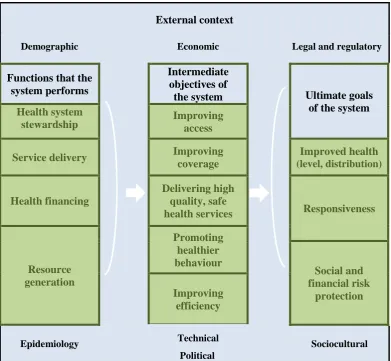
2.6.5 WHO’s goal driven model 39
2.7 Content of frameworks 40
2.7.1 Outline of dimensions and their significance 40
2.7.2 Input or structures domains 40
2.7.3 Process domains 40
2.7.4 Outcome domains 41
2.7.5 Domains as reflections of the health systems they measure 41
2.7.6 Indicators 42
2.7.6.1 Testing indicators for appropriateness: Validity vs feasibility 44
2.8 Lessons learnt 45
2.9 Relationship between performance frameworks and policy development 46
2.10 Search method 47
2.10.1 Medline 48
2.10.2 Embase 49
2.10.3 Web of Science 50
2.11 Reform and policy development: An overview 51
2.11.2 Models of policy development 53
2.11.3 Approaches to policy development 55
2.12 Analysing policy change 56
2.13 Measuring policy success 57
2.14 Linking performance assessment frameworks to policy development 58
2.14.1 The evidence base 58
2.14.2 The policy cycle 65
2.15 Conclusion 67
CHAPTER 3
RESEARCHFOCUS,AIMS AND METHODS:ANOVERVIEW
3.1 Introduction 69
3.2 Research questions 69
3.3 Aim and objectives of the research 70
3.3.1 Aim of the research 70
3.3.2 Objectives of the research 71
3.4 Research process 72
3.5 Phase I: Document analysis 73
3.6 Phases II and III: Participant Observation 74
3.6.1 Type and level of participation:
From observatory to participatory to action research 75 3.6.2 The reflexive nature of participant action research 76
3.7 Analytical underpinnings 79
3.7.1 Triangulation of methods 79
3.7.2 Mixed methods 79
3.7.3 Applied Inductive Thematic Analysis 80
3.8 Research paradigms 80
3.9 Contribution to research and policy development 82
3.10 Exclusions 83
CHAPTER4
PHASE I - DOCUMENT ANALYSIS
4.1 Introduction 85
4.2 Objectives of Phase 1 85
4.3 Method 85
4.3.1 Source and types of documents 86
4.3.2 Examination of documents 87
4.3.3 Modelling of Thematic Analysis 89
4.4 Phase I: Document analysis – Results and discussion 98
4.5 Development of HSPA frameworks 98
4.5.1 Methodology 98
4.5.1.1 Definitions 98
4.5.1.2 Methods 99
4.5.1.3 Process in the development of HSPAs and the actors involved 102 4.5.1.4 HSPA models, indicators and dimensions 103
4.5.1.4.1 Models and dimensions 104
4.5.1.4.2 Indicator sets 106
4.5.1.5 Conditions for using performance assessment in policy making 106 4.5.2 Legal, organisational and technological issues 108 4.5.2.1 ICT tools for assessing evidence & for performance
measurement 108
4.5.2.1.1 The importance of health information systems 109
4.5.2.1.2 Link between HSPAs and Health Information Systems 110
4.5.2.1.3 Health information databases: Their use and applicability 110
4.5.2.2 Organisational issues 111
4.5.2.3 Legal basis for performance assessment and evidence-based
policy making 112
4.5.2.3.1 Inter-country legal provisions 112
4.5.2.3.2 Data sharing 113
4.5.2.3.3 Legislative instruments 113
4.6 Relationship between performance assessment and policy development 114 4.6.1 Linking HSPA with policy development 114 4.6.1.1 Translating the evidence into policy 115 4.6.1.2 Evidence in favour or against the link between performance
assessment and policy making 116
4.6.1.4 Policy cycle, process and tools 117
4.6.1.4.1 HSPA as part of the policy cycle 118
4.6.1.4.2 Sources of evidence other than from HSPA frameworks 118
4.6.1.4.3 Influencing policy agenda beyond available evidentiary path 119
4.6.1.4.4 The causality dilemma 120
4.6.1.4.5 Research organisations as part of the policy cycle 121
4.6.1.5 Use of measures and targets to reach policy objectives 121 4.6.1.6 Non-health sectors:
Use of evidence, performance assessment & policy making 122
4.6.1.6.1 Use of health system evidence:
For decision taking in other sectors and vice versa 122
4.6.1.6.2 Performance assessment in non-health sectors 123
4.6.2 Comparative policy making 124
4.6.2.1 International and regional cooperation to inform policy 125
4.6.2.1.1 Projects and programmes 125
4.6.2.1.2 Policy making 125
4.6.2.1.3 Data sharing 126
4.6.2.2 International/regional comparisons of performance to inform policy 127
4.6.2.2.1 The use of composite indicators 127
4.6.2.2.2 Comparative evidence for policy making and reforms 128
4.6.2.3 Challenges in comparative policy making 129
4.6.2.3.1 Methodological pitfalls 129
4.6.2.3.2 Contextual factors 130
4.6.3 The political process 130
4.6.3.1 Models of policy making 131
4.6.3.2 The political prerogative 132
4.6.3.2.1 Sharing of politically sensitive data 132
4.6.3.2.2 Policy instruments 132
4.6.3.2.3 Politics that work 133
4.6.3.2.4 Political accountability and power of performance assessment 134
4.6.3.2.5 Political commitment to the HSPA process 135
4.6.3.3 Reforms 136
4.6.3.4 Factors otherthan performance assessmentthat affect policy making 137
4.6.3.5 Consequences of using performance information and evidence 139
4.6.3.6 Concluding remarks 140
4.7 Improving health care delivery through performance monitoring 141 4.7.1 Performance assessment as a tool for service improvement 141 4.7.1.1 Use of HSPA frameworks for service improvement 141 4.7.1.2 Performance monitoring and improvement 142
4.7.1.2.1 HSPA and performance improvement 142
4.7.1.2.2 Resources/information needed for performance improvement 143
4.7.1.3 Accountability 143
4.7.1.3.1 Political accountability 143
4.7.1.3.2 HSPA’s role in garnering accountability 144
4.7.1.3.3 European model of accountability 145
4.8 National and international perspectives 145
4.8.1 Promoting performance assessment 145
4.8.1.1 Promoting performance assessment across Europe 146
4.8.1.2 Role of national organisations 147
4.8.1.2.1 England 147
4.8.1.2.2 Organisations in EU member states 148
4.8.1.2.3 Other models 149
4.8.1.2.4 How these organisations function 149
4.8.1.3 Role of international and regional organisations and networks 151
4.8.2 Good practice examples 152
4.8.2.1 Case studies of linking evidence with policy change 153 4.8.2.2 Examples in the use of HSPA when determining policy agenda 154
4.9 Communication 156
4.9.1 Communicating the evidence 156
4.9.1.1 How to communicate 156
4.9.1.2 What and to whom to communicate 157
4.9.1.3 Alignment 157
4.9.2 Media and evidence-based policy 158
4.9.2.1 The role of the media 158
4.9.2.2 Public accountability and transparency 159
4.10 Further work 160
CHAPTER 5
PHASEII:DEVELOPINGA NATIONAL HSPA FRAMEWORK (MALTA)
5.1 Background 163
5.2 Objectives of Phase II 164
5.3 Methodological & developmental process of HSPA Framework 164 5.3.1 Methodological approach and study design 165
5.3.1.1 Method approach 165
5.3.1.2 Study design and data analysis 165
5.3.1.3 Challenges/benefits of adopting a mixed methods approach 167
5.4 Overview of steps 168
5.5 Results 170
5.5.1 Step 1: Setting up of the National Expert Working Group 170 5.5.2 Step 2: Analysing current international HSPA frameworks
and testing them for the Maltese health care setting. 171 5.5.2.1 Step 2a: Examination of international HSPA frameworks 171 5.5.2.2 Step 2b: Comparative analysis of dimensions & indicators
in each framework 172
5.5.3 Step 3: Developing and testing a draft framework for Malta 176 5.5.4 Step 4: Extracting, filtering, mapping indicators
to draft framework 178
5.5.4.1 Step 4a: Extracting of indicators from national
vertical strategies 178
5.5.4.2 Step 4b: Filtering and cleaning of initial list of indicators
to produce candidate indicators 180
5.5.5 Step 5: Short-listing of indicators 180
5.5.6 Step 6: Identification of gaps in the list of indicators
and mapping of areas where no data is available 185 5.5.7 Step 7: Review and testing of HSPA framework model after
identification and mapping of final list of indicators 188 5.5.8 Step 8: Data collection and analysis:
Production of first iteration of results 192 5.5.8.1 Step 8a: Data collection and analysis 192 5.5.8.2 Step 8b: Presentation of results
Overall assessment of the Maltese health system 195
CHAPTER 6
POLICY CYCLE: THE RELATIONSHIP BETWEEN HSPA FRAMEWORKS AND POLICY DEVELOPMENT
6.1 Preamble 199
6.2 Objectives of Phase III 200
6.3 Method 200
6.3.1 HSPA Expert Group Meetings 202
6.3.2 Peer review meetings 203
6.3.3 Policy focus groups 204
6.3.4 Ethical considerations 205
6.4 Final thematic analysis model 206
6.5 Phase III: The Policy Cycle – Results and Discussion 207
6.6 Development of HSPA Frameworks 207
6.6.1 Methods 208
6.6.1.1 Definitions 208
6.6.1.2 Methodology 208
6.6.1.2.1 The use of composite indicators 208
6.6.1.2.2 Use of routinely collected data for comparative performance
assessment 209
6.6.1.2.3 Selecting the right indicators 210
6.6.1.3 Process in the development of HSPAs & actors involved 211
6.6.1.3.1 HSPA as an evolving process 211
6.6.1.3.2 Political and clinical ownership 213
6.6.1.4 HSPA models 213
6.6.1.4.1 Models 213
6.6.1.4.2 Dimensions 215
6.6.1.5 Conditions for using performance assessment for policy making 215 6.6.2 Legal, organisational and technological issues 215 6.6.2.1 Information technological tools:
For assessing evidence and for performance measurement 216
6.6.2.1.1 The use of registers 216
6.6.2.1.2 Health ICT 217
6.6.2.1.3 Technological difficulties 218
6.6.2.2 Legal basis for performance assessment and evidence-based
policy making 218
6.7.1.1 Evidence in favour or against link between
performance assessment and policy making 220 6.7.1.2 Use of HSPA frameworks to inform policy 221
6.7.1.3 Policy cycle, process and tools 222
6.7.1.4 Use of measures and targets to reach policy objectives 223
6.7.2 Comparative policy making 225
6.7.2.1 International and regional cooperation to inform policy 225 6.7.2.2 International / regional comparisons of performance to inform
policy 226
6.7.2.2.1 Ranking 226
6.7.2.2.2 Regional comparisons 227
6.7.2.2.3 Variability 227
6.7.2.3 Challenges in comparative policy making 228
6.7.2.3.1 Challenges of comparative assessment methodologies 228
6.7.2.3.2 Challenges related to size and maturity 229
6.7.2.3.3 Overcoming the challenges 230
6.7.3 The political process 231
6.7.3.1 The political prerogative 231
6.7.3.1.1 The third revolution in health care 231
6.7.3.1.2 Reaching political consensus at European level 232
6.7.3.2 Reforms 232
6.8 Improving health care delivery through performance monitoring 233 6.8.1 Performance assessment as a tool for service improvement 234 6.8.1.1 Use of HSPA frameworks for service improvement 234
6.8.1.2 Accountability 234
6.8.2 The performance assessment of quality of care 235
6.8.2.1 Conceptual framework 235
6.8.2.2 Quality of care indicators 236
6.8.2.3 Policy focus group on quality 237
6.8.3 The performance assessment of integrated care 238
6.8.3.1 Types and levels of integration 239
6.9.1.1 Promoting performance assessment across Europe 242
6.9.1.2 Role of national organisations 244
6.9.1.3 Role of international and regional organisations and networks 245
6.9.2 Good practice examples 246
6.9.2.1 Case studies linking evidence with policy change 246 6.9.2.2 Statements on use of HSPA to determine policy agenda 247
6.9.3 Country experiences 247
6.9.3.1 Austria 248
6.9.3.2 Bulgaria 249
6.9.3.3 Croatia 249
6.9.3.4 Cyprus 250
6.9.3.5 France 250
6.9.3.6 Germany 250
6.9.3.7 Greece 251
6.9.3.8 Hungary 251
6.9.3.9 Norway 252
6.9.3.10 Slovenia 252
6.9.3.11 Sweden 252
6.9.3.12 Latvia 253
6.10 Communication 253
6.10.1 Communicating the evidence 253
6.10.1.1 Expert group considerations 253
6.10.1.1.1Country experiences 255
6.10.2 Media and evidence-based policy 256
6.11 Further work 256
6.11.1 Recommendations 257
6.12 Conclusion 258
CHAPTER7
GENERAL DISCUSSION
7.1 Introduction 260
7.2 The advent and endurance of HSPA 260
7.2.1 The end of the beginning or the beginning of the end? 261
7.2.2 Value added or a nice to have? 262
7.3 The first research question - the methods behind the development of
HSPA and the Malta model 264
7.3.1 The Malta model 265
7.3.2 The Malta experience 267
7.3.3 A shared HSPA methodology and model 269
7.3.4 Policy vs science 270
7.4 The second research question - the policy conundrum 271 7.4.1 Understanding the policy (political) process in health 271
7.4.2 The policy cycle 272
7.4.3 Good practice examples and country experiences 273
7.4.4 Comparative performance assessment 275
7.5 A new model for informing policy through HSPA 276
7.5.1 Models to date 276
7.5.2 Proposing a new model 277
7.6 An innovative approach to research 277
7.7 The evidence base 280
7.7.1 Gaps in evidence 281
7.7.2 Further research 281
7.8 A critique of the study 283
7.8.1 Attributability 283
7.8.2 Confirmability 284
7.8.3 Replicability 284
7.8.4 Credibility 284
7.8.5 Transferability 285
7.9 Conclusion 285
CHAPTER8
CONCLUSION
8.1 Introduction 287
8.1.1 HSPA: Its current and future position 287 8.1.2 Policy making: Adopting a wider definition 288 8.2 Limitations of method and analytical approach 289
8.2.1 Phase I: Document analysis 289
8.3 Recommendations for action by researchers and policy makers 291
8.4 Policy recommendations 293
8.5 Recommendations for further research 294
BIBLIOGRAPHY
Section A: Reference List 297
Section B: List of documents used in document analysis 316 Section C: List of documents from participatory action phase of study 325
LIST OF APPENDICES
Appendix 1 Domains/dimensions of international HSPA Frameworks 332 Appendix 2a Phase I: Methodology – Document Analysis 333 Appendix 2b Phase II: Methodology
Development of Malta’s National HSPA Framework 334 Appendix 2c Phase III: Methodology – The Policy Cycle 335
Appendix 3a Data Analysis Worksheet – Example 1 336
Appendix 3b Data Analysis Worksheet – Example 2 337
Appendix 4 List of members of National Expert Working Group (NEWG) 338
Appendix 5 International HSPA Frameworks 339
Appendix 6 Definitions of dimensions 342
Appendix 7 Feedback from National Health System Strategy Workshop 347 Appendix 8 List of national vertical strategies and plans in Malta 352
Appendix 9 Candidate indicators with scores 353
Appendix 10 Criteria and sub-criteria for scoring of indicators 380
Appendix 11 Online survey 382
Appendix 12 Final list of performance indicators ‘key owners’
of each indicator 383
Appendix 13 Definitions of final list of indicators 387
Appendix 14 Results: Dimensions and indicators 416
Appendix 15 Dr Kenneth Grech’s nomination on EU HSPA Expert Group 426 Appendix 16 List of email correspondence requesting permission from
participants and experts of HSPA Expert Group
and other meetings 428
Appendix 17 Ethical approval from the University of Warwick
Biomedical and Scientific Research Ethics Committee 430
LIST OF TABLES
Table 2.1: References from two-word combinations (just Medline) 20 Table 2.2: References from two-word combinations (just Embase) 21 Table 2.3: References from two-word combinations (just Web of Science) 21 Table 2.4: References derived from three and four word combinations
(Medline, Embase and Web of Science) 22
Table 2.5: Early national frameworks of the USA, UK, Canada and Australia 26 Table 2.6: References derived from two-word combinations (just Medline) 48 Table 2.7: References derived from two-word combinations (just Embase) 49 Table 2.8: References from two-word combinations (just Web of Science) 50 Table 2.9: References from three-word combinations (just Web of Science) 50
Table 3.1: Research objectives 71
Table 3.2: Timeline adopted for this study 73
Table 4.1: Sources of documents 87
Table 4.2: Types of documents 88
Table 4.3: Distribution of sources and references across the themes, clusters
and main topics 92
Table 5.1 Domains/dimensions of international HSPA Frameworks 173 Table 5.2: Extraction, filtering and internal scoring of indicators 183 Table 5.3 Linking the HSPA dimensions with strategic objectives of NHSS 189 Table 5.4 Mapping of final list of indicators to NHSS and HSPA 190 Table 5.5 Mapping of final list of main and sub-indicators with dimensions 192
Table 5.6 Scoring system for each indicator 194
Table 5.7 Overall scoring schedule and classification for each dimension 195 Table 5.8 Overall assessment of the Maltese health system for base year 2012 196 Table 6.1: State of HSPA development of various countries 248
LIST OF FIGURES
Figure 2.1: Portugal’s HSPA based on the Donabedian Framework 34 Figure 2.2: CIHI’s new Health System Performance Measurement Framework 36 Figure 2.3: Conceptual framework for Organisation for Economic Cooperation
and Development Health Care Quality Indicator (HCQI) Project. 38
Figure 2.4: WHO’s HSPA Framework 39
Figure 2.6: A strategy-based performance management framework 61 (Ontario Ministry of Health and Long Term Care) 61 Figure 2.7: Feedback loop model between performance assessment and policy change 65 Figure 2.8: The policy cycle (Roberts, et al., 2008) 66
Figure 3.1: Research phases 72
Figure 4.1: Preliminary Thematic Analysis Model 91
Figure 4.2: England’s Outcomes Framework 105
Figure 5.1: Sequential analysis using a multiphase mixed methods design 167 Figure 5.2: First interation of Malta HSPA Framework 177 Figure 5.3 Initial mapping of the original 350 indicators to domains 179 Figure 5.4 Scoring algorithm to produce shortlisted indicators 181 Figure 5.5: Algorithm to extract, filter, score and select shortlist of indicators 187 Figure 5.6: Mapping of final list of indicators onto revised HSPA Framework 189
Figure 5.7 Final Malta HSPA Framework 191
Figure 6.1: Final Thematic Analysis Model 207
Figure 7.1: HSPA - Policy Development Model 279
LIST OF BOXES
Box 3.1: Phases of research process 69
Box 3.2: Research questions 70
Box 3.3: Main aim of research project 70
Box 4.1: Key search words for document analysis 89
DEDICATION
ACKNOWLEDGEMENTS
Firstly, I would like to thank my supervisor, Professor Peter Spurgeon, for his steadfast support and expert guidance, as well as his enduring patience over the years. His inspiration and insight were key to complete this thesis. Gratitude also goes to my former co-supervisor, Professor Matthew Cooke, who provided guidance especially during the early part of my research. Thanks also goes to the administrative staff at Warwick Medical School, namely Samantha Plumb, Gaynor Mercer and Sean Barrett, for their support and guidance throughout my studies.
I would like to thank my colleagues in the Ministry for Health, Malta for their collaboration and assistance whilst developing Malta’s HSPA Model and to my peers
on the European Commission Expert Group on Health System Performance Assessment, who were happy to participate in the participatory observation part of my research.
Acknowledgment also goes to the Malta Government Scholarship Scheme which sponsored my university tuition fees and to the Ministry for Health for affording me with the required study leave at various intervals of the research process.
DECLARATION
This thesis is submitted to the University of Warwick in support of my application for the degree of Doctor of Philosophy. It has been composed by myself and has not been submitted in any previous application for any degree.
All the work presented was carried out by the author. However, Chapter 5 (Developing a National Health Systems Performance Assessment Framework for Malta) was part of a national project and the methods and results of this chapter can be seen in a report edited by the author and published in 2015 by the Ministry for Energy and Health entitled ‘Report on the Performance of the Maltese Health System’.
ABSTRACT
Introduction and aims: Following the 2008 financial crisis, performance monitoring and evaluation in the form of Health System Performance Assessment (HSPA) received heightened attention and is now used by policy makers and health service leaders for decision taking. However, despite its increased importance and relevance, there is, as yet, no common internationally recognised standardised methodology for its development and implementation. Moreover, whilst there is ample evidence linking HSPA with service improvement, the literature on the impact of HSPA upon health policy-making is limited. The research questions aim at addressing these two research gaps, looking into the most appropriate method for developing a health system performance assessment framework for Malta and examining the role, if any, that national health system performance assessment frameworks play in the development of national health policy. These two facets of HSPA are the focus of this research, where a methodology for implementing HSPA in a small state (Malta) is developed and the relationship between HSPA and policy development at national and European level is thoroughly investigated.
Methods: The study consisted of three phases. A comprehensive document analysis was first carried out. This was followed by the development and implementation of a HSPA framework and performance assessment report for Malta. The final phase consisted of a three-year ethnographic study across Europe’s capitals, resulting in the collection and analysis of data on the relationship between HSPA and health policy development in the European region.
Results: HSPA methodology must combine scientific robustness with policy constraints to take into account the political exigencies of the health system it is purported to assess. This is deemed both important and appropriate for HSPA, especially for small states like Malta. The research also reveals the unique role HSPA plays in policy development, as one of the many variables that influences health policy. However, the study also goes on to highlight the mismatch between the evidence generated by HSPA and a more evidence-based approach to policy making.
ABBREVIATIONS
A-IQ1 Austrian Inpatient Quality Indicators
AGENAS Agenzia Nazionale per i Servizi Sanitari Regionali National Agency for Regional Health Services, Italy
AT Austria
BE Belgium
BG Bulgaria
BMI Body Mass Index
CHF Congestive Heart Failure
CIHI Canadian Institute for Health Information CION European Commission
COAD Chronic Obstructive Airways Disease
COFOG Classification of the Functions of Government CVD Cardiovascular Disease
CY Cyprus
CZ Czech Republic
DE Germany
DG SANCO Director General Health (later SANTE)
DG ECFIN Director General Economic and Financial Affairs DHCPR Dutch Health Care Performance Report
DHIR Directorate of Health Information and Research
DK Denmark
DMP Disease Management Programmes DRG Diagnostic Related Group
ECHI European Core Health Indicators
ECHO European Collaboration for Health Optimization EDI Early Development Instrument
EE Estonia
EG Expert Group on Health System Performance Assessment EHES European Health Examination Survey
EHIS European Health Interview Survey
EHSPI Enhancing Health Systems Performance Initiative
EOHSP European Observatory on Health Systems and Policies
EP European Parliament
EPSCO Employment, Social Policy, Health and Consumer Affairs Council ERRIN European Regions Research and Innovation Network
ES Spain
ESPAD European School Survey Project on Alcohol and Other Drugs ESSPROS European System of Integrated Social Protection statistics EQLS European Quality of Life Surveys
EU European Union
EUEPIH EU Expert Panel on Effective Ways in Investing in Health EUREGHA European Regional and Local Health Authorities
EXPH Expert Panel on Effective Ways of Investing in Health.
FI Finland
FR France
GDP Gross Domestic Product
HBSC Health Behaviour in School-aged Children Survey HCQI Health Care Quality Indicator
HFA Health for All
HIS Health Information System HMO Health Maintenance Organisation
HR Croatia
HSPA Health System Performance Assessment HTA Health Technology Assessment
HU Hungary
IC Integrated Care
ICP Integrated Care Pathways ICT Information Technology
IE Ireland
IFAQ Financial Incentives for Quality Improvements IMF International Monetary Fun
IOM Institute of Medicine
KCE Health Care Knowledge Centre (Belgium)
LT Lithuania
LU Luxembourg
LV Latvia
MDH Mater Dei Hospital
MT Malta
NCD Non-Communicable Disease NEWG National Expert Working Group NHIS National Health Information Survey NHSS National Health System Strategy
NICE National Institute for Health and Care Excellence NL Netherlands
NO Norway
NOIS National Obstetric Information System
NOKC Norwegian Knowledge Centre for the Health Services NQIS Norwegian National Quality Indicator System
NSF National Service Framework
OECD Organisation of Economic and Co-operation and Development PAF Performance Assessment Framework
PAR Participatory Action Research
PATH Performance Assessment Tool for Quality Improvement in Hospitals PESTAL Political, Economic, Social, Technological, Environmental and Legal PI Performance indicator
PL Poland
PSSRU Personal Social Services Research Unit
PT Portugal
QoC Quality of Care (Policy Focus Group)
RIVM Dutch National Institute for Public Health and the Environment
RO Romania
SE Sweden
SI Slovenia
SID Systematic Indicator Development Method
SPC Social Protection Committee (SPC) UCLA University of California, Los Angeles UK United Kingdom
CHAPTER 1
BACKGROUND AND CONTEXT
“Not everything that can be counted counts, and not everything that counts can be counted.”
CHAPTER 1
BACKGROUND AND CONTEXT
1.1 Introduction
The 2008 financial crisis changed the world as we knew it. Health care was not spared. Consequently, the performance of health systems was put under the scrutiny of governments and international agencies, where health systems have since been constrained to function within a more restrictive environment, make do with less resources whilst dealing with increased expectations and greater efficiencies.
Tools were subsequently developed to measure how health systems perform and function, where the collection, analysis and elucidation of performance data has had a major impact upon improving health systems and enhancing health care performance (Smith, et al., (2009a). Moreover, over the last decade, the development of health system performance assessment (HSPA) frameworks has significantly contributed towards the advancement of performance assessment and improvement at system and national level.
Although several countries and geo-political blocks have developed their own health system performance models, the methodology employed to develop these HSPA frameworks has not been well researched, with little standardisation between different models. Also, whilst health system improvement is considered a priority, the effect of performance assessment upon steering the course of health systems through policy development is less clear. There is little evidence to suggest that HSPAs have a direct, or indeed, subsidiary impact or influence upon the development and shaping of policies in the health sector.
1.2 Background and rational for study
This section provides the context and rationale for this study, touching upon the current debate on HSPA development and its impact upon policy making. It also introduces Malta as the focus for this research.
1.2.1 Methodological development of HSPA frameworks
In an attempt to continually improve health systems and the various facets within a health system, measurement of its performance became a crucial and determining component for the governance of health care services (World Health Organisation, 2000). The art and science of performance measurement and hence management, developed significantly over the last few decades and many modern health systems have now introduced robust and rigorous methods and tools for collecting and analysing the required data to be able to measure performance of the system as a whole, as well as its component parts (Gerring, et al., 2013). Health system performance assessment is one such tool, used to assess the performance of a health system at national or system level, as opposed to the performance tools at organisational or institutional level. The World Health Report produced by the World Health Organisation in 2000 heralded, for the first time, the concept of assessing and comparing the performance of its member states (World Health Organisation, 2010); (Murray & Evans, 2003). The Tallinn Ministerial conference in 2008 and the resulting Tallinn Charter (World Health Organisation, Regional Office for Europe, 2008) launched HSPA at a European level and marked the start of performance assessment in Europe.
Nevertheless, despite the promulgation of HSPA frameworks since the Tallinn Charter, the methodological development of these frameworks has not been well documented or researched (Braithwaite, et al., 2017). Whilst each country that developed HSPA provided a descriptive account of the methodology used, the critical thinking and evolutionary or developmental process leading to their HSPA frameworks is rarely elaborated upon, assuming perhaps that each country has its own ‘way’ of doing things (Carinci, et al., 2015). Moreover, a standardised approach to
new technology, only to develop into a new scientific and standardised approach adopted across the EU (Garrido, et al., 2008). Whether HSPA will follow the same fate is yet to be seen but a greater understanding and further research into the methodologies used for HSPA development are certainly required (Perić, Hofmarcher-Holzhacker & Simon (2017). One of the main facets of this research is to critically appraise the methodological development of HSPA models and in so doing, apply this knowledge to the production of Malta’s first HSPA.
1.2.2 Malta
Like some other European countries, Malta had yet to develop its first national Health System Performance Assessment (HSPA) framework. Following the launch of its National Health System Strategy (NHSS), the need for a national HSPA framework became apparent and the author was commissioned, together with other experts to develop and test such a framework. This was the first time Malta had the opportunity to assess its health system using a scientific approach and this study will outline the steps taken to develop this assessment. Malta always had (and still has) a problem with measurement, where senior health service managers did not know precisely how the health services they manage are performing, especially at system or national level. As a senior member of Malta’s public health service, the author always struggled to gain insight into Malta’s health system performance, dealing with significant resistance and reticence to measure its performance. This research offered a unique possibility to break the mould.
objective, as well as the results that followed, including the theoretical underpinnings that guided this process.
1.2.3 HSPA and its impact on policy
The latter part of the study follows from the previous sections in that it enquires into the usefulness of HSPA once these are developed and implemented, in terms of its influence on changing policy and instigating reform. Every health system undergoes its unique evolutionary process. Health systems take decades (if not centuries) in the making and are influenced by numerous externally driven and internally motivated factors (Figueras, et al., 2004). Cultural, politic-socio-economic and structural factors determine the physiognomy of a health system over time and in turn, these factors have a direct and indirect impact upon policy development and change within a health system. Health policy is shaped by both internal and external variables which in turn have a significant impact upon how a health system is moulded. It is determined through the influence of health professionals, the role of unions and other professional groupings, patient advocacy groups, health related industries especially those related to pharmaceuticals and food, as well as the political agenda. These factors shape health policy at the local, national and international level and furthermore determine the speed and extent of change and reform. Some health systems are more susceptible to policy changes whilst others are slow to react to the needs of the population. Many models of policy development have been promulgated (Warner & Bjarkman, 2011), (Walt, et al., 2008), and these shall be discussed as a preamble to this part of this research. Many of these models have been extracted from other policy sectors and adapted to health systems and health care, without necessarily being empirically tested (Béland & Howlett, 2016).
Department of Health for England announced the National Service Framework (NSF) programme, which was a programme meant to transform the way services are delivered for patients by the National Health. Moreover, there is evidence to show that, depending upon their agendas and priorities, health care organisations can influence the performance of the health system as a whole (Hauck, et al., 2003). This, in itself, is not a negative aspect, unless there is lack of alignment between the objectives of the health system with that of its constituent parts.
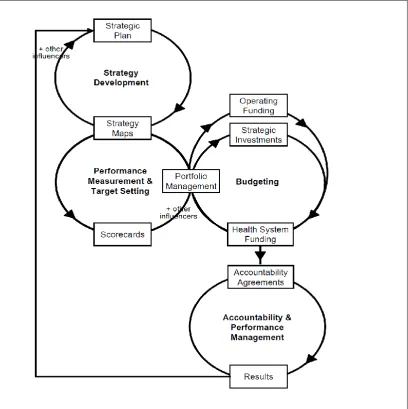
However, there seems to be little experience and hence evidence in the literature on how performance assessment frameworks impact health policy. Smith and Busse (2009) examine how health policies and target setting may, and indeed do, influence the manner in which performance measurement is viewed and structured. This is evidently obvious since in order to create and maintain a robust health system performance assessment framework, financial, human and technological resources need to be dedicated for this venture and hence governments and health care organisations need to commit such resources to continually measure their performance. Conversely, the contrary is not evident, in that performance assessment can and should influence policy development. Veillard et al. (2010) opine that whilst international comparisons of health systems are useful for governments to adjust their health policies, performance data still needs to be integrated into the policy-making process. He cites a few non-European examples as exceptions, one of which is from the Ontario Ministry of Health and Long-Term Care in Canada where there is evidence to show that they make systematic use of performance information and its flow through the decision-making process.
At the turn of the millennium, the World Health Organisation has already realised that the link between policy development and performance assessment frameworks was weak and consequently launched the Enhancing Health Systems Performance Initiative (EHSPI) as a means to improve and manage performance supported with relevant policies (World Health Organisation, 2001). The aim was for the EHSPI to feed into the national policy debate, thereby linking evidence to priority objectives and subsequent actions. WHO hoped that, at a global level, EHSPI would enhance the movement towards more robust evidence-base policy making.
The latter part of the study explores the underlying drivers of health policy and whether policy development is predominantly evidence-based or whether other more utilitarian factors have a greater influence upon policy formulation. For the purposes of this thesis, the evidence base is postulated to be derived from health system performance data, including indicators embedded within purposefully created HSPA frameworks.
1.2.4 Phases of study
This study therefore focuses upon the development of a national health system performance assessment (HSPA) framework for Malta and considers the impact such frameworks have upon policy development. The study consists of three phases:
Phase I Document Analysis
Phase II Development of Malta’s HSPA
Phase III Relationship between performance assessment and policy making
These will be explained further in Chapter 3.
1.3 Historical and policy context of Malta
in 1574 attracted many noble families from Europe for care and rehabilitation. In 1676, one of the oldest medical schools in the world was established by the Knights, heralding a new era of medical education, training, and best practices. Malta’s health
care system continued to strengthen during the English occupation between 1798 and 1964, especially in the post-World War II era of medical and technological advances.
In its post-independence years (post-1964), Malta experienced a few turbulent but significant events during a prolonged 10-year doctors’ strike which transformed the Maltese health care landscape completely (Azzopardi Muscat & Dixon (1999). Paradoxically, several new developments and primary and secondary care services arose from the turmoil of that period, which, coupled with the economic growth in the late eighties and early nineties, saw a considerable expansion of services and a revival of medical training and education (Pincock, (2005). Accession to the European Union (EU) in 2004 provided further impetus for medical developments, especially in public health and pharmaceuticals, cumulating in the opening of Malta’s new main acute
hospital in 2007, which, due to its contextual significance for Malta, impacted significantly upon the health system and its performance in the subsequent years (Azzopardi Muscat, et al., 2016).
The Maltese Health System is unique in that it is a small but overly complete health care system. Although small in size relative to other health systems, it serves the needs of an entire nation and its population. It encompasses most, if not all, components of a modern health system, from primary, secondary and tertiary care, to public health services and health promotion/education, to community services and rehabilitation and mental health services (Azzopardi Muscat & Dixon, 1999). Being an island state, although easily affected by outside influences in today’s modern age of
communication and social media, external influences on the island in the past were less apparent and so improvements or the lack thereof of health care services and health outcomes in Malta in the past were mainly attributable to internal factors. This unique ‘laboratory’ setting presents an ideal opportunity to study certain
from this research may be applicable, to a certain extent, to other health systems, generating new knowledge and insight into how a health system work and performs.
1.4 Research questions
The research questions to be addressed in this study are based upon the two facets discussed earlier, namely the developmental process of HSPA and the relationship between HSPA and policy making. The principal research questions are outlined below and presented in more detail in Chapter 3.
1. Which is the most appropriate method for developing a health system performance assessment model for Malta?
This explores the methods that can be employed for its development and implementation, elucidation of which set of national performance indicators would be the most appropriate for Malta’s first HSPA framework and an assessment on Malta’s health system.
2. What role, if any, do national health system performance assessment frameworks play in the development of national health policy?
This question examines the impact such frameworks have on policy development at a national level and how HSPA can be better utilised for policy making and service improvement.
1.5 Aims and objectives
The aim and objectives comprise two main elements, the first dealing with the development of a HSPA Framework for Malta and the second to study the relationship between HSPA and policy making.
The overall aim of the study is to develop a national health system performance assessment framework for Malta and to examine the impact such frameworks have upon policy development.
Phase I - Document Analysis
The purpose of the document analysis is two-fold; first to understand the methodologies employed for the development of health system performance assessment models and secondly to elicit documentary and historical evidence on the impact of performance assessment on policy development.
Phase II - Malta Health System Performance Assessment Framework
The objectives of this phase centre on the development of Malta’s first ever HSPA, including the elucidation of a set of key national performance indicators for the Maltese health system and the presentation of the results of Malta’s first performance assessment of its health system.
Phase III - Policy Development in relation to performance frameworks
This third phase investigates the relationship between the introduction and implementation of national health system performance assessment frameworks and national policy making and reform. It continues to evaluate whether evidence, in the form of HSPA, has a bearing upon the development and adoption of policies.
These objectives are further outlined in Chapter 3.
1.6 Contribution to research and policy development
benchmarking with other countries, opening the path for Malta to partake in numerous international comparative studies in the future.
Although significant research has been carried out on the link between performance measurement and service improvement, the same could not be said of the link with policy development. This study provides a unique insight into the relationship between national performance frameworks and the development of policy and implementation of reforms at national level. This association is important to consolidate and expand the use of performance assessment frameworks whilst ensuring that policy making is grounded increasingly more in evidence rather than in other extraneous factors.
1.7 Scope and structure of the thesis
This thesis focuses upon the methodology for the development and implementation of national HSPA frameworks and the impact such frameworks have upon policy development.
The next chapter, Chapter 2 provides a conceptual and analytical framework for the thesis, together with a literature review while Chapter 3 outlines the overall aims, research questions and methodologies employed for the study.
The first phase of this research, outlined in Chapter 4, consists of a document analysis to explore the various methodologies and experiences in developing HSPA models internationally. This review also began to investigate the relationship between performance assessment and policy development.
There is strong evidence to suggest that the collection, analysis and elucidation of health performance data has a major impact upon improving health systems and health care performance (Smith, et al., 2009a). However, the link or relationship between HSPA Frameworks and policy development and formulation, as well as policy change is less clear. There is little evidence to suggest that HSPA frameworks have a direct, or indeed, subsidiary impact or influence upon the development and shaping of policies in the health sector.
The third phase of this study, outlined in Chapter 6, examines this hypothesis by building on the findings of the document analysis in continuing to explore the relationship, if any, between HSPA frameworks and health policy development in the European region and examines whether such frameworks have an impact or influence upon policy development and change in several European countries.
CHAPTER 2
LITERATURE REVIEW:
A CONCEPTUAL AND ANALYTICAL FRAMEWORK
“Without data, you’re just another person with an opinion.”
CHAPTER 2
LITERATURE REVIEW:
A CONCEPTUAL AND ANALYTICAL FRAMEWORK
2.1 Introduction
This chapter outlines the historical and policy development of performance frameworks internationally and maps out their progress in different countries. It considers current health performance frameworks, their origin and the process utilised to develop such frameworks. The author will assess their applicability or otherwise for Malta as a model for the development of a similar national framework for this country. The second part of the chapter draws upon the process of policy development in relation to HSPA and reflects on how it informs policy making and reform.
2.2 Health systems
There is no doubt that, throughout the centuries, health systems have contributed enormously towards improving the health of populations, where health systems have been attributed to increasing life expectancy and quality of life, mostly due to technological advances in medicine and better health care practices (Nolte & McKee, 2004). However, it was not until the seminal, if not controversial, work of the World Health Organisation (WHO) at the turn of the millennium that a comprehensive definition of a health system was proposed in its far-reaching World Health Report. This report defined the health system as ‘… all the activities whose primary purpose
is to promote, restore or maintain health’. Operationally, this definition is further
dissected into comprising ‘the resources, actors and institutions related to the
financing, regulation and provision of health actions,’ where health actions are ‘all
activities whose primary purpose is to promote, restore or maintain health’ (World
Health Organisation, 2000, p. 5).
a succinct manner by stating that health systems should always strive towards three fundamental goals – ‘improving health, enhancing responsiveness to the expectations
of the population, and assuring fairness of financial contribution’ (Murray & Frenk,
2001). In summary, health systems are in the business of continually improving the health outcomes of the population it serves and all health system performance measures ultimately measure this final objective or goal.
Due to its inclusive nature, the boundaries of a health system are difficult to define. A health system certainly incorporates all ‘health care’ activities but also includes ‘public health’ activities, as well as formal and informal personal care and voluntary
care (Canadian Institute for Health Information, 2013). However, since health is determined by many interdependent factors, of which health care is only one, a multi-dimensional approach to health is necessary to understand the complexity of health systems (Arah, et al., 2006). This concept was first introduced by Lalonde in his ‘White Paper’ in Canada in 1974 (Lalonde, 1974), which gave way to many other
publications on the subject (Evans & Stoddart, 1990), leading eventually to the ever expanding research on social determinants of health (Marmot & Wilkinson, 2005).
2.2.1 Measuring the performance of health systems
Measurement of performance of health systems has been around for several years (McIntyre, et al., 2001). Initially the performance of health care services and systems was measured through ad hoc, individual and non-related measures and indicators. These pertained, in the main, to general population health, responsiveness of the system to the health care needs of the population, throughput (production) indicators and financial parameters. Other important performance domains were introduced during the eighties and nineties, mostly relating to quality of care, health equity, transparency and accountability, governance and cost-effectiveness or value for money. Quality-adjusted or healthy life measures were later introduced as the focus shifted towards a healthier life rather than a longer life (Kelley & Hurst, 2006).
The breakthrough in health system performance assessment was spurred by the publication of WHO’s World Health report (World Health Organisation, 2010) in
the performance of different health systems was measured and compared in a landmark health system performance assessment (Murray & Evans, 2003). WHO defined health system performance assessment as ‘a country-specific process of monitoring, evaluating, communicating and reviewing the achievement of high-level
health system goals based on health system strategies’ (World Health Organization,
2012, p. ii).
At a European level, the Tallinn Ministerial conference in 2008 and the resulting Tallinn Charter (World Health Organisation, Regional Office for Europe, 2008) committed EU countries, for the first time, albeit rather late in the day, to produce measurable results and to promote transparency and accountability for their health systems. This marked the start of measuring health system performance in Europe, after which several countries took up the challenge (Van Den Berg, et al., 2014).
2.2.2 Health system performance assessment frameworks
Up until the 1990s, although the use of performance indicators was widespread, these indicators were not captured within a conceptual model or framework. One of the first attempts to develop a performance framework at local level was that by van der Bij and Vissers in the Netherlands in 1999 (van der Bij & Vissers, 1999). The seminal work of the WHO, the Organisation for Economic Co-operation and Development (OECD) and the Commonwealth Fund in the United States (Murray & Frenk, 2000), (Arah, et al., 2006), (Commonwealth Fund, Commission on a High Performance Health System, USA, 2006) laid the basis for further frameworks to be developed throughout the world (Department of Health, UK, 1999a), (Canadian Institute for Health Information, 2000), (Queensland Health, National Health Performance Committee, 2001), (Institute of Medicine, 2001a), (Institute of Medicine, 2001b), (Institute of Medicine, 2006).
The closest to a definition that the literature provides is that promulgated by the Department of Health in England, as that of a framework which ‘provides a structure and benchmarks for organisations to use to assess its performance. It covers fair access to services, effective delivery of healthcare, efficiency and the patient and carer
experience’ (Department of Health, UK, 2001, p. 6). The World Bank states that a
health system framework is a generic conceptual tool used to describe a health system, termed as follows: ‘It defines, describes and explains the health system, its objectives,
structural and organizational elements, function and processes’ (Shakarishvili, et al.,
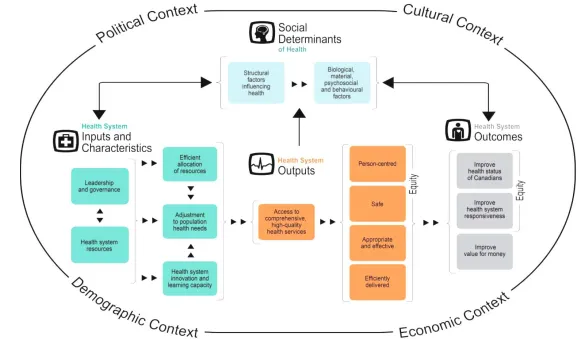
2009, p. 4). A HSPA framework is a conceptual model that incorporates the most relevant dimensions that best describe the goals of the health system it promulgates. It depicts the inter-relationships that exist between the different dimensions of a health system and the goals of the health system (Kelley & Hurst, 2006) and therefore a HSPA framework permeates from the strategic objectives of the health system it is supposed to measure.
These frameworks encompass a similar array of indicators organised into different health domains or dimensions, pertaining to effectiveness, quality and safety, responsiveness, access, equity, efficiency, financial mechanisms, determinants of health and more (Canadian Institute for Health Information, 2013). A performance assessment framework typically groups these domains under health inputs, health outputs, health outcomes and health impact, outlining the journey of a health system in providing and improving health.
Within each domain, performance indicators that are relevant to the health system are extracted and so a HSPA framework gives structure and formality to the measurement of the performance of the various components of a health system. A HSPA framework also delineates the method of indicator selection, the data sources that are used for the indicators chosen, its analysis and how results are communicated to stakeholders (World Health Organisation, 2010).
These are:
• HSPA, as the name implies, should focus upon health systems as a
whole and not on the components parts of a health system. • Outcome measures are better placed to mirror performance.
• HSPA should form part of a regular process to measure performance
and devise policy as implied within the policy cycle of a HSPA. • Although each country or health system should develop its own HSPA,
its structure and content should be comparable with that of other countries and health systems.
2.2.3 Indicators, the crux of performance assessment
It is important to understand the key role of indicators in measuring performance. The Joint Commission on Accreditation on Healthcare Organisations defined a performance indicator (PI) as a ‘measurement tool used to monitor and evaluate the
quality of important governance, management, clinical and support functions’ (Joint
are not developed and chosen appropriately for a defined purpose and if the data is misinterpreted. This is especially relevant when PIs are utilised to measure performance by comparing results against standards or with other similar organisations.
2.3 Search Method: Analysis of current HSPA frameworks
The purpose of this first part of the chapter is to provide an analytical overview of the more salient studies and research that has been carried out in the area of performance assessment frameworks at health system level, starting with some broad definitions and followed by a historical overview in order to contextualise and understand the development of HSPA Frameworks. This is followed by describing and comparing the different methodologies used in the drawing up of HSPA Frameworks. Lastly, an analytical review was used to inform the methodological process towards the development of Malta’s first performance assessment framework, linking this to the
research objectives and questions for the first phase of this dissertation.
2.3.1 Sources of information used in this study
The key words used as search terms for this part of the literature review were ‘health system’ (incorporating ‘health care’ where appropriate), ‘performance assessment and/or measurement,’ ‘framework’ and ‘performance indicators.’ A normal literature search method was employed since the aim was not to produce a systematic review using a strict methodology, such as Prisma.
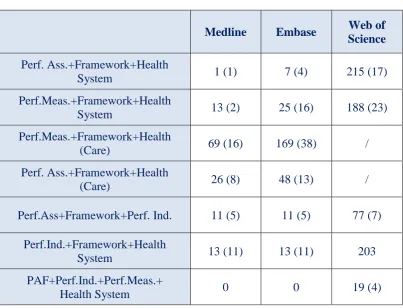
Depending upon the database used, single term searches produced hits in their hundreds or thousands in certain cases. For this reason, combinations of two or, in some cases, three and even four keywords were necessary to narrow down the number of hits to more manageable and relevant numbers. These searches produced numerous hits but many were of dubious relevance to the topics under review, especially in relation to the development and use of performance assessment/measurement frameworks and health system performance. Many hits produced articles on either specific clinical areas (and were not relevant to system wide performance assessment), on hospital based performance studies or on performance measurement initiatives linked to service improvement but not linked to a specific performance assessment framework.
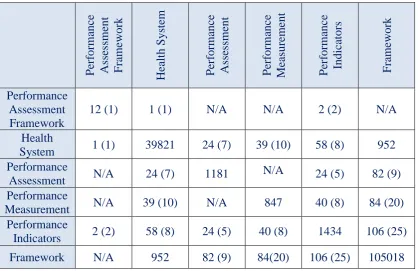
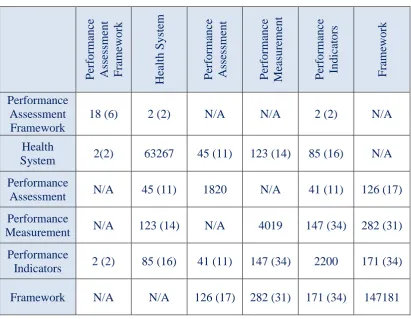
[image:45.595.111.530.485.756.2]Tables 2.1 – 2.4 provide a summary of the search results. The figures in brackets are the number of articles that were deemed relevant for this research and were downloaded and reviewed in detail. The figures in the tables still include duplicates and the exercise of removing duplicates was undertaken after the more relevant articles were downloaded and reviewed. In fact, the author noted that a saturation for new articles was reached after reviewing all three databases.
Table 2.1: References from two-word combinations (just Medline)
P erf orma nc e Asse ssm ent F ra mew ork He alt h S ystem P erf orma nc e Asse ssm ent P erf orma nc e Me asure ment P erf orma nc e Indic ators F ra mew ork Performance Assessment Framework
12 (1) 1 (1) N/A N/A 2 (2) N/A
Health
System 1 (1) 39821 24 (7) 39 (10) 58 (8) 952
Performance
Assessment N/A 24 (7) 1181 N/A 24 (5) 82 (9)
Performance
Measurement N/A 39 (10) N/A 847 40 (8) 84 (20)
Performance
Table 2.2: References from two-word combinations (just Embase) P erf orma nc e Asse ssm ent F ra mew ork He alt h S ystem P erf orma nc e Asse ssm ent P erf orma nc e Me asure ment P erf orma nc e Indic ators F ra m ewor k Performance Assessment Framework
18 (6) 2 (2) N/A N/A 2 (2) N/A
Health
System 2(2) 63267 45 (11) 123 (14) 85 (16) N/A
Performance
Assessment N/A 45 (11) 1820 N/A 41 (11) 126 (17)
Performance
Measurement N/A 123 (14) N/A 4019 147 (34) 282 (31)
Performance
Indicators 2 (2) 85 (16) 41 (11) 147 (34) 2200 171 (34)
[image:46.595.113.525.91.410.2]Framework N/A N/A 126 (17) 282 (31) 171 (34) 147181
Table 2.3: References from two-word combinations (just Web of Science)
P erf orma nc e Asse ssm ent F ra mew ork He alt h S ystem P erf orma nc e Asse ssm ent P erf orma nc e Me asure ment P erf orma nc e Indic ators F ra mew ork Performance Assessment Framework
5099 331 N/A N/A 52 (8) N/A
Health
System 331 146722 2580 1945 1385 N/A
Performance
Assessment N/A 2580 83964 N/A 4868 5099
Performance
Measurement N/A 1945 N/A 154,263 4061 5536
Performance
Indicators 52 (8) 1385 4868 4061 33512 2384
Since in some instances, too many hits were registered with two-word combinations, three keyword combinations were also examined. The results are presented below.
Table 2.4: References derived from three and four word combinations (Medline, Embase and Web of Science)
Medline Embase Web of
Science
Perf. Ass.+Framework+Health
System 1 (1) 7 (4) 215 (17)
Perf.Meas.+Framework+Health
System 13 (2) 25 (16) 188 (23)
Perf.Meas.+Framework+Health
(Care) 69 (16) 169 (38) /
Perf. Ass.+Framework+Health
(Care) 26 (8) 48 (13) /
Perf.Ass+Framework+Perf. Ind. 11 (5) 11 (5) 77 (7)
Perf.Ind.+Framework+Health
System 13 (11) 13 (11) 203
PAF+Perf.Ind.+Perf.Meas.+
Health System 0 0 19 (4)
In addition to the above, snowballing techniques were also used where the author extracted several references from suitable articles. Much documentation was also found in the grey literature since this subject was not always subject to empirical research and many governments and organisations carried out studies and published reports which were not submitted to peer-reviewed journals for publication.
2.4 Historic development of performance assessment frameworks
2.4.1 Early national frameworks
In Europe, Scotland was amongst the first to develop and publicise the use of clinical indicators. In 1992, the Clinical Outcomes Working Group was set up with a mandate to create outcome clinical indicators for Scotland. The first set of clinical indicators was first produced in 1993 and since then, an indicators report was published on an annual basis (NHS Quality Improvement Scotland, 2005). However, up to that point, the focus was channelled into the development of the indicators themselves with little interest in mapping these indicators into a framework that could be used for the overall improvement in performance (Kendrick, et al., 1999).
In 1997, the Department of Health in England published a white paper ‘The new NHS: Modern, Dependable’ (Department of Health, UK, 1997), launching the Government’s new vision for the NHS at the time. This document outlined, for the
first time, a new national Performance Assessment Framework as the main instrument for securing management control in the NHS. This was deemed necessary due to the changes envisaged in the white paper, in order to equip Health Authorities, Primary Care Groups and NHS Trusts to discharge their new roles and responsibilities. This led to a realisation that if the population’s health needs could be charted through an umbrella performance framework, this would be equally applicable to a Health Authority, a Primary Care Group, or an NHS Trust. Indeed, this is the first time that clear incentives and sanctions were introduced at a national or system level to improve the performance of these organisations.
The new millennium lent itself to a plethora of new performance concepts, such as that promulgated by the UK Treasury in its document – ‘Choosing the Right Fabric; A Framework for Performance Information’ (HM Treasury, 2000). Using the health