ISSN Print: 2152-7180
DOI: 10.4236/psych.2018.97101 Jul. 11, 2018 1707 Psychology
The Influence of Social Rejection on
Cognitive Control
Ting Wang
*, Hongmei Sha
Laboratory of Emotion and Mental Health, Chongqing University of Arts and Sciences, Chongqing, China
Abstract
Social exclusion has a broad effect on individuals, including basic cognitive function, emotion and behaviour. Studies using the Cyberball game showed that social exclusion influenced executive control. However, the effects of dif-ferent paradigms on subjects are difdif-ferent. The present study aimed to explore the effect of social exclusion through the life-alone paradigm. Participants were required to complete a questionnaire, and then they randomly received fake feedback (lonely or happy) about their future social lives. To test the cog-nitive control of the two groups, event related potential (ERP) was recorded when participants completed a letter flanker task. The results showed that compared with included subjects, excluded subjects had a larger congruency effect and showed a smaller N2 component in both congruent and incongru-ent trials; additionally, they did not show a larger P3 effect in incongruincongru-ent compared to congruent trials. These results indicated that social exclusion de-creased subjects’ cognitive control ability, including conflict detection and re-sponse inhibition. Time-frequency results found that ERSP magnitudes of the alpha band were significantly smaller in incongruent than congruent trials for included participants, but this was not the case for excluded subjects. This finding suggested that excluded subjects might have no available resources to resolve conflict in incongruent trials. Further, compared to the ostracism paradigm, future rejection led to a decline in conflict detection ability.
Keywords
Social Rejection, Executive Function, Conflict Detection, N2, P3, Alpha Band
1. Introduction
Social exclusion refers to the process in which an individual is rejected by others or other organizations, and the individual’s need to belong or relatedness is How to cite this paper: Wang, T., & Sha,
H. M. (2018). The Influence of Social Re-jection on Cognitive Control. Psychology, 9, 1707-1719.
https://doi.org/10.4236/psych.2018.97101
Received: June 1, 2018 Accepted: July 8, 2018 Published: July 11, 2018
Copyright © 2018 by authors and Scientific Research Publishing Inc. This work is licensed under the Creative Commons Attribution International License (CC BY 4.0).
http://creativecommons.org/licenses/by/4.0/
DOI: 10.4236/psych.2018.97101 1708 Psychology blocked (Twenge, Catanese, & Baumeister, 2002). Almost everyone has had the experience of being refused. For example, one has been refused during physical activities or received a rejection letter from an editor. Numerous studies have found that social exclusion can lead to aggression and impulsive behaviour (Leary, Twenge & Quinlivan, 2006). For example, when given a chance, an ex-cluded individual would make innocent people eat more chili sauce (Warburton, Williams, & Cairns, 2006) or make them listen to longer and louder sounds (Twenge, Baumeister, Tice, & Stucke, 2001). Excluded adolescents also showed greater behavioural risk-taking if they had a low ability to resist peer influence (Peake, Dishion, Stormshak, Moore, & Pfeifer, 2013). In addition, social exclu-sion damaged self-regulation skills (Baumeister, DeWall, Ciarocco, & Twenge,
2005) and overall cognitive function (Baumeister, Twenge, & Nuss, 2002). For
example, excluded individuals ate more cookies and could not focus on a frus-trating task (Baumeister et al., 2005). Excluded individuals also showed de-creased logical thinking (Campbell et al., 2006). Executive function modulates this behaviour and thinking. Executive function is also called cognitive control, and it is used to accomplish goal-directed behaviours by monitoring interference or response conflict and dynamically adjusting performance (Botvinick, Braver, Barch, Carter, & Cohen, 2001; Egner, 2011). Thus, researchers inferred that ag-gression- and impulsive behaviour-induced social exclusion is linked to the de-cline of executive function (Otten & Jonas, 2013).
Researchers then began to explore the effect of social exclusion on executive function and made some progress. Jamieson, Harkins, and Williams (2010) used the antisaccade task and measured the response inhibition ability of rejected and accepted individuals; the results showed that inhibition ability was lower for the rejected individuals. Otten and Jonas (2013), using event-related potential (ERP) technology to measure electrical activity when the subjects completed the Go/No Go task, found that there was no difference in behaviour between excluded and included subjects, but in the ERP component, excluded subjects showed a stronger response in conflict monitoring and a worse response in inhibition ability. Another study with magnetoencephalography (MEG) found that com-pared with control subjects, the social exclusion group showed decreased activi-ties in the parietal and right prefrontal lobes, which are the vital brain regions in executive function (Campbell et al., 2006). All of these studies showed that social exclusion influenced executive control.
DOI: 10.4236/psych.2018.97101 1709 Psychology acts as a conflict monitor, has been shown to be involved in alertness-related modulation (Yanaka, Saito, Uchiyama, & Sadato, 2010), and phasic alertness can modulate conflict adaptation and feature integration in the flanker task (Liu, Yang, Chen, Huang, & Chen, 2013). Therefore, the influence of social exclusion on participants’ conflict detection ability might be different when adopting other social exclusion paradigms. Thus, we use the life-alone paradigm (Twenge et al., 2001), which is categorized as the future rejection paradigm, to explore the effect of social exclusion on executive function.
Additionally, we used a letter flanker task to measure the cognitive control of participants. In the flanker task, subjects typically respond more slowly to in-congruent than to in-congruent trials, which reflects the level of cognitive control (Wang et al., 2014). Previous ERP studies have revealed the following two esses of cognitive control: conflict detection and the response inhibitory proc-esses. The conflict detection process is represented by the fronto-central N2 component (van Veen & Carter, 2002), which is a negative potential that peaks at approximately 200 ms after stimuli onset and is larger in incongruent trials than in congruent trials (Folstein & Van Petten, 2008; Yeung, Botvinick, & Cohen, 2004). The response inhibitory process is represented by the P3 compo-nent (Nee, Wager, & Jonides, 2007), which is a positive potential at approxi-mately 300 ms and is also larger in incongruent trials than in congruent trials (Fruhholz, Godde, Finke, & Herrmann, 2011).
The ERP approach has utility in detecting scalp evoked activities, which are time- and phase-locked to experimental events (e.g., presenting a visual stimu-lus). However, there are also induced activities that are time- but not phase- locked to the onset of a stimulus or a response (Makeig, Debener, Onton, & Delorme, 2004). These activities can be detected via spectral analysis methods, which exhibit rhythmic oscillations within different frequency bands (L. Wang et al., 2015). Different EEG frequency bands are thought to underlie a particular cognitive process (Pandey et al., 2016). For instance, the alpha band has been shown to be linked with relaxed or mentally drowsy states, so it can serve as an inverse neural indicator of mental alertness or arousal (Carp & Compton, 2009). Additionally, studies have shown that the alpha band reflects modulation to at-tention demand allocation (Pandey et al., 2016) and atat-tention orienting (van Ede, de Lange, Jensen, & Maris, 2011).
DOI: 10.4236/psych.2018.97101 1710 Psychology included subjects when they were completing the flanker task.
2. Material and Methods
2.1. Subjects
Thirty paid volunteers (16 women, 14 men) aged 18 - 22 years (mean age, 19.6 years) participated in the experiment. They were undergraduate students from a university in China. All participants were right-handed and had normal or cor-rected-to-normal vision.
2.2. Stimuli and Procedures
Participants first completed the Revised Eysenck Personality Questionnaire Short Scale for Chinese (EPQ-RSC), which is a Chinese version of the Eysenck Personality Questionnaire (Qian, Wu, Zhu, & Zhang, 2000). To obtain credibil-ity, the experimenter provided accurate feedback in response to the question-naires. Then, the social exclusion was manipulated by providing participants bogus feedback about their future social lives. For the included condition, the participant was told, “You’re the type who has rewarding relationships throughout life. You’re likely to have a long and stable marriage and have friendships that will last into your later years. The odds are that you’ll always have friends and people who care about you” (Twenge et al., 2001). In contrast, people in the ex-cluded condition were told, “You’re the type who will end up alone later in life. You may have friends and relationships now, but by your mid-20s most of these will have drifted away. You may even marry or have several marriages, but these are likely to be short-lived and not continue into your 30s. Relationships don’t last, and when you’re past the age where people are constantly forming new rela-tionships, the odds are you’ll end up being alone more and more.”(Twenge et al., 2001).
After the feedback about the future, participants completed a flanker task, during which brain electrical activity was recorded. In each trial, five letters were presented in a line: the central one was the target, and the remaining letters were the flankers. Four letters (S, H, N and P) were employed in the task, and each letter could be a target or a flanker. In the congruent trials, the flankers were identical to the target (for example, SSSSS), and in the incongruent trials, the flankers were mapped onto a different response hand to the target stimulus (for example, SSNSS). Participants were instructed to press the key that corre-sponded to the central letter. Responses were made with one of four different fingers (left middle finger, left index finger, right index finger and right middle finger). The four responses corresponding to each letter were counterbalanced across the subjects.
DOI: 10.4236/psych.2018.97101 1711 Psychology Then, a blank screen was presented for 1500 ms, and participants were in-structed to press the corresponding key during this period as quickly and accu-rately as possible. After another blank screen appeared for 1000 ms, the next trial started.
After the flanker task, participants were told that the feedback about their ex-traversion score were true but that the feedback about their future lives was a randomly assigned description. The experimenter also apologized for giving the random feedback.
2.3. Electrophysiological Recording
Brain electrical activity was recorded with a Brain Products ERP workstation. Ag/AgCl electrodes with 64 scalp sites fixed in a conductive cap were used; a reference electrode recorded the bilateral mastoid. The vertical electrooculogram (VEOG) was recorded with electrodes placed above and below the left eye. The impedance between the scalp and electrode is less than 5 kΩ. The signals were amplified using amplifier amplification, with a bandpass of 0.05 - 100 Hz and a continuously sampling frequency of 500 Hz/channel. The off-line analysis would reject all types of artefacts, including eye movement artefacts and amplifier clip-ping artefacts.
2.4. ERP Analysis
EEGs of congruent trials and incongruent trials were separately overlapped and averaged for both excluded and included participants. The epoch for ERP was started 200 ms before and ended 1000 ms after the onset of the letter arrays (Figure 1). The baseline was defined as the 200 ms that preceded the letter onset. Trials with incorrect responses were excluded, and at least 50 trials remained in each condition. Repeated-measure ANOVAs were used to compare the ERPs to congruent trials and incongruent trials in excluded and included participants, with congruency (congruent vs. incongruent) as a within-subjects factor, and exclusion (excluded vs included) as a between-subjects factor. For all analyses,
p-values were corrected according to the Greenhouse-Geisser method for re-peated-measures effects.
2.5. Time-Frequency Analysis
DOI: 10.4236/psych.2018.97101 1712 Psychology
Figure 1. The scalp topographies reflecting the ERSP magnitude distributions of each
[image:6.595.212.535.72.201.2]condition within the defined TF-ROI (alpha band, 8 - 13 Hz in frequency, 500 - 850 ms in latency).
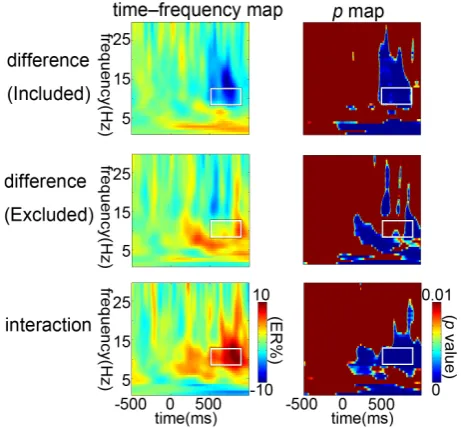
Figure 2. The grand-averaged time-frequency representations
of the power difference (incongruent minus congruent) for the two groups and the interaction between exclusion and con-gruency within the fronto-central region [(Fz+FCz+Cz)/3]. The results of corresponding bootstrapping statistical analyses at the significance level of p < 0.01 (FDR corrected). The time-frequency pixels that exhibit a significant difference from the baseline are coloured in blue. The significant task-related TF-ROIs are outlined in the rectangles.
frequency region of interest (TF-ROI) according to the p map of interaction (Figure 3).
3. Results
3.1. Behavioural Data
[image:6.595.258.489.265.479.2]DOI: 10.4236/psych.2018.97101 1713 Psychology
Figure 3. ERPs of congruent and incongruent trials for excluded
and included participants.
and 92.2% ± 1.2%, respectively, for excluded participants. The mean RTs of congruent trials and incongruent trials were 523.8 ± 26.9 ms and 550.2 ± 29 ms, respectively, for the included participants and 525.3 ± 26.9 ms and 578.6 ± 29 ms, respectively, for the excluded participants. Repeated-measures analyses of variance (ANOVA) for mean accuracy and mean RTs showed that the main ef-fects of congruency were significant (accuracy: F (1, 28) = 9.18, p < 0.01; RTs: F
(1, 28) = 57.26, p < 0.001). There was no significant difference in mean accuracy or mean RTs between the included and excluded groups (accuracy: F(1, 28) = 2.10, p > 0.05; RTs: F(1, 29) = 0.15, p > 0.05). The interaction effect between the congruency and incongruency groups for RTs was significant (F (1, 29) = 6.54, p
< 0.05), and the interaction between them for accuracy was not significant (F (1, 28) = 1.98, p > 0.05). A post hoc analysis for mean RTs was conducted and showed that there were significant congruency effects (the difference between incongruent and congruent trials) in the two groups, which were larger for ex-cluded participants (mean = 53.31, p < 0.001) than for included participants (mean = 26.38, p < 0.01).
3.2. ERP Results
As shown in Figure 1, compared to congruent trials, incongruent trials evoked a larger negative potential between 250 and 300 ms after stimulus onset at the front-central site, which was the classical N2 component. Subsequently, a larger P3 component between 450 and 500 ms at the parietal lobe was evoked by in-congruent trials compared to in-congruent trials. This finding clearly shows that the neural response patterns of cognitive control include two stages: conflict de-tection (N2) and response inhibition (P3).
DOI: 10.4236/psych.2018.97101 1714 Psychology (excluded vs. included) as a between-subjects factor. The results showed that the main effect of congruency was significant (F (1, 28) = 4.92, p < 0.05) and that the main effect of exclusion was significant (F (1, 28) = 8.97, p < 0.01). There were no other significant main effects or interaction effects for the results of the N2 component.
Statistical analysis for the amplitude of P3, which was defined as the mean amplitude within 450 - 500 ms post-stimulus onset, was carried out by means of repeated measures ANOVA with congruency (congruent vs. incongruent) and electrode (Cz, CPz and Pz) as within-subjects factors and exclusion (excluded vs. included in Cyberball) as a between-subjects factor. The results showed that the main effect of congruency was significant (F (1, 29) = 31.18, p < 0.001), the main effect of electrode was significant (F (2, 56) = 13.23, p < 0.001) and the interac-tion between congruency and exclusion was significant (F (1, 28) = 10.65, p < 0.05). A post hoc analysis was conducted and showed that the difference be-tween congruent and incongruent trials for included participants was significant (p < 0.001) but was not significant for excluded participants (p > 0.05). There were no other significant main effects or interaction effects in the results of the P3 component.
3.3. Time-Frequency Results
In the S-ROI [(Fz+FCz+Cz)/3], a time-frequency region of interest (TF-ROI) alpha band (8 - 13 Hz, 500 - 850 ms) showed the most pronounced task-related effect (in Figure 3, p < 0.01, FDR corrected). Statistical analysis for the ERSP magnitudes within the defined S-ROI was carried out by means of repeated measures ANOVA with congruency (congruent vs. incongruent) as a within- subjects factor and exclusion (excluded vs. included) as a between-subjects fac-tor. The results show that the interaction between congruency and exclusion was significant (F (1, 28) = 5.94, p < 0.05). Post hoc tests revealed that for included participants, ERSP magnitudes were significantly smaller in incongruent trials than in congruent trials (p < 0.01), but this was not the case for excluded par-ticipants (p > 0.05).
4. Discussion
DOI: 10.4236/psych.2018.97101 1715 Psychology band were significantly smaller in incongruent trials than in congruent trials for included participants, but this was not the case for excluded participants. Over-all, social exclusion altered subjects’ cognitive control and its neural response pattern.
We found a smaller N2 component for excluded subjects in both congruent and incongruent trials, which suggested that excluded subjects had decreased conflict detection. This finding is not consistent with a previous study(Otten & Jonas, 2013), which showed an increased conflict detection for excluded subjects. In their study, social exclusion was manipulated by the ostracism paradigm (Cyberball game), which could increase individuals’ arousal levels. Additionally, the arousal level could improve subjects’ conflict detection (Liu et al., 2013). However, the present study adopted the paradigm of future rejection, which did not alter subjects’ arousal levels and led to a decline in conflict detection, which might be a purer effect of social exclusion on conflict detection. Actually, when being excluded, participants entered into a cognitive deconstructed state, which protected them against the negative experience of social exclusion (Twenge, Ca-tanese, & Baumeister, 2003). The cognitive deconstructed state is characterized by a lack of emotion (Baumeister et al., 2002), lethargic behaviour (Schaafsma et
al., 2015), and altered time perception (Twenge et al., 2003). Specifically, the
smaller N2 in both congruent and incongruent trials might reflect the lethargy state of excluded subjects. In addition, after being excluded, participants needed to address the negative experiences, which would deplete the limited cognitive resources (Fishbach, Friedman, & Kruglanski, 2003). An imaging study has shown that social exclusion activates the anterior cingulate cortex (ACC), which is also involved in conflict detection (Eisenberger, Lieberman, & Williams, 2003). Therefore, the smaller N2 of excluded participants also reflected the lack of resources available to monitor conflicts.
The absence of a P3 effect for excluded participants indicated that they might not attempt to inhibit the flanker stimuli or that they had decreased response in-hibition. This is in accordance with a previous study: Otten and Jonas (2013) found that an excluded participant showed a smaller P3 effect in a Go/No Go task. In another imaging study (Campbell et al., 2006), excluded participants showed decreased activation in the parietal and right prefrontal lobe, which are involved in the response inhibition process. After being excluded, people might enter into a cognitive deconstructed state and do not attempt to inhibit the flanker stimuli. Additionally, in order to address the negative experiences of so-cial exclusion, the resources available to control the response conflict were con-sumed. Therefore, there was no motivation or resources for excluded subjects to inhibit the response conflict. This was also reflected by the behavioural results in the present study: excluded subjects showed a larger congruency effect compared to included subjects.
DOI: 10.4236/psych.2018.97101 1716 Psychology & Compton, 2009) and attention processes (Kelly, Lalor, Reilly, & Foxe, 2006). As an inverse neural indicator, a reduced alpha power reflected the increasing demand of attention or mental arousal (Wang et al., 2015). For example, when completing a visual spatial attention task, subjects showed a decreased alpha in the attended location and an increased alpha in the ignored location (Kelly et al.,
2006;Sauseng et al., 2005). In addition, the warning cue, which signals an
im-pending stimulus, triggered a reduced alpha power (Yordanova, Kolev, & Başar, 1998). In the flanker task, more attention and mental effort is required to inhibit the flanker interference in the incongruent trials compared with the congruent trials. Therefore, decreased alpha power was observed in included subjects. However, for excluded subjects, there was no significant difference in alpha power between incongruent and congruent trials. This indicated that excluded subjects did not exert attention resources or had no available resources to resolve the conflict in incongruent trials.
5. Conclusion
In conclusion, the present study found that when adopting a future rejection paradigm, excluded subjects showed a larger congruency effect, a smaller N2 component, an absent P3 effect and alpha reduction in the flanker task. These results indicated that social exclusion decreased subjects’ cognitive control, in-cluding conflict detection and response inhibition. In addition, this result indi-cated that compared to the ostracism paradigm, future rejection led to decreased conflict detection.
Acknowledgements
This work was supported by grants from the National Natural Science Founda-tion of China (Grant No. 31600917) and the Chongqing EducaFounda-tion Science Planning Project (Grant No. 2017-GX-131).
Author Contributions
Ting conceived of the study, Hongmei collected and analysed the data, and Ting wrote the paper.
Conflict of Interest Statement
There are no conflicts of interest.References
Baumeister, R. F., DeWall, C. N., Ciarocco, N. J., & Twenge, J. M. (2005). Social Exclusion Impairs Self-Regulation. Journal of Personality and Social Psychology, 88, 589-604. https://doi.org/10.1037/0022-3514.88.4.589
Baumeister, R. F., Twenge, J. M., & Nuss, C. K. (2002). Effects of Social Exclusion on Cognitive Processes: Anticipated Aloneness Reduces Intelligent Thought. Journal of Personality and Social Psychology, 83, 817-827.
DOI: 10.4236/psych.2018.97101 1717 Psychology Botvinick, M. M., Braver, T. S., Barch, D. M., Carter, C. S., & Cohen, J. D. (2001). Conflict
Monitoring and Cognitive Control. Psychological Review, 108, 624-652. https://doi.org/10.1037/0033-295X.108.3.624
Campbell, W. K., Krusemark, E. A., Dyckman, K. A., Brunell, A. B., McDowell, J. E., Twenge, J. M., & Clementz, B. A. (2006). A Magnetoencephalography Investigation of Neural Correlates for Social Exclusion and Self-Control. Society for Neuroscience, 1, 124-134. https://doi.org/10.1080/17470910601035160
Carp, J., & Compton, R. J. (2009). Alpha Power Is Influenced by Performance Errors. Psychophysiology, 46, 336-343. https://doi.org/10.1111/j.1469-8986.2008.00773.x Delorme, A., & Makeig, S. (2004). EEGLAB: An Open Source Toolbox for Analysis of
Single-Trial EEG Dynamics including Independent Component Analysis. Journal of Neuroscience Methods, 134, 9-21. https://doi.org/10.1016/j.jneumeth.2003.10.009 Egner, T. (2011). Right Ventrolateral Prefrontal Cortex Mediates Individual Differences
in Conflict-Driven Cognitive Control. Journal of Cognitive Neuroscience, 23, 3903-3913. https://doi.org/10.1162/jocn_a_00064
Eisenberger, N. I., Lieberman, M. D., & Williams, K. D. (2003). Does Rejection Hurt? An fMRI Study of Social Exclusion. Science, 302, 290-292.
https://doi.org/10.1126/science.1089134
Fishbach, A., Friedman, R. S., & Kruglanski, A. W. (2003). Leading Us Not unto Tempta-tion: Momentary Allurements Elicit Overriding Goal Activation. Journal of Personality and Social Psychology, 84, 296-309. https://doi.org/10.1037/0022-3514.84.2.296
Folstein, J. R., & Van Petten, C. (2008). Influence of Cognitive Control and Mismatch on the N2 Component of the ERP: A Review. Psychophysiology, 45, 152-170.
Fruhholz, S., Godde, B., Finke, M., & Herrmann, M. (2011). Spatio-Temporal Brain Dy-namics in a Combined Stimulus-Stimulus and Stimulus-Response Conflict Task. Neuroimage, 54, 622-634. https://doi.org/10.1016/j.neuroimage.2010.07.071
Gerber, J., & Wheeler, L. (2009). On Being Rejected a Meta-Analysis of Experimental Re-search on Rejection. Perspectives on Psychological Science, 4, 468-488.
https://doi.org/10.1111/j.1745-6924.2009.01158.x
Jamieson, J. P., Harkins, S. G., & Williams, K. D. (2010). Need Threat Can Motivate Per-formance after Ostracism. Personality and Social Psychology Bulletin, 36, 690-702. https://doi.org/10.1177/0146167209358882
Kelly, S. P., Lalor, E. C., Reilly, R. B., & Foxe, J. J. (2006). Increases in Alpha Oscillatory Power Reflect an Active Retinotopic Mechanism for Distracter Suppression during Sustained Visuospatial Attention. Journal of Neurophysiology, 95, 3844-3851. https://doi.org/10.1152/jn.01234.2005
Liu, P. D., Yang, W. J., Chen, J., Huang, X. T., & Chen, A. T. (2013). Alertness Modulates Conflict Adaptation and Feature Integration in an Opposite Way. PLoS ONE, 8, e79146. https://doi.org/10.1371/journal.pone.0079146
Makeig, S., Debener, S., Onton, J., & Delorme, A. (2004). Mining Event-Related Brain Dynamics. Trends in Cognitive Sciences, 8, 204-210.
https://doi.org/10.1016/j.tics.2004.03.008
Nee, D. E., Wager, T. D., & Jonides, J. (2007). Interference Resolution: Insights from a Meta-Analysis of Neuroimaging Tasks. Cognitive Affective & Behavioral Neuroscience, 7, 1-17. https://doi.org/10.3758/CABN.7.1.1
DOI: 10.4236/psych.2018.97101 1718 Psychology Pandey, A. K., Kamarajan, C., Manz, N., Chorlian, D. B., Stimus, A., & Porjesz, B. (2016).
Delta, Theta, and Alpha Event-Related Oscillations in Alcoholics during Go/NoGo Task: Neurocognitive Deficits in Execution, Inhibition, and Attention Processing. Pro-gress in Neuro-Psychopharmacology & Biological Psychiatry, 65, 158-171.
https://doi.org/10.1016/j.pnpbp.2015.10.002
Peake, S. J., Dishion, T. J., Stormshak, E. A., Moore, W. E., & Pfeifer, J. H. (2013). Risk- Taking and Social Exclusion in Adolescence: Neural Mechanisms Underlying Peer In-fluences on Decision-Making. Neuroimage, 82, 23-34.
https://doi.org/10.1016/j.neuroimage.2013.05.061
Qian, M., Wu, G., Zhu, R., & Zhang, S. (2000). Development of the Revised Eysenck Per-sonality Uestionnaire Short Scale for Chinese (EPQ-RSC). Acta Psychologica Sinica, 32, 317-323.
Sauseng, P., Klimesch, W., Stadler, W., Schabus, M., Doppelmayr, M., Hanslmayr, S., Birbaumer, N. et al. (2005). A Shift of Visual Spatial Attention Is Selectively Associated with Human EEG Alpha Activity. European Journal of Neuroscience, 22, 2917-2926. https://doi.org/10.1111/j.1460-9568.2005.04482.x
Schaafsma, J., Krahmer, E., Postma, M., Swerts, M., Balsters, M., & Vingerhoets, A. (2015). Comfortably Numb? Nonverbal Reactions to Social Exclusion. Journal of Non-verbal Behavior, 39, 25-39. https://doi.org/10.1007/s10919-014-0198-9
Twenge, J. M., Baumeister, R. F., Tice, D. M., & Stucke, T. S. (2001). If You Can’t Join Them, Beat Them: Effects of Social Exclusion on Aggressive Behavior. Journal of Per-sonality and Social Psychology, 81, 1058-1069.
https://doi.org/10.1037/0022-3514.81.6.1058
Twenge, J. M., Catanese, K. R., & Baumeister, R. F. (2002). Social Exclusion Causes Self-Defeating Behavior. Journal of Personality and Social Psychology, 83, 606-615. https://doi.org/10.1037/0022-3514.83.3.606
Twenge, J. M., Catanese, K. R., & Baumeister, R. F. (2003). Social Exclusion and the De-constructed State: Time Perception, Meaninglessness, Lethargy, Lack of Emotion, and Self-Awareness. Journal of Personality and Social Psychology, 85, 409-423.
https://doi.org/10.1037/0022-3514.85.3.409
van Ede, F., de Lange, F., Jensen, O., & Maris, E. (2011). Orienting Attention to an Up-coming Tactile Event Involves a Spatially and Temporally Specific Modulation of Sen-sorimotor Alpha- and Beta-Band Oscillations. The Journal of Neuroscience, 31, 2016- 2024. https://doi.org/10.1523/JNEUROSCI.5630-10.2011
van Veen, V., & Carter, C. S. (2002). The Timing of Action-Monitoring Processes in the Anterior Cingulate Cortex. Journal of Cognitive Neuroscience, 14, 593-602.
https://doi.org/10.1162/08989290260045837
Wang, L., Tang, D., Zhao, Y., Hitchman, G., Wu, S., Tan, J., & Chen, A. (2015). Disentan-gling the Impacts of Outcome Valence and Outcome Frequency on the Post-Error Slowing. Scientific Reports, 5, Article No. 8708. https://doi.org/10.1038/srep08708 Wang, T., Chen, Z. C., Zhao, G., Hitchman, G., Liu, C. C., Zhao, X. Y., Chen, A. T. et al.
(2014). Linking Inter-Individual Differences in the Conflict Adaptation Effect to Spon-taneous Brain Activity. Neuroimage, 90, 146-152.
https://doi.org/10.1016/j.neuroimage.2013.12.055
Warburton, W. A., Williams, K. D., & Cairns, D. R. (2006). When Ostracism Leads to Aggression: The Moderating Effects of Control Deprivation. Journal of Experimental Social Psychology, 42, 213-220. https://doi.org/10.1016/j.jesp.2005.03.005
Re-DOI: 10.4236/psych.2018.97101 1719 Psychology search, 68, 51-58. https://doi.org/10.1016/j.neures.2010.05.005
Yeung, N., Botvinick, M. M., & Cohen, J. D. (2004). The Neural Basis of Error Detection: Conflict Monitoring and the Error-Related Negativity. Psychological Review, 111, 931-959. https://doi.org/10.1037/0033-295X.111.4.931