University of Warwick institutional repository: http://go.warwick.ac.uk/wrap
A Thesis Submitted for the Degree of PhD at the University of Warwick
http://go.warwick.ac.uk/wrap/4462
This thesis is made available online and is protected by original copyright. Please scroll down to view the document itself.
Surface Modification with Polymers
using Living Radical Polymerisation
and Click Chemistry
by
CHEN, Gaojian
A thesis submitted in partial fulfilment of the
requirements for the degree of
Doctor of Philosophy in Chemistry
Department of Chemistry
University of Warwick
Table of Contents
SURFACE MODIFICATION WITH POLYMERS USING LIVING RADICAL
POLYMERISATION AND CLICK CHEMISTRY ... 1
TABLE OF CONTENTS ... 2
LIST OF FIGURES ... 7
LIST OF TABLES ... 16
ACKNOWLEDGEMENTS ... 17
DECLARATION... 19
ABSTRACT ... 20
ABBREVIATIONS ... 23
CHAPTER 1. POLYMERS AT SOLID SURFACES ... 28
1.1INTRODUCTION... 28
1.2SELF-ASSEMBLED MONOLAYERS (SAMS) ... 28
1.3SURFACE MODIFICATION WITH POLYMERS ... 30
1.4TYPICAL SURFACE MODIFICATION USING "GRAFTING FROM" METHOD ... 32
1.4.1 Ring opening polymerisation ... 32
1.4.2 Ring opening metathesis polymerisation (ROMP) ... 35
1.4.3 Living ionic (anionic/cationic) polymerisation ... 36
1.4.4 Nitroxide-mediated polymerisation (NMP) ... 38
1.4.6 Transition metal medicated living radical polymerisation (TMM-LRP) .... 43
1.5TYPICAL SURFACE MODIFICATION USING "GRAFTING TO" METHOD ... 47
1.5.1 Highly polar groups ... 48
1.5.2 Charged groups and Blocks of segmentally adsorbing polymer different from the rest of the chain ... 50
1.5.3 Chemically reactive groups ... 52
1.6“GRAFTING TO” VERSUS “GRAFTING FROM” AND AIM OF THIS PROJECT ... 53
CHAPTER 2. CELLULOSE SURFACE MODIFICATION THROUGH CLICK CHEMISTRY AND LIVING RADICAL POLYMERISATION ... 56
2.1INTRODUCTION... 56
2.1.1 Click chemistry and Huisgen 1,3-dipolar cycloaddition ... 56
2.1.2 Proposed mechanism of Cu(I)-catalysed Huisgen 1,3-dipolar cycloaddition ... 57
2.1.3 TMM-LRP and click chemistry ... 58
2.2.SYNTHESIS OF -FUNCTIONAL POLYMERS THROUGH TMM-LRP... 61
2.2.1 Synthesis of initiators for TMM-LRP ... 61
2.2.2 TMM-LRP of DMAEMA with N-hydroxy succinimide 2-bromopropionate (1) ... 63
2.2.3 TMM-LRP of MMA with N-hydroxy succinimide 2-bromopropionate (1) . 66 2.2.4 TMM-LRP of MMA with 2-bromo-2-methyl propionic acid 6-acetylsulfanyl-hexyl ester (2) ... 69
2.2.3 TMM-LRP of MMA and hostasol monomer (HMA) with 2-bromo-2-methyl-propionic acid 3-azido-propyl ester (3) ... 72
2.2.4 TMM-LRP of PEG-MA with 2-bromo-2-methyl-hept-6-yn-3-one (4) ... 76
2.3CELLULOSE SURFACE MODIFICATION USING CLICK CHEMISTRY AND LRP ... 79
2.3.1 Synthesis of Monomethoxy-PEG5000-N3 (6). ... 79
2.3.2 Synthesis of 5-[1,3-dioxo-1H-benzo[3,4]isothiochromeno[7,8,1-def]isoquinolin-2(3H)-yl]pentyl, (Hostasol-azide), (7) ... 80
2.3.3 Click reaction to cotton surfaces ... 81
2.3.3 Conclusions ... 85
2.4.1 Polymerisation of metronidazole-containing monomer (MTD-MA) and
poly(ethylene glycol) methacrylate (PEG-MA). ... 87
2.4.2 Graft of metronidazole-containing monomer from cellulose surface ... 92
2.4.3 Conclusion ... 95
CHAPTER 3 RESIN SURFACE MODIFICATION AND ITS POTENTIAL APPLICATION IN CHROMATOGRAPHY ... 96
3.1INTRODUCTION... 96
3.2CLICK REACTIONS TO THE SURFACES OF WANG AND MERRIFIELD RESINS WITH FLUORESCENT POLYMERS ... 98
3.2.1 Copolymerisation of MMA and hostasol methacrylate (HMA). ... 98
3.2.2 Wang and Merrifield resins: surface modification. ... 101
3.3“CLICK”MODULAR APPROACH TO GLYCOSYLATED RESINS ... 105
3.3.1 Synthesis of the sugar supports ... 107
3.3.2 Characterization of the sugar hybrid supports ... 109
3.3.3 Preliminary lectin recognition experiments ... 113
3.3.4 Conclusion ... 118
3.4TMM-LRP OF GLYCEROL METHACRYLATE (GMA) ONTO RESIN SURFACE AND THEIR MODIFICATION FOR CHIRAL SEPARATION ... 119
3.4.1 Synthesis of chiral polymer based CSP ... 121
3.4.2 Characterisation of the hybrid supports ... 122
3.4.3 Conclusion ... 125
CHAPTER 4 MULTIWALL CARBON NANOTUBE (MWCNT) SURFACE MODIFICATION ... 126
4.1INTRODUCTION... 126
4.1.1 CNT surface modification by non-covalent attachment ... 127
4.1.2 CNT surface modification by covalent attachment ... 128
4.1.3 Summary of CNT surface modification in this project... 132
4.2SYNTHESIS OF PST MODIFIED CNT AND THE FORMATION OF ISOPOROUS MEMBRANES ... 133
4.2.1 Synthesis of CNT-g-PSt through surface-initiated LRP ... 135
4.3SYNTHESIS OF POLY(AMIDOAMINE)(PAMAM) DENDRON MODIFIED CNT AND
ITS METAL TEMPLATING355 ... 142
4.3.1 Synthesis of hydroxyl terminal PAMAM G3.5 dendron ... 143
4.3.2 Modification of MWCNT surface with PAMAM dendron and metal templating ... 144
4.4THERMO-RESPONSIVE WATER-DISPERSIBLE CNTS. ... 150
4.4.1 Synthesis of pyrene-terminal copolymer by SET-LRP. ... 152
4.4.2 Non-covalent modification of CNTs with pyrene-terminal polymers ... 157
CHAPTER 5 CONCLUSION AND OUTLOOK... 161
CHAPTER 6 EXPERIMENTAL SECTION ... 164
6.1REAGENTS AND MATERIALS ... 164
6.2ANALYSIS AND CHARACTERISATION ... 164
6.3SYNTHESIS OF LIGANDS:N-(N-PROPYL)-2-PYRIDYLMETHANIMINE ... 166
6.4SYNTHESIS OF INITIATORS FOR TMM-LRP ... 167
6.4.1 N-Hydroxy succinimide 2-bromo-2-methyl propionate (1) ... 167
6.4.2 2-Bromo-2-methyl propionic acid 6-acetylsulfanyl-hexyl ester (2) ... 168
6.4.3 2-Bromo-2-methyl-propionic acid 3-azido-propyl ester (3) ... 169
6.4.4 2-Bromo-2-methyl-hept-6-yn-3-one (4) ... 170
6.4.5 2-Bromo-2-methyl-propionic acid pyren-1-ylmethyl ester ... 171
6.5SYNTHESIS OF -FUNCTIONAL MATERIALS ... 172
6.5.1 Synthesis of azido-terminal materials ... 172
6.5.2 Synthesis of alkyne-terminal materials ... 177
6.5.3 Synthesis of hydroxyl-terminal PAMAM dendron ... 179
6.5.4 Synthesis of pyrene-terminal polymers ... 184
6.6CELLULOSE SURFACE MODIFICATION ... 185
6.6.1 cotton surface modification through click chemistry ... 185
6.6.2 Synthesis of Metronidazole modified cotton ... 186
6.7RESIN SURFACE MODIFICATION ... 188
6.7.1 Wang resin surface modification through click chemistry ... 188
6.7.2 Merrifield resin surface modification through click chemistry ... 189
6.7.4 Aquagel resin surface modification through surface-initiated LRP. ... 193
6.8CARBON NANOTUBE (CNT) SURFACE MODIFICATION ... 194
6.8.1 Polystyrene modified MWCNT ... 194
6.8.2 Modification of MWCNT with PAMAM dendron ... 196
6.8.3 Thermo-responsive water-dispersible MWCNTs ... 197
List of Figures
Figure 1. Schematic representation of a self-assembled monolayer (SAM). ... 29
Figure 2. Schematic representation of different types of SAMs. ... 30
Figure 3. Approaches for modifying surfaces with organic polymers. ... 31
Figure 4. Scheme of ring opening polymerisation (ROP) and typical example of polymer brushes grown by ROP. (a) Poly(N-propionylethyleneimine), (b) poly(ε -caprolactone), (c) poly(lactic acid), (d) poly(glutamate), (e) poly(ε-carprolactam). ... 33
Figure 5. Scheme of ROMP and example of polymer brushes grown by ring opening metathesis polymerization (ROMP) of norbornene-derived monomers. ... 36
Figure 6. Scheme of living anionic/cationic polymerisation and typical examples of polymer brushes grown by [(a) polystyrene,(b) polystyrene-b-polyisoprene] living anionic polymerisation and [(c) polystyrene] living cationic
polymerisation... 37
Figure 7. Schematic representation of nitroxide-mediated polymerisation (NMP) and polymer brushes grown by NMP. ... 39
Figure 8. Scheme of Reversible Addition Fragmentation chain Transfer
polymerisation (RAFT) and typical example of polymer brushes grown by RAFT. (a) Poly(methyl methacrylate), (b) polystyrene. ... 41
Figure 9. Inner-sphere electron-transfer mechanism of Copper Mediated Living Radical Polymerisation. ... 43
Figure 10. Out-sphere electron-transfer mechanism of Copper Mediated Living
Radical Polymerisation according to Percec. ... 44
Figure 11. Typical examples of polymer brushes grown by ATRP. ... 45
Figure 13. Chemical structures of the protective polymers poly(acrylonitrile) (PAN), poly(mercaptomethylstyrene-co-N-vinyl-2-pyrrolidone) (MMS-NVP) and poly(2-(methylthio)ethyl methacrylate-co-methyl methacrylate) (MTEMA-MMA). ... 48
Figure 14. Chemical structures of the functional polymers with dithiobenzoic ester as end group synthesised by RAFT, poly(sodium 4-styrenesulfonate) (NaPSS), poly((ar-vinylbenzyl) trimethylammonium chloride) (PVBTAC), poly(N,N-dimethylacrylamide) (PDMA), and poly(3-[2-(N-methylacrylamido)-ethyldimethyl ammonio]propane sulfonate-b-N,N-dimethylacrylamide)
(MAEDAPS-DMA). ... 50
Figure 15. Schematic representation of polymers capable of terminal attachment to a substrate. ... 51
Figure 16. Cu(I)-catalysed Huisgen 1,3-dipolar cycloaddition. ... 57
Figure 17. Proposed catalytic cycle for the Cu(I)-catalysed ligation by Fokin and Sharpless. ... 58
Figure 18. Click chemistry (Huisgen 1,3-dipolar cycloaddition) on surface
modification. ... 60
Figure 19. Synthesis of initiators bearing different functional groups. ... 61
Figure 20. Synthesis of succinimide-terminal PDMAEMA. ... 63
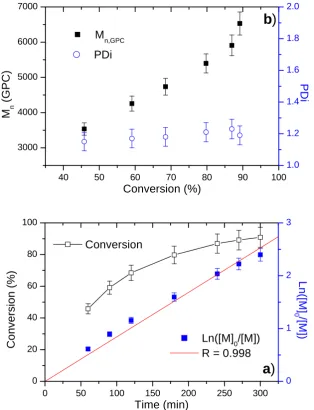
Figure 21. a) Conversion vs. time and semilogarithmic kinetic curves and b) Mn, Mw/Mn vs. conversion curves for the TMM-LRP of DMAEMA with 1.
[M]0/[I]0/[CuBr]0/[L]0 = 50: 1: 1: 2 ... 64
Figure 22. 1H NMR of PDMAEMA with succinimide ester as alpha terminal group. 65
Figure 23. Synthesis of succinimide-terminal PMMA. ... 66
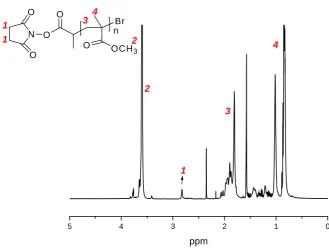
Figure 25. 1H NMR of PMMA with succinimide ester as alpha terminal group. ... 69
Figure 26. Synthesis of acetylsulfanyl-terminal PMMA. ... 69
Figure 27. a) Conversion vs. time and semilogarithmic kinetic curves and b) Mn, Mw/Mn vs. conversion curves for the TMM-LRP of MMA with 2. ... 70
Figure 28. 1H NMR of PMMA with acetylsulfanylhexyl ester as alpha terminal group. ... 71
Figure 29. Synthesis of azido-terminal Poly(MMA-co-HMA). ... 72
Figure 30. a) Conversion vs. time and semilogarithmic kinetic curves and b) Mn, Mw/Mn vs. conversion curves for the TMM-LRP of MMA and HMA with 3. .. 73
Figure 31. 1H NMR of Poly(MMA-co-HMA) with azido-propyl ester as alpha terminal group. ... 75
Figure 32. Synthesis of alkyne-terminal PEG-MA. ... 76
Figure 33. a) Conversion vs. time and semilogarithmic kinetic curves and b) Mn, Mw/Mn vs. conversion curves for the TMM-LRP of PEG-MA in toluene. ... 77
Figure 34. 1H NMR of Poly(PEG-MA) with alkyne terminal group. ... 78
Figure 35. Materials employed for cotton functionalization. ... 79
Figure 36. Synthesis of azide-terminal Monomethoxy-PEG5000. ... 80
Figure 37. Synthesis of Hostasol-azide. ... 80
Figure 38. Reagents and conditions for cotton modification: a) anhydrous pyridine, DMAP, b) N-(n-propyl)-2-pyridyl methanimine/Cu(I)Br, R-N3, 70˚C, (R = Poly(MMA-co-HMA), methoxy-PEG, Hostasol)... 81
Figure 39. FTIR spectra of cotton fibre before and after modification. A: cotton; B: cotton-alkyne; C: cotton-(7). ... 82
Figure 41. FE-SEM images of cotton before and after modification. A: Native cotton; B: Cotton-(7); C: Cotton-(5); D: Cotton-(6). ... 84
Figure 42. Confocal images of fluorescently modified cotton. A: Cotton-control, B: Cotton-(7), C: Cotton-(5). ... 85
Figure 43. Structure of metronidazole and metronidazole monomer (MTD-MA). ... 86
Figure 44. Polymerisation of metronidazole-containing monomer (MTD-MA) and PEG-MA. a) CuBr/bpy, 25 ˚C. ... 88
Figure 45. a) Semilogarithmic kinetic curves and b) Mn, Mw/Mn vs. conversion curves for the polymerisation of MTD-MA and PEG-MA in toluene. ... 89
Figure 46. 1H NMR of Poly(MTD-MA-co-PEG-MA). ... 91
Figure 47. Reagents and conditions for cotton modification: a) anhydrous pyridine, DMAP, 2-bromo-2-methyl-propionyl bromide, b) Cu(I)Br/bpy, MTD-MA, PEG-MA, RT, anisole). ... 92
Figure 48. FTIR spectra of Polymer (9), the cotton fiber and the cotton fibers after modification. ... 93
Figure 49. Microbalance curves of the cotton fibers before and after modification. ... 93
Figure 50. FE-SEM images of cotton before and after modification. A: Native cotton; B: Cotton-Br; C &D: Cotton-(10). ... 94
Figure 51. Copolymerisation of MMA and HMA. Reagents and conditions: a) CuBr,
N-(n-propyl)-2-pyridyl methanimine, 90˚C. ... 99
Figure 52. a) Semilogarithmic kinetic curve and b) Mn, PDi vs. conversion curves for the copolymerisation of MMA and HMA. Reaction
conditions:[MMA]0/[HMA]0/[I]0/[CuBr]0/[L]0 = 100: 0.2 : 1: 1: 2, 90˚C, I = (4).
... 100
Figure 54. Reagents and conditions for resin modification: a1) Anhydrous pyridine, (7), DMAP; b1) (PPh3)3Cu(I)Br, R-N3 , 70˚C, (R = (5)); a2) NaN3, DMSO/H2O,
b2) (PPh3)3Cu(I)Br, R-C≡CH, 70 ˚C, (R = (11)). ... 102
Figure 55. FTIR spectra of Wang and Merrifield resins before and after modification. A: Wang Resin; B: Wang (5); C: Merrifield Resin; D: Merrifield Resin-(11). ... 102
Figure 56. Images of modified Merrifield and Wang resins obtained by confocal microscopy. A: Merrifield resin-(11), B: Wang resin-(5). ... 103
Figure 57. FE-SEM images of Wang resin before and after modification. A1, A2: native Wang resin; B1, B2: Wang resin-(5) ... 104
Figure 58. Immobilized sugar supports: two general approaches employed in this work. ... 107
Figure 59. Synthesis of mannose modified Wang Resins by ‘click’ reaction. Reagents and conditions: a) 4-Chlorocarbonyl-butyric acid prop-2-ynyl ester, DMAP, pyridine, 60˚C; b) (PPh3)3Cu(I)Br, -2-azidoethyl mannopyranoside, DMSO,
60˚C; c) 2-bromoisobutyryl bromide, triethylamine, DMAP, dichloromethane; d) trimethylsilyl-propargyl methacrylate, N-(ethyl)-2-pyridylmethanimine/Cu(I)Br, toluene, 70˚C; e) TBAF·3H2O, acetic acid, THF; f) (PPh3)3Cu(I)Br,
a-2-azidoethyl mannopyranoside, DIPEA, DMSO, 60˚C. ... 108
Figure 60. FTIR spectra of Wang resin, Wang-initiator and Wang-mannose. ... 109
Figure 61. Gel-phase 1H NMR spectra of “rasta” polymers presented in this study. Beads were suspended either in CDCl3 ((4) and (5)) or DMSO-d6.((6)). ... 111
Figure 62. FE-SEM images of Wang resin (a&c) and Resin (15) (b&d). ... 113
Figure 63. SEC-HPLC analysis of the FITC-Con A solution before (A, greed solid line) and after (B, blue solid line) elution through the immobilized
Figure 64. SEC-HPLC analysis (UV detection, l = 280 nm) of the FITC-Con A solution before (A, red dot line line) and after (B, blue solid line) elution through the immobilized “rasta” neoglycopolymer resin (17) cartridge. Analogous mini-columns packed with non-sugar-functionalized supports (16) and Wang resin were used as controls and the solutions eluted from them were analyzed by SEC-HPLC under the same conditions employed for (17). The resin cartridges were then washed with 1 mL of 50 mM pH 7.4 PBS and the eluted solution was
analyzed by SEC HPLC (C, green solid line). ... 116
Figure 65. Confocal microscopy images of the (17) (a), (16) (b) and Wang resin (c) beads obtained after passing 1 mL of a 1 mg mL-1 FTIC-Con A solution in 50 mM pH 7.4 PBS through micro-colum cartridges packed with the
aforementioned resins. The resins were rinsed with 50 mM pH 7.4 PBS before confocal microscopy analysis. ... 117
Figure 66. Confocal microscopy images of the resin (17)-FITC Con A cluster beads before (a) and after washing with a 4.0 M solution of
-methyl-D-mannopyranoside, a competitive monovalent ligand for Con A, in 50 mM pH 7.4 PBS. ... 118
Figure 67. Synthesis of enantiomer-immobilised resins by surface-initiated polymerisation. Reagents and conditions: A) 2-bromoisobutyryl bromide, anhydrous pyridine, ambient temperature; B) GMA, Cu(I)Br/bpy, methanol, 25˚C; C) EtPhNCO, anhydrous pyridine, 50 ˚C. ... 121
Figure 68. FTIR spectra of Aquagel resins before and after modification. ... 122
Figure 69. Gel-phase 1H NMR spectra of EtPhNCO modified Aquagel resin (20) suspended in CDCl3 . ... 123
Figure 70. FE-SEM images of Aquagel (a), resin (19) (b) and resin (20) (c). ... 125
Figure 71. Chemical modification of CNTs through thermal oxidation, and the
Figure 72. Overview of possible addition reactions for the functionalization of the CNTs. (copied from Balasubramanian, K.; Burghard, M. Small 2005, 1, 180-192). ... 131
Figure 73. Proposed mechanism (Stenzel, M. H.; Barner-Kowollik, C.; Davis, T. P. J. Polym. Sci., Polym. Chem. 2006, 44, 2363-2375.) for the formation of
honeycomb-structured porous films: (A) evaporation of the solvent of the polymer solution, (B) condensation of water droplets cause by the cold surface temperature of the solution, (C) formation of a hexagonal closest packing of water droplets on the solution surface, (D) precipitation of the polymer on the interface and prevention of coagulation. ... 134
Figure 74. Synthesis of PSt modified CNTs. (a) SOCl2; (b)
2-bromo-2-methyl-propionic acid 6-hydroxy-hexyl ester, toluene; (c) Styrene, Cu(I)Br/ Bipy,
110 °C. ... 135
Figure 75. IR spectra of CNTs before and after modification. ... 136
Figure 76. TGA traces of native and functionalised CNTs. ... 137
Figure 77. TEM of MWCNTs before and after modification. A: CNT-COOH, (21); B: PSt-g-CNT, (24). ... 138
Figure 78. SEC trace of the PSt chains cleaved from the CNTs. ... 139 Figure 79. Image from optical microscope of hybrid nanoparticle membrane of
PSt-g-CNT... 140
Figure 80. FE-SEM images of the hybrid nanoparticle membrane of PSt-g-CNT. ... 140
Figure 81. AFM image of the hybrid nanoparticle membrane of CNT-g-PSt. ... 141
Figure 82. Scheme (copied from http://en.wikipedia.org/wiki/Dendrimer) of
dendrimer and dendron. ... 142
Figure 83. Synthesis of α-functional PAMAM dendron. ... 143
Figure 85. Synthesis of PAMAM dendron modified MWCNT and dendron-MWCNT-Ag(0) hybrid materials. Reagents and conditions: a) thionyl chloride, toluene; b) (25), toluene; c) AgNO3 aqueous solution; d) formaldehyde solution. ... 145
Figure 86. TGA curves of native and functionalised MWCNT. ... 147
Figure 87. FTIR of native and functionalised MWCNTs. ... 147 Figure 88. FE-SEM images of native and functionalised MWCNTs. A. native
MWCNTs; B. MWCNT-dendron (26); C. MWCNT-dendron-Ag (28). ... 148
Figure 89. TEM of MWCNTs and EDS dates: A) native MWCNTs; B) MWCNT-dendron (26); C) Control: MWCNT-COOH (21) + AgNO3 + CH2O; D)
MWCNT-dendron-Ag (28); E) the EDS spectrum of (28). ... 149
Figure 90. Synthesis of pyrene-terminal copolymer by SET-LRP and preparation of thermo-sensitive water-soluble CNTs... 152
Figure 91. Synthesis of the pyrene initiator. ... 153
Figure 92. Semilogarithmic kinetic curves and Mn, PDi vs. conversion curves for the SET-LRP of DEGMA. Reaction conditions: [DEGMA]0 : [I]0 : [Cu(0)]0 : [L]0 =
100: 1: 1: 1, 25˚C. ... 154
Figure 93. Semilogarithmic kinetic curves and Mn, PDi vs. conversion curves for the SET-LRP of PEGMA. Reaction conditions: [PEGMA]0 : [I]0 : [Cu(0)]0 : [L]0 =
100: 1: 1: 2, 25˚C. ... 154
Figure 94. Semilogarithmic kinetic curves and Mn, PDi vs. conversion curves for the SET-LRP of PEGMAand DEGMA. Reaction conditions: [PEGMA]0 :
[DEGMA]0 : [I]0 : [Cu(0)]0 : [L]0 = 10 : 90 : 1 : 1 : 2, 25˚C. ... 155
Figure 95. 1H NMR spectrum of pyrene-containing PEG copolymer (Polymer 31). 156
Figure 97. The control experiments of dispersing MWCNTs in aqueous solution after 5 days: A) polymer 31; B) non-pyrene polymer 33; C) 1-pyrenebutyric acid + NaOH. ... 159
Figure 98. TGA traces for (A) MWCNT (black line); (B) Polymer 31 modified
List of Tables
Table 1. Comparison of the two surface modification approaches of “grafting to” and
“grafting from”. ... 55
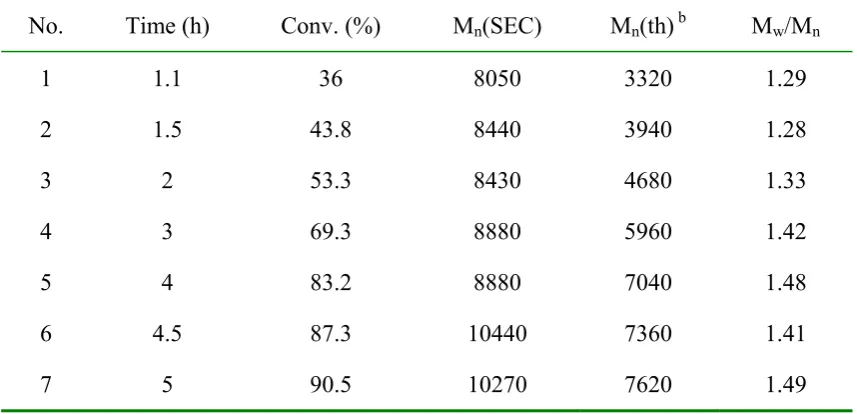
Table 2 Results and conditions of TMMLRP for DMAEMA by initiator 1. ... 65
Table 3 Results and conditions of TMMLRP for MMA by initiator 1. ... 68
Table 4 Results and conditions of TMMLRP for MMA by initiator 2. ... 71
Table 5 Results and conditions for TMMLRP of MMA and HMA by initiator 3. ... 74
Table 6 Results and conditions for TMMLRP of PEG-MA by initiator 4. ... 76
Table 7 Results and conditions of TMMLRP for MTD-MA and PEG-MA. ... 90
Table 8 Elemental analysis of some of the functionalized Wang resins prepared in this work. ... 112
Table 9. Elemental analysis of some of the functionalized Aquagel resins prepared in this work. ... 124
Acknowledgements
I would like to thank all the people who contributed in some way to the work described in this thesis. First and foremost, I thank my supervisor, Professor David M. Haddleton, for the support and guidance that was necessary for the completion of this work. I have been fortunate to have you as my supervisor and I consider it an honour to be your student.
Dr Giussepe Mantovani, thank you for your continuous help during these three years. Although my Ping Pong may be slightly better than you, I greatly benefited from your keen scientific insight, without your effort my job would have undoubtedly been more difficult.
Claire Sayers helped me for HPLC characterisation. Solene Cauet often gave me helpful comments on my work. And Dr Josefina Lindqvist helped reviewing my thesis. I would like to thank all the members of the polymer group past and present. You provided a friendly and cooperative atmosphere at work. All the happy things happened during my PhD study in Warwick with you guys are my treasures.
Further special thanks should go to Dr Julie Macpherson and Dr Paul Taylor for evaluating the progress of my PhD study, Dr. Adam Clarke for assistance with NMR experiments, Dr Steve York for SEM and TEM characterisation, Miss Sara Dale for assistance with Confocal Microscopy.
I am grateful for the funding sources that allowed me to pursue my PhD studies: the Overseas Research Students Award Scheme (ORSAS) and Warwick Postgraduate Research Fellowship Scheme (WPRFS).
Declaration
Experimental work contained in this thesis is original research carried out by the author, unless otherwise stated, in the Department of Chemistry at the University of Warwick, between October 2004 and September 2007. No material contained herein has been submitted for any other degree, or at any other institution.
Results from other authors are referenced in the usual manner throughout the text.
______________________________________ Date: _____________________
Abstract
Thin organic and polymer layers on solid substrates play a key role in many processes aimed at modifying surface properties. Both "grafting to" and "grafting from" methods have been used in this project to modify a variety of surfaces including cellulose, resins and carbon nanotubes (CNT) with functional polymers. Living radical polymerisation and Huisgen [2+3] cycloaddition (often termed “click” reaction) were used to carry out these modifications.
The covalent immobilization of a range of carbohydrate derivatives onto resin beads was then carried out. Copper-catalysed Huisgen [2+3] cycloaddition was used to graft mannose-containing azides to complementarily functionalised alkyne surfaces, namely: a) Wang resin or b) “Rasta” particles consisting of a “clickable” alkyne polymer loose outer shell and a Wang resin inner core. For the second approach, Wang resin beads were first converted into immobilized ATRP initiators, and then polymerisation of trimethylsilanyl-protected propargyl methacrylate followed by deprotection with TBAF·3H2O afforded the desired polyalkyne clickable scaffold. An
appropriated -mannopyranoside azide was then clicked onto it, to give a mannose functionalized “Rasta” resin. The binding abilities of these D-mannose-modified particles were then tested using fluorescein labelled Concanavalin A (Con A), a lectin known for its ability of binding certain mannose-containing molecules. Our preliminary results indicated that the novel glycohybrid materials presented in this work are able to efficiently recognize mannose-binding model lectins such as Con A, opening the way for their potential application in affinity chromatography, sensors and other protein recognition/separation fields.
Surface initiated living radical polymerisation of GMA was then successfully carried out for the synthesis of PGMA containing bead base on Aquagel resin. The hydroxyl groups of the PGMA moiety were then reacted with a single enantiomer (R )-(+)-1-phenylethyl isocyanate (EtPhNCO). This demonstrates a convenient way of immobilise enantiomer moiety onto resin surface and the resulting solid support may be used as chiral stationary phases (CSP) for HPLC chromatography.
To modify CNTs with functional polymers not only increase the dispersability of the CNTs, it has also enlarged the application areas of CNT’s due to the polymers' own functional properties. MWCNTs were first converted to a solid support LRP initiator by an esterification reaction and styrene was grafted from MWCNTs through surface-initiated LRP, the PSt modified CNTs were then used to form isoporous membranes. Similarly, Poly(amidoamine) (PAMAM) dendrons were covalently attached to MWCNTs and dendron-MWCNT-Ag(0) hybrid materials were made afterwards which occurred via Ag(I) coordination to the PAMAM dendron nitrogen donors, followed by reduction with formaldehyde. Finally, noncovalent method was used to make a thermo-sensitive water soluble CNTs. The homopolymerisations and copolymerisation of poly(ethylene glycol) methyl ether methacrylate (PEGMA) and di(ethylene glycol) methyl ether methacrylate (DEGMA) using a pyrene-containing initiator and a Cu(0)/Me6-Tren catalyst system was investigated. The
Abbreviations
AFM atomic force microscopy
AGET activators generated by electron transfer APS (γ-aminopropyl) triethoxysilane
ARGET activator regenerated by electron transfer ATRP atom transfer radical polymerisation Au-NPs gold nanoparticles
CCl4 carbon tetrachloride
CL caprolactone
CNTs carbon nanotubes
COD cyclooctadiene
Con A Concanavalin A
Conv. conversion
CuBr copper(I)bromide
DCC N, N’-dicyclohexylcarbodiimide
DCM dichloromethane
DEGMA di(ethylene glycol) methyl ether methacrylate DIAD di-isopropyl azodicarboxylate
DIPEA diisopropylethylamine
DMAEMA 2-(dimethylamino)ethyl methacrylate DMAP 4-dimethylamino pyridine
DMF dimethyl formamide
DMSO dimethyl sulfoxide
DP degree of polymerisation/kinetic chain length d-PDMS deuterated poly(dimethylsiloxane)
DPE diphenylethylene
DVB divinylbenzene
EDS energy-dispersive spectroscopy EGDMA ethylene glycol dimethacrylate
EtPhNCO (R)-(+)-1-phenylethyl isocyanate
f initiator efficiency
FE-SEM field-emission scanning electron microscopy
FITC-Con A fluorescein isothiocyanate-labelled Concanavalin-A
GMA Glycerol methacrylate
GPC gel permeation chromatography
GR grafting ratio
HEA 2-hydroxyethyl acrylate
HEMA 2-hydroxyethyl methacrylate
HMA hostasol monomer
Hostasol-azide 5-[1,3-dioxo-1H-benzo[3,4]isothiochromeno[7,8,1-def] isoquinolin-2(3H)-yl]pentyl
HPMA N-(2-hydroxy-propyl)-2-methyl-acrylamide I initiator
IR infrared
kd rate constant of deactivation
kp rate constant of polymerisation
kt rate constant of termination
ktd rate constant of termination by disproportionation
ktr rate constant of chain transfer
L-LA L-lactide
LRP living radical polymerisation
M monomer
MA methyl acrylate
MADIX macromolecular design via interchange of xanthates MAEDAPS-DMA poly(3-[2-(N-methylacrylamido)-ethyldimethyl
ammonio]propane sulfonate-b-N,N-dimethylacrylamide) METAC 2-(methacryloyloxy)ethyl trimethylammonium chloride
MMA methyl methacrylate
Mn number average molecular weight
Mn,NMR Mn by nuclear magnetic resonance
Mn,SEC Mn by size exclusion chromatography
Mn,th Theoretical number average molecular weight
MTD-MA metronidazole monomer Mw weight average molecular weight
MWCNT multiwalled carbon nanotube MWD molecular weight distribution NaPSS poly(sodium 4-styrenesulfonate) NCA N-carboxyanhydrides
NHS N-hydroxy succinimide
NIPAAm N-isopropyl-2-methyl-acrylamide
PAMAM poly(amidoamine)
PAmPV poly{(5-alkoxy-m-phenylenevinylene)-co-[(2,5-dioctyloxy-p -phenylene)-vinylene]}
PB poly(butadiene)
PBLG poly-γ- benzyl-L-glutamate PCL poly(-caprolactone)
PDi polydispersity index
PDMA poly(N,N-dimethylacrylamide)
PDMAEMA poly(dimethylamino)ethyl methacrylate
PDMS polydimethylsiloxane
PEG poly(ethylene glycol)
PEGMA poly(ethylene glycol) methyl ether methacrylate
PEO poly(ethylene oxide)
PGMA poly(glycerol methacrylate)
PMEMA poly(2-(N-morpholino)-ethyl methacrylate)
PMMA poly(methyl methacrylate)
PmPv poly(m-phenylenevinylene) PNIPAM poly(N-isopropylacrylamide)
POEGMA poly(oligo(ethylene glycol) methacrylate) PPEI poly(N-propionyl ethyleneimine)
ppm parts per million
PSt polystyrene
PVA poly(vinyl alcohol)
PVBTAC poly((ar-vinylbenzyl) trimethylammonium chloride)
RAFT reversible addition fragmentation chain transfer
RH hydrodynamic radius
ROMP ring opening metathesis polymerisation ROP ring-opening polymerisation
Rp rate of polymerisation
Rt rate of termination
SAM self-assembled monolayer
SEC size exclusion chromatography SEM scanning electron microscopy SET single-electron transfer
SI-VDP surface-initiated vapour deposition polymerisation
SKMA solketal methacrylate
St styrene
SWCNTs single-walled carbon nanotubes
TEM transmission electron microscopy TGA thermal gravimetric analysis
THF tetrahydrofuran
TMM-LRP transition metal mediated living radical polymerisation
UV ultra violet
λ wave length (nm)
Chapter 1. Polymers at Solid Surfaces
1.1 Introduction
Thin organic and polymer layers on solid substrates play a key role in many processes aimed at modifying surface properties. These organic/polymer modified surfaces can be applied in many fields, including adhesion and wetting, 1-3 microfluidics, 4 microfabrication, 3,5,6 chemical sensing 5 and organic synthesis. 6-8 In addition, many
examples of bio-related applications, such as tissue engineering, 9 drug delivery, 10-12 implants and cell adhesion 13,14 and protein recognition 1 have also been reported. With the development of polymer and surface science, new grafting technologies promise to offer unprecedented control of the polymer architecture with micrometer and nanometer resolutions. A brief introduction of current technologies used in (polymer) surface modification will be given below.
1.2 Self-assembled monolayers (SAMs)
surface (often with poor control over the thickness of the molecular layer), self assembled monolayers can be prepared simply by adding a solution of the desired molecule onto the substrate surface and washing off the excess, Figure 1.
Figure 1. Schematic representation of a self-assembled monolayer (SAM).
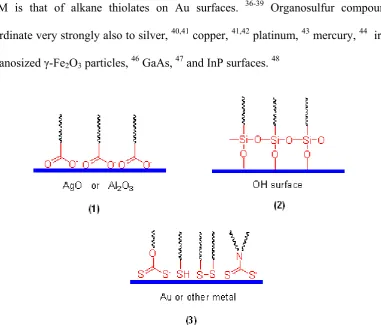
The most common example is probably an alkane thiol assembled on a gold surface. Sulfur has a high affinity for gold, with a binding energy in the range of 20–35 kcal/mol (85–145 kJ/mol). An alkane with a thiol head group will stick to the gold surface and form an ordered assembly with the alkyl chains packing together due to van der Waals forces. Although the majority of papers describing SAMs in recent years have described thiols on gold 18,19, this is by no means the only system to consider. As shown in Figure 2, there are in general three types of SAMs: (1) monolayers of fatty acids: the spontaneous adsorption of n-alkanoic acids (CnH2n+1COOH) onto aluminium oxide or silver is a good example.20-22 This is an
acid-base reaction, and the driving force is the formation of a surface metal cation. (2) Monolayers of organosilicon derivatives: SAMs of alkylchlorosilanes, alkylalkoxysilanes, and alkylaminosilanes can be formed on hydroxylated surfaces. The driving force for this self-assembly is the in situ formation of a polysiloxane, which is connected to surface silanol groups (-SiOH) via Si-O-Si bonds. Substrates on which these monolayers have been successfully prepared include silicon oxide, 23-26
oxide, 26 and gold. 18,19 (3) Organosulfur adsorbates on metal and semiconductor surfaces: Sulfur and selenium compounds have a strong affinity to transition metal surfaces. 34,35 This is probably due to the possibility of forming multiple bonds with surface metal clusters. Until now, the most studied, and probably most understood SAM is that of alkane thiolates on Au surfaces. 36-39 Organosulfur compounds coordinate very strongly also to silver, 40,41 copper, 41,42 platinum, 43 mercury, 44 iron,
45 nanosized γ-Fe
[image:31.595.108.490.182.507.2]2O3 particles, 46 GaAs, 47 and InP surfaces. 48
Figure 2. Schematic representation of different types of SAMs.
1.3 Surface modification with polymers
centrifuge rotor head, which holds the slides in a horizontal position during centrifugation. A drop of solution is deposited on the slide. The centrifuge is then operated at moderate speed and under slightly evacuated conditions until all the solvent has evaporated, leaving a thin smooth film on the glass slide. Although easy and simple, the polymers coated onto the surface using these techniques may become detached under certain conditions. Therefore other approaches have been researched and investigated. One strategy commonly employed for solving this problem is to form a covalent chemical bond between the substrate and the polymer molecules.
Figure 3. Approaches for modifying surfaces with organic polymers.
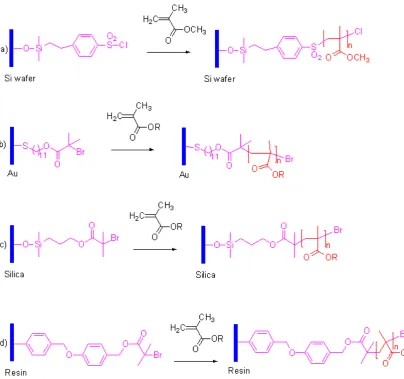
widely employed to make polymer brushes is to generate polymers directly at the surface of the substrate using surface-attached initiators, (“grafting from” method or sometimes called surface-initiated polymerisation52). Examples of these two techniques for surface modification are given below.
1.4 Typical surface modification using "grafting from"
method
The "grafting from" method is by far the most widely employed synthetic strategy for the production of high density polymer brushes since the emergence of living radical polymerization 50,56. Many examples of the “grafting from” method using anionic, cationic, ring-opening, nitroxide-mediated polymerisation (NMP), reversible addition–fragmentation chain transfer (RAFT) polymerisation and in particular transition metal mediated living radical polymerisation (TMM-LRP) have been reported. 57-60 The latter technique, often termed atom transfer radical polymerisation (ATRP), provides polymers with controlled molecular weight and low polydispersities and gives better control of the properties of the surface 56,61-63. Here some example of the methods used in surface modification through "grafting from" approach will be given:
1.4.1 Ring opening polymerisation
non-carbon atom, such as O and N atoms. Typical examples of surface-initiated ROP are given below.
Figure 4. Scheme of ring opening polymerisation (ROP) and typical example of polymer brushes grown by ROP. (a) Poly(N-propionylethyleneimine), (b) poly(ε-caprolactone), (c) poly(lactic acid),
Jordan et al. firstly reported the living cationic ROP of 2-ethyl-2-oxazoline to produce linear poly(N-propionyl ethyleneimine) (PPEI).64 Self-assembled monolayer (SAM) technology was used to attach trifluoromethane sulfonate groups on a gold coated glass slide by the adsorption of 11-hydroxyundecanethiol and subsequent vapor-phase functionalization. A thick layer of PPEI was produced by reaction with 2-ethyl-2-oxazoline in refluxing chloroform for seven days. Amphiphilic brushes were obtained after adding N, N-dioctylamine to terminate this polymerisation. (Figure 4a)
Aluminium alkoxide catalysed ROP was used by Husseman et al. to grow brushes of poly(e-caprolactone) (PCL) on gold surfaces.65 A SAM with di(ethylene glycol) terminating moieties was used to present -OH groups for initiation. Organometallic catalysis with diethylaluminium alkoxides, which were prepared from triethylaluminium, allowed the formation of thick PCL brushes at ambient temperature within a few hours. (Figure 4b) Similarly, Choi and Langer explored the use of the tin(II) octanoate catalyst to produce chiral poly(lactic acid) (PLA) brushes on gold and silicon substrates by ROP of L-lactide.66 (Figure 4c) In a more recent example of this type reported by Lattuada et al., surface-initiated ROP of L-lactide was used for the preparation of monodisperse, water-soluble magnetic nanoparticles.
67 Also, ROP of ε-caprolactone (ε-CL) and L-lactide (L-LA) have been performed
from cellulose fibres. The hydroxyl groups on cellulose act as initiators in the polymerisation.68 In another example of nanotube modification using ROP method, Chen et al. reported that MWCNTs were modified to possess hydroxyl groups and were used as co-initiators to polymerise L-lactide. 69
pretreated substrates such as silicon wafers and quartz slides was investigated,70 (Figure 4d). In addition, the electromechanical properties of a poly-γ -benzyl-L-glutamate (PBLG) film grafted at the carboxyl-terminal end to a flat aluminum surface were measured by Jaworek et al.71
More recently, the functionalization of carbon nanotubes with nylon-6 was accomplished through surface-initiated ROP strategy in a two-step process. ε -Caprolactam molecules were first covalently attached to nanotubes, followed by the ROP of these bound ε-caprolactam species with the same monomers in bulk, Figure 4e.72
1.4.2 Ring opening metathesis polymerisation (ROMP)
cyclooctadiene (COD) carried out in the vapor phase was also reported by Feng et al.
This is advantageous compared to conventional solution methods in terms of minimizing chain transfer by reducing polymer chain mobility at the vapor/solid interface. 76
Figure 5. Scheme of ROMP and example of polymer brushes grown by ring opening metathesis polymerisation (ROMP) of norbornene-derived monomers.
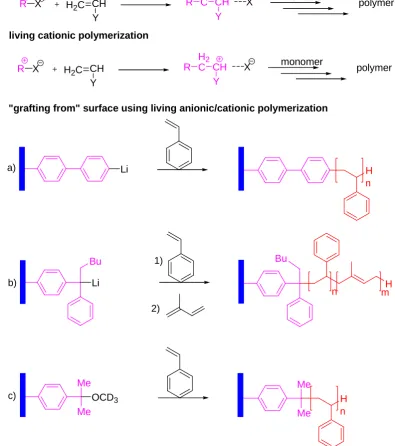
1.4.3 Living ionic (anionic/cationic) polymerisation
a) b) Li H n Li Bu 1) 2) Bu H n m c) H n Me Me OCD3 Me Me
R X H2C CH
Y
R H2
C CH X monomer polymer
Y
R X H2C CH
Y
R H2
C CH X monomer polymer
Y living anionic polymerization
living cationic polymerization
[image:38.595.98.494.103.550.2]"grafting from" surface using living anionic/cationic polymerization
Figure 6. Scheme of living anionic/cationic polymerisation and typical examples of polymer brushes grown by [(a) polystyrene, (b) polystyrene-b-polyisoprene] living anionic polymerisation
and [(c) polystyrene] living cationic polymerisation.
(DPE) groups, activated with n-butyl lithium, to initiate the anionic polymerisation of styrene.78, Figure 6b. Similarly, in another example using DPE groups as the immobilized precursor initiator for living anionic surface-initiated polymerisation, after activated with n-BuLi, different monomers (styrene, isoprene, ethylene oxide, and methyl methacrylate) have been polymerized from flat gold substrates.79 More recently, Chen et al reported soluble carbon nanotubes were prepared by treating SWNTs with sec-butyl lithium and subsequently using the generated carbanions as the initiator to graft PtBA and PtBA-b-PMMA onto the surface of SWNTs. 80
For the application of cationic polymerisation to the synthesis of polymer brushes, Brittain and coworkers reported that SAMs terminating in cumyl methyl ether moieties were deposited on silicon wafer surfaces, activation with TiCl4 in the
presence of styrene and a proton scavenger (di-tert-butyl pyridine) leads to the growth of brushes at -78°C,81 Figure 6c. A very low temperature was needed in this case to suppress chain transfer reactions.
1.4.4 Nitroxide-mediated polymerisation (NMP)
Figure 7. Schematic representation of nitroxide-mediated polymerisation (NMP) and polymer brushes grown by NMP.
When applying this concept to surface modification, the attachment of TEMPO-containing initiator to surface will be the key issue. Depending on the surface used, different surface-bound TEMPO initiators with different functionality and spacers have been made to polymerise different monomers, although the most widely used is styrene, where X = H, Y = C6H5 in Figure 7. Examples of surface-initiated NMP are
given below.
the formation of free polymer, which must be removed from the brushes by excessive washing with solvents. In another example, Hawker and co-workers applied surface-initiated NMP to the formation of crosslinked, hollow nanoparticles, which may be of interest for applications such as drug delivery and as building blocks for nanotechnology.84 In a further report, a gas-phase polymerisation approach was used to create end-grafted vinyl based polymer films on silicon oxide based surface.85 The "surface-initiated vapor deposition polymerisation" (SI-VDP) of vaporized vinyl monomers, via NMP mechanism, was developed to fabricate various homo- and block copolymer brushes from surface-bound TEMPO initiators. Different monomers like styrene, acrylic acid (AAc), N-(2-hydroxy-propyl)-2-methyl-acrylamide (HPMA) and
N-isopropyl-2-methyl-acrylamide(NIPAAm) were used. More recently, polystyrene (PS)-grafted-titanium oxide (TiO2) nanoparticles with a diameter of 15 nm were
prepared by surface-initiated NMP. 86
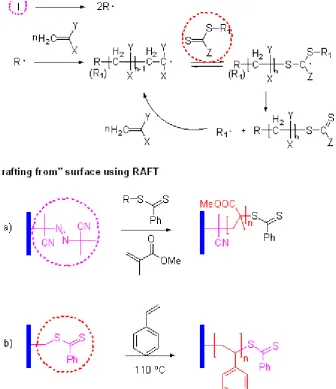
1.4.5 Reversible addition–fragmentation chain transfer (RAFT)
polymerisation
while they themselves reform their C=S bond. The cycle of addition to the C=S bond, followed by fragmentation of a radical, continues until all monomer is consumed. Termination is limited in this system by the low concentration of active radicals. (Figure 8)
Figure 8. Scheme of Reversible Addition Fragmentation chain Transfer polymerisation (RAFT) and typical example of polymer brushes grown by RAFT. (a) Poly(methyl methacrylate), (b) polystyrene.
solution. The other approach is the immobilization of a chain transfer agent directly on a surface, here radical transfer between growing chains takes place on the surface. In the first approach, Brittain and coworkers reported the usage of a SAM containing an azo initiator group to grow polymer brushes from silicon surfaces in the presence of a dithiobenzoate chain transfer agent. 91 It was found that a small amount of untethered radical initiator (AIBN) was required in solution for brush growth. Similarly as mentioned earlier, extensive washing with solvent (DCM in this case) was needed to rinse out the free polymers formed in solution.
1.4.6 Transition metal medicated living radical polymerisation
(TMM-LRP)
Transition metal mediated living radical polymerisation (TMM-LRP) is one of the most promising methods to prepare well-defined polymers94,95: it can be carried out
under mild reaction temperatures, and is suitable for most vinyl monomers and tolerant to some impurities such as water and alcohol. The most widely used recipe includes a halide initiator, copper(I) salt and a nitrogen containing ligand as catalyst system. It is normally termed as atom transfer radical polymerisation (ATRP). However robust, the mechanism of ATRP is still under debate. The most widely accepted mechanism believe that the polymerisation proceeds by an inner-sphere electron-transfer mechanism in which a low oxidation state metal complex acts as the catalyst, mediating a fast exchange between radicals and their dormant alkyl halide species. (Figure 9)
Figure 9. Inner-sphere electron-transfer mechanism of Copper Mediated Living Radical Polymerisation.
More recently, in order to diminish catalyst concentration, AGET (activators generated by electron transfer) ATRP was reported by Matyjaszewski et al. They used tin(II) 2-ethylhexanoate (Sn(EH)2)96 or ascorbic acid97 to reduce Cu(II) to Cu(I),
continuously reduced to Cu(I) as the activator is regenerated by electron transfer (ARGET). 98,99 This should also follow an inner-sphere mechanism.
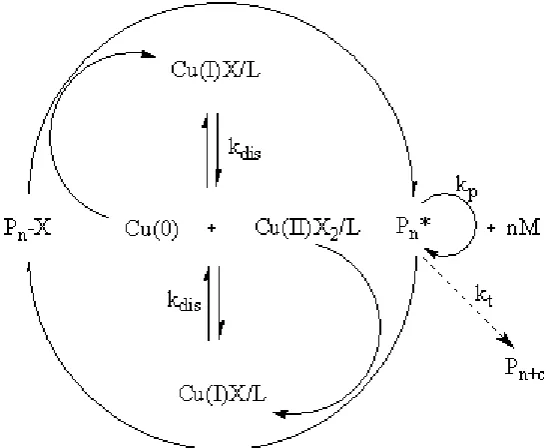
[image:45.595.160.439.388.612.2]Although the inner-sphere mechanism is widely quoted by researchers, an outer-sphere mechanism is favored under certain conditions, especially in polar solvents in the presence of N-ligands. Single-electron transfer (SET)-LRP, based on this mechanism, has been reported by Percec and co-workers.100 In this mechanism, copper(I) disproportionates into Cu(II) and Cu(0), where after Cu(0) acts as an electron donor and the initiator and dormant propagating species act as electron acceptors.(Figure 10) This polymerisation can be carried out under very mild reaction conditions, at room temperature, using a small amount of catalyst and generates polymers with high molecular weight with fast rate.
Figure 10. Out-sphere electron-transfer mechanism of Copper Mediated Living Radical Polymerisation according to Percec.
Figure 11a. Similarly, Matyjaszewski and coworkers reported that controlled polymerisations of MA onto silicon and polystyrene (PSt) brushes were re-initiated to form PSt-b-PMA block copolymer films.107
Figure 11. Typical examples of polymer brushes grown by ATRP.
provides opportunities for tailoring the surface properties of polymer brushes for possible applications in separation and controlled release. Other examples of gold surface-initiated ATRP carried out in aqueous media include PMMA, PGMA, and PHEMA brushes.108,109 PDMAEMA,110 cross-linked films of ethylene glycol dimethacrylate (EGDMA),111 and poly(N-isopropylacrylamide) (PNIPAM),112 Figure 11b. Most of them attribute the relatively fast rate to ‘the accelerating effect of water’ on surface initiated ATRP. Considering the recently arising discussion concerning inner/outer-sphere mechanism of copper mediated LRP, the reason of this accelerating effect may need further investigation.
Surface-initiated polyelectrolyte brushes have been made via ATRP as polyelectrolytes have the interesting property of changing their conformation in solution depending pH. This unique responsive property makes polyelectrolytes attractive as they might be used in various nanotechnologies. There are generally two approaches to modify surface with polyelectrolyte brushes, either using charged monomers 113 (Figure 12a) or using normal acrylates followed by hydrolysis 114. (Figure 12b)
Figure 12. Examples of polyelectrolyte brushes grown by ATRP.
porous silica gel.115 Perruchot et al. made poly(oligo(ethylene glycol) methacrylate) (POEGMA) and poly(2-(N-morpholino)-ethyl methacrylate) (PMEMA) onto silica supports. 116 Polyelectrolyte brushes include poly(sodium 4-styrenesulfonate), poly(sodium 4-vinylbenzoate) , PDMAEMA and poly(2-(diethylamino)ethyl methacrylate) have also been grafted to silica.117 (Figure 11c) Examples of polymer brushes on polymeric substrates include Polyacrylamide brush on a cross-linked polydimethylsiloxane (PDMS) surface. 118 PNIPAM, PHEMA and poly(poly(ethylene glycol)-1100 monomethacrylate) on polystyrene microspheres.119. PMA, PMMA, PHEMA and PDMAEMA on divinylbenzene/hydroxyethyl methacrylate copolymer microspheres120 , 2-hydroxyethyl acrylate (HEA) and 2-(methacryloyloxy)ethyl trimethylammonium chloride (METAC) onto poly[styrene-co-2-(2-bromopropionyloxy)] latex particles. 121, poly(N,N-dimethylacrylamide) from polystyrene latex, 122 and poly(methyl methacrylate), PMMA, homopolymer, and poly(methyl methacrylate)-block-poly(benzyl methacrylate-co-methyl methacrylate), P(MMA)-block-P(BzMA-co-MMA), block copolymers onto Wang resin.103 (Figure 11d)
1.5 Typical surface modification using "grafting to" method
initiator or by post-functionalization of the polymer. Different moieties will be needed depending on the type of surfaces. In general, moieties used for the attachment of the side chain or chain ends to a solid surface can be summarized as the following:
1.5.1 Highly polar groups
Functional groups such as mercapto (-SH) and cyano (-CN) are known to have a high affinity for Au, as it is widely used for making SAMs, polymers with mercapto or cyano groups either as side-chain or end group can be used to modify gold surfaces using the “grafting to” approach. Protective polymers having cyano or mercapto groups were synthesized by Teranishi et al., the polymers were directly obtained by normal free radical polymerisation or by a one step treatment, and were used to form linear polymers protected metal (Pt,Pd and Au) nanoparticles 123-125 Also using a gold surface, the attachment of derivatized poly(methyl methacrylate) (PMMA) copolymers containing both side chain anchor (sulfide) and backbone spacer (methyl methacrylate) groups was reported by Lenk et al..126 (Figure 13)
Figure 13. Chemical structures of the protective polymers poly(acrylonitrile) (PAN), poly(mercaptomethylstyrene-co-N-vinyl-2-pyrrolidone) (MMS-NVP) and poly(2-(methylthio)ethyl methacrylate-co-methyl methacrylate) (MTEMA-MMA).
0.1 to 0.001 wt% of polymer solution in toluene onto an evaporated gold film supported on a Si-wafer substrate.127 In another similar example using mercapto functionality to modify gold surfaces, thiol-terminated polystyrene (PSt-SH) was prepared by anionic polymerisation. The polystyryl anions were titrated with propylene sulfide and subsequently protonated with acidic methanol to obtain the thiol-terminated polystyrene.128,129 Other examples of modifying surface by “grafting to” method using mercapto functionality as end group include thio-end-capped PSt prepared by anionic polymerisation to Gold Nanoparticles (Au-NPs), 130 and synthesis of thio terminal NIPAM to make thermo-sensitive Au-NPs 131,132
Figure 14. Chemical structures of the functional polymers with dithiobenzoic ester as end group synthesised by RAFT, poly(sodium 4-styrenesulfonate) (NaPSS), poly((ar-vinylbenzyl)
trimethylammonium chloride) (PVBTAC), poly(N,N-dimethylacrylamide) (PDMA), and
poly(3-[2-(N-methylacrylamido)-ethyldimethyl ammonio]propane sulfonate-b-N,N-dimethylacrylamide)
(MAEDAPS-DMA).
In addition to the widely used thiol-functionality, other highly polar groups such as carboxylic acid and amine groups have also been reported. Carboxylic acid-terminated polystyrene (PSt) absorbed on silicon oxide from deuterated cyclohexane has reported and results showed that because of the affinity of the acid group for the silicon oxide surface, the PSt adsorbed amount is 4 times larger than the unfunctionalized PSt at 23°C.135 In similar work, polymerizations were initiated with sec-butyl lithium, and therefore the polymers were terminated on one end with a secondary butyl group. The other chain end was capped with a carboxylic acid for surface modification. 136 In another paper, amine end-functionalized PSt made by living anionic polymerisation was used to graft to silicate glass beads, 137
1.5.2 Charged groups and Blocks of segmentally adsorbing polymer
different from the rest of the chain
forces between solid surfaces bearing polymeric or oligomeric surfactants, which have been interpreted in terms of an adsorbing moiety and non-adsorbing tail, have been reported in a number of cases. It is now well established that under suitable solvent conditions, ABA type "telechelic" polymers, “monochelic" AB-type block copolymers as well as end-functionalized polymers are capable of terminal attachment to a substrate. (Figure 15)
Figure 15. Schematic representation of polymers capable of terminal attachment to a substrate.
Charged groups are often used as the adsorbing moiety to attach polymers to mica surfaces. Fetters and co-workers synthesized an anionically polymerized polystyrene (PSt) chains terminated with the zwitterionic group -N+(CH3)2(CH2)3SO3-. They
determined the structure of polymer brushes formed onto mica, from dilute solutions of this zwitterion-terminated polystyrene chains in toluene.143,144
Furthermore, Fetters et al. reported the adsorption of end-functionalized polymers on colloidal spheres.145 Anionically polymerised poly(ethylenepropy1ene) (PEP) terminated with a tertiary amino group and with a zwitterionic group was used for attachment onto a colloidal particle consisting of a calcium carbonate (CaCO3) core
with the polar cores of the colloidal particles. The adsorption energy between the functional group and the colloidal surface is estimated to be 4kBT. Fetters et al. also reported the use of AB-type block copolymers to attach to mica surface. Polystyrene-poly(ethylene oxide) diblock copolymers (PSt-PEO) with a short PEO block was used.146
Other examples of AB-type block copolymers include poly(butadiene-co- vinylpyridine) (PB-PVP) 147 and poly(styrene-co-vinylpyridine) (PSt-PVP) 148,149. They can successfully self-assemble onto mica from tetradecane or toluene, where tetradecane and toluene are good solvents for poly(butadiene) and poly(styrene) respectively, while poly(vinyl pyridine) acts as a solvophobic “anchor” in both of these solvents.
Similarly, ABA-type telechelic polymers are also capable of terminal attachment to a substrate, and normally adsorb in a loop conformation.150 Anastassopoulos et al.
reported a neutron reflectivity study of brushes formed at the toluene/quartz interface by end-functionalized polystyrene X-PSt-X, where X is a zwitterionic end group described previously, as well as poly(ethylene oxide)-polystyrene-poly(ethylene oxide) triblock copolymer, PEO-PSt-PEO. It is well established that both types of polymer exhibit a terminal mode of attachment in toluene (which is a good solvent for PSt), while the PSt block remains non-adsorbing and dangles in solution.
1.5.3 Chemically reactive groups
Depending on the nature and functionality of different surfaces, different functional polymers have been used to graft to surfaces through chemical reactions. Fetters et al.
end-group. 151 Jones et al. reported deuterated and protonated end-functionalized polystyrenes of low and high molecular weight were grafted onto silicon substrates by solution-spin casting, followed by annealing and removal of un-grafted chains.152 Luzinov et al. reported that carboxylic acid- and anhydride-terminated polystyrenes of different molecular weights from 4500 to 672 000 were grafted from melt onto silicon substrates modified with epoxysilane monolayer.153 Similarly, carboxylic acid terminated polystyrene and polybutylacrylate were grafted from melt onto a silicon substrate modified with the epoxysilane monolayer.154 Furthermore, end-grafted deuterated poly(dimethylsiloxane) (d-PDMS) brushes have been grafted onto SiOx
wafers.155 In another example, PSt-N3 with targeted molecular weight and narrow
molecular weight distribution was synthesized by ATRP of styrene (St) followed by end group transformation and then added to SWNT.156
More recently, “click Chemistry”, a term introduced by Sharpless157,158, is a topic that has been attracting many researchers. 157 Among these reactions, the Huisgen 1,3-dipolar cycloaddition159 has been receiving increasing interest following the emergence of enormous improvement in regioselectivity and yields in the presence of copper(I)-based catalysts. More details about click chemistry and its applications will be given in the next chapter.
1.6 “
Grafting to
” versus “
grafting from
” and aim of this
project
Table 1. Comparison of the two surface modification approaches of “grafting to” and “grafting from”.
“Grafting to” approach “Grafting from” approach Polymers made first Polymers made in-situ
Polymers can be precisely controlled Polymers can be controlled, although may be not so precise
Can be conducted under ambient
condition and mostly tolerate to moisture and oxygen
Mostly require moisture-free and oxygen-free
Normally produce low grafting density Produce high grafting density No need for free initiator, polymers
designed first.
Often need free initiator for better control
Chapter 2. Cellulose surface
modification through click chemistry
and Living Radical Polymerisation
2.1 Introduction
2.1.1 Click chemistry and Huisgen 1,3-dipolar cycloaddition
“Click Chemistry”, a term introduced by Sharpless157,158 which identifies a class of chemical transformations with a number of attractive features including excellent functional-group tolerance, high yields and good selectivity under mild experimental conditions, is a topic that has been attracting many researchers especially in the last few years. 157 There are some criteria required for a process to be considered a click transformation:
Modular, wide in scope, Give very high yields,
Generate only inoffensive by-products that can be removed by non-chromatographic methods,
Simple reaction conditions,
Readily available starting materials and reagents, use of no solvent or a solvent that is benign or easily removed,
Simple product isolation.
Normally have high thermodynamic driving force (>20 kcal/mol).
“non-aldol” type, additions to carbon-carbon multiple bonds. Among these reactions, the Huisgen 1,3-dipolar cycloaddition has been receiving increasing interest following the emergence of enormous improvements in regioselectivity and yields in the presence of copper(I)-based catalysts. The overall reaction is a cycloaddition of a terminal alkyne and an organic azide to give a five-membered 1,2,3-triazole. (Figure 16) This discovery has led to its application in many processes including the synthesis of therapeutics,160,161 protein-based biohybrids,162-165 sugar arrays,166 dendrimers167,168 and functional polymers.169-172
Figure 16. Cu(I)-catalysed Huisgen 1,3-dipolar cycloaddition.
2.1.2 Proposed mechanism of Cu(I)-catalysed Huisgen 1,3-dipolar
cycloaddition
The mechanistic proposal by Fokin and Sharpless for the catalytic cycle of the copper(I)-catalysed version of Huisgen 1,3-dipolar cycloaddition is shown in Figure 17. It begins with formation of the copper (I) acetylide I, then, instead of the concerted [2+3] cycloaddition (B-direct), a stepwise, annealing sequence (B-1 → B-2 → B-3, hence the term “ligation”), which proceeds via the intriguing six-membered copper-containing intermediate III. A ring contraction with the liberation of the triazole product follow. 176
Figure 17. Proposed catalytic cycle for the Cu(I)-catalysed ligation by Fokin and Sharpless.
2.1.3 TMM-LRP and click chemistry
including gold,56,101 silicon60,102 and other materials. 103,104, 61,105,106 However, although “grafting from” will always give a much thicker polymer coating than the “ grafting-to” approach in many surface property modifications the depth of coverage is not always the major concern but rather extent of coverage; this of course depends upon the final application. The “grafting-to” approach is versatile in that once a library of polymers have been prepared they can each be reacted independently with different surfaces under appropriate conditions whereas grafting-from requires separate polymerisation reactions in each case.
Both TMM-LRP and click chemistry share a number of important features including robustness, versatility and excellent tolerance towards many functional-groups, including water. Therefore, combining these two technologies to prepare new functonal polymers has attracted increasing interest. 178-183 We envisaged the possibility of combining TMM-LRP and click chemistry, and applying it for surface modification. One advantage of using TMM-LRP is that both azide- and alkyne- terminated polymers can be synthesized directly, using appropriate azide or alkyne initiators, depending on the convenience of making either alkyne or azide modified surfaces.
Due to the features of click chemistry, high yield and mild reaction conditions, we envisaged the possibility of applying it for surface modification using the “grafting to” method. (Figure 18) There are many advantages to combine “click” and “grafting to”. For example, for the gold surface modification via S-Au bond, relatively low temperatures are necessary, as the S-Au bond is fairly weak (~30-40 kcal mol-1), 56
Figure 18. Click chemistry (Huisgen 1,3-dipolar cycloaddition) on surface modification.
2.2. Synthesis of
-functional polymers through TMM-LRP
Synthesis of -functional polymers is the key issue for making polymer brushes through the “grafting to” approach. The TMM-LRP technique is used to make polymers with different -functionalities. These polymers may further be used for surface modification.
2.2.1 Synthesis of initiators for TMM-LRP
N O O OH + Br O Br DCM/TEA N O O O O Br
(1)
S OH O + Br O Br DCM/TEA(2)
S O O O BrN3 OH +
Br O
Br
DCM/TEA
(3)
N3 O
O Br OH + Br O Br DCM/TEA
(4)
O O BrFigure 19. Synthesis of initiators bearing different functional groups.
N-Hydroxy succinimide 2-bromopropionate (1)
-hydroxy succinimide (NHS) ester at chain end can be prepared by TMM-LRP, and this polymer could be used to modify amine-functionalized surfaces. The synthesis proceeded via coupling of N-hydroxysuccinimide and 2-bromopropionic bromide in dichloromethane. The initiator was obtained in good yield and satisfactory purity after column chromatography.
2-Bromo-2-methyl propionic acid 6-acetylsulfanyl-hexyl ester (2)
For gold surface modification, a thiol-functional molecule/polymer is often used. Here an acetylsulfanyl-terminal polymer was synthesised using 2-bromo-2-methyl propionic acid 6-acetylsulfanyl-hexyl ester 2 (Figure 19) as the initiator. This polymer was easily transformed into the thiol by treatment with hydrazine hydrate in acetonitrile, and the polymer then used to modify gold surfaces. The synthesis proceeded via coupling of thioacetic acid s-(6-hydroxy-hexyl) ester and 2-bromopropionic bromide in dichloromethane.
2-Bromo-2-methyl-propionic acid 3-azido-propyl ester (3)
2-Bromo-2-methyl-propionic acid 3-azido-propyl ester 3 was prepared as shown in Figure 19. The azido-alcohol intermediate 3-azido-propan-1-ol was obtained by treatment of bromo alcohol with NaN3 in refluxing acetone/water solution.
Subsequent acylation of the azido-alcohol with 2-bromopropionic bromide and triethylamine gave the desired azido-ester initiator 3 in good yields. Polymers made using this initiator could be used to modify alkyne-functionalized surface through Huisgen 1,3-dipolar cycloaddition (click chemistry).
2-Bromo-2-methyl-hept-6-yn-3-one (4)
2-bromopropionic bromide in dichloromethane. The initiator was obtained in good yield and satisfactory purity after column chromatography. Polymers synthesized using this initiator could be used to modify azide-functionalized surface through Huisgen 1,3-dipolar cycloaddition.
2.2.2 TMM-LRP of DMAEMA with N-hydroxy succinimide
2-bromopropionate (1)
Figure 20 shows the scheme of the polymerisation of DMAEMA initiated with initiator 1.
Figure 20. Synthesis of succinimide-terminal PDMAEMA.
may also contribute to the relatively high molecular weight of the polymer samples, compared to theoretical values.
20 40 60 80 100
6000 7000 8000 9000 10000 11000 M
w/Mn
M
n (GPC)
Conversion (%) M n (GP C ) 1.2 1.4 1.6 1.8 2.0
b
)
PD i0 1 2 3 4 5 6
0 20 40 60 80 100 Conversion Time (h) Con v ersion (%) 0.0 0.5 1.0 1.5 2.0 2.5 Ln([M] 0/[M]) R = 0.996
a
)
Ln
([M]
0 /[M
])
Table 2 Results and conditions of TMMLRP for DMAEMA by initiator 1.a
No. Time (h) Conv. (%) Mn(SEC) Mn(th) b Mw/Mn
1 1.1 36 8050 3320 1.29
2 1.5 43.8 8440 3940 1.28
3 2 53.3 8430 4680 1.33
4 3 69.3 8880 5960 1.42
5 4 83.2 8880 7040 1.48
6 4.5 87.3 10440 7360 1.41
7 5 90.5 10270 7620 1.49
a. The polymerisation was performed at 75˚C with toluene as solvent, [M]0 = 4.67 M.
[M]0:[I]0:[CuBr]:[L] = 50:1:1:2;
b. Theoretical molecular weight calculated according to: Mn(th) = ([M]0/[I]0) Conv. 157.2 + 250,
where 157.2 and 250 are the molecular weights of monomer and initiator 2 respectively.
[image:66.595.84.513.125.332.2]The typical 1H NMR of the poly(DMAEMA) with N-succinimidyl ester as chain-end is shown in(Figure 22).
The peak at 2.8 ppm (peak 1) corresponds to the proton on the succinimide ring, the peak at 4.0 ppm (peak 4) is the -OCH2 of the PDMAEMA chain, with the ratio of the
integrations, (4 I4.0) / (2 I2.8), n, the number of the repeat unit on the main chain
can be obtained. Thus the average molecular weight can be calculated by equation (1), and to compare to the theoretical value calculated by equation (2).
Mn(NMR) = n MWmonomer + MWinitiator (1)
Mn(th) = ([M]0/[I]0) Conv. MWmonomer + MWinitiator (2)
Where the 157.2 and 250 are the molecular weights of the monomer (MWmonomer) and
the initiator (MWinitiator) respectively. The Mn (NMR) (8,600 g mol-1) is very close to
the theoretical molecular weight Mn(th) (8,110 g mol-1), where Conv. = 100%. This
indicates that the efficiency of initiator is high and the polymerisation has a good controllable nature.
2.2.3 TMM-LRP of MMA with N-hydroxy succinimide
2-bromopropionate (
1
)
Figure 23 shows the scheme of the polymerisation of MMA initiated with initiator 1.