University of Warwick institutional repository: http://go.warwick.ac.uk/wrap
A Thesis Submitted for the Degree of PhD at the University of Warwick
http://go.warwick.ac.uk/wrap/2778
This thesis is made available online and is protected by original copyright. Please scroll down to view the document itself.
Information system development in a process
management environment: the dynamics of
improvisation and bricolage during embedded
software design
by
Wolfgang Alfred Molnar
A thesis submitted in partial fulfilment of the requirements for the
degree of Doctor of Philosophy
University of Warwick, Warwick Business School
Word cloud of this thesis
1
Table of Contents
Word cloud of this thesis...III
Table of Contents ... IV
Figure Listing ...X
Table Listing ...XII
Acknowledgements... XIV
Declaration... XV
List of publications ... XVI
Abstract ... XVII
1 Introduction ...1
1.1 Embedded systems in automobiles ...1
1.2 Practice‐based motivations for the study ...3
1.3 Knowledge‐based motivations...5
1.4 Outline of thesis...8
2 Literature Review ...10
2.1 Introduction ...10
2.2 Process management ...11
2.2.1 Introduction...11
2.2.2 Development activities and process management ...12
2.2.2.1 Extent of process management... 12
2.2.2.2 Tasks of process management ... 13
2.2.3 Quality management – ISO 9001...18
2.2.3.1 Scope of quality management – ISO 9001 ... 18
2.2.3.2 Content of ISO 9001 ... 21
2.2.3.2.1 Monitoring of ISO 9001... 22
2.2.3.2.2 Changes between ISO 9001:2000 and ISO 9001:2008... 23
2.2.3.3 Positive aspects about ISO 9001... 24
2.2.3.4 Difficulties with ISO 9001... 25
2.2.4 Summary...26
2.3 Information system development processes...27
2.3.1 Information system development methodologies...27
2.3.1.1 Preliminary remarks... 27
2.3.1.2 Specification‐based methodologies... 29
2.3.1.3 Evolutionary development methodologies... 30
2.3.1.4 Agile development methodologies ... 31
2.3.1.5 Comparative table of ISD methodologies ... 33
2.3.2 Information system development methodologies in practice...35
2.3.2.1 Rationales for using a methodology... 35
2.3.2.2 Limitations of using methodologies... 36
2.4 Development of embedded systems...40
2.4.1 Applications of embedded systems ...41
2.4.1.1 Automotive environment ... 42
2.4.2 Contextual challenges of embedded systems development...43
2.5 Research aim and questions...44
2.5.1 Identified knowledge gaps in the literature ...45
2.5.2 Focus of this thesis ...46
2.5.3 Summary...48
3 Research Approach...49
3.1 Introduction ...49
3.2 Epistemological position ...49
3.3 Interpretive research approach...53
3.4 Data collection approach and process ...54
3.5 Case study site...63
3.6 Data analysis ...66
3.7 Theoretical lenses...69
3.7.1.1 Latin word origin... 70
3.7.1.2 Comprehension of improvisation ... 71
3.7.1.3 Comprehension of bricolage ... 75
3.7.1.4 Examples of improvisation and bricolage activities ... 78
3.7.2 Structuration Theory...80
3.7.2.1 Reflexivity and human agency... 82
3.7.3 Summary...84
3.8 Presentation of data...87
3.9 Summary of research approach...87
4 Case Study ...90
4.1 Introduction ...90
4.2 Wider context of EC ...91
4.2.1 Historical setting of EC ...91
4.2.2 Economic setting of EC ...93
4.2.3 Personnel setting of EC ...95
4.2.4 Process setting of EC ...97
4.2.5 Summary of EC introduction...98
4.3 Project Theta... 100
4.3.1 How it all started... 100
4.3.1.1 Proof of concept... 101
4.3.1.2 Requirements... 102
4.3.1.3 Concurrent projects ... 103
4.3.2 Challenges... 105
4.3.2.1 Technical setting... 105
4.3.2.2 Hardware issues ... 106
4.3.2.3 Software issues... 107
4.3.2.4 Project management... 109
4.3.3 Increasing complexity ... 110
4.3.3.1 Producing documentation... 110
4.3.3.2 Higher challenges than presumed ... 111
4.3.3.3 New customers... 112
4.3.3.4 Quality challenges... 114
4.3.3.5 Testing Theta ... 115
4.3.4 Company standards... 116
4.3.4.1.1 Requirements of Theta... 118
4.3.4.1.2 Developing Theta... 122
4.3.4.1.3 Documentations ... 126
4.3.4.1.4 Subversion and Bugzilla ... 127
4.3.4.2 Conformity between company standards and practices ... 128
4.3.4.2.1 Generic steps of development... 128
4.3.4.2.2 ISO 9001 certification ... 130
4.3.4.2.3 Start of testing... 131
4.3.4.2.4 Other non‐formal processes ... 132
4.3.5 Raising conflicts... 133
4.3.6 Finding solutions ... 136
4.3.7 Summary of project Theta... 140
4.4 Customer opinions about project Theta ... 142
4.5 Follow‐up to Theta ... 143
5 Analysis ... 145
5.1 Introduction ... 145
5.2 Analytical topics ... 145
5.3 Structured processes... 147
5.3.1 Influence of ISO 9001... 147
5.3.2 Influence of nonformal standards ... 154
5.3.3 Emergent patterns in structured processes... 158
5.3.4 Consequences of structured processes and emergent patterns ... 162
5.4 Practice of improvisation and bricolage ... 163
5.4.1 Pattern of breakthrough... 164
5.4.2 Patterns of innovative practices... 166
5.4.3 Patterns of adaptive practices... 169
5.4.4 Situatedness in the social context ... 171
5.4.4.1 Wider social context ... 171
5.4.4.2 Social context of people at EC ... 172
5.4.5 Magnitude of improvisation and bricolage ... 178
5.5 Concepts of reflexivity and human agency ... 178
5.5.1 Structured approaches ... 179
5.5.1.1 Structured approaches influenced by top‐level managers ... 179
5.5.1.2 Structured approaches influenced from members of project Theta... 182
5.5.2 Improvisation and bricolage... 184
5.6 Interacting influences ... 187
5.7 Summary... 188
6 Discussion... 191
6.1 Introduction ... 191
6.2 Improvisational and bricolage activities ... 191
6.2.1 Intended and ingenuous activities... 192
6.2.2 Hierarchical distribution of improvisation and bricolage... 194
6.2.3 Situatedness of improvisation and bricolage... 197
6.2.4 Alteration process of improvisation and bricolage... 200
6.2.5 Funnelling process of improvisation and bricolage... 202
6.2.6 Unfolding activities... 204
6.2.7 Summary... 207
6.3 Capacity to be reflexive in embedded system development... 208
6.3.1 Involved in process management... 208
6.3.2 Utilised in improvisational and bricolage activities... 213
6.3.3 Different consciousness levels of reflexivity... 216
6.3.4 Dynamics of emergent organisational processes... 219
6.3.5 Summary... 222
6.4 Conceptual model ... 223
6.5 Summary... 228
7 Implications and conclusions ... 230
7.1 Introduction ... 230
7.2 Implications for theories and models ... 230
7.2.1 New paradox pair of improvisation and bricolage ... 230
7.2.2 Capability to improvise and perform bricolage... 232
7.2.3 Capability to be reflexive in development activities... 233
7.2.4 Contributions to ISD knowledge... 234
7.2.5 Contributions to means of studying complex ISD processes... 236
7.3 Implications for practice... 237
7.3.1 Process management frameworks as scaffolding... 238
7.3.2 Process management in practice ... 239
7.3.4 Atmosphere of improvisation and bricolage... 240
7.3.5 Nurturing reflexive capabilities... 241
7.3.6 Provoking reflexive activities... 241
7.3.7 Sharing routinised reflexive capabilities ... 242
7.4 Future research ... 243
7.5 Concluding remarks... 244
8 References... 246
9 Appendix ... 270
9.1 Implementation timetable for ISO 9001:2008... 270
9.2 Questionnaire guides ... 271
9.2.1 Phase 1 interviews in April 2006... 271
9.2.2 Phase 2 interviews in January 2008... 272
9.3 Photographs ... 275
9.3.1 Workplaces of developers... 275
9.3.2 Theta mainboards... 278
9.4 Analytical tables ... 279
Figure Listing
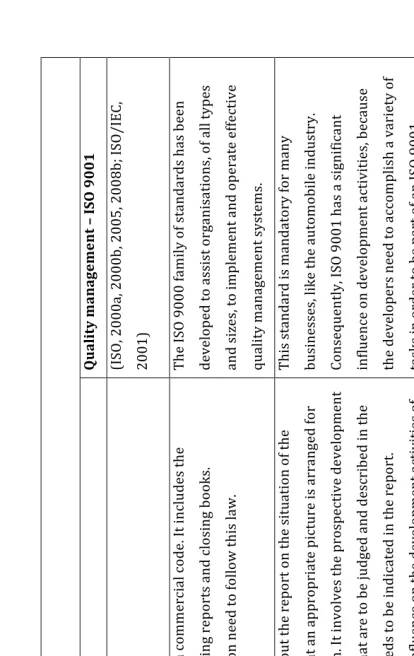
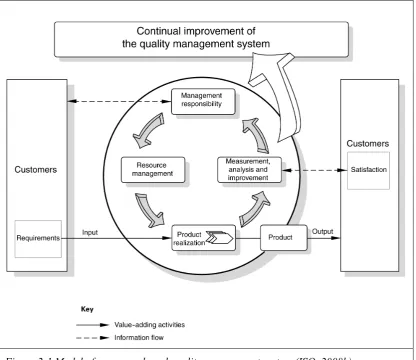
Figure 2‐1 Model of a process‐based quality management system (ISO, 2008b)
...20
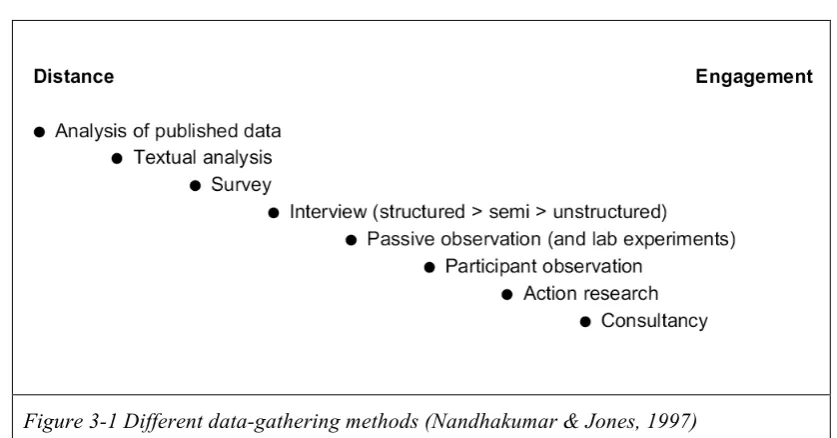
Figure 3‐1 Different data‐gathering methods (Nandhakumar & Jones, 1997)...55
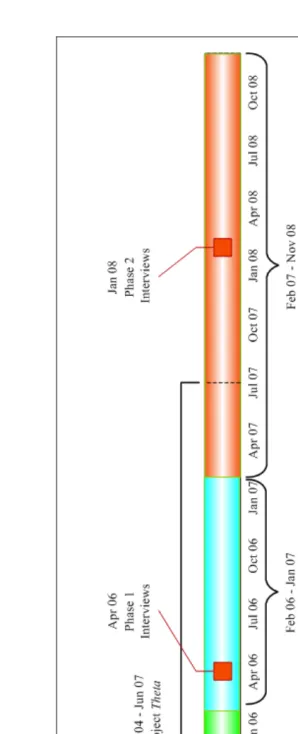
Figure 3‐2 Data collection process schedule...60
Figure 3‐3 Understanding of improvisation and bricolage (Molnar & Nandhakumar, 2008b)...76
Figure 3‐4 Stratification model of the social actor (Giddens, 1984) ...84
Figure 4‐1 EC's turnover (2000 – 2008)...94
Figure 4‐2 Distributed and detailed development process of EC (extract)...120
Figure 4‐3 Development process of test software according to EC’s standards ...124
Figure 6‐1 Tension between structured processes and improvisation and bricolage...196
Figure 6‐2 Ambiguous and fluctuating requirements influence improvisation and bricolage (Molnar & Nandhakumar, 2008a) ...199
Figure 6‐3 Influence of social circumstances and technical limitations on the funnelling process (Molnar & Nandhakumar, 2008b)...204
Figure 6‐4 Interplay of emergent and organised activities (Molnar & Nandhakumar, 2009) ...206
Figure 6‐5 Prescribed reflexive behaviour and the capacity to act in non‐agile and agile settings...213
Figure 6‐7 Different consciousness levels of reflexivity when performing formal structured processes, non‐formal structured processes, or improvisation
and bricolage...219
Figure 6‐8 Dynamics of the emergent organisational structured processes....222
Figure 6‐9 Capacity to be reflexive and the tensional arrangement between process management and improvisation and bricolage activities ...225
Figure 9‐1 Implementation timetable for ISO 9001:2008 ...270
Figure 9‐2 Raphael's workplace...275
Figure 9‐3 Junior developers' workplace...276
Figure 9‐4 Test bench of Theta ...277
Figure 9‐5 Prototype mainboard of Theta ...278
Table Listing
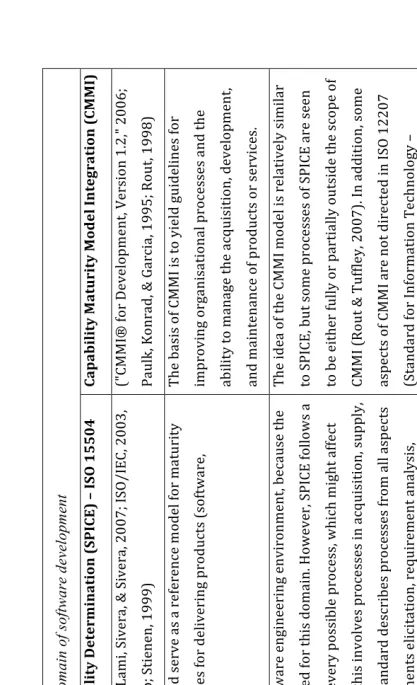
Table 2‐1 Comparison of two PM frameworks ...16
Table 2‐2 Comparison of PM frameworks in the domain of software development...17
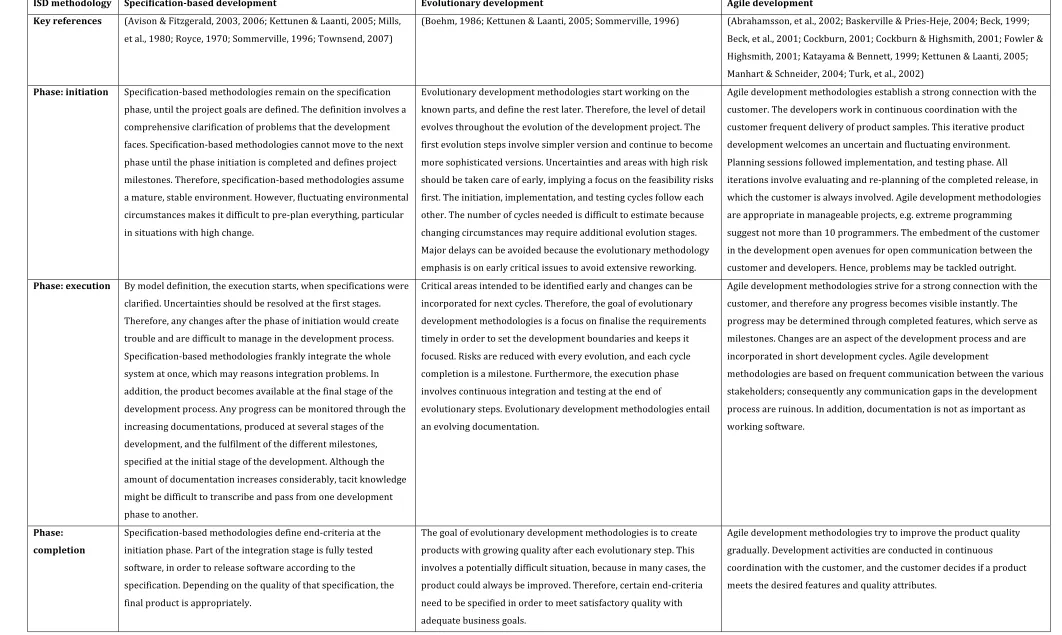
Table 2‐3 Comparison of ISD methodologies ...34
Table 3‐1 Summary of interviews ...62
Table 3‐2 Summary of data collection process...63
Table 3‐3 Key individuals in this research...65
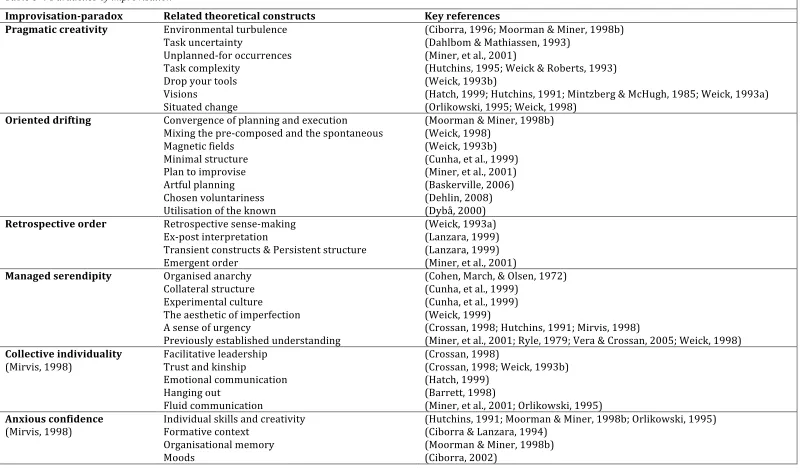
Table 3‐4 Paradoxes of improvisation...72
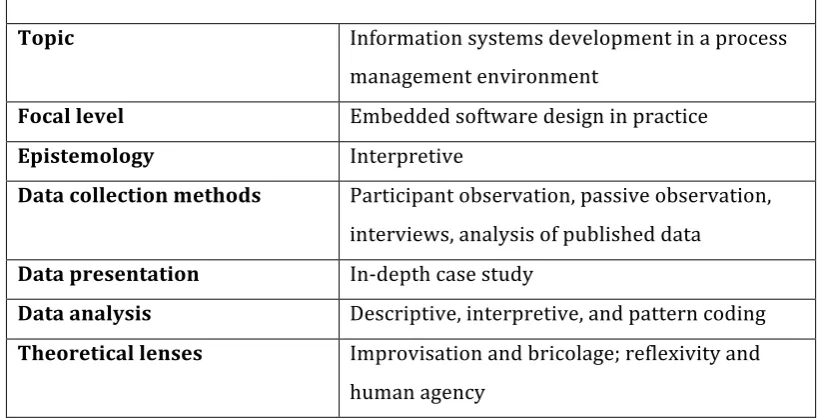
Table 3‐5 Summary of research approach...88
Table 4‐1 EC’s key individuals before project Theta started...99
Table 4‐2 Previous projects of EC...99
Table 5‐1 Motivation for EC to receive ISO 9001 certification ...148
Table 5‐2 Constraints and the response inside EC (Molnar & Nandhakumar, 2007) ...150
Table 5‐3 Comparison of organisational ISO 9001 standard with SPICE specification...152
Table 5‐4 Comparison of EC’s practices with SPICE level 1 ...153
Table 5‐5 Overview of the non‐formal processes initiated at EC ...158
Table 6‐1 Intended and ingenuous activities and corresponding improvisation paradoxes ...194
Table 6‐2 Situatedness and insularity of improvisation and bricolage (Molnar & Nandhakumar, 2008a)...199
Table 7‐1 New paradox of improvisation and bricolage ...232
Table 9‐1 Analytical table: structured processes...279
Table 9‐2 Analytical table: improvisation and bricolage...284
Table 9‐3 Analytical table: reflexivity and human agency...289
Table 9‐4 Comparison of organisational ISO 9001 standard with SPICE specification (level 1) ...292
Acknowledgements
“It seems to me shallow and arrogant for any man in these times to claim he is completely selfmade, that he owes all his success to his own unaided efforts.
Many hands and hearts and minds generally contribute to anyone’s notable
achievements.”
Walt Disney (1901‐1966) Film producer
This dissertation is the result of the support and dedication of many people. Sincerest thanks are due the following:
To Professor Nandhakumar, my dissertation advisor and mentor of four years, much appreciation for the many hours you freely have given and for your example and commitment as a scholar. Your devotion and enthusiasm for this project have strengthened it greatly, as have your insights on the field of information system development in practice.
To my mother, the project would not have been completed without the love and compassion you have shared.
As with any scientific research, the role of empirical data is priceless. I am therefore grateful to the company I received the data from and the personnel whom I had contact with. Since the anonymity is to be preserved, no names are cited here. Without these people, however, the claims made in thesis could not have been empirically explored.
Declaration
I declare that, except where acknowledged, the material contained in this thesis is my own work and has not been submitted elsewhere for the purpose of obtaining an academic degree.
List of publications
1. Molnar, W., & Nandhakumar, J. (2007). Managing a New Computer Device
Development in a Creative ISO 9001 Certified Company: A Case Study.
Paper presented at the Hawaii International Conference on System Sciences, Waikoloa, HI, USA.
2. Molnar, W., & Nandhakumar, J. (2008). Software Development Standards
and Improvisation: A Case Study. Paper presented at the SPICE 2008,
Nuremberg, Germany.
3. Molnar, W., & Nandhakumar, J. (2008). Embedded System Development
Process: A Quest from Innovation to Adaption. Paper presented at the
16th European Conference on Information Systems (ECIS), Galway, Ireland.
4. Molnar, W., & Nandhakumar, J. (2008). Dealing with Ambiguous and Fluctuating Requirements of Embedded System Development: A Case
Study. Paper presented at the International Conference on Information
Systems (ICIS), Paris, France.
5. Molnar, W., & Nandhakumar, J. (2009). Managing Projects in an
Embedded System Development Context: An indepth Case Study from an
Improvisational Perspective. Paper presented at the Hawaii International
Abstract
The main objective of this thesis is to make a contribution to knowledge
regarding the nature of improvisation and bricolage activities in the practice of embedded software design and how the tensional relationship between process management and improvisation and bricolage can be balanced. There is a lack of understanding embedded systems development in practice, and how the difficulties correspond to prescribed and emergent processes in this context. In order to address this knowledge gap I conducted an in‐depth case study of an embedded system development project in the German automobile context between December 2004 and November 2008. The research adopted an
interpretive approach, which involved the collection and analysis of qualitative data. Empirical data that was derived through interviews and observation revealed new insights as to how embedded systems are developed in practice. I adopt the position that emergent processes occur not randomly, but as
purposeful agents that navigate through a turbulent environment of ongoing need to improvise with the items at hand. The finding indicates that the success to achieve the aims is bound to the capabilities to be continuously reflexive and induce corrective actions as appropriate. A theoretical conceptualisation
disclosed measures that may enhance the capacity to be reflexive. The findings implied that process management frameworks help as scaffolding in order to practice improvisation and bricolage as a coping strategy. Moreover, improving the capabilities to cope with challenges means enhancing reflexive capabilities. The original contribution of this research is founded on rich descriptions and interpretations as to how embedded systems are developed in practice, and the theoretical conceptualisation that can aid to balance the tension between process management and improvisation and bricolage.
1 Introduction
1.1 Embedded systems in automobiles
“Chrysler is recalling 37˙000 Dodge Ram pickup trucks due to faulty software”1 “Mazda3 recalled over stability control software concern”2
“BMW: Software faults and incorrect Piezo injectors cause engine fail‐safe program with power loss.”3
Those and similar news stories concerning automobile recalls occur frequently and indicate that despite the efforts of many engineers, designing automobiles remains a complex task and involves the assembly of many subsystems4. Those subsystems are embedded in automobiles, meaning they are inserted within the larger network of multiple subsystems. Today, luxury cars have anywhere
1 Ramsey, J. (2009). 37,000+ Dodge Ram pickups recalled over... faulty HVAC software?!. Autoblog Retrieved May 12th, 2009, from http://www.autoblog.com/2009/05/12/37-000-dodge-ram-pickups-recalled-over-faulty-hvac-software/
2 Shunk, C. (2009). 2009 Mazda3 recalled over stability control software concern. Autoblog Retrieved June 5th, 2009, from http://www.autoblog.com/2009/06/02/2009-mazda3-recalled-over-stability-control-software-concern/
3 ADAC. (2009). BMW: Softwarefehler und fehlerhafte Piezo-Injektoren verursachen
Motornotlaufprogramm mit Leistungsverlust. Rückruf-Datenbank Retrieved April 30th, 2009, from http://www1.adac.de/Auto_Motorrad/pannenstatistik_maengelforum/Rueckrufe/rueckruf_popup.asp? kat=PKW&hst=BMW&mod=-&page=3&katKlicked=Nein&hstKlicked=Ja&modKlicked=Nein
between 40 to 70 different embedded systems along with their sensors and actuators and all these control modules need to exchange information with each other1. And this number will continue to rise, because automobiles in the future will make significant use of embedded systems and software will
increasingly define what your automobile is and what it does (Broy, 2006). And that is advantageous, inasmuch as embedded systems help to support the drivers’ safety and comfort. More and more embedded systems are involved in automobiles such as the anti‐lock brake system, electronic stability program, and airbags.
However, as the recalls indicate, it is obviously difficult to maintain high quality, when many subsystems are embedded in automobiles. Usually, those recalls involve multi‐million dollar costs that could have been avoided if the
automobiles were designed properly. Therefore, a study2 of the automobile industry states that product quality remains the most cited issue. Consequently, this includes the design of subsystems, which are embedded in automobiles. The approach to improve the fabrication of automobiles that had a profound influence within that industry was the application of process management (PM). Indeed, process management can be traced back to the early days of automobile production when Henry Ford3 introduced the mass production. Since then, process management remained important for that industry and it spread worldwide. For example, International Organisation for Standardisation (ISO) 9001 is a process management framework that a gained great reputation
1 Jena, C. (2007). The IT-enabled automobile. Express Computer Retrieved March 17th, 2007, from http://www.expresscomputeronline.com/20070219/management01.shtml
2 KPMG International. (2008). Momentum: KPMG’s Global Auto Executive Survey 2009. RDL 1848 Retrieved February 2nd, 2009, from
http://www.kpmg.com/SiteCollectionDocuments/Momentum-KPMG-Auto-Executive-Survey-2009.pdf
and became important for many industries (Benner & Tushman, 2002). In addition, various domains established specialised process management frameworks, such as Software Process Improvement and Capability
Determination (SPICE) and Capability Maturity Model Integration (CMMI) that became important for Information System Development (ISD). Those
frameworks share the idea to prescribe processes and methods, in order to improve the quality and effectiveness.
Organisations following PM frameworks prescribe processes to make it easier for employees to cope with challenges, such as vagueness in daily work, high costs, and quality issues (e.g.: Dick, 2000; Rada, 1996). Therefore, those organisations work in a more standardised manner, have lower costs, and imply better product and service quality (e.g.: Dick, 2000; Rada, 1996); hence, the products and services seemingly get done more properly. Particularly the development of information systems should have benefited from that trend to apply process management, because various ISD methodologies were proposed that aim to help the developers and managers. However, the fact is that cost intense errors within embedded systems still happen as the recalls for
automobiles reveal. It appears that prescribed processes are not fully accepted among practitioners (Fitzgerald, 1998), because they experience the
application of prescribed processes as potentially difficult owing to unpredictable events and other conditional factors (du Plooy, 2002). In addition, inherent creative activities such as ISD can be jeopardised or
hampered, because developers and managers feel constrained when they need to follow prescribed guidelines (Sawyer & Guinan, 1998).
1.2 Practice-based motivations for the study
organisations perceive prescribed processes as challenging to follow and constraining for development activities. However, organisations want to develop novel solutions and maintain the ability to manage effectively. And the application of PM frameworks provides a sense of control, although this may not be the case in practice (cf. Nandhakumar & Avison, 1999). Because in practice, PM frameworks may operate as an illogical procedure, the enactment of which provides developers and managers with a feeling of security and effectiveness at the expense of real engagement with the task at hand (Wastell, 1996). Therefore, there is a tension between the prescriptive procedures that people should use, while practitioners actually need to cope with continually emergent situations that are difficult to determine in advance. Those emergent situations may involve improvisation and bricolage (defined as making do with the items at hand (Ciborra, 2002; Lévi‐Strauss, 1966)) that are less easy to describe. Consequently, practitioners can benefit from rich descriptions of improvisational and bricolage activities that occur in a process management setting, because a better understanding of emergent processes implies that they can resolve in similar situations better.
Although the tension between process management and improvisation and bricolage prevailed over a long time, there is still little industry experience as to how to balance this tension better. Particular embedded system developments in practice suffered from a lack of industrial know how, because solutions are differently situated than non‐embedded systems. Embedded systems band together the realms of software and hardware and, therefore, the development is fundamentally different to non‐embedded systems (e.g. Graaf, Lormans, & Toetenel, 2003). For example, the development addresses specific constraints such as hard timing constraints, limited memory, and power usage.
insufficient quality may risk human lives in case of an accident (H. Hoffmann, Leimeister, & Krcmar, 2007). Therefore, the development of those embedded systems needs to be controlled and managed appropriately to meet the high‐ quality standards. However, as stated above, developers and managers find it difficult to follow precisely the prescribed processes (Fitzgerald, 1998;
Nandhakumar & Avison, 1999). As a result, it is challenging to develop embedded systems adequately, without creating difficulties with the other subsystems of the automobile. If developments are performed poorly, cost‐ intensive recalls may be necessary. For example, to recall 500 new Mini’s was estimated to cost the carmaker about £320˙0001. Therefore, that industry has a natural self-interest to cope better with the difficulties between process management and improvisation and bricolage.
Section 7.3 presents the implications of the research findings for practice, and so attempts to reduce some of the current difficulties.
1.3 Knowledge-based motivations
As can be seen from the literature review (section 2.2), process management frameworks such as ISO 9001 intend to increase manageability of activities within organisations. Those activities involve the development of information systems and a large part of ISD literature (section 2.3.1) concerns about prescribed methods that guideline to develop information systems
systematically. However, ISD is also influenced by non‐technical factors (e.g. social relations, politics and cultures)(du Plooy, 2002). Therefore, prescribed methods may be of little help, when non‐technical factors interrupt the
development activities (Truex, et al., 1999). Indeed, Fitzgerald (1998) describes
process management frameworks as too general without contextual
considerations and an overemphasis on technical aspects at the expense of social aspects, individual creativity, or learning while doing. The literature review (section 2.3.2.2) indicated that only few researchers highlight those limitations of prescribed processes in the context of ISD in practice. The practice of ISD involves improvisation and bricolage activities (e.g. Ciborra, 2002), which are contrary to prescribed processes. Although there are studies available concerning improvisation and bricolage in the context of ISD (e.g. Ciborra, 2002; Nandhakumar & Avison, 1999), scholarly understanding of improvisation and bricolage in the complex setting of embedded system development is relatively thin. Therefore, it is of interest how developers and managers practice improvisation and bricolage when they develop an
embedded system. In addition, the research setting involved the collection of empirical data throughout one development project that involved the
opportunity to analyse empirical data as to how improvisational and bricolage activities may change over time. Consequently, more knowledge about
improvisation and bricolage activities open avenues to discuss those activities from the basis of new insights. In addition, the challenge of embedded system development is that it combines the realms of software and hardware (e.g. Graaf, et al., 2003). Embedded system development is physically engaged and it is therefore different to the abstractions of non‐embedded ISD knowledge (Kettunen & Laanti, 2005). Consequently, knowledge of non‐embedded ISD activities is of little help for the development of embedded systems. This thin spread of knowledge concerning embedded systems development in practice exposes a knowledge gap and my doctoral study addresses this deficiency.
From the literature review (sections 2.3.1 and 2.4), it can further be seen that the thin spread of knowledge concerning embedded systems development involves less aids for developers and managers, which helps them to
want to understand the process, cope with challenges, and make use of
opportunities to develop novel embedded systems (sections 2.2.3.3 and 2.4.1). Inappropriate process management frameworks provide less procedural help to support or manage the dynamics of improvisation and bricolage during embedded system development. For example, Turk et al. (2002) claim that a ‘silver‐bullet’ does not exist for the complexity of ISD. Hansen et al. (2003) argue that process management frameworks are adjusted in action and no universally applicable framework exists. However, organisations apply process management frameworks, because they want at least a symbol that provides the fiction of being capable to manage system development activities
(Nandhakumar & Avison, 1999). Nandhakumar and Avison (1999) continue that in practice the applied framework was too formal and structured to be of any help in the development process. Therefore, the knowledge deficit about measures that help the development activities in practice needs to be
addressed. Particularly interesting are measures that balance the tension between a process management environment and development activities that involve improvisation and bricolage. That is, because improvisation and bricolage activities are involved in the practice of ISD (e.g. Ciborra, 2002) and organisations want to share the benefits of the process management
framework (sections 2.2.3.3 and 2.3.2.1). This thesis provides a theoretical conceptualisation based on the empirical findings of this research, which answers what measures help to balance the tensional relationship in the context of embedded system development.
I describe the identified knowledge gaps in the literature and research question in section 2.5. In addition, section 7.2 presents the implications for theories and models, and so addresses the knowledge gaps identified in the literature
1.4 Outline of thesis
The thesis is structured as follows: chapter two presents a review of the
2 Literature Review
2.1 Introduction
The goal of this chapter is to review the literature that is concerned with the management and human / social aspects of the Information System
Development (ISD) process, as well as the context within which they are situated. A solid basis for processes that imply organisation seems to be provided by process management practices and techniques of international standards, such as the International Organisation for Standardisation (ISO) 9001 (Benner & Tushman, 2002; Guler, Guillén, & MacPherson, 2002). That process management framework implies that improvement of processes may increase the quality of the process results, such as products and services (ISO, 2008b). In section 2.2, I assemble a short review of the current literature concerning process management by emphasising quality management and the ISO 9000 family of standards for quality management systems.
sub‐theme of ISD, namely embedded system development. It focuses on the application and contextual challenges of embedded system development.
Finally, in section 2.5 research aims and questions are expressed. The
motivation of this research is based on two identified knowledge gaps in the literature, which are stated in section 2.5.1. Those gaps confined the focus of this thesis: embedded software development in practice. Moreover, this thesis is interested in the dynamics of improvisation and bricolage during embedded software development. The research questions are stated in section 2.5.2 and try to address the identified knowledge gaps in the literature.
2.2 Process management
2.2.1 Introduction
Pentland and Feldman (2005) state that a deliberate attempt to capture or prescribe the actions and practices of human beings are formal rules or standard operating procedures. Process Management (PM) frameworks (e.g., Six Sigma, Total Quality Management, ISO 9001, and so on) may cover some formal rules or standard operating procedures (Benner & Tushman, 2002; van der Wiele & Williams, 2000; Wang, et al., 1997; Yusof & Aspinwall, 2000). In fact, early attempts to enhance efficiency and standardisation can be traced back to Taylor’s scientific management from the late nineteenth and early twentieth centuries (Boje & Winsor, 1993). However, the goal of this section is not to narrate the history of PM frameworks, but instead to briefly review the literature about the scope of PM, with quality management and ISO 9001 in the context of development activities.
Benner and Tushman (2002) describe the concept of PM as focusing on
organisational efficiency. PM frameworks initially focused on the area of manufacturing goods, but it has spread into processes of other areas, such as administrative, procurement, development, and so on (Benner & Tushman, 2002). Especially, the potential of PM frameworks to affect development
enterprises directly has also increased, because programs such as ISO 9001 and Six Sigma extended their scope into product design and development activities (Hoerl, Snee, Czarniak, & Parr, 2004). Therefore, it is of interest as to how PM frameworks might affect development enterprises (Sutcliffe, Sitkin, &
Browning, 2000), and in section 2.2.2 I will elaborate this issue.
In section 2.2.3, I will examine more about the PM framework of ISO 9001 and emphasise basic issues in order to promote a better understanding of ISO 9001. From time to time, the ISO 9001 standard undergoes some updates, and the current version is from 2008. The organisation from which the data were retrieved is certified on the previous version of ISO 9001 from 2000. However, it managed to accomplish ISO 9001:2008 certification in 2009, when I followed up the developments of that organisation. The changes between 2000 and 2008 are only marginal (ISO, 2008a, 2008b), but I will base the literature review on the version from 2008. For a better understanding, I will enclose a summary of the changes between ISO 9001:2000 and ISO 9001:2008 in section 2.2.3.2.2.
2.2.2 Development activities and process management
2.2.2.1
Extent of process management
There is no doubt that creativity plays an essential role in development activities, but it is also necessary for managing any business for future
1996). For example, Benner and Tushman (2002) claim the greater the extent of PM activities in an organisation, the smaller the number of inventive
activities. As a more practical example, Nanda (2003) claims that key issues of PM frameworks, like documenting activities, are problematic in software development because code is a peerless, but unhandy, piece of documentation for many people. However, time spent on documentation for fulfilling PM regulations is time lost for other important developer tasks. Because of reasons such as these, implementation of prescribed processes has faced troubles in many development departments (Kautz, Hansen, & Jacobsen, 2004).
However, the success of PM frameworks is remarkable. For example, the quality management standard ISO 9001 had approached 1˙000˙000
registrations in some 130 countries by the end of 20071. The massive effort of organisations to implement PM frameworks may educe that the advantages prevail over the disadvantages and concerns. However, it must be stated that one of the motivations for companies to be certified is because customers request it (R. Jones, Arndt, & Kustin, 1997). Consequently, organisations may get beneficial ratings, awards, and other forms of recognition, enhancing their prestige (Dick, 2000). With so many other organisations that strive for
certification, there is certainly some pressure to behave similarly to competitors.
2.2.2.2
Tasks of process management
The literature review reveals three main activities of PM that reduce variances and increase process control. First, vigorous effort is required to map or document routines that serve the performance of an organisation’s good or service (Benner & Tushman, 2002; Harrington & Mathers, 1997). Next, the documented routines are then liable for process improvement (Benner &
Tushman, 2002; Harrington & Mathers, 1997). Process improvement efforts are aimed at gradual change so that organisational processes become more
efficient (e.g. ISO, 2008b). Finally, the process management efforts rely on the continual comparison of process effectiveness and efficiency (e.g. ISO, 2008b). For example, quantifiable measurements can be taken from a number of products, time to market for new developments, and so on. In conclusion, PM efforts strive to improve activities by favouring determined routines and eliminating vagueness. However, many organisations face a constantly changing economic and technological world (Orlikowski, 1995). Constant change is a guiding principle, and organisations need to cope with those circumstances to survive the competition. In particular, when organisations develop high‐tech services and goods, the ability to remain flexible is
important. However, organisations are required to enforce changes
consistently and efficiently. The organisational leaders owe such consistent and efficient management not only to their employees, but also to other
stakeholders of the organisation, such as clients and shareholders.
In this literature review, I focus on a commonly accepted instrument to satisfy PM standards. Many PM frameworks are based on the continuing performance and evaluation of assessments and reviews to examine processes for their effectiveness and efficiency. In addition, improvement efforts are guided through a constant analysis of changes. For example, ISO 9001 (ISO, 2008b) states,
The organisation shall continually improve the effectiveness of the quality management system through the use of the quality policy, quality objectives, audit results, analysis of data, corrective and preventive actions and management review. (p. 14)
The agility in agile processes is achieved through continuous self‐ examination of the processes used and corresponding adaption of the process. (p. 73)
2.2.2.3
Comparison of important process management frameworks
and development activities
2.2.3 Quality management – ISO 9001
2.2.3.1
Scope of quality management – ISO 9001
The influence of the quality management standard ISO 9001 is enormous as earlier stated in section 2.2.2.1. It is interesting that the literature review reveals a whole variety of definitions for quality (Geiger & Kotte, 2005). For example, Crosby (1979) describes quality as “conformance to requirements”, and according to Juran and Godfrey (1998), quality set out “fitness for use.” The American Society for Quality1 describes quality as a subjective term, and
individuals or business fields may have different interpretations. Generally speaking, quality is understood as a characteristic of goods or services, regarding their relevant values (Geiger & Kotte, 2005). The ISO 9000 family (ISO, 2005) defines quality as the “degree to which a set of inherent
characteristics fulfils requirements,” whereas characteristics are described as distinguishing features, and requirements are needs or expectations that are expressed, generally implied or compulsory (ISO, 2005).
The structure and scope of the ISO 9000 family documents are composed of four documents (ISO, 2005):
‐ ISO 9000 describes fundamentals and vocabulary;
‐ ISO 9001 specifies requirements for a quality management system; ‐ ISO 9004 provides guidelines for the continuous improvement of a
quality management system; and
‐ ISO 19011 defines guidelines for quality and/or environmental management systems auditing
The conceptual idea of these standards is to assist organisations, of all types and sizes, to implement and operate effective quality management systems
(ISO, 2005). This assistance is considered necessary in helping to manage and control organisations through structured and clear processes. A process in ISO 9001 is a managed series of activities using resources, thus enabling a
transformation of inputs into outputs. On many occasions, the result of one process is the requirement of another process, and therefore a system of processes forms within an organisation. The application of a system of
processes, together with the determination and connections of these processes and their management to get the desired results, can be referred to as the process approach, which is an important aspect of ISO 9001 (ISO, 2008b). Beyond this aspect, to manage and control prosperous organisations not only involves implementing and maintaining PM, but continually improving it as well. For this reason, ISO 9001 describes four different steps within every process (ISO, 2008b):
a) comprehension and meeting of requirements;
b) reflecting on the process concerning the added value;
c) acquiring measurements of process effectiveness and efficiency; and d) continuous improvement of the processes based on the acquired
measurements.
[image:38.595.116.533.111.471.2]
Figure 2-1 Model of a process-based quality management system (ISO, 2008b)
However, the figure above also shows that customers have an important role in the concept of ISO 9001. Customers determine requirements for the product or service they desire; the output product or service affects the customers’
satisfaction; information flows between the customers and the organisation clarify the responsibilities of the management and deliver data for
measurement, analysis and improvement of organisational processes. Therefore, the feedback of customers is a vital part of the continuous
beneficiaries, and purchasers (ISO, 2005). Accordingly, customers can be internal or external to the organisation (ISO, 2005), and this understanding stays abreast of changes in marketing.
2.2.3.2
Content of ISO 9001
A number of other topics are important in ISO 9001 (ISO, 2005) in addition to the process approach, continual improvement and maintaining customer focus.
Leadership in ISO 9001‐certified organisations is also important, because leaders are supposed to establish homogeneity of purpose and provide the direction of the organisation. Leaders should initiate and support the internal setting in which individuals can participate in achieving the organisation’s goals.
To involve people at all levels is another principle of ISO 9001. An organisation will benefit if all members of the organisation are allowed to fully participate and use their abilities to help achieve the organisation’s goals. Another integral part of ISO 9001 is the system approach to management, because determining, comprehending and managing interrelated processes as a system induces the organisation’s effectiveness and efficiency in realising its goals. Furthermore, using the factbased approach to decisionmaking is the core of ISO 9001, since comprehension and analysis of data enables effective conclusions. Also in ISO 9001, supplier relationships should be mutually beneficial, for the reason that organisations and their suppliers are interdependent, and a beneficial
relationship advocates the full potential of both partners to create value. The ISO 9000 family identified these eight quality management principles so that managers can apply them in order to improve the performance within their organisations. Moreover, the various rules and guidelines of the ISO 9000 family may be derived from these principles.
specifications, records and so forth. A valuable item of the documents is the quality manual, which involves the scope of the quality management system, reference to the established and documented procedures, and an explanation of the interaction between the processes of the quality management system. Organisational procedures are documented with the help of descriptions and flowcharts in order to familiarise new employees with the procedures. Record documents are used to keep track of the process progress and allow the organisation to review the original data. To control documents and records is another important issue, because they serve as the basis for improvement efforts of the organisational PM. Finally, the scope of the quality management system documentation varies in form depending on the organisational business and size, the complexity of processes, and the expertise of the employees (ISO, 2008b).
2.2.3.2.1Monitoring of ISO 9001
Organisations need to undergo regular audits, which are structured and
independent inspections, in order to remain ISO 9001‐certified. Internal audits are part of the continual improvement effort, because during these audits, quality managers will inspect an organisation’s conformity to the
organisational PM. In addition, external audits are conducted by external, independent organisations to prove the fulfilment of the ISO 9001
requirements. In case of a divergence between the ISO 9001 requirements and the observed actions and practices within an organisation, corrective actions will be necessary. ISO 9001 (ISO, 2008b) states, “corrective actions shall be appropriate to the effects of the nonconformities encountered” (p. 14). In addition, the standard suggests establishing a procedure with distinctive steps for helping the organisation to prevent further repetition of these
nonconformities.
Those are important, because auditors used to decide about certification of organisations on basis of those documents. Moreover, a member of the top management shall have the responsibility to ensure that the quality
management system is not only established and implemented, but maintained as well. This top manager is committed to enhancing improvement efforts of the organisational PM and shall ensure that appropriate communication processes are initiated to communicate the quality management system. In conclusion, the monitoring of ISO 9001 regulations and guidelines in an organisation is threefold: documents containing information concerning the quality management system; top manager commitment to manifesting the quality management system; and, communication processes geared toward educating the rest of the organisation about the ISO 9001.
2.2.3.2.2Changes between ISO 9001:2000 and ISO 9001:2008
For a variety of reasons, ISO standards are revised from time to time. The current ISO 9001:2008 is the fourth edition and replaces the third edition ISO 9001:2000. From a user’s perspective, the changes are minimal, because the main goal with this update of ISO 9001 was to enhance the compatibility with ISO 14001 (standard for environmental management systems). In addition, some clarifications to the requirements of ISO 9001 were introduced, but no additional requirements and no change of intent of ISO 9001:2000 were
implemented in ISO 9001:2008. For that reason, an organisation certified to ISO 9001:2008 does not imply an improvement, and organisations that are already ISO 9001:2000‐certified should be able to receive a new certification to ISO 9001:2008 as well.
about an ISO 9001:2000‐certified organisation. The goal of this brief summary of the changes between ISO 9001:2000 and ISO 9001:2008 is to show the potential for a possible transfer of the research contribution towards ISO 9001:2008‐certified organisations.
2.2.3.3
Positive aspects about ISO 9001
The literature review concerning PM revealed obvious positive aspects about the idea of PM and about the ISO 9001 in particular. Actually, the whole idea is very fundamentally simple and basic, because it involves only using common sense (Smith, 2002). This common sense was identified in the eight quality management principles of the ISO 9000 family (cf. section 2.2.3.2: customer focus, leadership, involvement of people, process approach, system approach to management, continual improvement, factual approach to decision making, mutually beneficial supplier relationships). Having written documents on hand pertaining to these principles is also a reasonable method an organisation can use to attain their goals, because the ever‐changing nature of business
circumstances can be very turbulent and complex.
In addition, the literature review highlighted some practical advantages of an ISO 9001 certification (Dick, 2000; R. Jones, et al., 1997; Jovanovic &
Shoemaker, 1997; Rada, 1996; Singels, Ruël, & van de Water, 2001):
a) Better proximity to customers – Processes may mature, because ISO 9001 encourages continuous development. Even sensible customer
relationships may benefit from continuous developments and a focus on increased customer satisfaction.
b) Competitive advantage – When used as a part of marketing initiatives, ISO 9001 certification may imply better product and service quality. c) Increased profitability – The costs for achieving an ISO 9001 certification
d) Prevention against product liability – Continuous record keeping of attributes during the product or service creation may help in the minimisation of liability risks.
e) Requirement to enter some markets – Some markets require a PM certificate (e.g. ISO 9001) in order to participate (e.g., the automobile market).
f) Process standardisation – This final definition of the procedures of an organisation avoids the vagueness in daily work and therefore is an advantage for managing an organisation. Likewise, a study by Benner and Tushman (2002) determined that using a greater number of process management activities in a firm results in a greater number of
innovations that are highly exploitative.
In conclusion, the benefits of a PM framework such as ISO 9001 make it extremely valuable for organisations.
2.2.3.4
Difficulties with ISO 9001
A complete review of the literature revealed some conflicting viewpoints concerning the positive issues of PM frameworks such as ISO 9001 (Dick, 2000; R. Jones, et al., 1997; Jovanovic & Shoemaker, 1997; Singels, et al., 2001):
a) It requires time and effort into the ongoing process of communicating with customers.
b) Creative and critical thinking might be discouraged, because employees are forced to work according to prescribed procedures and rules and therefore, certified organisations have a smaller number of explorative innovations (Benner & Tushman, 2002).
c) Higher bureaucracy from the certified organisation is required to fulfil the requirements of ISO 9001.
perspective. A common misconception is that ISO will produce higher levels of product and service quality (Motwani, Kumar, & Cheng, 1996). ISO certification gives no promise that the quality of the products or services of a certified organisation will be better than the quality of non‐certified organisations. However, ISO certification assures the consistent quality of products, services and processes (Singels, et al., 2001).
It is also important to note that the motive for seeking certification is
considered to be an important factor for later performance of the implemented practices and techniques (Dick, 2000; Huarng, Horng, & Chen, 1999). For example, one of the motivations for companies to be certified is that it has been requested by the customers (R. Jones, et al., 1997). One study revealed,
organisations that cited client constraint as their motivation for pursuing certification were less likely to report improvement as a result of certification than those which gave other reasons for establishing an PM framework (Dick, 2000).
2.2.4 Summary
The previous sections provide a brief literature review about how process management influence development activities. PM frameworks have enjoyed tremendous success, because many organisations want to adopt an approach to control better their work activities and processes. In doing so, ISO 9001 has been favoured by many organisations worldwide as a framework to certify organisational processes.
highlights the practical advantages of an ISO 9001 certification, but reveals also the challenges involved with ISO 9001. Benefits of an ISO 9001 certification may include for example competitive advantage, increased profitability, and prevention against product liability (e.g.: Dick, 2000; Rada, 1996). Challenges with an ISO 9001 certification may involve for example higher bureaucracy, extra costs, and discouraged creative thinking (e.g.: Dick, 2000; Rada, 1996).
Besides those aspects of PM activities and in particular of ISO 9001, the idea to prescribe processes had also profound influence in the realm of ISD. Hence, the literature review in section 2.3 reveals various processes, which prescribe how to develop information systems.
2.3 Information system development processes
The metaphor of methodologies is the conventional view of researchers
concerning ISD (e.g.: Avison & Fitzgerald, 2006; Forsberg & Mooz, 1997; Ghezzi, Jazayeri, & Mandrioli, 1991; IEEE, 1998b; Sommerville, 2007). Methodologies involve a systemised perception of different stages during the ISD process. This literature review describes some distinctive methodological approaches of ISD and a summary of some variants is presented in section 2.3.1. Section 2.3.2 describes the rationales and limitations of using ISD methodologies in practice.
2.3.1 Information system development methodologies
2.3.1.1
Preliminary remarks
lower costs (Nandhakumar & Avison, 1999). Those ISD methodologies comprehend a directed perspective that du Plooy (2002) argues the
“development process can be considered a largely rational process, undertaken with the help of various tools and techniques, based principally on the so‐called ‘systems approach’ taken from classical (natural) science” (p. 115).
Furthermore, it is argued that the systems approach results of the widespread view of information systems as technical systems, being technically developed and maintained (du Plooy, 2002). Following this directed perspective, Avison and Fitzgerald (2006) defined ISD methodologies as:
A collection of procedures, techniques, tools and documentation aids which will help the systems developers in their efforts to implement a new information system. A methodology will consist of phases,
themselves consisting of sub phases, which will guide the systems developers in their choice of the techniques that might be appropriate at each stage of the project and also help them plan, manage, control and evaluate information systems projects. (p. 24)
In addition, it is important to realise that an ISD methodology is usually based on a specific philosophical perspective that emphasises certain aspects, such as the human being embedded in ISD processes, or the scientific solution‐finding process, and so on (Iivari, Hirschheim, & Klein, 1998; Pressman, 1997). The complex task of ISD certainly presents the need for having defined
methodologies. Organisations and individuals want to achieve better products through better development processes because they need to operate
sustainably. However, having established an effective ISD methodology in an organisation is not a silver bullet (e.g. Pressman, 1997; Sommerville, 2007). Organisations themselves are different, and there is no standard organisation where one ISD methodology will be forever suitable. Even within the
development departments, one ISD methodology may not be suitable, owing to the fact that people are different and teams of people are different.
Maybe because of the variety of organisations and their development teams, there are many different methodologies available in the academic literature. In fact, numerous articles and books are available in order to target the different wants and needs of various people concerning ISD methodologies. Some methodologies were derived from previously existing methodologies.
Therefore, some people tried to identify patterns within the ISD methodologies with the goal to compare and contrast the different models (e.g. Abrahamsson, Salo, Ronkainen, & Warsta, 2002; Avison & Fitzgerald, 2006; R. Brown, Nerur, & Slinkman, 2004; Cockburn & Highsmith, 2001; Iivari, et al., 1998; Larman & Basili, 2003; McConnell, 1996; Sauer & Lau, 1997; Sommerville, 1996, 2007). For example, those patterns involve investigations concerning ease of
management (Sorensen, 1995), suitability for different development activities (Sommerville, 1996), primary objectives (Boehm, 2002), people factors (Turner & Boehm, 2003), and so on. In this literature review, I follow Kettunen and Laanti’s (2005) approach to classify the many ISD methodologies. Kettunen and Laanti’s (2005) work classified methodologies concerning embedded software development projects, which is the focus of this thesis. This classification approach is a useful and necessary simplification of the available ISD
methodologies and it summarises three main strands, namely: specification‐ based, evolutionary development, and agile development methodologies.
2.3.1.2
Specification-based methodologies
The first published methodology of an ISD process was derived from more general system engineering processes and is called the waterfall model (Royce, 1970). Its name and elementariness is based on the stepwise execution of the different steps from the system life cycle. The different stages of the system life cycle are executed sequentially, and that is the key concept of this methodology. For example, all requirements must be collected at the initial stage of the
regarding time and budget of the enterprise. Inevitably, this led to some criticism of the waterfall methodology and the development of new software development methodologies (e.g. Avison & Fitzgerald, 2003, 2006; Boehm, 1986; Sommerville, 1996; Townsend, 2007). A newer specification‐based methodology was described as incremental and based on the waterfall methodology. However, the new methodology provided an overlapping relationship of practices and activities between the life cycle stages of the ISD (Mills, O'Neill, Linger, Dyer, & Quinnan, 1980). For example, it emphasised that the quality of the process outcome must be built into designs and cannot be inspected in or tested in. The system functionality is separated into several increments, and these are developed and handed over to the customer one by one. Parts of the specification may change, but specified parts of the
incremented pieces of development cannot change. Therefore, it is possible to negotiate and experiment with the users significantly longer by using the original waterfall methodology. Typically, specification‐based methodologies are applicable to ISDs consisting of various subsystems. However, the
specifications and architecture of the system need to be defined relatively early in the development process. The straightforward nature of the specification‐ based methodology keeps the challenges for project management on a
moderate level. Nevertheless, the fundamental difficulty with this methodology is that stakeholders have to articulate their requirements early and in advance, and this characteristic prohibits any late changes during the ISD process.
2.3.1.3
Evolutionary development methodologies
information system enterprise. This scaffolding specification may guide the developers concerning what the system should do and therefore, the initial specification does not need to be complete or consistent. Second, the
information system is created, assembled and coded based on the scaffolding specification. Third, the system is continually modified until the stakeholders of the system agree about its satisfactory performance. This evolutionary
development methodology put many emphases on the wants and needs of the customer. If the customer does not understand well enough, it might be better to throw away the prototype of the initial evolution in order to get a better result at the end of the ISD process. Some development undertakings may have the objective to explore an ISD by adding new features on a known information system. Critics of these kinds of evolutionary development methodologies claim that serious organisational requirements may not be given adequate priority (Sommerville, 1996). Change management becomes a critical task throughout the ISD process, and the project management is more difficult, particularly in developments of larger information systems (Sommerville, 1996). A good example of an evolutionary development methodology is the spiral model of the software process (Boehm, 1986). This methodology is developed around that evolutionary development idea, with an explicit recognition of risk. Conducting risk analysis throughout the different spiral cycles will help to reduce the negative influences on the ISD process.
2.3.1.4
Agile development methodologies
The increased need for speed and flexibility required a new methodology to develop information systems. In the 1990s, a wide range of publications dealt with the so‐called agile development methodology, which was unlike any methodology that had been used previously (Abrahamsson, et al., 2002;