University of Warwick institutional repository: http://go.warwick.ac.uk/wrap
A Thesis Submitted for the Degree of PhD at the University of Warwick
http://go.warwick.ac.uk/wrap/46617
This thesis is made available online and is protected by original copyright.
Please scroll down to view the document itself.
ANTI-RACIST SOCIAL WORK, CONTEXT AND
DEVELOPMENT: REFRACTED THROUGH THE
EXPERIENCES OF BLACK PRACTICE TEACHERS
By
GURNAM SINGH
THESIS SUBMITED FOR DEGREE OF PhD
UNIVERSITY OF WARWICK
SCHOOL OF HEALTH AND SOCIAL STUDIES
CONTENTS
Page
CONTENTS II
LIST OF TABLES VI
ACKNOWLEDGEMENTS VII
DECLARATION VIII
GLOSSARY IX
ABBREVIATIONS X
SUMMARY XI
CHAPTER ONE: INTRODUCTION - THE PERSONAL, THE POLITICAL
AND THE PROFESSIONAL 1
The personal 2
The political 4
The professional 8
Problematising anti-racist social work 13
Focus and framework 16
Conclusions 22
SECTION ONE : CONTOURS, CONCEPTS AND CONTEXTS 23
CHAPTER TWO: THEORISING ‘RACE’ AND RACISM 24
Writing and thinking about ‘race’ - some words of caution. 25
Origins and evolution of ‘race’ thinking 29
The scriptural phase: sixteenth and seventeenth century 30 The scientific phase: eighteenth and nineteenth century 31
Sociological phase 37
late nineteenth and early twentieth century 37
mid to late twentieth century 39
The race relations model 42
Conflict models 44
‘Race’ as politics 50
New ethnicities 54
Black perspectives 55
Black feminist perspectives 59
Conclusions 63
CHAPTER THREE: RACISM, ANTI-RACISM AND ANTI-RACIST SOCIAL
WORK 64
Racism in social work: service user experience. 67
The employment of black social workers 73
The black experience of social work education 77
The politics of ‘race’ 86
Post-Scarman and the New Right (80’s & 90’s) 88
The New Right backlash 92
New Labour and ‘third-way’ (90’s to present) 95
The Stephen Lawrence Inquiry 97
Anti-racist social work: policies, politics and practices 98
Conceptualising anti-racist social work 101
Conclusions 102
CHAPTER FOUR: POSTMODERNISM, RACISM AND ANTI-OPPRESSIVE PRACTICE
105
What is postmodernism? 107
Postmodernism, power and discourse 108
Postmodernism and postcolonial theory 111
Postmodernism, identity and difference 113
Critiques of postmodernism 118
Postmodernism and anti-racism 122
Anti-oppressive practice 125
Conclusions 131
SECTION TWO: MAPPING AND ANALYSING THE SIGNIFICANCE OF BLACK PRACTICE TEACHERS EXPERIENCES OF SOCIAL WORK AND
PRACTICE TEACHING. 135
CHAPTER FIVE: SOCIAL RESEARCH AND ‘RACE’: DEVELOPING A
CRITICAL PARADIGM 138
Historical perspective - models of research 139
Positivistic perspectives 139
Phenomenological perspectives 141
Critical perspectives 144
The language of classification 146
Towards an emancipatory paradigm 148
Research as politics 151
Conclusions 152
CHAPTER SIX: RESEARCH DESIGN AND METHODOLOGY 155
Development of the project 156
Research design 158
Research perspective 160
Validity and reliability 162
Sampling 164
Postal survey of BPTs 165
Focus groups 167
Semi-structured interviews 168
Conclusions 176
RACISM
Section One: The Postal Survey 177
Concluding comments 185
Part Two: Semi Structured Interviews 185
1. Identities/Biographical details 185
1.1 Summary 185
1.2 Identity and Ethnicity 187
General observations - identity 190
2. Career Trajectories into Social Work 193
2.1 Accident/opportunity 193
2.2 Activism 195
2.3 Career change 198
3. Career Trajectories into Practice Teaching 200
3.1 Pressure to provide placements 200
3.2 Development of anti-racist practice 200
3.3 Stepping stone into social work education 201
General Observations – career trajectories 202
4. Experiences of Racism in Social Work 204
4.1 Racism 204
4.2 Hostility from white service users 206
4.3 Hostility from white workers 208
4.4 Pathologisation of black service users 210
4.5 Pathologisation of black professionals 211
5. Institutional racism 215
5.1 Career Progression 216
5.2 Black staff into management 217
5.3 Black practice teachers 220
6. Working with Students 221
6.1 Black students 221
6.2 Gender 223
6.3 White students 225
6.4 Resistance 226
General observations – experiences of racism 227
Conclusions 229
CHAPTER EIGHT: PRAXIS, PEDAGOGY AND POLICIES 235
Section One: Exploration of Key Concepts 237
1. What is racism? 237
2. What is anti-racism? 243
3. What are the achievements of anti-racism? 247
4. Black Perspectives. 252
Section Two: Constructing Pedagogy 257
1. Political correctness 258
2. Culture and diversity 259
3. Identity Work 259
4. Direct work with black service users 260
Section Three: The Policy Context 261
1. Anti-oppressive practice 261
2. Competency culture 263
3. The Stephen Lawrence Inquiry 264
Conclusions 265
WORK 273
Introduction 273
Key findings 274
Originality 275
Beyond postmodernism 276
Politics of ‘race’ and identity 278
Beyond black and white 279
New Labour policies and anti-racism 283
Reconstructing anti-racism in social work 285
Conclusion 289
APPENDIXES 293
Appendix 1: Postal Survey 294
Appendix 2A: Workshop Facilitators Focus Group Guidance Notes 295
Appendix 2B: Notes from Focus Group Discussion 297
Appendix 3: Interview Schedule 302
Appendix 4: Informed Consent Form 305
Appendix 5: Conference Flyer 306
Appendix 6: Biographical data - Interviewees 307
LIST OF TABLES
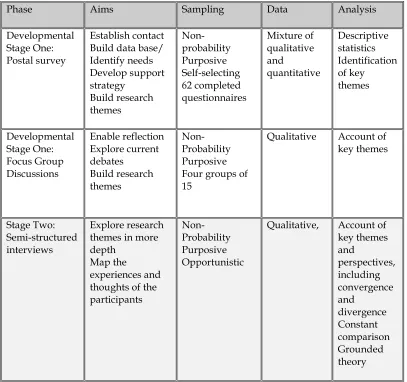
Table 1 – Overview of Design and Methodology
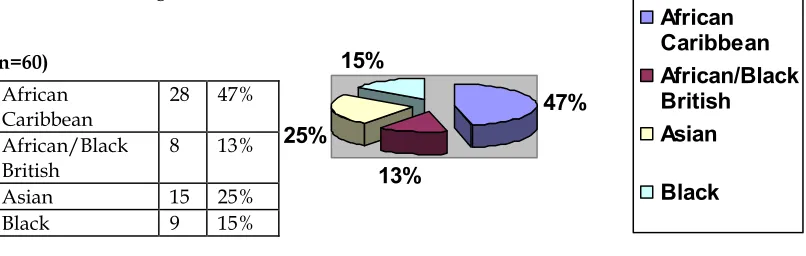
Table 2: Ethnic Origin
Table 3: Gender
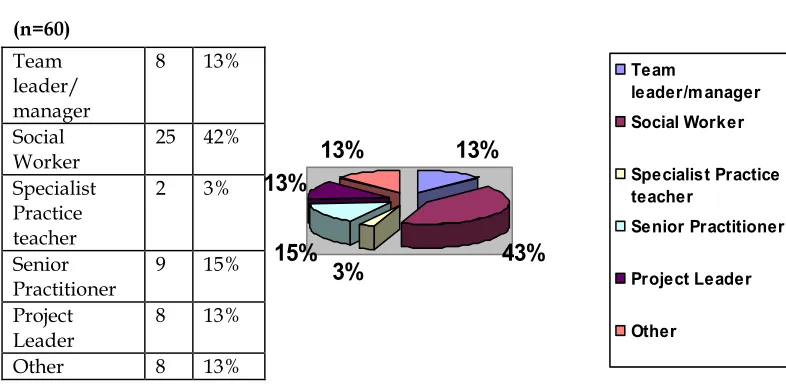
Table 4: Job Title
Table 5: Service User Group
Table 6: Sector
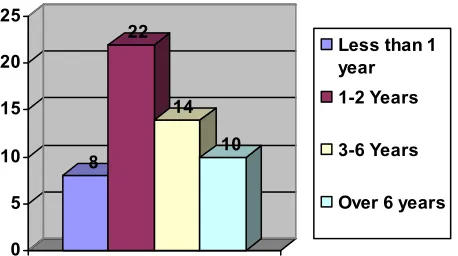
Table 7: Length of Experience as Practice Teacher
Table 8: Qualifications
Table 9: Routes into practice teaching
Table 10: Opportunities for training for practice teaching
Table 11: Blocks to professional development
ACKNOWLEDGEMENTS
This thesis would have not been possible without the support of many people, too numerous
to mention here. However, in no particular order of priority, I would like to begin by thanking the
21 black practice teachers who gave me access to their rich experiences and insights, and the many
other black and white colleagues/activists who have in different ways contributed to my work over
the years.
I am grateful to my partner, Manjit and our two children, Jatinder and Daya for making
sacrifices on my behalf and for showering me with continuous love, support and encouragement
over the past few years. Also, I would like to thank my father-in-law and mother-in-law for their
unconditional love and care.
I am indebted to my supervisors, Cathy Humphreys and Eileen McLeod, without whom this
thesis would not have materialised; to Cathy for encouraging me to think and develop my ideas; to
Eileen for her attention to detail and clarity.
A special thanks to all my work colleagues at Coventry University for their interest in my
thesis and their constant prompting to get on with it!
Finally, I would like to dedicate the thesis to my mother and father, both of whom passed
away during the production of it; to my mum for demonstrating to me, through her own life, the
resources human beings possess for resisting oppression; to my dad for his absolute commitment
DECLARATION
I declare that the thesis is my own work and that it has not been submitted for a degree at
another university. Moreover, I declare that the following publications arose from work on the
thesis.
Singh, G (2000) Developing Black Perspectives in Practice Teaching: Exploring and
Promoting the Needs of Black Practice Teachers; report of an action research project. Centre for Social Justice, Coventry University in Partnership with CCETSW
http://www.swap.ac.uk/learning/practiceSW.asp
Singh, G and Johnson, M.R.D (2001) 'Research with ethnic minority groups in health and social welfare', in, C. Williams , H. Soydan and M. Johnson(eds.) (1998) Social Work and Minorities
London, Routledge reprinted in H, Goulbourne (ed.) Race and Ethnicity: Critical Concepts
(2001) Volume IV Chapter 77, London, Routledge
Singh, G (2002) The Political Challenge of Anti-racism in Health and Social Care, in,
GLOSSARY
Asian - This term does not necessarily denote place of birth but is used to identify people who are
identified as having originated from the Indian sub-continent, primarily, India, Pakistan, and
Bangladesh.
African-Caribbean - The term African-Caribbean does not necessarily denote place of birth but is
used to identify people whose are identified as having originated from the Caribbean Islands and
Africa.
Black - Throughout the thesis, I have employed the term ‘black’ as a blanket term to refer to those
individuals and groups who experience racism because of certain racialised markers, most notably
skin colour.
Ethnic Group - A term used to denote members of a particular social group defined according to
such things as shared cultural heritage, language, geographical origin, customs and practices.
Practice Learning and Teaching - This refers the learning that occurs whilst a student is on
placement in a social work agency (Shardlow and Doel, 1996).
Practice Teacher - This is a qualified and experienced social work professional responsible for
supervising, teaching and assessing social work students on placement.
White – Throughout the thesis I use the term white to denote the majority of the population of
Britain. Although white people are culturally and ethnically diverse, based on skin colour they are
ABBREVIATIONS
ADP Anti-discriminatory Practice
AOP Anti-oppressive Practice
ARSW Anti-racist Social Work
BPT Black Practice Teacher
CSS Certificate of Social Service
CCETSW Central Council for Education and Training in Social Work
CQSW Certificate of Qualification in Social Work
DipSW Diploma in Social Work
GSCC General Social Care Council
NALGO National Association of Local Government Officers (now part of UNISON)
NOPT National Organisation of Practice Teachers
NUPE National Union of Public Employees
NUT National Union of Teachers
PC ‘Political Correctness’
PTA Practice Teaching Award
RAT Racism Awareness Training
SUMMARY
This thesis represents an attempt to develop a critical analysis of the context and development
of anti-racist social work in Britain, specifically refracted through the experiences and accounts of
black practice teachers. It is based on an analysis of primary and secondary data relating to ‘race’,
racism, anti-racism and social work.
The thesis is divided into two sections. The first section, constituting the literature review,
develops a detailed critique of the development of the discourses and ideology of ‘race’ and
racism, and the origins and development of anti-racist social work in the UK over the past 30
years. Section Two outlines the empirical data, constituting a short postal survey and focus group
discussions to build research themes, and 21 in-depth semi-structured interviews. The overall
paradigm is framed within a notion of ‘critical emancipatory anti-racist research’.
The research highlights sustained levels of institutional racism in social work faced by black
workers and service users. It also indicates high levels of awareness of the nature and extent of
racism amongst black practice teachers.
The thesis is concluded by a summary of the key findings and implications for the future
development of anti-racist social work. It is argued that, due to a range of socio political and
organisational factors surrounding the restructuring and reorientation of social work and the
emergence of new racisms, the space for anti-racist activity is becoming increasingly restricted.
The thesis concludes by outlining some principles for a renewed anti-racist social work project,
CHAPTER ONE
THE PERSONAL, THE POLITICAL AND THE PROFESSIONAL
Every line I write shrieks, there are no easy solutions. (Audre Lorde, 1984 p78)
The sociological imagination enables its possessor to understand the larger historical scene in terms of its meaning for the inner life and the external career of a variety of individuals. It enables him (Sic)... to grab history and biography and relations between the two within society. (C. Wright Mills, 1978 {1959} p11-13)
Introduction
The central aim of this thesis is to conduct a critical analysis of the context and development of anti-racist social work (ARSW) in Britain. It is based on a systematic review of relevant literature and an examination of the experiences of black practice teachers (BPTs). My rationale for choosing BPTs’ experience as an indicator of developments in ARSW is threefold: first, this group offered me the possibility of exploring the extent and nature of racism, personal and institutional, from the various black perspectives; second, as experienced social work professionals, they were able to offer a first hand historical perspective on the development of ARSW; third, as senior black professionals and educators, they were likely to be playing a central role in developing and promoting ARSW praxis within their respective organisations, a dynamic that offered an ideal opportunity to explore the application of anti-racist theories into practice. The purpose of this introductory Chapter is to provide some insights into my own motivation for undertaking the thesis and the rationale for focussing on anti-racist social work.
experiences shaped my later activism, principally in relation to anti-racist struggles and ARSW. There are two reasons why I have chosen to begin the thesis with a detailed personal narrative: first, it enables me to reflect on my own motivation for undertaking the study, to think through what drives me to ask the questions asked and why I remain interested and committed to the cause of anti-racism; second, it enables the reader to gain some insights into the vantage point from which I have undertaken this study, and equally importantly, to offer them a prompt to reflect on their own subjectivity. Given Derrida’s suggestion that the source of meaning for any text is not the author but the reader (1978), an invocation to subjectivise both writer and reader at the outset becomes all the more important. The second part of this chapter offers a rationale for focussing on ARSW. Headed ‘problematising ARSW’, this section incorporates a brief overview of contemporary critiques of ARSW. The final part maps out the key research questions and the overall structure and framework of the thesis.
The personal
The quotations above offer anybody embarking on research into human oppression three critical pieces of advice: to make sense of the personal, one needs to understand the political; to make sense of the political, one needs to understand the historical, and to make sense of anything one needs to work hard work at cultivating a dialectical imagination. In thinking about where to begin the task, I felt the need to address my own personal motivations for undertaking such a major undertaking. There is an increasing recognition of the importance of situating biography in the inevitable emotional engagement between the researcher and their chosen field of research (Coffey, 1999; Letherby, 2003).
activist orientation, I was concerned that this exercise should not be restricted to a ‘critique’ of racism alone, but at once was able to make a contribution to articulating new directions for progressing ARSW.
As I began to flesh out my ideas, it became clear to me that this was no ordinary piece of academic work; having spent much of my adult life thinking, speaking, writing about and fighting racist oppression, the narrative that I was seeking to explore was not simply ‘out there’ but one of my own biography. It was a narrative in which, on a personal and professional level, I was both researcher and researched. This brought a realization that the story I was seeking to tell was not restricted to what was going on ‘out there’ i.e. the development of ideas, policies and practices in the public sphere of social work. The narrative I was seeking to uncover was intimately infused by my own personal journey, as a second generation Punjabi Sikh migrant, growing up in a society where questions of ‘race’ and racism have been omnipresent. Accordingly, the importance of acknowledging the impact that biography, emotion and identity can have on the process of research, from inception through to writing up, became all that more critical (Coffey, 1999 p1).
only through the death of the colonised self that the liberated black intellectual can emerge and, by claiming a politicised ‘black’ identity, s/he is announcing her/his intention to struggle against oppression. Kanpol’s suggestion that critical researchers need to have a committed understanding of where they fit into the wider social structures (Kanpol, 1997 Para 41) made me think about the political dimension to the research I was about to embark upon (Hammersley, 1995). This has led me to adopt an openly critical standpoint that at once rejects the idea of neutral knowledge and knowledge seekers (Bauman, 1976), and adopts an approach that is aimed at contributing to my own and other’s liberation from oppression.
The political
My earliest recollection of anti-racism is from the age of 8 when I learnt about the power of ‘direct action’. From the commencement of my schooling in inner city Bradford, I can recall daily incidents of racial abuse and harassment. One particular white boy targeted me for verbal and physical racist harassment on a daily basis; the words ‘Paki’, ‘nigger’, ‘black bastard’, ‘coon’, and so on, became etched into my very being and I would regularly go home bruised and battered following physical attacks. This distressing experience went on for three years and I can remember feeling powerless to do anything. I was too young to articulate my experience to teachers, who appeared to be oblivious to the presence of racism in the school, and my parents were understandably preoccupied with providing for our basic material needs. However, I can remember one day in 1967 making a decision to fight back and I ended up beating the particular boy who, to my relief, never bothered me again! The critical lessons I took from these early experiences are:
racists and racism will not go away without being confronted;
people in authority, by developing blind spots or through self-preservation, will often collude with racism and oppression (Bauman, 1989);
racism can become internalised and the battle against it begins within oneself (Freire, 1972);
with determination racism can be confronted, although it does have a tendency to reappear in different guises, ‘constantly renewed and transformed’ (Fanon, 1970 p41);
the importance of balancing up the use of violence against the need for developing non-violent strategies for confronting racist oppression;
Whilst the various visible minority communities had their different cultural, religious and linguistic needs and preferences, there was a real sense, as Indians, Pakistanis and West Indians, that we had much in common. We forged a political black identity through which common alliances began to emerge. (See Chapter Three for a comprehensive discussion of the idea of a politicised ‘blackness’.) Numerous black youth organisations and movements mushroomed across the conurbations of the UK. As a founder member of one such organisation, the Asian Youth Movement (AYM) in Bradford, I found myself at the age of 17 immersed in the local and national politics of ‘race’.
If, in the final analysis, racism as I see it is tied up with exploitative systems, our struggle is not only against injustice and inequality and un-freedom, our struggle is against the system of power that allows these things to obtain. (Sivanandan, 1991 p45)
My activism during the late teens and early adulthood also enabled me to embark on a personal journey of self-discovery and liberation. A growing sense of self-awareness and critical consciousness led me to ask painful, albeit crucial, questions about my place in this society: why did my parents leave their homeland of Punjab and come to the UK in the first place? Despite my activism, why do I, at a psychological level, still harbour a preference for whiteness? What is it about the nature of racism that can so distort perceptions about self and others? In what ways can I heal the damage that racism has caused to me? How can I utilise my own growing self-awareness to help others?
The last question in particular, more than anything else, led me towards pursuing a career in social and or community work; something I was already doing in a voluntary capacity through my work with the AYM, which by the early 1980’s had managed to establish a physical base and government funding for some of its ‘non-political’ activities, mainly centring on working with local black young people. Ironically, accepting government funding was to lead to the splitting of the AYM in 1981 into one faction who felt that its politics and capacity to be radical was being compromised and another that valued the importance of a pragmatic approach aimed at working with the local state.
report was to locate racism within the sphere of individual overt acts of discrimination or hostility, some motivated by personal racial prejudice, other through ignorance. Gilroy (1987) characterises this approach as, a 'coat of paint' theory, whereby racism is relegated to the status of epiphenomena; an aberration or wart on the surface of an otherwise decent society. Yet, one of the most appealing aspects of Scarman’s approach was its simplicity and clarity – if racism is learnt behaviour then, surely, it could be unlearnt!
The professional
Whether or not Scarman’s pragmatism made any significant difference is a debatable matter, although what is beyond doubt is that the events of 1981 had a seismic impact on public services, not least Social Services departments (SSDs), and any lingering complacency that policy makers had regarding ‘race’ was shattered. One of the favoured strategies of many local authorities was to utilise ‘Section 11’ funding. This related to provisions under Section 11 of the Local Government Act 1966 that enabled local authorities to access extra funds in order to help the ‘assimilation’ of migrant communities into society (see Association of Directors of Social Services, 1978).
Director of Social Services, a process not dissimilar to that used for appointing senior officers in the department. Yet, in other ways, I felt an air of optimism; a number of my white colleagues showed a genuine warmth towards me and in many ways, despite the ‘top down’ management rhetoric, the serious commitment to anti-racism appeared to me to come from front line staff who were often left unsupported and deprived of development opportunities themselves.
In 1983, I was seconded to undertake professional qualifying training at one of the local CQSW courses. Although things were beginning to improve, I can remember being one of about six black entrants in an intake of 40 students on my course. Moreover, of the six, all had been seconded like me from specialist ‘Section 11’ posts within the SSD. One of the most striking memories is that, with notable exceptions my fellow students, black and white, appeared to show more commitment to a radical anti-racist agenda than the teaching staff, who were, needless to say all white and delivering a wholly Eurocentric curriculum. Consequently, the student group made representations as to why racism and anti-racism were absent. We were puzzled why the social science teaching was more concerned with the ideas of ‘dead white men’ than the work of prominent black writers and activists such as Malcolm X, Frantz Fanon, Sivanandan, Stuart Hall, Audre Lorde and Alice Walker. Where issues did surface, more often that not the small contingent of black students would be expected to provide the answers and to share what were often very painful experiences of racist oppression. Audre Lorde, reflecting on her experience as a black educator, makes an important point that resonates with this experience:
Ironically, our demands for the inclusion of black perspectives, for opportunities to discuss what was happening in black communities locally, nationally and internationally, were met with the paltry offer of an optional four-session mini-module entitled ‘social work in our multi-cultural society’. For a variety of reasons, the majority of the students boycotted the module. However, the black students, in the best tradition of self-help, decided to form a black students group as suggested by Lorde:
There is a constant drain of energy which might be better used in redefining ourselves and devising realistic scenarios for altering the present and constructing the future. (Lorde, 1996 p163)
Our growing awareness and confidence resulted in a number of actions, such as the appointment of black academics, active recruitment of black students on to the course, grievances against two white academics who we felt held racist beliefs, changes to curriculum and assessment, and a greater say over the choice of practice placement. I know that subsequent cohorts of black students took up the challenge on our course, and more generally, throughout the 1980’s and early 1990’s a major shift in the nature and orientation of social work education did occur (CCETSW, 1991a; CCETSW, 1991b; CCETSW, 1991c).
Interest in ARSW continued through and beyond my qualifying training, resulting in my taking up a specialist ‘Training and Development Officer (Ethnic Minorities) post within a local authority SSD in the late 1980’s. After a brief period following qualification as a generic social worker, again I was thrust into the role of an ‘ethnic’ specialist, although this time within the context of social work education and training. One of the most important opportunities that this post provided was for me to link up with other colleagues at a regional and national level who were involved in similar roles. It was during this period that I became heavily involved with a CCETSW-funded project know as The Northern Curriculum Development (CD) project (CCETSW, 1991b), which had a specific aim to bring together committed black and white social work academics and practitioners to produce teaching materials on ARSW. (See Chapter Three for a more detailed account.) This project had a profound impact upon my work and thinking; most profoundly through involvement in various conferences, workshops and late night discussions, I was prompted to think about anti-racism as something much more than an oppositionary idea and, later as a way of doing social work differently.
At this time, I began reading postcolonial and black feminist literature and found within both their style and content new ways of theorising my experience of oppression. For example, I learnt the importance of seeing difference as not just the reason for my oppression but as a source of strength, as providing me with a unique, albeit painful, learning experience capable of opening up new ways of knowing. At this time I began to develop an interest in the notion of ‘black perspectives’ and ways of thinking and being that were not subject to the epistemological and ontological frameworks of ‘the West’. The most appealing aspect of the literature I was reading at the time was the way in which it spoke directly to my experience, the sense of ‘otherness’, dislocation, and double consciousness I had felt thought my life.
deeper understandings about the nature of the society in which I was living. Most critically, it led me to realise that the processes, practices and structures that denied black people civil and human rights operated against other groups as well. I also began to realise that many black people were not only oppressed because of their skin colour, they were also subject to a nexus of oppressive structures built around what Lorde (1984) terms, other ‘distortions of difference’ namely; gender, class, age, sexuality and disability. In 1992, I completed post-graduate studies for which I wrote a disseration, later to be published, entitled ‘Race and Social Work: from black pathology to black perspectives’ (Singh, 1992). For me, this represented a critical turning point in that it was the first time I had transmitted my ideas into the wider domain. One of my key tasks was to develop a notion of black perspectives that was sufficiently fluid and flexible to avoid running the dangers of essentialism, which I felt was characteristic of most formulations. I was concerned with developing my thinking around ‘black perspectives’ in ways that did not inadvertently provide some justification for the central underpinning ideology of ‘race’ thinking, namely, that human beings are made up of smaller immutable entities called ‘races’. I felt the necessity to develop thinking that, whilst not denying the uniqueness of racism and its material and historical dimensions was, nonetheless, capable of offering a more nuanced analysis of power and power relations as means of understanding the complex way in which ‘race’ impacts and meshes with other spheres of human oppression.
fighting and winning race discrimination cases in industrial tribunals. This highlighted an important point for me about the tension between lived experiential knowledge and professional expert knowledge. I became acutely cognisant of the need to be clear of how racism becomes imagined by self and others, of my own epistemological frameworks, and how they had changed over time, particularly in the development of my professional role and identity.
I have found the work of Patricia Hill Collins (2000) to be particularly helpful in enabling me to reconcile some of the ambivalence I was feeling as a professional/academic; for example, between wanting to confront essentialist constructions of identity, whilst at the same time not distancing my self from those constituencies that choose to deploy essentialism as a means of developing common cause. In outlining the development of her own (black feminist) standpoint, Hill-Collins (2000) rejects the ontological sepperation between research subject/s of intellectual inquiry (non-academics) and the inquirer (the academic) that she feels is characteristic of much of what may be termed ‘mainstream scholarship’. Having a deep concern about black women’s oppression, Hill Collins feels compelled to reject any binarisms that run the danger of distancing her from the subjects of her intellectual work, even if this means running the ‘risk of being discredited as being too subjective and hence less scholarly’ (2000 p19). As both a ‘participant in and observer of Black women’s communities’ (p19), Hill Collins talks about not putting herself forward as an expert in setting standards of certifying truth about which she remain ambivalent.
Problematising anti-racist social work
contested concept resulting in much confusion in the way it is employed by practitioners, policy makers and social work educators:
First, there is a gulf between the formulation of anti-racist ideas in the literature and the day-to-day experiences, practices and understandings of black (and white) social work professionals. Indeed, with some exceptions (Stubbs 1985; Rooney 1987; Barn 1993; Penketh 2000; Lewis 2000; Bryan 2000), there is a dearth of any research mapping, for example, the insights of experienced black social workers.
Second, anti-racism in general, and ARSW in particular is often (mis)understood as being simply a set of prescriptions and strategies designed to rectify or ‘undo’ the impact of white oppression of black people. Whilst not denying the importance of dealing with the historical legacy of empire and slavery, one consequence of what might be termed an ‘equal opportunities’ approach has resulted in a situation where advocates of anti-racism end up adopting postures that may appear to legitimise or reinforce racist ideas. Bonnett (2000), for example, suggests that some anti-racists have taken positions that could be deemed ‘racist’ to develop their own projects through, for example, adherence to an uncritical mobilisation of categories of ‘race’ which, even when politically or ‘strategically’ employed, lend themselves to the racialisation process.
Gilroy’s (1990) powerful critique of professional responses to racism in social work and in particular the pathologisation of black family life (Mama, 1984; Lawrence, 1982; Stubbs, 1987; Dominelli, 1988; Singh 1999; Barn, 1999). For Gilroy, anti-racist orthodoxy in social work became characterised by an ‘idealisation’ of ‘black family forms’ which, in turn, were seen as the only effective basis upon which black children could acquire the necessary psychological skills to thrive in a racist world. For Gilroy, by demanding ‘same “race” placement’ policies, anti-racist social workers simply ended up inverting the very pathological imagery they were seeking to confront (Gilroy, 1990).
Apart from the nature of the critique, most significantly the symbolic aspect of Gilroy’s intervention had far-reaching implications. Given that ‘same-race placement’ policies constituted a key demand of ARSW in the 1990’s (Pennie and Best, 1990), the fact that one of the foremost black anti-racist scholars was suggesting that this policy was underpinned by racist ideology was of seismic significance. Perhaps the most insightful aspect of Gilroy’s critique was the questioning of the premise that black social work professionals and black clients shared a commonality of experience. Indeed, he argued that the proponents of ‘municipal anti-racism’ were becoming disconnected from the lived realities of the vast majority of black people. Resonating with some of the points outlined above, Williams (1999) identifies four distinct criticisms that have been aimed at ARSW, which:
• became formulaic, as exemplified, for example, in the polarised nature of debates about the placement needs of black children;
• tended to neglect the reality of lived experience which is structured through a complex meshing of ‘race’, gender, class and other oppressions;
• was overly obsessed with ideological concerns at the expense of developing reflexive practice and practical solutions to the needs of service users;
Williams concludes that ‘the nature and tenacity of these critiques have placed traditional formulations of anti-racism within social work in a vulnerable position (1999, p215).
Focus and framework
Inevitably, whilst feeling compelled to defend ARSW, irrespective of where the critique was coming from, I began to develop questions and concerns about its orientation and relevance. My sense was that, whilst anti-racism was now firmly embedded within social work, the historical project itself was rapidly being reduced to the realms of rhetoric. I was also acutely aware of the wider political context, and the changes taking place within social work, notably those associated with the neo-liberal project of Thatcherism, and its successor, the ‘Third Way’ of New Labour (Giddens, 1998, Jordan 2000). Taking all these factors together, I became preoccupied with a number of interrelated related questions:
1. Was my concern about the apparent demise of ARSW a personal feeling or did it represent a wider trend?
2. How relevant, useful and important is it to sustain the idea of a collective black identity, and what is the significance of the shift towards ethnicity and religion as markers of identity and difference?
3. Given their critical relationship to it, what do black social work professionals think about the development of ARSW?
4. What are the gains and losses of a move towards the notion of anti-oppressive and anti-discriminatory practice?
5. What are the implications for ARSW of the New Labour project, in particular, ‘Third Way thinking?
By ‘New Managerialism’, I refer to the mechanisms and strategies emerging out of a programme of market-oriented reforms that were introduced by the New Right in the 1980’s and 1990’s and developed by New Labour under the rubrics of the ‘Third Way’ (Clarke et al, 1994 and 2000; Jordan, 1999 and 2001; Orme, 2001; Humphrey, 2003). The impact on social work, under the agenda of modernising social services, has in general resulted in a sizeable expansion in regulatory mechanisms and proceeduralisation of practice. Moreover, in relation to anti-racism, it has resulted in the displacement of ethics and politics as the rationale for change, to ‘instrumental reasoning’. In other words, practice becomes divorced from ideology, leaving efficiency, technical rationality, competence and performance management, as the primary means of delivering change.
Humphrey (2003) identifies three key strands to the modernising agenda for social services, namely; multi-agency working and joint commissioning of services, strengthening the roles and rights of citizens, and restructuring the role of professionals (2003 pp7-8). He goes on to conclude that, whilst at the rhetorical level the emphasis on service users’ and citizens’ rights is not to be dismissed lightly, there are many underlying value conflicts in the New Labour project. Jordan (1999) suggests that the notion of 'citizenship' has been refocused from individual rights to the activities, qualities and obligations of members of society, in effect creating a ‘deserving’ and ‘undeserving citizen’.
it difficult to connect social work to political concerns. As a social work academic, for me the competence framework has raised a series of searching questions about my own pedagogical orientation. For example, should I seek to accommodate behaviourist approaches that appear to sit most comfortably with the competence model? Should I follow some of the trends in the mainstream social work practice literature by offering a prescriptive approach to ARSW, one that is aimed at predictability and certainty? Conversely, should I take a more critical questioning approach that seeks to cultivate ambivalence? To what extent should politics inform my teaching of ARSW? Should I stop talking about ARSW altogether and concentrate on ‘anti-oppressive practice’ (AOP) and ‘anti-discriminatory practice’ (ADP)? Which one of these approaches is most likely to promote sustained commitments to anti-racism in practice? What relevance does the black/white binary have in developing ARSW?
Distinctiveness
Against the background of the above discussion, within an overall desire to advance understandings of ARSW, the distinctiveness of this thesis is rooted in two broad aims: 1. To map and analyse critically the historical context and development of ARSW 2. to explore the points of tension between contemporary theoretical understandings of
‘race’ and racism and the task of developing ARSW practice.
Furthermore, in doing so, it also develops existing insights into ARSW in three distinct ways:
1. At an empirical level there is little published material that documents the experiences of black social workers in general and BPTs in particular, who, given their location at the interface between theory and practice, serve a pivotal function in the development and articulation of ARSW praxis.
2. At a theoretical level, the thesis provides a critical analysis of contemporary formulations of ARSW in the context of postmodernism.
3. At an organisational level, the thesis provides an analysis of contemporary policy frameworks, specifically those associated with the ‘New Managerialism’ and their implications for ARSW.
Structure of the Thesis
The above discussion of the development of my own thinking and the precise focus, framework and distinctiveness of this thesis allows the overall aim to be articulated. Specifically, the thesis represents an attempt to develop a critical analysis of the context and development of anti-racist social work in Britain, refracted through the experiences and accounts of black practice teachers.
The thesis is presented in two sections:
contextualise and theorise the experiences and perspectives of BPTs. As well as developing a detailed critique of the discourse and ideology of ‘race’ and racism (Chapter Two), this section explores the origins and development of ARSW in the UK over the past three decades (Chapter Three). In doing so, it offers a theoretical template and discursive framework from which to make sense of the central focus of the thesis, namely a critical evaluation of ARSW and the experiences and thoughts of BPTs. Section One ends with an evaluation of the current trends within anti-racism, highlighting in particular the problems and possibilities of post-colonial theory and postmodernism (Chapter Four). Moreover, in reconsidering the debates surrounding the issue of identity and essentialism, Chapter Four also includes a critical analysis of the notions of AOP and ADP and their significance to ARSW.
Section Two, constituting the empirical aspects of the study, is divided into four chapters. Chapter Five, by means of a critical analysis of different perspectives to researching ‘race’ and racism within social work, outlines my overall research paradigm. This chapter provides a backdrop for developing and justifying the research design and methodology, which is discussed in Chapter Six. The remaining two chapters in this section constitute a critical analysis of the primary data that was collected from BPTs, constituting a postal survey, focus groups and semi-structured interviews. Chapter Seven considers BPTs experiences of racism, both as practitioners and social work educators while Chapter Eight provides a critical account of the ways in which BPTs have sought to develop their own anti-racist praxis.
Conclusion
Whilst it would be tempting, and all too easy, to orientate this thesis towards offering a new model of ARSW, the challenge of addressing human diversity and oppression cannot be reduced to a matter of seeking the definitive social work method that corrects the mistakes of the earlier ones. Despite ongoing suggestions to the contrary, social work cannot be viewed as problem solving exercise alone, where social work solutions are reduced to the morally vacuous notions of ‘evidence-based practice’ and ‘performance indicators’. In a system where evidence and rationality are seen as virtues whilst ethics and politics are at best, relegated to the private domain, it is not surprising that the question of ‘race’ and social work remains unresolved. Postmodernism, globalisation, new ethnicities1, new racism, managerialism and the ‘Third Way’ all represent an altered,
and altogether more complex, backdrop to the development of contemporary social work in general, and ARSW in particular. ARSW has always engaged in specific historical and political developments, and the purpose of this thesis is to continue that trend, both consciously and critically.
1
I use the term ‘new ethnicities’ in two ways: first, as argued by Stuart Hall (1992), to indicate the
contingent and unstable nature of ethnic identity, and, second, as a means of noting that with each
wave of immigrants, refugees and asylum seekers, ‘new ethnic’ communities emerge on the
SECTION ONE – CONTOURS, CONCEPTS AND CONTEXTS
This section of the thesis outlines the key theoretical and historical strands necessary to contextualise the experiences and perspectives of BPTs. It is made up of three linked chapters, each contributing to the configuration of an analytical framework capable of making sense of the empirical components of the thesis.
Chapter Two maps out the theoretical, philosophical and historical background to the development of ideas of ‘race’ and racism. The primary aim is to develop a framework for contextualising and uncovering the various discourses of racism.
Chapter Three focuses specifically on the literature relating to the development of ARSW in the Britain over the past 30 years. In this chapter I argue that anti-racism in general and ARSW in particular can be understood in two distinct ways, as a distinct and coherent political project born out of black liberation struggles during the 1970’s and early 1980’s, or as a as descriptive term from which disparate, both complementary and contradictory ideas and practices emerge.
CHAPTER TWO
THEORISING ‘RACE’ AND RACISM
The history of the human species, for all intent and purposes, can be told as the histories of human migration…With emerging European exploration and expansion from the late fourteenth century on, it is also the history of miscegenation and cultural mixing, of increasing physical and cultural heterogeneity. (Theo Goldberg 2002, p14)
…racism is not a static phenomena, but is constantly reviewed and transformed. (Frantz Fanon 1970, p41)
Introduction
The overall aim of this chapter is to outline the theoretical, philosophical and historical background to the study of ‘race’ and racism and the ways that these concepts have, over time, been understood and formulated. In this way I hope to build a contextual platform from which my analysis of ARSW can be undertaken. At the heart of this analysis are three critical questions:
1. Why, despite the discrediting of the idea that the human race is divisible into ‘sub-species’, does, the allure of ‘race’ remain?
2. To what degree can/should ‘race’ be seen to be autonomous (or not) of class and gender in theorising racism?
3. In spite of the pervasive nature and power of racism to dehumanise, brutalise, alienate and destroy, what does the fact that victims have managed to undermine and resist racism tell us about its weaknesses?
overview of the field of study concerned with ‘race’ and ethnic relations, I go onto to outline as to how ‘race’ thinking has evolved over the past five centuries. In this section I identify three distinct phases which I call the ‘scriptural phase’, the ‘biological phase’ and the ‘sociological phase’. Having outlined the antecedents of ‘race’ thinking, the second half of the chapter focuses primarily on sociological critiques of racism that emerge towards the middle and later part of the twentieth century.
The emergence of a sociological analysis on the terrain that previously was dominated by theologians, philosophers and scientists, marks an important shift. Within the sociological frame, ‘race’ by and large is understood as a social and ideological construct, designed to serve no other function than to justify racism and domination. After outlining various sociological accounts of ‘race’ and racism, in particular the relationship between ‘race’ and class formations, the chapter is concluded with a discussion of the idea of ‘black perspectives’. This section looks at the development of black perspectives, both in a general sense and specifically within the context of black feminist critiques.
Writing and thinking about ‘race’ - some words of caution.
words, whilst for most black people racism is clearly a source of much discomfort, for others, it may be a source of material benefit and/or a means to gain recognition, access to power and influence. Indeed, paradoxically, without the existence of racism and colonialism this thesis would never have been conceived.
One of the boldest claims made by Western scholarship is that of neutrality and objectivity in the pursuit of knowledge and historical accounts. Although such claims outside the ‘West’ were always treated with varying degrees of incredulity (Said, 1978), it was only during the middle half of the twentieth century, most significantly against the backdrop of the horrors of slavery, colonialism and the Holocaust, that there emerged a body of a scholarship which sought, not only to question the claims of the natural and social sciences, but more profoundly the legitimacy of the moral and epistemological stances adopted by those making the claims. Indeed, the boldness of this challenge was such that the whole project of modernity, representing the hallmarks of Western thought, was placed in the dock; the accusers being all the many human beings who saw themselves as exploited, dehumanised and brutalised by it; the charge being that in the name of reason and social progress, enlightenment culture has been responsible for creating and perpetuating inequality and oppression on the pretext of a racialised world order (Fanon, 1967; Said, 1978 and 1993; West, 1994). The following reflections by Cixous of growing up as an Algerian French Jewish girl illustrates, in a very real sense, the impact that these ideas had on the lives of, in her case, the ‘non Western Other’:
countries established themselves by expelling what was ‘strange’; excluding it but not dismissing it; enslaving it. A commonplace gesture of History: there have to be two races – the masters and the slaves. (Cixous, quoted in Young, 1990, p1)
The history that Cixous is referring to here is a phase that represents those social, political, cultural and technological changes brought about by capital expansion, slavery and colonialism, gradually building up momentum through and beyond the European Enlightenment into the early part of the twentieth century (see later for a more detailed discussion of these changes). In short, the major paradigm shifts that characterise the ‘modern period’ revolve around ‘…issues concerning the nature of man and the idea of human history’ (Owen, 1997 p4). Although, as Trigg (1988) points out, conceptions of human nature have preoccupied philosophers throughout history, their importance is certainly not benign; ultimately not only do they determine the kinds of theories that will emerge to explain and explain away human relations and oppression, but more profoundly, they lay down the ontological landscape upon which the human condition itself is imagined, by both the oppressor and oppressed. Against this backdrop, not surprisingly, the way in which ‘race’ has historically been theorised has largely reflected prevailing epistemological frameworks. In relation to the present thesis, whilst rejecting all notions of a fixed human nature or essence, I accept all human beings have a unique standpoint from which we make sense of our world. However, I believe that through developing a critical reflexive approach to enquiry, it is possible to gain access to shared understanding. This will require three key elements: self-consciousness about one’s underlying subjectivity; a recognition of the intimate relationship between knowledge claims and power; and a belief that through honest and reasoned judgements it is possible to establish agreement about historical and social realities.
middle part of the twentieth century. Broadly speaking, here we see the study of ‘race’ as essentially the science of physical differences, designed to explain and justify racist practices. The second pivotal moment is the period following the horrors of the mass slaughter of Jews and other minorities on the ground of ‘racial’ impurity during the second half of the twentieth century. As Husband (1982, p15) records, following the horrors committed by the Nazis ‘…the international academic community challenged the “scientific” basis of race and racial difference’, most notably indicated in influential UNESCO pronouncements on ‘race’ and ‘prejudice’ during the 1950’s and 1960’s. Whilst scientific racism managed to retain a long, albeit thin tail stretching thought the twentieth century (Husband, 1982), we now see a shift away from studying ‘race’ as a stand alone idea to analyses aimed at uncovering the social, ideological, psychological and historical mechanisms that result in the production of ‘race’ thinking as a means by which racism may be eradicated.
'races' and that some are inferior to others, thus providing the justification to dominate. (Lorde, 1984)
Origins and evolution of ‘race’ thinking
There are few academic disciplines that in one way or another have not developed their own theories of ‘race’. From the physical sciences through to the social sciences, and humanities, claims have been made about the ‘nature’ of human difference. It is difficult to imagine a literary canon that has not made some reference to the linked ideas of a ‘race’ and nation. Philosophers and theologians have offered complex formulations of the character of humanity and the essence of individual human beings. Their questions, as Trigg (1988) suggests, have had important consequences for the way in which we understand ourselves and others:
If I think that humans are indeed a little lower than the angels, and may live on beyond life, then I shall view myself differently from the person who accepts that the species Homo sapiens is one animal species amongst many, characterised only by a particular evolutionary history. (Trigg, 1988 p1)
amongst different ‘races’ are immutable; that it is possible to use such differences to arrange human beings in a hierarchical order in which some 'races' are seen to be dominant or more advanced and others less advanced. Ideas about hierarchy and nature have entertained philosophers throughout ancient history. Aristotle in fourth century BC, for example, suggested that different living organisms possessed three distinct ‘souls’ (or psyches), namely, ‘the vegetative’, ‘locomotive’, and ‘rational’, referring to plants, animals and humans respectively (Encyclopædia Britannica, 2004).
Whilst ideas about the relationship between living organisms are arguably omnipresent features of human history, the idea if ‘race’, as mentioned above, has a distinct location in history. In broad terms, starting from the early sixteenth century to the present time, one can delineate three distinct overlapping historical phases in the development of ideas about ‘race’, which I term the ‘scriptural phase’, the ‘scientific phase’ and the ‘sociological phase’. In the following section, I outline the key features of each of these.
The scriptural phase - sixteenth and seventeenth century. Emerging from reinterpretations of the Old Testament version of Creation, the scriptural phase is characterised by a widely held belief that different 'races' were derived from common descent or lineage, namely ‘monogenism’. As depicted in the book of Genesis, humankind had one origin, from the original genetic pair of Adam and Eve. The difference between the 'races' was explained by reference to Noah, who cursed one of his sons Ham; scholars argued that he and his descendants were black (Husband, 1985 p13)2.
Although widely for many centuries this view no longer commands serious credibility, with dissenters arguing that the association of the state of being cursed with black skin was an inherited ideological system that was interpolated by theologians throughout the
2
See Goldenberg (2003) for a detailed examination of the development of anti-black sentiment
within scripture over the centuries, and the belief that the biblical Ham and his
ages (see Sollors, 1997). Despite this prejudice, monogenism still required all humankind to belong to the same species, all God's children, and all, potentially at least, equal. This created problems for those who sought to justify the division and mistreatment of humanity until the rise of scientific explanations.
Moving into the seventeenth century, divine intervention, as an explanatory system, for conceptions of society, nature and the racial division of humanity, becomes gradually displaced and is given new impetus by scientific paradigms and emerging disciplines. Husband (1982) argues that as a consequence ‘the willingness to see such phenomena as simply further demonstrations of God’s creative order was being eroded’ (p13). This emergent science set out to determine a set of biological types i.e. phenotype, phrenology, hair type, nose size etc as markers of superiority and inferiority; these then became articulated as absolute demarcations of ‘race discourse’ (Miles, 1988; Fanon, 1993). However, as conversion to Christianity constituted one of the planks of colonialism, and given the intimate relationship between the Church and the slave trade (Williams, 1966), some ideology had to be found for justifying this involuntary servitude. Not only did modern science rescue the Christian church, which was increasingly being taxed to provide justification for the brutalities of colonialism and slavery, it provided a ‘real world’ justification for the inhuman treatment of black people throughout the modern period (Bulmer & Solomos, 1999).
evolutionary model of stages from inanimate (lowest type) to humanity (highest type). ‘Primitive’ populations were seen as the link between European civilisation and primates. Such populations represented human beings at an earlier evolutionary stage and they remained there because they had either halted or regressed in this process (Husband, 1982)3. It is also during this period that we begin to see the seeding of negative
stereotypes and caricatures of the non Western ‘Other’, representations that continue to reverberate in European thought and culture to the present time (Said, 1978; Malik, 1996).
Given that ‘race’ was proven to be ‘real’, then logically it followed that ‘races’ must be perpetuated through ‘in-breeding’, and in the terms of nineteenth century debates, races can also be corrupted by ‘out breeding’. As we will see later, the possibility of hybridity ultimately emerged as the Achilles heel of scientific racism. Nevertheless, this fear of ‘hybridity’, of the ‘intermixing’ of ‘races’, remains the source of some of the most insidious of all racist thought.4 To understand the threat hybridity posed to society at the
time we need to interrogate, in more detail, the way science became applied to ‘race’ thinking in specific ways.
From the end of the second world war, 'race' as a scientific concept largely disappeared from textbooks, other than as a historic relic. A century earlier, the equivalent textbooks would have been abounding with little else, with many scientists of the time holding the view that ‘race’ was everything. As evidenced below, scientific racism, for the most part, was a means of substantiating convictions which preceded
3
It is important to note that ideas about biological inferiority and superiority were also used to explain differences between the peoples of Europe. For example, Curtis (1971) highlights how Irish people were constructed as a ‘primitive’ race, somewhere between the European ideal and black African.
4
This idea of the ‘mixing’ of ‘races’ reverberates with a particularly contested debate within social
work around the issue of ‘trans-racial placements’. Ironically (because it appears to
cohere with scientific racism) a ban on this practice, to the extent that legislative changes
were made, became one of the central demands of ARSW in the US and UK throughout
scientific enquiry (Young, 1995 p93). In essence, scientific racism posited the view that humankind constituted several different and unequal groups (Stocking, 1987 p69). However, such a view was only sustainable if it could be demonstrated that these sub-species were incapable of inter-breeding. As Young suggests, the hypothesis that humans were one or several species stood or fell over questions of hybridity and inter-racial fertility (Young, 1995 p9). He goes onto suggest that a critical sub-text to scientific debates about the possibility of otherwise of interbreeding, was the issue of sexual unions between whites and blacks, or put another way, such theories ‘were also thus covert theories of desire’ (ibid p9).
The importance of denial of hybridity and of the (im)possibility of different ‘races’ reproducing to sustaining scientific racism cannot be understated. Put simply, the possibility of hybrid offspring challenged the very foundation of scientific racism. Therefore the presence of large hybrid populations in the West Indies and the United States, proving that, white and black were indeed fertile, posed serious challenges to scientific racism during the nineteenth century. In response, Cuvier, a eminent anatomist of the time, argued that offspring of ‘inter-breeding’, termed ‘Mulattos’5, were infertile
(Banton and Harwood 1975 p28-9). Others hypothesised that, as a result of a weak constitution, Mulattos had a diminishing fertility and that, accordingly, mixed-race populations were destined to eventually die out. Testing was not possible due to the time scale involved, so anecdote or analogy was usually used to support the infertility thesis. Robert Knox, a Victorian anatomist, for example, argued that eventually human populations would revert back to ‘pure types’, that is, individuals would eventually end up completely black or completely white (Young, 1995 p102).
5
‘Mulatto is a term used throughout Latin America to denote people of mixed black/white
parentage. However, most revealing is original Spanish ‘mulato’ meaning ‘young mule’ –
(Oxford Compact Dictionary 1996). See also Young 1995 for a wider discussion of the
Some did however seek to provide an empirical basis for the ‘mule-person’ thesis. In one such study, Davenport (Barkan, 1991 pp164-5) argued that Mulattos were inferior to both whites and blacks, because they had inherited the longer legs of Africans and the shorter arms of Europeans. This, he felt, was enough to label them as ‘degenerate’. However, as Young (1995) points out, theories of this period showed themselves to be profoundly contradictory. They only worked when defined against potential intermixture, hence the issue became one of one of attraction and repugnance between the races, i.e. the linkage between sexuality and ‘race’ (Young, 1995 p15).
One of the sternest advocates of ‘race’ theory was Count de Gobineau, whose arguments during the late nineteenth century about the superiority of the ‘Aryan race’ had considerable influence over the founders of Nazi Germany (Banton and Harwood, 1975). In responding to the critiques of earlier formulations of polygenism pointed out above, Gobineau, whilst conceding the ease with which the ‘races’ were capable of reproducing, nonetheless felt that the result was damaging for humanity in that it led to increasing degeneration with each crossing (Young, 1995 p105). In other words, interbreeding was possible because human beings lived in accordance with the laws of ‘attraction’ and ‘repugnance’, but that did not in itself make it right or desirable. Gobineau’s thesis was based on a view that, as sexual attraction between ‘the races’ was an irresistible aspect of the nature of man (and woman), civilisation was the inevitable consequence of racial intermixing. However, because of the existence of ‘higher’ and ‘lower’ ‘races’, it was precisely through the mechanism of inter-breeding that ‘degenerate races’ (which unsurprisingly were non white European) were enabled to raise themselves to civilisation. (Young, 1995 p107). Put simply, for dark skinned people to breed with white Europeans was a boon, a means of improving one’s stock’.
of the black female6. In rather apocalyptic and paradoxical terms, Gobineau suggests
that the predominately masculine character of the ‘white race’, and the relative feminine character of ‘non white races’, coupled with the conditions created by commerce and colonisation, would lead to increasing miscegenation, resulting ultimately in the decline and decay of civilisation:
In the ambivalent double gesture of repulsion and attraction that seems to lie at the heart of racism, Gobineau articulates a horror of racial mixing while at the same time proposing the sexual desire of the white races for the brown and yellow as the basis for civilisation itself. (Young, 1995 p115)
Whilst not wishing to diminish the passion that scientists of the times had for their respective disciplines, given the kinds of people who were funding and patronising these activities, there can be little doubt that scientific ideas about ‘race’ were instrumental in justifying the politics and technologies of colonial conquest and slavery. Kohn points out how the assertion of the ‘natural’ superiority of ‘Northern Europeans over the darker-skinned peoples of the world...was self-serving, self centred, and used to justify great cruelty and oppression’ (Kohn, 1995 p2-3). For example, the contemporary stereotypical representations of black men, as ‘mad’, ‘bad’ and therefore dangerous, can be traced back to certain taken-for-granted ideas about black peoples and mental capacities, throughout the eighteenth and nineteenth centuries. The Black man, due to his supposed
6
Note here the suggestion of ‘Asian female passivity and black female aggression, which
reverberates with present day constructions of Asian women as being passive and exotic
and Black women being aggressive. There are well documented accounts of the ways
these stereotypes operate within the construction both of black clients and social workers
(see for example Carby 1982). In relation to the African male identity, we have the linked
stereotype of high sex drive/low intelligence being played out in the present day as a