i UNIVERSITEIT TWENTE
Prevention of Dutch Fraud Cases
A multiple case study on the effectiveness of internal control
in the process of financial statement fraud prevention.
i
Abstract
ii
Contents
Abstract ... i
Preface ... iv
1. Introduction ... 1
2. Literature Review ... 4
2.1 Financial Statement Fraud... 4
2.1.1 Types of Fraud ... 4
2.1.2 How to Fraud ... 5
2.2 Theories of Fraud... 6
2.2.1 The Fraud Triangle ... 7
2.2.2 The Triangle of Fraud Action ... 12
2.2.3 The Fraud Scale ... 13
2.2.4 M.I.C.E ... 13
2.2.5 The Fraud Diamond ... 14
2.2.6 Predator vs Accidental Fraudsters... 15
2.2.7 The A-B-C Model ... 16
2.2.8 The Fraud Pentagon ... 16
2.3 Fraud Prevention ... 17
2.3.1 Prevention, Detection, and Deterrence ... 17
2.3.2 Internal controls ... 19
2.3.3 Ethical Culture ... 21
2.3.4 Forensic Accounting ... 21
2.4 Rules & Regulations ... 23
2.4.1 United States of America ... 23
2.4.2 United Kingdom ... 24
2.4.3 Australia ... 25
2.4.4 The Netherlands ... 26
3. Methodology ... 29
3.1 Case Study ... 29
3.2 Data Collection ... 31
3.3 Sample Description ... 32
3.4 Assessing Case Studies ... 34
4. Results ... 37
iii
4.2 Results ... 45
4.3 Other Findings ... 47
5. Discussion & Conclusion ... 54
5.1 Discussion ... 54
5.2 Conclusion, Limitations, and Recommendations ... 55
References ... 59
iv
Preface
This master thesis is written to complete my Master of Science (MSc) Business Administration at the University of Twente.
In this sector I would like to thank my first supervisor, Dr. Samy Essa, for his valuable contributions and insights during the writing, research and completion of this thesis. Commenting on what I wrote and helping me broaden my view or be more specific when it was needed has been of great value during this thesis writing process. I would like to especially thank him for his fast responses by mail and clearing time in his schedule to meet with me face to face. And I would like to thank my second supervisor, Professor Rezaul Kabir, for his valuable comments and assistance in the final stages of this thesis as well as his help during the early stages of the master thesis. Clear comments guiding me through the process of finding the right focus for this thesis.
I would also like to thank KPMG for offering me an internship. During my internship I was able to get a good insight in the practical side of fraud prevention, which really helped my understanding of the theory. I had a great and very educational time. Finally, I would like to thank Tom Bosch for being my internship supervisor, and sharing his thoughts and experiences to contribute to my thesis.
1
1.
Introduction
“More money has been stolen at the point of a pen than at the point of a gun.” Frank Schmalleger (1991).
Major cases like Enron and WorldCom have made the world aware of the severity of fraud. In fact, fraud is seen as one of the biggest issues in business today (Gullkvist & Jokipii, 2013). When the world realized that a company like Enron was able to lose 70 billion dollars because of fraud, it caught everybody’s attention (Cotton, 2002; Rezaee, 2005). However, not everybody knows the exact meaning and practice of fraud. People consider fraud as ‘cooking the books’, but actually have no idea of when something is fraud and how it is done. For example, taking a pen home from work is considered to be a form of fraud. A better understanding in fraud seems necessary, considering the fact that in 2013 the approximate worldwide loss of revenue to fraud is considered 3.7 trillion dollars (ACFE, 2014). The fact that US based companies are involved with enormous damages done by fraud will come as no surprise. The fraud at Enron, WorldCom, Qwest, Tyco, and Global Crossing accumulated to an estimated 460 billion dollars loss of market capitalization (Cotton, 2002). To put this in perspective, this is more than half of the total revenue of the Dutch economy in 2015, which is ranked 17th of the world (KNOEMA, 2015). This has resulted in countless research done on fraud prevention, detection and deterrence (Albrecht & Albrecht, 2004; Albrecht et al., 1984; Gupta & Gill, 2012; Hogan et al., 2008; Kennedy, 2012; Kranacher et al., 2010; Rezaee, 2005; Shanmugam et al., 2012), and on when and why perpetrators commit fraud and its effects (Beatty et al., 2013; Brennan & McGrath, 2007; Dellaportas, 2013; Dorminey et al., 2012; Free & Murphy, 2015; Gullkvist & Jokipii, 2013; Wolfe & Hermanson, 2004). Most of this research is focused on the largest economies and countries. Brennan & McGrath (2007) even defined the continent Europe as one economy in their study. However, there has only been little research focused on small economies.
One of those small countries that has had its fair share of fraud is the Netherlands. The fraud related bankruptcy of Imtech put 23,000 people’s jobs on the line in several countries and cost investors 1.1 billion euros (Nods, 2015). This points out one of the major issues with fraud, namely the perception of investors. “Capital markets participants (e.g. investors, creditors, analysts) make investment decisions based on financial information disseminated to the market by corporations” (Rezaee, 2005, p. 278). Disclosures made by a firm in a specific industry can have spillover effects on the investments made by other firms (Beatty et al., 2013). Another interesting fact about fraud is that it is not always done intentionally. Perpetrators commit a fraudulent act without knowing what they did was wrong or never having meant to do so. Only a quarter of the fraud cases are considered to be intentional; the other three quarters are not necessarily intentional (Schrand & Zechman, 2012).
2 1984; Coleman, 1987; Dorminey et al., 2012; Ramamoorti et al., 2009; Wolfe & Hermanson, 2004). Given the right circumstances, anybody could be capable of committing fraud (Morales et al., 2014). A combination of opportunity, pressure, and rationalization is considered to be the main reason that fraud occurs (Dorminey et al., 2012). Pressure and rationalization involved with fraud are hard for a firm to have any influence on (Shanmugam et al., 2012). However, internal control firms can prevent the opportunity of committing fraud (Davis & Pesch, 2013). Proper application of internal control systems not only ensures the validity of assets and records, they also create a monitored work environment where efficiency and efficacy are encouraged (Shanmugam et al., 2012). So how is it possible that there is research on how internal control should be implemented, but still fraud cases there come to light every day? Rezaee (2005) and Brennan & McGrath (2007) have tried to answer this question for Europe, Australia, and the United States. By studying fraud cases that occurred in the Netherlands, this research will aim to find an answer to the following question for countries with smaller economies.
How is it possible that internal controls failed to prevent financial statement fraud in the Netherlands?
To help provide an answer to this research question, several sub-questions have been derived. Based on the literature review three questions will be formulated that test the theory on financial statement fraud. First, Q1: To what extent does CEO/CFO/Director activity in financial statement fraud increase the amount of money involved with the fraud? Second, Q2: Is financial statement fraud a crime of poverty in the Netherlands? And third, Q3: To what extent is an individual’s function/position within a firm negatively correlated with the efficacy of internal controls? The results that are found from the data will also answer two more questions. First, why were the internal controls applied to the Dutch fraud cases insufficient? And second, why was the fraudulent behavior of the perpetrators at Dutch firms not noticed?
The main goal of the research is to find out why internal controls in fraud cases in the Netherlands failed to prevent fraud. This will be done by assessing several cases of fraud that happened in the Netherlands. The findings will be compared to the theory on fraud to see whether these theories also apply to the Netherlands. Based on decisions made by the Dutch court, cases are selected where fraud has occurred. The research will focus only on cases that happened in the Netherlands, allowing a painstaking investigation on the applicability of fraud theory in this particular country.
3 no controls stopping them. This is also why the AICPA (2005, 2016) describe management override of internal control as the Achilles heel of fraud prevention. Eventually the research project contributes to the theory on financial statement fraud prevention and the appliance of internal control. Also, it points out that there is still research to be done in the field of internal controls. Why is it so easy for managers to override the internal controls that are applicable to them? As a countermeasure for management override this study finds the answer in the (ethical) culture of an organization. According to theory and practice, this is the best way to prevent management override from taking place.
Assessing the Dutch cases will give an insight on the fraud problems in smaller economies. Combining the works of Rezaee (2005) and Brennan & McGrath (2007) and implementing it on a completely new and unique set of data, the results will contribute to the theory on fraud prevention. The results can be of assistance to other Dutch companies as to how they implement internal controls. Using fifteen case studies, this paper will explain how and why these perpetrators committed fraud and why internal controls were unable to prevent them from taking these actions.
4
2.
Literature Review
The concern of financial statement fraud has been with the auditing community for some time now, trying to design internal control systems that should help preventing the fraud. However, the research on fraud has been a more recent occurrence (Free & Murphy, 2015). The fraud risk apparatus, a collection of anti-fraud offerings, is a more recent phenomenon (Power, 2013). In the period 2006-2010 there has been a sharp spike in the research on fraud risk (Power, 2013). This period represents a growing body of research in accounting that focuses on fraud (Braithwaite, 2013; Davis & Pesch, 2013; Murphy, 2012; Williams, 2013; Stolowy et al., 2014). Although there have been some issues with estimates regarding the costs of fraud, and it is acknowledged that fraud is a great cost burden for organizations and society (ACFE, 2012; Ernst & Young, 2003; KPMG, 2012; PwC, 2011). The chapter will be structured as follows. In 2.1 it will be discussed what financial statement fraud actually is, and a comparison will be made to other forms of fraud. In 2.2 there will be an overview of accepted theories on fraud. Explaining how and why fraud is being committed. Part 2.3 will discuss the prevention of fraud and the measures and methods that are part of this prevention. Internal control is one of these prevention measures and will be discussed here. Part 2.4 gives an insight into the rules and regulations that are at hand in several countries relating to financial statement fraud.
2.1
Financial Statement Fraud
Financial statement fraud can be described as an attempt by firms to deliberately mislead the users of their financial statements. “Financial statement fraud is any intentional act or omission that results in materially misleading financial statements” (AICPA, 1987, p.8). Think of investors and creditors, who are tricked with materially misstated financial statements signed off on by the firms (Rezaee, 2005). At the start of the 21st century there was a wave of financial scandals that raised awareness of fraud (Hogan et al., 2008). This act of untrustworthiness is claimed to be as old as the first trade that was ever made. Market participants that were not all that fair have existed since mankind began trade (Woodward et al., 2003). The British East India Company is seen as the world’s first public company that had shareholders. Unfortunately, this is also seen as the first public company where financial statement fraud occurred (Robins, 2007). Another interesting fact of fraud is that Smith (1776) noticed the problems that fraud caused to modern corporations (Dorminey et al., 2012).
2.1.1
Types of Fraud
5 Fraudulent financial reporting (FFR) is referred to as ‘management fraud’ whereas misappropriation of assets (MoA) is referred to as ‘employee fraud’ (Gullkvist & Jokipii, 2013). Fraud as a whole is considered to be a collar crime. Research has pointed out those white-collar criminals either act from personal reasons, or on behalf of the company (Romney et al., 1980). An important motivation to manipulate the actual earnings of a firm is to attract external financing at low cost (Dechow et al., 1996). Another study shows that restated financial statements increase the likeliness of a CEO having stock options that are considered to be “in the money”.
Other findings were about firms that have debt covenants, conditions of borrowing that need to be met. Firms that try to raise debt or equity capital and firms where the CEO is also Chairman of the Board are more likely to have financial misstatements (Efendi et al., 2007). Stock options are also seen as incentives to misstate the financial statement. CEO income is depending on how the stock performs, which could lead to fraudulent behavior (Burns & Kedia, 2006). Companies that have been involved in backdating stock options also are often involved with fraudulent behavior (Hogan et al., 2008; Lie, 2005).
2.1.2
How to Fraud
How financial statement fraud could occur is explained by the following examples. Important to know is that these are not the only possible ways in which financial statement fraud can occur. It just gives an insight into possible examples. For instance, financial statement fraud occurs when material financial records, supporting documents or business transactions have been falsified, altered, or manipulated. Also, when the information that is used to build financial statements on suffers from intentional material misstatements, omissions, transactions or misrepresentations of events. Another scenario that might occur is when information regarding accounting standards, principles, practices, or financial information is intentionally omitted from disclosure or the presentation is inadequate (Rezaee, 2005). Some examples of financial statement fraud are presented here.
Earnings manipulation is one of these methods used to fraud. This type of fraud is described as a violation of accounting principles by overstating reported earnings (Dechow et al., 1996). The most common way of committing financial statement fraud is the manipulation of revenues and/or accounts receivable (Albrecht, 2003). This can be done by understating doubtful accounts, which leads to an overestimation of receivables. A method to manipulate revenues can be by not recording returned goods, or recording them in a different period. Sales and therefore revenue will seem to be higher (Albrecht, 2003).
6 Third on the list is financial statement fraud through the understating of liabilities. For example not recording accounts payable. Liabilities seem to be low and therefore interesting, even though they are not. Another method is the recording of revenues that are not yet earned by the company. Until the revenues are received, there is no certainty that these revenues will be obtained. The liability gets understated because part of the liability has already been recorded as revenue (Albrecht, 2003).
Asset overstatement is the fourth most common method to commit financial statement fraud. For example the overstatements of current assets making it seem they are more valuable than they actually are. Another method is failing to record depreciation or amortization expense. Assets will seem to hold more value than they actually do, causing financial statement fraud (Albrecht, 2003).
Last, there are disclosure frauds that lead to financial statement fraud. This category can be divided into three methods. First, there is the misrepresentation about the nature of the company. The company or its products are represented in a way that differs from the actual company and products. Second, a wrong representation of discussions of the management and other non-financial statements. And finally, there is the misrepresentation in the footnotes that apply to certain financial statements. Wrong representations can create a better picture of a company than it is in reality (Albrecht, 2003).
These examples show people committing fraud either out of greed, as a last resort, or misrepresentations as a way to mislead investors and save a company. The first two examples are from a personal perspective, as for the saving of a company kind of sounds like a crime that is committed with public interest in mind (Wells, 2001). Wells (2001), among others, also emphasized the importance of three factors that led to the committing of fraud. Opportunity, pressure, and rationalization are considered to all be in place at every case of fraud (Albrecht et al., 1984; Cressey, 1950; Cressey, 1953; Coleman, 1987; Dellaportas, 2013; Dorminey et al., 2012; Free & Murphy, 2015; Hogan et al., 2008; Kranacher et al., 2010; Morales et al., 2014; Ramamoorti et al., 2009; Wells, 2001; Wolfe & Hermanson, 2004). This relates to the Fraud Triangle, which will be discussed in part 2.2 of this thesis. Of all the senior management the CFO, who oversees the process of financial reporting of a firm, has the most impact on accounting decisions. The CFO has the ability to choose accounting methods and decide what accounting changes can or need to be made (Ge et al., 2011; Geiger & North, 2006; Mian, 2001).
2.2
Theories of Fraud
7 that should explain fraudulent behavior, based on the Fraud Triangle, will be discussed (Albrecht et al., 2006; Albrecht et al., 1982; Albrecht et al., 1984; Carcello et al., 2010; Cressey, 1950, 1953; Coleman, 1987; Dechow et al., 1996; Dorminey et al., 2012; Hollinger & Clark, 1983; Kassem & Higson, 2012; Kranacher et al., 2010; Marks, 2009; Pavlo & Weinberg, 2007; Ramarmoorti, 2008; Ramamoorti et al., 2009; Schrand & Zechman, 2012; Silver et al., 2008; Sutherland, 1940, 1945; Wolfe & Hermanson, 2004). Providing an answer to the question why perpetrators commit fraud, and a clear view on the leading theories that are available on the fraud phenomenon.
2.2.1
The Fraud Triangle
Fraud is as old as the trade among human beings. Remarkably, it took them rather long to actually really come to an understanding and build theories around it. Even though the problem of fraud had already been pointed out by Smith in 1776, the first real step towards fraud theory was made by only made in 1940 by Sutherland when he created the term “white-collar crime” (Piquero, 2012). Sutherland (1940) can be seen as the first who recognized the crimes that had nothing to do with violence, but had everything to do with the upper class committing crimes in the world of economics and business (Albrecht et al, 1984). The name white-collar crime was related to the white collars the upper class used to wear at the time (Sutherland, 1940). The white-collar criminal is not the boss of some kind of criminal organization, but the person who violates the trust investors have in them to do the right thing. At the time it was considered that poverty was the number one reason for perpetrators to commit fraud. However, it seemed that with white-collar crime perpetrators were only seldom poor (Sutherland, 1940; Weisburg et al., 2008). The law had a different implementation for white-collar criminals than it did for other criminals.
8 crime would not stick to the white-collar criminals. White-collar crimes were often not entitled crimes (Sutherland, 1945). White-collar crime was perceived as being a victimless crime (Corcoran et al., 2012). Third, the fact that white-collar crimes are not such obvious crimes as for example, manslaughter is. For example, in the case of manslaughter it is ‘easier’ to define the perpetrator(s) and the victim(s) of such crimes. The problem with white-collar crimes is that it is not as obvious. A lot of people could be part of the problem, but also the victims of these crimes are not clear. This makes it much harder to create one image of crime and perpetrator that everybody follows (Sutherland, 1945). However, Brown et al.(1996) and Rosoff et al. (2002) found that the costs of white-collar crime are far more exceeding the costs of theft and robbery.
The foundation for theories on white-collar crime was picked up on several years later. When a Ph.D. student in criminology by the name of Cressey, who was mentored by Sutherland, did some noticeable findings on white-collar crime while conducting interviews with people that were in jail because they committed fraud (Dorminey et al., 2012). He found that the violation of trust could not be attributed to a single event. After conducting the interviews, it became clear that the violation of financial trust by criminals was the result of a sequence of events (Cressey, 1950). The sequence of these trust violations are as follows, (I) the first criteria in the sequel relates to “shareability” of a financial problem. In this case, there is a non-shareable financial problem as the step in the sequence. A non-shareable financial problem results in (Choo & Tan, 2007; Cressey, 1950; Daly, 1989; Workley & Cheeseman, 2006) (II) a stimulus to violate a position of trust. Important is that, for a person with a non-shareable financial problem, this person has some knowledge about trust violation. This knowledge can then be applied to their own situation, which becomes a stimulus to violate their position of trust (Cressey, 1950; Choo & Tan, 2007; Dellaportas, 2013; Skousen et al., 2009). Finally, (III) the rationalization of the person that has the non-shareable financial problem. When the first two steps of the sequence have been fulfilled, the person’s ability to rationalize the act of violating trust will decide whether or not this person violates the trust (Cressey, 1950; Choo & Tan, 2007).
9 As mentioned earlier, the findings of Cressey (1950, 1953) have led to the creation of the Fraud Triangle as shown in Figure 1 (Albrecht, 2014; Dorminey et al., 2012). Therefore Cressey (1950, 1953) is credited with being the father of the Fraud Triangle (Albrecht, 2014; Wells, 2005). The most overwhelming pressures were considered to be high personal debts or financial losses. Other common pressures were those of a supervisor at work demanding results that seem impossible to the employee (Albrecht et al., 1982; Beasley, 1996). This allows a distinction between two kinds of pressures, namely the pressure to commit fraud to increase company performance, or the pressure to commit fraud against the company (Albrecht et al., 1982). Opportunities for committing fraud are created by individuals themselves, or by the company due to neglecting internal controls (Albrecht et al., 1982; Choo & Tan, 2007).
Regarding rationalization, individuals can be put into two categories. Namely, the individuals that are honest, have high integrity, and would not do such a thing unless they have a real good reason. The other group consists of people who are dishonest, have low integrity, and therefore would take their chance of committing fraud if the possibility is there (Albrecht et al., 1982). In his article Albrecht et al. (1982) states that he and his colleagues concluded that the interaction of these three factors determine whether or not a person will commit fraud. Although the three elements of the Fraud Triangle are credited to Cressey (1950, 1953), Albrecht was the first to come up with the name of the Fraud Triangle. He did so after one of his students attended him of the three elements of fraud being similar to the three elements of the so-called fire triangle. So the name Fraud Triangle is related to the fire triangle (Albrecht, 2014).
Figure 1: The Fraud Triangle, adapted from Dorminey et al. (2012) p. 558.
Following the works of Cressey (1950, 1953) and Albrecht et al. (1982), Hollinger & Clark (1983) supported the rationalization element, perpetrators being able to commit fraud from a
10 moral perspective. The workplace is of great influence to the fraudulent behavior of employees. If employees have to work in a workplace with bad working conditions, their urge to commit fraud increases. They have the feeling that the workplace “owes me”, which makes it easier for perpetrators to rationalize fraudulent behavior. When the workplace does not treat me right, why would it be vice versa? (Dellaportas, 2013; Hollinger & Clark, 1983). Tables 1-3 give an
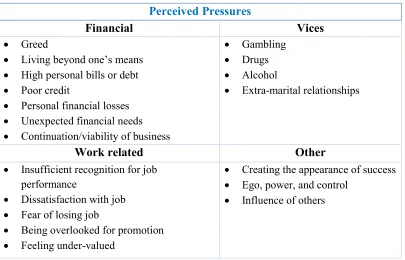
[image:15.612.106.511.176.436.2]overview of some reasons perpetrators might have for committing a fraudulent action.
Table 1: Examples of perceived pressures, adapted from Dellaportas (2013) p. 31.
Table 1 represents the perceived pressures for an individual to commit fraud. Pressures are the first element in the Fraud Triangle. They can be described as the common motivators for an individual to perform a fraudulent act. Table 1 creates four categories of pressures that could arise. Financial pressures, vices, work-related pressures, and other pressures. Financial pressures are considered to be the base for most fraud cases. A financial strain can push an individual into committing fraud (Cressey, 1953). For example the pressure to keep and/or increase investor confidence that is related to the bonus of certain employees. The second category of perceived pressures is that of vices. Mainly gambling and drugs are great motivators for offenders to commit fraud (Dellaportas, 2013). There also is the category of financial pressures. The non-financial pressures mainly exist of work related pressures that motivate pressures. The feeling of deserving more or better recognition creates an incentive to take what is yours or for example get back at someone or the company (Ramamoorti, 2008). The last pressures category represents other pressures. These pressures relate to the individuals, who create their own unique pressures (Dellaportas, 2013). An example is seeing neighbors buying a new car and feeling the need to keep up and buy a new one too. When the means are not available, this creates a motivation or pressure to commit a fraudulent act.
Perceived Pressures
Financial Vices
Greed
Living beyond one’s means
High personal bills or debt
Poor credit
Personal financial losses
Unexpected financial needs
Continuation/viability of business
Gambling
Drugs
Alcohol
Extra-marital relationships
Work related Other
Insufficient recognition for job performance
Dissatisfaction with job
Fear of losing job
Being overlooked for promotion
Feeling under-valued
Creating the appearance of success
Ego, power, and control
11 Perceived Opportunities
Lack of or circumvention of controls that prevent and/or detect fraudulent behavior
Inability to judge the quality of performance Failure to discipline fraud perpetrators Lack of access to information
[image:16.612.131.495.70.210.2] Ignorance, apathy, or an incapacity to detect fraud Lack of audit trail
Table 2: Examples of perceived opportunities, adapted from Dellaportas (2013) p. 31.
[image:16.612.105.511.405.637.2]Table 2 shows some examples of opportunities for offenders to commit fraud. The definition of opportunities is that an offender is able to commit and conceal fraud (Dellaportas, 2013). Lots of situations could lead to opportunities to commit fraud. An example is that of weak internal controls, which is considered to be a major attribution to fraud (KPMG, 2006, 2008, 2010). On the other hand, internal controls are also responsible for detecting the greatest number of frauds (Dellaportas, 2013). A problem with fraud is the level of punishment. The severity of financial statement fraud is not as clear and obvious as that of a violent crime or terrorism. That is why these crimes get priority over white-collar crimes. As a result, the low punishment creates opportunity for offenders, because even if they get caught the penalty will be worth it (Dellaportas, 2013).
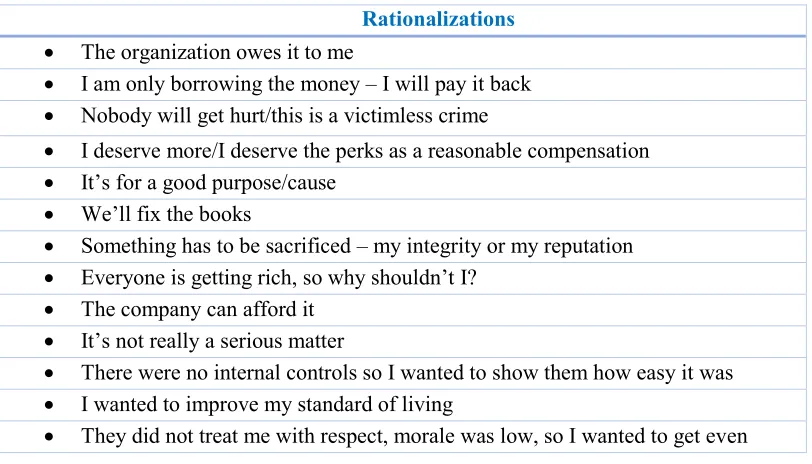
Table 3: Examples of common rationalizations, adapted from Dellaportas (2013) p. 31.
Table 3 explains the perceived rationalizations. What reasoning offenders have that makes them justify their behavior and takes away their doubts as to offend or not (Dellaportas, 2013). Rationalization makes the offenders believe they did nothing wrong while committing the
Rationalizations The organization owes it to me
I am only borrowing the money – I will pay it back
Nobody will get hurt/this is a victimless crime
I deserve more/I deserve the perks as a reasonable compensation
It’s for a good purpose/cause
We’ll fix the books
Something has to be sacrificed – my integrity or my reputation
Everyone is getting rich, so why shouldn’t I?
The company can afford it
It’s not really a serious matter
There were no internal controls so I wanted to show them how easy it was
I wanted to improve my standard of living
12 fraudulent act (Coleman, 1987). An example can be that offenders feel like they should have been compensated better by their employer. Because the employer will not do it, the feeling increases that the company owes them something and they will only get it if they take it themselves. The offender feels like the compensation is righteous and will therefore not see the fraudulent act as a wrongdoing (Dellaportas, 2013). An example of how the Fraud Triangle works based on these three tables to clear up the theory. Imagine an individual that is living beyond one’s means. Spending money that is somebody else’s should come from somewhere, creating a pressure or motivation for fraud. When this individual is in a position where there is a lack of controls that prevent fraudulent behavior, this creates an opportunity to commit fraud. Finally, arguments like “I am only borrowing the money and will pay it back”, or “everyone is getting rich, why shouldn’t I?” create a reasoning for that individual to justify their behavior and end their doubts on whether or not to commit the act.
Three conclusions were drawn from a study done by Hollinger & Clark (1983), that (1) level of personal income is of no influence on the act of fraud. Fraudsters operate on all levels of income. (2) the more satisfied an employee is with their job, the less likely he or she is to commit fraud. And (3), which is perhaps the most interesting for this study, the fact that the level of control is negatively correlated with fraudulent behavior of employees . So when control goes up, fraudulent acting by employees decreases (Beasley, 1989; Choo & Tan, 2007; Hollinger & Clark, 1983).
The level of control is of great influence on the opportunity for fraudsters. When factors like weak internal control or the failure to discipline perpetrators are a reality at firms, the opportunity needed for fraud is enhanced (Albrecht et al., 2012). Especially weak internal controls have been found to be a major factor that attributes to fraud (KPMG, 2006, 2008, 2010). Dechow et al. (1996) found that firms that manipulate earnings have less independent boards, chairman and CEO are more likely to be the same person, CEO often is the firm’s founder, and it is less likely that the firm has an audit committee. Several researchers have tried to improve or add on to the Fraud Triangle by Cressey (1950, 1953). As is imaginable, over the years research has shed light on the subject of fraud and critics have been trying to improve the Fraud Triangle (Kassem & Higson, 2012). From here on the evolution of the Fraud Triangle will be discussed.
2.2.2
The Triangle of Fraud Action
13 conversion, and the act (Albrecht et al., 2006; Kranacher et al., 2010; Lala et al., 2014; Ramamoorti et al., 2009).
Concealment can be described as the effort of concealing the fraud act. Examples are falsifying the books or destroying any files that can be seen as evidence. Conversion is the method of the fraudster to make unruly incomes look legit. These could include actions such as money laundering, for example. Finally the act, which relates to the method the perpetrator, has chosen to commit fraud. Some examples may be embezzlement, financial misstatements or material fraudulent reporting (Dorminey et al., 2012). The Fraud Triangle gives an insight into the person that should be considered a potential fraud risk. The Triangle of Fraud Action focuses more on the area within an organization where the perpetrator can commit fraud. This makes it a helpful tool in creating prevention, detection, and deterrence measures (Dorminey et al., 2012). Another aspect of the Triangle of Fraud Action is that is has three components that are observable. The pressure and rationalization of the Fraud Triangle are not observable in such a way (Ramamoorti, 2008). The Triangle of Fraud Action makes it hard for a perpetrator to deny the act (Lala et al., 2014). However, the fact that this is hard to prove does not mean that there is no fraud. The Triangle of Fraud Action can be helpful in proving the crime, because all of the elements can be observed (Ramamoorti, 2008).
2.2.3 The Fraud Scale
The Fraud Scale is the result of a study done by Albrecht et al. (1984) (Schuchter & Levi, 2015). After analyzing the Fraud Triangle, the study showed that it was difficult to predict fraud, and that the occupational fraudster, as a group, was difficult to profile (Kassem & Higson, 2012). The findings led to the Fraud Scale, which is similar to the Fraud Triangle, but replaces rationalization with personal integrity. The components of opportunity and pressure are, similar to the Fraud Triangle, the other two components (Albrecht et al., 1984). The theory behind these components is that it allows to modify the probability of fraud occurring. The scale has two arms, the left arm that contains high pressure, great opportunity, and low personal integrity. The right arm contains low pressure, lesser opportunity, and high personal integrity. If the scale tilts to the left, there is high probability of fraud occurring, because these conditions suggest a higher fraud risk. When the scale tilts to the right, the probability and risk of fraud become very little (Albrecht et al., 1984; Cancino, 2010). The Fraud Scale can be of assistance when trying to assess whether or not somebody would be able to rationalize the fraudulent act. Past behavior of an individual has consequences for future actions. If it may be concluded that an individual has low integrity, the probability of rationalization increases and so does the fraud risk (Albrecht et al., 1984).
2.2.4
M.I.C.E
14 need financial problems that are non-shareable to commit fraud. Several CEO’s, CFO’s, Board members, and other high function employees have been found guilty of fraud, even though financial problems were no issue for them (Dorminey et al., 2012). The first explanation to the phenomenon that perpetrators did not need a non-shareable problem was related to a competitive culture. Individuals that act in high positions have a kind of image that must be lived up to. The pressure of the competition on wealth and success may be a reason to commit fraud (Coleman, 1987). Following the work of Coleman (1987), research has been done into executive white-collar crime. Why would wealthy, influential, and prominent individuals within society risk a white-collar crime. The answer was found in the fact that social status can impose certain pressures that executive might feel the need to commit a white-collar crime. Even though from a financial point of view there is no issue or pressure for them whatsoever (Ramamoorti et al., 2009).
These findings, accompanied with other recent findings, have led to the creation of the acronym M.I.C.E. (Dorminey et al., 2012; Kassem & Higson, 2012: Kranacher et al., 2010). M.I.C.E. changes the pressure side of the Fraud Triangle, where the characters of M.I.C.E. all represent a motivation for an individual to commit fraud. ‘M’ stands for the pressure of money; the greed of an individual is the motivation to commit the fraudulent act. ‘I’ stands for ideology; which relates to the state of mind of a person. The performance of the fraudulent act does not go hand in hand with ideology issues that frequently. Some examples are tax evasion because individuals believe they pay enough already, or funding terrorists because it is believed they are doing the right thing. ‘C’ stands for coercion; the situation in which an individual does not want to commit fraud, but has no other options. And finally, ‘E’ stands for ego or entitlement; more money leads to more power which might be a good motivation for certain individuals (Dorminey et al., 2012; Kassem & Higson, 2012; Kranacher et al., 2010). M.I.C.E. provides investigators with a framework they can use when trying to find motives for perpetrators (Dorminey et al., 2012; Kassem & Higson, 2012; Kranacher et al., 2010).
2.2.5
The Fraud Diamond
15 One question seems to be critical in this issue, namely “who could turn an opportunity for fraud into reality?” (Wolfe & Hermanson, 2004, p. 39). An example of how perpetrators pass the Fraud Diamond is as follows. First there needs to be an incentive, which in this case can be an individual who wants to, has to or needs to commit fraud. Second, there needs to be an opportunity for a perpetrator to commit fraud. A weakness has been found in the system that is at hand, and the right person may be able to exploit leading to fraud. Third is the rationalization, the individual that has incentive and opportunity convinces himself that committing the fraud is worth the risk. And finally, the individual needs to possess the capability to commit an act of fraud. The individual has recognized the opportunity to commit fraud, and is convinced he has the necessary traits and abilities to pull it off (Dellaportas, 2013; Wolfe & Hermanson, 2004). Wolfe & Hermanson (2004) describe six components of the capability of a fraudulent individual. First, the individual’s position is of great importance. If the position does not allow an individual to commit fraud, the individual will not have the capability. Second, the individual needs to have the brains. When the opportunity has been recognized the individual must be smart enough to exploit. Third, the ego or confidence of the individual plays an important role. The individual must be certain of himself that he will not be caught. Fourth, the coercion skills the individual needs. This way, other people can be coerced into helping the fraudulent individual so that he will not be caught. Fifth, the individual must be a great liar. The individual has to be capable of lying consistently and keeping track of those lies. And finally, the individual must be immune to high levels of stress (Wolfe & Hermanson, 2004). Committing fraud can be going on for a very long period of time, and can therefore become very stressful (Pavlo & Weinberg, 2007).
2.2.6
Predator vs Accidental Fraudsters
Schrand & Zechman (2012) found that three out of 4 frauds that occur are accidental, not on purpose. As a result, the theory of the accidental fraudster was created. That individual, apart from having committed fraud, is considered to be a good person who does not break the law, and under normal circumstances would have never considered breaking the law in any way. These individuals are fully compliant to the Fraud Triangle (Cressey, 1950; 1953). However, some individuals are predators. They solve the consequences of one fraud with another, breaking the law time and time again (Dorminey et al., 2012). Research has shown that once a fraudster has committed for the first time, the rationalization becomes easier.
16
2.2.7
The A-B-C Model
The A-B-C analysis does not focus on the elements of the Fraud Triangle, but focuses on the probability of the fraudulent act under certain conditions. The A-B-C model was proposed by Ramamoorti et al. (2009). The A-B-C model works as follows: there are bad Apples, bad Bushels, and bad Crops. In the situation of the A-B-C model and fraud, the bad apple is considered an individual committing fraud. The bad bushel relates to collusive fraud, a group of perpetrators that may or may not be forced into the fraud due to management override (Silver et al., 2008). To clear things up a little, auditors can encounter two levels of fraud, employee fraud and management fraud (Hall, 2012; Tugas, 2012). The bad crop refers to cultural and societal mechanisms that have an influence on the occurrence of fraud (Ramamoorti et al., 2009). Especially the explanation given by Ramamoorti et al. (2009) on the bad crop is interesting. This insinuates that it becomes more likely for employees to commit fraud when unlawful behavior is in the culture and society of a firm, implemented by the top management. The A-B-C analysis has an influence on the probability of the perpetrator committing the crime (Ramamoorti et al., 2009).
2.2.8
The Fraud Pentagon
As an expansion of the Fraud Diamond, Marks (2009) constructed the Crowe Horwath Fraud Pentagon. This has added an extra component to the structure of the Fraud Diamond, arrogance in addition of competence, creating a pentagon (Dellaportas, 2013; Tugas, 2012). Comparing the 1950s business environment to that of the 2000s has shown some notable differences. Corporations have become more global, outsourcing more of their input, changes in authority, and a change from a set-up salary to a performance-based pay salary. Also corporate culture at corporations nowadays is more focused on wealth and fame. This causes some increased pressure on employees. And of course many businesses are no longer owner-managed (Marks, 2009). Therefore Marks (2009) expanded the Fraud Triangle to the Fraud Pentagon, adding 2 components: arrogance and competence. The arrogance of an individual relates to his or her lack of conscience. An attitude of superiority that an individual has which makes him think that the rules do not apply to him (Marks, 2009). The competence of an individual relates to the ability to perform a fraudulent act. Competence may be seen as an expansion of the opportunity component by Cressey (1950, 1953) (Dellaportas, 2013). It focuses on the ability of an individual to override internal and social controls to his advantage. The Fraud Pentagon splits the extra component of the Fraud Diamond into two new components, creating a pentagon.
17 the years. Detection on the other hand occurs when the crime has already been committed, with procedures that recognize the crime (Dorminey et al., 2012).
2.3
Fraud Prevention
Whenever a problem occurs, people will try to find a solution and a way to prevent the problem. It is a common thought that preventing is better than healing. Of course this also applies to the problem of fraud. Based on the above mentioned theories on fraud, research has been conducted considering the prevention of financial statement fraud (AICPA, 2005; Dorminey et al., 2012; Gupta & Gill, 2012; KPMG Forensic, 2006; Kranacher et al., 2010). Important tools for the prevention of financial statement fraud are internal controls and ethical culture (COSO, 2011, 2013; Dellaportas, 2013; Kumar & Sharma, 2005; Peterson & Zikmund, 2004; Rezaee, 2005). Prevention is one of the three fraud measures and will be described below. In addition, a short introduction into the other anti-fraud measures: deterrence and detection (Dorminey et al., 2012), will be provided, while focusing on the prevention tools of internal control and ethical culture. What it is, how it works, and what it is supposed to do. Finally, there will be an elaboration on the field of forensic accounting. Forensic accounts investigate fraud or the suspicion of fraud.
2.3.1 Prevention, Detection, and Deterrence
Common anti-fraud measures are prevention, deterrence, and detection. Prevention and deterrence measures are in place with the purpose of reducing the opportunity for perpetrators. As for detection, this can only happen when fraud has been committed. However, this does not make it less important. Deterrence of the fraudulent can be created with a consistent and credible disciplinary system. When an organization has mandated meaningful mandates, this sends a message to all the possible perpetrators inside or outside the organization (KPMG, 2006a). The deterrence of fraud is related to the situation in which an environment is created that discourages people to commit fraud. Fraud deterrence works when “(1) the perception of deterrence is present and (2) potential perpetrators recognize that they will be punished when caught” (Dorminey et al., 2012, p. 573). Most important to deterrence is that the one(s) committing the fraud are aware that detection is likely and therefore chances of fraud activities are reduced (Dorminey et al., 2012). Detection consists of three parts: Financial statement audit, targeted risk assessment, and collusive fraud and management override. Financial statement fraud has been a significant concern for the auditing profession (Kranacher et al., 2010). Therefore it is important to create an audit plan which can help the auditor to uncover any vulnerable parts of the system that might give rise to fraud (Dorminey et al., 2012).
18 Most accountants focus on internal control as a key anti-fraud mechanism (Dorminey et al., 2012).
To help create an audit plan there are several methods that improve the prevention of fraud. One of these methods is to maintain a fraud policy. The idea is to create a fraud policy and maintain it to guide employees (Bierstaker et al., 2006). A template on how to create such a fraud policy is made available by the ACFE1. The employees should sign an acknowledgement to make sure they understand it clearly. To be certain that the employees are informed, there should be training seminars and annual performance evaluations (Bierstaker et al., 2006). Another prevention method is the fraud vulnerability review (Bierstaker et al., 2006; Rezaee, 2005). Fraud vulnerability reviews investigates the level of exposure to fraud an organization has. There should be an assessment of the assets that are held and how they could be misappropriated (Bierstaker et al., 2006). It is important that these fraud vulnerability reviews are held frequently, e.g. every period, and on an ongoing basis. Alongside the fraud vulnerability reviews organizations should create an anonymous hotline for insiders and outsiders where it is possible to anonymously report fraudulent activities (Holtfreter, 2005; Rezaee, 2005). Another method is to perform background and reference checks on possible employees. This will show whether or not the person hired is an honest person or not (Bierstaker et al., 2006; Rezaee, 2005). Second checks are also relevant. Check the information that was told during the first check and see whether or not it corresponds to the information that is received in the second check. Sometimes personal files are not updated yet, but they can be updated later on. That is why a second check can be of importance (Bierstaker et al., 2006).
The task of establishing systems of prevention and detection is a job for management. This job is performed best when compliance systems are an integral component of the business (Biegelman & Bartow, 2012). Clarity of policies and procedures, formal communication between different hierarchy levels within a firm, and performance-based pay not only for top management, but every employee. These are conditions that can significantly reduce the likelihood of fraud (Schnatterly, 2010). Prevention should focus on controls that are designed to reduce the risk of fraud occurring in the firm. Some elements of prevention controls are: fraud and misconduct risk assessment, code of conduct and related standards, communication and training, process-specific fraud risk controls (KPMG, 2006a; Power, 2013). The board, together with management, is responsible for ensuring institutional support at the highest level for ethical and responsible business practices (KPMG, 2006a). Which also brings one of the major issues of fraud into the discussion namely management override. Management override is seen as the Achilles’ heel of the fraud prevention practice (AICPA, 2005). Management override of controls, which can be placed under collusion, is seen as a central element of the financial crimes and
1
The Association of Certified Fraud Examinors provides a template to create a fraud policy, which is available at their website:
19 frauds that are most complex and costly. These parties may consist of individuals within, as well as across, organizations or multiple organizations of which the collusive behavior could be of international scale (ACFE, 2010). In the fight against fraud it is very important to embrace fraud prevention and institute it in all levels of the organization, especially the top management that is hard to control (Biegelman & Bartow, 2012). The detection of management override comes from anonymous tips most of the time (Dellaportas, 2013).
2.3.2
Internal controls
The prevention tool that is central to this research project is internal control. Over the past few years, there has been an increase in the number of fraud convictions (Dellaportas, 2013). Improvement of a business entity’s internal control can be seen as one of the reasons frauds get caught. Internal control is a very broad term which is applicable to a wide area of operation (Kumar & Sharma, 2005). A definition of internal control is that it provides a system of controls for a business entity, financial and non-financial. It is established by the management and includes internal check, internal audit, and other controls (Kumar & Sharma, 2005; Power, 2012). Part of this internal control is that it should ensure smooth and economic functioning of a firm. This is done by a number of measures and methods, which are exercised by the firm’s management. It is a way of assisting the management in performing several different functions (Shanmugam et al., 2014). There is a need for this because the quality, reliability, and transparency of financial statements cause the allocation of resources in the economy. Only when this is the case, there can be efficient allocation of resources in the economy (Rezaee, 2005). Peterson & Zikmund (2004) found that strong internal control systems strengthen enterprise governance, improves management performance and mitigates the risk of fraud, because all employees help in the detection process.
20 There are lots of different definitions for proper internal controls, explained in their own terms every time. However, from these explanations there are five components that are present in all explanations. The first component is the control environment within a company. Weak control environments increase the possibility of fraud (Beasley, 1998, Bell & Carcello, 2000). It defines the spirit of culture that is at hand in an organization and the way it operates. The atmosphere in which employees can perform activities and controls, defines the overall culture of the firm (Jokipii, 2010). The second component is that of risk assessment. Risk assessment refers to the process a company follows so they can deal with certain risks that may influence a firm’s performance. The process consists of the identification, analysis, and assessment of the risks (Jokipii, 2010; Norman et al., 2010; Vona, 2012). The third component refers to the control activities of the firm. The control activities consist of policies, procedures, and practices that provide management with important information. It is supposed to assure management that risk strategies are implemented and used effectively, and that objectives are achieved (Jokipii, 2010). The fourth component is the information and communication component. This component ensures that the information that is relevant for employees is communicated, so that these employees can effectively perform their duties and responsibilities (Patel et al., 2010; Shah, 2013). The fifth, and last, component is the monitoring component. Monitoring refers to the process that assesses the quality of controls. External independent supervisors perform periodical investigations on the internal controls done by management or others (Jokipii, 2010).
Weak internal controls are seen as a major factor attributable to fraud (Dellaportas, 2013) and increase the control risk (Hribar et al., 2014). Control risk is the risk of internal control not being able to prevent or detect a misstatement. Internal controls need to be an assurance of an entity’s assets and records (Hribar et al., 2014). Proper appliance of internal control systems not only ensures assets and records, they also create a monitored work environment where efficiency and effectiveness are encouraged (Shanmugam et al., 2014). An effective internal control structure is one of the most important steps taken by organizations towards the prevention of fraud by its employees (Albrecht & Albrecht, 2004).
21
2.3.3
Ethical Culture
The other main part of prevention, next to internal controls, is ethical culture (Dorminey et al., 2012). The ethical culture of a firm can be defined as “the perception about the conditions that are in place in the organization to comply or not comply with what constitutes unethical and ethical behavior.” (Kaptein, 2011, p. 846). A more simple explanation of ethical culture was made by Schein (1996). The CEO of a company plays a crucial role in the creation of an ethical tone within an organization. A CEO should lead by example and create a culture of high ethics and integrity (KPMG Forensic, 2014). In his study Schein (1996) describes ethical culture as “shared norms, values, and assumptions.” (p.229) Verschoor (1998) found in his study that linked ethical culture and financial performance that organizations that commit to ethical behavior and their code of conduct have greater performance than rivals that do not. Arjoon (2005) found that “ethics is truly an essential ingredient for business success.” (p. 349). Based on these findings, it can be stated that it has become more important for firms to work on their ethical culture. The collection of rules, policies, and institutions responsible for how a firm is being controlled are referred to as the corporate governance of a firm (Donaldson, 2012). Internal controls are more practical tools to prevent fraud. Internal controls prevent fraudulent behavior while performing a job. Ethical culture aims at making all that are involved in an organization realize that fraudulent behavior is wrong. The focus is on the mind set of an employee. It tries to affect the rationalization component of the Fraud Triangle (Dorminey et al., 2012).
Arjoon (2005) found that failing to come up with adequate corporate governance for a firm can be a real threat to the future existence of the firm. Firms that have effective corporate governance based on ethical values obtain a competitive advantage in the marketplace. When the reputation of a firm towards ethics is positive, this has a positive effect on customer and employee loyalty (Arjoon, 2005). Empirical evidence has been found stating that an ethical culture has a positive effect on the financial performance (Berrone et al., 2007, Chun et al., 2013). It is not necessarily noted when it has been first implicated. But due to a better employees’ collective commitment to a firm benefits the workplace (Chun et al., 2013).
2.3.4
Forensic Accounting
Forensic accounting is the field in accounting that investigates frauds or is called upon when there is the suspicion of fraud (KPMG, 2016). Gray (2011) made a distinction between auditors and financial accountants. Auditors focus on the identification and prevention of errors made by organizations. The forensic accountant focuses on the identification of fraud (Gray, 2011). This chapter will provide a more practical insight to the problems of fraud and misconduct based on the experience and expertise of KPMG forensic accounting experts and literature. According to Richard Girgenti2, it is inevitable that fraud or misconduct will occur at
2
22 any company. The only question is which form this fraud will take on (KPMG US, 2016). KPMG Forensic (2006) presented a study developing a strategy for prevention, detection, and the response to fraud. The study provides an overview of fraud risk management fundamentals, the new regulatory mandates that are at hand around the world, and the practices that have been found effective in the current environment by organizations (KPMG Forensic, 2006). In 2014, KPMG Forensic provided an updated version of the KPMG Forensic (2006). KPMG Forensic (2014) elaborates on the 2006 version by providing a road map to manage risks of fraud and misconduct, based on the design, implementation, and evaluation of practices that were found effective by leading organizations. As the title suggest, the key objectives are prevention, detection, and response. “Prevent instances of fraud and misconduct from occurring in the first place. Detect instances of fraud and misconduct when they do occur. Respond appropriately and take corrective action when integrity breakdowns arise.”(KPMG Forensic, 2014, p. 5).
Prevention focuses on the fraud and misconduct risk assessment. Fraud and misconduct risk assessments help the management of a firm understand the unique risks that apply to the organization, and identify weaknesses of control to mitigate these risks (KPMG Forensic, 2014). To create effective fraud and misconduct management, there should be a well-designed and properly executed ethics and compliance program to begin with (KPMG US, 2016). Eventually this leads to the development of a practical plan to target the right resources and controls so these risks are reduced (KPMG Forensic, 2014). Well executed fraud risk assessments are capable of identifying the most noticeable risks related to the integrity of an organization and its stakeholders. This can lead to creating a program to prevent fraud or misconduct from happening. An important aspect of that program is training (KPMG US, 2016). It is impossible to create an environment for the organization where fraud and misconduct cannot happen, without the loss of business. This kind of organization prohibits an effective work environment, according to Timothy Hedley3 (KPMG US, 2016). A critical maximization aspect of prevention and detection of wrongdoing are advanced technologies. These should be incorporated into the compliance program of the organization. Organizations need to be aware of what people with the wrong intentions can do to them with technology and create controls that prevent these attacks. The organization will be better prepared to avoid these situations, and respond to them if necessary (KPMG US, 2016).
The key to a good detection program is that it has great policies, procedures, and processes, as well as the right people helping out. For example forensic accountants, lawyers, cyber specialists, and an industry specialist that understands the nature of the situation that is at hand (KPMG US, 2016). A first step can be to create a hotline for whistleblowers to call whenever there is the suspicion of fraud, so the case is brought to the light of the right people who can investigate the situation. It is important that among other things, the hotline is confidential and anonymous (KPMG Forensic, 2006).
3
23 When the integrity of a firm has been broken down, a team of people should be brought in to respond, perform an internal investigation (KPMG US, 2016). The ‘Fraud Prevention Scorecard’ of the AICPA (2008) helps organizations test whether their prevention tools are sufficient. To have an effective response to fraud, the following factors should be taken care of: “Who should perform the investigation; How should the investigation be performed; When should a voluntary disclosure to the government be made; How to determine the remedial action; How to identify remedy control deficiencies; How should disciplinary action be administered” (AICPA, 2008, p. 64).
2.4
Rules & Regulations
Chapter 2.4 will discuss the different rules and regulations that are at hand in different countries around the world. To begin with the USA and their Sarbanes-Oxley Act of 2002. Followed by the UK Corporate Governance Code that applies to the United Kingdom. The third code that will be discussed is the Australian Corporate Governance Principles and Recommendations. Finally, the Dutch Corporate Governance Code will be discussed.
2.4.1
United States of America
To protect the capital market from these fraudulent acts that keep occurring, rules and regulations needed to be drawn up. For the capital market to be working efficient, the quality, reliability, and transparency of the financial information that firms share with the markets has to be accurate (Jain et al., 2008). The rules and regulations constructed by governments worldwide that are at hand today, find their foundation in the major fraudulent scandals that happened in the US during 2001 and 2002 (Chhaohharia & Grinstein, 2007). As a result of Enron, WorldCom, Adelphia, Global Crossing, Qwest Communications, and Tyco raised the question for a reform of the corporate business practices, and improvements of accounting and government systems for publicly traded companies. An answer to this question came on July 30th 2002 in the form of the Sarbanes-Oxley Act of 2002 (SOX) (Hochberg et al., 2014).
24 SOX led to “improved disclosure, transparency, and corporate governance, thereby reducing misconduct and mismanagement by insiders, and that for shareholders overall, these benefits may outweigh the costs of compliance” (Hochberg et al., 2014, p. 575).
However, it has not only been good news since the SOX was implemented. For example the evidence found by Kang et al. (2010) stating that the SOX has had a negative effect on corporate investments made in the US. Compared to the UK, over the same period of time, the SOX had a negative effect on the corporate investments. Firms have become more careful with their corporate spending (Kang et al, 2010). Another negative aspect of the SOX is the fact that foreign firms might choose to not enter the US for business because of the unnecessary costs it brings upon firms (Duarte et al., 2014). There is also support for the argument that SOX events are related to the negative cumulative abnormal returns (Zhang, 2007). Whereas the research of Berger, Li & Wong (2006) shows that SOX has been costly for foreign firms. There has been found evidence that the negative feeling that investors had about the SOX Act, that it would negatively affect cross-listed foreign companies (Litvak, 2007).
2.4.2
United Kingdom
In the UK they have the UK Corporate Governance Code, which is formerly known as the Combined Code. The code is written by the Financial Reporting Council, the UK´s authority in the field of high quality corporate governance and reporting (FRC, 2016). The UK Corporate Governance Code consists of five main sections: (1) Leadership, (2) Effectiveness, (3) Accountability, (4) Remuneration, and (5) Relations with shareholders (FRC, 2016). In all of these sections it is explained which requirements should be met to comply with the Corporate Governance Code. If an organization fails to meet these requirements it should explain why. The UK Corporate Governance Code follows the ‘comply or explain’ principle. Where the organizations should either comply with the code or explain why they do not (Bruner, 2011).
The leadership section focuses on the following requirements. First, any company should be leaded by an effective board. This board should be collectively responsible for the long-term success of the company. Second, the division of responsibilities is very important. In no case there should be one individual that has too much power. Third, the chairman is responsible for the effectiveness of the board. A suggestion by the code is that directors should challenge the members of the board so they can help develop proposals and strategies (FRC, 2014).
25 information needed is received on time. Finally, a thorough evaluation of board and individual performance, combined with a regular re-election should improve effectiveness (FRC, 2014).
Accountability focuses on the sharing of firm information with the outside world. It should be the duty of the board to present a fair and understandable picture of the firm for its shareholders and investors. The board is also responsible for setting the level of risk and making sure that a sound risk management and internal control system is at place. A transparent and formal board should maintain the appropriate relationship with the company’s auditors (FRC, 2014).
Remuneration focuses on the rewarding of executive directors. The remuneration should be focused on the long-term success. The rewarding process should be formal and transparent, so that no director can have any involvement in the decision of his or her own remuneration (FRC, 2014).
The relationship with the shareholders can be very important to a company. It should create a dialogue with the shareholders so it can be clear whether or not there is a mutual understanding of the objectives. To make sure this happens, the board is responsible for this task. One of these methods is general meetings organized by the board to communicate any news or answer any questions for the shareholders (FRC, 2014).
2.4.3
Australia
On the 27th of March 2014 the Australian ASX Corporate Governance Council provided their latest version of the Australian corporate governance code, the Corporate Governance Principles and Recommendations. The ASX is the Australian Securities Exchange, and the ASX Corporate Governance Council “brings together various business, shareholder, and industry groups, each offering valuable insights and expertise on governance issues from the perspective of their particular stakeholders” (ASX CGC, 2016). The Corporate Governance Principles and Recommendations follow the ‘if not, why not’ principle, which is similar to the ‘comply or explain’ principal used in the UK (ASX CGC, 2014). The Corporate Governance Principles and Recommendations follows eight principles (ASX CGC, 2014).
First, there should be solid foundations for management and oversight. The roles and responsibilities of board and management need to be disclosed. Also, the monitoring and evaluation methods that apply to the board and management should be disclosed (ASX CGC, 2014).
Second, the board should be structured to add value. The board should have an appropriate size, composition, and the right skills and commitment to make sure the carrying out of duties is done effectively (ASX CGC, 2014).
26 Integrity should be very important in corporate reporting. Formal and rigorous processes should independently verify the integrity of a company’s corporate reporting, as well as safeguard it (ASX CGC, 2014).
The disclosure of information should be timely and balanced. This way investors can have the opportunity to concern all matters before making any decisions. Important is that all factors that can have a material effect on the decision of a person are included (ASX CGC, 2014).
The rights of security holders should be respected at all times. Providing the appropriate information for security holders and facilitate the possibility for them exercise their rights effectively (ASX CGC, 2014).
Recognition and managing of risk is also very important. Risk management frameworks should be effective and the effectiveness of these frameworks should be evaluated periodically. By doing so, companies are able to check whether or not their risk recognition and management is still effective (ASX CGC, 2014).
Remuneration of directors and executives should be fair and responsible. The remuneration should be high enough to keep and attract high quality directors. It should also act as an incentive for executives to make sure their interests are in line with creating value for the security holders (ASX CGC, 2014).
2.4.4 The Netherlands
As a result of the SOX attacking the problem of internal and external control within firms, other countries took on similar laws as well. In the Netherlands, the Dutch version of SOX was called the Tabaksblat Code. In 2003 an important reason for the Tabaksblat Code came to light: a major fraud at Ahold (Arping & Sautner, 2010). Eventually this led to the revision of Ahold’s financial statements and caused a lot of problems during this period (Oranje & Wester, 2004a). The goal of the Tabaksblat Code is to increase the transparency and accountability of Dutch corporate governance. It also aims at improving the integrity and quality of the management board and the supervisory board of firms (Akkermans et al., 2007). The Tabaksblat Code applies to listed companies that have a registered office in the Netherlands (Akkermans et al., 2006). Because of the fact that regulations in the past were often noncompliant, the Tabaksblat Code was taken up into the Dutch laws.