Towards Debugging Sentiment Lexicons
Andrew Schneider
Computer and Information Sciences Temple University
Eduard Dragut
Computer and Information Sciences Temple University
Abstract
Central to many sentiment analysis tasks are sentiment lexicons (SLs). SLs exhibit polarity inconsistencies. Previous work studied the problem of checking the con-sistency of an SL for the case when the en-tries have categorical labels (positive, neg-ative or neutral) and showed that it is NP-hard. In this paper, we address the more general problem, in which polarity tags take the form of a continuous distribution in the interval [0, 1]. We show that this problem is polynomial. We develop a gen-eral framework for addressing the consis-tency problem using linear programming (LP) theory. LP tools allow us to uncover inconsistencies efficiently, paving the way to building SL debugging tools. We show that previous work corresponds to 0-1 inte-ger programming, a particular case of LP. Our experimental studies show a strong correlation between polarity consistency in SLs and the accuracy of sentiment tag-ging in practice.
1 Introduction
Many sentiment analysis algorithms rely on sen-timent lexicons(SLs), where word forms or word senses1are tagged as conveying positive, negative or neutral sentiments. SLs are constructed by one of three methods (Liu, 2012; Feldman, 2013): (1) Manual tagging by human annotators is gener-ally reliable, but because it is labor-intensive, slow, and costly, this method has produced small-sized SLs comprising a few thousand words, e.g., Opin-ion Finder (OF) (Wilson et al., 2005), Appraisal Lexicon (AL) (Taboada and Grieve, 2004), Gen-eral Inquirer (GI) (Stone et al., 1966), and Micro-WNOp (Cerini et al., 2007). (2) Dictionary-1We refer to a string of letters or sounds as a word form & to a pairing of a word form with a meaning as a word sense.
based acquisition relies on a set of seed words to expand its coverage to similar words. There are over thirty dictionary-based techniques (An-dreevskaia and Bergler, 2006; Blum et al., 2004; Chen and Skiena, 2014; Choi and Wiebe, 2014; Esuli and Sebastiani, 2006; Feng et al., 2013; Has-san and Radev, 2010; Kamps et al., 2004; Moham-mad et al., 2009; Takamura et al., 2005; Turney, 2002; Williams and Anand, 2009), most of them based on WordNet (Fellbaum, 1998), such as Sen-tiWordNet (SWN)(Baccianella et al., 2010) and Q-WordNet (QWN) (Agerri and Garc´ıa-Serrano, 2010). (3) Corpus-based acquisition expands a set of seed words with the use of a large docu-ment corpus (Breck et al., 2007; Bross and Ehrig, 2013; Choi and Cardie, 2009; Ding et al., 2008; Du et al., 2010; Hatzivassiloglou and McKeown, 1997; Jijkoun et al., 2010; Kaji and Kitsuregawa, 2007; Klebanov et al., 2013; Lu et al., 2011; Peng and Park, 2011; Tang et al., 2014; Wu and Wen, 2010). Method (1) generally produces the most reliable annotations, however the considerable ef-fort required to yield substantial lexicons makes it less useful in practice. The appeals of (2) and (3) lie in the formalism of their models and their capability of producing large-sized SLs. SLs are either word or sense/synset oriented. We refer to the former as Sentiment Word Lexicons (SWLs), e.g., GI, OF, and AL, and to the latter as Senti-ment Sense Lexions (SSLs), e.g., SWN, QWN, and Micro-WNOp. Besides the method of compi-lation, SLs may also vary with regard to sentiment annotation.
Polarity disagreements are noted across SLs that do (SWN, Q-WordNet) and do not (AL, GI) reference WordNet. For instance, the adjectives
panicky and terrified, have negative and positive polarities in OF, respectively. They each have only one synset which they share in Word-Net: “thrown into a state of intense fear or des-peration”. Assuming that there is an intrinsic
lationship between the sentiments of a word and its meanings, a single synset polarity assignment to this synset cannot agree with bothpositiveand
negativeat the word level. If the information given in WordNet is accurate (the Oxford and Cam-bridge dictionaries give only this meaning for both words) then there must be an annotation inconsis-tency in OF, called apolarity inconsistency. While some inconsistencies are easy to detect, manual consistency checking of an entire SL is an imprac-tical endeavor, primarily because of the sheer size (SWN has over 206,000 word-sense pairs). Ad-ditionally, WordNet’s complex network structure renders manual checking virtually impossible; an instance of a polarity inconsistency may entail an entire sub-network of words and senses. In this paper we develop a rigorous formal method based on linear programming (LP)(Schrijver, 1986) for
polarity consistency checkingof SLs with accom-panying methods to unearth mislabeled words and synsets when consistency is not satisfied.
We translate the polarity consistency problem
(PCP) into a form of the LP problem, suitable as the input to a standard LP solver, and utilize the functionality available in modern LP software (e.g., identifying an irreducible infeasible subset) to pinpoint the sources of inconsistencies when they occur. In our experimentation we are able to quickly uncover numerous intra- and inter-lexicon inconsistencies in all of the input SLs tested and to suggest lexicon entries for a linguist to focus on in “debugging” the lexicon.
Background and Previous Work
Sentiment resources have taken two basic ap-proaches to polarity annotation: discrete and frac-tional. In the discrete approach, polarity is defined to be one of the discrete valuespositive,negative, orneutral. A word or a synset takes exactly one of the three values. QWN, AL, GI, and OF follow thediscrete polarity annotation. In the fractional approach, polarity is defined as a 3-tuple of non-negative real numbers that sum to 1, correspond-ing to the positive, negative, and neutral values re-spectively. SWN, Micro-WNOp, and Hassan and Radev (2010) employ afractional polarity anno-tation. For example, the single synset of the ad-jective admissible in WordNet has the senti-ment tags positive in QWN and h.25, .625, .125i
in SWN, so here SWN gives a primarily negative polarity with some positive and less neutral polar-ity. We denote by PCP-D and PCP-F the polarity
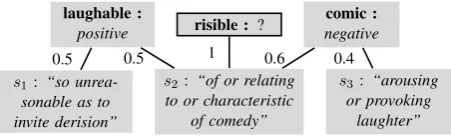
laughable :
positive risible : ? negativecomic :
s2: “of or relating to or characteristic
of comedy”
s3: “arousing or provoking
laughter”
s1: “so unrea-sonable as to invite derision”
[image:2.595.308.534.58.126.2]0.5 0.5 1 0.6 0.4
Figure 1: Discrete vs. fractional polarity consis-tency. Example taken from Dragut et al. (2012).
consistency problem for the discrete and fractional polarity annotations, respectively.
Dragut et al. (2012) introduces the PCP for do-main independent SLs and gives a solution to a particular form of the PCP-D, but that method cannot solve PCP-F. For example, they show that the adjectives laughable, comic, and
risible(Figure 1) constitute an inconsistency in the discrete case. AL gives positive polarity for
laughable and OF gives negative forcomic. Ifs2 is notpositivethenlaughableis not
pos-itive and ifs2 is notnegative thencomic is not
negative, so there is no assignment ofs2that
satis-fies the whole system. Hence there is an incon-sistency. However, the following fractional po-larity tags do satisfy the system: s1 : h1,0,0i,
s2:h.66, .34,0i,s3:h0,1,0i, where the meaning
of the second tag, for instance, is thats2is .66
pos-itive, .34 negative, and 0 neutral. We thus see that the discrete polarity annotation is rigid and leads to more inconsistencies, whereas the fractional an-notation captures more naturally the polarity spec-trum of a word or synset. In this paper we give a solution to the PCP-F. The differences between our solution and that of Dragut et al. (2012) give some insight into the general differences between the fractional and discrete problems. First, the discrete case is intractable, i.e., computationally NP-complete (Dragut et al., 2012); we show in this paper (Section 3.2) that the fractional case is tractable (solvable in polynomial time). Second, the PCP-D is solved in Dragut et al. (2012) by translation to the Boolean satisfiability problem (SAT) (Schaefer, 1978); here we recast the PCP-F in terms of LP theory. Third, we show that the LP framework is a natural setting for the PCP as a whole, and that the PCP-D corresponds to the 0-1 integer LP problem (Section 3.2), a classic NP-complete problem (Karp, 2010).
sources of error in SLs. We apply our algorithm to both SWLs and SSLs and demonstrate the useful-ness of our approach to improving SLs.
The main contributions of this paper are:
• solve the PCP-F;
• show that the PCP-F is tractable;
• show that the PCP is an instance of LP;
• develop a technique for identifying inconsis-tencies in SLs of various types;
• implement our algorithm as a prototype SL debugger;
• show that there is a strong correlation be-tween polarity inconsistency in SLs and the performance of sentiment tagging tools de-veloped on them.
2 Problem Definition
In this section we give a formal characterization of the polarity assignment of words and synsets in SLs using WordNet. We use −, +, 0 to denote negative, positive, and neutral polarities, respec-tively, throughout the paper.
2.1 Polarity Representation
We define the polarity of a synset or word r in WordNet to be a discrete probabil-ity distribution, called a polarity distribution: P+(r), P−(r), P0(r) ≥0withP+(r) +P−(r) +
P0(r) = 1. P+(r), P−(r) and P0(r) represent
the “likelihoods” that r is positive, negative or neutral, respectively. For instance, the WordNet synset“worthy of reliance or trust”of the adjec-tivereliableis given the polarity distribution P+ = .375, P− = .0 and P0 = .625in
Senti-WordNet. We may droprfrom the notation if the meaning is clear from context. The use of a polar-ity distribution to describe the polarpolar-ity of a word or synset is shared with many previous works (An-dreevskaia and Bergler, 2006; Baccianella et al., 2010; Kim and Hovy, 2006).
2.2 WordNet
Aword-synset networkN is a 4-tuple(W,S,E, f)where W is a finite set of words, S is a finite set of synsets, E ⊆ W × S andf is a function assigning a positive integer to each element inE. For any wordwand synsets,sis a synset ofwif (w, s)∈ E. For a pair(w, s)∈ E,f(w, s)is called the frequency of useofw in the sense given by s. For a wordw, we letfreq(w) denote the sum of all f(w, s) such that (w, s) ∈ E. We define
therelative frequencyofwwithsbyrf(w, s) = f(w,s)
freq(w). If f(w, s) = 0, the frequency of each
synset ofwis increased by a small constant. We use=.1in our prototype.
2.3 Word Polarities
We contend that there exists a relation between the sentiment orientation of a word and the polarities of its related senses (synsets), and we make the as-sumption that this relation takes the form of a lin-ear function. Thus, forw∈ Wandp∈ {+,−,0}, the polarity distribution ofwis defined as:
Pp(w) =
X
s∈Sw
g(w, s)· Pp(s), (1)
where Pp(s) is the polarity value of synset s with polarity p and g(w, s) is a rational num-ber. For example,gcan be the relative frequency of s with respect to w in WordNet: g(w, s) = rf(w, s);∀w∈ W, s∈ S. Alternatively, for each word w we can drawg(w,·) from a Zipfian dis-tribution, following the observation that the distri-bution of word senses roughly follows a Zipfian power-law (Kilgarriff, 2004; Sanderson, 1999). In this paper, we will assumeg(w, s) =rf(w, s).
For example, the three synsets of the adjec-tivereliablewith relative frequencies 9
11, 111,
and 1
11, respectively, are given the distributions h.375,0, .625i, h.5,0, .5i, and h.625,0, .375i in SentiWordNet. So forreliablewe haveP+ =
9
110.375 +1110.5 +1110.625≈0.41,P− = 0, and
P0 = 119 0.625 + 1110.5 +1110.375≈0.59.
2.4 Modeling Sentiment Orientation in SLs Words and synsets haveuniquepolarities in some SLs, e.g., AL and OF. For instance, reliable
has positive polarity in AL, GI, and OF. The question is: what does a discrete annotation of
reliabletell us about its polarity distribution? One might take it to mean that the polarity distri-bution is simplyh1, 0, 0i. This contradicts the in-formation in SWN, which gives some neutral po-larity for all of the synsets ofreliable. So a better polarity distribution would allow P0 > 0.
range of values, instead of a single point, in which SLs can be said to agree.
Thus, for a wordw, we can define
polarity(w) =
+ ifP+> P−
− ifP−> P+ (2)
which we refer to as MAX POL. This model is adopted either explicitly or implicitly by numer-ous works (Hassan and Radev, 2010; Kim and Hovy, 2004; Kim and Hovy, 2006; Qiu et al., 2009). Another model is themajority sense model, called MAJORITY, (Dragut et al., 2012), where
polarity(w) =
+ ifP+> P−+P0 − ifP−> P++P0 (3)
Another polarity model, MAX, is defined as
polarity(w)=
+ ifP+>P−&P+>P0 − ifP−>P+&P−>P0 (4)
For instance,reliableconveys positive po-larity according to MAX POL, since P+ > P−,
but neutral according to MAJORITY. When the condition of being neither positive nor negative can be phrased as a conjunction of linear in-equalities, as is the case with MAJORITY and MAX POL, then we define neutral as not positive and not negative. These model definitions can be applied to synsets as well.
2.5 Polarity Consistency Definition
Instead of defining consistency for SLs dependent on a choice of model, we develop a generic defi-nition applicable to a wide variety of models, in-cluding all of those discussed above. We require that the polarity of a word or synset in the network
N be characterized by aset of linear inequalities (constraints)with rational coefficients. Formally, for each wordw ∈ W, the knowledge thatwhas a discrete polarityp ∈ {+,−,0}is characterized by a set of linear inequalities:
ψ(w, p) ={ai,0P++ai,1P−+ai,2P0 bi}, (5) where ∈ {≤, <} and ai,0, ai,1, ai,2, bi ∈ Q, i= 0,1, . . . , m. For instance, if the MAX model is used, forw=worshipwhose polarity is pos-itive in OF, we get the following set of inequali-ties: ψ(w,+) = {P+−P−>0, P+−P0>0} = {(−1)P++1P−+0P0<0,(−1)P++0P−+1P0<0}.
Let L be an SL. We denote the system of in-equalities introduced by all words and synsets in L with known polarities in the network N
by Ψ0(N,L). The variables in Ψ0(N,L) are
perseverance w1: +
persistence w2: 0
pertinacity w3: −
tenacity w4: +
s1: “persistent determination”
s3: “the property of a continuous period of time”
s2: “the act of persisting or
persevering”
0.5 0.29
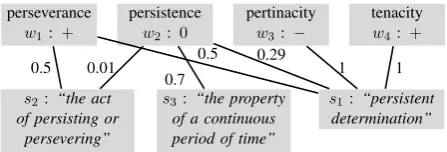
[image:4.595.307.531.57.133.2]1 1 0.5 0.01 0.7
Figure 2: A network of 4 words and 3 synsets
P+(r), P−(r)andP0(r),r ∈ W ∪ S. Denote by
Υ0(N,L)the set of constraints implied by the
po-larity distributions for allr ∈ L:P+(r)+P−(r)+
P0(r) = 1andPp∈{+,−,0}(r) ≥ 0,∀r ∈ W ∪ S.
LetΦ0(N,L) = Ψ0(N,L)∪Υ0(N,L).
Example 1. Let w1, w2, w3, and w4 be the nouns perseverance, persistence,
pertinacity, and tenacity, respectively,
which are in OF with polarities +, 0, −, and +, respectively (Figure 2). Assuming the MAJORITY model, ψ(w1,+) = {P+(w1) >
P−(w1) + P0(w1)} = {P+(w1) > 1 −
P+(w1)}= {−P+(w1) <−12}, andψ(w2,0) = {P+(w2) ≤ P−(w2) + P0(w2), P−(w2) ≤
P+(w2) +P0(w2)}= {P+(w2) ≤ 12, P−(w2) ≤ 1
2}. Similarly, ψ(w3,−) = {−P−(w3) < −12} andψ(w4,−) ={−P+(w4)<−12}.
Definition 1. A sentiment lexiconLisconsistentif the systemΦ0(N,L)is feasible, i.e., has a solution.
The PCP is then the problem of deciding if a given SLLis consistent. In general, PCP can be stated as follows: Given an assignment of polar-ities to the words, does there exist an assignment of polarities to the synsets that agrees with that of the words? If the polarity annotation is discrete, we have the PCP-D; if the polarity is fractional, we have PCP-F. Our focus is PCP-F in this paper.
The benefits of a generic problem model are at least two-fold. First, different linguists may have different views about the kinds of inequalities one should use to express the probability distribution of a word with a unique polarity in some SL. The new model can accommodate divergent views as long as they are expressed as linear constraints. Second, the results proven for the generic model will hold for any particular instance of the model.
3 Polarity Consistency: an LP Approach
lin-ear (in)equality constraints. LP problems are ex-pressed instandardform as follows:
minimizecTx
subject toAx≤b (6) andx≥0 x represents the
vector of variables (to be determined),
c and b are vec-tors of (known)
co-efficients, A is a (known) matrix of coefficients, and(·)Tis the matrix transpose. An LP algorithm
finds a point in thefeasible regionwherecTxhas
the smallest value, if such a point exists. The feasi-ble region is the set ofxthat satisfy the constraints
Ax≤bandx≥0.
There are several non-trivial challenges that need to be addressed in transforming our prob-lem (i.e., the system Φ0(N,L)) into an LP
prob-lem. For instance, we have both strict and weak inequalities in our model, whereas standard LP does not include strict inequalities. We describe the steps of this transformation next.
3.1 Translation to LP
In our problem, xis the concatenation of all the tripletshP+(r), P−(r), P0(r)ifor allr∈ W ∪ S.
Eliminate Word Related Variables. For each wordw∈ Lwe replaceP+(w), P−(w)andP0(w)
with their corresponding expressions according to Equation 1; then the linear system Φ0(N,L) has
only the synset variablesP+(s), P−(s)andP0(s)
fors∈ S.
Example (continued). Using the relative fre-quencies of Figure 2 in Equation 1 we get:
ψ(w1,+)={−.5P+(s1)−.5P+(s2)<−12},
ψ(w2,0)={.29P+(s1)+.01P+(s2)+.7P+(s3)≤12,
.29P−(s1) +.01P−(s2) +.7P−(s3)≤ 12},
ψ(w3,−)={−P−(s1)<−12}, and
ψ(w4,+)={−P+(s1)<−12}.
Equality. The system Φ0(N,L)contains
con-straints of the formP+(s)+P−(s)+P0(s)=1for
eachs ∈ S, but observe that there are no equal-ity constraints in the standard LP form (Equation 6). The usual conversion procedure is to replace a given equality constraint: aTx=b, with: aTx≤b
and −aTx ≤ −b. However, this procedure
in-creases the number of constraints inΦ0(N,L)
lin-early. This can have a significant computation im-pact sinceΦ0(N,L) may have thousands of
con-straints (see discussion in Section 5.3). Instead, we can show that the systemF obtained by per-forming the following two-step transformation is equivalent toΦ0(N,L), in the sense thatF is
fea-sible iff Φ0(N,L) is feasible. For every s ∈ S,
(Step 1) we convert eachP+(s)+P−(s)+P0(s)=1
toP+(s)+P−(s)≤1, and (Step 2) we replace
ev-eryP0(s)inΦ0(N,L)with1−P+(s)−P−(s).
Strict Inequalities. Strict inequalities are not allowed in LP and their presence in inequality tems in general poses difficulties to inequality sys-tem solvers (Goberna et al., 2003; Goberna and Rodriguez, 2006; Ghaoui et al., 1994). Fortu-nately results developed by the LP community al-low us to overcome this obstacle and maintain the flexibility of our proposed model. We introduce a new variable y ≥ 0, and for every strict con-straint of the form aTx < b, we rewrite the
in-equality asaTx+y ≤ b. Let Φ00(N,L) be this
new system of constraints. We modify the objec-tive function (previously null) to maximizey(i.e., minimize −y). Denote by F0 the LP that
maxi-mizes y subject toΦ00(N,L). We can show that
Φ0(N,L)is feasible iffF0 is feasible and y 6= 0.
A sketch of the proof is as follows: ify >0then
aTx+y ≤ bimplies aTx < b. Conversely, if aTx < b then ∃y > 0 such thataTx+y ≤ b,
and maximizing forywill yield ay > 0iff one is feasible. This step is omitted if we have no strict constraints inΦ0(N,L).
Example (continued). The formulations of
ψ(w1,+),ψ(w3,−), andψ(w4,+)involve strict inequalities, so they are rewritten in Φ00(N,L),
e.g.,ψ00(w
4,+) ={−P+(s1) +y≤ −12}.
We denote by Φ(N,L) the standard form of Φ0(N,L) obtained by applying the above steps.
This is the input to an LP solver.
Theorem 1. Sentiment lexicon Lis polarity con-sistent iffΦ(N,L)is feasible.
3.2 Time Complexity
For the networkN and an SLL, the above trans-lation algorithm converts the PCP into an LP problem on the order of O(|E|), a polynomial time conversion. The general class of linear pro-gramming problems includes subclasses that are NP-hard, such as theinteger linear programming
PCP, the discrete case corresponds to the 0-1 in-teger programming (BIP) subclass. (Recall that in the discrete case each synset has a unique polar-ity.) BIP is the special case of integer program-ming where variables are required to be 0 or 1. BIP is a classic NP-hard problem (Garey and Johnson, 1990). We summarize these statements in the fol-lowing theorem.
Theorem 2. The PCP-F problem is P and the PCP-D is NP-complete.
We proved a more general and more compre-hensive result than Dragut et al. (2012). The PCP solved by Dragut et al. (2012) is a particular case of PCP-D: it can be obtained by instantiating our framework with the MAJORITY model (Equation 3) and requiring each synset to take a unique polar-ity. We believe that the ability to encompass both fractional and discrete cases within one frame-work, that of LP, is an important contribution, be-cause it helps to give structure to the general prob-lem of polarity consistency and to contextualize the difference between the approaches.
4 Towards Debugging SLs
Simply stating that an SL isinconsistentis of lit-tle practical use unless accompanying assistance in diagnosing and repairing inconsistencies is pro-vided. Automated assistance is necessary in the face of the scale and complexity of modern SLs: e.g., AL has close to 7,000 entries, SWN annotates the entirety of WordNet, over 206,000 word-sense pairs. There are unique and interesting problems associated with inconsistent SLs, among them: (1) isolate a (small) subset of words/synsets that is po-larity inconsistent, but becomes consistent if one of them is removed; we call this an Irreducible Polarity Inconsistent Subset (IPIS); (2) return an IPIS with smallest cardinality (intuitively, such a set is easiest to repair); (3) find all IPISs, and (4) find the largest polarity consistent subset of an in-consistent SL. In the framework of linear systems of constraints, the problems (1) - (4) correspond to (i) the identification of an Irreducible Infeasi-ble Subset (IIS) of constraints withinΦ(N,L), (ii) finding IIS of minimum cardinality, (iii) finding all IISs and (iv) finding the largest set of constraints inΦ(N,L) that is feasible, respectively. An IIS is an infeasible subset of constraints that becomes feasible if any single constraint is removed. Prob-lems (ii) - (iv) are NP-hard and some may even be difficult to approximate (Amaldi and Kann, 1998;
Chinneck, 2008; Chakravarti, 1994; Tamiz et al., 1996). We focus on problem (1) in this paper, which we solve via IIS discovery. We keep a bi-jective mapping from words and synsets to con-straints such that for any given constraint, we can uniquely identify the word or synset inΦ(N,L) from which it was introduced. Hence, once an IIS is isolated, we know the corresponding words or synsets. Modern LP solvers typically can give an IIS when a system is found to be infeasible, but none give all IISs or the IIS of minimum size. Example (continued). The polarity assignments ofw1,w2,w3, andw4, are consistent iff there exist polarity distributionshP+(si),P−(si), P0(si)ifor i= 1,2,3, such that: y >0
ψ(w1,+):−.5P+(s1) +.5P+(s2) +y≤ −12,
ψ(w2,0):.29P+(s1) +.01P+(s2) +.7P+(s3)≤12 AND.29P−(s1) +.01P−(s2) +.7P−(s3)≤12,
ψ(w3,−) :−P−(s1) +y≤ −12,
ψ(w4,+) :−P+(s1) +y≤ −12,
υ(s1):P+(s1)+P−(s1)≤1ANDP+(s1), P−(s1)≥0,
υ(s2):P+(s2)+P−(s2)≤1ANDP+(s2), P−(s2)≥0,
υ(s3):P+(s3)+P−(s3)≤1ANDP+(s3), P−(s3)≥0. Upon examination, ify >0, thenψ(w3,−) im-pliesP−(s1)> 12 andψ(w4,+)impliesP+(s1)>
1
2. Then P+(s1) + P−(s1) > 1, contradicting
υ(s1). Hence, this LP system is infeasible. More-over{ψ(w3,−), ψ(w4,+), υ(s1)}is an IIS. Trac-ing back we get that the set of words{w3, w4}is inconsistent. Therefore it is an IPIS.
SL adj. adv. noun verb total UN 3,084 940 2,340 1,812 8,176
AL 1,486 377 2 0 1,865
GI 1,337 121 1,474 1,050 3,982 SWLs OF 2,608 775 1,907 1,501 6,791 SWN 18,156 3,621 82,115 13,767 117,659 QWN 4,060 40 7,404 4,006 15,510 SSLsMWN 255 30 487 283 1,055 Table 1: Counts of words/synsets in each SL
ofpertinacity(−) andtenacity(+) must be adjusted, but the determination as to which re-quires the subjective analysis of a domain expert.
In this paper, we do not repair any of the dis-covered inconsistencies. We focus on isolating as many IPISs as possible.
5 Experiments
The purpose of our experimental work is manifold, we show that: (1) inconsistencies exist in and be-tween SLs, (2) our algorithm is effective at uncov-ering them in the various types of SLs proposed in the literature, (3) fractional polarity representa-tion is more flexible than discrete, giving orders of magnitude fewer inconsistencies, and (4) senti-ment analysis is significantly improved when the inconsistencies of a basis SL are corrected.
Experiment Setup: We use four SWLs: GI, AL, OF and their union, denoted UN, and three SSLs: QWN, SWN and MicroWN-Op. The dis-tribution of their entries is given in Table 1. The MAJORITY model (Equation 3) is used in all tri-als. This allows for direct comparison with Dragut et al. (2012). We implemented our algorithm in Java interfacing with the GUROBI LP solver2, and ran the tests on a 4×1.70GHz core computer with 6GB of main memory.
5.1 Inconsistencies in SWLs
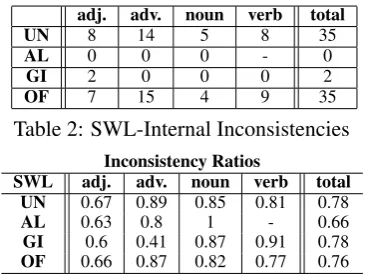
In this set of experiments, we apply our algorithm to GI, AL, OF and UN. We find no inconsisten-cies in AL, only 2 in GI, and 35 in both UN and OF (Table 2). (Recall that an inconsistency is a
setof words whose polarities cannot be concomi-tantly satisfied.) These numbers do notrepresent all possible inconsistencies (See discussion in Sec-tion 4). In general, the number of IISs for an infea-sible system can be exponential in the size of the systemΦ(N,L)(Chakravarti, 1994), however our results suggest that in practice this does not occur. Compared with Dragut et al. (2012), we see a marked decrease in the number of inconsistencies.
2www.gurobi.com
adj. adv. noun verb total
UN 8 14 5 8 35
AL 0 0 0 - 0
GI 2 0 0 0 2
[image:7.595.324.507.55.195.2]OF 7 15 4 9 35
Table 2: SWL-Internal Inconsistencies Inconsistency Ratios
SWL adj. adv. noun verb total UN 0.67 0.89 0.85 0.81 0.78 AL 0.63 0.8 1 - 0.66 GI 0.6 0.41 0.87 0.91 0.78 OF 0.66 0.87 0.82 0.77 0.76 Table 3: SentiWordNet paired with SWLs
They found 249, 2, 14, and 240 inconsistencies in UN, AL, GI, and OF, respectively. These incon-sistencies are obtained in the first iteration of their SAT-Solver. This shows that about 86% of incon-sistent words in a discrete framework can be made consistent in a fractional system.
5.2 Inconsistencies in SSLs
In this set of experiments we check the polarity inconsistencies between SWLs and SSLs. We pair each SSL with each of the SWLs.
SentiWordNet. SWN is an automatically gen-erated SL with a fractional polarity annotation of every synset in WordNet. Since SWN annotates
every synset in WordNet, there are no free vari-ables in this trial. Each variable Pp∈{+,−,0}(s)
for s ∈ S is fully determined by SWN, so this amounts to a constant on the left hand side of each inequality. Our task is to simply check whether the inequality holds between the constant on the left and that on the right. Table 3 gives the proportion of words from each SWL that is inconsistent with SWN. We see there is substantial disagreement be-tween SWN and all of the SWLs, in most cases more than70%disagreement. For example, 5,260 of the 6,921 words in OF do not agree with the polarities assigned to their senses in SWN. This outcome is deeply surprising given that all these SLs are domain independent – no step in their construction processes hints to a specific domain knowledge. This opens up the door to future anal-ysis of SL acquisition. For instance, examining the impact that model choice (e.g., MAJORITY vs. MAX) has on inter-lexicon agreement.
Q-WordNet. QWN gives a discrete polarity for 15,510 WordNet synsets. When a synset is an-notated in QWN, its variables,Pp∈{+,−,0}(s), are
[image:7.595.78.284.56.137.2]UN AL GI OF total 345 34 139 325 Table 4: Q-WordNet paired with SWLs.
a set of words and synsets. Table 4 depicts the outcome of this study. We obtain 345 inconsis-tencies between QWN and UN. The reduced num-ber of inconsistencies with AL (34) is explained by their limited “overlay” (QWN has only 40 adverb synsets). Dragut et al. (2012) reports 455 incon-sistencies between QWN and UN, 110 more than we found here. Again, this difference is due to the rigidity of the discrete case, which leads to more inconsistencies in general.
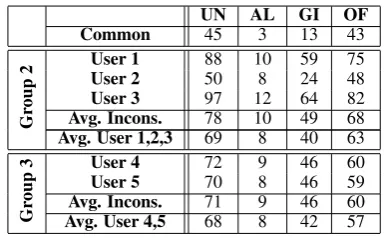
Micro-WNOp. This is a fractional SSL of 1,105 synsets from WordNet manually annotated by five annotators. The synsets are divided into three groups: 110 annotated by the consensus of the annotators, 496 annotated individually by three annotators, and 499 annotated individually by two annotators. We take the average polarities of groups 2 and 3 and include this data as two ad-ditional sets of values. Table 5 gives the inconsis-tencies per user in each group. For Groups 2 and 3, we give the average number of inconsistencies among the users (Avg. Incons. in Table 5) as well as the inconsistencies of the averaged annotations (Avg. User in Table 5).
Micro-WNOp gives us an opportunity to an-alyze the robustness of our method by compar-ing the number of inconsistencies of the individ-ual users to that of the averaged annotation. Intu-itively, we expect that the average number of in-consistencies in a group of users to be close to the number of inconsistencies for the user averaged annotations. This is clearly apparent from Table 5, when comparing Lines 4 and 5 in Group 2 and Lines 3 and 4 in Group 3. For example, Group 2 has an average of 68 inconsistencies for OF, which is very close to the number of inconsistencies, 63, obtained for the group averaged annotations. This study suggests a potential application of our al-gorithm: to estimate the confidence weight (trust) of a user’s polarity annotation. A user with good polarity consistency receives a higher weight than one with poor polarity consistency. This can be applied in a multi-annotator SL scenario.
5.3 Computation
We provide information about the runtime execu-tion of our method in this secexecu-tion. Over all of our experiments, the resulting systems of constraints can be as small as 2 constraints with 2 variables
UN AL GI OF Common 45 3 13 43
User 1 88 10 59 75 User 2 50 8 24 48 User 3 97 12 64 82 Avg. Incons. 78 10 49 68
Gr
oup
2
Avg. User 1,2,3 69 8 40 63 User 4 72 9 46 60 User 5 70 8 46 59 Avg. Incons. 71 9 46 60
Gr
oup
3
[image:8.595.318.512.55.174.2]Avg. User 4,5 68 8 42 57 Table 5: Micro-WNOp – SWD Inconsistencies
and as large as 3,330 constraints with 4,946 vari-ables. We achieve very good overall execution times, 68 sec. on average. At its peak, our algo-rithm requires 770MB of memory. Compared to the SAT approach by Dragut et al. (2012), which takes about 10 min. and requires about 10GB of memory, our method is several orders of magni-tude more efficient and more practical, paving the way to building practical SL debugging tools.
5.4 Inconsistency & Sentiment Annotation This experiment has two objectives: (1) show that two inconsistent SLs give very different results when applied to sentiment analysis tasks and (2) given an inconsistent SLD, andD0 an improved
version ofDwith fewer inconsistencies, show that D0 gives better results thanDin sentiment
anal-ysis tasks. We use a third-party sentiment anno-tation tool that utilizes SLs, Opinion Parser (Liu, 2012). We give the instantiations ofDbelow.
In (1), we use the datasetaclImdb(Maas et al., 2011), which consists of 50,000 reviews, and the SLs UN and SWN. Let UN0and SWN0be the
sub-sets of UN and SWN, respectively, with the prop-erty that they have the same set of (word, pos) pair entries and word appears in aclImdb. UN0
and SWN0 have 6,003 entries. We select from
aclImdb the reviews with the property that they contain at least 50 words in SWN0 and UN0. This
gives 516 negative and 567 positive reviews, a to-tal of 1,083 reviews containing a toto-tal of 31,701 sentences. Opinion Parser is run on these sen-tences using SWN0 and UN0. We obtain that
16,741 (52.8%) sentences acquire different polar-ities between the two SLs.
In (2), we use 110 randomly selected sentences from aclImdb, which we manually tagged with their overall polarities. We use OF and OF0, where
OF0is the version of OF after just six
inconsisten-cies are manually fixed. We run Opinion Parser on these sentences using OF and OF0. We obtain an
improvement of 8.5% for just a small fraction of corrected inconsistencies.
These two experiments show a strong correla-tion between polarity inconsistency in SLs and its effect on sentiment tagging in practice.
6 Conclusion
Resolving polarity inconsistencies helps to im-prove the accuracy of sentiment analysis tasks. We show that LP theory provides a natural framework for the polarity consistency problem. We give a polynomial time algorithm for deciding whether an SL is polarity consistent. If an SL is found to be inconsistent, we provide an efficient method to uncover sets of words or word senses that are in-consistent and require linguists’ attention. Effec-tive SL debugging tools such as this will help in the development of improved SLs for use in senti-ment analysis tasks.
7 Acknowledgments
We would like to thank Bing Liu for running the experiments of Section 5.4 on his commercial tool Opinion Parser, Christiane Fellbaum for the discussions on polarity inconsistency, and Prasad Sistla for the discussions on linear programming. We would also like to thank the reviewers for their time, effort, and insightful feedback.
References
Rodrigo Agerri and Ana Garc´ıa-Serrano. 2010. Q-wordnet: Extracting polarity from wordnet senses. InLREC.
Edoardo Amaldi and Viggo Kann. 1998. On the ap-proximability of minimizing nonzero variables or unsatisfied relations in linear systems. Theoretical Computer Science, 209.
A. Andreevskaia and S. Bergler. 2006. Mining word-net for fuzzy sentiment: Sentiment tag extraction from wordnet glosses. InEACL.
Stefano Baccianella, Andrea Esuli, and Fabrizio Sebas-tiani. 2010. SentiWordNet 3.0: An Enhanced Lex-ical Resource for Sentiment Analysis and Opinion Mining. InLREC.
Avrim Blum, John Lafferty, Mugizi Robert Rweban-gira, and Rajashekar Reddy. 2004. Semi-supervised learning using randomized mincuts. InICML.
Eric Breck, Yejin Choi, and Claire Cardie. 2007. Iden-tifying expressions of opinion in context. InIJCAI.
Juergen Bross and Heiko Ehrig. 2013. Automatic con-struction of domain and aspect specific sentiment lexicons for customer review mining. InCIKM. S. Cerini, V. Compagnoni, A. Demontis, M.
For-mentelli, and G. Gandini, 2007. Language re-sources and linguistic theory: Typology, second language acquisition, English linguistics., chapter Micro-WNOp: A gold standard for the evaluation of automatically compiled lexical resources for opinion mining. Franco Angeli Editore, Milano, IT.
Nilotpal Chakravarti. 1994. Some results concerning post-infeasibility analysis. European Journal of Op-erational Research, 73(1).
Yanqing Chen and Steven Skiena. 2014. Building sen-timent lexicons for all major languages. InACL. John W Chinneck. 2008. Feasibility and
infea-sibility in optimization: algorithms and computa-tional methods. International Series in Operations Research and Management Science. Springer, Dor-drecht.
Yejin Choi and Claire Cardie. 2009. Adapting a polarity lexicon using integer linear programming for domain-specific sentiment classification. In
EMNLP.
Yoonjung Choi and Janyce Wiebe. 2014. +/-effectwordnet: Sense-level lexicon acquisition for opinion inference. InEMNLP.
Xiaowen Ding, Bing Liu, and Philip S. Yu. 2008. A holistic lexicon-based approach to opinion mining. InWSDM.
Eduard C. Dragut, Hong Wang, Clement Yu, Prasad Sistla, and Weiyi Meng. 2012. Polarity consistency checking for sentiment dictionaries. InACL. Weifu Du, Songbo Tan, Xueqi Cheng, and
Xi-aochun Yun. 2010. Adapting information bottle-neck method for automatic construction of domain-oriented sentiment lexicon. InWSDM.
A. Esuli and F. Sebastiani. 2006. Determining term subjectivity and term orientation for opinion mining. InEACL.
Ronen Feldman. 2013. Techniques and applications for sentiment analysis. Commun. ACM, 56(4). C. Fellbaum. 1998. WordNet: An On-Line Lexical
Database and Some of its Applications. MIT Press, Cambridge, MA.
Song Feng, Jun Sak Kang, Polina Kuznetsova, and Yejin Choi. 2013. Connotation lexicon: A dash of sentiment beneath the surface meaning. InACL. Peter G´acs and Laszlo Lov´asz. 1981. Khachiyans
Michael R. Garey and David S. Johnson. 1990. Com-puters and Intractability; A Guide to the Theory of NP-Completeness. W. H. Freeman & Co.
Laurent E. Ghaoui, Eric Feron, and Vendataramanan Balakrishnan. 1994. Linear Matrix Inequalities in System & Control Theory (Studies in Applied Math-ematics), volume 15. SIAM.
Miguel A. Goberna and Margarita M. L. Rodriguez. 2006. Analyzing linear systems containing strict in-equalities via evenly convex hulls. European Jour-nal of OperatioJour-nal Research, 169(3).
Miguel A. Goberna, Valentin Jornet, and Mar-garita M.L. Rodriguez. 2003. On linear systems containing strict inequalities. Linear Algebra and its Applications, 360(0).
Harvey J. Greenberg. 1993. How to analyze the results of linear programspart 3: Infeasibility diagnosis. In-terfaces, 23(6).
Ahmed Hassan and Dragomir Radev. 2010. Identify-ing text polarity usIdentify-ing random walks. InACL.
Vasileios Hatzivassiloglou and Kathleen R. McKeown. 1997. Predicting the semantic orientation of adjec-tives. InACL.
Valentin Jijkoun, Maarten de Rijke, and Wouter Weerkamp. 2010. Generating focused topic-specific sentiment lexicons. InACL.
Nobuhiro Kaji and Masaru Kitsuregawa. 2007. Build-ing lexicon for sentiment analysis from massive col-lection of html documents. InEMNLP-CoNLL.
J. Kamps, M. Marx, R. Mokken, and M. de Rijke. 2004. Using wordnet to measure semantic orienta-tion of adjectives. InLREC.
Richard M. Karp. 2010. Reducibility among combina-torial problems. In50 Years of Integer Programming 1958-2008 - From the Early Years to the State-of-the-Art. Springer Berlin Heidelberg.
L. G. Khachiyan. 1980. Polynomial algorithms in lin-ear programming. Zh. Vychisl. Mat. Mat. Fiz., 20(1).
Adam Kilgarriff. 2004. How dominant is the common-est sense of a word? InText, Speech, and Dialogue, volume 3206 of Lecture Notes in Artificial Intelli-gence.
M. Kim and E. Hovy. 2004. Determining the senti-ment of opinions. InCOLING.
Soo-Min Kim and Eduard Hovy. 2006. Identifying and analyzing judgment opinions. InHLT-NAACL.
Beata Beigman Klebanov, Nitin Madnani, and Jill Burstein. 2013. Using pivot-based paraphrasing and sentiment profiles to improve a subjectivity lex-icon for essay data. InACL.
Bing Liu. 2012.Sentiment Analysis and Opinion Min-ing. Synthesis Lectures on Human Language Tech-nologies. Morgan & Claypool Publishers.
Yue Lu, Malu Castellanos, Umeshwar Dayal, and ChengXiang Zhai. 2011. Automatic construction of a context-aware sentiment lexicon: an optimization approach. InWWW.
Andrew L. Maas, Raymond E. Daly, Peter Pham, Dan Huang, Andrew Ng, and Christopher Potts. 2011. Learning word vectors for sentiment analysis. In
ACL.
Saif Mohammad, Cody Dunne, and Bonnie Dorr. 2009. Generating high-coverage semantic orienta-tion lexicons from overtly marked words and a the-saurus. InEMNLP.
Wei Peng and Dae Hoon Park. 2011. Generate adjec-tive sentiment dictionary for social media sentiment analysis using constrained nonnegative matrix fac-torization. InICWSM.
Guang Qiu, Bing Liu, Jiajun Bu, and Chun Chen. 2009. Expanding domain sentiment lexicon through double propagation. InIJCAI.
Mark Sanderson. 1999. The impact on retrieval ef-fectiveness of skewed frequency distributions.ACM Transactions on Information Systems, 17(4). Thomas J. Schaefer. 1978. The complexity of
satisfia-bility problems. InSTOC.
Alexander Schrijver. 1986. Theory of linear and in-teger programming. John Wiley & Sons, Inc., New York, NY, USA.
P. Stone, D. Dunphy, M. Smith, and J. Ogilvie. 1966.
The General Inquirer: A computer approach to con-tent analysis. MIT Press.
M. Taboada and J. Grieve. 2004. Analyzing appraisal automatically. InAAAI Spring Symposium.
Hiroya Takamura, Takashi Inui, and Manabu Okumura. 2005. Extracting semantic orientations of words us-ing spin model. InACL.
M. Tamiz, S. J. Mardle, and D. F. Jones. 1996. De-tecting IIS in infeasible linear programmes using techniques from goal programming. Comput. Oper. Res., 23(2).
Duyu Tang, Furu Wei, Bing Qin, Ming Zhou, and Ting Liu. 2014. Building large-scale twitter-specific sen-timent lexicon : A representation learning approach. InCOLING.
P. Turney. 2002. Thumbs up or thumbs down? seman-tic orientation applied to unsupervised classification of reviews. InACL.
T. Wilson, J. Wiebe, and P. Hoffmann. 2005. Recog-nizing contextual polarity in phrase-level sentiment analysis. InHLT/EMNLP.
Yunfang Wu and Miaomiao Wen. 2010. Disambiguat-ing dynamic sentiment ambiguous adjectives. In