http://wrap.warwick.ac.uk
Original citation:
So, Wing Chee, Kita, Sotaro, 1963- and Goldin-Meadow, Susan. (2013) When do speakers use gestures to specify who does what to whom? The role of language proficiency and type of gestures in narratives. Journal of Psycholinguistic Research, Volume 42 (Number 6). pp. 581-594. ISSN 0090-6905
Permanent WRAP url:
http://wrap.warwick.ac.uk/66222
Copyright and reuse:
The Warwick Research Archive Portal (WRAP) makes this work by researchers of the University of Warwick available open access under the following conditions. Copyright © and all moral rights to the version of the paper presented here belong to the individual author(s) and/or other copyright owners. To the extent reasonable and practicable the material made available in WRAP has been checked for eligibility before being made available.
Copies of full items can be used for personal research or study, educational, or not-for profit purposes without prior permission or charge. Provided that the authors, title and full bibliographic details are credited, a hyperlink and/or URL is given for the original metadata page and the content is not changed in any way.
Publisher’s statement:
“The final publication is available at Springer via http://dx.doi.org/10.1007/s10936-012-9230-6 "
A note on versions:
The version presented here may differ from the published version or, version of record, if you wish to cite this item you are advised to consult the publisher’s version. Please see the ‘permanent WRAP url’ above for details on accessing the published version and note that access may require a subscription.
Running Head: Specifying who does what to whom in gesture and speech
Appeared in Journal of Psycholinguistic Research
So, W. C., Kita, S., & Goldin-Meadow, S. (2013). When do speakers point? The role of language proficiency in semantic relation between pointing gestures and speech. Journal of Psycholinguistic Research. doi: 10.1007/s10936-012-9230-6
The final publication is available at
<http://link.springer.com/content/pdf/10.1007%2Fs10936-012-9230-6.pdf>.
When do speakers use gesture to specify who does what to whom?
The role of language proficiency and type of gesture in narratives
Wing Chee So1, Sotaro Kita 2, Susan Goldin-Meadow 3
1
Department of Educational Psychology, The Chinese University of Hong Kong
2
School of Psychology, University of Birmingham
3
Department of Psychology, University of Chicago
Address for Correspondence:
Wing Chee So
The Chinese University of Hong Kong
Department of Educational Psychology
Faculty of Education
Room 530, Sino Building
Shatin, New Territories,
Hong Kong
Telephone: (852) 3943 3036
Email: [email protected]
This work was supported by National University of Singapore Provost Research
Funding Grant No. R-581-000-074-133 to W.C. So. We thank Ho Sz Wha and Chan
coding.
Keywords: Gesture, Concrete deictic gesture, Iconic gesture, Discourse, Referential
Abstract
Previous research has found that iconic gestures (i.e., gestures that depict the actions,
motions or shapes of entities) identify referents that are also lexically specified in the
co-occurring speech produced by proficient speakers. This study examines whether
concrete deictic gestures (i.e., gestures that point to physical entities) bear a different
kind of relation to speech, and whether this relation is influenced by the language
proficiency of the speakers. Two groups of speakers who had different levels of
English proficiency were asked to retell a story in English. Their speech and gestures
were transcribed and coded. Our findings showed that proficient speakers produced
concrete deictic gestures for referents that were not specified in speech, and iconic
gestures for referents that were specified in speech, suggesting that these two types of
gestures bear different kinds of semantic relations with speech. In contrast, less
proficient speakers produced concrete deictic gestures and iconic gestures whether or
not referents were lexically specified in speech. Thus, both type of gesture and
proficiency of speaker need to be considered when accounting for how gesture and
To produce a comprehensible and cohesive narrative, speakers have to refer to
the characters in the story in the ways that allow the listener to unambiguously
identify who is doing what to whom (Lyons, 1977; Bosch, 1983; Garrod, 2001).
Speakers can use nouns, pronouns, or zero anaphora to make these references (e.g.,
Fox, 1987; Givon, 1984). The ways these devices are used vary as a function of
discourse context (e.g., Arnold, Eisenband, Brown-Schmidt, & Trueswell, 2000;
Francik, 1985). For example, speakers tend to use pronouns (less attenuated forms of
referring expressions) to specify given referents but nouns (specific forms of referring
expressions) to specify new referents (e.g., Ariel, 1990; Chafe, 1994; Givon, 1985;
Lambrecht, 1994).
In addition to using nouns and pronouns to keep track of the characters in a
narrative, speakers can use gestures (Gullberg, 1998, 2003, 2006; So, Coppola,
Licciardello & Goldin-Meadow, 2005; Yoshioka, 2008), which are tightly integrated
with the speech they accompany (McNeill, 1992; 2005). Recently, So and
colleagues (So, Kita, & Goldin-Meadow, 2009) examined the ways speakers gesture
in relation to speech. Specifically, they explored the circumstances under which native
English-speakers use iconic gestures (gestures that depict the actions, motions, or
shapes of entities) and abstract deictic gestures (gestures that point to the abstract
more likely to use iconic or abstract deictic gestures to identify referents when those
referents were also specified in speech than when they were not specified. In other
words, when speech fails to lexically specify referents, iconic or abstract deictic
gestures also tend not to identify those referents. Lexical specificity in speech thus
appears to go hand-in-hand with referential identification in iconic or abstract deictic
gestures.
However, what remains to be explored is whether the parallel relationship
between gesture and speech applies not only to iconic and abstract deictic gestures but
also to concrete deictic gestures. The first aim of the present study is to address this
question. Like iconic and abstract deictic gestures, concrete deictic gestures identify
referents and do so very directly (e.g., index finger points to an entity). Previous work
has shown that concrete deictic gestures often identify referents that are
under-specified in the accompanying speech, thus supplementing co-occurring speech.
For example, in a study by Bangerter (2004), proficient English-speakers identified
photos of faces to a listener who could also see the photos. When the speakers
reduced the specificity in their speech, they used concrete deictic gestures to point at
the target photos. Conversely, when they elaborated their speech, they tended not to
produce concrete deictic gestures. As another example, So and Lim (2012) found that,
to the objects more often when they were not specifying those objects in speech than
when they were specifying them in speech. Based on these findings, we expected that,
unlike iconic and abstract deictic gestures whose content goes hand-in-hand with the
content of speech, concrete deictic gestures would trade off with speech and would be
produced more often when the co-occurring speech failed to specify a referent than
when it specified a referent.
However, the way speakers produce concrete deictic gestures in relation to
speech might be influenced by their language proficiency. The second aim of the
present study is to investigate the circumstances under which less proficient speakers
and proficient speakers produce concrete deictic gestures in relation to speech.
Related to this line of research, previous studies on reference tracking have shown
that early-staged second language learners speak and gesture differently in their
stronger language (i.e., first language, L1) and in their weaker language (i.e., second
language, L2). In a series of studies by Gullberg (1998; 2003; 2006), early-staged
second language learners were found to use specific referential expressions (i.e.,
nouns) when referring to the newly introduced characters and previously mentioned
characters in L2, resulting in over-explicit reference. For example, a second language
learner might say in L2, “The gentleman gave the lady a basket. Then the gentleman
she does not say, Then he kissed her) when referring back to the male and female. Not
only did these speakers over-specify referents in speech when using L2, but they also
marked those references in their iconic and abstract deictic gestures whereby each
referent was associated with different spatial locations (Gullberg, 2003; 2006). In the
example just given, the second language learner would point to her left when referring
to the male character and to her right when referring to the female character, locations
previously established as referring to the man vs. the woman. Interestingly, however,
the early-stage second language learners spoke and gestured differently in their L1.
They used pronouns instead of nouns to identify referents in their L1, and they did not
over-mark the referents with gestures (see also Yoshioka, 2008).
We know from these findings that language proficiency can influence the way
speakers gesture in relation to speech. However, Gullberg and Yoshioka examined
only iconic and abstract deictic gestures. The present study will investigate whether
proficient and less proficient speakers differ in how they use concrete deictic gestures
in relation to speech.
The present study thus aims to investigate (1) whether concrete deictic
gestures bear a different semantic relation to speech than iconic and abstract deictic
gestures, and (2) whether this gesture-speech relationship is influenced by language
and observed two groups of bilingual for whom English was a second language – one
group that was proficient in English, and one that was less proficient in English.
Method
Participants
Fifty English-Mandarin bilingual undergraduate students (22 males), naïve to sign
language,1 were recruited through postings throughout the campus. The participants were
18 to 23 years old and were born and grew up in Singapore. All were Singaporean
Chinese2 and started learning English after age three in school. They used English and
Mandarin both at home and in school. All participants received research credit for their
participation.
Singapore is a multicultural and multilingual country. It has four official
languages (English, Mandarin-Chinese, Tamil, and Malay). A bilingual policy was
adopted in 1966 and is considered to be fundamental to Singapore's well-being3 (Pakir,
1998). According to this policy, every child should learn English and one of the three
1
Conventional sign languages such as American Sign Language use space grammatically as part of their pronominal systems (Padden, 1988). We therefore included in our study only those participants who had no knowledge of sign language to avoid the possibility that the way they used space in their co-speech gestures might have been influenced by their knowledge of sign.
2
According to the Singapore Department of Statistics, the population of Singapore in 2000 contained 77% Chinese, 14% Malays, 8% Indians and the rest other races (Singapore Department of Statistics, 2000).
3
Singapore Press Holdings. (2000). From Third World To First: The Singapore Story
mother tongues4. English is recognized as the “working language” in education and work;
the other three official languages are the “mother tongues” of the major ethnic groups
(Dixon, 2005; Pakir, 1999).
Since 1987, English has been the sole medium of instruction for all content
subjects in school. The mother tongues are taught as mandatory classroom subjects
but are not themselves used to teach content subjects (Shepherd, 2005). British
Standard English is considered more prestigious than Singapore Colloquial English
(SCE), which evolved in school children of different language backgrounds in English
schools in the early part of the twentieth century (Shepherd, 2005). The bilingual
policy has greatly improved the literacy rates of Singaporeans in English (Pakir, 1998).
However, among the Singaporean Chinese, there has been a decline in
Mandarin-Chinese5 because many of these families speak English at home.
Procedure
We began the experiment by administering a self-report language proficiency
questionnaire developed by Lim, Rickard Liow, Lincoln, Chan, & Onslow (2008) for use
in Singapore. This tool measures Asian bilinguals’ language proficiency in four different
modalities (speaking, listening, reading, and writing) and the frequency of language use
in three domains (home, school, and other social arenas). In this study, each participant
4
Ministry of Education Parliamentary Speech by Tony Tan Keng Yam., March 1986, Singapore
5
was required to answer seven questions that included: (1) an evaluation of his/her English
speaking and understanding proficiency on a 5-point scale (e.g., “How proficient are you
in speaking English?” 5 indicates natively proficient; 1 indicates very few words); (2) an
estimate of how often he/she used English at home, in school, and in other social settings
on a 5-point scale (e.g., “How often do you use English at home?” 5 indicates always; 1
indicates never); and (3) an estimate of the number of hours he/she spoke and listened to
English on a particular day (e.g., “How often do you speak in English on a given day?” 5
refers to 10 hours or above; 4 refers to 8 to less than 10 hours; 3 refers to 5 to less than 8
hours; 2 refers to 2 to less than 5 hours, 1 refers to less than 2 hours).
Participants were then tested individually. They were shown a video of a story
involving two men in variety of motion events (e.g., the first man drops a rock on the foot
of the second man; the second man removes a noose from the neck of the first man; the
first man throws the second man into the water). The video lasted for approximately 30
seconds and was presented twice. After participants had watched the video, a naïve
listener entered the room and was seated face-to-face with the participant across a table.
The participant was then asked to describe the story as comprehensively as possible in
English to the listener. Participants were told that the listener had not watched the video
before and that he/she was a proficient English speaker. The participant was given
retelling; the pictures were placed on the table and visible to both speaker and listener.
The entire session was videotaped.
The procedures used in this study differed from those in So et al. (2009) in three
respects. First, in So et al. (2009), participants were shown segments of the cartoon and,
after each segment, were asked to describe the segment. In our study, participants saw the
entire videotape before retelling the story. We made this change so that participants had
an opportunity to produce coherent and cohesive stories. Second, in So et al. (2009), the
listener was the experimenter who had watched the videotape along with the participant.
In our study, the listeners had not watched the stories. We made this change so that
participants had to be specific in their references to the characters in the story. Third, in
So et al. (2009), participants were not provided with the pictures of the protagonists. In
our study, participants were given the pictures to refer to as needed during their retellings.
We made this change in order to provide participants with the opportunity to produce
concrete deictic gestures.
Language dominance assessment
A bilingual’s language proficiency is often related to the amount of the time
he/she is exposed to or engaged in a conversation in a particular language (Mayberry &
Nicoladis, 2000). Thus, for each participant, we summed the rating scores for language
participants was 28.32 (SD = 7.74; range from 15 to 35). Our goal was to compare the
speech and gestures produced by participants whose English was more vs. less proficient.
To maximize the difference in language proficiency between groups, we included the
twenty participants whose rating scores were at the extremes of the distribution, 10 at the
high end and 10 at the low end The 10 (4 males) who got the highest rating scores
(range from 32 to 35) and were considered proficient in English. These participants rated
themselves as natively proficient in speaking and understanding English, and also used
English very often in school, home and social settings. In addition, they spoke in and
listened to English for at least 8 hours on a given day. The 10 participants (5 males) who
got the lowest rating scores (range from 15 to 19) were considered less proficient in
English. These participants rated themselves as having a fair level of proficiency in
English. They always used English in school, but occasionally or even rarely used it at
home and other social settings. The majority of participants in this group only spoke in
and listened to English for less than five hours per day.
To verify the level of language proficiency of both groups of bilinguals, a native
English speaker, who was blind to the hypothesis of the study, was asked to listen to their
speech and judge their oral language proficiency. The judge reported that participants
who had the highest rating scores sounded proficient in English whereas those who had
Speech coding
As in So et al. (2009), we restricted our analyses to references to the human
characters in the story (i.e., the two male protagonists). We classified all references to
the protagonists as containing either pronouns (e.g., he, him) or nouns (e.g., man,
goofy-looking man). Since we were interested in the participants’ ability to lexically
specify characters over a span of discourse, we analyzed only those nouns and
pronouns that referred back to previously mentioned characters (i.e., maintained
references). A referent was considered given if it was mentioned somewhere in the
preceding 20 utterancesand new ifit had not been mentioned in the preceding 20
utterances (Chafe, 1987; Du Bois, 1987). For each participant, we calculated the
proportion of nouns (or pronouns) produced when referring back to the two male
protagonists, that is, the number of nouns (pronouns) divided by the total number of
maintained references to the characters.
We also determined whether each noun and pronoun lexically specified its
referent in the discourse6. Pronouns were considered to lexically identify referents
when they referred to referents that had been mentioned earlier. For example, in the
sentence, “This guy with a walking stick walked down the stairs and he saw this guy
with the loop around his neck”, the speaker used the pronoun, “he”, to lexically refer
6 Besides lexical specificity of referential expressions, reference tracking also depends on other factors
back to the guy with a walking stick. In contrast, in next sentence, “Then he pushed
him down into the sea”, the speaker used “he” to refer to one of the guys and “him” to
refer to another one but did not make it clear who pushed whom into the sea. Thus,
these two pronouns did not lexically specify their referents. Note that referential
under-specification could, and did, occur with nouns as well as pronouns, e.g., “This
guy was trying to help the other guy up”. The nouns here, “this guy” and “the other
guy”, were ambiguous and thus did not lexically identify their referents. In contrast,
nouns such as “the drunken man”, “Charlie”, and “the tall guy” did lexically identify
their referents7.
For each participant, we calculated the proportion of nouns (pronouns) that
lexically specified their referents, that is, the number of nouns (pronouns) that
lexically specified their referents, divided by the total number of nouns (pronouns)
referring to maintained referents.
Gesture coding
We coded the gestures that co-occurred with spoken references (i.e., with
nouns or pronouns) (Levy & Fowler, 2000). Co-occurrence was coded when the
stroke phase or the post-stroke hold of the gesture was produced along with the
7 This coding system was validated in So et al. (2009). Twenty naïve listeners were played the audio
spoken reference. The stroke phase is the part of the gesture that conveys meaning
(McNeill, 2005). After identifying the gestures that co-occurred with spoken
references, we described their forms (hand shape, location, and movement) and
meanings.
We classified the gestures that accompanied spoken references into the
following categories: (1) concrete deictic gestures referred to the characters by
indicating their pictures (e.g., index finger points to a picture of one of the male
protagonists); (2) iconic gestures referred to the characters by evoking qualities (either
attributes or actions) of the characters (e.g., right hand draws mustache, referring to
one of the male characters; curved palm moves from left to right, referring to an
action of pushing performed by the drunken guy); (3) abstract deictic gestures referred
to the characters by pointing to the abstract locations that had been previously
associated with the characters (e.g., index finger points to the speaker’s left hand side,
referring to one of the male protagonists); and (4) beats involved simple hand
movements that followed the rhythm of speech (e.g., index finger flips outward).
Our analyses focused on the concrete deictic gestures, iconic gestures, and
abstract deictic gestures as they could identify referents and / or associated actions of
the referents (McNeill, 1992; So, et al., 2009). A concrete deictic gesture was
picture of the protagonist. We used criteria developed by Senghas and Coppola (2001;
see also Padden, 1988) to determine whether an abstract deictic or iconic gesture was
used to identify a referent. We assessed the spatial location of each abstract deictic or
iconic gesture produced for a particular character in relation to the spatial location of
the previously produced gestures for that character. A gesture was considered to
identify the referent if it was produced in the same location (left, right, center, top or
bottom relative to the location of a speaker) as the previous gestures for that referent.
We used the form of a gesture, in conjunction with the speech in the clause
with which it occurred, to determine the character that the gesture identified. Take, for
example, an index finger pointed to the left hand side (a location previously identified
with the drunken man), which was produced in conjunction with the clause, “The
drunken man (point to the left) is walking down the stairs.” Both the gesture and the
speech referred to the drunken man; in this case, the gesture added little information
to the information conveyed in speech. As another example, consider a right hand
curved palm moved across space, which was produced along with the clause, “The
drunken guy (iconic gesture moves across space) pushed him into the water.” The
gesture and the speech again referred to the drunken man; however, in this case, the
gesture added information (the fact that the man moved) to the information conveyed
The proportion of spoken references accompanied by different types of
gestures (iconic gestures, abstract deictic gestures, and concrete deictic gestures) was
calculated for each participant as follows: The total number of the spoken references
that were accompanied by a specific type of gesture, divided by the total number of
spoken references.
Reliability was assessed by having a second coder transcribe a subset of the story.
Agreement between coders was 93% (N=205) for determining whether spoken referential
expressions lexically specified referents; 85% (N=191) for identifying gestures and
describing their forms; 90% (N=162) for assigning referents to gestures; and 85% (N=146)
for determining whether gestures were produced in the same location as the previously
produced gestures for the same referent. All the disagreement was resolved after
discussion with the first author.
Results
All proportional data were subjected to an arscine transformation before
statistical analysis. We first explored how often proficient and less proficient English
speakers lexically specified the story protagonists in speech. We then examined the
gestures that they used, asking whether they were used for referents that were or were
not lexically specified in speech. Recall that our analyses focused exclusively on the
previously mentioned protagonists). Altogether, speakers who were proficient in
English referred back to the previously mentioned protagonists in speech 23.30
(SD=7.01) times, whereas speakers who were less proficient in English referred back
24.50 (SD=5.52) times.
Lexical specificity in referential expressions in speech
Of all the spoken references produced by speakers who were proficient in
English, 69.56% (SD=9.82%) were pronouns and 30.44% (SD=5.14%) were nouns.
For spoken references produced by speakers who were less proficient in English,
42.24% (SD=7.49%) were pronouns and 57.76% (SD=8.29%) were nouns. Proficient
speakers produced pronouns more often (nouns less often) than less proficient
speakers, t(18)=4.01, p<.001.
The proportion of nouns that lexically specified their referents was higher in
less proficient speakers, M=87.49% (SD=12.93%), than in proficient speakers,
M=47.84% (SD=8.93%), t(18)=5.82, p<.001. However, the proportion of pronouns
that lexically specified their referents was comparable in both groups, proficient
speakers: 37.38% (SD=6.38%); less proficient speakers: 38.52% (SD=6.38%),
t(18)=1.12, p=ns. Thus, compared to the proficient speakers, less proficient speakers
tended to produce nouns as opposed to pronouns, and the majority of those nouns
The question we next ask is how both groups of speakers gestured in relation
to speech. Specifically, we were interested in examining whether concrete deictic
gestures, iconic gestures, and abstract deictic gestures bore different semantic
relationships to speech, and whether less proficient speakers gestured in relation to
speech differently from proficient speakers.
Identifying referents in gesture
Speakers in both groups gestured. On average, proficient speakers produced
18.80 (SD=8.80) gestures (7.98 concrete deictic gestures, 9.23 iconic gestures, and
1.59 abstract deictic gestures). Less proficient speakers produced 19.40 (SD=11.80)
gestures (10.02 concrete deictic gestures, 7.56 iconic gestures, and 1.82 abstract
deictic gestures) when referring back to the protagonists. Both groups of speakers thus
produced very few abstract deictic gestures: we therefore focused the remainder of
our analyses on concrete deictic gestures and iconic gestures.
Concrete Deictic Gestures. We begin with the spoken references that were
accompanied by concrete deictic gestures. All concrete deictic gestures were directed
towards the pictures of the protagonists, and thus were considered to identify their
referents. Proficient speakers produced concrete deictic gestures along with 42.38%
(SD=8.19%) of their spoken references, whereas less proficient speakers produced
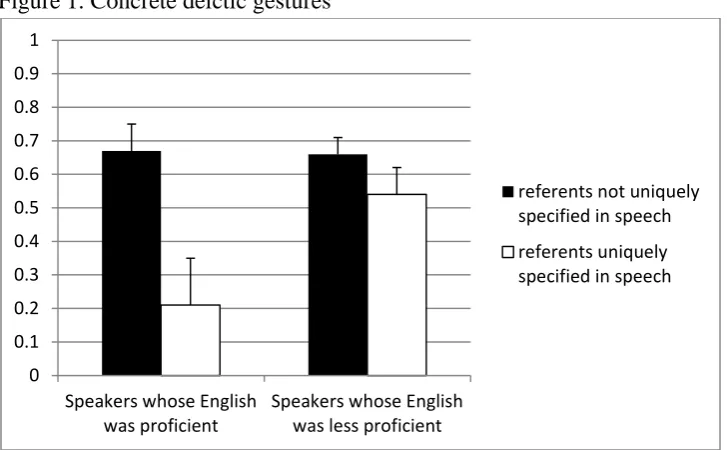
Figure 1 shows the proportion of spoken references accompanied by concrete
deictic gestures as a function of lexical specificity in both groups of speakers. A
mixed ANOVA, with proportion of spoken references accompanied by concrete
deictic gestures as the dependent variable, referents (lexically specified in speech, not
lexically specified in speech) as the within-subject independent variable, and language
proficiency (proficient in English, less proficient in English) as the between-subject
independent variable, found a significant main effect of referents, F(1,18)=16.99,
p<.001, a significant main effect of language proficiency, F(1,18)=8.30, p<.01, and a
significant interaction, F(1,18)=9.98, p<.005. Overall, less proficient speakers
produced concrete deictic gestures more often than proficient speakers. Proficient
speakers were more likely to use concrete deictic gestures when referents were not
lexically specified in speech than when they were, t(9)=5.47, p<.001. However, this
difference was not found in less proficient speakers, t(9)=.65, p=ns. Interestingly,
when referents were lexically specified, less proficient speakers were more likely to
produce concrete deictic gestures than proficient speakers, t(18)=5.29, p<.001.
---Figure 1 inserted here----
Iconic gestures. An iconic gesture was considered to specify a previously
mentioned referent if it was produced in the same location as the previous gestures for
speakers, as did 52.39% (SD=4.82%) in less proficient speakers, t(9)=2.01, p=ns. In
approximately half of the referent-identifying gestures that both groups produced, the
gesture added to the information conveyed in the accompanying speech (M=.54,
SD=.08 for proficient speakers; M=51, SD=.07, for less proficient speakers, t(9)=.92,
p=ns.); in the remaining referent-identifying gestures, the gesture conveyed
essentially the same information as was conveyed in the accompanying speech.
Proficient speakers were thus no more likely to use iconic gestures to elaborate on the
information conveyed in speech than less proficient speakers.
Proficient speakers produced referent-identifying iconic gestures along with
24.52% (SD=5.75%) of their spoken references, whereas less proficient speakers
produced referent-identifying iconic gestures along with 21.64% (SD=4.37%) of their
spoken references. We next investigated the circumstances under which the two
groups of speakers produced referent-identifying iconic gestures.
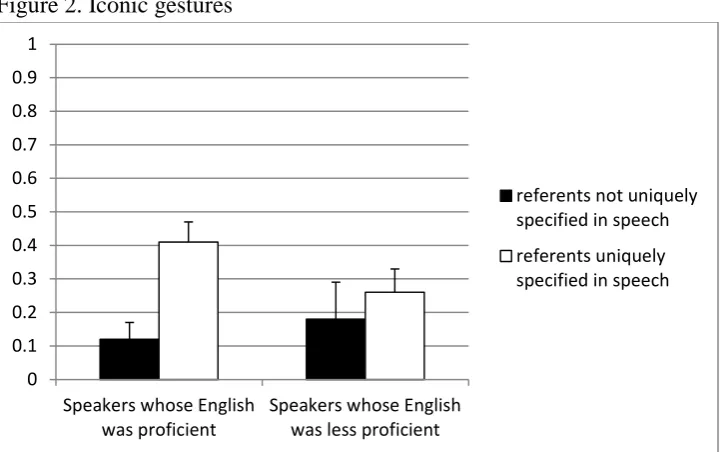
Figure 2 shows the proportion of spoken references accompanied by
referent-identifying iconic gestures in both groups of speakers. A mixed ANOVA with
the proportion of references to protagonists that were accompanied by
referent-identifying iconic gestures as the dependent variable, referents (lexically
specified in speech, not lexically specified in speech) as the within-subject
in English) as the between-subject independent variable, found a significant effect of
referents, F(1,18)=13.43, p<.002, no effect of language proficiency, F(1,18)=2.96,
p=ns, and a significant interaction, F(1,18)=6.52, p<.02. Replicating So et al., (2009),
we found that proficient speakers were more likely to produce iconic gestures when
the referents were lexically specified in speech than when they were not specified,
t(9)=4.39, p<.002. In other words, they did not use their gestures to disambiguate
unclear spoken references but rather to identify references that were lexically
specified in speech. However, this pattern was not found in less proficient speakers,
t(9)=.78, p=ns. In addition, when referents were lexically specified, less proficient
speakers produced referent-identifying iconic gestures less often than proficient
speakers, t(18)=2.78, p<.01.
---Figure 2 inserted here----
Discussion
Our goal was to examine whether concrete deictic gestures and iconic gestures
bear the same semantic relation to speech, and whether this gesture-speech
relationship is influenced by language proficiency. Two groups of adult bilingual
speakers, who varied in their proficiency of English (their second language in all
cases) were asked to retell a story that involved two male characters. We found that
proficient speakers when referring to previously mentioned protagonists. In terms of
gesture, we found that proficient speakers used concrete deictic gestures more often
when referents were not lexically specified in speech than when they were, but
showed the reverse pattern for iconic gestures; that is, they used them more often
when referents were lexically specified in speech than when they were not. Less
proficient speakers showed a similar pattern, but the differences were attenuated
compared to the same differences in the proficient speakers, and did not reach
statistical significance. In addition, less proficient speakers were more likely to
produce concrete deictic gestures to indicate referents that were lexically specified
than proficient speakers, suggesting that they over-specified referents in both speech
and concrete deictic gestures.
Focusing first on the speech devices, we found that less proficient speakers
were more likely to produce nouns than proficient speakers when referring to
previously mentioned protagonists. This finding is in line with previous research on
reference tracking in early-staged second language learners (Gullberg, 2003; 2006;
Yoshioka, 2008). Specifically, second language learners often use specific referential
expressions (i.e., nouns) in their weaker language not only for identifying newly
introduced characters, but also for identifying previously mentioned characters.
found in bilingual speakers who have been using their second language since early
childhood. Thus, language proficiency affects the way both second language learners
and early bilinguals identify referents in speech––both groups over-specify previously
mentioned referents when speaking in their weaker or less dominant language.
Over-using nouns for maintained referents seems to violate an important
discourse principle––that less attenuated forms of referring expressions (e.g.,
pronouns) are used to specify given referents, whereas specific forms (e.g., nouns) are
used to specify new referents (e.g., Ariel, 1990; Chafe, 1994; Givon, 1985; Lambrecht,
1994). There are various explanations for the over-explicit reference tracking in the
less proficient bilinguals in our study. One is that bilinguals who were less proficient
in English might not have yet mastered reference-tracking (including the pronominal
system) in English, and thus used nouns instead of pronouns to track referents by
default (Gullberg, 2003; Hendriks, 2003). Another possibility is that less proficient
bilinguals have a preference to be “hyper-clear” in identifying referents in their
second language in order to reduce the ambiguity of those referents (Williams, 1989).
Finally, it is possible that proper use of English pronouns requires complex planning,
which might be too demanding for bilinguals who are less proficient in their second
language (Carroll, Murcia-Serra, Watorek, & Bendiscoli, 2000)
languages, i.e., Mandarin and English. It is very likely that the bilinguals who were
less proficient in English (their second language) were more proficient in Mandarin
(their first language). Unlike English where arguments must always be realized
(Bloom, 1990; Hyams & Wexler, 1993), Mandarin allows both subject and object
ellipsis (Huang, 1984; Tsao, 1990). Moreover, Mandarin has a simple pronominal
system compared to English––Mandarin has one form for the third person singular
pronouns (i.e., ta1 for male and female), whereas English has two forms (i.e., he, she).
In addition, Mandarin does not mark pronouns overtly for case, but English does. The
bilingual speakers who were less proficient in English may have been reluctant to use
pronouns to identify the protagonists when speaking in English simply because they
had not yet mastered this relatively complex system in their second language, and thus
fell back on using nouns.
We also found that speakers who were less proficient in English were more
likely to lexically specify characters than speakers who were proficient. This result
seems surprising in that the proficient speakers appeared to be producing ambiguous
speech more often than the less proficient speakers. However, the effect may be due to
the over-explicitness of the less proficient speakers, rather than to the
under-explicitness of the proficient speakers. The less proficient speakers were, in fact,
nouns were not needed. Six of the ten less proficient speakers routinely used labels
such as the gentleman and the small man (instead of simply the man) forthe two male
protagonists. In contrast, all of the proficient speakers tended to use simple, yet
potentially ambiguous, labels such as this fellow, another man, and this guy.
Both groups of speakers gestured when they talked. They produced both
concrete deictic and iconic gestures in locations that had been previously used to
identify particular characters. These two types of gestures bore different kinds of
relationships to speech, but primarily in the speakers who were proficient in English.
Speakers whose English was proficient produced concrete deictic gestures when the
referents were not lexically specified in speech; in other words, they used these
gestures to fill in the gaps left by their speech.
We have thus found that concrete deictic and iconic gestures bear tight, but
different, semantic relations to the speech with which they occur in proficient speakers.
We suggest that these different gesture-speech patterns may stem from the fact that
concrete deictic and iconic gestures are generated by different underlying processes
and have different discourse functions. Kita and his colleagues (Kita & Özyürek,
2003; Kita, Özyürek, Allen, Brown, Furman, & Ishizuka, 2007; Özyürek, Kita, Allen,
Brown, Furman, & Ishizuka, 2008) have suggested that iconic gestures are generated
Interface Hypothesis). In other words, iconic gestures reflect how speakers organize
their thinking for the purpose of speaking (Slobin, 1987, 1996). Under this view,
iconic gestures ought to form parallel patterns found in speech, and they do––when
speech lexically specifies a referent, an iconic gesture that co-occurs with the speech
will also specify the referent (see also So et al., 2009).
Concrete deictic gestures, in contrast, may be generated by a process that plans
multi-modal communication as a whole and insures that the intended message is
effectively conveyed by speech and gesture (Kita & Özyürek, 2003). Under this view,
speakers produce concrete deictic gestures to fulfill the communicative goal of
encoding as much information in the intended message as possible (the Cross-modal
Compensation Hypothesis, see de Ruiter, 2006). Concrete deictic gestures, which are
driven by physically present referents that are perceptually accessible to both the
speaker and listener, provide an ideal vehicle to meet this communicative goal. Thus,
when speech does not lexically specify a referent, co-occurring concrete deictic
gesture can step in and perform the task of specifying (see So, et al., 2010).
Unlikeproficient speakers who clearly adjusted their use of concrete deictic
gestures to the potential ambiguity in speech, less proficient speakers did not. Instead,
less proficient speakers tended to produce concrete deictic gestures (and iconic
did less proficient speakers not use their gestures to distinguish between lexically
specified and lexically unspecified referents? The less proficient speaker’s
over-explicitness in speech might account for their over-use of concrete deictic
gestures for referents that were already specified. By using nouns for maintained
references, the less proficient speakers violate several pragmatic rules, such as the
Gricean quantity principle (Grice, 1975), conversational implicatures (Levinson,
2000), relevance (Sperber & Wilson, 1986), and the principle of recipient design
(Sacks & Schegloff, 1979), which is likely to increase ambiguity in who is doing what
to whom for the listener. Less proficient speakers might then produce concrete deictic
gestures to resolve this ambiguity.
However, the less proficient speakers in our study did not use their iconic
gestures to over-specify referents, contrary to findings reported by Gullberg (2003;
2006). The less proficient speakers in our study even produced iconic gestures for
specified referents less often than proficient speakers. One possible reason is that,
when entities (e.g., pictures of protagonists) are physically present, it is easier to point
at those entities than to produce iconic gestures for the entities. Less proficient
speakers may find it easier to take this less demanding path (in our study, pointing at
the pictures of the protagonists rather than producing iconic gestures for them).
might produce iconic gestures instead in order to identify the referents. As a result, it
is difficult to compare the number of iconic gestures produced by the second language
learners in Gullberg’s studies to the number produced by the bilinguals in our study.
Future work is needed to determine whether early-staged second language learners
will reduce their production of iconic gestures when they have the opportunity to
produce concrete deictic gestures.
To summarize, our findings showed that concrete deictic and iconic gestures
bear a different semantic relation to the speech they accompany, particularly in
proficient speakers. Proficient speakers tend to produce iconic gestures to further
specify referents that are already specified in speech (i.e., they convey information
that is redundant with the information conveyed in speech), and concrete deictic
gestures to specify referents that are not already specified in speech (i.e., they add
information to the information conveyed in speech). However, these patterns were
attenuated in less proficient speakers, who were just as likely to produce gestures
(both concrete deictic gestures and iconic gestures) for referents that were already
specified in speech as for referents that were not specified in speech. The findings
make it clear that both type of gesture and proficiency of speaker need to be taken into
References
Ariel, M. (1990). Accessing Noun Phrase antecedents. London: Routledge.
Arnold, J.E., Eisenband, J., Brown-Schmidt, S. & Trueswell, J.C. (2000). The rapid
use of gender information: Evidence of the time course of pronoun resolution
from eyetracking. Cognition, 76, B13-B26.
Bangerter, A. (2004). Using pointing and describing to achieve joint focus of
attention in dialogue. Psychological Science, 15(6):415–419
Bloom, P. (1990). Subjectless sentences in child’s language. Linguistic Inquiry, 24,
721– 734.
Bosch, P. (1983). Agreement and anaphora: A study of the roles of pronouns in
discourse and syntax. London: Academic Press.
Carroll, M., Jorge, M-S., Marzena W., & Alessandra B. (2000). The relevance of
information organization to second language acquisition studies: The descriptive
discourse of advanced adult learners of German. Studies in Second Language
Acquisition, 22, 3, 441-466.
Chafe, W.L. (1987). Cognitive constraints on information flow. Coherence and
Grounding in Discourse, ed. by Russel Tomlin. Amsterdam : John Benjamins.
Chafe, W.L. (1994). Discourse, consciousness, and time: the flow and displacement of
Chicago Press.
de Ruiter, J.P. (2006). Can gesticulation help aphasic people speak, or rather,
communicate? Advances in Speech-Language Pathology, 8(2), 124-127.
Dixon, L. Q. (2005). Bilingual education policy in Singapore: An analysis of its
sociohistorical roots and current academic outcomes. International Journal of
Bilingual Education and Bilingualism,8(1), 25-47.
DuBois, J. (1980). Beyond definiteness: the trace of identity in discourse. The
Pear Stories: Cognitive, Cultural and Linguistic Aspects of Narrative
Production, ed. by Wallace Chafe, 203-274. Norwood, NJ: Ablex.
Francik, E.P. (1985). Referential choice and focus of attention in narratives (discourse
anaphora, topic continuity, language production). Dissertation Abstracts
International, 46, 4, 1363.
Fox, B. (1987). Discourse structure and anaphora. Cambridge: Cambridge University
Press.
Garrod, S. (2001). Anaphora resolution. In N.J. Smelser & P.B. Baltes (Eds.),
International encyclopedia of the social and behavior sciences (pp. 490-494).
Amsterdam: Elsevier.
Givon, T. (1984). Universals of discourse structure and second language acquisition.
In W.E. Rutherford (Ed.), Language universals and second language
Givon, T. (1985). Iconicity, isomorphism and non-arbitrary coding in syntax. In John
Haiman (Ed.), Iconicity in syntax (pp.187-219). Amsterdam: Benjamins.
Goldin-Meadow, S. & Butcher, C. (2003). Pointing toward two-word speech in young
children. In S. Kita (Ed.), Pointing: Where language, culture, and cognition meet
(pp. 85-107). Mahwah, NJ: Earlbaum Associates.
Grice, H.P. (1975). ‘Logic and conversation’. In Cole, P. & Morgan, J. (eds.)
Syntax and Semantics, Volume 3. New York: Academic Press. pp.
41-58.
Gullberg, M. (1998). Gesture as a communication strategy in second language
discourse: A study of learners of French and Swedish. Lund: Lund University
Press.
Gullberg, M. (1999). Communication strategies, gestures, and grammar. Paper
presented at the 8th EUROSLA Conference, Paris.
Gullberg, M. (2003). Gestures, referents, and anaphoric linkage in learner varieties. In
C. Dimroth & M. Starren (Eds.), Information structure, linguistic structure
and dynamics of language acquisition (pp. 311-328). Amsterdam: Benjamin.
Gullberg, M. (2006). Handling discourse: gestures, referent tracking, and
communication strategies in early L2. Language Learning, 56 (1), 156-196.
in L2 discourse. In Anna G. Ramat (Ed.), Typology and second language
acquisition (pp. 291-326). Berlin: Mouton de Gruyter.
Huang, C. T. J. (1984). On the distribution and reference of empty pronouns.
Linguistic Inquiry 15, 531-574.
Hyams, N., & Wexler, K. (1993). On the grammatical basis of null subjects in child
language. Linguistic Inquiry, 24 (3), 421 – 459.
Iverson, J.M., & Goldin-Meadow, S. (2005). Gesture paves the way for language
development. Psychological Science, 16, 367-371.
Kita, S. & Özyürek, A. (2003). What does cross-linguistic variation in semantic
coordination of speech and gesture reveal? Evidence for and interface
representation of spatial thinking and speaking. Journal of Memory and
Language, 48, 16-32.
Kita, S., Özyürek, A., Allen, S., Brown, A., Furman, R., & Ishizuka, T. (2007).
Relations between syntactic encoding and co-speech gestures: Implications for a
model of speech and gesture production. Language and Cognitive Processes,
22(8), 1212-1236.
Lambrecht, K. (1994). Information structure and sentence form. Topic, focus, and the
mental representation of discourse referents. Cambridge: Cambridge University
Lim, V., Rickard Liow, S., Lincoln, M., Chan, Y.H., & Onslow, M. (2008).
Determining language dominance in English-Mandarin bilinguals :
Development of a self-report classification tool for clinical use. Applied
Psycholinguistics, 29, 389-412.
Levinson, S. C. (2000). Presumptive meanings: The theory of generalized
conversational implicature. Cambridge: MIT press.
Levy, E.T. & Carol, A. F. (2000). The role of gestures and other graded language
forms in the grounding of reference in perception. In David McNeill (Ed.),
Language and gesture (pp.215-234). Cambridge: Cambridge University Press.
Lyons, J. (1977). Semantics 2. Cambridge: Cambridge University Press.
Mayberry, R., & Nicoladis, E. (2000). Gesture reflects language development:
Evidence from bilingual children. Current Directions in Psychological Science,
9(6),192 – 196.
McNeill, D. (1992). Hand and Mind: What gesture Reveals about Thought. University
of Chicago Press.
McNeill, D. (2005). Gesture and Thought. The University of Chicago Press.
Özyürek, A., Kita, S., Allen, S., Brown, A., Furman, R., & Ishizuka, T. (2008).
Development of cross-linguistic variation in speech and gesture: Motion
Padden, C. (1988). Interaction of morphology and syntax in American Sign Language.
NY: Garland.
Pakir, A. (1998). English in Singapore: The codification of competing norms. In S.
Gopinathan et al.(eds.), Language, society and education in Singapore: Issues
and trends. 2nd edition. Singapore: Times Academic Press. 65–84.
Pakir, A. (1999). Bilingual education with English as an official language:
Sociocultural implications. Georgetown University Roundtable on Language and
Linguistics.
Sacks, H. and E.A. Schegloff. (1979) "Two Preferences in the Organization of Reference
to Persons in Conversation and Their Interaction," in G. Psathas (ed.) Everyday
Language: Studies in Ethnomethodology, Irvington Press, New York, NY,
pp. 15–21.
Senghas A. & Coppola, M. (2001). Children creating language: How Nicaraguan Sign
Language acquired a spatial grammar. Psychological Science, 12, 323-328.
Shepherd, J. (2005). Striking a balance: The management of languages in Singapore.
Frankfurt am Main, Germany: Peter Lang.
Slobin, D. (1987). Thinking for speaking. In J. Aske, N. Beery, L. Michaelis, & H. Filip
(eds.), Proceedings of the Thirteenth Annual Meeting of the Berkeley Linguistic
Society (pp. 435-445). Berkeley: Berkeley Linguistic Society.
Slobin, D. I. (1996). From "thought and language" to "thinking to speaking". In J. J.
Cambridge: Cambridge University Press.
So W.C., Coppola M., Liccidarello V., Goldin-Meadow S. (2005). The seeds of spatial
grammar in the manual modality. Cognitive Science, 29, pp23-37.
So, W.C., Kita, S., Goldin-Meadow, S. (2009). Using the hands to identify who does
what to whom: speech and gesture go hand-in-hand. Cognitive Science, 33,
115-125
So, W.C., Demir, E., Goldin-Meadow, S. (2010). When speech is ambiguous
gesture steps in: Sensitivity to discourse-pragmatic principles in early
childhood. Applied Psycholinguistics, 31, 1, 209-224.
So, W.C., & Lim, J. Y. (in press). Point to a referent, and say, “What is
this?” Gesture as a potential cue to identify referents in discourse. Applied
Psycholinguistics.
Sperber, D. & Wilson, D. (1986). Relevance: Communication and Cognition. Oxford:
Blackwell.
Stokoe, W. C. (1960). Sign language structure: An outline of the visual
communication systems of the American Deaf. Studies in Linguistics,
Occasional Papers 8.
Tsao, F. –f. (1990). Sentence and clause structure in Chinese: a function perspective,
Taipei: Student Book.
second language acquisition. In Susan Gass, Carolyn Madden, Dennis preston, &
Larry Selinker (Eds.), Variation in second language acquisition: Discourse and
pragmatics (pp.153-189). Philadelphia: Multilingual Matters.
Yoshioka, K. (2008). Gesture and information structure in first and second language.
Figure Caption
Figure 1. The proportion of spoken references that were accompanied by concrete
deictic gestures as a function of the specificity of the accompanying speech in
speakers whose English was proficient (left bars) and speakers whose English was
less proficient (right bars). Spoken references that lexically specified the characters
are displayed in the white bars; spoken references that did not lexically specify the
characters are displayed in the black bars. The numbers on this figure represent the
original untransformed values.
Figure 2. The proportion of spoken references that were accompanied by iconic
gestures as a function of the specificity of the accompanying speech in speakers
whose English was proficient (left bars) and speakers whose English was less
proficient (right bars). Spoken references that lexically specified the characters are
displayed in the white bars; spoken references that did not lexically specify the
characters are displayed in the black bars. The numbers on this figure represent the
Figure 1. Concrete deictic gestures
0 0.1 0.2 0.3 0.4 0.5 0.6 0.7 0.8 0.9 1
Speakers whose English was proficient
Speakers whose English was less proficient
referents not uniquely specified in speech
Figure 2. Iconic gestures
0 0.1 0.2 0.3 0.4 0.5 0.6 0.7 0.8 0.9 1
Speakers whose English was proficient
Speakers whose English was less proficient
referents not uniquely specified in speech