C A S E R E P O R T
Open Access
The risks of self-made diets: the case of an
amateur bodybuilder
Lucio Della Guardia
*, Maurizio Cavallaro and Hellas Cena
Abstract
Background:Following DIY (do it yourself) diets as well as consuming supplements exceeding by far the
recommended daily intake levels, is common among athletes; these dietary habits often lead to an overconsumption of some macro and/or micronutrients, exposing athletes to potential health risks. The aim of this study is to document the development of possible adverse effects in a 33 year-old amateur bodybuilder who consumed for 16 years a DIY high protein diet associated to nutrient supplementation. Body composition, biochemical measures and anamnestic findings were evaluated.
We present this case to put on alert about the possible risks of such behavior repeated over time, focusing on the adverse gastrointestinal effects. We discuss the energy and nutrient composition of his DIY diet as well as the use of supplements.
Conclusion:This study provides preliminary data of the potential risks of a long-term DIY dietary supplementation and a high protein diet. In this case, permanent abdominal discomfort was evidenced in an amateur body builder with an intake exceeding tolerable upper limit for vitamin A, selenium and zinc, according to our national and updated recommendations.
As many amateur athletes usually adopt self-made diets and supplementation, it would be advisable for them to be supervised in order to prevent health risks due to a long-term DIY diet and over-supplementation.
Keywords:Supplementation, Vitamin and micronutrients overdose, Gastrointestinal, High-protein diet, Bodybuilding, DIY diets
Background
Nutritional supplements are commonly used by elite and amateur athletes. Supplements are often considered ne-cessary to maintain strength as well as to enhance en-durance performance and to improve the ability to train longer [1].
It is estimated that up to 90 percent of all the athletes globally use supplements to some extent [2] mainly be-cause these substances are freely available to purchase. In particular, amateur athletes frequently follow their own prescriptions despite the recommendations regard-ing the risks connected with prolonged and excessive in-take of specific nutrients [3-5]. Indeed, although various nutrients are required for normal growth, maintenance and repair of tissues, it has been demonstrated that the
excess of nutrient intake may cause adverse effects on organs and metabolism [3-5].
Furthermore, there is a substantial risk of supplements contamination with prohibited substances such as stimu-lants or hormone-like compounds [6,7].
Whether a scheduled supplementation of some and spe-cific macronutrient compounds could enhance muscle adaptation to training [8], no precise reason, even among athletes, seems to justify a massive intake of some nutrients, especially vitamins and minerals, if the dietary regimen pro-vides for a sufficient variety of foods [9]. Therefore, many efforts have been performed to identify macro and micro-nutrient intake ranges of safety.
The purpose of this study is to document the develop-ment of possible adverse effects in an amateur body-builder on a long term DIY high protein diet associated to nutrient supplementation.
* Correspondence:[email protected]
Department of Public Health, Experimental and Forensic Medicine, Unit of Human Nutrition, University of Pavia, via Bassi 21, 27100 Pavia, Italy
Case presentation
According to the international dietary guidelines [10] and the dietary reference intakes (IOR)a[11] a balanced diet should respect some paradigms regarding the macro and micronutrient intake. In detail, the guidelines specify that carbohydrate (CHO), lipids and protein intake should represent specific percentages of the total energy intake (CHO 55%, lipids less than 30% and protein around 15%) [11,12]. Although, as far as protein intake is concerned, the daily-recommended amount should be related to the body weight (0.9 g of protein/kg/day) [11,12].
In case of trained athletes, the protein intake can be increased to 1.2-1.7 g/kg/day, in order to satisfy the aug-mented muscle turnover depending on the type and amount of sport activity [9].
Fiber intake is recommended in a quantity of 20–30 g/day in order to maintain a correct gastrointestinal ac-tivity and mucosal tropism.
Moreover, recommendations of daily vitamins and minerals intakes have been provided in order to satisfy the body metabolic request and to avoid toxicity [12].
Amateur athletes often go on do-it-yourself (DIY) di-ets that differ somewhat from the above recommenda-tions and may lead to health hazards.
We discuss the development of possible adverse effects in a 33 year-old amateur bodybuilder on a long term DIY high protein diet associated to micronutrient sup-plementation, referred to our department by his personal trainer after reporting deep weakness and recurrent epi-sodes of diarrhea in the previous 6 months.
The patient was a warehouse worker. He used to fol-low a DIY diet along with a multivitamin and mineral supplementation.
Symptoms
The patient complained of feeling fatigue and tiredness, interfering with his work activity as well as with his training and performance. The anamnestic interview did not record any insomnia episodes or other sleep distur-bances. The sleep period was around the 6 hours per night. Moreover, the patient described a strong gastro-intestinal discomfort such as post-prandial fullness, nau-sea and dyspepsia; the main symptoms reported by the patient were frequent episodes of diarrhea that occurred around 3 times per day, minutes to hours after the in-gestion of food, followed by moderate-to-intense low ab-dominal pain. Diarrhea and the gastrointestinal distress reported had occurred approximately for 6 months be-fore the patient underwent our medical examination.
Anthropometric and nutritional evaluation
We conducted a complete nutritional evaluation. The medical inspection included: physical examination, blood tests recording, anthropometric measurements, nutritional
and medical history collection, body composition analysis by bioelectrical-impedance (BIA-101 model; Akern srl, Florence, Italy) and resting energy expenditure by indirect calorimetry (Vmax Spectra 29n; Sensormedics, Yorba Linda, California, US). The last two tests were conducted under standard conditions: the patient was dressed in light clothing and the average room temperature was around 21°C; the patient had been advised to fast for 12 hours, ab-stain from alcohol consumption and refrain from any physical activity in the 24 hours before the measurements.
Heart rate and blood pressure were in the normal range (61 bpm and 125/80 mmHg); no signs of respira-tory, skin or mucosal alterations were reported. Notably, the patient felt pain in epigastrium and in the right iliac fossa during abdominal palpation.
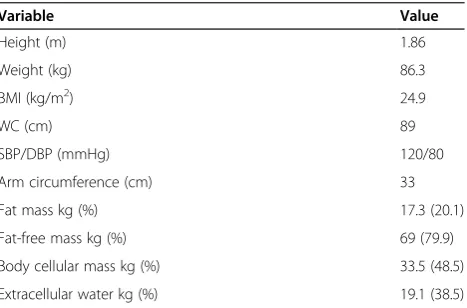
Height (m 1.86) and weight (86.3 kg) of the subject were measured and recorded in nearest 0.1 and 1 cm, respect-ively. BMI (24.9 kg/m2) was then calculated dividing the weight (kg) by the height in square meters (m2).
Body composition by bioelectrical-impedance analysis, revealed a moderate-to-high percentage of metabolically active mass (body cellular mass 48.5%, body fat-free mass 79.9%, body fat mass 20.1%, phase angle 6.8°)b.
Anthropometric, body composition and blood pressure characteristics are reported in Table 1.
Indirect calorimetry measured a respiratory quotient of 0.9 and a resting energy expenditure (REE) of 1554 kcal/day, equivalent to the 79% of the estimated value according to Harris-Benedict equation [13]. This dispar-ity was probably due both to the complete suspension of rigorous training (for a 6 months period) than to the self-induced food restriction in the effort to try to man-age the gastrointestinal discomfort. The prolonged train-ing suspension period was likely to lead to a muscle mass loss and relative increase of fat mass [14]. Besides, the low resting energy expenditure observed is likely to reflect the body-self adjustment secondary to the scarce physical activity performed as well as the spontaneously decreased energy daily intake [12,15].
Table 1 Patient’s characteristics
Variable Value
Height (m) 1.86
Weight (kg) 86.3
BMI (kg/m2) 24.9
WC (cm) 89
SBP/DBP (mmHg) 120/80
Arm circumference (cm) 33
Fat mass kg (%) 17.3 (20.1)
Fat-free mass kg (%) 69 (79.9)
Body cellular mass kg (%) 33.5 (48.5)
Unfortunately, not in possession of the body compos-ition data prior the 6-month suspension of training, we are not able to comment in more detail the above-reported findings.
Laboratory analysis
All measured biochemical parameters (blood count as well as serum electrolytes, total protein, hepatic markers, ferritin, creatinine, C-reactive protein, pancreatic en-zymes and insulin) were within the reference values. The patient also underwent a cardiological assessment (elec-trocardiography and echocardiography) that did not show any alteration. The fecal fat test identified a slight fat malabsorption. Markers of celiac disease, Helicobacter Pylori antibodies and parasite exam were all negative. The total IgE value resulted within the range . The allergen-specific IgE assay showed no positivity for the food aller-gens tested. The H2 breath test showed lactose intoler-ance. Basal biochemical data are shown in Table 2.
The oral glucose tolerance test revealed impaired glu-cose tolerance (glycaemia: 153 mg/dl after 2 hours). The esophagogastroduodenoscopy performed did not display any remarkable anatomic alteration.
Dietary data
The diet history collected by trained nutrition profes-sionals included a detailed interview about usual pattern of eating, a food list asking for amount and frequency usually eaten, and a 7-day dietary record.
The major strength of the diet history method is its as-sessment of meal patterns and details of food intake ra-ther than intakes for a short period of time. We used
this approach since our patient had been following a specific DIY eating pattern and this method is a tool able to ascertain the usual eating patterns for an extended period of time, including type, frequency and amount of foods consumed [16].
Portion sizes were estimated through a validated colour food photography atlas for quantifying the por-tion size eaten [17].
Supplement use, frequency and dosage were investigated. According to the 7-day food diary compiled by the pa-tient and the 24-h recall performed, the papa-tient’s daily energy intake, at the time of the medical examination, was approximately 2160 kcal/day (Table 3). Furthermore, the vitamin and mineral supplementation, he reported he had never stopped, exceeded by far the micro nutri-ents intake recommended by the Italian Official Recco-mendations (IOR) [11] (Table 4).
Data about the remote dietary history were collected. The DIY dietary scheme, handed out by the subject, was then analyzed for energy, macro and micronutrient con-tent and compared to the dietary intakes recommended by the IOR [11] using a software with BDA food compos-ition tables [18] as database.
The results showed that the patient usual dietary in-take for up to 6 months before was very high in protein and poor in fiber; protein daily intake, mainly from
Table 2 Patient’s biochemical data
Metabolite Value
Urea nitrogenum (mg/dl) 47
Creatinine (mg/dl) 0.92
Total protein (g) 8.0
Fasting glucose (mg/dl) 69
TSH (UI/l) 1.17
Ca2+(mg/dl) 10.1
Na+/K+(mEq/l) 139/3.8
Helicobacter Pilory IgG Negative
Anti-gliadine IgA-IgG Negative
H2breath test Positive
Fecal occult blood test Negative
Basal insulin (mUI/l) 14
Fecal simple sugars (g/l) 1.8
Fecal fats (g/dl) 2.2
Total IgE (UI/ml) 110
Table 3 Dietary intake at the time of the medical examination (7-day food diary assessment)
Component Quantity % of TE IOR§
Energy (kcal) 2160 -
-Total protein (g) 106.9 19.7
-Total fats (g) 46.1 19.2 20-35%
Saturated fats (g) 9.1 3.8 <10%
MUFA (g) 24.8 10.3 10-15%
PUFA (g) 9.4 3.9 5-10%
Total carbohydrates (g) 352 61.1 45-60%
Starch (g) 297 51.5 45-53%
Simple sugars (g) 55 9.5 <15%
Dietary fiber (g) 16 - 12.6-16.7*
Iron (mg) 15 - 10
Cholesterol (mg) 212 - 0-300
Vitamin A (RE) (μg) 174 - 700
Niacin (mg) 35 - 18
Selenium (μg) 25 - 55
Zinc (mg) 14 - 12
% of TE: percentage of total energy intake. IOR: Italian official recommendations reference values. §
IOR reference values are reported as % of TE for macronutrient and as daily total amount for micronutrient and fiber.
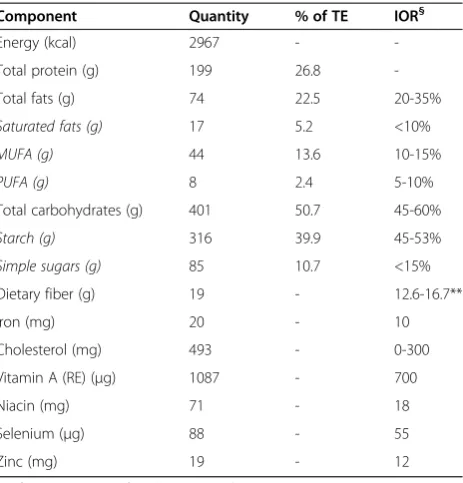
animal-sources, was around 2.3 g/kg/day (Table 5). Moreover, in the same period, the patient used to train about 5 times a week, also supplementing his diet with milk-derived protein drinks (30 g of whey protein/day, right after each training session), along with multivitamin and mineral supplementation. According to the data col-lected, the patient’s mean daily energy intake was about 3000 kcal/day (Table 5). The usual daily water intake was up to 5 liters per day. The patient has not been consuming coffee, tea, fructose or sweeteners of any type.
He reported to have followed the same dietary pattern for 16 years with no adverse effects.
Six months before our medical nutrition evaluation, the patient switched to a lactose-free diet, suspending the milk-derived protein supplements as well, since he stated he had developed lactose intolerance symptomatology.
At the time of the medical examination, the patient had not yet resumed workouts, suspended 6 months be-fore, due to persistent tiredness, gastrointestinal discom-fort and mood deflection.
Dietary therapy
We estimated the daily energy expenditure multiplying REE measured by indirect calorimetry to physical activ-ity level (PAL = 1.65)c [19] and therefore developed a physiological dietary plan meeting the actual energy, macro and micronutrient requirements (Table 6). The dietary plan was aimed primarily to establish a correct energy intake in order to counteract the feeling of weak-ness and to correct inappropriate eating habits. It was also paid particular attention to those nutrients possibly implicated in the development of gastrointestinal dis-tress (simple sugars, fats, fiber). In addition, in order to rebalance the intestinal microflora and improve the en-teric trophism reducing diarrhea and GI discomfort we prescribed a multiple strain probiotic with a mixture of prebiotics and antioxidants vitamins especially useful in intestinal dysbiosis and inflammations [20,21]. To this was added a EPA /DHA and Vitamin E supplement (300 mg/200 mg and 1.8 mg per tablet) for 2 weeks to further reduce the gastrointestinal inflammation [11,15].
Finally we encouraged the patient to suspend the multivitamin and mineral supplementation and to re-strain from taking protein supplements.
The follow-up visit conducted 1 month later reported a slight improvement of the gastric post-prandial dis-comfort and the diarrhea episodes frequency reduction. Table 4 Reference values and content of vitamins and
minerals per tablet of supplement (1 tablet/day) Vitamin IOR (per day) UL (per day) MPL* TC
Vitamin A (μg) 700** 3000 1200 6000
Vitamin D (μg) 15 100 25 10
Vitamin E (mg) 13 300 60 66.7
Vitamin K (μg) 140 - 105
-Vitamin C (mg) 105 - 1000 150
Thiamin (mg) 1.2 - 25 25
Riboflavin (mg) 1,6 - 25 25
Niacin (mg) 18 900§ 36 100
Vitamin B6 (mg) 1,3 25 9,5 25
Folic acid (μg) 400 1000 400 800
Vitamin B12 (μg) 2,4 - 33 100
Biotin (μg) - - 0.450 300
Minerals
Calcium (mg) 1000 2500 1200 25
Magnesium (mg) 240 250 450 7.2
Iron (mg) 10 - 30 10
Zinc (mg) 12 25 12.5 15
Copper (mg) 0.9 5 2 2
Manganese (mg) 2.7 - 10 5
Selenium (μg) 55 300 83 200
IOR: Italian official recommendations.
MPL: maximum permitted level in supplements (per unit of dosage). TC: content per table of supplement.
UL: tolerable upper levels of intake.
*Maximum daily dosage of supplement allowed according to Italian Ministry of Health.
§
Vitamin A is reported as Retinol Activity Equivalents.
Table 5 Composition of the DIY dietary scheme followed during the last 16 years * (except for the last 6 months)
Component Quantity % of TE IOR§
Energy (kcal) 2967 -
-Total protein (g) 199 26.8
-Total fats (g) 74 22.5 20-35%
Saturated fats (g) 17 5.2 <10%
MUFA (g) 44 13.6 10-15%
PUFA (g) 8 2.4 5-10%
Total carbohydrates (g) 401 50.7 45-60%
Starch (g) 316 39.9 45-53%
Simple sugars (g) 85 10.7 <15%
Dietary fiber (g) 19 - 12.6-16.7**
Iron (mg) 20 - 10
Cholesterol (mg) 493 - 0-300
Vitamin A (RE) (μg) 1087 - 700
Niacin (mg) 71 - 18
Selenium (μg) 88 - 55
Zinc (mg) 19 - 12
% of TE: percentage of total energy intake. IOR: Italian official recommendations reference values. §
IOR reference values are reported as % of TE for macronutrient and as daily total amount for micronutrient and fiber.
The improvement of gastrointestinal symptoms allowed the patient to increase the daily energy intake as assessed by the 24 h recall method.
Discussion
A resistance athlete’s diet needs to be different in macronu-trient and in micronumacronu-trient composition compared to a normally active subject’s diet. For a resistance athlete it should be considered a higher daily protein requirement in order to satisfy the muscle accretion needs as well as the muscle protein synthesis increase [8,9]. Protein intake should be increased to 1.2-1.7 g/kg/day, enough to ensure the increased muscle needs [9]. Besides proteins, CHO intake and remarkably its timing, seems to be important for the muscle accretion and weight lift performance of these athletes. The reference range is 8–10 g/kg/day of CHO [8,22].
Although exercise leads to an oxidative stress increase and loss of some minerals, there are no evidences justi-fying the massive intake of vitamin-mineral supple-ments, especially among amateur athletes [9,22]. Even considering the hypothetical augmented needs of a bodybuilder, in our case-report, the daily intake of some nutrients was far higher than advisable. According to the data we obtained from the dietary scheme he handed us out and the nutritional anamnesis we collected, the pa-tient’s dietary pattern differs somewhat from the official
guidelines [10]: quite higher in protein, vitamins and min-erals intake than recommended [11,12]. The diet history collected showed a 16-year period of large dietary protein intake (approximately around the 2.5 g/kg/day, also con-sidering the extra protein supplementation) mostly from animal sources. It is conceivable that the long period of unsupervised supplementation and self-made diet con-sumption may have led to the development of adverse ef-fects. It is not uncommon that the large fortified food consumption, associated with supplements, may lead to an excessive intake of vitamins and minerals that come close to or exceed the Tolerable Upper Intake Level (UL).
Indeed, many of the side effects exerted by the supple-ments are related to the gastrointestinal tract [3].
The patient reported the continuative and habitual in-take of milk-derived protein supplements. Although the metabolic side effects of a high protein diet is not com-pletely clarified, it is possible that the prolonged high protein load may have induced a slight bowel mucosal dysfunction; some bacterial protein-derived metabolites such as ammonia and short-chain fatty acids are likely to interfere with the colonic epithelium metabolism and physiology [23]; ammonia at millimolar concentrations in the bowel lumen has been shown to exert deleterious ef-fects on the colonic epithelium [24] and to alter short-chain fatty acids oxidation in isolated colonocytes [25]. Interestingly, recent research has reported [26] that feeding mice with a very high protein diet causes the development of peculiar alterations in the enterocytes metabolism, such as t the mucosa thinning and an overall impairment in water absorption.
In our case, we noticed that more than five components listed in the supplement nutritional label, exceeded the IOR as well as the Maximum Permitted Level in supple-ments (MPL) in Italy [27]. Therefore, given that the pa-tient has been exposed to a high level of micronutrients intake, consuming many fortified foods apart from supple-ments, it seems reasonable that the overall excessive micronutrient intake may partially explain the reported symptomatology.
In particular Vitamin A, Niacin, Zinc and Selenium overdose intake will be discussed.
Vitamin A is an essential component for human
growth, gene expression and immune system. Vitamin A includes a family of fat-soluble molecules such as retinol and pro-vitamins A carotenoids (mainlyβ-carotene). The RDA for men is around the 900μg/day of retinol activity equivalents (RE) while the UL for adults is set at 3000μg/ day of preformed vitamin [11,28]. Notably, the recent IOR for men is 700μg of RE/day [11,3]. Excessive prolonged intake of vitamin A (months or years) may produce tox-icity with symptoms such as nausea, vomiting and diar-rhea [4]. The patient’s daily intake of Vitamin A as a supplement (β-carotene and retinyl palmitate, in 1 tablet Table 6 Dietary composition of the nutritional therapy
prescribed
Component Quantity % of TE IOR§
Energy (kcal) 2601 -
-Total protein (g) 122 18.8
-Total fats (g) 71 24.5 25-35%
Saturated fats (g) 13 4.5 <10%
MUFA (g) 44 15.2 10-15%
PUFA (g) 11 3.8 5-10%
Total carbohydrates (g) 393 56.6 45-60%
Starch (g) 343 49.4 45-53%
Simple sugars (g) 50 7.2 <15%
Dietary fiber (g) 29 - 12.6-16.7*
Iron (mg) 19 - 10
Cholesterol (mg) 207 - 0-300
Vitamin A (RE) (μg) 835 - 700
Niacin (mg) 27 - 18
Selenium (μg) 35 - 55
Zinc (mg) 14 - 12
% of TE: percentage of total energy.
IOR: Italian official recommendations reference values. §
IOR reference values are reported as % of TE for macronutrient and as daily total amount for micronutrient and fiber.
of supplement) was 6000μg of RE. The whole dietary daily intake (dietary + supplementation) had been around the 7080μg of RE for several years.
Niacin, as a precursor of nicotinamide, plays its
bio-logical role in many reactions connected to the energy production. In the form of nicotinic acid it is employed to treat different types of dyslipidemia and to lower overall risk of developing atherosclerosis [29,30]. Its rec-ommended intake in adult males is be around the 18 mg/ day and should not exceed 30–35 mg/day (which corre-sponds to 900 mg/day of nicotinamide and 10 mg/day of nicotinic acid) [11,31]. In our case report, the overall nia-cin daily intake (mean dietary intake plus supplement) was around the 170 mg/day. Although the common side ef-fects reported by niacin overconsumption are usually re-lated to skin flushing (niacin intake from 30 to 1000 mg/ day) and hepatotoxicity as shown in several studies [5,31], niacin“overdose”might also be related to gastrointestinal discomfort, as already reported for doses > 2000 mg with subsequent episodes of severe diarrhea and/or transamin-ase incretransamin-ase [31]. The development or exacerbation of peptic ulcer as well as nausea and vomiting have been de-scribed by several authors, in cases of very high doses of niacin intake during anti-atherosclerotic therapy [5,31].
Zinc is another nutrient presumably involved in the development or exacerbation of abdominal discomfort. The mechanism of damage could be related to a direct corrosive action of the metal on the mucosal wall, after reacting with the gastric secretion [32]. The recommended zinc intake should be in the range of 8–13 mg/day, with-out exceeding 25 mg/day [11,30]. Higher zinc intake might promote nausea, abdominal cramping, vomiting, and diar-rhea [32-34]. In our case, this micronutrient intake (diet-ary intake plus supplementation) was about 34 mg/day. High doses of zinc sulfate, as those employed in the treat-ment of Wilson’s disease, have been associated to the de-velopment of some gastrointestinal disorders such as dyspepsia, vomiting, nausea and loss of appetite [35].
Selenium is an important co-factor for several
bio-logical molecules and enzymes playing an important role in redox reactions and hormone production. The cur-rently recommended safety range intake for male adults is less than the 400 μg/day, while the IOR UL is set at 300 μg/day [11,36]. The patient’s overall intake was about 288μg/day. A higher intake is likely to lead to the toxic effects on the endocrine function as well as on the gastrointestinal tract [37]. In 2008, a poorly manufac-tured multivitamin was responsible for more than 200 cases of selenium poisoning with symptoms including diarrhea, fatigue, hair loss, and joint pain [38].
Moreover, the development of gastrointestinal adverse effect could also be interpreted considering the possible presence of contaminating compounds within the sup-plements. Many supplements have been found to be
adulterated with pharmaceuticals or pharmaceutical ana-logues, including stimulants, anabolic steroids, antide-pressants, psychotropic substances [39,40]. Stimulants and doping compounds [7,41], as well as new analogue of amphetamine, have been found in widespread sport supplements [7]. Also the above-mentioned selenium contamination of multivitamin supplement was consid-ered a case of supplementation poisoning [38]. Other studies pointed out the presence, frequently, of com-pounds with 17β-estradiol-like activity or GHPR-2 in these supplements, which may interfere with some key points of the hormonal metabolism [11,42]. The pres-ence of such hidden substances may determine the de-velopment of side effects that go beyond simple constituents of the supplement-in-itself, especially when the supplementation is carried out with more than a sin-gle supplement and consumed every day for years.
enhanced by the patient’s suboptimal diet. The glucose intolerance detected still remains an unsolved question. The basal insulin and HOMA index were in a normal range. The fasting glucose level was even slightly lower than recommended. To partially explain the findings we supposed that the GI distress and the patent’s whole clinical situation were likely to determine an increase in stress hormone levels (adrenaline, cortisol). As these hormones play a diabetogenic effect, we can assume that the detected glucose intolerance may be thus explained.
The main limitation of this study is related to the short period of follow-up carried out (the results are related to 1 month therapy) due to the poor compliance of the patient to the new dietary scheme and recommendations. We are likely to believe that the low mood and the vicious circle induced by the GI discomfort, the low training level and the partial disappearance of the symptoms played an im-portant role in the dropout. Furthermore, the patient did not willingly accept the indication to the micronutrient supplementation suspension, which he considered neces-sary to cover his metabolic needs. The follow-up brevity and the patient’s scarce compliance to the therapy did not allow us to obtain any further data to confirm or disprove our diagnostic hypothesis. Another limit regards the lack of any data about his physical condition or muscular strength in order to prove the basal performance and the improvement after our nutritional intervention. Similarly, we were unable to report any training log, which would have been helpful to better understand the clinical situ-ation. Finally, the lack of epidemiological and human stud-ies useful to confirm our hypothesis or contradict it, the absence of significant similar reports in literature, the atypical clinical presentation and the differential diagnosis make our hypothesis speculative and the case difficult to interpret but worthy of being reported.
Conclusion
The present study highlights the risk of adverse effects in prolonged suboptimal macro and micronutrient supple-mentation in a subject involved in non-competitive sport.
As showed in this case, the common practice of adopting “self-made” nutritional regimes among amateur athletes may lead to an unusual gastrointestinal symptomatology. Moreover, future chronic complications cannot be com-pletely ruled out. Although many amateur bodybuilders be-lieve that“more is better”underestimate the importance of diet and overestimate the effects of supplements, unaware of“over supplementation”side effects.
In order to prevent severe and chronic health effects, nutritionists and trainers should advise the athletes about the possible risks of self-made diets that provide for extra supplementation, especially when carried out for long time.
Consent
Written informed consent was obtained from the patient for publication of this Case Report. A copy of the writ-ten consent is available for review by the Editor-in-Chief of this journal.
Endnotes
a
The considered IOR are referred to adult males aged between 30–59 y-old.
b
Body fat mass and fat-free mass were estimated by BODYGRAM software (AKERN, Florence, Italy).
c
The 1.65 value of PAL has been chosen considering a light level of physical activity in accordance to the WHO/ FAO/UNU guidelines.
Abbreviations
IOR:Italian official recommendations; DIY: Do it yourself; BIA: Bioelectrical-impedance; MPL: Maximum permitted in supplements; RE: Retinol activity equivalents; UL: Tolerable upper intake level; TC: content per tablet of supplement.
Competing interests
The authors declare that they have not received any funding, or salary from an organization that may in any way gain or lose financially from the publication of this manuscript.
The authors declare that they do not hold any stock or shares in an organization that may in any way gain or lose financially from the publication of this manuscript.
The authors declare that they do not hold or are currently applying for any patents relating to the content of the manuscript.
The authors declare that they do not have any other financial competing interest.
Authors’contributions
LDG carried out all the medical examinations, designed the study and drafted the manuscript. MC participated in the design of the study and in the manuscript drafting. HC conceived of the study and participated in its design and coordination. All authors read and approved the final manuscript.
Authors’information
LDG: MD. Resident at the School of Human Nutrition, University of Milano, Italy. Internship at the Department of Public Health, Experimental and Forensic Medicine, Unit of Human Nutrition, University of Pavia, Italy. MC: PhD. Resident at the School of Human Nutrition, University of Milano, Italy. Internship at the Department of Public Health, Experimental and Forensic Medicine, Unit of Human Nutrition, University of Pavia, Italy. HC: MD, PhD. Professor of Dietetics and Clinical Nutrition, Head of the Clinical Nutrition Laboratory, Department of Public Health, Experimental and Forensic Medicine University of Pavia, Italy.
Received: 30 October 2014 Accepted: 26 February 2015
References
1. Petrotti A, Naughton DP, Pearce G, Bailey R, Bloodworth A, McNamee M. Nutritional supplement use by elite young UK athletes: fallacies of advice regarding efficacy. J Int Soc Sports Nutr. 2008;15:5–22.
2. Giannopoulou I, Noutsos K, Apostolidis N, Bayios I, Nassis GP. Performance level affects the dietary supplement intake of both individual and team sports athletes. J Sports Sci Med. 2013;12(1):190–6. 2013.
3. Walter P. Towards ensuring the safety of vitamins and minerals. Toxicol Lett. 2001;120:83–7.
4. Allen LH, Haskell M. Estimating the potential for vitamin a toxicity in women and young children. J Nutr. 2002;132(9 Suppl):2907S–19.
6. Cohen PA, Travis JC, Venhuis BJ. A methamphetamine analog (N,α -diethyl-phenylethylamine) identified in a mainstream dietary supplement. Drug Test Anal. 2013;6(7-8):805–7.
7. Plotan M, Elliott CT, Frizzell C, Connolly L. Estrogenic endocrine disruptors present in sports supplements. A risk assessment for human health. Food Chem. 2014;159:157–65.
8. Kerksick C, Harvey T, Stout J, Campbell B, Wilborn C, Kreider R, et al. International society of sports nutrition position stand: nutrient timing. J IntSoc Sports Nutr. 2008;5:17.
9. American Dietetic Association; Dietitians of Canada; American College of Sports Medicine, Rodriguez NR, Di Marco NM, Langley S. American college of sports medicine position stand. Nutrition and athletic performance. Med Sci Sports Exerc. 2009;41(3):709–31.
10. Food based dietary guidelines in the WHO European Region. Nutrition and Food Security Program WHO Regional Office for Europe, 2003. Copenhagen Denmark, Volume id: E79832, 10-35. http://www.euro.who.int/__data/assets/ pdf_file/0017/150083/E79832.pdf.
11. Società Italiana di nutrizione clinica. LARN, Livelli Di Assunzione di Riferimento di Nutrienti ed energia per la popolazione Italiana, IV Revisione. Coordinamento editoriale SINU-INRAN. Milano: SICS; 2014.
12. Margie Lee G. The nutrition and their metabolsim. In: Mahan LK, Eschott-Stump S, editors. Krause’s food and nutrition therapy. Philadelphia: Saunders, Elsevier; 2008. p. 43–109.
13. Harris JA, Benedict FG. A biometric study of basal metabolism in man. Proc Natl Acad Sci U S A. 1918;4(12):370–3.
14. Campbell EL, Seynnes OR, Bottinelli R, McPhee JS, Atherton PJ, Jones DA, et al. Skeletal muscle adaptations to physical inactivity and subsequent retraining in young men. Biogerontology. 2013;14(3):247–59. 15. Calder PC. Polyunsaturated fatty acids, inflammatory processes and
inflammatory bowel diseases. Mol Nutr Food Res. 2008;52(8):885–97. 16. Thompson FE, Subar AF. Dietary assessment methodology. In: Coulston AM,
Boushey CJ, Ferruzzi MG, editors. Nutrition in the prevention and treatment of disease. 3rd ed. Oxford: Elsevier; 2013. p. 5–29.
17. Turconi G, Guarcello M, Berzolari FG, Carolei A, Bazzano R, Roggi C. An evaluation of a colour food photography atlas as a tool for quantifying food portion size in epidemiological dietary surveys. Eur J Clin Nutr.
2005;59(8):923–31.
18. Banca dati di composizione alimenti per studi epidemiologici in Italia. Istituto Europeo di Oncologia. http://www.bda-ieo.it/. Accessed on 18 Jan 2015. 19. FAO/WHO/UNU. Food and Agriculture Organization/World Health
Organization/United Nation University. Human energy requirements. Report of a joint FAO/WHO/UNU Expert Consultation Rome. FAO Food and nutrition technical report series No 1, 2004.
20. Sarowska J, Choroszy-Król I, Regulska-Ilow B, Frej-Mądrzak M, Jama-Kmiecik A. The therapeutic effect of probiotic bacteria on gastrointestinal diseases. Adv Clin Exp Med. 2013;22(5):759–66.
21. Cappello C, Tremolaterra F, Pascariello A, Ciacci C, Iovino P. A randomised clinical trial (RCT) of a symbiotic mixture in patients with irritable bowel syndrome (IBS): effects on symptoms, colonic transit and quality of life. Int J Colorectal Dis. 2013;28(3):349–58.
22. McArdle WD, Katch FI, Katch VL. Sport and exercise nutrition. 3rd ed. Philadephia: Lippincott Williams & Wilkins; 2008.
23. Blachier F, Mariotti F, Huneau JF, Tome D. Effects of amino acid-derived luminal metabolites on the colonic epithelium and physiopatho-logical consequences. Amino Acids. 2007;33:547–62.
24. Lin HC, Visek WJ. Colon mucosal cell damage by ammonia in rats. J Nutr. 1991;121:887–93.
25. Cremin Jr JD, Fitch MD, Fleming SE. Glucose alleviates ammonia-induced inhibition of short-chain fatty acid metabolism in rat colonic epithelial cells. Am J Physiol Gastrointest Liver Physiol. 2003;285:G105–14.
26. Andriamihaja M, Davila AM, Eklou-Lawson M, Petit N, Delpal S, Allek F, et al. Colon luminal content and epithelial cell morphology are markedly modified in rats fed with a high-protein diet. Am J Physiol Gastrointest Liver Physiol. 2010;299:G1030–7.
27. Italian Ministry of Health. http://www.salute.gov.it/imgs/
c_17_paginearee_1268_listafile_itemname_5_file.pdf. Accessed on 15 Oct 2014. 28. Institute of Medicine: Dietary Reference Intakes for Vitamin A, Vitamin K,
Arsenic, Boron, Chromium, Copper, Iodine, Iron, Manganese, Molybdenum, Nickel, Silicon, Vanadium, and Zinc. Panel on Micronutrients, Subcommittees on Upper Reference Levels of Nutrients and of Interpretation and Use of Dietary Reference Intakes, and the Standing Committee on the Scientific
Evaluation of Dietary Reference Intakes: National Academy Press. Washington; 2001.
29. Lavigne PM, Karas RH. The current state of niacin in cardiovascular disease prevention: a systematic review and meta-regression. J Am CollCardiol. 2013;61(4):440–6.
30. Guyton JR, Goldberg AC, Kreisberg RA, Sprecher DL, Superko HR, O’Connor CM. Effectiveness of once-nightly dosing of extended- release niacin alone and in combination for hypercholesterolemia. Am J Cardiol. 1998;82:737–43. 31. Guyton JR, Bays HE. Safety considerations with niacin therapy. Am J Cardiol.
2007;99(suppl):22C–31.
32. Bothwell DN, Mair EA, Cable BB. Chronic ingestion of a zinc-based penny. Pediatrics. 2003;111(3):689–91.
33. Maret W, Sandstead HH. Zinc requirements and the risks and benefits of zinc supplementation. J Trace Elem in Med Biol. 2006;20(1):3–18. 34. World Health Organization. Environmental Health Criteria 221: Zinc. Geneva:
World Health Organization; 2001. p. 123–253.
35. Wiernicka A, Jańczyk W, Dądalski M, Avsar Y, Soch P, Schmidt H. Gastrointestinal side effects in children with Wilson’s disease treated with zinc sulphate. World J Gastroenterol. 2013;19(27):4356–62.
36. Yang G, Zhou R. Further observations on the human maximum safe dietary selenium intake in a seleniferous area of China. J Trace Elem Electrolytes Health Dis. 1994;8(3–4):159–65.
37. Vinceti M, Wei ET, Malagoli C, Bergomi M, Vivoli G. Adverse health effects of selenium in humans. Rev Environ Health. 2001;16(4):233–51.
38. Mac Farquhar JK, Broussard DL, Melstrom P, Hutchinson R, Wolkin A, Martin C, et al. Acute selenium toxicity associated with a dietary supplement. Arch Intern Med. 2010;170(3):256–61.
39. Cohen PA. Hazards of hindsight—monitoring the safety of nutritional supplements. N Engl J Med. 2014;370:1277–80.
40. Food and Drug Administration: Tainted supplements CDER.Silver Spring, MD. http://www.accessdata.fda.gov/scripts/sda/
sdNavigation.cfm?sd=tainted_supplements_cder&displayAll=false&page=6. Accessed
on 5 Oct 2014.
41. Geyer H, Parr MK, Koehler K, Mareck U, Schänzer W, Thevis M. Nutritional supplements cross-contaminated and faked with doping substances. J Mass Spectrom. 2008;43(7):892–902.
42. Thomas A, Kohler M, Mester J, Geyer H, Schänzer W, Petrou M, et al. Identification of the growth-hormone-releasing peptide-2 (GHRP-2) in a nutritional supplement. Drug Test Anal. 2010;2(3):144–8.
Submit your next manuscript to BioMed Central and take full advantage of:
• Convenient online submission
• Thorough peer review
• No space constraints or color figure charges
• Immediate publication on acceptance
• Inclusion in PubMed, CAS, Scopus and Google Scholar
• Research which is freely available for redistribution