P R O T O C O L
Open Access
The impact of environmental cadmium
exposure on type 2 diabetes risk: a
protocol for an overview of systematic
reviews
Julia Hildebrand
1,2, Swarni Thakar
1,2, Tonya-Leah Watts
1,2, Laura Banfield
3, Lehana Thabane
4,5,6,7, Joseph Macri
8,
Stephen Hill
9and M. Constantine Samaan
1,2,4,10*Abstract
Background:
Type 2 diabetes mellitus (T2DM) is a worldwide epidemic, and while its etiology is polygenic, the role
of environmental contaminant exposure in T2DM pathogenesis is of increasing importance. However, the evidence
presented in systematic reviews on the relationship between cadmium exposure and T2DM development is
inconsistent. This overview aims to assess existing evidence from systematic reviews linking cadmium exposure to
T2DM and select metabolic disorders in humans.
Methods:
Searches will be conducted in Medline, Embase, Web of Science, GEOBASE, BIOSIS Previews, and
Cochrane Database of Systematic Reviews. Two reviewers (J.H and S.T.) will independently complete screening, data
abstraction, risk of bias evaluation, and quality assessment. The primary outcome will be the association between
cadmium exposure and T2DM prevalence. Secondary outcomes will include prediabetes, obesity, dyslipidemia,
hypertension, and non-alcoholic fatty liver disease. We will perform a meta-analysis if two or more studies assess
similar populations, utilize analogous methods, have related study designs, and evaluate similar outcomes.
Discussion:
This overview will assess current evidence from systematic reviews for the association between
cadmium exposure and risk of T2DM and other metabolic morbidities. This overview may be helpful for
policy-makers and healthcare teams aiming to mitigate T2DM risk in populations at risk of cadmium exposure.
Systematic review registration:
PROSPERO CRD42019125956
Keywords:
Cadmium, Type 2 diabetes mellitus, Obesity, Dyslipidemia, Prediabetes, Hypertension, Non-alcoholic
fatty liver disease, Overview of systematic reviews, Meta-analysis, Protocol
Background
Over the past few decades, type 2 diabetes mellitus
(T2DM) has become a worldwide epidemic [1], with 451
million adults estimated to have T2DM as of 2017 [1].
While obesity is considered the T2DM epidemic
’
s main
driver, T2DM pathogenesis is complex and is not fully
understood [2].
One emerging factor implicated in T2DM risk is
envir-onmental exposure to endocrine-disrupting chemicals
(EDCs) [3
–
5]. These compounds alter endocrine
func-tion by binding to hormone receptors and act as agonist
or antagonist signaling molecules or by interfering with
hormonal signaling pathways [4,
6
–
9]. These molecules
encompass a vast array of natural and man-made
com-pounds that may exert powerful metabolic effects.
Cadmium (Cd) is a naturally occurring soft metal with
endocrine-disrupting properties [6]. It has several
indus-trial uses, including metal mining and the manufacturing
of protective steel plating, pigments, and rechargeable
batteries. Additional sources of exposure also include
© The Author(s). 2019Open AccessThis article is distributed under the terms of the Creative Commons Attribution 4.0 International License (http://creativecommons.org/licenses/by/4.0/), which permits unrestricted use, distribution, and reproduction in any medium, provided you give appropriate credit to the original author(s) and the source, provide a link to the Creative Commons license, and indicate if changes were made. The Creative Commons Public Domain Dedication waiver (http://creativecommons.org/publicdomain/zero/1.0/) applies to the data made available in this article, unless otherwise stated. * Correspondence:[email protected]
1Department of Pediatrics, McMaster University, Hamilton, Ontario, Canada 2Division of Pediatric Endocrinology, McMaster Children’s Hospital, Hamilton,
Ontario, Canada
phosphate fertilizers, waste disposal, pulp and paper
pro-duction, and sewage treatment by-products [6,
10]. The
adverse effects Cd poses to human, wildlife, and
environ-mental health are significant, and it is classified as a
carcinogen by the European Chemicals Agency [11] and
as a hazardous substance and air pollutant by the
Envir-onmental Protection Agency and in the Clean Water Act
and Clean Air Act in the United States[10,
12,
13]. Cd is
not involved in normal human physiology, and its adverse
health effects range from renal damage, cancer,
osteomal-acia, and osteoporosis with low-level chronic exposure
[10,
14–18] to severe pulmonary damage or even death
with acute high-dose exposure [10,
19].
While in-vivo and in-vitro studies suggest a link
between Cd exposure and diabetes [20–26], human
studies are limited and have yielded conflicting evidence
to verify this relationship [27–34].
The purpose of this overview is to synthesize current
evidence from systematic reviews for the association
between Cd exposure and risk of T2DM and other
metabolic outcomes in humans.
Research questions
Primary
In the general population, is environmental cadmium
exposure associated with increased T2DM risk?
Secondary
In the general population, is cadmium exposure
associ-ated with obesity, prediabetes, dyslipidemia,
hyperten-sion, and non-alcoholic fatty liver disease (NAFLD)?
Methods
This protocol was developed following the Preferred
Reporting Items for Systematic Review and
Meta-Analysis Protocols (PRISMA-P) statement guidelines
[35] (Additional file
1).
Literature search
The search strategy will be developed by a Health
Sciences Librarian with expertise in systematic review
search methodologies. To identify systematic reviews
relevant to the research question, searches will be
con-ducted in Medline, Embase, Web of Science, BIOSIS
Previews, GEOBASE (Geoscience Literature Research
Database) [36], and Cochrane Database of Systematic
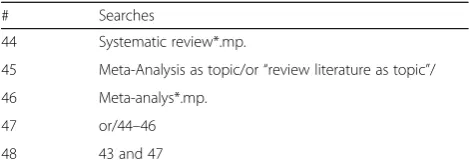
Reviews. A sample Medline search strategy is presented
in Table
1. Search strategies will include
database-specific terms and filters pertaining to systematic
re-views, meta-analyses, cadmium, humans, T2DM, and the
metabolic abnormalities listed above. Reference lists of
accepted articles and relevant non-systematic reviews
will be screened for additional studies.
We will use Endnote X7 [37] to collect identified
arti-cles and de-duplicate them before exporting unique
records to an Excel spreadsheet.
Inclusion criteria
Systematic reviews that synthesize evidence for the
association between Cd exposure and diabetes using
observational studies with prospective/retrospective
co-hort, cross-sectional, and case-control study designs will
be considered for this review. A systematic review is
de-fined as a review that (1) has a detailed, comprehensive,
and systematic search strategy, (2) contains specific
in-clusion/exclusion criteria and uses systematic review
methodology, (3) attempts to synthesize all relevant
studies on the topic, and (4) may or may not include a
meta-analysis [38].
The population of interest include both males and
fe-males in the general population with no restrictions on
age, smoking status, ethnicity, geographical location,
setting, or timing of publication. The exposure of
inter-est is Cd that is measured in blood or urine samples,
and all Cd exposure sources will be considered including
smoking, food, water, air, soil, industrial, or accidental
exposure. Our primary outcome is T2DM prevalence.
While T2DM accounts for around 90% of diabetes
cases in adults globally [1], if a review does not
differen-tiate between type 1 and 2 diabetes, we will reach out to
the principal investigators to seek clarification on the
exact type of diabetes in the study population in
ques-tion. Our a priori assumption is that the published data
are mainly relevant to T2DM, while acknowledging the
limitation if the exact type of diabetes is not reported.
Exclusion criteria
We will exclude abstracts of systematic reviews with no
published full-text papers and non-systematic narrative
literature reviews. We will also exclude systematic
re-views not published in English, those reporting only on
gestational or type 1 diabetes, and non-human or
in-vitro studies, if retrieved in the literature searches.
Study selection
Following screening, data abstraction for eligible
full-text articles and their included primary studies will be
performed. This will be followed by risk of bias (ROB)
and quality assessments [41,
42].
Outcomes
Primary
The primary outcome is the association of Cd exposure
with T2DM prevalence. We will maintain a broad
ap-proach for identifying T2DM to account for varying
def-initions present within included systematic reviews.
T2DM may be defined biochemically using national
guidelines of fasting or random plasma glucose, oral
glu-cose tolerance test (OGTT), or HbA1c [43,
44]. In
addition, T2DM may be identified through diabetes
registries or databases, self- or physician-reported
diag-nosis, or antidiabetic medication use [45].
Secondary
Adverse metabolic effects linked to Cd exposure will be
assessed including:
1. Prediabetes, including impaired fasting glucose and
impaired glucose tolerance, is defined by fasting or
random plasma glucose, OGTT, or HbA1c using
national guideline cutoffs [43,
44]. Alternatively,
self-reported or physician-reported diagnosis,
hospital database diagnosis, or specifically reported
prediabetes-related medication or intervention use
may be used as a marker of prediabetes.
2. Overweight or obesity is defined using body mass
index (BMI) z-score on 85
–
94.9th percentile
indicating overweight and
≥
95th percentile for
obesity in children [46] and BMI 25
–
29.9 kg/m
2indicating overweight and
≥
30 kg/m
2indicating
obesity in adults [47].
3. Dyslipidemia is assessed by detecting abnormal
levels of total cholesterol, high-density lipoprotein
cholesterol, triglycerides, low-density lipoprotein
cholesterol (measured or calculated),
non-high-density lipoprotein cholesterol, or apolipoprotein A
and B measured in, or converted to, mmol/L [48].
4. Hypertension is defined in children as systolic and/
or diastolic blood pressure (BP)
≥
95th percentile
according to age- and sex-specific BP centiles and
Table 1
MEDLINE search strategy
# Searches
1 Cadmium/
2 exp cadmium compounds/ 3 Cadmium poisoning/
4 cadmium.mp.
5 or/1–4
6 exp diabetes mellitus, type 2/
7 ((Type 2 or type II or non-insulin or non-insulin or adult onset or matur* onset) adj3 diabet*).mp.
8 T2DM.mp.
9 T2D.mp.
10 NIDDM.mp.
11 6 or 7 or 8 or 9 or 10
12 Overnutrition/or obesity/or obesity, abdominal/or obesity, morbid/or pediatric obesity/
13 obes*.mp. 14 Overweight/
15 (Overweight or overweight or excess* weight).mp. 16 Overnutrition.mp.
17 (Weight adj2 (gain* or increase* or excess*)).mp.
18 BMI.mp.
19 Body mass index/or skinfold thickness/or waist-hip ratio/ 20 Body mass index.mp.
21 Waist circumference*.mp. 22 Waist to hip ratio*.mp. 23 Waist hip ratio*.mp. 24 Waist to height.mp. 25 Waist height.mp. 26 Skinfold thickness/ 27 Skinfold*.mp.
28 Insulin resistance/ or metabolic syndrome/ 29 (Insulin adj2 (resistan* or sensitiv*)).mp. 30 Metabolic syndrom*.mp.
31 Exp lipid Metabolism/ 32 Lipid*.mp.
33 (Lipogenesis or lypolysis or lipoylation).mp. 34 Exp glucose/
35 glucose.mp. 36 Insulin/ 37 Hypertension/ 38 Hypertens*.mp. 39 or/12–37
40 11 or 39
41 5 and 40
42 Remove duplicates from 41
43 5 and 11
Table 1
MEDLINE search strategy
(Continued)
# Searches
44 Systematic review*.mp.
45 Meta-Analysis as topic/or“review literature as topic”/ 46 Meta-analys*.mp.
reported in millimeters of mercury (mmHg) [49].
Hypertension will be defined in adults using cutoffs
in mmHg from the American College of Cardiology/
American Heart Association guidelines [50].
5. NAFLD is defined by elevated transaminases which
are threefold higher than the normal reference
range of the reported result or documented on liver
ultrasound or both [43,
51].
Data collection
The two independent reviewers (J.H. and S.T.) will
col-lect the data, and kappa will be calculated for interrater
reliability. We will develop and pilot a data abstraction
form that includes data on authors’
names, journal
name, publication date, study setting, country, research
question/aims, search strategy details, inclusion and
ex-clusion criteria, and funding agency if applicable. We
will also collect data on the population including sample
size and participant characteristics including age, sex,
ethnicity, BMI, diabetes definition, reports of overweight
status, and number of T2DM cases and controls if
available, number of included primary studies and their
study designs, methods for quality assessment of primary
studies, Cd exposure and measurement, and conclusions.
We will also extract the pooled effect estimates along
with 95% confidence interval (CI) and the
I
2values and
chi-square test
p
value if reported for heterogeneity
across individual studies.
Furthermore, we will collect data from primary studies
in each systematic review including authors’
names,
publi-cation year, study design, population characteristics
(eth-nicity, age, sex), country, diabetes definition, participant
inclusion and exclusion criteria, number of participants,
assessment method, and data for Cd exposure and for
each outcome. The standard mean difference and 95% CI
for the desired outcome, if available, will also be collected.
If there are missing data, we will e-mail the principal
in-vestigators of the systematic reviews to determine if the
data are accessible. If the data are not available to them,
we will contact the authors of the primary studies from
which the evidence was derived in the reported systematic
reviews to ascertain if the data are available [52].
Risk of bias and quality assessment
Two reviewers (J.H and S.T.) will independently assess
the methodological quality of systematic reviews using a
revised version of the Assessment of Multiple Systematic
Reviews-2 (AMSTAR-2) tool [53] (Additional file
2).
AMSTAR-2 was designed for systematic reviews of
intervention studies [53]. Thus, we have modified it for
appropriate quality assessment of systematic reviews of
observational studies (Additional file
2) based on a
previ-ously modified R-AMSTAR tool [54]. This tool consists
of 14 items and is not meant to provide an overall score.
Rather, authors will consider the effect of low scores for
certain items on review quality and provide a high,
mod-erate, low, or critically low overall confidence rating
based on weaknesses in these critical domains [53].
ROB of included systematic reviews will also be
assessed using the risk of bias in systematic reviews
(ROBIS) tool [55]. This tool measures ROB as high, low,
or unclear in four domains (study eligibility criteria,
identification and selection of studies, data collection
and study appraisal, and synthesis and findings) [55].
Statistical analysis
To avoid confounding from having the same primary
study included in multiple systematic reviews, a
meta-analysis will be conducted at the primary study level if
applicable. For this process, primary studies of each review
will be screened, and all duplicates will be removed. A
meta-analysis will be performed if two or more primary
studies with similar methods, populations, exposures, and
outcomes are identified from included reviews. We will
use a random effects model to account for variation in
effect size among studies [56]. Dichotomous outcomes
will be reported as an odds ratio and continuous
out-comes as a standardized mean difference with 95% CI. As
the systematic reviews in this overview would have
in-cluded observational studies, we will perform our analyses
based on method of Cd measurement and study designs
including cross-sectional, case-control, or cohort studies.
A meta-analysis will be performed provided that at least
two studies are available under each category.
If a meta-analysis is performed, heterogeneity among
included systematic reviews will be quantified using the
inconsistency index (
I
2) and
p
values from the
chi-square test for homogeneity. The
I
2will be interpreted
using the Cochrane Collaboration threshold [56], with a
value of > 75% representing considerable heterogeneity.
A chi-square test
p
value of < 0.10 will define statistical
significance [56]. If a meta-analysis is not feasible, we
will provide narrative and tabulated summaries of the
data.
Several studies have demonstrated sex-specific effects
of Cd exposure [57–62], and Cd exposure levels may
vary based on geographic location and method of
exposure. Therefore, we will perform subgroup analyses
by sex and ethnicity (stratified by countries where
pri-mary studies were carried out). We will also perform a
subgroup analysis for accidental/occupational exposure
compared to exposure among the general population if
possible and will ask investigators for unpublished data.
If considerable heterogeneity is observed, we will
perform meta-regression analyses to investigate the
po-tential bases of heterogeneity if data from ten or more
studies are available [56].
If ten or more studies are identified for an outcome a
sensitivity analysis will be conducted, and studies with
high risk of bias and small sample size will be excluded in
a separate meta-analysis to assess their impact on the
re-sults using the Review Manager Software version 5.3
(Rev-Man 5.3) [63]. We will also evaluate publication bias using
a funnel plot and employ visual inspection and Egger’s test
to determine plot asymmetry using the Statistical Package
for the Social Sciences (SPSS) version 25.0 [64,
65].
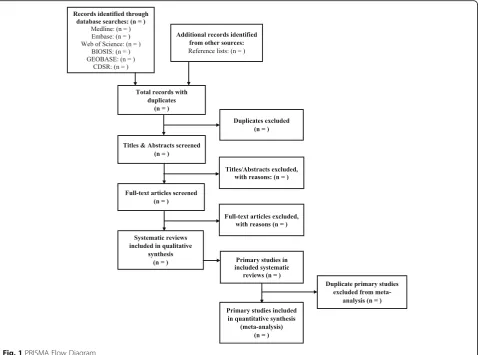
Results of this overview will be reported according to
the Preferred Reporting Items for Systematic Reviews
and Meta-Analyses (PRISMA) guidelines [39,
40]. The
reasons for any protocol amendments will be
docu-mented in the full review.
Discussion
While Cd exposure may occur through industrial exposures
or via consumption of contaminated food and water, and soil
or dust contact [66], the primary source of human exposure
is smoking, which almost doubles Cd body burden [10]. In
non-smokers, the primary Cd exposure source is diet, with
the largest concentrations acquired from plant foods [10,
67,
68], liver/kidney meats, and shellfish [10,
14,
66,
69,
70]. In
areas near Cd-emitting industries, well water and rivers may
also represent significant exposure sources [71].
The role of Cd in T2DM development remains
un-clear. Multiple mechanisms have been proposed
includ-ing
increased
gluconeogenic
enzyme
activation,
increased oxidative stress in pancreatic beta-cells, altered
glucose transport in adipose and renal tissues, and
al-tered cell-cell adhesions that can potentially lead to islet
dysfunction, impaired insulin secretion, and subsequent
dysglycemia [72–74]. As T2DM rates rise worldwide
[75], accurately determining Cd’s contribution to
dia-betes risk could improve decision-making regarding Cd
use and precautions to protect at-risk populations.
One limitation of this overview is the exclusion of
non-English language articles, which may exclude some
additional papers. Nonetheless, this overview will clarify
the association between Cd exposure and T2DM in the
general population, help identify future research needs,
and guide health policy to limit exposure if an
associ-ation
between
Cd
exposure
and
T2DM
risk
is
Supplementary information
Supplementary informationaccompanies this paper athttps://doi.org/10. 1186/s13643-019-1246-7.
Additional file 1.PRISMA-P checklist. This checklist documents the location within this protocol of recommended items to address in a systematic review protocol.
Additional file 2.Modified AMSTAR-2 tool. This file contains a modified version of the AMSTAR-2 tool, as well as a list of the modifications made by the authors to the original tool.
Abbreviations
AMSTAR-2:Assessment of Multiple Systematic Reviews 2; BMI: Body mass index; BP: Blood pressure; Cd: Cadmium; CI: Confidence intervals; EDC: Endocrine-disrupting chemical; HbA1c: Hemoglobin A1c; NAFLD: Non-alcoholic fatty liver disease; OGTT: Oral glucose tolerance test;
PRISMA: Preferred Reporting Items for Systematic Reviews and Meta-Analyses; PRISMA-P: Preferred Reporting Items for Systematic Review and Meta-Analysis Protocols; RevMan 5.3: Review Manager Software version 5.3; ROB: Risk of bias; ROBIS: Risk of bias in systematic reviews; SPSS: Statistical Package for the Social Sciences; T2DM: Type 2 diabetes mellitus
Acknowledgements None
Authors’contributions
MCS is the guarantor of this review. JH, ST, TLW, JM, SH, LT, LB, and MCS defined the research question. JH, ST, TLW, LB, LT, JM, SH, and MCS developed the Medline search strategy and determined inclusion and exclusion criteria. Methodological support and assessment of exposure methods and tests for this review was provided by LT, JM, SH, and MCS. JH, ST, TLW, and MCS created the first draft of the manuscript, and all authors reviewed and approved the final draft of the manuscript.
Funding
Tonya-Leah Watts was funded through the Indigenous Undergraduate Student Research Scholarship award, McMaster University.
Availability of data and materials Not applicable.
Ethics approval and consent to participate Not applicable.
Consent for publication Not applicable.
Competing interests
The authors declare that they have no competing interests.
Author details
1
Department of Pediatrics, McMaster University, Hamilton, Ontario, Canada.
2Division of Pediatric Endocrinology, McMaster Children’s Hospital, Hamilton,
Ontario, Canada.3Health Sciences Library, McMaster University, Hamilton, Ontario, Canada.4Department of Health Research Methods, Evidence, and
Impact, McMaster University, Hamilton, Ontario, Canada.5Department of Anesthesia, McMaster University, Hamilton, Ontario, Canada.6Centre for
Evaluation of Medicines, St. Joseph’s Healthcare, Hamilton, Ontario, Canada.
7Biostatistics Unit, St. Joseph’s Healthcare Hamilton, Hamilton, Ontario,
Canada.8Hamilton Regional Laboratory Medicine Program, Hamilton, Ontario, Canada.9Department of Pathology and Molecular Medicine,
McMaster University, Hamilton, Ontario, Canada.10Michael G. DeGroote School of Medicine, McMaster University, Hamilton, Ontario, Canada.
Received: 5 August 2019 Accepted: 25 November 2019
References
1. IDF Diabetes Atlas. 8th ed. Brussels: International Diabetes Federation; 2017.
2. Czech MP. Insulin action and resistance in obesity and type 2 diabetes. Nature Medicine. 2017;23:804–14.
3. Kuo C, Moon K, Thayer K, Navas-Acien A. Environmental chemicals and type 2 diabetes: an updated systematic review of the epidemiologic evidence. Curr Diab Rep. 2013;13(6):831–49.
4. Gore A, Chappell V, Fenton S, Flaws J, Nadal A, Prins G, et al. Executive summary to EDC-2: the endocrine society’s second scientific statement on endocrine-disrupting chemicals. Endocr Rev. 2015;36(6):593.
5. Identification of risks from exposure to endocrine-disrupting chemicals at the country level. Copenhagen: World Health Organization; 2014. 6. State of the science of endocrine disrupting chemicals - 2012. United
Nations Environment Programme and the World Health Organization; 2013. 7. Colborn T, Vom Saal FS, Soto AM. Developmental effects of
endocrine-disrupting chemicals in wildlife and humans. Environ Health Perspect. 1993; 101(5):378–84.
8. Tabb MM, Blumberg B. New modes of action for endocrine-disrupting chemicals. Mol Endocrinol. 2006;20(3):475–82.
9. McLachlan JA. Environmental signaling: what embryos and evolution teach us about endocrine disrupting chemicals. Endocrine Reviews. 2001;22(3):319–41.
10. Faroon O, Ashizawa A, Wright S, Tucker P, Jenkins K. Toxicological profile for cadmium. Atlanta: Agency for Toxic Substances and Disease Registry (US); 2012.
11. Cadmium - substance information - ECHA Helsinki2018. Available from:
https://echa.europa.eu/substance-information/-/substanceinfo/100.028.320. 12. Federal water pollution control act 33 U.S.C. 1251 et seq. 2018.
13. Air pollution prevention and control 42 U.S.C. 7412. 2018.
14. Satarug S, Garrett SH, Sens MA, Sens DA. Cadmium, environmental exposure, and health outcomes. Environ Health Perspect. 2010; 118(2): 182–190. 15. Järup L, Alfvén T. Low level cadmium exposure, renal and bone effects-the
OSCAR study. Biometals. 2004;17(5):505–9.
16. Järup L, Hellström L, Alfvén T, Carlsson MD, Grubb A, Persson B, et al. Low level exposure to cadmium and early kidney damage: the OSCAR study. Occup Environ Med. 2000;57(10):668–72.
17. Nawrot T, Plusquin M, Hogervorst J, Roels HA, Celis H, Thijs L, et al. Environmental exposure to cadmium and risk of cancer: a prospective population-based study. Lancet Oncol. 2006;7(2):119–26.
18. Alfvén T, Elinder CG, Carlsson MD, Grubb A, Hellström L, Persson B, et al. Low-level cadmium exposure and osteoporosis. J Bone Mineral Res. 2000; 15(8):1579–86.
19. Beton D, Andrews G, Davies H, Howells L, Smith G. Acute cadmium fume poisoning: five cases with one death from renal necrosis. Occup Environ Med. 1966;23(4):292–301.
20. Lei L-J, Jin T-Y, Zhou Y-F. Insulin expression in rats exposed to cadmium. Biomed Environ Sci. 2007;20(4):295–301.
21. Bell R, Early J, Nonavinakere V, Mallory Z. Effect of cadmium on blood glucose level in the rat. Toxicol Lett. 1990;54(2-3):199–205. 22. Merali Z, Singhal R. Diabetogenic effects of chronic oral cadmium
administration to neonatal rats. Brit J Pharmacol. 1980;69(1):151–7. 23. Han JC, Park SY, Hah BG, Choi GH, Kim YK, Kwon TH, et al. Cadmium
induces impaired glucose tolerance in rat by down-regulating GLUT4 expression in adipocytes. Arch Biochem Biophys. 2003;413(2):213–20. 24. Edwards JR, Prozialeck WC. Cadmium, diabetes and chronic kidney disease.
Toxicol Appl Pharmacol. 2009;238(3):289–93.
25. El Muayed M, Raja MR, Zhang X, MacRenaris KW, Bhatt S, Chen X, et al. Accumulation of cadmium in insulin-producingβcells. Islets. 2012;4(6): 405–16.
26. Gavazzo P, Morelli E, Marchetti C. Susceptibility of insulinoma cells to cadmium and modulation by L-type calcium channels. Biometals. 2005; 18(2):131.
27. Haswell-Elkins M, Imray P, Soisungwan S, Moore M, O'Dea K. Urinary excretion of cadmium among Torres Strait Islanders (Australia) at risk of elevated dietary exposure through traditional foods. J Expo Sci Environ Epidemiol. 2007;17:372–7.
28. Nie X, Ningjian W, Chen Y, Chen C, Han B, Zhu C, et al. Blood cadmium in Chinese adults and its relationships with diabetes and obesity. Environ Sci Pollut Res. 2016;23(18):18714–23.
30. Moon S. Association of lead, mercury and cadmium with diabetes in the Korean population: the Korea National Health and Nutrition Examination Survey (KNHANES) 2009-2010. Diabet Med. 2013;30(4):e143–8. 31. Barregard L, Bergstrom G, Fagerberg B. Cadmium exposure in relation to
insulin production, insulin sensitivity and type 2 diabetes: a cross-sectional and prospective study in women. Environ Res. 2013;121:104–9. 32. Li X, Peng Y, Gao Y, Guo W, Wang J, Liu X, et al. Association between
plasma metal levels and diabetes risk: a case-control study in China. Biomed Environ Sci. 2017;30(7):482–91.
33. Feng W, Cui X, Liu C, Xiao Y, Lu W, Guo H, et al. Association of urinary metal profiles with altered glucose levels and diabetes risk: a population-based study in China. PLoS One. 2015;10(4):e0123742.
34. Afridi HI, Kazi TG, Kazi N, Jamali MK, Arain MB, Jalbani N, et al. Evaluation of status of toxic metals in biological samples of diabetes mellitus patients. Diabet Res Clin Pract. 2008;80(2):280–8.
35. Shamseer L, Moher D, Clarke M, Ghersi D, Liberati A, Petticrew M, et al. Preferred reporting items for systematic review and meta-analysis protocols (PRISMA-P) 2015: elaboration and explanation. BMJ. 2015;349:g7647. 36. GEOBASE. Engineering Village, Elsevier. Available from:https://www.elsevier.
com/solutions/engineering-village/content/geobase. 37. Endnote. 7.7.1 ed: Clarivate Analytics; 2016.
38. Cook DJ, Mulrow CD, Haynes RB. Systematic reviews: synthesis of best evidence for clinical decisions. Ann Internal Med. 1997;126(5):376–80. 39. Moher D, Liberati A, Tetzlaff J, Altman D, Group P. Preferred reporting items
for systematic reviews and meta-analyses: the PRISMA statement. Int J Surg. 2010;8(5):336–41.
40. Liberati A, Altman D, Tetzlaff J, Mulrow C, Gotzche P, Ioannidis J, et al. The PRISMA statement for reporting systematic reviews and meta-analyses of studies that evaluate healthcare interventions: explanation and elaboration. BMJ. 2009;339:b2700.
41. Higgins JPT, Altman DG, Sterne JAC (editors). Chapter 8: Assessing risk of bias in included studies. In: Higgins JPT, Green S (editors). Cochrane Handbook for Systematic Reviews of Interventions Version 5.1.0 (updated March 2011). The Cochrane Collaboration, 2011.
42. Atkins D, Best D, Briss P, Eccles M, Falck-Ytter Y, Flottorp S, et al. Grading quality of evidence and strength of recommendations. BMJ. 2004;328(7454):1490.
43. Diabetes Canada Clinical Practice Guidelines Expert Committee. Diabetes Canada 2018 Clinical practice guidelines for the prevention and management of diabetes in Canada. Can J Diabetes. 2018;42(Suppl 1):S1–S325.
44. American Diabetes Association. Standards of medical care in diabetes -2018. Diabetes Care. 2018;42(Supplement 1):S1–S159.
45. Margolis KL, Qi L, Brzyski R, Bonds DE, Howard BV, Kempainen S, et al. Validity of diabetes self-reports in the women's health initiative: comparison with medication inventories and fasting glucose measurements. Clin Trials. 2008;5(3):240–7.
46. Styne DM, Arslanian SA, Connor EL, Farooqi IS, Murad MH, Silverstein JH, Yanovski JA. Pediatric Obesity—Assessment, Treatment, and Prevention: An Endocrine Society Clinical Practice Guideline. J Clin Endocrinol Metab. 2017; 102(3):709–57.
47. Clinical guidelines on the identification, evaluation, and treatment of overweight and obesity in adults: executive summary. Expert Panel on the Identification, Evaluation, and Treatment of Overweight in Adults. Am J Clin Nut. 1998;68(4):899–17.
48. Mancini G, Hegele R, Leiter L. Diabetes Canada 2018 clinical practice guidelines for the prevention and management of diabetes in Canada: dyslipidemia. Can J Diabetes. 2018;42(Suppl 1):S178–S85.
49. Flynn JT, Kaelber DC, Baker-Smith CM, Blowey D, Carroll AE, Daniels SR, et al. Clinical practice guideline for screening and management of high blood pressure in children and adolescents. Pediatrics. 2017;140(3):e20171904. 50. Whelton PK, Carey RM, Aronow WS, Casey DE, Collins KJ, Dennison
Himmelfarb C, et al. 2017 ACC/AHA/AAPA/ABC/ACPM/AGS/APhA/ASH/ ASPC/NMA/PCNA Guideline for the prevention, detection, evaluation, and management of high blood pressure in adults: a report of the American College of Cardiology/American Heart Association Task Force on clinical practice guidelines. J Am Coll Cardiol. 2018;71(19):e127–248.
51. Sattar N, Forrest E, Preiss D. Non-alcoholic fatty liver disease. BMJ. 2014; 349:g4596.
52. Karahalios A, Baglietto L, Carlin JB, English DR, Simpson JA. A review of the reporting and handling of missing data in cohort studies with repeated assessment of exposure measures. BMC Med Res Methodol. 2012;12:96.
53. Shea BJ, Reeves BC, Wells G, Thuku M, Hamel C, Moran J, et al. AMSTAR 2: a critical appraisal tool for systematic reviews that include randomised or non-randomised studies of healthcare interventions, or both. BMJ. 2017;358. 54. Thompson C, Schabrun S, Romero R, Bialocerkowski A, Marshall P. Factors
contributing to chronic ankle instability: a protocol for a systematic review of systematic reviews. Systematic Rev. 2016;5(1):94.
55. Whiting P, SavovićJ, Higgins JP, Caldwell DM, Reeves BC, Shea B, et al. ROBIS: a new tool to assess risk of bias in systematic reviews was developed. J Clin Epidemiol. 2016;69:225–34.
56. Deeks JJ, JPT H, Altman DG. Chapter 9: Analysing data and undertaking meta-analyses. In: Higgins J, Green S, editors. Cochrane handbook for systematic reviews of interventions version 510 (updated March 2011): The Cochrane Collaboration; 2011.
57. Virani S, Rentschler KM, Nishijo M, Ruangyuttikarn W, Swaddiwudhipong W, Basu N, et al. DNA methylation is differentially associated with
environmental cadmium exposure based on sex and smoking status. Chemosphere. 2016;145:284–90.
58. Cowley M, Skaar DA, Jima DD, Maguire RL, Hudson KM, Park SS, et al. Effects of cadmium exposure on DNA methylation at imprinting control regions and genome-wide in mothers and newborn children. Environ Health Perspect. 2018;126(3):037003.
59. Mohanty AF, Farin FM, Bammler TK, MacDonald JW, Afsharinejad Z, Burbacher TM, et al. Infant sex-specific placental cadmium and DNA methylation associations. Environ Res. 2015;138:74–81.
60. Garner R, Levallois P. Cadmium levels and sources of exposure among Canadian adults. Health rep. 2016;27(2):10.
61. Lopez-Herranz A, Cutanda F, Esteban M, Pollan M, Calvo E, Perez-Gomaz B, et al. Cadmium levels in a representative sample of the Spanish adult population: The BIOAMBIENT.ES project. J Expo Sci Environ Epidemiol. 2016; 26(5):471–80.
62. Jacquet A, Arnaud J, Hininger-Favier I, Hazane-Puch F, Couturier K, Lénon M, et al. Impact of chronic and low cadmium exposure of rats: Sex specific disruption of glucose metabolism. Chemosphere. 2018;207:764–73. 63. Review Manager (RevMan). 5.3 ed. Copenhagen: The Nordic Cochrane
Centre, The Cochrane Collaboration; 2014.
64. Egger M, Smith G, Schneider M, Minder C. Bias in meta-analysis detected by a simple, graphical test. BMJ. 1997;315(7109):629–34.
65. IBM Corp. Released 2017. IBM SPSS Statistics for Windows, Version 25.0. Armonk: IBM Corp.
66. Report on carcinogens. Research Triangle Park, NC: National Toxicology Program, U.S. Department of Health and Human Services, Public Health Service; 2016.
67. Satarug S, Moore MR. Adverse health effects of chronic exposure to low-level cadmium in foodstuffs and cigarette smoke. Environ Health Perspect. 2004;112(10):1099.
68. Kim K, Melough M, Vance T, Noh H, Koo S, Chun O. Dietary cadmium intake and sources in the US. Nutrients. 2019;11(1):2.
69. Chunhabundit R. Cadmium exposure and potential health risk from foods in contaminated area, Thailand. Toxicol Res. 2016;32(1):65.
70. Arnold SM, Zarnke RL, Lynn TV, Chimonas M-AR, Frank A. Public health evaluation of cadmium concentrations in liver and kidney of moose (Alces alces) from four areas of Alaska. Sci Total Environ. 2006;357(1-3):103–11. 71. Järup L, Åkesson A. Current status of cadmium as an environmental health
problem. Toxicol Appl Pharmacol. 2009;238(3):201–8.
72. Tinkov AA, Filippini T, Ajsuvakova OP, Aaseth J, Gluhcheva YG, Ivanova JM, et al. The role of cadmium in obesity and diabetes. Sci Total Environ. 2017; 601:741–55.
73. Edwards J, Ackerman C. A review of diabetes mellitus and exposure to the environmental toxicant cadmium with an emphasis on likely mechanisms of action. Curr Diabetes Rev. 2016;12(3):252–8.
74. Chen YW, Yang CY, Huang CF, Hung DZ, Leung YM, Liu SH. Heavy metals, islet function and diabetes development. Islets. 2009;1(3):169–76. 75. Zhou, B, Lu, Y, Hajifathalian, K, Bentham, J, Di Cesare, M, Danaei, G et al.
Worldwide trends in diabetes since 1980: a pooled analysis of 751 population-based studies with 4·4 million participants. The Lancet. 2016; 387(10027):1513–30.