Address for correspondence
Dorota Różańska
E-mail: [email protected]
Funding sources
None declared
Conflict of interest
None declared
Received on July 01, 2015 Revised on December 26, 2015 Accepted on January 19, 2016
Abstract
Background. Atherosclerotic processes begin in childhood and their development worsens during ado-lescence. Early prevention of CVD risk factors may have an important impact on the future health of young people. It can be also helpful in reducing the costs of treating CVD later in life.
Objectives. The aim of this study was to assess the prevalence of selected cardiovascular disease risk fac-tors among pharmacy students.
Material and methods. The study group consisted of 1,168 pharmacy students (892 women and 276 men) from Wroclaw Medical University. The average age was 22.9 years among women and 23.2 years among men. This cross-sectional study was conducted between 2004–2012.
Results. 27.5% of men and 7.1% of women were found to be overweight, while visceral obesity was found in 15.2% and in 10.1% of students, respectively. Hypertension was diagnosed in 27.2% of men and in 7.8% of women. Low physical activity was declared by 41.9% of women and by 31.9% of men. There were 22.1% of men and 10% of women who were current smokers. The majority of the study group did not consume enough fruits and vegetables (women 61.8%, men 75%). Body mass index (BMI) was positively associated with waist and hip measurements, waist-to-hip ratio (WHR) and body fat percentage, while blood pres-sure was positively associated with BMI and waist circumference. It was found that men with high physical activity had lower BMIs, body fat percentage, waist and hip circumferences, WHR, diastolic blood pressure and heart rate than those who declared low physical activity. Comparing women with high physical activity to those with low physical activity, only lower heart rate was observed.
Conclusions. A higher prevalence of cardiovascular risk factors was found more often among men than women. Preventive actions which promote proper nutrition, more physical activity, smoking cessation and regular blood pressure checks and lipid profile tests should be implemented for the students.
Key words: risk factors, cardiovascular disease, lifestyle, hypertension, university students DOI
10.17219/acem/61439
Copyright
© 2017 by Wroclaw Medical University This is an article distributed under the terms of the Creative Commons Attribution Non-Commercial License (http://creativecommons.org/licenses/by-nc-nd/4.0/)
Prevalence of cardiovascular disease risk factors among pharmacy
students from Wroclaw Medical University (Poland)
Rafał Ilow
1, A–D, Dorota Różańska
2, A, C, D, Bożena Regulska-Ilow
2, B, E, F1 Department of Food Science and Dietetics, Wroclaw Medical University, Poland 2 Department of Dietetics, Wroclaw Medical University, Poland
A – research concept and design; B – collection and/or assembly of data; C – data analysis and interpretation; D – writing the article; E – critical revision of the article; F – final approval of article
The prevalence of cardiovascular diseases (CVD) is notably associated with lifestyle factors such as smoking, unhealthy diet and low physical activity. Other risk fac-tors for CVD, e.g. excessive body weight, high blood pres-sure, dyslipidemia and high blood glucose level, can also be related to lifestyle.1 According to the Global Burden
of Diseases, Injuries, and Risk Factors Study 2010 (GBD 2010), deaths caused by all non-communicable diseases increased by 30% between 1990 and 2010. Deaths caused by cardiovascular and circulatory diseases increased by 31.2% during those years, while deaths caused by diabe-tes, urogenital, blood and endocrine diseases increased by 76.5%. In 2010, global CVD mortality among women
aged 15–49 years was 10.7% and among men 12.8%.2
According to the World Health Organization (WHO), the highest mortality rates of CVDs in 2008 were found in Estonia, followed by Hungary and Croatia. The mortality
rates of CVDs in Poland placed 7th among the countries
which were taken into account.1
A healthy lifestyle is one of the major factors in CVD prevention, a fact which is emphasized by experts from
the European Society of Cardiology (ESC).3
Preven-tive actions should begin even before birth by educating young parents, and should subsequently be continued at pre-school and school age. Therefore, actions aimed at preventing CVD should be part of everyday life begin-ning with childhood and they should be continued for adolescents, adults and the elderly.3 Obesity in the first
years of life increased the risk of obesity in adulthood and the development of metabolic syndrome and type 2 diabetes in adolescence and adulthood.4 Juonala et al.
observed that obese adults who were overweight in their childhood had an increased risk of dyslipidemia, hyper-tension, type 2 diabetes and carotid-artery
atherosclero-sis.5 Other authors also suggested that the development
of atherosclerosis may be increased by the occurrence of CVD risk factors in early life.6 Therefore, early prevention
of risk factors may have a significant influence on CVD development in the future.7
The aim of this study was to evaluate the prevalence of selected cardiovascular disease risk factors among phar-macy students from Wroclaw Medical University.
Material and methods
Study group
The study group consisted of 1,168 pharmacy students (892 women and 276 men) from Wroclaw Medical Uni-versity. This cross-sectional study was carried out
be-tween 2004 and 2012. All students who were 4th-year
pharmacy students at the time agreed to participate in the study and were recruited into the study. Women who were pregnant were excluded from the study. During the study period, the following number of students were
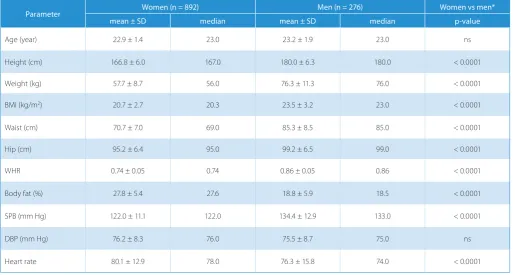
re-cruited: 154 people in 2004; 141 in 2005; 127 in 2006; 130 in 2007; 124 in 2008; 125 in 2009; 114 in 2010; 139 in 2011; and 114 in 2012. None of the participants declared that they were taking any medications for the treatment of chronic diseases. The average age was 22.9 years among women and 23.2 years among men. The demographics of the study group are presented in Table 1. The study group was asked to complete questionnaires, which included 46 questions about their nutritional habits and lifestyle.
Measurements
To assess the risk factors for CVD among the study group, anthropometrical parameters such as height (rounded to 1 cm), weight (rounded to 1 kg) and waist and hip circumference (rounded to 1 cm) were measured. Weight was measured using an electronic personal scale (Beurer GmbH, Germany) and waist and hip circumfer-ences using non-stretch measuring tape. Based on these anthropometric measurements, body mass index (BMI) and waist-to-hip ratio (WHR) were calculated. BMI
clas-sification from the WHO was used.8 Abdominal
obe-sity was assessed using WHR and waist circumference. The abnormal values for WHR among women and men were ≥ 0.8 and ≥ 0.95, respectively, and those for waist circumference were ≥ 80 cm and ≥ 94 cm, respectively.9,10
The percentage of body fat was measured using a BF306 Body Fat Monitor (OMRON, Japan). The measurement of body fat percentage was based on electrical resistance and personal data: gender, age, height and weight. Blood pres-sure was meapres-sured using an M6 Blood Prespres-sure Monitor (OMRON, Japan) with a size 3 arm cuff. Measurements were performed twice during 2 visits (4 measurements in total) 1 week apart. Hypertension was diagnosed when systolic blood pressure was ≥ 140 mm Hg and/or diastolic
blood pressure was ≥ 90 mm Hg.11
Statistical analysis
Continuous variables were summarized by averages, standard deviations (SD) and medians. A non-parametric Mann-Whitney U test was used to compare linear vari-ables and a χ2 test was used to compare categorical
vari-ables. A linear Pearson's correlation test was performed to determine the relationships between data. The criterion for statistical significance was set at the p-value < 0.05. Statistical analyses were made using STATISTICA v. 10.0 PL software (StatSoft Inc., USA).
Results
(SBP) were significantly higher among men than among women. The opposite relationship was observed in per-centage of body fat and pulse.
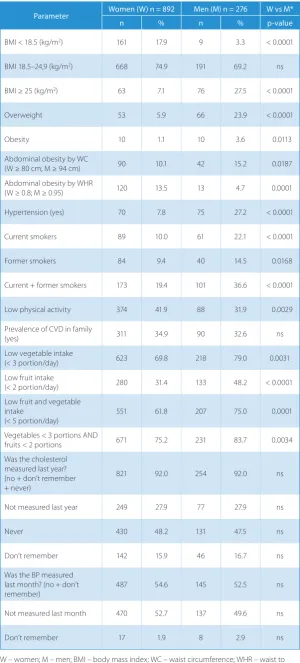
The prevalence of selected risk factors for CVD is pre-sented in Table 2. Although the average BMI among both men and women indicated normal body weight, there were 27.5% of men and 7.1% of women with excessive body weight (p < 0.0001). However, a notable part of the study group, especially women (17.9%), were underweight. Vis-ceral obesity was observed significantly more often among men than women (15.2% vs 10.1%). Hypertension occurred almost 4-fold more frequently among men than women.
Students were asked to qualify their physical activity by choosing 1 of the 5 following answers: no physical activi-ty; 20–60 min once a week; 20–60 min 2–3 times a week; 20–60 min 4–6 times a week; or 20–60 min every day. Low physical activity, as defined by options 1 and 2, was declared significantly more often by women than by men (41.9% vs 31.9%).
Significantly more men than women were current or former smokers (36.6% vs 19.4%). Almost 50% of the study group had never measured their blood cholesterol level and 27.9% had not measured it in the year prior to the study. About 53% of women and 50% of men had not measured their blood pressure in the month prior to the study. A history of CVD in the family was declared by 34.9% of women and by 32.6% of men.
The majority of the study group did not consume enough fruits and vegetables. Intake of less than the
recommended 5 servings of these foods per day overall was declared by about 62% of women and 75% of men. However, when taking into account the recommendation to consume at least 3 servings of vegetables and at least 2 servings of fruit daily, the insufficient intake of these foods was found in about 75% of women and 84% of men (Table 2).
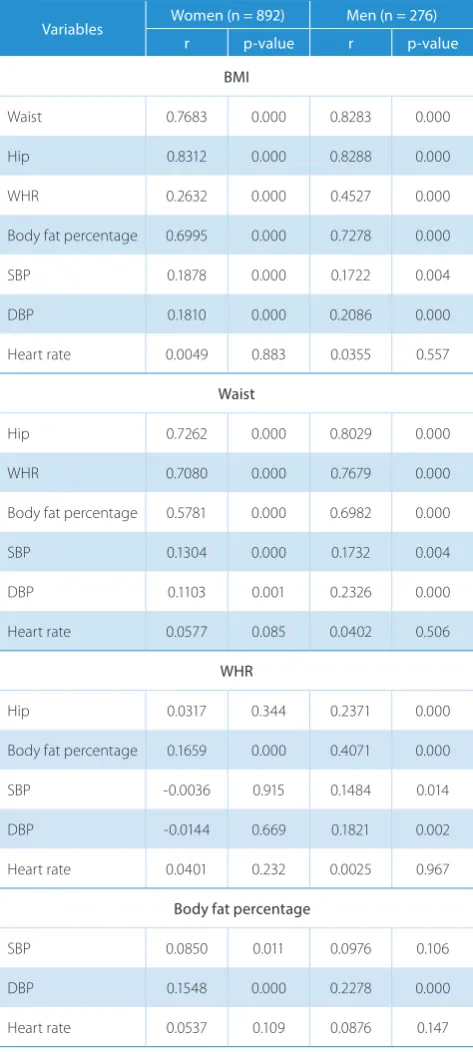
Table 3 summarizes the correlations between BMI, waist circumference, WHR, body fat percentage and other parameters. BMI correlated stronger with waist circumference than with WHR in both men and women. A strong correlation was also found between BMI and body fat percentage. Larger hip circumference, higher WHR and higher body fat percentage were observed with increasing waist circumference. Correlations between blood pressure and anthropometric variables were weak or statistically insignificant.
The comparison between participants with excessive body weight and those with BMI < 25 kg/m2 is shown in
Table 4. It was observed that women with BMI ≥ 25 kg/m2
had significantly higher SBP, DBP, heart rate, body fat percentage, waist and hip circumferences and WHR compared to those with BMI < 25 kg/m2. Similar results
were obtained in the group of men, with the exception of SBP and DBP, where no significant differences were found.
It was observed that women with abdominal obesity had significantly higher BMI, SBP, DBP, heart rate, body fat percentage, hip circumference and WHR, compared
Table 1. Characteristic of the study group (n = 1168)
Parameter Women (n = 892) Men (n = 276) Women vs men*
mean ± SD median mean ± SD median p-value
Age (year) 22.9 ± 1.4 23.0 23.2 ± 1.9 23.0 ns
Height (cm) 166.8 ± 6.0 167.0 180.0 ± 6.3 180.0 < 0.0001
Weight (kg) 57.7 ± 8.7 56.0 76.3 ± 11.3 76.0 < 0.0001
BMI (kg/m2) 20.7 ± 2.7 20.3 23.5 ± 3.2 23.0 < 0.0001
Waist (cm) 70.7 ± 7.0 69.0 85.3 ± 8.5 85.0 < 0.0001
Hip (cm) 95.2 ± 6.4 95.0 99.2 ± 6.5 99.0 < 0.0001
WHR 0.74 ± 0.05 0.74 0.86 ± 0.05 0.86 < 0.0001
Body fat (%) 27.8 ± 5.4 27.6 18.8 ± 5.9 18.5 < 0.0001
SPB (mm Hg) 122.0 ± 11.1 122.0 134.4 ± 12.9 133.0 < 0.0001
DBP (mm Hg) 76.2 ± 8.3 76.0 75.5 ± 8.7 75.0 ns
Heart rate 80.1 ± 12.9 78.0 76.3 ± 15.8 74.0 < 0.0001
Table 2. Prevalence of selected risk factors in the study group (n = 1168)
Parameter Women (W) n = 892 Men (M) n = 276 W vs M*
n % n % p-value
BMI < 18.5 (kg/m2) 161 17.9 9 3.3 < 0.0001
BMI 18.5–24,9 (kg/m2) 668 74.9 191 69.2 ns
BMI ≥ 25 (kg/m2) 63 7.1 76 27.5 < 0.0001
Overweight 53 5.9 66 23.9 < 0.0001
Obesity 10 1.1 10 3.6 0.0113
Abdominal obesity by WC
(W ≥ 80 cm; M ≥ 94 cm) 90 10.1 42 15.2 0.0187
Abdominal obesity by WHR
(W ≥ 0.8; M ≥ 0.95) 120 13.5 13 4.7 0.0001
Hypertension (yes) 70 7.8 75 27.2 < 0.0001
Current smokers 89 10.0 61 22.1 < 0.0001
Former smokers 84 9.4 40 14.5 0.0168
Current + former smokers 173 19.4 101 36.6 < 0.0001
Low physical activity 374 41.9 88 31.9 0.0029
Prevalence of CVD in family
(yes) 311 34.9 90 32.6 ns
Low vegetable intake
(< 3 portion/day) 623 69.8 218 79.0 0.0031
Low fruit intake
(< 2 portion/day) 280 31.4 133 48.2 < 0.0001
Low fruit and vegetable intake
(< 5 portion/day)
551 61.8 207 75.0 0.0001
Vegetables < 3 portions AND
fruits < 2 portions 671 75.2 231 83.7 0.0034
Was the cholesterol measured last year? (no + don’t remember + never)
821 92.0 254 92.0 ns
Not measured last year 249 27.9 77 27.9 ns
Never 430 48.2 131 47.5 ns
Don’t remember 142 15.9 46 16.7 ns
Was the BP measured last month? (no + don’t
remember) 487 54.6 145 52.5 ns
Not measured last month 470 52.7 137 49.6 ns
Don’t remember 17 1.9 8 2.9 ns
W – women; M – men; BMI – body mass index; WC – waist circumference; WHR – waist to hip ratio; CVD – cardiovascular diseases; BP – blood pressure; * – χ2 test; Ns – no significant
differences.
to those with waist circumference < 80 cm (Table 5). Similar results appeared among the men, except SBP, where no significant differences were found.
In both groups, participants with hyper-tension had higher BMI than those with normal blood pressure (Table 6). Women with hypertension also had larger hip cir-cumferences than those without hyper-tension. Among men with hypertension compared to those without, higher waist circumference and WHR was observed.
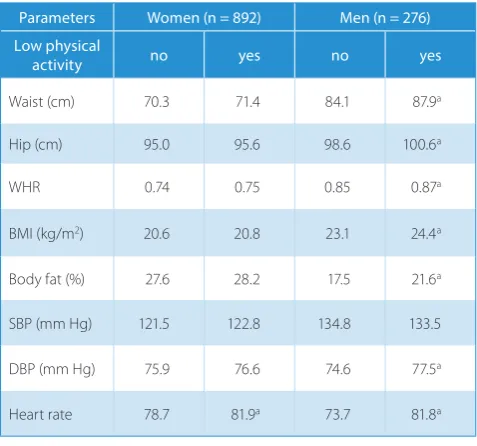
Table 7 presents the comparison be-tween participants who declared low and high physical activity. It was found that men with high physical activity had lower BMI, body fat percentage, waist and hip circumferences, WHR, DBP and heart rate than those who declared low physical activity. In the group of women, only low-er heart rate was obslow-erved among those with high physical activity compared to those with low physical activity.
Discussion
Atherosclerotic processes begin in childhood and their development pro-ceeds during adolescence. Early preven-tion of CVD risk factors might have an important impact on future health. It can be also helpful in reducing the costs of treating CVD later in life. Regular calcu-lation of BMI and measurement of blood pressure along with screening and coun-seling for nutritional problems and eating disorders, physical activity and smoking cessation are recommended as prevention
and treatment of CVD.7
Obesity is one of the major risk factors for CVD and it is a growing worldwide problem. It is related to other risk
fac-tors and may cause metabolic disorders.1
In the Bogalusa Heart Study, the authors concluded that excessive body weight in adolescence and remaining in young adulthood has a strong impact on CVD risk factors, a scenario which requires primary prevention in early life.12 In the
previous study conducted on pharmacy students between 1998 and 2003, the au-thors observed a slightly lower prevalence of excess weight and obesity than in the present study.13 Results similar to those
Table 3. Pearson correlation between selected parameters in the study group (n = 1168)
Variables Women (n = 892) Men (n = 276)
r p-value r p-value
BMI
Waist 0.7683 0.000 0.8283 0.000
Hip 0.8312 0.000 0.8288 0.000
WHR 0.2632 0.000 0.4527 0.000
Body fat percentage 0.6995 0.000 0.7278 0.000
SBP 0.1878 0.000 0.1722 0.004
DBP 0.1810 0.000 0.2086 0.000
Heart rate 0.0049 0.883 0.0355 0.557
Waist
Hip 0.7262 0.000 0.8029 0.000
WHR 0.7080 0.000 0.7679 0.000
Body fat percentage 0.5781 0.000 0.6982 0.000
SBP 0.1304 0.000 0.1732 0.004
DBP 0.1103 0.001 0.2326 0.000
Heart rate 0.0577 0.085 0.0402 0.506
WHR
Hip 0.0317 0.344 0.2371 0.000
Body fat percentage 0.1659 0.000 0.4071 0.000
SBP -0.0036 0.915 0.1484 0.014
DBP -0.0144 0.669 0.1821 0.002
Heart rate 0.0401 0.232 0.0025 0.967
Body fat percentage
SBP 0.0850 0.011 0.0976 0.106
DBP 0.1548 0.000 0.2278 0.000
Heart rate 0.0537 0.109 0.0876 0.147
r – correlation coefficient; BMI – body mass index; WHR – waist to hip ratio; SBP – systolic blood pressure; DBP – diastolic blood pressure.
Table 4. Comparison between average values of selected parameters among participants with BMI < 25 kg/m2 and with BMI ≥ 25 kg/m2
Parameters Women (n = 892) Men (n = 276) BMI < 25 kg/m2 ≥ 25 kg/m2 < 25 kg/m2 ≥ 25 kg/m2
Waist (cm) 69.6 85.4a 82.0 94.1a
Hip (cm) 94.2 109.1a 96.7 105.9a
WHR 0.74 0.78a 0.85 0.89a
Body fat (%) 27.1 37.6a 16.7 24.3a
SBP (mm Hg) 121.4 129.9a 133.6 136.5
DBP (mm Hg) 75.7 82.8a 74.9 77.3
Heart rate 79.8 83.3a 75.5 78.3a
BMI – body mass index; WHR – waist to hip ratio; SBP – systolic blood pressure; DBP – diastolic blood pressure; a – significant differences
(p < 0.5) between participants with BMI < 25 kg/m2 and with
BMI ≥ 25 kg/m2.
Table 5. Comparison between average values of selected parameters among participants with abdominal obesity and with proper waist circumference
Parameters Women (n = 892) Men (n = 276) waist
circumference < 80 cm ≥ 80 cm < 94 cm ≥ 94 cm
Hip (cm) 94.1 105.7a 97.7 107.7a
WHR 0.73 0.81a 0.85 0.92a
BMI (kg/m2) 20.2 25.3a 22.7 28.2a
Body fat (%) 27.1 34.6a 17.4 26.5a
SBP (mm Hg) 121.4 128.0a 134.1 135.8
DBP (mm Hg) 75.7 80.3a 74.9 79.2a
Heart rate 79.7 83.1a 75.6 80.0a
WHR – waist to hip ratio; BMI – body mass index; SBP – systolic blood pressure; DBP – diastolic blood pressure; a – significant differences
(p < 0.5) between participants with abdominal obesity and with proper waist circumference.
were also observed by other authors assessing the occur-rence of excessive weight and obesity among students
from other Polish cities.14,15 In the WOBASZ study
(Na-tional Multicenter Health Survey in Poland), BMI ≥ 25
kg/m2 occurred more frequently among participants aged
20–34 than among the examined students from Wrocław (men: 41% vs 27.5%; women: 20% vs 7.1%).16 A higher
prev-alence of excessive body weight in the group of students,
compared to the current study, was observed also in Greece (men: 39.5%; women: 23.3%) and Lebanon (men: 50%; women: 16.8%).17,18
Actions aimed at preventing hypertension should be addressed to those who do not have the disease as well as to those who already have high BP. The development of hypertension can be prevented in particular by chang-ing the patient’s lifestyle. Accordchang-ing to the recommenda-tions of the Polish Society of Hypertension, annual BP screening should be performed on all adults, regardless
that hypertension is a major risk factor not only for myo-cardial infarction and stroke, but also renal impairment, heart failure and blindness.1 For the prevention of strokes
and heart attacks, hypertension should be detected and treated early.1 In the present study, more than half of the
study group did not have their blood pressure checked during the previous month prior to the study. The preva-lence of hypertension in the study group was similar to that observed in the pharmacy students between 1998
and 2003.13 In the WOBASZ study, the occurrence of
hy-pertension in the group aged 20–34 was lower than that
observed in this study.16 However, hypertension, as in
the current study, was diagnosed more frequently among
men than among women.16 Krzych et al. also found that
the prevalence of hypertension was higher among young
men than women (20.9% vs 9.9%).19 A similar
relation-ship was observed among Greek students (13.3% vs 6.7%); however, the prevalence of hypertension was lower than among Polish students.17
One of the most cost-effective means of preventing the development of CVD among adults is the cessation of tobacco use. It is worth focusing on smoking prevention and cessation during adolescence because of the cost sav-ings associated with smoking cessation and because the costs of quit services are relatively low.7 According to the
SCORE risk chart, the 10-year risk of fatal CVD among smokers is approximately twice as high as among
non-smokers.3 In the European Union at the beginning of the
21st century, the habit of smoking was observed in 39.5%
of men and in 30.1% of women aged 20–44; in Poland it was 46% and 31%, respectively.20 In a comparison of
uni-versity students from 23 countries, the lowest percentage of male current smokers was in Thailand (14%) and South Africa (15%), while the highest was in Portugal (47%),
Greece and Korea (both 44%).21 Among female
univer-sity students, the lowest percentage of current smok-ers was in Thailand (2%), South Africa and Korea (both 4%), while the highest was in Bulgaria and Spain (both 46%), Greece and Portugal (both 42%). Based on the re-search of Steptoe et al., there were 26% of men and
wom-en who were currwom-ent smokers in Poland.21 In this study,
slightly fewer pharmacy students were current smokers compared to those from earlier years and compared to
medical students from Wrocław.13,22 More current and
former smokers were found among students from Lu-blin than from among the study group from Wrocław
(men: 48% vs. 36.6%; women: 34.2% vs 19.4%).15 34.4% of
male Lebanese students were current smokers and 9.4% were ex-smokers, as well as 27.2% and 5.6%, respectively,
of female smokers and ex-smokers.18 Among university
students from Sweden, 20% of women and 24% of men smoked.23
Physical inactivity is indicated as one of the risk factors for CVD.1,3,7 Increased physical activity helps in
maintain-ing proper body weight, controllmaintain-ing blood pressure, pre-venting and treating lipid disorders, and improving glyce-mic and insulin sensitivity.1,7 In the comparison conducted
on university students from 23 countries, inactivity during leisure time was observed in 44% of students in develop-ing countries, in 42% of students in the Pacific Asian re-gion, in 39% of those in the Mediterranean rere-gion, in 30% of those in Central and Eastern Europe and in 23% in
the United States and Northwestern Europe.24 The
high-est age-adjusted prevalence of physical inactivity among women was observed in Portugal, South Africa, Korea and Venezuela, and among men in Portugal, South Africa, Ro-mania and Venezuela.24 Low physical activity was declared
more often by pharmacy students in the years 1998–2003 than in the present study (men: 42.9% vs 31.9%; women: 55.1% vs 41.9%).13 Other results, outside of this study, were
obtained from students in Lublin and Warszawa, where
Table 7. Comparison between average values of selected parameters among participants with low and high physical activity
Parameters Women (n = 892) Men (n = 276) Low physical
activity no yes no yes
Waist (cm) 70.3 71.4 84.1 87.9a
Hip (cm) 95.0 95.6 98.6 100.6a
WHR 0.74 0.75 0.85 0.87a
BMI (kg/m2) 20.6 20.8 23.1 24.4a
Body fat (%) 27.6 28.2 17.5 21.6a
SBP (mm Hg) 121.5 122.8 134.8 133.5
DBP (mm Hg) 75.9 76.6 74.6 77.5a
Heart rate 78.7 81.9a 73.7 81.8a
WHR – waist to hip ratio; BMI – body mass index; SBP – systolic blood pressure; DBP – diastolic blood pressure; a – significant differences
(p < 0.5) between participants with low and high physical activity. Table 6. Comparison between average values of selected parameters among participants with and without hypertension
Parameters Women (n = 892) Men (n = 276)
Hypertension yes no yes no
Waist (cm) 73.8 70.5 88.0 84.3a
Hip (cm) 97.8 95.0a 100.5 98.7
WHR 0.75 0.74 0.88 0.85a
BMI (kg/m2) 21.8 20.6a 24.4 23.2a
Body fat (%) 29.1 27.7 19.7 18.4
WHR – waist to hip ratio; BMI – body mass index; a – significant differences
only 5.8% of the respondents declared a low level of physi-cal activity and 72.1% declared a medium level.25 In the
group of students from Sweden, 29% of men and women did not declare regular exercise, while 40% and 30%, re-spectively, declared a low level of exercise.23
Low intake of fruits and vegetables is one of the com-ponents of an unhealthy diet, which may increase the
risk of CVD development.1,3 According to the “European
Guidelines on cardiovascular disease prevention in clini-cal practice” it is recommended to consume at least 200 g of vegetables (2–3 servings) daily as well as 200 g of fruit (2–3 servings).3 The majority of the study group did not
eat a sufficient amount of these foods. The average fruit intake among male pharmacy students from Wrocław between 2005 and 2007 was 100.2 g/day and 115.9 g/day
among women.26 The average vegetable intake was
127.7 g/day and 124 g/day, respectively.26 In the WOBASZ
study, the average fruit intake among men aged 20–34 years was 163.9 g/day and 196.8 g/day among women, while vegetable intake amounted to 222.2 g and 185.5 g/day, respectively.16 In the study of Ślusarska et al.,
consump-tion of fresh fruits and vegetables at least twice a day was
declared by 44.2% of the respondents.25 Only 16.3% of
the students from Warszawa and Lublin ate these foods at least 3 times a day.25 Among Lebanese university
stu-dents, 29.2% of men declared daily consumption of fruit and vegetables and 25.8% and 31.5% of women for fruits and vegetables, respectively.18
Conclusions
In conclusion, the risk factors for cardiovascular dis-eases observed in this study were mainly associated with lifestyle factors, such as low physical activity, insufficient consumption of fruit and vegetables and tobacco use. A higher prevalence of certain cardiovascular risk factors was found more often among men than among women: excessive weight and obesity, abdominal obesity, hyper-tension, insufficient consumption of fruits and vegetables and smoking. The authors suggested that more attention should be paid to maintaining proper body weight. Physi-cal activity should be promoted among students in view of its beneficial impact on body weight and blood pres-sure.
The excessive body weight, hypertension, low physical activity, smoking and low fruit and vegetable consump-tion found in a significant percentage of the study group may contribute to the future development of cardiovas-cular diseases in these individuals.
The authors concluded that although the study group consisted of young people, there was a high prevalence of cardiovascular risk factors, especially among men, and therefore preventive actions which promote proper nutri-tion, physical activity and smoking cessation should be implemented for the students.
References
1. Mendis S, Puska P, Norrving B, eds. Global atlas on cardiovascu-lar disease prevention and control. World Health Organization, Geneva. 2011.
2. Lozano R, Naghavi M, Foreman K, et al. Global and regional mor-tality from 235 causes of death for 20 age groups in 1990 and 2010: A systematic analysis for the Global Burden of Disease Study 2010.
Lancet. 2012;380:2095–2128.
3. Perk J, De Backer G, Gohlke H, et al. European Guidelines on car-diovascular disease prevention in clinical practice (version 2012). The Fifth Joint Task Force of the European Society of Cardiology and Other Societies on Cardiovascular Disease Prevention in Clini-cal Practice (constituted by representatives of nine societies and by invited experts). Eur Heart J. 2012;33:1635–1701.
4. Biro FM, Wien M. Childhood obesity and adult morbidities. Am
J Clin Nutr. 2010;91:1499S–1505S.
5. Juonala M, Magnussen CG, Berenson GS, et al. Childhood adipos-ity, adult adiposadipos-ity, and cardiovascular risk factors. N Engl J Med. 2011;365:1876–1885.
6. Raitakari OT, Juonala M, Kähönen M, et al. Cardiovascular risk fac-tors in childhood and carotid artery intima-media thickness in
adulthood: The cardiovascular risk in young Finns study. JAMA.
2003;290:2277–2283.
7. Prevention of adult cardiovascular disease among adolescents: Focusing on risk factor reduction. National Institute for Health Care Management Foundation, Washington. 2008.
8. Obesity: Preventing and managing the global epidemic. Report of a WHO Consultation. World Health Organization, Geneva. 2000 (WHO Technical Report Series, No. 894).
9. Gianluca I. Obesity and Cardiovascular Disease, Oxford University Press, 2009.
10. Alberti KGMM, Eckel RH, Grundy SM, et al. Harmonizing the Met-abolic Syndrome. A Joint Interim Statement of the International Diabetes Federation Task Force on Epidemiology and Prevention; National Heart, Lung, and Blood Institute; American Heart Associa-tion; World Heart FederaAssocia-tion; International Atherosclerosis Society; and International Association for the Study of Obesity. Circulation. 2009;120:1640–1645.
11. Widecka K, Grodzicki T, Narkiewicz K, Tykarski A, Dziwura J. Rules of conduct in hypertension – 2011. The guidelines of the Polish Soci-ety of Hypertension. Arterial Hypertension. 2011;15:55–82.
12. Srinivasan SR, Bao W, Wattigney WA, Berenson GS. Adolescent overweight is associated with adult overweight and related multi-ple cardiovascular risk factors: The Bogalusa Heart Study. Metabo-lism. 1996;45:235–240.
13. Ilow R, Regulska-Ilow B, Różańska D. Prevalence of risk factors for cardiovascular diseases among university students in Wroclaw.
Med Og Nauk Zdr. 2012;18:442–447.
14. Kardjalik K, Bryła M, Maniecka-Bryła I. Nutrition-related health behaviors and prevalence of overweight and obesity in a group of university students. Probl Hig Epidemiol. 2012;93:71–79.
15. Wołos J, Tarach JS, Klatka M. The incidence of obesity and some cardiovascular risk factors in a group of university students in Lub-lin. Endokrynol Otyl Zab Przem Mat. 2009;5:66–72.
16. Broda G, Rywik S, Kurjata P, eds. National Multicenter Health Sur-vey in Poland Project WOBASZ. Health status of the Polish popu-lation aged 20-74 years in the period 2003-2005. Part I – Nation-al Sample. Instytut Kardio logii, Biblioteka Kardiologiczna 90, Warszawa, 2005.
17. Bertsias G, Mammas I, Linardakis M, Kafatos A. Overweight and obesity in relation to cardiovascular disease risk factors among
medical students in Crete, Greece. BMC Public Health. 2003;3:3.
doi:10.1186/1471-2458-3-3.
18. Yahia N, Achkar A, Abdallah A, Rizk S. Eating habits and
obe-sity among Lebanese univerobe-sity students. Nutr J. 2008;7:32.
doi:10.1186/1475-2891-7-32.
19. Krzych Ł, Kowalska M, Zejda JE. Risk factors and the prevalence of hypertension in young adults. Arterial Hypertension. 2006;10: 136–141.
20. Zatoński W, Przewoźniak K, Sulkowska U, West R, Wojtyła A.
Tobac-co smoking in Tobac-countries of the European Union. Ann Agric Environ
21. Steptoe A, Wardle J, Cui W, et al. An international comparison of tobacco smoking, beliefs and risk awareness in university students from 23 countries. Addiction. 2002;97:1561–1571.
22. Janik-Koncewicz K, Zatoński T, Połtyn-Zaradna K, et al. An attempt to assess knowledge about tobacco dependence among stu-dents at the Medical University in Wroclaw. Ann Agric Environ Med. 2012;19:345–349.
23. von Bothmer MIK, Fridlund B. Gender differences in health habits and in motivation for a healthy lifestyle among Swedish university students. Nurs Health Sci. 2005;7:107–118.
24. Haase A, Steptoe A, Sallis JF, Wardle J. Leisure-time physical activity in university students from 23 countries: Associations with health
beliefs, risk awareness, and national economic development. Prev
Med. 2004;39:182–190.
25. Ślusarska B, Kulik TB, Piasecka H, Pacian A. Knowledge of cardio-vascular risk factors and health promoting behaviours among stu-dents of medicine. Med Og Nauk Zdr. 2012;18:19–26.
26. Ilow R, Regulska-Ilow B, Różańska D, Tangermann S, Grajeta H. Assessment of total antioxidant capacity of selected food prod-ucts consumed by the Medical University students from Wrocław