University of New Orleans University of New Orleans
ScholarWorks@UNO
ScholarWorks@UNO
University of New Orleans Theses and
Dissertations Dissertations and Theses
5-15-2009
The Influence of Individual Factors on Web-based Developmental
Education Course Success in a Two-year Technical College
Nabakrishna Das University of New Orleans
Follow this and additional works at: https://scholarworks.uno.edu/td
Recommended Citation Recommended Citation
Das, Nabakrishna, "The Influence of Individual Factors on Web-based Developmental Education Course Success in a Two-year Technical College" (2009). University of New Orleans Theses and Dissertations. 919.
https://scholarworks.uno.edu/td/919
This Dissertation is protected by copyright and/or related rights. It has been brought to you by ScholarWorks@UNO with permission from the rights-holder(s). You are free to use this Dissertation in any way that is permitted by the copyright and related rights legislation that applies to your use. For other uses you need to obtain permission from the rights-holder(s) directly, unless additional rights are indicated by a Creative Commons license in the record and/ or on the work itself.
The Influence of Individual Factors on Web-based Developmental Education Course Success in a Two-year Technical College
A Dissertation
Submitted to the Graduate Faculty of the University of New Orleans in partial fulfillment of the requirements for the degree of
Doctor of Philosophy in
Higher Education Administration
by
Nabakrishna Das
B.S., Indian School of Mines, Dhanbad, India, 1980 M.S., Jackson State University, Jackson, MS, 1987
ii
Acknowledgements
As this dissertation comes to a successful completion, I would like to extend my sincere thanks and gratitude to those who have supported and encouraged me throughout my doctoral journey. I am indebted to all these people for their contribution in this wonderful experience.
First and foremost, I would like to thank Dr. Marietta Del Favero, my advisor and major professor, without whose guidance and continuous support, I could not have accomplished this dissertation project. Dr. D, I am fortunate to have you as my guide for which I am grateful. I still remember, you came to UNO at a critical time when Hurricane Katrina was about to blow away our hopes. You have helped me to grow and rediscover myself. I cannot thank you enough. Please know that you have been my source of inspiration and the guiding light.
Second, I would like to thank Dr. Claire Amy Thoreson, my methodologist, who has been a major source of support and guidance in my research and my academic journey. Dr. T, I thank you for all the help that you have extended throughout these years. You came to UNO a semester before Hurricane Katrina struck New Orleans and decided to stay in spite of post Katrina
catastrophes facing UNO. This gave us hope. I thank you for your continuous guidance. Third, I would like to thank my committee members, Dr. Leonard A. Williams and Dr. Brady Le Vrier, for your time, support, and contribution to my research and doctoral endeavors. Dr. Williams, thank you for helping me to grow academically and as an individual by guiding me to see things from a different perspective that I would not have realized otherwise. Dr. Le Vrier, you have been with me constantly from the beginning of this dissertation project and have
iii
knocked at the LCTCS’ door and brought the opportunity for the CTC doctoral cohort to many faculty members at the LCTCS. I’m forever thankful to you for showing me the road ahead.
I would also like to thank my friend Jimmy Sawtelle for initiating the CTC doctoral cohort with UNO. Jimmy, your cooperation and help in my dissertation survey at the LTC is very much appreciated. I also thank our family friend and retired English teacher, Ms. Ann Leger, for kindly helping me with editing this manuscript.
I thank all of my CTC cohort members, faculty, staff, and administration at the LTC and LCTCS for supporting me in various capacities during my dissertation research. The list includes but not limited to, Phyllis Dupuis, Jane Bordelon, Barbara Hansen, Mary DeVille, Nancy
Kinchen, Jackie Jones, Peter Cho, Steve Taylor, Margie Mixon, Laurie Fontenot, Jerry Johnson, Brenda Rice, and all the LTC developmental education instructors who have helped and
supported me with my dissertation project and my doctoral journey.
Finally, I thank my family, especially my wife, Indrani, for bearing with me for all these years. You single-handedly attended to the constant needs and care of our two children, Chris and Andrew, while I was going through this long, and at times, difficult journey. My doctoral journey has become less lonely because of your enduring love and unequivocal support. You have constantly reminded me to keep an unwavering focus on my doctoral goals while carrying out my everyday duties and responsibilities at work and at home.
iv
TABLE OF CONTENTS
List of Tables ... vii
List of Figures ... viii
Abstract ... ix
Key Words ... ix
CHAPTER ONE: INTRODUCTION ...1
Introduction ...1
Background ...3
Statement of the Problem ...8
Purpose of the Study ...10
Research Questions ...11
Significance of the Study ...11
Overview of Methodology ...13
Data Source ...……...15
Theoretical Models ...16
Limitations of the Study...17
Definition of Selected Terms ...18
Summary ...20
CHAPTER TWO: REVIEW OF LITERATURE ...21
Introduction ...21
Learning Theories ...22
Behavioral Learning Theories...……..23
Bandura’s Social Cognitive Learning Theory ...……..24
Gagne’s Conditions of Learning ...……..26
Carroll’s Model ...……..27
Constructivism ...……..28
Distance Learning Model ...……..30
Learner Characteristics ...……..31
Field Dependence-Independence ...……..32
Self-efficacy and motivation ...……..33
Demographic Characteristics ...……..33
Developmental Education ...……..34
Shifts in Developmental Program Settings ...……..38
Need for Developmental Education ...39
Related Studies in Developmental Education ...40
Use of Technology in Developmental Education ...44
Web-based Learning ...47
Student Success ...51
Theoretical Models ...52
Tinto’s Model...52
Bean and Metzner Model ...53
Motivational Aspects ...55
Chickering and Gamson’s Seven Principles ...57
v
Conceptual Framework ...……..60
Summary ...64
CHAPTER THREE: METHODOLOGY ...65
Introduction ...65
Study Variables and Conceptual Framework ...……..66
Assessing Data for Skewness and Kurtosis ...67
Research Design...……..69
Multiple Regression Model...……..70
Logistic Regression Model ...……..71
tTest...……..72
Population and Sample ...……..74
Non-response Bias and Missing Data ...77
Test for Non-response Bias ...79
Data Collection ...80
Contact Process ...83
Survey Design ...85
The Survey Instrument ...86
Theoretical Foundation ...90
Reliability and Validity of Instrument ...101
Exploratory Factor Analysis ...105
Data Analysis ...105
Limitations ...107
Summary ...108
CHAPTER FOUR: FINDINGS ...110
Introduction ...110
Sample Characteristics ...112
Sample Size Adequacy ...113
Respondent Demographics ...114
Exploratory Data Analysis ...117
Test for Non-response Bias ...117
Test for Outliers ...119
Test for Skewness and Kurtosis ...120
Descriptive Statistics ...122
Reliability and Validity of the Survey Instrument ...123
Internal Consistency Reliability ...124
Exploratory Factor Analysis ...126
The Primary Research Question ...131
Test for Multicollinearity ...131
Multiple Regression Model ...132
Logistic Regression Model ...135
The Secondary Research Questions ...137
First Secondary Research Question ...137
Second Secondary Research Question ...138
Summary ...140
vi
Overview ...142
Analysis and Discussion ...142
Individual Factors ...143
Conceptual Framework ...145
The Survey Instrument ...146
Primary Research Question ...147
Significant Predictor ...148
Non-significant Predictor ...151
Combined Effects of Predictors ...152
Secondary Research Questions ...154
Secondary Research Question 1 ...154
Secondary Research Question 2 ...156
Conclusions ...157
Implications for Theory, Policy, and Practice ...159
Implications for Theory ...161
Implications for Policy ...162
Implications for Practice ...163
Suggestions for Future Research ...165
References ...168
Appendices ...183
Appendix A: WBLSS Survey Questionnaire….. ...183
Appendix A1: Pre-dissertation Pilot Study Survey Questionnaire….. ...188
Appendix B: UNO IRB Approval Letter...190
Appendix C: Web-based Survey Letter of Consent ...191
Appendix D: Permission from LTC to Conduct Survey ...192
Appendix E: E-mail Communications with LTC faculty & Staff ...194
Appendix F: Factor Analysis ...202
Appendix G: Multiple Regression Model ...205
Appendix H: Logistic Regression Model ...211
Appendix I: NIH Certificate...214
vii List of Tables
Table 3.1 Theoretical Foundations for the WBLSS Survey Scale ...92
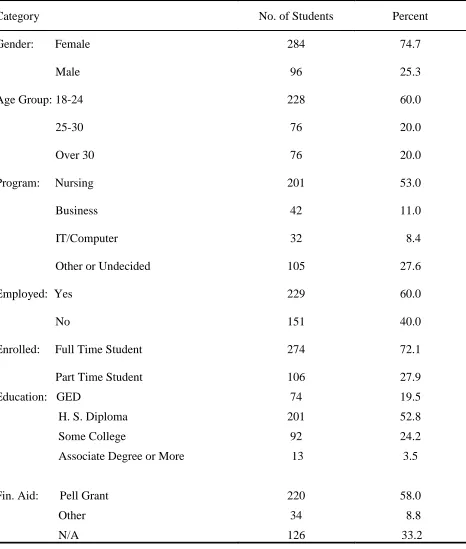
Table 4.1 Respondent Profiles and Sample Representation . ...115
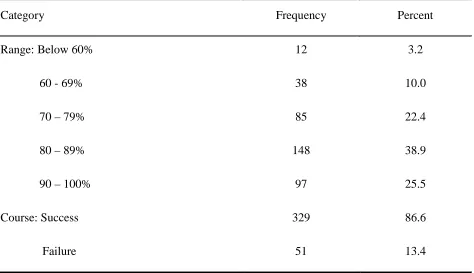
Table 4.2 Respondents’ Mid-term Scores and Course Success Ratio. ...116
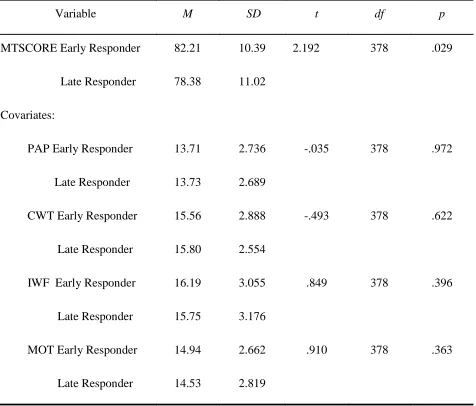
Table 4.3 Group Comparison on Mid-term Score ...118
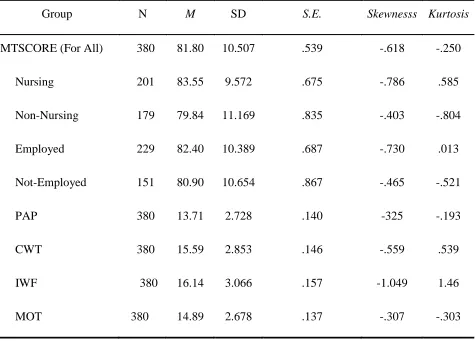
Table 4.4 Descriptive Statistics MTSCORE for Different Groups...123
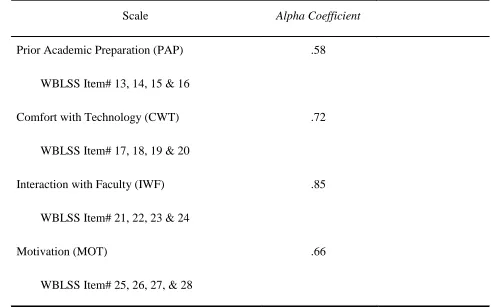
Table 4.5 Cronbach’s Alpha Coefficient for the WBLSS Scale ...125
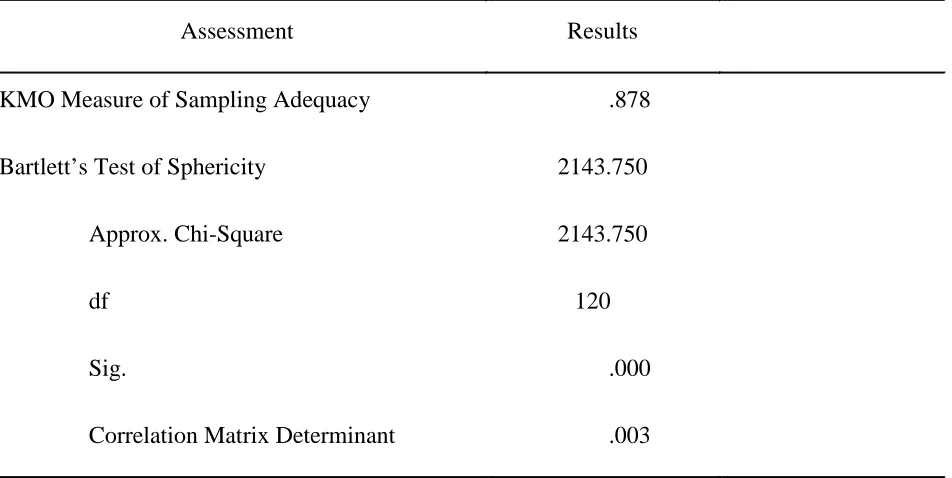
Table 4.6 KMO and Bartlett’s Test ...127
Table 4.7 Factor Loadings for the Rotated Factors ...128
Table 4.8 Intercorrelations for the Four Predictor Variables in the WBLSS Scale ...132
Table 4.9 Multiple Regression Analysis Summary for Predicting MTSCORE ...134
Table 4.10 Logistic Regression Predicting Odds of Mid-term Pass-Fail criterion ...135
Table 4.11 Group Comparison on Mid-term Score-PN & NPN ...138
Table 4.12 Group Comparison on Mid-term Score-Employment ...139
viii List of Figures
Figure 1.1 The Student Flow Diagram at Two-year Colleges ...5
Figure 2.1 Conceptual Framework: ...62
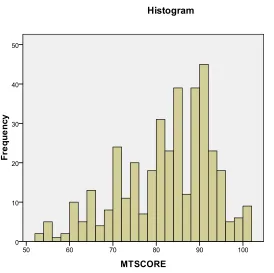
Figure 4.1 Normality Test Histogram ...121
Figure 4.2 Q-Q Plot...122
ix ABSTRACT
This study was designed to identify and examine certain individual factors that contribute to Louisiana Technical College (LTC) student success in Web-based developmental education (DE) courses among the academically underprepared students. The independent variables (IV) selected for this study included students’ prior academic preparation (PAP), comfort with technology (CWT), interaction with faculty (IWF), and motivation (MOT). The dependent variable (DV) was students’ course success measured by their mid-term scores (MTSCORE).
Research methodologies included correlational statistics using multiple and logistic regression, and t-test for group comparisons. Data were gathered through an online survey using SurveyMonkey.com from the DE students at LTC that use PLATO Web Learning Network using a survey instrument (WBLSS) designed by the researcher for this study.
The study found two predictor variables, IWF and PAP, to be statistically significant and two variables, MOT and CWT, statistically not significant. Based on the IVs’ combined
identified relationship with the DV, the researcher designed a predictive model of LTC students’ course success in Web-based DE courses. The model employed in this study explained 17% of the variance in the MTSCORE. For many academically underprepared students at LTC, college and career success first depend on their success in the DE courses. Therefore, identifying individual characteristics related to course success is the key to building academic success models for underprepared students at two-year colleges like the LTC.
Key Words
1
CHAPTER ONE: INTRODUCTION Introduction
Open-access to postsecondary education has been the guiding principle and a major policy among American community and technical colleges. Open-access policies have enabled the two-year colleges to be the point of entry to postsecondary education for many disadvantaged students who wouldn’t otherwise participate in any higher education experience (Bueschel, 2003). Many of these students are first-generation college goers, often from the low-income, ethnic minority, or recent immigrant groups, yearning to fulfill their American dream (Cohen & Brawer, 2003). Conversely, open-access policies have also brought many underprepared, at-risk students into the two-year colleges who face a variety of social and academic barriers to succeed in the postsecondary educational settings (Cohen & Brawer, 2003; Grubb, 2001).
To address the issue of underprepared students’ academic deficiencies and to prepare them for success in regular college-level courses, community colleges began offering remedial education since their inceptions (Boylan & Saxon, 1999). The traditional remedial courses were designed specifically to compensate for deficiencies in prior learning. Once educational experts began to understand the factors behind successful college performance, which included
individual factors like self-confidence, ability, and study behaviors that affect grades and retention, personal and academic development skills were included in the remedial classes (Boylan, 1999). Consequently, according to Boylan, the term “developmental” replaced the term “remedial” among educational professionals and practitioners. Moreover, Baily, Jeong, and Cho (2008) posit that most practitioners in this field use the term “developmental” rather than
2
Bettinger and Long (2005) posited that remediation has been defined as coursework that is retaken, while classes focusing on new material are called developmental. However, most literature, including various government documents, uses the terms remedial and developmental synonymously. The National Association for Developmental Education (NADE, 2008) favors the term “developmental education” in its various publications; therefore, in this study, the term “developmental education” has mainly been used. Although in certain context, the term
“remedial education” has also been used synonymously.
Developmental education, despite its relevance as one of the most important educational issues in America (Astin, 1998), is not without controversy. There has been tension between those who would provide college access and developmental education to the students needing assistance and those who argue that it would lower academic standards of certain institutions (Casazza, 1999). Regardless of the issues of proper place for developmental education within higher education and the methodology of instructional delivery, educating underprepared students for academic success is a significant issue facing today’s postsecondary institutions. Training and preparing underprepared students to achieve college-level capabilities is essential for both individual and institutional success. In light of the twenty-first century knowledge-driven global economy, Kuh, Kinzie, Schuh, and Whitt (2005) asserted that virtually all
forecasters agree that some form of postsecondary education is essential to become economically self-sufficient in today’s competitive workforce.
This study was designed to examine the issue of student success in Web-based developmental education courses in a two-year technical college from the perspective of
3
The research questions guiding this study are presented. Explanations of the variables used in this quantitative study and a brief methodology and definitions of certain relevant terms are discussed. The chapter concludes with a brief discussion on the limitations of the study and a summary of the salient points.
Background
Astin (1998) once described postsecondary remediation as the most important
educational problem facing America. A decade later, the level and the dimension of the issue of postsecondary remediation is still startling (Bahr, 2007). The educational quality of the American secondary schools has not changed much twenty-five years after the publication of the “A Nation at Risk” report by the National Commission on Excellence in Education (US Dept. of Education, 1983), prompting a new national initiative, “The High School Redesign Project” (NASBE, 2008). Now, more students are graduating from high schools that are academically unprepared to handle college-level coursework at the postsecondary institutions. Nationally, 42 percent of all freshmen at public two-year colleges enrolled in at least one developmental course in reading, writing, or mathematics in 2000 (NCES, 2004).
The level of remediation in Louisiana is even more staggering with 66% of the students at public two-year colleges in 2001 needing some form of remediation (Education Commission of the States, 2002). With such alarming statistics and an annual cost of over $1 billion
(Bettinger & Long, 2005) for supporting DE programs, the problem of remedial education has been at the forefront of the issues facing postsecondary education in America today.
Kuh, Kinzie, Schuh, and Whitt (2005) have emphasized that in today’s highly
4
academically underprepared students first have to gain the skills necessary to meet the academic rigors associated with such courses. Successfully negotiating the developmental courses is the first step in such endeavors. The failure to pass developmental math courses before progressing to college-level study presents one of the greatest single stumbling blocks to educational persistence and success (Noel-Levitz, 2006) in American higher education.
The Louisiana Technical College (LTC), with its 38 diverse campuses and over 20,000 students across the state, is engaged in a unique postsecondary educational mission of workforce development for the entire state and the communities that each campus serves (LCTCS, 2007). The LTC is comprised of eight autonomous administrative regions. All the regions, except Region 7, use Web-based developmental education curriculum. The instructions are delivered through PLATO Web Learning Network (PWLN). Students enrolled at the LTC join various programs to earn Associate of Applied Science (AAS) degrees or technical diplomas (TD) and to gain technical skills necessary to join the skilled workforce upon completion.
The problem that the LTC encounters is that one in three students enrolled at LTC needs some sort of remediation (LTC Student Records, 2007). Such a large body of underprepared student population creates serious logistical, financial, and academic challenges for any
institution, particularly the LTC. Virtually, no single higher education policy issue has raised as many questions and concerns as the problem of academic deficiency among entering college freshmen (Cohen & Brawer, 2003). It has prompted some states, including Louisiana, to have regulations governing developmental education instruction (Master Plan, 2001).
5
COMPASS test scores. It places students in the appropriate college-level or remedial courses (ACT, 2007). COMPASS is a college readiness test developed by the ACT (2007), a part of the American College Testing (ACT) organization.
Most of the states have relegated postsecondary remedial education to the public, two-year colleges (Ignash, 1997). Lawmakers, accreditors, and other stakeholders are complaining that it is not enough for the community colleges to get students in; they must also successfully prepare and graduate more students with a degree or facilitate transfer to a four-year institution (Ashburn, 2007). Similarly, the Louisiana Board of Regents (BOR) and other stakeholders of the LTC have raised questions concerning increased drop-out and low retention rates in some high demand programs at the LTC (BOR, 2007).
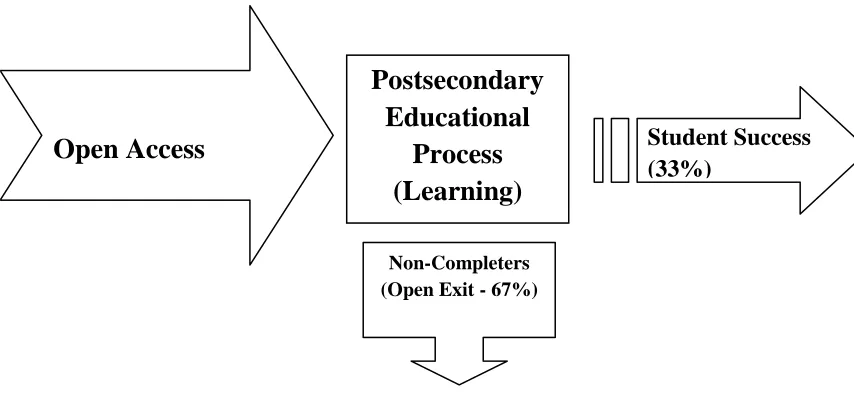
Figure 1.1: The Student Flow Diagram at Two-year Colleges. Data from NCHEMS, 2007
Open Access
Student Success(33%)
Postsecondary
Educational
Process
(Learning)
Non-Completers (Open Exit - 67%)
6
equivalency, irrespective of their academic abilities to handle college-level courses, the goal of “success for all” is difficult to achieve even though the goal of open-access is met. The two-year college student flow diagram illustrates the issue (Figure 1.1).
The student in-take capacity depicted by the wider pipe on the left hand side of the illustration (Figure 1.1) is much more than the number of students successfully leaving colleges after completion or graduation (33%) as depicted by a narrower pipe on the right hand side of figure 1.1. Another large number of students leave or exit without any credential, a diploma or a certificate (67%), depicted by the pipe pointing downward in the figure. Such exits and
“withdrawal of students from a college represents a loss of investment and opportunity to the student, to the institution, and to the state, as there are tangible economic and social costs related to attrition” (Master Plan, 2001, p. 12). According to the Master Plan, the overall graduation rate in public higher education institutions in Louisiana in 1999-2000 was 29%. To remedy such inadequate graduation rates the Master Plan called for its third objective of increasing graduation rates in Louisiana’s public higher education institutions to 34% in 2005-2006. A report by the National Center for Higher Education Management Systems (NCHEMS, 2007) puts Louisiana’s two-year college graduation rates at 33.7%. Consequently, this puts nearly 67% of the freshmen in two-year colleges as potential non-completers.
To address the issues of open access and help more of their students succeed, community and technical colleges across the United States are embracing new teaching methods and
7
Following the national model, the LTC has also looked towards the versatile World Wide Web, also called the Web, for effective delivery of its developmental education courses to its ever expanding body of underprepared student population. Accordingly, the LTC implemented a mandatory Web-based developmental education program throughout its 38 campuses in 2004. This mode of self-paced, anytime, anywhere program delivery through the Web is believed to bridge the gap between student access and success. It also promises to serve more underprepared students in the developmental education program with limited classroom resources, thus bringing economic benefits to the college as well. Nearly four years after the start of the Web-based DE curriculum in Fall 2007, Region 7, one of the 8 regions with 5 campuses, decided not to continue its Web-based DE program and opted for traditional classroom-based instructions instead.
The developmental education labs in LTC campuses use the PLATO Web Learning Network (PWLN) programs in developmental math, English, and writing courses for teaching academically challenged students. It also delivers a general science course for the pre-allied health students who are deficient in the required science scores necessary for admissions in the allied health science programs. Additionally, such Web-based instruction is complemented with classroom tutoring for students as needed. LTC’s developmental education programs include a demographically diverse student population; the majority of these students are non-traditional, first-generation college students. In this study, non-traditional students may fall into any of these categories: those who are age 25 or older, those who have family responsibilities like dependent children or adults, those who are married, or those who are employed.
Even though research shows how socio-cultural influences create specific developmental needs and interests, and how social factors such as race, class, and gender shape learning
8
success factors in career and technical education in the two-year college settings. This is specifically true in the context of Web-based learning pedagogy involving developmental education programs in spite of the huge proliferation of online instructions in the two-year community and technical colleges (NCES, 2003).
The identification and examination of the success factors involving career and technical college Web-based developmental courses are of extreme importance to all involved
stakeholders. The primary stakeholders are the students and the teachers and the secondary stakeholders are the general public and the state in general. It is especially important when the state is facing overwhelming economic and workforce challenges. Additionally, such a study is even more critical in post-Katrina Louisiana as the state experiences shortages in the skilled workforce in every field. It would also aid in tackling any physical constraints in preparing dislocated students in need of developmental courses in the hurricane ravaged areas. This study was set to identify the success factors in Web-based developmental education courses among the underprepared, at-risk students at Louisiana Technical College. It also put forward a predictive model of course success based on students’ individual characteristics.
Statement of the Problem
The problem of educating a growing number of academically underprepared students at the LTC has been of serious concern to all its stakeholders. The issue has taken on a new dimension upon implementation of selective admissions criteria (Master Plan, 2001) in
9
In an effort to accommodate an ever increasing number of academically deficient students and to streamline the various modes of delivering developmental education courses, contain costs, and standardize the curriculum, Louisiana Technical College (LTC) implemented a Web-based developmental education program in January, 2004, as the only instructional modality for the developmental courses. This approach provided no other options for the
academically underprepared, at-risk students at LTC. Despite claims of success (PLATO, 2005) and effectiveness, the success rate is low as evidenced by the depreciative completion and retention rates in the developmental education program (LTC Student Record, 2007) and by the increase in course repeat rates among the students. The lack of any noticeable success in the process of educating the DE students to provide the skills necessary to handle college-level coursework has even led the campuses at Region 7, one of the eight regions of the LTC, to abandon such Web-based DE program, and revert to their traditional classroom-based
instructional mode (A Region 7 DE instructor, personal communication, June 10, 2008). On the other hand, the rest of the 33 campuses in seven regions still continue to pursue Web-based DE curriculum using PLATO. Such dichotomous views regarding success in the LTC Web-based developmental education program calls for much needed studies in this important topic of student success in LTC’s DE programs.
10
characteristics. Individual characteristics, such as comfort with technology, motivation, prior academic preparation (Hoyt, 1999), goals and commitments, interactions with faculty (Tinto, 1993) are deemed to be significant factors in student success in the traditional learning environment. These individual characteristics may also contribute to the success of the
academically underprepared students in the Web-based learning environment at LTC. Therefore, the purpose of this study was to identify and understand the influence of certain individual factors contributing to the prediction of student success in Web-based developmental education courses at Louisiana Technical College.
Purpose of the Study
The purpose of this study was to identify and examine the individual factors that contribute to LTC student success in Web-based developmental education courses. Boylan, Bonham, and Bliss (1997) suggested that grades in developmental courses, among other variables, should be considered when evaluating developmental program outcomes for improvements.
As guided by the review of the literature, the predictor variables to be studied are student’s prior academic preparations (PAP), comfort with technology (CWT), interaction with faculty (IWF), and motivation (MOT). The strategy utilized in this study was the Pearson’s correlation coefficient statistic to determine the magnitude of the associations between the independent and the dependent variables and to detect the directions of any such relationships that were observed. Additionally, to investigate the differences in course performance
11
Another purpose of this study was to validate the researcher-developed instrument, Web-based Learning Student Survey (WBLSS). This instrument was designed to aid in predicting developmental education course success at a two-year technical college based on selected individual student factors.
Research Questions
Based on the review of the literature which mentions individual factors that influence and contribute to student success in general, a primary and two secondary research questions were framed to seek answers regarding the influences in predicting student success in Web-based developmental education courses in career and technical education settings. The primary question guiding this research was: Is there any relationship between the individual factors of students’ prior academic preparation, comfort with technology, interaction with faculty, motivation, and students’ course performance in the Web-based developmental education courses? The two secondary research questions were:
• Are there any differences in the performance levels among the students in the
Web-based developmental education courses Web-based on their intended program of study?
• Are there any differences in the performance levels in the Web-based developmental
education courses among the students with employment and no employment? Significance of the Study
12
developmental students to succeed in college-level work by creating the necessary environment has profound implications in expanding college access and success.
Even though policymakers and researchers have increasingly turned their attention to student success, most of the research and attention focused on educational outcomes of baccalaureate students and not on students at community colleges (Bailey, Calcagno, Jenkins, Kienzl, & Leinbach, 2005). This is even truer for technical colleges. More specifically, literature on student success in developmental education (DE) in the Web-based environment involving technical and career education can rarely be traced in spite of the huge proliferations of online learning phenomenon in almost every aspect of higher education.
As the LTC has embraced the Web-based mode to delivering quality, skills education for the working adults, including the delivery of developmental education courses to its
underprepared students to equip them with skills required for college-level course success, very little is known regarding the issues facing student success in such endeavors. The shifting
workforce in the global economy and consequent changes in the configuration of the labor force, to a large extent, determine where learning takes place, what is offered, and who participates (Merriam & Caffarella, 1999). These dynamics have added to the complexity of the issue of student success. Therefore, this research study was intended to fill the gap that exists at the two-year career and technical education arena and to shed some light on understanding Web-based developmental instructions from the perspective of the students whose success or failure is directly related to the success or failure of the DE program itself.
This study could help in identifying and understanding the major factors playing
13
such methodologies that have currently been deployed at the LTC’s developmental education labs throughout the state. The factors identified as enhancers could help in revamping the existing Web-based learning programs, thereby helping student retention and success rates.
Using this study, a model Web-based learning program could be designed and
implemented in the Louisiana technical or community college campuses. This study would also help address the void in technical college Web-based learning literature, specifically in the developmental education area from the perspectives and experiences among the academically challenged student population.
Overview of Methodology
Quantitative research methodologies using descriptive and inferential statistics were employed in this study. More specifically, statistical relationships using simultaneous multiple regression involving scaled variables and logistic regression involving dichotomous dependent variable were utilized to identify the individual characteristics and examine their relationship in influencing student course success in Web-based developmental courses at the Louisiana Technical College campuses. Moreover, independent samples t tests were utilized to compare variations in course grade between groups. For this study, student success was defined as student’s course success in the developmental education courses. Gilbert (2000) posited that variables and strategies for student success should be considered at the individual course or program levels and contexts.
14
scale these scores were 90% or above, 89% - 80%, and 79% - 70% respectively. A score between 69% and 60% was given a letter grade of “D”. Any score less than 60% was given a letter grade of “F”. Both these scores, D and F, are considered unsuccessful in DE programs throughout the LTC irrespective of their intended program of study. The dependent variable of students’ mid-term test score (MTSCORE) was self-reported by the students in the numerical form.
The study examined the statistical relationship between the dependent variable of student mid-term score (MTSCORE) in Web-based developmental education courses and the
independent variables of student’s prior academic preparations, comfort with technology,
interaction with faculty, and motivation, as measured by the Web-based Learning Student Survey (WBLSS) scale. The WBLSS scale was developed by the researcher of this study in the absence of any satisfactory scale for this particular study context. As a part of the WBLSS scale
development, exploratory factor analysis (EFA) was conducted to explore any possible underlying factor structure for the measured variables.
The design of the study was inferential in nature (Johnson & Christensen, 2000). The review of the literature including certain dissertation abstracts relating to Web-based and e-learning attrition rate and persistence issues provided guidance in developing this investigation. The study utilized the Pearson correlation coefficient statistic to determine the magnitude of associations between the independent predictor variables and the dependent outcome variable and to detect the direction of any relationship observed. The Pearson correlational coefficient statistic is generally used to test theories when researchers collect data to confirm or disconfirm hypotheses (Creswell, 2002).
15
education students. The issue was discussed with some developmental education instructors at LTC, Lafayette Campus who also asserted this researcher’s observation. In particular, it was observed that the students whose intended program of study was practical nursing (PN) or health occupation fared better than the non practical nursing (NPN) students as a group. The reason for such variations could be due to the importance of the utility factor of educational programs among the nontraditional students (Bean & Metzner, 1985).
The practical nursing program is one of the most popular, high demand programs on any technical college campuses in Louisiana. It is very much sought after because of the high level of employment opportunities for its graduates in local healthcare and related industries. Moreover, a large percentage of the technical college students intending to study PN are also nontraditional (LTC Student Records, 2007). Therefore, this study also conducted independent samples t tests between the groups of students intending to study PN and the non-PN students to identify if there were any variations in students’ MTSCORE between these two study groups. Additionally, t-tests were also conducted among the groups of students with full-time or part-time employment and no-employment to examine if any variation in the MTSCORE existed among these groups. For this research, data was collected online through SurveyMonkey.com using the researcher designed survey instrument. The data collection involved students in the Web-based DE program in all the campuses of the LTC except in Region 7 that does not use PLATO.
Data Source
16
Louisiana) that do not use PWLN. For data collection, a Web-based, self-administered, cross-sectional survey was administered using the SurveyMonkey.com online survey tool. The survey was conducted following the mid-term exam in the Fall 2008 semester with all willing
participants in the developmental education programs at LTC with the exception of the Region 7 campuses. Using proper protocol and upon obtaining the necessary permission from the LTC administration, the Web-based Learning Student Survey (WBLSS) questionnaire, a Likert type instrument, was administered through the SurveyMonkey.com online survey tool with a
conspicuous link to the survey site placed in the LTC’s Web site. Several e-mails were sent to the Web-based DE instructors at the LTC campuses giving detailed instructions along with the password for the survey site (Appendix E) for their students to take the survey after finishing their mid-term tests.
The data representing the independent variables were collected using a self-administered questionnaire designed for this survey. The survey data were self-reported by the students. The dependent or outcome variable of mid-term exam scores (MTSCORE) representing the level of performance for each participant was also obtained from students’ self-reported data.
Theoretical Models
17
Various literatures have studied the issue of student success through the retention lens (Kuh et al., 2006), specifically using Tinto’s (1993) student integration model and Bean’s (1985) student attrition model. This study included such lenses. A large percentage of the technical college students being nontraditional, Bean and Metzner’s attrition model, which studied nontraditional and working students, was considered with special interest. Chickering and Gamson’s (1987) seven principles were also utilized in guiding this study.
Literature on student success has asserted that the student’s course performance is related to learning. Web-based learning (WBL) effectiveness, which is a subset of learning in general, affects the student’s grade or course success. Each of the independent variables, the student’s prior academic preparations, comfort with technology, student interactions with faculty and student motivation, are related to student characteristics. In this study, these factors were hypothesized to affect learning, which in turn, influence course success.
Limitations of the Study
18
In spite of numerous variables noted in a host of literatures, this study was limited to only four variables for the sake of simplicity and manageability. This would certainly limit the study’s scope. The reliability and validity of the researcher-developed instrument, WBLSS, could
impose limitations on the findings of this study.
Definitions of Selected Terms
Asynchronous e-learning: The process of learning online through the internet where the communications or learning does not occur at the same time among all the participants. Attrition Rate: Failure to complete a course or unsatisfactory outcome of a course attempted. Blended e-learning: Combining active learning techniques using face-to-face instructions in the physical classroom and distance learning using the internet.
Constructivism:Learning is a constructivist process in which the learner builds an internal illustration of knowledge, a personal interpretation of experiences.
Developmental education (DE): Programs that focus on the whole learner, with the unique blend of academic and personal strength and weakness that each individual brings to the learning process (Ignash, 1997).
E-learning (online learning):Electronic learning. E-learning is a general term that relates to any training that is delivered with the assistance of a computer using the internet.
Individual characteristics: Each person’s inherent, unique characteristics and observable behavior responsible for an individual’s unique learning style and abilities.
19 Online learning: (Same as e-learning)
Pedagogy:The general art and science of teaching.
Persistence: The result of a student’s decision to continue participating in the learning process. Plato Web Learning Network (PWLN): Designed and hosted by PLATO, Inc., delivers Web-based instructional contents via the Internet that can be accessed by the institutions and authorized students, anytime, anywhere, on and off-campus (PLATO Website, 2008). Remedial education: Refers to programs that focus on providing remedies for specific deficiencies in reading, writing, and math (Ignash, 1997).
Retention: Continued student participation in the learning process to the point of completion of a course, program or degree.
SPSS:Statistical Package for the Social Sciences (Statistical software for data analysis) Student characteristic:Individual, personal characteristics of students in their approach to learning and coping with academic requirements.
Student course success:A student earning a passing course grade of C (2.0) or better on a 4.0 scale. The numerical scale: 100-90 A (4.0), 89-80 B (3.0), 79-70 C (2.0). A score less than 70, is considered as failure in developmental education at LTC.
SurveyMonkey: A private company specializing in secured survey data collection process which enables users to create their own Web-based surveys. The site is popular with academic research scholars as well as with many Fortune 500 companies.
Traditional students: Students who matriculate into a higher education program following high school graduation.
20
Web-based learning:Delivery oflessons using the distributed World Wide Web multimedia platform, a subset of the Internet.
Summary
This chapter introduced the topic of this study, the study variables, its context and the settings. The issue of educating an ever increasing number of academically underprepared students at Louisiana’s two-year colleges has taken on a new dimension upon implementation of the BOR mandated selective admissions criteria at the states’ four-year, public, higher education institutions. The issue of student success in developmental education courses is more critical now when the state’s two-year colleges are experiencing serious budget constraints and accountability issues. Student success in developmental education (DE) courses has also profound implications in expanding college access and success, the two major goals of the two-year postsecondary educational institutions in America. Therefore, it very important to examine, identify, and understand the factors contributing to student success in Web-based developmental education courses that the students experience at the Louisiana Technical College (LTC).
The research questions guiding this study were mentioned. The data sources and the data collection techniques were briefly discussed along with the survey instrument for data collection. The research methodologies and statistical models used in the study were mentioned. The
21
CHAPTER TWO: REVIEW OF LITERATURE Introduction
The main objective of this study was to develop a predictive model of student success for the academically underprepared students in the developmental education program at the
Louisiana Technical College (LTC) using individual characteristics as the independent, predictor variables. The modality of instructions in the developmental education courses at the LTC is Web-based. This chapter reviews the literature related to learning theories, learner
characteristics, developmental education, Web-based learning, and student success as they relate to the dependent and independent variables of this study.
The overarching theoretical perspectives that inform this study originate from three different areas in the literature. These three areas are developmental education, Web-based learning, and student success. The specific area of interest, student success in the Web-based developmental education courses, has two principal contributing forces. They are the student characteristics and the institutional characteristics. Therefore, the literature on related learning theories and on student and institutional characteristics contributing to student success will be reviewed as well.
Educational researchers have extensively studied the effect of student and institutional characteristics on educational outcomes, such as student success (Bailey et al., 2005) among four-year college students. But the literature is very sparse in the two-year community and technical college arena. In this study, the major focus will be the influence of student
22
Learning Theories
Some form of postsecondary education has become a necessity for a majority of high school graduates (McCabe, 2000) to prepare them to live an economically self-sufficient life in today’s increasingly complex and challenging global economy. As a result, the college-going stakes are higher today than at any point in history (Kuh, Kinzie, Schuh, & Whitt, 2005). Simply, access to two or four-year postsecondary institutions of higher education does not necessarily lead to success in postsecondary education. Neither does it guarantee an economically self-sufficient life after college. Nevertheless, obtaining a college education holds the key to achieving the American dream and social mobility (Cohen & Brawer, 2003).
In spite of the significant progress in expanding access to higher education for the underrepresented or underprepared students, many of these students experience differential retention rates and inequities in academic achievement (Bauman, Bustillos, Bensimon, Brown, & Bartee, 2005). To address this issue of “open access and success for all,” higher educational institutions, specifically the two-year colleges, have developed programs like developmental education to support underprepared students in their pursuit of course success and academic achievements.
23
In the absence of any single, comprehensive, theoretical perspective to account for all the factors that influence student success in college (Kuh, Kinzie, Buckley, Bridges, & Hayek, 2006), multiple lenses have been invoked by scholars and researchers of higher education to look into the subject of student success in postsecondary education. The issue of student success in developmental education is even more complex. Casazza and Silverman (1996) put forward four major theoretical perspectives that could serve as an overarching theoretical framework for student success in developmental education. These four perspectives are the behavioral, social cognitive, motivational, and adult learning approaches.
In addition, aspects of cognition and instruction relating to individual differences in learning as well as motivational variables are also considered as important factors relating to student success. For more insight into the topic of student success, we look into the learning theories to shed some light on the topic. Each one of the learning theories is a huge topic in itself. This section provides a brief description of the learning theories relevant to the study.
Behavioral Learning Theories
The behavioral theories of learning were the first among the theories to illuminate on the process of human learning. The major traits of the behavioral theories is not that they deal with behavior, since all theories do that, but rather that “they explain learning in terms of
environmental events” (Schunk, 2004, p. 29). Schunk mentions B. F. Skinner’s operand conditioning, Thorndike’s connectionism, and Pavlov’s classical conditioning as some of the best known behavioral theories to be most cited in the literature. The behavioral theorists
24
The behavioral theorists contend that mental or cognitive processes are not necessary to explain the acquisition, maintenance, and generalization of behavior. These theories, in general, view learning as a process of forming associations between stimuli and responses (Schunk, 2004). The programmed instruction of teaching materials was developed in accordance with behavioral principles of learning. Skinner was a pioneer in developing a teaching machine and programmed instruction. Schunk also stated that the reinforcement perspective of the behavioral theory involves self-regulation, which has three constituents: self-monitoring, self-instruction, and self-reinforcement.
Another famous behavioral theorist was Thorndike. Thorndike’s basic ideas about learning include the laws of exercise and effect. The law of effect which emphasizes
consequences of behavior is central to Thorndike’s theory. Thorndike’s law of effect states that responses to a situation that are followed by satisfaction are strengthened and responses that are followed by discomfort are weakened. One of Thorndike’s principles of teaching, which is very relevant to technical education, deals with cautioning against teaching content that is removed from its application (Schunk, 2004). According to Schunk, the behavioral theorists’ generality of operant conditioning principles has been challenged by the cognitive theorists. The cognitive theorists contend that the explanations of the process of human learning are incomplete without considering thinking or the cognitive side. Bargh & Ferguson (2000) posit that such phenomenon as language, memory, reasoning, and problem solving cannot be addressed adequately without considering thinking or cognitive faculty associations.
Bandura’s Social Cognitive Learning Theory
25
others performing the observed tasks. In putting forward a comprehensive theory of
observational learning, Bandura (1986) posited that people could learn new actions merely by observing others perform such actions. Schunk mentions that according to Bandura, human functioning and learning is explained in terms of reciprocal interactions among three entities: behaviors, environmental variables, and personal factors such as cognitions. Bandura called it “the triadic reciprocity model of causality,” where these three events operate interactively in the process. The following example illustrates Bandura’s triadic reciprocity model.
An example of triadic interactions among behavior, personal factors, and environmental variables can be found in involving students in the developmental education programs. Factors like self-efficacy and motivation are considered to be personal factors. Research shows that positive behaviors such as persistence and time on tasks influence these personal factors. When a student puts forth the required time and effort to persist, he or she gains higher self-efficacy. This leads to more motivation for academic achievement. On the other hand, self-efficacy and
motivation, in turn, re-instill and influence positive behaviors such as higher standards and expectations on the part of the student. Personal factors like self-efficacy and motivation are also influenced by environmental variables like mentoring. When an instructor interacts and gives positive feedback to a student, it helps to improve the student’s worth, motivation, and self-efficacy. These characteristics of self-worth, motivation, and self-efficacy, influence students’ behavior and encourage them in putting forth the efforts and time on tasks to achieve their goals.
26
than students not needing developmental education. The students’ scores in assessment tests like the ACT or COMPASS are used to designate their levels of competency in related courses. On the other hand, students also seem to base their skills and proficiency levels on their scores in assessment tests and GPAs. These levels of proficiency, in turn, affect and contribute to their self-efficacy and self-worth, leading students to set their own goals and levels of performance.
Many researchers have tested Bandura’s social cognitive theory in a variety of contexts involving cognitive, social, instructional, and self-regulatory skills. According to Schunk, the key processes in the area of self-regulation are self-observation, self-judgment, and self-reaction. Students’ motivation to achieve their academic goals is based on the efficacy and self-regulation concepts put forward by Bandura. Since motivation is a key factor in accomplishing academic goals and persisting in educational endeavors leading to student success, student motivation is an important construct in this study.
Gagne’s Conditions of Learning
27
strategies, motor skills, and attitudes. According to Schunk (2004), Gagne’s theory incorporates the five important principles of learning and instructional delivery. These elements are learning occurs in phases; skills to be learned are acquired sequentially in small steps; practice, feedback, and review are integral components of learning systems; social modeling is employed during instructional phases; motivation is a function of learner’s attitude.
These five elements are very important in designing, implementing, and delivering instructions in Web-based developmental education courses catering to the academically underprepared students at two-year technical colleges. The students in the PLATO Web-based learning lab used by the LTC in the developmental education program are given instruction in phases, in small steps, according to a student’s individual pace. A student is not allowed to progress to the next level without mastering the previous levels. Skills development through practice and frequent feedback on tasks by the PLATO program and by the instructor are integral parts of the program. The students’ personal characteristics of performing those course-related tasks, coping with technological difficulties and motivation and attitude toward learning play important roles in this study.
Carroll’s Model
28
Web-based developmental education courses may also depend on the learner’s individual characteristics like aptitude, ability, and time devoted to learning course materials as mentioned in Carroll’s model of success.
Constructivism
Constructivism is a learning model that has its roots in psychology. Different views can be found in the literature describing the term ‘constructivism.’ In general, constructivists share the beliefs that learning is an active process of constructing rather than acquiring knowledge. They also believe that instruction is a process of supporting that knowledge-construction rather than communicating knowledge (Duffy & Cunningham, 1996). Constructivism is widely
recognized by practitioners of higher education as a teaching and learning process where learners construct their own meaning. According to Duffy and Cunningham, constructivism in education is not new. Various sources suggest that the theory of constructivism in education has been greatly influenced by the works of Bartlett, Piaget, Dewey, Vygotsky, and Bruner.
John Dewey argued against educational frameworks based on memorization of facts and figures and their simple recitation. His new ideas and methods to meet the changing needs of the newly emerging industrial society of the early twentieth century brought the theory of
constructivism in education into the limelight (Lefoe, 1998). John Dewey advised that “education is life itself, not just a way to prepare for life.” The development of constructivist theories has been strongly influenced by the principles of cognitive psychology. Constructivism attracted more attention by separating itself from the outcomes-based behaviorist theory and it provided a greater degree of autonomy and self-initiative to the learner (Lefoe, 1998).
29
in the world independently (Duffy & Jonassen, 1992). The symbolic meaning of any idea or object is a person’s interpretation. The same object or symbol may be interpreted by different groups very differently based on their educational level, knowledge, cultural or national affiliation. Knowledge is related to its interpretation and its associations, just like the adage, “beauty is in the eye of the beholder.” Constructivists believe knowledge and understanding must be constructed by the learners.
Further, the constructivists believe that knowledge is constructed subjectively by people based on their earlier learning experiences. The way people reflect and organize their thoughts indicates that knowledge takes different forms (Lefoe, 1998). Accordingly, if the learner acquires the strategies that meet the objectives of learning, then it can be said that learning has occurred. Lefoe also stressed that a rich learning environment is a major goal in constructivism. Major stress is placed on the unique interests, styles, motivations, and capabilities of the individual learners so that learning environments can be customized to suit the individual learners. The customizations of learning suiting individual needs and style have found fertile ground in the World Wide Web with its multimedia rich applications and ease of delivery.
Schunk (2004) suggested that constructivism has found increased applications in socially and culturally situated context of cognition and in technology based education. One such
example is the ever expansion in the uses of the Web-based learning environments.
30
problems. Such solutions may involve the use of search engines like “Google” or “yahoo,” or utilizing other Web-based utilities and resources like the wikis, the blogs, online dictionary, or portals like YouTube. Even at the developmental level, underprepared students use many of these Web-based utilities in their remediation courses.
Duffy and Jonassen (1992) identified three common elements in the constructivist learning process. These elements are the learning context, collaboration, and construction. According to the authors, these factors are crucial to the constructivist learning process. It was further posited that learning should occur in the context to which it is relevant. Knowing how to know is the ultimate human accomplishment (Duffy & Jonassen).
Another major theorist and practitioner of constructivist theories in education was
Bruner. Bruner’s (1966) constructivist theory is a general framework for instruction based on the study of cognition. According to Bruner, an individual’s motive and interest for the subject to be learned are the best stimulus to learning rather than any external factors.
Distance Learning Model
The rapid proliferation of the multi-media rich Web-based learning, online, or e-learning phenomenon began in earnest in the later part of the 1990s. Although the concept and practice of distant education or distant learning in itself is not new, learning through the Internet or the Web is relatively a new phenomenon in higher education. Moore and Kearsley (1996) describe distance education as a complex system of institutional, social, technical, and individual
31
colleges and universities including Louisiana Community and Technical College’s own virtual college (LCTCSOnline, 2008).
Many faculty members in higher education institutions including two-year technical and community colleges have incorporated the Web into their classroom teaching in various degrees through learning management systems like Blackboard or WebCT. The pedagogical contents and quality of such courses may vary or in some cases may be insufficient. Bonk and Dennen (2003) posited that to develop critical thinking and effective learning skills among students, instructors need to tap into the new pedagogical frameworks that incorporate the rich constructivist learning environment by utilizing the power of the internet. Simply rushing to put the course contents onto Web sites without regards to any pedagogical changes is not productive or conducive to any form of learning.
Learner Characteristics
Many learning theories and models consider learner characteristics to be very important elements as they affect instruction and student learning (Schunk, 2004). Some of the learner characteristics documented in many learning models include learner aptitude, cognitive styles, personality variables, study skills (Pearson & Royse, 2001) and demographic factors such as age, gender, ethnic background, as well as employment status for nontraditional students.
32
individual differences in learning styles and other personal characteristics. Aptitude-treatment interactions involve tasks that yield differential results depending on student characteristics.
Cognitive style or individual learning styles have been explored by many researchers. Kolb’s theory of experiential learning suggests that students tend to have preferences for one or two of four learning stages: concrete experience, reflective observation, abstract
conceptualization, or active experimentation (Pearson & Royse, 2001). A number of learner characteristics and learning styles have been identified in the literature as part of the cognitive style constructs that affect learning and academic performance. According to Schunk (2004), field dependence-field independence is another major style in the cognitive area. The following section describes the concept and implication of this style in learning and student performance.
Field Dependence-Independence
The importance of learners’ cognitive styles and the role of field
dependence-independence in learning have been investigated by many researchers. Field dependence refers to a learner dependency on external help and field independence refers to learner’s autonomy in the learning process or task. Herman Witkin’s research on human perceptions in the 1940s first explored the idea of field independence and field dependence based on human perception of the upright (Witkin, Moore, Goodenough, & Cox, 1977). Witkin, et al. identified field dependence-independence to be widely applicable to educational research in describing learner characteristics and their cognitive styles. A number of learner characteristics and attitudes have been established in the literature as part of the cognitive style construct affecting learning and academic
performance. In educational research, cognitive styles involving field dependence-field
33
Self-efficacy and Motivation
Self-efficacy and motivation are two important and related factors that affect academic performance and goal achievement among students. Self-efficacy is especially germane to school learning and achievements (Schunk, 2004). Extending his theory of social cognitive learning to include self-efficacy, Bandura (1977) suggested that people seek control over important events of their lives through self-regulation of their thoughts and action. Bandura refers to self-efficacy as one’s beliefs in his/her capabilities to organize the courses of action and execute the necessary actions that help in achieving one’s desired goals.
The basic processes involving self-efficacy and exercise of control that is associated with it, as posited by Bandura, are setting goals, judging anticipated outcomes for actions taken, evaluating progress in achieving goals, and self-regulating thoughts and actions. These basic processes are also the major characteristics of student motivation. Schunk (2004) asserts that students’ perceptions of their progress substantiate their self-efficacy for learning, which in turn sustains student motivation and learning. This validates Bandura’s triadic interaction model discussed previously.
Demographic Characteristics
34
rich resource for learning; an adult’s readiness to learn is in response to his/her social role; adults view the importance of the immediacy of application; adults are motivated to learn by internal factors rather than external ones (Knowles, 1970).
Any instructional design involving delivery of instruction to an adult student population should reflect these assumptions of andragogy. According to a study by Allen & Seaman (2007, p. 2), online or Web-based students “tend to be older and often hold additional employment and family responsibilities, as compared to the more traditional student.” This is also the case at Louisiana Technical College where a large proportion of students are of nontraditional age (25 years or older) and work part-time or full-time.
Generally, educational institutions characterize underprepared students as lacking
academic skills necessary to carry out any college-level courses successfully. These students are not in control of their academic success. They lack the aptitude and the skills necessary to be successfully engaged in college-level courses. Underprepared students lack self-efficacy and confidence as they are unsure about their abilities to succeed academically. They seem to accept their underachievement as a reality. Darby (2004) asserts that many of these underprepared students adopt a passive rather than active learning style. Darby also states that students who exhibit an active learning style are also self-motivated. They are responsible for their own success or failure.
Developmental Education
35
college students lacking those skills necessary to perform college-level work at the level required by the postsecondary institutions (U.S. Department of Education, 1996). Weissman, Silk, & Bulakowski (1997) also affirm that developmental education programs are designed so that students can gain the skills necessary to complete college-level courses successfully. It includes, among other things, placement, courses, and academic support for remediation and retention of skill-deficient students.
The National Association of Developmental Education (NADE) defines developmental education as “A field of practice and research within higher education with a theoretical foundation in developmental psychology and learning theory. It promotes the cognitive and affective growth of all postsecondary learners, at all levels of the learning continuum.
Developmental education is sensitive and responsive to individual differences and special needs among learners” (NADE, 2008). Developmental education programs or the presence of
underprepared students who do not have the skills necessary to successfully conduct college-level courses is not a new phenomenon (Boylan, 1999). Programs designed to assist
underprepared college students have been offered at the post secondary level for over a century. Brier (1984) posited that in 1849, the University of Wisconsin established a college preparatory department for helping students who lacked the basic skills necessary to be successful in the university curriculum. In spite of its long history, the issues regarding the effectiveness and delivery methodologies of DE are a source of contention and public debate.
36
prior learning in certain areas like math or English. Boylan further stated that as educational researchers and professionals began to understand the factors behind successful college
performance, they recognized that students fail to do well in college for a variety of reasons. The lack of “academic preparedness” is only one of several such factors.
Other factors, such as personal autonomy, self-confidence, ability, study behaviors, or social competence have a great influence on students’ grades, retention, and successful course completion (Astin, 1977; Boylan, 1999). Recognition of these factors, Boylan stresses, led to integrating personal development and academic development into remedial coursework which subsequently became known as developmental education. Boylan also points out that there are some institutions where remediation in the traditional sense is still practiced. Such institutions offer only remedial courses. In the case of Louisiana Technical College (LTC), students are encouraged to take personal and academic developmental courses like freshmen orientation (ORNT 1000) or computer literacy (CPTR 1000). Such curricular offerings make its remediation courses truly developmental in nature.
The developmental education (DE) program at LTC is a statewide response to the needs of the academically deficient students who lack the preparations or skills needed to enroll in regular college-level course work. It is one of the largest programs in the state technical college system with nearly one out of every three new students taking some sort of developmental or remedial education courses (LTC Web site). The courses are facilitated through the PLATO Web-based learning network (PWLN) using the asynchronous learning model delivered through the World Wide Web or the Internet, also called the Web.
37
in the placement exams (LTC Web site) which assess students’ readiness for college-level work. Additionally, the pre-allied health students who are deficient in science take science as a
remedial course to be admitted into the nursing or health occupational programs. LTC conducts and uses the COMPASS test for course placement. Additionally, it also accepts and uses ACT scores for placement. The COMPASS is a comprehensive computer adaptive testing system that is used to place students in appropriate courses (ACT, 2007). The ACT is a college entrance exam which assesses high school students’ general educational development and their ability to complete college-level work.