Mini Review
Immunostimulants: Types and Functions
Sepideh Shahbazi, Azam Bolhassani
*Department of Hepatitis and AIDS, Pasteur Institute of Iran, Tehran, Iran
Received Jun 10, 2017; Accepted Jun 20, 2017
INTRODUCTION
Two main compounds are able to enhance immune responses including adjuvants and immunostimulants. An adjuvant is a substance combined with an antigen for increasing its immune response, but an immunostimulant can induce the immune response without injection with an antigen [1]. There are several types of stimulants with different mechanisms and functions such as bacterial products, complex carbohydrates (e.g., glucans, schizophyllan, scleroglucan, lentinan, statolon, bestatin, acemannan), vaccines, immunoenhancing drugs (e.g., Levamisole, Isoprinosine, Fluoro-quindone, Avridine, Polyribonucleotides), nutritional factors (e.g., vitamins, carotenoids, lipids, trace elements, selenium), animal extracts (e.g., chitosan from shrimp), cytokines (e.g., macrophage activating factor, interferon, interleukin-2, tumor necrosis factor), and plant extracts (e.g., Lectins, mitogens such as phytohemagglutinin, concanavalin A) [2].
Two main approaches were determined to evaluate the efficiency of an immunostimulant such as in vivo protection against pathogens, and in vitro assay of cellular and humoral immune mechanisms. In vitro tests should be performed before in vivo experiments to clarify the basic mechanisms responsible for the protection. In vitro immunostimulant evaluation is usually based on some parameters such as serum lysozyme, complement, total leucocyte count, monocyte/lymphocyte/granulocyte count, antibody titers, phagocytosis, respiratory burst and leucocyte proliferation [2]. Immunomodulation can be either specific or non-specific. Specific immunomodulation is limited to a single antigen such as vaccination, whereas non-specific immunomodulation leads to a further change in immune response both in innate and adaptive immunity causing altered host reactivity to many various antigens [3]. Table 1 shows some immunostimulants and their functions.
Concept of Immunostimulant
Immunostimulants known as immunostimulators are attractive substances that activate the immune system of humans and animals for prevention of diseases and improvement of the body’s natural resistance to various viral and bacterial infections. These biologically active substances are the products derived from natural sources or synthetically made with different chemical properties and mechanisms of action. In general, immunostimulants induce synthesis of specific antibodies and cytokines for treatment of infectious diseases. Two major groups of immunostimulants contain a) specific immunostimulants acting as antigen for stimulation of immune responses (e.g., vaccines), and b) non-specific immunostimulants without antigenic properties enhancing immune responses to other antigens (e.g., adjuvants and non-specific immunostimulators). Moreover, immunostimulants were classified based on their origin and mode of action [4].
Functions of Immunostimulants
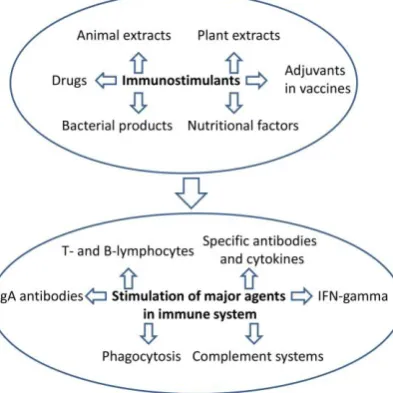
Immunostimulants activate different elements of the immune system in humans and animals. They develop the non-specific immunotherapy and immunoprevention by stimulating the major factors of the immune system including phagocytosis, properdin and complement systems, Immunomodulators are natural or synthetic materials that regulate the immune system and induce innate and adaptive defense mechanisms. These substances are classified into two types, immunostimulants and immunosuppressants. Immunostimulants can enhance body's resistance against various infections through increasing the basal levels of immune response. These agents could increase the oxidative activity of neutrophils, augment engulfment activity of phagocytic cells, and stimulate cytotoxic cells as necessary defense mechanisms. Many disorders could be treated using some immunostimulants such as autoimmune diseases, viral infections, and cancer. The researchers classified the immunostimulants using their origin and mode of action such as bacterial products, complex carbohydrates, vaccines (antigens and adjuvants), cytokines, immunoenhancing drugs, nutritional factors, animal extracts, and plant extracts. In this mini-review, the concepts, types, and functions of immunostimulants will be described as a therapeutic approach against different diseases. J Med Microbiol Infec Dis, 2016, 4 (3-4): 45-51.
Keywords:Immunomodulators, Immunostimulants, Adjuvant, Mechanism.
*Correspondence: Azam Bolhassani
Department of Hepatitis and AIDS, Pasteur Institute of Iran, No. 69, Pasteur Ave, Tehran, Iran, 1316943551.
Email: [email protected]
Tel: +98 (21) 64112240 Fax: +98 (21) 66465132
protective secretory IgA antibodies, α- and γ-interferon release, T- and B-lymphocytes, synthesis of specific antibodies and cytokines, and synthesis of pulmonary surfactant [5]. There are several reasons for using the immunostimulants in the control of various infectious
diseases including: a) antibiotic resistance of the bacteria; b) allergic reactions to antibiotics; c) immunosuppressive effects of antibiotics; and d) Poor effects of the antibiotics in viral infections [5]. Figure 1 shows some types of immunostimulants and their general functions.
Table 1.Examples of immunostimulants and their specific functions
Immunostimulants Types Functions References
Bacillus
Calmette-Guerin Bacterial products
Enhancement of B and T cell-mediated responses leading to phagocytosis, and
resistance to infection 6
Levamisole Drugs Induction of B and T lymphocytes, monocytes, and macrophages 6, 7
Thalidomide Drugs Therapeutic effects in rheumatoid arthritis and angiogenesis 6
Recombinant cytokines Cytokines/
Adjuvants Generation of interferons and interleukins to stimulate effective immune responses 2, 10
Immunocynin Drugs Treatment of urinary bladder cancer 6
Glucans Carbohydrates Stimulation of anti-tumor mechanisms, and enhancement of host resistance to a
variety of microbial pathogens in mammalian 11-15
Trehalose Carbohydrates Production of antibody, stimulation of specific immunity against different bacterial
infections 16, 17
Bestatin Drugs Enhancement of humoral and cellular immune responses, and antitumor activity of
bleomycin and adriamycin 8, 9
Chitosan Animals originated immunostimulants Activating the production of cytokines such as IL-1β, TNF-α, and reactive oxygen intermediates to promote the defense system against microbial infections 30, 31 CpG oligonucleotides
and imiquimod Drugs/ Adjuvants
Maturation and migration of DCs, and enhancement of humoral and cellular immune
responses 24
Prebiotics Plantsoriginated
immunostimulants Enhancement of innate immune responses 18
a) Ocimum sanctum
b) Phyllanthus emblica c) Azadirachta indica
d) Solanum trilobatum
e) Eclipta alba
f) Zingiber officinale
h) Echinacea (purple coneflowers) and Allium sativum (garlic) i) Camellia sinensis
j) Aloe vera
m) Cynodon dactylon
n) Achyranthes aspera
x) Nyctanthes arbortristis
y) Fermented vegetable product
z) Saffron
Natural plants originated immunostimulants
a) Stimulation of antibody response and neutrophil activity
b) Antioxidant, anti-fungal, anti-microbial, and anti-inflammatory activities c) Anti-human immunodeficiency virus, anti-tumor, and antimicrobial activities d) Antibacterial and anticancer activities
e) Enhancement of the phagocytic index, antibody titer and WBC count in mice f) Significant increase in proliferation of neutrophils, macrophages, and lymphocytes h) Developed resistance to cold stress
i) Antioxidant, anti-angiogenesis, and anti-proliferative activities related to the prevention and treatment of various forms of cancer
j) Enhancement of the specific and non-specific immune responses, lysozyme activity, serum bactericidal potency, and the total protein and IgM levels. m) Prevention of white spot syndrome virus (WSSV) infection
n) Specific and non-specific immunity in fish
x) Hepatoprotective, anti-leishmanial, antiviral and antifungal activities y) Phagocytic activities
z) Its carotenoids increase the proliferative response of T and B lymphocytes to mitogens, the activity of natural killer cells, the number and activity of cytotoxic T-cells, macrophage tumor-killing activity, and the secretion of TNF-α in an animal model.
3, 26-29
Fig. 1. Schematic representation of some types of immunostimulants and their general functions
Types of Immunostimulants
For simplification, we divided the types of immunostimulants as seven groups such as bacterial products, complex carbohydrates, vaccines (antigens and adjuvants), cytokines, immunoenhancing drugs, plant extracts, and animal extracts as mentioned below:
Immunostimulatory drugs. A few immunostimulatory drugs (Endogenous immunostimulants or Synthetic immunostimulants) have been developed to induce humoral or cellular immune responses or both of them against bacterial or viral infections, immunodeficiency diseases, and cancer. They were classified as follows:
a) Levamisole (Ergamisol): Levamisole is a synthetic drug inducing B and T lymphocytes, monocytes, and macrophages. It was used in adjuvant therapy with 5-fluorouracil after surgical resection in patients with Duke’s stage C colon cancer. Its disadvantages are allergy, nausea, flu, and muscle pain. Levamisole has been successfully used in combination with polymers for treatment of dermatologic disorders. For example, it was combined with cimetidine for treating recalcitrant warts, and with prednisolone for treating aphthous ulcers of the mouth [6, 7].
b) Thalidomide: Thalidomide or Immunoprin (C13H10N2O4) is an immunomodulatory drug. Thalidomide
could decrease circulating TNF-α in patients with erythema nodosum leprosum. In contrast, it increased TNF-α in HIV-seropositive patients. Furthermore, its therapeutic effects were determined in severe rheumatoid arthritis and angiogenesis [6].
c) Isoprinosine (Inosiplex/ Imunovir): Isoprinosine (C52H78N10O17) is a combination of inosine,
acetamidobenzoic acid, and dimethylaminoisopropanol. Isoprinosine could enhance the levels of cytokines including IL-1, IL-2, and IFN-γ. It increased the proliferation of lymphocytes against mitogenic or antigenic stimuli. Moreover, Isoprinosine augmented active T-cells and induced T-cell surface markers on prothymocytes. It was used to treat Herpes simplex infections, Epstein-Barr, and Measles viruses. Its disadvantages are minor CNS depressant, transient nausea, and increased level of uric acid in serum and urine [6].
d) Immunocynin: Immunocynin is a stable form of haemocynin, a copper-containing protein, found in molluses and arthropods. It was used to treat urinary bladder cancer with poor side effects such as rare-mild fever [6].
e) Bestatin: Bestatin, a dipeptide [(2S, 3R)-3-amino-2-hydroxy-4-phenylbutanoyl]-L-leucine, is an immuno-stimulant with low toxicity which binds to the cell surface of lymphocytes and macrophages and enhances both humoral and cellular immune responses. It is a leucine aminopeptidase and aminopeptidase-B inhibitor. Bestatin possesses antitumor activity and also increase the antitumor activity of bleomycin and adriamycin. Bestatin efficiently prevented the metastasis of P388 leukemia when the antibiotic was constantly injected after tumor inoculation [8].The dipeptide was immunorestorator in the elderly and cancer patients and HIV-infected subjects. It stimulated
granulocytopoiesis and thrombocytopoiesis in vitro and could restore them in myelo-hypoplastic man [9].
Bacterial products. The immunostimulatory effects of bacteria and bacterial products are due to the release of cytokines. Live bacillus Calmette-Guerin (BCG) is an attenuated, live culture of the bacillus of Calmette and Guerin strain of Mycobacterium bovis. Its mechanism of action includes: a) induction of a granulomatous reaction at the site of administration, and b) prevention and treatment of carcinoma types. Furthermore, BCG enhances both B and T cell-mediated responses leading to phagocytosis and resistance to infection. Its disadvantages are hypersensitivity, fever, shock, and immune complex disease [6].
Recombinant cytokines. Several interferons and interleukins are suggested to stimulate effective immune responses. Interferons could be obtained from trout leucocytes after stimulation with mitogens. It was able to cause an in vitro resistance against pancreatic necrosis virus in trout cells.In mammalian, low doses of interferon could induce stable positive results without side effects. On the other hand, vaccination of animals with the recombinant IL-2 against different infections increased the protective effects. However, IL-2 was a very toxic compound in high doses causing side effects such as fever and diarrhea. The purified cytokines showed unsatisfactory results in clinical trials, because the immune responses were produced by a mixture of cytokines generated by the immune cells, but not against a single cytokine. Thus, the enhancers of non-specific cytokine synthesis may improve immune responses and solve this problem [2]. Thus, recombinant cytokines are produced recently in different expression systems (e.g., plants) and used in clinical trials such as interferons, TNF-α and IL-2 [10].
Complex carbohydrates. Several types of the complex carbohydrates were described as follows:
a) Glucans: An important class of immunostimulants is the β-(1→3)-linked chain of glucose units. The main chain has β-(1→6)-branched glucose units. The β-glucans were obtained from highly conserved structural components of cell walls in fungi, algae, yeast, and have a broad range of molecular weights from 5 to 200 kDa. The length and frequency of these branches vary depending on different sources. β-glucan was used to stimulate anti-tumor mechanisms (e.g., increased macrophage activity) and to enhance host resistance to a variety of microbial pathogens in mammalian. Glucan might also be helpful to prevent the carcinogenic effects of aflatoxin. β-glucan was considered as a stimulator of cellular immunity. Indeed, mammalian macrophages or monocytes have specific receptors for β -glucans and produce mediators such as cytokines (e.g., IL-1, IL-9, TNF-α) and prostaglandins in the presence of glucans [11, 12]. In Japan, the β-glucans such as Lentinan derived from the Shiitake mushroom and Polysaccharide-K derived from Coriolus versicolor were licensed as anti-cancer drugs [13]. Lentinan could induce protective Th1 immune responses to control the proliferation of malaria parasites red blood cells by stimulating maturation of DCs, increasing the expression of MHCII, CD80/CD86, Toll-like
receptors (TLR2/TLR4) and the level of IL-12, and preventing the adverse effects of Tregs [14, 15].The main roles of glucans were detected in cancer treatment, infection immunity, stress reduction, and restoration of damaged bone marrow. A mixture of polysaccharides isolated from the cell walls of Saccharomyces cerevisiae named as zymosan could potently stimulate macrophages and induce the release of cytokines from neutrophils. Indeed, β-glucan in zymosan was identified as its effective component for non-specific immunomodulation. In addition, β-glucan could reverse myelosuppression generated by chemothera-peutic drugs via targeting the C3 fragment of complement and circulating antibodies. The recent studies have shown that daily therapy with soluble or insoluble β-glucan led to a 70%-95% reduction in tumor size. Indeed, after the binding of antibodies on the surface of cancer cells, C3 fragments of complement could coat the cancer cells. Then, β-glucan-primed cells, such as blood neutrophils, macrophages, and NK cells specifically recognized these complement-antibody complexes and killed the tumor cells. In fact, the cooperation of β-glucan with anti-tumor antibodies is an effective approach in combination therapy [13].
b) Trehalose: Trehalose dimycolate (TDM), Muramyl dipeptide (MDP), and Lipopolysaccharides (LPS) as the bacterial products promote the production of antibody, stimulate activation of lymphocytes, and elicit specific immunity against different bacterial infections. Trehalose dimycolate, a glycolipid present in the cell wall of Mycobacteria is a potent immunostimulant that limits tumor growth and enhances resistance against bacterial, parasitic, and viral infections. It can interact with membranes due to its amphipathic properties. TDM primes murine macrophages to generate nitric oxide (NO) and to develop anti-tumoral activity. As an adjuvant, TDM enhances both cellular and humoral immunity, but elicits a stronger cellular response. TDM could induce potent immune responses against malaria antigens in mice as compared to groups immunized with malarial antigens and Freund’s adjuvant. The reports showed that the protective effect of TDM is reduced in macrophage-depleted mice injected with silica particles indicating the role of macrophages. T lymphocytes were not necessary for TDM to prime peritoneal macrophages. Trehalose diesters could induce IL-12p40 and IFN-γ mRNA [16, 17].
c) Prebiotics: Prebiotics are indigestible fibers that increase beneficial gut commensal bacteria resulting in improvement of the host's health. Prebiotics, such as fructooligosaccharide, mannanoligosaccharide, inulin, or β-glucan, are called immunosaccharides. They directly enhance innate immune responses including phagocytic activation, neutrophil activation, activation of the alternative complement system, and increased lysozyme activity. Immunosaccharides directly activate the innate immune system by interacting with pattern recognition receptors (PRR) expressed on innate immune cells. They can also associate with microbe associated molecular patterns (MAMPs) to activate innate immune cells. Indeed, probiotics activate the innate immune system in two ways:
a) by directly stimulating the innate immune system and b) by enhancing the growth of commensal microbiota [18].
Immunostimulants used in vaccines. Vaccines contain a wide range of immunostimulants [3]. For example, an adjuvant heat-labile enterotoxin from Escherichia coli (LT), administered as an immunostimulant (LT-IS) patch on the skin may further enhance immune responses to influenza vaccine in the elderly [19]. Also, the immune activation mediated by LT-IS improved the potency of generating Alzheimer's disease (AD)-specific vaccination responses as an adjuvant in the clinical trial [20]. Co-administration of a potent adjuvant in IS patches containing heat-labile enterotoxin from E. coli placed on the skin at the site of DNA vaccination significantly increased anti-influenza antibody immune response [21]. Adjuvants enhance and modulate immune responses to antigens. This is important when the purified antigens do not elicit the effective innate or adaptive immune systems. Adjuvants are different in the types and levels of immune responses. Expected advantages of adjuvants contain stronger immune priming, effective immune responses in low-response populations (e.g., the elderly or immuno-compromised patients), the use of smaller amounts of the antigen, and safety profile [22]. New adjuvants have already applied to more efficient influenza vaccines, as well as vaccines targeting hepatitis B (HBV) and human papillomavirus (HPV) [23]. On the other hand, CpG oligonucleotides and imiquimod drugs (an anti-viral agent) could activate dendritic cells, induce in situ maturation and migration of DCs, and augmented both humoral and cellular immune responses [24]. The unmethylated CpG motif in bacterial DNA was identified as a B-cell stimulating adjuvant, and synthetic oligodeoxynucleotides (ODNs) containing the CpG motifs were shown to induce potent therapeutic activities in different infections and tumor animal models. Imiquimod was topically used for patients with anogenital warts as well as basal-cell carcinoma. The studies indicated that CpG ODNs and imiquimod (resiquimod) drugs act as synthetic ligands for TLR9 and TLR7, respectively, and both stimulate efficiently DC maturation [24].
Plant-derived immunostimulants. Natural plant product promote various activities such as anti-stress, growth promotion, appetite stimulation, immunostimulation, aphrodisiac and antimicrobial properties, due to the active substances such as alkaloids, flavanoids pigments, phenolics, terpenoids, steroids, and essential oils. Medicinal plants have been known as immunostimulants, growth promoters, immune enhancers, where they act as antibacterial and antiviral agents to the host immune system. Unfortunately, the mechanisms were not understood [25]. Some medicinal plants were described as following:
a) Ocimum sanctum (Tulsi): Leaves of O. sanctum containing water-soluble phenolic compounds and various other constituents may act as an immunostimulant. Leaves extract of O. sanctum affected both specific and non-specific immune responses. It stimulated both antibody response and neutrophil activity [3, 26].
b) Phyllanthus emblica (Amla): P. emblica has antioxidant, anti-fungal, anti-microbial, and
inflammatory activities. Amla fruit pulp contains a large amount of vitamin C as an immunostimulant [3, 26].
c) Azadirachta indica (Neem):A. indica possesses anti-human immunodeficiency virus, anti-tumor, and antimicrobial activities. Azadirachtin, a triterpenoid derived from A. indica, enhanced respiratory burst activities, the leukocyte count and the primary and secondary antibody responses against SRBC (sheep erythrocytes) in tilapia [3, 26].
d) Solanum trilobatum (Purple Fruited Pea Eggplant): The herbal extract of S. trilobatum possesses a broad spectrum of antibiotic, antibacterial and anticancer activities. A study showed that the water-soluble fraction of S. trilobatum significantly enhanced the production of reactive oxygen and decreased the percentage of mortality following a challenge with Aeromonas hydrophila [3, 26].
e) Eclipta alba (Bhringraj): E. alba possesses several medicinal properties. The methanol extracts of E. alba significantly increased the phagocytic index, antibody titer and WBC count in mice [3, 26].
f) Zingiber officinale (Ginger): The extracts of Z. officinale contain polyphenol compounds which have a high antioxidant activity. Moreover, it showed a significant increase in proliferation of neutrophils, macrophages, and lymphocytes, as well as it enhanced phagocytic, respiratory burst, lysozyme, bactericidal and antiprotease activities [3, 26].
g) Echinacea (purple coneflowers) and Allium sativum (garlic): Echinacea and A. sativum improved the gain in body weight, survival rate and resistance against challenge infection of Aeromonas hydrophila. Both compounds developed resistance to cold stress during the winter season [3, 26].
h) Camellia sinensis (Green tea): Green tea extracts possess biological activity including antioxidant, anti-angiogenesis, and anti-proliferative activities that are related to the prevention and treatment of various forms of cancer [3, 26].
i) Aloe vera: Oral administration of A. vera could enhance the specific and non-specific immune responses and increase lysozyme activity, serum bactericidal potency, and the total protein and IgM levels [3, 26].
j) Cynodon dactylon (Bermuda Grass): The antiviral activity of C. dactylon was confirmed to prevent white spot syndrome virus (WSSV) infection with no mortality and no signs of WSD (White spot disease) [3, 26].
k) Achyranthes aspera (Prickly Chaff Flower): A. aspera showed both specific and non-specific immunity revealed by higher levels of serum antibody and also serum antiproteases in fish. Moreover, the level of serum globulin and RNA/DNA ratio of the spleen were also significantly enhanced in the fish fed with A. aspera [3, 26].
m) Nyctanthes arbortristis (Night-flowering Jasmine): N. arbortristis possesses hepatoprotective, anti-leishmanial, antiviral and antifungal activities. The extract of N. arbortristis significantly enhanced serum lysozyme, complement activities and cellular reactive oxygen species
(ROS), reactive nitrogen intermediate (RNI) and myeloperoxidase(MPO) production [3, 26].
n)Fermented vegetable product(FVP):The phagocytic activities, the activity of lysozyme, and superoxide generation of peritoneal leukocytes enhanced in fish fed with the FVP supplemented diet [3, 26].
o)Saffron: Saffron, a spice derived from the flower of Crocus sativus, is rich in carotenoids. Carotenoids are lipophilic molecules accumulating in lipophilic compartments including lipoproteins and/or membranes. Two main natural carotenoids of saffron, crocin, and crocetin, are responsible for its color [27]. Saffron and its components were suggested as promising candidates for cancer prevention [28]. The mechanisms underlying cancer chemopreventive activities of carotenoids contain modulation of carcinogen metabolism, regulation of cell growth and cell cycle progression, inhibition of cell proliferation, antioxidant activity, immune modulation, enhancement of cell differentiation, stimulation of cell-to-cell gap junction communication, apoptosis and retinoid-dependent signaling. The immunomodulatory activity of saffron was determined on driving toward Th1 and Th2 limbs of the immune system [27]. Carotenoids increase the proliferative response of T and B lymphocytes to mitogens, the activity of natural killer cells, the number and activity of cytotoxic T-cells, macrophage tumor-killing activity and also induce the secretion of TNF-α in an animal model. These effects are involved in preventing tumor growth, killing tumors and lowering tumor burden. Different carotenoids were used as main phytonutrients to inhibit the development of tumors in vitro and in vivo [29]. For example, a single treatment with crocin significantly decreased tumor size in a mouse model [28].
Animal originated immunostimulants. There are some immunostimulants derived from animals. For example, chitin and chitosan are the non-specific immunostimulators which are protective against infections for a short time. Also, fermented products of chicken egg (EF203) containing immunoactive peptides showed immunomodulatory effects when administered orally to rainbow trout, Oncorhynchus mykiss. Fish treated with EF203 displayed an increased resistance to both natural and experimental β-haemolytic streptococcal infection [26].
Moreover,chitosan, the deacetylated derivative of chitin, has shown strong anti-microbial activity depending on its degree of deacetylation and molecular weight. Both oligomers of chitin and chitosan were effective in enhancing the migratory activity of macrophages. Furthermore, chitosan could activate the production of cytokines such as IL-1β, TNF-α, and reactive oxygen intermediates to promote the defense system against microbial infections [30].
On the other hand, glycated chitosan (GC) as an immunoadjuvant was used in combination with phototherapy for cancer treatment in animal models. In vitro studies also showed that after incubation of GC with macrophages, it could significantly stimulate the secretion of TNF-α [31].
Summary
Immunomodulators are divided into several groups including physiological products, cytokines, host defense peptides, microbial products, probiotics, synthetic chemical compounds, herbal products, adjuvants, and polysaccharides. Immunostimulants represent a promising class of drugs for the treatment of infectious disorders and cancer. Herbal extracts and animal originated product have a potential application as an immunostimulant, because they can be easily obtained, are not expensive and act against a broad spectrum of pathogens. Most of the herbs and herbal extracts can be given orally, which is the most convenient method of immunostimulation in a dose-dependent approach. Recently, carbohydrate-based immunostimulants that target Toll-like receptor 4 (TLR-4) and cluster of differentiation 1D (CD1d) receptors as vaccine adjuvants are underway. Also, the incorporation of immunostimulants into nanomaterials has shown a novel approach to enhance the immunostimulation properties. However, further studies are needed to identify effective immunostimulants without adverse side effects and determination of their mechanism of action.
ACKNOWLEDGEMENT
Pasteur Institute of Iran financially supported this work.
CONFLICT OF INTEREST
The authors declare that there are no conflicts of interest associated with this manuscript.
REFERENCES
1. Carter D, Reed SG. Role of adjuvants in modeling the immune response. Curr Opin HIV AIDS. 2010; 5 (5): 409-13.
2. Galeotti M. Some aspects of the application of immunostimulants and a critical review of methods for their evaluation. J Appl Ichthyol. 1998; 14 (3-4): 189-99.
3. Dhama K, Saminathan M, Jacob SS, Singh M, Karthik K, Amarpal, Tiwari R, Sunkara LT, Malik YS, Singh RK. Effect of immunomodulation and immunomodulatory agents on health with some bioactive principles, modes of action and potent biomedical applications.Int J Pharmacol.2015; 11 (4): 253-90.
4. Labh SN, Shakya SR. Application of immunostimulants as an alternative to vaccines for health management in aquaculture. Int J Fish Aquat St. 2014; 2 (1): 153-6.
5. Petrunov B, Nenkov P, Shekerdjiisky R. The role of immunostimulants in immunotherapy and immunoprophylaxis. Biotechnol & Biotechnol Eq. 2007; 21(4): 454-63.
6. Patil US, Jaydeokar AV, Bandawane DD. Immunomodulators: A pharmacological review. Int J Pharm Pharm Sci. 2012; 4 (1): 30-6.
7. Biswajit D, Suvakanta D, Chandra CR, Jashabir C. An overview of levamisole hydrochloride with immunostimulant activity. Am J Pharm Health Res. 2014; 2 (4): 1-9.
8. Tsuruo T, Naganuma K, Iida H, Yamori T, Tsukagoshi S, Sakurai Y. Inhibition of lymph node metastasis of P388
leukemia by bestatin in mice. J Antibiot (Tokyo). 1981; 34 (9): 1206-9.
9. Mathe G. Bestatin, an aminopeptidase inhibitor with a multi-pharmacological function. Biomed Pharmacoter. 1991; 45: 49-54.
10.Sirko A, Vanek T, Gora-Sochacka A, Redkiewicz P. Recombinant cytokines from plants. Int J Mol Sci. 2011; 12 (6): 3536-52.
11.Sahoo PK, Mukherjee SC. Effect of dietary β-1, 3 glucan on immune responses and disease resistance of healthy and aflatoxin B1-induced immunocompromised rohu (Labeo rohita
Hamilton). Fish Shellfish Immunol. 2001; 11 (8): 683-95.
12.Madrigal-Bujaidar E, Morales-González JA, Sánchez-Gutiérrez M, Izquierdo-Vega JA, Reyes-Arellano A, Álvarez-González I, Pérez-Pasten R, Madrigal-Santillán E. Prevention of aflatoxin B1-induced DNA breaks by β-D-glucan. Toxins (Basel). 2015; 7 (6): 2145-58.
13.Vetvicka V. Glucan-immunostimulant, adjuvant, potential drug. World J Clin Oncol. 2011; 2 (2): 115-9.
14.Zhou LD, Zhang QH, Zhang Y, Liu J, Cao YM. The shiitake mushroom-derived immuno-stimulant lentinan protects against murine malaria blood-stage infection by evoking adaptive immune-responses. Int Immunopharmacol. 2009; 9 (4): 455-62.
15.Sajeevan TP, Philip R, Bright Singh IS. Dose/frequency: A critical factor in the administration of glucan as immunostimulant to Indian white shrimp Fenneropenaeus indicus. Aquaculture. 2009; 287 (3): 248-52.
16.Parant M, Audibert F, Parant F, Chedid L, Soler E, Polonsky J, Lederer E. Non-specific immunostimulant activities of synthetic Trehalose-6, 6'-Diesters (Lower Homologs of Cord Factor). Infect Immun. 1978;20 (1): 12-9.
17.Oswald IP, Dozois CM, Petit JF, Lemaire G. Interleukin-12 synthesis is a required step in Trehalose Dimycolate-induced activation of mouse peritoneal macrophages. Infect Immun. 1997; 65 (4): 1364-9.
18.Song SK, Beck BR, Kim D, Park J, Kim J, Kim HD, Ringø E. Prebiotics as immunostimulants in aquaculture: A review. Fish Shellfish Immunol. 2014; 40 (1): 40-8.
19.Frech SA, Kenney RT, Spyr CA, Lazar H, Viret JF, Herzog C, Glück R, Glenn GM. Improved immune responses to influenza vaccination in the elderly using an immunostimulant patch. Vaccine. 2005; 23 (7): 946-50.
20.Davtyan H, Ghochikyan A, Hovakimyan A, Petrushina I, Yu J, Flyer D, Madsen PJ, Pedersen LO, Cribbs DH, Agadjanyan MG. Immunostimulant patches containing Escherichia coli LT enhance immune responses to DNA- and recombinant protein-based Alzheimer's disease vaccines. J Neuroimmunology. 2014; 268 (1-2): 50-7.
21.Mkrtichyan M, Ghochikyan A, Movsesyan N, Karapetyan A, Begoyan G, Yu J, Glenn GM, Ross TM, Agadjanyan MG, Cribbs DH. Immunostimulant adjuvant patch enhances humoral and cellular immune responses to DNA immunization. DNA Cell Biol.2008; 27 (1): 19-24.
22.Garçon N, Leroux-Roels G, Cheng WF. Understanding modern vaccines: Perspectives in Vaccinology. Elsevier BV. 2011;1: 89-113.
23.Pasquale AD, Preiss S, Da Silva FT, Garçon N. Vaccine adjuvants: from 1920 to 2015 and Beyond. Vaccines (Basel). 2015;3 (2): 320-43.
24.Mizumoto N, Gao J, Matsushima H, Ogawa Y, Tanaka H, Takashima A. Discovery of novel immunostimulants by dendritic-cell based functional screening. Blood. 2005; 106 (9): 3082-9.
25.Hai NV. The use of medicinal plants as immunostimulants in aquaculture: A review. Aquaculture. 2015; 446: 88-96.
26.Bairwa MK, Jakhar JK, Satyanarayana Y, Reddy AD. Animal and plant originated immunostimulants used in aquaculture. J Nat Prod Plant Resour. 2012; 2 (3): 397-400.
27.Bolhassani A, Khavari A, Bathaie SZ. Saffron and natural carotenoids: Biochemical activities and anti-tumor effects. Biochim Biophys Acta. 2014; 1845: 20-30.
28.Khavari A, Bolhassani A, Alizadeh F. Chemo-immunotherapy using saffron and its ingredients followed by
E7-NT (gp96) DNA vaccine generates different anti-tumor effects against tumors expressing the E7 protein of human
papillomavirus. Arch Virol. 2015; 160 (2): 499-508.
29.Bolhassani A. Cancer chemoprevention by natural carotenoids as an efficient strategy. Anticancer Agents Med Chem.2015; 15 (8):1026-31.
30.Mastan SA. Use of immunostimulants in aquaculture disease management. Int J Fish Aquat St. 2015;2 (4): 277-80.
31.Chen WR, Sarker A, Liu H, Naylor MF, Nordquist RE. Effects of immunostimulants in phototherapy for cancer treatment. Biophotonics and Immune Responses IV. 2009; 71780A.