MATHEMATICS
by
Catherine DiDio Beals
A dissertation
submitted in partial fulfillment of the requirements for the degree of
Doctor of Education in Curriculum and Instruction Boise State University
© 2012
DEFENSE COMMITTEE AND FINAL READING APPROVALS
of the dissertation submitted by
Catherine DiDio Beals
Dissertation Title: An Instructional Framework for Tier 2 Intervention in Mathematics Date of Final Oral Examination: 15 October 2012
The following individuals read and discussed the dissertation submitted by student Catherine DiDio Beals, and they evaluated her presentation and response to questions during the final oral examination. They found that the student passed the final oral examination.
Jonathan L. Brendefur, Ph.D. Chair, Supervisory Committee Margaret T. Kinzel, Ph.D. Member, Supervisory Committee William H. Parrett, Ph.D. Member, Supervisory Committee
Karen S. Smucker, Ph.D. Member, Supervisory Committee
iv DEDICATION
v
ACKNOWLEDGEMENTS
vi ABSTRACT
This study investigated the effectiveness of an instructional framework for Tier 2 intervention in mathematics. The framework suggests intervention teachers utilize instructional practices shown to be effective for students with disabilities while assessing students strengths and weaknesses in skills that are strong indicators of an MLD. This study used a mixed methods design to determine whether tutoring based on this framework led to changes in understanding of multiplication and division for four low achieving fourth graders. It also evaluated the usefulness of the instructional framework in determining whether a student had patterns of deficit related to a mathematics learning disability. Three of the students made positive changes in their understanding of
vii
TABLE OF CONTENTS
DEDICATION ... iv
ACKNOWLEDGEMENTS ...v
ABSTRACT ... vi
LIST OF TABLES ... xi
LIST OF FIGURES ... xii
CHAPTER 1: STATEMENT OF PROBLEM ...1
CHAPTER 2: REVIEW OF LITERATURE ...7
3 Tier Model ...8
Differentiation of Instruction ...10
Alignment of Practice ...12
Triple-Code Model...16
The Magnitude Code...18
The Verbal Code ...19
The Visual-Verbal Code ...20
Triple Code Summary ...23
Triple-Code Model and Theories of Learning ...24
Role of Language ...26
Mathematics Learning Disabilities ...28
viii
Domain General Disabilities ...30
Dyscalculia ...31
Summary of Types of Disabilities ...36
Diagnosis of Mathematics Disabilities ...38
Developing Effective Assessments ...39
Using Assessment to Design Accommodations ...41
Identifying the Core Deficit ...42
Characteristics of MLD...57
Effective Instructional Practices ...60
Strategy Instruction ...63
CRA Instructional Sequence ...64
Peer Assisted Learning ...65
Real-World Problems...66
Progress Monitoring...67
Summary ...68
CHAPTER 3: A PROPOSED FRAMEWORK ...70
CHAPTER 4: METHODS ...81
Context of Study ...81
Setting ...83
Student Sample ...83
Parent Permission...84
ix
Treatment ...86
Control Group ...88
Data Analysis ...89
CHAPTER 5: RESULTS ...91
Multiplication and Division Unit Tests...92
Two Minute Multiplication Facts Assessment ...94
Comparison to Peers ...94
Individual Student Results ...102
Big Jay ...104
Destiny ...109
Happy Gilmore...113
Katarina ...122
Summary ...130
CHAPTER 6: STUDENT STORIES AND INDICATORS OF MATHEMATICS LEARNING DISABILITY ...131
Student Stories ...131
Big Jay ...132
Destiny ...138
Happy Gilmore...142
Katarina ...148
Indicators of Mathematics Learning Disability ...152
x
Judgment of Magnitude ...156
Use of Multiple Representations ...159
Procedural Memory ...163
Visual-Spatial Skills...165
CHAPTER 7: LIMITATIONS AND IMPLICATIONS...170
Limitations ...170
Suggested Changes ...172
Strengths and Struggles...174
Instructional Design ...175
Implications for Practice ...176
Future Studies ...177
Conclusion ...179
REFERENCES ...181
APPENDIX A ...196
Parental Consent Documents APPENDIX B ...207
Assessments and Curriculum Units APPENDIX C ...259
Class Assessment Data APPENDIX D ...263
xi
xii
LIST OF TABLES
Table 1. Three Coding Processes ...23
Table 2. Types of Dyscalculia ...37
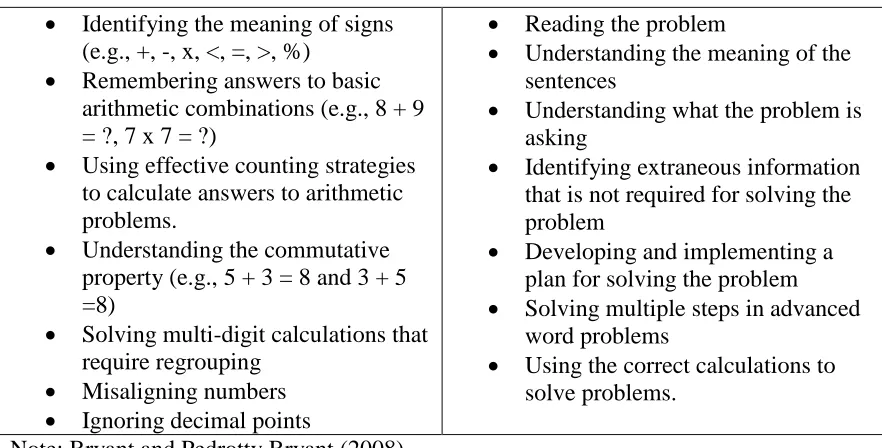
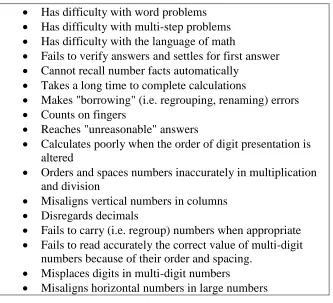
Table 3. Behaviors Associated with Mathematics Learning Disabilities ...57
Table 4. Ranked Mathematics Difficulties Exhibited by Students with Learning Disabilities and Mathematics Weaknesses ...58
Table 5. Indicators of Mathematics Disability ...74
Table 6. Characteristics of MLD Matched to Indicators from Framework ...76
Table 7. Four Point Rubric for Pre-Test and Post-Test Questions ...89
Table 8. Assigned Student Numbers to Study Participants ...95
Table 9. Quartile Data on Pretest and Post-Tests ...96
Table 10. Codes Used for Qualitative Data Analysis ...103
Table 11. Big Jay: Coded Observations and Work Samples ...107
Table 12. Destiny: Coded Observations and Work Samples ...111
Table 13. Happy Gilmore: Coded Observations and Work Samples ...116
Table 14. Codes used for Multiple Representations Task Analysis ...119
xiii
LIST OF FIGURES
Figure 1. 3 Tier Model ...9
Figure 2. Triple-Code Model ...18
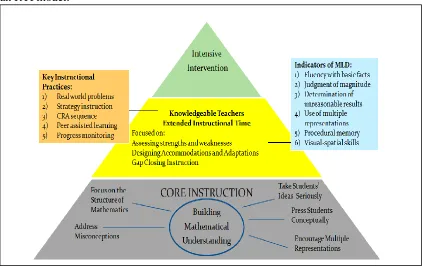
Figure 3. Instructional Framework for Tier 2 Mathematics Intervention ...70
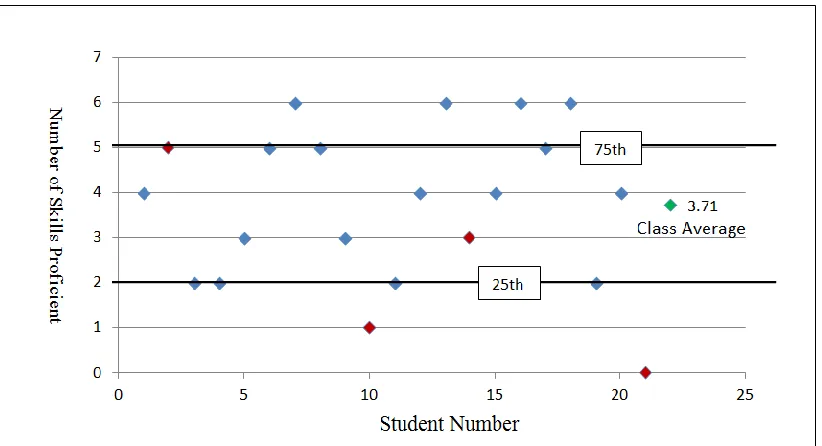
Figure 4. Multiplication Unit Test: Number of Skills Proficient ...93
Figure 5. Division Unit Test: Number of Skills Proficient ...93
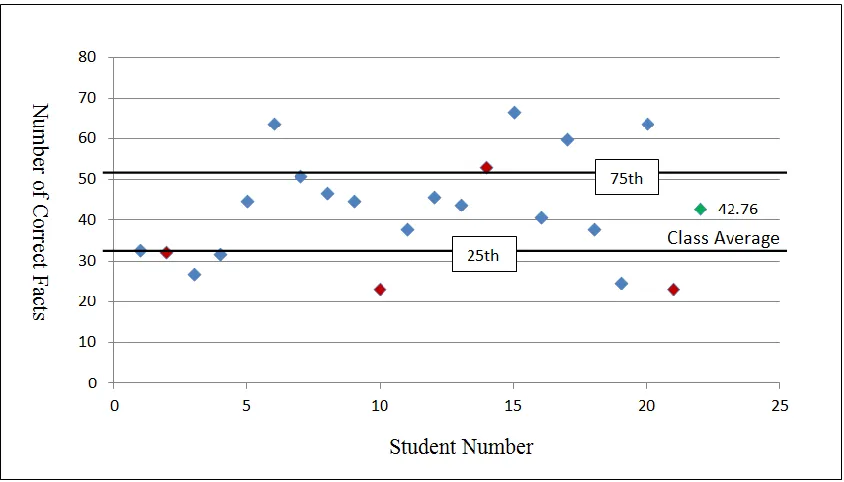
Figure 6. Two Minute Multiplication Facts Assessment ...94
Figure 7. Class Graph - Multiplication Unit Number of Skills Proficient Pre-Test ...98
Figure 8. Class Graph - Multiplication Unit Number of Skills Proficient Post-Test ...98
Figure 9. Class Graph - Division Unit Number of Skills Proficient Pretest ...99
Figure 10. Class Graph - Division Unit Number of Skills Proficient Post-Test ...100
Figure 11. Class Graph - Two Minute Multiplication Fact Assessment Pre-Test ...101
Figure 12. Class Graph - Two Minute Multiplication Fact Assessment Post-Test ...102
Figure 13. Big Jay Multiplication Subtest Scores...105
Figure 14. Big Jay Division Subtest Scores ...106
xiv
Figure 16. Destiny Multiplication Subtest Scores ...110
Figure 17. Destiny Division Subtest Scores ...111
Figure 18. Destiny Strengths and Struggles ...112
Figure 19. Happy Gilmore Multiplications Subtest Scores ...114
Figure 20. Happy Gilmore Division Subtest Scores ...114
Figure 21. Happy Gilmore Strengths and Struggles ...117
Figure 22. Happy Gilmore Task Analysis for Judgment of Magnitude ...118
Figure 23. Happy Gilmore Task Analysis for Multiple Representations ...119
Figure 24. Happy Gilmore Task Analysis for Fluency with Basic Calculation ...121
Figure 25. Katarina Multiplication Subtest Scores ...123
Figure 26. Katarina Division Subtest Scores ...124
Figure 27. Katarina Strengths and Struggles ...126
Figure 28. Katarina Task Analysis for Judgment of Magnitude ...127
Figure 29. Katarina Task Analysis for Multiple Representations ...128
Figure 30. Katarina Task Analysis for Fluency with Basic Calculation ...129
xv
LIST OF ABBREVIATIONS
IDEA Individuals with Disabilities Act
LD Learning Disability
RTI Response to Intervention
NCLB No Child Left Behind
SWD Student with Disability
MLD Mathematics Learning Disability
LEP Limited English Proficient
NCSM National Council Supervisors of Mathematics NCTM National Council of Teachers of Mathematics NRC National Research Council
MD Mathematics Difficulty
RD Reading Difficulty
IEP Individualized Education Plan
NKT Number Knowledge Test
NUCALC Number Processing and Calculation in Children CRA Concrete Representational Abstract
xvi
JM Judgment of magnitude
MR Multiple representations
FBC Fluency with basic calculation
VSS Visual spatial skills
PM Procedural memory
PE Procedural error
PAL Peer assisted learning
EI Explicit instruction
SI Strategy instruction
DIS Productive disposition
LB Language barrier
ATT Attendance
STL Symbol to language
STM Symbol to model
LTS Language to symbol
LTM Language to model
MTS Model to symbol
CHAPTER 1: STATEMENT OF PROBLEM
Present practice in special education and general education mathematics
instruction is the result of a century of research from a variety of disciplines. While often evidenced in what has been called "The Math Wars" (Van de Walle, 1999), philosophical differences between a behaviorist view of learning and a constructivist view have been debated for many years as educators sought the most effective methods to teach
mathematics to children. Within the field of mathematics education, how to help students who struggle to learn mathematics has been an intriguing challenge. Traditionally, mathematics instruction in special education has utilized a direct instruction approach based on a behaviorist view of learning while general education trends have moved toward pedagogy embracing a constructivist approach.
This philosophical gap between special education and general education has taken center stage on a national level with the reauthorization of the Individuals with
reasons such as lack of instruction, mobility, poverty, or limited English abilities. The reauthorized IDEA attempted to prevent students from being diagnosed as having an LD who may actually not have a disability. The former discrepancy model of diagnosing students as LD had led to rampant over-qualification of students as learning disabled. The new regulations require schools to provide intervention for students before diagnosing an LD. Additionally, it is the vision of the No Child Left Behind (NCLB) legislation passed in 2002 that students with disabilities (SWD) meet the same state achievement standards as their non-disabled peers. This vision of success for SWD has caused educators to closely examine present practices in educating SWD. Alignment between general education and special education curriculum and instruction is being encouraged by the recent legislation.
able to meet high school requirements in mathematics and be prepared for the
mathematical demands of a modern day work place. In addition, instructional strategies, grouping practices, and teacher training must also be examined. SWD cannot be expected to meet grade level requirements if they have not participated in general education
coursework throughout their school career. "The major question for students with learning disabilities remains. What is the most worthwhile use of limited instructional time for these students?" (Woodward & Montague, 2002, p. 95). Mathematics instruction for SWD needs reexamination to make sure the little instructional time teachers have with these students is spent on what matters most.
Organizing a school system, which provides high quality mathematics instruction for SWD, requires careful consideration and planning. IDEA emphasizes the importance of providing SWD access to the general education curriculum. Technology trends mean SWD cannot just learn a "narrow range of mathematics" to function in a world "filled with computing devices" (Woodward & Montague, 2002, p. 92). Emerging directions in special education are focused on attempts to provide SWD a broader instructional experience in mathematics to help them move toward the type of mathematics
proficiency encouraged by reform (Woodward, 2006; Montague & Jitendra, 2006; Bryant & Pedrotty Bryant, 2008).
disabilities (DeSimone & Parmar, 2006; Maccini et al., 2008). Many teachers do not have a “strong understanding of specific pedagogical strategies to strengthen the mathematical learning of students with LD" (DeSimone & Parmar, 2006, p. 107). Thus, some contend that it is more effective to educate SWD in a more restrictive environment in which students are grouped homogeneously with other SWD and taught by a teacher who is trained to adapt instruction and content specifically for SWD. A problem with this option is that teachers certified in special education often do not have high levels of training in mathematics pedagogy nor strong background knowledge in mathematical content. Furthermore, the newest state regulations for certification aligned to the highly qualified definitions of NCLB require the primary instructor of mathematics at the secondary level to be certified in mathematics. Both special education and general education teachers need to be trained on research-validated teaching methods for SWD (Schumaker et al., 2002, p. 15). "As teachers become increasingly accountable for employing RTI
procedures (e.g., evidence-based instructional practices progress monitoring of student performance, tiered instruction) in mathematics instruction, they must be provided the means for doing so" (Bryant & Pedrotty Bryant, 2008, p. 7).
Future research needs to focus on bridging the gap between general education and special education instructional practices in mathematics.
Teachers need specialized pedagogical content knowledge to provide high quality mathematics intervention (DeSimone & Parmar, 2006; Maccini et al., 2008; Schumaker et al., 2002; Bryant & Pedrotty Bryant, 2008). An instructional framework for
mathematics intervention can be a valuable tool to guide teachers in providing high quality instruction for remedial and supplemental mathematics instruction. This study explores the use of an instructional framework created by the researcher, which can be used to educate both general education and special education teachers on effective practices for students who struggle to learn mathematics. The framework integrates research on effective instructional practices for SWD as well as current research on mathematics learning disabilities (MLD). The variety of causes of mathematical difficulties means educators need to be equipped with the ability to recognize the
symptoms of MLD. They must also be provided with learning tools to help these students compensate for cognitive deficits related to mathematical processing. Research in
cognitive psychology, neuropsychology, mathematics education, and special education must be synthesized and translated into instructional frameworks in order to be useful for practitioners. A better understanding of numerical processing and subtypes of MLD can greatly inform instruction for teachers working with students who struggle with
CHAPTER 2: REVIEW OF LITERATURE
This review of literature addresses research on topics related to the pedagogical content knowledge needed to effectively teach mathematics to SWD. This review will begin with an explanation of the RTI framework for intervention and a discussion of issues related to differentiation of instruction. Next, literature on aligning instruction in special education with the pedagogy recommended by reform will be presented. What is known about cognitive processes related to numerical concepts and research on MLD will be reviewed. Lastly, research on effective instructional practices for SWD will be summarized.
3 Tier Model
RTI utilizes a tiered approach to intervention that has been used in reading intervention, called the 3 Tier Model (see Figure 1). This model was sponsored by the U.S. Office of Special Education Programs (OSEP) and was originally designed by Vaughn, Linan-Thompson, and Elbaum (cited in Idaho State Department of Education, 2009) to prevent reading disabilities through early intervention in the primary grades. Using the 3-Tier Model at the middle and high school levels and applying it to
9
5% Intensive intervention
15% Supplemental instruction
80% Core instruction
Tier 1 Tier 2
Tier 3
Figure 1: 3 Tier Model
The three tier model recommends 80% of the student body participate in the Core program, which is part of the general education program. An additional 15% more of the student body should participate in the Core program with support labeled as supplemental instruction. A recommended 5% of the students will need an intensive intervention. According to the 3 Tier model, this intensive intervention should be delivered by specialists and can utilize a replacement curriculum. Sometimes, students receiving intensive intervention are removed from the general curriculum and taught a replacement curriculum designed to remediate the missing components of their education and prepare them to reenter the general education program at a later time. Another model is to provide intensive intervention in addition to Core instruction. Special education services can be provided at all three layers of the pyramid, with the most intense individualized
Differentiation of instruction is a phrase that has become partnered with RTI. As schools face the implementation of RTI programs, what occurs in classrooms at the Core Instruction level becomes central to the effective implementation of the three tier model.
Differentiation of Instruction
IDEA 2004 states teachers must provide differentiation of instruction within the general education setting. However, the lack of clarity in the law of a working definition of differentiation makes implementation of this mandate difficult. "There is a need for differentiating or adapting mathematics instruction to respond to students' needs so that students with mathematical disabilities can benefit from standards-based mathematics instruction" (Bryant et al., 2006, p. 16). These researchers define this differentiation as adaptations. An adaptation is "appropriate adjustments, accommodations, and
modifications to instruction or supports that allow students to meet academic requirements and conditions of the curriculum, most often the general education curriculum" (Bryant et al., 2006, p. 16). Curriculum and instruction consistent with the recommendations of the National Council of Teachers of Mathematics (NCTM, 1989, 2000) needs to be adapted for struggling students to provide them with more explicit instruction to help them make connections between topics. Some students need more opportunities to develop and apply strategies, intense practice on meaningful skills and distributed practice over time (Carnine, 1997). SWD need to see mathematics as a "sense making discipline" (Woodward, 2006, p. 47) rather than drill on isolated procedures.
qualitative interviews that supported quantitative survey data, the researchers concluded teachers in different areas of the country often used the term differentiated instruction, “yet they could not name specific strategies when asked to elaborate more on this term or provide concrete examples of differentiated instruction” (p. 104). Eighteen of twenty-six teachers interviewed admitted they really did not modify instruction specifically for SWD. Ten were able to give examples of curriculum adaptations they had made, which usually involved not requiring SWD to go as far learning a concept as other students. For example, one teacher mentioned when teaching adding fractions, she had her inclusion SWD only do problems with common denominators. The researchers named lack of preparation for general education teachers who teach SWD in inclusion settings as one of three key issues school districts will need to address as they attempt to provide inclusive classrooms that meet the needs of a wide range of learners. Although this study
specifically focuses on mathematics, it is probable the lack of clarity on exactly how to differentiate instruction for students who struggle applies to all subjects and all grade levels in general education.
narrowly define the term specifically. However, teachers need specific names for strategies in order to effectively plan lessons, collaborate, and reflect upon teaching practices.
Alignment of Practice
NCLB created focus on populations who have historically struggled to meet grade level benchmarks in American public education. Schools across the nation have focused upon underachieving subgroups as never before. The implementation of RTI has caused school systems to work toward greater alignment of content and instructional practice between general education and special education so SWD can meet the same state achievement standards as their non-disabled peers.
toward the kind of mathematical problem solving that appears in the general education reform literature" (Woodward & Montague, 2002, p. 97).
Woodward (2006) elaborates on two concerns regarding applying research on reading intervention to mathematics intervention. First, early intervention in number sense development could become direct instruction drills comparable to phonics drills on sound to phoneme associations. Symbol to meaning association in mathematics is much more complex. For example, the ability to quickly pair the symbolic form of a phoneme to the sound is related to fluency in reading. Research in reading has shown a strong correlation between reading fluency and comprehension of what is being read. It is reasonable that it would be difficult to understand the content of a passage of text if the pace of the decoding is too slow. The same relationship between rapidly pairing a basic number fact with its solution is not necessarily related to greater achievement in
mathematics. A student can be very successful in basic fact retrieval and have very little understanding of mathematical concepts. In contrast, a student may struggle with rapid recall of basic facts, but have good conceptual understanding of a mathematical concept. An example of such understanding would be knowing the difference in value between a digit in the tens column versus the hundreds column. Recent research has shown number sense, spatial skills, and the ability to visualize magnitude are greater predictors of mathematical achievement than rapid naming of answers to basic facts (Gersten et al., 2005). This is one of the reasons effective mathematics teachers must understand
Woodward's second area of concern related to adopting the philosophy of early reading intervention to mathematics is it implies the development of number sense is a primary grade phenomenon. Unlike decoding skills in reading, which can be mastered at a young age, number sense develops over students’ school career as they engage in new and more advanced mathematical topics. Research on cognitive causes of mathematics disabilities suggests students who have difficulty conceptualizing numbers struggle with it throughout their school careers (Geary, 1993, 2004; Von Aster, 2000; Von Aster & Shalev, 2007). They may need ongoing support and accommodations in order to be successful in mathematics as they progress through the grades.
Special education has traditionally focused on remediating deficits through drill and practice intervention strategies and direct instruction. There has been a heavy emphasis on computational skills and mastery of basic mathematics facts (Maccini & Hughes, 1997; Woodward & Montague, 2002; Woodward, 2006). Warner, Alley,
context" (Woodward, 2006, p. 47). These students are not participating in a wide range of mathematical content or developing conceptual understanding.
Much of the mathematics instruction taking place in remedial and special education mathematics courses focuses on below grade level computational skills and utilizes a didactic, rote approach to practicing computation procedures (Warner et al., 1980; Wagner, 1995; Cawley & Miller, 1989; Cawley et al., 1992; Woodward & Montague, 2002; Woodward, 2006; Maccini et al., 2008; Maccini & Hughes, 1997). Experiences with problem solving and exposure to other areas of mathematics such as geometry, measurement, algebra, data analysis, and probability are rare in special education classrooms (Woodward, 2006; Bryant et al., 2006). SWD are performing far below their peers in mathematics achievement and have shown very little progress toward closing the gap in the last decade (Maccini et al., 2008). A new approach to mathematics instruction for this population of students is needed.
a skateboard ramp that utilizes an understanding of the concept of slope. The National Research Council (NRC) provided a definition of mathematical proficiency in the national report called Adding It Up (NRC, 2001). This definition of mathematical proficiency includes the following five components: conceptual reasoning, procedural fluency, adaptive reasoning, strategic competence, and productive disposition. While general educators have adopted this definition, "special educators have perceived competence in mathematics to be fluency in mathematics facts and computational procedures as well as the ability to solve problems quickly and accurately" (Woodward, 2006, p. 30). And, although this might be the case, another issue is how to get students to be proficient with facts or fluent. Often, a problem in special education is a word problem that has a clearly defined arithmetic procedure associated with it. In reform-based
pedagogy, a problem consists of a real-world scenario, which does not have an obvious solution path defined. These types of problems allow for the use of multiple
representations and solution strategies students can discuss and analyze (Tripathi, 2008). The field of special education needs to reconceptualize instructional practices in
mathematics instruction and redefine mathematical proficiency. Instructional strategies should be similar to those called for in reform but adapted for remedial and special education students (NCTM, 1989, 2000; Woodward, 2006; Bryant et al., 2006).
Triple-Code Model
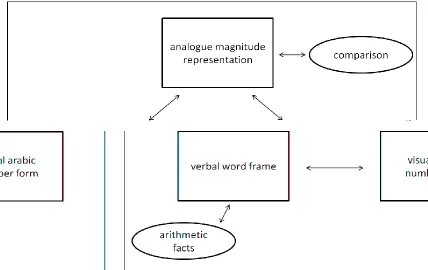
2002). This model suggests humans rely on three cognitive processing systems to encode numerical concepts. The brain relies on an interaction between language, mathematical symbols, and the visualization of magnitude to develop conceptual understanding of numbers and execute mathematical procedures. The Triple-Code Model closely aligns to Jerome Bruner's theory of learning which explains learners progress through three stages of conceptual understanding: enactive, iconic, and symbolic (Driscoll, 2005).
Several researchers describe these three mental coding processes used to conduct mathematical tasks (DeHaene & Cohen, 1995; Feifer & De Fina, 2005; Sousa, 2008; Von Aster, 2000; Von Aster & Shalev, 2007; Chiappe, 2005; Griffin, 2002). The Triple-Code Model provides a framework to discuss three different neural coding processes the brain uses to make sense of mathematical symbols and ideas. This hypothetical model has been validated in studies with patients who had suffered from brain injuries or brain surgeries (DeHaene & Cohen, 1995). Neuropsychologists used the Triple-Code Model as a framework for hypothesizing about which mathematical tasks patients would struggle with based on which area of the brain was damaged. Patients performed as predicted, which has contributed greatly to the acceptance of the model as an explanation of how the brain processes numerical information. "The triple-code model assumes that there are essentially three categories of mental representations in which numbers can be
Figure 2: Triple-Code Model (Note: From DeHaene & Cohen, 1995)
The Magnitude Code
The first code, or cognitive function, is to pair a quantity with a symbol or word. To accomplish this, a child must have an intuitive sense of an observed amount such as four crackers and then mentally match that amount to a symbol or word, in this case the symbol 4 or word "four." This ability enables children to represent magnitudes that can be compared as greater than or less than other magnitudes. "At this level, the quantity or magnitude associated with a given number is retrieved and can be put in relation with other numerical quantities" (DeHaene & Cohen, 1995, p. 86). This system allows the brain to make estimations, organize mathematical concepts, utilize mathematics
about numbers" (DeHaene & Cohen, 1995, p. 97). Such encyclopedic knowledge includes declarative knowledge associated with numbers, such as the fact that 911 is the number to call in an emergency but 9-11 was the date of a significant historical event in America.
The functions of this code take place in the bilateral inferior parietal lobes. Feifer and De Fina (2005) refer to this as the Magnitude code. DeHaene and Cohen call this the analogical magnitude representation, which they describe as an oriented number line. Von Aster and Shalev (2007) also use the idea of a spatially oriented number line to describe this process. One application of this coding system would be to visualize
fractional amounts. Coding the magnitude of an amount with the symbol of the amount is comparable to the cognitive skill of matching the sound a letter represents with the
symbol. Children who struggle with sound to symbol pairing in reading may also struggle with magnitude to symbol pairing. "Therefore, children who have difficulty with reading fluency and automatically recognizing words in print may also have difficulty with speeded mathematics drills due to a shared inability to recall and retrieve information stored in a language dependent code quickly” (Feifer & De Fina, 2005, p. 37). Their inability to attach symbols to the correct meanings may manifest itself with both letters and numbers.
The Verbal Code
about quantities. By labeling a magnitude or symbol, the brain can then convert the word to either iconic or symbolic form. This coding system holds no semantic meaning of numbers. It operates purely by associating words to symbols or magnitude
representations. This system allows the brain to conduct rote mathematical procedures such as counting and retrieving commonly used mathematics facts. For example, with enough practice, the brain will encode the symbols 5 + 2 with the word "seven" without utilizing the magnitude code to visualize the amounts in iconic form. These processes take place in the left perisylvian region of the brain. The verbal word frame differs from the other two codes in that it is not bilateral, which means it does not occur in both hemispheres of the brain. Patients who had severely damaged the left side of the brain lost their ability to recall basic mathematics facts completely because the right side of the brain could not compensate (DeHaene & Cohen, 1995). These processes involve
automaticity in matching words with symbols. This coding is comparable to the process the brain uses to pair the name of a letter with its symbol, say the alphabet in order, or memorize the names of the months in order. Children who struggle with such verbal tasks may also struggle with learning the verbal code of mathematics.
The Visual-Verbal Code
uses the brain’s ability to replace the visualization of a magnitude with the symbol that represents the magnitude while still holding on to the meaning of the symbol. For example, when a child first learns the concept of 100 they come to understand that it is a big number. The student might visualize a picture of 100 items, such as 100 pennies, and imagine an internal picture, or an icon, of the literal interpretation of the symbol 100. As a learner becomes more familiar and comfortable with the symbol 100 and its
corresponding magnitude, the brain can then begin to manipulate the amount 100 using only the symbol. It no longer needs to rely on the iconic visualization of the number, or magnitude code. The brain skips that coding system as it seeks for efficiency in
manipulating the amount 100.
In studies conducted on brain damaged patients, participants were able to solve problems by relying on recognition of symbols and their intact magnitude code even when their verbal recognition of numbers was nonexistent (DeHaene & Cohen, 1995). In one case study, a patient could not recall the names of numbers when shown number symbols but could accurately compare single and two-digit numbers. This patient also held onto semantic knowledge about numbers such as the fact that an hour is 60 minutes. He was able to accurately judge unreasonable answers when shown incorrect arithmetic problems. This and other similar case studies showed that although patients with
The visual-verbal code allows the brain to visualize a number line, write a story problem as an equation, exchange one operation for an equivalent one and represent a number with a variable. It also allows the brain to manipulate larger quantities that it cannot conceptualize with the magnitude code because this coding system also does not rely on knowledge of meaning to function. "It manipulates Arabic and word symbols ‘blindly,’ without knowledge of their meaning. On the other hand, the paths to and from the magnitude representation are supposed not to be syntactically sophisticated"
(DeHaene & Cohen, 1995, p. 87). This explanation fits with Bruner's ideas that humans will utilize language and symbols to manipulate numbers they cannot necessarily represent with images (Driscoll, 2005, p. 229). Thus, the brain's ability to represent a magnitude on an internal number line becomes less precise as numbers get larger.
Although the visual-verbal code integrates words, symbols, and the abstract visualization of magnitude, it is not dependent on language. Thus, it is likely that students who easily manipulate symbols abstractly have cognitive strengths in this area. In
mathematics, evidenced by the long-term use of counting strategies and memorized language patterns. They draw on memorized procedures to solve multistep arithmetic problems and can utilize their verbal strengths to recall basic fact combinations. Students with deficits in the visual-verbal code will likely need long-term support in mathematics in order to compensate for their inability to associate magnitude to symbolic and
linguistic form. It is interesting to note that students with this area of deficit can appear to be successful in school mathematics because they can use their language abilities to get the right answers to arithmetic problems. Thus, these students' struggles with
understanding mathematics may get overlooked when screening measures that emphasize only computation are used.
Triple Code Summary
Table 1 summarizes the three processing codes based on the Feifer and De Fina (2005) labels. It lists the parts of the brain used for each coding system and examples of mathematical tasks associated with each code.
Table 1. Three Coding Processes
Type of Code Parts of Brain Function Examples of Task Verbal Code Perisylvan Region
Left Hemisphere Encodes numbers as words Basic mathematics fact recall Naming digits Counting Visual-Verbal Code Bilateral Occipital-Temperal Regions Attaches symbol to amount or word
Visualizing a number line
Number recognition Create an equation
Type of Code Parts of Brain Function Examples of Task Magnitude Code Bilateral Inferior
Parietal Regions
Pairs quantity to a symbol
Problem solving Estimating
Visualizing amounts Comparing Fractions Note. Adapted from Feifer, and De Fina, 2005.
Although various researchers have expanded upon the Triple-Code Model or use different language to describe each of the three processes (Von Aster, 2000; Von Aster & Shalev, 2007; Sousa, 2008), there is consensus among brain researchers regarding these three types of mathematical processing. These coding systems work in tandem to help the brain interpret and create meaning about numbers. It can receive information about numbers as a word, an amount of objects, or an Arabic symbol and convert that input to any of the three forms of the number to work with the information. The brain can then utilize any of the three codes to convert numerical information to whatever form of output is needed for the task at hand.
Triple-Code Model and Theories of Learning
efficient at the abstract manipulation of numbers. This is consistent with Bruner's views of how instruction can aid conceptual development. While Bruner saw the progression from enactive to iconic to symbolic as a sequential process aided by instruction, the Triple-Code Model suggests that understanding a mathematical idea as a symbol, with language and as an iconic representation can happen simultaneously–that these levels of understanding are intertwined and develop together. This theory provides support for the instructional practice of utilizing multiple representations to help students conceptualize mathematical contexts (Tripathi, 2008).
The Triple-Code Model also validates ideas from a behaviorist perspective of learning. The verbal code is capable of forming strong associations between a symbol and a word. With practice, this association can become automatic and rapid. However, this association does not require meaning to be attached. This explains why children can show progress in memorizing arithmetic facts and increase in speed and accuracy on timed mathematics drills, yet still show a lack of understanding about mathematical concepts. Utilizing the verbal code alone in instruction will not help children interpret mathematical notation. Unless the other two codes are integrated with the verbal code, children are memorizing meaningless associations between symbols and words. Mathematical
proficiency requires a much higher level of understanding in order for students to become effective problem solvers.
factors in learning. Instruction that promotes discourse helps children utilize their language and background knowledge, or schemas, to integrate symbols with iconic representations and language. It helps them interpret and makes sense of numbers. The role of language in numerical processing is discussed in more detail in the next section.
Role of Language
Performing mathematical calculations and solving contextual mathematical problems utilize all three coding systems. Thus, the idea that one part of the brain is used for reading processes and another part is used for mathematical processes is not
supported by research. Both language and mathematical processes involve multiple parts of the brain working together. In some studies, participants given the same mathematical tasks activated different parts of the brain depending upon the strategy they used to solve the problem. One patient had a damaged left hemisphere, which is associated with retrieval of memorized basic number combinations. This patient could not retrieve answers for simple addition and multiplication facts using the left hemisphere function of recall and word to symbol association. However, when the number combination was presented orally instead of symbolically, the patient was able to perform the simple calculations by relying on his intact word-to-magnitude pathway, which is mediated in the right hemisphere (DeHaene & Cohen, 1995, p. 107). This patient was able to
Mental arithmetic is intimately linked to language and to a verbal representation of numbers. The retrieval of arithmetic facts from memory relies on a subset of left-hemispheric language areas and cannot be performed by the right hemisphere alone. The procedures for multi-digit calculations are more complex and involve the coordination of visuo-spatial and verbal representation of the digits. (DeHaene & Cohen, 1995, p. 89)
This suggests instruction connecting language to symbols is critical in developing mathematical concepts and skills and is consistent with socio-cultural theories of
learning, which emphasize the role of discourse and context to aid conceptual
understanding. The ongoing interplay between various parts of the brain while engaged in mathematical tasks makes diagnoses and intervention for children who are having
difficulty learning mathematics extremely complex.
There is an overlap among the areas of the brain that process understanding of quantity and language (Sousa, 2008; Feifer & De Fina, 2005; DeHaene & Cohen, 1995). In studies that involve pairing a number symbol to an amount, such as a specific number of dots, the brain uses primarily the left parietal lobe of the brain. However, when language number words needed to be paired to the symbol or amount, the brain used Broca’s area, the left frontal lobe to retrieve the information. Thus, when the brain needs to pair its intuitive understanding of quantity to the language used in the person’s culture to describe that quantity, both parts – language and visual-spatial processing – of the brain were engaged. "Unfortunately, the brain does not draw such dichotomous
from multiple cortical regions that subserve both of these tasks. In other words, there is a linguistic element to math, just as there is a spatial element to language.” (Feifer & De Fina, 2005, pp. 15-16). Geary (2005) concludes "the language systems are important for certain forms of information representation, as in articulating number words, and
information manipulation in working memory, as during the act of counting" (p. 8). These findings call into question the common saying that mathematics is a universal language. They also provide insight into the reasons students with language-related learning disabilities often also struggle to learn mathematics. Current research on MLD complements research on the Triple-Code Model of numerical processing.
Mathematics Learning Disabilities
utilizes the visual-verbal code, is impaired, a child will typically struggle with conceptual understanding and converting language to symbolic form.
Operational Definition
One of the inconsistencies making interpreting research on mathematics disabilities difficult is the lack of a clear definition of an MLD. Terms such as
mathematics difficulties, mathematics disabilities, dyscalculia, and poor mathematics achievement are all used to describe study participants (Mazzocco, 2005). Selection criterion for study samples differ. Some studies have focused on children who have been qualified by their schools for special education services in mathematics. Some studies use a standardized test to select the population sample, but these studies differ in the cut off used to determine whether a student is having difficulty in mathematics. Studies focusing on students with MLD have used the 10th, 25th, 31st, 35th, or 45th percentile as a cutoff (Mazzocco, 2005, p. 319). This lack of a consistent operational definition for MLD has limited the research community's ability to make comparisons among studies and
generalize conclusions. Geary (2005) and Gersten et al. (2005) recommend using the 35th percentile on a standardized test as a cut off to identify students as having an MLD. They suggest that this cut off is high enough to make sure students who compensate for
achievement. Mazzocco acknowledges it will not always be easy to determine whether a child has mathematics difficulty or a mathematics disability and there is still much that is unknown about biologically-based mathematics disabilities. Gersten et al. (2005) also distinguish between the terms mathematics disability and mathematics difficulty and use them as suggested by Mazzocco. This study will use these terms as recommended by these researchers.
Domain General Disabilities
Geary (1993) explains the central executive functions of the brain can impact mathematics achievement due to deficits in executive functioning and working memory. Executive functioning deficits can contribute to an inability to generalize mathematical ideas from one situation to another, which impacts problem solving skills. Working memory deficits can display as a weakness with procedural memory. Learning disabilities caused by central executive functions are described as domain-general disabilities
understanding and problem solving (Geary,1993, 2004, 2005; Gersten et al., 2005; Von Aster & Shalev, 2007).
A visual-spatial processing weakness is a domain-general disability that can cause children to have difficulty with mathematics (Feifer & De Fina, 2005; Sousa, 2008). This disability is comparable to a non-verbal learning disability (NLD). It impairs a child’s ability to manage and understand non-verbal learning assignments. “Thus, students with NLD will have problems with handwriting, perceiving spatial relationships, drawing and copying geometric forms and designs, and grasping mathematics concepts and skills” (Sousa, 2008, p. 184).
Domain-specific disabilities are those specific to one subject, such as mathematics or reading. The impact on achievement is limited to the specific domain and does not typically impact achievement in other subjects. This means that some students with MLD can be proficient in most areas of school, but struggle in mathematics. Many students with domain-specific reading and language disabilities also have an MLD. However, some students with reading disabilities can do very well in mathematics. It is often difficult to determine whether a student's struggles in mathematics are related to a
numerical processing deficit or a language processing deficit (Geary, 2004; Gersten et al., 2005; Von Aster & Shalev, 2007).
Dyscalculia
numbers, number relationships, outcomes of numerical operations, and estimation, that is, what to expect as an outcome of an operation” (Sousa, 2008, p. 179). An estimated 5 to 8 percent of children have this disability (Geary, 2005). Developmental dyscalculia is when the condition is present from birth. Acquired dyscalculia is when the condition develops after birth, such as from a brain injury or stroke. “The neurological basis of
developmental dyscalculia is an impairment in the child’s innate ability to subitize” (Sousa, 2008, p. 179; see also Von Aster & Shalev, 2007). Subitizing is the ability to quickly pair the number word with an amount of objects (Clements, 1999). Rather than counting a number of objects, most humans can quickly associate amounts up to seven with their corresponding number word. The ability to subitize develops very young. Thus, evidence that a child has developmental dyscalculia can appear as early as first grade.
Children with an MLD "have a poor conceptual understanding of some aspects of counting" (Geary, 2004, p. 6). Because some children with dyscalculia cannot visualize the magnitude of a number, they learn to complete mathematical tasks using different strategies. They rely heavily on sequencing and memorizing. However, when the content gets too immense, their counting strategies become cumbersome and inefficient. This often occurs in third and fourth grade as students encounter multiplication and operations with multi digit numbers (Sousa, 2008).
different labels for the three types, their descriptions of each type are similar. However, the differing and sometimes conflicting use of terms throughout this body of literature makes organizing this information for practitioners challenging. For this discussion, the three types described by Geary (2004) will be used to compare and contrast the views of other researchers.
Procedural Subtype
The first type of dyscalculia is called a procedural deficit. Students with this type of MLD typically struggle with the execution of procedures. They use developmentally immature strategies to solve problems and have a poor understanding of the concepts underlying procedural use. Because these students struggle to comprehend the syntax rules of the numeric symbol system, arranging and executing arithmetic procedures is difficult for them. Sousa (2008) describes this type of mathematics disability as qualitative, which is difficulty in conceptualizing mathematics processes and spatial sense. Feifer and De Fina (2005) also refer to this as the procedural subtype. They elaborate that this type of MLD inhibits a child’s ability to link numeric systems into a meaningful language system. Children who have this type of dyscalculia have difficulty reading numbers aloud and may struggle to write numbers from dictation or convert a story problem to its symbolic form. They also have difficulty recalling the sequence of steps to a mathematics algorithm. However, these students can determine magnitude and recall basic mathematics facts.
subtype of dyscalculia as the Arabic subtype pattern. These students seem to have deficits in the visual-verbal code but can process numbers using the magnitude and visual code. Since this subtype integrates the use of both symbols and language, Von Aster discusses the difficulty in determining whether deficits in this area are the result of language difficulties, lack of instruction or numerical processing weaknesses.
Semantic Subtype
The second subtype of dyscalculia defined by Geary (2004) is the semantic subtype. This subtype affects a child’s ability to count and calculate. This subtype corresponds to a weakness in the verbal code. It impairs a child's ability to retrieve the word associated with symbols. This subtype can become evident when children are delayed in matching the word form of numbers to symbolic form and when they begin working with basic facts.
. . . The ability to retrieve basic facts does not substantively improve across the elementary school years for most children with MLD/RD and MLD only. When these children do retrieve arithmetic facts from long-term memory, they commit many more errors and often show error and reaction time (RT) patterns that differ from those found with younger, typically achieving children. (Geary, 2004, p. 8) While some children are only delayed in the development of their verbal code and respond to early intervention, other children struggle with the word-to-symbol matching throughout their school careers. Sousa calls this subtype the quantitative subtype.
with this problem will continue to have difficulties retrieving basic arithmetic facts throughout life" (Sousa, 2008, p. 184). Students with this type of dyscalculia will likely not improve in basic fact recall even after intervention. Both Von Aster (2000) and Feifer and De Fina (2005) call it the verbal subtype. According to Feifer and De Fina, the verbal subtype of dyscalculia inhibits a child’s ability to use language-based procedures to assist in arithmetic fact retrieval skills. “Verbal dyscalculia does not hinder a student’s ability to appreciate numeric qualities, understand mathematical concepts, or detract from making comparisons between numbers, but does hinder a student’s ability to encode and retrieve mathematics facts stored in a verbal format automatically most notably multiplication and addition" (Feifer & De Fina, 2005, p. 39). Children who have verbal dyscalculia
frequently also struggle with the symbol-to-sound pairing required for reading. Thus, "while children with verbal dyscalculia frequently also have difficulty learning language arts skills, children with a procedural error subtype tend to have learning difficulties solely related to math” (Feifer & De Fina, 2005, p. 39).
Visuospatial Subtype
These students frequently misinterpret spatially represented information. Some examples of challenges these students may have would be mentally reversing the order of a clock or the positive and negative directions on a four quadrant Cartesian plane. “Furthermore, the semantic comprehension of numbers also allows for transcoding mathematical operations into more palatable forms of operations, which is also a key executive functioning type of attribute” (Feifer & De Fina, 2005, p. 41). Students with this type of dyscalculia might struggle to convert 9 x 4 to (10 x 4) - 4. They might also write 24 as an answer to 2 x 4. These errors also help illustrate Sousa’s definition of this subtype as an inability to integrate quantity and space. Von Aster (2000) describes this subtype as difficulty with encoding "the semantics of numbers” (p. 49). Children with this subtype of MLD do not develop the internal number line used to make judgments about
magnitude of numbers in the same way that typically developing children do. This causes difficulty with judging the reasonableness of answers to problems, estimation, and
comparing quantities. Children with difficulty in this area of numerical processing can sometimes be very proficient with basic facts because the verbal code that allows them to pair words to symbols is intact. They can also utilize their visual-verbal code and rely on language and conceptual understanding to solve problems.
Summary of Types of Disabilities
each author, a description of the subtype and an example of an error a student with that subtype might make.
Table 2. Types of Dyscalculia
Type of Dyscalculia
Geary Von Aster Sousa Feifer/ De Fina
Description Common Student Errors
Procedural Arabic
Subtype Pattern
Qualitative Procedural Cannot link language to symbols
-Cannot convert a story problem to numeric form
-Have difficulty recalling sequence of steps
Semantic Memory
Verbal Subtype Pattern
Quantitative Verbal Cannot use language to match symbols to words
-Struggle to match words to numbers
-Cannot recall basic mathematics facts
Visuospatial Pervasive Subtype Pattern
Mixed Semantic Cannot
decipher magnitude representation
-Cannot convert 9x4 to (10 x 4) – 4.
-May answer 2 x 4 as 24
-Do not recognize unreasonable answers.
-May reverse a clock or number line.
dyscalculia struggle with mathematics throughout their lives and will need strategically designed instruction in order to be successful in mathematics. The next section of this literature review will focus on the complex issues related to diagnosing mathematics disabilities.
Diagnosis of Mathematics Disabilities
As children fall behind in their mathematics skills when compared to grade level standards, they are often referred to special education. The traditional method presently used in special education to diagnose a student with an MLD is inadequate.
Most school districts define a learning disability as a significant discrepancy between a student’s intelligence quotient and their
performance on a standardized test of academic achievement. Therefore, it does not matter how a student is functioning in relation to their own peers, the general curriculum, or certain benchmark standards. Instead, school systems place an undue importance on how the student is functioning with respect to their potential as determined by their performance on an
intelligence test measure. (Feifer & De Fina, 2005, p. 24)
inadequate instruction, environmental factors, and cognitive disabilities. Anxiety and other emotional difficulties can also impair the brain’s ability to learn. “Low performance on a mathematics test may indicate that a problem exists, but tests do not provide
information on the exact source of the poor performance” (Sousa, 2008, p. 164). The complexity of mathematical content can further confound diagnosis of a disability (Geary, 2005). "There is considerable potential to confuse difficulty in learning complex material with an actual cognitive deficit - that is, a disability that impedes learning even with appropriate instruction" (Geary, 2005, p. 306).
Developing Effective Assessments
Presently, assessments that specifically diagnose an MLD are not available (Geary, 2004; Mazzocco, 2005). "Not many measures are available to tap for formal and informal math ability" (Mazzocco, 2005, p. 320). Research on predictive indicators and the development of validated measurement tools to assist with the diagnosis of MLD is a research field "in its infancy" (Gersten et al., 2005). Without the ability to accurately identify the source of a child’s difficulty in mathematics, the present system of qualifying students as learning disabled in mathematics is giving them a diagnosis without a cure. Educators need a clear understanding of the cause of the low achievement in order to provide intervention that will help students overcome their difficulties in mathematics. Better assessment tools will lead to improved intervention for students who are
Geary (2005) suggests research in cognitive and developmental psychology provide the basis for the development of assessment measures in order to determine whether a child may have a cognitive disability that contributes to their inability to learn mathematics. He contends standardized achievement tests should only be used as initial screening measures to identify students who may have a cognitive disability hindering their ability to learn mathematics. Because standardized achievement tests assess a range of topics and skills, students who have difficulty learning mathematics may have
cognitive deficits that interfere with some areas of mathematical proficiency but not others. Thus, high scores in some areas can mask difficulty in other areas of mathematics achievement.
A standardized test score may assist with identifying students who have difficulty learning mathematics, but it will not contribute to determining the cause of the difficulty. "Many children who score low on achievement tests for any single assessment do not appear to have an underlying cognitive deficit and, in fact, often show average test scores on later assessments" (Geary, 2005, p. 305). There is a need for the development of more sensitive measures to diagnose specific areas of deficit (Geary, 2005; Gersten et al., 2005; Mazzocco, 2005; Chiappe, 2005). Geary mentions several areas children with cognitive deficits typically struggle in even after intervention. One area is a persistent deficit in the ability to retrieve number combinations from long-term memory. Another deficit is children's conceptual understanding of counting and numerical relationships. He
Using Assessments to Design Accommodations
Feifer and De Fina (2005) also suggest using diagnostic assessments to identify areas of cognitive strengths and weaknesses. These authors suggest specific
accommodations be designed based on a student's weaknesses to compensate for cognitive deficits. They suggest examining several key areas of mathematical skills to determine whether a child may have a cognitive deficit that interferes with the child's ability to learn mathematics. They utilize a variety of standardized assessments to examine skills in working memory, executive functioning, mathematical skills, number sense, and mathematics anxiety. They provide samples, suggestions, and resources for developing a wider range of assessment tools to assist with diagnosing mathematical difficulties. Feifer and De Fina recommend using a range of assessments to identify a student's strengths and weaknesses in how they process numerical tasks and building intervention plans that utilize a child’s strengths while accommodating for his weaknesses.
Bryant et al. (2006) have created an Adaptations Framework based on examining a student's strengths and struggles. This framework guides teachers through designing accommodations and adaptations for SWD. The four steps of the process include setting specific demands and identifying what tasks and requisite abilities are needed to complete the demands. Next, teachers examine student strengths and struggles for completing the task. Areas of struggle can be gleaned from formal assessments or from informal
to utilize his areas of strengths and compensate for areas of weakness to help him complete the learning activity. The last step of the process is to evaluate whether the adaptation or accommodation was successful for the student. Over time, successful adaptations and accommodations for that particular student would become more obvious based on this reflective process. This framework helps students with mathematics
disabilities participate in the same grade level instruction as their peers. It also has potential as a way of collecting data about an individual student for diagnostic purposes. The effectiveness of this framework needs further validation through empirical research but it seems to epitomize the type of "strategic customization" of instruction encouraged by the NCSM (2008). It also shows promise as a way of involving the classroom teacher in diagnosis and intervention for struggling students.
Identifying the Core Deficit
instruments as well as intervention curriculum. "If the deficit that plays a causal role in academic failure is remediated, then improvements should be seen in the relevant academic domain" (Chiappe, 2005, p. 316).
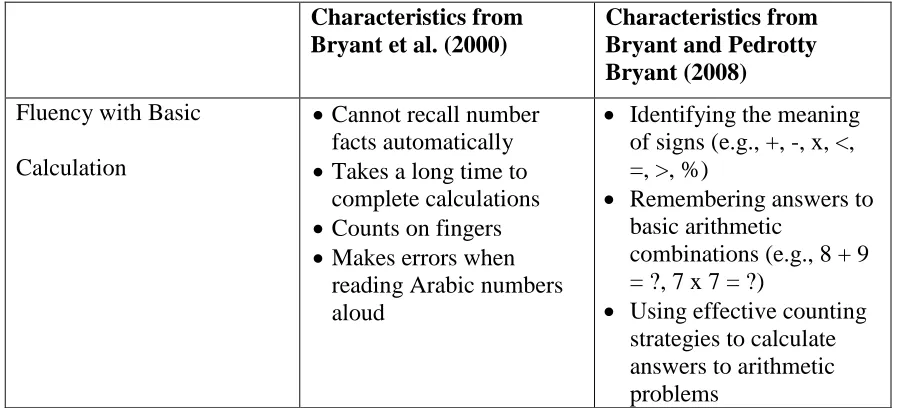
Gersten et al.'s (2005) review of findings of research on mathematics difficulties (MD) discussed several mathematical abilities that might indicate a student has a learning disability in mathematics. One area referred to as "a hallmark of mathematics difficulties" is calculation fluency (Gersten et al., 2005, p. 296), which is efficiency and maturity with counting strategies. Another indicator discussed by these researchers is number sense. A lack of number sense is often indicated by a child's inability to make judgments about magnitude (Gersten & Chard, 1999). Working memory and the relationship between reading difficulties and mathematics difficulties are two other areas identified as potential predictive indicators in this review. Weaknesses in spatial abilities are mentioned by Gersten et al. (2005), but not discussed in detail. This seems to be a significant omission to the work by Gersten et al. considering Geary (2004) suggests that visuospatial skills are related to MLD. These potential indicators of MLD will be discussed in more detail.
Basic Facts
A seminal study by Pellegrino and Goldman (1987) provided a convincing argument there was a strong correlation between automaticity of basic mathematics facts and mathematics achievement (cited by Gersten & Chard, 1999). Because of this
experimental research but a review of literature and a theoretical framework to guide future research. They were presenting a hypothesis about the relationship between basic facts and the ability to execute mathematical procedures. They proposed students who struggle with basic addition and subtraction facts spend a great deal of cognitive resources on recalling basic facts while trying to make sense of more complicated arithmetic procedures such as subtraction of two digit numbers across zeros.
Pellegrino and Goldman's suggestions were based on information processing theory. They suggested recall of basic facts was stored as declarative memory, and steps for solving more complex problems were stored as procedural memory. They proposed practice, which strengthens the association between a fact and its answer, would shift solving the fact from procedural to declarative memory and decrease the response time, thus making all work in arithmetic more efficient. This theoretical framework presented a topic for further investigation, but was translated into practice in special education. It led to a heavy emphasis on drill and practice of basic facts as the focus of remedial
mathematics instruction. A positive correlation between speed of retrieval of basic
arithmetic facts and mathematical achievement on a standardized test was not statistically validated in Pellegrino and Goldman's review.
Many years of such instruction has not led to an improvement in the achievement of SWD in mathematics. Thus, using basic facts as a predictor of mathematics
& Chard, 1999). Rather than seeing basic fact retrieval as an interrelationship between declarative and procedural memory, Pellegrino and Goldman saw knowledge of number concepts and basic fact retrieval as two separate cognitive processes.
The Triple-Code Model provides an explanation for Pellegrino and Goldman's (1987) observation noting some children seem to recall answers to basic facts effortlessly utilizing their verbal code. However, their theory does not take into account many
children quickly, accurately, and flexibly utilize iconic representations of numbers as well as language to quickly calculate answers to basic facts. Pellegrino and Goldman acknowledged that some children who struggle to learn mathematics seem to be very efficient with basic facts but have trouble with conceptual schema for representing quantitative relations. Other children who seem to have strong understanding of numerical concepts and relationships struggle with instant recall of facts. This
observation is consistent with the conjecture that there are different types of mathematics disabilities and the Triple-Code Model. Intervention that only focuses on retrieval of basic facts could be the wrong treatment for the wrong problem. In other words, what the research is not saying is basic facts may not be the necessary place to start remediating students in mathematics.
achievement as measured by most state standardized achievement tests – not basic problem solving or higher-level mathematical thinking. This emphasis on a drill and practice intervention was comparable to similar research and intervention on decoding skills in reading. The same strategies that were proven effective to increase automaticity with decoding and fluency were applied to increasing automaticity with basic facts – even though reading and mathematics are clearly not the same. For instance, fluency drills, flash cards, recitation, and chanting are strategies used to increase speed with decoding phonemes. In mathematics, strategies such as timed delay response, repetition, and rote rehearsal were used in intervention programs to improve automaticity
(Mastropieri, Scruggs, & Shiah, 1991; Mastropieri, Scruggs, & Chung, 1998; Mastropieri, Scruggs, Davidson, & Rana, 2004; Miller, Butler, & Lee, 1998). These strategies utilized behaviorist techniques to help students memorize basic facts. Counting and reasoning strategies were not encouraged because the emphasis was on instant recall. While these instructional techniques may have strengthened associations and led to memorization and speed in recall of basic facts, these strategies do not lead to greater understanding of the numerical concepts supporting the problem (Gersten & Chard, 1999). Furthermore, children who have a cognitive deficit inhibiting their ability to recall verbal information may always struggle with basic facts (Geary, 2005). For these
solving. A greater understanding of the cognitive processes used to derive basic
mathematics facts when an answer cannot be recalled is needed. In addition, the growing research base that some students with dyscalculia will always struggle with basic fact recall suggests intervention focusing only on basic fact recall may not be meeting the needs of students with MLD.
Judgment of Magnitude
Difficulty with number sense can be detected by probes that explore judgment of magnitude. Tests assessing children's understanding of magnitude, counting, and
differences in quantities show promise as predictive indicators (Chiappe, 2005; Gersten et al., 2005; Sousa, 2008; Feifer & De Fina, 2005). Gersten et al. report on the predictive validity of a variety of measures that predicted subsequent performance in arithmetic. They concluded that a test called the Number Knowledge Test (NKT), developed by Okamoto and Case (1996), was the best predictor of mathematics achievement on the arithmetic tests. This test assessed skills in "understanding magnitude, the concept of 'bigger than,' and the strategies they use in counting" (Gersten et al., 2005, p. 297). For example, one subtest asked children to identify a missing number in a sequence. Another asked them to determine which quantity was bigger. In one study with a sample of 65 kindergarten students, this test had a predictive validity .72 for Total Mathematics on the Stanford Achievement Test 9 (SAT-9) administered in spring of first grade. The
predictive validity was also .72 on the NKT given again one year later. In both analyses, p < .01 (Gersten et al., 2005, p. 299). These researchers concluded assessments
this study, mathematics achievement was defined as performance on a standardized achievement test, specifically SAT-9. The achievement test was given one year after the diagnostic assessment. The two SAT-9 subtests used in this study to determine
mathematical achievement were the Procedures subtest and the Problem Solving subtest. Detailed information about the complexity of the problems is not provided by the
researchers. Thus, the relationship between number sense and more complex problem solving is not clear from Gersten et al.'s work.
Students with cognitive deficits related to the development of number sense may struggle to visualize the placement of two numbers on a number line and have difficulty comparing magnitude. Because they have difficulty with subitizing and right to left orientation, a child with an MLD caused by the inability to visualize magnitude will rely on counting and sequencing to compare numbers rather than visualization (Sousa, 2008; DeHaene & Cohen, 1995). As numbers get further apart, a child who can easily visualize magnitude usually decreases his response time because it is easier to "see" the larger number. Determining that eight is greater than three is easier than determining that four is greater than three because there is a greater distance. A child who is relying on counting to determine magnitude will often increase his response time as the numbers get further apart because he has further to count between numbers. This simple test can possibly be a predictive indicator of a child's ability to judge magnitude (Feifer & De Fina, 2005; Sousa, 2008).