University of New Orleans University of New Orleans
ScholarWorks@UNO
ScholarWorks@UNO
University of New Orleans Theses and
Dissertations Dissertations and Theses
Spring 5-13-2016
Can the Good Man Be Happy? The Production of "Beyond
Can the Good Man Be Happy? The Production of "Beyond
Memory"
Memory"
Madison Beaudet
University of New Orleans, New Orleans, [email protected]
Follow this and additional works at: https://scholarworks.uno.edu/td
Part of the Film Production Commons
Recommended Citation Recommended Citation
Beaudet, Madison, "Can the Good Man Be Happy? The Production of "Beyond Memory"" (2016). University of New Orleans Theses and Dissertations. 2129.
https://scholarworks.uno.edu/td/2129
This Thesis-Restricted is protected by copyright and/or related rights. It has been brought to you by
ScholarWorks@UNO with permission from the rights-holder(s). You are free to use this Thesis-Restricted in any way that is permitted by the copyright and related rights legislation that applies to your use. For other uses you need to obtain permission from the rights-holder(s) directly, unless additional rights are indicated by a Creative Commons license in the record and/or on the work itself.
Can the Good Man Be Happy? The Production of “Beyond Memory”
A Thesis
Submitted to the Graduate Faculty of the University of New Orleans in partial fulfillment of the requirements for the degree of
Master of Fine Arts In
Film & Theatre Arts Film Production
by
Madison Beaudet
B.A. Portland State University, 2012
ii
TABLE OF CONTENTS
List of Abbreviations ... iv
List of Figures ... v
Abstract ... vi
CHAPTER I – INTRODUCTION ... 1
CHAPTER II – INFLUENCES ... 2
CHAPTER III – WRITING THE SCRIPT ... 5
PART 1 – GENRE AND STRUCTURE ... 5
PART 2 – EARLY DRAFTS ... 9
PART 3 – LATER DRAFTS ... 10
PART 4 – VALENTINE ... 13
CHAPTER IV – CINEMATOGRAPHY ... 14
CHAPTER V – PRODUCTION DESIGN AND LOCATIONS ... 17
PART 1 – BASIC APPROACH ... 17
PART 2 – WARDROBE ... 17
PART 3 – LOCATIONS & SET DECORATION ... 18
PART 4 – PROPS ... 20
CHAPTER VI – CASTING ... 22
CHAPTER VII – PRODUCTION ... 24
CHAPTER VIII – EDITING ... 30
CHAPTER IX – SOUND DESIGN & SCORE ... 33
CHAPTER X – COLOR CORRECTION ... 34
CHAPTER XI – EVALUATION ... 35
CHAPTER XII – CONCLUSION ... 37
References ... 39
Appendices ... 42
Appendix A: Figures ... 42
Appendix B: “Isolated Together: Existentialism in Film Noir, Auteur Criticism and Nicholas Ray ... 45
Appendix C: “The Limits of Control: A Case Study in the Morality of Decentralizing Narrative in Film” ... 68
Appendix D: Shooting Script ... 84
Appendix E: Death Wears a Sweet Perfume (March 2015 draft) ... 100
Appendix F: In a Scent (April 2015 draft) ... 118
Appendix G: Budget ... 132
Appendix H: Schedule ... 138
Appendix I: Cast and Crew List ... 140
Appendix J: Film Reference ... 141
iv
LIST OF ABBREVIATIONS
University of New Orleans UNO
Assistant Director AD
Over the Shoulder OTS
Point of View POV
LIST OF FIGURES
Figure 1: Still from Le Samouraï (reference for Valentine’s room) ... 42
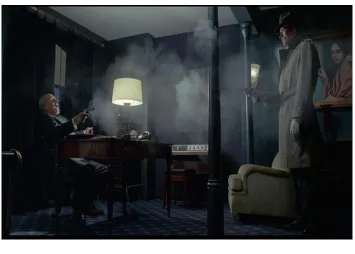
Figure 2: Still from The Big Sleep ... 42
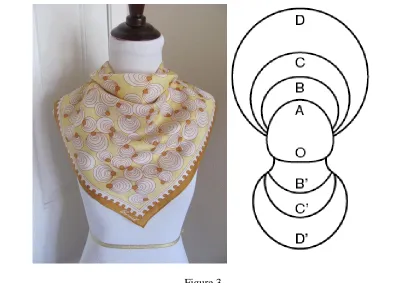
Figure 3: Comparison between Zia’s handkerchief and Bergson’s diagram ... 43
Figure 4: Still from The Darjeeling Limited ... 43
Figure 5: Perfume bottle design ... 44
vi
ABSTRACTThis paper details the production of the short film Beyond Memory from conception through completion. Particular attention is paid to the application of Deleuze’s time-image and film noir as a
genre.
I – INTRODUCTION
“...the simultaneity in one image of two things that would happen sequentially on the page – the train entering the station, the rain falling. In his view the cinema does automatically what literature wants to do and cannot: it connects two ideas in one time.”
Richard Brody, Everything is Cinema p. 68
This paper seeks to detail the making of my thesis film Beyond Memory through the stages of
development, pre-production, production and post-production. Rather than serving as a journal, this document is intended to explore the ideas that shaped the film and how I have tried to situate myself within a genre, engage theoretical and philosophical concepts, and explore the medium’s expressive
capabilities.
The first section outlines some of the major intellectual influences on the project, particularly the concepts of philosopher Giles Deleuze. Over the past couple of years, Deleuze has been a source of both intellectual stimulation and artistic inspiration. His book Cinema 2: the time-image provided much of the conceptual framework for Beyond Memory and shaped my approach to film as a medium.
Next, I detail the process of writing the script with considerable attention paid to film noir as a genre. I utilize Andrew Dickos to explicate noir iconography, structure and character archetypes and Stephen Faison to provide an existential reading of these elements. I also draw from the novels and essays of Raymond Chandler for further examination of the private detective figure. After demonstrating my understanding of the genre, I describe how these ideas were employed throughout the various drafts of the script.
The following sections explain the decisions made to turn these ideas into concrete expressions with cinematography, production design and casting. Section VII describes the major problems and successes on the set of Beyond Memory. Then, the editing, sound design and score, and color correction
sections show how those expressions were refined.
2
II – INFLUENCES
Before embarking on the description of Beyond Memory’s production, I feel it is prudent to
outline some of the major intellectual influences that structured my approach to my thesis film. My undergraduate training was in Film Studies at Portland State University and my interests in theory, history and criticism factored heavily into the development of Beyond Memory. During my time at UNO, I continued to pursue these academic interests with two long essays in Film History and Film Theory: “Isolated Together: Existentialism in Film Noir, Auteur Criticism and Nicholas Ray” and “The Limits of Control: A Case Study in the Morality of Decentralizing Narrative in Film” (both are included in the
appendix). The former used film noir, particularly its existentialist themes, to reexamine the auteur criticism that spawned the French New Wave. The latter applied concepts developed by philosopher Gilles Deleuze in his book Cinema 2: the time-image to Jim Jarmusch’s film The Limits of Control.1 In his text, Deleuze draws heavily from the French New Wave to describe his concept of the time-image. Thus, film noir is situated, both historically and theoretically, within three major interests of mine: auteur
criticism’s concept of mise-en-scène, the subsequent French New Wave (and modern cinema more broadly), and existentialist philosophy.
In contemporary cinema, film noir seldom rises above parody; sadly weighed down with clichéd detectives, femme fatales and chiaroscuro. This approach to the genre negates its natural power for social commentary and its exploration of the moral, psychological and philosophical implications of urban modernity. Much of this stems from a purely nostalgic view of the classic period of film noir (generally
considered from The Maltese Falcon2 to Touch of Evil3). This narrow time frame fails to consider the roots of noir which are embedded much further back: in the pulp detective fiction of the 1920s and 1930s. Even the low-key lighting often attributed to German filmmakers that fled to the United States around WWII has precedent in the hard-boiled school of writing, e.g., “The streets were dark with something
more than night.”4 Rather than a short-lived, post-war phenomenon, noir is most effective as a
contemporary genre. Beyond Memory was devised as an earnest engagement with the genre to explore masculinity, existential concerns, and film form.
My discussion of film noir as a genre will continue in subsequent sections on the development and production of the film; the concepts of Deleuze would be much more difficult to integrate. I will attempt to summarize key points of his work here.
1 2009
2 Huston, 1941 3 Welles, 1958
7
Deleuze delineates two distinct approaches to cinema: the movement-image and the time-image, classic and modern cinema, respectively. The movement-image is primarily concerned with the
development of the sensory-motor schema, the interplay between received movement and executed movement: action and reaction. Movement passes from perception through affection to action resulting in a relation.5 As it concerns an entire film, Deleuze defines this entire process as Situation, Action,
Transformed Situation (SAS’), or, in the small form (‘detective form’): Action, Revealed Situation, New Action (ASA’).6
In “The Limits of Control” I drew the comparison between this formula and narrative structure, as it helps to contextualize Deleuze’s semiological terminology within a more general approach to film. It important to note that Deleuze insists that it is the development of the sensory-motor schema that “grounds narration in the image.”7 Simply put, it is the distinct combination of images that create
narrative in film, rather than narrative giving rise to specific images. This view point is not nearly as radical as it seems at first glance. In fact, the entire field of editing is founded on this principle. However, the notion that it is images that create narrative does have profound implications: narrative is not inherent in film form, which calls into question the role of narrative in film.8
The movement-image enters a crisis following WWII:
Nevertheless, the crisis which has shaken the action-image has depended on many factors which only had their full effect after the war, some of which were social, economic, political, moral and others more internal to art, to literature and to the cinema in particular. We might mention, in no particular order, the war and its consequences, the unsteadiness of the ‘American Dream’ in all its aspects, the new consciousness of minorities, the rise and inflation of images both in the external world and in people’s minds, the influence on the cinema of new modes of narrative with which literature had experimented, the crisis of Hollywood and its old genres… Certainly, people continue to make SAS and ASA film: the greatest commercial successes always take that route, but the soul of cinema no longer does. The soul of cinema demands increasing thought, even if thought begins by undoing the system of actions, perceptions and affections on which cinema had been fed up to that point.
- Deleuze, Cinema 1 p. 206
In the above quotation, Deleuze lays out a basic thesis for the forces outside of cinema that led from the movement-image to the time-image. Within cinema, he points to the amassing of clichés.9 He charges
modern cinema with the responsibility of tearing real images from clichés.10 As part of this process,
5 Deleuze, Cinema 2 p. 32
6 Deleuze, Cinema 1 p. 142 and p. 161 7 Cinema 2 p. 32
8 This is crucial to the argument of “The Limits of Control” as well as the discussion of the time-image. 9 Cinema 1 p. 208-11
4
Deleuze notes the necessity of bringing in images that do not belong to the genre’s set.11 These concepts
certainly played into my approach to the film noir genre.
As mentioned above, Deleuze calls into question the role of narrative in film with the notion that images create narrative in film, not the other way around. This becomes important when considering Deleuze’s position that narrative’s sole purpose is to pass judgment:
Organic narration consists in the development of the sensory-motor schemata as a result of which characters react to situations or act in such a way as to disclose the situation. This is a truthful narration in the sense that it claims to be true, even in fiction… [it] is defined by a field of forces, oppositions and tensions between these forces, resolutions of these tensions according to the distribution of goals, obstacles, means, detours…Truthful narration is developed organically, according to legal connections in space and chronological relations in time. Of course, the elsewhere may be close to here, and the former to the present; but this variability of places and moments does not call the relations and connections into question. They rather determine its terms or elements, so that narration implies an inquiry or testimonies which connect it to the true. The investigator and witness may take on an autonomous and explicit shape, as in literal ‘judicial’ films. But whether explicitly or not, narration always refers to a system of judgment: even when the acquittal takes place due to benefit of the doubt, or when the guilty is only so because of fate.
- Cinema 2 p. 127-13312
I have argued elsewhere the moral ramifications of this system of judgment.13 Contrary to the
system of judgment that professes itself to be true, modern cinema through the time-image substitutes affective evaluation by positing “false narration.” False or falsifying narration refers to narrative
structures that pose incompossible14 presents and/or the coexistence of not necessarily true pasts (this particular notion structured the script of Beyond Memory as will be explained in the following section).15
This discussion of Deleuze is far from exhaustive, nor does it seek to explain the themes or purpose of Beyond Memory; rather, it serves to lay out the theoretical and critical methodologies that influenced decisions throughout production. Far more than telling a story with a deliberate message, I sought to situate Beyond Memory within a genre to explore film form and philosophical ideas, particularly existential themes and the function of memory.
11 Cinema 2 p. 184
12 Cf. Lajos Egri The Art of Dramatic Writing. Deleuze’s claim is very similar to Egri’s chapter on premise (p. 2), though they draw different conclusions.
13 “The Limits of Control” especially the section pertaining to William S. Burroughs and the Conclusion (p. 76 & p. 81)
III – WRITING THE SCRIPT
PART 1 – GENRE & STRUCTURE
Writing extensively about film noir in “Isolated Together,” I was piqued to write within that genre. Two key texts shaped my understanding of noir throughout the process: Andrew Dickos’ Street with No Name (which provides a comprehensive study of noir iconography and motifs) and Stephen Faison’s Existentialism, Film Noir, and Hard-Boiled Fiction (which provides an existentialist reading of the genre). Additionally, I read the works of Raymond Chandler, limiting my hard-boiled reading to him both because of my enjoyment of his work and because of his works’ screen adaptations: The Big Sleep16
and The Long Goodbye.17The Big Sleep provides the possibility of romance for the Marlowe character
and the private detective archetype (though I have my reservations and critiques). The Long Goodbye
demonstrates the fashioning of a contemporary private detective (though I have a bit more nostalgia than Altman). Before detailing the various stages of the script, I will outline the generic factors that shaped the main characters and structure.
I’m a licensed private investigator and have been for quite a while. I’m a lone wolf, unmarried, getting middle-aged, and not rich. I’ve been in jail more than once and I don’t do divorce business. I like liquor and women and chess and a few other things. The cops don’t like me too well, but I know a couple I get along with. I’m a native son, born in Santa Rosa, both parents dead, no brothers or sisters, and when I get knocked off in a dark alley sometime, if it happens, as it could to anyone in my business, and plenty of people in any business or no business at all these days, nobody will feel that the bottom has dropped out of his or her life.
Chandler, The Long Goodbye p. 493
In this passage, Phillip Marlowe sums up everyone’s conception of the private detective. Chandler’s view
of what makes the private eye (in all hard-boiled fiction) has nothing to do with his past; instead he inherently knows the difference between right and wrong and is willing to fight the corruption and hypocrisy of the world he lives in.18 Faison notes this instinctual morality as a key facet of noir’s working class ethics and politics.19 This “past-lessness” is what separates the detective from other noir
protagonists, who often are trying to escape their pasts.20 By contrast, the detective pursues, in search of truth (however insignificant or limited) and it is personal only through bodily (and sometimes emotional) harm incurred in the process.21
16 Hawks, 1946
17 Altman, 1973
18 Chandler, “The Simple Art of Murder” p. 992 19 p. 92
20 Cf. Dickos p. 66
6
Herein lies the root of the easily parodied private detective figure: he comes from nowhere and is tired of being right. Thus, my intention with Valentine was to interrogate that archetype by giving him a past, which makes the future matter and the present more difficult. This was addressed on two fronts: the case and his choice to be a private detective (this was much more deliberate in early drafts). The case, as it were, is immediately personal; it involves his most intimate relationship. This negates the detective’s
most valuable tool: detachment.
Faison discusses the ending of The Maltese Falcon at length as it is exemplary of the detective figure’s necessity of detachment and the limitations of empirical evidence when determining human motive. In the movie and the book, Brigid O’Shaunessey implores Spade to “look” at her; he can “see” she isn’t all bad. The dissonance between her appearance and her character persists throughout,
culminating in her professing her love for Spade… but he turns her over to the police anyway. Faison asserts that this is part of noir’s existential epistemology: one can only know things through the senses,
but this is insufficient information to make a decision. In the end, it is more important to Spade to be a good detective than gamble on the possibility of love. It is important to note that his personal feelings about Archer do not motivate Spade, but rather the professional symbol that it means to catch his
partner’s killer.22 The private eye’s job is the existential reason for his existence. His natural temperament
(outlined by Chandler above) leaves him no real alternative in terms of employment and the uncertainty of human interaction renders such endeavors lost causes.
Faison notes the more problematic traits of this process: “Knowledge is often the basis for
making but is frequently also used to remove the burden and responsibility of decision-making.”23
This is the flaw of Valentine. He refuses to accept responsibility for his part in the failing of his relationship with Zia. It stems from his stubborn attachment to his job. His need to be a private eye is responsible for many of the more affected elements of his persona. Bogart’s portrayal of Phillip Marlowe sets the standard for this archetype. It is pertinent here to discuss some of the coded elements of
Valentine’s character.
In early drafts of the script, “Richard Valentine” was not the character’s real name. It was Richie Argencour. He changed it to Valentine, so it would sound more hard-boiled. Even though this was later cut from the script, it is important to note that Valentine tries hard to be a Marlowe-like detective. Another deliberate siding with the Bogart detective(s) is Valentine’s refusal to investigate infidelities (“divorce work”). Though this was not explicit in early drafts, it was always part of the character in my
mind. This choice is what separates idealized detectives like Spade and Marlowe from the “flawed”
22 Faison p. 66-9; 75-6
detectives like Mike Hammer24 and J.J. Gittes.25 Despite his attempts to place himself in the idealized group, Valentine has more in common with the latter detectives than he realizes. Both Hammer and Gittes are out of their depths. Because of his pride, Gittes is unable to see the darkness of Noah Cross until it’s too late. Mike Hammer quite literally does not know what he’s dealing with.26 The private detective may
be able to drag his battered body from small-time puppets to high-society puppeteers to the truth of a socio-economic crime, but he is unable to comprehend something as un-gainful as incest or as destructive as an atomic bomb. At his best, the private detective is a resilient seeker of truth. At his worst, he
stubbornly gets other people killed to prove that he is clever and tough.
Raymond Chandler states that he doesn’t “care much about [the detective’s] private life.”27
I have opted for the opposite approach. Given that the detective holds no illusions about his ability to change the world he lives in, why deny himself happiness? The apparent answer is the retention of freedom and autonomy so desired by the private eye. Less charitably, perhaps it has to do with the refusal to take responsibility for decisions unaided by logic, as alluded to by Faison. This complicates the notion that “if he is an honorable man in one thing, he is that in all things.”28
Faison argues that noir ethics resonated with working class men because they were shown through specific situations rather than abstract concepts.29 His qualification of men is important, as it illustrates the detective archetype as an idealized masculinity. This explains the existence of Mike Hammer and Jake Gittes: they embody the dangers of taking the hard-boiled exterior at face value. In Playback, Phillip Marlowe says, “If I wasn’t hard, I
wouldn’t be alive. If I couldn’t be gentle, I wouldn’t deserve to be alive.”30 Gittes, Hammer and Richard
Valentine seem to forget this.
The question of denied happiness remains because the unwavering belief in the “square deal” and the practice of ethics in specific situations is rendered invalid when the private detective only seems to care about humans in the abstract sense. It begs the question: why choose an existence predicated on a losing battle in the public sphere when the only loss is private fulfillment? And more importantly, what is the usefulness of the private detective as a figure when he becomes simply a martyr for futility?
These are the questions that fueled Beyond Memory. I am brought back to Deleuze, who poses a similar question, one that the private eye seems to be asking but is unable to articulate: “How can one
24 Ralph Meeker’s character in Kiss Me Deadly (Aldrich, 1955) 25 Jack Nicholson’s character in Chinatown (Polanski, 1974)
26 Dickos notes Hammer’s inability to deal with the case: “… the pursuit of an unknown object, never defined except with scary illusions, a ‘whatsit.’ (p. 135)”
27 “The Simple Art of Murder” p. 992 28 Ibid.
8
exist, personally, if one cannot do it alone?”31I find this to be crucial in his conception of modern cinema and its breakdown of the barrier between the political and the private.32 This is why Valentine’s case is
immediately and patently personal – his search is internal and his choices pointedly existential. On the other side of the coin is Zia. Unlike Valentine, I endeavored to keep her character’s history opaque. Andrew Dickos notes, “The opacity of the femme fatale is a projection of the male desire
to retain her in the role of the mystery woman – an enigma that satisfies as it arouses the unknowability of her hidden destructive powers.”33
Zia is literally a projection of Valentine’s memory. Thus, her desire for money34 is only apparent and filtered through his interpretation of past events. Her current actions are left
deliberately vague (more so in early drafts), so as to heighten the futility of Valentine’s search.
The epigraph from Saint Augustine’s Confessions was originally “You shed your fragrance about me; I drew breath and now gasp for your sweet odour.”35
This quote was later moved to the postscript. The text of the Confessions is interesting in that it shifts from Augustine’s personal conversion tale in the first eight books, but the remaining five are philosophical in nature. Book X, from which this quote is derived, is primarily concerned with the metaphysical problem of memory. Augustine ponders how memory functions and how it can seem to exist beyond the mind as it encompasses the totality of our experience, even when we forget something.36 Most pertinent to the script is Augustine’s deliberation on the process of remembering emotion and how it differs from empirical memories. Empirical memories can be restored to the present through operations of the mind.37 Given that I play with the connection between scent and memory, Augustine provides a way to interpret the mechanism of Zia appearing and disappearing.
The epigraph was later changed to “I must pass beyond memory to find you, my true Good, my sure Sweetness. But where will the search lead me?”38
I discovered this passage when I was re-reading Augustine in hopes of discovering a title. It turned out to be the right place to look. Much better than the pun In a Scent or some heavy-handed noir title that referenced death or darkness in the streets. Beyond Memory, while not the most noir title, better encapsulates the driving force of the film. In conjunction
31 Cinema 2 p. 193
32 Ibid. 218 33 p. 162 34 Ibid. 35 p. 232
36 Cf. p. 219 “But the word cogito is restricted to the function of the mind. It is correctly used only what of is assembled in the mind.” Ibid.
It is also interesting to note that Augustine’s discussions bear similarity to the work of Henri Bergson, the philosopher Deleuze draws from for his conception of the sensory-motor schema and the function of time. cf. Matter and Memory.
37 Augustine p. 215
with the quote, it not only conjures the futile and dangerous search of the private detective but indicates that the search will be internal.
PART 2 – EARLY DRAFTS
The first draft of the script was penned in the summer of 2014. I had originally intended to use the idea for my second year film in FTA 5500/5550, but the idea proved too much for an eight page script and was never finished. I revisited it in December, intending to make it into my thesis.
Drafts one and two focused heavily on Valentine’s detective identity (including a prologue that featured young Valentine before he changed his name). At this point, Zia’s appearance was far more
driven by chance, an attempt to incorporate the noir world that oscillates between random chance and fate.39 Valentine steps onto the street, looking to enjoy a nice cigar, when he notices a smell and sees the flash of a woman in a yellow dress. This sparks his search for the perfume that Zia wore.
He looks for the perfume and tries to determine whether or not Zia is in town. He gets a black eye from a woman he mistakes for Zia and another from Nick when he refuses to open up about his problems. Nick tells him about a perfume store that he could check out. Dead end. Zia hadn’t purchased a bottle, but Valentine decides to. Back at his house, he sprays the perfume and has a final conversation with Zia (or her manifested memory). Valentine tosses out the bottle and regrets the decision. The script ends with him crying in the street over a broken bottle. Throughout the permutations of the script these last two scenes were the only ones that remained relatively intact, save for one attempt at a happy ending.
In these early drafts the final conversation with Zia skirted around a much more complicated history. Zia left Valentine and ended up marrying a millionaire (who would later become the character of Sean Lawrence). The situation was complicated by the fact that Valentine had gotten Lawrence’s younger brother killed and he was forced out of town, changing his name and resettling in New Orleans. This was an attempt to tie money to criminal enterprises. The distrust of money that the private detective has is a crucial part of the political element of noir existentialism.40 Rather than being illuminating, this backstory made the past unduly convoluted and Zia’s decision to leave Valentine less clear. I had in my mind that
Zia married Lawrence as a selfless act that was a bargaining chip to save Valentine’s life, but this failed to come through on the page.
The element from the early drafts I miss most is the prominence of Nick and Raoul. The attempt was to create the distinction between friendship (which the noir ethical framework allows for)41 and
romance. Nick and Raoul were also developed to tie Valentine to Mike Hammer. In Kiss Me Deadly,
39 Faison p. 31
10
Hammer’s only friend is the Greek mechanic Nick (Nick Dennis). Nick got the name, Raoul got the
foreignness. At one point, there was a third friend, Chuck, who was a mechanic. It was important to me to limit Valentine’s movement, as well as justify his walking around everywhere, by taking away his car.42
At this point in the writing process, I developed a rapport with screenwriter Katheryn Warzak. Initially, she intended to give me notes, but she ended up producing and co-writing the film. Her
contributions led to the best additions to the script and the film could not have been made without her. As we were working together, a second version was developed that shifted Valentine’s search from Zia’s perfume to Zia herself. We wrote a new draft of each version and decided to combine the best elements of both into what became the final version.
PART 3 – LATER DRAFTS
This new version introduced Lawrence as a character. In keeping with genre conventions, I originally had Valentine engaged for his services by an emissary of Lawrence’s. Katheryn told me it
would take too long for Lawrence to show up if I took that route. Why not just start with him at Valentine’s office? Valentine would just punch him if he dropped in unannounced, I explained. “So? What’s wrong with that?” She was right. It’d be a strong, humorous opening.
This version dropped Zia as an apparition. Instead, she haunted these two men as an unseen ghost, save for her appearance in Valentine’s bed. In the final scene, she actually was there in Valentine’s house. It culminated in the happier ending of Zia going back to Lawrence, but Valentine having a new perspective on his life.
Though there were benefits to Valentine having the perfume from the beginning of the movie, it lost the ‘is she or isn’t she?’ mystery that made the original concept work. The best thing to come from
Lawrence hiring Valentine for the case was the prop of the handkerchief, a plausible vehicle of scent delivery which also allowed me to pay homage to The Killers.43 In this refashioning of a Hemmingway short of the same name, an insurance investigator (Edmond O’Brian) tries to discover why The Swede
(Burt Lancaster) would passively accept his own death. His first clue is a handkerchief The Swede got from Kitty Collins (Ava Gardner), the woman who betrayed him. Not only does this film deal with the impossibility of truth from unreliable sources (it is structured primarily through subjective flashbacks), it also muses upon the inscrutability of human emotion.44
Two of the best scenes came from this new version: the hotel and the “St. James Infirmary Blues”
musical interlude. Though they were both substantially changed in subsequent drafts, the movie was
42 Dickos notes that cars have a role in almost every film noir. p. 176 43 Robert Siodmak, 1946
starting to take shape. The original hotel scene brought Lawrence back into the picture. He had been tracking Valentine’s progress and followed him to the hotel. Valentine smells the perfume and is about to
investigate something on the balcony, but is interrupted by a knock. On the other side of the door is Lawrence, who immediately punches Valentine. This led to the image I miss the most from this draft: two sad men with black eyes sitting on a hotel bed drinking whiskey, wondering what happened to the woman they both love. It was cut because their conversation was again grounded in exposition about a convoluted backstory involving Lawrence’s brother and a previous investigation of Valentine’s.
The “St. James Infirmary Blues” scene allowed me to repurpose a hitherto missing element of
noir: the jazzy nightclub. Dickos points out the prevalence of these seedy locations in the genre and their connection to chance, fate and danger while escaping to or from a mundane existence.45 In some ways,
New Orleans as a city can feel like one big nightclub, it seemed only fitting that we used this to our advantage in the script.
“St. James Infirmary Blues” has always fascinated me for its odd lyrical structure. The three
common verses are some variation on these: I went down to the St. James Infirmary To see my baby there
She was stretched out on a long white table So sweet, so cold, so fair
Let her go, God please bless her Wherever she may be
She can search the whole world over And never find a sweet, little man like me
Now when I die, bury me in my shoes I want a Boxback coat and a Stetson hat
Put a twenty dollar gold piece chain in my pocket So the boys will know I died standing pat
In the first verse, the singer’s lover is dead. In verse two she left him (a poor decision), while the third
verse deals with the singer’s desire to look important when he dies. This disjointed set of desires from the singer pose an interesting look into the psyche of a jilted lover (decidedly male) and provide an
interesting interpretation of Valentine’s conflicting emotions. The chronology of the verses emphasizes the loss of the singer’s lover; he loses her twice, once to death and once to a break-up. The break-up would appear to happen first and implies a causality between her leaving him and ending up dead. Despite any hard feelings toward her, he cannot help but love her and mourn her loss. The first two verses
illustrate the difficult line between good riddance and goodbye.
The third verse is what seems to make the song especially complicated; she dies in obscurity, perhaps even anonymity, but he refuses to do so. He will die “standing pat.” This makes his life’s value
12
completely material, as opposed to the possible immortality of the woman (as a religious reading of the first couple lines of verse two is not unwarranted). Without her, his life is reduced merely to appearance.
With the inclusion of “St. James Infirmary Blues” I aimed to utilize the conflicted lyrics as an examination of Valentine’s predicament. Not only does he have opposing feelings toward Zia, his need to
be a private detective (his version of standing pat) is all he has left. The existential need of the detective to be a detective is one of the cornerstones of this film (as discussed above); this song gave me the key to expressing this without resorting to a prologue or convoluted backstory.
Katheryn and I now had two distinct versions of the script with differing strengths. The original version had the benefit of creating a more mysterious Zia and a stronger ending. The new version had the punchy opening scene and a better tangible expression of Zia’s perfume. The best course of action
seemed to be an attempt at combining the best elements of both.
Combining the versions solved many of the issues that persisted in both versions: the apparitions of Zia became less coincidental and were grounded in specific memories of Valentine’s. The hotel and “St. James Infirmary” scenes functioned as a strong turning point, where the movie abandons all pretense
of an external search. Valentine getting punched was better grounded in the conceptual framework, rather than coming from a completely incidental character. Most importantly, the starting and endpoints felt right. It was then just a matter of fine-tuning the middle.
Now that Lawrence’s function in the script served merely to set things in motion and Zia’s
appearances were connected to intimate memories between her and Valentine, we were well on our way to solving a problem of the script that had persisted through all its incarnations: the convoluted backstory. Not only was there insufficient room to pack a feature length noir plot into the exposition, it simply didn’t
fit the movie I wanted to make. I never wanted the movie to be about Valentine not knowing what really happened, but that is the conflict the backstory posited. We cut it all and didn’t miss it. There was no reason to try to tie Valentine’s personal life with his business until the events of Beyond Memory. Finally, the movie was working toward the existential choice Valentine made to believe Zia left him for
Lawrence’s money; it doesn’t matter if she did or not, because information does not help in making this
kind of decision.
Now that we had the proper elements in the script, our only task left was to improve upon them. I would do a draft and Katheryn would cut it down. She substantially condensed the scene with Lawrence by adding the line “It’s amazing how tough guys always sound like little kids.” This replaced half of a
battle. These two sections take up roughly half of the script with the “St. James Infirmary Blues” scene
functioning as an intermediary.
PART 4 – VALENTINE
Even though many aspects of Valentine were shaped by external concepts, through the process of writing, he moved from idea to person. He came from a blue-collar family. His dad was always working in order to send Valentine to a good school. He was intelligent, but poorer than many of his classmates, so he was picked on until he learned that he was tougher than they were. He got into a lot of fights and was generally left alone after he’d won them. Whenever he saw someone being bullied, he’d step in.
Valentine’s habit of inserting himself into situations is how he met Zia. He was at a bar (likely on
a case) and saw a guy getting a little too frisky with a girl that wasn’t interested; he intervened. Zia appreciated the help, but wasn’t particularly impressed with the tough guy act. In his own, odd sort of way, Valentine is a gentleman; he gave her a ride home and didn’t try to make a pass. This is what piqued Zia’s interest.
As their relationship developed, it became clear that Valentine suffered from the emotional distance that seems to be ingrained in the blue-collar man’s genetic code. He loved her but couldn’t show it. At the same time, he needed her to prove her love of him, the classic double standard. Zia’s friendship with Sean Lawrence (which existed before Valentine and Zia met) was another source of tension. Not only was Valentine suspicious of Lawrence’s intentions with Zia, his childhood experiences had
14
IV – CINEMATOGRAPHY
Ryne Anderson, the cinematographer of Beyond Memory, was a lucky find. He showed
remarkable dedication and hard work that not only improved the look of the film but also the quality of the set. Katheryn recommended him to me, as she had worked with him before. He continually pushed for a clear shot list and a mutual understanding of what shots we were going to get. Ryne is far more practical than I am, so our conversations were not about ideas but basic cinematographic qualities: color, lighting, movement, and composition.
Most people who read the script asked, “Are you going to shoot it in black and white?” Ryne was
no different. It was the first major decision we made. Since black and white is so closely tied to
audiences’ memory of film noir, I wanted to avoid it. Color would also help us make the scent tangible by associating it with a specific color. Zia’s color would be yellow: her dress, the handkerchief, the perfume
bottle and the hotel room. In contrast, Valentine would be drab, neutral colors, mostly brown and grey.
Chinatown was a major influence on color palate. Polanski’s neo-noir is perhaps the most well known film after the classic cycle, likely because of its nostalgia for the genre. Its most radical departure is the arid feel, making it different than most noirs, which tend to exist in a perpetual state of just after rainfall. Even though most of Beyond Memory takes place inside, I wanted the sense of dryness and infertility of Chinatown’s brown color scheme. Le Samouraï46 uses a very grey color scheme that shows the bleakness of the noir protagonist’s home life. We accented the browns with grey, black and white to create a sense of emptiness in Valentine’s spaces.
The low-key lighting most associated with the noir style was something I wanted to be careful about using. We opted for a progression from light shadows to heavy shadows to mimic the progression of noir as a genre. The Maltese Falcon is very tame in terms of high contrast photography. It is exemplary of a stark difference between the beginning of the classic cycle and its end: Touch of Evil. The
progression into shadow was an attempt to utilize the genre’s stylistic conventions in a way that
illustrated a key function of shadows in classic noir films. German expressionism is often cited as the source for low-key aesthetic, but in my studies I found there to be a radically different use of the technique in film noir. In expressionism, the mise-en-scène is the projection of the character’s psyche (fear, anxiety, paranoia), whereas in noir it is the cause of these feelings, not the representation of them.47 Furthermore, darkness functions as a hindrance to Valentine’s ability to rely on his sight, adding to the
46 Melville, 1967 (Figure 1)
limits of empiricism that Faison discusses.48 This progression was designed to provide a counterpoint to Valentine’s certainty.
Movement was also used to comment on Valentine’s misunderstanding of his situation. While it
aesthetically harkens back to classic noir camera work, particularly, The Big Sleep, it is repurposed to highlight Valentine’s futility. Most of the scenes begin with a tracking shot and many others contain at
least one. In the early scenes, Valentine appears to move the frame, giving the illusion that he is in control. The opening scene sets up this concept. Even in the script stage, Katheryn and I envisioned this scene to be a single tracking shot. First the camera describes Valentine and his space, then it follows him to the door where he punches Lawrence.
In the second scene, the camera movement begins the process of closing in on Valentine, questioning his control of the situation. There are two shots that do this: the dolly in on Valentine’s face
as he smells the handkerchief and the wide shot that evens out the frame between him and Lawrence after the flashback. This motif continues in Valentine’s bedroom before Zia’s first manifestation, when he gets the phone call from Raoul that sends him to the hotel, and outside of Zia’s hotel room.
As the movie progresses, Zia takes control of movement as it functions to reveal or conceal her. This starts with her in Valentine’s bed, the revelation of her in the mirror of the hotel room, her various manifestations on the street, and her appearances and disappearances on Valentine’s couch. By the time Valentine hands her the drink and it doesn’t fall, she has complete control over the tracking shots: it
moves back with her as she saunters past Valentine and closes in on him with her during the final part of their conversation.
The “St. James Infirmary Blues” scene is the only time we used a handheld camera. This not only
solved certain practical issues pertaining to the French Quarter location, it helped distinguish the scene from the rest of the film, solidifying the transition from the first half to the second. The main body of the scene alternates between a frontal medium shot of Valentine staggering down the street and his POV. The camera, rather than following Valentine, appears to be dragging him along. The handheld movement adds to his instability and apprehensiveness about what he is seeing.
Much like the camera movement, composition was used to chip away at Valentine’s control. We
decided to have him slowly lose his prominence in the frame. In the opening shot Valentine takes up a considerable amount of space; by the final shot he is reduced to a tiny figure with a cab (that may or may not have Zia in it) looming over him.
There are many occasions where a low-angle shot with a wide lens was used to emphasize the space around Valentine. This type of shot draws from the camera work in The Big Sleep,49 but rather than
48 Cf. p. 79
49
16
being used to establish the environment, it is employed to give the setting dominance over Valentine. There are four major instances of this in Beyond Memory. The wide shot in front of the hotel is the first notable one. Just at the point of apparent success, the movement that dominated the earlier entrances to scenes stops and shows a tiny Valentine ineffectively questioning a bellhop. Ryne thought that this shot would fail to draw the audience in and wanted to start the scene with a shot that tracks Valentine getting out of Raoul’s cab to the bellhop. On top of my intentions for the shot, I was concerned about the
dialogue. A closer shot would necessitate hearing Valentine’s questions, but I saw the value of a shot that covered Valentine traversing the space between the door and the car. We decided to get both.
Inside the hotel room, the low-angle wide was used at the point of Zia’s disappearance to emphasize Valentine’s inability to effect the present or future without reckoning with the past. The camera is behind him, much like the shots outside Zia’s room. From this point in the film, I wanted to
play with the idea of Valentine looking the wrong way. This motif comes up again after the glass exchange: the over-the-shoulder, shot-reverse shot is inverted during Valentine and Zia’s dialogue.
The third low-angle wide is used at this point to mark the instability of Valentine’s convictions. His accusation that Zia doesn’t know anything about being hurt in love is called into question, indicating
his interpretation of their past is flawed. Zia then moves them to the couch and proceeds to loom over Valentine, maintaining a higher position in the frame. This was a direct homage to the work of Nicholas Ray who continually used the image of a woman in a higher position than a man in a frame to imply a moral superiority, particularly in relation to violence.50
After Valentine throws out the perfume bottle, the final low-angle wide shot criticizes his
decision by enforcing the broken glass and his empty living room. This leads to his emotional breakdown. He thinks he has won but the shot implies otherwise.
The foregoing discussion ties into another cinematographic strategy Ryne and I devised: the use of camera proximity. Valentine is an emotionally distant character, the archetype demands as much, and this character trait is a likely contributor to Zia’s decision to leave him. We decided to use limited
close-ups in the earlier scenes to create a similar lack of intimacy. The first true affective close-up occurs in Zia’s hotel room after she disappears. While there are more close shots in the final sequence, the only
other shot comparable is when Valentine is crying over the broken perfume bottle.
V – PRODUCTION DESIGN AND LOCATIONS
PART 1 – BASIC APPROACH
The design of Beyond Memory closely mirrors the visual strategies of the cinematography: to engage film noir as a genre and refashion these elements to elucidate Valentine’s relationship with his
past and the existential nature of his role as a private detective. This was accomplished by creating a contrast between Valentine’s home and his office, as well as Zia’s rooms (the flashback and hotel). The
biggest challenge for the production design was to have the costumes and furnishings as nostalgic as possible without taking the movie out of a contemporary setting. Alaina Boyett, the production designer, and Amy Laws, the costume designer, handled this task admirably.
Despite the wide range of movies to draw from, Alaina and I referenced Angel Heart51 more than any other when we discussed the design of the film. In a lot of ways, it is the noir that most closely resembles Beyond Memory: it is set in New Orleans and uses elements not commonly found in noir to make the detective’s futile search more existential. We also looked at The Long Goodbye, not so much for direct inspiration, but as a reference for contemporizing the noir aesthetic.
PART 2 - WARDROBE
Valentine’s wardrobe was fairly easy to pin down. We had the color scheme of brown and grey
for his outfit and the detective outfit is fairly well defined: hat, trench coat, slacks, button-up shirt. This at once connects him to the notion of being stuck in the past and his need to appear like a private eye. The most distinctive part of his wardrobe was the tie. There was something about Mickey Rourke’s tie in Angel Heart that struck a chord with me. We decided that Valentine having a tacky tie would help sell the idea that he hasn’t bought new clothes since the 90s. We found a grey tie that, luckily, had accents of
yellow in the patterns. We had planned to have his clothes seem worn, but it fell through the cracks. Zia was a bit more of a challenge. Yellow dresses were scarcer than we’d imagined. We had the
added challenge of seeking something that had a classic feel but was difficult to place within a specific era. We found the main dress online. The yellow was not overpowering and the cut was classic. I
particularly liked that it wasn’t too seductive, given that Zia is not necessarily a femme fatale. It was also
long enough to accommodate the blocking I had planned without becoming too revealing. Fortunately, our actress Sarah Beth James had a wide selection of shoes to choose from. We decided that black heels would be most the timeless. Heels would also make Zia and Valentine about the same height which played into the idea of her taking over the frame.
18
The fancier dress took longer to hunt down. The idea was that she’d be dressed up for one of Lawrence’s parties. We decided to add long silk gloves to the outfit to sell the occasion. Amy hunted
down a dress that wasn’t yellow but nude, which still had a warmth to it that worked for our conception of the character. It was tight fitting and had a slit at the knee, giving it a more classic feel. The pearl
waistband added a nice flourish and gave us a direction to go for jewelry.
Given the budget, we had to be careful with putting together Lawrence’s outfit as he is supposed
to be wealthy. We wanted more color than Valentine, but not so much that the contrast was too great, so we settled on blue. His pants were a lighter color than Valentine’s but still in the brown spectrum. Despite
the differences between the two men, we wanted to create some parallels in their clothes to connect them. The most obvious connection is that Lawrence’s tie also has yellow in it. The coat for the opening shot was a last minute addition, I felt that it gave him a classic “big-shot” kind of look to help sell that he has
money.
I wanted Nick to have a Hawaiian shirt because it gives off a congenial vibe but is also tacky, much like Valentine’s tie. It created a sort of bond between them. The apron was simply a matter of verisimilitude. The bellhop’s outfit was inspired by Cinqué Lee’s character in Mystery Train.52 Raoul’s
costume was pretty straightforward: within the Valentine color palate and nothing fancy.
PART 3 – LOCATIONS & SET DECORATION
I wanted a sparse, almost empty feel to Valentine’s spaces to highlight the sadness of his
existence. Alaina had her reservations; she worried that it wouldn’t look good or believable. She took inspiration from the movies I showed her and opted for a more cluttered appearance. Katheryn didn’t
think it should look too slovenly or it wouldn’t make much sense that Zia would have dated him. I think we achieved a nice balance between these factors. Valentine’s office was cluttered, his living room was a
little messy and his bedroom was incredibly sparse. I think this progression from public to private spaces becoming emptier fell in line with his existential need to be a detective.
There was a lot of debate between me and Katheryn regarding the office. I didn’t think we would find a place that fit the aesthetic I wanted and Katheryn wasn’t sure we could get enough things to fill up an empty space made to look like an office. We scouted a few office locations but they looked too nice and wouldn’t accommodate the shots Ryne and I had talked about. At the time, Katheryn was cat-sitting
for her neighbor. She asked if we could make his front room into Valentine’s office. I liked the off color walls, wood floors and minimal windows. From a production standpoint, we also had the benefit
Katheryn’s house available to use as a staging area for cast and crew. We decided to create Valentine’s
office there.
We had access to filing cabinets, so the main concern became the desk. Many UNO students use the desks from the graduate assistants’ office but I really didn’t like the look of them. The wood is cheap
and without character. I felt that it needed be bigger and look older. We found a perfect desk that we could rent from Canal Furniture Liquidators. It was dark, solid and massive.
Alaina and her team found a great fan and lamp to put on top of the desk. These really helped set the tone of the office. The fan in particular created a sense futility: a broken fan in a stuffy office. Alaina also added a dead plant and an empty tape dispenser.
The flashback into Zia’s bedroom was only ever going to be a few seconds, but nonetheless
created a challenge for the art department as it had to set up her character and contrast Valentine’s bedroom. It didn’t really start coming together until we found the location. During my search for the
office, I looked at my boss’ house, since he had recently moved in, which would make the transformation into the set easier. His house was too nice for the office, but his bedroom worked perfectly for Zia’s. He
had a queen size bed with pillars on the frame that we could drape yellow fabric over. The only shot in the scene was through a mirror, which we brought in.
Even in the script writing phase I planned to use Suis Generis for Nick’s Diner. I knew the
owners but more importantly, the eclectic aesthetic of the restaurant has a classic feel while still looking contemporary. I really liked the beaded curtain that separates the bar from the kitchen too; there’s
something about loosely defined spaces that I find myself drawn to. The decent sized dining area and long bar would allow us to really play up the emptiness of the restaurant.
I used my own house for Valentine’s. Given the logistics of the shoot and the amount of time we needed for those scenes, there really wasn’t another feasible option considering schedule and budget. This
gave us the freedom to tailor it to the needs of the design and script. Again, there was a loosely defined separation between the kitchen and the living room. This provided a lot of opportunities for me and Ryan to have Zia appear and disappear. Fortunately, my couch fit into the color scheme and aesthetic we had for Valentine. Just about everything else had to go. I packed up most of my things and kept them in a shed for the duration of the shoot (and a substantial amount of time thereafter). In addition to a small end table and lamp, which were required by the script, we had another small table with a chessboard on it to pay homage to Marlowe. We kept one of my bookshelves but left it empty. Over the couch Alaina put up a painting of classic Hollywood era movie stars that she inherited from her grandmother. I liked the idea, but on the condition that it wasn’t level.
I wanted Valentine’s bed to be a twin mattress on the floor. It was Ryne’s idea to have the only
20
I knew I didn’t want a modern look to the hotel, so we started our search in the French Quarter.
Katheryn and I spent an afternoon walking around the area to scout for hotels. We generated a list, ranked by appearance and logistical concerns. When we started making inquiries, the Olivier House was
immediately welcoming. During our first visit, they let us look inside the rooms. I was sold on the aesthetic and hospitality. We began a correspondence with the manager and he recommended their cottage once we told him we were looking for yellow. It was perfect: the curtains and couch were yellow; it had a lot of richly colored wood and was available the day we planned on shooting the hotel scene.
The street location for the “St. James Infirmary Blues” scene was the most difficult to secure. I
knew we had to actually shoot in the French Quarter on a weekend night. Though this would cause some problems, personal experience has proven that getting extras for a student film night shoot with
satisfactory results is nearly impossible. Katheryn’s roommate works at Pat O’Brian’s in the Quarter and
shares an apartment with some fellow musicians on Royal Street. She was willing to let our cast and crew use their bathroom and their courtyard for staging, so we scouted the surrounding area and it
accommodated our needs: it was well lit and crowded but not too rambunctious.
The permitting process proved more problematic than we’d predicted. Much of this stemmed from vaguely dissuading comments from the city office. Katheryn went back and forth with them trying to discover what we could do and how much it would cost. Perhaps because ours was a student
production, they would not give her a straight answer. Since our production was small and we had no plans of blocking traffic (pedestrian or vehicular), it didn’t cost us anything to shoot in the Quarter. The
allowance did come with restrictions, however, foremost among them: we couldn’t set up any lights or block any traffic. Since we had not intended on the latter anyway, our only concern was the former. After talking with fellow student and notable cinematographer Trenton Mynatt, Ryne and I determined that we could pull it off. The city office also strongly suggested we would hire a police officer for the fight scene to ensure that it did not cause any panic or threat to passersby. This was easier than we had anticipated. The office of police secondary employment was as friendly and punctual as the officer who ended up on our set.
PART 4 – PROPS
to Deleuze. The circular pattern on the handkerchief was reminiscent of a diagram that Deleuze borrowed from Henri Bergson that describes memory as a circuit.53 The diagram seeks to explain a conception of
memory in relation to the perception of an object. As circuits of memory are created (A, B, C, etc.) the perception of the object is able to penetrate further, illuminating more details (B’, C’, D’, etc.). Bergson
expands on the implications of this process:
In other words, personal recollections, exactly localized, the series of which represents the course of our past existence, make up, all together, the last and largest enclosure of our memory. Essentially fugitive, they become materialized only by chance, either when an accidentally precise determination of our bodily attitude attracts them, or when the very indetermination of that attitude leaves a clear field to the caprices of their manifestation…There comes a moment when the recollection thus brought down is capable of blending so well with the present perception that we cannot say where perception ends or where memory begins.
Matter and Memory, p. 128-30
I was very happy to find a design that implied how Zia’s appearances in the film worked to me, even if an
audience would probably never draw the connection.
We had to make the perfume bottle. I enlisted the services of graphic designer Juliet Meeks to design the label. I explained the color scheme and sent her the script as well as an image from The Darjeeling Limited54 as a reference. Her initial designs were very close to what I was looking for. Alaina
and I picked out the elements we liked and she combined them for the final label. Alaina also made the important suggestion to add a volume to the label, making it immediately more believable. The most important part of the label was the legibility of the perfume’s name: L’amour analgesique. Translated, the
name means “The Analgesic Love,” hinting at the idea of a love that is painless. However, given that painkillers numb sensation in general, it implies a problem with having love without risk.55 To accommodate the label we found a rectangular bottle we could put an atomizer on. The atomizer bulb contributed to the nostalgic feeling we wanted the perfume bottle to create.
53
See Figure 1
54 Anderson, 2007 (Figure 4)
55
22
VI – CASTINGNaturally, the biggest concern with casting was finding the appropriate dynamic between the actors playing Valentine and Zia. Valentine was a bit more challenging in that the role called for an actor older than those within the UNO stable. I used Breakdown Express, an online breakdown service, to cast a wider net. Ultimately, however, it came down to two actors I approached directly: Escolante Lundy and David Cole.
I became aware of both actors through other UNO productions. Escolante starred in Andrea Kuhnel’s thesis Us Against the World.56 I was impressed by his non-verbal expression in his performance. Though he did not have the conventional look of the private detective (it is important to note that
Escolante’s imposing stature is much closer to the hard-boiled fiction than the post-Bogart look), I was
interested in utilizing his skills at conveying complicated emotions with facial expressions. In early talks, he showed a remarkable intuition for the more depressing elements of Valentine.
David Cole played a minor character in Margaret Broach’s thesis film Loose Ends,57 on which I was a grip. More than his performance, I was struck by David’s on-set energy. He was continually joking
around and I had a hunch this would be useful for capturing the sardonic wit of the classic private detective. I wasn’t able to see him in person until callbacks, but his initial video audition made him an early favorite in the process.
I had a wider selection of viable options for Zia. The three actresses I brought in for callbacks did all have one thing in common during their first auditions, though: they didn’t yell. The final scene in the script has tense moments and is rooted in subtext, but given the genre and my own personal taste, it is anything but a lovers’ quarrel. Manon Pages, Christine Tonry and Sarah Beth James all showed strong
instincts as to the tone of the scene.
I was interested in Manon even before she auditioned for me. She appeared in Fernando
Malabet‘s project Tomorrow58and her performance was easily the strongest element of the film. On top of her performance, Manon’s French accent added a certain degree of intrigue to the Zia character.
Christine was a different approach to the character of Zia. Even in the script, I planned for an age gap between Valentine and Zia (to heighten the influence of his memory of her, I wanted her to have not aged since their relationship). Christine made me willing to abandon the age gap. It could have been interesting, because without the age difference, it might be a bit less clear if Zia was there or not.
562015 57
2016
Sarah Beth James was a natural choice for me as I have worked with her on two projects prior to
Beyond Memory. Given the difficulties of the project, I knew it would be easier to work with an actor I understood. Also, her previous work with me gave her the advantage of knowing my taste.
In some respects I got lucky; after callbacks, Escolante had to drop out because of a scheduling conflict. I had David as my Valentine. Zia’s choice was more difficult. Though she did a great job and responded well to direction, Christine seemed to not play off of her scene partner very well. The relationship between Valentine and Zia is the crux of the movie; I couldn’t have an actor not naturally
interact with the person in front of them. Sarah Beth and Manon both gave strong performances, so it came down to their off-screen tendencies. David is a big personality. He likes taking control of a room. This is perfect for the role of Valentine. I knew Sarah Beth could handle this; she’s not easily pushed around. I feared David would eclipse Manon, making it more difficult to convey Zia and Valentine as equals.
The other roles were easier to fill. Initially, I had considered David Brown for Nick; in fact, I had him in mind when writing the part. I gradually become more convinced that he should play Lawrence, for whom I had no strong candidates. David Brown’s cleaner, boyish appearance would contrast nicely with David Cole or Escolante’s more rugged looks.
Pretty early on, I planned on casting Julio Castillo as Raoul. I had seen him in two of Barry Cunningham’s shorts. He read for the part and blew the competition out of the water. Chris Ploetz as Nick
24
VII – PRODUCTION
For the most part, production is the execution of a plan. I had rehearsed thoroughly with my actors and Ryne helped me develop a precise shot list. Both of these paid off immensely. We wrapped ahead of schedule every day, save for the 6th day of shooting, which we wrapped on time. We only cut shots that proved to be redundant. It was an incredibly effective shoot. As such, this section will detail the major problems that surfaced unexpectedly and the successes that stemmed from our preparation.
DAY 1: NOVEMBER 6, 2015
The assembly of Valentine’s office in the front room of a private home was the major challenge
of our first day. We had the desk delivered to Katheryn’s house the night before and fortunately the homeowner had cleared out the space (a task we were prepared to do). Even though it was projected to be the most difficult part of the day, it actually went rather smoothly.
Our only real problem was planes flying over set. After lunch, as we started to do Lawrence’s coverage of scenes 2 and 4, a non-stop barrage of planes started circling the area. David Cole, who had some pilot training, informed us that it was probably a class. We moved on to inserts that were less dependent on sound. To be safe, we added a close up of Lawrence to ensure that we had good audio of his lines.
DAY 2: NOVEMBER 7, 2015
It was my original intention to shoot all of the final sequence in order (scenes 14 through 20), but once we secured the other locations, this proved problematic. The office scene had to be shot on Friday and the diner scene had to be shot on Monday. Given that these are the only two daytime scenes, for the well being of the crew, we had to shoot a large portion of the scenes in Valentine’s house during the day. This required some shuffling around, but proved to be effective.
We couldn’t start with Valentine’s entrance (scene 14) as it looked out the door. Instead, we shot Zia’s appearance first. The first shot of the day proved to be more difficult than we had anticipated. I wanted to look over Zia’s foot to see Valentine in the kitchen window. The couch was too low for this to
be accomplished simply and propping her up in a way that looked natural took a fair amount of trial and error. In the end, she sat on a bunch of pillows and we had her foot rest on an apple box.
Getting a good light on the cigar was troublesome as I didn’t have David light one during
best take of the moment, because deliberately lighting the cigar brought out the defiance that was implicit in the action.
Scene 19 is the longest scene in the film. For coverage purposes, Ryne and I had the scene broken into four parts:
1)Valentine sprays the perfume, the glass exchange through the point Valentine rushes over toward Zia 2)Their exchange in the middle of the room
3)Their conversation on the couch
4)Their conversation in front of the kitchen through the aftermath of Valentine throwing out the perfume
We started with the glass exchange to more economically use the dolly, which we had used in scene 17 (after Valentine has made the drinks and Zia is gone). This shot worked out incredibly well and allowed us to cut a shot in part 2.
We then moved on to what was arguably the most difficult shot to get in the entire film: a sweeping jib shot that starts on the perfume bottle, up to Valentine’s face, following him to the couch, then pulling back to reveal Zia. Although it was tricky, in the long run it saved us from covering this complicated action with multiple shots. After rehearsing, we managed to get in two takes before lunch. David wanted to press on and do more but I was adamant that we keep to schedule, especially given the slim chance of getting the shot in a couple more takes. It was the right decision. After lunch, it took ten more takes before we had one that we could use. Barry Cunningham, the camera operator, did a truly outstanding job on this day. I was ready to move on, but Barry said he would feel more comfortable if we got a safety, so we did.
Moving on to coverage of Valentine during the glass exchange proved to be a problem. With the wall and Zia’s positioning, we couldn’t get coverage without breaking the 180º. After Zia walks off, we
had to have Valentine step into the composition of the inverted OTS shot described in the cinematography section. I wasn’t too concerned about the shifting screen direction as I thought I might be able to use the
effect to highlight the jarring nature of the moment in the film. (The next day, I was less resolved on the matter and picked up a single of Valentine that didn’t cross the line)
For reasons involving Sarah Beth’s availability on Sunday, we had to stop shooting scene 19 after part two to cover scene 6. The scene change involved moving a considerable number of items from the bedroom to the kitchen area to create the sparse, sad room that Valentine sleeps it. Initially, we had conceived this scene as two shots: one that dollys in on Valentine searching through the dresser drawers and one that dollys out from Zia’s face under the covers, whips around to Valentine, then whips back to