The University of San Francisco
USF Scholarship: a digital repository @ Gleeson Library |
Geschke Center
Doctor of Nursing Practice (DNP) Projects Theses, Dissertations, Capstones and Projects
Fall 12-11-2014
An Evidence-Based Approach to a Replacement
Hospital Training Curriculum
Mark D. Beck
University of San Francisco, [email protected]
Follow this and additional works at:https://repository.usfca.edu/dnp
Part of theNursing Administration Commons
This Project is brought to you for free and open access by the Theses, Dissertations, Capstones and Projects at USF Scholarship: a digital repository @ Gleeson Library | Geschke Center. It has been accepted for inclusion in Doctor of Nursing Practice (DNP) Projects by an authorized administrator of USF Scholarship: a digital repository @ Gleeson Library | Geschke Center. For more information, please [email protected].
Recommended Citation
Beck, Mark D., "An Evidence-Based Approach to a Replacement Hospital Training Curriculum" (2014).Doctor of Nursing Practice (DNP) Projects. 36.
An Evidence-Based Approach to a Replacement Hospital Training Curriculum
Mark D. Beck
University of San Francisco
DNP Comprehensive Project
N789
Amy Nichols, EdD, RN
Chair
KT Waxman, DNP, MBA, RN, CNL, CENP
Committee member
Sylvia Bertram, PhD, MS, RN
An Evidence-Based Approach 2
Acknowledgement
The author wishes to thank James for all his loving devotion and support and putting up
with this insane desire to achieve this goal, and to Jim for allowing me the wonderment of
writing in the Redwood Forest of the North Coast. I could not have done this without either of
you.
To Barb who wouldn’t stop talking about this degree as a carpool buddy and how I
needed to be in this program. You were so right.
To my team who have supported me through all these years.
To Gary without whom I would have not gained the insight into knowledge management
and the power of data management. Your ability to manipulate data and make it intelligible and
visual that tells a story is truly remarkable. I am truly grateful for all you have done for this
project.
To Sylvia, without whom I would not have stayed sane nor completed this work. Thank
you for all your encouragement and belief in me.
Table of Contents
Acknowledgement ... 2
Table of Contents ... 3
Table of Figures ... 5
Abstract ... 6
Chapter 1 Introduction ... 8
Background Knowledge ... 8
Local Problem... 11
Intended Improvement/Purpose of Change ... 12
Chapter 2 Review of the Literature/Theoretical Frameworks ... 13
Review Strategy ... 13
Conceptual/Theoretical Framework ... 21
Chapter 3 Methods ... 24
Ethical Issues ... 24
Setting ... 24
Planning the Intervention ... 25
Implementation of the Project ... 33
Planning the Study of the Intervention... 35
Evaluation ... 37
Analysis ... 37
Sources of Funding ... 37
Chapter 4 Results ... 39
Program Evaluation/Outcomes ... 39
Chapter 5 Discussion ... 48
Summary ... 48
Relation to other evidence ... 50
Barriers to Implementation/Limitations ... 51
Interpretation ... 53
Conclusions ... 54
References ... 56
Appendix A Conceptual Framework ... 64
Appendix B Spiral of Knowledge Creation ... 65
An Evidence-Based Approach 4
Appendix D Service Line Training Plan Development ... 67
Appendix E Summary Table of Evidence ... 68
Appendix F Statement of Determination ... 71
Appendix G Sample Communications with Transition Oversight & Regional Teams ... 74
Appendix H Baseline Data for Comparison of Old and New Facilities* ... 75
Appendix I Facility Training Curriculum Development Timeline ... 77
Appendix J Phased Training by Service Line/Departments ... 78
Appendix K Project Training Work Breakdown Structures* ... 79
Appendix L Strengths, Weaknesses, Opportunities and Threats (SWOT) ... 80
Appendix M Phased Training Sample ... 81
Appendix N Budgeted versus Scheduled Training Hours ... 82
Table of Figures
Figure 1 Stichler Healthcare Design Conceptual Framework (based on Donabedian) (Stichler, 2014a) ... 64
Figure 2 Spiral of Knowledge Creation (Nonaka & Takeuchi, 1995) ... 65
Figure 3 Training Team Membership ... 66
Figure 4 Service Line Training Plan Development... 67
Figure 5 Summary Table of Evidence ... 70
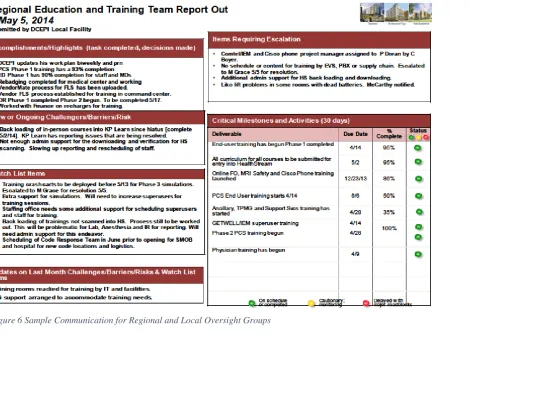
Figure 6 Sample Communication for Regional and Local Oversight Groups ... 74
Figure 7 Baseline Metrics for Comparison between Old and New Facilities ... 75
Figure 8 Facility Training Curriculum Development Timeline ... 77
Figure 9 Phased Training by Service Line/Departments ... 78
Figure 10 Work Breakdown Structure WBS Sample Dept. ... 79
Figure 11 Sample of Phased Training Curriculum ... 81
Figure 12 Budgeted versus Scheduled Training Hours ... 83
Running Head: AN EVIDENCE-BASED APPROACH TO A REPLACEMENT HOSPITAL TRAINING CURRICULUM 6
Abstract
Creation of a training and educational curriculum for a new or replacement facility is daunting in
its own right, but without a repository of organizational knowledge cataloging the transfer of
tacit to explicit knowledge from the organizations previous library of facility openings, the task
becomes Herculean, with as many tasks and cast of characters as the original myths. Navigating
the shoals, eddies and tides of the various aspects of this project revealed the need for a
comprehensive knowledge management solution to training that is coupled with healthcare
design principles and initiatives. This purpose of the DNP project is about the assessment,
design, implementation and evaluation of a major training program to prepare for a new hospital
opening.
December 11, 2014
Copyright ©December 11, 2014
Running Head: AN EVIDENCE-BASED APPROACH TO A REPLACEMENT HOSPITAL TRAINING CURRICULUM 8
Chapter 1 Introduction
Planning for a replacement healthcare facility opening is a long an arduous process
spanning months to years, from the needs assessment, design, estimates and bids for
construction, equipment and land acquisition, to the planning of the training of the staff on the
new facility, features, equipment and safety measures inherit in the design (Battles, 2006;
Geimer-Flanders, 2009; Lu & Price, 2011; Martin, 2009). Change management will need to be a
part of the overall plan as new and replacement facilities inevitably change every aspect of the
work environment and create responses from positive anticipation to dread as the days approach
for the new change. Planning for all these variables requires a new set of skills that most in
nursing education have not dealt with on this scale. Having a clear path to understanding the
variables and successful and not so successful strategies will set the foundation for a repository
of training knowledge management from whom all in the profession can drink.
Background Knowledge
The cost trend of an estimated $200 billion dollars in healthcare construction spending by
the end of 2015 has the healthcare industry and nursing leadership in particular, in a quandary for
augmenting their leadership and design capacities to meet the new marketplace demand
(Stichler, 2011; J. F. Stichler, 2012a; Stichler, 2013, 2014b, 2014c; Stichler & Gregory, 2012).
The additional layer is added to the already shifting priorities in reimbursement structures as
outlined in the triple AIM with the passage of the Patient Protection and Affordable Care Act
(2010) ( http://www.beckershospitalreview.com/hospital-management-administration/how-the-affordable-care-act-affects-healthcare-construction.html. In the State of California there is a regulatory imperative that was legislated following the 1994 Northridge earthquake. Senate Bill
hospitals and healthcare systems must meet these requirements monitored through the Office of
Statewide Health Planning and Development (OSPHD)
(http://www.oshpd.ca.gov/FDD/seismic_compliance/).
Many health systems have embarked upon this quest for seismic upgrade to both existing
facilities and replacing ones that are too costly to retrofit for new technologies and standards.
This trend was somewhat muted during the recession of 2008-2010, but has rebounded now that
the Affordable Care Act has been upheld by the Supreme Court and various political challenges
(
http://www.hhnmag.com/display/HHN-news-article.dhtml?dcrPath=%2Ftemplatedata%2FHF_Common%2FNewsArticle%2Fdata%2FHFM% 2FMagazine%2F2014%2FFeb%2F0214HFM_FEA_CoverStory). The trend to utilize evidence-based hospital design (EBD) and LEAN (comes from the English translation of the Japanese
word for elimination of waste muta) [http://en.wikipedia.org/wiki/Lean_Six_Sigma]) concepts in
construction are making inroads into the healthcare industry (Battles, 2006; Building the
Evidence Base: Undersanding Research in Healthcare Design, 2014; Carr, Sangiorgi, Buscher,
Junginger, & Cooper, 2011; Integrating Evidence-Based Design: Practicing the Healthcare
Design Process, 2010; Steinke, Webster, & Fontaine, 2010; J. Stichler, 2012a; Stichler, 2007c,
2014c). The application of these concepts to the healthcare facility design are steps in the right
direction for the industry establishing standards and benchmarks, however, these concepts should
not be limited to design and construction phases only, but include the training and
post-occupancy evaluation to the original vision and goals (Guinther, Carll-White, & Real, 2014;
Kotzer, Zacharakis, Raynolds, & Buenning, 2011; Steinke et al., 2010).
Some organizations have created simulation centers to test various designs and
An Evidence-Based Approach 10
design changes as well as the impact of staff efficiencies. This harkens back to Lockheed’s
Skunk Works established at the end of World War II to build the next generation of aircraft with
stealth capabilities (http://en.wikipedia.org/wiki/Skunk_Works). The purpose of Skunk Works was to provide a space where engineers, scientists and manufacturers could experiment with
what new aircraft would be and how to manufacture them. They got to play the “What If” game
and created the next generation of the strategic air command. The next generation of hospitals
and technology empowered health integration may well be thought of and tested in Skunk Works
like environments. Having the ability to play the “What If” game with reliable data will be key
to cost, operational and patient safety efficiencies heretofore not realized (McCreary, 2010).
Organizations have created templates for their hospital designs that meet the building
standards and codes of various licensing and accrediting bodies such as The Joint Commission
(TJC), Clinical Laboratories Institute of America (CLIA), College of American Pathologists
(CAP), and in California, the Office of Statewide Health Planning and Development (OSPHD).
The templates have been vetted with some of these agencies to streamline the approval process,
to standardize the design construction costs, variation in the delivery of care, and to maximize
resources through contracts and procurement of equipment. This process is known in some
organizations as the “template hospital.” Organizations have used this strategy successfully
opening many facilities within a health system.
Success of the template hospital approach would give impetus for organizations to create
a similar process for the design and implementation of training and orientation to new and
replacement facilities in a standardized template approach. The training budget is one of the
largest items in the replacement project. The literature is replete with evidence-based facility
patient and employee satisfaction. The Journal Health, Environments, Research & Design
(HERD) and Healthcare Design fills this niche approach at the nexus of design, construction and
evidence-based practices. The Center for Health Design (CHD) was established to advance the
case for brining evidence-based research to healthcare design (Rabner, 2012; Shoemaker,
Kazley, & White, 2010; Thompson et al., 2012; Ulrich, Berry, Quan, & Parish, 2010).
Although much has been done in this area, there is a lack of current literature reflecting
the same processes for standardized training templates for new or replacement facilities from an
evidence-based approach.
Local Problem
A local healthcare system embarked on opening three facilities within the same year (two
replacement and one new), and set out to have a standardized approach to develop training
budgets for all three projects. Facilities education/training budgets were designed based on
assumptions of only training for new and different workflows, equipment and processes.
The identified leads for the training project were the Directors of the Clinical Education,
Practice & Informatics (DCEPI) departments for the three facilities. This was a regional
decision to be shepherded by the regional DCEPI as the facilitator and interface with the regional
group in charge of the facility replacement project known as Delivery Systems Implementation
(DSI) and the local Transition Oversight Team (TOT). The three DCEPIs were brought together
to discuss the vision and operating principles for how to design the training budget. Once the
budget was vetted and approved it was up to the local training leads to build and design that
program within the established guidelines to meet the licensing and regulatory requirements for
An Evidence-Based Approach 12
just the inpatient nursing portion (which had been their previous domain of authority). This
would require a whole new approach to coordination, resource allocation, monitoring,
documentation and reporting structure than had previously been aligned within their job.
Intended Improvement/Purpose of Change
The aim of this project was to design a training program for the replacement hospital that
would meet licensing, regulatory and operational requirements. The measures of success would
be 1) licensing the facility on time with no issues related to training, 2) opening the facility on
time with no issues related to training, 3) being within 120% of the budgeted allocation for
training, 4) having a plan for those staff that missed the onboarding and training for the new
facility, 5) comparison of old and new facility with nurse sensitive indicators (National Database
of Nursing Quality Indicators [NDNQI]) patient falls with and without injuries, hospital acquired
pressure ulcers (HAPU), central line associated blood stream infections (CLABSI), hospital
acquired pneumonia (HAP), safety attitude index scores, workplace injury acceptance rates,
patient day rates metrics for over and under 65, and care without delay (patient left emergency
room within 60 minutes), and 6) a post-occupancy evaluation of the transition at 6, 12 and 24
Chapter 2Review of the Literature/Theoretical Frameworks
The paucity of evidence in the literature for this topic (training for a replacement or new
facility) centers on lessons learned from others that have gone before and created said
curriculum. There is a rich body of literature that centers on the health design principles and
safety initiatives from regulatory bodies (Joint Commission, Institute for Healthcare
Improvement [IHI], and the Institute of Medicine [IOM]) and from the Center for Health Design
[CHD], an organization advancing health design principles and evidenced-based practices.
However, this literature does not go beyond the design implication into training. Finally, there is
the knowledge management literature that speaks to how to create knowledge from existing tacit
knowledge into organizational explicit knowledge that becomes tacit knowledge for all workers
(Davidson & Voss, 2002; Dewhurst, Hancock, & Ellsworth, 2013; Nonaka, 1991; Sutcliffe &
Weber, 2003).
Review Strategy
The search strategy employed the keywords, training healthcare facility, facility design
training, knowledge management, nursing, and training curriculum in the following databases,
CINHAL, PubMed, Google Scholar, Fusion, ProQuest, and ABI Inform (Appendix E Summary
of Evidence Table).
The Center for Health Design (CHD) was founded in Concord, California to assist with
being a repository for the architectural firms that were marketing to health facilities and the
regulatory agencies that influence the physical, structural and substantive aspects of medical
An Evidence-Based Approach 14
design, architects, healthcare leadership, nursing, regulatory bodies and other assorted ad hoc
industry leaders (technology firms and futurists).
Creation of journals that were focused on the research and evidence-based implications of
designs were founded such as Health, Environments & Research Design (HERD), and Health
Design to meet this need for information. The CHD has published a series of study guides to
help architects to understand what evidence-based research is and how to utilize it in making
design decisions (Building the Evidence Base: Undersanding Research in Healthcare Design,
2014; Integrating Evidence-Based Design: Practicing the Healthcare Design Process, 2010; An
Introduction to Evidence-Based Design: Exploring Healthcare and Design, 2010).
Vos, Goorthius and van Merode have published an evaluation of hospital design meeting
the operational goals and objectives for effectiveness and efficiencies. This was a mixed
methods study design that employed a case study and simulation for an outpatient clinic within a
hospital setting in the Netherlands. The purpose of the study was to 1) test an evaluation
methodology for the assessment of hospital building design from the viewpoint of the operations
management to assure that the building design supports the efficient and effective operating care
processes now and in the future, 2) look at the feasibility of replication for differing type of
simulations for decision-making design aspects (Vos, Groothuis, & van Merode, 2007, p. 357).
The results indicated that the methodology of using case study simulations for the design
met the objectives and helped to establish operational efficiencies and effectiveness on any given
design. The methodology will provide a means for operations to play the “what if” game with
designs and to test workflows before designs are beyond the change window.
Hua, Becker, Wurmer, Bliss-Hotlz and Hedges conducted research that looked at the
and patient safety. The pre-post research design compared centralized and decentralized nursing
units with teamwork dimensions, nurse sensitive metrics and communication patterns (Hua,
Becker, Wurmer, Bliss-Holtz, & Hedges, 2012). The results of the study did not find statistically
significant differences in nursing team communication patterns, quality of care or patient safety
issues. While the major design change was to affect patient satisfaction, which was achieved,
perceptions by the nursing staff were slightly decreased in teamwork dimensions and
communication with other nurses and health professionals. This adds to the body of evidence
that while some objectives can be achieved with design the full impact of the design on all the
participants needs to be explored to be fully understood. The unintended consequences on the
dimensions that make up teamwork safety climate and work satisfaction will need more research
to fully incorporate the impact to all groups and how those outcomes will be utilized (Hua et al.,
2012, p. 36).
Maguire, Burger, O’Donnell, and Parnell conducted a descriptive and comparative design
to evaluate how clinician’s perceive, evaluate and adjust to a new hospital environment, and how
much a healthy work environment helps with the practice shift toward patient-family centered
care in a pediatric hospital in the southeastern portion of the United States (Maguire, Burger,
O'Donnell, & Parnell, 2013). The findings of this study were that while some of the expectations
of the design impact of the single-family room were not realized, nurses were less stressed as
compared with other health professionals who were more stressed (dieticians, occupational
therapists, pharmacists, and social workers). Employees with more than three years of service
were more stressed than those with less experience; single-family rooms are very important to
An Evidence-Based Approach 16
through this change process that affects every aspect of the work environment is an area that
needs further investigation (Maguire et al., 2013, pp. 77-78).
Sadatsafavi and Walewski posit that one of the tenets of having a competitive advantage
is to leverage how the corporate mission, vision and values are reflected in the human resources
practices that interface within the environmental design interventions as displayed in a new or
replacement facility (Sadatsafavi & Walewski, 2013). The authors proposed a theoretical
framework for understanding how environmental factors of design can influence the
multifactorial aspects of job satisfaction. This conceptual framework supports the EBD as
aspects of perceived organizational support (POS) as a factor in an organization possessing a
competitive advantage. The proposed framework focuses on the influence of physical features of
the work environment on employee’s job attitudes (Sadatsafavi & Walewski, 2013, p. 106).
While these studies are representative for the health design aspect, none of these studies
ventured into to the training implications that these design aspects would entail. Understanding
the training implications of a design with both the initial as well as ongoing training
requirements, is a key element in the overall design evaluation and its sustainability. Linking the
training with the success of the design has not heretofore been asked in the literature.
The literature is replete with lessons learned from other organizations that have opened
new or replacement facilities. Stichler has a column in the Journal of Nursing Administration
called Health Facility Design that runs monthly and highlights views and issues on the role of
nursing leadership in the facility design process. This column was established in 2008. The
column discusses many of the aspects of design and how evidence-based approach is needed to
further designs that are truly patient-centered and incorporate regulatory recommendations. The
(Stichler, 2007a, 2007b; Stichler & Cesario, 2007; Stichler & Ecoff, 2009; Stichler & Gregory,
2012; Stichler & McCullough, 2012).
Ecoff and Thomason (2009) have published a recounting of their efforts and models that
they utilized in moving into a new facility in the far southwestern portion of the United States.
They employed the Donabedian model (Structure, Process and Outcomes) along with the Change
Acceleration Process (CAP) promoted by General Electric (Ecoff & Thomason, 2009). The
import of the publication were the strategies and lessons learned from the planning,
implementation and evaluation of the move. Linkages between design and training were not
addressed.
Stichler and Ecoff (2009) in the same year published their perspective on how to enable a
new culture moving into a new facility. They write that moving into a new facility is the
ultimate change project for all concerned (Stichler & Ecoff, 2009, p. 156). The focus of the
publication was on the change processes that were utilized during the move. What was missing
was a post-occupancy evaluation at regular intervals to see how the staff have accommodated
and adapted to their new environment (Stichler, 2010a). These would be key in the evaluation of
the effects for training both initially and ongoing as the staff and management settle into their
new environment and modify processes that required a fresh look. This becomes the foundation
for turning tacit knowledge into organizational knowledge in a learning organization (Nonaka,
1991; Nonaka & Knonno, 1998; Nonake & Takeuchi, 1995; Sutcliffe & Weber, 2003; Umemoto,
2002).
Stichler does propose a model for health facility design but stops with the design phase
and does not carry through to training (Stichler, 2014a). Stichler utilizes Donabedian as the
An Evidence-Based Approach 18
(Ulrich et al., 2010). This model adapts well to this project and perfectly defines the antecedent,
structure, process and outcome variables that training will be designing and implementing for the
new facility (Appendix A).
Stichler (2008) proposes a model for the calculation of the cost of a construction project.
The audience is again nurse executives who are now being asked to be a part of large
replacement of new facility construction design and implementations. Most of executive nursing
leadership education is minimal on finance and certainly non-inclusive of design principles and
construction calculations. Stichler again ends with the design phase and does not consider
training as part of the calculation (Stichler, 2008). Training for a new or replacement facility is
certainly one of the largest expenses in the whole project especially considering the lead time in
training, salaries and resources that must be mustered and brought to bear for a successful
rollout, not to be considered part of the overall project is shortsighted and part of the gap that this
project will attempt to bridge.
Another seminal work on the cost and value of a facility construction project based in
evidence and the business case for such a project is from Sadler (2011) who outlines the cost of
improvements that new designs, technologies and efficiencies with a new facility will bring
(Sadler et al., 2011; Sadler, DuBose, & Zimring, 2008). Again, this stops short of the startup
cost which includes training and the long term sustainable operations. While these may not met
with current accounting rules on cost calculations, it does behoove the organization to include
this type of cost in the overall project estimates given the expense that these facilities will incur
over time and how long they are intended to last.
Knowledge management was born from the shear amount of information that the
overwhelmed the current system of human brain processing power and spawned the growth of a
new industry, knowledge management (Davidson & Voss, 2002). Knowledge management has
become the buzz word with “big data” and the analytics that are required to make sense of this
amount of information. Big data was born in the consumer industry first and has now arrived at
healthcare industries doorstep. Big data analytics are all the rage and organizations are investing
heavily into analysts that can make sense of clinical as well as patient-centric data to make
strategic decisions (Anderson & Willson, 2009; Battles, 2006; Dewhurst et al., 2013; Sutcliffe &
Weber, 2003).
Nonaka (1991) introduced the concept of the knowledge-creating company with
organizations ability to translate, share and utilize tacit to explicit knowledge and back again to
tacit knowledge for all in the organization to employ into standard operating procedures
(Nonaka, 1991). Nonaka defines knowledge management as a management method used to
rapidly improve the problem-solving skills within an organization by discovering the knowledge
and know-how of organization members and sharing them throughout the organization (Nonaka,
1991). Knowledge management moved from being the ability to process large amounts of
information to the ability to translate unique organizational knowledge based in culture, values
and beliefs into the DNA fabric of the organization through what Nonaka and Takeuchi (1995)
call the spiral of knowledge creation (Appendix B) (Nonake & Takeuchi, 1995). Japanese
companies for the last three decades have inculcated these ideas into the very business strategies
that have made them so successful (Umemoto, 2002). They have created business structures that
move tacit knowledge through the spiral of knowledge creation, creating along the way
organizational knowledge of product development and implementation that completes the cycle
An Evidence-Based Approach 20
The cost of knowledge management has been in the literature as well. What is the cost to
an organization for all this technology and how well managers and leaders make decisions based
upon all this data? Sutcliff and Weber (2003) have estimated that there is a U-shaped curve
when it comes to investing in the technology versus the ability of the manager or leader to
interpret the information into meaningful organizational strategy (Sutcliffe & Weber, 2003).
Increasing the capacity of leaders and managers to embed the interpretation processes and to be
able to communicate them as well, is far more cost effective in organizational competitiveness
than increased spending on knowledge acquisition technologies (Nonaka & Knonno, 1998;
Nonaka & Takeuchi, 2011). It is the lived experience of organizational knowledge creation that
makes the competitive advantage.
What are the skills of the knowledge worker within nursing? Dewhurst, Hancock and
Ellsworth purport that the organizations need to take a system analysis of the gap between what
their current talent pool possesses versus what till be needed for competitive advantage
(Dewhurst et al., 2013). As the marketplace changes rapidly and everyone is scrambling for their
foothold into that niche market that will engender success, the skills of the leadership both at the
strategic executive level as well as the frontline managers will need to change and become more
agile, nimble and skilled at navigating in the ambiguous waters of uncertainty and overwhelming
and conflicting data. Learning to steer the ship in these waters will be the true test of leadership.
Establishing a repository of knowledge from previous facility openings from within the
organization that had been translated from tacit to explicit knowledge would have saved
countless hours in the tacit knowledge needed for this current project.
Conceptual/Theoretical Framework
Donabedian (1966) established the seminal framework for viewing the quality of medical
care delivered (Donabedian, 1966, 1968, 1969, 1976, 1978, 1979). This framework has been
utilized by many authors as a cornerstone of their approaches to current problems including
health care facility design (Stichler, 2014a; Ulrich et al., 2010). The simplicity of the model,
structure, process and outcome, lends itself to adaptation for many discipline and in particular
healthcare from which it was born.
Stichler has adapted the Donabedian model to that of a health facility design perspective
(Appendix A) with definitions and examples of the requisite component elements, antecedent,
structural, process and outcomes (Stichler, 2014a). She further defines outcomes from various
entities; patients, providers, employees as well as organizational outcomes. This model meets
the component elements for the project-training program and provides the framework within
which to develop it. Establishing this model as the framework for a training program would
create the foundation of an evidence-based training curriculum database. Such a database would
be an organizational strategy for future decisions on the financial impact of evidence-based
design and the corresponding training to support the intended efficiencies and goals of the
design.
The impact of many of the antecedent variables as outlined in the model (vision, budget,
schedule, regulatory; position, power & influence; barriers and restraints) were not recognized
until after the training curriculum had been designed and launched. There were some that were
not in the model that should have been such as technology (new LMS scanning and tracking
system, and communication and monitoring systems) that were significant upgrades to the
An Evidence-Based Approach 22
evaluated for its own set of variables as the process of developing the project progresses. What
is required is a project lead that is well versed in the model and what variables can influence in
structure, process and outcomes. One of the facilities was going to employ technologies only
known in other advanced areas of the country (intra-operative MRI machine; first licensed within
the state) during this opening. The training implications were unknown at the time of the
training curriculum development.
Many unanticipated variables arose that completely altered the timelines and deliverable
dates that were unforeseen such as the moving up of one of the opening dates for the second
facility by 16 weeks to compensate for the possible work stoppage during that time of the
expiration of a major union contract. The resources that needed to be reallocated for that to
occur were completely unprecedented within the organization. The downstream effect was that
additional contract resources had to be engaged to meet the deadline as the same pool had been
counted on to open two major facilities one of which would the most technologically challenging
opening in the organizations history.
Development and organization of the training curriculum within this framework clearly
would establish the structure, process and outcomes that were required for successful
implementation. There was no template from the organization for this, despite having had 10
previous successful openings within the health system. There was no explicit data translated
from the tacit knowledge of the previous openings. This is the major gap that will be filled in the
opening of the facility.
The concept of knowledge management and organizational knowledge creation became
evident during this project implementation. Understanding the need for translation of tacit to
of that knowledge back to tacit for the frontline staff gives organizations their competitive
advantage (Nonaka & Knonno, 1998; Nonake & Takeuchi, 1995) (Appendix B).
Knowledge management has been a key driver for the success of many Japanese
companies as they have made these concepts part of their business structures and strategic
operations (Umemoto, 2002). Nonaka’s seminal work in 1991 and subsequent development of
the concept of “Ba” as the source for knowledge creation, Japanese organizations have worked to
infuse these concepts into the business strategies and leadership development to further their
competitive advantage (Nonaka & Knonno, 1998). Nonaka states,
What differentiates ba from ordinary human interaction is the concept of knowledge creation. Ba provides a platform for advancing individual and/or collective knowledge. It is from such a platform that a transcendental perspective integrates all information needed (Nonaka & Knonno, 1998, p. 40).
This becomes a reality when shared spaces are driven by shared goals and objectives.
Knowledge creation becomes the responsibility of all in the organization and each person sees
their role in the creation. Information is not utilized and harbored for power and influence but
for the common good and attainment of organizational competitive advantage. Knowledge
creation for competitive advantage will become the mantra for the healthcare industry as they try
to differentiate themselves in the marketplace. Driving this endeavor will be the changing
reimbursement structures outlined in the Affordable Care Act (2010). This jockeying for
Running Head: AN EVIDENCE-BASED APPROACH TO A REPLACEMENT HOSPITAL TRAINING CURRICULUM 24
Chapter 3 Methods
Ethical Issues
The ethical issues for this project centered more on the bringing to bear the resources to
safely open the facility. While cost was the dominate issue in the formulation of the training
curriculum, there was consensus from local leadership that they would expend whatever was
needed to safely meet the opening and regulatory requirements. This became a reality when
there was a decision to include a phase IV for the Neonatal and Pediatric Intensive Care Units for
practice drills for safety reasons as well as the retraining of all the telemetry staff on the new
communication devices once the alert protocol was agreed to. These decisions were made in
spite of the directive that the budgeted training hours were set in stone and exceptions would
need to be approved at the organizational level.
Additional ethical issues arose when the training lead was asked to include content into
the curriculum which was contradicted by the organization in the agreements for the training
curriculum. The training lead was ordered to include the content and to delete something else
from the agreed upon curriculum.
There were no other identifiable ethical issues or conflicts of interest noted for this
project. Appendix F is the approved Project Determination that was submitted for approval in
March 2014 and approved by faculty and chair.
Setting
The medical center is a 349 bed licensed facility in the urban landscape of the Bay Area
organization in the United States. The organization treats members within its service
agreements. This facility is the original facility of the largest non-profit health system in the
country with its headquarters located in the same city. The organization is comprised of three
separate entities which have contracted with each other since its founding, two are non-profit and
one is for profit. The for-profit is the physician entity and are thus employees of the
organization. The facility is part of a 21-hospital health maintenance organization located in the
Northern California region. The city is an urban setting with a very diverse populations catering
mostly to middle and lower socioeconomic strata that have prepaid health insurance through
their employers. The catchment area includes high to low income strata, with a satellite facility
in the very low socioeconomic area of an adjacent county.
Planning the Intervention
The organization had a group tasked with developing a corporate strategy for opening
facilities called the National Facilities Training and Orientation (NFTO). This group created
many tools for opening of facilities and these tools were stored on a website of the same name
for other to access. These tools were made available for each DCEPI to evaluate and utilize as
they saw fit. This group had been disbanded since the last opening (2010) through new
leadership and strategic oversight. Some of the members of this original group were still
working within the organization in various capacities and could be called upon as needed and
tapped for information. Resources that had been aligned within this structure of NFTO had been
realigned as well. Many of these templates were described by previous users as “best practices”
without any tacit to explicit to organizational knowledge and its relative usefulness to the current
An Evidence-Based Approach 26
Some of the local decisions at other facilities had influence in the decisions from a
regional perspective. Case in point, originally this local facility was planning on a two-hour in
seat facility orientation class with another one hour facility tour. Other facilities had made the
decision to do the facility orientation as an online course and distributed to departments through
the learning management system (LMS). This online version would only require one hour of
time not two. This decision became part of the approved budget for facility orientation time at
the regional level and thus influenced the delivery of content at the local level. This caused
considerable scrambling for realignment of content and time as this local facility was almost
completed with its content and project plan.
The training program was composed of the following elements: 1) Facility Orientation
and Tours, 2) Change Management in-person and/or online classes, 3) Departmental Orientation
and Tour, 4) Equipment training (new and different only), 5) Workflows (new and different
only), 6) Simulations for teamwork with new workflows in a new building (only designated team
were assigned this initial function), and finally 7) Dual learning management systems (LMS).
There was a facility orientation and tours subgroup that was formed that was a vestige of
the NFTO structure. The lead for that subgroup was a member of the original NFTO group and
had been part of two previous openings within the organization. The lead lent oversight in the
development of content and had a dotted line to the DCEPI for this content, but reported to the
Human Resources (HR) leader who was the executive sponsor for this work. The HR leader was
a member of the Transition Oversight Team (TOT) who were responsible to the local executive
sponsors as well as the corporate executive sponsors for this project.
The director for the imaging department, whose responsibility included the new
that would be installed in the new building, included within the facility orientation a basic safety
module on MRI safety for all staff. This module was created as an online module for all staff to
take. This required that this information be formatted so that both LMS systems could house and
track this. This was not part of the budgeted hours from the corporate allocation.
The change management in-person and online courses was formulated by a director of
leadership development for the leaders and managers. Given the unique situation of not being
allowed to engage the frontline staff in the content development for change (corporate leaders
had not formally reached out to the unions regarding the moves) so change management was
confined and directed toward the leaders and managers. This module was placed on the
leadership development website for all managers to complete and was assigned to be completed
in the 2013, 6 months before the move. While there was talk of ongoing change management
aspects there was no substantive outreach to keep this alive within management nor frontline
staff.
Departmental orientation and tours is a regulatory requirement as outlined in the
California administrative code known as Title 22. The department managers and their designees
were responsible for leading the departmental tours. The content for these orientations were
tailored and vetted by the Accreditation, Regulation and Licensure (AR&L) director to
incorporate the regulatory requirements into the prepackaged presentations for their departments.
Additions to the presentations were minimized to decrease variation and any of the nuances of
the department were pointed out in the tours.
Releasing the managers for these orientations and tours to set performance expectations
was problematic given the competing local and organizational priorities. The inpatient nursing
An Evidence-Based Approach 28
organizational and local goal. The Chief Nursing Officer (CNO) had to issue a requirement that
each department management team would make it a priority as to who would be present daily for
the ten days of the orientation during the first phase of the training (where department orientation
occurred).
Equipment training would be one of the variables with the widest range of training
requirements depending upon the department and the amount and type of new equipment. The
variation ranged from no change in equipment to departments like the operating room where
there were almost all new equipment and new technologies. The training hours were garnered by
conversations with the managers and medical equipment coordinators (MEC) as to an estimation
of how long the training would take. This was used in the development of the training
curriculum but not the overall budget allocation. This conversation was had with each
department manager to incorporate this into the overall training time and curriculum design. The
initial conversations between the MEC and the department managers occurred 18 months in
advance of the training curriculum design and many of those managers had substantial turnover
in ranks with no handoff in knowledge of decisions. The MEC did not catalog these decisions
for future reference.
The perioperative department had special challenges to overcome as the regional decision
not to shut down the operating rooms for the week of estimated training time was made. This
decision required creative thinking in constructing not only the curriculum but the schedule as
well. A compromise was arrived at with bulk training that had to occur within the new
environment would be done on Saturdays at premium time. Four designated Saturdays would be
identified to get the maximum number of staff based upon the skeletons they worked.
90 minute in-services in the old facility and tracked with sign-in sheets. This created a work for
the LMS administrator to manually enter data rather than the use of the scanning technology.
Simulations were a stock in trade methodology that the Clinical Education, Practice and
Informatics (CEPI) department was used to utilizing. The CEPI department had the first
simulation lab in the Northern California regional area and had been the site of a research study
funded by the Health Services Research Administration (HRSA). The CEPI department was
well versed with the utilization of simulations as part of the overall quality and patient safety
strategy within the local facility (Bearman et al., 2012; Capella et al., 2010; Jeffs et al., 2010;
Marshall, Harrison, & Flanagan, 2009; Steinemann et al., 2011). Simulations for identified
departments that would require new workflows would be used in the development of the training
curriculum. Departments with new areas of responsibility would definitely have multiple
simulations that would occur prior to opening and on an ongoing basis.
Superusers (staff who were expressed desire to train and were given extra time to learn
the equipment/workflows and to train) were employed with identified staff from specific areas to
extend the trainers and embed the training into the working knowledge of the staff. This model
employed the Roger’s Diffusion of Innovations (Rogers, 2002, 2004) concept and early adopters
were specifically solicited for this task for which they readily accepted and signed up. This
strategy proved invaluable when it came to further last minute training revisions that needed to
be done due to technology use agreements that had not been previously formalized.
An unanticipated antecedent variable came into play when the organization decided to
move the second facility opening up by 16 weeks to avoid a work stoppage crisis due to the
expiration of a major union contract. This decision coupled with a major offline upgrade to the
An Evidence-Based Approach 30
allocations. Those two events forced the organization to go with one LMS system (the new
contracted one) that would be the transcript of record. Given that this local facility had already
launched the online training models in both systems it would be very arduous to channel the
training into only one system. This would require tracking in two different systems and the
manpower associated with that much record keeping and reporting. The training coordinators
that were hired to track this information were spending 80 percent of their time on continuous
data scrubbing and updates, as this process occurred over 6 months and there were continuous
updates in staff and management responsibilities.
This also required that staff who were not previously in the new contracted LMS had to
have information loaded and paid for by the organization (usage was on a per seat basis). There
was also learning the new system that was going to present a minor challenge to the training
team. The advantage to using the new contracted LMS was the increased capacity for electronic
scanning of participants and the elimination of paper records.
The new directive also had consequences with loading information into the new
contracted LMS system and the validity and reliability of that data. The information had to be
manually coded to load into the new LMS (automatic interface would be three months in the
making) creating many obstacles to overcome. Managers were responsible to keep the HR
database up to date and accurate so that the data feed to the LMS system would be as well.
Many man hour resources were required to keep the database accurate. Identification of this
problem was the initial insight into structuring information in a knowledge management
approach that would have simplified this work (Dewhurst et al., 2013). Approaching this work
in this manner would serve the organization as a standardized approach to linking the training to
openings would not be as fraught with ambiguity and have a clearer decision-making matrix for
the introduction of new technologies with realistic timelines and budgets.
One of the initial processes to be dealt with was how many people needed to be trained
for this new replacement facility. This was thought to be an easy topic to address by conducting
a query on the HR database by cost center within the facility location. Those data were then sent
to managers for verification of accuracy. This simple process revealed many issues with the
reliability and validity of the data extraction. The DSI team further asked for the trainees to be
categorized by the particular job codes that they were in to estimate training budgets.
Furthermore, when aligning the data extraction from the HR system to that of the scheduling
system [no interface between them for accuracy verification] they were found to be inconsistent
with data validity. This was a problem that had to be solved early on in the planning for the
training. These numbers would be key in the planning of the number of sessions for each of the
units; numbers that can be released and fulfill the dual goals of staffing the current hospital as
well as meeting the training timelines; number of superusers per training session needed; number
of staff per session based on type and methodology required, and the volume that the building
and units could accommodate per training session.
A consultant was engaged by the DCEPI to help with the data integrity issues that were
encountered. What became clear from the consultants viewpoint was the need for a knowledge
management solution. Knowledge management is how an organization will gather, analyze,
utilize and share information within to increase its organizational competitiveness.
The use of dual LMS systems presented a challenge to the CEPI department as this also
required developing the curriculum into a format that would work with the LMS for tracking.
An Evidence-Based Approach 32
ensure standardization which was the intended goal for the use of the technology. Many of the
members of the CEPI department are technologically challenged and the introduction of these
new processes with the deadlines presented challenges for understanding and compliance. The
CEPI department was within one week to create all content with supporting documentation for
the courses that would be taught in the various aspects of the training. This presented challenges
on multiple levels. Because of the phased approach to training (Appendix J), many of the
courses had not been conceived of nor articulated at the time of the deadline. Many of the CEPI
staff had not had their training in order to build the content within the phased training. This
presented many real challenges both logistically as well as philosophically. Many hours were
spent on working through these seemingly contradictory priorities. The phased approach was
identified as the best way to keep dual operations running and not impact staffing, and minimize
the number of travelers needed for backfill for the trainees. Appendix D is a sample of the
decision making process that included service directors, unit managers and the staffing office
manager to construct the training plan.
Appendix I shows the process and deadlines for the formulation of the facility training
curriculum timeline development. As noted above, many of the assumptions that this training
curriculum was built upon were continuously in play and had to be reworked on an ongoing
basis. The curriculum development was particularly challenging when the organization needed
to make a decision on whether this local facility could have its opening date moved up by a
month. Monthly meetings were established once the training was underway to report progress
and barriers if any to both the regional oversight group as well as the Transition Oversight Team
progress were completed with the same criteria. Sample communications for the TOT and
regional oversight group are shown in Appendix G.
In order to ensure success in this very dynamic project with all parts moving separately
and in their own rhythm, integration with the entire project was needed to be successful. Some
of the lessons learned from the opening of the medical office building (MOB) was when a
department was truly completed and ready for occupancy. When one project arm was completed
with its work and reported done that perhaps meant that another project arm needed to start of
finish its portion of the work. Not having awareness that all work was completed by all project
arms created delays in functionality and operations of some portions of the MOB. In order to
avoid those issues again, the project leader employed a consultant firm that tracked the status
updates of all the arms of the project into one integrated hospital systems (HIS) team report
structure that met weekly. The work breakdown structure (WBS) (Appendix K) for training was
integrated into the HIS weekly report to be discussed at the weekly meeting and with senior and
regional leadership. Many identified barriers were dealt with at this meeting where all could see
the impending issues.
Implementation of the Project
Once the training curriculum was developed by the constituent parties and vetted and
approved by the Transition Oversight Team (TOT), implementation began.
With all the staff that needed to be schedule on the inpatient nursing side as well as the
superusers that needed to be backfilled and taken out of staffing to train, working with the
staffing office on a daily basis was required. The number of trainers that would be needed was
An Evidence-Based Approach 34
trainers-to-training needed. Since that was totally dependent on the numbers of staff that could
be released per day and still run the dual operations, the staffing office would the gatekeeper for
this function. The goal was to have all inpatient staff through each phase of the training with as
minimal reschedules as possible. This would require accurate real-time data that was responsive
to changes in census and staffing. A process was created with the staffing office by which the
office would supply the names of the trainees and the trainers based on staffing by the end of
business day prior to the training day (EOB Tuesday for Wednesday’s training). Having to have
essentially 4 full-time people mapping, scheduling, verifying and scrubbing data on a daily basis
for 90 days was what it took to ensure that the dual goals of getting staff through the required
training and keeping the hospital running and safe staffing was monumental. The consultant was
also involved to screen for duplications and counting of staff by departments. This was also
reported at the HIS meeting weekly so that barriers would be engaged with senior leadership
before they became issues.
The non-Patient Care Services departments [PCS] had the assigned project lead from the
training team meet with the managers to design their content and strategy plan for completion of
the training (Appendix C). Each manager was believed to be the content expert in the operation
and training needs for their departments. From these discussions curriculum was development as
well as the training plan for completion by the allotted timeframes. These curriculum were then
amalgamated into the larger project work breakdown structure for tracking of completion
(Appendix K).
The same process for the Ambulatory departments and physicians was utilized for
completion of their training curriculum and plan. The physicians were paired with the
Maternity and Perioperative services]. The physician department that didn't have a manager nor
real home was that of the Hospital-Based Physicians. They worked within the Adult and the
Emergency Services departments and planned their training with these departments.
Planning the Study of the Intervention
The intervention was the curriculum that was designed and implemented. This
curriculum was designed with the knowledge at hand in December of 2013. There were still
many unknowns at that time for the design and would have to be addressed as information
become known and available. From the regional operations perspective it was left up to the local
facility to design and implement their curriculum that they had vetted locally. There was no plan
from a regional operations perspective to do a post-occupancy evaluation other than an informal
lessons learned session. There was no plan to formalize this knowledge into a structure that
would translate the tacit knowledge of the design and implementation into explicit organizational
knowledge for use as a benchmark in future openings.
The assignment of the training lead by regional PCS leadership to the DCEPI was based
on the assumption that they have developed, executed and evaluated training curriculum in the
past. The DCEPI had these skills but not on the scale of such a project. The coordination of all
the variables that encompassed this project was on a level never known to any of the DCEPIs.
While there were persons who were hired as project managers, they did not have formal training
nor certification in the field of project management. This required that the local DCEPI acquire
these skills set while doing the project. The local DCEPI enlisted an outside consultant with a
wealth of large project management experience to assist the guidance on this project. A SWOT
An Evidence-Based Approach 36
L). It was determined the shill set required for knowledge management was lacking and a
consultant was engaged to fill that skills gap.
The consultant’s experience assisted with the sorting of the HR data, augmented the data
management skills of the training coordinators, assisted with the creation of the work breakdown
structure [WBS] that was the guide to resource allocation for the various aspects of the project
and its completion (Appendix K). The consultant was able to augment the project management
skills that the local training lead had not yet acquired. The consultant was able to guide the local
DCEPI in the acquisition of this skill set.
The consultant introduced the local DCEPI to the concepts of knowledge management in
the acquisition and management of information within the organization that would have greatly
streamlined decision-making and resource allocations. Through this relationship with the
consultant and the local doctoral education program, the DCEPI began to understand the nature
of the knowledge management and it significance to nursing beyond beside into the realm of
management on an executive management level. Operations were being impacted by the ability
to manipulate complex data sets within complex adaptive systems to make strategic decisions
(Scott, 2007).
Proposal by the local DCEPI and consultant were initiated with the regional DSI team to
engage them in the prospects of a knowledge management system could accomplish for the third
facility training planning that had yet to get underway. This offer was not met with enthusiasm.
The same process for the third facility training curriculum planning was replicated like the first
two. Lessons learned were not codified nor categorized for data management and knowledge
Evaluation
Comparison of the identified metrics pre-move and post-occupancy would be the method
of evaluation. These metrics would be parsed for influences regarding training and design as
noted in the complaints regarding such. These metrics are organizational metrics and thus would
be easy to garner.
Analysis
Analysis would consist of compare and contrast the organizational metrics that are within
the elements of the conceptual framework (Appendix H). These metrics would not be
completely available until December 2014. The metrics would be gathered at the 6, 12 18 and
24 month intervals to note any changes within the organizational metrics. The nurse sensitive
metrics (Nursing Database for Nursing Quality Indicators [NDNQI]) are reported publically as
well as the organizational metrics. Accompanying the metrics would be any complaints
regarding the design or training and analysis for relevance. The caveat to this analysis is that
given the fact that this is a union contract negotiating year, the relevance of the claims for
training have been skewed as this has been part of the union claims of lack of training for the
new facilities. These claims have been part of the union’s media campaign during the
negotiating period. Survey results and reports may have been influenced as part of the
negotiations. Further analysis of this information would have to be done to verify validity of
claims. Report of any never events will also be included in the analysis to evaluate the influence
of training on the issues.
Sources of Funding
Funding for the training program for each of the replacement hospitals that were being
constructed and opened in 2014 was done through the regional Deliver Systems Implementation
An Evidence-Based Approach 38
decided matrix for the type of specialties that each facility would have and the estimated time for
training that would be required for the aggregated new and different equipment. Estimates for
thetraining time were derived from vendor recommendations (if there were any) and regional
expert opinions based upon past experiences. No clear methodology for estimation from
previous opening data was gathered. The matrix was created by the Clinical Education, Practice
& Informatics teams at each facility and then submitted to the DSI team for vetting. DSI also
vetted the proposed matrixes with the regional Patient Care Services [PCS] leadership from the
respective domains of service [e.g. Maternal Child Health, Adult & Critical Care, Perioperative,
etc.] for final recommendations.
The final budget matrixes were then distributed to the Transition Leaders at each facility
for working with the facility Area Finance Leader and the Transition Oversight Teams [TOT].
The identified responsible party for implementation of the training program for each medical
center was the Director of Clinical Education, Practice & Informatics [DCEPI].
The training budget was never shared with the DCEPI. All the training hours that were
scheduled were recharged to the training start up budget. It was a coordinated effort on the part
of the staffing and payroll departments. The local DCEPI would have been the authority to have
established the variances between the budgeted and actual knowing the changes that happened
and would be in the position to categorize the variances for making explicit what was tacit
Chapter 4Results Program Evaluation/Outcomes
The goals of the project were met with the opening of the facility on time. The facility
was licensed without any contingencies. This was accomplished during the survey by the
California Department of Public Health (CDPH) on June 16-17. There were no contingencies of
any kind with the licensure. There was particular scrutiny regarding some of the new
technologies given the history of the facility with past issues around telemetry monitoring and
training. The training plans were scrutinized for completeness and demonstrations by staff were
done to the satisfaction of the surveyor.
There were no contingencies related to training of any kind nor the record keeping.
Continued scrubbing of the data will continue until the reaccreditation by the Joint Commission
will be accomplished in the 4th quarter of 2014.
Since there is no access to the budgeted or actual training expenses there cannot be an
assessment of the training variances. If there is a variance analysis done it has not been shared
despite repeated requests at both the regional and local levels.
Analysis would include how the various trainings were modified and under what
circumstances for achieving their intended outcomes. Examples would include the new
telemetry monitoring and nurse communication systems that were rolled out from the vendor,
were not in the finalized configuration for utilization when the training was implemented. This
required a project manager to assist with the reconfiguration of the systems and then schedule
retraining for all those staff affected by the reconfiguration. This is an example of tacit
knowledge becoming part of explicit and organizational knowledge management for future
An Evidence-Based Approach 40
the circumstances for the variances diminishes with time. Post-occupancy metrics is
recommended between 6 months and 2 years for institutional memory to be gleaned and
recorded for future use (Stichler, 2010a).
Analysis of the metrics as indicated in would be done from the pre-, post-occupancy at 6,
12, 18 and 24 months intervals (J. Stichler, 2012a, 2012b; Stichler, 2009a, 2009b, 2010b; J. F.
Stichler, 2012a, 2012b). The metrics would look at the influence of training in the new
environment for a causal relationship.
All never events post-occupancy will be analyzed for root cause (Blue et al., 2010;
Bowie, Skinner, & de Wet, 2013; Connelly, 2012; Day, Dalto, Fox, & Turpin, 2006; Harrison,
2014). Part of the analysis will be the training surrounding the events and the workflows in the
new facility (Stephenson, 2011; Watson, 2010).
The training budget was never shared with the local DCEPIs. The role was responsible
for creating the training content and alignment of the training hours with the budgeted time
allotments. The Transition Project Leader [TPL] was the responsible party to the DSI team for
the budget. Inquiries regarding organizational training variance data on the 10 previous facility
openings was nil. The executive director of the DSI indicated that these analyses were not done
so there was no way to know what training curriculums were more successful than others in
meeting the programs and organizational goals and objectives (personal communication S
Brown, June, 2014).
The DSI team had requested to have information related to the number of training hours
per job code. This request was not revealed as to the nature of the inquiry but from a budgetary
resource viewpoint, costing out training per job code is a short-sighted strategy. The