ministry of education in sweden (2004). The Swedish Committee on Education for Sustainable Development(ESD) assessment of current situation regarding ESD in Sweden and proposals for improvement posted to the Swedish Government on November 24, 2004 (SOU 2004:104).stockholm, sweden: skolverket.
Wickenberg, p. (2004). Learning to change our world?, swedish research on education and sustainable development, stockholm, sweden: studentlitteratur.
swedish national commission for unesco (2008). SWEDEN’S UNESCO STRATEGY 2008-2013, stockholm, sweden: swedish national commission for unesco.
agenda 21 and environmental work in the municipality of Växjö (2005) . Small and big steps, Växjö, sweden: Växjö Kommun.
Växjö Kommun, city of VÄXJÖ (2006). Environmental programme City of Växjö, Växjö sweden: Växjö Kommun.
miyauchi, t. (2005). Technique to inquire by your self and inquire guidance for citizen, tokyo, Japan, pp. 96-97, pp. 1�2-1��: iwanami active new book, iwanami publication., pp. 1�2-1��: iwanami active new book, iwanami publication.pp. 1�2-1��: iwanami active new book, iwanami publication.
ministry of education in sweden (1994). Curriculum for compulsory school system, the pre-school class and the leisure-time center (Lpö94), stockholm, sweden: skolverket.
ministry of education, culture, sports, science and technology (1998). Government guidelines for teaching, tokyo, Japan: ministry of education, culture, sports, science and technology.
robert, K. (2008). The Natural Step Story-Seeding a Quiet Revolution. Gabriola, island, canada: newGabriola, island, canada: new new society publishers.
nisida, i. (1911). Good Research. tokyo, Japan:iwanami bunko, iwanami syoten.
thunberg, l. (2007). SVERIGES EKOKOMMUNER, helsingborg, sweden: the national association of swedish eco-municipalities. seKom.
Advised by Ulla Riis, Uppsala University, Sweden
received: May 01, 2011 accepted: June 14, 2011
Yoshiko Asano Ph.D�� �������� �������h �������� ������ �������� ������������� ������� ���������� �������� �������h �������� ������ �������� ������������� ������� ���������������� �������h �������� ������ �������� ������������� ������� ���������� ������ �������� ������������� ������� �������������� �������� ������������� ������� ���������� ������������� ������� ��������� ������������� ������� ���������� ������� �������������� �������� T�ukub� ������ Ib���k��k����� 305�0045 ������.�����.
E�����: ������h�55@h������.���
RETHINKING OF KNOWLEDGE
MANAGEMENT INTRODUCTION AT
TEACHING UNIVERSITIES: THE
FRAMEWORK DEVELOPMENT
Vladimír Bureš University of Hradec Králové, Hradec Králové, Czech Republic E-mail: [email protected]
David Griffin, Denisa Hackett, Peter Kročitý, Erik Kubička The College of Management, Trenčín, Slovakia E-mail: [email protected], [email protected], [email protected], [email protected]
Abstract
The rapid penetration of information and communication technologies has been the main factor responsible for significant changes in the overall business landscape. Knowledge management (KM) implementation and building of learning organizations have become vital assumptions for a company’s ability to compete in a knowledge society. However, in regards to these issues a lack of attention has been paid to universities as a specific type of organization. The essential problem to be addressed is the tendency of institutions of higher learning to keep knowledge to themselves, which has been proven by several authors. Therefore, questions such as, “Are businesses different from universities? or “What does it imply for the KM implementation efforts at universities?” are considered in the paper. The goal of the paper is to map the changes in today’s business environment, research differences between the functions and processes in businesses and academic institutions in the Czech Republic and Slovakia, and, based on these findings, propose a framework for knowledge management implementation focusing on a special type of academic institution – a teaching university. Consequently, this study can serve as a starting point for implementation of a student-centred approach to knowledge management.
Key words: framework, knowledge management, knowledge sharing, students, university.
Introduction
Volume 32, 2011
34 information (Kelemen, 2007). the emergence of a knowledge society together with continuing globalization and innovations in the technological field substantially changes the way businesses must be administered in order to be successful in the new business environment, which is becoming increasingly complex and dynamic. this environment is typically described with the help of concepts such as “knowledge economy”, “new economy”, or “knowledge-based economy”. the knowledge economy has many characteristics; however, two of them can be perceived as predominant – intensive learning and deployment of information, communication and knowledge technologies (Kelemen, 2007). these characteristics and related principles are already applied in the business environment. apparently, it has brought better accessibility of information and this, with no doubt, has helped businesses to make improvements in the way they operate (laudon, 2010). on the other hand, it has been the main factor responsible for significant changes in the overall business landscape. Knowledge management implementation has become vital for a company’s ability to compete in a knowledge economy. however, in comparison to the business environment, a lack of attention has been paid to certain type of institutions which are closely related to learning processes – namely, universities. therefore, the goal of this paper is to map the changes in today’s business environment, research differences between the functions and processes in businesses and academic institutions and, based on these findings, propose a framework for knowledge management implementation focusing on a special type of academic institution – a teaching university.
Problem Definition and Literature Review
While changes in the business environment are reflected and investigated in many books or scientific journals, corresponding changes related to learning processes in the educational environment are still somewhat underemphasized. the most significant change can be witnessed in the area of “customers” for whom the educational system is taking place – i.e., students. contemporary students are called the “net Generation” (or homo Zappiens (Veen and van staalduinen, 2009), or millenials (howe and strauss, 2000)). the net Generation is the generation of youth which is growing up with modern icts which powerfully shape their mental models (i.e., views on the world around them). using multiple technologies, they are learning to develop new skills and exhibiting new behaviour patterns. this generation has several characteristics, which are summarized in table 1 (Veen and van staalduinen, 2009; oblinger and oblinger, 2005):
• preference for images and symbols as an enrichment of plain text; • seemingly effortless adoption of technology;
• cooperation and sharing in networks;
• usage of technology in a functional manner, i.e. not touching what they can’t use, and increasingly, this generation seems to take exploration and learning - discovering the world - into their own hands;
• Gravity toward group activity;
in the 21 century Volume 32, 2011 35
Table 1. Characteristics of Homo Zappiens (adapted from Veen and van Staal -duinen, 2009).
Characteristic Description
I������ ���f��������
H��� Z��������� ���f������� f�� ������ �� � ���� ���������� �����u�� �� �u����� ��� ��� ��� �h��� ����� g������������ ��� ����f������� ���h ‘���f��������� ����������� ��� H��� Z�������� ����� ����b�� �f h��������g �h�� �h����������� (V���� ���� V��kk���g�� �006). I�� ��� ����u����������� ���h ����� H��� Z�������� u��� ������ ���� �bb����������� �� ����. L�������ö� ���� S��b��� (�003) h��� ��b����� �h�� ����gu�g� �f �h����u�� ‘T�����S���k�.
T��h�����g� �� ���
H��� Z�������� �� ������ ����������� ��� ���h�����g� �f �� ���k� ���� ���� ju�� �� ������ ���k u� �����h���g ���� �f �h�� �u��� �h��� ������ b�����. Th�� �f���� h��� ������ u��������������g �f �h� fu������������ �f �h� ���h�����g� �h�� ��� u����g�� ��� �h�� ���� �x������ �h� fu��������� �h�� ��k� � ���� u��fu�. T������� (�998) f���u����� �h�� ����������� �f ���h�����g� ���� “I� �������� �x���. I��� ��k� �h� ���”.
I�������� ��u�������
Up to about the age of five, children seem to ask their parents how to use a personal ����u���. ���� �h� �g� �f ��x ���� �h������� h��� �������� h�� �� u�� �h� ��������� ����u��� and will often first resort to asking friends before asking their parents. From the age of eight u�������� �h�� g����������� �� ��u������g �h��� �������� ��� h�� �� u�� PC�� (V���� ���� ����b��� �005). Th�� ‘�������� ��u�������� �� ������� f�� �h�� g�����������.
N�����k���g �� �h��� ��f������
T� �h� N�� G������������� ������g ��� �������k� �� �� ������� �� b����h���g. H��� Z��������� ����� ���k� �����u�� b��h ����u�� ���� �h������ �������k�. Th�� ��� ������ ������������ ����������� �� ����������� �������k��� �h��ugh �h��h �h�� ���� ��� �������� ���h �h��� f������� ���� �h� ���� ��u��� �f ���f��������� ������b��.
C�����������
H��� Z�������� u�� �h��� �������k �f ��������� �� ������� �h�� ���h �h� ���f��������� �h�� need and if this network does not suffice, they ask an online community consisting of many ��������u��� �h�� �� ���� k������ bu� �h� ��� �������g �� h���. ��� �h� H��� Z���������� k�������g� �h�����g �� ������� ����� ���h �h��� �h� ��u �� ���� h��� �u�h k�������g� �� ���.
V���u�� �� ����
Y�u�h ����� ���� ���� ��k� �h� ���� ������������� b������� �h� ‘����� ����� ���� �h� ‘����u��� ����� �h�� �� �u�h �f ������� ����� ����. T� ������� ��u�h�� �h��� �h�� ����u������� ���h � f������ �h��ugh �h�� �� ��� � g����� �h�� ����u���������� �� ���� ���� ���� ���� �h��� � �h������ �������g. C���u������� ���� ������ �������k� ������ �� b� �h�������� ����u�� ���� h�b��� �� �h� ���� ����. (Ob����g�� ���� Ob����g���� �005).
Mu������ �����������
H��� Z�������� h�� �������� ���� f�������f��� ����������� �� ���u������� b� � b�� ������b���g � f������: “O������� h� �� �k���� bu� �� ��h��� h� �� � �����”. (V���� ���� ����b��� �005). Y�u��g ���� ��� ��� ���u������ �� �������g ���h ��ff������ �h�������� �� ����� ���� f��� �h� ������qu������ �f �h��� ��ff������ ����� �� ��h�� g����� ����� �� �h��.
Mu������k���g
Th��� �h������� ���� �� b� ���������� ����h TV�� ���k ��� �h� �h������ ������� �� �h� ����� ���� ����� � ���u������� ����������� ��� �� �h� ���� ����. (Ob����g�� ���� Ob����g���� �005). Ch������� ���� �� divide their attention across the different information flows, focusing only on one, but keeping a lower level of attention on the others. By using their attention flexibly, Homo Zappiens ����� ����b�� �f h��������g �u�h ���� ���f��������� �h��� ������u� g������������ (V���� ���� V��kk���g�� �006).
C������� ����u������
�� � ������qu����� �f �u������k���g�� �h�� ����������� ���� ������ �ub��������u��� ���u� ��ff������ ������� �f ���f��������� �� ������ �h��� �� ����� �h��� �����������. H��� Z�������� �� ����f������� ���h � ��� �f ���f����������� ���� ��� �f �� �� b� ��k��� �� f��� ���u�. C������� ����u������ �� �h�� children do when selecting and filtering information flows.
Z������g
Homo Zappiens seems to show a zapping behaviour that is specifically aimed at filtering ���f��������� f��� ��ff������ ���g���� �� �h� ���� ����. Th� �u����� �� �� g�� �h� �����g� ��� ����� �� u����������� (V���� ���� V��kk���g�� �006). I� ������ �h�� �� ������ ����� �h��� b��� �f ���� f��������� f��� ���h �h������� �h�� ��� �������� f�� u��������������g �h�� �h� ���g��� �� ��� �b�u�.
I�������� �����ff
Th� N�� G����������� h�� ������ ��������� ���� �h��� ����������� ������. Th��� �k���� ��� ����� �� processing various flows of different information quickly, but they have also come to expect �h�� k���� �f h�gh��������� ���f��������� ���������g; �����h���g ���� ���� �h�� ���� b����� b����. L�������ö� ���� S��b��� (�003) ��b�� �h�� �h� ‘I�������� G�����������.�
Self-confidence through ���f�����������
Volume 32, 2011
36 an appropriate reaction to the above-mentioned changes is one the most significant challenges for educational institutions. several tools have already been used for coping with this issue (e.g. implementation of virtual study environments or modifications in marketing strategies). although the first attempts to connect educational institutions with knowledge management can be identified in the second half of the 1990’s - for instance, mikulecká and mikulecký (1999) suggest using knowledge management in three basic areas: knowledge management lectures, in particular study programmes; knowledge management as the management approach of the university; and knowledge management used for the improvement of the education process - knowledge management is still one of those tools waiting for the opportunity to prove its full potential. since educational institutions represent organizations with their own processes, management, employees, mission, objectives and other related aspects, the utilization of knowledge management seems to be meaningful. thus, the introduction of knowledge management into educational institutions can be successfully performed since it is a managerial discipline based on a systematic work with knowledge at the organizational level (bureš, 2009).
Knowledge management in the form of systematic coordination of people, technologies, and processes, achieved through creating, sharing, and applying knowledge, as well as through feeding valuable lessons learned and best practices into corporate memory, becomes a strategic tool for companies that not only fosters organizational learning, but assures the overall organizational ability to survive and develop in today’s dynamic environment (dalkir, 2005). as indicated above, today’s environment is characterized by constant change (growing competition, societal changes, consumer preferences, etc.) and it is not only the case of business, but also education, which can be considered as a specific business sector, focused on trade with education and knowledge. therefore, it goes beyond setting systems and implementing tools for dealing with information and knowledge (bureš, 2007) or skilful application of techniques for handling impending changes and focuses on creating a complex conducive environment for competitiveness and productivity growth through learning, knowledge sharing, and innovations (mishra, 2007). this also implies promotion of values such as cooperativeness, fairness, openness, and continuous learning.
these basic values then influence the overall setting of other key organizational aspects – the most important of them being reward systems assuring long-term performance and human resource development, organizational design with flatter structures, stressing cooperation, teamwork, and communication, cooperative management and leadership, providing opportunities for initiatives and able to communicate organizational visions, and systems for work with information and knowledge assuring collecting and fluent flow of information and providing infrastructure for informed decision-making and systematic learning. although cejthamr and Dědina (2010) mention culture, motivation, leadership, structures and information technologies as the key pillars of learning organizations, other traditional emphasis areas of businesses cannot be underestimated as well. Quality control is one of such area, having special importance not only for manufacturing but also for knowledge-intensive fields such as research and education. another area is customer focus as a generally applicable principle, but particularly important for private service organizations (Hřebíček, 2005).
in the 21 century Volume 32, 2011 37
the slovak and czech republics? What framework, new or adapted, would serve well to foster the type of academic leadership that would effectively precipitate sharing of knowledge among universities - assuming this is a desirable goal?
Wu and lin (2009) completed an empirical study that links competitive and knowledge strategies with firm performance and conclude that, “companies are coming to view knowledge as the most valuable and strategic resource to be competitive in the new economy” (p. 799). you would think that higher education would therefore be on the forefront of this emphasis on knowledge, given that universities are traditionally bastions of knowledge and innovative research. furthermore, as applied to business, ma and harmon (2006) assert that “to take full advantage of their potential to improve performance, we must develop the possible synergies that exist among knowledge management systems (Kms), electronic performance support systems (epss) and learning technologies” (p. 109). however, “the implementation of Kms, epss and learning technologies has typically been disjointed and uncoordinated” (p. 108). among the sequence for adopting a Kms developed for implementation of their six-stage model by Xu and Quaddus (2005) are the steps to “develop a Kms plan/strategy”, “allocate a budget for the Kms” and “appoint at knowledge manager or chief knowledge officer” (p. �71). Quite likely universities in slovakia and the czech republic are largely unaware of any need for such a system - they are in a state of “unconscious incompetence”. two other steps Xu and Quaddus suggest, to “persuade and educate people to use the Kms” and “cut off people’s old means of accessing knowledge” (p. �71), could more broadly be applied to create a milieu where the concept of a Kms could even be considered.
Goddard (1998, in lee and roth, 2009) creates a link or role between business and higher education, stating that universities “must be seen as knowledge businesses” (p. 22). What, then, is the key to effecting change in higher education, taking them from knowledge-hoarding, insular and isolated places of pseudo-learning to knowledge-sharing, open and connected places of real learning? lee and roth (2009) point to “the pivotal role of leadership in driving organizational change and adopting and implementing knowledge management” (p. 24). further elaborating, they claim “leadership is also essential for knowledge management systems in matters such as decision making, assigning tasks, and integrating and communicating with people” (p. 24). brewer and brewer (2010) further assert that knowledge management concepts must be embedded in human resource management activities and curriculum in order to be effective (p. ��4). although applied primarily to students in an online learning environment, beres and turcsanyi-szabo (2010) place emphasis on the pivotal role of an “online knowledge building” environment which can enhance “problem solving skills, preparing to solve non-routine tasks, working on project teams, and keeping up with permanently changing requirements” (p. 20�). the literature therefore points to a Kms implementation that is both top-down and grass roots, affecting all levels of an organization. and if universities are indeed “knowledge businesses”, the integration of Km concepts and a fully-elaborated system to support it would be that much more important.
Volume 32, 2011
38 critical of any approach that undermines free-market forces in favour of more collaborative initiatives and may pre-emptively brand them as poisonously “socialist” in nature. Wedman and Wang’s (2005) “knowledge repository approach” may similarly fall under such criticism. rowley’s (2000) question may then be rephrased as, “is higher education in the slovak and czech republics ready for knowledge management?”
The Research Methodology
to contribute to the solution of the aforementioned problem the research was focused on the development of the knowledge management framework fitting the specifics of teaching universities. the conducted research described in this paper was based on several methods. first of all the analysis of available information resources was carried out in the business section of the proQuest database, where to appropriate scientific papers were identified. results were used mostly for the development of the literature review section above. secondly, the comparative analysis of the educational and business environments was performed. While the selection of the former is apparent, the latter, a mobile phone provider and operator, was chosen since it is a part of the industry sector that is considered as very dynamic, technologically advanced and highly developed (mohelská and tomášková, 2010). the comparison was based on criteria representing common organizational functions and processes described in general business management books, e.g. (Kotler and Keller, 2008). thirdly, existing knowledge management frameworks described in scientific papers included in the proQuest database and available in other resources such as (Km frameworks, 2011) were identified and the structural analysis of their components was conducted. consequently, based on results the basic requirements for a knowledge management framework suitable for teaching universities were determined. finally, the spiral strategy from the systems engineering was used. the application of several iterations of the synthesis method enabled the development of the final version of the presented framework.
Comparison of Business and Academic Environments
in the 21 century Volume 32, 2011 39
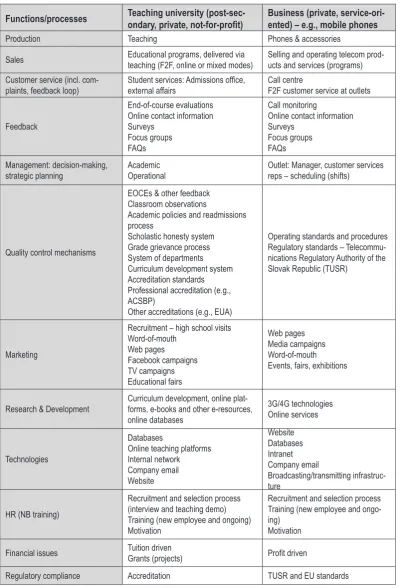
Table 2. Comparison of Business and Academic Environments.
Functions/processes Teaching university (post-sec-ondary, private, not-for-profit) Business (private, service-ori-ented) – e.g., mobile phones
P���u������ T���h���g Ph����� & �����������
S���� E�u��������� ���g������ ��������� ��� ����h���g (����� �������� �� ��x�� �����) S������g ���� ���������g ������� �����u��� ���� �������� (���g����)
Cu������ ������� (�����. ����
���������� f���b��k ����) Student services: Admissions office, �x������� �ff���� C��� ���������� �u������ ������� �� �u�����
����b��k
E�����f���u��� ����u������� O������� �������� ���f��������� Su�����
���u� g��u�� ��Q�
C��� �����������g
O������� �������� ���f��������� Su�����
���u� g��u�� ��Q� M����g������: ������������k���g��
������g�� ����������g ��������O����������� Ou����: M����g���� �u������ �������� ���� – ��h��u����g (�h�f��)
Qu����� �������� ���h�������
EOCE� & ��h�� f���b��k C�������� �b�����������
�������� �������� ���� ������������� �������
S�h������� h������� ������ G���� g��������� ������� S����� �f ������������ Cu����u�u� ������������ ������ �������������� ���������� P��f��������� �������������� (�.g.�� �CSBP)
O�h�� ��������������� (�.g.�� E��)
O��������g ���������� ���� ������u��� ��gu������ ���������� – T�������u� ����������� ��gu������ �u�h����� �f �h� S����k ���ub��� (T�S�)
M��k�����g
����u������� – h�gh ��h��� ������ ������f���u�h ��b ��g�� ����b��k ������g��� TV ������g��� E�u��������� f���� ��b ��g�� M���� ������g��� ������f���u�h E�������� f������ �xh�b�������
�������h & D����������� Cu����u�u� �������������� �������� �����f������ ��b��k� ���� ��h�� ������u������ �������� ����b����
3G/4G ���h�����g��� O������� ��������
T��h�����g���
D���b����
O������� ����h���g ����f���� I��������� �������k C������� ����� ��b���� ��b���� D���b���� I��������� C������� ����� B�����������g/�������������g ���f�����u�� �u��
H� (NB ���������g)
����u������� ���� ���������� ������� (���������� ���� ����h���g ����) T��������g (���� �������� ���� ���g����g) M����������
����u������� ���� ���������� ������� T��������g (���� �������� ���� ���g�� ���g)
M����������
����������� ���u�� Tu������ �������G������ (���j����) Profit driven
Volume 32, 2011
40 the above table shows the four traditional pillars of a learning organization remain the same: human resource management, culture, leadership and technology. however, the academic environment of a post-secondary learning organization must be supported by two additional pillars: one in the area of research and know-how development - specifically curriculum - and a second in the formalized nature of the quality control mechanisms. in addition to curriculum, knowledge communities are becoming a focal point of the organizational design. the framework below illustrates this structure.
Proposal of a Knowledge Management Framework for Teaching Universities
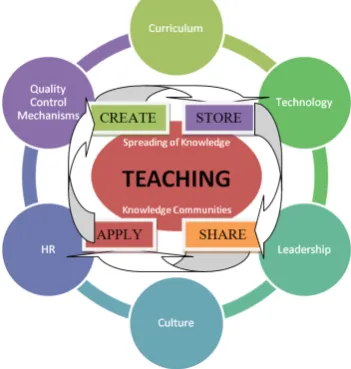
When considering the aforementioned changes related to educational environment and identified similarities and differences of this environment in comparison to the business environment, the need for development of knowledge management framework has arisen. the framework is of crucial importance here since it is “a set of assumptions or fundamental principles of intellectual origin that forms the underlying basis for action” (popper, 1994). therefore, in the case of knowledge management in an educational environment, the framework can be considered as a structure that comprises relevant entities or a set of guiding principles and ideas that support a discipline. the suggested framework depicted in the figure 1 reflects the idea of solving the issue of knowledge hoarding instead of knowledge sharing in an educational institution using the knowledge management system.
it is important to note that although mutually interrelated, there is a significant difference between framework and methodology concepts. While frameworks, as defined in the previous paragraph, belong to the conceptual perspective of knowledge management (bureš, 2009), methodology is “a set of recommended phases, approaches, principles, procedures, rules, documents, techniques or tools…which determines what should be performed, when, why and by whom” (Řepa, 1999) and has to be considered as a part of the implementation perspective (bureš, 2007). therefore from the systems engineering perspective the methodology should answer two basic questions – hoW and Why anything should be implemented – while framework clarifies only What should be implemented.
in the 21 century Volume 32, 2011 41
as can be seen from the developed framework, there are six basic areas that from the pillars of a learning organization, representing the outer layer of the framework. as indicated above, four of the pillars are virtually typical of a learning organization - viz., human resources (hr), culture, leadership and technology. to highlight some differences, HR at a teaching university should logically support the quality of the teaching itself. among key hr activities are the hiring process, training and continuous professional development. again, these steps are not unique but there are specific approaches that differ from other organizations. specifically, a teaching demonstration - a short lesson delivered by a teaching candidate, in a role-play setting with administrators, other teachers and even students as his/her “class” - can effectively exhibit some of the “unquantifiable” aspects to good teaching. as for culture, an open, knowledge-sharing environment must be established. the current trend at institutions of higher education is a culture where knowledge is considered power, and knowledge hoarding is a norm. change in culture at a teaching university translates into a student-centred approach, with an emphasis on practitioner faculty. Knowledge is gained from experience, and from sharing that experience with other colleagues. building such an environment requires creation of opportunities to share ideas. Knowledge sharing among instructors through conversations, meetings, acknowledged best practices, databases, and questioning is to be supported within the knowledge communities, represented by particular departments (katedry, in both slovak and czech). Leadership, of course, plays a key role in supporting an open environment, not only via mission statement and policy but also with a do-as-we-do, practice-what-we-teach approach. a strategy of cultural change requires active communication from the management and the intentional creation of an informal atmosphere in which people feel comfortable asking others for help. Technology can effectively underpin every aspect of the school, from systems to support teaching/ learning, curriculum and resource development/collection, to communication and management information systems that can support a school’s administrative, employee and student service functions (e.g., the e-learning platform or registrar’s office systems).
Volume 32, 2011
42 all are interconnected and support the know-how, the quality control processes and ultimately the people - the students and teachers.
the core of the framework is created by knowledge management activities, with a focus on creating, storing, sharing and application of knowledge. as indicated above, all six pillars should integrate the knowledge management process, as they all contribute by knowledge from different areas of expertise. creation of knowledge is a formation of new ideas through interactions between explicit and tacit knowledge in human minds. all six areas involve processes supporting knowledge creation that is then being spread through knowledge communities around the educational institution. most of the knowledge is explicit, in the form of memos, guides, policies, databases, files, books, etc. however, a great deal of tacit knowledge is also created through the experience of employees, whether via managerial positions or teachers involved in the activities of the six pillars of a learning organization. While the explicit type of knowledge can be easily stored and made accessible to a wide range of people, tacit knowledge is not. proper knowledge sharing then requires creating a proper organizational culture. therefore, the fragments of the seci model, which is focused on mutual transformation of tacit and explicit knowledge and which was introduced by nonaka and takeuchi (1995), can be identified.
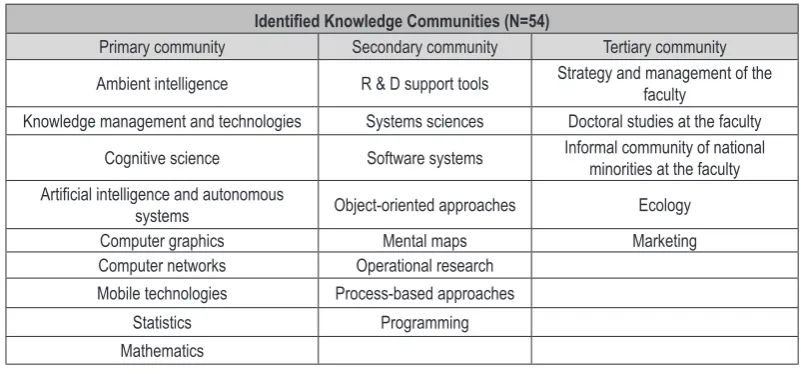
in practice, the framework can be used as a starting point for implementation of changes in particular knowledge communities, typically represented by departments at the university level. they consist of professionals in the same scientific field with a high level of expertise and experience, building a tacit knowledge base. moreover, even particular departments can be fragmented into smaller communities which are focused on specific research areas. for instance, the research conducted in the faculty of informatics and management at the University of Hradec Králové revealed that two departments focused primarily on informatics and quantitative methods can be further divided into sub-groups according to their research interest (see table �).
Table 3. Knowledge communities at particular departments (adopted from (Mišičková, 2011)).
Identified Knowledge Communities (N=54)
P������ ����u����� S��������� ����u����� T������� ����u����� ��b����� ��������g����� � & D �u����� ����� S�����g� ���� �����g������ �f �h� f��u��� K�������g� �����g������ ���� ���h�����g��� S������ ��������� D������� ��u���� �� �h� f��u���
C�g������� �������� S�f����� ������� I��f����� ����u����� �f ���������� ����������� �� �h� f��u��� Artificial intelligence and autonomous
������� Obj������������� �������h�� E����g�
C���u��� g���h��� M������ ���� M��k�����g
C���u��� �������k� O����������� �������h M�b��� ���h�����g��� P�������b���� �������h��
S��������� P��g�������g
M��h�������
in the 21 century Volume 32, 2011 43
(2010) consider “work design, selection and training, orientation and socialization programs, performance appraisal and reward system as well as open and trusting culture to be practices for fostering effective knowledge management” (p. ��2).
Conclusions
Knowledge management as a managerial discipline has already been more or less successfully introduced into many organizations. however, these organizations were mostly part of the business environment. the mutual interrelationship of knowledge management and educational institutions is still quite rare. although several authors pointed out anticipated problems or basic assumptions that need to be respected when implementing knowledge management into an educational institution, further elaboration is of high significance.
Knowledge management frameworks belong to the conceptual perspective of knowledge management, since they represent a simplified Km model, emphasizing only its most important elements and relations. the problem is that the majority of existing frameworks do not take into consideration the specifics of the educational environment, such as the necessity for intensive knowledge sharing and changes (e.g. the emergence of the net Generation) that it has witnessed during the last decade. therefore, a comparison of the business and educational environments in the czech republic and slovakia was drawn and, based on the results, a knowledge management framework for teaching universities was developed. the framework is based on six main pillars - human resources, culture, leadership, technology, curriculum and quality control mechanisms – and four knowledge processes – creating, storing, sharing and application of knowledge. although the framework is general in nature, it can serve as a starting point of all activities connected with knowledge management implementation in a teaching university. since it is in compliance with the described changes and specifics of the environment, it can lead to the successful implementation of a student-centred approach to knowledge management.
Acknowledgements
this research is financially supported by the speV project – research of the influence of ambient intelligence technologies on development of intellectual capital, which is a part of the GAČR project SMEW - project number 403/10/1310.
References
bang, l. p. h. (2008). Design and Development of a Knowledge Community System. school of computing, national university of singapore. retrieved 12/5/2011, from http://www.slideshare.net/huubang/design-and-development-of-a-knowledge-community-system.
beres, i., & turcsanyi-szabo, m. (2010). added value model of collaboration in higher education.
Interdisciplinary Journal of E-Learning and Learning Objectives, Vol. 6, pp. 20�-215.
brewer, p., & brewer, K. (2010). Knowledge management, human resource management, and higher education: a theoretical model. Journal of Education for Business, Vol. 85, pp. ��0-��5.
bureš, V. (2007). Knowledge management and the process of its implementation: A guide for practice (in czech). prague:Grada publishing.
bureš, V. (2009). conceptual perspective of Knowledge management. E+M Economics and Management,
Volume 32, 2011
44 carlile, p. (2004). transferring, translating, and transforming: an integrative framework for managing
knowledge across boundaries. Organization Science, Vol. 15, no. 5, pp. 555-568.
Cejthamr, V., Dědina, J. (2010). Management and organizational behaviour (in czech). 2nd ed., prague:
Grada publishing.
dalkir, K. (2005). Knowledge management in theory and practice. oxford: butterworth-heinemann.
Goddard, a. (1998). facing up to market forces. Times Higher Education Supplement. no. 1,�58, pp. 6-7.
heisig, p. (2006). the Gpo-Wm® method for the integration of Knowledge management into business
processes. Proceedings of I-KNOW ’06, Graz, austria, september 6-8, pp. ��1-��7.
howe, n., & strauss, W. (2000). Millennials Rising: The Next Greatest Generation. new york: Vintage books.
Hřebíček, V. (2005). Knowledge Management and Human Resources Management (in czech). retrieved 11/4/2011, from masaryk university information system, http://is.muni.cz/?lang=en. available only after authentication.
Kelemen, J. et al. (2007). Invitation to knowledge society. bratislava: iura edition.
Km frameworks (2011). retrieved 20/05/2011, from http://editthis.info/km_frameworks/Km_ frameworks.
Kotler, p., Keller, K. (2008). Marketing Management. 1�th edition. upper saddle river, nJ: prentice
hall.
laudon, K. c., laudon, J. p. (2010). Management information systems: Managing the digital firm. 11th
edition. upper saddle river, nJ: prentice hall.
lee, h., roth, G. (2009). a conceptual framework for examining knowledge management in higher education contexts. New Horizons in Adult Education and Human Resource Development, Vol. 2�, no. 4, pp. 22-�7.
lindström, m., seybold, p. (200�). Brandchild: remarkable insights into the minds of today’s global kids and their relationships with brands. Kogan page, london.
ma, y., harmon, s. W. (2006). integrating knowledge management systems, electronic performance support systems and learning technologies: a conceptual model. Performance Improvement Quarterly,
Vol. 19, no. �, pp. 107-120.
mikulecká, J., mikulecký, p. (1999). Knowledge management in the university environment (in czech).
in: IV. International conference “Ekonomika a informatika na prelomu tisicileti”, liberec, czech republic, pp. 125-127.
mishra, d. (2007). to Work smartly and efficiently. Business Line. chennai: Jul 10, 2007.
Mišičková, K. (2011). Knowledge communities in Universities (in Czech). Faculty of Informatics and
management, university of hradec Králové, diploma thesis.
in the 21 century Volume 32, 2011 45
nonaka, i., takeuchi, h. (1995). The Knowledge Creating Company. new york: oxford university press.
norris, d. m., mason, J., robson, r., lefrere, e., collier, G. (200�). a revolution in knowledge sharing.
Educause Review, Vol. �8, no. 5, pp. 14-20, 22-26.
oblinger, d., oblinger, J. l. (eds.) (2005). Educating the Net Generation. Washington, dc: educause.
popper, K. r. (1994). The Myth of the Framework: In Defence of Science and Rationality. london: routhledge.
Řepa, V. (1999). Analysis and Design of Information Systems (in czech). prague: ekopress.
rowley, J. (2000). is higher education ready for knowledge management? The International Journal of Educational Management, Vol. 14, no. 7, pp. �25-���.
santo, s. a. (2005). Knowledge management: an imperative for schools of education. TechTrends, Vol. 49, no. 6, pp. 42-49.
st. George, e. (2006). positioning higher education for the knowledge based economy. Higher Education,
Vol. 52, pp. 58-610.
tapscott, d. (1998). Growing up Digital: The Rise of the Net-Generation. mcGraw-hill, new york.
Veen, W., Jacobs, f. (2005). Leren van Jongeren: Een literatuuronderzoek naar nieuwe geletterdheid.
utrecht: stichting surf.
Veen, W., van staalduinen, J. p. (2009). homo Zappiens and its impact on learning in higher education.(2009). homo Zappiens and its impact on learning in higher education.
IADIS International Conference e-Learning 2009, algarve, portugal.
Veen, W., Vrakking, b. (2006). Homo Zappiens: Growing Up in a Digital Age. network continuum education, london.
Wedman, J., Wang, f. (2005). Knowledge management in higher education: a knowledge repository approach. Journal of Computing in Higher Education, Vol. 17, no. 1, pp. 116-1�8.
Wu, i., lin, h. (2009). a strategy-based process for implementing knowledge management: an integrative view and empirical study. Journal of the American Society for Information Science and Technology, Vol. 60, no. 4, pp 789-802.
Volume 32, 2011 46
Advised by Peter Hošták, College of Management, Bratislava, Slovakia
received: April 21, 2011 accepted: June 15, 2011
Vladimír Bureš D��.�� I��g.�� Ph.D.�� ��������� P��f������� ����������� �f H����� K�á���é�� ��k��
�����kéh� 6��� 50003 H����� K�á���é�� C���h ���ub���. E�����: ��������.bu���@uhk.��
��b����: h���://���.uhk.��
David Griffin MA, Dean of Academic Affairs, The College of Management, Bezručova 62,
91101 Trenčín, Slovakia.
E�����: [email protected] ��b����: h���://���.���.�k
Denisa Hackett MBA, Associate Dean, The College of Management, Bezručova 62, 91101
Trenčín, Slovakia.
E�����: �h��k���@���.�k ��b����: h���://���.���.�k
Peter Kročitý MB��� ���������� P��f�����/S�h������� H������� C�������� Ch����� Th� C����g�
of Management, Bezručova 62, 91101 Trenčín, Slovakia.
E�����: �k������@���.�k ��b����: h���://���.���.�k
Erik Kubička PhDr. MBA. Assistant Professor, The College of Management, Bezručova
62, 91101 Trenčín, Slovakia.