Customer Preference And Perception For
Patanjali Products With Special Reference To
The Households In District-Mathura (UP)-India
Pragalbh Sharma
Abstract: The segment of Fast Moving Consumer Goods is one of the rapid growing segments in this entire world. There are several FMCG companies working in our country ranging from Hindustan Unilever Limited to ITC including Patanjali. The rationale of this research work is to know about the preference and perception of households of Patanjali products in District-Mathura (UP) - India. The primary data was gathered from 170 households of the district with the help of a well prepared questionnaire. Exploratory Factor analysis is used for the analysis of the data while reliability analysis has been conducted to test the reliability of the data. The important findings of this work revealed that the originality of the products along with their quality influences the households here to buy the Patanjali products. Also, the household perceives these products very safe to be consumed as they are unadulterated and the company is not compromising with the quality of its products. Further analysis of the facts also explain whether the company may have long term sustained success in the market or not, in response of which the households have agreed to repeatedly purchase the Patanjali products and they also refer it to their relatives and friends. Therefore, it can be assumed primarily that the households generally prefer to buy Patanjali products over other available substitutes in the market because they perceive these products to be of superior quality.
Keywords: FMCG, Customer preference, Customer perception, Patanjali
————————————————————
1 INTRODUCTION
In the context of the framework of our country it is very evident that the factors like attitude, perception and viewpoints are very crucial for the success and failure of any company because, the purchase decisions of Indian customers are mainly affected by their loved ones including their family, friends and other close relatives. This means that the individual choice of purchasing or not of a product depends more on other whom he rely and has trust upon as compared to the individual himself. Since, FMCG is known to be an exceptional class of products which are fast, large and comparatively cheap to be marketed to the customers. These products do have a very short life span due to two main reasons. Firstly, due to very high customer demand and secondly these products worsen very rapidly making them unsuitable for consumption. This Indian company named “Patanjali Ayurveda Limited” was established in the year 2006 and whose production units and offices are located in Haridwar (Uttarakhand). Currently the company is dealing into several mineral and medicinal products and has established itself as a premium and one of the most recognized brands in India and especially among the Indian households. The market is changing every now and again with the earth and the expanding rivalry around the globe which have intensified the job of the brand. Distinctive individuals are the clients of various types of brands at a specific timeframe or interim. This inclination and the standard utilization of the diverse brand at the distinctive time are commonly influenced by the advantages gotten by the quality offered by the brands of restorative items and consumable things.
Need and Rationale for the Study
This research work is proposed to identify the various angles of a customer‟s perception about the different parameters related to the product like price of the product, its quality, advertisement, range and availability of the product. Since with the growing time there has arisen a need to focus back on the herbal and ayurvedic products being safe to consume for almost every age of the customer which has also increased the competition among the companies selling ayurvedic and herbal products. Competitors are trying to beat the stiff competition by capturing the market share. It is also very important to note that the competitors are coming up with new and lucrative schemes for their customers and handsome incentives for the intermediaries to compete with this fastest growing FMCG brand „Patanjali.”
2 REVIEW OF LITERATURE
Kumar et al. (2014) conducted their research work and find out that the Pranayam and Yoga is very successful measures for the marketing of products using spirituality that affects the consumption behavior of the people. The data was collected through both primary and secondary sources and it was revealed finally that the spirituality influences the purchasing attitude and behavior of the people. Khanna (2015) examined the brand perception of patanjali in the minds of consumer. In order to attain this objective 100 respondent has been selected and the frequency distribution, correlation and regression technique is used. It is concluded that the customer has a very positive perception for a brand that is based mainly on the satisfaction of the customers. Shukla and Shrivastav (2016) studied the strength, weakness, opportunities and threats of PAL (Patanjali Ayurved Ltd.) and various USP that play a key role in success story of Patanjali Aurvedic Ltd. It studied that the Patanjali Ayurved Ltd. is a leading pacesetter in the FMCG segment of India. It has grown at a phenomenal pace in the last half a decade. Subbulakshmi and Geethamani (2017) performed a study to find out the objective to know the perception of customers and contentment who consumes herbal products. In order to _____________________________________________
172 attain this objective, a convenience sample of 50
respondents was selected. The sampling technique used in this research work was convenient random sampling.
Customer perception:-
Walters et al (1989) stated that “every perception involves a person who interprets through the senses something, event, or relation which may be designated as the percept.” Vander Walt (1991) adds that “perception occurs when sensory receptors receive stimuli via the brain, code and categories them and assign 49 certain meanings to them, depending on the person's frame of reference.” For the clients of India approach about the specific brand are especially significant in light of the fact that Indian individuals depend on the observation that are exhibited by their companions, family, close to one preceding purchasing or utilizing any of the item. The recognition conveyed by the general population us is the principle reason of their choice. Observation is something which is exceedingly emotional and accordingly is effectively ready to mutilate. Consequently to hold themselves in the troublesome condition of a nation like India for quite a while period, diverse organizations need to build up their image in the attitude of the Indian individuals. India is a nation which as of now has an appealing business sector for the diverse brands. India has been known to be a center or focal point of Home grown Brands. Since the conclusions of the general population are profoundly connected with the natural items. A World Wellbeing Association thinks about anticipated the way that "about 80% of the total populace relies upon normal items for their social insurance". Additionally "current medication fundamentally on account of symptoms and mind-boggling expense of present day prescription." The home grown market far and wide for the items is around 6.2USD and anticipated to achieve 5.0UST continuously 2050. This investigation is on the on the elements influencing the client view of the clients about the Patanjali items. Mowen (1993) suggested that “it acts as an anchor to which any rising issue is compared to on a judgmental scale.” Stanton, Etzel & Walker (1991) expanded that “if an inconsistency is discovered, the new information will be distorted to conform to the established beliefs.” The three main components which form the framework for Customer Perception are: Cognitive components, Affective components and Behavioral components.
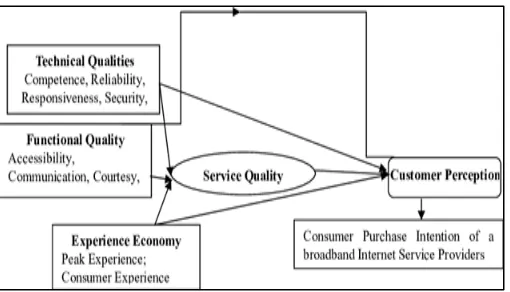
Figure 1: Components table
Model of Customer Perception
Patanjali Ayurved Ltd. (Buddy) was established in January 2006 as a Pvt. Ltd. by Yog-Master Baba Ramdev and his gurukul accomplice master Acharya Balkrishnaji. In June, 2007, Buddy was changed to an Open Ltd. Organization. what's more, the enlisted office is in New Delhi with their 3 workplaces in Haridwar. Baba Ramdev began his profession as a yoga coach in broadcast programs like Aastha and Sanskaar channels and influenced the general population of India to understand that Indian custom have been overlooked by them. He was acknowledged by general society of India and made a wide scope of its picture according to them. He exposed Yoga as a drug to all the medical issues. In its first year for example 2007-2008, Patanjali created an income of over 60.25 crores. What's more, following 10 years the organization has developed to around 5000 crore organizations. Buddy built up itself in the field of FMCG.
4 RESEARCH METHODOLOGY
The following methodologies are used in the study: Study Area: This study on Customer preference and perception for Patanjali products has been undertaken over the households in district Mathura (UP)-India
Sampling Technique: The researcher has used a convenience sampling method for the present study.
Sample Size: The sample size of the study is 170.
Source of Data: The data for the study is selected from both the primary and secondary sources while the study is mainly based on primary data. A well designed questionnaire and interview schedule was used for data collection. The secondary data sources include journals, websites, etc.
Tools for Analysis: Data Analysis has been conducted using percentage analysis, charts and tables.
Scope of the study: Baba Ramdev is considered as Yog-guru and introduced ayurvedic products in the market with a brand name called Patanjali. Within a short period, Patanjali introduced FMCG in the market to achieve massive profits. Previously, Patanjali products were popular only in North India but at present it had captured the markets of pan India. It is highly difficult for a company to survive this long and enjoy such a market position. Unless consumers are provided with the best product, they wouldn‟t keep a brand enjoy such a position in the market. Hence, this study has made an attempt to identify the customer‟s perception towards Patanjali products.
5 OBJECTIVES OF THE STUDY:
1. To understand the customer preference and perception towards Patanjali products among the households in Mathura district.
2. To explore the factors of Customer perception towards Patanjali products among the households in Mathura district.
1. The time period to conduct this study was limited. 2. The coverage of this study is limited to district Mathura
(UP) only.
3. Busy schedule of respondents made the compilation of information a very difficult task.
4. Since the data is collected by convenience sampling method, it does not disclose the character of entire customers.
6 DATA ANALYSIS AND INTERPRETATION
Data interpretation:-
Table: 1 Reliability Statistics
Cronbach's Alpha
Cronbach's Alpha Based on Standardized Items
N of Items
.906 .905 17
The value of Cronbanch‟s Alpha is .906 (Malhotra and Das, 2008) for the 17 questions which indicates a high level of internal consistency for the scale provided for the specific sample. The Kaiser-Meyer-olkin(KMO) and Bartlett‟s test were includes for the data to state whether the given data is feasible for running EFA. Table no. --- states that KMO value is greater than 0.5 i.e., 0.642 (Malhotra and Das, 2008) and Bartlett‟s test of sphericity is significant, at the chi-square value of 1632.113, with significance level .000(Malhotra and Das, 2008), hence states that for performing the Factor analysis provided data is Feasible. The data was collected to understand the perception of the respondents toward Patanjali products. Demographic details of the respondents are summarized below.
Table: 2 Age
Frequency Percent Valid Percent
Cumulative Percent
Valid
16-20 yr. 70 41.2 41.2 41.2
21-25 yr. 73 42.9 42.9 84.1
26-30 yr. 27 15.9 15.9 100.0
Total 170 100.0 100.0
Table: 3 Gender
Frequency Percent Valid Percent Cumulative Percent
Valid
male 82 48.2 48.2 48.2
female 88 51.8 51.8 100.0
Total 170 100.0 100.0
Table: 4 Qualification
Frequency Percent Valid Percent
Cumulative Percent
Valid
Graduates 50 29.5 29.5 29.5
Diploma 44 25.8 25.8 55.3
Post
graduates 76 44.7 44.7 100.0
Total 170 100.0 100.0
Out of 170 users, dominant portion of the users age between 21-25 years i.e 42.9%. Looking at the gender distribution, 51.8% of the users studied are females who can perceive to be more interested in buying herbal cosmetics. The majority of respondents were PG students‟ ie. 44.7%.To understand the factors that influence consumers perception towards Patanjali products, Exploratory Factor Analysis (EFA) was conducted. The questions that were asked were based on brand attributes, brand image, product quality, product knowledge and involvement of the product. The details are discussed below: Variables included: 17 variables were included in the questionnaire for the analysis purpose. Extraction method: Minimum Eigen value is kept at 1.00 and the no. of factors were not specified. Principal components method is used.
Rotation method: This was used to reach at factors as distinct from each other as possible. We have used orthogonal solution with the value, Varimax.
Table: 5 Descriptive Statistics
N Minimum Maximum Mean Std. Deviation
CP1 170 1 5 3.19 1.231
CP2 170 1 5 3.72 1.193
CP3 170 1 5 2.64 1.357
CP4 170 1 5 3.13 1.276
CP5 170 2 5 3.65 1.034
CP6 170 2 5 4.41 .709
CP7 170 1 5 3.95 .896
CP8 170 1 5 3.84 .975
CP9 170 1 5 3.98 .880
CP10 170 1 5 4.06 .782
CP11 170 1 5 4.06 .775
CP12 170 1 5 4.02 .853
CP13 170 1 5 3.94 .905
CP14 170 1 5 3.98 .900
CP15 170 1 5 3.99 .814
CP16 170 1 5 3.95 .892
CP17 170 1 5 3.97 .906
Valid N
(listwise) 170
174 variable that influence customers to buy the product. It has the highest mean of 4.41.
6 FINDINGS & CONCLUSION
Findings:-
Consumer awareness and brand image: As majority of customer buy the products after getting aware about them. It is consider as the highest factor integrated with 3 variables to form a factor. They are Appeal to youth, Competitiveness and Product awareness. This creates a brand image in the eyes of the customers. Quality and purity of products: Every customer perceived to get the best quality from the products they purchased. The two variables that contribute for this factor are Product quality and perceived quality. Brand image of Baba Ramdev: Most of the customer buys the Products due to the image of Baba Ramdev in their eyes. Baba Ramdev is treated as a face for Swadeshi Products. The factor is the combination of two variables ie, association with Baba Ramdev and Purity. Reputation, quality and pricing of products, Competitive pricing strategy, Availability and popularity of natural products and Range and visibility of products were also the major determinants of the findings.
7 CONCLUSION:-
Through this study, it is revealed that the perception of customer towards the patanjali products. By doing so we also analyze that how the brand image of patanjali‟s have an impact on the buying behavior of the customers, because of the fact that in current scenario there are various factors which affects the buying behavior or decisions of customers. Consumer awareness and Brand image have become the major key factor that has influenced the consumer perception towards Patanjali products. The findings conclude that there are several factors that conclude their importance for the customers to build a perception for the Patanjali and their products. From the above result it is proved that majority of customers are satisfied by the Patanjali and their products. It may be due to either the pricing strategy or the purity of the products. The product quality is best among the same class of products, the prices are competitive and the distribution change is probably the first. Also somewhere the reputation of Baba Ramdev is also playing a major role for the perception. Patanjali is enjoying the advantageous position due to the range and visibility of products. According to BARC, Patanjali is ranked in top 3 favouring customers through advertisement. Along with this the indigenous nature of the products has a very strong symbolic value for Patanjali which help them to create benefit for them. “The market of FMCG products in India, is the 4th largest sector, is estimated to reach up USD 103.70 billion in 2020 from Table: 6 KMO and Bartlett's Test
Kaiser-Meyer-Olkin Measure of Sampling Adequacy. .642
Bartlett's Test of Sphericity
Approx. Chi-Square 1632.113
Df 136
Sig. .000
Table: 7 Factors Identified Through Rotated Component Matrix Using Exploratory Factor Analysis
Factors and the identified variables Factors loading Nomenclature assigned to the factors Factor 1
Appeal to youth .952
Consumer awareness and brand image
Competitiveness .914
Product awareness .784
Factor 2
Product quality .986
Quality and purity of products
Perceived quality .985
Factor 3 Association with Baba Ramdev .976
Brand image of Baba Ramdev
Purity .985
Factor 4 Superiority of product .841
Reputation , quality and pricing of products
Affordability of products .714 Reputation of Baba Ramdev .708 Factor 5
Competitive pricing strategy .728 Competitive pricing Factor 6
Product popularity .708
Availability and popularity of natural products
Product safety .644
Availability of product .509 Factor 7
Product variety .780
USD 52.75 billion in 2018.” (Indian Brand Equity Foundation, 2019). FMCG sector is divided in many sub segments, like; food and beverages, cosmetic products, personal care, household items, health care products etc. In India, main player in herbal products are, Dabur, Baidyanath and Patanjali. The concept of herbal products is so new and viable now days, that more and more people start to encash this opportunity in the market place. Now a day customers are more concern about the health issue and environment. They are approaching to the herbal products. It has the largest opportunity to the marketers and immense job opportunity to the youth in the area of innovative technology, new business model, supply chain etc.. So it is beneficial and opportunistic for nation‟s development point of view. Recommendation and future scope of study:-The future scope of this study can be further researched by covering large geographical area, including more number of respondents and more time. Patanjali should take some serious and competitive steps and increase the offers on its products to increase the sales of the products. Eventually it will lead to customer satisfaction. Exclusive and competitive offers strategies are the major to push the sales of the company positively. Patanjali should review their promotion strategy for its products and should offer new and attractive products to attract the customers such as providing complimentary products are the same price and benefits. The Patanjali products are rich in quality as they contain natural and herbal ingredients. At the same time, the prices of Patanjali products are too high to maintain the customers‟ base. Company should be more focused on its pricing policy. It should be more competitive to attract and respondent by more customers. Patanjali should review its policy and come up with new and competitive prices of their products to increase the sales and revenue of the company. It will be win-win situation for both „company and customers. Effective pricing policy is the major concern for retaining the customers for any organization. Strong distribution channel is another aspect of having competitive edge. If we talk about, patanjali‟s distribution channel, Patanjali has a very strong channel of distribution to distribute their products all over the country. Patanjali can plan for more distribution centers for having more access and can more reachable to their customers. There are some products that are not taking good business to the company, company have to identify such products and should take the necessary actions. Company should have a competent team for research and development for its growth and sustain in the market place.
8 BIBLIOGRAPHY
[1] Emmanuel, M. (2011). Basics of Business and Management: For University of Calicut's B. Com/BBA Programme. Pearson Education India. [2] Geethamani, K. S. P. (2017). A Study on
Customers Perception Towards Cosmetic Items In Patanjali Products With Special Reference To Tirupur City.'. Intercontinental Journal Of Marketing Research Review, ISSN, 2321-0346.
[3] Keller, K. L., Parameswaran, M. G., & Jacob, I. (2011). Strategic brand management: Building, measuring, and managing brand equity. Pearson Education India.
[4] Kim, J. H., & Hyun, Y. J. (2011). A model to investigate the influence of marketing-mix efforts and corporate image on brand equity in the IT software sector. Industrial marketing management, 40(3), 424-438.
[5] Kumar, A., & Ahuja, A. (2017). Consumer Behavior towards Patanjali Products: A Study on Consumers with Reference to Rohtak District of Haryana. Kaav International Journal of Economics, Commerce & Business Management, 4(2).
[6] MANIVEL, D. A study on Customers Preference and Perception towards Patanjali Soap Products (Bath) With Special Reference to Karur District. [7] Raju, G. S., & Rahul, R. (2016). Customer
preferences towards patanjali products: A study on consumers with reference to Warangal district. group, 15, 25.
[8] Ramesh, K. (2008). Conceptual Issues in Consumer Behaviour The Indian Context. Pearson Education India.
[9] Singh, Y. A Study of Consumer Perception towards Patanjali Brand with Special Reference to Mohali City.
[10]Singh, Y. A Study of Consumer Perception towards Patanjali Brand with Special Reference to Mohali City.
[11]Sinha, A., & Singh, N. (2015). Growing Herbal Cosmetics Indian Market. International Journal of Management and Science.
[12]Tekin, G., Yiltay, S., & Ayaz, E. (2016). The Effect of Brand Image on Consumer Behaviour: Case Study of Louiss Vuitton-Moet Hennessy. Internatonal Journal of Academic Value Studies, 2(1), 1-24.