Improvement Setup Time By Using SMED And
5S (An Application In SME)
Dilsad Guzel, Alireza Shahbazpour Asiabi
Abstract: Todays the high effects of SMEs on the economy are clear to all. In countries that are in development if we have had a strong economy, we should have productive firms. We can increase our productivity in two ways, increasing sales and decreasing costs. This competitive markets don’t allow us that select customers and their order quantities. Because of this, we should reply to all kinds of customers for keeping a competitive advantage. By using lean manufacturing techniques, high quality, low cost, and on-time delivery are achieved. One of these techniques is SMED (Single Minute Exchange of Die) that use for increasing changeover times. When we increase setup times we able to produce in small parts and it helps us to reply to several customers with small orders in a short time. Another effect of using SMED is saving setup time and reduce production cost. In this study SMED and 5S techniques applied in metal machining companies that produce parts with turning method. At first, we classified the product families by sales quantities in the last years to select the research scope. Next, we take current state video from starting setup to starting production and analyzed for dividing internal and external times. At least an improvement project for increasing internal and eliminate the external times identified and done. Finally with the ending of this project we can reduce the setup times about 30 percent.
Index Terms: 5S, Changeover, Lean manufacturing, Productivity, SME, SMED (Single Minute Exchange of Dies), Time study.
—————————— ◆ ——————————
1
INTRODUCTION
SME’s are an indispensable part of the industrial structure in terms of creating an effective competitive environment in both national and international markets within the framework of the free market economy. There are various problems faced by SMEs like finance, production, and delivery on time. Having strong finance need to accelerate the return of money by converting row materials to product in a short time. On the other hand, it has an important role to win customer satisfaction by timely delivery to get orders again. There were various techniques to improve these terms in SMEs that one of them is using lean manufacturing techniques. In this way by identify wastes and eliminate them we able to have a productive process. For responding to various types of customers should have a flexible production process. However, producing more products at smaller batch sizes results in more changeovers. Thus, a fast setup capability is serious for being able to produce small quantities of a large diversity of products. Single minute exchange of die (SMED) is introduced by Shiego Shingo that emphasizes reducing the changeover time to less than 10 minutes or more specifically in a single-digit time and increase productivity.
2
LEAN MANUFACTURING
Lean thinking is a way of thinking that aims to eliminate all wastes in the value stream. Based on lean thinking is that everything that does not produce value in the system is wasted. Lean thinking, which feeds lean production, is a philosophy that aims to take necessary measures to eliminate all wrong practices, processes, and functions that do not create value and consume resources and cause waste. Lean thought is a set of measures taken against waste, which is referred to as “Muda’ in Japanese. (Okur, 1997) Taiichi Ohno in his work dedicated to Lean
Manufacturing listed seven types of waste: overproduction, inventory, mistakes and quality defects, waiting, over-processing, unnecessary transport, and unnecessary movement. Currently, seven types of waste are enriched by yet another - untapped potential employees.
▪ Waste of overproduction: Overproduction means producing more quantities than necessary. That is to do more than is required by the next process, by doing it earlier than necessary by the next process. Overproduction leads to overstock, concealment of defects, poor information flow, poor material flow, long lead times, high processing costs, increased labor costs, and product defects that are difficult to detect.
▪ Waste of inventory: In connection with overproduction, it is due to stock availability beyond what is required to meet customer demands. There are three types of inventory such as raw material, work in process and end items.
▪ Waste of mistakes and quality defects: It is a type of waste that arises from defective products and process designs that must be avoided before starting the production process.
▪ Waste of waiting: Waiting waste arises when they are not actively engaged in efficient and productive work for reasons such as waiting for parts or components of the workforce, machine downtime. This type of waste is caused by the fact that the parts in the previous stage do not arrive on time during the flow between the processes and that the labor force is not used effectively due to the activities that do not create value in the processes.
▪ Waste of over-processing: In contrast to the minimum required to meet customer needs, the existence of unnecessary process steps, incorrect product specifications, and wrong processes in the basic and subsystems of the production process lead to unnecessary operation.
▪ Waste of transportation: It is a type of waste resulting from the unnecessary movement or transport of raw materials from one point to another point in the assembly line or from one region to another.
▪ Waste of unnecessary motion: This type of waste arises from unnecessary movements of operators that ————————————————
• Author : Assoc. Prof at Ataturk University · Department of Business Administration, Faculty of Economics and Administrative Sciences.
• E-mail: [email protected]
• Co-Author : PHD student at Ataturk University · Department of Business Administration, Faculty of Economics and Administrative Sciences.
do not add value to the enterprise. It can also be defined as any movement that is wasted by operators when performing their tasks.
▪ Waste of underutilized people: Refers to more people involved in a job than necessary, not involving the associates in process improvement, not leveraging the potential individual to the fullest, not using the creative brainpower of employees, not giving the right assignment/work, uneven work distribution/load balancing, and losing time, ideas, skills, improvements, and learning opportunities by not engaging or listening to your employees.
Waste prevention targets the principles of a lean production system that can be grouped under five steps, Identify Value, Map the Value Steam, Create Flow, Establish Pull, Seek Perfection.
I. Identify Value: The starting point of Lean Thought is value. The manufacturer creates the value, but the value can only be defined by the end customer. Manufacturers that create value often cannot define value correctly. For example, American firms think that they create value through short-term competition tactics and profit transfer methods from the leading suppliers of the chain. German companies, often managed by engineers and with very strong technical equipment, tend to define value in relation to the technical complexity and technology of the product. In Japan, the issue of where value is created, another distortion of the definition of value, gains importance. However, what needs to be done is to rethink value from a customer perspective. For the definition of value to be meaningful, it must be expressed in terms of a particular product or service that meets the customer's needs at a given time and at a certain price.
II. Map the Value Stream: The second step of Lean Thought is identifying and mapping the value stream. The value stream includes all stages from one producer to the other producer and the end user in the process of converting the raw material into the final product, and contains enormous waste. There are three types of activities in production:
• Value creating activity that directly related to customer request and needs.
• Works that do not make sense for the customer and do not create value but are necessary for the work to be done.
• Waiting, counting, sorting, error, repair, such as "non-value and avoidable" works.
When the value streams are analyzed, it is seen that the activities that do not create value, namely waste, consumes most of the time and resources. Elimination of these wastes will bring radical improvements in time and cost.
III. Create Flow: After eliminating the wastes from the value stream, the following action is to ensure that the flow of the remaining activities run smoothly without interruptions or delays. Some strategies for ensuring that value-adding activities flow smoothly include: breaking down activities, restructuring the production steps, leveling out the workload, creating
cross-functional departments, and training employees to be multi-skilled and adaptive.
IV. Establish Pull: Pull-based systems are always created from the needs of the end customers. Pull means that no product or service is produced in any of the subsequent stages before the customer requests it. Pull principle starts with the demand of the final customer for a certain product, it is applied in the form of starting the production by following all stages back until the product reaches the customer and demanding each stage from the previous one. When pull is applied, there is no need for stocks, the scrap and wastes caused by unwanted production are prevented, no scheduling is required for each machine, demand fluctuations are prevented towards the head of the process, all products can be produced in any combination and the changes in demand are provided instantly.
V. Seek Perfection: Wastes are prevented through the achievement of the first four steps: identifying value, mapping value stream, creating flow, and establish a pull system. However, the fifth step of pursuing perfection is the most important among them all. It makes Lean thinking and continuous process improvement a part of the organizational culture. Every employee should strive towards perfection while delivering products based on the customer needs. The company should be a learning organization and always find ways to get a little better each and every day.
The techniques used in lean manufacturing applications are as follows:
3
SMED
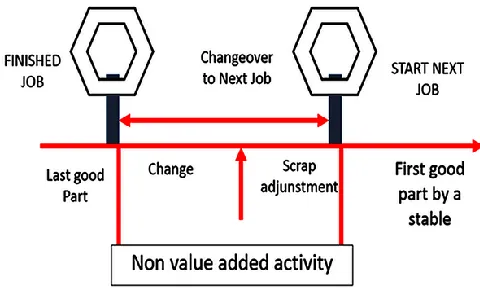
Figure 1-Representation of change over time (Ulutas, 2011)
Commonly, SMED aims to standardize and facilitate operations. By means of this, the need for special experienced workers is also minimized. Since then, the ways to improve and support the SMED technique are considered in the literature. The SMED technique is used as a part of Total Productivity Maintenance (TPM) and the “continuous improvement process” in different studies to reach lean manufacturing describes lean enablers which are dependent on the principles of lean production. With the application of SMED, improvements were substantial with initial data showing reduction of setup time ranging from 25% to as high as 85%. By decreasing setup time, production flexibility expanded as it was able to afford more frequent product mix changes. This will help the organization to minimize the level of inventory and the effective performance of the equipment. As we can show that the product life cycle of the products is reducing, and demand for variable products is increasing, the need for SMED feels obligatory in any organization.
3.1 SMED Application Steps:
The SMED is performed in 6 step:
I. Analysis of change steps: In this step, we select which part will start to produce and which one is finished. The exchange activity is observed after choice. For analyzing change over activities we can use various methods such as work and time study techniques. In this way, we see all activities by taking videos or taking notes when is the changeover is started to do. Two main types of activities we will find in the setup process. One of them is internal and another one is external activities. Internal activities say to works that we should stop the machine and do them, such as changing fixtures or tools. External activities are actions that can be done when the machine is still on, like bringing the next fixture or the cutter.
II. Internal / External division of exchange activities: In this step, we separate external and internal activities. For getting the best result an important question must be asked for each setup activity. “Do I have to turn the machine off to do this activity?” The answer helps us in separating between internal and external setup activities and their times. This step can reduce the setup time by as much as 30 to 50 percent. Some of the techniques that SMED uses at this step are Checklists, function checks, and improved transport of dies and other parts.
III. Converting external exchange activity of the internal change activities: To achieve the single-digit setup time objective SMED introduces this step. At this step, internal setup activities tried to be converted to external activities. In this way, we try to do works when the machine is on and produces parts. At the end of this step, we can reduce the total time that the machine is shut down. Preparation of operating conditions, function standardization, and the use of intermediary jigs are the techniques to support the second step.
IV. Optimizing internal exchange activities: In this step after converting internal times to external times if still, internal times are available, we should optimize the reminded internal times by using Kaizen methodology. For achieving this we can review our changeover processes and find shorten ways to do internal activities.
V. Optimizing external exchange activities: After finishing step 4 we will have external activities that converting. If external time doesn’t stop the machines but it is important to have effıcient workers. This means by doing Kaizen and reducing the external time we able to do other things with workers.
VI. Standardization of exchange activities: This step helps to do the same work at the same time for each job changeover. For standardization of changeover work, we can prepare checklists, operation standards, visual management techniques, and 5S methodology.
4
5S (Workplace Organization)
The 5S system is a systematic approach that organizes and standardizes the workplace. 5S helps to increase work safety, improve improved workflow, achieve better product quality, prevent stock extravagance, and improve our efficiency in our worker area controls. It dictates how teams should organize materials, equipment and keep workstations clean to maximize efficiency. The steps of 5S are:
I. Sort (eliminate that which is not needed): It is the process of correctly distinguishing and separating the necessary and unnecessary materials in order to better organize the work environment. Then we need to get rid of the unnecessary and place what is necessary according to the frequency of use.
II. Set In Order (organize remaining items): In many organizations with a complex and irregular workplace, searching for a necessary material, equipment or document is considered to be a normal part of the business, whereas this search is an activity that does not create added value. The search is a waste. It is to place, organize and identify the materials we decide to keep in the appropriate places so that they can be easily found and used when needed. In this way, you able to find it in no later than 30 sec, receive immediate and easily replace tools.
III. Shine (clean and inspect work area): Dirty, oily and dusty work environments are often mistaken for attention due to the intensity of work. This pollution hides and prevents problems in the workplace. Problems and other troubles in a clean workplace can be detected immediately.
the sustainability of what is achieved with the first 3S (Sorting, Set in order and Shine).
V. Sustain (regularly apply the standards): To create a permanent habit in ensuring the continuity of the correct transactions. We must ensure continuity of compliance with the procedures determined by the discipline to be achieved.
5
Research Methodology
Our case study is in a factory has five turning machine that able to produce about 300 different parts, therefore we have more chance to observe set up activities. Collecting data from changeover activities uses a videotape method that takes about 60 days. In this study 10 setup activities observed and for applying SMED methodology followed these steps: Analyzing changeover activities by using work and time study method with check list form.
After analysis setup activity for doing our project follow these steps:
I. Classified activities to internal and external activities II. Converting internal activities to external by applying
improvement projects (Kaizen) III. Optimizing internal exchange activities IV. Optimizing external exchange activities
V. Standardization of exchange activities
6
CURRENT STATE DATA ANALYSIS
After gathering information’s of setup activities types and time we classified activities to 16 main categories as shown below:
9 changeover activities in current state briefly showed in table 3:
value-added and non-value value-added items by writing Yes or No (A sample shown in figure 6).
7
IMPROVEMENT PROJECTS
In this step, the improvement team discusses the project that causes to remove non-value added items. Main improvement projects are in the below:
1. Doing 5S for arrangement setup requiring general tools by making portable console
2. Make cutting tools and products families matrix 3. Ready cutting tools console in the center of machines 4. Ready a list of tools and their life’s times for each product 5.
Transport cutting tools from warehouse to cutting tools console in the center of machines
6. Identify all cutting and general tools with marking them. 8 Future state Data Analysis
After applying improvement projects, we measure the setup time again and see big improvement on them. Table 4 and 5 shows improvements in all criteria that categorized in current state analysis.
9
CONCLUSION
In this study by applying SMED methodology and using 5S and Kaizen techniques as we have seen in future state tables, the average 50% improvement in changeover steps and 60% in setup times have been achieved. In addition to this, ergonomics improvement achieved by categorizing cutting tools in the tool cabinet by sorting them from most frequently use to least useable too. Another result of this study was making special cutting tool holder cabinet that provide us to categorize these tools near the machines for reaching right tools in short time. At least for achieving sustainability in changeover steps and setup time applying standardization in tool cabinets, tool holders and changeover procedures. In summary, in this study, internal times converted to external and then omitted them, in other projects, minimizing setup times by optimizing internal times can be studied.
ACKNOWLEDGEMENT
The authors would like to acknowledge Mr. Balıkesir Faruk, Yandık Akin and Mrs.Kelechi Sumeyye for helping us to gather data from production lıne and design the improvement projects and applied them.
REFERENCES
[1] Abdul Wahab, A. N. , Mukhtar, M. , & Sulaiman, R. (2013). A Conceptual Model of Lean Manufacturing Dimensions. The 4th International Conference on Electrical Engineering and Informatics (ICEEI 2013), 1292–1298.
[2] Center, S. (2016, May 6). 5S Nedir? - SigmaCenter. Retrieved December 11, 2019, from https://www.sigmacenter.com.tr/5s-nedir.html
[3] Dhake R.J. ,Narkhede B.E. ,Rajhans N. , (2014). Setup Time Reduction on Press Using SMED & Quick Changeover Philosophy: A Case Study. Https://Www.Researchgate.Net/Publication/273767014. [4] Diaz Reza, J. R. , Márquez Gayosso D.G.,Fernández J.
B. , Macías, E. J. , & Sáenz Diez Muro , J. C. (2016). Handbook of Research on Managerial Strategies for Achieving Optimal Performance in Industrial Processes. Spain: IGI Global.
[5] Do, D. (2017). The Five Principles of Lean. Retrieved December 11, 2019, from https://theleanway.net/The-Five-Principles-of-Lean
[6] Early, T. (2019, October 2). Lean Manufacturing Tools, Principles, Implementation. Retrieved December 9, 2019, from https://leanmanufacturingtools.org/
[7] Guzmán Ferradás P. , Salonitis K. , (2013). Improving changeover time: a tailored SMED approach for welding cells. Forty Sixth CIRP Conference on Manufacturing Systems 2013, 598–603.
[8] Lean Enterprise Institute. (2019). Yalın Düşüncenin İlkeleri.Retrieved December 12, 2019, from https://lean.org.tr/yalin-dusuncenin-ilkeleri/
[9] Maurya D. ,Yadav Y. , Deshmukh P. , (2018). Change Over Time Reduction Using SMED: An Industrial Case Study. International Journal of Scientific & Engineering Research ISSN 2229-5518, Volume 9(Issue 3), 13–17. [10]Pinjar M.V.N.,Shivakumar S. ,Patil G.V. , (2015).
[11]Rewers P. , Trojanowska J. , Chabowski P. , Tools and methods of Lean Manufacturing - a literature review, proceedings of 7th International Technical Conference TECHNOLOGICAL FORUM 2016, Czech Republic, 28-30.06.2016, pp.135-139
[12]Suleyman S. , (2019). SMEs problems| Archive | Halkbank SME. Retrieved December 9, 2019, from https://www.halkbankkobi.com.tr/NewsDetail/KOBI-lerin-Sorunlari/8136
[13]The Productivity Development Team (2003). Identifying Waste On The Shopfloor. SteinerBooks, NY: Productivity Press.