A STUDY ON THE SYNTHESES, SPECTRAL, AND STRUCTURAL CHARACTERIZATION OF NI (II) AND CU(II) COMPLEXES
SATPAL SINGH , PGT CHEMISTRY GSSS RAMSARA, FATEHABAD HARYANA
ABSTRACT
1,3,4-Oxadiazoles and their complexes have attracted much attention because of their biological applications. Several 1,3,4-oxadiazole derivatives exhibit analgesic,muscle relaxant, tranquilizing,antiproteolytic, anticonvulsive, anti-inflammatory and antifungal activities. The cyclization of N-aroyldithiocarbazates and their esters to 1,3,4-oxadiazoles in the presence of a base is reported in the literature. Several other methods are also available for the synthesis of oxadiazoles from acyclic precursors which include oxidative cyclization of acylhydrazones, acylthiourea and acylthiosemicarbazides.
1,3,4-Oxadiazole-2-thiones represent an important type of compounds in the field of coordination chemistry because of their potential multifunctional donar sites viz either exocyclic sulfur or endocyclic nitrogen. There has been a considerable interest in the coordination polymers of 1,3,4-oxadiazole-2-thiones due to their interesting role in supramolecular chemistry and crystal engineering. These types of metal-organic framework with intriguing network structures find potential applications in gas storage and photoluminescence.
Recently, pyridyloxadiazoles have been systematically explored for their potentials as promising bridging ligands in coordination polymer chemistry. Because of the presence of electronegative elements viz O, N and S in 5-aryl-1,3,4-oxadiazole-2-thiones and amine of methylene hydrogens in ethylenediamine, the mixed ligands complexes of this system are expected to form extensive intermolecular and intramolecular hydrogen bonding leading to supramolecular architecture.
KEYWORDS:
Ligands, Supramolecular, Bonding
INTRODUCTION
Aromatic-aromatic or π-π interactions are important non-covalent intermolecular forces similar to hydrogen bonding. They can contribute self-assembly or molecular recognition processes when extended structures are formed from building blocks with aromatic moieties. The π-π interactions range from large biological systems to relatively small molecules and the π-π stacking is of fundamental importance for the further development of inorganic supramolecular chemistry and the tuning and prediction of crystal structures. Due to the presence of aromatic ring in the ligand under investigation, such π-π stacking is envisaged in the present system.
The design and assembly of supramolecular architectures with variable cavities or channels are currently of great interest owing to their novel topologies. A few papers are available on the metal complexes of 5-phenyl-1,3,4-oxadiazole-2-thione], 5-(4-pyridyl)-1,3,4-oxadiazole-2-thione, 5-(3-pyridyl)-1,3,4-oxadiazole-2-thione and 5-(2-5-(3-pyridyl)-1,3,4-oxadiazole-2-thione.
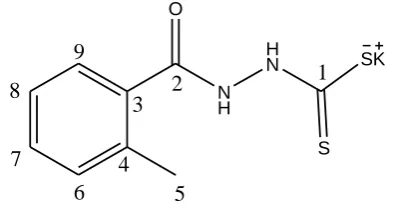
Fig. 1PotassiumN'-(2-methyl-benzoyl)-hydrazine-carbodithioate N
H H N O
SK
3
4 5 6
7 8
9
1 2
Synthesis of [Ni(en)2(tot)2]
A solution of [K+(H2L)
-] (0.264g, 1 mmol) in EtOH (15 mL) was added to a methanolic solution (10 mL) of Ni(OAc)2·4H2O (0.124g, 0.5 mmol). After stirring the mixture magnetically
for 2 h at room temperature the precipitated product was filtered off, washed twice with MeOH and dried. The above precipitate was added to the ethanolic solution of ethylenediamine and stirred for 1h.The solution was filtered off and kept for crystallization. After 10 days, pink crystals suitable for X-ray crystallographic study were obtained.Yield: 62%, M.p. 241ºC.
Synthesis of [Cu(en)2](tot)2
A solution of [K+(H2L)
-] (0.264 g, 1 mmol) in EtOH (10 mL) was added to a methanolic solution (10 mL) of Cu(OAc)2·H2O (0.100g, 0.5 mmol). After stirring the mixture magnetically for
2 h at room temperature the precipitated product was filtered off, washed twice with MeOH and dried. The above precipitate was added to the ethanolic solution of ethylenediamine and stirred for 1h. The resulting clear solution of 2 was filtered off and kept for crystallization. After 15 days, green crystals suitable for X-ray crystallographic study were obtained. Yield: 75%, M.p. 175 ºC. A simple Scheme 1 for the syntheses of Ni(II) and Cu(II) complexes with [K+(H2L)
-] is given below:
N H O NH2 N H O H N SK S N N O N N O S S NH2
H2N
H2N NH2
Ni CS2 + KOH
EtOH ___________________________________________________________________ EtOH N N O S N N O S
H2N NH2
NH2
H2N Cu
yellow ppt
Ni(OAc)2.4H2O
Cu(OAc)2.H2O
en brown ppt
[Ni(en)2(tot)2](1)
en
[Cu(en)2](tot)2 (2)
Scheme 1 Preparation of the ligand and the complexes Crystal structure determination and structure refinement
Crystals suitable for X-ray analyses of the complexes [Ni(en)2(tot)2] (1) and [Cu(en)2](tot)2 (2)
The structure was solved by direct methods (SHELXL-08) and refined against all data by full matrix least-square on F2 using anisotropic displacement parameters for all non-hydrogen atoms. All hydrogen atoms were included in the refinement at geometrically ideal position and refined with a riding model. Crystal structure diagrams were generated by use of the ORTEP-3 for windows program.
Ethanolic solutions of Ni(OAc)2·4H2O and Cu(OAc)2·H2O react with [K +
(H2L)
-] to give yellow and brown precipitates respectively which dissolved in ethanolic solutions of en to form [Ni(en)2(tot)2] and [Cu(en)2](tot)2 in good yield. The complexes are air stable, non-hygroscopic
shiny crystalline solids, which are insoluble in common organic solvents but soluble in DMF and DMSO. Analytical data and physical properties of the ligand and complexes are given in Table 1.
Table 1Analytical data and physical properties of the ligand and complexes
Compound F.W Color/
Yield (%)
M.p.
(ºC)
Found (Calcd) %
C H N
[K+(H2L)
-] 264.40 White/68 242 40.70 (40.89) 3.41 (3.43) 10.54 (10.60)
[Ni(en)2(tot)2] 561.37 Pink/62 241 46.95 (47.02) 5.29 (5.38) 20.05 (19.95)
[Cu(en)2](tot)2 566.20 Green/75 175 46.48 (46.62) 5.25 (5.34) 19.85 (19.78)
IR spectra:
The IR spectrum of [K+(H2L)
-] is expected to give rise to characteristic bands due to ν(NH),
ν(C=O), thioamide I, thioamide II, ν(C=S) and ν(N-N), which occur at 3256, 1638, 1472, 943 and 1053 cm-1respectively. A comparative study of the IR spectra of compounds 1 and 2 with that of [K+(H2L)
-] indicates that the characteristic bands due to the -C(O)NHNHC(S)- moiety, mainly ν(N-H) (hydrazinic) and ν(C=O), are found absent.
Further the disappearance of above bands related to ν(N-H) and ν(C=O) and appearance of new bands at 1597-1591 cm-1 (endocyclic C=N), 1408-1379 cm-1 forνas(C-O-C) and 1333-1276 cm
-1
for νs(C-O-C) cm
-1
, suggest cyclization of the acyclic dithiocarbazate moiety. The IR data are thus consisted with the presence of a 1,3,4-oxadiazole moiety.
A negative shift of 77 cm-1 in ν(C=S) in complex (2) indicates conversion of C=S bond to C-S. In the complex (1), ν(C=S) shows a very little negative shift showing that the exocyclic sulfur is not participating in bonding but can be attributed to the involvement of sulfur in hydrogen bonding with NH2 hydrogen of ethylenediamine.
Table 2 IR spectral bands (cm-1) and their assignments for [K+(H2L)
-] and complexes 1 and 2
Compound ν(N-H) ν(C=N) ν(N-N) ν(C=S) ν (M-N)
[K+(H2L)-] 3256 1565 1119 1015 -
[Ni(en)2(tot)2] 3330 1591 1126 990 517
[Cu(en)2](tot)2 3259 1597 1114 938 538
Fig. 2IR spectrum of [Ni(en)2(tot)2]
Electronic spectra and magnetic moments:
[Ni(en)2(tot)2] shows a magnetic moment of 2.83 B.M., which indicates the presence of two
unpaired electrons. The presence of two broad d-d bands at 769 and 514 nm assigned to the 3A2g(F)
→ 3
T2g(F), 3
T1g(F) transitions respectively suggests an octahedral geometry for the complex.
Two other high energy bands observed at 326 and 262 nm may be due to charge transfer/intraligand transitions. The magnetic moment of 1.78 B.M. for [Cu(en)2](tot)2 shows the
presence of one unpaired electron. A broad band around 540 nm assigned to the envelope of the
2
B1g → 2
A1g, 2
B2g, 2
Eg transitions suggests a square planar geometry for the complex 2. Other two
Fig. 3IR spectrum of [Cu(en)2](tot)2
Table 3Magnetic moments, electronic spectral bands and their assignments for complexes 1 and 2
Compound µeff (B.M) Band maxima(nm) Assignment Geometry
[Ni(en)2(tot)2] 2.83 769, 514, 402, 326,
262
3
A2g(F) → 3T2g(F), 3T1g(F) Oh
[Cu(en)2](tot)2 1.78 540, 253, 222
2
B1g → 2
A1g, 2
B2g, 2
Eg Oh
1
H and 13C NMR spectra:
The 1H NMRspectrum of [K+(H2L)
-] in DMSO-d6 shows signals at δ 9.98 and δ 2.4 for
two NH and three CH3 protons respectively. The toluene ring protons appear at 7.20, 7.30, 7.43,
7.60 (4H toluene ring).13C NMR (DMSO-d6; δ ppm) signals at 204 (C=S), 170.83 (C=O), 134.93
(C3), 136.18 (C4), 19.54 (C5), 129.62 (C6), 130.47 (C7), 125.37 (C8) and 127.62 (C9) ppm suggest the presence of dithiocarbazate moiety in the [K+(H2L)
-].
Crystal structure descriptions of complexes 1 and 2
Molecular structures of 1 and 2 were determined crystallo graphically. The details of data collection, structure solution and refinement are listed in Table 4. The Ortep diagram of complex 1 with atomic numbering scheme is shown in Fig.5. The important geometrical parameters are presented in Table 5.
Fig. 4.1H NMR spectrum of [K+(H2L)
-]
Fig.413C NMR spectrum of [K+(H2L)-]
In complex 1 the coordination environment is fulfilled by two axial (tot)- anions at trans positions bonded through nitrogen of oxadiazole ring and the four equatorial sites are occupied by two bidentate N, N'-ethylenediaminecoligands. The bonding of the en ligands through N(3) and Ni-N(4) have distances of 2.093(3) and 2.079(3) Å respectively. The formation of two five membered chelate rings C2N2Ni with bite angle of 83.41(11) º, represent a slight deviation from the octahedral
geometry.
The geometry and bonding parameters within the en molecule agree with those of related compounds, e.g. Ni [trans (L)2 (en)2] {L= N- (5-chlorouracilato)}, isothiocyanato andsalicylato.
Almost planar (tot−) ligands in complex 1 bonded to Ni(II) and designated as Ni-N(1)#1 = Ni-N(1) 2.091(3) Å are significantly lengthened in comparison to the Ni-N bond lengths of 1.907(3) and 1.895(4) Å reported for [Ni{ŋ5-(2-dimethylaminoethyl) cyclopentadienyl} (pti)]0.5(C7H8) [37],
[Ni{ŋ5-1-methylindene)(pti)(PPh3)] [38], {pti = phthalimidate} respectively, but comparable to
those of ca. 2.1090(14) and 2.1150 Å encountered in the related compounds [Ni(en)2(3-pyt)2]
{(3-pyt) = 5-(3-pyridyl)-1,3,4-oxadiazole-2-thione}.
The arrangement of monomeric [Ni(en)2(tot)2] units in three dimensional architecture along a axis
provide supramolecular network. In addition, the monomeric [Ni(en)2(tot)2]units are held together
through N-H···S intermolecular hydrogen bonding, leading to the formation of wave-like metal-organic chains along the c axis.
The molecular structure of 2 shows thatin the centrosymmetric unit of [Cu(en)2](tot)2, metal ion has
en molecules and is ionically linked viathiolato sulfur atoms of two (tot)− anions. Thus the complex consists of two ethylenediamine molecules which chelate Cu(II) and two ionically bonded 1,3,4-oxadiazole-2-thiolato anions. The Cu-N distances of 2.014(4) and 2.031(4) Å are normal for the Cu-N amine coordination.
The bite angle for the CuC2N4 five membered ring is 84.49(15) º indicating distortion from a
regular square planar geometry.Similar geometrical parameters for the coordination sphere have been reported for other diaquabis(ethylenediamine)Cu(II) salts. Each [Cu(en)2]
2+
forms a pair of intermolecular Cu···S interaction with a distance of 2.961Å which is well within the distance of 3.2 Å for the sum of van der Waals' radii of Cu and S [41] and greater than Cu-S covalent bond.
CONCLUSION
The different bonding behavior of nickel(II) and copper(II) may be related to the Jahn-Teller distortion in [Cu(en)2] (tot)2 which leads to a square planar geometry.The Cu(II) in D2h symmetry is
bonded to four nitrogen atoms of two en molecules. The hydrogen atoms of en are involved in the formation of hydrogen bonding with oxadiazole nitrogen atoms. The elements of the structure are joined to each other in the crystal packing by means of an extended system of H-bonding and weak π-π interactions (between toluene rings (Cgtol) of adjacent layers with a distance of 3.678 Å)
REFERENCES
[1] Amir, M. and Kumar, S., Synthesis and evaluation of anti-inflammatory, analgesic, ulcerogenic and lipid peroxidation properties of ibuprofen derivatives, Acta Pharm., 57, 31-45, 2014.
[2] Almasirad, A., Vousooghi, N., Tabatabai, S.A., A. Kebriaeezadeh, Shafiee, A., Synthesis, anticonvulsant and muscle relaxant activities of substituted 1,3,4-oxadiazole, 1,3,4-thiadiazole and 1,2,4-triazole, ActaChim.Slov, 54, 317-324, 2014.
[3] Zarghi, A., Tabatabai, S.A., Faizi, M., Ahadian, A., Navabi, P., Zanganeh, V. and Shafiee, A.,Synthesis and anticonvulsant activity of new 2-substituted-5-(2-benzyloxyphenyl)-1,3,4-oxadiazoles, Bioorg.Med.Chem.Lett.,15,1863-1865, 2015.
[4] Jakubkiene, V., Burbuliene, M.M., Mekuskiene, G., Udrenaite, E., Gaidelis, P. and Vainilavicius, P., Synthesis and anti-inflammatory activity of 5-(6-methyl-2-substituted 4-pyrimidinyloxymethyl)-1,3,4-oxadiazole-2-thiones and their 3-morpholinomethyl derivatives, IL Farmaco, 58, 323-328, 2013.
[5] Küçükgüzel, S.G, Rollas, S., Erdeniz, H. and Kiraz, M., Synthesis, characterization and antimicrobial evaluation of ethyl 2-(arylhydrazono)-3-oxobutyrates, Eur. J. Med. Chem., 34, 153-160, 2012.
[6] Singh, N.K., Butcher, R.J., Bharty, M.K., Shrivastava, A.K. and Tripathi, P., 4-[5-(Benzylsulfanyl)-1,3,4-oxadiazol-2-yl]pyridine from a single-pot reaction,Acta. Cryst., E63,
o3473-o3474, 2014.
STRATEGIC HUMAN RESOURCES MANAGEMENT (SHRM) AND SMES PERFORMANCE IN SOME SELECTED STATES IN THE NORTH CENTRAL
NIGERIA
BY
POPOOLA TajudeenAbolaji
Department of Management and Accounting, Faculty of Management Sciences
LadokeAkintola University of Technology, Ogbomoso, Oyo State, Nigeria.
And
ADEGOROYE AbayomiAdedibu Department of Management and Accounting,
Faculty of Management Sciences
LadokeAkintola University of Technology, Ogbomoso, Oyo State, Nigeria.
And
OLADEJO M. O.
Department of Management and Accounting, Faculty of Management Sciences
LadokeAkintola University of Technology, Ogbomoso, Oyo State, Nigeria.
ABSTRACT
This study examined the axiomatic determinant of SHRM and SMEs performance in some selected states in the North central Nigeria in both private and public service sector of the economy. The study adopted a stratified sampling technique to arrive at 369 sample elements for the study. Some of the owner/managers of SMEs were interviewed to further elicit information on the key variables. Copies of the questionnaire were administered and the data obtained were analyzed using Multivariate Logistic Regression analysis. The questionnaire for this study was subjected to test- re-test reliability assessment and opinions and observations of experts and professionals were incorporated into the constructs in order to ensure clarity in the content validity. The findings revealed that owners/managers that streamline the product process, improved in level of technology and innovative ideas will increase in the overall core performances in small and medium enterprises at 5% level of significant (p<005). It therefore recommended that SMEs owners/managers in the selected region should takes a moveto integrate the business related strategies and figure out thecore effective SHRM-variables in their business activities in order to ensure compliance with best practices.
INTRODUCTION
1.1 Background of the Study
The increased significance of people to organizational success has been observed to have corresponded with the rise of Strategic Human Resource Management (SHRM) as a field of study on a global scale as observed by (Adegoroye&Oladejo (2012). One of the fundamental issues that call for the attention of the policy makers in any business organization is how to improve and diversify economy by integrating business Strategy indices of HRM into small and medium enterprises (SMEs) which will lead to sustainability and economic development. The importance of SMEs in developing economy like Nigeria cannot be over emphasized because Nigeria‘s economy is dominated by small and medium scale enterprises especially in agricultural, construction, manufacturing, commerce and industry, and service sector. Many SMEs are included in skills of Strategic human resources management (SHRM) and they pay more attention to development of their human potentials than ever before. Because of sudden changes and concrete conditions, human resources management is perceived as strategic factor influencing not only the success of SME but also of nations.
Huselid, Jackson, and Schalur (1997) view strategic human resources management as a critical element in fostering operational efficiency and firm performance. They further explained that characteristics of SMEs SHRM practices determines its people management capabilities and on the effect side, is directly related to its value as a strategic partner. They contended that the factors affecting the quality of SMEs SHRM resource management capability include the industry and competitive conclusion of its partners and direct competition from other SMEs and business eager to provide value to a SMEs partners.
The SHRM practices of small and medium (SMEs) have received little specific attention from scholars and researchers. As in many other areas of scholarly inquiry into business activity, empirical research in SHRM has tends to focus on larger concerns (Gup and Whitehead 2000, Lenz, 1990). In recent years while much attention has been given to small scale business by Nigerian policy makers, politicians, practitioners‘ and academics, little research has been done on the strategic role of HRM practices within the small and medium enterprises (SMEs) sector of the Nigerian economy. This is surprising in view of the importance of small and medium scale business organizations as critical engines of employment and economic growth (Brouthers, Anderson and Nicolas, 1998). While research on the SHRM practices of SMEs has made broad and quick long steps (Henemanith, 2000, Leug 2003, Haiton 2003), few number of research focuses on the context of how the SHRM practicescontribute to successful partnership with Small and Medium Enterprises.The primary objective of this study therefore, is to reveal the competitive, business level of strategies that are being utilized by these firms and the impacts of such strategies on the performance of the sampled enterprises. This serves as a pointer to finding nexus between SHRM and SMEs performance in the selected Kwara, Kogi and Niger states of the North central region.
1.2 Statements ofthe Problem
time realizing and reacting to unexpected changes and problems instead of anticipating and preparing for them hereby having crisis management. From the foregoing, and looking at today‘s trend, it is evident that the pace of change in our business environment presents fresh challenges everyday towards improving the technology and innovation in the sector. Most studies on strategic human resources management focused more on large corporations with very limited attention to Small and Medium Enterprises. There is no adequate research work on the determinant of business related strategies of human resource management in SMEs in Nigeria. In view of this,a panacea is hereby found to investigatethe adoption of SHRM by SMEs‘ owners/managers in the branding of its indigenous commodities, improving technology and attracting innovative ideas, if it must adequately meet its business challenges. It is the intention of this study to drawn attention of Small and medium enterprises towards the need to come up with appropriate innovative ideas and improved technology to create unique product brands, customer-friendly products/ services that will bring about competitive advantages in terms of brand preference and customer confidence. Hence, the application of business related determinant of SHRM in SMEs should meet the target objectives of the organization so as to fashioned outits adoption such that it will not only help in retaining the market share controlled, but also, the overall enterprise performance in form of increased earnings at minimum costs.
1.3 Objectives of the Study
The general objective of the study is to investigate the position of strategic human resource management (SHRM) in improving corporate performances of SMEs in North central Nigeria. The specific objective is to:
To determine the level of adoption of business related strategies of SHRM in improving the SMEs performance in Ilorin, Lokoja and Minnaof the North central region.
1.4 Research Question
How do the determinants of business related of SHRM influence SMEs performance in North central region?
1.5Research Hypothesis
H01: The level of adoption of business related determinant of SHRM variables does not influence the SMEs performance in North central region
LITERATURE REVIEW 2.1 Conceptual Clarification
organizations environment and complements other organizational systems and contingencies. Budwah(2000) defines strategic HRM as a concept that views human resource as assets for investment, and the management of human resources as strategic rather than reactive, prescriptive and administrative. Strategic HRM involves designing and implementing a set of proactive HR policies/practices that ensures that an organization‘s human capital contributes to the achievements of its corporate objectives (David, Chin and Victor, 2002). Strategic HRM is essentially an integrated process that aims to achieve ―strategic fit‖.
Buyens and De Vos (1999) argue that in order for HR to be a strategic partner, HR manager should be involved in strategic decision making alongside other senior managers, providing greater opportunity to align HR goals, strategies, philosophies and practices with corporate objectives and the implementation of business strategy. This involvement would include the membership of HR managers in the most senior management teams in the organization. This would provide an opportunity for HRM to represent its concern and influence business strategy from the outset of decision making. The chances of integrating and value creation may be further increased if the senior HR manager and the CEO have an opportunity to establish a relationship. In this role, HR managers need to have knowledge of core markets, competitors, costs, profit indicators and stakeholders to be considered equal business partners (Chaddie, 2001). The involvement of senior HR manager in a firm‘s senior management team provides an important channel for interactive information flow and communication. To achieve strategic integration and alignment of HRM with business strategies, a documented HRM strategy would also be useful (Budhwar, 2000; Teo, 2002) as it can make more concrete the role and authority of HR managers in corporate decision making and increase capacity to cope with externalities such as tight labour market (Cunnigham and Deborah, 1995). A documented HRM strategy helps the organization to develop an HRM vision and objectives and to monitor performance. Some empirical evidence from previous research indicates that the full impact of HR practices on organizational performance occurs when HR practices are strategically congruent and consistent with each other (Khatri, 1999).
2.2 Theoretical Review
This study is anchored on the following theories:
2.2.1 Universalistic theory
Universalistic perspective calls for ―best practices‖ which implies that some human resource practices are always better than others. Accordingly, firms that adopt these practices will see better performance. Within this school of thought, seven practices have been consistently identified as strategic human resource practices (Osterman 1987; Sonhenfeld and Reiperi, 1988); internal career opportunities; training systems, appraisals; profit – sharing plans; employment security; voice mechanisms, including formal grievances systems plus participation in decision making; and the degree to which jobs are rightly or narrowly defined. Despite its criticisms, many researchers have supported the universality predictions (Aboned, 1990; Gerhart&Milkorich, 1990, Leonard (1990); Terpstra&Rozill, 1993).
2.2.2Contingency theory
strategy. For example, organization can use human resource practices to ensure that employees are motivated to behave on ways consistent with the business strategy (Fama& Jenson 1989). In relation to this it is proven that Japanese – style of management places great emphasis on the practices because the Japanese strongly believe that employee – based human resource practices can mold the productive workplace that firm‘s need (Rose, 2002).
3.0 METHODOLGY
The sample studied was drawn from a population of all registered SMEs in the private and public service sector spanning various trade sectors such as: Car Rental, Travel and Tourism, Hotels, Real Estate, Advertising, Restaurant, Coffee Shops, and Financial and Engineering Offices in the study areas. The total population size of all SMEs in Kwara state was 9576 of which 369 were selected for participation in this study using Taro Yamane (1964); representing the sample size at 95% confidence level. The sample firms were selected based on the criteria of license SMEs in the record of Ministry of Commerce and Industry in the regional offices of eachstate and the fact that the selected SMEs meet the criteria of staff strength between 50 and 150 and have been in business for a minimum of 5 years.
Afterappropriate sampled firms identified, their management was approached to participate in this study. It is worth note to indicate that both quantitative and subjective methods were adopted in the analysis and model development. A comprehensive questionnaire, exploring all areas related to small and medium sized business environment were developed for collecting the informationrequired for this study.
Research Instrument & Designs
The primary intention was to administer a well-structured questionnaire to increase the validity and reliability of the data collected. However, due to time constraints and firms‘ owners/managers preferences, delivery and collection of the questionnaires was the only other alternative. For a sample size of 369, 20 (5.4%) were self-administered questionnaires and 349 (94.6%) were of type delivery and collection. The overall response rate was 76.4% with 89 (23.6%) questionnaires not returned. The questionnaire was designed as to encompass two sections: Business related determinants of SHRM and SMEs performance. The questionnaire used a close-ended question structured into five Likert scale of strongly disagree (1) to strongly Agreed (5). Before developing the final questionnaire, a pilot test was conducted, and feedback was collected that helped and improved the design and content validity of the questionnaire. For instance, there were concerns, from the firms selected for the pilot test, about the length of the questionnaire suggesting a shorter version to increase the response rate. This study acted on this issue by changing the structure of some questions into category questions which are less time consuming.
Models Development and Measure of Variables
due to the dichotomous nature of the original dependent variables which had only two values in either ―improving or declining performance‖. They were initially measured on a five-point Likert scale ranging from strongly disagree (1-decreasing) to strongly agree (5-increasing). Those who indicated that their business performance increased or greatly increased in sales or profits were considered as improving, others who indicated otherwise were considered as declining. Subsequently, all dependent variables included in the analysis were dichotomous having only two values (declining or improving performance). With regards to the independent variables, brandings of indigenous products, technological improving and Innovative idea‖ were equally transformed to dichotomousvariables.
Therefore, determinants of the SHRM model will be analyzed by using logistic regression. The SHRM model is as follows:
The determinants of the SHRM model will be analyzed by using logistic regression. The SHRM model is as follows:
SHRM = f(Managers/CEO characteristics (Knowledge process=1, 0 otherwise), business Strategies (improved technology=1, 0 otherwise; innovation=1, 0 otherwise) companies
characteristics (branding=1, 0
otherwise………..(1)
P i = E( Yi = 1/Xij) = 1/ 1 + e – α+Σ βiXi
Where
i= 1,2,3,…+n
E( Yi )is equal to 1 if the Manager‘s knowledge process is adopting the business related strategies of SHRM-characteristics, 0 otherwise. (favorable or unfavorable performance of Yi implies the probability risk involved in the strategy adopted);
Zi = α +Σ βiXiei
(1.1)
Zi - Probabilityof SHRM,
α and βi - Intercept Term and Parameter
Xi - Vectors of Manager/CEO characteristics, Business Strategies Characteristics and Companies Characteristics;
ei - Error Term.
Equation (1.1) represents the cumulative logistic distribution function. If Pi is the probability of having favorable performance, then the probability of not having favorable performance =(1 - Pi ) is given by:
(1-Pi) =e-zi / 1+e-zi
(1.2)
Therefore, the odds in favour of having unfavorable performance or Pi / 1+ Pi can be written as:
Pi / 1- Pi = 1/ e-zi
(1.3)
Taking the natural log, equation becomes:
Z = ln (Pi / 1 - Pi ) = α +Σ βiXi + ei
(1.4)
4. RESULTS AND DISCUSSION
Research Question: How does the effect of business related strategies of SHRM adoption influence performance of SMEs in selected North Central States?
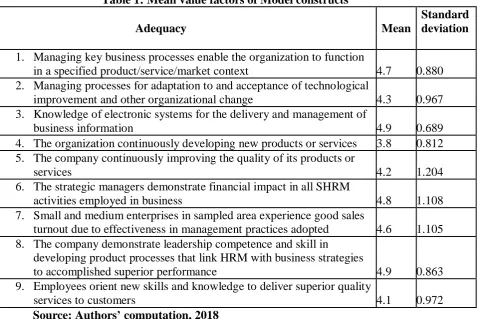
Table 1: Mean value factors of Model constructs
Adequacy Mean
Standard deviation
1. Managing key business processes enable the organization to function
in a specified product/service/market context 4.7 0.880
2. Managing processes for adaptation to and acceptance of technological
improvement and other organizational change 4.3 0.967
3. Knowledge of electronic systems for the delivery and management of
business information 4.9 0.689
4. The organization continuously developing new products or services 3.8 0.812 5. The company continuously improving the quality of its products or
services 4.2 1.204
6. The strategic managers demonstrate financial impact in all SHRM
activities employed in business 4.8 1.108
7. Small and medium enterprises in sampled area experience good sales
turnout due to effectiveness in management practices adopted 4.6 1.105 8. The company demonstrate leadership competence and skill in
developing product processes that link HRM with business strategies
to accomplished superior performance 4.9 0.863
9. Employees orient new skills and knowledge to deliver superior quality
services to customers 4.1 0.972
Source: Authors’ computation, 2018
superior quality services to customers gives mean of 4.1 with standard deviation of 0.972. This is an indication that most of the business related factors of SHRM adopted by the owner/managers in the sampled area improve the performance of SMEs above average mean response rate.
Hypothesis: The level of adoption of business related determinants of SHRM variables
does not influence the SMEs performance in North central region
Table 2: Business Strategies of SHRM Variables in the Equation
B S.E. Wald df Sig. Exp(B)
95% C.I.for EXP(B) Lowe
r
Uppe r Step
1a
Branding .767 .449 .097 1 .001 2.037 .387 3.140 Technology 2.216 .679 6.568 1 .003 3.811 1.278 6.771 Innovations 2.991 .863 5.717 1 .011 .132 .108 .688 Constant 15.13
4 9.33
2 6.653 1 .005
1.27x10 11
a. Variable(s) entered on step 1: Branding, Technology, Innovation.
From the results above, the odds of SMEs owners who are adopting Branding (Product processes) to influence managerial performance are 2.037 times higher than those of SMEs owners who are not adopting branding, with a 95% CI of 0.387 to 3.140. Also the odds of SMEs owners who are adopting technological improvement being influence managerial performance are 3.811 times higher than those of SMEs owners who is not adopting technological improvement with a 95% CI of 1.278 to 6.771 while the odds of SMEs owners who are adopting innovative ideas being influence managerial performance are 13.2% better than those of SMEs owners who is not adopting innovative ideas.
Table 3: Model Fitting Information in the effect of Business related strategies of SHRM variables on SMEs performance
Model
Model Fitting Criteria Likelihood Ratio Tests
AIC BIC
-2 Log
Likelihood Chi-Square df Sig. Intercept Only 517.643 525.031 513.643
Final (SHRM) 269.824 365.861 217.824 295.819 6 .000
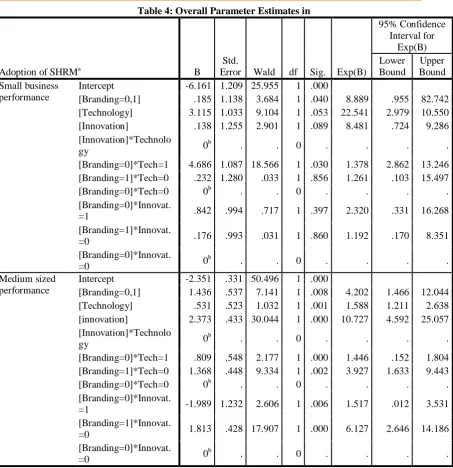
Table 4: Overall Parameter Estimates in
Adoption of SHRMa B
Std.
Error Wald df Sig. Exp(B)
95% Confidence Interval for Exp(B) Lower Bound Upper Bound Small business performance
Intercept -6.161 1.209 25.955 1 .000
[Branding=0,1] .185 1.138 3.684 1 .040 8.889 .955 82.742
[Technology] 3.115 1.033 9.104 1 .053 22.541 2.979 10.550
[Innovation] .138 1.255 2.901 1 .089 8.481 .724 9.286
[Innovation]*Technolo
gy 0
b
. . 0 . . . .
[Branding=0]*Tech=1 4.686 1.087 18.566 1 .030 1.378 2.862 13.246
[Branding=1]*Tech=0 .232 1.280 .033 1 .856 1.261 .103 15.497
[Branding=0]*Tech=0 0b . . 0 . . . .
[Branding=0]*Innovat.
=1 .842 .994 .717 1 .397 2.320 .331 16.268
[Branding=1]*Innovat.
=0 .176 .993 .031 1 .860 1.192 .170 8.351
[Branding=0]*Innovat.
=0 0
b
. . 0 . . . .
Medium sized performance
Intercept -2.351 .331 50.496 1 .000
[Branding=0,1] 1.436 .537 7.141 1 .008 4.202 1.466 12.044
[Technology] .531 .523 1.032 1 .001 1.588 1.211 2.638
[innovation] 2.373 .433 30.044 1 .000 10.727 4.592 25.057
[Innovation]*Technolo
gy 0
b
. . 0 . . . .
[Branding=0]*Tech=1 .809 .548 2.177 1 .000 1.446 .152 1.804
[Branding=1]*Tech=0 1.368 .448 9.334 1 .002 3.927 1.633 9.443
[Branding=0]*Tech=0 0b . . 0 . . . .
[Branding=0]*Innovat.
=1 -1.989 1.232 2.606 1 .006 1.517 .012 3.531
[Branding=1]*Innovat.
=0 1.813 .428 17.907 1 .000 6.127 2.646 14.186
[Branding=0]*Innovat.
=0 0
b
. . 0 . . . .
a. The reference category is: increasing/decreasing performance of SMEs in the sampled areas. b. This parameter is set to zero because it is redundant.
4.1Discussion of Findings
4.1.1 Result obtained from Small Businesses performance and the adoption of SHRM Variables were highlighted below
Branding: Whether the adoption of SHRM show signs of branding or product
process significantly predicted whether small scale business performance increases or decline, b = 0.185, Wald χ2(1) = 3.684, p< .05. This mean knowledge strategy of branding process is significant at 95% confidence level
Technology: Whether the adoption of SHRM show signs of technological
improvement significantly predict whether small scale businesses increases or decline in performance, b = 3.115, Wald χ2(1) = 9.104, p>.05. This mean strategy in technological improvement is insignificant at 95% confidence level
Innovation: whether the adoption of SHRM show signs of innovative ideas did not
performances , b = 0.138, Wald χ2(1) = 2.901, p>.05. This mean innovation strategy is insignificant at 95% confidence level
Branding×Technology: The success of adopting technological improvement of
SHRM by owners‘ manager depended on whether the products is not branding because in interaction these variables predicted whether small scale businesses increases or decline, b = 4.686, Wald χ2(1) = 18.566, p< .05. This mean strategy in branding and technological improvement is significant at 95% confidence level
Branding×Technology: The failure of adopting technological improvement of
SHRM by owners‘ manager depended on whether the products is branding because in interaction these variables predicted whether small scale businesses increases or decline, b = 0.232, Wald χ2(1) = 0.033, p> .05. This mean failure to adopt strategy in branding and technological improvement is insignificant at 95% confidence level
Branding×Innovation: The success of adopting innovative ideas of SHRM by
owners‘ manager depended on whether the products is not branding because in interaction these variables predicted whether small scale businesses increases or decline, b = 0.842, Wald χ2(1) = 0.717, p> .05. This mean the success to adopt strategy in branding and innovation is insignificant at 95% confidence level
Branding×Innovation: The failure of adopting innovative ideas of SHRM by
owners‘ manager depended on whether the products is branding because in interaction these variables predicted whether small scale businesses increases or decline, b = 0.176, Wald χ2(1) = 0.031, p>.05. This mean the failure to adopt strategy in branding and innovation is insignificant at 95% confidence level
4.1.2 Results obtained from Medium Sized Businesses performance and the
adoption of SHRM variables were highlighted below:
Branding: Whether the adoption of SHRM show signs of branding or product
innovation significantly predicted whether medium sized business performance increases or decline, b = 1.436, Wald χ2(1) = 7.141, p< .05. This mean knowledge strategy of branding process is significant at 95% confidence level
Technology: Whether the adoption of SHRM show signs of technological
improvement significantly predict whether medium sized businesses increases or decline in performance, b = 0.531, Wald χ2(1) = 1.032, p<.05. This mean strategy in technological improvement is significant at 95% confidence level
Innovation: whether the adoption of SHRM show signs of innovative ideas
significantly predicts whether medium sized businesses increases or decline in performances , b = 0.809, Wald χ2(1) = 2.177, p<.05. This mean innovation strategy is significant at 95% confidence level
Branding×Technology: The success of adopting technological improvement of
SHRM by owners‘ manager depended on whether the products is not branding because in interaction these variables predicted whether medium sized businesses increases or decline, b = 4.686, Wald χ2(1) = 18.566, p< .05. This mean the success to adopt strategy in branding and technology is significant at 95% confidence level
Branding×Technology: The failure of adopting technological improvement of
SHRM by owners‘ manager depended on whether the products is branding because in interaction these variables predicted whether medium sized businesses increases or decline, b = 1.368, Wald χ2(1) = 9.334, p<.05. This mean the failure to adopt strategy in branding and technology is significant at 95% confidence level
Branding×Innovation: The success of adopting innovative ideas of SHRM by
interaction these variables predicted whether medium sized businesses increases or decline, b = -1.989, Wald χ2(1) = 2.606, p< .05. This mean the success to adopt strategy in branding and innovation is significant at 95% confidence level
Branding×Innovation: The failure of adopting innovative ideas of SHRM by
owners‘ manager depended on whether the products is branding because in interaction these variables predicted whether medium sized businesses increases or decline, b = 1.813, Wald χ2(1) = 17.907, p<.05. This mean the failure to adopt strategy in branding and innovation is significant at 95% confidence level
4.2 Discussion of findings
The results of logistic regression analysis presented in Table 4 illustrate that medium sized firms in the business sector were more successful than smaller firms. This is in line with Evans (1987); and Riding Scott and Orser, (2000). Although the study indicate that most of the business related strategies of SHRM is not applicable to small business owners in the sampled area, majority of small business owner/managers did not consider effectiveness and adoption of the strategies in improving the business success, though a highly significant and positive association was found between the firms that have shown an increase in the employment size(Medium business) and performance. The Bivariate logistic regression analysis indicated that all small-sized businesses declining in performance did not show any evidence of full adoption ofbusiness related strategies of SHRM as they either remained in the same level of technology, poor knowledge of product processes and innovation at 95% confidence level. Medium sized enterprises were shown to have more resources which in turn help the firms to seek out more opportunities and enable them to absorb any unexpected changes in the market through intensive use of business strategies related factors of SHRM for superior performance in the industry. Owner/managers should not perceive easier controlled of small business as a progress for performance because it is observed in this study that medium-sized businesses perform better than their small counterparts due to effectiveness and efficient use of product process, technology and innovative ideas in the same business performance criterion adopted in the sector. Therefore, finding showedthat medium-sized enterprises have the ability to make better use of resources enabling them to adopt the latest technological developments and better innovative ideas at 5% level of significant.
knowledge in product processes (Branding). Medium sized enterprises expanding within the context of small-scale sector helps by given the owner/managers the ability to acquire more resources controlled than small business as revealed in this study.Theyaccomplished this by probing the market and reduce business ignorance of the moderating effect of market situation through SHRM which might be too complex and turbulence to adopt for the small firms.
5.1CONCLUSION
Based on the investigation of the business related determinant of SHRM that affect small and medium business performance, this paper has provided some insights into how knowledge of product process, level of technology and innovation interact and affect the performance of small and medium enterprises in some selected North central zone. Additionally, the paper showed that the significance of the product processes, level of technological improvement and innovative ideas varies across the business organization and units and the criteria adopted by the managers of the selected areas for effective performance. The overall conclusion of the paper was that, in the general performance model, all three independent SHRM-variables were statistically significant indicating that successful enterprises were those whose owner/managersadopted business related determinants of SHRM in such a way that they respond to moderate effect of business related strategies which does not only boost their performance but also enable them to fully integrate these indices in their day to days running of the businesses in order to meet a competitive edge in the industry. In conclusion, the paper suggests that SMEs success is affected by a web of factors of SHRM, these factors are interrelated and to understand their influence on small and medium business performance, it is necessary to understand the way the SHRM interact with business related strategies and their effect on the small and medium business performance directly or indirectly.
5.2RECOMMENDATIONS
The following recommendations were drawn from the findings
SMEs owner/managers in Nigeria should takes a move to integrate the appropriate business related strategies and figure out the core effectiveness in SHRM-variables in their business activities in order to ensure compliance with best practices in the sector.
Management of SMEs should embrace the best strategies that work for the organization before implementation so as to reduce the course of action that is unproductive and offer no hope of improvement in the performance of SMEs in the North Central region.
REFERENCES
c Strategic Human Resource Management Practices in the Post Consolidated Nigerian Commercial banks, Journal of Business and Management 2222 – 1905.
Appelbaum, H, and Kamal R., (2000) An analysis of the utilization and effectiveness of non – financial incentives in small business. The journal of Management Development 19, 9/10;733 – 763.
Aremu,M.A&Oyinloye, O.O., (2014) Relationship between strategic management and firms‘ performance. In Nigeria banking industry, Arabian Journal of Business and Management Review E. Kwuart.
Armstrong Michael, Bawn, Angela (2003). Strategic HLM: The key to improved business performance, CIPD, London, P. XVIII
Armstrong, M.A & Baron, A (2004) Managing Performance: Performance Management in Action London: CIPD.
Arthur J. (1992) The link between business strategy and industrial relations systems in American state mini – mills Industrial and Labour Relations Review: 45, 488 – 506.
ASTD (2003) ASTD Industry report, Aracublus at http//www.astd.org/astd
Babajide A.A (2011) Effect of Microfinancing on Micro and Small Enterprises in Southwest Nigeria.
Barkham R. Gudgin G. Hart M. and Hanvey E. (1996) The Determinants of Small Firm Growth: An Inter-Regional Study in the United Kingdom 1986-1990 University of Cambridge, UK.
Bamberger, P &Meshoulam, H. (2000). Human Resource Strategy, Formulation, Implementation and Impact Stage: Berverly Hills.
Becker, B &Gerhart B (1996) The impact of human resource management on organizational performance. Progress and Prospects. Academy of Management Journal 30, 770 – 801.
Boxall, P., & Purcell, J (2008) Strategy and Human Resource Management, Basing stoke; Dalgrave Macmillan.
Burke W. (1997) What Human Resource Practitioners used to know for the (21 – Human Resource Management 36, 71).
Carter S. and Jones – Evans D. (2000) Enterprise and small Business: Principles,
Practice and Policy, Great Britain pp 132 – 137
Cooper, A., J. Gascon, and C. Woo, 1991, A Resource-Based Prediction of New Venture
Survival and Growth, Proceedings Academy of Management (Summer), 113-119.
Cooper, A., W Dunkelberg, C. Woo, and W Dennis, 1990, New Business in America:
The Firms and Their Owners. Washington D.C.: The NFIB Foundation.
Evans, D.S., 1987, Tests of alternative Theories of Firm Growth, Journal of Political
Economy, 95.
Devins, D and Johnson, S. (2003) Training and Development activities in SMEs International Small Business Journal 21, 2: 213
Dimba B., and K‘ Obonyo P (2009). The Effect of Strategic Human Resource Management Practice on Performance of Manufacturing Multinational Companies in Keyer Preceding of the International Conference on Human Capital Management in University of Nauobi, July 22 – 24.
Efuk R., U., Etuk G.R &Baghebo M. (2014) Small and Medium Scale Enterprises and Nigeria Economic Development. Mediterrean Journal of Social Sciences. MCSER Publishing. Rome – Italy 5,(7) 656 – 662.
EsraNemliCaliskan (2010) The impact of strategic human resource management on organizational performance; journal of Naval Science and Engineering, Vol. 6 No 2 Pp 100 – 116.
Graham M., and Welbourie, T. (1999) Gainsharine and Women‘s and Men‘s relative pay satisfaction. Journal of Organizational Behaviour 20, 7:1027 – 1042.
Hornsby J., and Kuratko, A., (2003) Human Resource Management in U.S.A small business: a replication and extension. Journal of Development Entrepreneurship 8, 1.73.
Huselid M. (1995) The impact of human resource management practices on turnover, productivity and corporate financial performance. Academy of management journal 38.3:635
Huselid M.A (1993) ―The Impact Human Resource Management Practices on Turnover, Productivity and Corporate Financial Performance‖ Academy of Management Journal 38(3), 635 – 672.
Huselid M.A., Jackson S.E &Schuleri (1997) ―Technical and Strategic Human Resource Management Effectiveness as Determinants of Firm Performance‖ Academy Management Journal 40 (199), 171 – 188.
Ilic, B., (1997) Savienena Political ekonomiyanapragu 21. Vekabeoyrad: Ekonomskifakultet.
Journal of SHRM; South East Asia Journal of Contemporary Business, Economics and Law. Vol.7, issue 2 (Aug) ISSN 2289 - 1560
Kloger, T., and Langrock L (2003) Small firms off line on internal recruitment. Canachan HR Journal 16,13:5.
Lanrie, S.M. (1987) Strategic business planning for the small to medium – sized company. The C.P.A Journal (6), 90 – 92.
Lau, L., & Ngo, H., (2004) The HR System, Organizational Culture and Product Innovation International Business Review 13, 685 – 703.
Muogbo U.S (2013) The Impact of Strategic Human Resources Management on Small and Medium Sized Enterprises. Journal of Management and Business Studies Volume 3, number 3.
Nanna O.J ((2001) ―Financing Small Business under the new CBN directive and its likely impact on the Nigeria Economy‖, Bullion, Volume 25, No 5, CBN
National Bureau of Statistics and Small and Medium Scale Enterprises Development Agency of Nigeria Sinedan Report (2012).
Onogu, B.A.N (2005) Small and Medium Enterprises (SMEs) in Nigeria: Problems and Prospects, St. Clements University.
Paul Ogunyomi&Nealia S.B (2015) Human Resource Management and Organizational Performance of Small and Medium Enterprises (SMEs) in Nigeria. Journal 1466 – 4399.
Radaum C.R (2006) The influence of organizational and Human Resource Management Strategies on Performance www. ispi.org. April 2006.
Ranko Lope, ZelimirSkrbie and ViadimirRistic (2012) Strategic approach to Human Resource Management; Journal COBISS.BH – ID2507032 UDR 205.96.
Rowden, R. (2002) The relationship between workplace learning and job satisfaction in U.S small and mid size businesses, Human Resources Development Quarterly 23, 4:407 – 425.
Survey: Selected Findings (2013), Smedan and National Bureau of Statistics Collaborative Report of Small, Medium and Large Enterprises in Nigeria.
Saratege,Institute (2003)The Saratoga preview. Available at http://www.procsernces.com/sqratoja - institute/in the html.
Shutan, B. (2003) What small business needs to know about pay and benefits, employee benefit plan preview 57, 7:-6-9.
Torrington D. Hall, L. Taylor, S (2004) ManadzmentIjudskihresursa. Becegrad, Deta Status.
Umukoro G., (2005) Strategic Management for Development Programme Lagos. AlabaPres Ltd.
Vinten, G; Lane, A and Hages, N. (1997) People management in small and medium – sized enterprises. Management Research News 20, 11:1-166
Walker; E & Webster, B. (2004) ―Gender Issues in Home – Based Business‖ Woman in Management Review, 19(8), 464 – 412.
Welbourne, T. Balkin, D and Gomez – Mejia (1995) Gains having and Mutual monitoring, a combined agency – organizational justice interpretation. Academy of Management Journal 38, 3:881.
Wijewardena H and Tibbits G E, (1999), Factors contributing to the growth of small
Manufacturing firms: Data from Australia, Journal of Small Business Management, 37:2 88-95.
Yuzbasioglu N., (1997), Evaluation of the Critical Factors Influencing the Growth Potential of
“Exploring the linkages between Employee Well Being , Job involvement
and Job Satisfaction”.
________________________________________________________________________
Dr. Amee Agrawal Assistant Professor (CES)
Department of Commerce & Business Management Faculty of Commerce
The Maharaja Sayajirao University of Baroda
Abstract
The paper aims to study the impact of Employee Wellbeing and Job Involvement on Job Satisfaction. Data was collected from a private organization manufacturing cotton and synthetic threads with a sample of 158 employees. This paper has revealed some of the interesting facts.This data was further analyzed using correlations and regressions to derive meaningful conclusions. The findings suggest that there are strong, positive, and significant relationships between Employee Wellbeing and Job Satisfaction as well as Employee wellbeing and Job involvement .
Key Terms: Employee Wellbeing, Job Involvement, Job Satisfaction.
Introduction:
According to Peter F. Drucker (1977) employee‘s satisfaction and happiness (Employee
wellbeing) are the keys to its operational success. Since human resource is an important factor to operation success, therefore a company or an organization must create a pleasant working environment to attract most intelligent talents to work for it.Romano (2011) had also emphasized in her research article that the best solution to solve various managerial issues in an enterprise is employee happiness. Report had shown that the higher the level of employee happiness index of an enterprise, the better the productivity and Job Satisfaction it has.
Locke (1976) defined work satisfaction as the pleasant and aggressive mood a worker experienced in his work, and Robbins(1996) emphasized job satisfaction as an individual‘s general attitude towardhis work, and a higher job satisfaction is always associated with more proactive attitude and efficiency, Job satisfaction can be defined as anindividual‘s evaluation of different facetsof their job. This research paper explores the relationship between Employee Wellbeing (Happiness), Job Involvement and Job Satisfaction. Job satisfaction plays a big part in the employee‘s overall happiness, so naturally the employees will provide better overall organization performance when they are working with higher satisfaction.
2.0 Review of Literature:
2.1 Job Satisfaction
Locke (1976) defines job satisfaction as anindividual‘s evaluation of different facetsof
self-motivation. Through this process of internalization and integration, extrinsically prescribed behavior becomes internally or autonomously regulated so that motivation to act becomes self-determined.Illardi et al. (1993) found that employees who felt strongly that their work allowed them to experience autonomy, competence, and relatedness reported higher levels of job satisfaction.
2.2 Employee wellbeing (Happiness)
Positive psychology introduces the concept of well-being as individual valued experiencein which people become more efficacious in their work and other activities (Bandura, 1986; Seligman and Csikszentmihalyi, 2000). Employee well-being is defined broadly as the overallevaluation of one‘s life, as the overall quality of an employee‘s experience and functioningat work, including life satisfaction and positive affect which influence individualperformance (Grantet al., 2007; Li et al., 2014; Lu, 2001; Taris and Schreurs, 2009). Being happy is of great importance to most people,and happiness has been found to be a highly valuedgoal in most societies (Diener 2000). In the past two decades, a number of new constructshave emerged which reflect some form of happinessor positive affective experience in the workplace.What these constructs have in common is that allrefer to pleasant judgments (positive attitudes) orpleasant experiences (positive feelings, moods, emotions, flow states) at work.Job Demands-Resources theory as a reference point, it can be assumed that job resources (physical, psychological, social, or organizational characteristics of a job) stimulate positive attitudes such as engagement or organizational commitment (Schaufeli and Bakker, 2004). Warr(2007) laid out a series of motivational factors which relate to and interact with the work environment and which influence happiness at work. Such factorsinclude the opportunity for personal control of one‘s own work, opportunity for personal skill use, variety, environmental clarity, contact with others, supportive supervision, career outlook, andequity.In a nutshell, employee well-being is defined broadly as the overallevaluation of one‘s life, as the overall quality of an employee‘s experience and functioningat work, including life satisfaction and positive affect which influence individualperformance (Grantet al., 2007; Li et al., 2014; Lu, 2001; Taris and Schreurs, 2009).
From the above discussion it was hypothesized that
H1: Employee Wellbeing has a significant and positive relationship between Job Satisfaction.
H2: Employee Wellbeing has a significant and positive relationship between Job Involvement
2.3 Job Involvement
Job involvement is defined & explained as an employee‘s response to the psychological perception of his work assignment, job accomplishment and values. Kahn (1990)
we had adopted the survey scale sheet based on Kahn‘s theories on organization commitment and job involvement.
From the above discussion it was hypothesized that
H3: Job involvement has a significant and positive relationship between Job Satisfaction.
3.0 Research Methodology
3.1 Instrument Design
Based on thereview of the literature of the identified variables a structured non disguised questionnaire consisting of 26questions was designed based on a 5-point Likert scale (1 =strongly disagreeto5=strongly agree).The first 5 questions were related to demographic details of respondents pertaining to gender, age, marital status, education and experience added to the questionnaire, and the next 21 questions addressed Job involvement, Employee wellbeing (Happiness) and Job Satisfaction variables. Judgment sampling, a non- probability sampling technique was used to select the respondents. A self-administered questionnaire was used to collect data. Respondents were requested to participate in the survey. Data collection was done over a period of one month in February 2018.A private sector organization was selected for data collection.
The measures Job satisfaction Questionnaire of were adapted from questionnaires used in the studies from literature contained six items with reliability (α= 0.839) was taken from
Schmidt (2004). The variables used in the Employee wellbeing measure were taken from
Oxford Happiness Questionnaire (α = 0.908) by P. Hills and M. Argyle (2002) study which contained 10 items. The items on these construct indicated overall measure of happiness, with high scores indicatinggreater happiness. The scale developed by Kahn, W. A (1990), which contained 5 statements was used for data collection. The total sample size was 158 which consisted of managers and Senior Managers from various departments who were selected through Judgment sampling
In total, 200questionnaires were distributed. Off which 42 questionnaires were discarded due to incomplete nature, resulting in 158totally filled questionnaires that were used for the statistical analysis of thestudy. Collected data was subjected to correlation and simple linear regression analysis byusing Statistical Package for the Social Sciences (SPSS) version 20. Cronbach‘s alpha testwas conducted to check the reliability of the questionnaire.
The total alpha coefficient of the questionnaire was 0.925 (p< .001) and alpha coefficients for all items were ≤0.70(p< .001), which are in the acceptable range (≤0.70) suggested by
Nunnally (1978). Theinternal consistency of the items was also calculated. A careful examination of item–totalcorrelations showed that all correlations ranged from 0.67–0.74, which are above the 0.32level suggested by Saxe and Weitz (1982).
4.0 Results
score for all the three variables of Employee wellbeing, Job Involvement and Job Satisfaction was calculated by averaging representing items on the questionnaire. First, correlationanalyses were used to examine the relationship between all the three research variables.The results suggested that all the variables are positively correlated, and correlationswere significant and equal to +.67 p< .001, two-tailed.
Toward testing the hypothesis andfinding whether Employee Wellbeing (independent factor) is the predictor of Job Satisfaction (dependent variable), a simple linear regression analysis was conducted.Regression analysis wasfirst confirmed by testing the assumptions of normality, linearity, homoscedasticity, and independence of residuals, revealing that the residuals arenormally distributed (Tabachnick&Fidell, 1996). According to an F-value of 73.614, with significance of <.01 of the regression test, it can be said that the model has a goodfit for the data. Both results showed that there is a positive and significant relationshipbetween Employee Wellbeing (Happiness) and Job Satisfaction,hence the proposed hypothesis is accepted.
Toward testing the hypothesis andfinding whether Employee Wellbeing (independent factor) is the predictor of Job Involvement (dependent variable), a simple linear regression analysis was conducted.Regression analysis wasfirst confirmed by testing the assumptions of normality, linearity, homoscedasticity, and independence of residuals, revealing that the residuals arenormally distributed (Tabachnick&Fidell, 1996). According to an F-value of 42.690, with significance of <.01 of the regression test, it can be said that the model has a goodfit for the data. Both results showed that there is a positive and significant relationshipbetween Employee Wellbeing (Happiness) and Job Involvement,hence the proposed hypothesis is accepted.
Toward testing the hypothesis andfinding whether Job Involvement (independent factor) is the predictor of Job Satisfaction (dependent variable), a simple linear regression analysis was conducted.Regression analysis wasfirst confirmed by testing the assumptions of normality, linearity, homoscedasticity, and independence of residuals, revealing that the residuals arenormally distributed (Tabachnick&Fidell, 1996). According to an F-value of 141.176, with significance of <.01 of the regression test, it can be said that the model has a goodfit for the data. Both results showed that there is a positive and significant relationshipbetween Job Involvement and Job Satisfaction, hence the proposed hypothesis is accepted.
5.0 Discussions
and Adjusted R2 are .321 and .316 respectively. This implies that 32.1% of the variance of JS can be predicted by EWB.
This signifies that, the organization has to build a workplace where a large number of employees could find their work meaningful and purposeful as well as feel passionate, grateful and suitable with the work they are in charge of. Work processes must be developed in such a way that it brings out satisfaction, feeling of elation and Joy. The employee feels that he has a full control of his life and that life is rewarding. These are the feelings of Employee Wellbeing which enhances Job Involvement and Job Satisfaction. Job Involvement brings a lot of absorption and engrossedness in work processes. And all this leads to overall satisfaction of the employee in terms of compensation, Safety and security and the support of peers, superiors and subordinates.
6.0 Limitations
Although Employee Wellbeing and Job Involvement are crucial factors for Job satisfaction there are other organizational factors that should also be considered like Organizational trust, Organizational Commitment, Work place Spirituality etc. This research is conducted in the context of a private organization, and if it is carried out in other Organizations the result might be different. Due to the limitation in access to all employees, only managers and senior managers were selected asthe sample of the study. Future studies with all staffmay show different results.
References:
1. Bandura, A. (1986). The Explanatory and Predictive Scope of Self-Efficacy Theory.
Journal of Social and Clinical Psychology, 4(3), 359–373. doi:10.1521/jscp.1986.4.3.359
2. Bin Li Feng Yu and Zongkui Zhou ( 2014) Positive Psychological Capital: A new approach to social support and subjective well-being. Social Behavior and Personality, 2014, 42(1), 135-144.
3. Diener, E. (2000), ―Subjective well-being: the science of happiness and a proposal for a national index‖, American Psychologist, Vol. 55 No. 1, pp. 34-43.
4. Gagné, M., &Deci, E. L. (2005). Self-determination theory and work motivation. Journal of Organizational Behavior, 26(4), 331-362. Doi:10.1002/job.322
5. Grant, A.M., Christianson, M.K. and Price, R.H. (2007). ‗Happiness, health, or relationships? Managerial practices and employee well-being tradeoffs‘. Academy of Management Perspectives, 21: 3, 51–63.
6. Hills, P., & Argyle, M. (1998a). Musical and religious experiences and their relationship to happiness. Personality and Individual Differences, 25, 91–102.
7. Kahn, W. A., Psychological conditions of personal engagement and disengagement at work, Academy of Management Journal, 1990, p692-724
9. Jo Romano, 8 Steps to Foster Employee Happiness, The Real World Leader Report, 2011
10. Locke, E.A. (1976), ―The nature and causes of job satisfaction‖, in Dunnette, M.D. (Ed.), Handbook of Industrial and Organizational Psychology, Rand McNally, Chicago, IL, pp. 1297-349
11. Lu, L. (2001), ―Understanding happiness: a look into the Chinese folk psychology‖, Journal ofHappiness Studies, Vol. 2 No. 4, pp. 407-432.
12. Nunnally, J. C. (1978).Psychometric theory. New York, NY: McGraw-Hill.
13. Peter F. Drucker, An introductory view of management, McGraw-Hill, New York, 1977
14. Ryan, R. M., &Deci, E. L. (2000). Intrinsic and Extrinsic Motivations: Classic Definitions and New Directions. Contemporary Educational Psychology, 25(1), 54– 67. Doi:10.1006/ceps.1999.1020
15. Saxe, R., &Weitz, B. (1982). The SOCO scale: A measure of the customer orientation of salespeople. Journal of Marketing Research, 19, 343–351. doi:10.2307/3151568
16. Schaufeli, W.B., Taris, T.W. and Van Rhenen, W. (2008),―Work alcoholism, burnout, and workengagement: three of a kind or three different kinds of employee well-being?‖, AppliedPsychology, Vol. 57 No. 2, pp. 173-203
17. Schmidt, S.W., (2004). The Relationship Between Job Training Satisfaction and Overall Job Satisfaction Among Employees in Customer Contact Positions (Doctoral dissertation, University of Wisconsin ñ Milwaukee, 2004)
18. Seligman and Csikszentmihalyi (2000) Positive Psychology: An Introduction Flow and the Foundations of Positive Psychology, 279–298. Doi:10.1007/978-94-017-9088-8_18.
19. Stephen P Robbins, ―Organizational Behavior, Concepts Controversies Applications‖, Publisher: Prentice Hall, 7th Edition, 1996
20. Tabachnick, B. G., &Fidell, L. S. (1996).Using multivariate statistics. New York, NY: HarperCollins.
21. Taris, T.W. and Schreurs, P.J.G. (2009), ―Well-being and organizational performance: an organizational-level test of the happy-productive worker hypothesis‖, Work & Stress, Vol. 23 No. 2, pp. 120-136.
![Fig. 2IR spectrum of [Ni(en)2(tot)2]](https://thumb-us.123doks.com/thumbv2/123dok_us/1382999.1648969/4.595.104.492.185.490/fig-ir-spectrum-of-ni-en-tot.webp)
2](https://thumb-us.123doks.com/thumbv2/123dok_us/1382999.1648969/5.595.83.527.80.262/fig-ir-spectrum-of-cu-en-tot.webp)
![Fig. 4.1H NMR spectrum of [K+(H2L)-]](https://thumb-us.123doks.com/thumbv2/123dok_us/1382999.1648969/6.595.91.537.76.472/fig-h-nmr-spectrum-of-k-h-l.webp)