ISSN: 2231-5381
http://www.ijettjournal.org
Page 626
Interpreting Low Resolution MRI Images Using
Polynomial Based Interpolation
Tarun Gulati#1, H.P.Sinha*2 #1
Associate Professor, *2Professor, ECE Department, M.M. University, Mullana Ambala, India
Abstract— In medical imaging, image interpolation is a key aspect. Some interpolation approaches are proposed to overcome the problem of low resolution in medical imaging. MRI is an invaluable modality in the medical field. Particularly, neuro imaging with MRI helps physicians to study the internal structure and functionality of the human brain. In these cases, high resolution and isotropic images are important because higher isotropic resolution could theoretically reduce partial volume artifacts, leading to better accuracy/precision in deriving volumetric measurement and decreasing considerable errors in registration . In this case, invaluable information will be lost in the latter direction. The objective is to recover and fill in this missing information in order to enable the physicians to obtain a more accurate perspective of the underlying structure available in the data by optimizing the choice of interpolation techniques. Therefore, this paper focuses on investigating the effect of various polynomial based interpolation functions on zooming low resolution images.
Keywords— Pixel, Quantization, Sampling, zooming and
interpolation.
I. INTRODUCTION
Many applications now a days rely on digital image
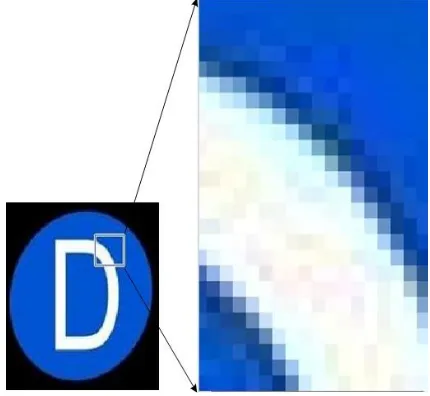
interpolation. Some examples are simple spatial magnification of images or video sequences (e.g. printing low resolution documents on high resolution (hr) printer devices, digital zoom in digital cameras or displaying Standard Definition video material on High Definition television (HDTV)), geometric transformation and registration (e.g. affine transformations or computer-assisted alignment in modern X-ray imaging systems), demosaicing (reconstruction of color images from CCD samples), etc. Many interpolation methods already have been proposed in the literature, but all suffer from one or more artifacts. Linear or non-adaptive interpolation methods deal with aliasing (e.g. jagged edges in the up scaling process), blurring and/or ringing effects. Well-known and popular linear interpolation methods are nearest neighbour, bilinear, bicubic and interpolation with higher order (piece-wise) polynomials, b-splines, truncated or windowed sinc functions, etc. [7,10]. Non-linear or adaptive interpolation methods incorporate a priori knowledge about images. Dependent on this knowledge, the interpolation methods could be classified in different categories. This paper focuses on zooming low resolution MRI digital images. The captured images are usually processed by digital image processors which render an image in a two-dimensional grid of pixels; characterized by a discrete horizontal and vertical quantization resolution. This finite resolution, especially forlow resolution images, often results in visual artifacts, known as “aliasing” artifacts. These are very common in low resolution images and usually these aliasing artifacts either appear as zigzag edges called jaggies or produce blurring effects. Another type of aliasing artifacts is variation of color of pixels over a small number of pixels (termed pixel region). This type of aliasing artifacts produces noisy or flickering shading. A typical example of these artifacts is shown in Fig.1. These artifacts can be reduced by increasing the resolution of an image. This can be done using image interpolation, which is generally referred as a process of estimating a set of unknown pixels from a set of known pixels in an image. In this paper different polynomial based interpolation techniques are discussed which include ideal interpolation, nearest neighbour, bilinear, bicubic, high resolution cubic spline, Lagrange and Lanczos interpolation. These functions are then applied on MRI image of brain and evaluate the performance of each interpolation function discussed in paper. This paper, therefore, is divided into two parts. The first part presents the analytical model of various interpolation functions. The second part investigates the various quality measures of image like SNR, PSNR, MSE, SSIM, time taken of the zoomed images using these functions.
ISSN: 2231-5381
http://www.ijettjournal.org
Page 627
II. RELATED WORKThe key interpolation methods include
sinc, nearest neighbor, Bilinear, Bicubic, Lagrange, Lanczos and high resolution cubic spline. All these interpolation techniques are polynomial based. Dimitri V. et. al.[1] presented an approach which minimizes the loss of information, in a least-squares sense, while resampling between orthogonal and hexagonal lattices. Authors implemented the proposed resampling method for a gravure printing application. Chung K.H. [2] et. al. presented a fractal-based image enlargement technique to reduce the degradation problem. The technique can preserve the details in edge regions while maintaining the smoothness in flat regions, which is superior to conventional image enlargement techniques such as bilinear interpolation and cubic convolution. Hadhoud M.M. et. al. [3] suggested an adaptive warped distance method for image interpolation. This method depends on modifying the warped distance technique for image interpolation taking into consideration the level of activity in local regions of the image. The method is performed by weighting the pixels used in the interpolation process with different adaptive weights. The adaptation can be extended to different traditional interpolation techniques such as bilinear, bicubic and cubic spline techniques as well as to the warped distance technique. Malvar H. S. et. al. [4] introduced a new interpolation technique for demosaicing of color images produced by single-CCD digital cameras. Authors showed that the proposed simple linear filter can lead to an improvement in PSNR of over 5.5 dB when compared to bilinear demosaicing. Down sampling is widely applied to reduce the size of large images and improve the processing speed. Zhen Y. et. al. [5] presented the performance evaluations among several interpolation techniques (bilinear, bicubic, wavelet and lanczos) for ultrasound breast phantom data. Two major metrics: The Hausdorff Distance Measure (HDM) and Polyline Distance Measure (PDM) were applied to measure the performance of the segmentation. Authors showed that without scarifying the quality of ultrasound images, the speed of system processing using down sampling strategies is increased. By analyzing the deterministic relationship between the lower-resolution and the corresponding higher resolution images, Shen D.F. et. al. [6] proposed two core techniques namely MLF (Modified Laplacian Filter) and IC (Intensity Correction) for image resolution enhancement, by which the image size can be increased revealing better details of the image contents. The simple 3x3 MLF is designed for properly restoring the frequency components attenuated in the averaging and down-sampling degradation process. For accurate image processing, it is critical to best maintain the image resolution during the image conversion. Xiangjian H. et. al. [7] presented a bilinear interpolation algorithm that is used to convert an image from square structure to hexagonal structure. Gharavi H. et. al. [8] presented a spatial interpolation algorithm for Intra-Frame error concealment. The method aims at interpolating areas in the image, which have been affected by packet loss. Authors proposed an edge detection technique to aid the bilinearinterpolation. The edge-detection scheme is based on designing a robust Hough transform-based technique that is capable of systematically connecting edges irrespective of the number of edge points surrounding missing areas. The connected edges are used to divide the missing areas into different regions for interpolation along the directions of each detected line. Prasantha H. S. et. al. [9] highlights the universal quality index by comparing with error measures such as MSE and PSNR for different interpolation techniques such as nearest neighbor, bilinear and bicubic interpolation and the comparison is done for different interpolation schemes using universal image quality index. Majority of the interpolation mechanisms enhance both smooth and detailed regions which degrades the image quality. Bera D. et. al. [10] presented a warped distance based adaptive bilinear interpolation technique with selective sampling. This algorithm enhances the detail regions and preserves the smooth regions. Zhiwei L. et. al. [11] presented an interpolation algorithm for magnifying images based on the relative color difference of pixels (RCD), with its basic principle and implementation method. Uma G. et. al. [12] presented a lossy image compression algorithm for DICOM ( Digital Imaging and Communications in Medicine) images using Bilinear interpolation. This method presents a technique for classification of the image blocks on the basis of threshold value of variance.Image resizing is widely applied in many fields such as medical image processing, consumer electronics and space application. Jie L. et. al . [13] presented a two-phase adaptive image zooming method for gray-scale images. For each local area under processing, the first work is trying to find a best-matched remote window within the image based on the structural similarity. The second step is then applying the relationship of pixels in the remote window for evolving interpolation functions, which is then used to calculate the expected values of pixels for filling the enlarged grid. The interpolation function varies as the sample window moving across the whole image. M. P. et. al. [14] presented a new method for image resizing based on Bessel transform . The performance of image resizing based on BT is compared to that of spatial domain based resizing techniques. Sheu P. et. al. [15] presented a novel omni-image interpolation technique. Omni-images are taken by non-linear catadioptric camera and offer important scientific and engineering benefits but often at the expense of the reduced visual accuracy.
III.VARIOUS INTERPOLATION FUNCTIONS
ISSN: 2231-5381
http://www.ijettjournal.org
Page 628
INTERPOLATING FUNCTIONS DESCRIPTION
Ideal
ℎ ( ) = sin( )= ( )
The ideal interpolating function has constant one value in the pass band and zero value in stop band in frequency domain. A closely ideal interpolating function is sinc function, which has infinite length in space domain and is sinusoidal in behavior. This feature makes the interpolation usually not practical; as it is difficult to convolve signal with such infinite function. Intuitively, one solution is to truncate the sinc function to a shorter length. However, truncating the sinc function in space domain will make the frequency domain representation no longer a perfect rectangle. The response in pass band will not be flat like before and there will be some irregular pattern over the stop band.
Nearest Neighbor
ℎ( ) = 1 | | < 0.5
0 ℎ
The nearest-neighbor interpolation function has a rectangular shape in space domain. The nearest-neighbor method is usually reported as the most efficient from the computation point of view; but, at the cost of poor quality as can be observed from its frequency domain. It is because the Fourier Transform of a square pulse is equivalent to a sinc function; with its gain in pass band falls off quickly. In addition, it has prominent side lobes as illustrated in the logarithmical scale. These side-lobes usually results in blurring and aliasing effects in the interpolated image. When applying nearest-neighbor algorithm for image interpolation, the value of the new pixel is made the same as that of the closest existing pixel.
Linear
ℎ( ) = 1 −| | | | < 1
0 ℎ
The linear interpolation function has a triangle shape in space domain. Comparing to the nearest-neighbor function, this function is closer to the ideal square shape function so that more energy can be passed through. The side lobes in the stop band are also much smaller, though still considerable. Therefore, the performance of linear interpolation is reported better than the nearest-neighbor interpolation. However in frequency domain, this method is still attenuating the high frequency components and is aliasing data around the cutoff frequencies. This interpolation method has been reported to work better for image reduction, rather than image enlargement.
B-splines
( ) =∑ ( ) ( )
( )! ! ( + − )
∀ ∈ ,∀ ∈ ∗ ,
And,
( ) = (max (0, )) > 0
The image interpolated by nearest-neighbor method usually exhibits jaggedness while linear interpolator causes blurring Basis spline (B-spline) interpolations have, therefore, been introduced. The concept of splines and their mathematical representations were first described by Schoenberg in 1946 [6]. By definition, splines can be referred as piecewise polynomials with pieces that are smoothly connected together . B-splines are one of the most commonly used family of spline functions. These can be derived by several self-convolutions of a so called basis function.
High resolution cubic splines
( )
= + + + ≤ <
+ + + ≤ <
ISSN: 2231-5381
http://www.ijettjournal.org
Page 629
Lagrange ( ) = − − − ,, −1≤ ≤
0, ℎ
where = − + 1 ∈ − + 1,− + 2,⋯, are the Lagrange kernels.
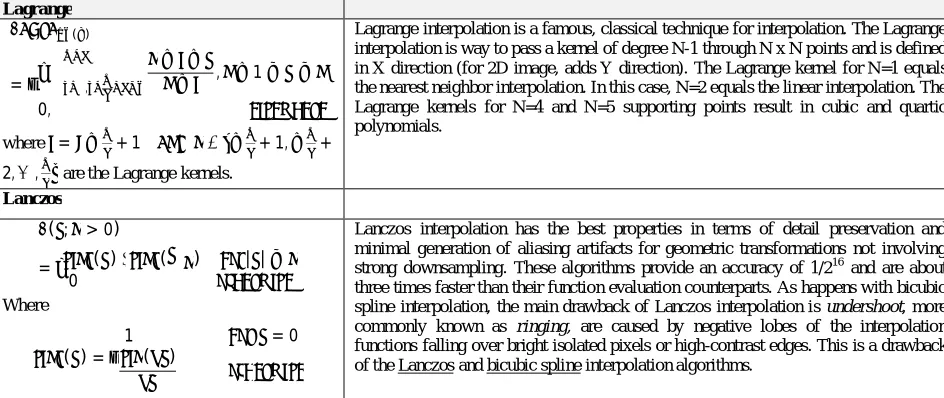
Lagrange interpolation is a famous, classical technique for interpolation. The Lagrange interpolation is way to pass a kernel of degree N-1 through N x N points and is defined in X direction (for 2D image, adds Y direction). The Lagrange kernel for N=1 equals the nearest neighbor interpolation. In this case, N=2 equals the linear interpolation. The Lagrange kernels for N=4 and N=5 supporting points result in cubic and quartic polynomials.
Lanczos
( ; > 0)
= ( )∙ ( ⁄ ) | |≤
0 ℎ
Where
( ) =
1 = 0
( )
ℎ
Lanczos interpolation has the best properties in terms of detail preservation and minimal generation of aliasing artifacts for geometric transformations not involving strong downsampling. These algorithms provide an accuracy of 1/216 and are about three times faster than their function evaluation counterparts. As happens with bicubic spline interpolation, the main drawback of Lanczos interpolation is undershoot, more commonly known as ringing, are caused by negative lobes of the interpolation functions falling over bright isolated pixels or high-contrast edges. This is a drawback of the Lanczos and bicubic spline interpolation algorithms.
For image processing, the one-dimensional interpolation function mentioned in Table I need to be transformed into two–dimensional function. The general approach is to define a separable interpolation function as the product of two one-dimensional functions as:
( , ) = − − − − ( , ) + − − − − ( , ) + − − − − ( , ) + − − − − ( , ) (1)
This 2D interpolation function is termed as bilinear Lagrange form equations[12-14].Using this method, the cubic interpolation (Table I) in two dimensions [9-11] can be written as:
( , ) = 1
6 ( )[(3 + ) −4(2 + ) + 6(1 + ) −4 ] + ( )[(2 + )
−4(1 + ) + 6 ] + ( )[(1 + ) −4 ] + ( )
(2)
Where,0≤ ≤1; 0≤ ≤1,T= sampling duration, ( ) = ∑ ∗ , = −1, + 1, + 2,
(3)
and,
= ∗ ;and =
−1 3 −3 1
3 −6 3 0
−3 1 0 4 3 0 1 0 (4)
where = [ , , , ] and = [ ,, , , , , , ]
The values of b & c matrix[15-16] can be computed by substituting x=0 and y=0 in equation (2) above. These functions are then applied to MRI image of brain. The results
obtained are shown in Fig. 2 & 3. A discussion on the results obtained is presented in next section.
IV.RESULTS AND DISCUSSIONS
ISSN: 2231-5381
http://www.ijettjournal.org
Page 630
(a)Original Image (b)Reduced Image
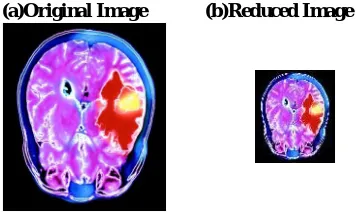
Fig.2 (a) Original MRI image of Brain (b) Downsampled by 50%
VCONCLUSION
MRI is an invaluable modality in the medical field. In
these cases, high resolution and isotropic images are important because higher isotropic resolution could theoretically reduce partial volume artifacts, leading to better accuracy/precision in deriving volumetric measurement and decreasing considerable errors in registration. So to interpret low resolution MRI images various polynomial based interpolation functions are applied on MRI image with zooming factor 2.From the results, it is found that high-resolution cubic spline have a better frequency response than all other functions discussed above. When these functions are applied for the purpose of zooming digital images, the best response was obtained with the high-resolution cubic spline functions; however, at the expense of increase in computation time.TABLE II COMPARISON OF RESULTS OF VARIOUS INTERPOLATION FUNCTION
Interpolati on
SNR PSNR (dB)
MSE SSIM Time Taken (sec) Nearest
Neighbor
8.2899 21.4887 461.5425 0.8482 0.0420
Bilinear 8.0332 23.2518 307.5412 0.8796 0.0209 Bicubic 8.2160 23.1760 312.9563 0.8888 0.0143 Lagrange 8.1503 23.1666 313.6288 0.8884 0.0127
Lanczos 9.7373 24.1048 252.6989 0.9080 3.7195 High
resolution cubic (a=-2.0)
9.2900 24.6444 223.1709 0.9122 4.2224
High resolution cubic (a=-1.5)
9.6230 25.4557 185.1423 0.9266 4.1984
High resolution cubic (a=-1.0)
10.2364 26.0135 162.8293 0.9355 4.1732
High resolution cubic (a=-0.5)
10.3829 26.1477 157.8756 0.9375 4.2169
High resolution cubic (a=0)
9.9984 25.7989 171.0762 0.9309 4.1779
REFERENCES
[1] Dimitri Van De Ville, Rik Van de Walle, Wilfried Philip2, Ignace Lemahieu, “ Image Resampling Between Orthogonal And Hexagonal Lattices,” IEEE ICIP 2002, pp 389-392
[2] King-Hong Chung, Yik-Hing Fung and Yuk-Hee Chan, “Image Enlargement using Fractal,” ICASSP 2003, pp 273-276. [3] Mohiy M. Hadhoud, Moawad I. Dessouky, Fathi E. Abd
El-Samie, “Adaptive Image Interpolation Based On local Activity levels,” Twenteith National Radio Science Conference, March 18-20,2003, Cairo, Egypt.
[4] Henrique S. Malvar, Li-wei He, and Ross Cutler, “High-Quality Linear Interpolation For Demosaicing Of Bayer-Patterned Color Images,” ICASSP 2004, pp 485-488
[5] Zhen Ye, Jasjit Suri, Yajie Sun, Roman Janer, “Four Image Interpolation Techniques for Ultrasound Breast Phantom Data Acquired Using Fischer's Full Field Digital Mammography and Ultrasound System (FFDMUS): A Comparative Approach,” IEEE, 2005
[6] Day-Fann Shen , Chui-Wen Chiu, Pon-Jay Huang, “Modified Laplacian Filter And Intensity Correction Technique For Image Resolution Enhancement,” ICME 2006, pp 457-460
[7] Xiangjian He, Wenjing Jia, Jianmin Li, Qiang Wu, Tom Hintz, “An Approach to Edge Detection on a Virtual Hexagonal Structure,” Digital Image Computing Techniques and Applications, IEEE computer Society, 2007, pp 340-345. [8] Hamid Gharavi, and Shaoshuai Gao, “Spatial Interpolation
Algorithm For Error Concealment,” ICASSP 2008, pp 1153-1156. [9] Prasantha H S, Shashidhara H L, Balasubramanya Murthy K N, “Image Scaling Comparison Using Universal Image Quality Index,” International Conference on Advances in Computing, Control, and Telecommunication Technologies, 2009, pp 859-863. [10] Deep Bera, Leeladhar Agarwal and Swapna Banerjee, “Multirate Scan Conversion of Ultrasound images using warped distance based adaptive bilinear interpolation,” IEEE, 2009.
[11] Li Zhiwei, Zhang Min, Wang Jiechao, “An Image Zooming Technique Based on the Relative Color Difference of Pixels,” 2nd International Conference on Signal Processing Systems (ICSPS), 2010, pp 46-49.
[12] G.Uma Vetri Selvi, R.Nadarajan, “DICOM Image compression using Bilinear Interpolation,” IEEE,2010.
[13] Jie Li, Mingrui Xin, Jianong Jin, “An Evolutionary approach for Gray-level Image Zooming,” AHS-2011, pp 383-389.
[14] Ganga Mohan P, Chetana Prakash, Surayakanth V. Gangashetty, “Bessel Transform for Image Resizing,” 2011