i
Unlocking Export Prosperity:
An Introduction to the
Research Programme
Caroline Saunders
Paul Dalziel
Roger Harker
John Reid
Peter Cammock
ii
Research to improve decisions and outcomes in business, resource and environmental issues.
The Agribusiness and Economics Research Unit (AERU) operates at Lincoln University, providing research expertise for a wide range of international, national and local organisations. AERU research focuses on business, resource and environmental issues.
The Agribusiness and Economics Research Unit (AERU) has four main areas of focus. These areas are: wellbeing economics; trade and the environment; economic development; and non-market valuations.
Research clients include Government agencies, both within New Zealand and from other countries, other international agencies, New Zealand enterprises in the private sector, and community groups.
AERU MISSION
To exercise leadership in research for sustainable well-being.
AERU VISION
The AERU is a cheerful and vibrant workplace where senior and emerging researchers are working together to produce and deliver new knowledge that promotes sustainable well-being.
AERU STRATEGIC AIMS
• To be recognised by our peers and end-users as research leaders for sustainable well-being;
• To mentor emerging researchers and provide advanced education to postgraduate students;
• To maintain strong networks to guide AERU research efforts and to help disseminate its research findings; and
• To contribute to the University’s financial targets as agreed in the AERU business model.
DISCLAIMER
While every effort has been made to ensure that the information herein is accurate, the AERU does not accept any liability for error of fact or opinion which may be present, nor for the consequences of any decision based on this information.
Summaries of AERU Research Reports beginning with #235, are available at www.lincoln.ac.nz/aeru. Printed copies of AERU Research Reports can be requested from the AERU Administrator.
© Agribusiness and Economics Research Unit. Lincoln University, New Zealand, 2017.
This work is licenced under the Creative Commons Attribution 3.0 New Zealand licence.
Suggested citation for this report:
Saunders, Caroline, Paul Dalziel, Roger Harker, John Reid and Peter Cammock (2017).
iii
Unlocking Export Prosperity: An Introduction to the
Research Programme
Caroline Saunders Paul Dalziel Roger Harker
John Reid Peter Cammock
Research Report No. 344
October 2017
Agribusiness and Economics Research Unit P O Box 85084
Lincoln University Lincoln 7647 New Zealand
Ph: (64) (3) 423 0372 http://www.lincoln.ac.nz/AERU/
iv
Contents
LIST OF FIGURES v
LIST OF TABLES v
ACKNOWLEDGEMENTS vi
EXECUTIVE SUMMARY vii
CHAPTER 1 INTRODUCTION 1
1.1 Vision for the Research Programme 1
1.2 Maximising Export Returns 2
CHAPTER 2 THE RESEARCH TEAM 5
2.1 Key elements of the Research Programme 5
2.2 The Research Team 6
2.3 Te Hono 8
2.4 The Advisory Board 9
CHAPTER 3 THE RESEARCH PLAN 11
3.1 The Science Hypothesis and Research Context 11
3.2 The Research Plan 13
3.3 The Scientific Methodologies 14
3.4 Scientific Resources 18
3.5 Conclusion 19
v
List of Figures
Figure 2.1: Key Elements in the Research Programme 6
Figure 3.1: Relevant New Zealand Research Programmes 12
Figure 3.2: The Research Timetable 13
List of Tables
vi
Acknowledgements
vii
Executive Summary
On 12 September 2017, the Ministry of Business, Innovation and Employment announced that 27 proposals to the Endeavour Fund for science research programmes had been selected for funding over the next five years. One of the successful proposals is for the research programme Unlocking Export Prosperity from the Agri-food Values of Aotearoa New Zealand.
The programme brings together researchers from the Agribusines and Economics Research Unit at Lincoln University, from Plant and Food Research, from the Ngāi Tahu Research Centre at the University of Canterbury, and from The Leadership Lab in Christchurch. It will provide new knowledge on how local enterprises can achieve higher returns by ensuring global consumers understand the distinctive qualities of the physical, credence and cultural attributes of agri-food products that are “Made in New Zealand”.
Vision for the Research Programme
The Agribusiness and Economics Research Unit (AERU) has promoted the vision that “New Zealand’s land-based export products should be marketed to international consumers as more valuable than basic commodities”.
This vision is shared with other organisations in the private and public sector of New Zealand. The vision of Te Hono, for example, is: “Transforming the primary sector to realise the opportunity for Aotearoa, New Zealand to be recognised for our natural environment and products, as world leaders in innovation”.
Similarly, New Zealand Trade and Enterprise has a lead role maintaining ‘The New Zealand Story”. Part of its vision is “to tell a more accurate and consistent story about New Zealand offshore, generating greater value for our exports and broadening global perceptions of our country”.
Consequently, the aim of this research programme is to deliver new knowledge to end users that contributes to building New Zealand’s global profile as a quality country-of-origin for high value agri-food products with distinctive physical, credence and cultural attributes.
Maximising Export Returns
The research builds on a successful research programme known as Maximising Export Returns, which the AERU undertook between 2013 and 2016. This involved original research in five important export markets (China, India, Indonesia, Japan and the United Kingdom) to create new knowledge on how consumers of New Zealand agri-food products in those markets perceive and value credence attributes such as food safety, animal welfare, environmental protection and cultural authenticity.
viii
Key Elements of the Research Programme
The research programme aims to create new knowledge on how to obtain additional value for quality agri-food products profiled as Made in New Zealand. Product quality is at the heart of the research programme, conceptualised as being influenced by three factors: physical attributes; credence attributes and cultural attributes. These are defined as follows.
• Physical attributes are features of a product such as flavour, texture, appearance, odour/aroma and convenience that consumers are able to judge using their own senses and experience.
• Credence attributes are features of a product that are claimed by producers but must be taken on trust by consumers; examples are food safety, animal welfare, environmental stewardship and social inclusion.
• Cultural attributes are features of a product that are due to the culture of the enterprises involved in its production; this might include indigenous authenticity or a long history of passionate family-run enterprise.
The research recognises that leadership is an important element in creating quality products that combine physical, credence and cultural attributes in ways that are valued by consumers.
The Research Team
The research team for the programme is led by four senior scientists with extensive experience in research on physical attributes, credence attributes, cultural attributes and leadership. These four people are drawn from four different institutions: Plant and Food Research; the Agribusiness and Economics Research Unit at Lincoln University; a private contractor hosted at the Ngāi Tahu Research Centre at the University of Canterbury; and The Leadership Lab based in Christchurch.
Te Hono
Te Hono is hugely important in the primary sector, involving “220 Chief Executives and leaders who have a deep-seated passion and desire to develop and innovate for transformational change in the New Zealand primary sector and agribusiness”. Te Hono is a formal research partner for the Unlocking Export Prosperity programme. Its Secretariat will help the research team access companies for the leadership case studies embedded in the programme and will help distribute results from the research to its members. The AERU will consult Te Hono on research design to ensure that the research will meet the specific needs of Te Hono to advance its mission.
The Advisory Board
ix
The Scientific Hypothesis and Research Context
The programme’s science question is: How can local enterprises achieve higher returns by ensuring their global consumers understand the distinctive qualities of the physical, credence and cultural attributes of agri-food products made in New Zealand?
This is reflected in the programme’s specific science hypothesis: That New Zealand agri-food production systems across the primary sector can deliver combinations of physical, credence and cultural attributes that are highly valued by consumers in major global markets.
The research team is strongly connected to seven other major research programmes that are relevant to the Unlocking Export Prosperity programme, listed in Table 3.1 of the report. The research plan has been carefully designed to avoid any overlap with, and to leverage additional value to, these programmes.
The Research Plan
The Unlocking Export Prosperity research programme is being implemented between 1 October 2017 and 30 September 2022. The Figure below presents a quarterly timetable for the research, showing milestones, meetings of the Advisory Board, publications of final reports, annual reports to MBIE and the dissemination of regular Research Updates to interested parties.
After initial reviews of existing knowledge, the research proceeds in six streams in two phases as shown in the table. Further details are provided in the report. The six streams are:
• Physical attributes; • Credence attributes; • Cultural attributes; • Leadership objective; • Time series survey; and
• Dissemination and research management
Physical Attributes Co nt ra ct in g, E tc. Review
1 New Zealand Consumer Study
Synt he sis o f t he R es ea rc h a nd Di ss em in at io n t o E nd U se rs
International Consumer Study Credence
Attributes Review 2 8 Country Survey and Analysis 1 8 Country Survey and Analysis 2 Cultural
Attributes Review 3 Māori Enterprise Case Study 1 Māori Enterprise Case Study 2 Leadership
Objective Review 4 Case 1 Case 2 Case 3 Case 4 Case 5 Case 6 Time Series
Survey Survey Design TS S1 Time Series TS S2 TS S3 Dissemination
and Research Management
AB FR AB FR AB FR AB FR AB FR AR AR AR AR AR RU RU RU RU RU RU RU RU RU RU
Year 2018 2019 2020 2021 2022
x
The Scientific Methodologies
The research is using innovative science to deliver new knowledge to identified groups of end users. The programme’s end users must be able to rely on the new knowledge; the programme’s experimental design has therefore paid careful attention to scientific validity. Vision Mātauranga is embedded in all components. Six major scientific methodologies are involved in the research:
• Key informant interviews; • Consumer perception testing; • Panel surveys in eight countries; • Discrete choice econometrics;
• Applied international trade modelling; and • Vision Mātauranga case studies.
Scientific Resources
The AERU has invested in developing three specialist resources that are crucial for the research. These resources are uniquely available at Lincoln University, held for the benefit of New Zealand land-based research.
• The Lincoln Trade and Environment Model (LTEM);
• The Web Enabled Choice Analysis (WECA) Proprietary Software; and • The Maximising Export Returns Data Portal
Conclusion
The science in this research programme is highly innovative in two dimensions. First, this is the first programme internationally that combines physical, credence and cultural attributes. Second, our research is in eight countries, each with its own consumer context where the language of commerce is not necessarily English.
This creates scientific risks, necessary to create advanced knowledge acceptable as reliable by global and domestic stakeholders. The research design has incorporated three mitigation strategies to manage these risks.
1
Chapter 1
Introduction
On 12 September 2017, the Ministry of Business, Innovation and Employment announced that 27 proposals to the Endeavour Fund for science research programmes had been selected for funding over the next five years. The programmes were selected on the basis of their “excellent science that has the potential to positively impact New Zealand economically, environmentally and socially” (MBIE, 2017).
One of the successful proposals is for the research programme Unlocking Export Prosperity from the Agri-food Values of Aotearoa New Zealand. This brings together researchers from the Agribusines and Economics Research Unit at Lincoln University, from Plant and Food Research, from the Ngāi Tahu Research Centre at the University of Canterbury, and from The Leadership Lab in Christchurch. It will provide new knowledge on how local enterprises can achieve higher returns by ensuring global consumers understand the distinctive qualities of the physical, credence and cultural attributes of agri-food products that are “Made in New Zealand”.
This short report is the first in a series of Research Reports that will be produced in the Unlocking Export Prosperity programme. The purpose is to provide a summary of the programme’s research plan for a general audience, recognising that a very wide range of private and public sectors organisations, as well as the general public, are interested in the outputs that will be delivered from the research over the next five years.
The remainder of this chapter describes the vision for the research programme (section 1.1) and explains previous research on Maximising Export Returns (section 1.2). Chapter 2 introduces the research team and the engagement with industry and policy embedded in the programme. Chapter 3 explains the research that will be undertaken over the next five years.
1.1
Vision for the Research Programme
Land-based enterprise is essential for New Zealand’s economic prosperity, accounting for 70 per cent of the country’s exports [Saunders et al, 2016a, Dalziel et al, 2017]. Science research has a strong track record of increasing physical productivity in the land-based industries (Hall and Scobie, 2007), but it is widely recognised that future primary sector science should be directed towards “knowledge-intensive, high value add and export growth areas” (New Zealand Government, 2016, p. 19).
2
The Agribusiness and Economics Research Unit (AERU) has promoted the vision that “New Zealand’s land-based export products should be marketed to international consumers as more valuable than basic commodities” (see, for example, Dalziel and Saunders, 2015, and Saunders
et al, 2014, 2016b, 2016c). This reflects our view that there are “opportunities available to New Zealand producers for increasing returns if they are able to communicate credible claims to overseas consumers about the sustainability credentials of the country’s produce” (Dalziel and Saunders, 2017, p. 6).
This vision is shared with other organisations in the private and public sector of New Zealand. Te Hono, for example, is hugely important in the primary sector, involving “220 Chief Executives and leaders who have a deep-seated passion and desire to develop and innovate for transformational change in the New Zealand primary sector and agribusiness” (Te Hono, 2017a). Its vision is: “Transforming the primary sector to realise the opportunity for Aotearoa, New Zealand to be recognised for our natural environment and products, as world leaders in innovation” (Te Hono, 2017b).
Similarly, New Zealand Trade and Enterprise has a lead role maintaining ‘The New Zealand Story”. Part of its vision is “to tell a more accurate and consistent story about New Zealand offshore, generating greater value for our exports and broadening global perceptions of our country” (New Zealand Story, 2017).
Globally, there is considerable interest in how value can be created through the use of what has been termed “knowledge-intensive business services” (Muller and Doloreux, 2009; European Commission, 2012). An example is using science to build a global profile as a quality country-of-origin for high value agri-food products with distinctive physical, credence and cultural attributes (FutureBrand, 2014). A strong country profile reinforces consumers’ perceptions of iconic brands based in the country, while strong iconic brands reinforce consumers’ perceptions of the country’s profile (idem, p. 14). This spiral creates opportunities for increasing economic prosperity, which is the vision for this research programme.
Countries are competing for leadership in this space. Origin Green, for example, is an Irish Food Board initiative, aggressively promoting itself as “the only sustainability programme in the world that operates on a national scale, uniting government, the private sector and food producers” (Irish Food Board, 2017). Origin Green promotes itself as an audited programme. As industry in New Zealand has recognised (see, for example, Deavoll, 2016), simple self-promoting claims of “clean and green” are no longer sufficient to achieve international leadership in this space.
Consequently, the aim of this research programme is to deliver new knowledge to end users that contributes to building New Zealand’s global profile as a quality country-of-origin for high value agri-food products with distinctive physical, credence and cultural attributes.
1.2
Maximising Export Returns
3
portfolio to address the research question: How can we improve New Zealand industries’ understanding of consumer behaviour, trends, or supply chains to inform business decisions in the relevant industry or industries? The approach taken was to initiate original research in five important export markets (China, India, Indonesia, Japan and the United Kingdom) to create new knowledge on how consumers of New Zealand agri-food products in those markets perceive and value credence attributes such as food safety, animal welfare, environmental protection and cultural authenticity.
The research had three aims:
• Research Aim 1: To provide robust scientific evidence to measure the relative weights that consumers of New Zealand primary sector exports in different overseas markets place on different potential credence attributes of New Zealand products.
• Research Aim 2: Given the evidence produced in Research Aim 1, to provide robust scientific evidence to determine how New Zealand producers can maximise their returns by developing new market segments through investment in valued attributes.
• Research Aim 3: To provide robust scientific evidence to determine the most effective technologies for communication with consumers and market gatekeepers that New Zealand producers can use to build brand loyalty emphasising the valued attributes identified in Research Aims 1 and 2.
The first aim was achieved by implementing surveys of 1,000 consumers in each of the five export markets, with each survey including an embedded choice experiment to reveal consumer preferences. This demonstrated that different market segments have different perceptions and values for different credence attributes in specific agri-food products. As expected, food safety was consistently the most important credence attribute, but the surveys also found that environmental and animal factors also scored highly in assessing food safety standards, particularly in China, India and Indonesia (Dalziel et al, 2017, Figure 4).
The second aim was achieved by using the Lincoln Trade and Environment Model (LTEM) to analyse the impact on New Zealand producer returns of achieving the potential price premiums for agri-food exports identified in the first research aim. This analysis was broken down to sixteen product types and five credence attributes. In each case, the overall impact of increasing the standard of any attribute from ‘minimum’ to ‘improved’ was positive for New Zealand producer returns, but not unreasonably large (Dalziel et al, 2017).
4
The major results from Maximising Export Returns were published for the record in six AERU Research Reports: Miller et al. (2014), Lees and Saunders (2015), Guenther et al. (2015), Driver
et al. (2015) and Saunders and Driver (2016). These are all available on the website dedicated to the programme at www.lincoln.ac.nz/aeru/mer. The programme also produced several scientific publications including Tait et al. (2015), Tait et al. (2016a), Tait et al. (2016b), Guenther et al. (2016), Saunders et al. (2016d), Dalziel et al. (2017) and Miller et al. (2017).
A feature of the programme was the high level of active engagement with industry, policy and public groups. The whole research, for example, was overseen by an external advisory board that included representatives from AsureQuality, Beef+Lamb New Zealand, DairyNZ, Export New Zealand, Fonterra, Horticulture New Zealand, Ministry of Business, Innovation and Employment, Ministry of Foreign Affairs and Trade, Ministry for Primary Industries, Ngāi Tahu Research Centre, New Zealand Trade and Enterprise, New Zealand Winegrowers, Sustainable Business Council Tūhoe Tuawhenua, Wood Processors and Manufacturers Association and Zespri. In the last year of the programme, the research team spoke at 20 industry meetings and policy seminars, ranging in scale from a presentation to an Environment Canterbury Land Management Best Practice Seminar hosted at Waihao Marae on 7 July 2016 to two presentations to the DairyNZ Farmers’ Forum at Mystery Creek Events Centre, 17-18 May 2016.
In order to make the results of the research available as widely as possible, the AERU created an interactive dashboard using a software platform developed by Dapresy (http://dapresy.com/). A feature of this on-line tool is that it allows the user to define the data base that will be accessed, using classifications based on gender, age groups, household make-up and highest level of education. The user can also choose which country to explore, extended to include New Zealand as a result of further research by the AERU. The publication also allows the user to access data on how consumers in the six countries are using digital technology in their purchasing decisions. This flexibility means that users are not reliant on having to commission further work by the research team to answer their own specific questions about specific markets.
5
Chapter 2
The Research Team
As noted in the previous chapter, leaders of the AERU research team spoke at 20 industry meetings and policy seminars in the last year of the Maximising Export Returns programme, providing multiple occasions to ask end users about further research to maximise their economic opportunities. The universal call was for science on how to obtain additional value for agri-food products profiled as Made in New Zealand.
This chapter introduces the research team of scientists that has been bought together to answer this call; the following chapter will explain the research itself. Section 2.1 describes the key elements of how value can be obtained for agri-food products. These elements defined the “best team” approach in bringing together research partners from the AERU, Plant and Food Research, the Ngāi Tahu Research Centre and The Leadership Lab. These are introduced in section 2.2.
In order to be effective, the science must be embedded in the knowledge and experience of industry and policy advisors. Consequently, the research team has entered into a partnership with Te Hono. This organisation is introduced in section 2.3. Finally, the whole programme is being supervised by an external Advisory Board that will meet in June each year to receive results and advise on research direction. The Board is explained in section 2.4.
2.1
Key elements of the Research Programme
The research programme aims to create new knowledge on how to obtain additional value for agri-food products profiled as Made in New Zealand. It is an obvious point to note that “the final customer is the arbiter of value and so value is always defined with reference to the end consumer” (Saunders et al, 2016e, p. 6, citing Macharia et al, 2013, and Sausman et al, 2015). Consequently, the task is to demonstrate to consumers that the item they are purchasing is a
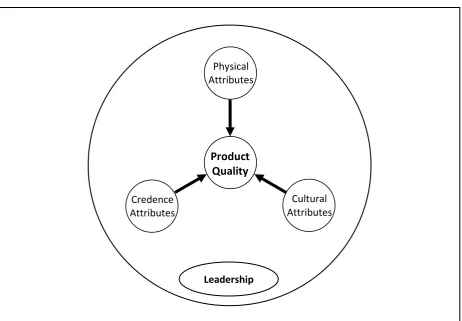
quality product for which they might be willing to pay a premium (see Harker et al, 2003). Hence, product quality is at the heart of the research programme, as illustrated in Figure 2.1.
The figure shows product quality as being influenced by three factors: physical attributes; credence attributes and cultural attributes. These can be defined as follows.
• Physical attributes are features of a product such as flavour, texture, appearance, odour/aroma and convenience that consumers are able to judge using their own senses and experience.
• Credence attributes are features of a product that are claimed by producers but must be taken on trust by consumers; examples are food safety, animal welfare, environmental stewardship and social inclusion.
6
Figure 2.1: Key Elements in the Research Programme
During the preparation of the proposal, the AERU received feedback that the research programme would benefit from including a leadership objective with case studies detailing how the research can be utilised. Consequently, Figure 2.1 recognises that leadership is an important element in creating quality products that combine physical, credence and cultural attributes in ways that are valued by consumers. As section 2.3 will explain below, the research team is partnering with Te Hono (which is comprised of more than 220 leaders in New Zealand’s land-based sectors) to undertake this part of the research programme.
2.2
The Research Team
The research team for the programme is led by four senior scientists with extensive experience in research on physical attributes, credence attributes, cultural attributes and leadership. These four people are drawn from four different institutions: Plant and Food Research; the Agribusiness and Economics Research Unit at Lincoln University; a private contractor hosted at the Ngāi Tahu Research Centre at the University of Canterbury; and The Leadership Lab based in Christchurch.
The Science Leader of the programme is Professor Caroline Saunders, Director of the AERU. Professor Saunders has been strongly engaged in issues of national importance affecting the land-based sector since her internationally influential contributions on the “food miles debate” (Saunders et al, 2006; Saunders and Barber, 2008; Economist, 2006). That research produced
Credence Attributes
Cultural Attributes Physical
Attributes
Product Quality
7
large benefits to New Zealand exports, for which she received the NZIER Economics Award in 2007 (Bishop, 2007). Professor Saunders was made an Officer of the New Zealand Order of Merit in 2009 for services to agricultural research (Lincoln University, 2009).
In more recent years, Professor Saunders has been a leader in science research on New Zealand credence attributes (Tait et al, 2015; Saunders et al, 2016d; Tait et al, 2016a and 2016b; Dalziel
et al, 2017; Miller et al, 2017). She was the Science Leader of the Maximising Export Returns
programme and is the Providers of Science Theme Leader for the “Greater Value in Global Markets” theme of the Our Land and Water National Science Challenge (Saunders et al, 2016e).
Other AERU researchers in the team include Professor Paul Dalziel (author of more than 100 refereed publications and recipient of the ANZRSAI Distinguished Service Award in 2016), Dr Peter Tait (world-class expert in discrete choice modelling, demonstrated by two recent articles in the A-ranked journal Ecological Economics – Tait et al, 2012, and Miller et al, 2015) and John Saunders (world-class expert in international trade modelling, demonstrated by two recent secondments to the Agro-food, Trade and Markets Division of the OECD in Paris).
Dr Roger Harker has been the Science Group Leader (Consumer and Product Insights) at Plant and Food Research since 2008. He has led large programmes on taste and other physical attributes of exports such as wine, kiwifruit and pipfruit (Harker et al, 2005, 2008 and 2009). He is leading the High Value Nutrition National Science Challenge Consumer Insights programme (Harker, 2016). The quality of his research was recognised in 2014 with the International Society for Horticultural Science Medal. He was listed by New Zealand Food Technology from 2013 to 2016 as one of 100 people “representative of the outstanding work, ingenuity and creativity that drives New Zealand’s Food Technology industry”.1
Dr John Reid (Ngāti Pikiao) is a highly respected consultant, hosted at the Ngāi Tahu Research Centre at the University of Canterbury. Dr Reid played a major part in creating the authentication scheme to capture commercial value from cultural attributes of Ngāi Tahu Pounamu, honoured in 2012 by the Umanga Whanaungatanga Māori Business Recognition Award presented by the University of Auckland Business School (2017). Dr Reid has published on cultural attributes in business (Barr and Reid, 2014, Reid and Rout, 2015 and 2016), and he has a leadership role in the Whai Rawa – Māori Economies programme of Ngā Pae o te Māramatanga.
Dr Peter Cammock is Adjunct Senior Fellow in the Department of Management, Marketing and Entrepreneurship at the University of Canterbury and a Director of The Leadership Lap. He has written two influential books on leadership (Cammock, 2001 and 2008) that have been republished in second editions and a third edition. The Leadership Lab specialises in design and implementation of leadership development programmes that stimulate organisational change and personal growth, and are incubators of innovative collective action (see its website at www.leadershiplab.co.nz/).
The research team will be assisted with two significant collaborators, Professor Jacques Trienekens (Wageningen University in the Netherlands) and Jon Manhire (Managing Director,
8
The Agribusiness Group). Professor Trienekens has been a Fellow of the International Food and Agribusiness Management Association since 2012 and is a world authority on global agri-food value chains (Trienekens and Zuurbier, 2008; Trienekens et al, 2012; Trienekens, 2011; Trienekens and Wognum, 2013). Jon Manhire has led two large research programmes that are relevant to this research: The Agricultural Research Group on Sustainability (2003-2012) and the New Zealand Sustainability Dashboard (2012-2018).
2.3
Te Hono
Te Hono is hugely important in the primary sector, involving “220 Chief Executives and leaders who have a deep-seated passion and desire to develop and innovate for transformational change in the New Zealand primary sector and agribusiness” (Te Hono, 2017). Its vision is: “Transforming the primary sector to realise the opportunity for Aotearoa, New Zealand to be recognised for our natural environment and products, as world leaders in innovation” (Te Hono, 2017b).
An essential element of Te Hono is the Te Hono Stanford Bootcamp, which is a week long, intensive programme held at Stanford University in California (Te Hono, 2017c). There have been five Bootcamps, annually from 2012 to 2017. Invitations are extended to those who normally hold Chief Executive or senior governance positions and are predominantly exporters from the primary sector.
The 2015 Bootcamp agreed that New Zealand agri-food exports should attract a premium of 20 percent for their sustainability and other attributes (Holborow, 2015; Teece, 2015). The credibility of this is demonstrated by ZESPRI, accounting for two-thirds of global value on 30 percent of kiwifruit trade volume (New Zealand Government, 2012, p. 19). Trade modelling indicates that a 20 percent premium for dairy and meat exports to ten trading partners would add $2.1 billion to our annual export receipts (Saunders et al, 2016a, Table 5-7, p. 79). Analysis commissioned by the Our Land and Water National Science Challenge showed that capturing willingness-to-pay in five markets for improved credence attributes of four agri-food exports would add 2 percent to NZ producer returns (Dalziel et al, 2017).
Recognising the common vision between the two organisations, the AERU began to engage with Te Hono during the Maximising Export Returns research programme (2013-2016). The AERU was an invited participant in the first two Te Hono Summits held in New Zealand, for example, and Kimberley Ansell in the Te Hono Secretariat helped the AERU in the design of the on-line Maximising Export Returns Data Portal.
9
2.4
The Advisory Board
Since 2013 the AERU has maintained an external Advisory Board for its major research programmes. The Advisory Board includes representatives from organisations that are important end users of the research. It meets for three hours annually in Wellington to receive reports on the research that has been completed and to offer guidance on the research plan for the next period.
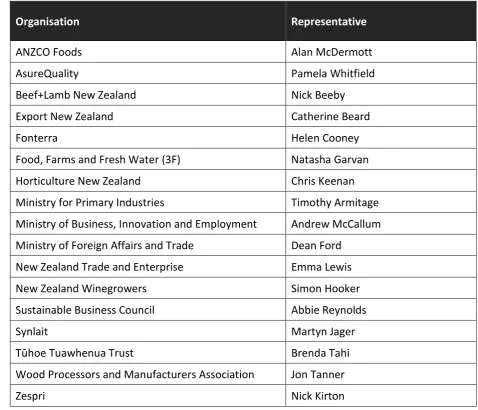
In the preparation of the proposal for the Unlocking Export Prosperity research programme, the people listed in Table 2.1 indicated their willingness to serve on the Advisory Board for this research. The research team is grateful to each of them for their support of the research with this in-kind contribution of senior management time.
Table 2.1: The Advisory Board for Unlocking Export Prosperity
Organisation Representative
ANZCO Foods Alan McDermott
AsureQuality Pamela Whitfield
Beef+Lamb New Zealand Nick Beeby
Export New Zealand Catherine Beard
Fonterra Helen Cooney
Food, Farms and Fresh Water (3F) Natasha Garvan
Horticulture New Zealand Chris Keenan
Ministry for Primary Industries Timothy Armitage
Ministry of Business, Innovation and Employment Andrew McCallum
Ministry of Foreign Affairs and Trade Dean Ford
New Zealand Trade and Enterprise Emma Lewis
New Zealand Winegrowers Simon Hooker
Sustainable Business Council Abbie Reynolds
Synlait Martyn Jager
Tūhoe Tuawhenua Trust Brenda Tahi
Wood Processors and Manufacturers Association Jon Tanner
10
The research team recognises that the contribution from the members of the Advisory Board extend beyond their participation in the annual meetings in Wellington. AsureQuality, for example, used results from the Maximising Export Returns programme to develop its inSightTM smartphone tool (see https://www.aqinsight.com/en/). The Ministry for Primary Industries used results from that programme in the preparation of its strategic direction for primary sector science (MPI, 2016). Beef+Lamb New Zealand have invited members of the research team to participate in two workshops organised as part of its market development initiative to create a New Zealand Red Meat Story. Export New Zealand invited the research team to display the MER Data Portal resource at its Go Global Expo in Auckland on 21 September 2017.
11
Chapter 3
The Research Plan
This chapter explains the research plan for the Unleashing Export Prosperity programme. Section 3.1 introduces the science hypothesis that is being tested in the research and summarises the research context with a brief outline of other New Zealand research programmes that are relevant to Unleashing Export Prosperity. Section 3.2 explains the elements in the research plan, including the planned timetable over the period October 2017 to September 2022. Section 3.3 describes the six major scientific methodologies that will be used and Section 3.4 describes three specialist resources that are crucial for the research. Section 3.5 is a brief conclusion.
3.1
The Science Hypothesis and Research Context
The Endeavour Fund invests in excellent research to deliver long-term, transformative impact for New Zealand (New Zealand Government, 2015, pp. 58-59, and 2016, p. 4). The Unleashing Export Prosperity programme targets transformative innovation defined internationally in its research context as (Hall et al, 2016, p. 15).
Deep systems changes underpinned by broad-based consensus that significantly advance the economic, social and environmental frontiers of the agricultural sector as a whole, and that open up opportunities for new waves of radical and incremental innovation.
This objective builds on an emerging consensus in the private sector (Brackenridge, 2016), public sector (MPI, 2016) and research literature (Saunders et al, 2016a) that local enterprises can capture greater value in international markets by profiling distinctive physical, credence and cultural attributes of agri-food products Made in New Zealand.
The science issue is the difficulty in measuring how consumers in different international markets value a product sourced from a country when presented with diverse claims about the product’s qualities. At least since Verlegh and Steenkamp (1999), it is known that country-of-origin is a cue for product quality, but the impact is smaller if other quality indicators are available, including physical attributes (e.g. appearance), credence attributes (e.g. environment impacts) and cultural attributes (e.g. indigenous values). Thus valid studies must include a full range of attribute types (Hsieh et al, 2005; van den Heuvel et al, 2007; Moser et al, 2011; Wirth et al, 2011 and Sogn-Grundvåg et al, 2014).
Consequently, the programme’s science question is: How can local enterprises achieve higher returns by ensuring their global consumers understand the distinctive qualities of the physical, credence and cultural attributes of agri-food products made in New Zealand?
12
The AERU was recently commissioned by the High Value Nutrition Challenge to review the international literature on ‘country of origin’ studies (Miller et al, 2016a). Agri-food science is currently grappling with this issue internationally; see the recent contributions by Bechtold and Abdulai (2014), de-Magistris and Gracia (2014), Lim et al. (2014), Ortega et al. (2014 and 2015), Van Loo et al. (2015) and Viegas et al. (2014). Related research by the research team has already attracted international attention (Saunders, 2013; Tait et al, 2016a, 2016b); Dalziel et al, 2017).
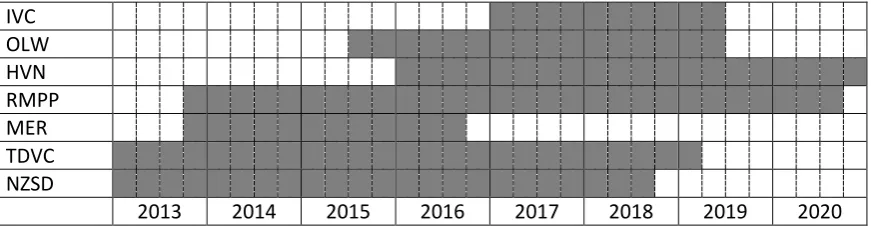
Figure 3.1 lists the relevant major programmes in New Zealand. The research team for Unlocking Export Prosperity is connected to all these programmes. The AERU is leading the Integrating Value Chains project funded by Our Land and Water National Science Challenge (Saunders et al, 2016e). Professor Saunders is science leader for Theme 1 of that Challenge (OLW, 2017). Dr Harker is leading High Value Nutrition National Science Challenge Consumer Insights Programme (Harker, 2016). Health and wellness, for example, are important food and beverage attributes being researched in that Challenge, which has implications for Unlocking Export Prosperity.
The AERU is engaged with the Red Meat Profit Partnership Primary Growth Partnership through Beef+Lamb New Zealand (Saunders, 2016). The AERU completed the Maximising Export Returns programme on schedule with all milestones achieved (Dalziel, 2016). One of the programme’s industry partners, Fonterra, leads the Transforming the Dairy Value Chain Primary Growth Partnership, Post-farm Gate (MPI, 2017b). The AERU is a founding researcher of the New Zealand Sustainability Dashboard research programme (Merfield et al, 2015), and the NZSD Director (Jon Manhire) is a member of the Unlocking Export Prosperity programme’s research team.
Figure 3.1: Relevant New Zealand Research Programmes
IVC OLW HVN RMPP MER TDVC NZSD 2013 2014 2015 2016 2017 2018 2019 2020
Key: IVC = Integrating Value Chains. OLW = Our Land and Water National Science Challenge, Theme 1, Phase 1. HVN = High Value Nutrition National Science Challenge Consumer Insights Programme. RMPP = Red Meat Profit Partnership Primary Growth Partnership. MER = Maximising Export Returns. TDVC = Transforming the Dairy Value Chain Primary Growth Partnership, Post-farm Gate. NZSD = New Zealand Sustainability Dashboard.
13
3.2
The Research Plan
The Unlocking Export Prosperity research programme is being implemented between 1 October 2017 and 30 September 2022. Figure 3.2 presents a quarterly timetable for the research, showing milestones, meetings of the Advisory Board, publications of final reports, annual reports to MBIE and the dissemination of regular Research Updates to interested parties.
The programme begins on 1 October, with the first quarter set aside for contracting, subcontracting, formalising the Advisory Board and other preparatory work. The programme’s first six-monthly Research Update will be published by December 2017. The first half of 2018 is devoted to reviews of current knowledge on distinctive features of New Zealand agri-food physical attributes, credence attributes, cultural attributes, and leadership in obtaining premiums from New Zealand values. Drafts will be presented to the Advisory Board in June 2018 and final reports published (including on the MER Data Portal) by December 2018.
Figure 3.2: The Research Timetable
Physical Attributes Co nt ra ct in g, E tc. Review
1 New Zealand Consumer Study
Synt he sis o f t he R es ea rc h a nd Di ss em in at io n t o E nd U se rs
International Consumer Study Credence
Attributes Review 2 8 Country Survey and Analysis 1 8 Country Survey and Analysis 2 Cultural
Attributes Review 3 Māori Enterprise Case Study 1 Māori Enterprise Case Study 2 Leadership
Objective Review 4 Case 1 Case 2 Case 3 Case 4 Case 5 Case 6 Time Series
Survey Survey Design TS S1 Time Series TS S2 TS S3 Dissemination
and Research Management
AB FR AB FR AB FR AB FR AB FR AR AR AR AR AR RU RU RU RU RU RU RU RU RU RU
Year 2018 2019 2020 2021 2022
Key: TS = Time Series. S1, S2, S3 = Surveys 1, 2 and 3. AB = Advisory Board meeting. FR = publication of Final Reports on the MER Data Portal. AR = Annual Report to MBIE. RU = Research Update sent to engaged end users.
The research then proceeds in six streams in two phases. All reports will be presented to the Board and then published on the MER Data Portal.
Physical Attributes
14
Credence Attributes
Professor Caroline Saunders will develop and implement two surveys of consumers in eight countries, conducted in 2019 and 2021 respectively. The first survey will use choice modelling to measure consumer responses to distinctive New Zealand standards for credence attributes. The second survey will use choice modelling to measure consumer responses to a tailored New Zealand profile based on the first survey results. Data from the surveys will be used in the Lincoln Trade and Environment Model to estimate impacts on New Zealand producer returns.
Cultural Attributes
Dr John Reid will lead research on two Māori enterprises chosen from different industries in the primary sector, each developing a Made in New Zealand profile that emphasises the cultural authenticity of the enterprise and its products. The two case studies will take place sequentially, as shown in Figure 3.2.
Leadership Objective
Dr Peter Cammock will lead the contribution of The Leadership Lab to research, analyse and disseminate six case studies of industry leaders who capture value from profiling the attributes of agri-food products “Made in New Zealand”. From these, the research team will develop implementation protocols for industry leaders attracted by our shared vision.
Time Series Survey
During the preparation of the proposal, the research team received repeated feedback about the value of a time series of international market evidence, both as a check of the robustness of results from a snapshot survey and as a guide of the importance of short-term trends. The AERU will consult widely to design a concise survey for this purpose, which will then be implemented and analysed in 2019, 2020 and 2021.
Dissemination and Research Management
A research plan must communicate the science to industry, policymakers and the public (Gluckman, 2015). The research plan therefore includes a regular cycle of consultation, dissemination and reporting as shown in Figure 3.2. This concludes with a synthesis report in 2022. All research reports will be published under the Creative Commons Attribution 3.0 New Zealand licence. The programme will extend the MER Data Portal to further increase accessibility.
3.3
The Scientific Methodologies
15
There are six major scientific methodologies involved in the research programme. Each of these are explained in the following subsections.
Key Informant Interviews
The preparation of the proposal for this programme involved key informant interviews with industry leaders over the last two years and interviews with research end users will continue throughout the programme. The AERU approach to validity in these interviews is based on the specific procedures set out by Creswell and Miller (2000, Table 1, p. 126) and on the transactional and transformational approaches set out by Cho and Trent (2006, Figure 1, p. 334]. These sources emphasise that: informants should be involved throughout the whole enquiry so that “their perspectives are valued both seriously and over time” [Cho and Trent, 2006, p. 334]; and researchers should pay careful attention to their own paradigm assumptions [Creswell and Miller, 2000, p. 125].
Consumer Perception Testing
Dr Roger Harker has considerable experience and expertise in conducting qualitative and quantitative consumer perception testing; see most recently Harker (2016) and Kam et al. (2016). This project is innovative because it requires testing of consumer perceptions combining physical and credence attributes. This will extend current methods in use. It is efficient to test the extended method in New Zealand, taking advantage of overseas born residents (especially international students). This will be done in the first project, which will allow the innovations to be refined before testing in a significant International market for New Zealand agrifood. The overseas market will be chosen in consultation with the Advisory Board.
Panel Surveys in Eight Countries
The original data required for the discrete choice experiments, and to meet other research objectives, will be gathered in eight countries chosen for their high current or potential value for agri-food exporters. The top six destinations for agri-food exports in 2015 were China, Australia, United States, Japan, United Kingdom and Korea, accounting for 56% of all New Zealand agri-food exports (Statistics New Zealand data). A further two economies with strong potential export growth will be included. The final set will be chosen in consultation with the programme’s Advisory Board.
The survey will recruit participants from online panels of consumers in each country. Callegaro
16
Another step taken by the AERU for validity is to implement a pilot survey in each country before the principal survey is designed. The pilot allows the AERU to test the survey contents and identify potential difficulties in interpretation. The full survey involves a sample of 1,000 stratified consumers in each country. This sample size follows the example of Tonsor et al. (2011, p. 398) in their cross-country study using panel surveys in Canada, Japan and the United States, each of which had a sample size of 1,000 per country.
Discrete Choice Econometrics
The state of the art science method for estimating how greater market access or higher price premiums can be achieved by marketing credence attributes is discrete choice experiments. Recent examples of important publications using this method include Bai et al. (2013), Grunert
et al. (2014), Lagervist and Hess (2011), Liu et al. (2013), Ortega et al. (2012), Toma et al. (2021), Tonsor (2011) and Wang et al. (2013), as well as seven recent contributions in excellent journals from the AERU research team (Tait et al, 2012, 2016a, 2016b, 2016c, 2017; Miller et al, 2015, 2016b).
Discrete choice modelling is particularly appropriate when it involves choices between multiple attributes, some of which are unobservable (Hanley et al, 2001; Birol et al, 2006; Czajkowski et al, 2014). Credence attributes fit this description perfectly. External validity of the method has been tested with market data. Thus, Brooks and Lusk (2010) found choice experiment and scanner data for milk choices were equally good predictors of consumer choice. Lusk (2011) and Vlaeminck and Vranken (2015) found food values to be significantly related to actual grocery store when compared to market prices. Mørkbak and Nordström (2009) found their estimated premiums were reasonable when comparing existing market prices. The AERU researchers apply best-practice approaches to ameliorating hypothetical bias (Loomis, 2014) and undertake tests of internal validity, including for scope of provision, information non-attendance, heterogeneity in scale versus preferences, and diminishing marginal returns (Hess and Daly, 201).
The AERU follows the seven steps of discrete choice modelling summarised by Bennet and Adamowicz (2001): (1) clarification of the decision problem including context, policy framing and study objectives; (2) attribute and attribute level selection, paying attention to the relevancy of the attributes, measurability and causal possible relationships between them (Blamey et al, 2002); (3) questionnaire development, appropriate framing questions and sample characteristics; (4) development of an experimental design using statistical techniques to select which choice sets to include in the choice experiment as experimental efficiency depends on selected attribute combinations (Rose and Bliemer, 2009; Greiner et al, 2014); (5) considerations of sampling frame and the survey mode for the data collection; (6) preparing and analysing that data within a suitable econometric model; and (7) publishing key results, inference and useful implications.
17
Applied International Trade Modelling
The software and data requirements for applied international trade modelling are demanding, requiring choices to be made. At the highest level, researchers can adopt a computable general equilibrium approach such as the GTAP (Global Trade Analysis Project) framework (Hertel, 1997) or a partial equilibrium approach such as the OECD and FAO Aglink-Cosimo Model (OECD, 2015). The model used in this programme is based on the VORSIM partial equilibrium model (Roningen, 1997), which has a number of advantages for a study of this type.
First, VORSIM has been used in comparable international studies (Schluep Campo and Jörin; 2009; Schwarz et al, 2009). Second, it has been extended by the AERU to include environmental impacts in what is now called the Lincoln Trade and Environment Model (LTEM; see, for example, Çağatay
et al, 2003, and Saunders and Çağatay, 2004). Third, LTEM is specifically focused on the key commodities and major trading partners of New Zealand and now covers 23 commodities, including five in the dairy sector (liquid milk, butter, cheese, skim milk powder and whole milk powder), which is far more detailed than in available computable general equilibrium models.
LTEM can be used for forecasting, but is strongest when used to analyse differences in outcomes as a result of different scenarios designed by the analyst [Saunders et al, 2016a, p. 72]. The analyst might construct a scenario, for example, in which a trade agreement liberalises exports of New Zealand dairy exports to a large market; LTEM then determines the impact this would have on producer returns or net trade values at the end of the modelling period compared to a base case with no change in trade liberalisation.
The VORSIM models, including LTEM, were not designed to analyse bilateral trade between specific countries; instead they produce data on each country’s net trade with the rest of the world. This reflects its original purpose in analysing multilateral World Trade Organization negotiations, but is less relevant for Free Trade Agreements such as the recent Trans-Pacific Partnership Agreement. The AERU is therefore taking the lead on developing a bilateral trade analytical capability in the model, which it has successfully used for overseas commissioned research to analyse proposals for an EU-Mercosur free trade agreement and an EU-NZ free trade agreement (Revell et al, 2013; Saunders and Saunders, 2015).
An innovative feature of the programme in this proposal will be to extend this capability to cover the eight countries selected for the study. This work will be carried out by John Saunders, who has returned to the AERU from secondment in the Agro-food, Trade and Markets Division of the OECD in Paris where he worked on OECD’s long-term model of international agricultural markets. John is acknowledged as a visiting expert who helped to prepare the baseline projections for the OECD-FAO Agricultural Outlook 2016-2025 (OECD/FAO, 2016).
18
Vision Mātauranga Case Studies
The Māori land-based economy is very significant (Māori Economic Development Panel, 2012; Nana et al, 2015). As Liz Te Amo (Director of Māori Business, NZTE) has observed, “Māori companies have strong aspirations to move up the value chain, participate directly in export markets and use Māori strengths of relationship building and storytelling to carve out a unique proposition with global consumers” (Te Amo, 2015). Ngā Pae o te Māramatanga reflects this aspiration in its Whai Rawa – Māori Economies programme (Ngā Pae o te Māramatanga, 2017a). Consequently, this research is extremely relevant to Māori aspirations.
Dr John Reid is a respected consultant, and also a Senior Research Fellow of the Ngāi Tahu Research Centre at the University of Canterbury, with strong expertise in using cultural attributes to promote tribal economies (Barr and Reid, 2014; Reid and Rout, 2015, 2016). He has a co-leadership role in the Whai Rawa programme (Ngā Pae o te Māramatanga, 2017b). Dr Reid will lead research on the experience of two Māori small to medium-sized enterprises using the science in this programme to develop value-added products that express cultural credence attributes targeted at niche international markets.
The literature recognises that Māori businesses can have distinctive features (see Tapsell and Woods, 2008, Overall et al, 2010, and Spiller et al, 2011, for example, all of which are Vision Mātauranga case studies) and this potential distinctiveness will be reflected in this programme’s own case studies in line with section 3.6 (Circumstances of Māori Enterprises) in New Zealand’s Vision Mātauranga policy (MoRST, 2007). This will iteratively inform the wider programme, so that the major results are tested against the case studies’ experiences.
3.4
Scientific Resources
The AERU has invested in developing three specialist resources that are crucial for the research. These resources are uniquely available at Lincoln University, held for the benefit of New Zealand land-based research.
The Lincoln Trade and Environment Model (LTEM)
The AERU holds the New Zealand licence for the VORSIM model, which is a country, multi-commodity, partial equilibrium model of international trade in agri-food products created in the USA (Roningen, 1997). The AERU has modified VORSIM to strengthen its ability to analyse NZ trade issues, including the impacts of production on the environment (Çağatay et al, 2003). This has resulted in the Lincoln Trade and Environment Model (LTEM; see Saunders and Çağatay, 2004) that allows evaluation of how NZ agri-food producers can increase returns from international trade.
19
to 31 March 2016, he was seconded to the Agro-food, Trade and Markets Division of the OECD in Paris, assisting in the development of its long-term model of agricultural markets. That assignment was completed successfully and John Saunders was invited for further secondments in March 2017 and in October to November 2017. Skills learned in these secondments will be used in this programme to develop the LTEM model to strengthen analysis of bilateral trade.
The Web Enabled Choice Analysis (WECA) Proprietary Software
The programme requires choice experiment analysis of consumer responses in eight countries. The AERU entered into a partnership with Lincoln University’s Department of Information and Enabling Technologies to develop proprietary software called Web Enabled Choice Analysis (WECA) to meet the demands of academic quality choice experiment methodology. This interdisciplinary science approach has enabled state-of-the-art methodological design elements to be launched in the field, a capability not offered in off-the-shelf software packages. This software has been successfully used in a series of recent research papers by AERU researchers, published in very good journals (Miller et al, 2015, 2016; Tait et al, 2016a, 2016b, 2016c, 2017).
The Maximising Export Returns (MER) Data Portal
The programme requires science results to be readily accessible. In 2016, the AERU entered into a partnership with Research First to produce a professionally designed on-line tool for the purpose. The Maximising Export Returns (MER) Data Portal was launched on 1 October 2016, accessible via this QR code. A feature is that the portal is interactive, allowing users to define subsets of the data relevant to their needs. The AERU received funding from the Our Land and Water National Science Challenge to extend the portal to include a recent study by the AERU of New Zealand consumers. It will be further extended in this programme to disseminate all of the programme’s data and major results.
3.5
Conclusion
The science in this research programme is highly innovative in two dimensions. First, this is the first programme internationally that combines physical, credence and cultural attributes. Second, our research is in eight countries, each with its own consumer context where the language of commerce is not necessarily English.
This creates scientific risks, necessary to create advanced knowledge acceptable as reliable by global and domestic stakeholders. The research design has incorporated three mitigation strategies to manage these risks.
20
2. We have created a best team of scientists. Professor Saunders has led science on New Zealand credence attributes through the Maximising Export Returns programme; Dr Harker has led science on New Zealand physical attributes (Harker et al, 2005, 2008, 2011); and Dr Reid has led science on how the authentic expression of cultural values can unlock Māori potential in commerce (Barr and Reid, 2014; Reid and Rout, 2015, 2016).
3. This team has expertise in the necessary state-of-the-art methodologies described in this chapter, including our use of pilot studies to test survey design before any full survey is implemented.
21
References
Bai, J., C. Zhang and J. Jiang (2013) The role of certificate issuer on consumers’ willingness-to-pay for milk traceability in China. Agricultural Economics, 44, pp. 537-544.
Barr, T. L. and J. Reid (2014) Centralized decentralization for tribal business development. Journal of Enterprising Communities, 8(3), pp. 217-232.
Bechtold, K-B. and A. Abdulai (2014) Combining attitudinal statements with choice experiments to analyse preference heterogeneity for functional dairy products. Food Policy, 47, pp. 97-106.
Bennet, J. and V. Adamowicz (2001) Some fundamentals of environmental choice modelling. Chapter in J. Bennet and R. Blamey (Eds) The Choice Modelling Approach to Environmental Valuation. Cheltenham: Edward Elgar, pp. 37-69.
Birol, E., K. Karousaki and P. Koundouri (2006) Using economic valuation techniques to inform water resources management: A survey and critical appraisal of available techniques and an application. Science of the Total Environment, 365(1-3), pp. 105-122.
Bishop, J. (2007) “Food Miles Economist Takes Award.” National Business Review 31 August 2017, accessed 17 September 2017 at www.johnbishop.co.nz/content/food-miles-economist-takes-award.
Blamey, R. K., J. W. Bennet, J. J. Louviere, M. D. Morrison and J. C. Rolfe (2002) Attribute causality in environmental choice modelling. Environmental and Resource Economics, 23(2), pp. 167-186.
Brackenridge, J. (2016) Why are we wasting a good crisis? The value shift our primary sector needs. In C. Massey (Ed), New Zealand Land and Food Annual, Volume 1. Auckland: Massey University Press, pp. 27-36.
Brooks, K. and J. L. Lusk (2010) Stated and revealed preferences for organic and cloned milk: Combining choice experiment and scanner data. American Journal of Agricultural Economics, 92, pp. 1229-1241.
Çağatay, S., C. Saunders and A. Wreford (2003) Lincoln Trade and Environment Model (LTEM): Linking Trade and Environment. AERU Research Report No. 263. Lincoln University: Agribusiness and Economics Research Unit.
Callegaro, M., R. Baker, J. Bethlehem, A. S. Göritz, J. A. Krosnick and P. J. Lavrakas, Eds. (2014)
Online Panel Research: A Data Quality Perspective. Chichester: John Wiley and Sons. Cammock, P. (2001 and 2003) The Dance of Leadership, First and Second Editions. Auckland:
Prentice Hall.
Cammock, P. (2008, 2009 and 2013) The Spirit of Leadership, First, Second and Third Editions. Christchurch: Leadership Press.
22
Cresswell, J. W. and D. L. Miller (2000) Determining validity in qualitative inquiry. Theory into Practice, 39, pp. 124-128.
Czajkowski, M., A. Bartczak, M. Giergiczny, S. Navrud and T. Żylicz (2014) Providing preference-based support for forest ecosystem service management. Forest Policy and Economics, 39, pp. 1-12.
Dalziel, P. (2016) “Annual Report for CONT-33492-BITR-LIN LINX1302-CR-3 Maximising Export Returns.” Lincoln University: Agribusiness and Economics Research Unit, submitted to MBIE 29 August.
Dalziel, P. and C. Saunders (2015) “The Primary Sector: Adding Value through Maximising Export Returns.” PowerPoint presentation to an economics workshop of the Land and Water Forum, St James Theatre, Wellington, 23-24 June, slide 21.
Dalziel, P. and C. Saunders (2017) Treasury’s refreshed views on New Zealand’s economic strategy: A review article. New Zealand Economic Papers, forthcoming, available at DOI: 10.1080/00779954.2016.1268196.
Dalziel, P., C. Saunders, P. Tait, J. Saunders, S. Miller, M. Guenther, P. Rutherford and T. Driver (2017) Rewarding responsible innovation when consumers are distant from producers: Evidence from New Zealand. Paper invited and accepted for a forthcoming special issue of the International Food and Agribusiness Management Review.
de-Magistris, T. and A. Gracia (2014) Do consumers care about organic and distance labels? An empirical analysis in Spain. International Journal of Consumer Studies, 38(6), pp. 660-669. Deavoll, P. (2016) “New Zealand’s Clean and Green Image No Selling Point for Synlait Chief.” NZ
Farmer, 20 October, accessed 22 February 2017 at www.stuff.co.nz/business/farming/ opinion/85557673/new-zealands-clean-and-green-image-no-selling-point-for-synlait-chief.
Driver, T., C. Saunders, M. Guenther, P. Dalziel and P. Rutherford (2015) The Use of Digital Media and Smart Technology in Shopping and Information Gathering for Food and Beverages in Markets Relevant to New Zealand. AERU Research Report No. 337. Lincoln University: Agribusiness and Economics Research Unit.
Economist (2006) “Voting with Your Trolley.” Special Report, The Economist, 7 December, accessed 28 February 2017 at www.economist.com/node/8380592.
European Commission (2012) Knowledge-Intensive (Business) Services in Europe. Brussels: Directorate-General for Research and Innovation.
FutureBrand (2014) Made In: The Value of Country of Origin for Future Brands. London: FutureBrand, accessed 23 February 2016 at www.futurebrand.com/.
Gluckman, Sir Peter (2015) “Trusting the Science.” Address to the New Zealand Association of Scientists’ Annual Conference, “Speaking Out: Going public on difficult issues”, Wellington, accessed 8 March 2016 at www.pmcsa.org.nz/blog/trusting-the-scientist/.
23
Grunert, K. G., S. Hieke and J. Wills (2014) Sustainability labels on food products: Consumer motivation, understanding and use. Food Policy, 44, pp. 177-189.
Guenther, M., C. Saunders, P. Dalziel, P. Rutherford and T. Driver (2015) Consumer Attitudes towards Attributes of Food and Beverages in Export Markets Relevant to New Zealand.
AERU Research Report No. 336. Lincoln University: Agribusiness and Economics Research Unit.
Guenther, M., C. Saunders and P. Tait (2016) Impacts of changes in consumption, production and trade policies in China and India on the European Union and New Zealand. Australia and New Zealand Journal of European Studies, 8(1), pp. 43-53.
Guenther, M., C. Saunders, P. Tait, J. Saunders, P. Dalziel and P. Rutherford (2016) Consumer attitudes towards attributes in food products in the UK, Korea, Japan, India, China and Indonesia and their impact on the EU and New Zealand. Korea Review of International Studies, 19, pp. 17-35.
Hall, A., J. Dijkman, B. Taylor, L. Williams and J. Kelly (2016) Synopsis: Towards a Framework for Unlocking Transformative Agricultural Innovation. Canberra and Rome: CSIRO and CGIAR Independent Science and Partnership Council. Downloaded 13 February 2017 at
http://foodsystemsinnovation.org.au/resource/towards-framework-unlocking-transformative-agricultural-innovation.
Hall, J. and G. M. Scobie (2007) The Role of R&D in Productivity Growth: The Case of Agriculture in New Zealand: 1927 to 2001. New Zealand Treasury Working Paper 06/01. Wellington: Treasury.
Hanley, N., S. Mourato and R. E. Wright (2001) Choice modelling approaches: A superior alternative for environmental valuation. Journal of Economic Surveys, 15(3), pp. 435-462. Harker F. R., B. T. Carr, M. Lenjo, E. A. MacRae, W. V. Wismer, K. B. Marsh, M. Williams, A. White,
C. M. Lund, S. B. Walker, F. A. Gunson and R. B. Pereira (2009) Consumer liking for kiwifruit flavour: A meta-analysis of five studies on fruit quality. Food Quality and Preference, 20, pp. 30-41.
Harker F. R., F. A. Gunson and S. R. Jaeger (2003) The case for fruit quality: An interpretive review of consumer attitudes, and preferences for apples. Postharvest Biology and Technology, 28(3), pp. 333-347.
Harker, F. R., I. C. Hallett, A. White and A. G. Seal (2011) Measurement of fruit peelability in the genus Actinidia. Journal of Texture Studies, 42, pp. 237-246.
Harker, F. R., S. R. Jaeger, J. Gamble and N. Richardson-Harman (2005) Consumer acceptance of new horticultural crops. The Compact Fruit Tree, 38(2), pp. 26-30.
Harker, F. R., E. M. Kupferman, A. B. Marin, F. A. Gunson and C. M. Triggs (2008) Eating quality standards for apples based on consumer preferences. Postharvest Biology and Technology, 50, pp. 70-78.
24
Hertel, T. W., Ed. (1997) Global Trade Analysis: Modeling and Applications. Cambridge: Cambridge University Press.
Hess S. and A. Daly, Eds. (2010) Choice Modelling: The State-of-the-Art and the State-of-Practice. Proceedings from the Inaugural International Choice Modelling Conference. Bingley: Emerald Group.
Holborow, R. (2015) E-mail headed “RE: Helping secure that 20% price premium we talked about at Stanford...” Personal communication from Te Hono Stanford Bootcamp participant, dated 24 July.
Hsieh, Y-C., H-C. Chiu and M-Y. Chiang (2005) Maintaining a committed online customer: A study across search-experience-credence products. Journal of Retailing, 81(1), pp. 75-82.
Irish Food Board (2017) “The Origin Green Promise: Verified Commitment to Sustainability all along the Supply Chain.” Website accessed 22 February 2017 at www.origingreen.ie/about/origin-green-promise/.
Kam, K., R. Feng, D. Hedderley, J. Stanley and R. Harker (2016) “Sensory Testing of New Varieties for Asia.” PowerPoint presentation to the Summerfruit NZ Conference, Cromwell, 8-9 June. Kaye-Blake, W., C. Saunders and S. Çağatay (2008) Genetic modification technology and producer returns: The impacts of productivity, preferences, and technology uptake. Review of Agricultural Economics, 30(4), pp. 692-710.
Lagervist, C. J. and S. Hess (2011) A meta-analysis of consumer willingness to pay for farm animal welfare. European Review of Agricultural Economics, 38(1), pp. 55-78.
Lim, K.H., W. Hu, L. J. Maynard and E. Goddard (2014) A taste for safer beef? How much does consumers’ perceived risk influence willingness to pay for country-of-origin labeled beef.
Agribusiness, 30(1), pp. 17-30.
Lincoln University (2009) “Professor’s Contribution to Trade Economics Recognised with New Year Honour.” Living Heritage News Archive, accessed 17 September 2017 at http://livingheritage.lincoln.ac.nz/nodes/view/6794.
Loomis, J. B. (2014) 2013 WAEA Keynote Address: Strategies for overcoming hypothetical bias in stated preference surveys. Journal of Agricultural and Resource Economics, 39(1), pp. 34-46.
Liu, R., Z. Pieniak and W. Verbeke (2013) Consumers’ attitudes and behaviour towards safe food in China: A review. Food Control, 33, pp. 93-104.
Lusk, J. L. (2011) External validity of the food values scale. Food Quality and Preference, 22, pp. 452-462.
Macharia, J., Collins, R. and Sun, T. (2013). Value-based consumer segmentation: The key to sustainable agri-food chains. British Food Journal, 115(9), pp. 1313-1328.
Māori Economic Development Panel (2012) He Kai Kei Aku Ringa: The Crown-Māori Economic Growth Partnership, Strategy to 2040. Wellington: Māori Economic Development Panel. MBIE (2017) “Successful Endeavour Fund recipients announced.” Ministry of Business,