Formazane compounds have wide medical and pharmaceutical applications , for this reason the present paper to complete our work (first paper- in first reference) ,which involved studying of microbial behavior on types of bacteria and effect of formazan compounds ( carban ion - imine- azo ) against resistant of bacteria ,effect of compounds on DNA and wall of bacteria cell by using diameter of inhibition (mm) as parameter of compounds activity ,effect of types of substitution which linked with formazan compounds on bacteria.
Keywords: antibacterial, biological, assay, formazan, microbial, inhibition, azo-schiff.
INTRODUCTION:
The nature structure of chemical compound study its properties. Formazan derivatives are an interes-ting type and class of organic compounds, which are found to be associated with diverse medical properties like antimicrobial (Nagham et al., 2017, Bram hananda et al., 2016, Subbiah et al., 2016), anti-inflammatory, antihypertensive, antidepress-ant, anti-viral and anticancer activities and other uses. The preparations and applications (Saher et al., 2016, Filali et al., 2016, Kiran et al., 2016,
Chao et al., 2005) of these compounds have received considerable attention in recent years. In addition, the formazan derivatives also act bioac-tive molecules which have high activity than imine compounds and azo compounds. The form-azan compounds have been reported to exhibit versatile bioactivities (Srinivas et al., 2006, Woese et al., 1990, Aatesh et al., 1998), represen-ted in insecticidal, fungicidal, anticancer and anti-bacterial activities.
Fig 1: Formazan derivative as Antibacterial
In the aboratory, bacteria are usually grown thro-ugh using solid or liquid media. Solid growth media, such as agar plates, are used to isolate pure cultures of a bacterial strain (Montalbetti et al., 2005, Valeur et al., 2009, Nanjunda et al., 2006, Jin et al., 2006). However, liquid growth media are used when measurement of growth or large volumes of cells are required. Growth in stirred liquid media occurs as an even cell suspension, making the cult- ures easy to divide and transfer, although isolating single bacteria from liquid media is difficult. The use of specific media
(media with specific nutrients added or deficient, or with antibiotics added) can help identify speci-fic organism. the formazan (Aboraia et al., 2006, Nagham et al., 2017, 2016, Rappé et al., 2003) derivatives have wide spectrum in pharmaceutical with drugs field (Park et al., 2013, Habebe et al., 2010, Angela et al., 2010).
MATERIALS AND METHODS
Scheme.1: Synthesized Compounds (4, 5)
Scheme.2: Synthesized Compounds (9, 10)
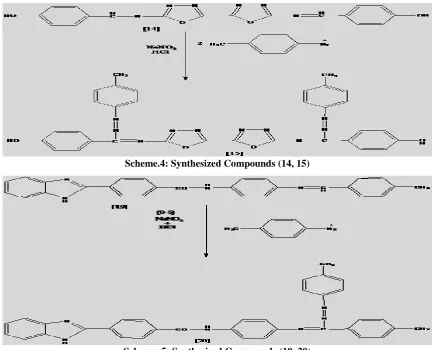
Scheme.4: Synthesized Compounds (14, 15)
Scheme. 5: Synthesized Compounds (19, 20)
PROCEDURES
The biological assay of prepared compounds has been studied for their antibacterial activities by agar through biological procedures (Nagham et al., 2017). The antimicrobial activities were done at three concentrations 50, 100 and 150mg/ml in DMSO solvent through using two types of bacte-ria Staphylococcus aureu and K. Pneuomona. These bacterial strains were incubated for 24 hrs at 37oC.
RESULTS AND DISCUSSION
In past paper of our work (Nagham et al., 2017), we synthesized formazan compounds but in this studying, we will study activity against two types of bacteria.
Bio-Tests: The test of the sensitivity of the bacterial isolates were positive for gram, which included work on two types of bacteria to measure the biological activity(Wright et al 2007,Nagham et al., 2015, Hegazi et al., 2014) of certain compo- unds which bacteria positive for the dye Cram (bacteriaStaphylococcusaureu) and negative gram (bacteria K. Pneuomona), and Table 1 shows the diameter of inhibition zone for vehicles chemical measured in mm towards the species bacterial.
Table 1: Biological Activity (Inhibition Zone in mm of
Compounds in Concentration 150mg/ml.
Comp. No.
(G +)
Staphylococcus Aureus
(G -) K.
Pneuomona
4 Schiff Base 8 6
9 Schiff Base 14 12
11 Schiff Base 8 4
14 Schiff Base 8 6
19 Schiff Base 12 8
5 Formazan 16 14
10 Formazan 22 18
12 Formazan 14 12
15 Formazan 16 12
20 Formazan 18 16
Photo 1: The inhibition of the compounds (10,11,12, 19) on Staphylococcus Aureu
Photo 2: The inhibition of compounds (5, 14,20) on
Staphylococcus Aureu
Photo 3: The inhibition of the compounds (4,9,15) on
Staphylococcus Aureu
Conclusions:
The results appeared that data of inhibition of the two types of bacteria on our synthesized compou-nds for formazan compoucompou-nds (5, 10, 12, 15, 20) bacteria is much higher than Schiff bases (4, 9, 11, 14, 19) in activity.
acylamino]-1,3,4-oxadiazoles. Farmaco 53: 541-544 (1998).
Aboraia S.A., A.M. Rahman and M.N. Mahouz Novel 5-(2 hydroxyphenyl)-3-substituted-2,3-dihydro-1,3,4-oxadiazole-2-thionederivatives: Promising anticancer agents. Bioorganic & Medicinal Chemistry 14: 1236–1246 (2006). Ahmed H. AL-Azawi1 and Zainab H. Hassan,
Antibacterial activity of Arachis hypogaea L. Seed coat extract cultivated in iraq. Pak. J. Biotechnol. 14(4): 601-605 (2017).
Angela K., V. Lucica and C. Nicoleta, Synthe-sis and structural studies of complexes of Cu, Co, Ni and Zn with isonicotinic acid hydra-zide and isonicotinic acid (1-naphthylmethy- lene) hydrazide. J. Serb. Chem. Soc, 75 2: 229-242 (2010).
Bramhananda N.R., B. Venkataramudu, L.K. Ravindranath, S.A. Aleem and N.S.Narendra, Der. Pharma. Chemica 8(4): 101-112 (2016) Chao J., P.X. Huia and Z. Lia, Synthesis and
Antibacterial Activities of Novel Biphenyl-tetrazole Derivatives Bearing 1,3,4- Oxadi-azole. Journal of The Chinese Chemical Society 52: 539-544 (2005).
DeLong E.F. and N.R. Pace, Environmental diversity of bacteria and archaea. Syst. Biol. 50(4): 470–8 (2001).
Filali B.Y., Y.H. Elmsellem, R.H. Kandri, C.A. Steli, Y.F. Ouzidan, C. Ouazzani, N.K. Sebba, E.M. Essassi and B. Hammouti, Der. Pharma Chemica 8(4): 159-169 (2016).
Gitai Z., The new bacterial cell biology: moving parts and sub cellular architecture. Cell 120(5): 577–86 (2005).
Habibe T. and L.A. Mehmet, Electrochemical properties of 1-(o−, m−, pnitrophenyl)-3-(m − nitrophenyl)-5-phenylformazans and their nic-kel complexes. Turk J. Chem. 34: 465–479 (2010).
Hegazi A.G., A.M. Abdou and A.F. Abd, Evaluat- ion of the antibacterial activity of bee venom from different sources. World Applied Scien-ces Journal 30(3): 266-270 (2014).
Journal of Pharmaceutical Biological and chemical sciences 8(3): 564-573 (2017). Nagham Mahmood Aljamali, Synthesis and
Che-mical Identification of Macro Compounds of (Thiazol and Imidazol). Research J. Pharm. and Tech. 8(1): 78-84 (2015).
Nagham Mahmood Aljamali, J.S. Mahmood, J.Z. Mahmood and Intisar Obaid, Inhibition Acti-vity of (Azo – Acetyl acetone) on Bacteria of Mouth. Research J. Pharm. and Tech. 10(6): 1683-1686 (2017).
Nagham Mahmood Aljamali and K.D. Rahi, New Formazan Compounds (Synthesis, Identifi-cation, Physical Properties). Journal of Che-mical and Pharmaceutical Sciences 10(3): 1461-1472 (2017).
Nagham Mahmood Aljamali, J.S. Mahmood, J. Z. Mahmood and K. Seena, Microbial Study-ing of (Thiazole, Oxadiazole, Thiadiazole)– Derivatives on Mouth and Teeth Bacteria. International Journal of Medical Research and Pharmaceutical Sciences 3(8): 30-39 (2016). DOI:10.5281/zenodo.61357.
Nagham Mahmood Aljamali. Synthesis and Biol-ogical Study of Hetero (Atoms and Cycles) Compounds. Der. Pharma Chemica 8(6): 40-48 (2016).
Nagham Mahmood Aljamali and Intisar Obaid, Synthesis of Sulfur Heterocyclic Compounds and Study of Expected Biological Activity. Research J. Pharm. and Tech. 8(9): 1225-1242 (2015).
Nanjunda S., S. Swamy, P.B. Basppa, B. Prabhuswamy, and B.H. Doreswamy, Crystal Structure of Novel2-butyl-4-chloro-HImida-zolyl-5-Carboxaldehyde. European Journal of Medicinal Chemistry 41: 531-538 (2006).
bovine mastitis in Korea. Planta Med. 79: PL16 (2013).
Rappé M.S. and S.J. Giovannoni, The uncultured microbial majority. Annual Review of Micro-biology 57: 369–94 (2003).
Rosenberg S.M. and A. Slack, Antibiotic-induced lateral transfer of antibiotic resistance Trends Microbiol. 12(9): 401–4 (2004).
Sahar B.A. and A.R. Ammar, Der. Pharma Chemica 8(4): 63-66 (2016).
Srinivas, K., U. Srinivas, K. Bhanuprakash and K. Harakishore, Synthesis and antibacterial activity of various substituted s-triazines. Eur. J. Med. Chem. 41: 1240-1246 (2006).
Subbiah R., G. Tanmoy, S. Tanushree, R.Puspita, P.S. Benu, N. Jayatri, D. Avijit and K.M. Tapan, Der. Pharma Chemica 8(4): 446-452 (2016).
Valeur E. and M. Bradley, Amide bond formation: beyond the myth of coupling reagents. Chem. Soc. Rev. 38: 606–631 (2009).
anita S. and M. Supriya, Development of furfural-dehyde formazans as potential antitubercular agents.Der. Pharma Chemica 8(18): 144-148 (2016).
Woese C.R., O. Kandler and M.L. Wheelis, Towards a natural system of organisms: pro-posal for the domains Archaea, Bacteria, and Eucarya. Proceedings of the National Acad-emy of Sciences of the United States of America. 87(12): 4576–9 (1990).