Abdul Azeez et al., J. Sci. Res. Phar. 2014, 3(3), 96-100
J
ournal of
S
cientific
R
esearch in
P
harmacy
Research Article
Available online through
ISSN: 2277-9469
www.jsrponl
ine.com
Gastroprotective activity of
Trachyspermum ammi
Against Ethanol Induced Gastric Ulcers
Abdul Azeez
*
, Mohammad Mansoor, D. Srinivasa RaoK.C.Reddy Institute of Pharmaceutical Sciences, Guntur, Andhra Pradesh-522 348, INDIA.
Received on: 27-07-2014; Revised and Accepted on: 04-09-2014
ABSTRACT
T
rachyspermum ammi seeds have traditionally been used in India as medicinal plant for the treatment of indigestion and dyspepsia and many other gastric disorders. In the present study hydroalcoholic extract of Trachyspermum ammi(ajowan) was used for investigation of Gastroprotective activity against ethanol induced gastric ulcers. Animals pretreated with hydroalcoholic extract of Trachyspermum ammi at the dose 250mg/kg and 500mg/kg showed significant decrease in ulcer index and percentage ulcer protection in all models. The results suggests that the hydroalcoholic extract of Trachyspermum ammi at 250mg/kg and 500mg/kg showed significant protection by reducing ulcerative lesions when compared with control group of animals. These findings indicate that Trachyspermum ammi extract shows significant Gastroprotective activity.Key words: Trachyspermum ammi, Hydroalcoholic extract, Gastroprotective activity, Ulcer protection.
INREODUCTION
P
eptic ulcer is the term designated to localizeddestruction of the inner wall or mucosa of the stomach (gastric ulcer) or the upper part of the small intestine (duodenal ulcer). Peptic ulcer generally occur when there is an imbalance between aggressive gastric factors (acid, pepsin, Helicobacter pyloriand refluxed bile salts) and defensive mucosal factors [1] (gastric mucosal
barrier, bicarbonate secretion, rapid cell turnover, high blood flow). The treatment of peptic ulcer is directed against reduction of aggressive factors or enhancement of mucosal defense of stomach and duodenum with cytoprotective agents. Endogenous non-protein sulfhydryl (SH) compounds are presumed to participate in gastric mucosal adaptive cytoprotection [2].
The term “Ayurveda” means “Science of Life”, ayur means life and veda means knowledge. Ayurveda deals with physical body, herbal medicine, diet, surgery, psychology, spirituality and religion. Ayurveda has a well-classified materia medica consisting mainly of drugs of plant origin. Various parts of plants, whole plant, root, rhizome, stem, leaf, flowers, seeds, bark, exudates have been employed for therapeutic purpose. Currently, some 1250 plants find usage in ayurvedic medicines [3].
Trachyspermum ammi(Umbelliferae), known in India as Ajowan, is widely distributed in northern part of the India. In India, the seeds areused as remedy for indigestion and colic and also used in poultices to relieve asthma and arthritis. It is also having aphrodisiac properties. It is used in a steeped liquid form against diarrhea and flatulence. It is mostly used for indigestion and dyspepsia [4]. The aim of the study is to evaluate gastroprotective
activity of the hydroalcoholic extract of Trachyspermum ammi.
MATERIALS AND METHODS
T
rachyspermum ammi was collected from the localmarket, Tirupati, and authentified from Dr.Madhav Chetty, Department of Botany, S.V. University, Tirupati.
Plant material was dried under shadow and extraction was carried out by cold maceration.The ajowan seeds were grounded in a milling machine in order to obtain a fine dry powder. The powder was weighed, using a single pan electronic weighing balance ,and the ajowan extract was obtained by means of a
*Corresponding author:
Abdul Azeez
K.C.Reddy Institute of Pharmaceutical Sciences, Guntur, Andhra Pradesh-522 348, INDIA. *E-Mail: [email protected]
maceration process. The ajowan powder was soaked in 50% ethanol and 50% distilled water (1 g of powder per 5 ml of solvent) in a 250 ml Erlenmeyer flask for a period of 4-5 days at room temperature with frequent shaking. The flasks were closed with a cotton plug and
aluminium foil. The mixture was then centrifuged at 3,500 × g for 20
min and finally filtered through Whatmann filter paper No.1. The filtrate was collected and concentrated under reduced pressure in a rotary vacuum evaporator until a semi-solid substance was obtained, which was then dried in a crucible under a controlled temperature (45ºC) to obtain a solid powder
Preliminary phytochemical investigation was carried out on ethanolic extract of Trachyspermum ammi(ajowan) for detection of
various phytochemicals by following standard methods [5, 6].
Animals:
30 albino rats, Wister strain weighing 160±10g, were obtained from Animal House.The animals were housed in well ventilated cage and animals had 12 hours day and night schedule with temperature between 20 - 28˚C. The animals were housed in large spacious hygienic cages during the course of the experimental period. The animals were allowed free access to standard laboratory pellets and drinking water ad libitum.The study protocol was approved by CPCSEA, IAEC.
Drugs and Chemicals:
Anti-ulcer agent (Zantac ™ (Ranitidine) was obtained in the form of ampoules from pharmacy., Ethanol, distilled water, chloroform, sodium hydroxide ,phentholin, topper’s reagent, normal saline, dimethyl sulfoxide.
Experimental Design:
Ethanol induced gastric ulcer in rats: Six animals in each group received following treatment schedule.
Group I : Control group
Group II : Ethanol(1 ml)
Group III : 250mg/kg of oral doses of hydroalcoholic extract of Ajowan+Ethanol (1 ml)
Group IV : 500mg/kg of oral doses of hydroalcoholic extract of Ajowan+Ethanol (1 ml)
Group V : Standard drug (Rantidine 20mg/kg) + Ethanol (1 ml)
Abdul Azeez et al., J. Sci. Res. Phar. 2014, 3(3), 96-100
five groups of equal weight and number (6 rats eachAnimals wererandomly divided into six groups of six animals each. Group I served as control, Group II to VI were the drug treated groups. ajowan hydroalcoholic extract 100 mg/kg body weight and ranitidine 20 mg/kg body weight respectively by oral route for a period of 5 days.
On day 5, one hour after the administration of Ajowan extracts / Ranitidine all the animals received absolute ethanol (1ml/rat p.o.). One hour after administration of ethanol, the animals were sacrificed and the stomach was then excised and cut along the greater curvature, washed carefully with 5.o ml of 0.9% NaCl and ulcers were scored by a person unaware of the experimental protocol in the glandular portion of stomach.
Histological and Macroscopic evaluation of stomach:
The stomachs were opened along the greater curvature, rinsed with saline to remove gastric contents and blood clots and examined by a×5 magnifier lens to assess the formation of ulcer. The number of ulcers was counted. Ulcer scoring was under taken according to Vogel et al 2002 [7]. The scores were: 0 = no ulcer, 1=
superficial ulcer, 2= deep ulcer, 3= perforation. Ulcer area was assessed by using 3 Mscaled surgical transpore tapes, which was fixed on a light and transparent sheet.Each cell on the tape was 1mm2 in area, so the number of cells was counted and the ulcer area was measured for each stomach Ulcer index was measured by using
following formula according to Vogel et al 2002. The stomach
samples were scanned using a computer scanner and the total mucosal area and total ulcerated area was measured using public domain image processing and analysis program.
UI = UN + US + UP × 10-1
Which UI = ulcer index,
UN = mean of ulcer number, US =mean of ulcer score,
UP = ulcer probability (incidence %) for each group.
The ulcers were given scores based on their intensity as follows: 0 ¼ no ulcer, 1 ¼ superficial mucosal erosion, 2 ¼ deep ulcer or transmural necrosis, 3 ¼ perforated or penetrated ulcer.The stomach samples from groups that showed reduction in ulcer index were subsequently processed for histological examination.
Statistical analysis:
The statistical significance was assessed using one-way analysis of variance (ANOVA) followed by Dunnet’s comparison test. For comparing nonparametric ulcer scores, ANOVA followed by non-parametric Dunn posttest was used. The values are expressed as mean ± SEM, and p < 0.05 was considered significant.
RESULTS
Table No. 1: Phytohemical screening of Trachyspermum ammi
S.NO Constituents Tests Presence/absence
1. Carbohydrates Molisch`s test +
2. Alkaloids Dragendroff`s test +
3. Amino acids Ninhydrin test _
4. Volatile oil - +
5. Flavanoids Alkaline reagent test +
6. Tannins Ferric chloride test +
7. Steriods and Triterpeoids Salwoski test +
+=positive; -=negative
Ethanol-induced gastric ulcers:
The hydroalcoholic extracts of Trachyspermum ammi
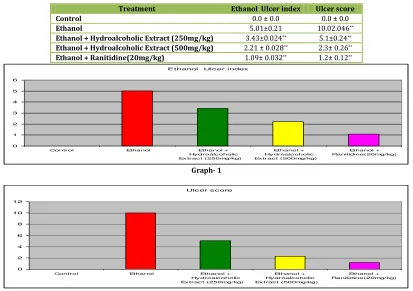
showed a significant reduction in ulcer index when compared with control (p < 0.05) in Table 2 and Graph 1 & 2.
Table No. 2: Effect of Trachyspermum ammi extracts in ethanol-induced gastric ulcers compared with control and standard drug Ranitidine
Treatment Ethanol Ulcer index Ulcer score Control 0.0 ± 0.0 0.0 ± 0.0
Ethanol 5.01±0.21 10.02.046** Ethanol + Hydroalcoholic Extract (250mg/kg) 3.43±0.024** 5.1±0.24** Ethanol + Hydroalcoholic Extract (500mg/kg) 2.21 ± 0.028** 2.3± 0.26** Ethanol + Ranitidine(20mg/kg) 1.09± 0.032** 1.2± 0.12**
Ethanol Ulcer index
0 1 2 3 4 5 6
Control Ethanol Ethanol +
Hydroalc oholic Ex trac t (250mg/kg)
Ethanol + Hy droalc oholic Extr ac t (500mg/kg)
Ethanol + Ranitidine(20mg/kg)
Graph- 1
Ulcer s core
Abdul Azeez et al., J. Sci. Res. Phar. 2014, 3(3), 96-100
Group I Group II Group II
Group IV Group V
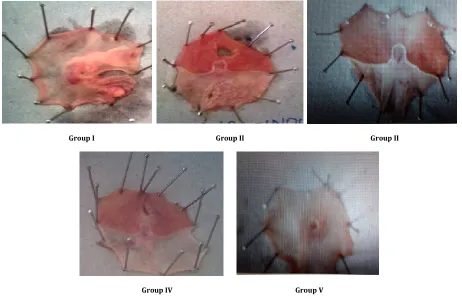
Fig. 1: Histopathological examination of ethanol-induced gastric ulcers in rats
Group-I (Control): Shows normal stomach of rats Group-II (control group+ Ethanol) Shows Stomach of rats with congestion, haemorrhagic necrosis
Abdul Azeez et al., J. Sci. Res. Phar. 2014, 3(3), 96-100
Group-V (standard drug+ Ethanol) Stomach of rats shows less or no ulceration.
Fig. 2: Macroscopic examination of ethanol-induced gastric ulcers in rats
DISCUSSION
T
he present study demonstrates that ethanolic extract ofTrachyspermum ammi seeds exhibits anti ulcer activity, probably as a result of anti-secretary and cytoprotective action. Gastric ulcers have multiple etiopathogenesis. Ulcers caused by pyloric ligation are due to increased presence of acid and pepsin in the stomach and damage by indomethacin are due to decrease in PG syntheses which are essential for the integrity of mucosa[8].
EtOH-induced gastric lesions are thought to arise as a result of direct damage of gastric mucosal cells [9].
Stress ulcers are due to both physiological and psychological factors, which is crucial for gastrointestinal defense and increased accumulation of acid and pepsin leading to autodigestion of the gastric mucosa [1]. It is generally accepted that
gastric ulcers results from an imbalance between aggressive factors and the maintenance of the mucosal integrity through the endogenous defense mechanism. The role of free radicals is also reported in the indication of ulcers. Prostaglandins (PG) offer protection to duodenum through both increases in mucosal resistance as well as decrease in aggressive factors, mainly acid and pepsin.
NSAIDS are known to induce peptic ulcer not only by denaturing mucous glyco-proteins but also by free radical formation. Similarly, alcohol is also known to produce free
radicals and induce peptic ulcers [10]. The free radicals
produced cause lipid peroxidation,leading to membrane
fluidity which in turn increases the influx of Ca2+ ions and
results in the reduced membrane integrity of surface epithelial cells, thereby generating gastric ulcers [11, 12]. Free radicals have
been demonstrated to be a contributing factor in tissue
injury and in the modulation of pain [13]. The incidence of
ethanol induced ulcers, predominant in the glandular
part of the stomach has been reported to stimulate the formation of leukotriene C4 (LTC4), mast cell secretory
products [14] and reactive oxygen species [15]resulting in the
damage of rat gastric mucosa [16].
Ethanol induced gastric ulcers have been widely used for the evaluation of gastro protective activity. Ethanol is metabolized in the body and releases superoxide anion and hydroperoxy free radicals. The incidence of ethanol induced ulcers is predominant in the glandular part of stomach. It was reported stimulate the formation of leukotriene C4 (LTC4), mast cell secretory products and reactive oxygenspecies resulting in the damage of rat gastric mucosa.
In this study, ranitidine is used as reference drug to delineate in part the mechanism(s), which are probably involved in ulcer pathogenesis. The results obtained in reference groups indicate that ajowanm extract possesses its anti-ulcerative properties through a mechanism mainly related to acid and pepsin inhibition. A knowledge of the chemical composition of a given plant extract is required in order to extrapolate the proposed mechanism of actions to its possible in vivo efficacy (or safety).
Hence, the healing of gastric ulcers in ethanol–induced gastric ulcers may be due to decreased acid secretion ,increased
gastric motility and its antiulcer activity may be due to the presence of these chemical constituents in the plant. Ethanol-induced gastric damage may be due to stasis in gastric blood flow, which contributes to the development of the hemorrhagic and necrotic aspects of tissue injury. In addition, ethanol also induces solubilization of the mucus constituents, decreases the difference of potential in mucosa thus increasing the flow of Na+ and K+ to the lumen and pepsin secretion, and also increases H+ ions and histamine [17].
Trachyspermum ammi produced antiulcer activity in all the model taken up for the study. Hydroalcoholic extract at the doses, reduces ulcer incidence significantly (P<0.01) when compared to the control as evident by decrease in ulcer score in the entire model. Protection against ulcerations in ethanol induced ulcer
models indicate gastroprotective action by extracts of
Trachyspermum ammi.
CONCLUSION
T
he present finding concluded that water extracts ofTrachyspermum ammi had potential antiulcer effect, which was not superior to the respective effect observed with Rantac.
Trachyspermum ammi showed its activity in its protection of the stomach. The antiulcer curative ratios were dose dependent with no adverse effects.The hydroalcoholic seed extracts of ajowan were effective in reducing the ulcer area in ethanol induced ulcers.Hence, the plant i.e. Trachyspermum ammi showed its antiulcer activity on ethanol induced gastric ulcers in rats.The antiulcer activity of
hydroalcoholic extract of Trachyspermum ammi was evaluated by
using ethanol induced gastric ulcer and in rats. Animals pretreated with hydroalcoholic extract of 250mg/kg, 500mg/kg showed significant reduction in its antiulcer activity but it was not superior to its standard drug. These findings indicate that hydroalcoholic
extract of Trachyspermum ammi displays good antiulcer activity
contributing to its pharmacological validation.
REFERENCE:
1. Goel RK and Bhattacharya SK, Gastro-duodenal mucosal
defense and mucosal protective agents. Ind. J. Exp. Biol.,
1991; 29: 701-714.
2. Ko JK and Cho CH. Role of non-protein sulphydryl
compounds in gastric adaptive cytoprotection against ethanol induced mucosal damage in rats. Inflammation Res.,
1995; 44: 242-244.
3. Bhagwan Dash, Ayurvedic cures for common diseases. Hind
Pocket Books Pvt Ltd, New Delhi, 1993; 7-8.
4. Ayurvedic Pharmacopoeia of India, Government Of India,
Ministry Of Health And Family Welfare Department of Ayush, Part-I, 1: 170-171.
5. Kokate CK, Purohit AP, Gokhale SB. Pharmacognosy. 14th ed.
Pune: Nirali Prakash; 2007; p.297.
6. Khandelwal KR. Practical Pharmacognosy. 11th ed. Pune:
Nirali Prakashan, 2004; 149.
7. Vogel H. Drug Discovery and Evaluation Pharmacological
Assays.2nd Edition 2002. New York: Springer-Verlag Berlin
Abdul Azeez et al., J. Sci. Res. Phar. 2014, 3(3), 96-100
models: Possible mechanism for the inhibition of acidformation. J. Ethnopharmacol., 2006; 104: 156–163.
9. Terano A, Hiraishi H, Ota S, Shiga J and Sugimoto T. Role of
superoxide and hydroxyl radicals in rat gastric mucosal injury induced by ethanol. Gastroenterologia Japonica,
1989; 24: 488–493.
10. Soll AH. Pathogensis of peptic ulcer and implications for
therapy, TheNewEnglandJ.Med.,1990; 322: 909.
11. Bandyopadhyay U, Das D, Bandyopadyay D, Bhattacharjee
M & Banerjee RK. Role of reactive oxygen species in
mercaptomethylimidazole – induced gastric acid
secretion and stress – induced gastric ulceration, Curr.Sci., 1999; 76: 55.
12. Naito Y, Yoshikawa T, Matusyama K, Yagi N, Aral M,
Nakamura S, Yoshida N & Konda M. Effect of oxygen radical scavengers on the quality of gastric ulcer healing in rats, ClinicGastroenterol.,1995; 21: S82.
13. Vander Laan L, Kapitein PJ, Oyen W J, Verhofstad AA,
Hendriks T & Goris RJ. A novel animal model to evaluate
oxygen derived free radical damage in soft tissue, Free
RadicalResearch,1997; 26: 363.
14. Oates PJ & Hakkinen JP. Studies on the mechanism
ethanol-induced gastric damage in rats, Gastroenterology,
1988; 94: 10.
15. Mizui T, Sato H, Hirose F & Doteuchi M. Effect of
antiperoxidative drugs on gastric damage induced by ethanol in irats, LifeSci.,1987; 41: 755.
16. Peskar B M, Lange K, Hoppe U & Peskar B A. Ethanol stimulates formation of leukotriene C4 in rat gastric mucosa, Prostagalndins,1986; 31: 283.
17. Witaicenis EF, Roldao LN, Seito NP and Di Stasi LC.
Pharmacological and toxicological studies of Drimys
angustifolia Miers. (Winteraceae). J. Ethnopharmacol., 2007;
111: 541–546.
How to cite this article:
Abdul Azeez, Mohammad Mansoor, D. Srinivasa Rao: Gastroprotective activity of Trachyspermum ammi Against Ethanol Induced Gastric Ulcers. J. Sci. Res. Phar, 2014; 3(3): 96-100.
Conflict of interest: The authors have declared that no conflict of interest exists.