- I -
An exploratory study on educating learners with ASD in primary
inclusive setting in Saudi Arabia, issues, attitudes, and challenges
By
Faten Abdulhadi Alzaidi
BA (Hons), MEd
A thesis submitted in partial fulfilment of the requirements of the University of Lincoln for the degree of Doctor of Philosophy in Education
- II -
ABSTRACT
The purpose of this research is to facilitate the development and understanding of inclusive education for students with Autism Spectrum Disorder (ASD) in Saudi Arabia. The study is located within Riyadh, a city in Saudi Arabia. The culture and religion of Saudi society are central themes in this study. ASD is a complex disorder due to its characteristics, which include a lack of social skills, communication difficulties, and behaviour problems. A range of qualitative methods were adopted; interviews with twenty general education teachers (GT) and special education teachers (SET) as well as participant observation in five schools. The research seeks to identify the attitudes and practices of primary school teachers in terms of their support for children in mainstream schools. The study shows that teachers are mostly supportive and have positive attitudes toward the inclusive education of learners with ASD. The study shows barriers to inclusive education, for example, lack of time, overcrowded classrooms, curriculum, attitudes, lack of training, teaching methods and school environments and the extent to which mainstream school buildings and classrooms are suitable for inclusion of students with Special Educational Needs (SEN) in general and, more specifically, for students with ASD. Another factor that emerged from the study to support inclusive education was peer tutoring. All the teachers involved in the study are qualified in education but they need additional training and knowledge about inclusion and ASD. Finally, the study provides some practical recommendations as well as some ideas for future research and other activities.
- III -
ACKNOWLEDGEMENTS
I would like to acknowledge all those who supported and helped me in the achievement of this study. First of all, I would like to thank God for His guidance. Then, my deepest gratitude is to my research supervisor, Prof. Mike Neary, for his insightful support and commitment. Without his motivation and encouragement, I would not have considered a graduate career in inclusive educational research. Also, I thank Dr Carol Callinan for her invaluable feedback.
My very special thanks go to my family - my dad, mum, sisters, brothers, mother-in-law and sister-in-law - for their unwavering support, love and belief in me. Also, I am grateful to my daughter, Nadine, for giving me happiness during the last few months.
I am grateful to my soul mate, my dearest husband and best friend Dr Ibrahim. I love you for everything, for being supportive and the biggest believer in me. I thank God for brightening my life with your presence.
I would like to thank all my friends and colleagues at the University of Lincoln who have helped me complete my thesis, directly or indirectly. And I would like to give special thanks to Beverley Potterton. Finally, I would like to thank all the participants in the study for sharing their time, views and expertise with me.
- IV -
LIST OF PUBLICATIONS
Research paper entitled 'Is there a relationship between the training and experience of teachers in Saudi Arabia and the ability to improve the education of children with Autistic Spectrum Disorder?' in Saudi Scientific International Conference October 2012, Brunel University, United Kingdom.
Research paper entitled ‘‘Inclusive education in Saudi Arabia: cross-cultural perspective on the effect of culture and society towards inclusive education in schools.’’ in Saudi Scientific International Conference February 2014, Edinburgh, United Kingdom.
Poster paper entitled ‘’the effects of using peer tutoring to promote access of students with autism to inclusive education in Saudi Arabia’’ in Saudi Scientific International Conference February 2014, Edinburgh, United Kingdom.
- V -
TABLE OF CONTENTS
ABSTRACT ... II ACKNOWLEDGEMENTS ... III LIST OF PUBLICATIONS ... IV TABLE OF CONTENTS ... V LIST OF FIGURES ... XII LIST OF TABLES ... XIII ABBREVIATIONS ... XIVChapter One: Introduction ... 15
1.1 Introduction ... 16
1.2 Rationale of the Study ... 16
1.3 Inclusive Education – Global and National ... 18
1.4 Focus of the Research ... 21
1.5 Significance of the Study in Relation to Saudi Arabia ... 24
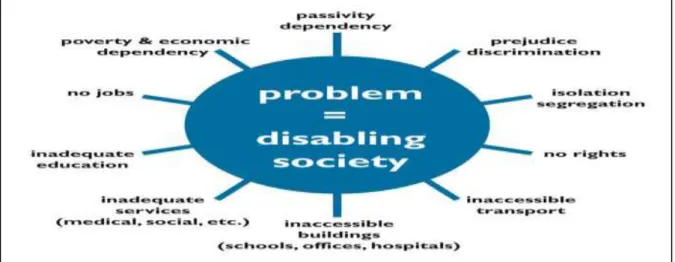
1.6 Medical and Other Models ... 25
1.7 Researcher’s Role, Position and Experience ... 26
1.8 Research Aims and Questions ... 27
1.8.1 Research Aims ... 27 1.8.2 Research Objectives ... 27 1.8.3 Research Questions... 28 1.9 Research Methodology ... 28 1.9.1 Philosophical Approach ... 28 1.10 Scope of Study... 29 1.11 Thesis Structure ... 30
Chapter Two: Research Context ... 33
2.1 Introduction ... 34
2.2 Brief Background of Saudi Arabia ... 34
2.3 Saudi Arabia’s Culture ... 36
2.3.1 Saudi Arabia’s Religion ... 37
- VI -
2.3.1.2 Islam and Disability ... 38
2.4 The Saudi Arabian Educational System ... 40
2.4.1 The Ministry of Education ... 40
2.4.2 Inclusive Education and SEN in Saudi Arabia ... 44
2.4.3 Inclusive Education Policy ... 48
2.4.3.1 Policies on Inclusion of Students with ASD ... 51
2.4.3.2 Education of Students with ASD ... 54
2.5 Summary Remarks ... 54
Chapter Three: Models of Understanding Disabilities and ASD ... 56
3.1 Introduction ... 57
3.2 Models of Thinking on Disability ... 57
3.2.1 The Medical Model ... 58
3.2.2 The Social Model ... 60
3.2.3 Bio-Psychosocial Model ... 63
3.2.4 Human Rights Model... 65
3.2.4.1 The Fight for Equality for People with Special Needs ... 65
3.2.4.2 Background to the Disability Movement ... 66
3.3 Impart of Disability Models on Understanding of ASD ... 67
3.3.1 Definition of ASD ... 67
3.3.2 Prevalence of ASD ... 71
3.4 Diagnosis and Causes of ASD ... 71
3.4.1 Diagnosis of ASD ... 71 3.4.2 Causes of ASD ... 74 3.4.2.1 Biological Causes ... 75 3.4.2.2 Psychological Factors ... 76 3.4.2.3 Cognitive Approaches ... 76 3.4.2.3.1 Theory of Mind ... 77
3.4.2.3.2 Executive Function Theory ... 77
3.4.2.3.3 Weak Central Coherence Theory ... 77
3.5 Summary Remarks ... 78
- VII -
4.1 Introduction ... 80
4.2 Definitions of Inclusive Education ... 80
4.3 Research Studies on Inclusive Education of SEN in Saudi Arabia ... 88
4.4 Barriers to Inclusive Education in Schools ... 90
4.4.1 The Economic Influence on Inclusive Education ... 90
4.4.2 Teachers’ Attitudes ... 93
4.4.2.1 Factors Related to Teachers’ Attitudes About Inclusion of ASD ... 97
4.4.3 Students’ Attitudes ... 107 4.4.4 Educational Curriculum ... 108 4.4.4.1 Hidden Curriculum ... 110 4.4.4.2 Early Intervention... 113 4.4.5 Classroom Barriers ... 114 4.4.5.1 Lack of Time ... 114
4.4.5.2 Classroom Size and Environment ... 116
4.4.5.3 School Support ... 117
4.4.6 Types of Classrooms for Students with ASD in Saudi Arabia ... 120
4.4.7 PT and ASD Learning ... 124
4.5 Education Pedagogy ... 130
4.5.1 John Dewey - Progressive Pedagogy ... 131
4.5.2 Paulo Freire – Pedagogy of the Oppressed ... 134
4.5.3 bell hooks’ Teaching to Transgress pedagogy... 136
4.6 Summary Remarks ... 139
Chapter Five: Research Methodology ... 140
5.1 Introduction ... 141
5.2 Philosophical Underpinnings ... 141
5.3 Research Design ... 142
5.3.1 Research Philosophy ... 142
5.4 Research Paradigms ... 143
5.4.1 Positivist Research Paradigm ... 143
5.4.2 Interpretive Paradigm ... 144
- VIII -
5.5 Method ... 145
5.5.1 Quantitative and Qualitative... 145
5.5.2 Research Strategy ... 148 5.5.3 Research Approach ... 148 5.5.3.1 Interview Method ... 148 5.5.3.1.1 Interview Questions ... 150 5.5.3.1.2 Pilot Interview ... 150 5.5.3.2 Observation Method ... 152
5.6 Framework of the Study ... 153
5.6.1 Sampling Process ... 154
5.6.2 Definition of the Target Population ... 154
5.6.3 Choice of Respondents and Sampling Frame... 155
5.6.4 Selection of Sampling Technique ... 156
5.6.5 Sample Size ... 156
5.7 Data Collection ... 157
5.7.1 The Duration of the Data Collection Process ... 157
5.7.2 Timeframe for Data Collection ... 158
5.8 Data Analysis ... 159
5.9 Coding and Emerging Themes ... 160
5.10 Emergent Themes ... 160
5.11 Limitations of the Qualitative Approach ... 164
5.11.1 Generalisability ... 164
5.11.2 Validity and Reliability ... 164
5.11.3 Subjectivity and Positionality ... 169
5.12 Ethical Issues ... 170 5.12.1 Approval ... 170 5.12.1.1 Informed Consent ... 171 5.12.2 Potential Issues ... 171 5.12.3 Right to Withdraw ... 172 5.12.4 Risk Management ... 172
- IX -
5.12.6 Anonymity and Confidentiality ... 173
5.13 Summary Remarks ... 173
Chapter Six: Findings ... 175
6.1 Introduction ... 176
6.2 Demographic Data of the Participants ... 177
6.3 The Inclusion Concept ... 189
6.3.1 Understanding of Inclusive Education ... 189
6.4 Key Factors ... 190
6.4.1 Policy ... 191
6.4.2 Culture ... 192
6.4.3 Social ... 193
6.5 The ASD Concept ... 194
6.5.1 Understanding of ASD ... 194
6.5.2 Autism Practices ... 197
6.6 The Inclusive Pedagogy Concept ... 199
6.6.1 Understating of Inclusive Pedagogy ... 200
6.6.2 Peer Tutoring as an Inclusive Pedagogy ... 202
6.7 Drivers ... 205 6.7.1 Religion ... 206 6.7.2 Salary ... 207 6.7.3 Social Justice ... 209 6.8 Classroom Barriers ... 211 6.8.1 Time ... 211 6.8.2 Curricula ... 212 6.8.3 Attitudes ... 214 6.8.4 Lack of Training ... 217 6.8.5 School Environments ... 219 6.8.6 Overcrowding ... 220 6.9 Observations ... 222 6.9.1 School A ... 222 6.9.1.1 Background Information ... 222
- X -
6.9.1.2 The School’s Teachers ... 225
6.9.1.3 Special Education at the School ... 226
6.9.1.4 Observation Process ... 226
6.9.1.4.1 Classroom ... 226
6.9.1.4.2 Playground ... 227
6.9.2 School B ... 229
6.9.2.1 Background Information ... 229
6.9.2.2 The School’s Teachers ... 231
6.9.2.3 Special Education at the School ... 232
6.9.2.4 Observation Process ... 232
6.9.2.4.1 Classroom ... 233
6.9.2.4.2 Playground ... 234
6.9.3 School C ... 235
6.9.3.1 Background Information ... 235
6.9.3.2 The School’s Teachers ... 236
6.9.3.3 Special Education at the School ... 237
6.9.3.4 Observation Process ... 237
6.9.3.4.1 Classroom ... 238
6.9.3.4.2 Playground ... 239
6.9.4 School D ... 240
6.9.4.1 Background Information ... 240
6.9.4.2 The School’s Teachers ... 241
6.9.4.3 Special Education at the School ... 241
6.9.4.4 Observation Process ... 242
6.9.4.4.1 Classroom ... 242
6.9.4.4.2 Playground ... 246
6.9.5 School E ... 247
6.9.5.1 Background Information ... 247
6.9.5.2 The School’s Teachers ... 248
6.9.5.3 Special Education at the School ... 248
- XI -
6.9.5.4.1 Classroom ... 249
6.9.5.4.2 Playground ... 250
6.10 Reflection on Observation ... 250
6.11 Summary Remarks ... 260
Chapter Seven: Discussion ... 261
7.1 Introduction ... 262
7.2 Claims to Knowledge ... 262
7.3 Barriers ... 263
7.4 Drivers ... 269
7.5 Summary Remarks ... 274
Chapter Eight: Conclusion and Recommendations ... 276
8.1 Introduction ... 277
8.2 Original Contribution ... 278
8.3 Practical Implications ... 278
8.3.1 Implication on the ‘children are small teachers’... 279
8.3.2 Recommendations ... 279
8.4 Limitations and Future Research Directions ... 281
8.4.1 Methodological Limitations ... 281
8.4.2 Future Research Directions ... 282
8.5 Conclusion ... 283 REFERENCES ... 285 APPENDIX I ... 317 APPENDIX II ... 319 APPENDIX III ... 322 APPENDIX IV ... 323 APPENDIX V ... 330 APPENDIX VI ... 331 APPENDIX VII ... 337
- XII -
LIST OF FIGURES
Figure 2-1 Map of Saudi Arabia ... 34
Figure 2-2 Saudi Arabian Population ... 35
Figure 3-1 Medical Model ... 59
Figure 3-2 Social Model ... 62
Figure 6-1 School A, outside ... 223
Figure 6-2 School A, inside ... 224
Figure 6-3 School A, inside classroom ... 225
Figure 6-4 School B, inside ... 230
- XIII -
LIST OF TABLES
Table 3-1 Diagnostic Criteria of ASD ... 72
Table 4-1 Definitions of Inclusive Education ... 85
Table 5-1 Comparison of Qualitative and Quantitative Approaches………….…………..…………146
Table 5-2 Research Framework………..………...…….……….153
Table 5-3 Data Collection Timetable………..……….158
Table 5-4 Research Questions and Themes………..…...162
Table 5-5 Addressing of Trustworthiness of this Research………...166
Table 6-1 Summary Statistics on Special Education in KSA (SEN) 2008–09 ... 183
Table 6-2 Participants’ Demographic Information ... 184
- XIV -
ABBREVIATIONS
ASD Autism spectrum disorder
CDSISaudi Central Department of Statistics and Information
DSEN Department of Special Education Needs
DfES Department for Education and Skills
EFA Education for All
F Female
GT General Teacher
IQ Intelligence Quotient
M Male
MoE Ministry of Education
PT Peer Tutoring
SEN Special educational needs
SET Special education teacher
UN United Nations
- 15 -
Chapter One: Introduction
- 16 - 1.1Introduction
The first chapter sets out the thesis outline, as well as highlighting the main issues; this includes a rationale for doing the study as well as aims of the study followed by the research questions. The concept of disability in Saudi Arabia is explored and situated within a social, cultural, political, historical as well as a medical context. The chapter will discuss philosophical approaches that inform this study and which provide the basis for the methods used to conduct this research. The introduction includes a personal account of the researcher’s position within the thesis. Finally, the chapter concludes with the structure of the thesis overall.
There are a few publications on inclusive education in the context of the Arabian Gulf and the Middle East (Gaad, 2011; Alkhateeb et al., 2016). No other studies on aspects of teaching and learning for children with Autism Syndrome Disorder (ASD) have yet investigated inclusive education in the Saudi context. The commitment of the Ministry of Education (MoE) to implement inclusive education encouraged an assessment of existing provisions and the possibility of introducing new approaches as a contribution to the growth of inclusive education in Saudi Arabia.
1.2Rationale of the Study
The rationale for this study is that in Saudi Arabia there are around 515 students with ASD in SEN special schools and mainstream schools ([Ministry of Education, 2007] cited in Al Mousa, 2014, p. 13). Furthermore, other students with ASD are in private institutes at a high cost of about 30,000 SR (7000 GBP) per year to each student, and there are other children with ASD on a waiting list to join programmes and benefit from these services (Beheiri,
- 17 -
2004). There are 22 programmes for the inclusion of students with ASD in Saudi Arabia (Alhaznawi, 2010). According to the mainstream education statistics, the number of students with ASD outside of inclusive education is more than the number of students with ASD being educated in public schools in Saudi Arabia. Many students with ASD do not have the right to enter public schools, as some schools reject them because they do not have trained staff or teachers or suitable curricula, and face a negative attitude from students and parents. Schools that have head teachers and teachers with this negative view of students with ASD can affect whether such students are included. In 1996, the MoE in Saudi Arabia introduced a legal process and policies to help ensure that all students with disabilities are included in mainstream schools as soon as is practicable (Almgloth, 1999; Abdullah, 2001; Alrwsan, 2006).
In Saudi Arabia, the number of schools with pupils that have a primary special education need related to ASD increased from three inclusive settings in 1998 to 52 in 2008 (Ministry of Education, 2008). Some students with ASD attend mainstream schools, and others attend special needs schools (Ministry of Education, 2008). This highlights the need to evaluate the evidence base in order to identify best practice in the education of children with ASD in special and mainstream settings. Several researchers have identified how students with developmental disorders, including students with ASD, have impacted on learning and education in mainstream schools (Kasari et al., 1999).
The number of children with SEN, particularly students with ASD, entering ministry schools has been increasing, supported with special education services in classrooms (McLeskey et al., 1999). Saudi Arabia has an increasing number of students with ASD who are able to enter public schools in different regions in the country (MoE, 2010). Therefore, general teachers
- 18 -
and SEN teachers are facing many challenges in offering support to students with ASD in inclusive classrooms, who were historically provided for in different educational settings (Hastings and Oakford, 2003). The recent inclusion of students with ASD is of interest to the MoE in Saudi Arabia. Many schools followed the plan of the Secretariat for Special Education in activating the role of public schools based on the principle of equality, and see the public school as a suitable place for an educational system to be established for all students in order to eliminate the problems, difficulties or issues that students with ASD might have, and for them to be included without prejudice.
1.3Inclusive Education – Global and National
Although the focus is on Saudi Arabia, inclusive education is a global concept. In 1994, the United Nations Educational, Scientific and Cultural Organization (UNESCO) held the Salamanca World Conference and reached an agreement that education is for all, regardless of differences (UNESCO, 1995; Florian, 1998a). This new conceptualisation suggested inclusive education as an approach, where SEN children share classes with other children in state schools. UNESCO (1994) stated that:
Every child has a fundamental right to education, and must be given the opportunity to achieve and maintain an acceptable level of learning,
Every child has unique characteristics, interests, abilities and learning needs,
Education systems should be designed and educational programmes implemented to take into account the wide diversity of these characteristics and needs,
Those with special educational needs must have access to regular schools which should accommodate them within a child centred pedagogy capable of meeting these needs,
Regular schools with this inclusive orientation are the most effective means of combating discriminatory attitudes, creating welcoming communities, building an inclusive society and achieving
- 19 -
education for all; moreover, they provide an effective education to the majority of children and improve the efficiency and ultimately the cost-effectiveness of the entire education system.
(UNESCO, 1994, p. viii-ix).
In the past century, children defined as having SEN were isolated from society because they were thought to be different (Winzer, 1993). It was strongly believed that some children could not be educated (Bickel, 1998). In some countries, responsibility for health or social welfare did not lie with the Ministry of Education (Booth and Ainscow, 1998).
Recently, views on the exclusion of students with disabilities have changed around the world (Cigman, 2007), following the UNESCO statement at the Salamanca World Conference in 1994, where countries reached an agreement that all children have the right be educated, despite their differences (Florian, 1998b). Therefore, inclusive education was suggested as a new approach, whereby all children are educated in the same class as their peers regardless of differences between students, including those with learning difficulties or disabilities (Hornby, 2003).
According to the Salamanca Statement that was issued after the conference: “the most effective means of combating discriminatory attitudes is building an inclusive society and achieving education for all” (UNESCO, 1994, p. ix). Moreover, in 1997, a Green Paper entitled “Excellence for All Children Meeting Special Educational Needs” introduced by the Labour government in the UK gave public support to the Salamanca Statement, which implied expanding mainstream schools to accommodate a wide range of needs. In 2001, an improvement policy was introduced by the same government through the SEN and Disability Act to enhance the education environment. This was followed by the SEN strategy “Remove
- 20 -
Barriers” in 2004 for 1.5 million children categorised with SEN (House of Commons Education and Skills select Committee, 2006).
The new approach recognises that children with ASD need educational interventions that are constructed from an understanding of their circumstances, together with knowledge and understanding of the individual child’s needs (National Research Council, 2001). Moreover, about 75% of students with ASD will face additional learning difficulties, although those with high levels of intelligence might be able to coexist in a particular class setting; for example, a class related to maths or engineering (Park and Chitiyo, 2009). There are different degrees of ASD severity, although there is no correlation between degrees of severity and intelligence levels, at least in the early years (Kasari et al., 1999).
Education of children with ASD should entail teaching them as individuals, as their needs vary and they have as many general learning needs as other children in the class. The teacher should use these needs and differences as a way of understanding how a child is behaving and how they can be assisted and supported, which would not be easily achieved as a result of high-quality practices or general understanding based on personal and professional experience (National Research Council, 2001). It is common for children with ASD to attend educational/recreational programmes and care facilities in Saudi Arabia based on an incorrect diagnosis (Shamey, 2001). In contrast, the UK, Canada, USA and Australia have a long history of inclusive education for children with ASD. These countries have the largest evidence base and resources to educate children with autism in mainstream schools. Recently, many developing countries have moved towards more inclusive education in their education systems. These include Egypt, India, Jordan, Morocco, Palestine, Lesotho, Uganda, Vietnam, Yemen and of course Saudi Arabia (UNESCO, 2001; Mittler, 2002).
- 21 -
What is so interesting about the Saudi case is that the segregation between males and females in education, and also in the community generally, has had a deep impact on the structure of the concept of inclusivity in Saudi Arabia. One of the important features that strongly influence culture and social life, including education systems in Saudi Arabia, is the segregation of genders. This segregation has influenced teachers physically, socially and psychologically. For example, in girls’ schools due to limitations on the role and function of women in Saudi society female teachers are less available and not so accessible for consultation, support and advice.
Gender in Saudi Arabia has been widely debated though without taking into account the unique cultural history of Saudi Arabia’s society by some researchers. Hence, Islamic religion, and the fact that Saudi society is governed by conservative regulations and rules, creates a cultural impact that affects all aspects of Saudi life (Lipsky and Harris, 1959; Murphy, 2011). In other words, cultural impact is one of the main factors affecting inclusion in Saudi society. The unique interaction between inclusive education policies and segregation in society opens the debate to many unanswered questions. Nevertheless, the nature of Saudi culture, which is shaped by religion and tribal values, shows that segregation in the education system between young male and female learners can be still be considered to fall within the parameters of inclusive educational practices.
1.4Focus of the Research
The main focus of this research is inclusive education for ASD. Inclusive education provides and constructs equal opportunities in order to give a better-quality educational environment for students and hence “to create a better quality of life for all our students to bring them to a society that accepts difference” (Specht, 2013, p. 45).
- 22 -
The government of Saudi Arabia has developed an inclusive Education for All (EFA) policy, for all schools in the Kingdom (MoE, 2006). The overarching goal is to provide EFA over a 20 years period, to include all students with disabilities within public schools and reduce the number of special needs schools across the country (Ministry of Education, 2010). Inclusive education has increased through a growing number of learner support programmes, although the difficulty in implementing such a programme can not be underestimated: “when the subject of inclusive education is introduced one cannot help thinking of its demands and all it calls for, it seems like raising an umbrella against a storm” (Charema, 2010, p. 87). In inclusive school environments, teachers and students of typical developmental ability might be expected to foster awareness, understanding and acceptance of students with SEN (Diamond, 2001). However, enrolling SEN students in inclusive classrooms does not always guarantee that teachers will understand and accept these students’ disabilities in the school community (Nikolaraizi et al., 2005).
The movement towards EFAin Saudi Arabia’s schools has increased the number of students with a disability accessing mainstream primary schools. This movement has had a number of impacts on the schools, making them more ethnically diverse and bringing in a variety of disabilities and a range of social and educational backgrounds. However, secondary schools have been slow to catch up with this movement to include more disabled students, in contrast to primary and intermediate schools (Alkhashrami, 2003).
Changes in society are reflected by changes within the educational system; education and society are associated with each other and cannot be separated: “schools are a microcosm of a macro-society ... reflecting and shaping cultural values and norms” (Connor, 2013, p. 121).
- 23 -
Booth and Ainscow (1998) explored cultural and political contexts related to the inclusion/exclusion process. Ainscow (1998) argued that focusing on disability in education allows for “alternative ways of looking at the phenomena of educational difficulty based on a different sets of assumptions that lead to different explanations, different frames of reference and different kinds of questions to be addressed” (p.8). Identifying teachers’ beliefs about the drivers, barriers and factors associated with the development of inclusive classroom practices is an important step in understanding how the policy of inclusive education can be implemented. This study explores the attempt to include inclusive education in Saudi Arabian schools in the context of socio-cultural issues in Saudi Arabia, which differ from those of Western cultures. The role of culture is very important in improving and supporting inclusive education. The change towards a more progressive culture helps to build a more inclusive society and change negative attitudes.
Peer tutoring (PT) is a common approach to teaching students, and has been used in schools to include students with ASD (Gena, 2006; Laghi et al., 2015; Whalon et al., 2015). These shifts in the education system have implications for teaching and learning processes as well, alongside developments such as inclusive pedagogies. PT has emerged as a significant strategy for inclusive education. It is by no means the only approach, but it does take into account the ways in which students learn, rather than being based on myths regarding the way students should learn (Mitchell 2008). Most studies on the efficiency of PT and inclusive education have been carried out in Western countries and cultures (e.g. Tudge, 1990; Kamps et al., 1994; Kamps et al., 1997; Carter and Kennedy, 2006; Gena, 2006; Harper et al., 2008), yet they have not focused on ASD. This research provides a necessary exploration of PT in a Muslim majority country using qualitative methodologies, interviews and open observations.
- 24 -
1.5Significance of the Study in Relation to Saudi Arabia
Inclusive education in Saudi Arabia is still being implemented in schools, and no other studies concerning theoretical understanding of the growth of inclusion policies and practice in Saudi Arabia are available to date. To the best of the researcher’s knowledge, no previous studies have explored inclusive education in Saudi Arabia using a qualitative approach to gather data. Since the MoE is committed to implementing inclusive education, this is a good opportunity to evaluate the drivers of educational inclusivity. The research was motivated by a desire to evaluate existing terms and practices of implementing new approaches in Saudi Arabia, in order to improve inclusive education practices.
A recent UNESCO (2015) report on Education for All Global Monitoring highlighted that there are around 58 million children out of school around the world and double this number of children who will not be able to finish their primary education despite improvements to education systems around the world. Also, the report points out that the poorest children are ‘’ four times more likely not to go to school than the world’s richest children, and five times more likely not to complete primary school’ (p. ii). The report concludes that inequality in education has risen mostly among the disadvantaged, poor people and people with SEN. Another OECD (2012) report stated that almost one in five children do not reach a required level of skill to support living in society. Moreover, students from poverty backgrounds are more likely to be a low performer, which suggests that social and personal conditions are barriers to achieving educational expectations. Ainscow (2016) argues that ‘’ the major challenge facing education systems around the world … [is]… that of achieving equity’’ (p.2).
Ainscow (2016) argues for the importance of making a link between the inclusion of learners with SEN and equity. Establishing rights for learners in terms of, fairness and justice helps to
- 25 -
transform education for the benefit of all learners within the school, as well as between-and beyond-schools. This can be done by creating an individual school development plan. Equity is a complex issue that varies from school to school. Ainscow (2016) suggests that equity issues arise in three main areas in education;
Within school factors that require understanding of diversity in terms of achievement, gender, ethnicity, social background, cooperative teaching approaches and facilities
Between school factors including access to opportunities, as well as the possibility for collaborations
Beyond schools factors such as demographics, policy, economics, cultures, histories and local conditions.
Saudi Arabia has been a leader in the Middle East on the issue of learning inclusion, being the first country in the region to implement mainstreaming into schools (UNESCO, 2010). As a UNESCO report (2010) stated the Saudi response has been based on the aim to encourage positive attitudes towards persons with SEN in a cost effective manner and by the MoE developing effective regulations to promote inclusive education in schools. There is recognition in Saudi policies for inclusive education and the significance of the role of the teacher (MoE, 2015).
1.6Medical and Other Models
As well as cultural issues, an important aspect of this study is the way in which disability is perceived through different models: social, medical, bio-psychosocial and human rights models. The social model of disabilities identifies people with impairments as disabled in terms of the social context (Oliver, 1990). It arose in response to critiques of the medical
- 26 -
model of disability (Hughes and Paterson, 1997). In contrast, the medical model is based on a concept of “normality”, and is loaded with scientific implications (Hughes and Paterson, 1997). The ambition to include all students, even those with special needs, regardless of the severity of the disability, in one ordinary school system, may not be realised unless people understand the dissimilarities between the medical and social models of disability (Ainscow, 2005). The bio-psychosocial model is concerned with three important elements to understand disability: biological, psychological and social (Engel 1977; Waddell 2002). The human rights model is based on cultural citizenship; this concept means full inclusion into a group with the capability to influence and having an important voice in crucial decisions (Rosaldo, 1994). The medical model tends to be the most predominant and is supported by the diagnostic history of ASD, which will be explored later in this thesis. These models will be explored in further details in Chapter Three.
1.7Researcher’s Role, Position and Experience
The main reason for this study relates to the researcher’s own background as a former SEN teacher, who specialised in educating students with ASD and behavioural and emotional disorders. The researcher’s own experience of teaching in this context was that some teachers did not believe in their SEN students’ ability to learn and some of them even felt these students were incapable of daily independent activities such as eating, cleaning and so forth. When the researcher started teaching children with disabilities, significant improvements were made in terms of their academic skills, which reinforced the researcher’s belief that such students can be educated using the same teaching strategies as those used for students without disabilities. Furthermore, the researcher’s professional background provides the experience needed to carry out this kind of research, as the researcher has developed an
- 27 -
enthusiastic interest in the area of inclusive and special education, which has been a challenge in education and for educators to develop education for all (Ainscow, 1999). The researcher did a Masters on Inclusion Studies, carrying out research in a UK school which used inclusion practices.
1.8Research Aims and Questions
1.8.1 Research Aims
This thesis explores teachers’ views about the concept of inclusive education in a Saudi Arabian context in schools, and includes students with ASD, as well as exploring the main drivers and barriers to inclusive education. The research aims to understand, through a phenomenological exploration, teachers’ attitudes and views concerning the nature of inclusion in Saudi Arabian culture and society. This will enhance the notion and practice of inclusion and enable inclusive education to be applied within most schools in Saudi Arabia today in a way that reflects the progressive elements of Saudi Arabian society. Specifically, the study seeks:
To explore teachers’ experiences and attitudes towards developing more inclusive primary classrooms for SEN children, with specific reference to ASD
To identify drivers/barriers to the development of inclusive classroom practices in primary schools in Saudi Arabia for ASD learners
1.8.2 Research Objectives
To explore the concept of inclusion of students with ASD in primary schools in Saudi Arabia
- 28 -
classes in primary schools in Saudi Arabia.
1.8.3 Research Questions
In order to address the research aims and motivations, the study seeks to answer a set of research questions which have emerged out of a review of the literature on this topic and the researcher’s own experience as a classroom teacher. The questions are:
1. How have inclusion policies and practices evolved in Saudi Arabia?
2. What are the barriers to developing inclusive practices in mainstream primary schools in Saudi Arabia?
3. What are the drivers for the implementation of inclusive education in mainstream primary schools in Saudi Arabia?
4. How do teachers understand the concept of inclusion for SEN students in Saudi Arabia, with specific reference to ASD?
5. What are the main factors that support/limit inclusive education in Saud Arabia, with specific reference to ASD?
6. What are the attitudes of teachers towards inclusive education for SEN students in Saudi Arabia, with specific reference to ASD?
1.9Research Methodology
1.9.1 Philosophical Approach
The research is based on a phenomenological approach towards studying the nature and meaning of events, wherein the reality of social life is constructed by and through a participant’s experience. The phenomenological method is ‘’generic enough to be applied to any human or social science, including sociology, anthropology, pedagogy, etc. The only
- 29 -
difference is that one assumes the attitude of the discipline within which one is working” (Giorgi, 2012, p. 11).
Therefore, applying the phenomenological approach to research means studying phenomena in the social world in terms of the way things are presented through lived experience and awareness; here, the phenomenological researchers’ objectives are met when they reach a rich, reliable description of their participants’ life experiences (Berg, 1998; Cohen et al., 2007; Bryman, 2008).
Consequently, a phenomenological approach involves the study of what is rationally required for any type of experience to be different or the same, while not being a study of facts; the empirical is always subject to transformation (Bryman, 2008; Giorgi, 2012). This assumption that underpins a phenomenological approach to research is reflected within the qualitative methods that are used. The types of method used in this research are semi-structured interviews with teachers to explore their understanding of inclusive education ideologies from their experiences of classroom practice as well as observation of educational interactions in inclusive classroom settings. Additional concerns related to the research position of this study will be discussed in detail in the methodology, Chapter Five.
1.10 Scope of Study
This study focuses on the inclusive education practices of primary school in Riyadh, Saudi Arabia. The research was done by interviewing 20 teachers and open observations in five schools. The learners were aged from 7 to 12 years old. The intention was to acquire rich data
- 30 -
that can deepen our understanding of the provision of inclusive education in Saudi Arabia in relation to ASD/SEN students.
The research seeks to identify the attitudes and practices of primary school teachers in terms of their support for children in mainstream schools. The study shows that teachers are mostly supportive and have positive attitudes toward the inclusive education of learners with ASD. The study shows barriers to inclusive education, for example, lack of time, overcrowded classrooms, curriculum, attitudes, lack of training, teaching methods and school environments and the extent to which mainstream school buildings and classrooms are suitable for inclusion of students with Special Educational Needs (SEN) in general and, more specifically, for students with ASD; as well as other factors that support inclusive education, for example, small teacher strategy and peer tutoring. The study seeks to extend the literature review into the area of critical pedagogy, using the work of Dewey (1938), Freire (1970) and hooks (1994) as inspirations to enhance the practices of inclusive education.
1.11 Thesis Structure
Following on from the scope of the study above, below the rest of the thesis is organised as follows:
Chapter two describes the social and political context out of which the Saudi approach to the implementation of inclusive education has emerged. Also it includes an account of the Saudi education system and its adoption of inclusive education practices, with a review of the policies which have been implemented by the Saudi government in this area of social concern. Chapter three reviews the ways in which SEN/ASD is defined and understood through a range of different models, including the medical, social, bio-psychosocial and human rights
- 31 -
models. The chapter includes the way in which ASD is defined as a medical condition, looking at some explanations for its causes. The key issue for this chapter is the way in which ASD is understood has an important bearing on the practice of teachers in the classroom. As will be seen from the research findings, teachers’ having little knowledge about ASD can have a detrimental effect on the learning experience of SEN/ASD students.
Chapter four reviews the literature on the inclusive education concept in relation to SEN/ASD in general, as well as more specifically in the context of Saudi Arabia. The review looks at barriers and drivers to inclusive education in Saudi Arabia, including curricula, lack of time, school support, the size of the classroom, and a key issue for this research, teachers’ attitudes. A central aspect of this research is pedagogical approaches, including PT. The final section of the chapter refers to authors: John Dewey, Paulo Freire and bell hooks, who have developed participatory pedagogies as a way of thinking through how the practice of peer-tutoring can be substantiated and developed.
Chapter five involves a full description of the research approach used, including the philosophical perspective in relation to the ontological and epistemological issues that are a central part of knowledge construction. This methodological framing includes a justification for the research paradigm that has been selected, together with an account of the data collection, analysis and sampling method, as well as a discussion of validity, reliability, subjectivity and ethical issues.
Chapter six presents the findings from the interviews with teachers and observations of classroom practice with a focus on learners with ASD and inclusion practices. According to the literature review and the findings from the research, the important drivers that support the education inclusion movement in Saudi Arabia are religion, and social justice; another key
- 32 -
issue revealed by the research is teachers’ salaries. In contrast, barriers to inclusive education in Saudi schools can be seen in the lack of time and training given to teachers, crowded classrooms, inflexible curricula, teaching methods, teacher attitudes and school environments. Furthermore, the biggest issue in teaching students with autism is that teachers feel that they are not able to deal with them because they do not have experience of the appropriate teaching style or strategies. As well as these drivers and barriers, this research will show a number of key themes and sub-themes that emerged from the data: (a) the inclusion concept, (b) key factors, (c) the autism concept, (d) the inclusive pedagogy concept. As the data will reveal, an emerging pedagogical strategy is peer teaching, where ‘pupils are small teachers’. The chapter includes a critical reflection on the relationship between the interviews and the observations: in what way they supported each other in terms of how the material from the interviews matched the activities observed in the classroom, and what else, if anything was revealed by the observations that was not discussed in the interviews.
Chapter seven critically reviews the findings in relation to the current research in this field in order to be able to state the contribution to knowledge of this thesis, and to discuss the main issues raised by this study. Chapter eight presents a summing up of the research main findings and the theoretical and methodological contribution to the field. Further, practical implications are elaborated in relation to significant findings and the limitations of the study. Finally, the study provides some practical recommendations as well as some ideas for further research.
- 33 -
Chapter Two: Research Context
- 34 - 2.1 Introduction
This chapter describes social, cultural and religious elements of Saudi Arabia’s unique context, with reference to its adherence to Islam and cultural principles about disabilities. It also describes the political context of the implementation of SEN inclusive education for ASD students. This political context will include a review of recent Saudi Arabia government policy.
2.2Brief Background of Saudi Arabia
Saudi Arabia is located in the heart of the Arabian Peninsula in south-west Asia. The Kingdom is bounded by Kuwait, Iraq and Jordan to the north, Oman and Yemen in the south, Bahrain and Qatar to the east, and the Arabian Gulf and the United Arab Emirates in the west by the Red Sea. The Kingdom occupies approximately 2,250,000 square kilometres (868,730 square miles) and is the largest country in the region. Saudi Arabia is located in a central position between the east and west countries of the world; thus, its location is referred to as the Middle East, which distinguishes it from surrounding countries. It is the birthplace of Islam and home to ancient civilisations (see Figure 2.1).
- 35 -
Source: Ministry of Foreign Affairs (2013)
The Kingdom’s population has grown dramatically in recent years, increasing by 2.9% in 2012, according to the Saudi Central Department of Statistics and Information (CDSI) (2012). Most of that growth has been due to an exceptionally high birth rate, rather than immigration. In 2012, the Central Department of Statistics’ Demographic Survey placed the total population of the Kingdom at 29,195,895 of which 50.9% are male and 49.1% female. (see Figure 2.2).
Figure: 2-2 Saudi Arabian Population
Source: CDSI (2012)
Currently, it is estimated that 51% of the Saudi population is under the age of 25, and around 37% under the age of 14 (CDSI, 2012). Therefore, in the Arabian Gulf countries, where approximately 60% of the population is below 30, it has one of the most youthful populations in the world. The growing number of youth and children highlights the importance of education and the question of how to accommodate similarities and differences in school. This puts a lot of pressure on schools and teachers.
- 36 - 2.3Saudi Arabia’s Culture
Saudi is a religious and conservative society. Moreover, its most powerful cultural symbols are those associated with the Islamic religion. More than one thousand years ago Islam brought not only a religion, but also a new approach to living, which integrated improvements in legal and political concepts and practices, and a Saudi identity that was universalistic and cosmopolitan. Saudi society and culture are mostly determined by the Islamic religion. Certainly, all characteristics of culture and social life in the country are associated with the Muslim identity and Islamic faith. In Saudi Arabia, culture and social life are constructed based on many religious principles. These ethical aspects and values start from personal relations within the family and extended family, and intertribal values, all of which form part of a complex network of instructions given to individuals from within the Holy Book, the “Qur’an”. In practice, Islamic religious conviction covers every aspect of people’s lives, every day in all locations. Islam places an emphasis on education as a religious duty for all males and females. According to Al-Salloom (1989):
“Islam dictates that learning is an obligation for every Muslim, man or woman. This obligation, which gives education the status of a religious duty, is the
cornerstone of education in the Kingdom of Saudi Arabia. It is the foundation
upon which the state builds its educational responsibilities, and in light of
which, the citizen performs duties towards him/herself, his community, and his
religion”.
(Al-Salloom, 1989, p. 37).
Islam encourages its followers to understand the importance of education and equal opportunities for everybody. However, inclusive education is quite new as a policy in schools, though the concept can be dated back more than a thousand years ago based on Islamic
- 37 -
principles, which always consider there to be no difference between people, and only differences in behaviour and attitudes. The researcher grew up understanding these values in relation to home and school.
From the researcher’s personal observations, religious influences within culture and society on one’s conduct are all pervasive, and it is therefore not possible to address educational issues and inclusive education in Saudi Arabia without referring to them as important religious features, and to give a clear picture of this aspect as the context of the study (Al-Aoufi et al., 2012; Hassanein, 2015). In fact, it is important to understand that society places education in extremely high esteem. Society and education are seen as indivisible, and the reason for education and the value for those involved in it have their basis in religion. Furthermore, in Saudi society, local tradition dictates that females and males are strictly segregated in terms of social life. This is reflected in the educational system in the country, whereby boys and girls at all levels are segregated in terms of school buildings and teaching staff. Finally, many roles and features are defined by the society and culture within the country, and religious aspects and roles are helpful in shaping inclusion in real life, which reflects on people’s lives as individuals and on the whole of society.
2.3.1 Saudi Arabia’s Religion 2.3.1.1Islamic Principles
Saudi Arabia is considered to be a Muslim country whose political system is inspired by Islamic values and ethical rules. Islamic philosophy holds a positive attitude towards needy individuals and those who are in a disadvantaged situation (Morad et al., 2001; Miles, 2002b;
- 38 -
Hassanein, 2015). Further, Muslims are encouraged to help needy people in order to improve their lives and promote justice in society (Al-Aoufi et al., 2012; Hassanein, 2015).
Islamic values are reflected very clearly in the local political system and the culture. Therefore, in order to understand Saudi Arabia it is important to understand Islamic teaching, which serves as a basis for Muslims’ way of life, attitudes and behaviour, including the concept of disability. Miles (2002a) believes that to understand any given society there is a need to understand people’s cultures, and this is particularly the case with regard to attitudes towards disability. Thus, the following section briefly elaborates on the Islamic perspective about individuals with special needs and their rights.
2.3.1.2Islam and Disability
The Qur’an is the holy book of Muslims and the Sunnah, containing the teachings of Prophet Mohammad, which are the foundation of the majority of Muslim beliefs. Awareness of the general notion of disability within these two main sources is crucial to understand Saudi Arabia’s stance.
Islam has given a great amount of attention to all groups of society; each of which has its own rights, including individuals with special needs. Bazna and Hatab (2005) conducted a study with the objective of examining the Qur’an for understanding disability in an Islamic context, based on examples of physical conditions, such as being blind, deaf, lame, intellectually disabled and having leprosy. An example of such from the Qur’an (Chapter 48, Verse 17) is the following:
- 39 -
“There is not upon the blind any guilt or upon the lame any guilt or upon the ill any guilt. And whoever obeys Allah and His messenger – He will admit
him to gardens beneath which rivers flow: but whoever turns away- He will
punish him with a painful punishment”.
In addition, other general terms, such as weak, sick, orphaned and needy individuals, are also referenced. For example, the Qur’an (Chapter 76, Verse 8-9) states:
“and they give food in spite of love for it to the needy, the orphan, and the
captive, [saying] we feed you only for the countenance [i.e., approval] of Allah.
We wish not from you reward or gratitude”.
According to Al-Aoufi et al. (2012) the word 'disability' as a term was not explicitly mentioned in the Qur’an, but the notion of disadvantaged people is mentioned and used to refer to people with special needs. Furthermore, society is responsible for taking care of such individuals and is responsible for improving their condition as an act of social responsibility encouraged by the Qur’an. Less fortunate people with disadvantaged situations (e.g. lack of some physical capacity) are believed to be a result of barriers produced by society. Thus, social pressure is exerted on individuals to contribute to the process of creating a society that is fair to people with special needs (Barakat, 1993; Bazna and Hatab, 2005). Social responsibility and justice are supported by Sunnah, as well (Morad et al., 2001; Bazna and Hatab, 2005; Al-Aoufi et al., 2012; Hassanein, 2015), with two hadiths stated below; according to Prophet Mohammad,
“The similitude of believers in regard to mutual love, affection, fellow-feeling is that of one body; when any limb of it aches, the whole body aches, because
- 40 -
The other Hadith states that “the person is not one of us who is not merciful to our youth and respectful of our elders". Thus, Islamic values and philosophy promote the sense that being merciful, showing solidarity, cooperation, being respectful and helping each other (e.g. disable people) show the real ethos of Islam (Al-Aoufi et al., 2012).
The next section will show the way in which these values and principles are reflected in the ways in which education is organised by the government in Saudi Arabia.
2.4The Saudi Arabian Educational System
The education sector is under the responsibility of the MoE as the main provider of public education in Saudi Arabia. In addition, the curriculum, textbooks and syllabus are the same throughout the whole country, and education policies and rules are subject to government control. Ministry polices are compatible with Islamic laws and culture (MoE, 2012).
2.4.1 The Ministry of Education
The MoE is responsible for public education from ages 5 to 21; this age group incorporates primary schooling, which is the focus of this thesis. The MoE was established in 1954 and holds primary responsibility for boys’ education, and also girls’ schooling since 2002. In 2015, the MoE took the responsibility for Higher Education and became the authority responsible for higher and public education. Special needs and adult education are all currently under the responsibility of the Ministry of Education; however, it was only a few years ago that the MoE took on responsibility for the education of all children, including those with disabilities. Before that, responsibility for children with disabilities was the responsibility of Health and Social Welfare Policy Departments. This change happened as understanding of SEN and
- 41 -
disabilities evolved, which reflected the rights of these individuals to be included both within and outside of school and, in a wider sense, in society. This helped to change attitudes and beliefs regarding the capabilities of these individuals not only to learn, but also to be useful members of communities. In addition, this change of responsibility for SEN from the Health and Social Welfare Policy Departments to the MoE was a significant movement towards greater inclusion.
General education in Saudi Arabia comprises three levels: elementary, intermediate and secondary. Education is compulsory from age of 7 to 18 for all males and females. The MoE controls schools throughout 42 educational districts across the country. The main role of the educational districts is to ensure links between the Ministry and the schools. Moreover, there are two types of school – special education and mainstream. The Saudi government has improved educational opportunities for all children, including those with disabilities; the next step is to increase the number of students included in mainstream schools, particularly students with severe disabilities or ASD (MoE, 2012).
The Department of Special Education Needs (DSEN) at the MoE was established in 1962, initially to serve students with visual, hearing and intellectual impairments (Al Mousa, 2007), but now the DSEN (MoE, 2014), serves other categories of students with:
Gifts and talents
Visual impairment
Hearing impairment
Intellectual impairment
Physical disability
- 42 - Autism
Emotional and behavioural disorder
Multi-disabilities
Speech and language disorders
Furthermore, Saudi policy on disability assures education, medical care, rehabilitation, and financial support free of charge to persons with disabilities and their families (MoE, 2014). According to Al Mousa (2007) 1990-1991 was the start of integration programmes for students with SEN in mainstream schools, and the latest study, made by Alquraini in 2010, stated that 61,089 students benefited form 3130 programmes of segregated and integrated education in public schools in 2007. Further, students with SEN are eligible for a variety of educational services such as access provision for an Individual Education Plan (IEP). In addition, students with severe disabilities are taught separately in special education needs institutes (MoE, 2008).
The MoE provides a description of the education environment for students with SEN in general, and with ASD in particular, recommending two types of classroom: SEN and inclusive. The Ministry stresses the right to educational opportunities for all children with SEN and offers suggestions on structuring learning environments to allow for flexibility to accommodate these groups. The Ministry identifies two categories of schools; special needs schools for teaching students with disabilities, and general schools (Al-Mousa, 2007; Alquraini, 2010).
Shamey (2001) and Abdullah (2001) outlined four types of inclusive classroom in public schools for teaching students with SEN in general, including students with ASD:
- 43 -
1) Fully inclusive classrooms: These classrooms allow students with SEN to join other students without SEN in the same classrooms, join in with activities and learn in the same way. A condition of entering this kind of classroom is that these students have a very high level of performance, and thus should not interfere with the other students or their learning progress.
2) Inclusive classrooms that have consultant services: for students with SEN who have entered public schools, these services provide advice for students with SEN, including those with ASD, and for teachers and parents. The role of consultant services is to identify areas of need and provide suggestions for teaching and for the management of this kind of classroom. Moreover, consultants provide an individualised education plan (IEP) for each student with difficulties in the classroom.
3) Inclusive classrooms with a tutor teacher service to help students with SEN to understand academic skills and improve social and communication skills: This service is usually located in resource classrooms. One tutor teacher is in charge of students with disabilities.
Inclusive classrooms with an external visitor teacher: this service is for students with SEN and includes students with ASD.
The categories of integrated classrooms for students with disabilities in public schools include:
Full-time special classrooms, which are attended by students with SEN. These students can join other students without disabilities in some activities.
Half-day special classrooms, which only include students with SEN, but with access to general classrooms.
- 44 -
According to Alquraini (2012) students with mild learning disabilities receive their education in typical classrooms, while students with mild and moderate cognitive disabilities receive their education in separate classrooms, in public schools, with some support from special education services. Furthermore, “more than 90% of male students and 65% of female students with special educational needs in Saudi Arabia are mainstreamed in regular schools” (Al Mousa, 2007, p.2). However, recently, students with ASD have been included in mainstream classrooms in Saudi Arabia at an increased rate, and these students often lack the social skills needed to interact effectively with their typical peers. This has led to the adoption of PT as an effective strategy, and the inclusion of more students with ASD in mainstream classrooms. This will be confirmed by the findings in this research study
The curriculum for teaching students with ASD in integrated classrooms should be suitable for all abilities and ages of students with ASD, and should be adopted from the practicalities of public education that are developmentally suitable for them. The curriculum for teaching students with ASD should highlight classroom environments in which suitable activities can be conducted that may help students with ASD. Moreover, the general goal for the education of children with ASD is to prepare them to lead normal, independent lives (Al Mousa, 2007).
2.4.2 Inclusive Education and SEN in Saudi Arabia
Prior to 1958, education of people with visual impairment was initiated by individuals and charity organisation according to Alquraini (2012). Later, in the 1960s and 1970s, the government took the responsibility to provide free education for people with visual and hearing impairments and intellectual disability. In the 1980s and 1990s, the education service included the autism category within services for SEN (Aldabas, 2015). In the mid 1990s, Saudi Arabia joined the 92 countries that signed the Salamanca Statement (UNESCO, 1994),
- 45 -
and it has now been just over two decades since the Salamanca Statement was adapted at the World Conference on Special Needs Education Access and Quality (UNESCO, 1994). The Salamanca Statement focuses on the building and development of inclusive schools for all children, as illustrated in the following statement:
Schools should accommodate children regardless of their physical, intellectual,
social, linguistic or other conditions. This should include disabled and gifted
children, street and working children, children from remote or nomadic
populations, children from linguistic, ethnic, or cultural minorities and
children from other disadvantaged or marginalized areas and groups.
(UNESCO, 1994, p. 6)
However, according to a global UNESCO study (2008), countries around the world have many different meanings of inclusive education. Even within one country, the meaning of inclusive education can be defined in different ways, from region to region, city to city, or even school to school (UNESCO, 2008). For example, in the UK, inclusive education is no longer confined to special needs but is offered to a variety of students from different classes, ethnicities, languages, religions and abilities (Mittler, 2000 ;Ainscow et al., 2006). However, in Saudi Arabia inclusive education is still associated with disability or special needs education. Slee (2004) argued that inclusive education is a very diverse concept. He pointed out that inclusive education has lost its original meaning, and he also refuted medical and psychological definitions of educational difficulties. On the other hand, Ainscow et al. (2006) provided a six-way classification of thinking about inclusion, where inclusion is (1) a concern for disabled students and others categorised as “having SEN”; (2) a response to disciplinary exclusion; (3) related to all groups seen as vulnerable to exclusion; (4) about developing schooling for all; (5) intended to enable EFA; and (6) a principled approach to education and
- 46 -
society.
The Government of Saudi Arabia has recently in the 2000s introduced and implemented an inclusive EFA policy, and aims to implement this in all schools throughout the Kingdom (MoE, 2010). The goal the MoE wants to achieve within 10 years is to include all students with disabilities in public schools and reduce the number of special needs schools around the country (MoE cited in Weber, 2012, p. 91). That implies preparing more teachers in pre-service courses in inclusion and SNE. Inclusive education has increased through a growing number of learner support programmes, such as early-intervention programmes, which help learners to feel more included (Charema, 2010). According to recent statistics (MoE, 2016) no less than five students on average in a regular primary schools need special education services. The MoE provides services to students with disabilities, including those with ASD, through partial to full inclusion in the general education classroom. Hence, ‘’over 233 programmes and institutes have been developed to meet the needs of the recent Inclusion Project ‘’ (Gaad, 2011, p. 20).
However, inclusive education has also come under considerable criticism by researchers who argue that inclusive education cannot use a simple “one size fits all” approach. In addition, it is described as a “troubled concept” because many people define it differently, and there is little agreement about what the term covers and excludes (Borthwick-Duffy et al., 1996; Hornby, 1999). There is considerable argument about how to define students’ individuality and ability in inclusive classrooms and how a school culture is supposed to be shaped to overlap with the inclusive education idea.