This report is the product of independent research by
the authors. The authors take responsibility for the
contents of the report and the views it contains are
theirs, not those of the staff or members of the Fair
Work Commission
ISBN 978-0-9874935-6-9
© Commonwealth of Australia 2013
This work is copyright. Apart from any use as permitted under the Copyright Act 1968, all other rights are reserved. Requests and inquiries concerning reproduction and rights should be addressed to:
Diana Lloyd, Manager, Media and Communications Fair Work Commission
GPO Box 1994 Melbourne VIC 3001 Phone: 03 8661 7680
Table of contents
Abbreviations ... i
List of tables and figures ... iii
Executive Summary ... 1
1
Introduction ... 12
1.1
Purpose and scope of the report... 12
1.2
Structure of the report ... 14
1.3
Terminology ... 14
1.4
Preparation of the report and feedback from stakeholders ... 15
1.5
Acknowledgments ... 17
2
Equal remuneration: The international picture ... 18
2.1
United Nations instruments ... 18
2.1.1
Universal Declaration of Human Rights ... 18
2.1.2
International Covenant on Economic, Social and Cultural Rights ... 18
2.1.3
Convention on the Elimination of All Forms of Discrimination against Women ... 18
2.2
ILO instruments ... 19
2.2.1
Introduction ... 19
2.2.2
Equal Remuneration Convention... 20
2.2.3
Equal Remuneration Recommendation ... 21
2.2.4
Other ILO instruments ... 21
2.2.5
Interpreting the Equal Remuneration Convention ... 22
2.3
Gender pay gap data ... 24
2.4
Lessons from other countries ... 28
2.4.1
Key practices in the selected countries ... 28
2.4.2
7KHµZRUNRIHTXDOYDOXH¶VWDQGDUG ... 29
2.4.3
Defining equal value ... 31
2.4.4
'HILQLQJµUHPXQHUDWLRQ¶ ... 31
2.4.5
Exceptions ... 33
2.4.6
Burden of proof ... 34
2.4.7
Requiring employers to provide information on remuneration ... 36
2.4.8
National policy ... 37
2.4.9
Institutional supports ... 38
2.4.10
Requiring employers to undertake pay equity measures ... 40
2.4.12
Enforcement procedures and remedies ... 47
2.4.13
Conclusion ... 48
3
The Fair Work Act ... 49
3.1
Background: the law prior to the Fair Work Act ... 49
3.1.1
Award rates of pay ... 49
3.1.2
The 1993 federal legislation ... 50
3.1.3
The Equal Remuneration Principles in New South Wales and Queensland ... 50
3.2
The Fair Work Act: introduction... 52
3.3
Wage fixing and work value claims ... 53
3.4
Equal remuneration orders... 54
3.4.1
The provisions of Part 2-7... 54
3.4.2
A more expansive concept of equal remuneration ... 56
3.4.3
A discretionary power ... 57
3.4.4
µ5HPXQHUDWLRQ¶ ... 58
3.4.5
Alternative remedies ... 59
4
The SACS case ... 63
4.1
The application ... 63
4.2
The ASU/Commonwealth agreement ... 65
4.3
Preliminary ruling ... 65
4.4
Submissions ... 65
4.5
The May 2011 decision ... 67
4.6
The Joint Submission on remedy ... 69
4.6.1
Identifying the extent of gender based undervaluation ... 70
4.6.2
The proposed wage increases ... 71
4.7
The February 2012 decision ... 74
4.7.1
The majority decision on remedy ... 74
4.7.2
The dissenting judgment... 75
5
Explaining the gender pay gap: A literature review ... 77
5.1
Options for measuring the gender pay gap ... 77
5.2
Assessing the gender pay gap ... 79
5.3
The contribution of labour economics ... 82
5.3.1
How do labour economists study the gender pay gap? ... 82
5.3.2
Competing analyses within labour economics... 84
5.4.2
Personality characteristics ... 88
5.4.3
Age ... 89
5.4.4
Occupational segregation ... 90
5.4.5
Industry segregation ... 92
5.4.6
Firm size ... 93
5.4.7
Income distribution ... 94
5.4.8
Unionisation ... 95
5.4.9
IdentifyLQJWKHµXQH[SODLQHG¶SDUWRIWKHJHQGHUSD\JDS ... 95
5.5
The impact of institutional arrangements for wages ... 97
5.5.1
The concept of the minimum wage ... 97
5.5.2
Systems of wage determination ... 97
5.5.3
Income distribution and systems to address low pay ... 99
5.5.4
Australian data sources and methods of pay setting ... 101
5.6
Conclusion ... 103
6
Proceedings under Part 2-7 of the Fair Work Act: Key issues... 104
6.1
Introduction ... 104
6.2
The emergence of undervaluation in equal remuneration regulation ... 105
6.3
What is undervaluation and why is it distinct? ... 105
6.4
Is the use of comparators central to a finding of undervaluation? ... 106
6.5
Establishing that undervaluation is gender-based or has a gender associated cause... 108
6.6
An equal remuneration principle ... 111
6.6.1
Benefits of an ERP ... 111
6.6.2
What should a federal ERP look like? ... 113
6.7
Evidence in equal remuneration proceedings ... 114
6.7.1
Award history ... 115
6.7.2
Evidence to assist an assessment of the work ... 117
6.7.3
Labour market profile and earnings data ... 119
6.7.4
Applications concerning a single workplace ... 120
6.8
Concluding comments ... 120
6.8.1
National and international dimensions ... 120
6.8.2
Relevance of the State jurisdictions ... 121
6.8.3
Discretionary considerations under the Fair Work Act ... 122
6.8.4
A matter for the Commission ... 124
Appendix A: Development of equal remuneration regulation in the federal
jurisdiction ... 126
A.2.
The impact of wartime labour shortages ... 128
A.3.
The 1969 Equal Pay Case ... 129
A.4.
The equal pay for work of equal value principle... 131
A.4.1.
The 1972 Equal Pay Case ... 131
A.4.2.
Implementation and assessment of the 1972 Equal Pay Case ... 133
A.4.3.
The 1974 National Wage Case ... 134
A.4.4.
The 1986 Comparable Worth Case ... 134
A.5.
A legislative entitlement to equal remuneration ... 135
A.5.1.
The 1993 and 1996 provisions ... 135
A.5.2.
The first HPM case ... 137
A.5.3.
The second HPM case ... 139
A.5.4.
The first Age case ... 139
A.5.5.
The second Age case ... 140
A.5.6.
The Gunn and Taylor case ... 141
A.5.7.
Assessments of the 1993 federal equal remuneration provisions ... 142
A.5.8.
The Work Choices amendments ... 143
A.6
Sex discrimination laws ... 144
A.7.
Affirmative action ... 145
A.8
Timeline of federal equal remuneration developments ... 148
Appendix B: Development of equal remuneration regulation in the State
jurisdictions ... 149
B.1
Wage determination and State responses to the ILO Equal Remuneration Convention ... 149
B.2.
Pay equity in New South Wales: the current framework ... 151
B.2.1.
The 1998 Pay Equity Inquiry ... 151
B.2.2.
The 2000 Equal Remuneration Principle ... 155
B.2.3.
Applying the Equal Remuneration Principle ± the Crown Librarians case ... 158
B.2.4
The Child Care case ... 160
B.3
Pay equity in Queensland ... 162
B.3.1
The Queensland Pay Equity Inquiry ... 162
B.3.2
The 2002 Equal Remuneration Principle ... 163
B.3.3
The Dental Assistants case ... 164
B.3.4
7KH&KLOGUHQ¶V6HUYLFHV:RUNHUVFDVH ... 166
B.3.5
The Social and Community Services workers case ... 168
B.3.6
The Disability Support Workers case ... 169
B.3.7
Pay Equity: Time to Act ... 170
B.4.1
Victoria ... 171
B.4.2
Western Australia ... 172
B.4.3
South Australia ... 173
B.4.4
Tasmania ... 173
B.5
Timeline of State equal remuneration regulation ... 174
Appendix C: Equal remuneration in other jurisdictions ... 176
C.1
European Union ... 176
C.1.1
Legislation ... 176
C.1.2
Processes of achieving equal pay ... 179
C.1.3
Summary and future directions for good practice in the EU ... 182
C.2
Belgium ... 183
C.2.1
Legislation and cases ... 183
C.2.2
Process to attain equal pay ... 184
C.2.3
Conclusion ... 187
C.3
Ireland ... 187
C.3.1
Legislation and case law ... 187
C.3.2
Process of achieving equal pay ... 189
C.3.3
Summary ... 190
C.4
Finland ... 190
C.4.1
Legislation ... 190
C.4.2
Process to attain equal pay ... 190
C.4.3
Conclusion ... 194
C.5
The Netherlands... 195
C.5.1
Legislation and cases ... 195
C.5.2
Process to attain equal pay ... 196
C.5.3
Conclusion ... 199
C.6
Norway ... 200
C.6.1
Legislation ... 200
C.6.2
Overview of the process for achieving equal pay ... 201
C.6.3
Summary ... 203
C.7
Sweden ... 204
C.7.1
Legislation and case law ... 204
C.7.2
Process of achieving equal pay ... 205
C.7.3
Conclusion ... 207
C.8.1
Legislation ... 207
C.8.2
Overview of the process for achieving equal pay ... 208
C.8.3
Summary ... 209
C.9
Canada ... 210
C.9.1
Federal legislation and case law ... 210
C.9.2
Processes for achieving equal pay ... 211
C.9.3
Provincial approaches ... 214
C.9.4
Overall summary ... 219
C.10
New Zealand ... 219
C.10.1
Legislation and case law... 219
C.10.2
Process for achieving equal pay ... 221
C.10.3
Summary ... 222
C.11
United States ... 222
C.11.1
Federal legislation ... 222
C.11.2
Overview of the process of achieving equal pay ... 225
C.11.3
State approaches ... 226
C.11.4
Summary ... 229
Abbreviations
ABI Australian Business Industrial ABS Australian Bureau of Statistics
ACCI Australian Chamber of Commerce and Industry ACTU Australian Council of Trade Unions
AFPC Australian Fair Pay Commission
AHOTCE Average Hourly Ordinary Time Cash Earnings Ai Group Australian Industry Group
AIRC Australian Industrial Relations Commission AMWU Australian Manufacturing Workers Union
ANZSCO Australian and New Zealand Standard Classification of Occupations ASU Australian Services Union
AWOTCE Average Weekly Ordinary Time Case Earnings
CEACR Committee of Experts on the Application of Conventions and Recommendations CEDAW Convention for the Elimination of All Forms of Discrimination against Women CHRA Canadian Human Rights Act
CHRC Canadian Human Rights Commission Commission Fair Work Commission
DAs dental assistants
ECJ European Court of Justice EEA European Economic Area EEH Employee Earnings and Hours
EEOC Equal Employment Opportunity Commission (US) EHRC Equality and Human Rights Commission (UK)
ER Case No 1 Re Equal Remuneration Case (2011) 208 IR 345
ER Case No 2 Re Equal Remuneration Case (2012) 208 IR 4465 ERP equal remuneration principle
EOWA Equal Opportunity for Women in the Workplace Agency
ETA Equal Treatment of Men and Women in Employment Act (Netherlands) ETC Equal Treatment Commission (Netherlands)
EU European Union
Fair Work Act Fair Work Act 2009 (Cth) FWA Fair Work Australia
GEA Gender Equality Act (Norway)
GETA General Equal Treatment Act (Netherlands)
GPG gender pay gap
HEF +RVSLWDO(PSOR\HHV¶)HGHUDWLRQRI$XVWUDOLD
HILDA Household, Income and Labour Dynamics in Australia
ICESCR International Covenant on Economic, Social and Cultural Rights ILC International Labour Conference
ILO International Labour Organisation
ISCO International Standard Classification of Occupations LHMU Liquor, Hospitality and Miscellaneous Union
NES National Employment Standards
PSECA Public Sector Equitable Compensation Act (Canada) OECD Organisation for Economic Co-operation and Development Ombud Gender Equality and Anti-Discrimination Ombudsman (Norway) QIRC Queensland Industrial Relations Commission
SES Senior Executive Service SACS social and community services
SACS case Re Equal Remuneration Case (2011) 208 IR 345; Re Equal Remuneration Case
(2012) 208 IR 446; and Re Equal Remuneration Case (2012) 223 IR 410 RANF Royal Australian Nursing Federation
TEEC Treaty Establishing the European Economic Community TFEU Treaty on the Functioning of the European Union UDHR Universal Declaration of Human Rights
UN United Nations
URCOT Union Research Centre on Organisation and Technology
UV United Voice
WGEA Workplace Gender Equality Agency WR Act Workplace Relations Act 1996 (Cth)
List of tables and figures
Figure 2.1 Gender gap in median earnings of full-time employees, 2000, 2007, 2010 Figure 2.2 Gender gap in full-time median earnings at the top and bottom of the earnings
distribution, 2010
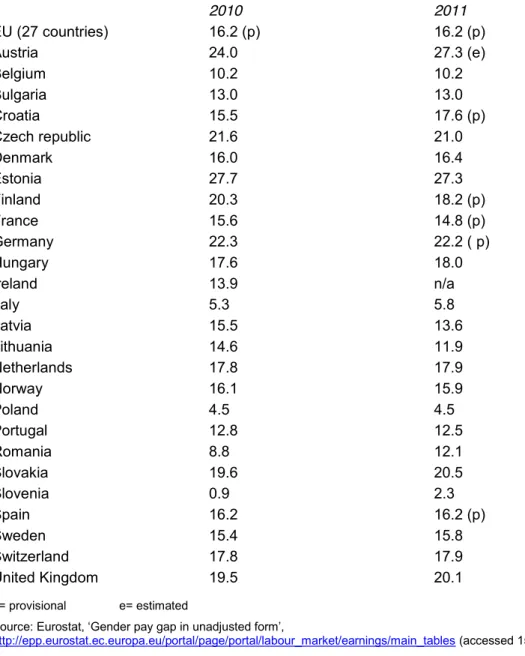
Figure 2.3 Gender pay gap, average gross hourly earnings, selected EU countries Table 4.1 Method relied upon by the Joint Submission to formulate a remedy
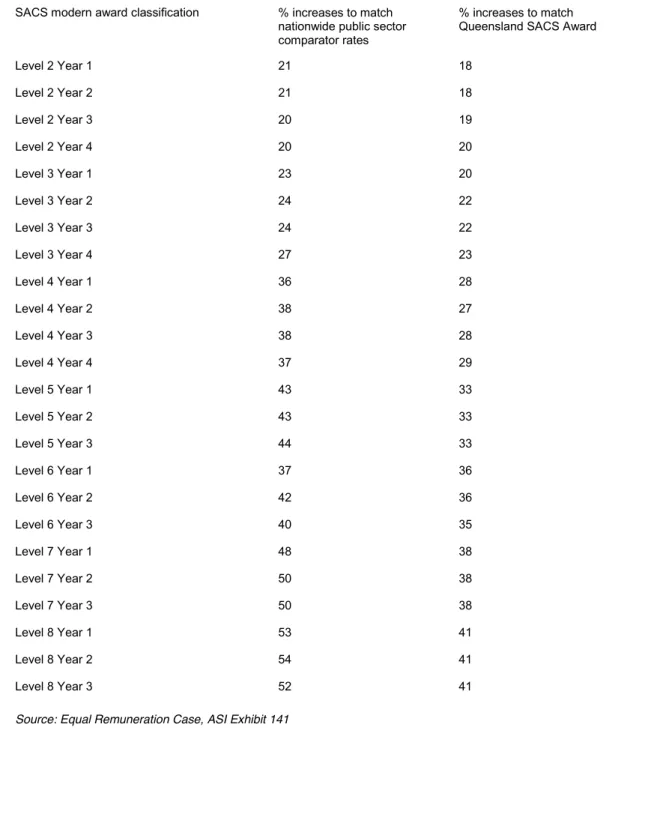
Table 4.2 Comparison between proposed increases based on public sector comparator rates and Queensland SACS Award
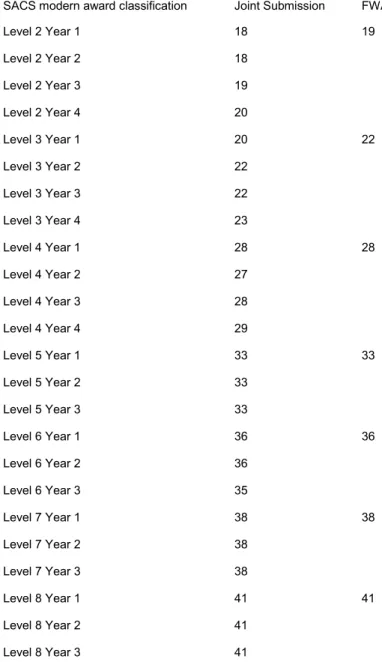
Table 4.3 Comparison between percentage increases sought by Joint Submission and granted by FWA
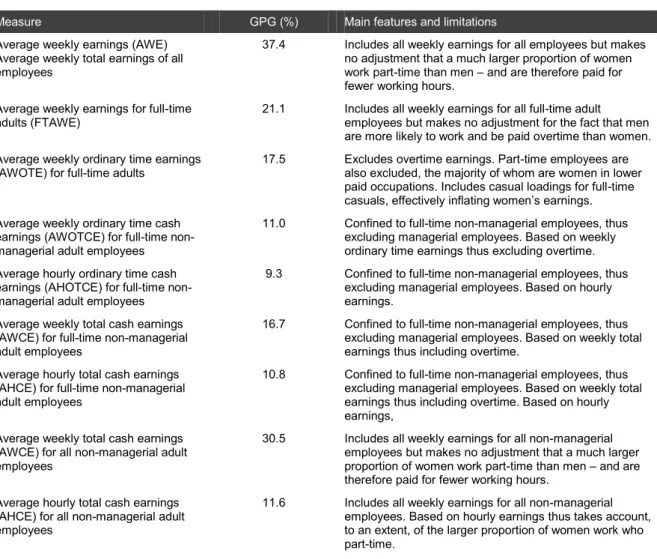
Table 5.1 Measures of pay differentials between females and males from ABS Average Weekly Earnings and Employee Earnings and Hours surveys
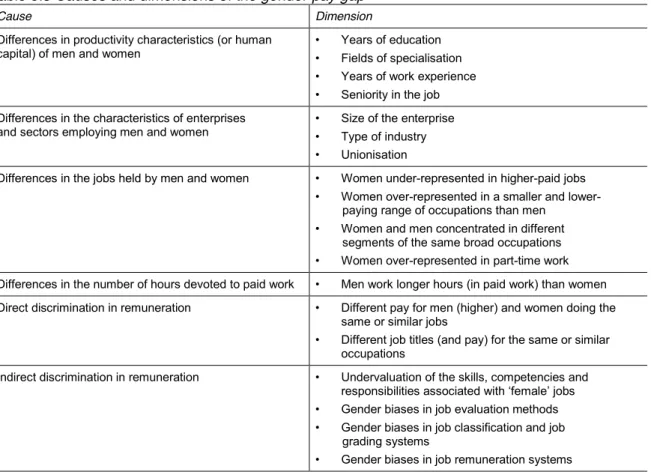
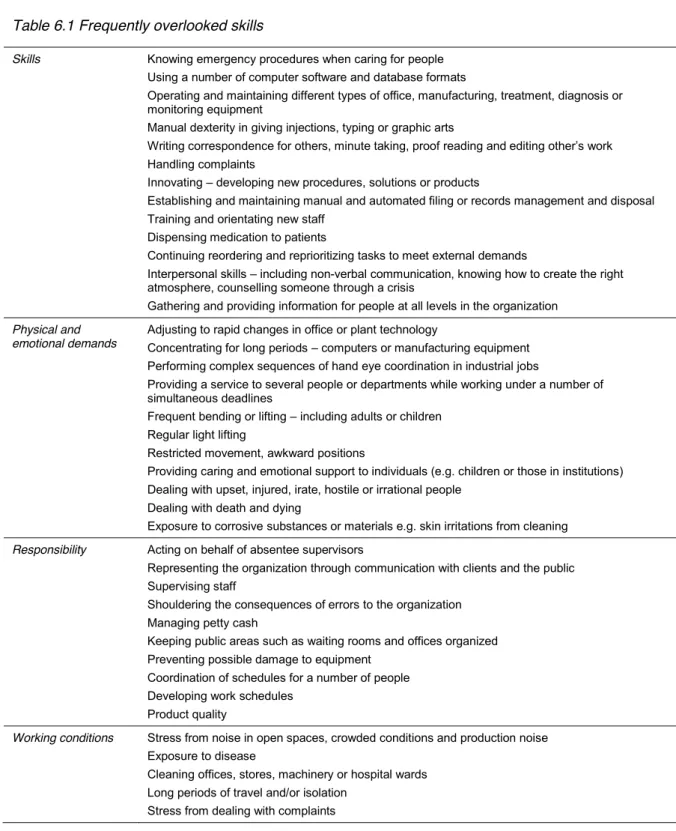
Table 5.2 Differing measures of the gender pay gap Table 5.3 Causes and dimensions of the gender pay gap Table 6.1 Frequently overlooked skills
Table A.1 Significant cases in federal equal remuneration regulation, 1907±2012
Executive Summary
The Pay Equity Unit1 of the Fair Work Commission commissioned this independent report in order to assist parties to proceedings under Part 2-7 of the Fair Work Act 2009 (Cth) (Fair Work Act), which HQDEOHVWKH&RPPLVVLRQWRPDNHDQµHTXDOUHPXQHUDWLRQRUGHU¶WRHQVXUHµHTXDO
UHPXQHUDWLRQIRUPHQDQGZRPHQZRUNHUVIRUZRUNRIHTXDORUFRPSDUDEOHYDOXH¶ for specified employees. It was commissioned to help parties engage in productive discussions with one another, and to inform them about the matters they might be required to address and the type of evidence that might be required in an equal remuneration proceeding. The report was required to build upon ± and indeed it incorporates material from ± an earlier report (Romeyn et al 2011) prepared for what was then Fair Work Australia (FWA).
This report is intended to be a resource that: x explains the background to Part 2-7;
x analyses both Part 2-7 and other relevant provisions in the Fair Work Act; and
x outlines how Part 2-7 was interpreted and applied in the only test case to date, involving the making of an equal remuneration order for the social and community services (SACS) sector. As requested by the Pay Equity Unit, the report is intended to be enriched by a broader discussion of equal remuneration principles, materials, legislation, cases and relevant research, both
internationally as well as at the State and national levels in Australia,WDOVRUHIHUVWRµJRRG practice¶ approaches for equal remuneration matters.
Given that the new jurisdiction is at an early stage of development, these tasks have necessarily required us to form and express opinions as to the possible meaning and effect of the legislation. Both those opinions, and our assessment of what might be regarded as good practice in this area, are based on a careful and rigorous assessment of the legislation, its interpretation in the only major test case to date, and a large body of available literature on possible approaches to the issue of equal remuneration, both in Australia and overseas.
We believe that the analysis we have presented will assist both applicants and respondents in understanding and interpreting Part 2-7 of the Fair Work Act, and the types of evidence that may be used either in support of, or to resist, the making of an equal remuneration order.
Preparation of this report has involved a two-stage process. A draft report was posted on the CommissLRQ¶VZHEVLWHRQ2FWREHU, with interested parties invited to provide written
comments to the Pay Equity Unit by 13 November 2013. The 11 responses received can be viewed RQWKH&RPPLVVLRQ¶VZHEVLWH2
We have made various changes to the report in response to these comments. In some instances we have adopted suggested amendments. In others ± especially where we do not agree with a comment or have not fully accepted a suggestion for change ± we have noted the views of the
1
The Pay Equity Unit is a specialist administrative unit within the Fair Work Commission that undertakes and commissions independent research and provides information about pay equity matters under the Fair Work Act 2009.
2
commenting organisation, referencing its submission. We are grateful to those who took the trouble to respond. In our view their input has significantly improved the final document.
Before going on to summarise what appears in each chapter of the report, we would like to make it clear that the report is the product of independent research and represents the views of its authors, not of the staff or members of the Fair Work Commission.
Chapter 1±Introduction
This chapter introduces the report, outlines its structure, explains our approach to the project and touches on some definitional matters. It also notes the feedback received from stakeholders in response to the draft version of the report released in October 2013 and makes some general comments in response to points raised in a number of the stakeholder submissions.
Chapter 2 ± Equal remuneration: The international picture
This chapter commences by outlining the international labour standards which provide a platform for both legislation and practice in Australia, notably the International Labour Organisation (ILO)
Convention No 100 concerning Equal Remuneration for Men and Women Workers for Work of Equal Value (Equal Remuneration Convention No 100). This Convention requires adherence to the principle of µHTXDOUHPXQHUDWLRQIRUPHQDQGZRPHQZRUNHUVIRUZRUNRIHTXDOYDOXH¶, which is defined by the Convention to PHDQµUates of remuneration established without discrimination based on sex¶.
After referring to the interpretation of the Equal Remuneration Convention, Chapter 2 moves to set RXWVRPHEDVLFLQWHUQDWLRQDOGDWDRQWKHµgender pay gap¶*3*± defined as a ratio that converts average female earnings into a proportion of average male earnings to calculate the pay gap between the sexes. The Chapter then describes and summarises some outcomes of a series of country studies that are set out in detail in Appendix C.
In these studies, we examine legislation and practice in ten countries, all Organisation for Economic Co-operation and Development (OECD) members, selected because of their
comparability to Australia, and because they each demonstrate aspects of what by international standards would be regarded as good practice in relation to the regulation of equal remuneration. These countries are Belgium, Canada, Ireland, Finland, the Netherlands, New Zealand, Norway, Sweden, the United Kingdom and the United States. There is also an analysis of European Union (EU) standards, which set out the requirements for EU countries in terms of achieving equal remuneration. For each country we set out the legislation and some relevant recent case law; provide an overview of the various processes within the country for achieving equal remuneration, including promotional aspects as well as complaint mechanisms; and briefly summarise specific features that are particular to each country.
Chapter 2 summarises lessons learned from the country studies and also highlights aspects of good practice by the selected countries in their endeavours to achieve gender pay equity: x In relation to legislation there is discussion and analysis of the provisions in the various
countries as to:
µZRUNRIHTXDOYDOXH¶ µUHPXQHUDWLRQ¶;
the limitations of gender pay equity being dealt with through the lens of sex discrimination;
the exceptions which are defined in legislation to allow for differences in remuneration which do not breach the international standard;
provisions which reverse the burden of proof in cases so that the entire burden does not lie on the applicant; and
the statutory requirements for employers to provide information about remuneration. x Regarding national policy, reference is made to the proactive approach required by all
member states of the ILO to develop national plans and policies to address the GPG and promote equal remuneration. Similarly, the European Commission as well as the European Parliament has called on all member states to reduce the GPG and encourage social partners to create more gender-equal wage structures. Country examples of such initiatives are described.
x Government institutional supports which have been developed in each of the countries to address gender pay equity show a diversity of approaches. They include the use of ombudsmen, human rights commissions and pay equity commissions which endeavour to mediate and/or resolve complaints without the need to progress to court litigation. The research undertaken indicates an overall decline in the number of cases taken before courts and tribunals, with most cases being resolved by processes such as investigation, mediation and various forms of arbitration through other governmental institutions. Good practice also reveals the use of experts in relation to assessing work of equal value as well as equal remuneration to be applied, to assist the work of courts, tribunals or other government institutional bodies.
x The country studies reveal an increasing trend towards either legislation which requires
employers to undertake pay equity measures, or voluntary self-assessment by employers which is regularly monitored. Depending on the size of the organisation, the pay equity measures may take the form of pay equity plans, audits or annual reports which are regularly monitored and assessed externally by governmental bodies. Good practice examples are discussed, which include references to detailed guidelines developed by government bodies for use of all participants involved in equal remuneration. There is also reference to practice in countries in which there is highly structured centralised collective bargaining and wage setting, but where there is still a requirement for individual enterprises to take and report on pay equity measures.
x The range of requirements on employers to provide information on remuneration present across the countries studied is discussed. Good practice examples are provided. x Drawing on examples across a number of the countries studied, a detailed discussion is
provided about various models for assessing the value of work and in particular, PHWKRGRORJLHVIRUDSSUDLVLQJZRUNRIµHTXDOYDOXH¶ZKLFKDUHXVHGLQWHUQDWLRQDOO\7KH discussion concerns objective appraisals of work and the method for measuring and comparing the relative value of different jobs. It includes a discussion about analytical and non-analytical schemes, recognising that most of the schemes referred to are concerned with single workplaces or organisations. Common analytical schemes are discussed, which include defining and attaching scores to four major factors: skills and qualifications, responsibility, effort and working conditions. Emphasis is placed upon the essential requirement for any
scheme to ensure that the analysis is objective and free from gender bias and, in doing so, to identify hidden or frequently ignored skills of women in feminised jobs. Specific good practices are referred to and in particular whether it is necessary to identify a comparator for the
purpose of assessing whether work is of equal value and thereafter to ensure equal
remuneration. The conclusion on this portion of the review is that good practice is one which provides the most flexible approaches to identifying and remedying gender pay inequity. Such approaches are not limited by requiring male dominated job comparators, or a male
comparator, but may permit a representative comparator, a female comparator or a proxy in the absence of any relevant comparator, or no comparator.
x A final section is on enforcement procedures and remedies which are used in the various jurisdictions. All jurisdictions appear to have a common problem of multiple avenues for redress, making it difficult for complainants to understand which jurisdiction to select. In general the options are largely dependent upon whether a complainant is a union member, whether the claim is for gender discrimination or whether it is a claim for gender pay inequity, the nature of the relief sought, and the time-limits related to the claim.
The overall conclusion of Chapter 2 is that a review such as this provides an important opportunity for Australia to consider where it sits in its approach to tackling the ongoing issue of gender pay inequity. The examples presented in the report may suggest ways forward and inform the
Commission and parties to applications in considering different approaches in addressing evidence and procedures in equal remuneration cases.
Chapter 3±The Fair Work Act
This chapter begins by summarising the historical background to the Fair Work $FW¶VSURYLVLRQV That background is dealt with in more detail in Appendix A, concerning developments in the federal jurisdiction, and Appendix B, which examines approaches at State level. Reference is made, among other matters, to:
x the original practice, within the federal award system, of setting lower minimum rates of pay for women compared to men performing the same work, on the basis that women did not need to support a family;
x the gradual abandonment of that approach and the adoption by the federal industrial tribunal ± most notably in the Equal Pay Cases of 1969 and 1972 ± of the principle of equal pay for equal work;
x the introduction in 1993 of a statutory power for the Australian Industrial Relations
Commission to make orders to ensure equal pay for work of equal value, as defined by the Equal Remuneration Convention ± a power which, although left largely unchanged by the +RZDUG*RYHUQPHQW¶VUHIRUPVRIDQGZDVQHYHUVXFFHVVIXOO\LQYRNHG
x WKHDGRSWLRQLQWKHHDUO\VRIEURDGHUµHTXDOUHPXQHUDWLRQSULQFLSOHV¶(53VE\WKH1HZ South Wales and Queensland Industrial Relations Commissions, in each case in response to detailed pay equity inquiries; and
x the use of those principles to secure wage adjustments in a range of feminised industries (including childcare and community services), until the application of the relevant State legislation in the non-government sector was curtailed by the progressive expansion of the federal system in 2005 and 2009±10.
Key features of the Fair Work Act are then examined. The Fair Work Act addresses the objective of pay equity in two distinct ways. One is through the general provisions for the setting and
adjustment of pay rates through modern awards or national minimum wage orders. Both the µPRGHUQDZDUGVREMHFWLYH¶LQVHFWLRQDQGWKHµPLQLPXPZDJHVREMHFWLYH¶ in section 284 oblige WKH)DLU:RUN&RPPLVVLRQWRWDNHLQWRDFFRXQWµthe principle of equal remuneration for work of HTXDORUFRPSDUDEOHYDOXH¶. Sections 156(3) and 157(2) also allow modern award minimum wages WREHYDULHGIRUµZRUNYDOXHUHDVRQV¶Section 156(4) defines these as µUHDVRQVMXVWLI\LQJWKH amount that employees should be paid for doing a particular kind of work, being reasons related to any of the following: (a) the nature of the work; (b) the level of skill or responsibility involved in doLQJWKHZRUNFWKHFRQGLWLRQVXQGHUZKLFKWKHZRUNLVGRQH
7KHUHKDVEHHQDORQJWUDGLWLRQRIµZRUNYDOXH¶DGMXVWPHQWVWRDZDUGUDWHV+LVWRULFDOO\WULEXQDOV have demanded evidence of some change in the nature of the work, skill and responsibility required or the conditions under which the relevant work is performed, since the last time that the work in question was formally assessed. But it is as yet unclear whether the Fair Work Act provisions will be interpreted as importing that criterion.
The second (and more specific) set of provisions in the Fair Work Act dealing with pay equity are those in Part 2-7. This permits employees, trade unions or the Sex Discrimination Commissioner to apply to the Commission for the making of an order to ensure that, for specified employees, there will be equal remuneration for work of equal or comparable value. Such an order may increase (but not decrease) rates of remuneration for the affected employees, if necessary in stages. A failure by an employer to comply with such an order, which overrides any inconsistent award or agreement, may result in a penalty being imposed or other remedies being awarded by a court under Part 4-1 of the Fair Work Act.
Our analysis of Part 2-7 in Chapter 3 highlights the following points, among others:
x The provisions embody a broader conception of equal remuneration than under the equivalent provisions in the Workplace Relations Act 1996 (WR Act), and before that the Industrial Relations Act 1988. The Fair Work Act not only refers to work of equal or comparable value, but makes no mention of any need to establish discrimination.
x Unlike the position under New South Wales or Queensland law, the Commission is not required to ensure equal remuneration. Although it cannot make an order unless it is satisfied that equal remuneration does not exist for the employees concerned, this is a necessary but not sufficient consideration for the exercise of what is framed as a discretionary power. x In exercising this discretion, the Commission is not constrained by either the modern awards
objective in section 134 or the minimum wages objective in section 284, and need not conceive of an equal remuneration order as being part RIWKHµVDIHW\QHW¶Rf minimum terms and conditions under the Fair Work Act.
x The Commission is, however, obliged by sections 302(4) and 578 to take into account: any determinations made by its Expert Panel (formerly the Minimum Wage Panel) in the annual wage reviews mandated by Part 2-6 of the Fair Work Act;
the overall objects of the statute;
µWKHQHHGWRUHVSHFWDQGYDOXHWKHGLYHUVLW\RIWKHZRUNIRUFHE\KHOSLQJWRSUHYHQWDQG eliminate discrimination on the basis RI>YDULRXVJURXQGVLQFOXGLQJVH[@
x There is nothing in the Fair Work Act that either requires the Commission to formulate an ERP to guide its determinations under Part 2-7, or forbids it from doing so.
x An order under Part 2-7 must be directed to rates of µUHPXQHUDWLRQ¶$OWKRXJKWKLV term is not defined in theFair Work Act, it arguably extends beyond wages to cover any form of reward for services rendered, including non-cash benefits.
Section 721(1) of the Fair Work Act precludes the making of an equal remuneration order if the Commission is satisfied that the employees in question can access DQµDGHTXDWHDOWHUQDWLYH UHPHG\¶WKDWZLOOHQVXUHHTXDOUHPXQHUDWLRQ, under a federal, State or Territory law (including another provision in the Act itself). To constitute an adequate alternative, another cause of action would need to be commensurate in effect to an application for an equal remuneration order. In our view, the capacity to seek the making of an enterprise agreement or the adjustment of award rates of pay for the relevant work would not satisfy that criterion.
Section 724 also precludes the making of an order where proceedings for an µDOWHUQDWLYHUHPHG\¶WR ensure equal remuneration, or against unequal remuneration, have actually been commenced under a federal, State or Territory law and not been discontinued or failed for lack of jurisdiction. Since it is merely an alternative remedy that is relevant here, as opposed to an adequate
alternative, section 724 evidently sets a bar that is lower than that required under section 721. It is arguable, for instance, that an applicant could not simultaneously pursue an application for an equal remuneration order and a work value adjustment under sections 156(3) or 157(2). Chapter 4±The SACS case
The SACS case was initiated by the Australian Services Union (ASU) and four other unions in 2010, to extend the benefit of an equal pay case successfully run under Queensland law.
In May 2011, in Re Equal Remuneration Case,5µER Case No 1¶, a Full Bench of what was then FWA determined that work in the SACS sector was undervalued on a gender basis. But it also sought further submissions as to how this might be remedied, and in particular as to the
extent to which the undervaluation was gender-based. In February 2012 a majority of the Bench accepted a joint ASU-Commonwealth submission that increases of between 19 and 41 per cent should be ordered to the minimum wage rates set by the Social, Community, Home Care and Disability Services Industry Award 2010. There was also a special 4 per cent loading, to recognise impediments to bargaining in the industry: see Re Equal Remuneration Case (2012) 208 IR 4465 µER Case No 2¶. The terms of an equal remuneration order were settled in June 2012: Re Equal Remuneration Case (2012) 223 IR 410. The Award itself was not varied, with the order instead RSHUDWLQJRQDµVWDQGDORQH¶EDVLV. Both the increases and the loading are being phased in over an eight-year period that commenced in December 2012.
Our analysis of the CoPPLVVLRQ¶VUXOLQJVLQWKLVFDVHKLJKOLJKWVWKHIROORZLQJNH\IHDWXUHVRILWV reasoning:
x The Commission declined to issue a formal statement of principles, on the basis that this would be premature and run the risk of limiting the discretion available under Part 2-7.
x There is no requirement under Part 2-7 to demonstrate discrimination as a threshold to an equal remuneration claim.
x Undervaluation was adopted as a key part of the FuOO%HQFK¶VDSSURDFKLQDVVHVVLQJHTXDO remuneration claims.
x There is a requirement to establish that the asserted undervaluation is linked or attributable to gender.
x There is no requirement for applications to reference an explicit male comparator group, although such references may be included.
x 7KHµLQGLFLD¶RIXQGHUYDOXDWLRQGHYHORSHGWKURXJKWKH1HZ6RXWK:DOHVDQG Queensland jurisdictions provide a framework for considering whether there is undervaluation, but do not constitute a prescriptive formula.
x The Full Bench recognised that impediments to bargaining can impede equal remuneration. x &RQVLVWHQWZLWKDSSURDFKHVXWLOLVHGLQWKHSDVWWKH)XOO%HQFKDGRSWHGDµSKDVHG¶DSSURDFKWR
wage adjustments established through the equal remuneration order.
x Additionally, the Full Bench did not indicate that it would depart from its traditional reliance on work value as a means of assessing the value of work.
Chapter 5±Explaining the gender pay gap: A literature review
The µgender pay gap¶ (GPG) has been the subject of intense interest by regulators and researchers alike, both domestically and internationally. A number of factors prompt this interest but key among them is the clear evidence of ongoing gender pay inequity, and the ongoing impact of this inequity RQZRPHQ¶VFXUUHQWDQGOLIHORQJHDUQLQJV7KHUHDUHDQXPEHURIGLIIHUHQWPHDVXUHVRIWKH*3* which vary according to their inclusion of part-time workers, overtime and bonuses, non-adult and managerial earnings, and whether they are based on weekly or hourly earnings. The available data for Australia identifies the current status of the GPG through a series of measures:
x average ordinary time weekly earnings of full-time adult employees ± 17.5 per cent (ABS, May 2013)
x average total weekly earnings of full-time adult employees ± 21.1 per cent (ABS, May 2013) x average total weekly earnings for all employees ± 37.4 per cent (ABS 2013, May 2013) x average hourly ordinary time cash earnings for full-time non-managerial adult employees ± 9.3
per cent (ABS 2013, May 2012), and
x average hourly total cash earnings for full-time non-managerial adult employees ± 10.8 per cent (ABS 2013, May 2012).
A central theme in labour market and gender pay equity research is understanding the factors that contribute to earnings differences between women and men. This is a wide-ranging area of research and includes consideration of factors such as differences in education and labour market experience, occupational segregation, and social, institutional and workplace practices. Previous work in this area has been considered by gender pay equity inquiries and equal remuneration proceedings, often with a view to assessing how work value decisions contribute to earnings differences, and providing information about the characteristics of undervalued work.
We note in Chapter 5 a consistent finding that there is a significant, persistent, µunexplained¶ wage gap between women and men. The findings show that only a small proportion of the GPG can be attributed to differences in the productivity-related characteristics of men and women, such as differences in education and workplace experience. Contributing factors to the GPG identified by the research include the undervaluation of feminised work and skills, differences in the types of jobs held by men and women and the method of setting pay for those jobs, and structures and workplace practices which restrict the employment prospects of workers with family responsibilities. These findings, together with the available industrial case history, indicate that the objective of equal remuneration for men and women workers for work of equal or comparable value poses a series of complex challenges for policy makers, industrial parties, courts and tribunals. Central to this challenge have been the difficulties in addressing and assessing the concept of equal or comparable value, in addition to understanding and accepting how gender has shaped a wide range of intersecting institutional and social processes, such that women are not receiving equal remuneration for work of equal or comparable value.
Chapter 6 ± Proceedings under Part 2-7 of the Fair Work Act: Key issues
In discussing the carriage of proceedings under Part 2-7 of the Fair Work Act, we take as a starting point the principles espoused by FWA in the SACS case, as set out above, while acknowledging that it is open to the Commission to reconsider its approach in future proceedings. We note in particular the importance of the concept of undervaluation in the application of Part 2-7.
Historically, attempts to address issues of gender pay equity, both locally and internationally, have enjoyed only partial success. In relation to Australia, the 1972 principle of equal pay for work of equal value was not applied in full, while the impact of the 1993 equal remuneration legislation was limited by the requirement for applicants to demonstrate that earnings differences were a result of sex discrimination.
These limitations are important to understanding the emergence of undervaluation as an approach utilised by industrial tribunals to hear applications for orders directed towards the objective of equal remuneration for men and women workers for work of equal or comparable value. As a concept, and in contrast to discrimination-based approaches to equal remuneration, undervaluation focuses on the valuation of work in female dominated industries and occupations, so as to determine whether that work has been inappropriately or inadequately valued. A finding of gender based undervaluation may be based on evidence of a failure to recognise or give proper weighting to the characteristics of feminised work. Additionally, other gender-associated factors, either singly or in combination, may have contributed to a lack of (or inadequate) work value assessments, resulting in rates of pay that do not reflect the value of the work.
Key to the emergence of undervaluation, in State proceedings and the federal SACS case, has been the absence of a mandatory requirement for specific comparators, whether male or
otherwise. The absence of this stipulation is linked to the concept of undervaluation, given that this concept does not revert routinely to a male standard. On this reasoning, validating the
XQGHUYDOXDWLRQRIZRPHQ¶VZRUNE\UHIHUHQFHWRDFRPSDUDEOHPDOHJURXSLVLQKHUHQWO\IODZHG EHFDXVHLWFDQQRWEHDVVXPHGWKDWµPDOH¶UDWHVRISD\ZHUHHYHUREMHFWLYHO\VHWE\UHIHUHQFHWR work value in the first place. Male comparators might be used for illustrative purposes but are not an evidentiary precondition. Applicants may choose to use a range of comparisons, including other DUHDVRIIHPLQLVHGZRUNEXWHTXDOO\FRPSDUDWRUVPD\QRWQHFHVVDULO\DVVLVWWKHWULEXQDO¶V
A potential area of contest in equal remuneration proceedings concerns the parameters of gender-based undervaluation: specifically, the evidentiary bar for gender-gender-based undervaluation, and the means through which parties could demonstrate that undervaluation was gendered or had a gender-associated cause. In the federal SACS proceedings, the Full Bench made an initial determination that the work was undervalued on a gender basis, through a series of interlocking conclusions. These were that:
x much of the work is caring work;
x such a characterisation can contribute to devaluing work; x the work was in fact undervalued; and,
x given that caring work has a female characterisation, the undervaluation was gender-based. In its direction as to the framing of any remedy, however, the Full Bench effectively imposed an empirical requirement on the applicants, requiring submissions as to what proportion of the undervaluation could be attributed to gender.
The available research on gender pay equity identifies the complexity of separating gender from a UDQJHRIRWKHUUHLQIRUFLQJDQGLQWHUFRQQHFWHGFRQVLGHUDWLRQVWKDWVKDSHZRPHQ¶VHDUQLQJV Different dimensions of undervaluation can contribute to pay inequity in an additive and cumulative way. The New South Wales and Queensland tribunals have taken the view that the assessment of equal remuneration claims involves balancing a number of considerations, and that it is not always possible to identify the extent of gender-based undervaluation in a forensic manner. This
disinclination by State tribunals to mandate a proportionate identification of gender-based undervaluation is linked to what those tribunals have assessed as a key task, namely assessing the current value of the work in question and ensuring that the minimum rates of pay for it have been properly set.
One of the strengths of the concept of gender-based undervaluation is that it goes to the heart of addressing the institutional and cultural determinants of why women have generally been under-remunerated for their work. The ERPs which have been developed in New South Wales and Queensland articulate important aspects of these determinants, which are acknowledged through DFDGHPLFDQGRWKHUUHVHDUFKWRKDYHOHGWRZRPHQ¶VZork being undervalued and
under-remunerated.
As to the prospect of a federal ERP (or some equivalent framework) being adopted, we believe that notwithstanding the disinclination of FWA to do this in the SACS case, there is no impediment to the Commission choosing to take this path. We note that the development of principles was an DSSURDFKUHOLHGRQE\WKH&RPPLVVLRQ¶VSUHGHFHVVRUVPRVWQRWDEO\LQWKHDUHDRIZDJHIL[LQJEXt also in the area of equal pay. Appropriately formulated, we argue that an ERP could occupy the ground between uncertainty and prescription, guide both the Commission and potential parties, as well as emphasise the importance of the concept of equal remuneration. We consider a principle identifies for applicants and respondents the matters to be addressed in contentions and
submissions and could facilitate the efficient conduct of proceedings. An ERP can also acknowledge factors that have been accepted in previous inquiries and tribunal decisions as shaping the undervaluation of feminised work.
If an ERP were to be adopted by the Commission, our view is that it should provide a clear statement indicating that applications are to be assessed on the basis of historical and
Likewise, such a principle should expressly state that an application need not be underpinned by reference to a male comparator. It should provide guidance on how work is to be assessed, including by setting out a non-exhaustive list of matters that may guide the Commission in its consideration of whether past assessments of the work and its remuneration have been affected by the gender of the workers. Put simply, the ERP should at least suggest the steps required to demonstrate that undervaluation was gendered or had a gender-associated cause. These matters could be identified as a framework rather than as a prescriptive formula and contain appropriate safeguards, including a direction that claims are to be assessed on a case by case basis. In its first decision in the federal SACS case, the Full Bench indicated its concerns about what it WHUPHGDQµLQGLFLD¶DSSURDFKWRGHPRQVWUDWLQJXQGHUYDOXDWLRQ It rejected an approach whereby applications would simply rest on demonstrating that the work featured in the application shared or paralleled the dimensions of undervaluation featured in the Queensland ERP. Nevertheless, what the Full Bench described as DµIUDPHZRUN¶IRUXQGHUYDOXDWLRQUDWKHUWKDQDµSUHVFULSWLYHIRUPXOD¶ may still be a basis for any potential principle. Indeed the Full Bench clearly relied on some of the dimensions outlined in the Queensland ERP to reach a view that the work in the SACS industry was undervalued on a gender basis. Finally the principle should contain clarity about its reliance on the construct of work value, in addition to other relevant work value features as a means of
assessing the value of work. The principle should also underpin the importance of gender-neutral determinations of work value in ensuring that rates of pay are properly set. In Australia, work value has been and should continue to be the method relied upon by industrial tribunals. Work value determinations made by tribunals may also be informed by external and internal assessments of job value. The clear objective is that the assessment of work value addresses, without gender bias, all factors relevant to the work.
In Chapter 6 we consider also the type of evidence that may be germane to equal remuneration proceedings. Evidence in these proceedings will rarely be considered in isolation but is likely to be considered in a cumulative way, consistent with the multiple, reinforcing and intersecting factors that impact on the GPG and that shape earnings.
Compilation of an award history provides a foundation for reviewing the assessment of work value for the relevant areas of work and may also involve the construction of timelines on the movement of rates for key classifications. Ideally the history should include an account of the timing and scope of any work value assessments made by previous industrial tribunals. If there were work value assessments, it should be indicated what classifications were involved, what criteria were applied, what evidence was considered, and what were the key outcomes. A further consideration includes the use, if any, of benchmark relativities. It may be the case that there has been an absence of work value assessments. Equally, those assessments that were conducted may not have assessed the value of the work correctly, and the work may have been inadequately or incorrectly described. Alternatively, parties may rely on evidence which indicates that work value assessments already undertaken have assessed the value of the work correctly.
It is open also to the parties to compile material that may inform the assessments of the value of the work, including whether it is undervalued, or alternatively, valued correctly. This evidence may supplement or complement the work that is prepared as part of the award history. It may include: x Witness statements, or material that assists to identify all the components of work that is
include attention to components of work value ± the skills and knowledge required to complete the work and the conditions under which it is performed.
x Material to support a contention that there has been a change in work value, for example in the form of altered compliance or regulatory requirements, that is not presently recognised in classification descriptions.
It is open also to the parties to present the results of objective assessments of indicative work that falls within the application. These assessments may be sourced from independent job assessment experts. There are newly developed resources available to the parties to assess whether previous job evaluations and any resultant grading that they rely upon are free from gender-bias. These include but are not limited to the Gender-inclusive Job Evaluation and Grading Standard developed by Standards Australia, and a skill recognition tool, Spotlight, which was developed by the New Zealand Department of Labour and has also been taken up in Australia.
3DUWLHVPD\FRPSLOHODERXUPDUNHWSURILOHDQGHDUQLQJVGDWDWRDVVLVWWKH&RPPLVVLRQ¶V
understanding of the relevant sector or occupation. As an example, occupational and industry data
disaggregated by gender may provide some guidance on employment patterns. This may include the degree to which relevant occupations are either feminised or masculinised, in addition to patterns of vertical and horizontal segregation by gender within the occupation or industry, and patterns of full-time and part-time employment. Wage patterns and methods of pay setting
disaggregated by gender may provide some guidance on the degree of award reliance, and the extent of enterprise bargaining for those areas of work that fall within the application. It is open to the parties to bring forward additional evidence, including from labour economic studies, with a view to drawing conclusions about the factors that contribute to the gender wage gap, and submitting that the portents of undervaluation are in evidence or not evident. This material may also draw on material concerning wage patterns and methods of wage setting in addition to occupational and industry data. It should be noted, however, that these studies frequently rely on aggregate data sets that, in all probability, will not parallel the scope and incidence of the award or agreement cited in the application for equal remuneration orders.
In applications for equal remuneration orders that are confined to a single workplace or
organisation, it is likely that evidence similar to that outlined for award based applications will be presented, but localised to the particular organisation or workplace. In this instance it may be possible ± subject to privacy and confidentiality restrictions ± to utilise material submitted by the organisation to the Workforce Gender Equality Agency (WGEA) pursuant to the reporting
requirements in the Workplace Gender Equality Act 2012. Such material may include an analysis of earnings that provides a level and breakdown of different components of wages (base pay, over-award or over-agreement pay, bonuses and so on), by factors including occupation, gender and hours of work.
In conclusion, we would stress that addressing and resolving matters of gender-based
undervaluation, within the framework of the Fair Work Act, is neither automatic nor straightforward. We acknowledge it is entirely open to the Commission to determine an interpretation of Part 2-7 other than the one we have advanced. But we hope that the data and analysis presented in this report may inform parties to future proceedings about frameworks (be they an ERP or otherwise) which could lay down clear markers for the task of establishing (or refuting) gender based undervaluation.
1 Introduction
The issue of whether male and female workers should be accorded equal remuneration is one that has engaged the attention of Australian regulators for at least a century. It is the subject of
international labour standards that, since 1993, have been formally enshrined in federal labour law. It has generated important test cases in both the federal and State industrial tribunals. It is also DGGUHVVHGLQYDULRXVVHFWLRQVRIZKDWLVQRZ$XVWUDOLD¶VPDLQODERXUVWDWXWHWKHFair Work Act 2009 (Cth) (Fair Work Act), most obviously in Part 2-7. This authorises the Fair Work Commission (Commission) WRPDNHRUGHUVHQVXULQJµHTXDOUHPXQHUDWLRQIRUPHQDQGZRPHQZRUNHUVIRUZRUN RIHTXDORUFRPSDUDEOHYDOXH
To date, this power has been exercised in one major case, involving the social and community services (SACS) sector.3 But it is clear from other applications lodged under Part 2-7 that the Commission will be called upon to address the question of equal remuneration in other industries and occupations, and possibly too in relation to particular workplaces. The next major test of the provisions is likely to come with the determination of applications lodged by various unions in relation to certain workers in the childcare industry.4
1.1
Purpose and scope of the report
In July 2013 the Commission¶V3D\(TXLW\8QLWHQJDJHGXVWRSUHSDUHDUHVHDUFKUHSRUWWKDW would:
x assist parties to equal remuneration proceedings under Part 2-7 to engage in productive discussion and work towards greater consensus in relation to the proceedings; and
x inform potential parties about the matters they might be required to address and the type of evidence they might be required to bring as part of an equal remuneration proceeding. The terms of reference for the report also required it to include:
x a discussion of Part 2-7;
x an overview of matters that an application for an equal remuneration order and/or associated submissions might address to satisfy the requirements of Part 2-7;
x an overview and discussion of supporting information or evidence which would be useful to inform equal remuneration proceedings;
x a discussion of any equal remuneration materials, legislation, cases and relevant research which might be useful in relation to Part 2-7, including:
approaches to equal remuneration matters in other jurisdictions, including both internationally and at the State and national level in Australia;
relevant legislation;
decisions of courts and tribunals dealing with equal remuneration or related issues;
3
See Re Equal Remuneration Case (2011) 208 IR 345; Re Equal Remuneration Case (2012) 208 IR 446; Re Equal Remuneration Case,57KHVHGHFLVLRQVDUHFROOHFWLYHO\UHIHUUHGWRDVµWKHSACS case¶LQWKLVUHSRUW
4
For details of this matter, see http://www.fwc.gov.au/index.cfm?pagename=caeremuneration&page=introduction
submissions to and reports of inquiries into equal remuneration by governments or other bodies;
data sources that could be used to inform equal remuneration proceedings; published research on equal remuneration;
µbest practice¶ approaches for equal remuneration matters; and any other relevant material.
In meeting these objectives, we considered that it was vital to understand the international labour standards which provide a platform for both legislation and practice in Australia. These standards are set out in various international instruments, but in particular the International Labour
Organisation (ILO) Convention No 100 concerning Equal Remuneration for Men and Women Workers for Work of Equal Value (1951). We have also had regard to approaches taken in other countries with regard to legislation and processes for achieving equal remuneration. We have been especially interested in the way in which equal remuneration for work of equal value is assessed under different country systems. Our research in this area has helped us to amplify the scope of international labour standards, as well as to identify what in international terms may be considered µJRRG practice¶ approaches to tackling equal remuneration and the universal dilemma of the µJHQGHUSD\JDS¶ (GPG).
In order to describe and analyse the regulatory framework under the Fair Work Act, as required by our terms of reference, we have focused on the new Part 2-7, as well as the provisions in sections 721 and 724 dealing with alternative remedies. Other sections requiring analysis have included WKRVHGHDOLQJZLWKWKHµPRGHUQDZDUGVREMHFWLYH¶VHFWLRQWKHµPLQLPXPZDJHVREMHFWLYH¶ (section 284) and the requirements for work value adjustments to modern award minimum wages (sections 156 and 157).
The process of analysing this regime has inevitably required us to express opinions as to the meaning of what are novel statutory provisions. In that regard we have, unsurprisingly, devoted considerable attention to the decision by Fair Work Australia (FWA), as the Fair Work Commission was then known,5 in the SACS case ± the only instance to date in which Part 2-7 has been
considered and applied. Our aim has been to identify issues arising in the conduct of that case, and in the decision making process, which might be relevant to the Commission and the parties when addressing equal remuneration issues in future cases. The fact that the case ultimately revealed a significant division of opinion among members of the Full Bench, as explained in Chapter 4, underscores the potential for disparate interpretations in this area.
In order to fully appreciate the decision in the SACS case, as well as the interpretation and effect of the current federal regulatory framework, an understanding of past legislation and case law is essential. That extends to the decisions of industrial tribunals within the State system, which for reasons we will explain form an important part of the background to the present federal provisions. We have also sought in this report to identify and explain analyses of the GPG ± defined here as a ratio that converts average female earnings into a proportion of average male earnings to calculate the pay gap between the sexes. The persistent nature of the GPG both nationally and
internationally is well-established. Less clear cut is agreement on the contributory and underlying
5
factors for that gap. This and associated matters have been the subject in Australia of various inquiries by parliamentary committees and industrial tribunals. The discipline of labour economics RIIHUVFRPSHWLQJDQDO\VHVRIWKHVFRSHDQGQDWXUHRIZRPHQ¶VZDJHGLVDGYDQWDJHEXWWKHUHLV widespread agreement that women, relative to men, do not receive wages consistent with their education and labour market experience. The available research, which we summarise in the report, offers some insights about the factors that contribute to this disadvantage ± insights that can potentially assist the parties to equal remuneration proceedings.
Finally, we have endeavoured to provide an information base which can be drawn upon by the various actors and participants involved in equal remuneration proceedings, to better inform them about a very complex and continually developing area of labour law and industrial practice. We believe that the analysis we have presented will assist both applicants and respondents in understanding and interpreting Part 2-7 of the Fair Work Act, and the types of evidence that may be used either in support of, or to resist, the making of an equal remuneration order.
1.2
Structure of the report
Of the many ways in which this report could have been structured, we have chosen to follow a pathway of:
x setting the global scene, by describing the international labour standards on equal
remuneration, providing international data on the GPG and summarising key elements of the approaches taken in selected overseas jurisdictions (Chapter 2);
x analysing the treatment of equal remuneration under the Fair Work Act (Chapter 3); x outlining the SACS case and explaining the various decisions given by FWA (Chapter 4); x reviewing available literature on how the GPG might be explained and assessed (Chapter 5);
and
x drawing on the research we have undertaken for the above purposes, outlining approaches which might usefully guide the conduct of future proceedings under Part 2-7 of the Fair Work Act (Chapter 6).
The report also includes three substantial appendices. The first two detail the development of equal remuneration regulation at the federal level (Appendix A) and under the State industrial systems (Appendix B). The third, Appendix C, provides an overview of the approaches taken in the
European Union and ten selected countries ± Belgium, Canada, Ireland, Finland, the Netherlands, New Zealand, Norway, Sweden, the United Kingdom and the United States.
1.3
Terminology
The laws, decisions and literature that we have reviewed for the purpose of this report utilise a range of differeQWWHUPVWRGHVFULEHWKHREMHFWLYHRIUHJXODWLRQLQWKLVDUHDLQFOXGLQJµHTXDO UHPXQHUDWLRQ¶µJHQGHUSD\HTXLW\¶µSD\HTXLW\¶DQGµHTXDOSD\¶)UHTXHQWO\WKHVHDUHXVHG interchangeably. A variety of similar terms ±µSD\LQHTXLW\¶µJHQGHUSD\LQHTXLW\¶µXQHTXDOSD\¶± are likewise used where the objective of equal remuneration for men and women workers is not met.
The diverse use of such terms cannot be homogenised, but it is possible to set out some key understandings that inform the choice of language in this report. For the most part, we use the term
equal remuneration, most obviously because it is the phrase adopted in the Fair Work legislation. Where we speak of gender pay equity, we are generally using that term to describe an objective ± that being equality in remuneration between men and women in the paid workforce. This can be extended to all forms of remuneration, and includes equality of access to all forms of remuneration. $VDFOHDUH[DPSOHWKH,/2GHILQHVUHPXQHUDWLRQWRLQFOXGHµWKHRUGLnary, basic or minimum wage or salary and any additional emoluments whatsoever payable, directly or indirectly, whether in cash or in kind by the employer to the worker and arising out of WKHZRUNHU¶VHPSOR\PHQW¶VHHVHFWLRQ 2.2.2. The foundation provided by ILO standards on equal remuneration is detailed further in the next chapter.
In practice, the goal of gender pay equity can be conceived in various ways. At its broadest, it can encompass regulatory and policy approaches that seek to ensure equal access to all forms of employment and remuneration, not just equality in remuneration as such. But it is the latter objective that is explicitly adopted in the Fair Work Act. The Act seeks to ensure that where men and women workers perform work of equal or comparable value, it should be remunerated equally. Gender pay equity is thus achieved where people are rewarded equally for their work, irrespective of whether they are men or women. There have been difficulties, historically and currently, in applying this IUDPHZRUNSDUWLFXODUO\DVWRKRZWKHFULWHULDRIµHTXDOYDOXH¶RUµHTXDORUFRPSDUDEOH YDOXH¶DUHDVVHVVHGDQGZKHUHUHOHYDQWUHPHGLHG7KHVHLVVXHVDUHDGGUHVVHGLQ&KDSWHUVDQG 4, as well as in Appendices A and B.
$VIRUWKHWHUPVµHPSOR\HHV¶DQGµZRUNHUV¶WKHVHDUHJHQHUDOO\XVHGLQWHUFKDQJHDEO\WKURXJKRXW WKHUHSRUW6WULFWO\VSHDNLQJµHPSOR\HHV¶DUHRIWHQXQGHUVWRRGIRUOHJDOSXUSRVHVWRPHDQWKRVH ZKRZRUNIRUVRPHRQHHOVH¶VEXVLQHVVRURUJDQLVDWLRQXQGHUDFRQWUDFWRIHPSOR\PHQWZKHUHDV the tHUPµZRUNHUV¶FDQDOVRFRPSUHKHQGWKRVHZKRDJUHHWRSURYLGHWKHLUODERXURQVRPHRWKHU basis, for instance as independent contractors or as volunteers. As we explain in Chapter 3, Part 2-7 of the Fair Work Act is for the most part applicable only to employees in the narrow sense. Hence our focus throughout the report is primarily on the question of equal remuneration for male and female employees1HYHUWKHOHVVZHRIWHQXVHWKHWHUPµZRUNHUV¶DVDV\QRQ\PIRUHPSOR\HHV partly for variety, but partly also because it is the term actually used in relevant legislation or case law.
1.4
Preparation of the report and feedback from stakeholders
Preparation of this report has followed a two-stage process. A draft report was posted on the &RPPLVVLRQ¶VZHEVLWHRQOctober 2013, with interested parties invited to provide written comments to the Pay Equity Unit by 13 November 2013. Parties were advised that all comments, including the names of persons or organisations providing them, were to be published on the CommisVLRQ¶VZHEVLWH
A total of 11 comments or submissions were received, from the following organisations:6 x Australian Business Lawyers & Advisors, on behalf of the Australian Chamber of Commerce
and Industry (ACCI), Australian Business Industrial (ABI) and the Tasmanian Chamber of Commerce and Industry;
x Australian Federation of Employers and Industries (AFEI);
6
x Australian Industry Group (Ai Group); x Australian Institute of Employment Rights; x Business SA;
x Centre for Work + Life, University of South Australia (Associate Professor Sara Charlesworth and Fiona Macdonald);
x Chamber of Commerce and Industry of Western Australia;
x Livingstones (on behalf of a number of clients in the childcare industry); x Local Government NSW;
x SafeWork SA; and
x Workplace Gender Equality Agency (WGEA).
Seven of the submissions came from employer organisations or other bodies representing employers, two from government agencies, and two from independent researchers or advocates. We note that no responses were received from trade unions or other worker organisations. We have made various changes to the report in response to these comments. In some instances we have adopted suggested amendments. In others ± especially where we do not agree with a comment or have not fully accepted a suggestion for change ± we have noted the views of the commenting organisation, referencing its submission.
A number of comments on the draft report appear to reveal a degree of confusion about the nature and purposes of the project that led to this report. There are therefore three specific points which we feel it necessary to emphasise.
The first concerns authorship. 9DULRXVFRPPHQWVVSHDNRIWKHUHSRUWDVEHLQJµby¶ the Pay Equity Unit, or more broadly the Commission. We strongly emphasise that the report is the product of independent research, and represents the views of its authors alone. It is work that has been commissioned and published by the Commission, but it is not in any sense work by the Commission or its Pay Equity Unit.
The second matter concerns the relationship of our project to the childcare industry proceedings that, as noted in the introduction to this chapter, have recently been initiated. The existence of the project may have been publicised after those proceedings commenced, but the project was conceived and development was already under way before the childcare claim was lodged. The report was (and still is) intended to operate as a general resource for those interested in the operation of Part 2-7 of the Fair Work Act.
Thirdly, we have not in our view travelled beyond our terms of reference, but instead appropriately responded to them. We were asked, as independent researchers and analysts, to present a view as to the interpretation and application of Part 2-7 and, as well, to suggest µbest practice
approaches for equal remuneration matters. Given that the new jurisdiction is at an early stage of development, these tasks have necessarily required us to form and express opinions, as noted earlier in this chapter. Those opinions are firmly based on a careful and rigorous assessment of the legislation, its interpretation in the SACS case and a large body of available literature on possible approaches to the issue of equal remuneration, both in Australia and overseas.
All that said, we acknowledge that many valuable points were made by stakeholders in response to our draft report. We record our gratitude to those who took the trouble to respond. In our view their input has significantly improved the final document.
1.5
Acknowledgments
In preparing this report we have drawn heavily on ± and indeed reproduced material from ± an earlier research report on equal remuneration principles prepared for what was then FWA (Romeyn et al 2011). We are grateful to the Commission (and to the authors) for permission to use this resource, with appropriate attribution in the relevant parts of the text. We would also like to thank the staff of the Commission¶V3D\(TXLW\8QLWZKRSURYLGHGVXSSRUWDQGDVVLVWDQFHLQUHODWLRQWR the project, in particular Shannon-Kate Archer, Mike Preston and Kim Rusling.
That said, and as noted in section 1.4, the findings and views that appear in this report should not be attributed to the Commission or its Pay Equity Unit. As authors, we take full responsibility for the content of this publication. We do, however, repeat the thanks expressed in section 1.4 to those organisations that commented on the draft report published in October 2013.
This project was organised through the University of Adelaide, and we wish to thank the staff of both the Adelaide Law School and Adelaide Research and Innovation for their help in making it happen. In particular, we want to acknowledge our gratitude to Hannah Hannaford Gunn and Henry Winter for their efficient and helpful research assistance, and to Renee Hakendorf for the cover design.
2 Equal remuneration: The international picture
This Chapter takes a global view of the treatment of equal remuneration, focusing on three aspects. The first involves the international labour standards concerning equal remuneration. We discuss their relevance, interpretation and application, looking first at instruments promulgated by the United Nations (UN) and then in more detail at those of ILO. The second concerns the
international approaches that have been used to ascertain whether the goal of equal remuneration has been achieved in different countries, by reference to the concept of the GPG. Understanding the key concepts and different forms of data gathering are important when considering the various ways of assessing the GPG, as well as the way in which it is used ± a subject to which we return in more detail in Chapter 6. Thirdly, we look at some of the lessons to be learnt from a review of how equal remuneration is addressed in ten different countries around the world.
2.1
United Nations instruments
2.1.1
Universal Declaration of Human Rights
The 1948 Universal Declaration of Human Rights (UDHR) sets out the basic rights and freedoms to which all women and men are entitled. It seeks to establish a common international standard by which fu