Some Thoughts on Climate Change and Software Engineering Research
Lin Liu1, He Zhang1, Sheikh Iqbal Ahamed2
1
School of Software, Tsinghua University, Beijing, China
2
Department of Mathematics, Statistics and Computer Science, Marquette University, WI, U.S.A.
We are all aware of the fact that Climate Change has become one of the most pressing global issues today. In China, a white paper titled “Environment Protection in China 1996-2006” was published in 2006 by the Chinese government, regarding environment protection and achieving sustainable development as a major task for the future development of the nation. The following white paper “China's Policies and Actions for Addressing Climate Change” published in 2008, gives some more detailed information of how the Chinese government is dealing with the climate change problem. In order to achieve the goal of sustainable
development, China has invested nearly 1 trillion RMB (143 Billion U.S. dollar) over the past 10 years on the environment related issues.
By Intuition, it is hard to find a direct link between software engineering and climate change, as the software is more about the symbolic virtualized world while the environment related issues are more about the natural physical world. However, just like all other complicated problems, climate change problem also needs powerful software systems to enable researchers better understanding the issue, and to provide systematic, intelligent, effective information services and decision supports for the governments, enterprises and individual citizens to better manage their daily operation, behavior and working processes. On the other hand, low carbon emission and environment friendliness themselves have also become one of the most
commonly mentioned non-functional requirements for building IT systems.
From a software engineer’s point of view, there are at least three issues that we could contribute to, listed as following:
Issue 1: The management of inter-domain knowledge
Take Tsinghua University as an example, domain experts working on climate
change/sustainable development related areas are now affiliated with different departments, such as Department of Environment Science and Engineering, Institute of Architecture, Law School, Department of Material Sciences, Nuclear Energy Research Institute, Department of Civil Engineering, etc. This clearly reflects the cross-disciplinary nature of environment protection as a research area.
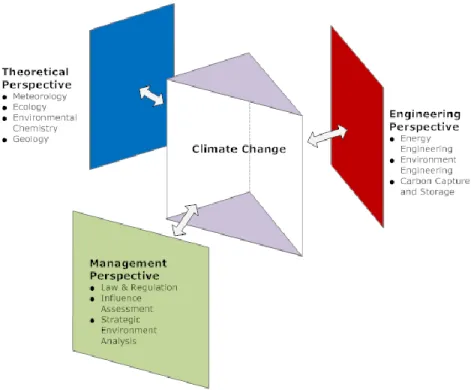
Figure 1. Different Perspectives on Climate Change
Figure 1 shows the domain experts’ three basic perspectives towards the climate change problem. Because of the experts all have unique knowledge background and their own ways of the analyzing the problem, it is sometimes difficult for the experts to share knowledge and collaborate with others.
Based on the example shown in Figure 2, we could see a graphical representation of the domain experts’ knowledge could help the domain experts to find the topics that they are both interested in. A more detailed knowledge map could also be helpful for the experts in different domains to fast learn about the related knowledge in different domains, and therefore
accelerate the process of cooperation on certain problems.
In short, a good way of expressing and managing inter-domain knowledge can encourage and facilitate the accumulation, communication and exchange of environment knowledge. And by synergize the knowledge models of different domain experts, it will help the general public better understand the causal relationships and influence propagation paths among different factors.
Issue 2: A Green Software Infrastructure
Nowadays, new environment related software products emerge on daily basis. According to the latest statistics and report from “Environment Modeling and Software” Journal in 2009, there are six prominent categories of software product in existence: Geographical Information Systems (GIS); Decision Support Systems (DSS); Data Modeling and Statistics Software; Data Acquisition Software; Data Integration or Fusion Software and Web Information Systems. The number of software releases and research publications in this area is growing linearly since 2000.
Although the number of environment related software products increased dramatically during the past few years, most of these software products are designed for the environment engineers and research institutions exclusively. But for the majority of non-professionals, there are not many choices for them when choosing environment software.
Figure 3 Different User Groups' Requirements for the Climate Change related Software Products In order to help the non-professionals making small contributions to solve the climate change problem in their daily life, we divide the users into three different user groups. The green software infrastructure can give different treatment according to the specific needs of the user group and form an integrated network.
a) To Enterprises: Decision support facilities and services for enterprise
In essence, the emphasis of this item is to fit the climate change related factors into the already existed enterprise decision support systems, so that the enterprise can put environment friendliness into consideration while making important business decisions.
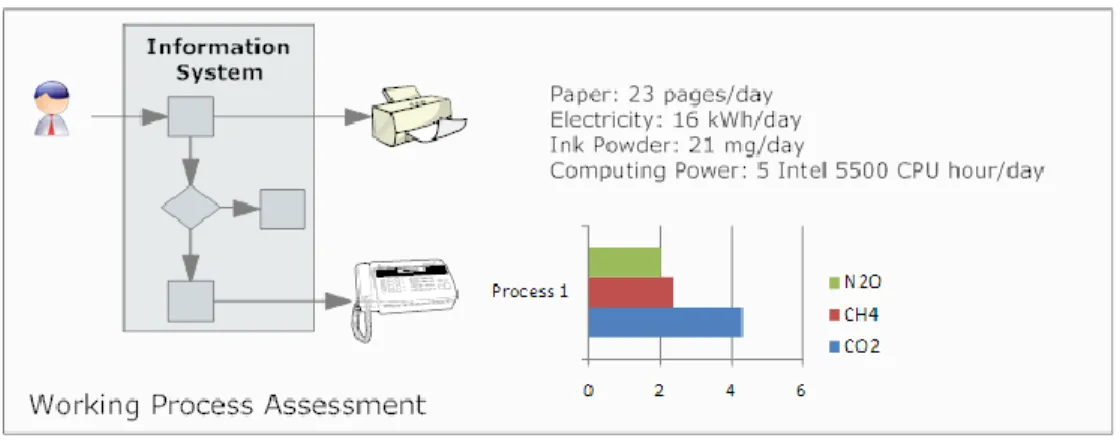
Figure 4 Decision Support System for Enterprise
To calculate the environmental footprint of an enterprise based on its
manufacturing process is not a new idea. There are quite a few software companies making life cycle assessment software (LCA) products according to the ISO 14040 standard which could calculate the enterprise’s Carbon footprints and GHG emissions based on the manufacturing processes. But from the enterprise’s aspect, when it comes to decision making, it is more helpful to integrate the environment related factors with the other factors and gives a holistic view of the problem. Figure 4 shows how a decision support system can contribute to enterprise’s decision making process.
b) To individual public: Ecological/Carbon balance calculator build on a conceptual framework
Essentially, this task focuses on establishing a set of flexible human-environment interaction models, which could be used to estimate the individual user’s impact to the environment. The result could be used to match the relevant knowledge and
suggestions in the knowledge base, and therefore, facilitate knowledge sharing among individual users who share similar behaviors.
Different from the already existed carbon footprint calculators, the system could use the built-in sensors in the portable devices as a basic source of input, thus to help the user keep track of his/her own carbon footprint with minimum effort as possible. The goal of the task, in the long run, is to building up a new media for environment education.
Figure 6 Example of a Carbon Calculator for Individual Users based on Conceptual Framework c) To the government: Green government
This task explores how to facilitate the regular government administrative to make better decisions related to climate change. Software systems can help the Figure 7 Real Time GHG Emission Monitoring and Decision Support System for Government Users
government to make better decisions in two ways: use sensors to monitor the real-world greenhouse gas emissions, and to study the new regulation draft’s effect on individual and enterprises based on the real time data collected from the individual
and enterprise volunteers.
Issue 3: Software Engineering for Climate Change
There are many environment experts who have developed environment software applications. At the mean time, there are also computer scientists and software practitioners well-motivated to join environment-related researches and development projects. However, it still takes great efforts for the two parties to sit together and to search for a proper synergy to work together. Just like what we mentioned in the first issue, experts from different domains all have their own way of understanding and analyzing the same problem. In the environment experts’ understanding, software is usually regarded as a tool that facilitates environment related computation and information management, it should focuses more on how to manage and control of specific segments of the environment ecology life cycle. To computer scientists, however, environment protection and climate change related problems could be considered as a unique application domain or a cross cutting domain, like security, which could imposes new non-functional requirements to the system design, and requires new paradigms.
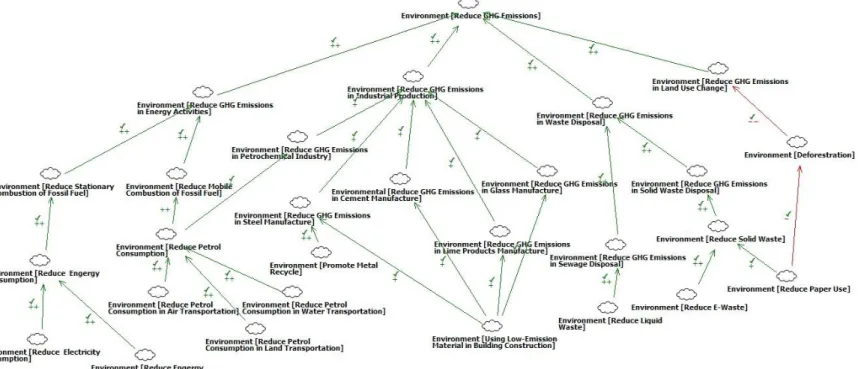
Figure 8 represents our understanding of the IT related climate change problems, shown as a group of inter-related soft goals. We believe that software engineering for climate change should take environment as a set of first-class non-functional requirements, in supplement to
the classic business objectives and concrete application scenarios. In order to make better handle these climate change non-functional requirements, we should provide: a set of
workflows which include systematic analysis and design streamline of the climate change NFRs; a set of models and techniques which could support rich simulation, prediction, planning, integration and management of the climate change NFRs; and eventually, establish a set of quantitative analysis procedures for representing how environment related resources and factors interact, interfere, and influence with each other.
Reference:
1. Steve Easterbrook, Tim Johns, "Engineering the Software for Understanding Climate Change," Computing in Science and Engineering, 26 Aug. 2009.
2. IPCC, “Climate Change 2007: The Physical Science Basis”, IPCC, 2007.
3. Bofeng Cai, Chunlan Liu, Caocao Chen, “City’s Greenhouse Gas (GHG) Emission Inventory Research”, ISBN: 978-7-122-05682-5, Chemical Industry Press, China, 2009
4. “Environment Protection in China 1996-2006”, Chinese Government White Paper, 2006 5. “China's Policies and Actions for Addressing Climate Change”, Chinese Government White