Slides for Chapter 10:
Peer-to-Peer Systems
From
Coulouris, Dollimore and Kindberg
Distributed Systems:
Concepts and Design
Figure 10.1: Distinctions between IP and overlay routing for peer-to-peer
applications
IP
Application-level routing over lay
Scale
IPv4 is limited to 232 addressable nodes. The
IPv6 name space is much more generous
(2128), but addresses in both versions are
hierarchically structured a nd much of the space
is pre-allocated accordi ng to administrative
requirements.
Peer-to-peer systems can address more objects.
The GUID name space is very large and flat
(>2128), allowing it to be much more fully
occupied.
Load balancing
Loads on routers are determin ed by network
topology and associated traffic patterns.
Object locations can be ra ndomized and hence
traffic patterns are divorced from the network
topology.
Network dynamics
(addition/deletion of
objects/nodes)
IP routing tables are updated asy nchronously on
a best-efforts basis with time constants on the
order of 1 hour.
Routing tables can be u pdated synchronously or
asynch ronously with fractions of a second
delays.
Fault tolerance
Redundancy is designed into the IP network by
its managers, ensuring toleran ce of a single
router or network co nnectivity failure.
n
-fold
replication is costly.
Routes and object refer ences can be replicated
n
-fold, ensuring toleran ce of
n
failures of nodes
or connections.
Target identification
Each IP address maps to exactly one target
node.
Messages can be rout ed to the nearest replica of
a target object.
Security and anonymity
Addressing is only secu re when all nodes are
trusted. Anonymity for the owners of addresses
is not achievable.
Security can be achiev ed even in environments
with limited trust. A limited degree of
Napter
T
Serviço de armazenamento e recuperação de informações
T
Compartilhamento de músicas
T
Objetivo: download de arquivos de música digital
T
Usuários fornecem arquivos
T
Usa índices centralizados e replicados
S
Indices mantém endereços de rede dos hosts
S
Consistência entre réplicas não é garantida
T
Projeto considera caráter local da rede – número de passos
entre cliente e servidor
Características especiais
T
Aplicação:
S
Arquivos de música nunca são atualizados
S
Não é exigida garantia de disponibilidade
T
Segurança:
S
Mecanismos de comunicação favorece anonimato
S
Arquivos cifrados podem conter informações sigilosas ou
proibidas e provedor pode alegar desconhecimento
S
Roteamento de requisições e resposta pode ocultar a
fonte (caminho tortuoso)
S
Conteúdo de arquivos podem ser distribuídos em vários
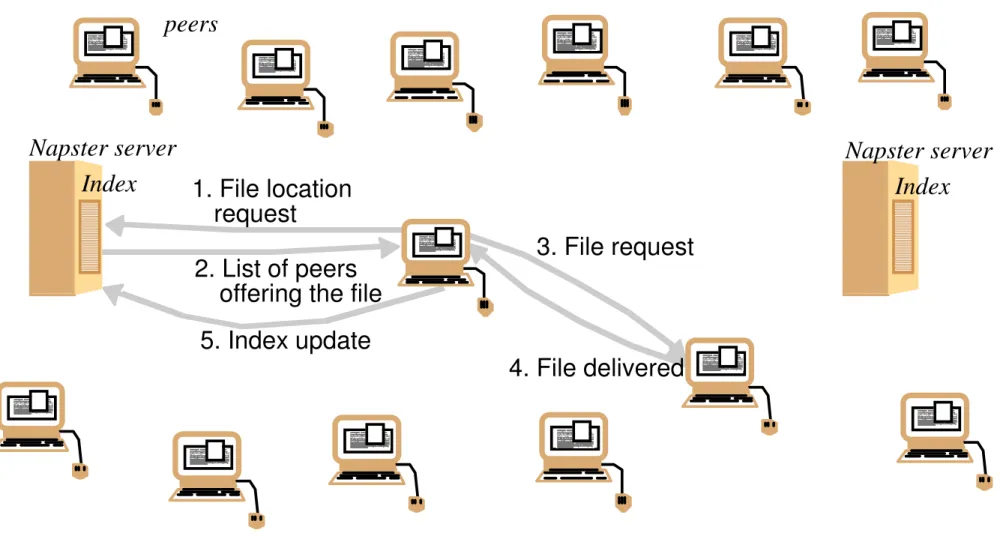
Figure 10.2: Napster: peer-to-peer file sharing with a centralized,
replicated index
Napster server
Index
1. File location
2. List of peers
request
offering the file
peers
3. File request
4. File delivered
5. Index update
Napster server
Index
Middleware P2P
T
Desafios gerais:
S
Garantir acesso rápido à recursos
S
Garantir acesso seguro a recursos (disponibilidade)
T
Segunda geração de sistemas P2P:
S
Indices particionados e dristribuídos (fig 10.3)
S
Algoritmos de manipulação de indices específicos por
sistema
S
Questão principal: como localizar os objetos de forma
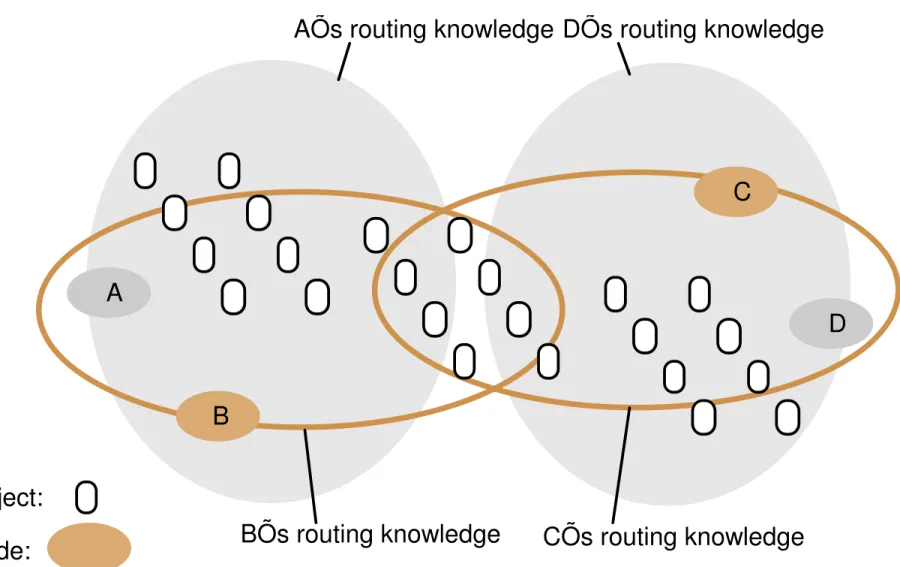
Figure 10.3: Distribution of information in a routing overlay
Object:
Node:
D
CÕs routing knowledge
DÕs routing knowledge
AÕs routing knowledge
BÕs routing knowledge
C
A
Middleware P2P
T
Requisitos
S
Permitir que clientes localizem e se comuniquem com recursos
individuais, independente da distribuição
S
Capacidade de adicionar e remover hosts e recursos à vontade
S
Oferecer uma interface de programação amigável/simples
S
Escalabilidade global
S
Balanceamento de carga
R
Posicionamento aleatório de recursos
R
Réplicas dos recursos muito utilizados
S
Otimização das iterações locais entre peers
Figure 10.4: Basic programming interface for a distributed hash table (DHT)
as implemented by the PAST API over Pastry
put(GUID, data)
The
data
is stored in replicas at all nodes responsible for the object
identified by
GUID
.
remove(GUID)
Deletes all references to
GUID
and the associated data.
value = get(GUID)
The data associated with
GUID
is retrieved from one of the nodes
responsible it.
Figure 10.5: Basic programming interface for distributed object location and
routing (DOLR) as implemented by Tapestry
publish(GUID )
GUID
can be computed from the object (or some part of it, e.g. its
name). This function makes the node performing a
publish
operation the
host for the object corresponding to
GUID
.
unpublish(GUID)
Makes the object corresponding to
GUID
inaccessible.
sendToObj(msg, GUID, [n])
Following the object-oriented paradigm, an invocation message is sent to
an object in order to access it. This might be a request to open a TCP
connection for data transfer or to return a message containing all or part
of the object’s state. The final optional parameter
[n],
if present, requests
the delivery of the same message to n replicas of the object.
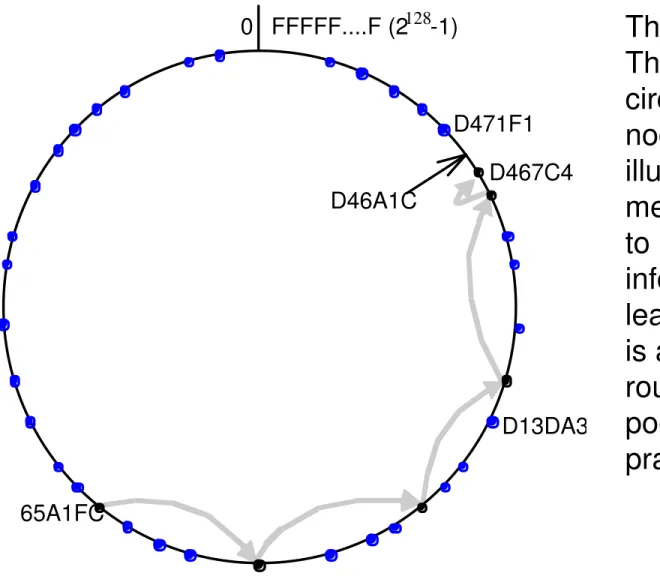
Figure 10.6: Circular routing alone is correct but inefficient
Based on Rowstron and Druschel [2001]
The dots depict live nodes.
The space is considered as
circular: node 0 is adjacent to
node (2128-1). The diagram
illustrates the routing of a
message from node 65A1FC
to D46A1C using leaf set
information alone, assuming
leaf sets of size 8 (l = 4). This
is a degenerate type of
routing that would scale very
poorly; it is not used in
practice.
0 FFFFF....F (2
128
-1)
65A1FC
D13DA3
D471F1
D467C4
D46A1C
Figure 10.8: Pastry routing example
Based on Rowstron and Druschel [2001]
0 FFFFF....F (2
128
-1)
65A1FC
D13DA3
D4213F
D462BA
D471F1
D467C4
D46A1C
Routing a message from node 65A1FC to D46A1C.
With the aid of a well-populated routing table the
message can be delivered in ~ log
16
(
N
) hops.
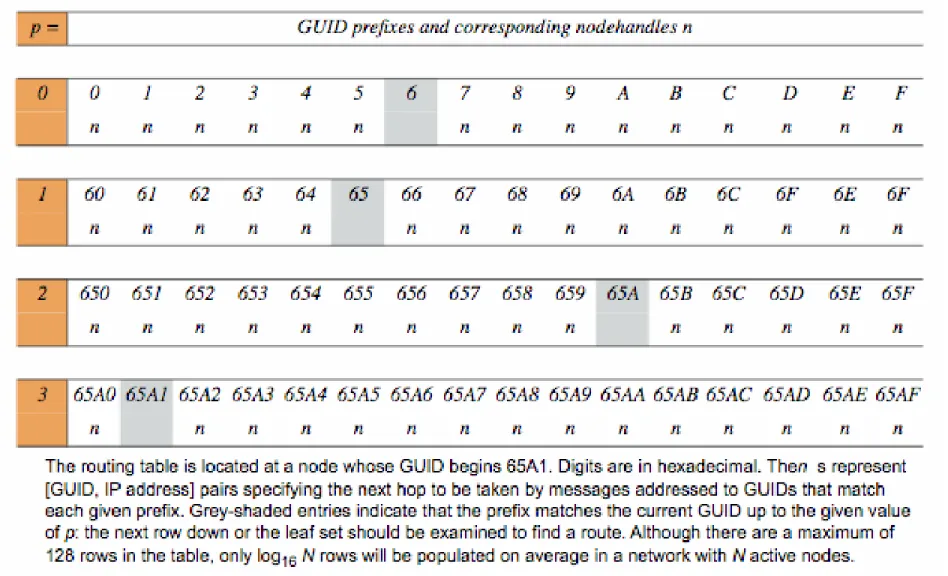
Figure 10.9: Pastry’s routing algorithm
To handle a message
M
addressed to a node
D
(where
R
[
p,i
] is the element at column
i
,
row
p
of the routing table):
1. If (
L
-l
<
D
<
L
l
) { // the destination is within the leaf set or is the current node.
2.
Forward
M
to the element
L
i
of the leaf set with GUID closest to
D
or the current
node
A
.
3. } else { // use the routing table to despatch
M
to a node with a closer GUID
4.
find
p,
the length of the longest common prefix of
D
and
A
. and
i
, the (
p+
1)
th
hexadecimal digit of
D
.
5.
If (
R
[
p,i
] °
null
) forward
M
to
R
[
p,i
] // route
M
to a node with a longer common
prefix.
6.
else { // there is no entry in the routing table
7.
Forward
M
to any node in
L
or
R
with a common prefix of length
i
, but a
GUID that is numerically closer.
}
}
Figure 10.10: Tapestry routing
From [Zhao et al. 2004]
4228
4377
437A
4361
43FE
4664
4B4F
E791
4A6D
AA93
57EC
4378
PhilÕs
Books
4378
PhilÕs
Books
(Root for 4378)
publish path
Tapestry routings
for 4377
Location mapping
for 4378
Routes actually
taken by
send(4378)
Replicas of the file
PhilÕs Books
(G=4378) are hosted at nodes 4228 and AA93. Node 4377 is the root node
for object 4378. The Tapestry routings shown are some of the entries in routing tables. The publish paths show
routes followed by the publish messages laying down cached location mappings for object 4378. The location
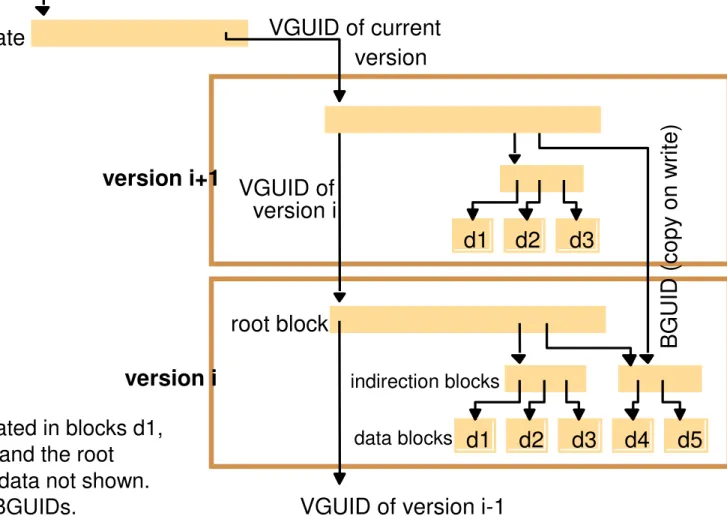
Figure 10.11: Storage organization of OceanStore objects
d1
d2
d3
d4
d5
root block
version i
indirection blocks
d2
version i+1
d1
d3
certificate
VGUID of current
version
VGUID of
version i
AGUID
VGUID of version i-1
data blocks
B
G
U
ID
(
co
py
o
n
w
rit
e)
Version i+1 has been updated in blocks d1,
d2 and d3. The certificate and the root
blocks include some metadata not shown.
All unlabelled arrows are BGUIDs.
Figure 10.12: Types of identifier used in OceanStore
Name
Meaning
Description
BGUID
block GUID
Secure hash of a data block
VGUID
version GUID
BGUID of the root block of a version
Figure 10.13: Performance evaluation of the Pond prototype emulating NFS
LAN
WAN
Predominant
operations in
benchmark
Phase
Linux NFS Pond
Linux NFS Pond
1
0.0
1.9
0.9
2.8
Read and write
2
0.3
11.0
9.4
16.8
Read and write
3
1.1
1.8
8.3
1.8
Read
4
0.5
1.5
6.9
1.5
Read
5
2.6
21.0
21.5
32.0
Read and write
Figure 10.14: Ivy system architecture
DHash server
Modifled
NFS Client
module
Ivy server
DHash server
Application
Kernel
Ivy node
DHash server
DHash server
DHash server
Application
![Figure 10.8: Pastry routing example Based on Rowstron and Druschel [2001] 0 FFFFF....F (2 128 -1) 65A1FC D13DA3 D4213FD462BAD471F1D467C4D46A1C](https://thumb-us.123doks.com/thumbv2/123dok_us/395899.2544189/13.1188.104.654.266.773/figure-pastry-routing-example-based-rowstron-druschel-fffff.webp)
![Figure 10.10: Tapestry routing From [Zhao et al. 2004] 4228 4377 437A 436143FE 4664 4B4F E791 4A6D 57EC AA934378PhilÕsBooks 4378 PhilÕs Books (Root for 4378)publish pathTapestry routingsfor 4377Location mappingfor 4378Routes actually taken by send(4378)](https://thumb-us.123doks.com/thumbv2/123dok_us/395899.2544189/15.1188.107.1089.230.686/tapestry-philõsbooks-philõs-pathtapestry-routingsfor-location-mappingfor-actually.webp)