Amity Journal of Training and Development
4 (1), (30-46)
©2019 ADMAA
Assessing the Contribution of Islamic Faith-Based Private
Universities to the Advancement of Education in Nigeria: A
Case Study of Al-Hikmah University
Yusuf Suleiman, Ganiyu Mutiu Adekunle, Hameed Olalekan Bolaji & Jimoh
Abdulrasheed
Al-Hikmah University, Ilorin, Nigeria
Introduction
Education is seen as a concept that plays a vibrant role in supporting the economic development and is related with a wide range of positive results, including providing a better means of livelihoods. It is often discussed that the growth of any country is mainly dependent on
Abstract
The education provision by faith-based private higher institutions is a rising phenomenon in developing and developed countries. These institutions present an encouraging impact that will support the growth of learning system. Based on this premise, this study assessed the contribution of Islamic Faith-Based Private Universities in Nigeria with particular reference to Al-HIkmah University. The study used secondary data and written document that were obtained from the university to examine how it has contributed positively to the advancement of education system in Nigeria. Statistical Package for Social Sciences was used to analyze the secondary data while contents of the written document were used to complement the secondary data. Findings indicate that the university had contributed immensely to the advancement of university education in four key areas. First, in terms of students’ enrollment, it has helped to reduce burden on public universities due to population explosion in Nigeria. Second, on increase in graduation rate, it has assisted in producing skilled manpower needed for the economy. Third, in terms of staff recruitment, it helped to reduce unemployment rate in the country. Fourth, the provision of scholarship opportunities for less privileged students is a great contribution to humanity. Despite that, the university is faced with contemporary challenges which include paucity of fund, lack of adequate manpower and students’ moralistic character. Findings also indicate three ways by which the mentioned challenges can be addressed; it includes financial assistance from government interventionists’ agencies (e.g., TETFUND, PTDF). Conclusion and recommendations were made to take the university to an enviable height.
Keywords: Islamic Faith-Based, Private University, Training, Development JEL Classification: D6 031
the amount of investment in education. Even though both public and private universities have been playing a huge role in offering university education, the acceptance of private participation in education has grown across the globe, most especially in developing and developed countries. The reason for this development is hinged on the lack of ability of public universities to keep speed with the mounting request for education. Other reasons include the existence of more up-to-date curricula in the private sector, politicization of public universities, and frequent policy modifications by the government (Ajadi, 2010; Okojie, 2010; Okoro & Okoro, 2014; Omomia, Omomia & Babalola 2014; Suleiman, Hanafi & Thanslikan, 2017).
The investment in education is considered by a variety of providers, which include faith-based higher institutions (Enahoro & Badmus, 2013; John & Norman, 2008; School Ventures, 2008). There are many for profit private institutions and colleges in Europe, Latin America, Asia, and Africa that provide quality education to students in their respective countries. For example, there is Centre for Open Distance Education in Romania, Limkokwing University of Technology, Malaysia, and North South University, situated in Bangladesh. There are also a number of other for-profit institutions which include Seventh Day Adventist and De La Salle networks of schools and some universities in New Zealand, and South African based Educare (Adebayo & Jawondo, 2018; Akinsuroju, Anyanwu & Akinwande, 2019; Capital, 2015; Okoli, 2018).
The increase in demand for university education, particularly in higher education is the basis for the rise of many private colleges of education, polytechnics and universities in Nigeria. Report indicates that there is inadequate provision of university education in Nigeria, owing to dearth in amenities to cope with the collective demand for university education. The private universities are growing segment of Nigerian University educational system. Data obtained from National Universities Commission (NUC), which is saddled for regulating the activities of universities in Nigeria; revealed that there are 75 licensed private universities in Nigeria out of which four (4) are Islamic faith based (NUC, 2018). The four Islamic faith-based universities include Al-Hikmah University in Kwara State (established in 2005), Al-Qalam University in Katsina State (established in 2005), Crescent University in Ogun State (established in 2005), Fountain University in Osun State (established in 2007) and Summit University in Kwara State (established in 2015). Based on the above assertion, it can be said that Islamic faith-based private universities in Nigeria have been playing an important role in complementing the effort of the public universities. Also, despite the fact that the study of Suleiman, Hanafi and Thanslikan (2017) focused on the contribution of private universities to the growth of education using all private universities in Nigeria, to the best researchers’ knowledge, there is evidence that up till now, little or no research has been carried out to focus on Islamic faith-based private universities in Nigeria.
In view of the foregoing, therefore, the focus of the present study is to assess the contribution of Islamic faith-based private universities in Nigeria with particular reference to Al-Hikmah University, Ilorin, Kwara State, Nigeria.
Literature Review
An extensive literature review indicates that many studies have been conducted on faith-based private universities (Aithal, Kumar & Revathi, 2018). For instance, the study conducted by Thelin (2004) in the USA found that faith-religious faith-based institutions like Lutheran, Jewish Muslim, Momon and Catholic were mainly established to provide qualitative education to students in tandem with the aims and objectives of the universities. The study of Zaytuna (2015) concluded that religious universities’ activities are in tandem with their vision and mission, which open their students to calculated curriculum of the universities. Levenson (2012) found that faith-based
institutions disseminate the unique theological and cultural thoughts of their promoter via the pursuit of their vision and missions. That intersection in mission exists even among the religious various institutions. The study of Daniels (2015) concluded that some faith-based universities are distinctively great, attaching a mixture of the hope inherent in education and the gravitas of eternity, of which the association is much more active than either aspect conventionally. Mardsen (1996) opined that some institutions were set up by Protestant denominations to offer official training, including some of the nation’s most treasured universities such as Harvard and Yale. According to the study of Hunt and Carper (1996), they found that diverse ethnic and religious sponsors established universities to upsurge educational chances for their groups and to offer cultural and ministry or religious teaching deep of their nation of origin. Backiny-Yetna and Wodon (2009) found that religious faith-inspired schools provide sound education, mostly in urban areas in Cameroon. Barrera-Osorio et al. (2009b) examined the contribution of private schools and established that private schools, including faith-inspired schools, provide enhanced services than public schools. In the same vein, Makinde (2014) found that faith-based schools offer a considerable share of education services, particularly in developing countries
More so, Okoro and Okoro (2014) found that to ensure quality assurance in private universities, certain strategies should be put in place, which include evaluation programmes, adequate funding; engagement of qualified teaching and non-teaching personnel; delivery of modern facilities; and close scrutiny of universities’ activities so that their cost-recovery policies is not compromised. Makinde’s (2014) study was based on private universities in Nigeria. The study emphasizes that to promote the call for private universities in Nigeria; three plans must be put in place: the first is academic plan that stresses both the investors’ needs and programme needs. Secondly, promotion plan that includes influence and persuasion; and third is pricing plan involving price limits and planned price variations. The study conducted by Suleiman, Hanafi and Thanslikan (2017) on the contribution of private universities in Nigeria confirmed that private universities has contributed immensely to the advancement of education in Nigeria in all ramifications (i.e., ranging from students’ enrollment rate to staff recruitment). The study recommended that government at all levels (i.e., federal) should assist in funding of private universities who are engaged in staff training and development.
Furthermore, Nishtha and Amit (2010) established that training and training of staff is one of the most general methods that can be used to enhance efficiency and effectiveness in private universities. Beardwell, Holden and Claydon (2004), Ekaterini and Constantinos-Vasilios (2009) and Rohan and Madhumita (2012) confirmed that adequate investment in training helped to ensure problem solving, teamwork, and interpersonal relations. Ajuzie (2001) and Babalola, Jaiyeoba and Okediran (2007) claimed that both primary and secondary schools and higher institutions today are ill-equipped. The study of Oyeneye (2006) and Adegbite (2007) found that one of the major challenges confronting both private as well as public education in Nigeria is due to insufficient funding. Fadipe (1999) established that inadequate facilities such as building for offices and laboratory equipment constitute a very serious difficult to private university. Ajayi (2007)’s study concluded that despite the importance education curriculum, higher institutions learning in Nigeria suffer due to inadequate lecturers to handle teaching activities. Ajadi (2010) and Bamiro (2012) concluded that the problem of both public and private universities in Nigeria is hinged on inadequate recruitment of adequate academic staff.
In view of the above studies, the focus of this study is to assess the contribution of Islamic-Faith-Based Private Universities to the advancement of university education in Nigeria, with specific allusion to Al-Hikmah University, Nigeria. In order to guide the study, the questions below were raised:
Research Questions
1. What is the contribution of Al-Hikmah university to the development of university education in Nigeria?
2. What are the challenges facing Al-Hikmah university?
3. What are the solutions to the challenges faced by Al-Hikmah university?
Nigeria’s Policy on University Education
According to section 5 of Nigeria’s National Policy on Education, university education is the type of education that is provided for students that have completed secondary education (Federal Republic of Nigeria, 2013). Specifically, the aims and objectives of university education according to Section 5 (81) of the policy, stipulates seven points to be achieved. They are: to produce high level manpower training; provide affordable and accessible excellence learning prospects; to provide high quality career counseling that will prepare students with the required skills; to ensure reduction in skill shortages via the production of skilled manpower that is appropriate to the desires of the labour market; and to promote and encourage entrepreneurship, community service and scholarship.
In achieving the above objectives, section 5 (87) of the policy states that university research shall be appropriate to the developmental objectives of the nation, and full attention shall be given to promotion and research of indigenous knowledge in Nigeria. Thus, university shall be encouraged to partner with various governments, industries and the global community in the conduct of research and disseminate the results. In the same vein, section 5 (89) provide that individuals, groups and voluntary agencies shall be allowed to establish universities in consonance with the laid down minimum standards set by the Federal Government of Nigeria (Federal Republic of Nigeria, 2013).
History of Al-Hikmah University
Al-Hikmah University is the first Islamic faith-based private university that is located in Ilorin, Kwara State, Nigeria. The university was established in 2005 by Abdur-Raheem Oladimeji Islamic Foundation AROIF that is based in Nigeria and the World Assembly of Muslim Youths (WAMY) that is based in Jeddah, Saudi Arabia. Specifically, the main goal of the university is to be a Centre of intellectual and moral excellence. The vision of the university is to serve as fore-runner in the delivery of quality university education of universal standard, while its mission is to serve as fore-runner in the delivery of quality university education of global standard. The University came into existence through the granting of License to function as a Conventional Private University by the Federal Government of Nigeria License No. 010 on 7th January 2005. It commenced academic activities during the 2005/2006 academic session with 70 pioneer students scattering across the three (3) take-off Colleges: Natural Sciences, Humanities and Management Sciences.
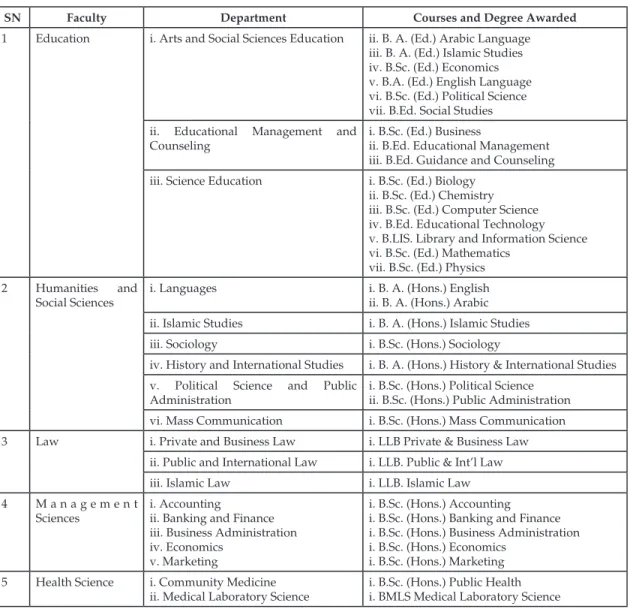
As of October 2019, it has six (6) faculties in its two campuses at Ilorin (Adewole and Atere) and Igbaja (outskirt of Ilorin), Kwara State. The colleges are: Education, Health Sciences, Law, Natural Sciences, Humanities and Management Sciences. The curriculum of the university is erected on the cornerstones of Islamic philosophy, which is rare to come by in present institutions of higher learning in Nigeria. It has over 6000 students and over 500 staff. Also, the university has been presided over by four (4) Vice-Chancellors. They are: Professor Musbau Adewumi Akanji; Professor R.D. Abubakre; Prof. Sulyman Age Abdulkareem, and the present Vice-Chancellor, Professor Muhammed Taofeek Olalekan Ibrahim.
Unequivocally, the university stands out among universities as a private conventional university with a profound articulated mission of promoting academic and moral excellence for Nigerian. As part of its developmental determinations, the university has been collaborating with local, national and international stakeholders to achieve its vision and mission statements. Aside that, the university is poised to contribute to the economic growth of Nigeria through employment opportunities to qualified staff, irrespective of social, religious, gender, racial, political or ethnic links. Since inception, the university has continued to grow in quantity and quality of physical, human, and material resources. Like a Trojan horse, the university started the race with calculated trotting steps. Based on the vision and mission statements of the University as its driving force at heart, it has galloped into full hurry of initiating scholarship with a rareness of some sort. The university has graduated over 2000 ambassadors after satisfying the academic and moral necessities upon which the honors of the university are based (Al-Hikmah, 2018).
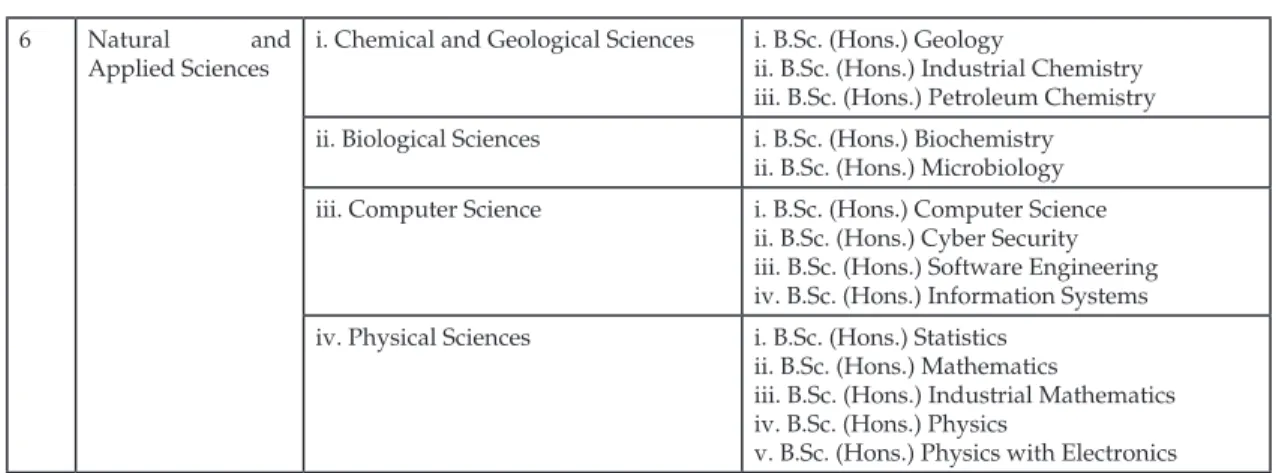
Table 1: Programmes Offered in Al-Hikmah University
SN Faculty Department Courses and Degree Awarded
1 Education i. Arts and Social Sciences Education ii. B. A. (Ed.) Arabic Language iii. B. A. (Ed.) Islamic Studies iv. B.Sc. (Ed.) Economics v. B.A. (Ed.) English Language vi. B.Sc. (Ed.) Political Science vii. B.Ed. Social Studies ii. Educational Management and
Counseling i. B.Sc. (Ed.) Business ii. B.Ed. Educational Management iii. B.Ed. Guidance and Counseling iii. Science Education i. B.Sc. (Ed.) Biology
ii. B.Sc. (Ed.) Chemistry iii. B.Sc. (Ed.) Computer Science iv. B.Ed. Educational Technology v. B.LIS. Library and Information Science vi. B.Sc. (Ed.) Mathematics
vii. B.Sc. (Ed.) Physics 2 Humanities and
Social Sciences i. Languages i. B. A. (Hons.) Englishii. B. A. (Hons.) Arabic ii. Islamic Studies i. B. A. (Hons.) Islamic Studies iii. Sociology i. B.Sc. (Hons.) Sociology
iv. History and International Studies i. B. A. (Hons.) History & International Studies v. Political Science and Public
Administration i. B.Sc. (Hons.) Political Scienceii. B.Sc. (Hons.) Public Administration vi. Mass Communication i. B.Sc. (Hons.) Mass Communication 3 Law i. Private and Business Law i. LLB Private & Business Law
ii. Public and International Law i. LLB. Public & Int’l Law iii. Islamic Law i. LLB. Islamic Law 4 M a n a g e m e n t
Sciences i. Accountingii. Banking and Finance iii. Business Administration iv. Economics
v. Marketing
i. B.Sc. (Hons.) Accounting i. B.Sc. (Hons.) Banking and Finance i. B.Sc. (Hons.) Business Administration i. B.Sc. (Hons.) Economics
i. B.Sc. (Hons.) Marketing 5 Health Science i. Community Medicine
6 Natural and
Applied Sciences i. Chemical and Geological Sciences i. B.Sc. (Hons.) Geologyii. B.Sc. (Hons.) Industrial Chemistry iii. B.Sc. (Hons.) Petroleum Chemistry ii. Biological Sciences i. B.Sc. (Hons.) Biochemistry
ii. B.Sc. (Hons.) Microbiology iii. Computer Science i. B.Sc. (Hons.) Computer Science
ii. B.Sc. (Hons.) Cyber Security iii. B.Sc. (Hons.) Software Engineering iv. B.Sc. (Hons.) Information Systems iv. Physical Sciences i. B.Sc. (Hons.) Statistics
ii. B.Sc. (Hons.) Mathematics
iii. B.Sc. (Hons.) Industrial Mathematics iv. B.Sc. (Hons.) Physics
v. B.Sc. (Hons.) Physics with Electronics Source: Al-Hikmah University Website (2018)
Methodology
In this study, Al-Hikmah University was selected to get comprehensive information about the contribution of Islamic faith-based universities in Nigeria. There are two reasons for selecting Al-Hikmah as a case study. First, Al-Al-Hikmah University is one of the pioneer Islamic Faith-Based private universities in Nigeria that was given license in 2005 along Al-Qalam University and Crescent University. In assessing the contribution of Al-Hikmah University to the development of education in the study, secondary data and relevant written document were obtained to achieve it (Creswell, 2013; Sekaran & Bougie, 2010). The types of data used in the study are secondary data and documents. Secondary data were collected to assess the contribution of Al-Hikmah University to the advancement of university education in Nigeria. Specifically, data were obtained to set up the following:
Table 2: Data Collection Coverage
S/N Data Period Covered
1 Students’ Enrollment Rate 2006-2018
2 Graduation Rate 2010-2018
3 Scholarship 2011-2018
4 Staff Recruitment 2006-2018
In addition to the secondary data collected, some documents concerning Al-Hikmah University, were collected and used for the study. More so, to provide accurate answers to questions, permission letter (enclosed procedure for secondary data collection and interview protocol) stating the purpose of the research was sent to the office of the Registrar for her consent to collect secondary data. After one month of letter submission, a follow-up (several visits and phone calls to registry unit of Al-Hikmah University) was made to ensure that the data is released, and interview conducted as proposed. In August 2018, it was informed of Registrar’s unavailability to grant interview due to her tight schedule but have several written document and secondary data emanated from the office was given to assist in completing the research and after that, another letter was written to her for the release of the remaining data that were not captured in the first released data and document. Aside meeting the Registrar of the university, further efforts were made to ensure collection of more data so that comprehensive information needed for the study can be obtained. To this end, a member of stakeholders’ forum of the university was approached for the release of more data to support the study. In addition, the Heads of Department of Arabic and Islamic Studies of the university were met for the release of students
that had benefited in the past and those that are currently enjoying subsidized tuition fee in their respective departments (Creswell, 2013; Sekaran & Bougie, 2010). Lastly, SPSS was employed to perform the descriptive analysis of the collected data based on the research questions formulated for the study. Specifically, SPSS was used to provide answer to research question one while contents of the written document was used to provide answer to research questions two and three respectively (Pallant, 2010).
Results
Response to Research Question 1: What is the contribution of Al-Hikmah University to the development of University education in Nigeria?
Enrollment Rate
Table 3: Enrollment Rate Session NUC Approved
Admission Quota Approved Carrying Capacity Number of Applicants Screened Number of Students Matriculated 2005/2006 * * 70 70 2006/2007 * * 148 148 2007/2008 500 700 430 340 2008/2009 500 960 650 425 2009/2010 800 1300 950 520 2010/2011 800 1800 1085 649 2011/2012 800 2600 1289 883 2012/2013 800 3100 1921 1630 2013/2014 1270 3800 1390 1125 2014/2015 1270 4500 1154 993 2015/2016 1270 5000 1160 1017 2016/2017 1270 5600 802 690 2017/2018 1270 6200 983 851 Total 9341
Source: Registrar’s Office, Al-Hikmah University
Note: * Indicate not available as at the time of collecting data.
The enrollment rate of the students to Al-Hikmah University from day one (2006-2018) is shown in the chart above. It is evident that 70 students were enrolled into the University for different courses in the year 2006. 148 students were registered into the University in the year 2007. There was a drastic shift in the enrollment rate in the year 2008 where 340 students were admitted into the University for several courses while 340 students were as well enrolled in the year 2009. 520 students were admitted in the year 2010 while 649 students were enrolled for 2011 academic session. In the year 2012, 883 students were admitted into the University. A paradigm shift occurred in the year 2013 where 1,630 students were admitted into the University for different courses. Meanwhile, in the year 2014, there was a drop in the number of admitted students where 1,125 were enrolled and 993 of the students in the year 2015. 1017 students were enrolled in the year 2016. There was a drop in the year 2017 with 690 students admitted while 851 students were enrolled in the year 2018. Taken together, more students were enrolled into the University in the year 2013 compare to that of 2008 where 340 students were registered.
Graduation Rate
Table 4: Number of Graduated Students Session Number of Graduated Students
2009/2010 107 2010/2011 363 2011/2012 455 2012/2013 502 2013/2014 659 2014/2015 817 2015/2016 874 2016/2017 827 2017/2018 798 Total 4,258
Source: Registrar’s Office, Al-Hikmah University
The Figure 2 above shows the number of graduates produced so far by Al-Hikmah University from the inception till date, reference to the data obtained from the office of the Registrar. The University produced the first set of graduates between the year 2009 and 2010 who were 107 in numbers across all the departments available then including Arabic and Islamic Studies. In the following session 2010/2011, the University produced 363 students which is higher than the first set of graduates. More students were produced in the year 2011/2012 with 455 of them. As if that was not enough, 502 students were convoked between the year 2012 and 2013 with 47 differences from that of 2011/2012. At the end of 2013/2014 academic session, the University produced 659 students with 157 differences from that of 2012/2013 academic session. In addition, there was a geometric increment in the number of graduates produced by the University with 817 students produced at the end of 2014/2015 academic session. A shift occurred in the number of graduates produced in the 2015/2016 academic session with 874 students produced while at the end of 2016/2017 academic session, there was a drop in the number of graduates produced by the University with 827 of them produced. In addition, Al-Hikmah convoked 798 students in the 2017/2018 academic session which witnessed a drop from 827 of 2016/2017 to 798 of 2017/2018 academic session. From the foregoing, Al-Hikmah produced the highest number of graduates between the years 2015/2016 with the total of 874 students compared to that of 107 produced in the year 2009/2010.
Scholarship
Stakeholders’ Scholarship
Table 5: Number of Beneficiaries of Scholarships by Stakeholders’ Forum (2011-2018) Years Numbers of Students Amount Spent
2011/2012 13 2,500,000 2012/2013 18 3,700,000 2013/2014 29 6,500,500 2014/2015 42 8,887,500 2015/2016 33 8,104,000 2016/2017 15 5,492,500 2017/2018 26 9,862,500 Total 176 #47, 45,000,00
Source: Stakeholders’ Forum, Al-Hikmah University
Table 5 and Figure 5 show the trends in the number of beneficiaries of scholarship by the University’s Stakeholder Forum. According to the data obtained from one of the members of the forum; Dr. B.A. Ajijola, the forum has been in existence long before the advent of Al-Hikmah University incorporated by both the management and the parents. The forum according to the data obtained built the University auditorium, drilled 10 boreholes for the school both Igbaja and the main campus, built the clinic, the cafeteria, school clinic and as well provided 2 buses. Aside from these, the forum then provided scholarship for undergraduates students under the condition that; the students must have nothing less than 2.0 CGPA, incapacitated, lost either of the parents (father most especially), must be in year two and with a clear evidence that he/she must have paid a developmental fee (insurance) of #50,000 in year one. It is on the basis of the aforementioned that the forum has been giving scholarship to the students from 2011 till date. Data obtained from the forum clearly shows that 13 students were on scholarship in the year 2012. 18 students in the year 2013 while 29 students were fortune to be given scholarship in the year 2014. As if that was not enough, 42 students were given scholarship in the year 2015. 33 scholarship were given to the students between the year 2015 and 2016. 15 was given out by 2017 and lastly, 26 were recently given out in the last 2017/2018 academic session. Taken together, it is evident that the stakeholders gave out more scholarship in the year 2015.
Subsidized Tuition Fee for Arabic & Islamic Students
Information obtained from HODs of Arabic and Islamic Studies show that since inception of the university, the school fees of students who are admitted in the two departments are usually subsidized because the two departments were part of the pioneer departments of the university when he got license approval from National Universities Commission (NUC). In fact, information revealed that under the departments, first, second and third set of students under the two departments were sent to Sudan, while fourth and fifth set of students were sent to Niger Republic based on the Memorandum of Understanding (MOU) signed between Al-Hikmah university, Niger and Sudanese universities.
Recruitment of Academic and Non-Academic Staff
Table 6: Number Academic and Non-Academic Staff
Academic Staff 160
Non-Academic Staff 479
Total 639
Source: Registrar’s Office, Al-Hikmah University
The Figure 4 above shows the staff recruitment strength of the number of academic staff and the non-academic staff. The staff strength of the academic staff of Al-Hikmah University according to the data obtained from the office of the Registrar is 25% of the total population while that of the non-academic staff is 75%. The implication of this is that Al-Hikmah University has more of the non-academic staff than the academic staff.
Staff Training
Al-Hikmah University provides the following training to their staff according to the document obtained from the office of the Registrar;
i. Academic staff without PhD degree are given adequate sponsorship for the programme ii. Academic staff are sponsored for academic conferences and workshop on academic basis iii. Non-academic staff are sponsored for workshop and training on yearly basis
iv. Management organizes internal training for staff
v. Academic and non-academic staffs are allowed to proceed on study leave
Response to Research Question 2: What are the challenges facing Al-Hikmah University? According to the information obtained from the office of the Registrar, below are some of the major challenges facing Al-Hikmah University among which are:
Paucity of Fund
According to the information available to us, paucity fund seems to be one of the challenges of some private universities in Nigeria.
“One of the challenges facing private universities is the issue of fund. The issue of fund is also affecting public universities too, but private universities are mostly affected.”
Inadequate Manpower
Document obtained indicate that inadequate manpower constitutes one of the challenges of private universities in Nigeria. The document revealed:
“Sincerely, many private universities in Nigeria are short of adequate manpower. Some of the required manpower are not available to some of these private universities because majority of their staff, especial academic staff are bottom heavy in terms of mix. Specifically, many of these private universities are contending with the problem of shortage of faculty members to drive their universities.”
Students’ Poor Moralistic Character
Based on the written document obtained, we found students’ poor moralistic character as one of the challenges facing the university. The document reveled thus:
“Parenting requires caring, protection, guidance, provision of basic needs for a child upkeep for him or her to be properly equipped to meet with the challenges of life, in accordance with the laws of the land. Sadly, students go as far as taking codeine, hemps and all sorts of toxic things in school unknown to their parents at home all in the name of exposure. They mingle with bad folks in school and some even go extra mile in using their school fee to purchase a ride or a big apartment in school just to flex and have fun. All of these results from improper upbringing by the parents.”
Research Question 3: What are the solutions to the challenges faced by the university?
With reference to the challenges found during the study, the following highlight the solutions based on the document obtained from the university.
External Funding Components
‘Basically, the first challenge has to do with paucity of funds to engage in various activities within the university to positively impact the faith-based doctrine of the university on the students. Most funding is internally generated by private universities in Nigeria, unlike the government-owned tertiary institutions that are open to opportunities from different funding agencies like Tertiary Fund (Tetfund), Petroleum Technology Development Fund (PTDF), Nigeria Liquid and Natural Gas (NLNG), National Information Technology Development Agency (NITDA), Nigeria National Petroleum Corporation (NNPC) among others. These government agencies provide variety of funds to academics of various categories in public universities and this singular act has aided in instilling doctrines of the various institutions. Hence, the funding enjoyed by academics in public universities should be extended to private institutions to uphold the faith-based doctrine. Also, counterpart funding components open to public universities for infrastructure and equipment that will promote healthy and smooth running of academic programmes. It is, therefore, necessary for private faith-based universities in Nigeria to also enjoy such counterpart funding component so that infrastructural deficit will be recorded and causes retarding progress of such university. Furthermore, government at all levels (Federal, State and Local) should encourage private participation in the delivery of quality instructions to learners and as well assist in the purchase of necessary facilities that will promote conducive learning environment.’
Corporate Funding Source
’In addition to the external funding components, private universities should be able to initiate and access corporate funding from organizations like conventional banks, multinationals like MTN, GLO, Shell, Dangote, Chevron, Julius Berger and other funding sources that promote faith-based doctrine in the facilitation of learning among students. Private-Public Partnership (PPP) can be created in this regard such that proportional funding can be divided among the multinationals and government in financing some major infrastructure and facilities within private academic institutions in Nigeria. A memorandum of understanding (MoU) can be signed in funding training and workshop experience of academics within and outside the country to improve on the quality of content that will be delivered within the classroom environment. Every multinationals and corporate organization should implement their social responsibility mission on financing educational institutions.”
Non-Governmental and Philanthropic Funding Source
‘The act of going into private university system is an investment based on philanthropic mission. However, alternative funding should be encouraged outside the founder’s financing system. Individuals should contribute to societal development through donations to private academic institutions to serve the humanity. Also, non-governmental organizations should look the way of private universities in securing funds that will promote quality education and eventually impact positively on the society.’
Discussion
The first research question of the study was based on the contribution of Al-Hikmah University to university education in Nigeria. Findings of the study revealed that the university had contributed immensely to the development of university education various ways, which includes
increase in students’ enrollment rate (which increased from 70 in 2005/2006 academic session to 851 in 2017/2018 academic session), and increase in graduation rate (from 107 in 2009/2010 to 798 in 2017/2018). In the same vein, in terms of scholarship opportunities, the university has spent close to 50 million in providing scholarship opportunities through Stakeholders’ platform to the less privileged in the society. In fact, the total number of students who have benefited from the stakeholders’ scholarship as of August 2018 is 176. Also, there is subsidized tuition fee for Arabic and Islamic students of the university. The university has recruited more than 600 academic and non-academic staff to implement its policies with a view to achieve its vision and mission. On staff training and development, both academic and non-academic staff of the university has enjoyed sponsorship in terms of conference, seminar, workshop and opportunity to proceed on study leave. The foregoing findings is in line with the study conducted by Nishtha and Amit (2010) who found that training as a process is one of the most effective methods that can be used to enhance the productivity of employees in the organization. Studies of Ekaterini and Constantinos-Vasilios (2009) and Rohan and Madhumita (2012) also buttressed that huge investment in employees’ training helped a lot in decision -making process, problem-solving, team work and interpersonal relations that will have influence on the organizations’ level of development, as well as on employees’ productivity. The findings of the study are also in consonance with the study of Satterfield and Hughes (2007) who established that training positively affects employees’ working skills which results into enhanced job performance. Beardwell et al. (2004), in recognition of the importance of training, found that it is usually influenced by the increase in competition and success of organizations. Staff training plays a key role in the efficiency and effectiveness of both employees and organizations. Training has implications for employee productivity and personal development. Most organizations are weary of this condition and invest resources in training.
The second research question of the study was based on the challenges facing Al-Hikmah University. Findings reveal that the university is faced with challenges, which include paucity of funds, inadequate manpower, and students’ poor moralistic character. This is in tandem with the study of Adegbite (2007) who found that private universities are battling with many challenges, which include insufficient infrastructure (lecture halls, residence halls, offices, etc.); inadequate manpower, inadequate resources; inadequate teaching and learning materials (projectors, computers, etc.); inadequate remuneration for staff, inadequate fund, and low students intake. In support of the foregoing, Ajuzie (2001) established that the major problem confronting education in Nigeria is inadequate funding. Also, Babalola, Jaiyeoba and Okediran (2007) found that problem of education is mainly due to inadequate funding of higher education. The finding is similar to the work of Oyeneye (2006) who found that funding remains the major headache of universities in Nigeria. Specifically, the seeming shortage of fund available to the university system has been accountable for deficient in facilities in many of the schools. In the same vein, Fadipe (1999) concluded that the high cost of facilities such as building for classrooms, offices, furniture items for students and staff and laboratory equipment constitute a serious problem to private universities. Ajayi (2007) and Bamiro (2012) agreed that despite the importance of staff in the attainment of quality education, higher institutions in Nigeria are short of academic staff to implement the curriculum content of university education.
The third research question of the study was based on the solutions to the challenges facing Al-Hikmah University. Findings of the study indicate that the university needs three types of funding components, which include external funding component (e.g. funding from TETFUND, PTDF, NITDA, NLNG, NNPC etc.), corporate funding component (e.g. Shell, Dangote, MTN, GLO etc) and Non-Governmental and philanthropic component ( e.g. individual and NGOs). The foregoing
is in congruent with the study conducted by Makinde (2014), who found that adequate funding is needed to grow education in Nigeria. It is also in consonance with the studies of Okoro and Okoro (2014) and Suleiman, Hanafi and Thanslikan (2017) who established that in order to ensure quality assurance in private universities; adequate fund should be expended so as to achieve its vision and mission. It is also supported by the study conducted by Okoro and Okoro (2014) who concluded that private universities should be well-funded so that their vision and mission can be achieved. Lastly, the foregoing view is in congruent with the study of Oloyede and Adekola (2010) who are of the view that private universities must be supported by all stakeholders in terms of facilities such as lecture halls, laboratories and research grants for the overall growth of the universities.
Conclusion and Recommendations
In view of the findings of the study, it can be concluded that Al-Hikmah University, being the first Islamic faith-based private university in Nigeria, has contributed greatly to the advancement of university education in Nigeria in many ways. This includes students’ enrollment, graduation rate, academic and non-academic staff recruitment and scholarship opportunities. Also, we recommend the following measures based on our findings and observations about the university. The measures that can be used to further improve the fortune of the university so that its vision and mission can be accomplished are:
(a) NUC should allocate more admission slot to Al-Hikmah University. In addition, Faculty of Education, which is currently located at Igbaja campus, should be moved to the main campus of the university because we observed that if the population of students’ enrollment in Sandwich Programme that university run in education, could be more than the population of full time students, it is advisable to relocate the faculty so that applicants within and outside Ilorin metropolis, who are looking for admission, could be enrolled.
(b) Viable businesses (e.g., Al-Hikmah Bakery, Al-Hikmah FM) should be set up by the university, this will help to provide jobs and jack-up the revenue of the university.
(c) Agencies of Federal Government (e.g., TETFUND, PTDF etc.) should support the university in terms of infrastructure and manpower development.
(d) Non-organizations, private companies and individuals should assist in the development of the university.
(e) To curb all form of vices among students and instill discipline, school disciplinary committee should be more empowered to take appropriate steps to discipline students who are found wanting. Specifically, compulsory drug test should be carried out on newly admitted students.
References
Adebayo, R. I., & Jawondo, A. I. (2018). Innovative Funding of Nigerian Private Islamic Universities: The Option of Islamic Financial Products (IFP). IIUM Journal of Religion and Civilisational Studies, 1(1), 61-80. Adegbite, J. G. (2007). The education reforms agenda: challenges for tertiary education administration in
Nigeria. Paper presented at the Sixth Annual Seminar of the Conference of Registrars of Colleges of Education in Nigeria (South West Zone) at the College of Education, Ikere-Ekiti, Ekiti State.
Aithal, P. S., Kumar, A., & Revathi, R. (2018). Investigation of Business Strategies in Higher Education Service Model of Selected Private Universities in India. International Journal of Computational Research and Development (IJCRD), 3(1), 77-100.
Ajadi, T.O., (2010). Private universities in Nigeria – The challenges ahead. American Journal of Scientific Research, 15-24.
Ajayi K., (2007) Emergent Issues in teacher education and professionalization of teaching in Nigeria. African Journal of Historical Science in Education, 3(1), 22-28.
Ajuzie, M. U. (2001). A concise history of education in Nigeria. Issues and New Challenges. Akoka, Lagos, Nigeria: Time publications.
Al-Hikmah. (2018). Al-Hikmah University, Website. Retrieved from https://www.alhikmah.edu.ng.
Akinsuroju, O. E., Anyanwu, O. M., & Akinwande, B. O. (2019). Management Funding Strategies and Administrative Effectiveness of Private Universities in Ogun State, Nigeria. KIU Journal of Humanities, 3(4), 145-153.
Babalola J. B., Jaiyeoba A. O., & Okediran, A. (2007). University autonomy and financial reforms in Nigeria: historical background, issues and recommendations from experience. In J. B. Babalola & B. O. Emenemu (Eds.), Issues in higher education: Research evidence from sub-sahara Africa. Lagos: Bolabay Publications.
Backiny-Yetna, P., and Q. Wodon. 2009. Comparing Faith-Based and Government Schools in the Democratic Republic of Congo. In Emerging Evidence on Private Participation in Education: Vouchers and Faith-Based Providers (Eds.), F. Barrera-Osorio, H. A. Patrinos, and Q. Wodon. Washington, DC: World Bank. Barrera-Osorio, H.O. & Wodon, Q. (2009). Public-private partnerships in education: An overview. Emerging
Evidence on Vouchers and Faith-Based Providers in Education, 1.
Bamiro (2012) The Nigerian university system and the challenges of relevance in: Convocation Lecture University of Lagos, Akoka-Lagos.
Beardwell, I., Holden, L. & Claydon, T. (2004). Human resource management a contemporary approach. 4th Ed. Harlow. Prentice Hall.
Capital, D. (2015). Private funding does not include household education expenditures. Impact investments are a Dalberg estimate based on industry research of executed deals. African Press Ltd.
Creswell, J. W. (2013). Research design: Qualitative, quantitative, and mixed methods approaches. London: Sage Publications, Inc.
Daniels, J. R. (2015). An exploratory comparative case study of employee engagement in Christian higher education (Unpublished doctoral dissertation). Azusa Pacific University, Azusa, CA.
Ekaterini G., & Constantinos-Vasilios P (2009). A model for evaluating the effectiveness of middle managers training courses: evidence from a major banking organization in Greece. International Journal of Training and Development, 13(4), 221-245
Enahoro, J.A. & Badmus, A. (2013). Emergence of Private Universities in Nigeria and Monitoring Standards between 2002 and 2012. American Journal of Business and Management, 2(1), 59-64.
Fadipe, J.O. (1999). Quality Control in Education. Ibadan: NIEPA Daily Graphics Nigeria. Federal Republic of Nigeria (FRN) (2013). National policy on education. Lagos, Nigeria: NERDC.
Hunt, T. C. and Carper, J. C. (1996). Religious higher education in the United States: A source book. Inc. Press. John, F and Norman, L. (2008). The evolving regulatory context for private education in emerging Economies.
Levenson, J. D. (2012). Inheriting Abraham: The legacy of the patriarch in Judaism, Christianity, and Islam. Princeton, NJ: Princeton University Press.
Makinde, A. K. (2014). Imparting Islamic education in schools: A challenge to muslim teacher, Al-Hadarah. LASU Journal of Arabic and Islamic Studies, 4, 23-45.
Mardsen, G. M. (1996). The Soul of the American University: From Protestant Establishment to Established Nonbelief. New York, NY: Oxford University Press.
Nishtha L., & Amit M. (2010), How Training Jump-Starts Employee Performance, Indian Management, 49(6), 14-16.
NUC (2018). Nigerian Universities. National Universities Commission (NUC). Retrieved from http://nuc. edu.ng.
Okojie, J. (2010). Policy Directives at the Systems level – NUC’s Response over the years. Fifty years of University Education in Nigeria: Evolution, Achievement and Future Direction. National Universities Commission, Nigeria. 101 – 112.
Okoli, I. E. (2018). Organizational Climate and Job Satisfaction among Academic Staff: Experience from Selected Private Universities in Southeast Nigeria. International Journal of Research in Business Studies and Management, 5(12), 36-48.
Okoro, P. & Okoro, P. E. (2014). Time and Change: Development of Private Universities in Nigeria, 5(9), 186– 192.
Oloyede, H. O. & Adekola, B. (2010). Prospects and challenges of private universities. Fifty years of university education in Nigeria: Evolution, Achievement and Future Direction. National Universities Commission, Nigeria. 177 – 185.
Omomia, O. A., Omomia, T. A. & Babalola, J. A. (2014). The History of Private Sector Participation in University Education in Nigeria (1989-2012). Research on Humanities and Social Sciences, 4(18), 153-162. Oyeneye, O. Y. (2006) Current Issues in the Administration of University Education in Nigeria. 15th
Ceremony of University of Ado Ekiti.
Pallant, J. (2010). SPSS survival manual: A step by step guide to data analysis using SPSS (4th ed.). New York, NY: Open University Press.
Rohan, S. & Madhumita, M. (2012): Impact of Training Practices on Employee Productivity: A Comparative Study. Interscience Management Review, 4(2), 87-92.
Satterfield, J.M & Hughes, E. (2007): Emotion skills training for medical students: a systematic review. Medical Education, 41,935–41.
School Ventures (2008). The African Private Schools Investment Index (APSI) 2008, Washington D.C.
Sekaran, U., & Bougie, R. (2010). Research methods for business: A skill building approach (5th ed.). New Jersey: John Wiley and Sons.
Suleiman, Y., Hanafi, Z. B., & Taslikhan, M. (2017). Private Universities and Development of Higher Education in Nigeria: A Mixed Methods Approach. The Qualitative Report, 22(7), 1848-1879.
Authors’ Profile
Yusuf Suleiman is currently a Lecturer I in the Department of Educational Management and Counselling, Faculty of Education, Al-Hikmah University, Kwara State, Nigeria. He obtained his Ph.D. in Educational Management from Universiti Utara Malaysia, Malaysia. He is also a Part-Time Lecturer with Unicaf University, Cyprus. His area of expertise includes school services, training, leadership, entrepreneurship, quantitative and qualitative research. He’s an Associate Member of Malaysian Institute of Management (AMIMI Chattered), and a Member of Nigerian Institute of Management (NIM Chattered). He has several International & National publications to his credit.
Ganiyu Mutiu Adekunle is currently a Lecturer 1 in the Department of Mass Communication, Faculty of Humanities and Social Sciences, Al-Hikmah University, Kwara State, Nigeria. He obtained his Ph.D. in Communication from Universiti Utara Malaysia, Malaysia. His area of expertise includes journalism and new media.
Hameed Olalekan Bolaji is a Lecturer I in the Department of Educational Technology, Faculty of Education, Al-Hikmah University, Kwara State, Nigeria. He obtained his Ph.D. in Educational Technology. He is currently the Head of Department of Educational Technology in Al-Hikmah University and a Part-Time Lecturer with Unicaf University, Cyprus. His area of expertise includes mobile learning and multimedia application, instructional technology, performance technology and corporate training. He has several International & National publications to his credit.
Jimoh Abdul Rasheed is currently an undergraduate student in the Department of Business Administration, Faculty of Management Sciences, Al-Hikmah University, Kwara State, Nigeria. He’s an entrepreneur to the core.