THE IMPLICATIONS OF IMPLEMENTING ELECTRONIC HUMAN
RESOURCE MANAGEMENT IN ABU DHABI , DEPARTMENT
Bakheet AlAmeri
A thesis submitted in partial fulfilment of the requirements of Liverpool John Moores University for the degree of Doctor of Philosophy.
ii
Declaration
This is to declare that this thesis is my own work. I am solely responsible for the whole work. All the verbatim extracts have been highlighted and the sources have been specifically acknowledged in the thesis. To the best of my knowledge, it contains no material previously published or written by another person nor material which has been accepted for the award of any other degree or diploma of the university or other institute of higher learningexcept where due acknowledgement has been made in the text.
iii
Acknowledgments
Alhamdulillah, Praise to Allah, who has granted me the strength, health and courage to complete this challenging and arduous PhD journey.
This thesis would not have been achieved without the guidance, encouragement, and support of many individuals. Firstly, I must express my appreciation to my supervisory team led by my former Director of Study Dr Bob McClelland and Dr Nunzia Di Cristo and Dr. Lilian Otaye. Secondly, I would like to thank my current Director of Study, Dr Chris Mulhearn who kindly stepped in to help me finalise my research.
I would like to express my appreciation for the efforts and support provided by the academic staff at Liverpool Business School. I would like to take the opportunity to thank my parents, wife, siblings, friends, cousins, colleagues at Abu Dhabi , and my dear children for their love and immense support during the course of this research. I would like also to acknowledge the huge support provided by Abu Dhabi , in funding this work.
iv
Abstract
This study examined the pressing need to implement e-HRM within Abu Dhabi , Department (ADPD). It analysed the weaknesses and strengths of the current management and HR practices in running and managing its daily activities and operations. It evaluated the benefits and implications of implementing e-HRM. It also assessed the drivers, enablers and barriers to an effective adoption of e-HRM within Abu Dhabi , Department.
e-HRM (Electronic-Human Resource Management) emerged as a result of the advent of information technology. e-HRM takes advantage of the latest information technology to deliver an online real-time Human Resource Management solution. Although e-HRM is relatively new, it has been extensively researched. However, much of the literature on e-HRM tends to focus essentially on types of e-e-HRM, the role of e-e-HRM, factors influencing the value and effectiveness of e-HRM, as well as the drivers, benefits and challenges of implementing e-HRM. There is a consensus among authors that e-HRM supports the HR functions and contributes to cost effectiveness. It also provides dynamic impetus to HR operational capabilities. e-HRM has enhanced HR services and activities which in turn benefit both employees and management, through improved efficiency and cost reduction within the HR department. To some extent it has succeeded, but it has fallen short of taking HR to a higher level. In principle, it is assumed that e-HRM drives HR to become a strategic player in achieving organisational goals. It has disappointed on the strategic front. In order to gather concrete evidence from multiple sources, mixed methods is employed to achieve the objectives of the study. The combination of quantitative and qualitative provides an in-depth investigation and allows closer assessment of the challenges and benefits of implementing e-HRM. Based on the purpose of the study, the nature of the problem and research questions, quantitative data are collected using a questionnaire involving employees at the AD , Department. This was supported by qualitative data using semi-structured interviews with HR management at ADPD.
Findings revealed that the adoption of e-HRM at ADPD is a collective effort and the key successful factors for implementing eHRM are readiness, planning and full management support. The results showed that e-HRM tools and facilities are not working to their full potential and the level of e-HRM implementation is considered below the required standard at the ADPD. Findings from interviewees showed that there is no clear e-HRM strategy and as a result, there is little engagement from employees. Findings also indicated that there are some challenges for effectively implementing e-HRM e.g. ineffective IT training and resistance to change. There is need to upgrade technology, reorganise work, and empower employees.
This study has provided a platform for further in-depth research into the challenges of implementing e-HRM in the UAE by expanding the literature which will benefit future research.The findings of the study aimed at empirically supporting the decision-makers at ADPD to put e-HRM development and implementation on the top of its agenda. The study
v findings will therefore help the decision makers to implement e-HRM effectively and can serve as a model for translating vision into action.
Table of Contents
Declaration ... ii
Acknowledgments ... iii
Abstract ... iv
List of Tables ... xi
List of Figures... xii
CHAPTER ONE ... 1
INTRODUCTION ... 1
1.1 Purpose of the study ... 1
1.2 An overview of the key literature ... 3
1.2.1 Transition from HRM to e-HRM ... 5
1.3 Statement of the problem ... 6
1.4 Research objectives ... 9
1.5 Research Questions ... 9
1.6 Significance of the study ... 10
1.7 Background of the study ... 12
1.7.1 UAE before the discovery of oil ... 12
1.7.2 Profile of the Abu Dhabi , Department ... 13
1.7.3 e-HRM in Abu Dhabi , Department ... 14
1.8 Structure of the research ... 16
1.9 Summary ... 18 CHAPTER TWO ... 21 RESEARCH CONTEXT ... 21 2.1 Introduction ... 21 2.2 Geographical background ... 21 2.3 Political structure ... 22
2.3.1The Federal system... 24
2.4 The UAE population ... 27
vi
2.5 Emiratisation policy: giving Emirati nationals preferential treatment ... 29
2.6 Background and structure of the Abu Dhabi , GHQ ... 32
2.6.1 Objectives and strategies of the Abu Dhabi , GHQ ... 34
2.6.2 ADPD values ... 36
2.7 Summary of the workings of the HR departments in ADP ... 36
2.7.1 HR Planning department ... 37
2.7.2 Selection and Recruitment department ... 38
2.7.3 Training department ... 39
2.7.4 Performance Appraisal department ... 39
2.7.5 , Schools Department ... 40
2.7.6 Personnel Affairs department ... 40
2.7.7 Scholarship department... 41
2.8 Summary ... 42
CHAPTER THREE ... 44
LITERATURE REVIEW ... 44
3.1 Introduction ... 44
3.2 The emergence and evolution of e-HRM ... 46
3.3 The relevance of e-HRM: is it worth it? ... 49
3.4 Defining e-HRM ... 54
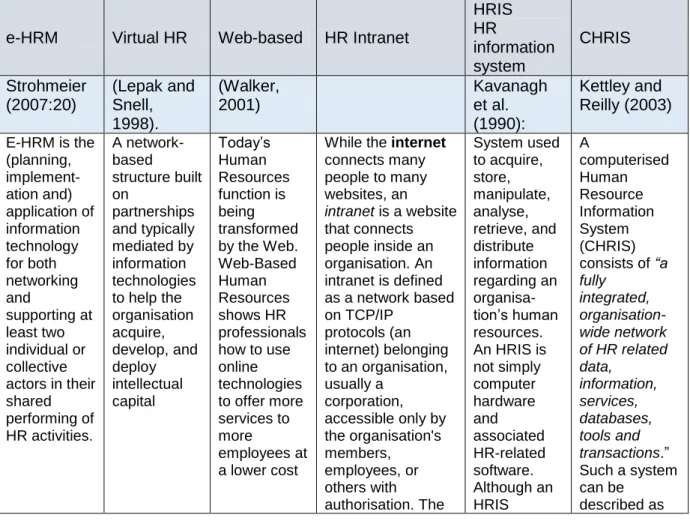
3.4.1 Distinguishing e-HRM, Virtual HR, Web-Based HR, HR Intranet, HRIS, and CHRIS ... 55
3.5 Key differences in approach between face-to-face HR and e-HRM ... 66
3.6 Types of e-HRM Drivers ... 68
3.7 Objectives of electronic Human Resource Management ... 69
3.8 Scope of e-HRM ... 72
3.9 Benefits and outcomes of e-HRM ... 74
3.10 Advantages of e-HRM systems ... 76
3.11 Disadvantages of e-HR... 79 3.12 e-HRM activities ... 80 3.12.1 e-Recruitment ... 82 3.12.2 Advantages of e-recruitment ... 83 3.12.3 Disadvantages of e-recruitment ... 84 3.13 e-Selection ... 87
vii 3.13.1 Advantages of e-selection ... 89 3.13.2 Flaws of e-selection ... 90 3.14 e-Learning ... 91 3.14.1 Advantages of e-learning ... 96 3.14.2 Disadvantages of e-learning ... 99 3.15 e-Compensation ... 101 3.15.1 Advantages of e-compensation ... 103 3.15.2 Disadvantages of e-compensation ... 104 3.16 e-Performance ... 105
3.17 Challenges and drivers (enablers) influencing the implementation of e-HRM ... 107
3.18 Why organisations need to adopt e-HRM ... 110
3.19 Technology Acceptance Models ... 121
3.19.1 Technology Acceptance Model (TAM) ... 121
3.19.2 Advantages and disadvantages of TAM ... 123
3.19.3 Theory of Planned Behaviour ... 125
3.19.4 Limitations of the Theory of Planned Behaviour... 127
3.20 Does e-HRM make a strategic contribution to HRM? ... 129
3.21 Why does e-HRM adoption fail to achieve better success rates? ... 134
3.22 Challenges of e-HRM in developing countries ... 138
3.23 e-HRM in the UAE ... 140
3.24 Summary and gaps in the literature ... 146
3.25 Conceptual framework ... 148
CHAPTER FOUR ... 151
RESEARCH METHODOLOGY AND METHODS ... 151
4.1 Introduction ... 151
4.2 Re-stating the research objectives and research questions ... 152
4.2.1 Research Objectives ... 152
4.2.2 Research Questions... 153
4.3 The importance of research ... 154
4.4 The importance of understanding methodological assumptions in research ... 156
4.5 Distinguishing between methodology and methods ... 156
4.6 The relevance of research philosophies ... 158
viii
4.8 Research Philosophies ... 167
4.8.1 Positivism ... 168
4.8.2 Positivism in the context of e-HRM ... 170
4.8.3 Criticisms of positivism ... 171
4.8.4 Interpretivism ... 172
4.8.5 Justification of the research philosophy for this study ... 176
4.9 Beyond Positivism and Interpretivism ... 179
4.9.1 Realism ... 179
4.9.2 Pragmatism ... 180
4.9.3 Constructionism ... 181
4.10 Research approaches ... 182
4.10.1 Inductive and deductive research approaches ... 184
4.11 Research Methods ... 187
4.11.1 Quantitative methods ... 189
4.11.2 Qualitative methods ... 190
4.11.3 Mixed Methods combining quantitative and qualitative ... 194
4.11.3.1 Defining mixed methods ... 195
4.11.4 The rationale for selecting mixed methods ... 199
4.12 Research Design ... 202
4.13 Types of Research ... 204
4.14 Data collection methods ... 205
4.15 Data collection instruments ... 208
4.15.1 Questionnaire ... 209
4.15.2 Questionnaire Design ... 212
4.15.3 Language and wording of the questionnaire ... 213
4.15.4 Translation of the questionnaire and interview questions ... 217
4.15.5 Interview ... 219
4.15.6 Defining Interview ... 219
4.15.7 Types of Interviews ... 219
4.15.8 Justification of data collection instruments selected by this study ... 221
4.16 The insider researcher ... 222
4.17 Sampling population and sample size ... 224
ix
4.18 Pilot study ... 230
4.18.1 Pilot testing for this study ... 231
4.18.2 Data collection for the pilot study ... 232
4.18.3 Questionnaire formulation ... 232
4.18.4 Descriptive statistics for the piloted study ... 234
4.18.5 Respondents‟ feedback from the Pilot Test ... 235
4.19 Access/Reliability/Validity/Generalisability/Ethics ... 236 4.19.1 Access ... 236 4.19.2 Validity ... 236 4.19.3 Reliability ... 239 4.20 Data Analysis ... 240 4.21 Generalisability ... 241 4.22 Ethical Considerations ... 241 4.23 Chapter summary ... 242 CHAPTER FIVE ... 244
DATA ANALYSIS AND DISCUSSION ... 244
5.1 Introduction ... 244
5.2 Quantitative data analysis ... 245
5.2.1 Descriptive statistical analysis and Cronbach‟s Coefficient Alpha test ... 245
5.3 Quantitative summary ... 289
5.4 Qualitative Data analysis ... 290
5.4.1 Introduction ... 290
5.5 Interview procedures ... 291
5.6 Participants‟ profiles and selection criteria ... 292
5.7 Ethical considerations ... 293
5.8 Analysis of interviews ... 294
5.9 Discussion of interview findings... 294
5.9.1 Theme one - „e-HRM implementation drivers‟ ... 295
5.9.2 Theme two - „e-HRM barriers and challenges‟ ... 297
5.9.3 Theme three – „e-HRM strategic impact on performance and productivity‟ ... 299
5.9.4 Theme four – „e-HRM implementation outcomes‟ ... 300
5.10 Reliability and validity in Qualitative research ... 301
x
5.12 Concluding remarks ... 303
CHAPTER SIX ... 305
CONCLUSIONS AND RECOMMENDATIONS ... 305
6.1 Introduction ... 305
6.2 Positioning this study within e-HRM key literature findings ... 306
6.3 Linking findings to the study objectives ... 309
6.4 Linking Qualitative and Quantitative findings ... 313
6.5 Recommendations ... 315
6.6 Contribution to knowledge ... 317
6.6.1 Implications of the findings of the study ... 317
6.7 Limitations of this study ... 319
6.8 Areas for future research ... 322
REFERENCES ... 323
xi
List of Tables
Page
Table 2.1: Abu Dhabi , General HQ Strategic Plan 34
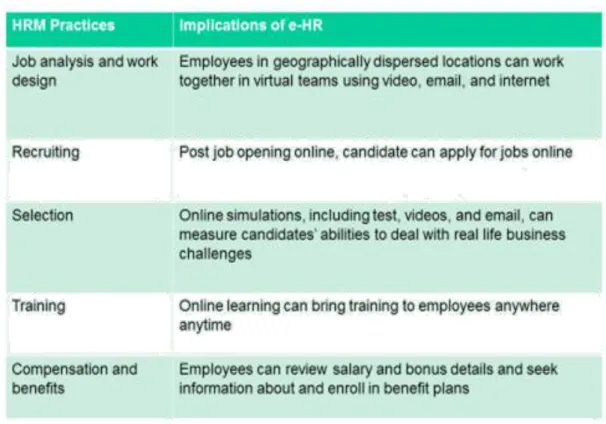
Table 3.1: Implications of e-HR 50
Table 3.2: Differences between e-HRM, Virtual HR, Web-Based HR, HR Intranet, HRIS, and CHRIS 55
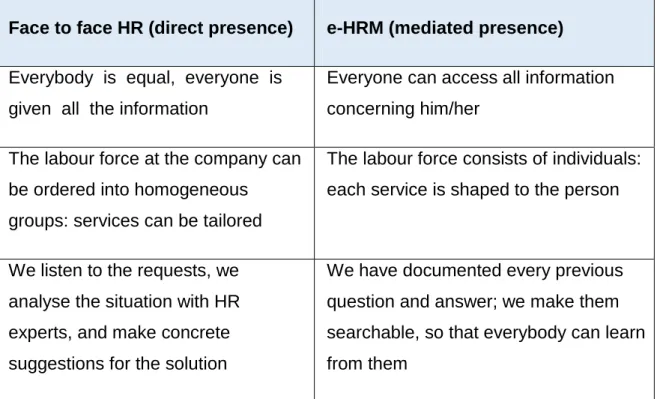
Table 3.3: e-HRM Definitions Table 3.4: Key differences between HR and e-HRM 65
Table 3.5: Key objectives of e-HRM 69
Table 3.6: Advantages and disadvantages of e-learning 98
Table 4.1: Relationship between epistemology and ontology 159
Table 4.2: Differences between two main paradigms 161
Table 4.3: The characteristics of Positivism and Interpretivism 163
Table 4.4: Advantages and disadvantages of Positivism and Interpretivism 169
Table 4.5: Strengths and weaknesses of Positivism and Interpretivism 170
Table 4.6: Comparisons of four research philosophies 176
Table 4.7: Key differences between deductive and inductive approaches 179
Table 4.8: Strengths and weaknesses of quantitative methods 184
Table 4.9: Strengths and weaknesses of qualitative methods 186
Table 4.10: Key differences between qualitative and quantitative methods 187
Table 4.11: Mixed methods 190
Table 4.12: Quantitative, mixed methods and qualitative research methods 191
Table 4.13: Instruments of data collection 198
Table 4.14: Strengths and weaknesses of six sources of evidence 200
Table 4.15: Relevant types of data collection methods 202
Table 4.16: Advantages and disadvantages of questionnaire 204
Table 4.17: Strengths/weaknesses of interviews as data collection instrument 214 Table 4.18: Interviewees‟ profiles 223
Table 5.1: Reliability Test 238
Table 5.2: Gender of participants 239
xii
List of Figures
Page
Figure 1.1: Structure of the study 19
Figure 2.1: Political and administrative map of the UAE 21
Figure 2.2: The Structure of the Federal Supreme Council 25
Figure 2.3: Population growth over the last decade 27
Figure 2.4: Organisational Structure of the Abu Dhabi , 32
Figure 2.5: ADPD HR structure 41
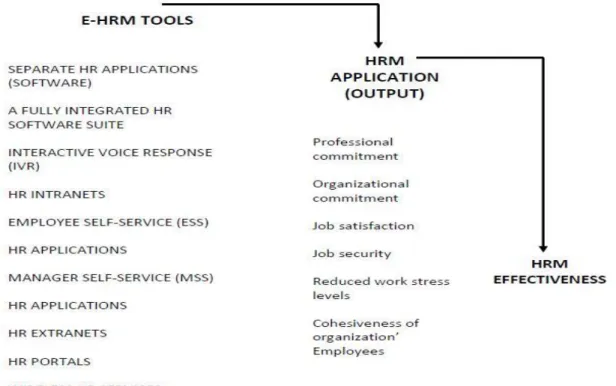
Figure 3.1: Relationship between e-HRM tools, HRM applications and HRM effectiveness 66
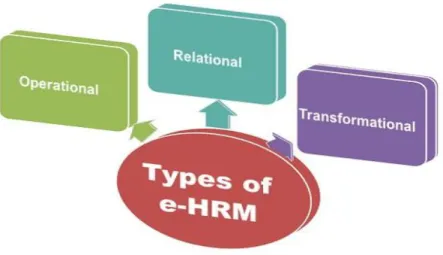
Figure 3.2: Types of e-HRM 67
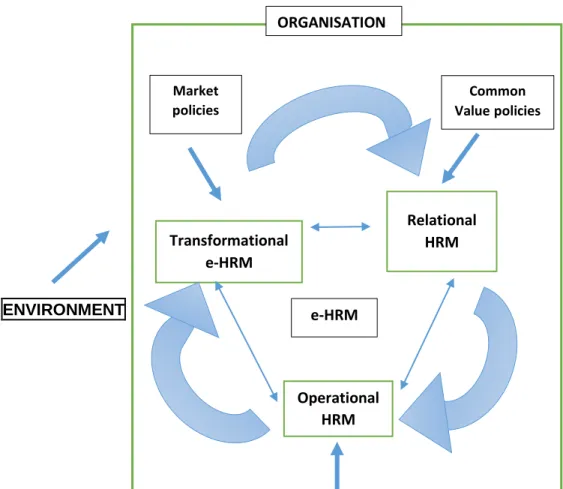
Figure 3.3: e-HRM areas based on organisational policies 72
Figure 3.4: e-HRM activities 79
Figure 3.5: e-Recruitment Process 85
Figure 3.6: Terminology used in the field of virtual learning 93
Figure 3.7: Digital HRM environment-in-action 109
Figure 3.8: Davis‟ (1986) Technology Acceptance Model 120
Figure 3.9: Jaen‟s (1991)‟s Theory of Planned Behaviour 123
Figure 3.10: Federal eGovernment Strategy 138
Figure 3.11: eRecruitment Subsystem at Abu Dhabi , 141
Figure 3 12: Conceptual Framework: Influencing e-HRM Implementation Factors 146
Figure 4.1: Linking reasoning with epistemological stance 181
Figure 4.2: Summary of the methods used in this study 201
Figure 4.3: Common sampling techniques and types 221
Figure 5.1: Distribution of Respondents according to age 240
Figure 5.2: Distribution of Respondents according to their level of education 241
Figure 5.3: Distribution of Respondents according to years of service 242
Figure 5.4: Respondent‟s department 242
xiii
List of Abbreviations
ADPD Abu Dhabi , Department UAE United Arab Emirates MNC Multinational Corporation HRM Human Resource Management
IHRM International Human Resource Management IS Information Systems
ICT Information and Communication Technology
UTAUT Unified Theory of Acceptance and Use of Technology ERP Enterprise Resource Planning
ESS Employee Self-Service MSS Manager Self-Service
1
CHAPTER ONE
INTRODUCTION
1.1 Purpose of the study
In today‟s volatile economic world and faced with fierce global competition, organisations are compelled to keep pace with developments by being innovative and having adaptive insights in order to survive. As the UAE is one of the fastest growing developing countries with a leading role in initiating innovative and creative approaches to sustain economic growth, this study aims to determine whether the Abu Dhabi‟s , Department is ready to embrace change in a dynamic way by adopting electronic Human Resource Management (e-HRM). Electronic HRM is a relatively recent concept which is “an umbrella term covering all possible integration mechanisms and contents between HRM and information technologies, aiming at creating value within and across organisations for targeted employees and management.” (Bondarouk and Ruel, 2009: 507). The study examines the urgent need to adopt eHRM and demonstrate the relevance and potential benefits of implementing it within the , Department in Abu Dhabi. The adoption of e-HRM, fully or partially, will entirely rely on the skills and readiness of Abu Dhabi‟s , Department. (Almanhali et al, 2013). This study seeks to find out the level of readiness for implementing e-HRM and identify the drivers and obstacles to its adoption within the Abu Dhabi‟s , Department. It analyses the weaknesses and strengths of the current management and HR practices in dealing with its daily activities and operations.
2 This study will also focus on the importance of e-HRM and the use of technology in its implementation by analysing the positive or negative impact e-HRM will have on HR managers and employees. Electronic human resource management and the use of information technology (IT) to strengthen HRM processes is gaining popularity and is widely being applied in HR departments to enhance their efficiency and effectiveness by standardising and streamlining HR processes and by relieving HR personnel from administrative burdens (Stone et al. 2015, Bondarouk, Ruël, Parry, 2017, Schüßler, 2008, Lengnick-Hall and Moritz, 2003). This study investigates how the Abu Dhabi , (ADP) deals with and adjusts to the introduction of e-HRM as they need to be ready to implement new initiatives and new work practices. It assesses the perceptions and views of ADP employees about e-HRM readiness and how change is managed in order to develop a deeper understanding of the current practices and assessing the effect of e-HRM on the Abu Dhabi , Department (ADPD) as a whole. There is also a need to focus on providing a strategy for merging the HR functions with the e-HRM factors while at the same time investigating if the integration between the two is possible and to what extent. The study will also aim at identifying all possible challenges the integration process may present, such as:
The adaptability of the organisation to change The implementation process
Assuring the security of information during transition and also after the transition
3 The purpose of the study is to find out the implications of implementing e-HRM in the ADPD with the provision of subsequent recommendations that will guarantee a safe transition and the benefits for each , department in the UAE. To what extent are these departments implementing e-HRM effectively particularly in terms of work structure and planning, recruitment and selection, training, performance appraisal, and compensation and benefit issues which can be enhanced by utilising e-HRM.
1.2An overview of the key literature
Extensive research has been conducted on the topic of e-HRM. The common theme that emerges from the review is that there is no single theory or approach that defines or explains e-HRM. But there is a consensus of opinion that e-HRM is one of the most implemented applications in organisations (Lee, 2011). Today‟s key debate is on the need for resource efficiency and reduction of cost. As a result, many developed countries believe that greater utilisation of technology by HR departments can improve their employees‟ productivity and business efficiency (Masum, 2015, Bondarouk and Brewster 2016, Kuipers, 2017, Sareen 2015, Bondarouk, Harms and Lepak 2015, Bhatt 2015 Bondarouk, Parry & Furtmueller, 2017, Eckhardt et al, 2014; Strohmeier & Kabst, 2014; Yousoff, Ramayah, and Othman; 2015). While there is little robust evidence (at a national scale) to support this assertion, most developed countries have improved a wide range of factors and initiatives to promote higher levels of technology uptake by HRM and the workforce (Yousoff, Ramayah, and Othman; 2015; Marler and Fisher, 2013). Many
4 emerging countries, such as the UAE, are now embarking on expensive infrastructure and policy initiatives to facilitate higher levels of technology adoption in electronic human resource management transformation, particularly in the public sector such as the Abu Dhabi , Department (Hussain et al, 2015). e-HRM has emerged as an enabling tool to improve cost effectiveness and enhance transparency. This research investigates government enablers that can assist HR activities at ADPD to enhance their adoption and use of e-HRM. A parallel stream of investigations is undertaken to reveal where the introduction of e-HRM can have the largest positive impact on these HR activities. Investigating these two complementary streams - where government factors enhance e-HRM transformation in the UAE and the areas of HR activities where technology has the greatest impact - will enable, for the first time, a consideration of the role and impact of government factors to promote HR use of technology. A framework has been developed to examine both streams of investigation. Consequently, this leads to the development of an evidence-based approach that highlights the areas where government factors for e-HRM adoption by the ADPD should have the greatest impact on performance and efficiency. These two streams of investigation largely focus on governments and businesses in developed countries. Since developing and emerging countries, like the UAE, have only recently developed factors in these areas, great care must be taken to ensure these „developed world‟ factors and impacts are appropriate and might be replicated in the UAE and other emerging countries. Results from this first phase of the study therefore must be considered for their appropriateness in a UAE context. This „local‟ contextualisation process will be cross checked for accuracy and relevance by sharing phase one
5 results and policy recommendations with a sample of leading HR officers at ADPD. The study will be undertaken with evidence based on recommendations for the development of e-HRM factors in the ADPD to enhance HR practices. Recommendations are expected to be approved by leading UAE consultants and experts of HR and policymakers at ADPD.
Thus e-HRM is a research area that has been studied from different perspectives and in many sectors and it is a topic which continues to evolve and attract attention from researchers and organisations. The literature is polarised between the success and failure rates of e-HRM.
1.2.1 Transition from HRM to e-HRM
To keep pace with rapid developments and to deal with the complex nature of the work place, there is need for Human Resources to move with the times and adopt e-HRM, which has become imperative to address the challenges in the information-based economy. Adopting e-HRM technologies that involve the use of the internet can enhance and improve , departments immensely (Foster, 2009). It is clear that some , departments in developed countries such as the Hong Kong , force and the UK , service, have adopted e-HRM technologies which has reduced costs and improved the efficiency of HR services (Caroll, 2007). Some of the improved services include recruiting trainees, training them and planning of manpower. (Ulrich and Dulebohn (2015, Bondarouk, Parry & Furtmueller, 2017, Stone et al. 2015, Bondarouk, Ruël, Parry, 2017) highlight the benefits of e-HRM and how to measure such transformation programs. However, it is essential to
6 establish roles, responsibilities and processes to enable a seamless transfer of service. If there is inadequate trust between the management and the suppliers, things can go wrong quickly and with serious consequences. (Ababneh and Chhinzer, 2014)
To date, it is widely acknowledged that there is little research on e-HRM and HRM in the United Arab Emirates (UAE), more specifically the Abu Dhabi , Department; more studies need to be carried out and this can assist in measuring the benefits of implementing a computer based system. Such studies can help the ADPD in determining whether HR employees‟ performance can be enhanced and placed into more strategic roles. This could improve the efficiency of the , department in general and contribute to better welfare for the employees. For that reason, and in order to tackle the existing research gap and support the implementation of e-HRM in ADPD, assembling knowledge on the main obstacles and drivers that will facilitate the transition is essential and therefore provide a basis and rationale for this research. Examining the possible impact of implementing e-HRM in ADPD will benefit from studies that have been carried out in different organisational and cultural settings. This research will focus on the studies that are well thought-out and considered imperative for understanding the process the , department in Abu Dhabi has to go through in order to implement e-HRM.
7 Many HR experts have identified the importance of e-HRM. Strohmeier (2007) states that e-HRM is a compilation of applications which help integrate information and mechanisms between HR and IT departments. Strohmeier (2007) suggested the aim of e-HRM is to create value for managers and employees within an organisation. Withers et al (2010) argue that e-HRM is a system that allows employees and the management greater accessibility to human resource related services and information through the organisation's web portal or intranet. According to Withers et al. (2010), companies since the mid-1990 have increased the use of technology in HR activities. Given the fact that e-HRM is a relatively new concept in the United Arab Emirates, very few organisations are ready for its adoption (Strohmeier, 2007). This observation is evident in the Abu Dhabi , because the HR department is using traditional methods; there is minimal documented data on the evolution of e-HRM in the United Arab Emirates (Strohmeier, 2007). This is in contrast to a country that spearheaded the implementation of both e-Government and smart government and also leads in information and communication technology. The e-Government Transformation Strategic Framework 2011-2015 aims to take strategic initiatives from the federal level in transforming all government services and making them available digitally via various channels. Recent advances have been witnessed with the government rolling out complete e-Governance and establishing an e-Connection between the Federal Financial Systems and the Abu Dhabi government. Hence the UAE Government has the infrastructure and the resources to introduce e-HRM systems across the entire public sector, including the , department. However, the challenge for Abu Dhabi , HR department and other UAE public sector units in HR is the
8 capability to convert the stored information into data which would be beneficial and important to managers, facilitating a transformation of HR into a strategic business partnership (Ababneh, and Chhinzer, 2014; Bondarouk and Ruel, 2009). Since 2001 large organisations have been reported as adopting e-HRM to allow them to assemble, store, process and influence large amounts of data inputs, reducing the cost of sustaining HR data while providing precise information about HR, anytime and anyplace. Data on the use of e-HRM in the United Arab Emirates , department is extremely sketchy; this is due to the negligible number of empirical studies conducted on this front (Parry, 2011).
In short, although the main benefits of e-HRM are an increase of quality and speed, the existing administrative processes in the form of a bureaucratic machinery appear to be rather slow and inefficient, conditional upon mainly paper-based processes.There is clearly growing pressure for the Federal Government to improve, deliver and achieve excellence in the quality of services in the public sector in line with the UAE 2030 vision.The traditional HR practices in the ADPD show resistance to the development of innovative and modern systems and there seems a lack of awareness of the benefits of adopting e-HRM at the ADPD.There is also inadequate staff training for e-HRM. These points highlight the urgent need for an effective HR management approach using e-HRM.
9
1.4 Research objectives
The main objectives of this research can be summarised as follows:
1. To analyse the current problems and challenges impeding the implementation of e-HRM at AD , Department.
2. To examine the benefits and success factors for implementing e-HRM in Abu Dhabi , Department.
3. To explore the views and perceptions of ADP management on the drivers, barriers and enablers to e-HRM.
4. To determine whether western e-HRM models can be implemented in UAE settings, in particular ADP.
5. To make recommendations based on the findings of this study on how to improve the provision and future development of e-HRM within ADP.
1.5 Research Questions
In order to achieve the objectives, this study addresses the following: the main question is: What are the benefits of implementing e-HRM at the Abu Dhabi , Department?
There are also specific research questions:
1) What are the current problems and challenges impeding the implementation of e-HRM in the AD , Department?
10 2) Can western e-HRM models be implemented in a UAE setting, in
particular ADPD?
3) What are the perceptions and perspectives of managers and employees regarding the drivers of e-HRM implementation?
1.6 Significance of the study
Although, there has been extensive research conducted in the area of developing and implementing e-HRM in various sectors and in many countries, the topic still raises interest and is important and relevant to the UAE, in particular to ADPD in light of the recent UAE 2030 Vision to introduce excellence in government institutions in order to enhance the quality of public services. Thus, there is an urgent need for more in-depth research. The present study is therefore, worth undertaking, as it aims to determine how to implement e-HRM within ADPD successfully, creating more awareness of the importance of e-HRM development and the problems associated with it, which are of primary concern to any organisation in order to successfully address these problems. Furthermore, by identifying the key weaknesses in e-HRM, recommendations can be made about which approach or model will be suited to the ADPD. This research seeks to find out how implementing e-HRM will take the organisation to a higher level of efficiency. To this end, the case study will be conducted in several ADPD HR departments in Abu Dhabi. As an employee of the ADPD, this will enable the researcher to collect the relevant data. Choosing the ADPD departments for the
11 case study means the researcher can administer the data collection techniques effectively. The study seeks to fill the gap regarding the implementation of e-HRM in the UAE which would help in developing quality performance by the ADPD HR workforce. Furthermore, the new goals and challenges of the ADPD in the UAE in recent years have increased the need for more research in the area in order to investigate and evaluate the impact of implementing e-HRM on the organisation, build the quality of leadership, enhance organisational performance and quality of services, in order to face the new challenges and achieve the 2030 UAE Vision.
To conclude, wealth creation is no longer limited by a nation‟s control over natural resources, its physical infrastructure, or its geographical location, etc. (Noe et al, 2012). The only limit to wealth creation is the degree of success a nation has in applying its human capital and attracting financial capital (Withers, et al. 2010). This study will provide evidence based recommendations for the development of e-HRM, technology adoption, implementation and its impact on Abu Dhabi , Department. These recommendations will be “cross checked” by leading Emirati , officers and IT senior technicians at Abu Dhabi , Department. Therefore, it will enable, for the first time, a review of recommended government factors to enhance technology use in HRM at ADPD. A framework has been developed by the researcher to examine these factors and practices, mainly in recruitment, e-training, selection process development, Key Performance Indicators (KPIs) and performance development. Results from this research will be considered for their
12 appropriateness in a UAE context and could be applied at all , department in the UAE in the future.
1.7 Background of the study
The United Arab Emirates (UAE) is located in the Middle East, situated on the Arabian Peninsula between Oman and Saudi Arabia in the south west corner of the Arabian Gulf. It consists of seven states (e.g. emirates in Arabic) that include Abu Dhabi, Dubai, Sharjah, Ajman, Umm Al-Quwain, Ras Al-Khaima and Fujaira (UAE Interact 2014). Whilst Abu Dhabi is the UAE‟s federal capital, Dubai is well established as the trading and commercial hub of the nation, building its reputation from humble origins as a small fishing and trading village in the 18th century.
1.7.1 UAE before the discovery of oil
The UAE‟s population consisted mostly of fishermen or pearl divers before the discovery of oil at the turn of the 20th century. Since the 1970s, the UAE has witnessed political, social, economic and industrial transformation, made possible through development and substantial investment. Today, it has achieved an income level similar to that of the industrialised nations. The creation of the United Arab Emirates in 1971 was the result of the consultations and negotiations that began in January 1968. The political entity of the United Arab Emirates was created as a federal state when the British colonial administration withdrew from
13 the Arabian Gulf. The federation, formerly known as the Trucial States, was formed on December 2nd 1971. The new state is made of the seven sovereign emirates. The UAE is an active member within the oil and energy organisations such as Oil Producing and Exporting Countries (OPEC), Organisation of Arab Producing and Exporting Countries (OAPEC), and International Renewable Energy Agency (IRENA).
In recent decades, the UAE has become the third largest exporter of crude oil and gas in the Gulf. With oil prices plummeting since 2015, the government has attempted to diversify the national economy. This has led to the growth of industry, construction, commerce, transportation, tourism, farming, fisheries, and communications.
1.7.2 Profile of the Abu Dhabi , Department
The Abu Dhabi , department was established in 1957, which marked the beginning of a new era in terms of law and order management, as till then the UAE had used traditional self-security methods and approaches. For the first time in the history of the country, a modernised , department had been formed, an initiative directly under the supervision of the then Ruler of Abu Dhabi, the late H.H Sheikh Bin Sultan Al Nahyan (H H) (AD ,, 2014).
The steps taken to improve and modernise the Abu Dhabi , department stem from advancements in terms of techniques and ways of policing worldwide over the last
14 two decades. In addition, there have been improvements in terms of the working environments of the , departments as well as the implementation of rewards and recognition systems, perks and so on, putting Abu Dhabi , Department on a par with other international policing organisations (Elbanna, 2013). The focus has been on the improvement and access to modern technology, on utilising practical experience, which has earned the Abu Dhabi , department a name in the middle-east for a policing department that ensures the safety of its citizens, and facilitates the country‟s various developmental efforts (Al-Ittihad newspaper, 2013). The Abu Dhabi , Department has won a number of awards and honours for its excellent services, including international awards and recognition. It adopted a new approach, forming a community partnership, in which the focus is on building relationships between the general public and the , department for smooth and effective maintenance of law and order (AD ,, 2014). The department has made tremendous efforts in building and creating institutional capability and an organisational culture that encourages and recognises excellence (Rees and Althakri, 2008). It has a performance monitoring system in place that not only measures the level of progress made by the department in terms of achieving its strategic objectives, but also helps in deciding what necessary steps should be taken in order to get rid of any unwanted situation. Moreover, the department also set up an external accountability mechanism to measure the effectiveness of the department and its compliance to various laws and regulations (Absal and Reporter, 2008).
15 Abu Dhabi , GHQ has a total of 36,000 employees inclusive of civil defence, border security, and both fire and ambulance services (Almanhali et al, 2013). Abu Dhabi , has seven human resource departments, namely: HR Planning Department, Education Department, , Schools Department, Training Department, Personnel affairs Department, Appraisal Department, Recruitment and Selection Department. ADPD HR has made an undertaking to initiate an electronic work environment for the , departments, especially for e-recruitment (www.ad,.gove.ae). Few studies shed lights on the impact of e-HRM on , departments in general and ADPD in particular. According to Mellahi and Budhwar (2006), in the Middle East, HRM is not yet completely developed and in public sector units, the top management have insufficient professional skills. For e-HRM to be a strong point, Middle Eastern countries need to realise the strategic value of HRM functions. According to Almanhali et al, (2013), this department presents an essential e-service; the recruitment department uses the website to advertise jobs vacancies and collect in the applications which are assessed, evaluated and candidates selected. After that, the recruitment department puts together the interviews, medical tests, and other requirements. After all processes are concluded, the chosen candidates are moved to the Personnel Affairs department so that the necessary arrangements can be made. This reveals just a basic use of Information Technology (IT) in HR; it is not e-HRM. In a study conducted by Ali and Magalhaes (2008), where they conducted an assessment of HR and IT managers in leading companies in Kuwait, they uncovered that meeting some of the challenges lacked management support, encountered IT hitches, and lacked enough time. The results from the study
16 concluded that in the implementation of e-HRM, the main challenge was not necessarily being on familiar terms with the challenges of e-HRM but rather knowing what the right management processes are in order for a company to achieve business success as well as setting and achieving the goals of the different departments that exist in HR in line with the strategic plan of the organisation. In the above case, the review of the process basically meant looking into which operational processes called for reengineering to achieve the fit that exists between work on a daily basis and improved organisational success. Condrey (2010), while carrying out a case study on , departments, established areas where activities of the work can be smoothed by the use of new measures or improvements in technology. Indications show there have not been limited case studies and research conducted on the implementation of e-HRM in the United Arab Emirates (UAE) and in ADPD in particular. Almanhali, et al (2013) conducted an examination on the factors that led the ADPD to develop a custom-made e-HRM system. The other study conducted by Abdulla (2009), looked into job satisfaction in the , department of Dubai. These case studies did not look at the role of HR or implementation of e-HRM in the , departments in Abu Dhabi. Additional research was conducted by Al-Nuseirat and Biygautane (2014). However, these studies lack empirical evidence and practical implications.
1.8 Structure of the research
The study examines the challenges and importance of implementing e-HRM processes to support and enhance HR efficiency within ADPD. It consists of six
17 chapters:
Chapter One: provides an executive summary of the research; it presents the research background and clearly explains the problem justifying why it is important and contextualises the problem within an organisational setting. It also sets the research questions and objectives.
Chapter Two: provides the research context which consists of an overview of the UAE describing the history, political, economic and socio-cultural aspects which have a direct bearing on ADPD.
Chapter Three: critically reviews the literature related to e-HRM and the benefits of integrating e-HRM to enhance ADPD HR efficiency. It appraises the related debates and linkage between e-HRM authors. The literature informs the research objectives and lists gaps in previous studies, adding value to the current research. The literature review is, therefore, segmented into the following core areas: definitions of e-HRM; emergence and evolution of e-HRM research; e-HRM implementation success and failure rates. It identifies the gaps in related studies and provides a conceptual framework.
Chapter Four: discusses the methodology and methods that are applied in line with the aims and objectives of this study. It justifies the methodology paradigm that the researcher follows. This chapter presents also the population and subject groups, followed by the methods of data analysis. In addition, it illustrates the
18 instruments of data collection. They are namely: the pilot testing, questionnaire survey administration and the semi-structured interviews conducted concerning ADPD decision makers.
Chapter Five: presents the findings of the data collected from the questionnaire survey. It gives the background of the participants. This chapter also analyses the collected data from the ADPD HR employee survey. It provides the results of the qualitative data from the semi-structured interviews.
Chapter Six: interprets and justifies the research findings in line with the set objectives/research questions. It provides a discussion of the findings of both the questionnaire survey and semi-structured interviews. In addition, it draws conclusions and makes recommendations and addresses the limitations of the study. It presents suggestions for further research and highlights areas that benefit the decision-makers.
1.9 Summary
This chapter provides the background information for this study. It clearly explains the purpose of the study which focuses on the benefits of embedding e-HRM within ADPD and justifies why it is important and worth undertaking. It contextualises the problem or issue within the organisational setting, ADPD. It formulates the nature of the problem to be addressed by this study. It also sets the objectives supported
19 by precisely written research questions with observable outcomes. Finally, it outlines the structure of the study as follows:
20 Figure 1.1: Structure of the study
Chapter One Introduction to the research Chapter Two Research context Chapter Three Literature review Chapter Four Methodology and methods Chapter Five Data analysis Chapter Six Conclusion & recommendations
21
CHAPTER TWO
RESEARCH CONTEXT
2.1 Introduction
This chapter provides an overview of the UAE in terms of its geographic, economic, and political background and an overview of Abu Dhabi , Department (ADPD) in order to gain an understanding of the setting of this study.
2.2 Geographical background
The United Arab Emirates (UAE), located in the Arabian Gulf, is part of the Gulf Cooperation Council (GCC) along with Bahrain, Kuwait, Oman, Qatar, and Saudi Arabia.. The UAE has borders with the Arabian Gulf to the north, the Kingdom of Saudi Arabia to the south and west, while Oman is to the east. It has a coastline on the Gulf of Oman and the Arabian Gulf. The total surface area of UAE is about 83,600 square kilometres of which Abu Dhabi, the capital, occupies approximately 87% while Dubai, the second largest area, covers 5%.
A permanent constitution was adopted in 1996, establishing Abu Dhabi as the permanent capital, and granting each emirate much political and economic autonomy. Since 1971, the Supreme Council has ruled over the country. It is made
22 up of the rulers of each emirate, and led by a president elected by members of the Supreme Council.
Figure 2.1 - Political and administrative map of the UAE
Source: Political and Administrative Map of United Arab Emirates. Google images.
2.3 Political structure
The seven emirates of the UAE are each governed by a ruling family. The head of the Abu Dhabi ruling family holds the Presidency, and the head of the Dubai ruling family holds the position of Prime Minister. Each emirate has it is own control over its social and economic policy, administration and oil and mineral wealth. Nevertheless, the United Arab Emirates has shown a high commitment towards the
23 expansion of the federal jurisdiction. For example, the rulers of the seven emirates agreed to unify the armed forces under a central command. In addition, local governments moved towards a federal government in the key areas of labour, national economy, foreign policy and property regulations. While most of the power rests in the hands of the individual emirs (leaders) of each emirate, in recent years, more power has been given to the federal government that oversees the whole of the United Emirates. The UAE is a modern and wealthy country. It is relatively moderate in the area of foreign policy, which has given it an important role in diplomacy in the region.
The United Arab Emirates can be said to have a blend of traditional patriarchal leadership and political loyalties. Article 49 of the Constitution of the United Arab Emirates defines the role of The Supreme Council which controls the affairs of the Union in general. The highest level of the UAE‟s federal government is called the Federal Supreme Council. It is made up of the rulers of each of the seven emirates, who choose and are headed by the country‟s president. Though it is not a written rule, traditionally the leader of Abu Dhabi is elected as President. The Supreme Council elects the Council of Ministers, which is responsible for managing all internal and foreign affairs, and is headed by the Prime Minister (traditionally the leader of Dubai). The Council of Ministers has 22 members, half of whom are chosen by the leaders of the emirates, and the other half by the Electoral College whose members are appointed by the emirates.
24 The UAE is wealthy because it has one of the smallest populations in the world and has one of the highest GDPs. Its wealth comes from oil revenue; the UAE‟s oil reserves are the seventh largest in the world and the country has a large quantity of natural gas reserves. Since its formation in 1971, the UAE has enjoyed political stability. The existing political structures appear to suit the tribal society of the UAE. In addition, the distribution of huge oil revenues in the form of social and economic infrastructure, high salaries and a high standard of social services, such as health and education, has raised the standard of living for UAE citizens and considerably reduced the likelihood of internal political and social unrest. It is worth mentioning that the UAE government has maintained a relatively good record on human rights since the formation of the state. This in turn has promoted political and social stability. The seven emirates merged into one political identity united under a national flag but with the freedom to run their internal affairs. The United Arab Emirates‟ Constitution defined the authority matrix for the Federal Government and Local Governments. (Official portal of UAE Government 2015)
2.3.1The Federal system
The United Arab Emirates was established when the seven individual states joined forces. The seven rulers agreed to work together in building a provisional constitution to prepare the country for the future and identified the required roles and responsibilities. The United Arab Emirates Constitution provided the Federal Government with the authority to manage foreign affairs, security and defence, education, public health, nationality, immigration, postal services, air traffic control,
25 licencing of aircraft, telephone, communications services, labour laws, banking, financial sectors, and so forth. (National Media Council 2013)
The United Arab Emirates Constitution was further revised and enhanced in 2004. The enhancement was led by His Highness Sheikh Mohammed bin Rashid Al Maktoum, Vice President and Prime Minister of the United Arab Emirates and the Ruler of Dubai, under the supervision and direction of Sheikh Khalifa bin Zayed Al Nahyan, the United Arab Emirates‟ President and Ruler of Abu Dhabi. It was further amended in 2007 by launching the United Arab Emirates Government Strategy that reflects six sectors including social, economic, public sector and rural areas developments and covering twenty-one key issues.
Furthermore, the United Arab Emirates‟ Supreme Council believes that decision-making should involve selected citizens who represent the rest of society in the Federal National Council, the United Arab Emirates‟ parliament. It was agreed among the Supreme Council in 2006 to introduce indirect elections of fifty percent of the seats in the parliament, and in 2011 the electorate was enlarged to include nearly one hundred and thirty thousand people.
26 Figure 2.2. The Structure of the Federal Supreme Council
Source: UAE Interact – 29 July 2015
The United Arab Emirates Federal Government includes:
The Federal Supreme Council, which consists of the rulers of the seven emirates.
The Cabinet, also known as the Council of Ministers.
The Federal National Council (FNC), which consists of representatives of each emirate.
The Federal Judicial Authority, which includes the Federal Supreme Court and Courts of First Instance.
(Official Portal of UAE Government 2015)
27 in a national development plan, while some individual emirates have also launched their own economic diversification programs. Like other Gulf States, these initiatives strive to create long-term roadmaps for economic progress that align policies, build human capital potential and cultivate the private sector. Common themes in these development plans include the Emiratisation of the workforce, which currently relies heavily on expatriate labour, and increased participation in the global economy.
2.4 The UAE population
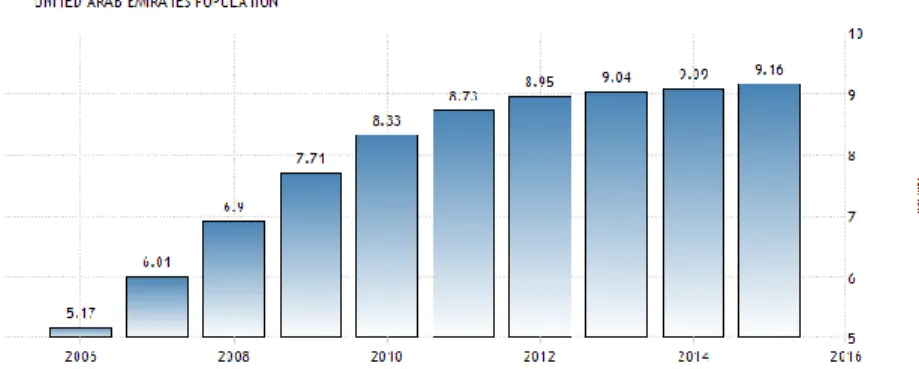
The demography of the UAE is extremely diverse. The country's net migration rate stands at 21.71, the highest in the world. The population in the UAE averaged 0.09 million in 1960. The current population of the United Arab Emirates as of Thursday, July 28, 2016 is 9,274,706, based on the latest United Nations estimates. According to the Statistics Centre Abu Dhabi (SCAD 2015), the phenomenal pace of change in the UAE over the past few decades has led to a huge rise in the population:
The population is now 133 times what it was in 1960, having grown at an average annual rate of 9.5 percent, and the number of Emiratis
doubled 46 times - with the non-Emiratis population increased 243-fold. (UAE Interact - 29 July 2015)
28 migrant workers. The latest estimates suggest around 12% of the population are UAE nationals while the majority of the population are expatriates of more than 200 nationalities worldwide.
Figure 2.3 Population growth over the last decade
Source: World Bank - Population Estimates July 28, 2016
Abu Dhabi, thecapital of the UAE, is the richest city among the other emirates with a population of around 2.65 million as of 2014 (Statistics Centre Abu Dhabi 2015). Dubai is the second largest city in the United Arab Emirates in terms of area and accounts for 40 per cent of the UAE economy with oil and gas representing 2 per cent of it is economy. Dubai positioned itself as a regional hub for business, leisure and living. Dubai has a population of around 2.21 million as of 2013 (Dubai Statistics Centre 2015).
2.4.1 The UAE demographic diversity and cultural background
29 many cultures. Evidence showed that people were living in the United Arab Emirates from many centuries ago and were using it as a migration route to Asia. Currently, while UAE citizens account for about 12% percent of the total population of roughly 10 million, foreign workers, predominantly from South and Southeast Asia make up approximately 60 percent of the population. The remainder of the expatriate population includes a significant number of Arabs - Palestinians, Egyptians, Jordanians, Yemenis, and Omanis - as well as many Iranians, Pakistanis, Indians, Bangladeshis, Afghans, Filipinos, and West Europeans. Arabic is the official language. Other languages spoken include Persian, English, Hindi, Persian, and Urdu. English is widely understood in the UAE. Figures taken from the contracting company of a case study published by Fitch (2013) show the following breakdown of the foreign workforce within the UAE:
45% Indians 20% Pakistanis 15% Bangladeshis
20% Arab (originating from Egypt, Jordan, Syria and Lebanon)
All of the above come from varying backgrounds, some of whom are skilled, some semi-skilled and some already having professional work experience.
2.5 Emiratisation policy: giving Emirati nationals preferential treatment
Emirati people of all economic classes have voiced concern about the ever-increasing numbers of foreign companies and workforce, and as a result, the
30 Emirati government felt obliged to introduce an Emiratisation policy. This policy aims at creating job opportunities for UAE nationals, so that the national workforce could be supported, inspired and promoted (Al-Ali, 2008). The numbers of companies located in the UAE has increased rapidly and these companies have started to take part in activities that are linked to the development of their own citizens. The national population are always considered to be an exceptional asset for the development of the economy; however the lack of nationals within the overall workforce poses a great problem, which has led to the hiring of people from many nations for different industries. Arguments have re-emerged that many Emirati nationals remain unemployed even though the UAE has flourishing growth and economic development. Both the public and private sectors are subject to the implementation of the policy of Emiratisation. This policy was formed by the Council of Ministers of the UAE in the early 1990‟s to counterbalance the effects of a foreign workforce. This policy takes into account those barriers and hurdles that get in the way of Emirati individuals when hiring in the labour market begins. One of the many objectives of this Emiratisation policy is to provide citizens with optimum job opportunities (Toledo 2006).
One aspect that is observed is that this policy has been implemented to a greater degree in the public sector rather than the private sector, which has led to the devising of certain rules to make sure it is implemented the same way in the private sector as well. A study carried out in the banking and insurance firms of the private sector has shed light upon the fact that low levels of talent and skills including a weak grasp of spoken and written English among potential employees and a lack
31 of employer trust has led to difficulties for Emirati individuals when looking for a job. Al-Ali (2008) has also stated that Emirati nationals have the impression that there are fewer career opportunities offered in the public sector along with low wages in comparison to the private sector.
From the 1970s, because of substantial investments, the UAE has seen several extraordinary political and socio-economic changes in all economic and industrial activities made possible through the massive production and export of oil products (i.e., crude, fined, petrochemicals). With an annual GDP growth rate of 13.2% UAE has an open economy that identifies the country as one of the fastest growing economies in the world. This situation has led the International Monetary Fund (IMF) to state that:
It is critical that the UAE take additional steps to liberalise the economy and pursue further structural reforms, including lifting remaining barriers to foreign investment outside the duty free zones and enhancing the long-term employability of the national labour force through vocational education and technical training programmes (Rees et al., 2007).
On the other hand, the Official Yearbook of the UAE (Yearbook, 2013) states that: The employment of UAE citizens is skewed towards the public sector, whereas out of the four million employed in the private sector, Emirati citizens account for only 20,000 jobs. In contrast, Emiratis accounted for more than 80 percent of government sector jobs in 2010 to reach the so-called “saturation point”. The highest proportion of the UAE citizens
32 employed in the private sector is in the services, real estates, banking, and market sales segment, which absorbed 19.8 percent of the Emirati workforce.”
2.6 Background and structure of the Abu Dhabi , GHQ
Since the formation of the Abu Dhabi , (ADPD) in 1957, many changes have been put in place as well as a great deal of advancement, often through the initiatives and endeavours of the leaders and the dedicated , force. H.H Sheikh Khalifa Bin Zayed Al Nahyan, President of Abu Dhabi points out:
The security and tranquillity which our country is enjoying is a result of the efforts exerted by those men, who are standing up to their responsibilities and perform their tasks with sincerity day and night, towards all citizens and residents and we all appreciate the role they are playing of the urban change and the rapid development of the state. (H.H Sheikh Khalifa Bin Zayed Al Nahyan)
Abu Dhabi , has had different designations over its history and been identified by the following six names:
• General Headquarters of Abu Dhabi , (2004–present) • General Directorate of Abu Dhabi , (1984-2004) • General Directorate of , (1977-1984)
• Local Ministry of Interior (Abu Dhabi ,) (1971-1977) • Command of , and Public Security (1967-1971)
33 • Department of , and Public Security (1957-1966)
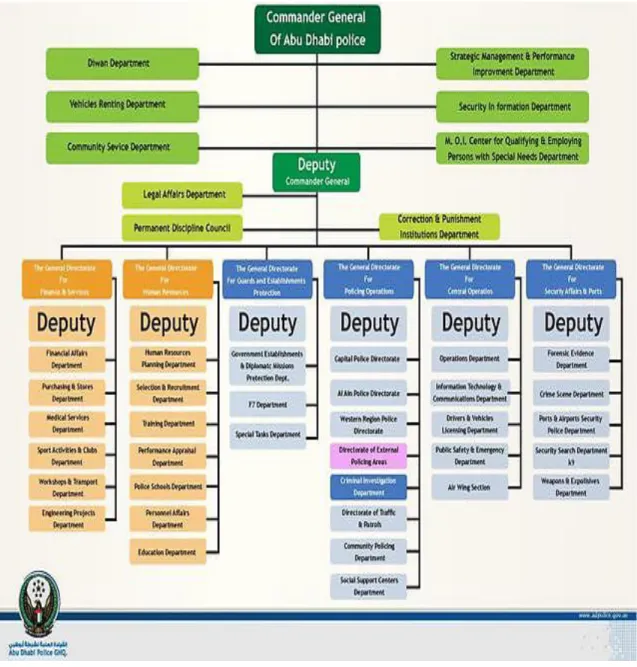
Its organisational structure is illustrated in the following figure:
Figure 2.4: Organisational Structure of the Abu Dhabi ,
Source: (www.ADP, 2014)
34 the country and working under the expertise of Lieutenant General H.H Sheikh Saif Bin Zayed Al Nahyan, it is the principal law enforcement agency in the emirate of Abu Dhabi. The responsibilities of the ADP are enforcing criminal law, the improvement in public safety and upholding of order and peace within the Emirate. Qualities that are upheld by the ADPD include honesty, integrity and respect for human rights whilst upholding public service to the Emirate. The ADPD, while working alongside the community, strives to remain efficient and effective in their practices. In order to do so, they use the most up-to-date technology and systems of management, and by mixing the old with the new, the ADPD has now become far and wide viewed as one of the world‟s leading law enforcement agencies (ADPD, 2014) in accomplishing the goals required for an adjustable, resilient and forward thinking modern law enforcement agency.
2.6.1 Objectives and strategies of the Abu Dhabi , GHQ
A new security strategy has been put in to place to fit in with the development and wide ranging changes that are taking place in the Emirates. This strategy was put in place by Lt. General H.H. Sheikh Saif Bin Zayed Al Nahyan so that changes and any challenges could be more easily dealt with. The General Head Quarters now has a clear vision in order that it may achieve its targets through simple pathways, endeavouring to cultivate its security systems in a more effective manner. This plan is outlined in the following table:
35 Table 2.1: Abu Dhabi , General Head Quarters Strategic Plan
Vision
Endeavours to provide a high standard of policing services to sustain safety, and security for all citizens, expatriates and visitors.
Mission
Striving to create a safe, stable and crime free society, and to make a positive contribution to the execution of justice in order to establish an environment of confidence between the public and the ,.
Values
Honesty and integrity
Recognising achievements
Effective communication
Excellence Source: (www. strategy.ad,, 2014)
The General Head Quarters has assumed a harmonised strategy of administration, whilst at the same time has put into place all obtainable resources in order to provide experience, a growth of knowledge and up-to-date technology for its employees. This has been achieved in a relatively short period of time by the General Head Quarters by enlarging its systems for security and outlining the specialist fields and duties required in order to succeed in reducing crime and protecting the public. By using an open and honest application of its strategy and
36 goals, the ADP has achieved and continues to preserve the well-being and safekeeping of the UAE people (AD,, 2014).
2.6.2 ADPD values
Shown below are the values upheld by Abu Dhabi , General Head Quarters that are being used to initiate and succeed in achieving its vision, using the faiths and traditions of Arab and Islamic principles:
Integrity and honesty: maintain the highest levels of integrity and honesty at all times, and preserve human rights.
Justice: provide fair and tactful services to all segments of society.
Professionalism: committed at all times to perform our duties and provide our services in accordance with the highest relevant professional standards Effective communication: effective communication with the public and
private sectors is of vital importance to accomplish our coveted goals.
Excellence: make sure to pursue excellence in all our works and ensure that our activities are assessed effectively and efficiently, while also recognising achievements.
2.7 Summary of the workings of the HR departments in ADP
General Directorate for Human Resource (HR) of Abu Dhabi , (ADP) consists of seven departments:
37 Human Resources Planning Department
Selection & Recruitment Department Training Department
Performance Appraisal Department , Schools Department
Personnel Affairs Department Scholarship Department
The seven departments work together to form a traditional and comprehensive HR service to the men and women of ADP.
2.7.1 HR Planning department
Human resource planning is a process through which ADP anticipates future business and environmental forces. Human resources planning assesses the manpower requirement for a future period of time. It attempts to provide sufficient manpower required to perform organisational activities. The overall purpose of HR planning is to:
Ensure adequate human resources to meet the strategic goals and operational plans of ADP - the right people with the right skills at the right time
Keep up with social, economic, legislative and technological trends that impact on human resources in the , and in the sector
38 Remain flexible so that ADP can manage change if the future is different
than anticipated
2.7.2 Selection and Recruitment department
When ADP is hiring, they need to ensure that they hire the right employees. There are several different steps involved in the selection and recruitment process. The process includes application forms, testing, interviewing, reference checks and health exams.
Human resource managers review applications, test and interview candidates, perform reference checks and request health checks.
During the hiring process, a human resources manager will use some of the following steps to determine the best possible fit for the job:
1. Review job applications 2. Test candidates
3. Interview selected candidates
4. Choose candidates based on pre-determined selection criteria 5. Perform background and reference checks
6. Send selected candidates for a health check