Masthead Logo
University of Connecticut
OpenCommons@UConn
Master's Theses University of Connecticut Graduate School
5-12-2019
Implementing an SBIRT Interprofessional
Simulation Curriculum: When More is More
Iwona Pawlukiewicz
Recommended Citation
Pawlukiewicz, Iwona, "Implementing an SBIRT Interprofessional Simulation Curriculum: When More is More" (2019).Master's Theses. 1377.
Implementing an SBIRT Interprofessional Simulation
Curriculum: When More is More
Iwona D. Pawlukiewicz
B.S., University of Connecticut, 2016
A Thesis
Submitted in Partial Fulfillment of the Requirements for the Degree of
Master of Public Health At the
University of Connecticut 2019
Copyright by Iwona D. Pawlukiewicz
APPROVAL PAGE
Masters of Public Health Thesis
Implementing an SBIRT Interprofessional Simulation Curriculum:
When More is More
Presented by Iwona D. Pawlukiewicz, B.S. Major Advisor_______________________________________________________________ Bonnie McRee, PhD, MPH Associate Advisor____________________________________________________________ Angela Bermudez-Millan, PhD, MPH Associate Advisor____________________________________________________________ Nathaniel M. Rickles, PharmD, PhD, BCPP, FAPhA
University of Connecticut 2019
Acknowledgments
Thank you to everyone who helped me with my thesis and supported me through this process. Without my advisor Bonnie McRee this thesis would have been just a thought. Thank you to Bonnie and Janice Vendetti for taking me under their wings and teaching me about SBIRT and entrusting this task to me. With your persistent encouragement and feedback I am proud to say I have completed my thesis! I would like to additionally thank Janice for all the assistance I received with my thesis, particularly with my data analysis for without my data I would not have effectively written up my results. Thank you to the other members on my thesis committee, Angela Bermudez-Millan and Nathaniel Rickles, this thesis would not have been possible without your support and feedback. Lastly, thank you Karen Steinberg-Gallucci for your kind words and providing feedback on my thesis during our Tuesday morning meetings. Everyone has been very kind, helpful and I owe each one of my advisors an immense amount of gratitude.
Table of Contents Title Page………..i Copyright Page………ii Approval Page………iii Acknowledgements……….iv Abstract………...vi Introduction………..1 Background……….….2 Specific Aims………...6 Methodology………7 Table 1………...11 Results 13 Table 2………...14 Table 3………...15 Table 4………...16 Table 5………...19 Table 6………...22 Table 7………...23 Discussion………..26 Conclusion……….30 Appendix………..I References……….XVII
Abstract
Background. Regular screening for psychoactive substance misuse in primary care and other health care settings enables earlier identification and management of substance misuse; however, wide-scale implementation of Screening, Brief Intervention and Referral to Treatment (SBIRT) services is lagging. The early exposure of health professional students to simulated
interprofessional SBIRT education is one solution to address barriers in the uptake of service delivery methods in health care settings. Methods. The feasibility of a newly-developed SBIRT simulation curriculum was tested with 35 interprofessional Urban Service Track Scholars during two separate training events in April and November of 2018. Results. The evaluation identified 1) improvements among students self-evaluation of their interprofessional collaborative
competence before and after the training; 2) improvements in student protocol adherence based on curriculum modifications between April and November; and 3) improvements in protocol adherence as an interprofessional team compared to an individual approach. Conclusion. Based on the findings and positive student feedback regarding the curriculum, it is feasible to conduct an effective SBIRT simulation training with interprofessional students.
Introduction
Despite the high prevalence of psychoactive substance misuse, too many individuals go without treatment. Regular screening in primary care and other health care settings enables earlier identification and management of substance misuse (Wu, 2012). Screening, Brief Intervention and Referral to Treatment (SBIRT), an evidence-based model, is an integrated public health approach to the delivery of early intervention within health care settings for persons with substance use disorders (SUDs) as well as those who are at risk of developing these
disorders (Babor et al., 2007). Although there is a large research base supporting the
effectiveness of SBIRT, health care providers have been reluctant to fully implement the services in their practices (Del Boca et al., 2017). In many cases, even experienced health care
professionals are subject to challenges when assessing and treating patients for substance misuse (Gordon & Alford, 2012).
To balance the burden of service provision by one provider, engagement among different disciplines has proven to be crucial for SBIRT implementation (Broyles & Gordon, 2010). Interprofessional approaches have shown to increase provider and patient satisfaction, reduce medical errors, minimize health care costs (Kashner et al., 2017), and most importantly increase adherence to the delivery of SBIRT protocols (Broyles & Gordon, 2010). The implementation of SBIRT in an interprofessional manner is becoming recognized with the hope that it will improve the well-being of persons engaging in at risk substance use (Broyles & Gordon, 2010; Wamsley, Satterfield, Curtis, Lundgren, & Satre, 2018).
The utilization of SBIRT protocols should be a shared responsibility among a variety of disciplines, and a wider distribution and implementation of SBIRT trainings to health care professionals should be promoted. The early exposure of health professional students to
interprofessional SBIRT education is one solution to address barriers in the uptake of service delivery methods in health care settings (Broyles & Gordon, 2010; Gordon & Alford, 2012). Such educational training should be presented in the most realistic manner to acclimate students to the complexities that patients may present with in the real world. Thus, in-person simulated curricula to practice evidence-based SBIRT methods is needed because it is greatly lacking. Additionally, a simulated standardized patient (SP) approach to education has proven to provide students with an intricate lifelike learning experience (Rickles, Tieu, Myers, Galal, & Chung, 2009). The use of standardized patients within simulations creates and enhances a realistic experience for the trainees and the feedback and education that SPs are able to provide directly enhances the experience (Cantrell & Deloney, 2007).
When it comes to effective interprofessional SBIRT curricular materials, research is
relatively sparse (Wamsley et al., 2018). As educational methods and trainings are developed, it is important to know how well students respond and adhere to such models as interprofessional teams. Thus, curriculum evaluations of the feasibility of the program is critical. Further, insight within different clinical settings and utilizing different health care disciplines, may propagate future ideas for training and research.
Background
Overall, the misuse of alcohol and other drugs is a major public health problem in the United States and Worldwide. An average of 6 people die from alcohol poisoning in the United States each day. In 2016, 48.5 million Americans used illicit drugs or misused prescription drugs. In addition, over 63,000 drug overdose deaths, in 2016, involved a prescription or illicit opioid (CDC, 2018). The World Health Organization (WHO) states that over 3 million deaths
million people (WHO, 2014). It is noted, that alcohol dependence is the most prevalent substance of addiction, touching approximately 63.5 million people worldwide, in 2015, followed by cannabis and opioids, the two most common illicit drugs (Peacock et al., 2018).
In 1980, with the increase of psychoactive substance use and hazardous alcohol consumption, WHO called for improved treatments of alcohol use disorders and stressed the need for early intervention services to avoid severe health and social consequences (WHO, 2003). Later on, researchers and policymakers encouraged the expansion of these methods to other harmful psychoactive substances. This expansion became evident with the ambitious efforts of the US Substance Abuse and Mental Health Services Administration, Center for Substance Abuse Treatment (SAMHSA, CSAT) Screening, Brief Intervention and Referral to Treatment (SBIRT) grant program that has funded states and tribal organizations to implement SBIRT services across health care settings (Bray, Del Boca, McRee, Hayashi, & Babor, 2017).
SBIRT is a multifaceted method used to target substance misuse and includes screening, brief intervention and referral to treatment. Screening refers to the assessment of a person’s substance use to determine his or her risk level. Screening is initiated with a validated screening tool. Brief intervention (BI) revolves around increasing insight and knowledge concerning substances that may pose a risk to a person’s health. Depending on the screening procedure and the score of the individual, the intervention is tailored in an appropriate manner related to the substances used and health risks associated with those substances. BIs follow the principles established by Miller (Miller, 1983). An important aspect of a BI is the utilization of motivational interviewing
techniques, which include the following: avoids lecturing, warning or convincing, expresses empathy, supports self-efficacy, utilizes affirmations and closes with a summary of the
conversation. Lastly, referral to treatment is initiated when a person is identified as needing more intensive treatment that may not be addressed simply with a BI (SAMHSA, 2011).
Historically, substance misuse has been targeted and treated in specialty treatment facilities when an individual has already developed a substance use disorder. Meanwhile there has been a lack of identification and treatment in primary care settings for earlier prevention in substance use (McNeely et al., 2018; Surgeon-General, 2016). Specialty treatment facilities alone cannot address the needs of all persons misusing substances (Park-Lee, Lipari, Hedden, Kroutil, & Porter, 2012). Other approaches to treatment are required. Thus, by educating and training medical professionals and students in the use of evidence-based SBIRT models, health care providers will acquire more experience and knowledge to intervene prior to the progression or occurrence of severe substance misuse and dependence. Secondary prevention efforts, such as SBIRT, within health care or other social services settings, have identified large numbers of individuals who pose a risk of developing alcohol or other drug use problems. Early intervention efforts may improve a person’s quality of life, reduce risky behavior, decrease the frequency and severity of drug and alcohol use, reduce traumatic incidences, and provide substance abuse treatment at a higher rate, to those in need (Kassebaum et al., 2014). In addition, there is a strong association between SBIRT and health care net-cost savings associated with fewer emergency department visits, fewer hospital days, and an increase in preventive service utilization (Del Boca, McRee, Vendetti, & Damon, 2017). SBIRT is also efficient and versatile in a wide range of settings (Gordon & Alford, 2012). However, implementation in health care settings has been difficult overall. This can be due to many factors, including concerns about time restraints for training and implementation of SBIRT, other clinical issues may take precedence,
concerns about patient privacy (Gordon & Alford, 2012). Thus, with the high rates of substance misuse in patients, there is a dire need to educate and train professionals in use of effective screening tools.
To address some of the ongoing issues surrounding substance misuse, there has been a push towards interprofessional teamwork and education among different health disciplines. There is a need to move beyond educational initiatives and introduce students to direct clinical exposure as interprofessional teams (Interprofessional Education Collaborative Expert Panel, 2011).
Interprofessional education (IPE), as described by the World Health Organization is “occurring when two or more professions learn about, from and with each other to enable effective
collaboration and improve health outcomes” (Gilbert, Yan, & Hoffman, 2010). To train and prepare an individual as a collaborative practitioner they need a strong foundation in the core interprofessional competencies: knowledge, skills, attitudes and values that will make the interprofessional education worthwhile. Team work and team-based health care movements revolve around communication, coordination and most importantly the need for evidence-based information to inform the effectiveness of teamwork processes and team-based care
(Interprofessional Education Collaborative Expert Panel, 2011). Thus, the evidence-based SBIRT model is an effective approach for students to practice interprofessional competencies in a team-based health care setting.
Due to the emphasis on interprofessional education and the need for improvements in the primary health care system, the interprofessional learning continuum model will be used as a guiding framework in this study (Appendix A). It was developed by the Institute of Medicine to bring forth more definitive evidence that links interprofessional education to improved
health (IOM, 2015). The principal goal of the SBIRT curriculum revolves around
interprofessional education, team collaboration, reducing barriers and improving health care and patient treatment outcomes. This model emphasizes the transitioning and continuum from education to health practice, with the addition of interfering or enabling factors that may be encountered.
This study seeks to evaluate the feasibility of implementing an SBIRT simulation training to interprofessional students. Prior to this research, a team at UConn’s School of Pharmacy and School of Medicine were awarded a pilot grant from the Institute for Collaboration on Health, Intervention and Policy (InCHIP) to design and evaluate an interprofessional SBIRT training exercise that utilized Standardized Patients in a mock clinical setting. Working together with the Connecticut Area Health Education Center (AHEC), the team tailored the curriculum to AHEC’s Urban Services Track Scholars who are from schools of medicine, dental medicine, nursing, pharmacy, as well as from social work and physician assistant programs. A primary goal of the grant was to address gaps between SBIRT and interprofessional collaboration, while
simultaneously educating students to identify and manage substance misuse in patients.
Specific Aims
The aim of this study is to evaluate the feasibility of a newly developed interprofessional SBIRT simulation training curriculum by investigating the following questions:
1. Were there improvements among student self-evaluation of their interprofessional collaborative competence before and after the training? What was the student-level of satisfaction after the training event?
ASSIST-3. Were there improvements in student adherence to screening and brief intervention protocols at an individual level compared to an interprofessional team approach?
Methodology
SP Simulation Activity Description
Students from the CT AHEC Urban Service Track were recruited via email to participate in two SBIRT simulation training events held April, 2018 and November, 2018 at the UConn School of Medicine’s Clinical Skills Assessment Program (CSAP). The CSAP houses mock clinic facilities and has a pool of experienced SPs from which to choose for various patient scenarios. The SPs gathered for training prior to the two events and were provided details of the simulation including a script to guide their answers and also to steer their demeanor based on student interviewing and feedback techniques. Experienced SBIRT and CSAP faculty provided the training to the SPs prior to both events. Based on student critiques from the first event in April, SPs were given enhanced training to provide additional detailed feedback to students regarding the accuracy of the screening results.
Prior to the events, students completed approximately 1½ hours of online assignments to prepare for the training and familiarize themselves with the fundamentals of SBIRT. Included in the pre-event assignments were videos encompassing the importance of SBIRT, screening for substance misuse using the ASSIST-FC, an opioid agreement and brief intervention
demonstration video, a review of motivational interviewing, and an optional video on brief intervention for at-risk alcohol use.
On the day of the events, an SBIRT “crash course” was provided by faculty prior to the clinical exercise. The crash course consisted of a summary of the aforementioned material. Staff emphasized the proper use of the screening tool- the ASSIST-FC, correctly categorizing the
patient’s risk level, as well as utilizing the FRAMES model to conduct a brief intervention. FRAMES refers to feedback, responsibility, advice, menu, empathy and self-efficacy (World Health Organization, 2010). The SP scenario was then conducted in the CSAP clinics providing students with a realistic environment to practice their clinical and interprofessional skills. Students were granted 10 minutes each to perform as individuals, 5-10 minutes after each scenario for standardized patient (SP) feedback, and 15 minutes to plan an interprofessional approach as a team. Students were then allowed 15 minutes to perform as an interprofessional team. Students were divided into six interprofessional groups of 2-3 students per cohort, each from a different health profession, for a total of 12 interprofessional groups. (See Appendix G for the April 4 Training Agenda).
Prompts with an overview of the patient scenario were hung on the exam room door for students to read before entering the room. Thus, students were not exposed to this specific case until just before entering to practice their SBIRT skills. The case scenario (Appendix I) involved a patient who was misusing Dilaudid (hydromorphone), an opioid. The patient also happened to consume 2 alcoholic beverages on the weekends and took Xanax (alprazolam), as prescribed, to aid with sleeping (4-5 times a week).
Instruments
Instruments utilized for the evaluation of the training are found in Appendices (B-E) and include the Interprofessional Collaborative Competencies Attainment Survey (ICCAS), the SBIRT Health Professions Training Survey (HPTS), the SBIRT Checklist for Observation in Real-time (SCORe) and the Alcohol Smoking and Substance Involvement Screening Test (ASSIST-FC).
The ICCAS (Appendix B) is among the primary assessment tools used in the evaluation of the project. It is a 20-item, self-report questionnaire that allows students to reflect on their attitudes towards their interprofessional education experience using a 7-point Likert scale, that ranges from 1=strongly disagree to 7=strongly agree. At the end of the training, students retrospectively rate how they feel about their collaborative abilities before the training and how they feel after participating in the training. The ICCAS was validated in 2014 (Archibald, 2014) and a replication validation study was completed in 2015 (Schmitz, 2017). Subscales include the following interprofessional competencies: 1) communication: the ability to communicate
effectively in a responsible and responsive manner with others; 2) collaboration: the ability to establish and maintain collaborative working relationships with other providers including patients and families; 3) roles & responsibilities: the ability to explain one’s own role and responsibility and to demonstrate an understanding of other’s roles and responsibilities in the team; 4) collaborative patient/family centered approach: the ability to apply patient-centered principles through interprofessional collaboration; 5) conflict management/resolution: the ability to prevent and deal effectively with conflict between other providers and the patient/family; and 6) team functioning: the ability to continually improve collaboration and quality of care
(Archibald, Trumpower, & Macdonald, 2014).
The SBIRT HPTS (Appendix C) was used to measure students’ level of satisfaction. Responses are based on a 5-point scale (from very satisfied to very dissatisfied) with various aspects of the training, and also on a 5-point scale (from strongly agree to strongly disagree) with statements about the training activities and components (e.g., the training was well organized, the SP scenario was realistic, etc.). The survey also includes 3 open-ended questions that asks for suggestions to change the case or improve the activity in terms of timing, pre-work, and
instructions. This survey was derived from a preexisting survey, the Government Performance and Results Act (GPRA) survey (SAMHSA, 2017).
The SCORe tool (Appendix D) provides a flexible method for assessing adherence to evidence-based screening and brief intervention components. The tool was validated among 18 adherence judges across 4 large-scale SBIRT programs in the US (Vendetti et al., 2017). The checklist contains content components that are applicable to most screening tools and brief intervention formats as well as motivational interviewing style techniques that have been shown to be effective in successful SBIRT outcomes.
The ASSIST-FC (Appendix E) is a 2-question statistically validated version of the World Health Organization’s longer ASSIST screening tool that screens for 8 categories of
psychoactive substances including tobacco. Based on answers to the 2 questions (frequency of use and concern by others) a patient may be categorized as low, moderate or high-risk for substance misuse. Based on the score, an intervention at the appropriate level is provided by the health care provider.
Design
A pre-test, post-test design was used to assess improvements among students’ interprofessional collaborative competence on the total ICCAS score and competency scale scores. To determine satisfaction with the training event and curriculum, the health professions training survey was administered to students after completion of training and debriefing. Video re-scoring of the ASSIST-FC was completed for both the April and November cohorts and qualitative data were collected from the open-ended questions on the HPTS to measure students’ adherence to the SBIRT protocols across the two cohorts. Video assessment of the re-scored
ASSIT-FC and SCORe were then used to compare individual vs. interprofessional team accuracy of scoring the ASSIST-FC tool and categorizing patient risk.
Sample
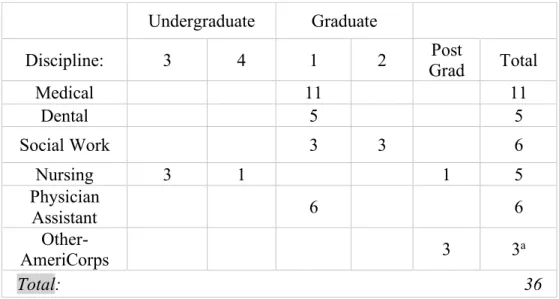
A convenience sample of student learners were solicited from email invitations from a variety of disciplines across the two training events, and included medicine (n=11), dentistry (n=5), nursing (n=5), social work (n=6) and a physician’s assistant program (n=6). There were three additional learners from AmeriCorps, not classified within a specific program year who also participated in the simulation training. See Table 1. There were 35 participating students and one silent observer. Students were divided into 12 teams of varying disciplines.
Table 1. Student Participants: Educational Program Year of Disciplines (N=36)
a One AmeriCorps student was a non- participatory student (April Cohort). Data Collection
During the event, students were evaluated by faculty as well as the SPs on their ability to properly adhere to the ASSIST-FC, and provide a brief intervention. Each clinical scenario was videotaped. The students were asked to administer the screening tool (ASSIST-FC), score the
Undergraduate Graduate
Discipline: 3 4 1 2 Grad Post Total
Medical 11 11 Dental 5 5 Social Work 3 3 6 Nursing 3 1 1 5 Physician Assistant 6 6 Other- AmeriCorps 3 3a Total: 36
would follow through with a brief intervention educating and discussing the needs of the patient and behavioral changes that could be made. After each student completed their initial attempt, the SP discussed the students’ performance with them in the training rooms. This feedback was then used by students to organize an interprofessional approach, for the same scenario, and utilize the SBIRT tools as a team. Six faculty members were assigned to observe and evaluate one of the six interprofessional teams. The faculty were able to monitor each group and score the ASSIST-FC and SCORe per individual and interprofessional team. After the training, a recorded debriefing was included to receive quality feedback from students regarding their experiences. In addition, the two paper-pencil surveys, the ICCAS and the HPTS, were administered to students to assess satisfaction and value of different educational components, such as interprofessional work with other members, SP feedback, and usefulness of the training program. After the
training, the video recordings were reviewed again by the author to validate the ASSIST-FC and SCORe accuracy as part of the analysis for questions 2 and 3.
Statistical Analyses
A mixed method approach was used to evaluate the feasibility of the newly-developed simulated SBIRT curriculum implementation. All information collected from the student learners was anonymous. Data were cleaned and analyzed using SPSS v17. Scale data and categorical data were analyzed using appropriate parametric (paired t tests/independent t tests) or
nonparametric statistics (chi-square analysis) as described below. In instances where cell sizes had an observed value of less than 5 for categorical variables, Fisher’s Exact test values were used.
to SBIRT protocols as individuals and interprofessional groups. The data from the SCORe tool were calculated amongst individual members and interprofessional groups. The percent of adherence to the screening and brief intervention techniques are provided in the results. Qualitative data were collected from debriefing conversations during the interprofessional planning conversations and at the end of the training. Open ended questions at the end of the HPTS were coded thematically by the author.
Results
Question 1: Were there improvements among student self-evaluation of their interprofessional collaborative competence before and after the training? What was the student-level of
satisfaction after the training event?
To assess improvements among students’ interprofessional collaborative competence, the total ICCAS score and competency scale scores were analyzed pre-training and post-training using paired sample t tests. These results were analyzed using the total number of students combined and then also across training cohorts (April and November) to assess subtle
differences that may have occurred because of student age and program maturity. The cohort analyses were conducted using independent t tests.
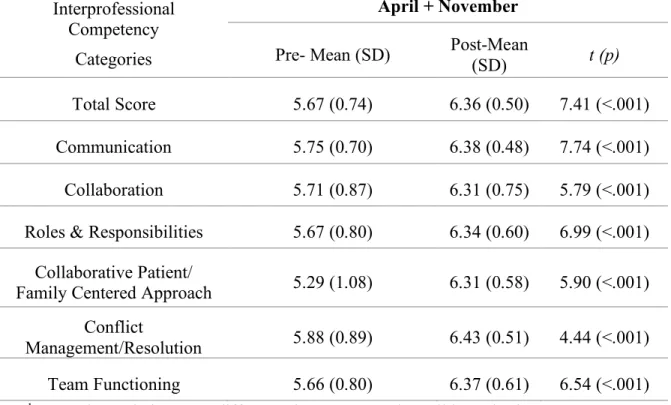
Table 2 shows a significant mean rating pre-test, post-test increase from 5.67 (SD= 0.74) to 6.36 (SD= 0.50; t34=7.41, p<.001) for the total sample. Each of the competency subscales also
show significant mean rating increases from pre- to post-test for communication, collaboration, roles and responsibilities, collaborative patient/family centered approach, conflict management and team functioning. Overall, students’ interprofessional educational attainment ratings
were more likely to ‘Agree’ or ‘Strongly Agree’ with the interprofessional competency statements.
Table 2. ICCAS Mean Scores Grouped into Interprofessional Competency Categories (N=35) Interprofessional
Competency Categories
April + November
Pre- Mean (SD) Post-Mean (SD) t (p)
Total Score 5.67 (0.74) 6.36 (0.50) 7.41 (<.001) Communication 5.75 (0.70) 6.38 (0.48) 7.74 (<.001) Collaboration 5.71 (0.87) 6.31 (0.75) 5.79 (<.001) Roles & Responsibilities 5.67 (0.80) 6.34 (0.60) 6.99 (<.001)
Collaborative Patient/
Family Centered Approach 5.29 (1.08) 6.31 (0.58) 5.90 (<.001) Conflict
Management/Resolution 5.88 (0.89) 6.43 (0.51) 4.44 (<.001) Team Functioning 5.66 (0.80) 6.37 (0.61) 6.54 (<.001)
1. t- value: relative error difference in contrast to the null hypothesis 2. p-value: significant at p< 0.05
For the ICCAS pre-training rating scores, the calculated total ICCAS rating score was not significantly different between cohorts with a mean of 5.92 in April and 5.44 in November (t34
=2.01. p=.052). When analyzed by each interprofessional collaboration subscale, significant differences between cohorts were found for the following: Collaborative Patient/Family Centered Approach with a mean change of 5.71 in April to 4.92 in November (t34=2.26, p=.03), Conflict
Management/Resolution with a mean change of 6.18 in April to 5.59 in November (t34=2.09, p=.045), and Team Functioning with a mean change of 5.97 in April to 5.38 in November
For the ICCAS post-scores, the calculated ICCAS scores (Table 3) were not significantly different across cohorts. Students appeared to express the same amount of IPE attainment post-training, in both cohorts. This analysis indicates that the more advanced students receive the same post-training benefits as do students earlier in their clinical careers.
Table 3. ICCASS Pre-&Post-Training Differences among Cohorts (N=35)
Pre-training Scores Post-training Scores
Cohorta
Pre-Mean t p
Post-Mean t p Total ICCAS Score 1 2 5.92 5.44 2.01 0.052 6.29 6.42 -0.76 0.45 Communication Score 1 2 5.94 5.56 1.67 0.11 6.37 6.39 -0.10 0.92 Collaboration Score 1 2 5.89 5.57 1.09 0.28 6.11 6.53 -1.70 0.10 Roles and Responsibilities 1 5.87 1.32 0.20 6.24 -1.09 0.28 2 5.51 6.46 Collaborative Patient/Family-Centered Approach 1 5.71 2.26 0.03 6.28 -0.38 0.71 2 4.92 6.35 Conflict Management/Resolution 1 6.18 2.09 0.04 6.41 -0.25 0.81 2 5.59 6.45 Team Functioning 1 5.97 2.27 0.03 6.39 0.21 0.83 2 5.38 6.34
a Cohort 1= April (n=18); Cohort 2= November (n=17)
1. t- value: relative error difference in contrast to the null hypothesis 2. p-value: significant at p< 0.05
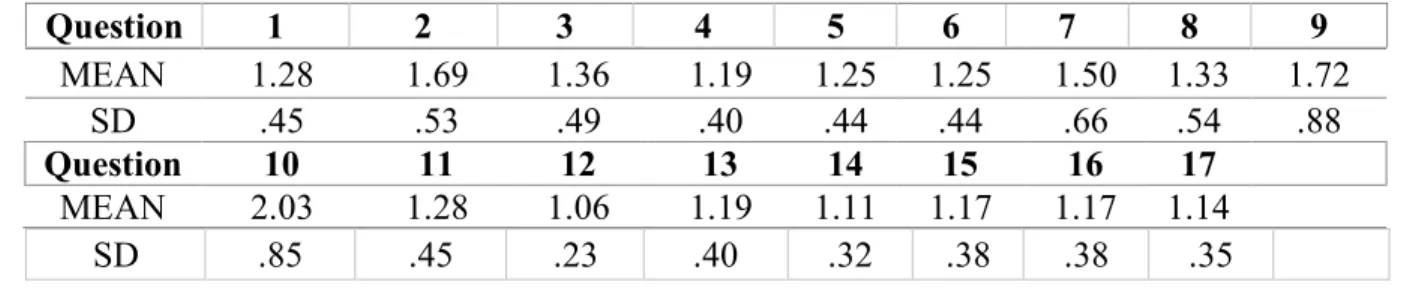
To determine student satisfaction with the training event and curriculum, the health professions training survey was administered to students after completion of training and debriefing. Survey responses were predominantly positive. Table 4 infers that all 35 students from both cohorts had a positive experience practicing interprofessional SBIRT skills on standardized patients. A mean of 1 correlates to the highest responses (very satisfied, strongly
agree, very useful) ranging to a mean of 5 (very dissatisfied, strongly disagree, useless). Responses on the HPTS ranged between a mean of 1.06 to 2.03.
Table 4. Health Profession Training Survey Question Responses (N=35)
Question 1 2 3 4 5 6 7 8 9 MEAN 1.28 1.69 1.36 1.19 1.25 1.25 1.50 1.33 1.72 SD .45 .53 .49 .40 .44 .44 .66 .54 .88 Question 10 11 12 13 14 15 16 17 MEAN 2.03 1.28 1.06 1.19 1.11 1.17 1.17 1.14 SD .85 .45 .23 .40 .32 .38 .38 .35
Question 2. What was the impact of curriculum modification on students’ adherence to the ASSIST-FC implementation across training cohorts?
Qualitative data from students were collected from open-ended questions on the HPTS at the end of training and also through debriefing sessions. Using these platforms they were able to voice their opinions on the quality of the training as well as improvements they would like to see for future trainings.
Regarding curriculum improvement, there were 19 responses on the HPTS from the April training, that included constructive criticism and were categorized into the following themes: 1) More Feedback from SPs. Students (3 out of 19; 16%) requested more feedback from the SP
regarding the accuracy of their scoring on the ASSIST-FC and whether they had made the appropriate risk level determination for the patient. The comments were illustrated by the following quotes:
i. “I think more specific feedback after the interviewing (should be provided) on how the students did.”
ii. “It would be helpful to have a little bit more specific standardized feedback. My feedback was a bit vague.”
2) Additional Interview Time. Students requested more time for the individual team interview that was originally scheduled for 10 minutes (6 out of 19; 32%);
3) Access to the Screening Questionnaire Prior to the Simulation. Students wanted to have the ASSIST-FC questionnaire and other paper-work needed for the simulation scenario ahead of time (4 out of 19; 21%) so they were able to locate it more easily rather than having to look for it in the clinic room.
i. “Provide the questionnaires to students before they enter the room to speak to the patient.”
4) More Instruction in the Crash Course. Students requested more detailed instruction in the “crash course” with a brief demonstration of the SBIRT process by staff (2 out of 19; 11%).
i. “More instruction in the beginning and a brief demonstration.”
A final theme, indicated below, involved positive experiences that were voiced by many students (11 out of 19; 58%).
5) Lessons Learned. Students documented positive affirmations regarding their experiences within the training indicating that it was an effective newly implemented training curriculum. This included students’ comments on their new understanding of their role in screening patients, increased comfort in asking sensitive questions, on the need for an interprofessional approach in providing SBIRT services (within health care practice) and that the simulation reassured them of their role in providing screening and brief intervention. Illustrative comments included:
i. “I was clueless in how to (help) patients manage substance use effectively; now I feel more prepared”
ii. “I plan to incorporate universal screening in my practice”
Positive feedback reassured faculty that the educational training, aiming for optimal adherence to the ASSIST-FC implementation, would benefit students, as long as the
modifications were made. In preparation for the November cohort, the following modifications were applied to the curriculum based on the student feedback:The agenda was not altered to provide more time; however, the introductory crash-course instructions were improved. The course provided thorough guidance in scoring the ASSIST-FC and categorizing risk and stressed that the key component of the interview was implementing the screening tool and providing the appropriate intervention. Students were reminded that a thorough patient history was not needed, since the patient was there for a return visit. This allowed for additional time to focus on just the screening and brief intervention practices. A packet of materials was also provided to students as they entered the training event so that they would have time to review it prior to entering the room with the patient.
Prior to the training event, a more detailed training of SPs was provided by the SBIRT
faculty. In general SPs in UConn’s Clinical Skills Training Program provide feedback to students only with regard to bedside manner and comfort level with general clinical skills and
interviewing techniques rather than critiquing how accurately a student makes a correct diagnosis. SPs were provided with a script that instructed the SPs on what to say based on student response (Appendix I). For the November training, SPs were asked to be more active in the feedback process by reviewing how the students scored ASSIST-FC and explaining the logic
SPs with a detailed outline and flowchart with how the students should respond and score the risk categories and also detailed the time frames regarding the prescription medication used by the patient. (Refer to Appendix I).
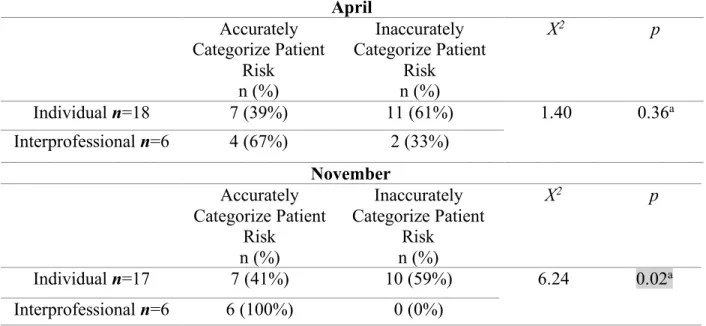
Students regrouped for their interprofessional approach and were evaluated on their accuracy to categorize the patient in the correct risk range on the ASSIST-FC. Table 5 shows an analysis of cohort differences in students scoring abilities as individuals and interprofessional groups to accurately categorize patient risk (low, moderate, high). Values for April’s accurate categorization of the patient as individuals and interprofessional teams showed no substantial improvement. However, improvement was evident in the November cohort with the accuracy of categorization increasing from 41% as individual providers to 100% as interprofessional teams (X2=6.24, p=0.02). Interprofessional teams in November did a better job categorizing the patient
as low risk for alcohol and moderate risk for other substances. This significant improvement in adherence to the ASSIST-FC can be attributed to the curriculum changes made to the November cohort.
Table 5. Cohort Differences in Student Accuracy of Risk Categorization as Individuals and Interprofessional Groups (N=35)
April Accurately Categorize Patient Risk n (%) Inaccurately Categorize Patient Risk n (%) X2 p Individual n=18 7 (39%) 11 (61%) 1.40 0.36a Interprofessional n=6 4 (67%) 2 (33%) November Accurately Categorize Patient Risk n (%) Inaccurately Categorize Patient Risk n (%) X2 p Individual n=17 7 (41%) 10 (59%) 6.24 0.02a Interprofessional n=6 6 (100%) 0 (0%)
a 2 cells have expected cell count less than 5; Fisher’s Exact Test was used 1. Chi-square is depicted by X2
2. p-value: significant at p< 0.05
For future curriculum modification, to improve adherence to the ASSIST-FC, 17
responses were provided on the HPTS. Constructive criticism and positive feedback themes from the November event include:
1. Practice Scenario for the Pre-Work. Students (2 out of 17; 12%) requested a practice scenario in pre-work for students to practice scoring with the ASSIST-FC;
i. One student had a request to “include a scenario in the pre-work where we have to score a video and double check our answer.”
2. More Time to Read the Scenario. Students (2 out of 17; 12%) requested more time to read the scenario before starting the simulation;
i. It was stated that “the scenario should be clearer and/or give more time to read.”
i. Student indicated, “scenario was ok but would be beneficial to have a little harder case.”
4. Lessons Learned. Positive affirmations stated by students: realistic scenario, the
standardized patient feedback, learning skills from other students in IP teams, improves future interactions with patients especially those taking pain medications. Illustrations are provided below:
i. “Was realistic and showed the complicated nature of opioid use.” “Prepares you for time efficiency in real practice.”
ii. “The thing I liked best was the trained PI's. Wow what a difference it makes to have skillful trainers to practice with.”
iii. “I liked the interprofessional teams. Learning skills from others has made me a better student.”
iv. “Loved that it was very realistic and NOT exaggerated. I can see myself encountering such a scenario in the future.”
“Helps improve my future interactions with patients taking pain medications.”
Yet again, students were fond of the November training and all the practical knowledge they gained. They called for future improvements that were reflective of their cohort’s experience such as additional pre-work where they can practice an example scoring the ASSIST-FC,
additional time to read and comprehend the patient scenario, more variety and complexity within the scenario to additionally test students’ adherence to the ASSIST-FC, and the opportunity to reach out to other interprofessional groups for a broader scope of student knowledge and feedback before the interprofessional approach. It is intended that this feedback will be utilized
in the implementation of future training events to further optimize students’ adherence to the ASSIST-FC implementation.
Question 3. Were there improvements in student adherence to screening and brief intervention protocols at an individual level compared to an interprofessional team approach?
Video recording reviews included a analysis of the ASSIST-FC scoring as well as a re-scoring of the SCORe tool to determine if there were improvements in student adherence to the screening and BI protocols at an individual level compared to an interprofessional team approach for April and November cohorts combined. Refer to Table 6. When performing in the
interprofessional approach a significantly higher proportion of students adhered to screening protocols and scored the assessment accurately (42% vs 3%) in comparison to the individual approach (X2=12.09, p=.003). Likewise, a significantly higher proportion of students accurately
categorized the patient’s risk (83% vs 40%) as an interprofessional group when compared to the individual approach (X2=6.72, p=.01).
Table 6. Individual (N=35) vs. Interprofessional (N=12) Scoring Accuracy among Two SCORe Components Scores Assessment Accurately n (%) Scores Assessment Inaccurately n (%) X2 p Individual Approach (N=35) 1 (3%) 34 (97%) 12.09 .003 Interprofessional Approach (N=12) 5 (42%) 7 (58%) Accurately Categorizes Patient Risk n (%) Inaccurately Categorizes Patient Risk n (%) X2 p Individual Approach (N=35) 14 (40%) 21 (60%) 6.72 0.01 Interprofessional Approach (N=12) 10 (83%) 2 (17%) 1. Chi-square is depicted by X2 2. p-value: significant at p< 0.05
In addition to the screening process, BIs are initiated by students when a person scores within a moderate risk range. The BI should consist of a variety of components and motivational
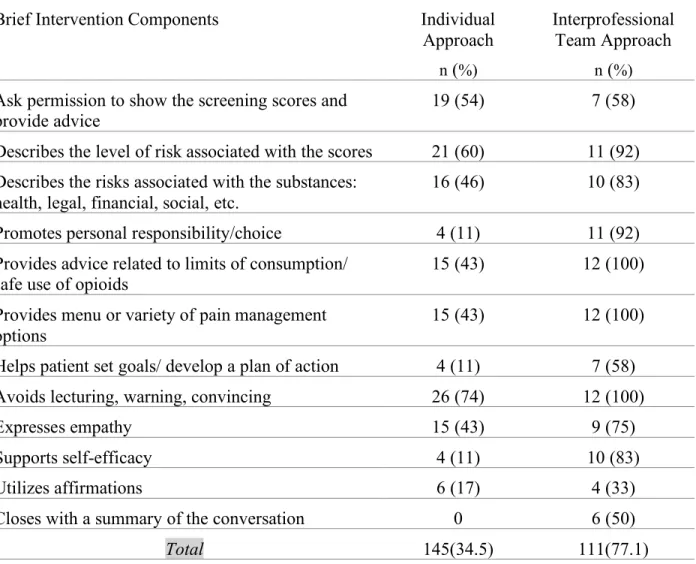
interviewing techniques. Videos of students were observed and scored for the implementation of these BI techniques. Frequencies were analyzed with the collected data and the BI components were more often applied within the interprofessional approach. Individuals utilized 34.5%
(145/420) of the possible BI components and interprofessional teams utilized 77.1% (111/144) of the possible BI components (listed in Table 7). The data shows that interprofessional teams are more successful demonstrating proficiency in a greater variety of BI components. This success can be attributed to a number of factors such as the extra time provided in an interprofessional approach, team discussions to establish a team-based approach for the interprofessional screening, as well as a collaboration of different disciplines and their unique strengths and
Table 7. Brief Intervention Content & Motivational Interviewing Categories in Individual (N=35) and Interprofessional Groups (N=12)
Brief Intervention Components Individual Approach
n (%)
Interprofessional Team Approach
n (%)
Ask permission to show the screening scores and provide advice
19 (54) 7 (58) Describes the level of risk associated with the scores 21 (60) 11 (92) Describes the risks associated with the substances:
health, legal, financial, social, etc.
16 (46) 10 (83) Promotes personal responsibility/choice 4 (11) 11 (92) Provides advice related to limits of consumption/
safe use of opioids
15 (43) 12 (100) Provides menu or variety of pain management
options 15 (43) 12 (100)
Helps patient set goals/ develop a plan of action 4 (11) 7 (58) Avoids lecturing, warning, convincing 26 (74) 12 (100)
Expresses empathy 15 (43) 9 (75)
Supports self-efficacy 4 (11) 10 (83)
Utilizes affirmations 6 (17) 4 (33)
Closes with a summary of the conversation 0 6 (50)
Total 145(34.5) 111(77.1)
Students provided ample feedback in debriefing and the HPTS question responses, in addition to the re-scored SCORe tool components. They described their experiences working as individuals and interprofessional teams, as well as their practice with the screening and brief intervention protocols. This information is pertinent to the understanding of students’ adherence to SBIRT practices and provides a possible explanation for the discrepancies in individual and interprofessional utilization of BI components.
1. In the feedback provided, (5 out of 35; 14%) students appeared to be fond of the time in between scenarios where they were able to debrief with their groups and distribute roles to students for the interprofessional approach.
i. A student noted, “It was really helpful to have the time in between (scenarios) to debrief with our group and talk about who from which disciple would be best equipped at knowing how to come up with a plan… Some of us were not used to addressing certain parts of that (brief intervention) conversation.”
ii. When asked what they liked most about the event and what was most useful to them as a future health professional, a student stated, “Collaborating with team members to figure out how to re-approach the patient the second time around.”
2. Students (7 out of 35; 20%) appreciated the interprofessional training process that allowed them to learn skills from other students.
i. One student mentioned that they “liked the interprofessional teams,” and
“Learning skills from others has made me a better student.”
3. Students (2 out of 35; 6%) utilized each group member’s strengths and weaknesses which proved useful when the team members came together in their interprofessional approach. i. When asked by faculty ‘how many of you felt stronger as a team and why?’ A
student elaborated on the fact that the team members, “had different strengths and weaknesses,” and found that when they were able to consult each other in between the individual and interprofessional attempts, this allowed them to successfully, “use our new methods in a second scenario.”
Positive affirmations for the interprofessional education process were provided in students feedback. Practicing as a team effort and relying on one another for each professions
strengths and input has left health professional students satisfied. Students (9 out of 35; 26%) referred to these screening techniques as practical and beneficial to the field and in their future practice.
i. One student shared, “I loved the team approach. I struggled individually in the interview and when it came all together during the team interview, it felt so much better. It really affirmed my trust in the IPE process.”Another student mentioned, “I think it’s important for all providers to participate in universal screening,” I was clueless in how to help patients manage substance misuse effectively; now I feel more prepared,” and “I plan to incorporate universal screening in my practice.”
A common theme in the feedback was student satisfaction and liking for the interprofessional team approach. Students re-grouped with their teams before the interprofessional approach, discussed effective methods to screening, emphasized on different disciplines strengths and learned from one another as a whole. It can be deduced from this feedback that these positive attributes helped students adhere to the screening and BI protocols to accurately utilize screening and BI procedures as a team. Interprofessionally, students were more likely to score assessments accurately and utilized more BI techniques, which may be transferrable into their future work as health care professionals.
Discussion
In this section, study findings are considered from the lens of the interprofessional learning continuum model which it is adaptable to settings where it is being applied (IOM, 2015). The model will be applied to the evaluation of interprofessional training of students in
an interprofessional manner, are attributable to positive learning outcomes as seen in the evaluation of this training programs feasibility.
The training efforts promoted interprofessional collaboration among different health professional disciplines and provided them with early exposure to SBIRT techniques.
Improvements among student self-evaluation of their interprofessional collaborative competence before and after the trainingestablished that more interprofessional practice improved student competence. The results of the ICCAS showed significant improvement of means among the pre- and post-test competency category results for all participants (Table 2). Slight discrepancies among cohorts were found in the pre-test mean values (Table 3) where April students were more confident with interprofessional competencies before participating in the training. The
differences among the ICCAS competencies in the pre-test could be attributed to the make-up of the two cohorts that participated in the training. The April cohort may have more academic and professional experience in several of the competencies, overall. This may be attributed to the April cohort’s experience as more advanced students for they were close to completing a full year within their programs. The post-training responses in the ICCAS proved that advanced students and students earlier in their careers attained the same interprofessional competencies. Likewise, the HPTS assesed students perceptions of the training experience, their skill and their opinions regarding the collaborative performance. There was a postive mean for each response on the HPTS and there were no cohort discrepancies in response satisfaction.
There were other factors impacting students’ adherence to the ASSIST-FC across training cohorts due to curriculum modification. These changes in the curriculum were a result of the constructive criticism students provided in the HPTS and debriefing. Modifications such as the quality of SP feedback, alterations to detail within the crash-course and providing paperwork to
students before the screening commences were attributed to improved risk categorization between cohorts. Improvement in the accuracy of risk categorization is seen in the November cohort within individual and interprofessional approaches. The collaboration of disciplines led to more improved scoring accuracy between cohorts. These discrepancies in adherence to the tool can be attributed to the curriculum modifications.
Additional discrepancies were noted by re-watching videos and utilizing the re-scored SCORe tools which were essential to capture students’ adherence to screening and brief intervention protocols. Improvement was evident in the interprofessional approach for scoring accuracy of the assessment and accurate categorization of the patient risk when compared to the individual approach (Table 6). During brief interventions, adherence to content use was largely evident in the interprofessional approaches. Student feeback from the HPTS and debriefing illustrated improvements that were made in student adherence to screening and brief intervention protocols at the interprofessional level. This is parallel to data that emphasizes the value and effectiveness of SBIRT in screening and treatment of substance misuse, when delivered by a range of health care professionals (Wamsley et al., 2018). Thus, more collaboration among a variety of professionals will lead to greater utilization of screening and brief intervention practices.These results show the program is feasibile, for the training effectively implemented an interprofessional approach with significant improvement in adherence to the ASSIST-FC and the screening and brief intervention protocols.
Despite the positive outcomes of this interprofessional training, the study is subject to several limitations. The smaller sample size of students did not permit some of the analyses that could have been conducted with a larger population. The sample size is reflective of the recent
number of participants that can participate in such a training. The sample size is also reflective of the convenience sample of UST scholars which is a unique component to UConn’s sample selection. Other Universities that may pursue a simulated curriculum such as this one may not have the same capabilities to sample such participants. Even with a pool of students from which to select, challenges exist in scheduling interprofessional simulations. Another limitation is the lack of concordance that exists in the re-scored ASSIST-FC results among faculty. Due to lack of time, the trained faculty and experts did not conduct a validity check of the re-scored data and thematic analyses. Thus, only one coder re-scored the ASSIST-FC and SCORe and conducted thematic analyses. The author further chose to re-score the ASSIST-FC and SCORe because real-time evaluation is a challenge. Faculty experts may require additional training to ensure that there are consistencies among scoring tool results in future trainings. Additionally, student response biases may be attributed to the structure of the ICCAS since it is a retrospective pre-test and post-test in which students have the potential to be untruthful and under-report their attitudes and may be susceptible to recall bias and response shift biases (Archibald et al., 2014). Likewise, the HPTS too has the potential for response biases from the participating students. Another limitation is survey data that were collected in the April cohort for additional analysis were omitted in the November cohort. This pre and post survey was a self-rated assessment of SBIRT-related knowledge, confidence in performing SBIRT-SBIRT-related tasks, role compatibility with performing SBIRT-related tasks and likelihood of routinely screening their patients in the future. Since the assessment was not administered to the November cohort the author lacked the ability to make full comparisons of both cohorts. These limitations are important to consider when establishing the feasibility of such a training program.
The translation of this IPE training from simulated practice to the health care field may not be a smooth transition. Outside of a controlled clinical setting many other barriers exist when utilizing a universal screening tool interprofessionally. As described in the Interprofessional Learning Continuum Model certain obstructing factors may relate to the culture and policies that are in place within a given organization. In regards to adaptation of IPE in the real-world, role discrepancies among different health professionals have led to challenges with SBIRT training and implementation. The philosophy of each unique discipline as well as the existing siloes in professional training contribute to the limited opportunities for interaction in the health care field (Wamsley et al., 2018).
With the existing barriers to implementation, changes may take time. However, with the progressive incorporation of IPE into health professional program trainings can ensure a
smoother transition from education and learning outcomes to improved health care system outcomes. The IPE SBIRT trainings may be indicative of the future structure of health care and primary health care screenings. The IPE SBIRT training is developed in a manner that is replicable and provides room for further research and changes to be implemented within such simulation curricula of health professional students. As mentioned previously, the incorporation of interprofessional collaboration in health care is on the rise and contributing to changes in the structure of organizations (Interprofessional Educational Collaborative [IPEC], 2016). Therefore, the implementation of interprofessional training surrounding SBIRT protocols can be a major contribution to the health care system and health outcomes.
Conclusion
The goal of this evaluation was to ascertain the feasibility of this simulation curriculum concerning interprofessional approaches. The mixed method analysis of this study resulted in information that indicates the value of interprofessional SBIRT training of health professional students in a clinically simulated scenario with an interactive SP. The results were strongly indicative of interprofessional competency attainment from the pre-test and post-test responses in the ICCAS, as well as high student satisfaction and usefulness of the training was evident within the HPTS. Curriculum modifications positively impacted students’ adherence to the ASSIST-FC among training cohorts. Differences in student adherence to screening and brief intervention protocols within individual and interprofessional approaches were evident in re-scored ASSIST-FC and SCORe tool results. These components were revealing of the feasibility of such a program and informative of the fact that more health professionals collaborating as interprofessionals in a simulation contribute to the adherence of SBIRT methodology.
Interprofessionalism embodies all the important principles to achieve a patient-centered approach. The attainment of interprofessional competencies evolves through a sequence of steps which direct the students to “prepare, think, practice and act throughout their learning curriculum with other professionals. This is anticipated to help students enter the workforce ready to practice effective teamwork and team-based care(Interprofessional Education Collaborative Expert Panel, 2011). The program that was introduced in Connecticut embodies these competencies, while training students in an interprofessional and patient-centered manner, to adhere to the
implementation of tools for early substance misuse identification and management. For the future implementation of such a program and to assure its feasibility it is
scoring both the ASSIST-FC and the SCORe. Other faculty members should conduct a validity check to ensure that the re-scored variables of one coder are permissible. The program should have a larger population of students participate in such a training, if the space permits, to have a greater understanding of the true effects of IPE on student adherence to SBIRT protocols. If the pool size of UST scholars is limited it would be beneficial to include other health professional students that are not part of AHEC. In addition, curriculum modifications should be tailored to student feedback such as additional pre-work where students can practice an example where they score the ASSIST-FC; utilize additional time to read and comprehend the patient scenario before entering the patients room; more variety and complexity within the scenario to additionally test students’ adherence to the ASSIST-FC; and the opportunity to reach out to other
interprofessional groups for a broader scope of student knowledge and feedback before the interprofessional approach.
Appendix
A. Interprofessional Continuum Learning Model (IPCL)
C.
SBIRT Health Professions Training Survey (BL)
Please base your answer on how you feel about thesession now. Very Satisfie d Satisfied Neutral Dissatisfie d Very Dissatisfie d Not Applicab le 1
. How satisfied are you with the overall quality of this event? 1 2 3 4 5 6 2
. How satisfied are you with the quality pre-event learning materials? 1 2 3 4 5 6 3
.
How satisfied are you with the quality of the SP
scenario? 1 2 3 4 5 6
4
. Overall, how satisfied are you with your experience? 1 2 3 4 5 6
Please indicate your agreement with these statements about the training.
Strongl y
Agree Agree Neutral Disagree
Strongly Disagree Not Applicab le 5
. The training activity was well organized. 1 2 3 4 5 6 6
. The SP scenario was realistic. 1 2 3 4 5 6
7
. The feedback provided by the PI was useful. 1 2 3 4 5 6 8
. The instructors were well prepared for the activity. 1 2 3 4 5 6 9
.
This event provided an opportunity to learn about other
professional roles. 1 2 3 4 5 6
1 0
. I am currently effective when working in this topic area. 1 2 3 4 5 6 1
1
. The training enhanced my skills in this topic area. 1 2 3 4 5 6 1
2 .
The training was relevant to my work as a future health
professional. 1 2 3 4 5 6
1 3 .
I expect to use the information gained from this training
activity. 1 2 3 4 5 6
1 4
. I expect this activity to benefit my [future] patients. 1 2 3 4 5 6 1
5 .
The material presented for this activity will be useful to
me in dealing with substance misuse. 1 2 3 4 5 6
1 6
. I would recommend this training activity to a colleague. 1 2 3 4 5 6
Very
Useful Useful Neutral Useless Not Applica
ble
1 7
. Overall, how useful was the information you received? 1 2 3 4 5 18. Please indicate which title best describes you:
___ Nursing Student ___ Dental Hygiene Student
___ Pharmacy Student ___ Social Work Student
___ Other ____________
19. If you are a student, what year of the program are you currently in? ____________________________ 20. Please indicate which best describes your agency or affiliation:
___ University or other higher education institution ___ Other ______________________ 21. What is your gender? ___ Male ___ Female ___ Transgender
22. Are you Hispanic or Latino? ___ Yes ___ No 23. What is your race (Mark all that apply)?
___Black or African American ___Alaska Native ___Asian ___American Indian ___Native Hawaiian or Other Pacific Islander ___White
24. Have you received any SBIRT training in the past? ___No ___Yes.
25. What did you think about the SP scenario? Do you have any suggestions of how to change the case?
26. What did you like the most about this event? What aspect(s) were the most useful to you as a future health professional?
27. How can we improve this activity to better suit the needs of students in terms of timing, pre-work, instructions, etc.?
D.
SBIRT Checklist for Observation in Real-time (SCORe)
Site ID: _______ Learner ID: _______ Patient ID: _______ Observer ID: _______ Date/Time: _____________ Screening Components Yes No DK NA Yes No DK NA 1. Establishes rapport and introduces the
screening
7. Provides Response Card and Drug List to patient
2. Provides a rationale for asking the questions 8. Accurately follows skip patterns
3. Addresses confidentiality 9. Accurately classifies drugs or standard drinks
4. Provides a standardized introduction to screening
10. Uses probing techniques to clarify ambiguities
5. Defines time window of interest 11. Scores the assessment accurately
6. Asks questions as written 12. Accurately categorizes patient risk
Comments
Brief Intervention Items Yes No DK
NA
Content Components Yes No DK NA
MI Spirit/Style 1. Asks permission to show the screening scores
and provide advice
12. Avoids lecturing, warning, convincing -
asks permission to educate, suggest or advise
2. Describes the levels of risk associated with
the scores 13. Expresses empathy
3. Describes the risks associated with the
substance: health, legal, financial, social, etc. 14. Reduces resistance (if applicable) 4. Describes lower-risk drinking guidelines 15. Supports self-efficacy
IP Items (Mitchell et al., 2013)
Yes No DK NA
Content Components Yes No DK NA
1. Communicated well with other
professionals, using respectful language.
3. Was respectful of each other’s roles, placing interest on the patient, foremost. 2. Exhibited shared concern for patient well-being, using each team member’s unique
perspective
4. Members were all active participants in the [SBIRT]
process. Comments
5. Promotes personal responsibility/choice 16. Utilizes open-ended questions
6. Provides advice related to limits of
consumption/ safe use of opioids 17. Utilizes affirmations 7. Provides a menu or variety of pain
management options
18. Utilizes reflective listening
8. Utilizes importance/readiness/confidence rulers,
decisional balance, pros/cons 19. Generates change talk
9. Helps patient set goals/develop a plan of
action 20. Closes with a summary of the conversation
10. Provides take-home/resource materials
11. Informs patient about additional BIs/BTs and makes appointment, if applicable
G.
SIPS AGENDA
Screening, Brief Intervention and Referral to Treatment (SBIRT) Interprofessional Patient Simulation (SIPS)
Date: April 4, 6:30 – 8:45 & November 7, 6:30 – 8:45
Location: Low Auditorium & Clinical Skills Assessment Program (CSAP), UConn Health
Time Components Location
6:30 – 6:40* Welcome, expectations, and dinner
Low Auditorium 6:40 – 6:50 Crash course in SBIRT
6:50 – 7:00 Team assignments
• Teams assemble (each team includes 3 different professions***)
• Review case scenario outside patient rooms
CSAP
7:00 – 7:30** Individual Patient Simulation Sessions
• Team Member 1 (10 minutes)
• Team Member 2 (10 minutes)
• Team Member 3 (10 minutes)
Assigned CSAP Room 7:30 – 7:40 Feedback from Patient Instructors re: individual interactions
7:40 – 7:55 Team Meeting and Discussion
• Discuss individual experiences
• Develop team-based approach for SBIRT using IPE competencies
7:55 – 8:15 Utilize Team-based Approach with Patient
• Feedback from Patient Instructors (5 minutes)
8:15 – 8:35 Group Discussion and Feedback
• Benefits of the team-based approach
• Challenges of individual/team-based approaches
• Barriers
Low Auditorium 8:35 – 8:45 Student evaluations
• ICCAS to assess IPE
• Satisfaction and value of project components (GPRA)
*Dinner will be available at 6:15
** Each team member will conduct an individual SP session. Two team members will act as observers in the patient room. Use what you observe to develop a team-based approach. ***Professions include students from the following: Medicine, Dental Medicine, Nursing, Social Work, Physician’s Assistant and AmeriCorps.
H.
Summary of FRAMES Brief Intervention
Steps Strategies
Feedback With permission, provide results of screening and personalized feedback. Clarify benefits and risks.
Responsibility Instill a sense of personal responsibility in the patient.
Advice With permission, provide specific advice related to safe use of opioids, including drug interactions and safe storage. Ask patient their thoughts.
Menu Discuss a menu of treatment options (pain medication, ice, rest, yoga, meditation, etc.). Ask patient their thoughts.
Empathy Communicate in an empathetic manner throughout.
Self-efficacy Enhance self-efficacy by instilling confidence in the patient.