Theses and Dissertations
2015
An evaluation of an independent study program in six charter
An evaluation of an independent study program in six charter
alternative schools
alternative schools
Carolyn JunFollow this and additional works at: https://digitalcommons.pepperdine.edu/etd
Recommended Citation Recommended Citation
Jun, Carolyn, "An evaluation of an independent study program in six charter alternative schools" (2015). Theses and Dissertations. 647.
https://digitalcommons.pepperdine.edu/etd/647
This Dissertation is brought to you for free and open access by Pepperdine Digital Commons. It has been accepted for inclusion in Theses and Dissertations by an authorized administrator of Pepperdine Digital Commons. For more information, please contact [email protected] , [email protected].
Pepperdine University
Graduate School of Education and Psychology
AN EVALUATION OF AN INDEPENDENT STUDY PROGRAM IN SIX CHARTER ALTERNATIVE SCHOOLS
A dissertation submitted in partial satisfaction of the requirements for the degree of Doctor of Education in Organizational Leadership
by Carolyn Jun October, 2015
Carolyn Jun
under the guidance of a Faculty Committee and approved by its members, has been submitted to and accepted by the Graduate Faculty in partial fulfillment of the requirements for the degree of
DOCTOR OF EDUCATION
Doctoral Committee:
Diana Hiatt-Michael, Ed.D., Chairperson Tom Johnstone, Ed.D.
© Copyright by Carolyn Jun (2015) All Rights Reserved
TABLE OF CONTENTS
Page
LIST OF TABLES ... vii
LIST OF FIGURES ... ix
DEDICATION ………... x
ACKNOWLEDGEMENTS ... xi
VITA ………..…...…… xii
ABSTRACT ... xiii
Chapter 1: Problem and Purpose ... 1
Introduction ... 1
Problem Statement ... 3
Purpose Statement ... 4
Theoretical Basis of the Study ... 5
Research Questions ... 6
Significance of the Study ... 6
Delimitations of the Study ... 8
Limitations of the Study ... 8
Assumptions of the Study ... 9
Definition of Terms ... 9
Summary ... 11
Organization of the Study ... 11
Chapter 2: Literature Review ... 12
Brief History of Alternative Education ... 12
Alternative Education in Present Day ... 13
Purpose of Alternative Education ... 15
Laws and Policies Affecting Alternative Schools ... 16
Positive Effects of Alternative Education ... 19
Types of Alternative Schools ... 22
Characteristics of High Quality Alternative Schools ... 27
At-risk Students ... 34
Factors that Promote Dropping Out of School ... 35
Dropout Prevention ... 46
Advantages for High School Graduates ... 47
Social Cost ... 48
Bridging the Achievement Gap ... 49
v
Outcome-Based Evaluation and Education ... 51
Summary ... 51
Chapter 3: Methodology ... 53
Overview of the Study’s Design ... 53
Qualification of Researcher ... 53
Description of Population ... 54
Research Design ... 57
Protection of Human Subjects ... 64
Summary ... 65
Chapter 4: Data Analysis and Findings ... 67
Introduction ... 67
Data Analysis Process ... 67
Findings Regarding Demographics of Survey Participants ... 68
Summary of Observations ... 74
Findings and Summary Related to Research Questions ... 78
Summary of Findings By Research Question ... 87
Chapter 5: Summary, Conclusions, and Recommendations ... 92
Summary ... 92
Summary of Findings ... 94
Conclusions ... 96
Recommendations for Practical Application ... 104
Recommendations for Further Study ... 107
REFERENCES ... 109
APPENDIX A: Request Letter to Conduct Study ... 130
APPENDIX B: Letter of Agreement to Start Research ... 131
APPENDIX C: IRB Approval Letter ………..…132
APPENDIX D: National Institutes of Health (NIH) Certificate of Completion ………134
APPENDIX E: Introduction Letter for Students and Parent ……….135
APPENDIX F: Interview Questions for Students and Parents ... 136
APPENDIX H: Student Interview Assent Form ... 140
APPENDIX I: Parent Informed Consent for Participation in Research Activities ... 141
APPENDIX J: Student Interview Questions Regarding Alternative Education ... 143
APPENDIX K: Parent Interview Questions Regarding Alternative Education ... 147
APPENDIX L: Teacher Informed Consent for Participation in Research Activities ... 150
vii LIST OF TABLES
Page
Table 1. Correlation Between Researcher’s Questions and Tyler’s Questions ………. 6
Table 2. Factors Associated with Dropping Out of High School ………..…………... 36
Table 3. School Sites According to Location………..………...….. 54
Table 4. Monthly Average Simple Projected Numbers for 2014-2015 ………..….…… 55
Table 5. Correlation Between Interview Questions, Research Questions, and Tyler’s (1949) Questions ………..………58
Table 6. Final Numbers for Data Gathering ... 59
Table 7. Frequencies of Students’, Parents’, and Teachers’ Responses to Factors Influencing Student Enrollment ... ..79
Table 8. Frequencies of Students’, Parents’, and Teachers’ Responses to Student’s Future Plans ... 80
Table 9. Frequencies of Students’, Parents’, and Teachers’ Responses to What Characteristics of the School They Enjoy ... 80
Table 10. Frequencies of Students’ and Teachers’ Responses to Extra-curricular Activity Participation ... 81
Table 11. Frequencies of Students’, Parents’, and Teachers’ Responses to Who Motivates Students ... 82
Table 12. Frequencies of Students’, Parents’, and Teachers’ Responses to What They Like About the School ... 83
Table 13. Frequencies of Students’, Parents’, and Teachers’ Responses to Comparing Attendance from Previous School to Current School ... 8
Table 14. Frequencies of Students’, Parents’, and Teachers’ Responses to
Changes to the School ... 84 Table 15. Frequencies of Students’, Parents’, and Teachers’ Responses to Graduation ... 85 Table 16. Frequencies of Students’, Parents’, and Teachers’ Responses to Choosing Schools .. 86
ix LIST OF FIGURES
Page
Figure 1. Hiatt-Michael Model ... 30
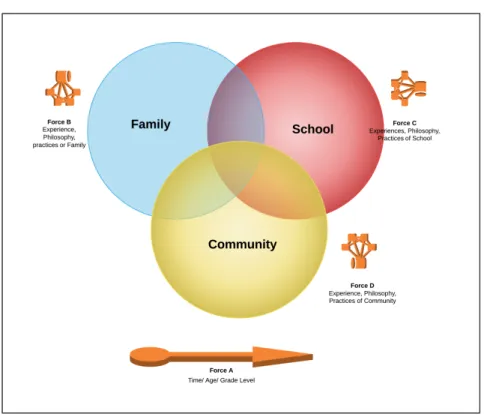
Figure 2. Overlapping Spheres of Influence of Family, School, and Community on Children’s Learning (external structure of theoretical model) ... 39
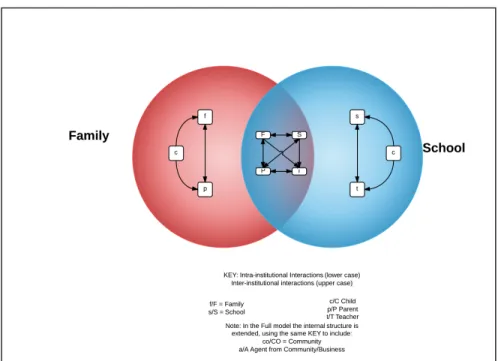
Figure 3. Overlapping Spheres of Influence of Family, School, and Community on Children’s Learning (internal structure of theoretical model) ... 41
Figure 4. Percentages of Parent’s Highest Level of Education ... 69
Figure 5. Free and Reduced-price Meal Plan Eligibility Scale for the 2014-2015 School Year .. 69
Figure 6. Families Who Qualified for Free and Reduced Meal Plans ... 70
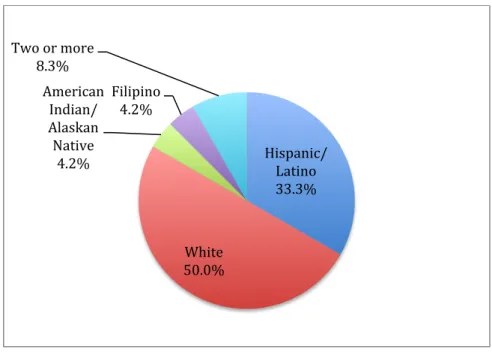
Figure 7. Student Ethnicity Background. ... 71
Figure 8. Previous School Type ... 71
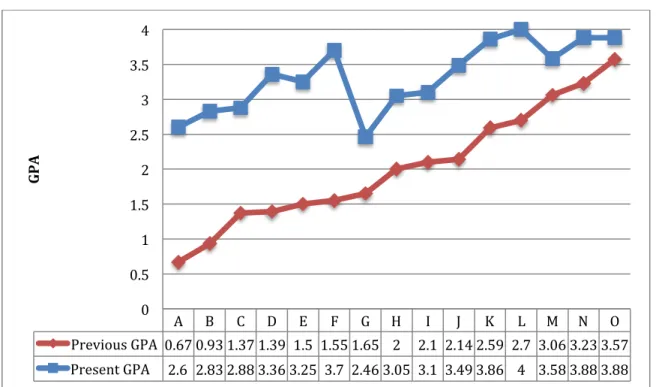
Figure 9. Comparison of GPA’s of 15 Alternative Education Students Between Their Previous School and Present School ... 72
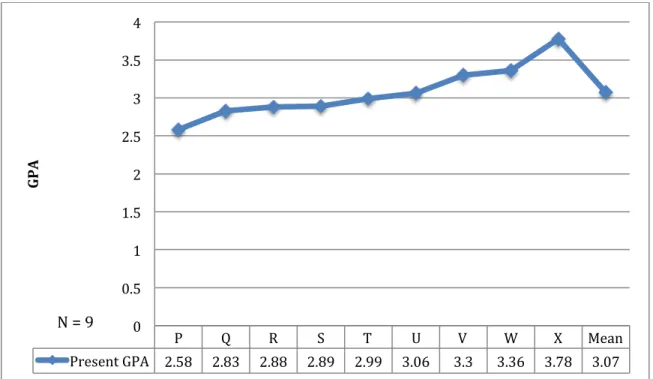
Figure 10. Present GPA for Alternative Education Students With No Previous High School Records ... 73
Figure 11. Age of Teachers and Years of Employment ... 73
Figure 12. Teacher’s Highest Level of Education ... 74
Figure 13. Categories of Detractors, Passives, and Promoters ... 87
DEDICATION
xi ACKNOWLEDGEMENTS
I would like to express deep appreciation to my chair, Dr. Diana Hiatt-Michael, for guiding me through this dissertation process. Thank you for your continuous support, patience, and kindness.
I am grateful to Dr. Tom Johnstone and Dr. David Stevens, for taking time out of their busy schedules to serve on my dissertation committee. Your dedication to change
education is inspiring.
I am indebted to Dr. El Buquiran, Dr. Elena Levine-Melendez, and Dr. Jeremy Villar, for being my mentors.
VITA Carolyn Jun EDUCATION
Pepperdine University, Los Angeles, CA
Doctoral of Education in Organizational Leadership 2015 California Lutheran University, Thousand Oaks, CA
Master of Arts in Educational Leadership 2014
California State University, Northridge, Northridge, CA
Master of Arts in Language and Literacy 2007
University of California, Riverside, Riverside, CA
Bachelor of Arts in Liberal Studies 2003
PROFESSIONAL EXPERIENCE
Assistant Principal, Northridge/Encino, CA 2015- Present
High School Teacher, Northridge, CA 2012-2015
High School Teacher, Chatsworth, CA 2005-2012
CRENDENTIALS
Administrative Credential 2014
xiii ABSTRACT
Alternative education programs were designed to meet the needs of at-risk students who were not succeeding in a traditional classroom environment. This mixed-methods study examined a
particular type of alternative education program—a secondary independent study program—in six charter alternative schools in Los Angeles County, California. The data included student records, field notes, and semi-structured interviews from 24 current students, their parents, and 12 teachers—selected by a stratified random sample of the population at the six sites. This study examined the participants’ perceptions of the purpose of the program, their motivations to be at an alternative school, change in GPA from past to present school, the school’s organization, any desired changes to the program, and their satisfaction with the independent study program.
The findings revealed how at-risk students benefit from alternative educational programs. Located at a site different from traditional schools, these schools were small, storefront spaces. They were redesigned with classrooms for these students, catered to different learning styles and interests, operated with small classes, had flexible hours, and provided for high academic
requirements. All students reported and data supported that they were doing better at their current school than at their previous school: their mean GPA changed from 2.03 to 3.33. All students interviewed expected to complete a high school diploma, and 68% indicated a desire to continue to college. Due to the low teacher to student ratio of 1:6, both students and parents were able to have a close relationship with the teachers. Ninety-two percent of the students and ninety-six percent of the parents stated that they felt that their current teachers genuinely cared about them.
Students and parents were satisfied with these independent study programs. All parents expressed that they would choose their student’s current school as their school of choice.
In addition, these schools focused on engaging the students through various extra-curricular activities. Students, parents, and teachers unanimously agreed that extra-extra-curricular activities, especially student council, were an important component to these programs. Through school academics and extra-curricular activities, these students gained confidence and were motived to perform at a higher level to graduate.
KEY WORDS: alternative education, at-risk, charter school, extra-curricular activities, independent study, small schools.
1 Chapter 1: Problem and Purpose
Introduction
School dropout rates pose a major educational and national problem in the United States (Bridgeland, Dilulio, & Balfanz, 2009; California Department of Education, 2009; Chapman, Laird, Ifill, & KewalRamani 2011; Rumberger, 2011; U.S. Department of Education, 2011, 2013; White House, 2009).A report from the White House (2009) stated that about 7,000 high school students decide to drop out each day. Three out of every ten students fail to finish high school; on average, a student gives up and drops out of school every 26 seconds (Education Week, 2010; National Center for Educational Statistics, 2014a; U.S. Department of Education, 2011). In 2010, 1.3 million students dropped out of school (Education Week, 2010). While there has been a steady decrease in student dropout rates from 7.4% in 2010, 7.1% in 2011, and 6.6% in 2012, it is a growing concern that these high school dropouts may create social concerns within neighborhoods, as they are not sufficiently prepared to become successful workers in the economy (National Center for Education Statistics, 2013a; Rumberger, 2011; White House, 2009). The quality and quantity of education of citizens is related to the economic capital of a nation (Friedman, 2007; Hanushek, Jamison, Jamison, & Woessmann, 2008).
These students may choose to drop out because they do not fit the mold to be successful at a traditional school and require an alternative model of education. Wehlange, Rutter, Smith, Lesko, and Fernandez (1989) suggested that these schools have one message for these students: “If you don’t fit in, it is your fault; if you don’t like things the way they are, move on” (p. 8). Educational policy has deemed these students who do not graduate from high school are at-risk (The National Commission on Excellence in Education, 1983). There is a need to serve these potential dropout students in our schools. The responsibility of educators is to create an
environment where students feel successful and inspired (Wehlage & Rutter, 1986). The teaching styles and practices in traditional high schools remain largely unchanged, even as the needs of students are changing (Baptiste, 1991; Young, 1990). Most traditional public high schools operate as college prep programs and have limited programs to serve students who are at-risk (Barr & Parrett, 1995). When asked why they leave school, dropout students state it is because they are not successful in school and that they do not like it (Bjerk, 2012; Wehlage & Rutter, 1986).
Thus, many educators have argued that these at-risk students can benefit from alternative educational programs (Barr & Parrett, 1995; Bucci & Reitzammer, 1992, Dewey, 1897; Hall & Handley, 2004; Morley, 1991; Peterson & Smith, 2002; Raywid, 1983; Tobin & Sprague, 2000; Tyler, 1949; Young, 1990). During the past 20 years, the number of alternative programs servicing at-risk youth has risen (Barr & Parrett, 2001; National Center for Education Statistics, 2013b; Quinn, Poirier, Faller, Gable, & Tonelson, 2006; Raywid, 1999). Due to the diverse definitions of defining alternative education programs, the precise numbers of alternative programs are difficult to ascertain. Barr and Parrett (1995, 2001) estimated that there are over 20,000 alternative programs in the United States. About 6,144 public alternative schools in the United States are recorded (National Center for Education Statistics, 2013b). The National Center for Educational Statistics (2013b) reported that approximately 627,515 students are enrolled in these public alternative education schools.
Barr and Parrett (1995, 2003) argued that alternative education schools are the most effective approach to school restructuring. These schools transform the classroom to meet the needs of at-risk students for those who otherwise would not have graduated in a traditional setting (Casey, McSwain, & Beach, 1993; Gold & Mann, 1984; Hall & Handley, 2004; Raywid,
3 1983; Young, 1990). Such alternative programs provide various opportunities to learn in a
variety of settings as opposed to the traditional classroom setting. Problem Statement
Alternative schools held promise with innovative options to traditional education, but the American society often views alternative education programs as second rate to the traditional high school (Conrath, 2001; Ho, 2014; Koetke, 1999; Raywid, 1999; Wehlange et al., 1989). Studies reported by Rumberger (2011) have found that at-risk students typically change schools in order to find an environment that is more suitable for their needs before dropping out.For some students, an alternative school may be their first choice in a high school, but for most, enrolling in an alternative school is their last opportunity to receive a high school diploma.
At-risk students enroll in alternative education programs for various reasons. These students did not succeed at a traditional school due to personal and contextual factors
(Rumberger, 2011). At-risk students include those who are highly gifted, have health issues or are sick, are pregnant or parenting, work full-time, report being bullied, placed on probation from school or juvenile hall, or reported that the regular classroom was not an appropriate learning setting (California Department of Education, 2000; Hall & Handley, 2004; Manning & Baruth, 1994; Raywid, 1999; Rumberger, 2011).
Alternative education programs must be innovative and flexible in order to meet the various needs of students. Without changing the way alternative programs operate, the students may fail, just as they did in the traditional public school. One type of alternative education program—independent study schools—has become a popular choice in recent years.
Independent study schools are designed to meet the academic needs and personal interests of the students through individualized learning plans (Barrat & Berliner, 2009). Initially, independent
study schools’ purpose was to serve as a transitional program in which students enrolled to make up credits; then they transferred back to their traditional school and graduated. Observational data from a recent graduation speech by a director of instruction at a large independent study school suggest that this purpose is changing as these schools engage students more broadly (N. Vijeila, personal communication, June 3, 2014). Not only do educators focus more on
schoolwork and curriculum at these schools than traditional schools, they also focus on engaging the students through various extra-curricular activities in order for the student to get the full high school experience. As a result, students are continuing to stay enrolled and opting out of
transferring back to their traditional schools. Furthermore, there seems to be a shift from students feeling embarrassed that they attend alternative programs to feeling proud that they have
remained in school and are on a path that leads to graduation. Purpose Statement
The State of California’s Los Angeles Unified School District (LAUSD) is the second largest school district in the United States. LAUSD graduated 64.69% of their students in 2010, compared to 74.4% of graduates in all of California and 78.2% of graduates throughout the United States (Brown, 2013; California Department of Education, 2011; Education Week, 2013a, 2013b; Taylor, 2012). As a result, alternative schools are growing its presence to fill the needs of students in the greater Los Angeles region, the largest urban area of the state. These schools were designed to service at-risk youth and are concerned about meeting the needs of their clients — at-risk students and their parents. However, according to the Los Angeles Unified School
District’s Pupil Service and Attendance Dropout Prevention and Recovery report (2013), there is only one LAUSD alternative school placement that provides the option of independent study, the focus of this study.
5 The purpose of this study was to evaluate independent study programs in six charter alternative schools in the Los Angeles County. The study sought perceptions of the current students in this program, their parents, and teachers in the program. This study examined their perceptions of the purpose of the program, their motivations to be at an alternative school, the organization of the program, desired changes to the offered program, and their satisfaction in the independent study program. The researcher had permission to gather data in six charter schools that were affiliated with the Baldwin Park Unified School District. This data may be used to assist policymakers, school administrators, and teachers regarding what works in these independent study programs, as well as suggestions for future revisions.
Theoretical Basis of the Study
This study applied Tyler’s (1949) rationale that raised four basic questions to assess the stakeholders’ perceptions of a given curriculum:
1. What educational purposes should the school seek to attain?
2. What educational experiences can be provided that are likely to attain these purposes? 3. How can these educational experiences be effectively organized?
4. How can we determine whether these purposes are being attained? (p. 1)
The researcher investigated three groups of stakeholders: the students, their parents, and teachers from the six alternative school programs within the Los Angeles County. These groups were assessed using face-to-face interviews to secure their perceptions of key characteristics of these alternative school programs. The interviews included questions that determined successful elements and areas for program reform according to these three groups. The intent of the study was to provide beneficial information that informed alternative school programs.
Research Questions
Tyler’s (1949) notable work in curriculum development provided the foundation for developing the research questions for this study (Table 1). Students, their parents, and teachers were asked questions on their perception of alternative schools.
The following research questions guided this research:
1. According to participants, what is the purpose of the school?
2. According to participants, what factors motivate students to participate at this school? 3. Do respondents perceive that the organization of the school is effective?
4. What changes are desired at this school?
5. How satisfied are students, parents, and teachers with this school? Table 1
Correlation between Researcher’s Questions and Tyler’s Questions Researcher Questions Tyler’s Questions
1 1 2 3 4 5 2 3 4 4
Significance of the Study
The findings from this study may educate society about independent study programs within alternative high schools. Although a body of research has been done regarding the pros and cons of alternative education and dropout prevention programs, little research has been reported regarding independent study programs within alternative schools.
Theoretical significance. This study selected an Outcome-Based Evaluation, and Lange and Sletten’s (1995) type of alternative program was used to study the perspectives of students, parents, and teachers at alternative education programs. The researcher chose the
Outcome-7 Based Evaluation in order to measure the different aspects of the independent study programs in the alternative school. The study applied Tyler’s summative method to evaluate the program’s value to the students, their parents, and the teachers (Schalock, 2001; Tyler, 1949).
Methodological significance. The researcher developed three interview instruments to measure the students’, parents’, and teachers’ perceptions of the independent study program of the alternative schools. These tools were pilot-tested before being applied.
Practical significance. Increased enrollment numbers in alternative education programs suggest that not all needs of students are met in a traditional high school setting, yet each year, hundreds of alternative education programs in the United States get shut down (National Center for Education Statistics, 2012, 2013b). This study can contribute to the body of research on the effectiveness of alternative education programs. This study will also serve to educate students, parents, and the community that there are other educational options available to students. The findings revealed that alternative education programs should be considered as a top choice school when students and parents are searching for a high school that meets the needs of the student. In addition, findings may be useful to support changes in school reforms, its policies, and its curriculum in school sites and at the district, state, and federal level.
This study illustrated how traditional schools may incorporate different techniques and strategies to cater to the needs of today’s students. By understanding how students perceive their school, environment, and the qualities they value in maximizing their investment, we can use this information to refine schools to cater to the needs of all students. The findings from this study may help educational policy makers decipher the effectiveness of alternative education and its presence alongside mainstream education programs.
Delimitations of the Study
The following were the delimitations for this study:
1. This study was confined to six charter alternative schools in the Los Angeles County and may not represent other alternative education schools.
2. These schools used an independent study model and may not represent other independent study schools.
3. The researcher interviewed students, parents, and teachers. School administrators were not studied.
4. The time frame of the study was from November 2014 to December 2014. 5. Four students, four parents, and two teachers from each site were interviewed. Limitations of the Study
The study had the following limitations:
1. The study was limited to the subjects who volunteered to participate in the study. 2. Perceptions of the students and parents may vary depending on the length of enrollment
and involvement in the school.
3. The study was limited to students whose parents were available for face-to-face or phone interviews.
4. The study was limited to teachers who were employed during the time of the study and were employed for more than one year at their current school.
5. Perceptions of the teachers may vary depending on length of employment, location of the school, and school buy-in.
6. Secretaries or teachers selected the students to be interviewed.
9 Assumptions of the Study
The following assumptions were considered throughout the study by the researcher: 1. The sample gathered represented the population under study.
2. Respondents to the interview answered honestly and to the best of their ability. 3. The instruments used to gather data were valid and reliable.
Definition of Terms
In order to understand the certain key terms and their meanings, these definitions were used to guide the research.
Alternative school. A school that is classified outside of the traditional school setting and offers students a different configuration, philosophy of learning, or academic importance to accommodate various student needs, interest, and learning styles (California Department of Education, 2013a).
At-risk students. Students who are not likely to graduate from high school due to several risk factors such as low achievement, grade retention, behavior problems, low socioeconomic status, poor attendance, and are enrolled in a school with a large population of poor students (Slavin, 1989).
Charter schools. Public schools that may provide instruction in any of grades K-12 that are created or organized by a group of teachers, parents, community leaders or a community-based organization (California Department of Education, n.d.).
GPA. The GPA of a student is an unweighted grade point average. This is a point system that is based on grades, which count all classes the same.
Independent study. An alternative instructional approach that offers flexibility in order to meet the student’s individual needs, interests, aptitudes, and styles of learning. Students work
independently and follow district-adopted curriculum that meets the district graduation requirements (California Department of Education, 2013c, 2014c).
Net promoter scale. A tool used to gauge customer feelings and satisfaction. Detractors are subtracted from the promoters to generate a number (Reichheld & Markey, 2011). In this study, detractors were scores between 0-6, passives were scores between 7-8, and promoters were scores between 9-10.
Parent. According to the California Education Code section 56028, the term parent includes biological parents, foster parents, or guardians who legally assume the parental role (California Department of Education, 2013b).
School choice. Under the No Child Left Behind Act, parents are allowed to choose other public schools if the school their child attends is not safe. School choices include: public schools, charter schools, supplemental educational services, magnet schools, homeschooling, private education, and DC choice (U.S. Department of Education, 2013).
Teacher. A teacher will be defined as the academic recovery teacher assigned to the student upon enrollment. The teacher is responsible for the student orientation, assigning of appropriate classes, giving the student their grades, and letting them know of any activities the school offers. Teachers who lead specific areas of curriculum (mathematics, English, Spanish, science) in a small group setting (no more than 20 students), will be referred to as Small Group Instructors (SGI).
For the purpose of this research, teachers will need to have their California teaching credential and have been an employee of the school as a full-time teacher for more than one year.
11 Summary
This research was intended to provide an in-depth study of alternative education schools and education programs, as little is known about students’, parents’, and teachers’ perceptions of these programs. The researcher will use both quantitative and qualitative approaches to gather data.
Organization of the Study
This research was organized into five chapters. Chapter 1 contains the problem and the purpose of the study. Chapter 2 contains a review of related research and literature to provide background for this study.Chapter 3 will provide a description of the methodology used. Chapter 4 includes the data analysis and its findings. Chapter 5 contains a summary of findings,
Chapter 2: Literature Review Brief History of Alternative Education
The alternative school movement in public education is a reform effort that is not supposed to exist. It seemed to come out of nowhere, and for two decades it has been denounced and discounted and often dismissed as a passing education fad. (Young, 1990, p. v)
From the beginning, alternative schools had three objectives: to change the student and their performance, to change the school and its experience, and to change the educational system by innovation (Raywid, 1999). This movement can be dated back to 1749, when Benjamin Franklin’s “Proposals relating to the Education of Youth in Pensilvania” led to the opening of the Academy of Philadelphia in 1751, an alternative to the comprehensive grammar schools (Conley, 2002; Penn Arts & Science, n.d.).
In the 1960s, “alternatives” surfaced, first within the private, and later within the public sectors. These schools emerged throughout the nation, especially in urban and suburban
communities. The main purpose of the urban alternative school was to educate the minority and poor, while the suburban alternatives aimed to innovate programs by creating and adapting new approaches to learning. Both types of alternative schools paved the road for students to receive personal attention and an individualized academic plans to meet the social and academic needs of each of the students. These schools had various purposes, including serving students who had a history of juvenile crime or offense, vandalism, or violence. Alternative schools were also a means of desegregations and dropout prevention. By the mid-1970s, numerous alternative schools were scattered throughout the country (Garibaldi, 1995; Gold, 1978; Quinn et al., 2006; Raywid, 1999).
13 In the 1970s and 1980s, alternative schools became a solution to many of the nation’s problems and were used to carry out different aims. The free school movement gained its popularity in the 1970s and offered Freedom School that focused on student-centered and individualized environments (Aron, 2006). From 1970 to 1975, public alternative schools increased from a few hundred schools to more than a thousand schools (Raywid, 1981; Young, 1990). Both federal and state, along with private initiatives, turned to alternative schools to solve many social problems, including: juvenile crime and negligence, complying to the needs of inner-city minorities, dislike towards public bureaucracies, the abhorrence of institutionalism, school violence and defacement, racial segregation, a decline in school enrollments,
unemployment amongst youth, and changes in demographics within a school (Gregg, 1998; Koetke, 1999; Raywid, 1983).
Alternative Education in Present Day
United States. Today, alternative education schools can be seen throughout the nation. Tobin and Sprague (2000) implied that the number of alternative schools in the United States has expanded due to zero-tolerance policies, an increase in violence, school failures, and changes in the Individuals with Disabilities Education Act (IDEA). Although there are no exact numbers of alternative education programs in the United States, Barr and Parrett (1995, 2001) estimated that there are over 20,000 alternative programs. It is often difficult to count these programs, as each research may view the term alternative education differently. While some believe it comprises all educational attempts outside of the K-12 traditional school setting, (i.e. charter schools, magnet schools, home-school, special schools, juvenile detention program, GED programs), others use it to describe programs serving at-risk students who are no longer in traditional schools (Aron, 2006). The United States reports 6,144 alternative public school programs,
compared to 88,663 regular schools (National Center for Education Statistics, 2013b). Most of these schools were developed due to a need in the community. These schools have various philosophies to meet the needs of the students and parents (Barr & Parrett, 1995, 2001).
However, despite the increasing numbers of alternative schools, there is still a negative stigma associated with them (Conrath, 2001; Ho, 2014; Raywid, 1999; Sagor, 1997; Wehlange et al., 1989). School district officials still refer to these schools for means of relocation for students struggling at their traditional schools; thus alternative schools have been stereotyped as places for unsuccessful students who are at risk of dropping out of high school (Aron, 2006; Cox, Davidson, & Bynum, 1995; Gregg, 1998; Ho, 2014; Raywid, 2001).
Alternative education programs in California. While the graduation rates of public schools in the State of California climb, there are continual reports of high student dropouts rates compared to the rest of the United States. The United States Department of Education released a list unfolding the state-by-state graduation rates of students from 2010-2011. Of the reporting states, California came in 32nd place, as 76% of students in California graduated and 74,101 students dropped out of school (California Department of Education, 2013c; National Center for Education Statistics, 2014b). In 2011-2012, California tied for 29th place, as 78% of their
students graduated and 66,523 students dropped out of school (California Department of
Education, 2013c; Taylor, 2012).New York City and Los Angeles, the largest and second largest school districts in the United States, lead the nation with the most non-graduates, as there are more than 40,000 dropouts from each city each year. This is largely due to likeliness that dropouts generally attend schools in large, urban districts and come from low socioeconomic neighborhoods (Education Week, 2010).
15 In the Los Angeles Unified School District, 64.69% of students graduated in 2010,
compared to 74.4% from the state and 78.2% from the United States (Brown, 2013; California Department of Education, 2011; Education Week, 2013a, 2013b; Taylor, 2012). The Los Angeles Unified School District (2013) offers district alternative placements which include: 41 continuation schools, 11 community day schools, 2 pregnant minor schools, 1 opportunity and alternative school, and 1 independent study school. As the number of students in need of alternative education increases in Los Angeles, there is a need for additional alternative education schools.
Purpose of Alternative Education
For at-risk students, the traditional classroom is not always the best learning environment (Bucci & Reitzammer, 1992; Lehr & Lange, 2003). Morley (1991) commented, “Alternative education is a perspective, not a procedure or program. It is based upon the belief that there are many ways to become educated, as well as many types of environments and structures within which this may occur” (p. 8). Effective alternative education tailors their schools to meet the needs of at-risk students (Barrett & Parrett, 1995; Gold & Mann, 1984; Raywid, 1983; Young, 1990). Before alternative education, we thought all students learned the same way. All schools were alike, and all schools were taught using the same common curriculum in the same teaching style (Baptiste, 1991; Young, 1990). Alternative education has taught us that there is not one learning style that all students benefit from, and that some students may learn best outside of the traditional classroom setting (Young, 1990).
Alternative education programs are primarily designed to serve students who are thinking about dropping out, are at risk of dropping out, or have already dropped out of school (Peterson & Smith, 2002). There are generally three types of students who attend alternative education
programs. The first category consists of quiet dropouts, who typically remain low key and have a lack of accomplishments at school. The second are disruptive dropouts, who have a record of suspensions, disciplinary actions, and expulsions. Lastly, the third group are the high academic achievers. These students are often bored of school and tend to resist authority at school (Kennedy & Morton, 1999; McCall, 2003). While some students will return to their traditional school, many will not. These students may try to continue their education in an alternative school (Potts, Nije, & Detch, 2003).
According to California Department of Education (2013a), the goals for alternative schools are to:
1. Maximize the opportunity for students growth; 2. Generate students who have a longing to learn;
3. Uphold a learning environment that inspires motivation, time management, and pursuable personal interests;
4. Creating continuous learning opportunities for students, parents, and teachers; 5. Maximize opportunities to respond to changes in the world.
Laws and Policies Affecting Alternative Schools
Laws and policies regarding education directly affect alternative schools. From
enrollments to safety concerns, these laws and policies were written to protect students and to give them a fulfilling education.
Federal gun-free schools act of 1994. Under this act, there were many zero tolerance policies that were reenacted throughout the United States. Initially, it began as a means to expel students for a minimum of one year from school who were in possession of a firearm (Law Center to Prevent Gun Violence, 2012). These zero-policies have evolved and now include
17 fights, as well as possession of drugs or weapons (National Association of School Psychologists, 2001). According to data from the U.S. Department of Education and the Center for Safe and Responsive Schools, zero tolerance policies led to disciplinary actions, with suspension and expulsion being the most frequent form of reprimand for a possession or use of: firearms, weapons, alcohol, tobacco, or drugs, and physical fighting (National Association of School Psychologists, 2001). Due to the expulsion of these students from their current school, these policies have pushed many students to enroll in alternative education programs (National Center for Education Statistics, 1998).
Policy, politics, and law in California. Many educational reform movements have taken place to ensure quality and high standards for students. With the adoption to the California Content Standards, enactment of the Public Schools Accountability Act (PSAA), and the implementation of Common Core State standards, the state of California hopes to increase student achievement.
The California Content Standards were adopted in 1997 to bring uniformity to curriculum and learning. These content standards were designed to close the inconsistencies between
different schools. The goals were to establish high academic expectations for all students at every grade level and in each academic content area by defining the skills, concepts, and knowledge that each student should comprehend (California Department of Education, 2014a; Conley, 2005)
In 1999, the PSAA passed in California. This act became the first step in leading the state to hold the students, school, and district accountable for year-to-year academic growth by
requiring schools to implement Standardized Testing and Reporting (STAR), which includes the California Standards Test (CST). In addition, the California High School Exit Exam (CAHSEE)
is used to measure knowledge in English Language Arts (ELA) and mathematics for high school students. Test results make up the majority of an academic performance index (API), a numeric scale that ranges from 200 to 1000 that schools receive. Since the purpose of PSAA is to measure academic performance and growth, the API scores are reported by a base score and the growth score for the following year. Schools must meet their annual school-wide target as well as state API growth targets (California Department of Education, 2013d).
In addition to the California State mandates, federal mandates now require schools to measure effectiveness, also through student test scores (Rumberger & Palardy, 2005). Specifically, the No Child Left Behind (NCLB) Act of 2001 requires annual testing of all students in the United States and a close monitoring of school accountability ratings (U.S. Department of Education, 2008). In 2002, President George W. Bush signed the act to ensure that schools would be held accountable for student achievement in an attempt to close the achievement gap (Callet, 2005).
Although student test scores may provide a direct evaluation of school effectiveness and student learning, two related indicators may also measure school effectiveness and student learning: dropout rates and graduation rates. Alternative schools have been receiving negative feedback due to their school’s accountability report. The methodology used to calculate dropout rates does not accurately measure the success of alternative education programs (Losen, 2004; Swanson, 2003). NCLB uses graduation rates as a measure of adequate yearly progress (AYP) in high schools. Traditional high schools tend to have lower dropout rates and higher graduation rates than alternative education programs since they unload at-risk youth to alternative education placements; if the student drops out, it will be attributed to the alternative education program (California Department of Education, 2009).
19 Alternative education requirements in California. California state law under the California Education Code (EC) alternative schools must meet these requirements (California Department of Education, 2013a, para. 1):
• Both the teachers and the students must be volunteers;
• Alternative schools of choice must be maintained and funded at the same level of support as other educational programs;
• Alternative schools and programs of choice must meet the same standards for curriculum, instruction, and student performance as traditional schools;
• The school district must annually evaluate such schools and programs.
State codes. Each state has laws and codes to regulate to protect the people. Under the California Law – Education Code (EDC), alternative schools are also represented (EDC 58500-58512).
EDC 58507. Alternative schools will serve the purpose of improving school curriculum by creating innovative techniques to improve education. Alternative schools will receive the same amount of support and funding from the district as similar schools (California Legislative Information, n.d.).
EDC 58509. An annual evaluation from the district is required. The evaluation will include testing of basic skills, barriers to student academic achievement, and input from the students, parents, and teachers (California Legislative Information, n.d.).
Positive Effects of Alternative Education
Studies have concluded that alternative education schools have positive effects on students (Kirkpatrick, McCartan, McKeown, & Gallagher, 2007; Lange & Sletten, 2002). Alternative education is effective especially to the illiterate, underachieving, disruptive, and
potential dropouts (Young, 1990). Positive outcomes of alternative programs focus on three areas: academic achievement, choice and flexibility, and changes in students towards themselves and school (Lange & Sletten, 2002).
Academic achievement. There has been a shift in academic urgency among students in alternative education schools. They now feel differently towards school and have fewer
absences, their learning has improved, and most of all, they feel that their needs are being better met (Cox et al., 1995; Gettys & Wheelock, 1994; Martin, Tobin, & Sugai, 2003; Young, 1990). They are in a setting where they finally feel successful (Barr & Parrett, 1995).
Alternative education schools are “often the most effective approach to keeping students in school and helping them catch up academically and achieve high standards” (Barr & Parrett, 2003, p. 118). Alternative education provides a more positive learning environment through individualized instruction, and students feel more successful at these schools than traditional schools (Barr & Parrett, 2003; Raywid, 1983). This may be due to the noncompetitive
environment that allows students to be individuals and not be compared to other students. This allows students to progress at their pace and ability level in their rate (Cox et al., 1995).
Changes in student. Students in alternative education change from within. These students are more confident, less violent and disruptive, and have a more democratic attitude (Young, 1990). They have also shown improvement in school attendance, improved attitudes, reduction of dropouts, and increased academic achievement (Barr & Parrett, 2001).
Nicols and Utesch (1998) made key correlations with motivation and self-esteem in alternative education programs. They found that students who enrolled in alternative education programs encompassed increased extrinsic motivation in the areas of peers, home, school
self-21 esteem, in addition to perseverance in learning. In addition, students thought that they could be successful after attending alternative education programs.
School choice. Miron and Welner (2012) stated that school choice can present matters regarding integration, innovation, and accountability. First, school choice can either diminish the separation between class, race, or special needs condition, or have the repercussions to accelerate the process of resegregation in the public school system. Second, it can allow parents to choose from innovative school choice options or a stratified, non-innovative option that is familiar, yet exclusive. Lastly, school choice reforms can promote accountability or assist in the evading of oversight.
Alternative education gives parents and students a choice to attend a school or program that best meets their needs through voluntary and involuntary participation (Barr & Parrett, 1995, 2003; Hall & Handley, 2004; Morley, 1991). Barr and Parrett (2001) wrote, “Voluntary
participation seems to evoke a powerful personal commitment. Students and teachers who choose to participate in an educational alternative become personally invested in the program and protective of their environment” (p. 75). Since participation is voluntary for students and teachers, alternative education does not need to adhere to regulations of curriculum, methods of instruction, school placement based on residence, selective tracking, and assignment of teachers. Students, parents, and teachers choose to be a part of the program (Barr & Parrett, 2001; Lehr & Lange, 2003). Also, alternative education provides flexible, highly individualized programs that are designed to meet the needs of at-risk students (Aron, 2006; Barr & Parrett, 1995, 2003; Gold & Mann, 1984; Lange & Sletten, 2002).
Types of Alternative Schools
Alternative schools encompass an array of programs, settings, and structures. Alternative schools serve the purpose to meet the needs of at-risk students in an environment that is
advantageous. These factors should be considered when exploring alternative education programs.
Conceptions. According to Raywid (1983), there are two conceptions of alternative education. These generalizations seem true for most alternative schools.
Formal. Under the formal definition, the author suggests:
1. Be a school or administrative cluster with its own program and members; 2. Be open to all students in the district as a school choice;
3. Be an entity that accommodates the learner’s needs, interests, or parental preferences.
Substantive. Under the substantive definition, the author suggests: 1. They emphasize interpersonal relationship within the school;
2. A variety of different courses are offered that integrate themes in several fields; 3. Learning through participation or observation is stressed;
4. They may have different formats and evaluation systems for students;
5. Students are involved in decision making and are set to fewer rules and regulations of conduct.
Categories. Raywid (1994) stated that all alternative schools can be classified into three categories based on the program’s goals: type 1, type 2, and type 3. Type 1 schools offer a more challenging rigor than traditional schools for all students, while type 2 and type 3 schools are means to resolve issues. Type 2 schools are generally mandatory for “forced choice” students
23 and type 3 schools are for socially and emotionally challenged students. Lange and Sletten
(1995) created a fourth type that combined elements of Raywid’s (1994) classification.
Type 1. According to Raywid (1994), these alternative schools implement innovation and creativity. The mission of these schools is to create a school with content and instructional strategies that are engaging, challenging, and fulfilling. Type 1 alternatives are extremely popular and are usually the schools of choice. These schools are likely to emphasize themes in content and/or instructional strategy and resemble magnet schools (Raywid, 1994, 1995).
Type 2. According to Raywid (1994), these alternative schools are often programs that focus on behavior modification and are often the last chance before expulsion. They are the disciplinary alternative education programs. Students are sentenced to these temporary placements. They include cool-out rooms, a longer-term placement for frequently disruptive students, and suspension programs. In most circumstances, curriculum remains the same and students are required to perform the same tasks as regular classes, with assignments designed for individual completion (Raywid, 1994, 1995).
Type 3. According to Raywid (1994), these alternatives programs are centered on remediation or rehabilitation with high-structure tasks to help mainstream students. These programs are therapeutic programs and are geared towards students who need extra help academically and/or socially/emotionally. The purpose of these programs is to help implement behavioral modifications, by teaching them compliance skills. Remedial work, along with social and emotional growth, is often emphasized (Gold, 1995; Raywid, 1994, 1995).
Type 4. Raywid’s (1994) three tiered category systems is a general classification of alternative education based on literature, and not all alternative schools will fit into one of these three categories. While the needs of students are changing and the structure of alternative
education is transforming, many students and programs may fit into none or more than one of these categories. Lange and Sletten (1995) determined there was another category. These programs combine the elements with Raywid’s (1994) type 1 schools, the supportive learning environment, with the remediation for students who have had behavioral difficulties. These are often looked to as second chance schools as opposed to last chance schools, as it gives students the choice to enroll in these schools.
Types of public alternatives. Not only is there a difference in the types of schools that serve these particular students, there are also an array of structural models. Since alternative education programs and schools develop in response to the need of the communities, each school may look differently. These are the common types of public alternatives:
Schools without walls. These schools offer community-based learning experiences (Raywid, 1999). Individuals within a community are incorporated in the learning, as they serve as teachers. These community-based teachers inform their students about the role they play in their community and teach them the necessary skills to accomplish their jobs (Morley, 1991; Raywid, 1999; Young, 1990).
Schools within a school. These schools are popular in the secondary level. The purpose of these schools is to provide students a smaller sized learning environment (Morley, 1991; Young, 1990). The goals of the school are to improve basic skills, improve student self-image, increase attendance, increase student individualization, improve relations, and enhance morale (Hefner-Packer, 1991). Students in this setting are able to access the resources from the parent school such as physical education programs, fine arts, vocation, and other elective classes (Chalker, 1996). Hefner-Packer (1991) described these programs as
25 The school-within-a-school is semi-autonomous, non-traditional, or specialized
educational program housed within a traditional school or in a separate facility that has strong organizational ties to the parent school. Students usually attend the program for a portion of the day and return to the traditional school for electives or special courses. Students who may benefit from the school-within-a- school environment include those who are poorly motivated, low achievers, behind in graduation credits, and unable to adjust to traditional structure and teaching methods. (p. 10)
Multicultural schools. Multicultural schools are aimed to serve students of various ethnic and racial backgrounds. Curriculum in these schools is tailored to emphasize cultural diversity, language, and practices. These schools are customized to meet the needs of a specific ethnic group or the cultures of many subgroups (Morley, 1991; Raywid, 1999; Young, 1990).
Continuation schools. Continuation schools are designed to provide a more
individualized way of learning in a less competitive environment. Their main targets are students who are potential dropouts, students who have already dropped out, and students who are
pregnant or parenting (Morley, 1991; Raywid, 1999; Young, 1990). Options for either attending day, evening, or summer classes allow students who are not attending traditional school or those who are attending traditional school but need additional coursework an option to earn units. Continuation schools include programs that cater to: dropout prevention, dropout intervention, pregnant and parenting teens, adult education, and grade acceleration (Chalker, 1996).
Fundamental schools. These schools follow strict discipline and strongly emphasize academic learning, using a “back to the basics” approach. Teachers follow a direct instruction approach (Morley, 1991; Raywid, 1999; Young, 1990).
Learning centers. Most learning centers at the secondary levels are technical or vocational and focus on career awareness or preparation. They contain different resources that meet the needs of certain students (Morley, 1991; Raywid, 1999; Young, 1990).
Magnet schools. Magnet schools were developed to focus on a theme or area of interest. Initially as a response to school desegregation, the purpose of these schools was to attract
students from all racial groups. This gave students a choice to attend school based on interest and not by where they lived (Morley, 1991; Raywid, 1999; Young, 1990).
Independent study schools.Independent study is an educational alternative that responds to the educational needs, aptitudes, abilities, and interests of students (California Department of Education, 2000). This type of program tends to serve students who have difficulties attending classes (Velasco et al., 2008). Independent learning and teaching consist of three elements: the learner, the teacher, and form of communication through education. These communication devices may be in the form of print, electronic transmission, or in a different form (Moore, 1973). Moore (1973) individualized what was required from the learner: time commitment, secession of materials, and rate of learning. He classified the term of independent learning and teaching by distance and autonomy. Charles Wedemeyer described characteristics of
autonomous learners that can still be applied to independent learners today (Moore, 1973): • They like to plan ahead;
• They usually stick to a plan, modifying it as they go along; • They organize their time to make the best possible use of time;
• They realize they can’t start a new activity (learning) without giving up something else that formerly took the time now set aside for study;
27
• They have open minds to learning new things; • They enjoy questioning, testing, and analyzing; • They are not afraid of being different;
• They like to form generalizations, look for principles, and find the basic structural ideas; • They have developed skills in note taking, remembering, and relating;
• They work cooperatively with others, but enjoy being “on their own” in learning. (p. 668) According to the California Department of Education (2000), independent study allows students to:
• Study at their own pace;
• Link school and to the community;
• Excel in their area of special interest and abilities; • Achieve proficiency/mastery in basic skills; • Be educated at home;
• Take ownership of their education;
• Have flexibility in the design of the program; • Offer school choice;
• Have individualized instruction.
Characteristics of High Quality Alternative Schools
As alternative education evolves, promising positive characteristics are examined. Aron (2006) believed that there are eight key attributes of high quality alternative programs: academic instruction, instructional staff, professional development, size, facility, relationship/building a sense of community, leadership/governance/administration/oversight, and student support.
Academic instruction. It is important for alternative schools to maintain high standards and expectations for their students (Lehr & Lange, 2003; Tobin & Sprague, 2000). Kraemer and Ruzzi (2001) wrote, “There should be no question that alternative education students be asked to meet the same high standards set for students in traditional schools” (p. 43). When they are taught using an aligned curriculum with individualized instruction and optimistic teachers, students can progress. If they are grouped into slower learning tracks with low expectations from teachers, they will often show low achievement (Barr & Parrett, 2003).
Successful alternative programs have a clear vision. Their goal is to combine high academic standards with engaging and creative instruction with learning that is relevant and applicable to their life outside of school (Aron, 2006; Glasser, 1993; Lehr & Lange, 2003; Mills & McGregor, 2010). Raywid (1989) recommended that these schools should provide higher levels of thinking and innovation and be modeled after magnet schools.
Like teaching styles, students also have different ways they learn (Barr & Parrett, 2001; Dewey, 1897; Morley, 1991; Young, 1990). Instruction should be differentiated in a design that is conducive to meeting the needs of students, while applying applicable knowledge to their future (Arnove & Strout, 1980). Alternative education must be flexible to meet the needs of students (Gold & Mann, 1984; Lange & Sletten, 2002).
Instructional staff. The keys to a good education are quality teachers, as it is the most instrumental factor in student achievement (Barr & Parrett, 1995, 2001, 2003; Bridgeland et al., 2009; Hall & Handly, 2004). The teachers must believe that these students can learn and hold students to high standards (Barr & Parrett, 1995; Lange & Sletten, 2002). Hall and Handley (2004) believed effective teachers have: knowledge and love of the subject matter, verbal skills, a love for students that is empathetic, and personal integrity. The relationship between a student
29 and teacher “sets the stage for co-construction of the knowledge” (Branco & Valsiner, 2004, p. 114).
Effective teachers create a climate that is engaging in order for students to pursue academic achievement in addition to positive attitudes towards the school and themselves (Pierce, 1994). They not only show respect to their students, they require the students to
reciprocate respect back to them and their peers (Barr & Parrett, 2003; Stronge, 2002; Tomlinson & McTighe, 2006). Teachers must probe students to ask challenging questions to meet individual achievement. Teachers who portray this level of enthusiasm when students succeed are
genuinely satisfied, as they know that they have been the underlying force in student achievement (Hiatt-Michael, 2008).
Students in alternative education schools stated that the most important characteristic of a teacher is that they care for their students, and the most powerful encouragement to staying in school is when they receive friendly attention (Morley, 1991). Effective alternative schools encompass teachers who support, care for, and challenge students to achieve higher expectations (Barr & Parrett, 2003). Research suggest that at-risk students are more successful when they have motivated and caring teachers who are well trained (Barr & Parrett, 2001). Teachers who work at alternative education schools choose to out of personal concern for the youth. They want to work in a smaller environment and use a collaborative approach (Barr & Parrett, 1995).
Professional development. As experienced teachers retire,new teachers will begin their teaching careers. Whether one has had abundant formal preparation through a teacher education program or has switched careers and is teaching with an emergency permit, one thing is clear: they may not be well prepared to teach our children (Darling-Hammond & Baratz-Snowden, 2007).Comprehensive induction programs are crucial for new teachers. These programs should
integrate collaboration with master teachers and teachers from other schools, similarly set planning times, and ongoing professional development (Bridgeland et al., 2009).
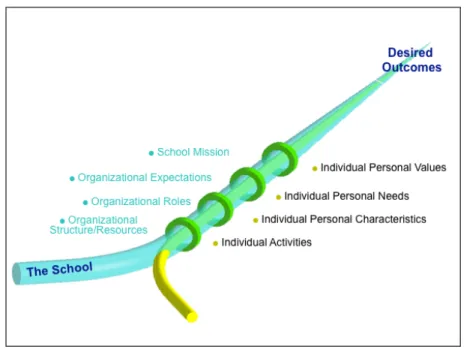
Schools need to strive to become learning organizations, not primarily for student growth but also for teacher and staff growth. Teachers need to feel supported and have opportunities to develop skills and innovative strategies to bring into the classroom (Smink & Reimer, 2005). A learning community within a school is a place where “people continue to expand their capacity to create results they truly desire, where new and expansive patterns of people are continually learning how to learn together” (Senge, 2006, p. 14). The learning community bridges the organization (mission, expectations, roles, structures/resources) with the individual (personal values, needs, characteristics, activities) to create the desired outcome (See Figure 1; Hiatt-Michael, 2008).
Figure 1. Hiatt-Michael model.The Learning Community. Reprinted from “Teaching, Curriculum, and Community Involvement,” by D. B. Hiatt-Michael, 2008, p. 73, Charlotte, NC: Information Age. Copyright 2008 by D. B. Hiatt-Michael. Reprinted with permission.
In order to create learning communities, professional development is crucial for all teachers in order to sustain high academic standards, develop and enhance teaching methods, and
31 to learn about essential elements that will help one develop (Aron, 2006; Barr & Parrett, 2003; Senge, 2006). Effective professional development is ongoing, is centered around learning and teaching academic content, connects to practice, and builds working relationships among other teachers. Studies have shown that there is a correlation between substantial professional development hours (30 to 100 hours stretched over six months to a year) and student achievement gains (Darling-Hammond, Wei, Andree, Richardson, & Orphanos, 2009).
Size. Although alternative schools vary in size, successful alternative education programs are smaller than traditional, conventional schools (Arnove & Stout, 1980; Aron, 2006; Barr & Parrett, 1995, 2003; Hall & Handley, 2004; Lange & Sletten, 2002; Morley, 1991; Raywid, 1984, 1994, 2001; Tobin & Sprague, 2000; Young, 1990). Morley (1991) wrote, “Smallness is necessary to establish and maintain a sense of family and belonging or a sense of community” (p. 16). They provide fewer disruptions, and the feeling of isolation and alienation are reduced (Barr & Parrett, 2003). Smaller schools provide an atmosphere of educational support and function as a surrogate family for these students (Barr & Parrett, 1995).
Small classes provide low student to teacher ratio, which can foster a caring relationship. Teachers are able to know their students better and can make sure that the students understand what is being taught. Students are able to work closely with their teacher for a more personalized learning environment than if enrolled in a traditional setting (Aron, 2006; Barr & Parrett, 1995; Hall & Handley, 2004; Koetke, 1999; Lange & Sletten, 2002; Tobin & Sprague, 2000).
Facility. An important factor to consider for a school is the ambiance and atmosphere, as a positive and supportive school climate is essential (Barr & Parrett, 2001; Hall & Handly, 2004). Students need an environment where they feel safe, cared for, supported, and challenged.
They must be actively engaged and able to focus their attention on learning (Barr & Parrett, 2001).
According to Quinn et al. (2006), effective alternative programs create a personalized climate in which rules are fair, valid, and equitably enforced. The environment is favorable, as teachers and administrators support student interpersonal, social, and academic success while displaying dignity and respect for them. Students contribute to the environment by participating
in school planning and decision making while staff are open to problem solving and change. Relationship/building a sense of community. Student engagement is critical to building
relationships and a sense of community. Engagement includes behavior and psychological aspects (Fredericks, Blumfeld, & Paris, 2004). These include active participation at the school, both inside and outside of the classroom, avoiding disciplinary actions, and building meaningful relationships (Fredericks et al., 2004; National Research Council, 2004). Students who have continual relationship with adults feel more engaged and are more involved and attached to the school (Wehlage et al., 1989).
All students, teachers, and parents are neighbors to their community. Hall and Handley (2004) said, “While striving to eliminate alienation and nurture positive relationships at school, it is important to acknowledge this and to recognize students as unique individuals with lives outside of school” (p. 51). Effective teachers show an interest in their students both in and out of the classroom (Gayle, Preiss, Burrell, & Allen, 2006).
Alternative education has been acclaimed to be models of reform. They were able to “restore the allegedly cold and indifferent bureaucracies which schools had become, to the humane, caring environments necessary for helping the young learn” (Raywid, 1983, p. 191). The relationship between a student and teacher serves as the basis to the learning process. Not
33 only do these relationships play a role in student learning and achievement but also they foster student self-esteem as students sense a feeling of belonging (Stronge, 2002). The typical student-teacher role relationship in an alternative education school is replaced with a warmer, informal personal relationship (Gold & Mann, 1984; Hall & Handley, 2004; Lange & Sletten, 2002).
Leadership, governance, administration, and oversight. Leadership is an essential component in building and maintaining an effective school. School leaders, staff, students, and parents need to be involved in different facets of the school (Aron, 2006). Since alternative schools involve staff, students, and parents, they are able to unite through a common philosophy and vision to collectively govern the school (Barr & Parrett, 2003).
Alternative school leaders need specific skills, abilities, and knowledge to create a learning environment that will meet the needs of both students and staff (Aron, 2006; Lange & Sletten, 1995; Raywid, 1994). They must have engaging, continuous, strong, and competent leadership qualities (Aron, 2006). Alternative school leaders need to be able to lead changes by inspiring others around them. Transformational leaders base their leadership on personal values, beliefs, and the qualities they posses (Daft, 2008). They lead by example and encourage and inspire others (Burns, 2010). They have three main goals: to help staff cultivate and maintain a collaborative school culture, foster the development in teachers, and improve group problem solving (Leithwood, 1992).
Student supports/extra-curricular activities. Alternative education provides students the support needed to be successful. Programs must have clear rules of behavior and high expectations for their students. They must have opportunities to participate in and have a say when it comes school matters (Aron, 2006).