DUNE: DigitalUNE
All Theses And Dissertations Theses and Dissertations
8-1-2019
Teacher Preparation: Implementing Theory Into
Practice
Loni Rae Miller
University of New England
Follow this and additional works at:https://dune.une.edu/theses
Part of theEducational Assessment, Evaluation, and Research Commons, and theEducational Leadership Commons
© 2019 Loni Rae Miller
This Dissertation is brought to you for free and open access by the Theses and Dissertations at DUNE: DigitalUNE. It has been accepted for inclusion in All Theses And Dissertations by an authorized administrator of DUNE: DigitalUNE. For more information, please [email protected]. Preferred Citation
Miller, Loni Rae, "Teacher Preparation: Implementing Theory Into Practice" (2019).All Theses And Dissertations. 234.
TEACHER PREPARATION: IMPLEMENTING THEORY INTO PRACTICE By
Loni Rae Miller BA University of Mary 2006 MS Bemidji State University 2009
A DISSERTATION
Presented to the Affiliated Faculty of
The College of Graduate and Professional Studies at the University of New England
Submitted in Partial Fulfillment of Requirements For the degree of Doctor of Education
Portland & Biddeford, Maine
ii
Copyright by Loni Rae Miller
iii
Educational Leadership TEACHER PREPARATION: IMPLEMENTING THEORY INTO PRACTICE
ABSTRACT
Teacher preparation programs are mandated to prepare teachers that are ready for the changing landscape of the education profession. New accreditation requirements in preservice assessments and certification requirements for highly qualified teacher status are requiring teacher preparation programs to review their course plans. The purpose of the qualitative study was to examine how the graduates of a traditional teacher preparation program were
implementing the PBL project design in their first year of teaching after receiving scaffolded instruction of the educational theory. The researcher explored which factors the graduate perceived allowed them to use PBL in their classroom. Using qualitative interviews, eight participants in their first year of teaching revealed that scaffolded instruction and the support of a mentor teacher provided them the confidence to implement elements of the PBL training in their classroom.
iv
University of New England Doctor of Education Educational Leadership This dissertation was presented
by
Loni Rae Miller
It was presented on August 8, 2019 and approved by:
William Boozang,Ed.D., Lead Advisor University of New England
Jane Calnan, Ed.D., Secondary Advisor, University of New England
Kristi Bitz, Ph. D, Affiliate Committee Member University of Mary
v
ACKNOWLEDGMENTS
Dr. William Boozang, my chair, whose continuous support and guidance went far beyond what was expected. He knew when to push me to think through a topic or when to listen. I have become a better teacher by learning from your example and am forever grateful to have had you with me through this wild adventure!
I would also like to extend my sincere thanks to Dr. Jane Calnan and Dr. Kristi Bitz for their valuable guidance. Your feedback, encouragement, and APA mastery were more than I could ask for from my committee members.
My Mother would often say, “start by taking care of the students, and everything else will work itself out.” As a 40-year veteran teacher, her advice grew through her experience in the classroom with students. When I started my journey in teacher preparation, I knew I needed to remember Mom’s advice. Known for being tough, but fair, and always kind, my Mom is someone I hope that all aspiring teachers look to become. This one’s for you, Momma. Love and miss you every day.
vi
TABLE OF CONTENTS
CHAPTER 1: INTRODUCTION ... 1
Overview of Case Study ……… .. 2
Alternative Training Opportunity ... 3
Current Teacher Preparation Practices ……… .... 4
Statement of the Problem ... 6
Purpose of the Study ... 8
Research Question ... 9
Conceptual Framework ... 10
Assumptions, Limitations, and Scope ... 11
Significance ... 12
Definition of Terms ... 13
Conclusion ... 14
CHAPTER 2: LITERATURE REVIEW ... 15
Accreditation ... 15
State Accreditation ... 18
CAEP ... 20
A Shift in Teacher Preparation ... 22
CREST Program ... 23
Authentic Experiences ... 24
Project Based Learning ... 25
BIE Project Based Teaching Practices: Developing the “Gold Standard PBL”. 27 Project-Based Learning in Teacher Preparation Programs ... 33
vii CHAPTER 3: METHODOLOGY ... 42 Setting ... 43 Participants ... 44 Data ... 45 Participant Survey ... 45 Participant Interview ... 47 Field Notes ... 48 Analysis ... 49 Coding Process ... 50 Participants Rights ... 50 Potential Limitations ... 52 Conclusion ... 52
CHAPTER 4: DATA ANALYSIS ... 53
Analysis Method ... 54
Coding Process ... 54
Presentation of Results ... 56
All Participants are Using Elements of the PBL Training in Their Classroom 56 Four of the Eight Participants Implemented PBL as a First-Year Teacher ... 61
75% of the Participants Perceive They are Using Elements of PBL Daily ... 63
Mentor Teacher’s Influence ... 64
Barriers in Implementing PBL ... 67
Summary of Findings ... 68
CHAPTER 5: CONCLUSION ... 70
Interpretations of Findings ... 71
viii
Implications ... 76
Recommendations for Action ... 77
Recommendations for Further Study ... 78
Conclusion ... 79
REFERENCES ... 80
APPENDIX A. STATE TEACHER PREPARATION STANDARDS ... 90
APPENDIX B. InTASC STANDARDS ... 92
APPENDIX C. CAEP STANDARDS ... 94
APPENDIX D. STUDIES COMPILED BY KINGSTON ... 98
APPENDIX E. PARTICIPANT RECRUITMENT EMAIL ... 100
APPENDIX F. INTERVIEW PROTOCOL ... 101
ix
1. Participant Survey ... 46 2. Matrix of Interview Questions ... 48 3. Second Round Coding Themes ... 55
x
LIST OF FIGURES
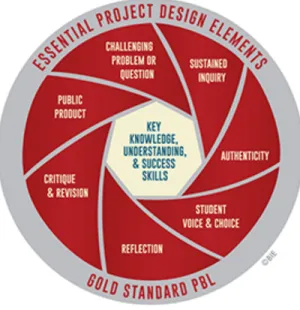
1. Essential Project Design Elements of a Gold Standard PBL ... 29 2. Focal Characteristics of Constructivism ... 40
CHAPTER 1 INTRODUCTION
Teacher effectiveness and accountability have placed tighter scrutiny on teacher
preparation programs. With the implementation of No Child Left Behind (2001, 2006), and now the Every Student Succeeds Act (2015) to ensure students are career and college ready, teacher preparation programs are needing to ensure their graduates are prepared to meet the high standards required to be in the classroom. However, several studies have found new teachers to be underprepared concerning content knowledge and skills, based on reports by school
principals, education school faculty and deans, and program graduates themselves (Kiuhara, Graham, & Hawken, 2009; Levine, 2006). Chesley & Jordan (2012) found that in their first three years of teaching, graduates from 17 universities reported that they lacked knowledge and skills related to content pedagogy, lesson design and preparation, classroom management, and other aspects of teaching.
The qualitative case study uncovered what teaching strategies first-year elementary teachers are implementing into their classrooms after receiving hands-on, scaffolded training in addition to their methods courses. The needs of the students align with the guidelines that drive accreditation, which was at the center of this study. The purpose of pre-service students attending a university is to earn a degree to obtain a teaching license. In 2014 the Education Department at a private university in a Midwestern state completed the accreditation process and will again submit the required paperwork for their next site visit in 2021, with the new focus on the
CAEP’s mission is to “advance excellent educator preparation through evidence-based accreditation that assures quality and supports continuous improvement to strengthen P-12 student learning” (“CAEP”, 2015). The CAEP standards have required the Education faculty at teacher preparation programs to reassess courses offered through the Education Department. This reassessment has allowed the faculty to update classes to become more relevant and applicable when delivering content to the preservice teacher.
Overview of the Case Study
Preservice, elementary teachers are instructed to create lessons with real-world connections that follow theories of instruction that engage learners and guide them through active learning experiences. However, as pre-service teachers, they may view examples of the opposite of the theories taught in their methods courses when they observe teachers who use a less hands-on approach. Loughran (2013) suggests “teacher education must purposefully embed learning about the complexity of teaching within experiences of its problematic nature…this should be reflected in the manner in which learning about teaching is constructed” (p. 1178). Faculty of teacher preparation programs nation-wide need to explore alternative opportunities that allow their students to practice the methods they are learning in a more engaging approach.
Project-Based Learning (PBL) has become a buzz word in education communities and is considered a best-practice teaching strategy by many education professionals. Research shows that through PBL integration, K-12 students can more deeply connect to the curriculum
(Berends, Boersma & Weggemann, 2003; Hopper, 2014; Lee & Breitenberg, 2010; Page, 2006). The Buck Institute for Education (BIE) is well-known in the education community as a leader in PBL professional development. The goal of the BIE is to “improve student learning outcomes by
making PBL accessible for teachers in K-12 in all grade areas”(“BIE”, 2018). With a plethora of resources and supports for educators, BIE assists schools in creating a PBL culture. Teachers trained through the BIE can expect a hands-on learning experience with PBL. They are expected to participate in a PBL project and plan a project to implement in their classroom.
The BIE requires all schools who enter into a formal partnership to schedule Sustained Support Visits (SSV) to support their teachers. Throughout the year, the BIE offers multiple SSV to ensure teachers feel supported during the implementation of their PBL projects. Lamer (2016) sees the SSV as an essential element in the implementation of PBL. The SSV not only allows the teachers to ask questions about PBL, but it also ensures that the teachers are continuing to discuss the strategies throughout the year. Teachers continue to practice the PBL strategies even after the BIE instructors have left the campus, as it has become a part of their culture of learning through the multiple supports implemented by the BIE.
Alternative Training Opportunity. In 2017, the university highlighted in the study was one of four higher education institutions awarded a grant for their preservice teachers to receive PBL training typically reserved for licensed teachers. The grant provides explicit instruction on how to implement PBL into the classroom setting. Preservice teachers who received the training partnered with a master teacher who previously demonstrated successful PBL implementation in their classroom.
Starting in October of 2017, the teaching team (preservice teacher and mentor teacher) attended a series of rigorous training on the Essential Project Design Elements of a Gold Standard PBL by the BIE. Their first training together, titled Project Slice, allowed the team to experience firsthand what learning feels like during PBL from the student’s perspective. The
team’s challenge over the 2-day training was to update a space in the building to create a
gathering space for students. Through team collaboration, a model was developed and presented to the school’s administrator for consideration for implementation on campus. During the second training, PBL 101, the preservice teacher began to learn how to create a PBL lesson. The
preservice teacher was guided through this process by nationally trained staff from the BIE and their mentor teacher. After the 3-day training, the preservice teacher had a complete PBL lesson that they would implement within the first three weeks of their student teaching experience. Finally, the BIE provided two half-day SSVs to the preservice teachers and their mentors. The SSVs allowed the team time to reflect on their PBL lesson and offered support on questions that arose during their projects. Through the training provided by the BIE, the preservice teacher was able to not only create a PBL project but to also form a relationship with their mentor teacher. This relationship allowed for a culture for learning, where the preservice teacher was
comfortable asking questions and bringing ideas to their team.
Current Teacher Preparation Practices
Student teaching is a capstone experience for pre-service teachers to practice their pedagogy in the classroom. In an ideal placement, the preservice teacher is actively involved in the classroom by planning and teaching the curriculum. In the state the study took place, the preservice teacher is required to spend a minimum of ten weeks in the student teaching
experience. If the preservice teacher is a double major (for example, Elementary Education and Special Education), the student spends six weeks in each experience with a total of twelve weeks participating in student teaching. A ten to twelve-week placement severely limits the scope of learning for the preservice teacher as they do not experience a wide variety of situations. The
preservice teacher in a ten-week placement slowly starts the experience by observing and taking on the responsibility of teaching the content one subject at a time. Therefore, in a ten-week placement, the preservice teacher is responsible for the entire class and all the content for typically two weeks.
Sahan (2016) surveyed 182 freshman education students from Bartin University to reveal what problems student teachers were experiencing. Of the 182 students, 27% stated that they felt the internship (student teaching) experience was insufficient, and 47% recommended more opportunities to apply their knowledge from lectures (Sahan, 2016). The expectation of the classroom teacher is evolving to move past merely teaching the content, and the need for more meaningful learning experiences for students to apply their knowledge is evident. With as many as 50% of teachers leaving the profession within their first five years in the field (Ingersoll, Merrill, & May, 2014) due to the high pressures of the classroom and other factors; are ten to sixteen weeks sufficient in preparing high-quality teachers? This lack of experience makes it easy to understand why teacher preparation programs are under attack for being an industry of mediocrity” (La Paro et al., 2014). During the limited experience during student teaching, the preservice teacher misses many opportunities to apply their knowledge. Providing the preservice teacher with the extensive PBL training allows more time to implement the knowledge not only from the PBL training but also from the methods courses.
To expect the preservice teacher to implement lessons and become confident in ten weeks is not a fair expectation. Teacher preparation programs need to discover more opportunities for their preservice teachers to experience realistic classroom settings. Elementary preservice teachers are trained to manage classrooms of students in the primary grades, for example, not
their peers. However, in traditional teacher preparation programs, many preservice teachers are required to present lessons to their peers (Stroupe & Gotwals, 2018). The experience is not comfortable or realistic as the preservice teacher has planned the lesson for students at a much lower level. Stroupe and Gotwals (2018) pointed out that the preservice teacher felt like it was “1000 degrees” in the classroom during this common scenario in teacher preparation.
Zeichner articulated a need for the creation of a “hybrid” classroom setting for the preservice teacher to experience a realistic classroom setting (2010, p. 89). In Zeichner’s thirty-year career as a university-based educator, he saw a disconnect between the teaching strategies presented in the methods courses on campus and what the student was expected to practice in the general education classroom (Zeichner, 2010). The alternative training from the BIE allows the student-teacher to explore instructional resources that empower a level of effectiveness and will improve their future students’ learning in the classroom.
Statement of the Problem
Hall, Quinn, and Gollnick (2014) recognized the importance of providing preservice teachers with high-quality experiences to implement their knowledge before entering the field. However, teacher preparation programs weave theory concepts into their coursework but
traditionally provide little opportunity for preservice teachers to apply the information in relevant settings (Darling-Hammond, 2010). Teacher preparation programs are mandated to prepare teachers who are ready for the changing landscape of the education profession while addressing new accreditation requirements in preservice assessments and certification requirements for highly qualified teacher status.
In 2008, the National Council for Accreditation of Teacher Education (NCATE) President Cibulka stated, “All young people in America deserve an effective, well-prepared teacher who can help them achieve their full potential and prepare them to meet the demands of a competitive global marketplace” (p. 2). As the push for accountability in pre-K-12 education grew, so did the expectation for a streamlined accreditation process for teacher preparation programs. Therefore, in 2010 the NCATE and the Teacher Accreditation Education Council (TAEC) combined to form the Council for the Accreditation of Educator Preparation, Inc., or CAEP (NCATE & TEAC Design Team, 2010).
CAEP created a list of five standards in 2013 to serve as a basis for the annual
accreditation review process of teacher preparation programs. Further description of the CAEP standards is discussed in chapter two, as CAEP evaluates the student, faculty, and all
stakeholders involved in developing high-quality teachers. CAEP Standard 2 addresses the need for teacher preparation programs to provide evidence of high-quality clinical practices (“CAEP”, 2015). The standard requires the provider to ensure “effective partnerships and high-quality clinical practice are central to preparation so that candidates develop the knowledge, skills, and professional dispositions necessary to demonstrate a positive impact on all P-12 students’ learning development (“CAEP”, 2015).” CAEP’s Standard 2 requires the teacher preparation program to continually evaluate the clinical practice opportunities that their preservice teachers receive. CAEP Standard 2.1 evaluates explicitly teacher preparation programs on their ability to “ensure that theory and practice are linked” (2015).
The private university featured in the study must provide evidence that their preservice teachers are meeting the rigor of the CAEP standards or face the loss of their accreditation. The
university’s next accreditation cycle is in 2021, and they will be evaluated using the CAEP standards. As the PBL training was linked to a short-term grant, it allowed for an ideal situation to observe the consequences of the training. Are the graduates linking theories and practices? Is there a gap in the instruction the graduates are receiving and their first-year classroom?
Purpose of the Study
The purpose of the qualitative study was to examine how the graduates of a traditional teacher preparation program were implementing the PBL project design in their first year of teaching after receiving scaffolded instruction of the educational theory. If they are, the Elementary Education Department is interested in reviewing their current practices to update their current course plan to allow new experiences to reflect the findings of the study. The study is significant at a local level, as it will drive future teacher preparation practices at the private, Midwestern, university where the researcher serves as the Elementary Education Program Director.
Requirements of accreditation are not going away. Accreditation standards were created to require higher-education institutions to prove that they are preparing teachers who
demonstrate they are ready to impact student learning. Chapter two will further explore how the CAEP Standards evaluate teacher preparation programs. The study focuses on the
implementation of the CAEP standards at a private, Midwestern, university, and the effectiveness of the graduates’ preparation. However, through a broader lens, the study assisted in finding the gaps in teacher preparation programs to ensure that first-year teachers are successful due to the training they received in their post-secondary education.
Research Question
Teacher preparation programs engage their students in many teaching strategies. The purpose of the experiences is to develop graduates’ pedagogy to implement with their future students, with the understanding that everyone has a different learning preference. The PBL training provided a unique opportunity to look at a specific group of graduates and further explored how they perceive they are implementing strategies from previous high-quality instruction into their practice. Therefore, the study will explore the following central question: How are traditionally prepared elementary education graduates implementing theory into practice during their first year of teaching?
Sub-questions were included in the study to further explore the effect of the PBL training on the recent graduate at the private, Midwestern university. Sub-questions refine the central question and narrow the focus of the study (Creswell, 2015). The following sub-questions addressed during the study included:
1. How did the first-year teacher implement the Gold Standard PBL model in their professional practice?
2. How does the graduate perceive their ability to translate theory into practice, particularly in the implementation of the PBL project design during their first-year experience in the general education classroom?
The PBL training provides a lens for the study but was not the focal point of the study. Preservice teachers received high-quality training, from nationally distinguished faculty, while receiving support from their mentor teachers. The researcher explored the factors the graduate perceived allowed them to implement PBL in their classroom successfully. Discovering these
factors can support teacher preparation programs across the nation in developing teacher candidates who are prepared to meet the needs of all learners in their future classrooms.
Conceptual Framework
Higher education, politicians, and professional educators are all pushing for a cultural shift in education that is student-centered. Constructivism theory focuses on the active engagement of the learner and is student-centered. Brunning, Schraw, and Ronning (1995) identified four focal characteristics believed to influence all learning on the constructivist model;
• Learners construct their own meaning
• Learning is dependent on existing understanding
• Authentic learning tasks are crucial for meaningful learning • Social interaction plays a vital role
Project-Based Learning is rooted in the constructivist theory as the learner is in charge of their learning. The central characteristics that Brunning et al. (1995) recognized are evident in the Gold Standard PBL Teaching Practices. Students begin each PBL project with an essential question or driving question that they would like to answer. Depending on the student interest, the question could address a wide variety of topics. After identifying the question, the students work as teams to think and solve the problems critically, potentially forcing the student to work with others and manage their own time and resources. Managing their time is essential to the PBL project as the students will be presenting their plan or answer publicly. When students present to the public, the rigor of the learning increases and students typically become more engaged in the outcome of the project. As the millennial generation moves into the workforce, there is a need to discover the best practices for this generation to develop their skills. Sinek
(2009) suggests that the millennial generation needs to feel a connection to the project or task they are expected to complete, and the PBL training will provide teams strategies or approaches to establish this connection.
Assumptions, Limitations, and Scope
A limitation of the study is due to the small population of the study. The grant has only recently been awarded, starting in 2017. Thus only one class of students have received the
training and are now licensed teachers. The university observed in the study had the largest class (out of the four universities awarded the grant) of 22 students. However, of those 22 students, many of them chose to continue their education by immediately enrolling into graduate school (i.e., Occupational Therapy, Physical Therapy) and are not in the classroom. The graduates who chose to enter the school system immediately may not be in the regular education classroom. The students from the university in the study received double and triple majors; many graduates may have positions as special education teachers or other areas of specialized instruction, thus further limiting the population of the participants.
Additionally, as graduates seek employment across the Midwest and the globe, they had different access to resources. Many areas in the Midwest are rural, with limited access to updated technology. However, as the researcher pursued how the first-year teacher utilized any elements of the Gold Standard PBL, this was not a concern. As explained in detail in chapter two, a Gold Standard PBL does not require technology.
A final limitation of the study was that the researcher only discovered the beliefs of the graduates from the private university, which has a unique culture. Students at the university are encouraged to actively engage in community collaboration through servant leadership
experiences beginning their freshman year, for example. These students tend to have a higher expectation to collaborate with their peers.
Significance
Teacher preparation programs are striving to meet the requirements of the CAEP Standards (2015) to retain their accreditation status to confirm that their graduates are having a positive impact on student learning. The quality of a teacher preparation program can
significantly affect the preparedness of teachers (Darling-Hammond, Chung, and Frelow, 2002). According to Mead (2015), due to the increased understanding of the influence of teachers on student achievement, some universities are reevaluating whether teachers who graduate from their programs are effective educators in the classroom.
Intensive clinical preparation is different from mere “field experiences of the past by recognizing teaching as a profession of practice while simultaneously preparing teachers who can integrate knowledge of their students, their content, and their pedagogy” (Gelfuso, Dennis, & Parker, 2015, p. 2). Stein and Stein (2016) acknowledged that teacher preparation programs should form strong partnerships with local schools so that preservice teachers partake in practical, hands-on experiences. The PBL training offered to the graduates at the private
university in the study had the opportunity to receive the high-quality clinical practice on which CAEP Standard 2 evaluates teacher preparation programs, and the intensive clinical preparation described by Gelfuso et al. (2015). The graduates were required to create and implement two PBL projects as a participant of the grant with a mentor teacher while completing their student teaching requirements. The training allowed the private university to weave theory and practice together in a high-quality experience. Further research to identify the disconnect between
implementing educational theories into practice in the graduates’ first-year classroom assisted in uncovering the gaps within teacher preparation programs. The research will guide the needed changes in course programming that preservice teachers are receiving to ensure they can effectively make a positive impact on student learning in their future classrooms.
Definition of Terms
Accreditation: the recognition an institution maintains for its graduates to gain admission to other reputable institutions. Accreditation ensures that higher education institutions are meeting acceptable levels of quality.
Best Practice Teaching Strategy: Using researched-backed teaching strategies to form one’s teaching style
CAEP: Council for the Accreditation of Educator Preparation
Mentor Teacher: a licensed pre-K-12 educator with at least four years of experience Pedagogy: the art and science of teaching
Preservice Teacher: a post-secondary student admitted to the department of education at an institution of higher learning
Project-Based Learning (PBL): a teaching strategy in which students gain knowledge and skills by working for an extended period to investigate and respond to an authentic, engaging and complex question, problem, or challenge (“BIE”, 2018).
Student Teacher: An unlicensed teacher still completing their undergraduate degree in pre-K-12. Teaching Strategy: Referring to how the content is presented to ensure the success of all
Conclusion
The landscape of the pre-K-12 grade classroom reveals a student who needs to prepare for the 21st Century. The 21st Century student needs to have skills that require them to use
yet-to-be-discovered technology. Instead of going to an encyclopedia, the student will turn to Google to find the answer to their content question. Teacher preparation programs need to keep up with this type of student to guarantee their success. CAEP has brought forward a set of standards to ensure teacher preparation programs develop educators who are ready to take on this challenge.
The study assisted in the further development of the Elementary Education program at the private university to ensure the successful accreditation by the CAEP standards. The study specifically uncovered how the recent graduates were implementing educational theories into practice after receiving high-quality training that followed the Constructivism Theory approach.
In chapter two, further exploration of the following topics will uncover the value of the study: the need to be an accredited university, the elements of a Gold Standard PBL, and the Constructivism Theory. These three topics will help the reader understand the importance of the case study and the further development of the Elementary Education program at the private university and teacher preparation programs nationwide.
CHAPTER 2 LITERATURE REVIEW
The purpose of the study was to discover how the recent graduate of the private university located in a Midwestern state was utilizing the elements of the Gold Standard PBL into their first-year classroom. With many describing the first-year teaching experience as chaotic, many teachers leave the profession within the first five years of their careers due to a variety of reasons, but a large one being lacking support in the implementation of best-practice teaching strategies (Podolsky, Kini, Bishop, & Darling-Hammond, 2016). The participants of the study experienced a unique mentorship during student teaching and the PBL training, where they implemented two PBL projects in regular education classroom settings. As they moved out into their first-year classrooms, away from their mentor and the support from the faculty at the university, are the recent graduates implementing educational theories into practice? Chapter two will include an overview of the previous research on accreditation standards, the definition of the elements of the Gold Standard PBL teaching model, and the Constructivism Theory.
Accreditation
Schools of Education across the nation are increasingly coming under scrutiny on how efficiently they are preparing teachers. The U.S. Department of Education estimates that there were about 460,000 individuals enrolled in traditional teacher preparation programs in 2013-2014 (U.S. Department of Education, 2016). Former Secretary of Education, Arne Duncan, likened Schools of Education to the Bermuda Triangle, where students sail in, but no one knows what happens to them when they come out (Duncan, 2009). Once the student receives their diploma at commencement, institutes of higher learning are discovering the difficulty of tracking
their graduates. Specifically, are the graduates effectively implementing the educational theories into practice in their first-year teaching position, or does the administration need to pay to have additional training completed for the new hire?
In 2016, the National Education Policy Center (NEPC) created a report that discussed the four major national initiatives, at the time, that was created to hold teacher education accountable — in essence, keeping them out of the Bermuda Triangle. The four major initiatives in the report included the US Department of Education’s state and institutional reporting requirements in the Higher Education Act (HEA); the standards and procedures of the Council for the Accreditation of Educator Preparation (CAEP); the National Council on Teacher Quality’s (NCTQ) Teacher Prep Review; and the edTPA uniform teacher performance assessment developed at Stanford University’s Center for Assessment, Learning and Equity (SCALE) with aspects of data storage and management outsourced to Pearson, Inc. The NEPC admits that although each initiative is different, they all assume “that the key to teacher education reform is accountability in the form of public assessment, rating, and ranking of states, institutions, programs, and/or teaching candidates” (National Education Policy Center, 2016, p. 3).
The review of the four initiatives found two significant conclusions. The first conclusion stated that three of the four initiatives (not including edTPA) included little evidence on how to improve the performance of the program (NEPC, 2016). The initiative gave summative
evaluations that would influence public policies and called for teacher preparation programs and institutions to make evidence-based decisions. However, there was no evidence used when the decisions were made (NEPC, 2016). The second conclusion of the report found that the initiatives reviewed assumed that school factors, mainly the teachers, are the only factor in the
educational equity equation. The initiatives, at the time, did not account for the multiple in- and out-of-school factors that influence student achievement (NEPC, 2016, p. 4).
According to the NEPC (2016, p. 5), evaluations of teacher preparation programs should do the following:
• Reflect alternative forms of accountability that shift the focus from externally generated single-measure tests to multi-pronged internal assessments of teacher performance and student learning.
• Avoid “placing too much weight” on value-added assessments of program graduates’ and programs’ effectiveness. Evaluations of preparation programs should not be based solely or primarily on students’ test scores. This is consistent with recommendations in the National Academy of Education report on teacher preparation evaluation. • Consider teacher educators’ performance (defined as knowledge, practice,
commitments, and professional judgment as they play out in the construction and operation of programs), teacher candidates’ performance (defined as knowledge, practice, commitments, and professional judgment as they play out in classrooms and schools), and students’ learning (defined as academic learning, social/emotional learning, moral/ethical development, and preparation for participation in democratic society).
• Recognize that teacher preparation programs have multiple, often complex, goals and purposes, including preparing teachers to challenge inequitable school and classroom practices and work as agents for social change. These goals, which are consistent with a “strong equity” perspective, should be reflected in the evaluation processes.
The NECP’s assessment aligns with Tatto et al. (2016) conclusion of the proposed
regulations put in place by the Department of Education. Tatto et al. (2016) stated that one of the potential outcomes of the increased regulations would be the “balkanization of teacher
preparation programs, with highly effective programs creating exclusive networks among themselves” (2016, p. 27). In essence, they are moving away from the collaborative model for learning. Tatto et al. also stated that the data produced by the regulations must be publicly made available before a level of fidelity could be confirmed. This was a concern for the researchers as they concluded that it “presented a high risk in a policy environment characterized by lack of trust and a high level of vulnerability for the teaching profession” (Tatto, 2016, p. 27). A very concerning statement for all parties as teachers play significant roles in the lives of many stakeholders.
State Accreditation
Teacher preparation programs align their syllabi and major assignments to meet the standards enforced by the state teacher licensing board (Appendix A). The elementary education standards are broken down into four major categories. The first category focuses on human relations and cultural diversity. The state educator licensing board (2017) where the study takes place requires a minimum of two semester hours, that encompasses Native American studies, creating a positive classroom environment, and strategies for teaching and assessing diverse learners (p. 25). The second category the state requires for licensure is the Youth Mental Health Competency. This standard includes the awareness that mental health is prevalent in youth today, and how to identify and refer students for interventions. The first two categories are a requirement of all education students and are not specific to students seeking an elementary
license. The third category for licensure digs into the development, learning, and motivation of the student. The educator licensing board (2017) requires the graduate to have mastered “major concepts, principles, theories, and research related to the development of children and young adolescents to construct learning opportunities” (p. 42). The final category to meet the
requirements of the state teaching license is the curriculum standard. The state licensing board requires teacher preparation programs to provide their students with the opportunity to develop a high level of competence in English, science, mathematics, social studies, arts, and physical education. Assessing the standards during the institution’s accreditation review is the task of the accreditation team. If the accreditation’s team finds the standards are not implemented with high-quality instruction, the institution goes on an improvement plan. If improvement is insufficient, they will lose their accreditation status.
In 2011, the state licensing board adopted the Interstate Teacher Assessment and Support Consortium (InTASC) Model Core Teaching Standard. The InTASC standards (Appendix B) outline what “all teachers across all content and grade levels should know and be able to do to be effective in today’s learning contexts” (2017, p. 3). The InTASC standards differ from the state’s program standards for specific preparation areas in that they also focus on the dispositions of the professional teacher, assessment for learning, and the application of skills by the preservice teacher (Council of Chief State School Officers, 2013). Pairing the state standards and InTASC standards together requires the student to become a well-rounded educator.
The state teacher licensing board where the study takes place used the standards to determine if the state teacher preparation programs are efficiency preparing their candidates for the classroom. The goal of the local teacher licensing board is to “serve as a dynamic process
which assures a high-quality preparation for professional educators. It is a constant, reflective improvement process in which we work with institutions, learned societies, and other accrediting agencies to encourage and uphold best practices within the field of teacher education” (2017, p. 18).
The statement above from the local teacher licensing board where the study took place, connects to the recommendations from the 2016 brief by the NEPC. The accreditation process cannot be a one and done situation, where the entire value is on one comprehensive evaluation. The accreditation process must be a reflective improvement process. Something that an
institution is continually working on to improve the quality of instruction they are providing to their teaching candidates. Institutions need to take an assessment for learning mindset, even if the requirement is to take a more in-depth look into their programs every seven years.
CAEP Standards
Any university that is recommending a graduate for teaching licensure must be reviewed and approved by the local teacher licensing board. However, institutions may also seek out national recognition through the Council for Accreditation of Educator Preparation (CAEP), which the local teacher licensing board has created a partnership. Having the CAEP
accreditation stamp is not currently a requirement of institutions in the state where the study is taking place, the institutions are still required to submit a massive amount of documentation to meet the standards set forth by the local teacher licensing board. Due to the alignment with CAEP, and esteem that comes with having a CAEP accredited program, many institutions are completing the additional paperwork to receive the CAEP accreditation seal of approval.
The CAEP standards (Appendix C) flow from two principals. Teacher preparation programs must provide substantial evidence that their graduates are competent, caring individuals and the institution's faculty can produce evidence to “maintain and enhance the quality of the professional programs they offer” (“CAEP”, 2015, para. 2). The CAEP standards are divided into five standards, with sub-standards to ensure teacher preparation programs can meet this goal.
Similar to the state standards and InTASC standards, the first two CAEP standards are driven by the preservice teacher’s development while in the program. CAEP’s standard one focuses on the content and pedagogical knowledge, deeply digging into discipline-specific practices while weaving in technology (“CAEP”, 2015). The first standard in CAEP also addresses the mastery of the 10 InTASC standards, thus making it imperative for teacher preparation programs to weave the two standards throughout their programs.
The second CAEP standard, clinical partnerships, and practice is unique from the InTASC and the state standards as it forces the teacher preparation programs to look at the partnerships they are creating with all stakeholders. This partnership needs to develop a mutually agreeable expectation for candidate entry, preparation, and exit (“CAEP”, 2015). Although this may seem like another step, the partnership adds a measure of accountability to the teacher preparation program. The teacher preparation program is listening to the stakeholders who are hiring their students to hear what needs to change or stay the same within their programs.
The remaining CAEP standards focus on the teacher preparation program, which is a significant shift from the state and InTASC standards.
• Standard 3 Candidate Quality, Recruitment, and Selectivity • Standard 4 Program Impact
• Standard 5 Provider Quality Assurance and Continuous Improvement
The final three standards in the CAEP document include meeting requirements for selecting and retaining high-quality preservice teachers. These three standards work together as they look out past the preservice teacher’s time receiving training and how they are impacting their students. Standard five of CAEP specifically looks at how the institution is using their data to continually reflect and grow to meet the needs of the communities (“CAEP”, 2015).
A Shift in Teacher Preparation
As the tail end of the Millennial generation moves out of high school and into adulthood, teacher preparation faculty need to review how they are presenting the content to preservice teachers. Gordon Tredgold (2016) found that 64% of the millennials he surveyed would instead make $40,000 a year at a job they loved, then having employment at a place they found boring and were paid a significant amount more. Tredgold (2016) also found that 88% of the
millennials that he surveyed preferred a collaborative work environment, 80% felt like on the spot recognition was essential for their growth and understanding, and 84% believed that making a positive difference in the world was more important than positive recognition. A concerning statistic to add to the mix completed by Gallup in 2016, was that only 6% of superintendents believed that their districts understood the Millennials’ needs (as cited in Abrams, 2018, p. 75). A bridge must be built to meet the needs of future generations of students.
CREST Program
In 1996 the University of Texas at Arlington implemented an intensive yearlong teacher preparation program that takes place entirely in the field. Collaborative Redesign of the
Educational System (CREST) allowed preservice teachers to experience an entire school year in the classroom (Wilmore, 1996). The primary purpose of the CREST program was to “directly tie theory to practice” for the preservice teachers and by providing a laboratory school for the
preservice teacher to observe the theory in practice immediately connected (Wilmore, 1996, p. 59). After a year, the CREST program interviewed principals who hired the CREST trained teacher. The principals reported the following:
1. The CREST trained teacher was more articulate and could ask specific questions about classroom management and discipline;
2. The principals felt that the CREST trained teacher was better prepared and was able to organize a classroom that was ready for the first day of school;
3. Compared to their peers, the CREST trained teacher was more confident and competent during their first year of teaching (Wilmore, 1996).
The CREST program began over 20 years ago but had qualities that the millennial student would find attractive. CREST gave the preservice teacher explicit instruction followed by observation and application of the theories in practice. The outcome produced a more confident and better-prepared teacher. Through collaboration with mentor teachers and explicit instruction, the CREST preservice teacher was the more prepared and confident first-year teacher than the regularly trained preservice teacher.
Authentic Experiences
The millennial student yearns to feel a connection to each project they complete, but in many of the teaching methods courses, the student will find themselves teaching to their peers. Authentic experiences could include placing the preservice teacher in the classroom, with students, and teaching a lesson at the level of the students. Preservice teachers would get to experience teaching and all the extra factors that come with teaching while having the support of a licensed professional in the room. First-year teachers are overwhelmed with many challenges in the classroom. Burkman (2012) narrowed the challenges first-year teachers face into the following top five categories: emotionally disturbed students, students with psychological disorders, overactive children, special education students in general education classrooms, and stress management. Each of the five topics are challenges that need to be addressed for the successful mastery of the local state standards; however, pre-service teachers lack true mastery without classroom experience.
Science Circus Days. As a way to allow pre-service teachers an authentic experience to apply their skills from their science methods course, Pei-Ling Hsu redesigned the course to include an educational event called Science Circus Days. Hsu’s 2016 study focused on two sections of the science methods courses, with 38 preservice teachers in their junior or senior year. Most of the participants of the study did not have any “previous formal teaching experience except for occasional tutoring or teacher assistantships” (Hsu, 2016, p. 1215). Students spent three hours a week, for fifteen weeks, in the course. While in the course, the preservice teacher learned how to design and implement a lesson (Hsu, 2016). Students received critical feedback to improve their lessons from their peers and the instructor. The preservice teachers practiced the
lessons before they went to the Science Circus Day with their peer. At the Science Circus Day, the preservice teacher presented the lesson to children, parents, families, and teachers in small groups. Hsu required the preservice teacher to present the lesson on two separate occasions to allow reflection time inbetween (Hsu, 2016).
Hsu (2016) found that through the Science Circus Day, the students were more engaged in their learning and felt more connected to the content as they were presenting to a variety of people. The setting was unstructured and unfamiliar, which is not unlike the classroom. Because of this, the preservice teacher found value in spending extra time to prepare their lessons and have hands-on activities. Hsu (2016) found that the preservice teachers yearned to collaborate with their peers about their lessons by repeatedly talking about their lessons and rehearsing them before the presentation. The collaboration amongst peers and instructor was key to the success of the activity.
Project-Based Learning
With many schools moving to provide all students with technology, students are now able to quickly find the content answers through a search of the Internet. What does this mean for teacher preparation? Teachers need to move away from being the content specialist to becoming a guide to help students find appropriate information on their own.
A current strategy that has come into focus once again in educational communities is Project-Based Learning. Project-Based Learning (PBL) is an instructional method that
encourages students to discover knowledge through a series of guided experiences. Adderley et al. (1975, p. 1) provided the following definition of what PBL is:
1. Projects involve the solution of a problem; often, though not necessarily, set by the student;
2. Projects involve initiative by the student or group of students and necessitate a variety of educational activities;
3. Projects commonly result in a product and last a considerable length of time; 4. The teacher’s role is as an advisor, not the authoritarian.
Adderley et al.’s definition from 1975 demonstrates that PBL is not a new concept in education. Research has proven that PBL instruction at the elementary, secondary, and post-secondary levels can be successful (Harris, Penuel, DeBarger, D’Angelo, & Gallagher, 2014; Kumari & Nandal, 2016; Pellegrino & Hilton, 2012). Multiple studies compiled by Kingston (2018), (Appendix D), prove that using PBL as a teaching strategy has shown student growth at all grade levels, with different classroom demographics, and in varying content areas. In Democracy and Education, Dewey’s (1916) statement on “doing” is key to understanding this PBL, “Give the pupils something to do, not something to learn; and the doing is of such a nature as to demand thinking; learning naturally results” (p. 98).
Many other professions utilize the theoretical framework of Problem Based Learning. Students participating in the PBL framework are immersed in their learning and expected to engage in problem-solving real-world difficulties. “PBL is helpful in assisting learners to transfer knowledge and apply it to other situations, rather than just on formalized tests” (as cited in Caukin, Dillard, & Goodin, 2016, p. 27). PBL ingrains the 21st Century Skills to ensure
students are ready to succeed in a world that they cannot even imagine. Through collaboration, creative thinking, problem-solving, and critical thinking, PBL allows students to practice these
skills with their peers. Researchers have found that PBL activities that allow students the freedom to learn at their own pace, while working collaboratively with their peers, allow for a deeper level of learning in the content area (Autapao & Minwong, 2018, p. 5).
BIE Project Based Teaching Practices: Developing the “Gold Standard PBL”
The Buck Institute for Education (BIE) is considered by many educators to be a leading force in the call to arms for a shift to establishing PBL classrooms. For 30 years, the BIE has assisted teachers in preparing students to succeed in and out of the classroom. To help teachers create PBL opportunities for their students, the BIE created the Project Based Teaching Practices for a Gold Standard PBL. The BIE believes that the teacher must become much more than a facilitator during the PBL experience and must manage a wide variety of experiences in the classroom: managing content, motivate students, assessment for learning, and contact with parents (Larmer, Mergendoller, & Boss, 2015). This strategy developed by the BIE draws on the extensive history of project-based learning, even before the time of Dewey.
Progetti. Larmer, Mergendoller, and Boss (2015) trace the history of PBL back to the 16th century in Italy, when architects, painters, and sculptors were classified as skilled artisans.
This classification did not sit well as they believed their occupations to be a “union of scientific and artistic knowledge” (Larmer et al., 2015, p. 25). Each of the professions required specialized training, which required school. This unrest with the professionals led to the creation of the Accademia di San Luca in 1577 by Pope Gregory XIII (as cited in Larmer et al., 2015).
It soon became apparent that the traditional lecture style was not an adequate
instructional method for the architects, painters, and sculptors. These students needed the time and opportunity to practice what they were learning. The assignments, called progetti (projects),
were design challenges that students took what they were learning through lecture and
immediately apply it to their learning. The Accademia di San Luca began to hold competitions in which these progetti were judged against specific criteria (Larmer et al., 2015).
The Project Method. William Heard Kilpatrick published The Project Method in 1918 (Larmer et al., 2015). John Dewy heavily influenced Kilpatrick, and he believed that student-created projects were an avenue to connect student learning to social and physical environmental interactions to help students become contributing members of society (Pecore, 2015).
Kilpatrick’s essay asserted that the purpose of projects was to “foster student motivation by encouraging students to freely decide the ‘purposes’ they wanted to pursue” (Larmer et al., 2015, p. 27). Without the student’s choice in the project, the schoolwork would become
counterproductive and alienate the students.
Due to Kilpatrick’s belief that students needed to be motivated to learn, the student had control over what type of project they wanted to complete. Kilpatrick’s Project Method identified four types of projects: Type 1 projects embody some external idea or plan; Type 2 involves enjoying an esthetic experience; Type 3, problem-solving; and Type 4 involve gaining skills or knowledge (Pecore, 2015, pp. 158). The teacher’s role in the Project Method was more of the guide, and they would gradually remove themselves from the educative process (as cited in Pecore, 2015).
Medical Education. A group of medical educators in the 1960s at Canada’s McMaster
University became concerned when they realized their students were having difficulties
mastering the clinical and diagnostic skills they needed to practice as physicians. A review of the current curriculum emphasized the memorization of knowledge, not the integration of the
“knowledge, skills, and dispositions typical of successful doctors” (Larmer et al., 2015, p. 29). Realizing they needed a new teaching approach, they developed problem-based learning, an approach that has been adopted by multiple professions since its creation over 50 years ago.
Gold Standard PBL. Drawing from the previous history of PBL, the BIE created the
following diagram to assist teachers with designing high-quality PBL opportunities in their classrooms. Although the diagram is cyclical in design, the elements are of equal value and needed to be included in the PBL design for it to be considered a Gold Standard PBL. The diagram was created to ensure the idea of the BIE’s Gold Standard PBL was easily understood, and the descriptions were kept short (Larmer et al., 2015). Larmer et al. (2015) wanted to also base the diagram on recent educational research and theory, specifically the learning sciences.
Figure 1. Essential Project Design Elements of a Gold Standard PBL (BIE, 2018) The goal of PBL is to engage in the learning process while mastering the content deeply. Therefore, the bullseye of the diagram holds the key knowledge, understanding, and success skills. Students who participate in a Gold Standard PBL can expect to have learning experiences
that take them past the superficialities of a Google search (Larmer et al., 2015). An example of this would have the students conducting interviews with professionals in the community (or by video chat) to obtain their knowledge.
Along with mastering the content, the student would also develop skills to implement for their successful futures. Meaning, they would begin to develop a civic dialogue and analyze current issues and problems in their communities. The transfer of their learning to something meaningful to them allows for more in-depth learning of the information (Larmer et al., 2015). Larmer et al. (2015) also address the importance of implementing the 21st Century Skills into
PBL to ensure students can become contributing members of society in adulthood.
The outside of the diagram includes the essential project design elements that a teacher must represent within a Gold Standard PBL. The teacher must start the project with the learning goals in mind, and the design elements may have a varying degree of representation within a given project.
Starting at the top of the diagram lies the challenging problem or question slice. The challenging problem or question give the organizing structure for the Gold Standard PBL because it gives the learning a purpose (Larmer et al., 2015). Students are required to do the activity not only to memorize it but also to apply it to a real-world situation. Determining the correct level of challenge in a diverse classroom is essential for the teacher, the BIE calls this the “Goldilocks” level of the challenge (Larmer et al., 2015).
Problem-based learning starts with a challenging problem (Larmer et al., 2015). These problems are messy, realistic, have multiple stakeholders, and do not have an obvious answer. The student is required to collaborate amongst their peers to problem solve to find the solution.
During this collaboration students “identify and master ‘learning issues’-the information and concepts they need to learn and understand to solve the problem” (Larmer et al., 2015, p. 30). As a part of a team, the student learns how to set individual goals that work toward the bigger goal of solving the problem. The team presents its findings to the entire class and the logic they have used to come to the conclusions. The final step in the problem-based learning strategy is the student reflection on the entire learning experience. This reflection time allows the student the opportunities to improve their performance, but also to solidify the knowledge they have gained if the problem should arise in their career.
Once the challenge is issued, or problem identified, the student needs to maintain a culture of sustained inquiry. Traditionally thought of as research through a book (or now on a computer), sustained inquiry requires the student to engage in finding answers to questions they might have about their problem or challenge. They may do this research through interviews with experts, fieldwork, or even experiments. While conducting research, students will find answers to their initial questions while forming new questions as they progress through their research (Larmer et al., 2015). Thus, their sustained inquiry spirals their learning to dig deeper into a problem or challenge.
The next two slices on the BIE’s Gold Standard PBL diagram are essential for high-quality student engagement in the project. Student Voice and Choice and Authenticity let the student know that the learning they are doing is meaningful. These slices will help them as they grow into adulthood as they become more aware of the world around them, its problems, and how they can help.
Moving around the circle of the elements, the next slice is the reflection piece.
Reflection in the Gold Standard PBL is intended to be used by students to “determine whether the problem-solving strategies they are using are appropriate to the problem being solved” (Larmer et al., 2015, p. 43). Students who use their metacognition can modify their projects as needed. The ability to modify projects is key to becoming a problem solver as students may have to try more than one way to be successful at a task.
Critique and Revision throughout a PBL project is key to student understanding and success. Gold Standard PBL emphasizes the need for multiple formative assessments throughout the project. Checkpoints completed by the teacher, other experts, or student peers allow
feedback throughout the project. If a peer is to review their work, the student is learning how to give appropriate feedback and how to examine each other’s work (Larmer et al., 2015). Multiple checkpoints are implemented before the summative assessment to ensure learning. In a Gold Standard PBL, the summative assessment may be a combination of traditional and new assessment practices (Larmer et al., 2015). Examples of assessment in a Gold Standard PBL may include an essay of the content knowledge and conceptual understanding, and a rubric that assesses the team-created product.
The public product is the final slice of the BIE’s Gold Standard PBL diagram. Students are required to share their findings to the challenge or problem they have been working on with a public audience. Larmer et al. (2015) believe that there are several positive consequences for sharing their product with the public. The first positive consequence is that the student does their best because a wider audience than just the teacher will see the final project, and the project is deemed more authentic by the student. Student engagement is a second positive consequence
that stems from publicly presenting their product. When adults come in from the community to listen to the students’ answer to a problem, students begin to realize their work (learning) is meaningful and feel pride in their accomplishments (Larmer et al., 2015).
Project-Based Learning in Teacher Preparation Programs
Universities are required to prepare students who possess impeccable communication skills, critical thinking skills, and the ability to problem-solve for a world that is increasingly complex and unpredictable. As the elementary and secondary educators shift away from the lecture-based approach to an open-ended inquiry model, post-secondary systems must uncover ways to keep their learners engaged in the content. The following section will expose research that demonstrates how teaching preparation programs have implemented the PBL instructional approach in their programs.
The University of Calgary. The University of Calgary created an innovative program to redesign their BEd program that focused on three pillars: Inquiry, Learner Centeredness, and Field experiences (Roessingh & Chambers, 2011). The students in the program had already completed a degree and were the average age of 29 at admission. Roessingh and Chambers (2011) described the students as
self-disciplined, and highly motivated will also arrive with the skills for independent, self-directed inquiry, research, and critical reflection. In sum, our teacher preparation students bring discipline area knowledge, maturity, life experience, and a profound desire to touch the life of a child. (pp. 60-61)
After mapping out critical theory, social constructivism, and behaviorism to reveal the best way to meet the needs of the learner, Roessingh and Chambers decided on a pragmatic,
balanced approached and set out to design the program using the project-based learning instructional design.
The projects at the University of Calgary in the teacher preparation program vary in length of time and are learner-centered, collaborative, and task-based activities. All projects in the program include essential design elements: clearly defined learning objectives and key concepts; a list of materials and resources; a set of enabling tasks; and assessment criteria and rubrics (Roessingh & Chambers, 2011). Throughout the project, the student encounters enabling tasks. These enabling tasks are to provide the learner with “collaborative learning and promote interactivity and integration focused on authentic situations and issues pertinent to the learning objectives and key concepts guiding the project” (Roessingh & Chambers, 2011, p. 67). The student is continuously receiving feedback from their instructor through continuous assessment and monitoring of learning through the projects. The University of Calgary found alternative forms of assessment, such as self-reflection, to showcase what learners can do and allowing the student to take an active role in their learning (Roessingh & Chambers, 2011). After receiving multiple forms of feedback, the project concludes with an assessment rubric. The rubric is a checklist of the required components of the project as the student has received multiple forms of feedback. The final assessment also includes a brief set of content-based knowledge questions that the instructor expects to find in the learners’ work (Roessingh & Chambers, 2011).
Through formal instructor evaluations, Roessingh and Chambers (2011) concluded that providing instruction to pre-service teachers through a PBL instructional design was incredibly beneficial. The students commented that the classes presented by PBL instructional design were “extremely valuable” and “useful to our practice” (Roessingh & Chambers, 2011, p. 68). The
University of Calgary’s implementation of the PBL instructional strategy is affecting the way their students are learning in the methods classroom
The Academically or Intellectually Gifted Licensure Program. The Academically or
Intellectually Gifted Licensure Program (AIG) is a 12-credit hour program that allows teachers to obtain an add-on license in gifted education through a university in the Southeastern United States. The AIG courses are offered online, except for one hybrid course that requires a field experience held on campus. Throughout the courses, students experience PBL through discussion boards, assignments, readings, and the major assignment was the design of a PBL curriculum unit that the teacher could use with their students (Dole, Bloom, & Doss, 2016).
Dole, Bloom, and Doss (2016) sought to understand how the field experience contributed to the teachers using PBL in their classrooms. The field experience offered to the AIG
participants was an opportunity to collaborate with their peers and implement their learning with students in grades one through nine. The purpose of the field experience was to encourage teachers to be facilitators and allow the students to take the lead in their learning experiences (Dole, Bloom, & Doss, 2016).
The researchers uncovered that the field experience was helpful for the AIG participants in implementing the PBL instructional strategy in their classroom after leaving the university (Dole, Bloom, & Doss, 2016). Four sub-themes emerged from this central theme. Students were able to apply the theories they were learning into practice as they were learning about PBL, along with mastering the logistics of PBL (Dole, Bloom, & Doss, 2016). Participants were allowed to work together to learn about the PBL process that has been described as unstructured The field experience required the student to participate in a PBL project and were required to try
a new strategy. Students in the AIG program also had to become the facilitator, not the planner. This is a shift for many teachers, and one participant described it as “scary” (Dole, Bloom, & Doss, 2016, p. 28). The participants in the AIG program were able to discover that, by allowing more student autonomy, students can go more in-depth with their learning (Dole, Bloom, & Doss, 2016). The final theme emerging from the research was the importance of collaboration with the AIG participant’s peer (Dole, Bloom, & Doss, 2016). Some of the participants in the study described collaboration as the most rewarding aspects of the experience.
The researchers of the AIG program focused on the effect the field experience had on educators after the PBL instructional strategy was taught in an online course. The study found that through the field experience, the participants understood the PBL instructional strategy. Dole, Bloom, and Doss (2016) state “as our data and other research indicate, meaningful
experience may be the ticket to changing teacher’s conceptions and ultimately practice” (p. 30).
Project-Based Learning in Math and Science Methods Courses. Wilhelm, Sherrod,
and Walters (2008) found that understanding in math can develop significantly when it is put into context within the discipline of science. The researchers studied twenty-four middle-level
preservice teachers from a Southern United States university. These preservice teachers were seniors and enrolled in an integrated mathematics and science methods course that met once a week for three hours for sixteen weeks.
Preservice teachers who participated in the class received instruction on the Moon through scaffolded benchmark lessons. During the benchmark lessons and project work, the preservice teachers would work cooperatively in small groups, communicate their project status to the class, and revise their work according to peer and teacher feedback (Wilhelm, Sherrod, &