R E S E A R C H A R T I C L E
Open Access
A structural equation analysis on the
relationship between maternal health
services utilization and newborn health
outcomes: a cross-sectional study in
Eastern Uganda
Rornald Muhumuza Kananura
1,2,5*, Robert Wamala
2, Elizabeth Ekirapa-Kiracho
1, Moses Tetui
1,3,
Suzanne N. Kiwanuka
1, Peter Waiswa
1,4,5and Leonard K. Atuhaire
2Abstract
Background:Neonatal and maternal health services have a bearing on neonatal mortality. Direct and indirect factors affecting neonatal health outcomes therefore require understanding to enable well-targeted interventions. This study, therefore, assessed the interrelationship between newborn health outcomes and maternal service utilization factors.
Methods:We investigated maternal health utilization factors using health facility delivery and at least four Antenatal Care (ANC) visits; and newborn health outcomes using newborn death and low birth weight (LBW). We used data from a household cross-sectional survey that was conducted in 2015 in Kamuli, Pallisa and Kibuku districts. We interviewed 1946 women who had delivered in the last 12 months. The four interrelated (Endogenous) outcomes were ANC attendance, health facility delivery, newborn death, and LBW. We performed analysis using a structural equation modeling technique.
Results:A history of newborn death (aOR = 12.64, 95% CI 5.31–30.10) and birth of a LBW baby (aOR = 3.51, 95% CI 1. 48–8.37) were directly related to increased odds of newborn death. Factors that reduced the odds of LBW as a mediating factor for newborn death were ANC fourth time attendance (aOR = 0.62, 95% CI 0.45–0.85), having post-primary level education (aOR = 0.68, 95% CI 0.46–0.98) compared to none and being gravida three (aOR = 0.49, 95% CI 0.26–0.94) compared to being gravida one. Mother’s age group, 20–24 (aOR = 0.24, 95% CI 0.08–0.75) and 25–29 years (aOR = 0.20, 95% CI 0.05–0.86) compared to 15–19 years was also
associated with reduced odds of LBW. Additionally, ANC visits during the first trimester (aOR = 2.04, 95% CI 1. 79–2.34), and village health teams (VHTs) visits while pregnant (aOR = 1.14, 95% CI 1.01–1.30) were associated with increased odds of at least four ANC visits, which is a mediating factor for health facility delivery, LBW and newborn death. Surprisingly, newborn death was not significantly different between health facility and community deliveries.
(Continued on next page)
* Correspondence:[email protected];[email protected]
1
Makerere University School of Public Health (MakSPH), Makerere University College of Health Sciences, Kampala, Uganda
2Department of Planning and Applied Statistics, Makerere University School of Statistics and Planning, Kampala, Uganda
Full list of author information is available at the end of the article
(Continued from previous page)
Conclusions: Attending ANC at least four times was a mediating factor for reduced newborn death and low birth weight. Interventions in maternal health and newborn health should focus on factors that increase ANC fourth time attendance and those that reduce LBW especially in resource-limited settings. Targeting women with high-risk pregnancies is also crucial for reducing newborn deaths.
Keywords: Interrelationship, Structural equation modeling, Maternal health utilization, Newborn outcomes,
Background
Globally, at least four million newborns die within four weeks of life every year, of which 75% die within the first week [1]. The largest proportion of neonatal death occurs in low-and-middle-income countries (LMICs) where access to quality health care is low [1, 2]. Most of these newborns die without skilled care that could greatly increase their chances of survival [3]. Access to quality maternal and newborn health services in most of the LMCs is constrained due to various health systems, cultural, socioeconomic, and demographic factors [3]. Though the preventable causes of newborn death such as congenital malformations, tetanus, preterm delivery, diar-rhea, pneumonia, intrapartum-related birth asphyxia, and consequences of LBW are well known [1, 4–7], addressing such causes becomes impossible in LMICs where health facilities always experience lack of skilled health workers and stock out of essential medicine and supplies [8, 9].
Uganda’s neonatal death rate is estimated at 27 per 1000 live births, which is higher than that of her neighbors (Kenya at 23 and Tanzania at 21 per 1000 live births) [2]. A wider comparison with other African countries still finds Uganda’s rate high; for example, Egypt has a rate of 11, South Africa, 15 and Morocco 17 deaths per 1000 live births according to a recent UNICEF report on child health outcomes [2]. Low birth weight (LBW) in Uganda is roughly estimated at 11% [10] given that almost a quar-ter of the newborns are not weighted [11]. LBW has been found to be significantly related to newborn deaths espe-cially in resource-limited settings [4, 11, 12]; yet these could be saved with simple care such as warmth, feeding, hygiene and early treatment of infection [4, 6].
In addition, the utilization of maternal and newborn ser-vices such as ANC attendance, skilled delivery assistance, and postnatal care in Uganda is still below average. For ex-ample, ANC fourth time attendance, delivery under skilled assistance and postnatal care within 2 days are estimated at 48, 58, and 33% respectively [13]. Yet these services are cornerstones for assessing newborn and maternal danger signs during pregnancy, labor and after delivery [3, 6]. The utilization of these services is challenged by both demand and supply side constraints including; delays to seek care and system inefficiencies such as low staffing levels, poor care skills, frequent supplies and drugs stock outs and the lack of essential equipment [5]. On the demand side,
access to finances has been indicated as the most important factor that affects the utilization of maternal and newborn services [14–16]. Studies done in Rwanda and Ghana have indicated the importance of insurance schemes in increas-ing the likelihood of maternal and newborn skilled service utilization [15, 16]. Women’s access to and control over finances, not only guarantees timely access to services, but also to quality services [15, 16]. In Uganda, it is common for women to deliver at home or within the community because of inhibiting transport costs related to poor community transport systems [17, 18]. Increasing newborn survival, therefore, needs a continuum of care that addresses both the demand and supply side bottlenecks.
The predictors for newborn health outcomes (NHO) and maternal health care utilization (MHCU) are always determined based on approaches that assume direct associations rather than indirect factors [12, 19]. In this study, we considered newborn death (newborn died within 28 days after delivery) and LBW (newborn weight <2.5Kg) for NHOs, while for MHCU, we considered health facility delivery and ANC fourth time attendance. We sought therefore to breach this gap by exploring the interrelationship between factors for newborn outcomes and factors for health facility utilization in rural commu-nities. We believe that health planners, policymakers, and other stakeholders especially from similar settings can use our findings to inform and guide policy formula-tion needed for the design of intervenformula-tions aimed at achieving sustainable development goal three. In addition, our findings may contribute to the existing literature particularly on understanding the complexities around newborn death and its relations to low birth weight, health facility delivery, and ANC attendance.
Methods
Study design and population
intervention area because it only had one health sub-district. Kamuli and Pallisa had three health sub-districts (HSD), and so one HSD was selected as an intervention area and another as a comparison area in each of the district. The district team did the selection of the inter-vention and comparison area, which was purposively based on the district maternal and new-born service in-dicators. Data was collected from women who had deliv-ered in the last 12 months irrespective of birth outcomes. The estimated population in the three dis-tricts is 1,106,100 [20].
Sample size and selection of study participants
The study sample size was determined using a two-sided Z-test of the difference between proportions with 80% statistical power, a 5% significance level and 1.5 design effect that resulted in a sample size of 2293 women. The assumption was that after three years (2013–2015) of implementation, skilled deliveries would have increased from 38 to 58%, 62 to 72% and 68 to 78% in the inter-vention area of Kibuku, Pallisa and Kamuli districts re-spectively. For the purpose of this study, the data sets for the two project study areas were pooled. However, to verify if the sample size was good enough to measure neonatal death risk factors, we re-estimated the sample size using openEpi [21] at 95% confidence interval with an expected newborn death rate of 27/1000, a precision of 9/1000 (27/1000 ± 9/1000) and a 1.5 design effect which gave us sample size 1867 women. The sample size was, therefore, sufficient to measure newborn death rate and its related predictors.
To select 2293 women, we created a sampling frame of all villages in each of the study areas and estimated 199 villages required to realize the calculated sample size based on an annual average of at least 12 newly delivered women in each village. The 199 villages were selected based on probability proportionate to size. Thereafter, we listed all households in order to identify women who had delivered in the last 12 months irrespective of the birth outcome. During listing, 1946 women were identified as eligible women and all considered for interviews since the estimated sample size was not realized. Trained research assistants made home visits and used a structured ques-tionnaire to interview all eligible women (Additional file 1). The questionnaire was in local language. The principle investigators (RMK, SNK, EEK and MT) and supervisors checked the data collected each day while in the field for completeness. Women whose pregnancies were termi-nated before 20 weeks were not included. The question-naires included items for socio-demographic characteristics, antenatal care, socio-economic factors, birth outcome, health system factors, and cultural factors. During analysis, we excluded 52 stillbirths since our focus
was on the factors affecting the newborn deaths within 28 days after delivery.
Study variables
In this study, there were four simultaneous equations hav-ing at least one endogenous variable as independent vari-ables in each of the equations. The four interrelated study outcomes (endogenous variables) were newborn death, LBW, at least four ANC visits, and health facility delivery. On the other hand, the exogenous factors were the history of newborn death, receiving VHT home visits, ANC first trimester attendance, gestational age, saving for maternal health, and other socio-demographic characteristics such as religion, occupation, marital status, education, age, gravida, and transport to the health facility.
Data analysis
We analyzed data using STATA 13.0 in three stages. Firstly, we did a descriptive summary of socio-demographic charac-teristics, health facility delivery, ANC attendance, newborn death, LBW, and other selected variables. Secondly, we per-formed a bivariate analysis usingulogit STATA command in order to attain the likelihood of the predictors of mater-nal health utilization and newborn outcomes. Thirdly, we used a generalized structural equation modeling multivari-ate approach with binomial logit link function since the study had more than one endogenous variable [22]. Only variables that were significant at bivariate analysis and those that were indicated by Marsh et al., 2002 as well as Mosley & Chen frameworks [6, 23] as potential determinants of maternal health utilization and newborn health outcomes were included in the multivariate analysis. We used pairwise correlation matrix to determine the correlation between the independent variables and likelihood ratio test to test for model goodness of fit.
Results
Description of study participants
accessed ANC in their first trimester and only two percent (46/1894) had saved money for maternal health services.
Health facility utilization and newborn health outcomes
Seven out of ten (1331/1894) respondents delivered in the health facility and almost four out of ten (724/1894) did not attend all the four ANC visits. Low birth weight was found among 13.4% (193/1442) babies; however, 24% (452/1894) of the newborns were not weighed. Newborn death was estimated to be 27 per 1,000 (51/ 1894) live births with the majority (83%) dying within seven days after birth. In addition, 33 out of 51 newborn deaths (68%) happened within one day (24 h).
Maternal health utilization and newborn health predictors at bivariate level
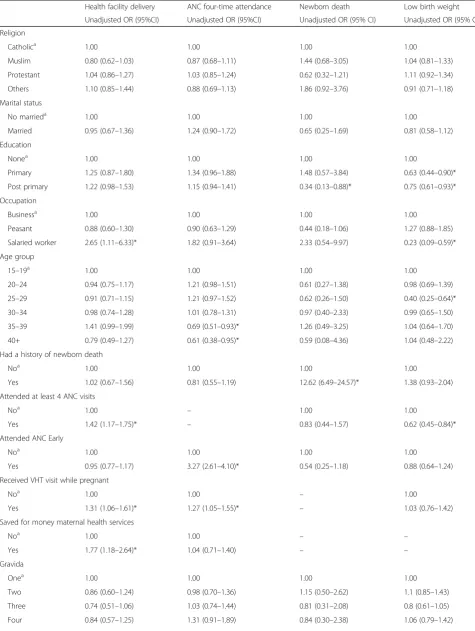
Bivariate analysis was conducted for study variables that had the possibility of being predictors of health facility utilization in the multivariate analysis. Table 2 shows the variable relationships. Factors that significantly increased the odds of health facility delivery were being a salaried worker compared to those that had petty businesses, at
Table 1Distribution by socio-demographic/economic and health characteristics
Characteristics n= 1,894 Percent (%)
Religion
Catholic 423 22.3
Muslim 320 16.9
Protestant 823 43.5
Others 328 17.3
Marital status
Not married 163 8.6
Married 1731 91.4
Education
None 1177 62.1
Primary 549 29.0
Post-primary 168 8.9
Occupation
Business 96 5.1
Peasant 1755 92.7
Salaried worker 43 2.3
Age group
15–19 281 14.8
20–24 634 33.5
25–29 415 21.9
30–34 292 15.4
35–39 194 10.2
40+ 78 4.1
Gestational age at birth
5–6Months 21 1.1
7Months 42 2.2
8Months 271 14.3
9Months 1560 82.4
Gravida
One 306 16.2
two 296 15.6
Three 284 15.0
Four 221 11.7
Five and above 787 41.6
Type of transport used to the facility
Motorcycle 1,245 65.7
Vehicle 274 14.5
Others 375 19.8
Had a history of newborn death
No 1,785 94.2
Yes 109 5.8
Attended ANC Earlya
No 1,298 68.5
Table 1Distribution by socio-demographic/economic and health characteristics(Continued)
Yes 596 31.5
Received VHT visits after delivery
No 1,364 72.0
Yes 530 28.0
Received VHT visit while pregnant
No 1,218 64.3
Yes 676 35.7
Saved money for maternal health services
No 1,848 97.6
Yes 46 2.4
Newborn deathb
Alive 1843 97.3
Died 51 2.7
Delivered in the health facility
No 563 29.7
Yes 1331 70.3
Attended at least 4 ANC visits
No 724 38.2
Yes 1170 61.8
Low birth weightcn= 1442
No 1249 86.6
Yes 193 13.4
a
attended first ANC in first-trimester b
Table 2Differentials in maternal health utilization by socio-demographic factors and health facility utilization
Health facility delivery ANC four-time attendance Newborn death Low birth weight
Unadjusted OR (95%CI) Unadjusted OR (95%CI) Unadjusted OR (95% CI) Unadjusted OR (95% CI)
Religion
Catholica 1.00 1.00 1.00 1.00
Muslim 0.80 (0.62–1.03) 0.87 (0.68–1.11) 1.44 (0.68–3.05) 1.04 (0.81–1.33)
Protestant 1.04 (0.86–1.27) 1.03 (0.85–1.24) 0.62 (0.32–1.21) 1.11 (0.92–1.34)
Others 1.10 (0.85–1.44) 0.88 (0.69–1.13) 1.86 (0.92–3.76) 0.91 (0.71–1.18)
Marital status
No marrieda 1.00 1.00 1.00 1.00
Married 0.95 (0.67–1.36) 1.24 (0.90–1.72) 0.65 (0.25–1.69) 0.81 (0.58–1.12)
Education
Nonea 1.00 1.00 1.00 1.00
Primary 1.25 (0.87–1.80) 1.34 (0.96–1.88) 1.48 (0.57–3.84) 0.63 (0.44–0.90)*
Post primary 1.22 (0.98–1.53) 1.15 (0.94–1.41) 0.34 (0.13–0.88)* 0.75 (0.61–0.93)*
Occupation
Businessa 1.00 1.00 1.00 1.00
Peasant 0.88 (0.60–1.30) 0.90 (0.63–1.29) 0.44 (0.18–1.06) 1.27 (0.88–1.85)
Salaried worker 2.65 (1.11–6.33)* 1.82 (0.91–3.64) 2.33 (0.54–9.97) 0.23 (0.09–0.59)*
Age group
15–19a 1.00 1.00 1.00 1.00
20–24 0.94 (0.75–1.17) 1.21 (0.98–1.51) 0.61 (0.27–1.38) 0.98 (0.69–1.39)
25–29 0.91 (0.71–1.15) 1.21 (0.97–1.52) 0.62 (0.26–1.50) 0.40 (0.25–0.64)*
30–34 0.98 (0.74–1.28) 1.01 (0.78–1.31) 0.97 (0.40–2.33) 0.99 (0.65–1.50)
35–39 1.41 (0.99–1.99) 0.69 (0.51–0.93)* 1.26 (0.49–3.25) 1.04 (0.64–1.70)
40+ 0.79 (0.49–1.27) 0.61 (0.38–0.95)* 0.59 (0.08–4.36) 1.04 (0.48–2.22)
Had a history of newborn death
Noa 1.00 1.00 1.00 1.00
Yes 1.02 (0.67–1.56) 0.81 (0.55–1.19) 12.62 (6.49–24.57)* 1.38 (0.93–2.04)
Attended at least 4 ANC visits
Noa 1.00 – 1.00 1.00
Yes 1.42 (1.17–1.75)* – 0.83 (0.44–1.57) 0.62 (0.45–0.84)*
Attended ANC Early
Noa 1.00 1.00 1.00 1.00
Yes 0.95 (0.77–1.17) 3.27 (2.61–4.10)* 0.54 (0.25–1.18) 0.88 (0.64–1.24)
Received VHT visit while pregnant
Noa 1.00 1.00 – 1.00
Yes 1.31 (1.06–1.61)* 1.27 (1.05–1.55)* – 1.03 (0.76–1.42)
Saved for money maternal health services
Noa 1.00 1.00 – –
Yes 1.77 (1.18–2.64)* 1.04 (0.71–1.40) – –
Gravida
Onea 1.00 1.00 1.00 1.00
Two 0.86 (0.60–1.24) 0.98 (0.70–1.36) 1.15 (0.50–2.62) 1.1 (0.85–1.43)
Three 0.74 (0.51–1.06) 1.03 (0.74–1.44) 0.81 (0.31–2.08) 0.8 (0.61–1.05)
least four ANC visits, VHTs visits during pregnancy and saving money for maternal services (p< 0.05). The odds of health facility delivery was significantly reduced by be-ing gravida 5+ compared to bebe-ing gravida one (p< 0.05). Regarding the recommended ANC attendance, factors that significantly increased the probability of at least four ANC visits were attendance of ANC in the first trimes-ter, and VHTs visits during pregnancy (p< 0.05). Furthermore, factors that significantly reduced the prob-ability of having at least four ANC visits were belonging to the age group of 35+ years compared to the age group 14–19 years (p< 0.05).
Regarding newborn health outcomes, factors that significantly reduced the odds of neonatal death were post primary education completion compared to none and gestational age of eight months to nine months compared to the gestational age of 7 months (p< 0.05). In addition, factors that increased the odds of newborn death were the history of newborn death, LBW, gesta-tional age at the time of birth of 5–6 months compared to the gestational age of 7 months and use of motor ve-hicle transport compared to the motorcycle (p< 0.05).
Factors that significantly reduced the odds of LBW were at least four ANC visits, having at least primary educa-tion level compared to none and a salaried occupaeduca-tion compared to petty business.
The predictors of newborn death, LBW, health facility delivery and at least four ANC visits at bivariate level do not reveal causal linkages between the variables. There-fore, a structural equation modeling approach was used to understand the causal linkages as indicated in the next results-sub section. All significant variables identi-fied in the bivariate analysis were considered for further analysis in the multivariate model. However, variables that were not significant such as age group, gravida, education, and occupation were controlled for in the multivariate analysis since available literature has indi-cated their contribution towards newborn death, low birth weight, and health facility utilization.
The interrelationship between health facility utilization and newborn health outcomes
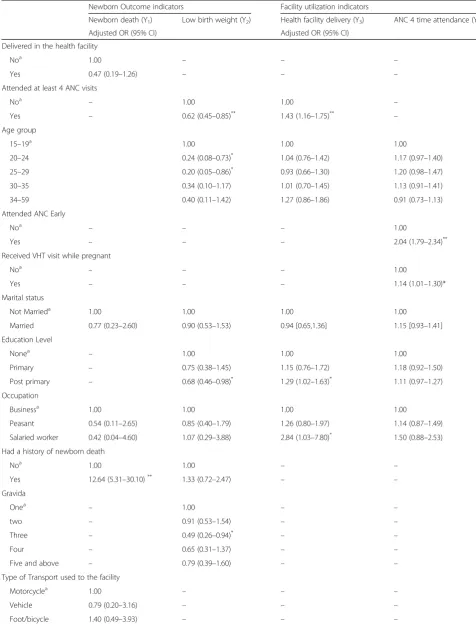
Table 3 indicates the details of the interrelationship between health facility utilization and newborn health
Table 2Differentials in maternal health utilization by socio-demographic factors and health facility utilization(Continued)
Five and above 0.72 (0.53–0.97)* 0.84 (0.64–1.11) 0.75 (0.39–1.45) 1.1 (0.91–1.33)
Gestational age at birth
5–6Months – – 12.01 (3.85–37.47)* –
7Monthsa – – 1.00 –
8Months – – 0.66 (0.23–1.87) –
9Mmonths – – 0.43 (0.22–0.85)* –
Type of Transport used to the health facility
Motorcyclea – – 1.00 –
Vehicle – – 2.07 (1.09–3.94)* –
foot/bicycle – – 1.25 (0.65–2.42) –
Low birth weight
Noa 1.00 –
Yes 5.56 (2.70–11.44) –
Delivered in the health facility
Noa – – 1.00 –
Yes – – 1.28 (0.62–2.63) –
Received VHT visits after delivery
Noa – – 1.00 –
Yes – – 0.45 (0.2–1.07) –
Baby experienced danger signs
Noa – – 1.00
Yes – – 0.87 (0.45–1.68)
Mother experienced danger signs
Noa – – 1.00 –
Yes – – 1.22 (0.65–2.29) –
OR-Odds Ratio,* p< 0.05,a
Table 3Analysis of interrelationship between maternal health utilization and newborn health outcomes using GSEM
Newborn Outcome indicators Facility utilization indicators
Newborn death (Y1) Low birth weight (Y2) Health facility delivery (Y3) ANC 4 time attendance (Y4)
Adjusted OR (95% CI) Adjusted OR (95% CI)
Delivered in the health facility
Noa 1.00 – – –
Yes 0.47 (0.19–1.26) – – –
Attended at least 4 ANC visits
Noa – 1.00 1.00 –
Yes – 0.62 (0.45–0.85)** 1.43 (1.16–1.75)** –
Age group
15–19a 1.00 1.00 1.00
20–24 0.24 (0.08–0.73)* 1.04 (0.76–1.42) 1.17 (0.97–1.40)
25–29 0.20 (0.05–0.86)* 0.93 (0.66–1.30) 1.20 (0.98–1.47)
30–35 0.34 (0.10–1.17) 1.01 (0.70–1.45) 1.13 (0.91–1.41)
34–59 0.40 (0.11–1.42) 1.27 (0.86–1.86) 0.91 (0.73–1.13)
Attended ANC Early
Noa – – – 1.00
Yes – – – 2.04 (1.79–2.34)**
Received VHT visit while pregnant
Noa – – – 1.00
Yes – – – 1.14 (1.01–1.30)*
Marital status
Not Marrieda 1.00 1.00 1.00 1.00
Married 0.77 (0.23–2.60) 0.90 (0.53–1.53) 0.94 [0.65,1.36] 1.15 [0.93–1.41]
Education Level
Nonea – 1.00 1.00 1.00
Primary – 0.75 (0.38–1.45) 1.15 (0.76–1.72) 1.18 (0.92–1.50)
Post primary – 0.68 (0.46–0.98)* 1.29 (1.02–1.63)* 1.11 (0.97–1.27)
Occupation
Businessa 1.00 1.00 1.00 1.00
Peasant 0.54 (0.11–2.65) 0.85 (0.40–1.79) 1.26 (0.80–1.97) 1.14 (0.87–1.49)
Salaried worker 0.42 (0.04–4.60) 1.07 (0.29–3.88) 2.84 (1.03–7.80)* 1.50 (0.88–2.53)
Had a history of newborn death
Noa 1.00 1.00 – –
Yes 12.64 (5.31–30.10)** 1.33 (0.72–2.47) – –
Gravida
Onea – 1.00 – –
two – 0.91 (0.53–1.54) – –
Three – 0.49 (0.26–0.94)* – –
Four – 0.65 (0.31–1.37) – –
Five and above – 0.79 (0.39–1.60) – –
Type of Transport used to the facility
Motorcyclea 1.00 – – –
Vehicle 0.79 (0.20–3.16) – – –
outcomes. The direct predictors of newborn death were LBW and history of newborn death, while the indirect factors were at least four ANC visits, educa-tion, gravida, ANC first attendance in the first trimes-ter of pregnancy, VHTs visits during pregnancy, and religion. Newborns with low birth weight and those born to mothers with a history of newborn death were more likely to die within 28 days after birth (aOR = 3.51, 95% CI 1.48–8.37) and (aOR = 12.64, 95% CI 5.31–30.10) respectively). The odds of the newborn death was not significantly different between those delivered within and outside of the health facilities.
The factors for LBW as a mediating variable for newborn death were at least four ANC visits, education, gravida, and age. Women who attended ANC at least four times had 38% reduced odds of delivering low birth weight babies compared to those who attended ANC less than four times
(aOR = 0.62, 95% CI 0.45–0.85). Mothers who had post– primary education had 32% reduced odds of delivering low birth weight babies compared to those who had no educa-tion at all (aOR = 0.68, 95%CI 0.46–0.98). Mothers who were gravida three had 51% reduced odds of deliver-ing low birth weight babies compared to those who were gravida one (aOR = 0.49, 95% CI = 0.26–0.94). LBW was less likely among children born to mothers aged 20–24 (aOR = 0.24, 95% CI 0.07–0.73) and 25– 29 (aOR = 0.20, 95% CI 0.05–0.86) years compared to those aged 15–19 years. No significant associations identified among women aged above 29 years.
The factors for attending ANC at least four times as a mediating variable for newborn death and LBW were ANC first attendance in the first trimester of pregnancy, VHTs visits during pregnancy and religion (Table 3). Women who attended ANC in the first trimester were
Table 3Analysis of interrelationship between maternal health utilization and newborn health outcomes using GSEM(Continued)
Low Birth Weight
Noa 1.00 – – –
Yes 3.51 (1.48–8.37)** – – –
Saved money for maternal health services
Noa – – 1.00 1.00
Yes – – 1.72 (1.14–2.58)** 0.92 (0.74–1.14)
OR-Odds Ratio,*
p< 0.05, **p< 0.01, ***p< 0.001,a
reference category, dash (−) denotes variables not considered for particular outcome
two times more likely to attend ANC at least four times relative to those who attended ANC in the second tri-mester or later (aOR = 2.04, 95% CI 1.79–2.34). Women who were visited by the VHTs while pregnant had 14% increased odds of attending ANC at least four times (aOR = 1.14, 95% CI 1.01–1.30).
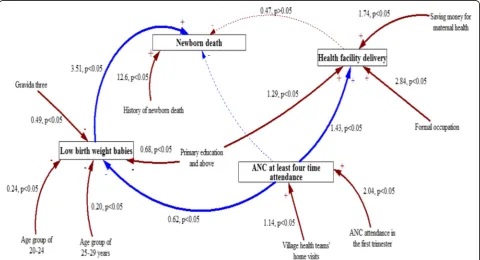
Figure 1 is a causal loop diagram that summarizes the interconnectedness between the maternal health care utilization and newborn health outcome factors.
Discussion
This study has indicated a high proportion of LBW babies in these rural communities and this might be underesti-mated since almost a quarter of the newborns were not weighed as found in a similar study [11]. Newborn morta-lity rate was 27 per 1,000 live births, similar to the national average [24]. As noted in similar studies, the newborn mortality rate was high within seven days after deli-very (83%) with the majority (68%) of newborns dying within one day [1, 25]. This is an indication of the critical care needed at the time of birth and the im-mediate period thereafter for newborns to survive [1]. Newborn deaths in the first seven days are mainly at-tributed to maternal pregnancy and childbirth related complications and infections [12, 26]. Death occurring within one day might be closely related to community and health facility challenges that include delays in seeking care, poor community transport systems, lack of skilled health workers, lack of equipment and drugs at the health facilities and poor referral net-works from the lower level to the higher levels [5].
Interrelationship between newborn outcomes and health utilization factors
The direct determinants of newborn death were LBW, history of newborn death and mother’s age. Since LBW is an endogenous variable, LBW and any other endogenous variable that affect LBW are mediating variables for newborn death. The odds of dying among children born to mothers who had a history of losing newborns was 12 times higher compared to those born by mothers who had no history of newborn death. This was found to be con-sistent with other studies [24, 27–31]. Other studies have also indicated that women who experienced a pregnancy loss or stillbirth or lost a baby within 28 days in the past are more likely to lose a baby in the subsequent pregnancy [24, 30, 31]. There is, therefore, a need for an examination of historical cohorts of newborns and immediate family members with respect to genetic, chromosomal and congenital predispositions in order to elicit more precise conclusions [32].
The likelihood of increased deaths among LBW new-borns was not surprising, since this has been reported in a number of studies done in similar settings [11, 12, 33].
These studies have shown that LBW babies are at a higher risk of a number of health complications, which increase their chances of death if appropriate care is not given. Moreover, the low capacity of health facilities in LMICs to prevent, screen and manage the LBW babies’ complications makes it hard for newborns to survive. Therefore, interventions aimed at building the capacity of health workers on how to screen and care for LBW babies at health facilities are vital.
The factors associated with the odds of LBW as a medi-ating factor for newborn death were education, at least four ANC visits, mother’s age, and religion. Post-primary level education of mothers was positively related to the birth weight of newborns; a finding that is consistent with existing studies undertaken in other LMICs [34–36]. Lower education levels have been associated with lower health awareness and health seeking behavior as well as low dietary literacy among mothers, which have been found to have a bearing on LBW [35]. Additionally, LBW among babies born to mothers who were gravida three was found to be lower compared to those whose mothers who were gravida one. Similar studies indicated that mothers who are pregnant for the first time are more likely to deliver LBW than mothers with two to four preg-nancies [13, 34, 37]. Furthermore, women aged 20–29 years were less likely to deliver LBW babies compared to women aged 15–19 years and there was no significant as-sociation established among mothers aged above 29 years. The increased LBW among children born to mothers aged 15–19 years has been associated with the problems faced by such adolescent mothers, who are often women from vulnerable populations, which predisposes them to less ac-cess to care [13, 34, 37, 38]. Poor knowledge levels and nutrition status coupled with underdeveloped reproduc-tive organs further increase the chances of adolescents to deliver LBW babies [36]. Additionally, the increased odds of LBW among elderly mothers might be related to poor child spacing [36].
[39] that have an effect on the fetus. This confirms the importance of conducting population-oriented programs that encourage early ANC attendance [37].
In this study, women who attended ANC in the first trimester had two times the odds of attending ANC at least four times relative to those who attended ANC in the second trimester and above, which was in agreement with a study done in Malawi and Ghana [40]. In addition, the odds of at least four ANC visits was higher among women visited by VHTs while pregnant. This confirms the importance of community health workers in promoting maternal service utilization particularly in rural communi-ties as reported in other studies done in Sub-Saharan Africa [5, 39, 41–45]. These studies have highlighted the importance of community health workers in identifying pregnant women in the community, sensitizing, encour-aging and empowering them to seek maternal health services from a qualified health worker. Home visits by VHTs encourages women to attend ANC early (in the first trimester), which helps them benefit fully from preventive strategies, such as iron and folic acid supplementation, treatment of helminthic infections, and intermittent preventive treatment with sulfadoxine-pyrimethamine for malaria in pregnancy among other interventions [39, 46].
Surprisingly, the proportion of newborn deaths for women who delivered in the health facility was not statisti-cally different from those who delivered in the community, which is consistent with recent studies in similar settings [11, 12]. This indifference has been linked to the poor qua-lity of care in the health facilities as well as the possibiqua-lity of births happening in health facilities but without skilled personnel assistance [33, 47]. This is made worse by system-wide challenges such as drugs and supplies short-ages, the lack of essential equipment and shortage of health workers exemplified by a similar study done in Eastern Uganda [48]. This therefore indicates that increasing health facility deliveries without addressing supply side constraints is unlikely to reduce the newborn mortality. In fact, poor quality services at the health facilities reduce utilization of maternal and newborn services. Interventions seeking to improve neonatal health outcomes, therefore, need to consider tackling both demand and supply side constraints.
Limitations of the study
The analysis was limited to the available information on variables given the nature of the dataset. In addition, the results are generalizable to communities in rural Eastern Uganda but can also be generalized to areas that have a similar context. Additionally, recall bias might have af-fected the study results but we minimized this by inclu-ding only women who had delivered in the last 12 months. In addition, excluding 52 records of stillbirth might have had an effect on the health facility and ANC
four-time attendance outcomes, however, the records were less than 3% of the total number of participants. The study also did not assess causes of death by timing.
Conclusions
The interdependence between the predictors of maternal health care utilization and newborn health outcomes high-light important areas of focus for interventions aimed at reducing neonatal mortality. Community health interven-tions such as home visits by village health teams should be strengthened in order to improve early ANC atten-dance and recommended ANC visits. There is a need to target women with high risk pregnancies in particular those with a previous history of neonatal mortality and teenage pregnancy. In addition, low cost interventions that improve identification and survival of low birth weight babies in low resource settings should be strengthened.
Additional file
Additional file 1:Household survey data collection tool. (PDF 930 kb)
Abbreviations
ANC:Antenatal Care; IRB: Institutional Review Board; LBW: Low birth weight; MakSph: Makerere University School of Public Health; MCHCU: Maternal Health Care Utilization; UDHS: Uganda Demographic Health Survey; UNCST: Uganda National Council for Science and Technology; VHTs: Village Health Teams; WHO: World Health Organization
Acknowledgements
We are thankful to the study participants and the district health office from the districts of Kamuli, Kibuku and Pallisa for their time during data collection. We are grateful to Future Health System and Makerere University School of Public Health for their technical support during the design and the implementation of this study.
Funding
The MANIFEST study was funded by Comic Relief grant code 112483. The funding body did not play any direct role in the study data collection, analysis and writing of the manuscript. The content is solely the responsibility of the authors and does not necessarily represent the official views of Comic Relief.
Availability of data and materials
The dataset generated and analyzed in this study is available from the corresponding author on reasonable request.
Authors’contributions
RMK carried out data collection, analysis and led the writing of the manuscript with the contribution from all authors. RW participated in conceiving and reviewing the study, EE-K provided general guidance and participated in drafting and reviewing the manuscript, MT, SNK and PW participated in reviewing the study, and LKA provided guidance in data analysis and presentation.
Competing interests
The authors declare that they have no competing interests.
Consent for publication Not applicable
Ethics approval and consent to participate
obtained ethical approval from Makerere University School of Public Health (MakSph) institutional review board (IRB) reference number HDREC 152 and Uganda National Council for Science and Technology (UNCST) reference number HS 1399. Each individual study participant signed a translated consent form upon consenting to take part in the evaluation study.
Publisher’s Note
Springer Nature remains neutral with regard to jurisdictional claims in published maps and institutional affiliations.
Author details
1
Makerere University School of Public Health (MakSPH), Makerere University College of Health Sciences, Kampala, Uganda.2Department of Planning and Applied Statistics, Makerere University School of Statistics and Planning, Kampala, Uganda.3Epidemiology and Global Health Unit, Department of Public Health and Clinical Medicine, Umeå University, Umeå, Sweden.4Global Health Division, Department of Public Health Sciences, Karolinska Institutet, Stockholm, Sweden.5Maternal and Newborn Centre of Excellence, Makerere University School of Public Health, Kampala, Uganda.
Received: 22 September 2016 Accepted: 23 March 2017
References
1. Lawn JE, Cousens S, Zupan J. 4 Million neonatal deaths: When? Where? Why? Lancet. 2005;365:891–900.
2. UNICEF. The State of the World’s Children 2014 -Every Child Counts. New York; 2014. http://www.unicef.org/sowc2014/numbers/documents/english/ SOWC2014_In Numbers_28 Jan.pdf.
3. Ayele DZ, Belayihun B, Teji K, Ayana DA. Factors affecting utilization of maternal health care services in Kombolcha District, Eastern Hararghe Zone, Oromia Regional State, Eastern Ethiopia. Int Sch Res Not. 2014;2014:7. 4. Kinney MV, Kerber KJ, Black RE, Cohen B, Nkrumah F, Coovadia H, et al.
Sub-Saharan Africa’s mothers, newborns, and children: Where and why do they die? PLoS Med. 2010;7:1–9.
5. Waiswa P, Kallander K, Peterson S, Tomson G, Pariyo GW. Using the three delays model to understand why newborn babies die in eastern Uganda. Trop Med Int Heal. 2010;15:964–72. doi:10.1111/j.1365-3156.2010.02557.x. 6. Marsh DR, Darmstadt GL, Moore J, Daly P, Oot D, Tinker A. Advancing
newborn health and survival in developing countries: a conceptual framework. J Perinatol. 2002;22:572–6.
7. Chou D, Daelmans B, Jolivet RR, Kinney M, Say L. Ending preventable maternal and newborn mortality and stillbirths. Bmj. 2015; h4255. doi:10. 1136/bmj.h4255.
8. Penfold S, Shamba D, Hanson C, Jaribu J, Manzi F, Marchant T, et al. Staff experiences of providing maternity services in rural southern Tanzania - a focus on equipment, drug and supply issues. BMC Health Serv Res. 2013;13: 61. doi:10.1186/1472-6963-13-61.
9. Dogba M, Fournier P. Human resources and the quality of emergency obstetric care in developing countries: a systematic review of the literature. Hum Resour Health. 2009;7:7. doi:10.1186/1478-4491-7-7.
10. Namiiro FB, Mugalu J, McAdams RM, Ndeezi G. Poor birth weight recovery among low birth weight/preterm infants following hospital discharge in Kampala, Uganda. BMC Pregnancy Childbirth. 2012;12:1.
11. Kananura RM, Tetui M, Mutebi A, Bua JN, Waiswa P, Kiwanuka SN, et al. The neonatal mortality and its determinants in rural communities of Eastern Uganda. Reprod Health. 2016;1–9. doi:10.1186/s12978-016-0119-y. 12. Kassar SB, Melo AMC, Coutinho SB, Lima MC, Lira PIC. Determinants of
neonatal death with emphasis on health care during pregnancy, childbirth and reproductive history. J Pediatr (Rio J). 2013;89:269–77.
13. Ministry of Health Uganda and ORC Macro. Uganda Demographic and Health Survey 2011. 2011. http://ubos.org/onlinefiles/uploads/ubos/pdf documents/Uganda DHS 1988–89 Final Report.pdf.
14. Chi PC, Bulage P, Urdal H, Sundby J. A qualitative study exploring the determinants of maternal health service uptake in post-conflict Burundi and Northern Uganda. BMC Pregnancy Childbirth. 2015;15:18. doi:10.1186/ s12884-015-0449-8.
15. Amoakoh-Coleman M, Ansah EK, Agyepong IA, Grobbee DE, Kayode GA, Klipstein-Grobusch K. Predictors of skilled attendance at delivery among antenatal clinic attendants in Ghana: a cross-sectional study of population data. BMJ Open. 2015;5:e007810. doi:10.1136/bmjopen-2015-007810.
16. Joharifard S, Rulisa S, Niyonkuru F, Weinhold A, Sayinzoga F, Wilkinson J, et al. Prevalence and predictors of giving birth in health facilities in Bugesera District, Rwanda. BMC Public Health. 2012;12:1049. doi:10.1186/ 1471-2458-12-1049.
17. Anyait A, Mukanga D, Oundo GB, Nuwaha F. Predictors for health facility delivery in Busia district of Uganda: a cross sectional study. BMC Pregnancy Childbirth. 2012;12:132. doi:10.1186/1471-2393-12-132.
18. Kiwanuka SN, Ekirapa EK, Peterson S, Okui O, Rahman MH, Peters D, et al. Access to and utilisation of health services for the poor in Uganda: a systematic review of available evidence. Trans R Soc Trop Med Hyg. 2008; 102:1067–74. doi:10.1016/j.trstmh.2008.04.023.
19. Christiana RT, Michael JD, Kingsley A, Christine LR, Hall J. Determinants of neonatal mortality in Indonesia. BMC Public Health. 2008;8:232. 20. UBOS. Uganda Bureau of Statistics; 2014 Statistical Abstract. 2014. 21. Dean A, Sullivan K, Soe M. OpenEpi: Open Source Epidemiologic Statistics
for Public Health. Updat 2011/23/06. 2011;:Version 2.3.1. www.OpenEpi.com. 22. Huber C. Generalized Structural Equation Modeling Using Stata. 2013. 23. Mosley WH, Chen LC. An analytical framework for the study of child survival
in developing countries. 1984. Bull World Health Organ. 2003;81:140–5. http://www.pubmedcentral.nih.gov/articlerender.fcgi?artid=2572391&tool= pmcentrez&rendertype=abstract.
24. Getahun D, Lawrence JM, Fassett MJ, Strickland D, Koebnick C, Chen W, et al. The association between stillbirth in the first pregnancy and subsequent adverse perinatal outcomes. Am J Obstet Gynecol. 2009;201:378–80. doi:10. 1016/j.ajog.2009.06.071.
25. Rammohan A, Iqbal K, Awofeso N. Reducing Neonatal Mortality in India: Critical Role of Access to Emergency Obstetric Care. PLoS One. 2013;8:3. 26. Pedrosa LDCO, Sarinho SW, Ordonha MR. Quality of information analysis on
basic causes of neonatal deaths recorded in the Mortality Information System: a study in Maceió, Alagoas State, Brazil, 2001–2002. Cad Saude Publica. 2007;23:2385–95.
27. van Dinter MC, Graves L. Managing adverse birth outcomes: helping parents and families cope. Am Fam Physician. 2012;85:900–4. 28. Turton P, Hughes P, Evans CD, Fainman D. Incidence, correlates and
predictors of post-traumatic stress disorder in the pregnancy after stillbirth. Br J Psychiatry. 2001;178:556–60. doi:10.1192/bjp.178.6.556.
29. August EM, Salihu HM, Weldeselasse H, Biroscak BJ, Mbah AK, Alio AP. Infant mortality and subsequent risk of stillbirth: a retrospective cohort study. BJOG. 2011;118:1636–45.
30. Mahande MJ, Daltveit AK, Mmbaga BT, Obure J, Masenga G, Manongi R, et al. Recurrence of perinatal death in Northern Tanzania: a registry based cohort study. BMC Pregnancy Childbirth. 2013;13:166. doi:10.1186/ 1471-2393-13-166.
31. Reddy Uma M, Katherine Laughon S, Liping S, James T, Willinger M, Jun Z. Prepregnancy risk factors for Antepartum stillbirth in the United States. Obstet Gynecol. 2010;116:1119–26.
32. Williams B, Datta S. Previous fetal death. In: A Textbook of Preconceptional Medicine and Management. 2012. p. 241–50. https://www.glowm.com/ resources/glowm/preconception_pdf/old/Preconceptional%20MedicineFull. pdf#page=149.
33. Oji S, Odimegwu C. Perinatal mortality in Nigeria: Do place of delivery and delivery assistants matter? Open Demogr J. 2011;4:1–10. https:// benthamopen.com/contents/pdf/TODEMOJ/TODEMOJ-4-1.pdf.
34. Khatun S, Rahman M. Socio-economic determinants of low birth weight in Bangladesh: a multivariate approach. Bangladesh Med Res Counc Bull. 2008;34:81–6.
35. Muula AS, Siziya S, Rudatsikira E. Parity and maternal education are associated with low birth weight in Malawi. Afr Health Sci. 2011;11:65–71. 36. Manna N, Sarkar J, Baur B, Basu G, Bandyopadhyay L. Socio-biological
determinants of Low birth weight: a community based study from rural field practice area of medical college, Kolkata, West Bengal (India). Iosr J Org. 2013;4:33–9. http://www.iosrjournals.org/iosr-jdms/papers/Vol4-issue4/ H0443339.pdf.
37. Alemseged A, Mektie W, Semarya B. Maternal risk factors associated with low birth weight. J Coll Physicians Surg Pak. 2003;13:25–8.
38. Ydav D, Chaudhray U, Shrestha N. Maternal risk factors associated with low birth weight. J Nepal Heal Res Counc. 2011;9:159–64.
39. Lincetto O, Mothebesoane-anoh S, Gomez P, Munjanja S. Antenatal Care: Opprotunities for Africa’s Newborns. Int J Sci Technol Res. 2013;2:51–62. 40. Pell C, Meñaca A, Were F, Afrah NA, Chatio S, Manda-Taylor L, et al. Factors
Ghana, Kenya and Malawi. PLoS One. 2013;8:e53747. doi:10.1371/journal. pone.0053747.
41. Ediau M, Wanyenze RK, Machingaidze S, Otim G, Olwedo A, Iriso R, et al. Trends in antenatal care attendance and health facility delivery following community and health facility systems strengthening interventions in Northern Uganda. BMC Pregnancy Childbirth. 2013;13: 189. doi:10.1186/1471-2393-13-189.
42. Lema IA, Sando D, Magesa L, Machumi L, Mungure E, Mwanyika Sando M, et al. Community health workers to improve antenatal care and PMTCT uptake in Dar es Salaam, Tanzania: a quantitative performance evaluation. J Acquir Immune Defic Syndr. 2014;67 Suppl 4:S195–201. doi:10.1097/QAI. 0000000000000371.
43. Gogia S, Sachdev HS. Home visits by community health workers to prevent neonatal deaths in developing countries: a systematic review. Bull World Health Organ. 2010;88:658–666B.
44. Gilmore B, McAuliffe E. Effectiveness of community health workers delivering preventive interventions for maternal and child health in low- and middle-income countries: a systematic review. BMC Public Health. 2013;13:847. doi:10.1186/1471-2458-13-847.
45. Aboubaker S, Qazi S, Wolfheim C, Oyegoke A, Bahl R. Community health workers: a crucial role in newborn health care and survival. J Glob Health. 2014;4:1–5. www.ncbi.nlm.nih.gov/pmc/articles/PMC4267086/.
46. van Eijk AM, Bles HM, Odhiambo F, Ayisi JG, Blokland IE, Rosen DH, et al. Use of antenatal services and delivery care among women in rural western Kenya: a community based survey. Reprod Health. 2006;3:2.
47. Nathan R, Mwanyangala M. Survival of neonates in rural Southern Tanzania: does place of delivery or continuum of care matter? BMC Pregnancy Childbirth. 2012;12:18. doi:10.1186/1471-2393-12-18.
48. Tetui M, Ekirapa E, Bua J, Mutebi A, Tweheyo R, Waiswa P. Qaulity of Antenatal care services in eastern Uganda: implications for interventions. Pan Afr Med J. 2012;13:1–15. http://www.panafrican-med-journal.com/ content/article/13/27/full/.
• We accept pre-submission inquiries
• Our selector tool helps you to find the most relevant journal
• We provide round the clock customer support
• Convenient online submission
• Thorough peer review
• Inclusion in PubMed and all major indexing services • Maximum visibility for your research
Submit your manuscript at www.biomedcentral.com/submit