Vol. 4, Issue 8, August 2015
Scheduling Modus Operandi of Multiple
Mobile Sinks for Energy Conservation
Tintu Mary John1, Eulia Mariam Mathew2
Assistant Professor, Dept. of ECE, CAARMEL Engineering College, Pathanamthitta, Kerala, India1
PG Student, Dept. of ECE, CAARMEL Engineering College, Pathanamthitta, Kerala, India2
ABSTRACT:Many ideas describe the uses and functions of mobile sink. They have to cut back the energy wastage and defend Wireless Device Networks from the energy shacks inside. Recent analysis shows that necessary energy savings are required in wireless device networks due to victimization of mobile components (MEs) which are capable of carrying information automatically. The low movement speed of MEs hinders their use in data-intensive sensing applications with temporal restrictions. Though the nodes inside the inner coronas of the network have spent their energy at a constant time, those inside the outer corona have to be compelled to still have unused energy. This could be due to result of the intrinsic many-to-one route of WSNs. To hunt out a resolution within the planned framework, we’ve got to formulate improvement that maximize the amount of the WSN subject to the delay bound constraints, node energy restrictions, and flow conservation restrictions. For this,we have to save the energy inside the mobile sink with cluster relocation. The sink node moves to the closest cluster whereby each device node is appointed a weight to guage its hop distance from the tour and the variability of knowledge packets that it forwards to the closest cluster.
Additionally throughout this paper,we can trim the energy of the nodes within the network.
KEYWORDS: Mobile sink,wireless sensor networks,delay bound,cluster.
I.INTRODUCTION
A wireless sensor network (WSNs) is a detector network that consists of the mobile nodes and large type of detector nodes placed throughout a field. They have extensive-ranging applications. The nodes’ unit of measurement is capable of collecting information from the mobile nodes and facilitating communication with each other. They’re classically utilized in environmental observation applications that require their topology to be either mounted or slowly varied throughout a manageable manner, and their operational fundamental measure is of the order of weeks or months. Energy is a major constraint in wireless detector network. In a multi hop network, the nodes situated a few hops from the sink node consumes high energy as a result of forwarding knowledge from nodes that are farther away. The battery gets drained during a short time. Energy is a paramount concern to wireless sensor networks (WSNs) that need to operate on restricted power providers like batteries. A significant portion of energy expenditure of WSNs is attributed to multi-hop wireless communications. Sink quality has become an essential analysis topic in wireless detector networks (WSNs). Existing work has shown that sink quality can improve the accomplishment of WSNs. The key bottleneck of WSNs is the increased latency in information.The low movement speed can be an elementary constraint for mobile Base Stations, as, a result of increasing the speed may end up in significantly higher manufacturing worth and power consumption[4]. This unit of measurement is the key problem inside the prevailing system whereas exploitation of the mobile sink that will serve the whole network inside the baccalaureate. Therefore,to reduce this we are bent to create multiple sinks to serve all the networks inside the baccalaureate. The programming for this progress is finished by the Rendezvous planning theme.
We propose a replacement data-gathering mechanism for large-scale wireless device networks by introducing multiple sinks into the network beside emergency signal creation. A Multiple sink starts the data-gathering tour periodically from the network, meeting with each Rendezvous Point which is a single node device then directly collects information from the device in single-hop communications, and finally moves the data to the sink..Throughout this we watch out
for the two sinks to assemble information from RP to reduce the delay and dissipation of energy. Since information
Vol. 4, Issue 8, August 2015
program, then employ a Spanning tree rule for the case where a multiple sink is employed.We outline the matter of finding a collection of RPs to be visited by a mobile sink. The target is to reduce energy consumption by reducing multi hop transmissions from sensing element parts to RPs. This additionally limits the amount of RPs such that the ensuing tour doesn't exceed the desired point of information packets.
• We propose WRP, which is a heuristic methodology which finds a near-optimal travelling tour that
minimizes the energy consumption of sensing element nodes. WRP allocates a weight to sensing element nodes supported by the amount of information packets that they forward from the tour, and selects the sensing element nodes with the best weight.
• Here we embody location awareness of the moving sink node, with regard to other sensor nodes. It tracks the
position of sink node that they share with the neighbouring nodes.
II.RELATED WORK
Recent work has exploited the controlled quality of Wireless device Network, and reduced the energy consumption of WSNs by the observation that the nodes at the vicinity of BSs typically run deplete their initial energy as they forward lots of data within a short span of time. Several works which propose to use mobile BSs for balanced energy usage are classified into three categories. The first one is the direct approach, [1-3]where a mobile sink visits each device node and collects information via one hop.The second category is the rendezvous approach, where a mobile sink exclusively visits nodes selected as Rendezvous Points(RP)s[8-10]. The foremost goal of protocols in the first category is to scale back information assortment delays, whereas those in the second category aim to select a group of RPs that minimize
energy consumption whilst adhering to the delay bound provided. The third classification may be a hybrid approach
that jointly considers multi-hop network transmissions and also the Rendezvous approach. The rendezvous approach studied throughout this paper falls into this category.
III.SYSTEM ARCHITCTURE
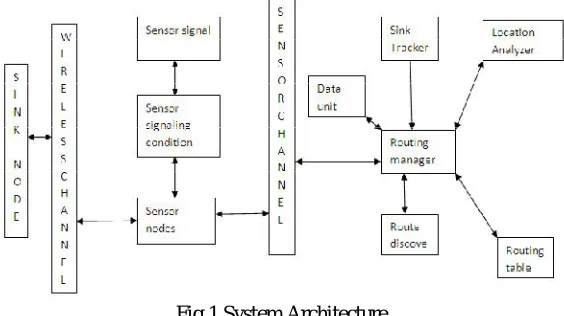
The block diagram of the system architecture for a mobile node in a WSN is shown in Figure1.The Sink node directly communicates with the wireless medium. The wireless medium communicates with the sensor nodes connected inside the network. The detector nodes are also in command of transmitting signals and checking the signal conditions.So the detector channel is the Intermediate for the routing manager and thus the detector nodes. They directly communicate with each other. The Route manager is the central unit. It manages all the routes inside the network by utilization of Data unit, Route Discovery, Sink hunter, Location instrument and Routing Tables.
Fig 1.System Architecture
Vol. 4, Issue 8, August 2015
services the nodes. Signals provided by the routing manager controls the Sink. Here the route manager manages multiple sinks throughout this approach.
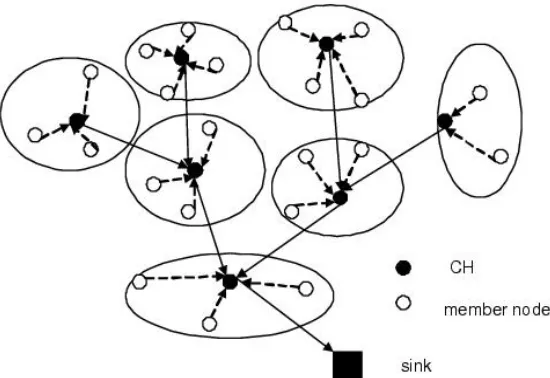
Fig 2. Mobile sink performing data collection in WSN
In figure 2, the square box represents the mobile sink node. The individual parabolas represent a cluster. The little circle indicates each sensor nodes. The Black circular nodes indicates a Cluster header. In this work the subsequent methods are performed:
1. Cluster Formation
2. Cluster head Selection
3. Base station
4. Sink node
5. Schedule the Sink
6. HEF(High Energy First)
Cluster Formation
The Cluster formation is the strategy of constructing the nodes characterised by their geographic location. In a cluster, all the nodes communicate with each other.
Cluster head Selection:
The cluster head choice is the tactic of selecting the head for the cluster. This could be created at any time supported by the energy of the node. In turn, the cluster head is to boot another node to be the cluster head if its energy marrows on the low. Throughout this methodology all the nodes could be a head at any time.
Base Station:
Vol. 4, Issue 8, August 2015
Sink Node:
The Sink node is additionally a sensor node. This node serves the cluster head and also the base station. This node is a high power node. The sink node has some buffer, it stores the data within the buffer, once the buffer price is low, it transmits the accumulated data to the base station and continues to service other nodes.
Schedule the Sink:
The Scheduling is the process of planning to how the sink node operates. Weighted Rendezvous Planning(WRP), a heuristic method finds a near-optimal travelling tour for the mobile sink, such that it minimizes the energy consumption of sensor nodes. WRP assigns a weight to sensor nodes based on the number of data packets that they forward and hop distance from the tour, and selects the sensor nodes with the highest weight to be a Rendezvous Point or a collection Point for the Mobile sink. Gateways of each cluster serve as Rendezvous Points.In addition WRP algorithm also computes the travelling path for the sink within a delay constraint.
HEF(High Energy First):
HEF (High Energy First) is employed for electing a cluster head. This algorithmic program selects the best ranking residual energy node as cluster head. HEF may be a centralized cluster choice algorithmic program. It also can be enforced in a distributed manner by a synchronization approach. The operation of this algorithm is as follows:
1. HEF selects the cluster head in accordance with the residual energy of every device node. Then the” setup” message (with cluster ID) is distributed to the cluster heads of alternative clusters.
2. The cluster head broadcasts the “set up” message to all the neighbouring device nodes.
3. When receiving this message, regular nodes send the “join” message to the corresponding cluster head. Then those regular nodes are connected to this cluster.
4. Every cluster head sends TDMA schedule to regular nodes.
5. The device nodes perform sensing, process and communication tasks co- operatively at their corresponding clock cycle. The energy data is additionally transmitted at this clock cycle.
6. The cluster head transmits all collected data to gateways who in turn transmits to the sink node who relays it to a base station.
Proposal:
In this proposal we have implemented multiple sink nodes to save the energy of the nodes in the network. The important task of our project work is to save the energy and to speed up the data transmission. To cover wide areas of the network we provide multiple sinks over the travelling path. In the proposed work we have done the above defined. Initially we create the nodes, the nodes are constructed in a group with respect to their geographical location. The formation of this group is a cluster. Within the cluster, the nodes interact with each other. If the node needs to interact with the base station, the data is sent to the cluster head(CH). The CH receives the information from the node and adds some extra information to transmit to the base station. Due to this the energy level of the head will reduce. To avoid this,a new concept is introduced in which the sink node serves as a mobile node where it collects information from CH.Then the sink goes to the base station and the information is sent from the sink to the base station. By using this approach, the energy utilization is reduced in the head node. The CH can serve all the clusters. This is suitable for a small network, but in a large network area it can’t serve efficiently. To address this we use multiple sink nodes.
We program the sink node for serving a cluster as shown in Figure 3.Using this scheduling process, a large number of clusters can be served at a time. And also time is reduced when compared to a single sink node. Initially, the request from the node is send to the base station directly through the cluster head. The base station collects this information from the nodes, and processes the information for all to proceed. Using the processed information the base station schedules the sink node to serve the all the client nodes. The base station has the details about the nodes’ geographical location. By using this, the base station schedules the sink to serve the node request. The base station schedules all the sink nodes by WRP algorithm. This generates the tour path for the multiple sink nodes.
Vol. 4, Issue 8, August 2015
.
Fig 3. Multiple Mobile sinks performing data aggregation
Figure 3 illustrates simulation of multiple mobile sinks performing data collection by WRP algorithm.The cluster heads, elected by HEF(High Energy First) are denoted by blue colour.When they have low energy they are indicated by orange.Finally the sensor node having next highest energy is polled as the next cluster head whereas the previous cluster head is indicated by black.The multiple sinks are indicate by yellow.
IV. RESULT AND DISCUSSION
The simulation results and performance comparison of the mobile node and multipoint sink routing protocols is analyzed. Important parameters are compared with single mobile node and Multi sink mobile nodes such as energy consumption and throughput. When mobile node fails to transmit data the communication established is difficult. But in the case of Multi sink point no node fails to communicate and transmits the data without network overheads. Comparing to existing method the traffic size and network overheads of Multi sink point is low.
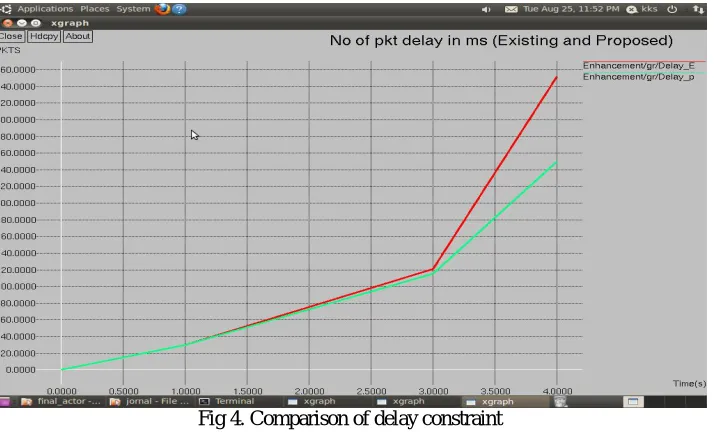
Fig 4. Comparison of delay constraint
Vol. 4, Issue 8, August 2015
node will reduce the delay in the network because it approaches the node and serves them. While using the single sink, delay is reduced but using multiple sinks decreases further delay.
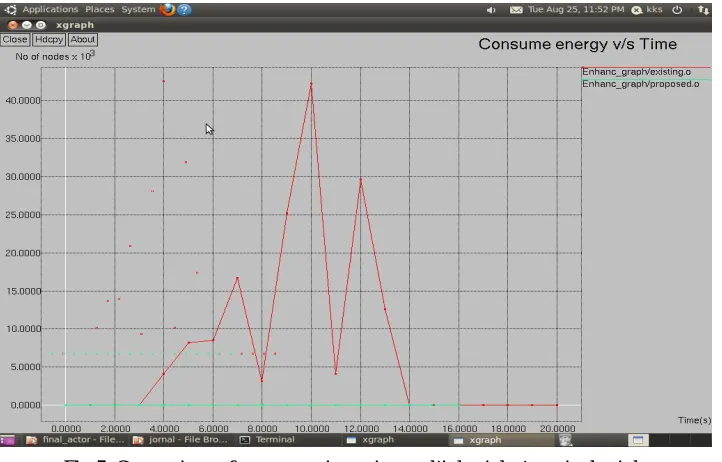
Fig 5. Comparison of energy saving using multiple sinks to a single sink
In comparison, the performance of the proposed work is higher than the without sink and single sink as indicated in figure 5. The green colour line indicates the proposed work, the red indicates the single sink.While using multiple sinks the overhead is reduced and the through put is high and the packet delivery fraction is also high. The performance for the proposed work is high.
IV.CONCLUSION
To conclude with our work, we have succeeded in implementing a new scheduling scheme for the multiple sink flow. The energy of the nodes and delay of the packets is reduced. Our aim to cut back the delay and also energy wastage is also successful.
REFERENCES
[1] Z.M. Wang, S. Basagni, E. Melachrinoudis, and C. Petrioli, “Exploiting Sink Mobility for Maximizing Sensor Network Lifetime,” Proc. 38th Hawaii Int’l Conf. System Sciences, 2005.
[2] Hamidreza Salarian, Kwan-Wu Chin, and Fazel Naghdy “An Energy-Efficient Mobile-Sink Path Selection Strategy for Wireless Sensor Networks” IEEE Trans. Vehicular Tech,Vol. 63, No. 5, June 2014.
[3] A. Chakrabarti, A. Sabharwal, and B. Aazhang, “Communication Power Optimization in a Sensor Network with a Path-Constrained Mobile Observer,” ACM Trans. Sensor Networks, vol. 2, no. 3, pp. 297-324, Aug. 2006.
[4] R. Pon, M.A. Batalin, J. Gordon, A. Kansal, D. Liu, M. Rahimi, L. Shirachi, Y. Yu, M. Hansen, W.J. Kaiser, M. Srivastava, G. Sukhatme, and D. Estrin, “Networked Infomechanical Systems: A Mobile Embedded Networked Sensor Platform,” Proc. Fourth Int’l Conf. Information Processing in Sensor Networks (IPSN), 2005.
[5] A.A. Somasundara, A. Ramamoorthy, and M.B. Srivastava, “Mobile Element Scheduling with Dynamic Deadlines,” IEEE Trans. Mobile Computing, vol. 6, no. 4, 2007.
[6] S. Singh, M. Woo, and C.S. Raghavendra, “Power-Aware Routing in Mobile Ad Hoc Networks,” Proc. ACM MobiCom, 1998. [7] P. Santi, “Topology Control in Wireless Ad Hoc and Sensor Networks,” ACM Computing Surveys, vol. 37, no. 2, 2005.
[8] Guoliang Xing, Member, IEEE, Tian Wang, Student Member, IEEE, Zhihui Xie, and Weijia Jia, Senior Member, IEEE , “Rendezvous Planning in Wireless Sensor Networks with Mobile Elements”, IEEE Trans on mobile computing, Vol. 7, No. 12, December 2008
[9] M. Wang, S. Basagni, E. Melachrinoudis, and C. Petrioli, “Exploiting Sink Mobility for Maximizing Sensor Networks Lifetime,” Proc. 38th Ann. Hawaii Int’l Conf. System Sciences, p. 287a, 2005.