ABSTRACT
CARRAWAY-STAGE, VIRGINIA. Understanding the State of Nutrition Education in the Preschool Environment through the Development of Integrated Education and Evaluation Methods. (Under the direction of L. Suzanne Goodell).
More than 20% of preschool children in the United States are considered overweight or obese. Effective educational programs aimed at the early prevention of childhood obesity are deemed essential for preventing obesity across the lifespan. Theoretically, the earlier a child is exposed to nutrition education, the greater the opportunity for establishing healthy habits. Unfortunately, limited research exists to support investigators who are developing and implementing nutrition education programs for preschool teachers and children. Therefore, the purpose of this dissertation is to examine the state of nutrition education in the preschool
environment using qualitative and quantitative methodologies. Study 1 assessed Head Start teacher experiences related to the incorporation of nutrition education in their classrooms (needs assessment). Adding to the gap in the current literature, researchers proposed a substantive-level model to establish a framework for understanding the state of nutrition education in the preschool environment. The model revealed teachers need more opportunities for training/education in effective teaching methods and nutrition content; financial support for materials; and clear, supportive policies/regulations. Study 2 presents the development and pilot-test of a hands-on, integrative nutrition education curriculum (PEAS: Preschool Education in Agricultural/Nutrition Science) using teachers to identify program strengths,
nutrition into their classrooms. Study 3 investigates the reliability and validity of a pictorial method to assess food preferences among preschool children. The
approach was developed to serve as a method to assess the long-term impact of the curricular intervention on children’s health behaviors (outcome evaluation). The measure demonstrated strong internal reliability (alpha=0.80). Test re-test reliability (Kappa=0.04-0.33) and concurrent validity outcomes were weak to moderate (rs =-0.25-0.26). Preference responses appeared to be more stable within the measure (i.e. transformed versus whole FV photographs). Preliminary evidence suggests pictorial FV methods may be useful for nutrition educators when establishing
Understanding the State of Nutrition Education in the Preschool Environment through the Development of Integrated Education and Evaluation Methods
by
Virginia Carraway-Stage
A dissertation submitted to the Graduate Faculty of North Carolina State University
in partial fulfillment of the requirements for the degree of
Doctor of Philosophy
Nutrition
Raleigh, North Carolina 2013
APPROVED BY:
________________________ ________________________ Dr. Jonathan Allen Dr. Sarah Ash
Vice-Chair of Advisory Committee
DEDICATION
This dissertation is dedicated to my family for the endless love and support they provided me throughout the years. To my father, Michael Carraway, for teaching me to question everything and instilling in me a love for science and new discoveries; my mother, Lynn Carraway, for teaching me perseverance,
organizational skills, professionalism, and for always believing in me; my
BIOGRAPHY
Virginia Gray Carraway-Stage was born May 12, 1983, in Fayetteville, NC. She attended East Carolina University (ECU), obtaining a Bachelors of Science in Nutrition and Dietetics in 2006 and a Masters in Clinical Nutrition in 2008. She also completed the Dietetic Internship at ECU, and passed the registration exam to become a Registered Dietitian (RD) in 2007. Beginning in 2007, Mrs. Carraway-Stage worked in the Department of Engineering, College of Technology and Computer Science at ECU, as a National Science Foundation grant Program Coordinator. In Spring 2009, she began working in the Department of Nutrition Science, College of Human Ecology, as Associate Director for the FoodMASTER (Food, Math, and Science Teaching Enhancement Resource) Initiative, a
compilation of programs that use food to teach mathematics and science in the K-12 environment. In Fall 2009, Mrs. Carraway-Stage entered North Carolina State
University’s (NCSU) Nutrition Science doctoral program in the department of Food, Bioprocessing, and Nutrition Science, College of Agriculture and Life Science.
Mrs. Carraway-Stage continued employment with the FoodMASTER Initiative through her doctoral studies. Throughout her professional career, Mrs. Carraway-Stage has trained over 150 teachers nationally on how to integrate nutrition
education into their math and science classrooms. Over the past 5+ years she has managed projects totaling over $3 million in federally sponsored programs in
nutrition, math, science and technology. She has also received extensive training in grants management, curriculum writing and development, and collaborating with preK-12 upper level administration, teachers, and students. Mrs. Carraway-Stage believes that if preK-12 students are engaged in learning activities using food as a tool to teach, students will be better prepared to understand, demonstrate, and apply the knowledge, skills-sets, and behaviors important to leading a healthy life.
ACKNOWLEDGMENTS
I would like to express my deepest appreciation to my committee chair, Dr. L. Suzanne Goodell. She provided unwavering support through mentorship in
research, scholarship, and professional development. I also thank my committee members, Drs. Sarah L. Ash, Jon C. Allen, and Roger Woodard, for their support and perseverance in seeing me through the dissertation process.
I thank Dr. Melani Duffrin of East Carolina University, who has served as my mentor since I was an undergraduate student. Through her leadership, I have gained valuable knowledge and skill-sets in research, scholarship, grantsmanship, teaching, service and so much more. Her enthusiasm for nutrition and STEM
(Science, Technology, Engineering, Mathematics) education will have lasting effects on how I view my own research and the world around me. I would not be where I am today without her unending support.
I would also like to acknowledge the many North Carolina State University undergraduate students who participated in these research projects as part of their course work or volunteer experiences. I particularly thank the exceptional students who worked with me for over a year, volunteering much of their time to help collect and analyze data: Chris Dunham, Hillary Spangler, Sydney R. Henson, Allison
Dipper, Tiffany Cox, Kristen Nanney, Michelle Borges, Allison Mitchell, Mark Herring, Alexa Martin, Emma Craven, Nancy Thai, Aly Worf, Carmen Metcalf, and Lauren Melchler. Your passion for nutrition education and service inspires me.
A special thank you to L. Suzanne Goodell, Sarah Ash, Morgan Stage,
Virginia Burrows, and Lynn Carraway for your support, encouragement, and editorial services during the writing and editing process.
TABLE OF CONTENTS
List of Tables ... vii
List of Figures ... viii
Chapter 1: Literature Review ... 1
Chapter 2: Understanding the State of Nutrition Education in the Head Start Classroom: A Qualitative Approach ... 32
Abstract ... 32
Introduction ... 33
Methods ... 35
Results ... 38
Discussion ... 44
Translation to Health Education Practice ... 49
Chapter 3: PEAS - An Integrative, Food-based Preschool Nutrition Education Program ... 58
Abstract ... 58
Introduction ... 58
Methods ... 59
Results ... 62
Discussion ... 64
Implications for Research and Practice ... 66
Chapter 4: Evaluation of a Pictorial Method to Assess Fruit and Vegetable Preference Among Preschool Children ... 70
Abstract ... 70
Introduction ... 70
Methods ... 72
Results ... 78
Chapter 5: Summary, Continued Work, Future Research and Conclusions ... 97
References Cited ... 103
Appendices ... 124
Appendix A. Preschool Nutrition Education Obesity Prevention Intervention Logic Model... 125
Appendix B. Structured Interview Moderator Guides ... 126
Appendix C. Map of Study Participants’ Location in North Carolina ... 157
Appendix D. PEAS Teacher Formative Assessment Interview Form ... 158
Appendix E. Research Assistant Formative Assessment Form ... 159
Appendix F. PEAS Logic Model ... 161
Appendix G. IMB-SCT Behavioral Model for PEAS’s curriculum ... 162
Appendix H. IMB-SCT Behavioral Model Constructs for PEAS ... 163
Appendix I. Photograph/Scale Development Parent Information Form ... 167
Appendix J. Photograph/Scale Development Phase I Protocol ... 175
Appendix K. Photograph/Scale Development Phase II Protocol ... 190
Appendix L. Example Photograph/Scale Development Knowledge/Preference Score Form ... 206
Appendix M. Photograph/Scale Development Qualitative Preference ... 207
Appendix N. Example Photograph/Scale Development Test Re-Test Form ... 208
Appendix O. Example Photograph/Scale Development Taste & Rate Form ... 209
Appendix P. Photograph/Scale Development Catch Trial Templates ... 210
Appendix Q. Photograph/Scale Development “Plucky the PEA” Story ... 212
LIST OF TABLES
Table 2.1. Primary In-depth Structured Interview Questions for
Administrators……….. 50 Table 2.2. Grounded Theory Emergent Themes and Example Quotes…….…... 52 Table 3.1. Description of PEAS Educational Program Components………. 67 Table 3.2. Demographic Characteristics of Head Start Teacher Participants….. 68 Table 3.3. Teacher Formative Interview Activity Evaluation Form………. 69 Table 4.1. Child Reported FV Preferences for Pilot-test of 3-Point Face Scale.. 88 Table 4.2. Child Reported FV Preferences for Pilot-test of 5-Point Face Scale.. 89 Table 4.3. Child Reported FV Preferences for Pilot-test of 5-Point Star Scale… 90 Table 4.4. Gender Distributions and Mean Age of Reliability and Validity
Samples……… 91 Table 4.5. Test Re-test Reliability of Pictorial FV Measure……….…… 92 Table 4.6. Concurrent Validity of Pictorial FV Measure (Photograph versus
Tasting)………. 94 Table 4.7. Comparison of Whole and Transformed FV Photograph
LIST OF FIGURES
Figure 1.1. Percentage of Overweight and Obese Children 2-4
Years of Age………. 5 Figure 2.1. Theoretical Model for Understanding the State of Nutrition Education
in the Head Start Preschool Classroom…………..………... 57 Figure 4.1. Example Pilot-tested Scales for Fruit & Vegetable Pictorial
Survey……….……. 85 Figure 4.2. Example Pictorial Fruit & Vegetable Measure Photograph and
Scale……… 86 Figure 4.3 Administration Procedures for Establishing Reliability and Validity of
1 CHAPTER 1: LITERATURE REVIEW
Introduction
More than 20% of preschool children in the United States are considered overweight or obese (Daniels, 2009; Ogden, Carroll, Curtin, Lamb, & Flegal, 2010). Childhood overweight and obesity is a concern due to its association with the development of major risk factors in early life related to atherosclerosis, diabetes, stoke, several types of cancer, osteoarthritis, and cardiovascular disease in adulthood (Freedman, Dietz, Srinivasan, & Berenson, 1999). The evidence to support “what works” for preventing childhood obesity is limited (Birch & Ventura, 2009); however, K-12 school-based programs have proven to be a promising and efficient way to improve health behaviors and potentially prevent future health problems (Wiecha et al., 2004). Programs in the K-12 environment often work to improve child health through education focused on modifiable risk factors (e.g. dietary choices) of childhood overweight and obesity (Birch, McPhee, Shoba, Pirok, & Steinberg, 1987; Benjamin, Cradock, Walker, Slining, & Gillman, 2008). The classroom is an ideal environment for interventions aimed at increasing knowledge, developing skills, and forming positive attitudes needed to encourage children to make healthy lifestyle choices (Woodson, Benedict, & Hill, 1995).
Effective educational programs aimed at the early prevention of childhood obesity during preschool years are also essential for preventing obesity across the lifespan (Birch & Ventura, 2009). Researchers theorize that childhood obesity risk factors are more easily modified in early childhood (Skouteris, McCabe, Swinburn, & Hill, 2010), making it a critical intervention period for affecting overweight and
2 Unfortunately, few studies have proven effective at changing behaviors that contribute to obesity in young children, indicating a need for increased nutrition education research in early childhood (Hesketh & Campbell, 2010). Furthermore, the programs already developed and evaluated, tend to focus more on physical activity versus nutrition education (Sharma, Chuang, & Hedberg, 2011; Fitzgibbon et al., 2006; Be Active Kids, 2007; IMIL Findings, 2010). More research is needed to evaluate the effectiveness of nutrition education programs targeting young children (Dunn, Thomas, Pegram, Ward, & Schmal, 2004). Due to the body of research supporting the positive impact school-based nutrition education can have on children’s dietary behaviors (Shaya, Flores, Gbarayor & Wang, 2008; Contento, Koch, Lee, Sauberli & Calabrese-Barton, 2007), understanding the current state of nutrition education in preschools is important. Unfortunately, limited research exists to support investigators who are developing and implementing nutrition education programs for preschool teachers and children. Researchers need a better
understanding of the needs of teachers and children within the preschool
environment, in order to create more effective obesity prevention programs (Bluford, Sherry, & Scanlon, 2007).
In response to this void, the lead investigator, Virginia Carraway-Stage, plans to develop an intervention addressing the needs of Head Start teachers and
preschool children in North Carolina. However, the investigator must first examine the state of nutrition education in Head Start preschools to gain a better
understanding of the unique needs of its teachers and children. Each study is a step intended to gather information to aid in the development of a larger nutrition
education intervention targeting the preschool environment (See Appendix A). In this introductory chapter, the reviewer will (1) discuss the problem of childhood obesity; (2) establish that children attending Head Start are a high-risk group for childhood obesity, and therefore, an ideal target population for nutrition education
3 Childhood Obesity among Preschool Children in the United States
Childhood obesity is a national health crisis in the United States (Solving the Problem of Childhood Obesity, 2010). For the first time in history, the current
generation may have shorter lifespans than their parents (Olshansky et al., 2005). Even more troubling, children are becoming overweight or obese at younger ages, with one in every three (31.7%) children between the ages of 2 and 19 are classified as overweight or obese (Ogden et al., 2010). Specifically, rates among young
children, have tripled from 5 to 14% over the past 30 years (Institute of Medicine, 2005), with obesity related diseases being diagnosed in children as young as 3 years of age (Skinner, Steiner, Henderson, & Perrin, 2010).
The high prevalence of overweight or obesity early in life increases the chance these conditions will persist throughout childhood, making treatment more difficult. If overweight or obesity is allowed to continue into adolescence, children are unlikely to outgrow the excess weight (Serdula, Ivery, Coates, et al., 1993; Whitaker, Wright, Pepe, Seidel, & Dietz, 1997). An estimated 50-80% of children who are obese as children, will remain overweight in adulthood (Whitlock, Williams, Gold, et al. 2005).
Childhood Obesity among Preschool Children in North Carolina. North
Carolina (NC) has the 13th highest rate of childhood obesity in the country
(Childhood Obesity Action, 2010). The state has experienced a dramatic increase of childhood overweight and obesity, resulting in hundreds of thousands of children at risk for numerous obesity-related health issues (NC Pediatric Nutrition Surveillance, 2009) (Figure 1.1). In 2009, 30% of NC children under the age of 5 were considered to be overweight or obese. The NC Child Health Assessment and Monitoring
4 Health behaviors among young children in NC are also a concern. In 2009, only 23.3% of NC children, aged five years and younger, consumed three or more servings of fruit per day. Intake among African Americans was the lowest (20.3%). Additionally, only 22.3% of children consumed three or more servings of vegetables per day, with white children consuming more on average compared to minority groups (23.4% versus 19.8-21.5%). During this same time period, 22.8% of NC children consumed two or more sweetened beverages daily, with African Americans consuming the highest amounts (50.9%). Moreover, 21.7% of children consumed fast food two or more times per week; African Americans consumed the highest amounts (39.1%). In regards to physical activity (PA), 66.6% of 2-4 year old children engaged in physical activity for more than two hours/day; however, 46.1% of
children under the age of five were reported to spend two or more hours watching television daily (NC Health Statistics, 2011).
5 Figure 1.1. Percentage of Overweight and Obese Children 2-4 Years of Age
SOURCE: North Carolina Nutrition and Physical Activity Surveillance System (NC-NPASS)
Minority Population. Overall, NC has an ethnically diverse population with 68.5% white, 21.5% black or African American, 8.4% Hispanic or Latino, and 1.6% from other races (NC Census, 2011). Research indicates a variety of differences exist among ethnicities with regards to the prevalence of overweight and obesity. Compared to non-Hispanic white children, Mexican American, Native American, and African American children are more likely to be overweight (Deckelbaum & Williams, 2001; Kumanyika, 1993). Considering the evidence that high BMI levels in childhood can predict overweight later in life, this is of particular concern for minority children. Guyer and colleagues provided further evidence that children from specific ethnic groups (such as Hispanic and African Americans) are at an even greater risk for overweight and obesity (2009). A third study also supported these findings, reporting 10.7% of non-Hispanic Whites are obese, as opposed to 14.9% of non-Hispanic
Pe
rc
en
ta
ge
8 9 10 11 12 13 14 15 16 17 18
6 African Americans and 16.7% of Mexican Americans (Anderson & Whitaker, 2009).
Rates of childhood overweight and obesity among minorities in NC are similar to previously published accounts. According to NC’s 2010 CHAMP report, 15.3% of white children, 21.2 of black or African American children, and 20.5% of Hispanic children aged 2-4, had a BMI-for-age between the 85th and 94th percentiles
(overweight classification). Additionally, 11.7% non-Hispanic white, 15.2% black or African American, and 10% Hispanic children aged 2-4 had a BMI-for-age at or > 95th percentile (obese classification) for their weight-for-age category (NC Health Statistics, 2011).
Low-Income Population. A recent study reported obesity prevalence
increased 23% to 33% between 2003 and 2007 among low-education, low-income, and low-employment households. Compared with the national population, preschool children from low-income families are more likely to be obese. Moreover, the
prevalence of overweight and obese Hispanic children rose at a faster pace between 2003 and 2007 than rates among non-Hispanic white children with more affluent backgrounds (Singh, Siahpush, & Kogan, 2010). The median household income in NC is $43,754, however 16.2% of the population is classified as below the poverty level (NC Census, 2011). Obesity prevention efforts that target minority children from socially disadvantaged backgrounds are needed in NC to help reduce and/or
7 Hence, BMI is useful as a screening tool for body fatness, but is not an appropriate diagnostic of anthropometric measures (Ogden, 2010).
In general, BMI is a measure of weight in relation to height ([weight (lb) ÷ height (in2)] x 703). BMI is useful due to its non-invasiveness and the relative ease in obtaining weight and height measurements (Ogden, 2010). Children’s weight status is determined through the use of age- and gender-specific percentiles for BMI (CDC Basics About Childhood Obesity, 2012). Thus, BMI-for-age has been identified as a good indicator for overweight and obesity in children from 2 to 20 years of age (Bellizzi & Dietz, 1999). BMI-for-age is plotted on Center for Disease Control and Prevention (CDC) growth charts to determine the BMI-for-age percentile. Children of the same gender and age, with a BMI at or above the 85th percentile and lower than the 95th percentile, are defined as overweight. Children with a BMI at or above the 95th percentile for children of the same gender and age are classified as obese (Barlow, 2007).
Determinants of Overweight & Obesity. Epidemiological research has identified risk factors for childhood obesity including, but not limited to:
demographics (e.g. genetics, ethnicity), environmental influences (e.g. access to fruits and vegetables, safe areas to be physically active), and health behaviors (e.g. dietary intake, physical activity) (CDC Causes & Consequences, 2012). Interestingly, some risk factors are present before the child is even born, while others emerge within the home and school environments later in life (Birch & Ventura, 2009). It is important to note that the later risk factors are more modifiable in terms of childhood obesity prevention (Birch et al., 1987; Benjamin et al., 2008) and are the ones that are generally the focus of school-based obesity prevention programs (Birch et al., 1987; Benjamin et al., 2008).
8 support normal growth, development, and physical activity (Ogden, 2010). Mean energy intake among children aged 2 to 18 increased significantly from 1977 to 1996. The increased energy intake might be reflective of increased portion sizes at home and away from home. This change in energy intake coincided with increased consumption of salty snacks, sugary beverages, pizza and French fries-- all foods frequently consumed by children (Nielsen, Siega-Riz, & Popkin, 2002). Researchers have also observed a decline in consumption of nutrient-dense foods such as milk, vegetables, soups, eggs, and grains (Nicklas et al., 2004). Some researchers have also suggested that energy-dense foods are displacing nutrient-dense food in children’s diets (Kant & Graubard, 2003). Simultaneously, investigators have reported that physical activity is declining and contributing to an increase in
sedentary behaviors that may lead to overweight and obesity (Burdette & Whitaker, 2005). In general, children are spending less time engaging in physical activity and more time interacting with media (Ogden, 2010).
9 Obesity-Related Health Concerns. The preschool years are a critical time for the development of obesity-related risk factors later in life (Whitaker, Pepe,
Wright, Seidel, & Dietz, 1998). Children who are overweight or obese are more likely to experience joint problems, sleep apnea, and social/psychological issues (Daniels et al. 2005). Further, overweight and obesity has been associated with the
development of major risk factors in early life related to atherosclerosis, diabetes, stroke, several types of cancer, osteoarthritis, and cardiovascular disease in
adulthood (Freedman et al., 1999). As previously mentioned, overweight and obese children are also more likely to experience the persistence of obesity into adulthood (Magarey, Daniels, Boulton, & Cockington 2003; Singh, Mulder, & Twisk, 2008). Adults who are obese are at an increased risk of developing health problems, such as type 2 diabetes, forms of arthritis, heart disease, hypertension, disrupted sleep, poor immune function, impaired mobility, and several types of cancers (Friedman et al., 1999). Apart from negative physical health consequences, obese children are also more likely to experience a lower quality of life as it relates to emotional and social well-being (White House Report, 2010).
Head Start Preschool Environment
the program develop and demonstrate knowledge and skills in the areas of
language, literacy, mathematics, science, physical development and more (Office of Head Start, n.d.).
At-Risk Population. Children attending Head Start schools are more likely to come from households that are below the poverty line (Bucholz, Desai & Rosenthal, 2011). Possibly linked, children enrolled in Head Start programs are also more likely to be overweight or obese compared to the total population of preschool-aged children (Lumeng, Kaplan-Sanoff, Shuman, & Kannan, 2008). It has been estimated that approximately one-third of children entering Head Start are classified as
overweight or obese (BMI at or above 85th percentile) (Tarullo, West, Aikens, & Husley, 2006; Lumeng et al., 2008).
The State of Nutrition Education in the School Environment
School programs focused on improving the health of children can be an efficient way to improve health behaviors and prevent future health problems (Wiecha et al., 2004). They can work to improve child health through education focused on modifiable risk factors (e.g. dietary choices) of childhood overweight and obesity (Birch et al., 1987; Benjamin, et al., 2008). Research has shown that well-designed school-based programs that are implemented properly can effectively promote healthy eating and physical activity (Wechsler, McKenna, Lee, & Dietz, 2004; Gortmaker et al., 1999; Contento, Koch, Lee, & Calabrese-Barton, 2010). Although schools will not be able to solve the issue of childhood obesity on their own, it is unlikely we will see success without school-based policies and programs (Wechsler et al., 2004).
Unfortunately, the provision of nutrition education in the school setting has been a challenge (ADA, 2006). In the White House’s report, “Solving the Problem of Childhood within a Generation” (2010), nutrition education in schools was
of most school systems today is student performance on standardized tests, or in the case of the preschool setting, kindergarten readiness, which can lead to a de-emphasis on other programs such as art, music, nutrition, and physical education (ADA, 2006).
In order for nutrition education to truly be successful, it should be incorporated into the school curriculum (Contento et al., 1995). Past successful programs have included the incorporation of other subjects in their curricula (e.g. math, science, and language arts) (Perez-Rodrigo & Aranceta, 1997; Gortmaker et al., 1999; Contento et al., 2010). Curricula that focus on specific health behaviors, teach skills necessary to embrace desired behaviors, provide opportunities for students to practice skills, and focus on helping students overcome barriers to adopting new behaviors, are more likely to influence student health behaviors (Wechsler et al., 2004). Curricular materials that teach strictly knowledge tend to be less effective (Contento 1995).
The current state of school-based nutrition education is concerning due to evidence demonstrating well designed educational interventions can improve dietary behaviors among children (Gortmaker et al., 1999; Contento et al., 2010).
Unfortunately, the early childhood setting has been largely overlooked, as limited research exists to support these same findings in the preschool setting (Bluford et al., 2007; Kaphingst & Story, 2009).
Nutrition Education in the Preschool Environment
Effective intervention programs aimed at the early prevention of childhood obesity during preschool years are deemed essential for preventing obesity across the lifespan (Birch & Ventura, 2009). Childhood obesity risk factors may be more easily modified in early childhood (Skouteris et al., 2010), making it a critical
intervention period for affecting overweight and obesity (Dietz, 1997; Birch & Fisher, 1998; Trost et al., 2003; Huston, Wright et al., 1999). Young children often do not always have the ability to make choices freely about their health behaviors.
Randell, & Basch, 2002). Unfortunately, few interventions have proven to be
effective at affecting behaviors that contribute to obesity in young children, indicating a need for increased research this area (Hesketh & Campbell, 2010).
Factors Affecting Nutrition Education in Early Childhood. Ideal nutrition education for the preschool child should identify specific behaviors to target (e.g. trying new foods, eating more fruits and vegetables), work with parents and/or preschool staff to model healthy behaviors, and offer foods in a positive mealtime environment. Nutrition activities for young children should have a clear focus, be hands-on as well as “minds-on”, and build on children’s natural interest in their surrounding environment (Contento, 2011). Past successful nutrition education for preschool children involved a variety of play-based activities such as art projects, songs, role-playing, story telling, puppets and puzzles. Moreover, play kitchens, toy food, and play grocery stores provided additional opportunities for learning
(Matheson, Spranger, & Saxe, 2002).
Developmental Stage and Learning Implications. Children’s
developmental level should be considered when designing nutrition education (Samour & King, 2005). Piaget’s stages of cognitive development can be used to support the development of age-appropriate nutrition education.According to Piaget, preschool-aged children (3-5 years) are in the preoperational stage of development. Children in this stage are undergoing rapid development physically, cognitively, and emotionally (Contento, 2011). Preschool-aged children acquire their understanding of the world through exploration (Piaget & Inhelder, 1969) and social interaction (Vygotsky, 1962). Children and adults view the world from very different
In the preoperational stage of development, children are beginning to acquire reasoning ability, still they are not yet able to form abstract generalizations or form logical concepts when compared to older children or adults. The attention span of young children is short and they are still unable to distinguish between their own perspective and the perspective of another person. Young children learn best by exploring their environment (e.g. manipulation, questioning, comparing, labeling) rather than passive learning. Physical skill sets are being developed when children are given the opportunity to manipulate materials through touching, feeling, looking, mixing, and throwing. Additionally, preschool children are eager to learn, generally through observation of others (e.g. parents, teachers, other children) in their environment and role playing exercises (Contento, 2011).
Research has demonstrated that preschool-aged children can begin to categorize items by size, color, and shape versus a younger child who may only be able to name or identify objects. Concerning food and nutrition, preschoolers can easily identify foods and begin to classify them (Contento, 2011). Classifications, however, are based on observable qualities such as shape and color rather than food groups or health benefits (Michela & Contento, 1984; Matheson et al., 2002). Children of this age are just starting to make the connection between food and health (Singleton, Achterberg, & Shannon, 1992) and have to learn to choose nutritious foods. Preschoolers are not born with the innate ability to practice healthy behaviors. Early exposure to food and healthy eating behaviors can result in the development of positive food preferences and behaviors (e.g. self-regulation). Children learn how to eat healthfully and regulate intake from consistent practice with these behaviors over time. Learning activities that engage the five senses, such as food-based activities (e.g. tasting parities, food preparation), combined with daily exposure to healthy foods can help preschoolers learn healthy behaviors and
establish positive food preferences for healthy foods (Contento, 2011).
children ‘like what they know, and eat what they like’ (Cooke, 2007). Exposing young children to healthful foods early on can help establish positive food preferences (Jaramillo et al., 2006). Rozin’s (1976) research concerning food neophobia provides
insight into food acceptance among children. Based on this research, all new foods are approached with some level of fear (neophobia), which can result in avoidance or reluctance to try the unfamiliar food. Food neophobia is thought to emerge in children around the second year of life and peak during the preschool years, increasing as children become more independent in their surrounding environment (Rozin, 1976; Rozin & Schiller, 1980).
Research suggests that children with high levels of neophobia have less varied diets (Koivisto & Sjoden, 1996; Falciglia, Couch, Gribble, Pabst, & Frank, 2000; Skinner, Carruth, Bounds, Ziegler, & Reidy, 2002) when compared to their peers (Carruth et al, 1998; Cooke, Wardle, & Gibson, 2003; Cooke et al., 2004; Galloway, Lee, & Birch, 2003; Nicklaus, Boggio, Cabanet,& Issanchou, 2005). Neophobia can be reduced with as little as one exposure; however, to increase acceptance and overall intake the child must be allowed to taste and eat the
targeted fruit and/or vegetable 5-10 times, more than most parents are willing or able to provide (Wardle, Herrera, Cooke, & Gibson, 2003 2003; Heim, Stang, & Ireland, 2009; Birch & Marlin, 1982; Carruth, Ziegler, Gordon, & Barr, 2004). Through experience, food acceptance can be modified even with rejected or disliked foods (Rozin & Schiller, 1980). These findings are important because researchers have identified a correlation between early food experiences and consequent food acceptance throughout child- and adulthood (Cooke, 2007; Cooke et al., 2004).
children. However, observational data indicates that children learn a great deal about food and eating through personal experiences (Matheson et al., 2002). These findings align with Bronfenbrenner’s theory that children learn through being aware and actively involved with their physical and social environment (Bronfenbrenner, 1979; Birch, Zimmerman, & Hind, 1980) and further support the notion that children’s food preference and food acceptance are heavily influenced by their direct
experience with food (Birch, 1979).
Based on this idea, children acquire their food and nutrition knowledge through experience in their home and school environments (Bronfenbrenner, 1979; Birch et al., 1980), rather than formal instruction (Matheson et al., 2002).
Consequently, nutrition education programs that are based on day-to-day experiences (e.g. cooking), rather than knowledge-based content, may be more effective at shaping healthy behaviors (Contento et la., 1995; Matheson et al., 2002). More research about children’s understanding of nutrition and their food environment is needed in order to inform the development of nutrition education programs
(Matheson et al., 2002).
Food-based Learning. Food is conducive to hands-on, inquiry-based, active learning that uses multiple senses to engage everyone in the learning
process. Experiential activities involving food (e.g. cooking) can help children learn how to make healthy choices related to dietary and lifestyle patterns (Thonney & Bisongni, 2006; McAleese & Rankin, 2007). Hands-on cooking activities encourage active learning, engage children, and aid in the acquisition of information and
Preschool Nutrition Education Programs
Few studies have evaluated the impact of health education programs in the preschool environment; however, the programs that have been developed and evaluated tend to focus more on physical activity versus nutrition education (Sharma et al., 2011; Fitzgibbon et al., 2006; Be Active Kids, 2007; IMIL Findings, 2010). More research is needed to evaluate the ability of nutrition education programs to change the health behaviors of young children (Dunn et al., 2004). To the reviewer’s knowledge, there are currently three programs that report nutrition education as a primary goal. Below are findings of evaluations completed for each program. Based on these results, research is still needed to inform interventions aimed at promoting healthy dietary behaviors among preschool children (Sharma et al., 2011).
Coordinated Approach to Child Health Early Childhood (CEC). The CEC program is a preschool-based program that targets healthy eating behaviors and physical activity for children ages 3 to 5 years. The four primary components of the CEC program include: (1) teacher-guided classroom-based nutrition education promoting healthy eating behaviors (e.g. increased fruits and vegetables, whole grains); (2) teacher-guided physical activity designed to encourage gross motor skills and overall engagement in physical activity during the school day; (3) parent
education; and (4) teacher training on how to implement program components (CATCH Early Childhood, n.d.).
The CEC was designed to encourage physical activity, provide an
A recent study evaluating a 6-week pilot test of the CEC program in 2 Head Start centers included assessment of its feasibility/acceptability and measurement of quantitative changes in children’s physical activity and fruit, fruit juice, and vegetable intake. Parents commented positively on the tip sheets they received introducing healthy eating to their children. Teachers reported they were able to incorporate the curriculum’s lesson successfully into their school day. Additionally, teachers stated that children responded positively to the curriculum and were better able to
recognize healthy foods. Overall, the nutrition education evaluation demonstrated positive feasibility and acceptability among teachers. Over the course of the study, children increased their fruit juice consumption from pre- to post-implementation. Similar results were not observed for fruit and vegetable consumption. The physical activity component of the curriculum revealed mixed results. Teachers reported that the physical activities were feasible and enjoyed by the children; however,
implementation of the activities often did not take place as intended. Overall, light activities occurred more frequently, followed by low levels of moderate physical activity. Program assessment revealed little impact of children’s dietary and physical activity behaviors. More research is needed to determine program impact on these health parameters in larger, more diverse populations (Sharma et al., 2011).
Color Me Healthy (CMH). The Color Me Healthy (CMH) curriculum was designed for children ages 4 and 5 years. The curriculum provides interactive learning opportunities for children to engage in healthy eating and physical activity behaviors (Dunn et al., 2004). The CMH curriculum was designed to be delivered in childcare centers, family daycares, and Head Start classrooms. The CMH toolkit includes a teacher’s guide, 4 sets of pictures cards, classroom posters, and a CD with seven original songs. Additionally, the kit includes a hand stamp and
Experts in nutrition, physical activity, and education developed the CMH curriculum. Materials were reviewed by a CMH Advisory Committee composed of childcare providers, content expert, and parents (Dunn et al., 2004). The program uses a train the trainer model to support program sustainability. North Carolina Cooperative Extension Service trains county partners who are responsible for disseminating the CMH childcare providers in their county. The training includes background information on nutrition and physical activity for preschool children. After attending the training teachers receive the curriculum at no cost (Witt & Dunn, 2012).
The program’s teacher guide includes 12 “circle time” lessons and six imaginary trips to encourage children to use their imagination to visit new places. The lessons range from 15 to 30 minutes in duration and are intended to be taught daily or weekly. The guide also includes a music CD that enhances the learning activities. The songs focus on the colors of foods, playing outdoors, and trying new foods. The curriculum also includes a Color Your Classroom section that provides teachers with bulletin board suggestions and other classroom enhancements. The program reaches families through the use of 14 reproducible newsletters that reinforce the messages children learn in the classroom setting. The newsletters provide families with information about healthy eating and physical activity including suggestions for how families can be active together and eat more fruits and
vegetables (Witt & Dunn, 2012).
A study evaluated the CMH curriculum’s effect on children’s fruit and
vegetable consumption. A total of 83 children were exposed to the curriculum, while 70 children served as a control group. Children were assessed at baseline, post-test, and three months post-test. Ten teachers implemented the CMH program in their classrooms. Teachers reported that the CMH program was easy to use and indicated intention to continue using the program in the future (Dunn et al., 2004). Additionally, 90% of CMH teachers reported children were more willing to try new foods and eat fruits and vegetables since beginning the program. In general,
and vegetables. Fruit consumption among children exposed to the CMH curriculum increased by approximately 31.2% between baseline and one week after study completion (post-test). Vegetable consumption increased by 24%. Furthermore, fruit and vegetable consumption continued to increase three months after the curriculum was completed. Study findings indicated that the CMH’s impact on children’s fruit and vegetable consumption was not fleeting. More research is needed to investigate the longer-term impact of the program (e.g. one year and two years post
implementation) (Witt & Dunn, 2012).
I Am Moving, I Am Learning (IMIL). The Office of Head Start has also developed an obesity prevention program called I Am Moving, I Am Learning (IMIL). The IMIL program was developed to integrate health education into existing Head Start program initiatives. The goals of IMIL are to: (1) increase physical activity, (2) improve the quality of structured movement assisted by teachers and staff, and (3) encourage healthy foods for children. Head Start programs implementing the
program are given the flexibility to determine whom they would like to target through IMIL (e.g. children, parents, staff, community). IMIL is then intended to be integrated into the daily routine including the use of music through song and movement;
promotion of moderate physical activity; and communication through healthy messages (IMIL Findings, 2010).
In 2006, IMIL was implemented in 26 programs. Teachers and staff reported being excited about the program stating it was easy to integrate into their daily activities. Additionally, teachers and staff positively commented on the musical and structured movement activities. Overall, administrators, teachers, and staff reported they were able to increase children’s physical activity and improve their food
monitor children’s progress towards program goals (IMIL Findings, 2010). Moreover, some program coordinators and managers reported difficulty obtaining staff “buy-in” stating that teachers/home visitors were not excited about having to implement another curriculum in an already tight daily schedule. Other barriers reported were limited funding, inadequate space for movement activities, inclement weather, staff turnover, and overall monitoring of program implementation. As a follow-up to the previous evaluation, a survey was sent Head Start programs to assess staff perceptions of their experiences with implementing the IMIL program in the previous year. Overall, 71% of staff reported enthusiasm about the program. Factors contributing to the program success were cited as the level of staff
excitement about the program (77%) and level of training available to staff (75%). The most cited challenges to the program were reported as limited time available to devote to the program and priority level (e.g. other programs areas were considered more important). There does not appear to be any quantitative evidence of the long-term impact of the program on children’s outcomes such as physical activity or dietary behaviors. Additionally, nutrition education does not appear to be a primary focus of the intervention, potentially resulting in poor educational outcomes and weak dietary behavior changes (IMIL Findings, 2010).
Teachers’ Role in Nutrition Education
Impact of Teacher Training and Nutrition Education Background.
Teachers are important partners for expanding efforts to encourage healthy lifestyles through classroom-based education. Teachers can also serve as role models by setting positive examples with their own dietary and physical activity patterns (Li & Hooker, 2010; Kubik, Lytle, Hannan, Story, & Perry, 2002). Educators should be prepared to help children choose healthy foods as part of a balanced diet
(Summerbell et al., 2012). However, teachers often lack the background information needed to decipher or interpret nutrition information accurately (ADA, 2006).
A recent report on childhood obesity recommended teacher skill-set preparation include nutrition knowledge to help teachers explore approaches to incorporating healthy eating principles in the existing school curriculum (White House Report, 2010). Effective training can increase teacher self-efficacy,
awareness, and motivation to improve their own lifestyle (Perez-Rodrigo & Aranceta, 2003). Training should be provided to teachers on how to implement various
nutrition curricula that meets standards through a variety of subjects (Celebuski, Farris, & Burns, 2000). Additionally, involving teachers in the design and
development of circular resources can be a practical approach to recognizing key problems and innovative solutions (Riel, 1998; Yazzie-Mintz, 2007). Teachers can also benefit from such partnerships by gaining knowledge and skills related to
nutrition education, which can influence teachers personally, their families, students, and students’ families (Bruss et al., 2010).
Teacher-related Barriers to Nutrition Education. Unfortunately, few studies are available to help researchers understand the factors that impact the preschool teachers’ ability to teach nutrition education in their classrooms (Bluford et al., 2007). A recent study reported teachers do not fully understand educational guidelines for nutrition. Findings revealed teachers did not clearly understand their role in teaching the subject and what qualified as nutrition education. The authors stated they also lacked the knowledge regarding how to incorporate developmentally appropriate nutrition education (Dersheid et al., 2010). Furthermore, a second study revealed preschool teachers might be in need of additional nutrition training and education. Researchers described the training preschool teachers received within their study varied greatly, with some teachers having little or no background in nutrition, while others reported having attended workshops, seminars, or taking college courses (Cotugna & Vickeryn, 2012).
education into their curricula must overcome issues related to a limited educational background in nutrition, classroom time constraints, and inadequate resources. In 2000, a USDA survey of nutrition education among K-5 teachers in 1,409 public schools revealed many difficulties behind the provision of nutrition education. The mean number of hours spent teaching nutrition was 13, despite approximately 70% of teachers reporting having adequate resources to support integration of nutrition into the classroom. Additionally, only half of the teachers reported receiving formal training in nutrition education, but 88% of teachers reported teaching nutrition to their students (Celebuski et al., 2000).
A second study, surveying K-12 teachers on their perspectives related to the integration of nutrition competencies found that 57.7% of teachers reported time was a factor. Contrary to the previous study, only 37% of teachers agreed that they had the resources needed to teach nutrition in their classrooms. The majority of teachers (63.9%) reported having the skill-sets needed to incorporate nutrition competencies, with 61.1% knowing how to integrate nutrition into other subject areas. However, less than one-third (30.4%) actually reported following through on incorporation of nutrition into their lesson plans (Lambert, Monroe & Wolff, 2010). Based on these outcomes, educational programs that seek successful implementation must consider methods for reducing teacher burden such as curriculum integration (Katz et al., 2011). Programs that are deemed as burdensome to the teacher can create a barrier to implementation (Schneider et al., 2009).
Evaluation of Nutrition Education Programs
The increasing rate of obesity among preschool children has resulted in multiple interventions geared towards this population (Fitzgibbon et al., 2006; Sharma et al., 2011; Witt & Dunn, 2012); however the epidemic in this younger population of children persists (Ogden et al., 2010). It has been suggested that the intervention designs themselves may not be problematic, however, effective
implementation of these programs may be lacking (Davis, 2011). A vital component of any program is evaluation. Unfortunately, evaluation is often missing, incomplete
or inadequate to assess program effectiveness (Perez-Rodrigo & Aranceta, 2001). When determining how to evaluate an educational program, researchers should choose evaluation methodologies and instruments that are developmentally appropriate for the target population, and are able to effectively assess program objectives/outcomes. Use of valid and reliable assessment tools alongside sound program evaluation methodologies, enables researchers to draw valuable
conclusions about the effectiveness of nutrition education programs (Contento et al., 2002).
Program Evaluation. Implementation of school-based nutrition education can be complex with teacher characteristics, educational materials, and support provided by program staff playing a large role in program success (Baranowski & Stables, 2000). There are multiple ways to inform and evaluate an educational program including but not limited to: needs assessment, process evaluation, impact/outcome evaluation, and efficiency (Rossi, Lipsey, & Freeman, 2004). The latter two forms of evaluation are only appropriate for mature, well-established programs. Since this research is intended to inform development of an educational program, this review will only address needs assessments and process evaluation.
Needs Assessment. A needs assessment is generally conducted as a first step when planning a new intervention or program. This type of evaluation informs researchers of the nature and extent of a particular problem, and if there is a need for an intervention and/or educational program (e.g. What services are needed? How best is the program delivered?). It also provides researchers with information that shapes the design of the intervention or program. A variety of methods can be used to obtain information for a needs assessment including agency records, surveys, censuses, and the use of key informants. Key informants are individuals who have experience with the problem that is to be addressed by the future
systematic, careful manner (Averch, 1994).
Process Evaluation. The success of a program may not be related to design, but rather unrelated factors such as poor or incomplete program implementation (Saunders, Evans & Joshi, 2005). Not surprisingly, research suggests a curriculum’s history of evaluation in the classroom is one of the best predictors for long-term use (Diker, Walters, Cunningham-Sabo, & Baker, 2011). Curricular resources that have undergone process evaluation prior to assessing the impact/outcome of the program, allow for improvement to program design and adaptability to the target environment (Hoelscher, Evans, Parcel, & Kelder, 2002). A process evaluation allows researchers to monitor implementation and identify if program components were delivered and received as intended (Rossi et al., 2004). Increasingly, process evaluation is being recognized as an important step in health education programs (Baranowski & Stables, 2000). Through process evaluation, researchers can determine if a program is flawed due to program design or issues that surfaced during implementation (e.g. teacher and/or classroom constraints) (Rossi et al., 2004).
Process evaluation can also help establish a “feedback loop” between program participants and researchers, allowing for the identification of intervention strengths, challenges, and areas needing improvement. Researchers can engage in process evaluation to assess a variety of factors including fidelity (implementation occurred as intended), dose delivered, implementer participation, dose received, and barriers to implementation (Schneider et al., 2009; Saunders, Evans, & Joshi, 2005). Evaluation methods should include both formative and summative methods.
Formative evaluation is typically used to provide insight into program implementation and allow researchers to refine the program (Devaney & Rossi, 1997; Helitzer et al., 2000). Summative evaluation is often used to allow researchers to make final
program, evaluate how well a program worked, and provide input for future dissemination (Baranowski & Stables, 2000).
Typically a process evaluation uses both qualitative and quantitative methods utilizing structure and unstructured interviews, questionnaires, focus groups, and logs. The use of mixed methods allows for researchers to obtain information about the study’s implementation. Methods of a quantitative nature allow for the
development of quick analyses and brief reports, however, do not offer specific answers to “why” and “how” a particular intervention component was received. For answering these questions, qualitative methods are ideal. Qualitative research specifically can aid in the identification of intervention strength and weakness; provide in-depth feedback to researchers, research partners and funders; and provide guidance for carrying out similar programs. Ultimately, triangulating data collection methods enables researchers to obtain a more accurate picture of what actually occurred during the intervention. The information can also be used to determine why or why not an intervention was effective. Additionally, it may help ensure equal and consistent multi-site implementation (Scheider et al., 2009).
Individual Evaluation. Assessing young children is increasingly becoming a vital component of early childhood education programs. Evaluation is especially important for documenting and evaluating a program’s effectiveness. To ensure efficient, long-term use of an assessment it should be feasible, sustainable, and reasonable considering the needs of educators and children (Epstein, Schweinhart, DeBruin-Parecki, & Robin, 2004). Additionally, the variable measured during the assessment should have practical value and be applicable to a real-world challenge that the child may face in the home or school environment. Unfortunately,
nutrition education programs for preschool children (Wiley & Hendricks, 1998).
Reliability and Validity. Evaluation tools for young children must still meet the challenging demand of reliability and validity standards. Preschool children may have difficulty understanding the demands of an assessment, and may respond to the evaluation environment in unpredictable ways. Children’s performance on an assessment can be affected by their emotional state and experience, resulting in assessment outcomes that may prove to be unstable over time. Reliability is the consistency or reproducibility of the measures over time. If an assessment is reliable it will yield similar results over time for a single child. The reliability of an assessment is evaluated using a coefficient between 0 and 1, with values closer to 1 indicating a stronger reliability. In general, a reliability coefficient at or above 0.80 is considered acceptable (Epstein et al. 2004). However, a review of nutrition education evaluation measures for attitudes and food preferences aimed at young children reported reliability correlation coefficients that ranged from 0.4 to 0.7 (Contento et al., 2002).
Validity is the extent to which an assessment measures what it is intended to measure. Obtaining validity is more difficult with young children. In early childhood, children develop rapidly and are highly influenced by their environmental
experiences. Additionally, children’s assessment performance can also be
Developmental Considerations. Children’s developmental characteristics should be considered when determining content and administration procedures (Epstein et al. 2004). Ignoring these variables can negatively impact reliability and validity outcomes, or worse, result in a negative experience for the child.
Bronfenbrenner described children’s experiences as non-verbal behaviors and verbal responses (1979). Both should be considered in the development of an evaluation for preschool-aged children. Preschool children in general do not have the communication skills to express detail or complex explanation for their thoughts and actions (Matheson et al., 2002). Additionally, assessment environments should be controlled and administered in a quiet area, fairly free from distraction.
Interruptions or distractions that draw a child’s attention away from the assessment can impact the accuracy of responses. Lastly, evaluators should be properly trained and acquainted with assessment materials and procedures. The goal of effective assessment administration is to standardize the process, emphasizing pace, tone of voice, and development of a positive rapport with the child being assessed (Epstein et al. 2004).
Nutrition Education Assessment for Preschool Children. Assessment of knowledge and skills needed to engage in healthy target behaviors is important for all children. Nutrition education programs in the school setting often consider knowledge and skill development as a primary outcome goal for the intervention. Many studies evaluating the impact of nutrition education on preschool children have assessed knowledge and behavior changes (Turner & Evers, 1987; Davis, Bassler, Anderson, & Fryer, 1983; Byrd-Bredbenner, Marecic, & Bernstein, 1993;
In a review of evaluation methods used in nutrition education, food
preferences were the most commonly assessed variable among preschool children. Some studies instructed children to use pencil and paper to communicate their liking for groups of foods (Berenbaum, 1986; Marcus, Wheller, Culen, & Crane, 1987). Other studies measured food preferences by placing the actual foods in front of the children and asking them to rank the foods (e.g. like, dislike, neutral) after tasting each using pictures of faces (Birch, 1979; Birch, 1980; Birch et al., 1980; Harper, Sanders, 1975; Stark, Collins, Ocnes, & Stokes, 1986). Past studies indicate food preferences are highly correlated with consumption. Measuring a child’s food
preference is considered to be a proxy for the actual behavior a child will display in a real life setting (Birch, 1979).
Reliable and valid methods for assessing children’s food preferences are needed due to the long-term effect on health parameters (Guthrie, Rapoport & Wardle, 2000). Additionally, assessment of food preferences can aid in the incorporation of familiar and unfamiliar foods into educational interventions
(Sundberg & Endres, 1984). The preferred method of assessment for young children is systematic observation; however, this approach is not always feasible. An
alternative form of assessment is picture identification. Pictorial methods of assessment can be used to establish children’s level of knowledge, skills, or behaviors (Wiley & Hendricks, 1998).
To date, the most common method used to assess preferences (“taste and rate”) (Birch, 1979; Birch & Sullivan, 1991; Wardle & Huon, 2000) is not practical outside of a laboratory setting or when assessing large populations, because it requires researchers to present samples of real food to children for tasting (Guthrie et al., 2000; Calfas, Sallis, & Nader, 1991; Sundberg & Endres, 1984). Using
Additionally, photographs can help researchers control for limited verbal abilities and timidity by allowing children to also communicate responses through physical
movement (e.g. pointing) (Mobley, 1996).
Guthrie and colleagues (2000) sought alternatives to the traditional “taste and rate” method by exploring the relationship between Birch’s method (1979), food models, and quality photographs of food in 3-5 year old children. Outcomes revealed photographs were only slightly less reliable than an actual tasting experience. While this methodology has been shown to be an effective way to assess food preferences in older children, more research is needed to determine its effectiveness in younger populations (Guthrie et al., 2000). A more recent study involving pictorial methods to assess food preference has also produced favorable results. Jaramillo and
colleagues (2006) developed a computerized tool to assess fruit, vegetable, and fruit juice preferences of African American and Hispanic preschool children. Outcomes of the study exhibited strong internal reliability and good predictive validity of the
measure. In short, the authors observed significantly higher mean FV consumption among children who reported more positive FV preferences (Jaramillo et al., 2006).
Unfortunately, the Jaramillo et al. assessment tool does not report preliminary cognitive assessment of the photographs to ensure the studied sample perceived the photographs as intended (2006). Second, extreme measures (e.g. provision of test photographs to kitchen staff for food preparation) were undertaken to ensure the food presented in the photographs and in the mealtime environment were identical. These preliminary preparations may not be realistic for nutrition educators seeking a practical food preference evaluation method. More research is needed to support the use of pictorial methods to assess food preferences among young children
Summary and Conclusions
A recent review cited early childhood obesity-prevention as a novel and emerging area of research (Hesketh & Campbell, 2010). Many obesity interventions have targeted school-aged children, however, research suggests focusing on
preschool children is just as important (Gortmaker et al., 1999; Lee et al., 2010). More than 20% of preschool children in the United Stated are considered overweight or obese putting them at risk for the development of a variety of chronic diseases (Daniels, 2009; Ogden et al., 2010). Utilizing the school environment through delivery of health education is an efficient methodology for addressing the issue (Wiecha et al., 2004); however, limited research exists to support researchers who are developing and implementing nutrition education programs for preschool teachers and children. Researchers need a better understanding of the conditions surrounding nutrition education within the preschool environment (Bluford et al., 2007).
Prior to developing a nutrition education intervention aimed at reducing
childhood obesity among low-income, low-resource preschool children, investigators need to gain a better understanding of the unique needs within the preschool
environment. First, investigators will conduct a needs assessment to examine the current state of nutrition education in the Head Start classroom from multiple perspectives (e.g. administrators, teachers). Second, using process evaluation methods, researchers will explore potential barriers to delivering a researcher-developed standardized nutrition education program in the preschool classroom. Third, investigators will further explore the use of pictorial methods to assess food preferences, addressing the need for reliable and valid methods that are able to assess the impact of nutrition education on the dietary behaviors of preschool children. Completing these steps will provide researchers with a better
Overview of Dissertation Chapters
This dissertation includes five chapters examining the state of nutrition education in the preschool environment using qualitative and quantitative
methodologies. Chapter 1 establishes the need for need for each study by reviewing existing literature and emphasizing gaps in current knowledge. The three chapters following will present the dissertation research. Chapter 2 examines Head Start teacher experiences related to the incorporation of nutrition education in their classrooms (needs assessment). The results provide information concerning the issues Head Start teachers face when trying to include nutrition education in their curricula. Chapter 3 presents the development and evaluation of a hands-on, integrative nutrition education curriculum (PEAS: Preschool Education in Agricultural/Nutrition Science) using teachers to identify program strengths,
CHAPTER 2: UNDERSTANDING THE STATE OF NUTRITION EDUCATION IN THE HEAD START CLASSROOM: A QUALITATIVE APPROACH
ABSTRACT
Background: Early education is important for establishing healthy eating behaviors among young children, however, the literature describing nutrition education in the preschool environment is limited. Purpose: The purpose of this study was to explore teacher experiences related to the incorporation of nutrition education in Head Start preschool classrooms. Methods: Between September 2011 and May 2012, investigators conducted 74 in-depth, structured interviews of (31 Health/Nutrition Coordinators, 11 Center Directors, and 32 teachers). Participant interviews were recorded in digital audio format and transcribed verbatim. Results:
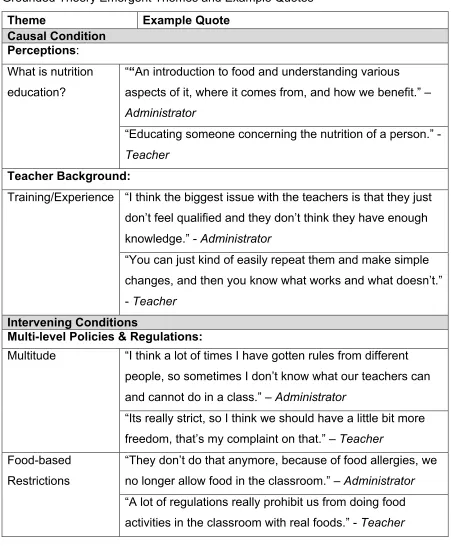
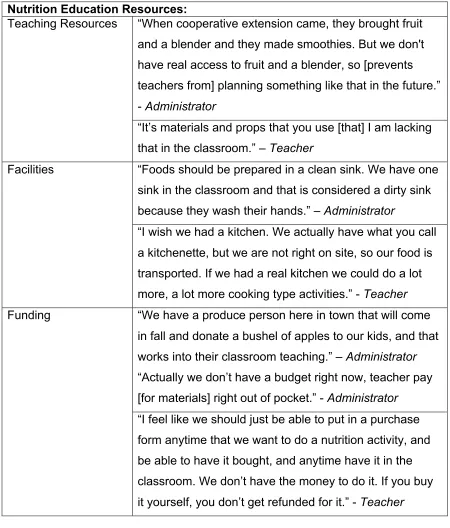
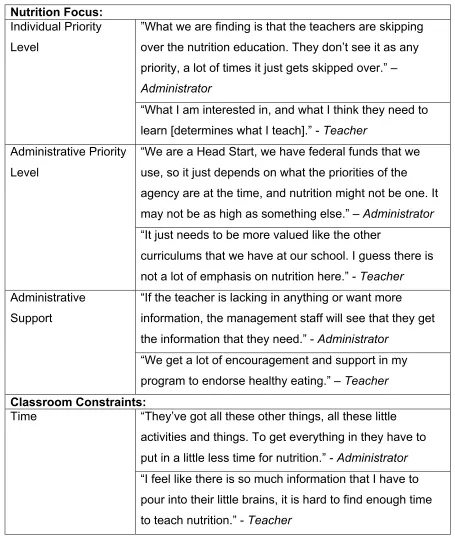
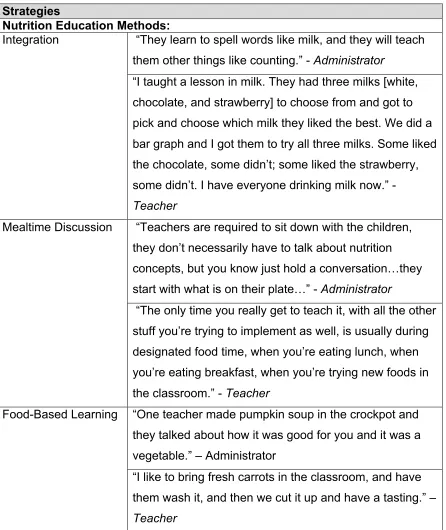
Researchers condensed identified inter-related themes into four categories within a substantive-level model. Outcomes revealed that teacher training/education,
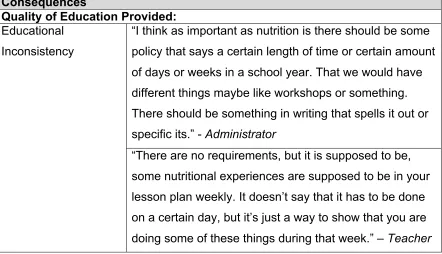
funding, and policies/regulations were the core factors influencing the quality and quantity of nutrition-related instruction Discussion: The proposed model establishes a framework for understanding the state of nutrition education in the preschool environment. Teachers need more opportunities for training/education in
instructional methods and nutrition content; financial support for materials; and clear, supportive policies/regulations. Translation to Health Education Practice:
INTRODUCTION
The classroom is an ideal environment for interventions aimed at increasing knowledge, developing skills, and forming positive attitudes needed to encourage children to make healthy lifestyle choices (Woodson, Benedict, & Hill, 1995). In support of this thesis, the American Association for Health Education identifies nutrition education as one of ten important content areas for school health
(ADA, 2002). Uniquely, the school setting provides an effective and efficient way to reach a large segment of the population including children, school staff, and their families (Aldinger & Jones, 1998; Dixey, Heindl, Loureiro, & Perez-Rodrigo, 1999). Unfortunately, the provision of nutrition education in schools has been a challenge (ADA, 2005). A recent report recognized the amount of time spent on nutrition
education in the classroom has declined, along with decreased funding opportunities to support nutrition-related educational programs (Lee et al, 2007). The current state of nutrition education in schools is important, due to the body of research supporting the positive impact nutrition education can have on dietary behaviors (Luepker, Perry, McKinlay et al., 1996; Shaya et al., 2008; Contento et al., 2007).
Dietary habits are established early in life, making preschool children an important target for nutrition education. Theoretically, the earlier a child is exposed to nutrition education, the greater the opportunity for establishing healthy habits (Briley & McAllaster, 2011; Lumeng et al., 2008; Maher et al., 2008). Teachers are
Researchers reported the training preschool teachers received within their study varied greatly, with some teachers having little or no background in nutrition, while others reported having attended workshops, seminars, or taking college courses (Cotugna & Vickeryn, 2012).
PURPOSE
METHODS Study Design
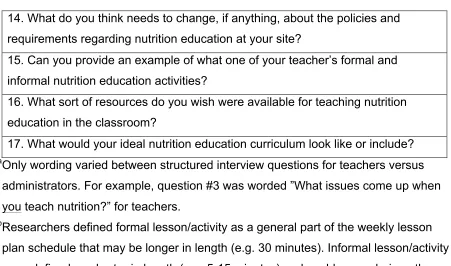
Researchers utilized in-depth structured interviews to ask Head Start administrators (Health/Nutrition Coordinators and Center Directors) and teachers open-ended questions about the state of nutrition education in the preschool
classroom. Investigators designed moderator guides and data collection procedures using phenomenological methods (Moustakas, 1994); however, a grounded theory approach was used to analyze and interpret results (Strauss & Corbin, 1990). North Carolina State University’s Institutional Review Board reviewed and approved study protocols and instruments.
Participants and Recruitment
Participants were required to be over the age of 18 and employed as a Health/Nutrition, Center Director, or teacher in a North Carolina (NC) based Head Start-funded organization. Authors defined Health/Nutrition Coordinators as individuals who provided administrative oversight and management for nutrition-related program activities (e.g. education, meal regulations) occurring in multiple centers within a Head Start organization. Researchers chose to interview
Health/Nutrition Coordinators to obtain in-depth information on the topic from an administrator’s perspective, including potentially more specific detail related to the requirements and/or policies related to nutrition education. Authors defined Center Directors as individuals who provided administrative oversight and management for a single center within a larger Head Start organization. Investigators chose to include Center Directors due to frequent direct contact with teachers and
classrooms. Finally, authors defined teachers as individuals who taught children ages 3-5 in a Head Start preschool classroom.