1
Hexagonal β-Co(OH)
2nanoparticle as a precursor in a solution-processed
LiCoO
2and its electrochemical properties
R. Samala,b, P. P. Dahiyac, S. B. Majumderc, B. Dasha,*, K. Sanjaya, M. Barmid, and M.
Minakshid
a CSIR- Institute of Minerals and Materials Technology, Bhubaneswar 751013, India b Academy of Scientific and Innovative Research (AcSIR), Training and Development
Complex, CSIR Road, Taramani, Chennai 600113, India
c Materials Science Centre, Indian Institute of Technology, Kharagpur-721302, India d Engineering and Information Technology, Murdoch University, WA 6150, Australia
Abstract
Crystalline β-cobalt hydroxide (β-Co(OH)2) of different morphologieshave been successfully
synthesized with the addition of sodium hydroxide to cobalt nitrate solution and aging in the mother liquor. The rate of NaOH addition, ranging from 0.1 mL/min to 10 mL/min, influences the surface morphology with the obtained storage capability of the respective electrode. Characterization of the β-Co(OH)2 was fully developed, including X-ray
diffraction, scanning and transmission electron microscopy, and BET analyses. At a lower rate of NaOH addition, particles are like platelets, while for a higher rate (≥ 2 mL/min) grains are fused together forming a larger crystallite size. This result is supported by the X-ray diffraction structural analysis, where the phase evolution of (002) plane becomes distinct for the higher rate of NaOH addition. Lithium cobalt oxide (LiCoO2) was synthesized through
oxidation from the as-prepared β-Co(OH)2 and LiOH. The electrochemical performance of as
obtained LiCoO2 is investigated using charge-discharge and cyclic voltammetric studies. The
precursor β-Co(OH)2 prepared at a lower rate of 0.1 mL/min in LiCoO2 demonstrated the best
electrochemical performance of 155 mAh/g. After 50 cycles, the capacity retention rate was 67% compared with the first cycle. Finally, we have attempted to correlate the amount of the available OH- ions with the formation of platelets and the discharge capacity. This work has
developed a methodology for the synthesis of LiCoO2 using β-Co(OH)2 in a facile chemical
solution process.
Keywords: Cobalt hydroxide, LiCoO2, Lithium-ion battery
Email: [email protected] (Barsha Dash); [email protected] (M. Minakshi)
2 Introduction
Currently, fossil fuels play a major role in the total world primary energy consumption,
but the main issues associated with the fossil fuels are finite resources and produces
significant CO2 emissions into the atmosphere. Therefore, alternative source of energy
(such as from renewable resources) will be part of the energy economy in the future. As
the renewable energy resources are intermittent, the demand for reliable batteries is rising,
so that the excess energy can be stored and used it later [1]. Rechargeable batteries are
devices which can store and release electric energy repeatedly. The lithium-ion battery has
significantly higher energy density and power density (at least 2 – 3 times) than lead-acid,
Ni-Cd, and Ni-MH batteries [2]. Li-ion battery has found a wide range of applications,
ranging from portable electronics, power tools, to electric vehicles (EVs). However, the
development of this battery requires extensive research on cathode materials [3]. Lithium
cobalt oxide (LiCoO2) remains as one of the most attractive positive electrode materials
that has received much attention for lithium secondary batteries [4-5].
LiCoO2 having a layered structure [6], composed of a closed-packed network of
oxygen, is used as a cathode for high-energy systems [7, 8] which has the structural
limitation of the capacity >140 mAh g−1 at a potential >3.4 V vs. Li/Li+. The extraction of
Li from LiCoO2 beyond 0.5 Li is limited, means LiCoO2 can only deliver half of its
theoretical capacity of 247 mAh g-1. Early studies on LiCoO2 have demonstrated the
well-developed synthetic routes that can enhance specific capacity through doping with
trivalent ions and coating with metal oxides, and the ability for facile synthesis for mass
production [4, 9]. However, the toxicity and high cost of additives limited the use of
applying a coating or incorporating the additives in LiCoO2. Alternatively, there is a
3
well-known precursor cobalt hydroxide/oxide [10–13] using methods such as sol-gel [14],
spray-drying [15], and rotary evaporation method [16]. Recently, there were few reports
on using both cobalt hydroxides such as Co(OH)2 and α-Co(OH)2 as negative electrodes
for battery applications [17-18]. However, the tailored β-Co(OH)2 nanoparticle as a
precursor to synthesize LiCoO2 and testing its suitability as a cathode for battery studies in
non-aqueous solvents has not been reported.
Cobalt oxyhydroxide, Co(OH)2, has been reported to crystallize in two different
forms, α and β, with layered hexagonal crystal structures [19]. The α-form is isostructural
with hydrotalcite-like structure, which is inclined to losing interlayer water and become
metastable. While the β-form is brucite-like structure and consists of a hexagonal packing
of hydroxyl ions with Co (II) occupying alternative rows of octahedral sites without any
intercalation process into an interlayer space. Therefore, a β form of Co(OH)2 is expected
to be more promising than their counterpart, α form [20]. The objectives of the current
work are (a) to controllably synthesize a series of β-Co(OH)2 nanoparticles with different
morphologies while varying the rate of addition of the reagent (NaOH). (b) to use the
β-Co(OH)2 as precursor mixed along with LiOH to synthesize LiCoO2 by a simple chemical
solution process, (c) then to investigate their electrochemical properties for potential
energy storage (battery) applications.
Experimental
The reagents Co(NO3)2.6H2O, NaOH, Nitric acid, and LiOH used were analytical grade
purchased from Merck Chem. Ltd., India.
Synthesis
In a typical synthesis of β-Co(OH)2 nanoparticles: 1M NaOH solution was added
4
addition of the NaOH ranging from 0.1, 1, 2, 5 and 10 mL/min. The deposition of cobalt
hydroxide was carried out by controlling the pH of the mother liquor of the solution from
pH 4 to 8.5. After precipitation, the as-obtained product was filtered followed by washing
in de-ionized water until the pH of filtrate attains a value ~7. Then the filtrate was further
washed with ethanol followed by drying at 80°C.
In a typical synthesis of LiCoO2: the Stoichiometric amount of as synthesized β-Co(OH)2
is mixed with lithium hydroxide (LiOH) and heated in a furnace at 450oC for 3 h in air.
Then, it was furnace cooled and the resultant powder was mixed with the binder, polyvinyl
alcohol (PVA), in order to make a pellet. Finally, the samples in a pellet form were
sintered at 850oC for 10 h in air. The final product is LiCoO2 in a single phase without any
impurities.
Physical Characterization
An X-ray diffractometer (PANalytical PW 1830; Philips, Japan) with Mo-Kα radiation (λ
=0.70932A°) was used to determine the preferred crystal orientation and phase purity of
the deposited cobalt hydroxide, Co(OH)2. The deposits were also analysed by scanning electron microscope (SEM, JEOL JSM 6510, Japan) to view the morphology of the Cobalt
hydroxide prepared under various deposition conditions. Transmission Electron
Microscope (FEI, TECNAI G2 20, TWIN, (FEI (Philips), Almelo, The Netherlands)
operated at 200 kV was used to study the internal features of the synthesized Co(OH)2 samples. For TEM analysis, a very dilute suspension of the sample was put on
carbon-coated Cu grids after dispersing in acetone medium.
Electrochemical characterization
Electrochemical experiments were carried out via coin cell (2025 type coin cell). To
prepare the cathode, as-prepared materials LiCoO2 derived from (Co(OH)2) mixed with
5
was dispersed in a N-methyl-2-pyrrolidone (NMP) solution to make a slurry. The mixed
slurry was coated on a copper Al foil and dried in a vacuum oven at 90oC overnight prior
to coin-cell assembly. The cells were assembled in a glove box (Mbraun, Germany) filled
with ultrahigh purity argon with metallic Li anode, polypropylene membrane as the
separator, and a 1M LiPF6 in ethylene carbonate/dimethyl carbonate (EC/DMC) (1:1 v/v)
as the electrolyte. Galvanostatic charge/discharge and cycling test were evaluated using a
Land Battery Tester (Land CT 2001A, Wuhan, China) within the voltage range of 3 V –
4.5 V (vs. Li/Li+) at room temperature.
Results and Discussion
I. Structural analysis
X-ray diffraction (XRD)
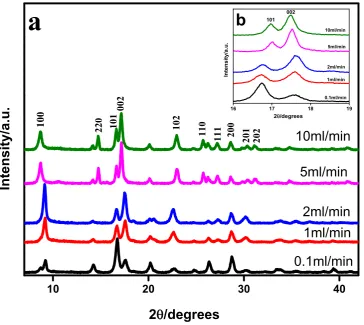
The XRD patterns of the as-synthesized product are presented in Fig. 1. All the diffraction
peaks can be ascribed to the pure brucite-like crystal structure of β-Co(OH)2 (adopting a
hexagonal structure and the pattern is in good agreement with those reported in the literature
JCPDS card 00-001-0357) [21-22]. The XRD patterns of all the samples obtained by varying
the rate of NaOH addition is characterized by the Bragg reflection intensity of the doublet,
(101) and (002) peaks. The inset in Fig. 1, clearly shows the variation in the intensity of the
doublet indicating that the preferential orientation was changed from (101) to (002), which
could be a reason for varied surface morphology (detailed in the next section; SEM). For the
slowest rate i.e. 0.1 mL/min, weak Bragg reflection is observed for (002) plane, while the
reflection for (101) plane is strong. Interestingly, with the increase in the rate of NaOH
addition, the (002) peak grows gradually and the intensities of the (101) and (002) peaks
become equal at the rate of 1 mL/min. From thereon, (002) peak supersedes and becomes
6
intensity of the (002) peak is not strong, as opposed to the strong peak observed in this work
in Fig. 1. This unusual observation could be due to the fact that OH- ions are absorbed onto
the cobalt hydroxide (002) plane, and resulted in a preferential orientation on the sample
surface. From the crystallographic point, it can be explained in a way that (101) plane has
only one growing site in the b-axis, whereas in the case of (002) plane, there are two growing
sites in both a and b axes. Hartman et al [23] described the specific compound have a variety
of morphology based on the crystal planes. Therefore, the sizes of the platelets like crystals
are expected to be bigger with the rate of NaOH addition but only to an extent of 2 mL/min.
At a higher rate (≥ 2 mL/min) the tendency of the crystal formation is fused towards the
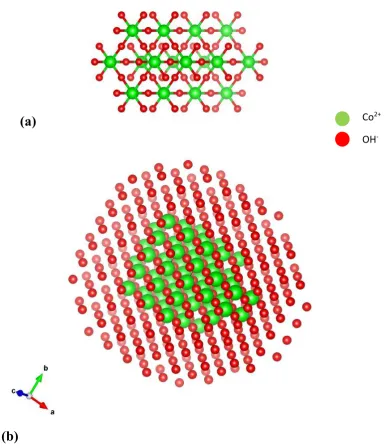
formation of a nucleus, however, the particle size is still in nano size. As shown in Fig. 2a
when the rate of OH- ion addition is very slow, the cobalt ion is surrounded by very few OH
-ion. This is to say the number of OH- per cobalt ion was just adequate. The case is opposed to
the higher rate (Fig. 2b), and this could explain the evolution of (002) peak through variation
of the concentration of NaOH at a fixed cobalt nitrate concentration. After the optimized
value of 2 mL/min, the population of OH- ion becomes too high [24] in the vicinity of each
cobalt ion, as illustrated in the diagram Fig. 2b, thus the grains fused together forming small
crystals (detailed in the next section; SEM). Obviously, the rate of NaOH addition influences
the pH of the solution, the crystallite size of β-Co(OH)2 and the phase evolution of (002) peak
support this fact profoundly.
SEM and TEM studies
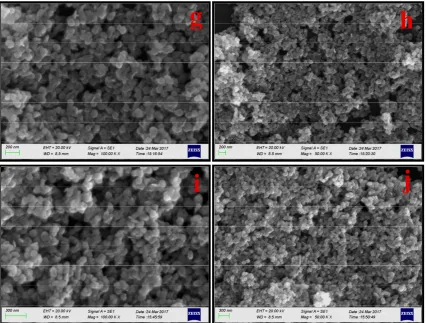
The morphology and texture of the as-synthesized β-Co(OH)2 samples prepared at the
different rate of NaOH addition have been studied through SEM and presented in Fig. 3. The
surface morphology was changed by increasing the concentration of NaOH, the observed
7
observed initial irregular morphologies (Fig. 3a-b) are due to low pH in the solution (scarce
of OH- ions). In Fig. 3 c-f, the SEM images reveal that the particles got more flattened with
the addition of the NaOH from 0.5 mL/min to 2 mL/ min. A similar sort of morphology
reported for this material [23, 25] displaying a platelet-like shape indicates the formation of
cobalt oxyhydroxide. At ≥ 2 mL/min, the excess OH- ions in the vicinity of cobalt ions were
absorbed onto the cobalt surface. As a result, as-synthesized β-Co(OH)2 particles appears to
take a different shape of tiny clusters (Fig. 3g-h). At a higher magnification, the clusters are
more visible suggesting that newly-formed nuclei agglomerated to form bigger secondary
particles resulting in clusters.
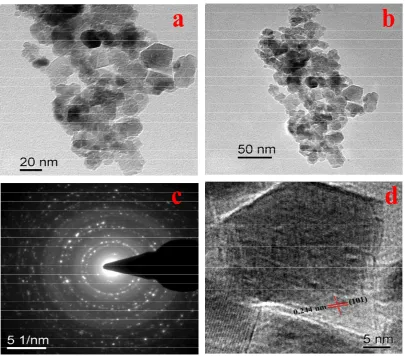
To gain more insight into the internal features of the obtained product, transmission
electron microscopy was conducted and the corresponding images were shown in Fig. 4.
TEM images revealed that the structure of as-prepared β-Co(OH)2 is a typical hexagonal
structured nanoplatelet as evidenced from Fig. 4a. The length of the nanoparticle, calculated
using Image J software, is found to be in the range of 20-25 nm. Fig 4b depicts that though
the β-Co(OH)2 is invariably shown to be hexagonal in shape, the particle sizes varies
significantly. The selected area diffraction pattern of the particles shown in Fig. 4c shows a
series of Debye rings with bright spots illustrating that he particles are crystalline in nature,
supporting the diffraction pattern observed in Fig. 1. The inter-planar distance between two
lattice fringes was evaluated as 0.244 nm (Fig. 4d), which is in excellent agreement with the
(101) crystal plane.
Particle size analysis
The particle size and morphology of solution-processed β-Co(OH)2 is shown to be controlled
by concentrations of the NaOH addition that influences the particle nucleation and growth
8
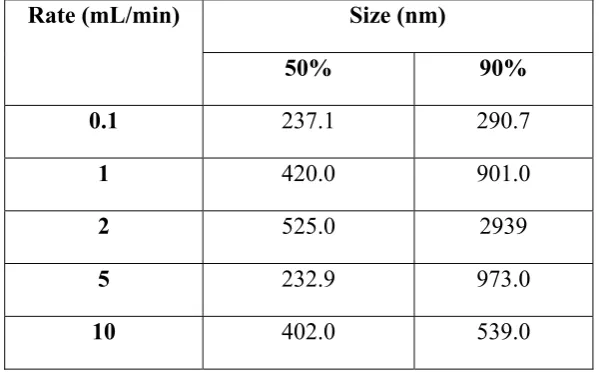
solution concentrations. The particle size distribution reveals a similar trend to that of XRD
and SEM that the particle size increases until the rate of NaOH addition reaches an optimum
value and then it started to reduce. Table 1 shows that for 0.1 mL/min the particle size is 237
nm for 50 % (otherwise termed as D50) of particles and 290 nm for 90% (D90) of particles.
The D50 is the "mass median diameter" as it divides the sample equally by mass. However,
with the concentration of 2 mL/min, the particle size further increases to 525 nm for 50%
particles and 2939 nm for 90% particles. At ≥ 2 mL/min, sizes reduced to 232 nm for 50%
particles and 973 nm for 90% particles for 5 mL/min and finally it dropped to 539 nm for
90% particles with 10 mL/min rate of addition.
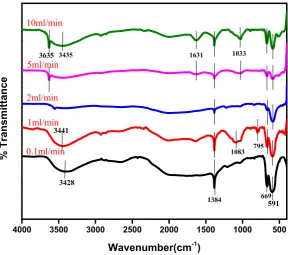
FTIR analysis
FT-IR spectra of the as-synthesized β-Co(OH)2 samples prepared at the different rate of
NaOH addition are shown in Fig. 5. Several absorption peaks are evidenced and the peak
numbers are labeled in the respective spectra. For the lower concentration, 0.1 mL/min, three
absorption peaks were identified in the mid-frequency region. The peak at 591 cm−1 is
assigned to C-Br stretching (m) vibration. The band at 659 cm-1 corresponds to the σ O–H
wagging vibration. The peak at 1384 cm-1 is related to the ν3 vibrational modes of NO 3−
intercalated in the interlayers [20, 26]. For 1, 5 and 10 mL/min samples, an evolution of new
absorption peaks were observed. IR peaks at 1083 cm−1 and 1033 cm−1 are assigned to the
C-N stretching (m) vibration. In case of 1 mL/ min, an additional peak appears at the position of
795 cm-1 may be attributed to C-Cl stretching (m) vibration. A peak at 1631 cm−1 for 50 and
100 mL/min is due to N-H bending vibration. The band at all the high wavenumbers, for the
samples analyzed, can be assigned to the stretching vibration of hydroxyl group [21]. The
peaks at 3428 cm−1 and 3441 cm−1 and 3435 cm−1 may be attributed to H- bonded -OH
stretching vibration for 0.1, 1, and 10 mL/min, respectively. The presence of excess OH- ions
9
II. Electrochemical analysis
Charge-discharge and cyclic voltammetric analyses
The use of transition metal oxides such as LiCoO2 as the positive electrode has been widely
studied for Li-ion rechargeable batteries. The achievable capacity of LiCoO2 is reported to be
147 mAh g-1 based on the 0.5 extraction of Li ions from this cathode material [3-4]. The
electrochemical activity of the LiCoO2 prepared from the as obtained β-Co(OH)2 as a
precursor mixed with LiOH was tested through multiple charge-discharge analysis. Fig. 6a
shows a typical voltage vs. capacity profile for LiCoO2 prepared at a rate of 0.1 mL/min. The
corresponding dQ/dV plot is presented in Fig. 6b. The process is fully reversible with a flat
discharge mid-potential of 4 V before it falls sharply down to the cut-off voltage 3 V. The
first discharge capacity is found to be ~155 mAh/g when cycled at C/10 current rate. The
discharge/charge mechanism could correspond to a facile intercalation/extraction of lithium
ions into/from the layered structure of lithium cobalt oxide. The Li+ intercalation leads to the
reduction of Co4+ ions into Co3+ and in the subsequent charge, Co3+ ions are oxidized back to
Co4+ oxidation state [3-4]. The redox process of cobalt ions (+3/+4) is known to take place at
~4.0V with respect to Li+/Li. The phenomenon is clearly visible in the dQ/dV plot presented
in Fig. 6b. As shown in Fig. 6b, the oxidation takes place ~4.1V during the first charge and
the corresponding reduction can be observed at ~3.9 V during discharge. In the subsequent
cycle of charge, the oxidation is slightly shifted to lower potential value, whereas the
reduction takes place at the same potential. All the LiCoO2 samples were found to be
electrochemically active in delivering multiple intercalation/de-intercalation of Li+ ions into
the structure. The charge-discharge profiles for 2 mL/min and 10 mL/min showed a similar
shape of curves (not shown here) but with a slightly a meager in available capacities, such as
150 mAh g-1 and 145 mAh g-1, respectively. However, in terms of cyclability, a significant
10
The cyclability performance measured at C/10 current rate for the LiCoO2 samples
prepared by varying rate of NaOH is presented in Fig. 7. The highest discharge capacity
~155mAh/g was obtained for the sample prepared at the slowest NaOH addition rate 0.1
mL/min. To be noted, LiCoO2 prepared from the high rate of NaOH addition (10 mL/min)
showed (Fig. 7) a dramatic drop in the 2nd cycle. This could be due to the structural instability
and excessive reaction of OH- particles with an electrolyte which leads to the formation of
unfavorable by-products. The samples prepared with the relatively lower rate of reagent
addition (0.1 mL/min and 2 mL/min) do not show such anomaly. The reason may be
attributed to the fact that with the slow availability of the OH- ion, the crystals would have
developed more homogenously as compared to the samples with the high rate of addition.
Table 2 summarizes the discharge capacity at various cycles until 50 % capacity retention
after 50 cycles of charge/discharge at C/10 discharge current, and average capacity fading
rate for LiCoO2 prepared at various rates of reagent addition.
The sample prepared at slowest addition rate is found to be good at delivering better
cyclability and capacity retention as compared to the samples prepared at relatively higher
addition rate (10 mL/min). If we analyse the average capacity loss per cycle, the loss is
comparable for 0.1 mL/min and 2 mL/min whereas for 10 mL/min there is a drastic rise in the
loss per cycle (4.6) as shown in Table 2. This loss is mainly observed from the second cycle
onwards. This behaviour proves the presence of imperfection in crystallization of sample
prepared at a high rate of NaOH addition. Thus enhanced electrochemical performance was
revealed by the slow addition of reagent that influences the morphology and correlates the
11 Conclusions
Chemical deposition of cobalt hydroxide was carried out in cobalt nitrate with the addition of
NaOH at varying rates ranging from 0.1 mL/min to 10 mL/min. The Co(OH)2 was identified
as the β form with a brucite-like structure. At a higher rate (≥ 2 mL/min) of NaOH in the
solution, a larger amount of OH- ions deposits on the sample surface in the (002) plane and
the particles are found to fused together with a lower particle size. The as-synthesized
β-Co(OH)2 with an optimum rate of NaOH addition chosen as a precursor for LiCoO2 was
tested for its suitability as a cathode material in Li-ion battery as cathode. The LiCoO2
showed a discharge capacity of 155 mAh/g. After 40 cycles, the capacity had decreased by
less than 2% compared with the first cycle. These results confirmed the potential application
of the prepared β-Co(OH)2 nanoparticles with a platelet shape as a suitable precursor for a
battery electrode LiCoO2. Acknowledgment
The authors are thankful to Director, CSIR-IMMT for proving all the facility to carry out
research work. The authors are also thankful to MoES for financial support.
References
1. A. Evans, V. Stezov, and T. J. Evans, Assessment of utility energy storage options for increased renewable energy penetration, Renewable and Sustainable Energy Reviews 2012, 16, 4141 – 4147.
2. M. Lazzari and B. Scrosati, A cyclable lithium organic electrolyte cell based on two intercalation electrodes, J. Electrochem. Soc.1980, 127, 773 – 774.
3. N. Nitta, F. Wu, J. T. Lee, G. Yushin, Li-ion battery materials: present and future
Materials Today, 2015, 18, 252 – 264.
4. K. Mizushima, P. C. Jones, P. J. Wiseman, J. B. Goodenough, LixCoO2 (0 < x < -1):
12
5. K. Ozawa, Lithium-ion rechargeable batteries with LiCoO2 and carbon electrodes: the
LiCoO2/C system, Solid State Ionics, 1994, 69, 212-221.
6. J. M. Paulsen, J. R. Muller-Neuhaus, and J. R. Dahn, Layered LiCoO2 with a different
oxygen stacking (O2 structure) as a cathode material for rechargeable lithium
batteries, J. Electrochem. Soc., 2000, 147, 508 – 516.
7. J. P. Peres, F. Weill, C. Delmas, Lithium/vacancy ordering in the monoclinic LixNiO2 (0.50 ≤ x ≤ 0.75) solid solution, Solid State Ionics. 1999, 116, 19 – 27. 8. T. Ohzuku, Y. Makimura, Layered lithium insertion material of LiCo1/3Ni1/3Mn1/3O2
for lithium-ion batteries, Chem. Lett. 2001, 30, 642–643.
9. Z. L. Gong and Y. Yang, Recent advances in the research of polyanion-type cathode materials for Li-ion batteries. Energy & Environ. Sci. 2011, 4, 3223 – 3242.
10.E. Rossen, J. N. Reimers, J. R. Dahn, Synthesis and electrochemistry of spinel LT LiCoO2, Solid State Ionics, 1993, 62, 53-60.
11.B. Garcia, J. Farcy, J. P. Pereira-Ramos, J. Perichon, N. Baffier, Low-temperature cobalt oxide as rechargeable cathodic material for lithium batteries, J. Power Sour. 1995, 54, 373 – 377.
12.R. J. Gummow, M. M. Thackeray, W. I. F. David, S. Hull, Structure and electrochemistry of lithium cobalt oxide synthesized at 400oC, Mater. Res. Bull.1992,
27, 327 – 337.
13.E. Zhecheva, R. Stoyanova, M. Gorova, R. Alcantara, J. Morales, J. L. Tirado, Lithium-cobalt precursors in the preparation of intercalation electrode materials,
Chem. Mater. 1996, 8, 1429 – 1440.
14.E.-D. Jeong, M.-S. Won, and Y.-B. Shim, Cathodic properties of a lithium-ion secondary battery using LiCoO2 prepared by a complex formation reaction, J. Power Sour.1998, 70, 70 – 77.
15.Y. Li, C. Wan, Y. Wu, C. Jiang, and Y. Zhu, Synthesis and characterization of ultrafine LiCoO2 powders by a spray drying method, J. Power Sour.2000, 85, 294 –
298.
16.P. N. Kumta, D. Gallet, A. Waghray, G. E. Bomgren, and M. P. Setter, Synthesis of LiCoO2 powders for lithium-ion batteries from precursors derived by rotary
13
17.W. Li, S. Zhang, and J. Chen, Synthesis, characterization, and electrochemical application of Ca(OH)2, Co(OH)2, and Y(OH)3 – coated Ni(OH)2 tubes, J. Phys. Chem B. 2005, 109, 14025 – 14032.
18.W. Cao, and W. Wang, Three-dimensional flower-like α-Co(OH)2 architectures
assembled by nanoplates for lithium ion batteries, Mater. Lett. 2016, 185, 495 – 498.
19.P. S. Gaikar, S. T. Navale, S. L. Gaikwad, A. Al-Osta, V. V. Jadhav, P. R. Arjunwadkar, M. Naushad, and R. S. Mane, Pseudocapacitive performance of a solution-processed β-Co(OH)2 electrode monitored through its surface morphology
and area, Dalton Trans.2017, 46, 3393 – 3399.
20.M. Aghazadehn, S. Dalvand, M. Hosseinifard, Facile electrochemical synthesis of uniform β-Co(OH)2 nanoplates for high performance supercapacitors, Ceramics International, 2014, 40, 3485 – 3493.
21.B. Wang, H. Lin, Z. Yin, Hydrothermal synthesis of β-cobalt hydroxide with various morphologies in water / ethanol solutions, Materials Letters, 2011, 65, 41 - 43.
22.J. Yang, H. Lu, W. N. Martens, and R. L. Frost, Synthesis and characterization of cobalt hydroxide, cobalt oxyhydroxide, and cobalt oxide nanodiscs, J. Phys. Chem. C.
2010, 114, 111 – 119.
23.P. Hartman, Structural morphology of organic compounds having two centrosymmetric molecules in a monoclinic unit cell, J. Crystal Growth, 1991, 110, 559 -570.
24.J. Hong, N. Matsushita, T. Shirai, K. Nakata, C. terashima, A. Fujishima, and K. Katsumata, Influence of surface morphology and conductivity on photocatalytic performance of solution-processed zinc oxide film, Chem. Asian J. 2017, 12, 2480 – 2485.
25.V. Pralong, A. Delahaye-Vidal, B. Beudoin, B. Gerand, and J.-M. Tarascon, Oxidation mechanism of cobalt hydroxide to cobalt oxyhydroxide, J. Mater. Chem.
1999, 9, 955 – 960.
14
Table of Content (ToC)
15
10 20 30 40
0.1ml/min
1ml/min
2ml/min
5ml/min
Intensity/a.u.
2
θ
/degrees
10ml/min
100 220 101
002
102
110 111 200 201 202
a
16 17 18 19
0.1ml/min 1ml/min 2ml/min 5ml/min
In
tensity/a.
u.
2θ/degrees
10ml/min 101
002
b
Figure 1 (a)X-ray diffraction (XRD) patterns of the as-synthesized β-Co(OH)2 in the
presence of NaOH addition at a different rate indicated in the figure, and (b) magnified XRD pattern of the 2θ values between 16º and 19º. Variation in the intensity of the doublet peaks
16
(a)
(b)
Figure 2 Ball and stick diagram of the formation of β-Co(OH)2 in the presence of (a)
optimised amount and (b) excess amount of OH- ions in the solution. Picture (b) is viewed in
(002) plane.
Co2+
-17
a
b
c
d
18
i
j
g
h
Figure 3 Scanning electron micrographs (SEM) of as-synthesized β-Co(OH)2 in the presence
of NaOH addition at a different rate (a, b) 0.1 mL/min (c, d) 1 mL/min (e, f) 2 mL/min (g ,h)
19
a
b
c
d
Figure 4 Transmission electron micrographs (TEM) of as-synthesized β-Co(OH)2 in the
presence of NaOH addition at a0.1 mL/min rate. (a-b) showing hexagonal shaped particles under different magnifications, (c) its corresponding selected area diffraction pattern (SADP)
20
4000 3500 3000 2500 2000 1500 1000 500
669 1033
1083 1631
3435
3441
3428
0.1ml/min 1ml/min
2ml/min
5ml/min
% Transmittance
Wavenumber(cm-1)
10ml/min
591 1384
795 3635
Figure 5 Fourier transform infra-red spectra of the as-synthesized β-Co(OH)2 in the presence
21
Figure 6 (a) Charge – discharge profile of as-synthesized β-Co(OH)2 in the presence of
22
0 5 10 15 20
100 110 120 130 140 150 160
Number of cycles
D
isc
h
arg
e
ca
p
aci
ty
,mAh
/g
0.1ml/min 2ml/min 10ml/min
Figure 7 Discharge capacity upon cycling illustrating the cycling stability of the as-synthesized β-Co(OH)2 in the presence of NaOH addition at a different rate indicated in the
23
Table 1 Particle size analysis of the as-synthesized β-Co(OH)2
Rate (mL/min) Size (nm)
50% 90%
0.1 237.1 290.7
1 420.0 901.0
2 525.0 2939
5 232.9 973.0
10 402.0 539.0
Table 2 Performance characteristics of the as-synthesized β-Co(OH)2 in the presence of
NaOH addition at a different rate indicated in the figure. Capacity retention and rate of discharge are compared.
Discharge rate
Rate of addition ( mL/ min)
Initial discharge capacity(mAh/g)
Average discharge capacity (mAh/g)
Average fading rate (mAh/g per cycle)
C/20
0.1 135 151.5 1.26
C/5 156 158.6 0.6
C/2 159 159.5 0.5
C/20
2 127 137.4 0.94
C/5 141 143.6 0.6
C/2 144 144.5 0.5
C/20
10 110 121.8 1.68
C/5 122 129.4 4.4